TKZ Members Weigh In on Series Writing

By SUE COLETTA

Before the holidays, one of our beloved TKZers requested a blog post that offered helpful tips in series writing.

Rather than sharing only my views, I thought it’d be cool to gather advice from all TKZ members. That way, we’d be sure to cover the subject in more depth.

It’s a monster post, but it’s packed with fantastic advice. Ready? Here we go …

From Jordan Dane:

  1. Create a large enough world to sustain a series if it gains traction by planting plot seeds and/or character spinoffs in each individual novel. With the right planted seeds, future stories can be mined for plots during the series story arcs. An example of this is Robert Crais’s Elvis Cole PI series where his main character Cole is plagued by his past and his estranged father until THE FORGOTTEN MAN, a stellar novel in the middle of the series that finally provided answers to the mystery.

Crais often plants seeds that he later cultivates in later books. It takes organization & discipline to create these mysteries and track the seeds to save for later.

  1. Endings of each novel in a continuing series are important to readers if your book release schedule has long lags in time. A major cliffhanger can be frustrating for readers to discover at the end of a book before they realize the next novel won’t be released for 6 months to a year.

If your planned series isn’t limited to a certain number of stories (ie Hunger Games – 3 novels) where the overall story arc will be defined, an author might consider writing series novels that read as standalones with a tantalizing foreshadowing of the next story to hook readers. Creating an intriguing mystery to come will pique reader’s interest, rather than frustrate them with a huge cliffhanger they may have to wait a year to read.

See these tips in action in Jordan’s Mercer’s War Series.

From James Scott Bell:

  • Give your series character one moral quest that he or she is passionate about, to the point where it feels like life and death. For example, my Mike Romeo series is about the quest for TRUTH. This is the driving force for all he does. It gives both character and plot their meaning. A quest like this will carry from book to book.
  • Give your series character at least one special skill and one special quirk. Sherlock Holmes is a skilled stick fighter (which comes in handy). But he also shoots up cocaine to keep his mind active. Mike Romeo has cage fighting skills. He also likes to quote literature and philosophy before taking out a thug.

From Joe Hartlaub:

Sue, I love Jordan’s suggestions, particularly #2, about the works being standalones with a foreshadowing of what is to come. Who among us read Stephen King’s Dark Tower trilogy and got to the end of The Dark Tower III; The Waste Land to find the cast aboard a sentient, suicidal choo-choo heading toward oblivion? That was all well and good until we all had to wait six friggin’ years to find out what happened next in Wizards and Glass. 

  • I have one suggestion, which I call the Pop Tart model. Pop Tarts started with a basic formula; they were rectangular, were small enough to fit into a toaster, large enough to pull out, used the same pastry as a base, and started with a set of fillings and slowly added more and different ones over the years. So too, the series.
  • Design a character with a skill set consisting of two or three reliable elements, decide whether you are going to make them a world-beater (Jason Bourne), a close-to-homer (Dave Robicheaux), or something in between (Jack Reacher), and bring in a couple of supporting characters who can serve as necessary foils (Hawk and Susan from the Spenser novels) who can always be repaired or replaced as necessary. Your readers will know what to expect from book to book but will be surprised by how you utilize familiar elements.

From Laura Benedict:

The best series do a good job of relationship-building, along with world-building.

  • Give your main character …
  1. someone to love and fight for,
  2. someone to regret knowing,
  3. someone to respect,
  4. someone to fear.
  • Be careful about harming your secondary characters because readers get attached. If you’re going to let a beloved character go—even a villain—make the loss mean something.

See these tips in action in The Stranger Inside.

From Clare Langley Hawthorne:

Sue – I love everyone’s suggestions so far.

  • Add the possibility of exploring lesser characters like Tana French did in her Dublin Murder Squad series — each installment focused on a different lead character that we’d met as a lesser character in another installment. I thought she did this in a masterly way that helped enhance the series.

From Elaine Viets:

  • Murder thoughtfully and with restraint.

I went wild in my first novel “Backstab” in my Francesca Vierling series, and killed off a secondary character I could have used in other books — Lee the Rehabber. I had versions of Lee, but they were pale imitations.

From me: Rather than repeat previous tips, I focused on subplots and character development.

  • Whatever happens to your character in a series must be reflected in future books. Our past affects us. Take for example my Mayhem Series. In Book 1, Wings of Mayhem, Shawnee Daniels learns a shocking secret about her past. It’s a seed I planted for Book 3, but I couldn’t pretend she didn’t learn about it. So, in Book 2, I hinted at it (in the form of dialogue) to remind the readers who knew about it. At the same time, I needed to show how this secret affected Shawnee i.e. she become even more distrustful and broken.

In Book 3, Silent Mayhem, this secret explodes Shawnee’s life. It also became the catalyst for more secrets, a conspiracy, and an underlying mystery that ran parallel to the main plot. If someone read the books out of order, it was imperative that I let the cold reader know why and how this scenario was taking place without dumping the information in one chunk. Instead, we need to either sprinkle the (now) backstory in over time (a slow build toward the explosion) or use dialogue between two characters. I chose the latter, in the form of a confrontation.

  • Think of all potential readers. Do all aspects of the book make sense? Will they understand the subplot and character development without reading the previous novels? At the same time, have you hinted enough but not so much that you’ve ruined a previous twist? It’s a dance that can knot your stomach muscles, but we need to be cognizant of the cold reader who picks up Book 3 or 4 or 5, as much as the dedicated fan whose read all the books in order.

From Mark Alpert:

  • My favorite series characters are those who learn something in
    each new book. And this knowledge changes them, sometimes
    dramatically, sometimes more subtly, but always noticeably. Think of
    Harry Potter. He’s different in each book. It prevents the series from
    getting stale.

From PJ Parrish:

  • As you progress through your story keep a running chronology of dates and salient plot points that happen in each chapter. This is invaluable come rewrite time. You can consult the chronology and at a glance know where to find something in your plot. It also helps you keep track of the passage of time in your story.

Example from my own book:

CHAPTER ONE

Day 1

Jan 13, 2018

Louis shows up at church in Michigan ready to start new job on homicide task force. Introduce his boss, Mark Steele. Set up personality conflict between men and Louis’s fear, he has made Faustian bargain.

CHAPTER TWO

Day 2

Jan 14, 2018

First meeting of task force. They get assigned cold cases as tests. Louis picks “boys in the box” case.

From Debbie Burke:

  • If your character is in a happy marriage/career/friendship, destroy that; if he is an orderly homebody, drop him into an unfamiliar, unpredictable universe he can’t escape from; plunk her into situations she would never enter voluntarily but must b/c of circumstance. Whatever your characters’ personal comfort zones are—physical, mental, psychological, spiritual—yank them out of it and throw them into conditions they have never encountered before. Keep them off balance, straddling an earthquake fault.

From John Gilstrap:

  1. Remember that successful series thrive as much on character as they do on plot—perhaps even more on character than on plot.  So, make that protagonist as interesting and unique as you can.  I would argue that the world might not need another divorced ex-cop with a drinking problem and anger issues—unless your take on the old trope is somehow unique.
  1. Take your time when building the world in Book #1.  Plant seeds in that first outing that will allow for plots in the future.  In No Mercy, the first entry in my Jonathan Grave series, I intentionally seeded his world with details that might (or might not) bear fruit for future novels:
  • His substantial wealth comes from his father’s illegal activities;
  • Said father, Simon Gravenow, is serving a life sentence in prison;
  • Jonathan Grave donated the mansion that was his childhood home to St. Kate’s Catholic Church so that it could serve as Resurrection House, a residential school for the children of incarcerated parents;
  • He is intensely loyal to his friends as they are to him;
  • And more.
  1. Know the intended tone of your series.  Yeah, okay, you’re writing a thriller, but what kind of ride do you intend to give your reader?  This is important because those readers will come to expect a certain consistency from book to book.  The Hunger Games trilogy, for example, is relentlessly dark because everyone we care about is miserable.  Jim Bell’s Romeo series, on the other hand, is lighter in tone without sacrificing any of the thrills.  That tone—that voice—is important to the reader.

***

Amazing advice, right? I don’t know about you, but I’m bookmarking this puppy. A huge thank you to my fellow TKZ members!

For discussion …

Do you write a series? Writers, please share any tips we might have missed.

If you haven’t branched into series writing, are you considering it?

Do you prefer to read a series or standalones? Readers, please share your views!
 

Rendering Dialects and Accents in Dialogue

by James Scott Bell
@jamesscottbell

One of the most frequent questions I’m asked about dialogue is how to render dialect and accents without bogging down the text with phonetic indicators and apostrophes all over the place, as in:

“Say, Mose, ah reckon there’s a-gonna be a shootin’ or a hangin’ over ’ta the saloon.”

“Ah reckon yer right ’bout that.”

“Ah reckon the whole town’s ’bout ’ta ’splode.”

“Reckon so.”

“Yep, this shore is a day of reckonin’.”

Or a conversation between an Alabama farmer and a New York writer:

“Thar’s a far out yonder.”

“A what?”

“A far.”

“Oh, you mean fire.”

“Ah said far, didn’t ah?”

Too much of this is going to wear a reader out. That’s why heavy dialects and accents in dialogue are out of favor with editors and readers. (Note: A dialect is based on word choices particular to a region; an accent is the “sound” of the speaker when saying the words.)

But what if you do want the character to have a heavy accent? Be clever about it. Give the reader an indication of the speech pattern the first time the character speaks, then use a few sprinkles of it every now and then as a reminder.

For instance, you can do a dialect-heavy first line and then pull it back in subsequent lines. Liz Curtis Higgs does this in Thorn in My Heart, a novel set in 18th century Scotland. A local shepherd greets a lost horseman with:

“D’ye ken whaur ye’re goin’, lad?”

You have to look that over a couple of times, but that’s what Higgs wants you to do. The heavy brogue is now implanted in our minds. After that she keeps the odd spellings to a minimum.

You can also use straight narrative to tell us what the accent sounds like. This was Stephen King’s choice in Pet Sematary. At the beginning of the novel, Louis Creed and his family have just moved to a little town in Maine. There they meet a neighbor, an older gentleman named Jud Crandall, a native of the region. Here is part of the introductory conversation:

Crandall nodded. “Course you are,” he said, which came out: Coss you awe.He glanced at Rachel. “Why don’t you take your little boy and your daughter over to the house for a minute, Missus Creed?”

Instead of making the pronunciation part of the dialogue itself, King tells us directly what it sounded like. The dialogue then proceeds without phonetic spellings. But the sound is now in our heads. We can “hear” Crandall in his unique fashion.

A few paragraphs later, King drops in a reminder:

“Not at all,” he said. “Lookin forward to having young ‘uns around again.” Except the sound of this, as exotic to their Midwestern ears as a foreign language, was yowwuns.

It’s interesting to note that for the word Lookin King does not use an apostrophe. This is true throughout the novel when gs are dropped. I like that. It doesn’t bother me a bit, and actually is pleasing to the eye.

I brought this up with a group of writers recently, indicating that if I ever wrote a Western, I’d like to give that a try. But one of the astute younger scribes reminded me that there are typo hunters out there now who will downgrade their reviews over such things.

Good point. So if I ever write Day of Reckoning I reckon I’ll be puttin’ in them little marks.

Thus, for dialects and accents:

  • Keep odd spellings to a minimum.
  • Do some of rendering up front to plant the sound, then minimally after that as a reminder.
  • Use well-chosen regionalisms. For example, the Scottish shepherd would say Aye instead of Yes, and Lass instead of Woman.

If ya feel a bit o’ sharin’ comin’ over ya, then be doin’ it in the comments, if ya please.


Comic Relief

Photo courtesy Natalia Y on unsplash.com

Happy New Year! I hope that your holiday was as good as mine. I learned something which may have some major repercussions for me going forward.

I am not sure how what follows originally came up for discussion. The source, however, was my twelve-year-old granddaughter. She talks quite a bit about some things and not at all about others, with the border between the two constantly shifting and changing. Sometimes it is hard for me to keep up, which is okay. It gives her the freedom to chatter away and me the impetus to keep trying to figure it out. So it is that during one day of her Christmas vacation she was at one moment talking about a manga character and the next was talking about something she called “comic sans.”  I assumed at first that she was referring to comic book character that she particularly revered. As she continued for a bit longer, however, I realized that she was referring to a type font.

We each and all have a favorite font. Actually, that’s wrong. We each and all have a font that we use by default. Mine, since Jesus was in short pants, has been the boring and predictable but nonetheless popular Times New Roman. Many prefer Arial. It’s not something we usually even think about, particularly when reading. A great number of books make a point of referencing, usually on a page at the back, the font in which the book is printed and providing a three or four sentence summary of its history. To wit:

This book was printed using the Beelzebub font designed by a group of renegade Tantric monks in the early 18th Century. It was once popular but fell out of favor due to the spread of a superstition that the Universe would end upon the setting of the one-billionth charact

I in any event never really paid much attention to the topic other than to occasionally check out the pull-down menu on whatever word processing software I am using and to marvel for a moment at all of the choices. I realize that my choice of Times New Roman is similar to walking into Baskin-Robbins, checking out the thirty-one flavors of the month, and choosing vanilla. Most editors and the like prefer Ariel or Times New Roman, however, so it’s a safe bet. Only…only…there seems to be a bit of discussion among the younger set regarding “Comic Sans MS.” or “Comic Sans” for short. It was originally developed as a typeface for comic book narration and word balloons in 1994. A short, light-hearted video about it with a sample can be found here: https://www.youtube.com/watch?v=34fOZgy4TqI One doesn’t use it for formal documents such as a will, a contract, or an all-important postgraduate thesis. But. But. The discussion taking place among the young ones concerns the use of Comic Sans as a creative tool. Proponents say that there is something about it that aides the creative process, one that seems to cause words to flow almost unbidden from brain to fingers and beyond. Opponents (my younger daughter, among them) say it doesn’t do any such thing and looks like crap besides.


Photo courtesy Raphael Schaller on unsplash.com

I checked Google Drive to see if I had Comic Sans as a choice and sure enough, there it was, theretofore unnoticed in the menu. It looked godawful though somehow familiar. The familiarity should not have been a surprise, given that it mimics the text that was popular in comic books, which I read by the boxfuls for decades. I opened up a new document and started writing with it. Two hours later I was still writing, stopping only after being entreated to make a pizza run. I was, as they say, in the zone. I found that for the first time in my life I actually preferred writing to reading. The words simply seem to flow, just like the kiddies say with Comic Sans than with Times New Roman or anything else I have used. God forbid that I would submit anything in Comic Sans unless it was specifically called for, but it is certainly easy enough to convert into another format for a submission or final copy.

Check it out, particularly if you are having problems, as we all sometimes do, with getting things going in the grammar mine. I can’t really explain why it works for me and apparently for others, but work it does. I find that writing with purpose is often a struggle — as with many things (but not all) it’s a lot more fun to want to do it than have to do it — but the line has been blurred. I’ve been writing and writing quite a bit, each and every day, since I have made the change. If you would, please check out the typeface — I’m having a PICNIC (Problem In Chair Not In Computer) problem so I can’t duplicate Comic Sans here — and please tell us what you think.

Photo courtesy Ilnur Kalimullin on unsplash.com

I have to mention something else. I think it is terrific that young people, or at least a segment of them, even give a flying fig about a font, what helps them write, and what makes them better writers. My generation at that age really didn’t care or even think about fonts. We only thought about the print being large or small. We knew there was a difference in fonts among newspapers, books, comics, and instructions but we didn’t remark on it or give a flying fig. Younger folks do and they’re talking about it and other elements on their way to writing the best stories that they can. They are not just writing. They are reading, which is encouraging, or should be, for all of us.


Know What You’re Writing

By Elaine Viets

What kind of mystery are you writing?
I ask this question whenever I give a talk to writers, and I’m surprised how many people can’t answer it – at least fifty percent of the audience doesn’t know.
You need to know your sub-genre to sell your book to an agent, or to promote it.
Here are a few types of mysteries. Remember, some of these categories can cross over. Your police procedural may also be a hard-boiled novel.

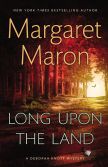
Cozy mysteries are written in the style of Agatha Christie. The murder takes place offstage, there’s no blood or gore, no graphic sex or cussing. Animals and children are never harmed in a cozy, though Dame Agatha killed at least one Girl Guide. Agatha is the queen of cozies. Cozies are not all tea and crumpets. Many of them address social issues, including racism, poverty and pink-collar inequality. A good example is Margaret Maron’s cozy series featuring Judge Deborah Knott. Long Upon the Land won an Agatha Award for Best Contemporary Novel.

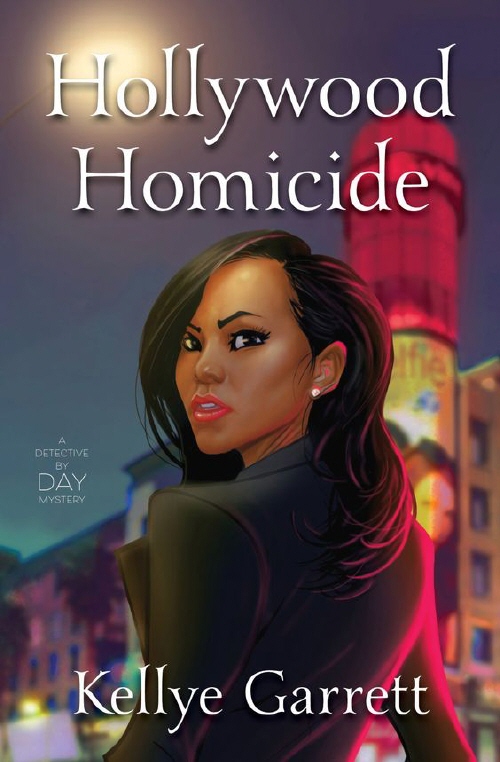
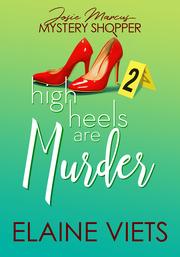
Chick lit is light mysteries, usually written for women readers. Chick lit centers around female friendships, with a splash of romance and a dash of murder. I’ve written ten chick lit mysteries in my Josie Marcus mystery shopper series, and I have a contest give-away at the end of this blog. Kellye Garrett writes award-winning chick lit. Her first novel was Hollywood Homicide.

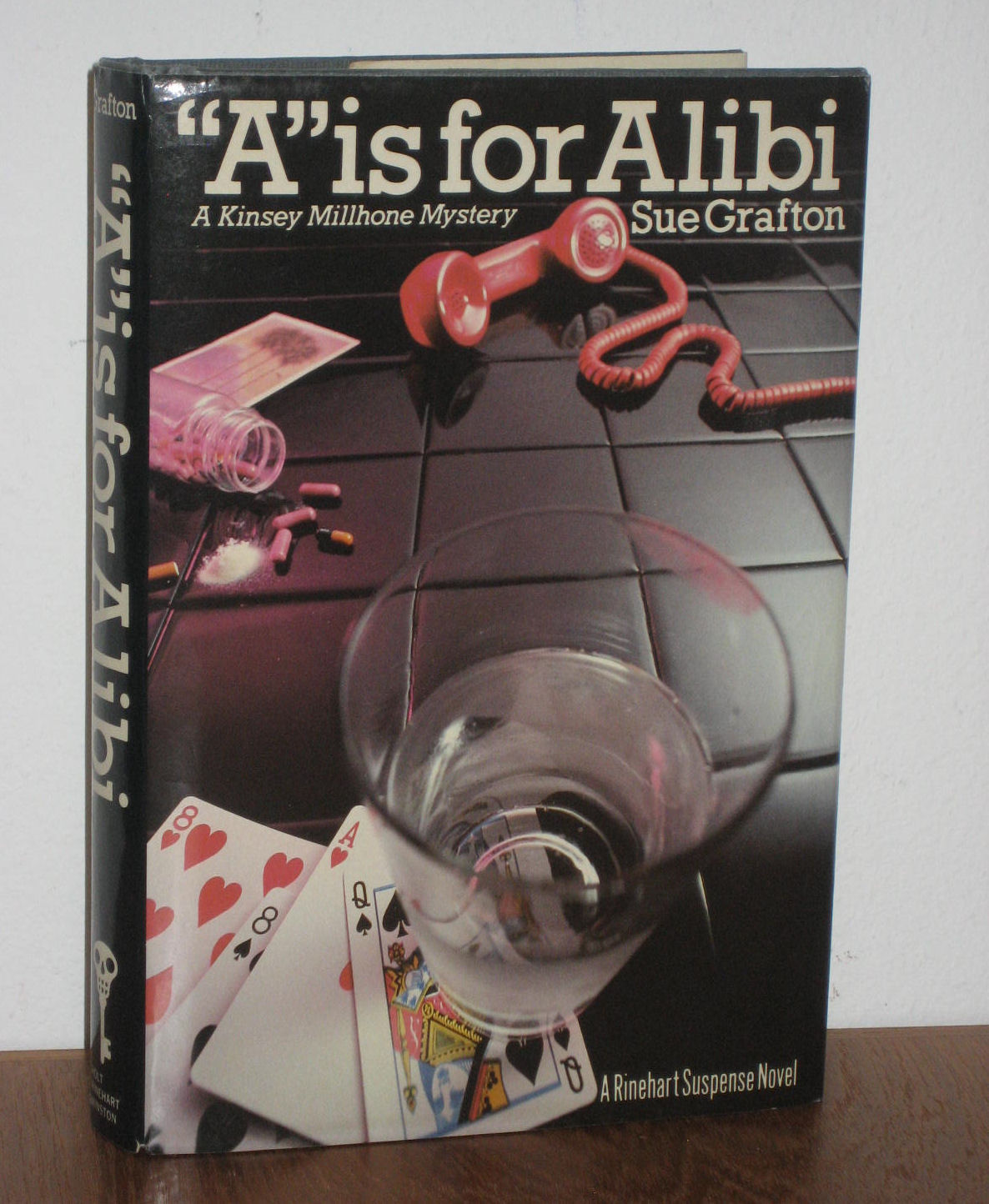
Soft-boiled mysteries are between cozies and hard-boiled: some violence and the occasional four-letter word. The best example is Sue Grafton’s alphabet series.

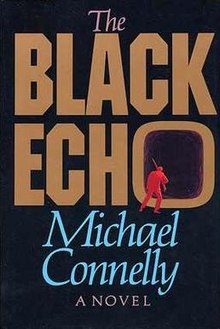
Police procedural. The name says it all. This is a mystery that gives a realistic look at some type of police work, including criminal investigations, forensics, search warrants, and interrogation. Michael Connelly writes top-notch police procedurals, especially his Harry Bosch novels. Start with The Black Echo and keep reading.

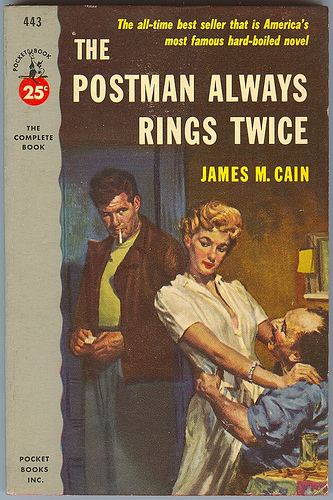
Hard-boiled. These mysteries are much darker than cozies. Readers may encounter violence, sex scenes and graphic language. Children and animals can be kidnapped and killed. Hard-boiled mysteries often take place in cities. Raymond Chandler, James M. Cain, and Ross MacDonald write first-rate hard-boiled mysteries.

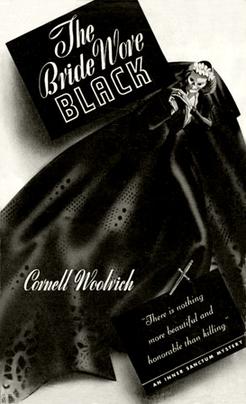
Noir, with its dark view of life, is closely related to hard-boiled mysteries. The protagonist is often up against a corrupt system or a wicked world. Women are often viewed as betrayers and heartless temptresses. Many protagonists are self-destructive. Don’t expect a happy ending. Cornell Woolrich writes true noir.

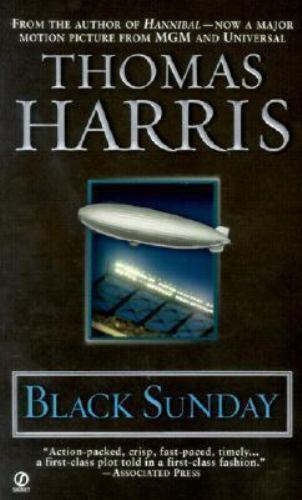
Thrillers are action novels with high stakes: Someone wants to kill the President, blow up New York City, or kidnap a busload of school children. The protagonist races against the clock to save them. My favorite thriller is Thomas Harris’ Black Sunday.

8888888888888888888888888888888888888888888888888888888888888888888
Win an e-book of High Heels Are Murder, my Josie Marcus, mystery shopper mystery. Click Contest at www.elaineviets.com

Creating Characters: You Can Always Start With the Car


Stock photo via GoDaddy


So. You’re ready to create a character.

What does your character look like? Eat? Worship?

Do they exercise? Do they jump up on boxes and grunt, or are they a mall walker?

What high school did they go to? Freak or geek, prom king/queen, or regular Jane?

Do they color their hair? Clip joint, or fancy salon?

Gluten-free? Dairy free? Pescatarian?

Do they eat creamed corn? Do they look at porn? (Obviously I went for the rhyme there.)

Shoplifter, despite having millions?

Boxers, briefs, thongs, or commando?

Tampons or pads?

401K or under the mattress?

Acid reflux, heart palpitations, heartbreak of psoriasis?

Wrist watch, pocket watch, no watch, sundial?

Fast talker?

Lousy lover?

De-canterer of wine before guests arrive to hide how cheap they are?

You figure out all this stuff before you sit down to write, right? If you do, congratulations are in order. You’re about a hundred steps ahead of most writers—Okay, when I say most writers, I mean me, at least.

I envy writers who spend lots of time defining their characters, then put them onstage with ready-made conflicts. You bought me briefs instead of boxers? Are you even my wife?!

Goodness knows I torture encourage my writing workshop participants with character-building exercises. It’s a lot of fun, especially when they begin to see their character as something more than a mannequin with brown eyes, curly dark hair, a cruel mouth, and wearing a nose ring and expensive jeans. You only have to look around you to see that there is no such thing as a generic human. Family members make excellent character models, and the nice thing is that they rarely recognize themselves—Particularly if the character is unlikable. And there’s nothing like taking revenge on a dreaded former coworker or high school frenemy by putting them in a book.

Sometimes all your imagining will be for naught when it comes time to get into writing the story. Thriller and other genre writers don’t necessarily have the luxury of languorous character development because the action tends to move fairly quickly. This is where series characters really shine. A series gives a writer many opportunities to grow and deepen their personalities and habits. At the moment I’m reading Robert Galbraith’s Cormoran Strike novel, Lethal White. Strike is a solid, well-defined character whose enormous, damaged body looks amazing in a well-tailored suit. And I think he likes squash soup? Okay, maybe I made that part up, but he’s not too shy to engage in a bit of dress-up roleplaying behind closed doors with his current girlfriend. Seriously, I could not have made that up.

I rarely did even minimal character sketches before I started using Scrivener about six years ago. Its template is on the minimalist side, with blank spaces for a character’s role in the story, physical description, occupation, mannerisms, internal conflicts, external conflicts, and background. This approach gives you plenty of latitude, without driving you crazy. I confess, I don’t often even fill these templates out completely. BUT I am one to go back and fill them in as I write the book. I like for the character to surprise me. It’s also extremely useful to keep track of all those details, like when two of your characters hook up and you’re not sure what color your heroine’s eyes are.

If you ever get stuck, I have a simple fix. Decide what sort of cars (if any) your characters are driving. Americans often express their personalities via their cars, and we all have ideas about what kind of people drive a particular model.

The protagonist of The Stranger Inside, my suspense novel that’s coming out the first week of February, drives a Mini-Cooper. Kimber isn’t quite forty, and she likes the option of being able to drive away with speed when she wants to escape her problems.

There really is no wrong way to design your characters, as long as you’re telling the story they want to tell.

What’s your process for creating and defining characters? Tell us about a favorite character that you created.

How Authors Can Help After a Disaster


by Debbie Burke

@burke_writer

NASA Goddard Photo of the Camp Fire, Paradise, CA

The Camp Fire in Paradise, California killed scores of people and destroyed 13,972 homes, 528 commercial structures and 4,293 other buildings (according to NPR, 11/27/18).

Our nephew and his wife were among those who lost their homes, barely escaping with old family photos and two pairs of pants—the size 36 jeans he was wearing, and the size 28 US Navy trousers that had belonged to his grandfather (my father-in-law) when “Pop” served on the USS Enterprise during World War II.

The fire destroyed countless memories, mementoes, and relics of history—the foundations upon which people build their lives, identities, society, and culture.

Amid the devastation, the Paradise Library remained standing, although damaged.

Beth Zimmerman, a national expert on disaster recovery says, “The library will be a key to providing [survivors] a known place to gather and take time to commune with their neighbors. Libraries can soothe children’s fears and help them cope, especially if they are used to going there.”

When everything familiar and comforting is lost, books can help recreate a sense of safety and security.

Melanie Lightbody, head of the Butte County Library System says, “The library is one of the few buildings which survived and therefore will be even more crucial to the community as it rebuilds. A symbol of possibility and hope.”

Efforts are underway to rehabilitate the structure and contents. Author Phil Padgett is spearheading a pledge drive for books to repopulate the library’s shelves. A former FEMA reservist who deployed to New York after Hurricane Sandy, Phil understands the complex, long-term logistics of rebuilding.

Unlike immediate necessities, such as bottled water, food, clothing, and construction materials, books fall into the category of way-down-the-road work. Yes, they are needed but what do you do with them in the mean time when there is no place to put them?

For now, Phil is compiling a list of authors who have pledged to donate their books. In coming months, he will coordinate collection, cataloguing, and storage. Later, when the library is ready to receive the books, he will arrange for shipping.

Books can be solace in time of tragedy, taking people’s minds off their troubles.

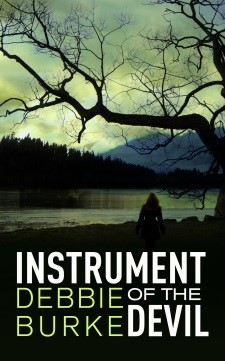
One of the best compliments I ever received came from a reader in Florida. My thriller Instrument of the Devil was released at the same time Hurricane Irma hit. The woman said my book had helped her pass the long, difficult week when she (and millions of others) had no electricity.

As authors, we don’t necessarily run bulldozers or nail up plywood but we can help rebuild lost culture.

If you’re an author who would like to donate to the Paradise Library, Phil’s email is: philip.j.padgett@gmail.com 


Does your Amazon holiday gift card have spare change left on it? Catch the January sale of Debbie Burke’s award-winning thriller Instrument of the Devil  for only 99 cents. Or read for free on Amazon Prime. Click here.

Morality and the Modern Writer

Happy New Year!

I’m going to dive right into 2019 by raising the tricky and controversial topic of what I’m calling ‘morality and the modern writer’. I’d been mulling over aspects of this issue ever since the MWA controversy over Linda Fairstein, when yesterday (quite serendipitously) the NYT published an article entitled ‘Must Writers be Moral?’. This article got me thinking (again) about how we deal with, and differentiate between, the actions and ‘morality’ of an artist as opposed to their work. In the Fairstein controversy, the MWA withdrew her Grand Master award following an outcry over her involvement in the infamous Central Park Five case. While I don’t intend to discuss this particular case in any detail, it highlights the very public way we are now seeing the line between art and artist play out in society today.

The NYT article (a link to which is provided here) adds a further dimension to the discussion by highlighting the increasingly widespread use of ‘morality’ clauses in publishing agreements today (something, I must admit, I was completely unaware of!). The article details the use of clauses that release publishers from their obligation to publish a book if (in the words of a Penguin Random House contract) “past or future conduct of the author inconsistent with the author’s reputation at the time this agreement is executed comes to light and results in sustained, widespread public condemnation of the author that materially diminishes the sales potential of the work.” Some contracts go even further, requiring authors to return advances should their contract be terminated. As this article outlines, even though publishers’ concern over the marketability of their authors is understandable, the issue of ‘immorality’ can be a slippery concept (especially if the publisher has sole discretion over determining an alleged infringement) and, when it comes to public condemnation, often a moving target. Some prominent writers, such as Masha Gessen, have refused to sign these clauses arguing that there is too much ambiguity involved in these kinds of ‘morality’ clauses, not to mention concerns over censorship as well as public vitriol.

In 2018 there were some very public book cancellations (most notably Milo Yiannopoulos) and scandals involving authors such as Junot Diaz that reflect the post #MeToo era. While I don’t want to engage in a heated discussion about these particular controversies, I am trying to get my head around the distinction (especially when it comes to ‘morality’) between the artist/writer and their work. Any student of literature knows that many famous writers were hardly angels – instead history is strewn with womanizers, drunks, addicts, racists, anti-semites, misogynists..and the list goes on. So how do we separate the person from his or her work? Should we judge an artist solely on their works or is the work inextricably linked to them as people (and thus, their behavior and attitudes)? In the current publishing environment it seems that writers are being held up to scrutiny in both their professional as well as their private lives.

So TKZers, what do you think about these so-called ‘morality’ clauses in publishing contracts? How do you view the distinction between a ‘writer’ and his or her ‘work’? Is such a distinction even relevant in today’s social media age?


On Setting Word Count Goals

by James Scott Bell
@jamesscottbell

I’m a goal setter, but it didn’t come naturally. When I was a young pup I tended toward the Walt Whitman school of life: I loaf and invite my soul.

That had to change when I went to law school. And then when I joined a big law firm; even more when I went into private practice.

Later, I started running a small business and really had to get into goals, for they are an essential part of Entrepreneurship 101. Those were good self-study years for me. What I learned back then has served me in good stead ever since. (If you’re interested in the details of those lessons, I put them into a monograph available here.)

When I was just starting out on this writing gig, I got some invaluable advice: set a word quota, not a time quota. Don’t say, “I’m going to write for two hours every day!” because there are too many ways to waste that time. You could stare out the window for an hour and a half and call it creativity.

A word count quota produces pages. A page a day is a book a year. (A page is approximately 250 words. A Ficus tree can write 250 words a day. Don’t be shown up by a Ficus tree.)

Over the years I’ve been asked about my quota and system for keeping track, so here it is.

My quota, as it has been for most of my career, is 6,000 words a week—312,000 words a year. I try to write six days a week and take Sundays off to rest the noggin. Having a weekly quota helps because if I miss a day for some reason, I can make up the words on another day.

This works for me, though it’s nothing compared to what some of the great old pulp writers used to do. A few of them pounded out one million words or more per year, and on manual typewriters, too!

Sheesh. They must have driven their neighbors crazy.

Erle Stanley Gardner, creator of Perry Mason, was one of the million-plus boys. Sometimes his fingers would bleed. He’d tape them up and keep typing.

Then he discovered the Ditcaphone. At the peak of his productive years Gardner was dictating his books and had a team of secretaries transcribing them. These days there are several options for speaking your words. Google Docs has a pretty fair dictation mode. So does Mac OS. I’ve done some dictating via my phone (into Google Docs) and on the computer, but it never feels quite right to me. With the editing that’s involved after I dictate, I wonder if the actual word count + time equation isn’t just about the same.

Anyway … I wrote 313,508 words in 2018.

I keep track of my words in two ways. When I compose in Scrivener, which I do most of the time, it has a handy-dandy word count tracker for both the overall project and the current session. If I’m writing in Word, I first jot down the word count of the document. I type, and when I finish I simply subtract the old word count from the new.

I tally these words on a spreadsheet, and have been doing so for twenty years. On my spreadsheet I have four categories: novels, non-fiction, short fiction, and writing. That last category is specific to my craft teaching. So I can look at my sheet and see how many words I’ve written in each category per day. I have a daily tally, and a weekly tally. I have a cell next to the weekly tally that keeps track of my cumulative output.

Next to that latter cell I put in a number. The number is a sequential sum of 6000. So at the seven-day mark, I put 6000. At the fourteen-day mark, 12,000. And so on, right up to 312,000. That way I can see if I’m falling too far behind. Here’s a portion of my spreadsheet from 2018 (click to enlarge):

Okay, does all this seem too complicated? It really isn’t. Once you have the spreadsheet figured out you can reproduce it easily each year. And once you’re in the habit of tracking your daily word count, it will become second nature.

What should your quota be? I advise writers to figure out how many words they can comfortably produce in a normal week, then up that by 10% as a stretch goal.

So what is my word count goal for 2019?

312,000.

What’s yours? Do you have a system for keeping track? Or does the thought of goals for your writing make you nervous?

***

FYI, tomorrow is release day for my new Mike Romeo thriller. It’s available for pre-order now at the special launch price of $2.99.