When Characters Talk – Interview with Author Assaph Mehr


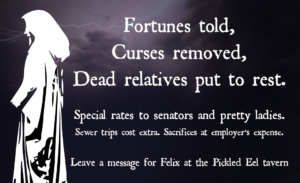
Felix the Fox business card

By Debbie Burke

@burke_twitter


Recently a writer friend turned me onto a site called The Protagonist Speaks, created by author Assaph Mehr, who was born in Israel and now lives in Australia. He writes a series described as Stories of Togas, Daggers, and Magic for lovers of urban fantasy, detective mysteries, and ancient Rome.

His main character is Felix the Fox, part sleuth, part magician, part fixer who handles occult trouble for Rome’s upstanding citizens who don’t want to dirty their hands.

Felix’s first interview appeared in 2016. The idea of an author interviewing the characters in his book intrigued readers. Soon, Assaph expanded the site to include other authors interviewing their characters.

The concept struck me as a fun, quirky marketing tool. I reached out to Assaph and requested an interview. That is today’s post, although I’m not quite sure who will show up—Assaph or Felix!
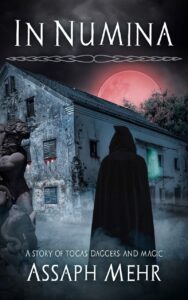
In Numina by Assaph Mehr

Debbie Burke: Please share a little about yourself and your background.

Assaph: I grew up on the shores of the Mediterranean, where every stone has a history – and the stone under it too, going back millennia. One of my favourite spots was an Ottoman citadel (we used to play LARP [live-action role-playing game] there), which is built on Mameluk foundation, laid on top of Roman village, which displaced older settlements to Egyptian times. Can’t grow up like that and not love history. Fantasy I discovered early on when introduced to The Hobbit, and thereafter I’ve been reading it voraciously. I now live in Oz (aka Australia), with various cats, kids, spiders, and water dragons.

Felix: I come from the city of Egretia, which Assaph assures me is very like your own ancient Rome. My father was in the antiquities trade, though I was fortunate enough to be accepted to the Collegium Incantatorum. My father died, the family fortune was lost, and I could no longer pay tuition so never graduated. So, after a brief stint in the legions, I came back and by a stroke of luck apprenticed with a couple of the city’s most renowned investigators. When they didn’t want to take a case that had occult elements, I seized my chance. I combined whatever education in the magical arts I gathered in the collegium with the investigative skills I learnt, and set out to solve paranormal problems for the proletariat.

Assaph: In Ancient Rome tradespeople often advertised by chalking messages on public walls. That’s how I met Felix, and got him to tell me his stories so I could write them down. For our world we couldn’t quite spray graffiti everywhere, so we made Felix some business cards. Please, pass them on to your readers.

DB: Your books sound like an interesting mashup of hard-boiled detective stories, fantasy, and history. How did you come up with that combination?

Assaph: Quite simply, that’s what I always liked to read. I grew up on classic detectives and thrillers, loved ancient Rome, and often escaped into fantasy and Sci-Fi. I always wanted to see my name in print, so when it was time to write I combined my favourite elements into the stories I wanted to read. (sotto voce) Don’t tell Felix he’s a figment of my imagination – he gets offended, and besides I’d rather he not ask uncomfortable questions about some of the misery I put him through.

Felix: For me it was a stroke of luck – my name, Felix, means lucky, so I attribute everything to my patron goddess Fortuna. As everyone will tell you – or, rather, whisper so she can’t hear – she can be a fickle and capricious goddess. I was accepted to the collegium, but had to terminate my studies; with no prospects I joined the legions, but escaped honorably without injury; the two investigators took me in, and I managed to carve out a unique niche for my business. So those stories are just the cases I handle for my customers, which Assaph publishes here. I’m still waiting on those royalties he promised.

Assaph: Skinflint. I told you, I had to pay the editor and the cover designer. We’re waiting on that movie deal for the big payout.

DB: What inspired the seed for The Protagonist Speaks?

Assaph: It was one of those 3 a.m. ideas that stuck. Every reader talks about favourite characters, I thought it would be an interesting idea to let them meet those characters in person, as it were. A bit like a celebrity talk show, but centered about the characters rather than the authors.

DB: How do readers respond to interviews with characters?

Assaph: The responses I get are overwhelmingly positive. Both authors and readers enjoy the quirky experience of letting the character sit on a guest couch and be interviewed. Both authors and readers also tell me that they are sometimes surprised by the answers they get.

Felix: For my part, I can say that it was a bit weird at the start. I didn’t quite get what it was all about, and I was reluctant to share secrets. Now I do have a better understanding of what’s involved, and I can say it can be a phenomenal experience for the character as well.

Assaph: Right, so that’s you agreeing to do another one – proper one – for the next book launch.

DB: What is the site’s primary purpose? Promote author name recognition? A way to increase book sales? Fun and entertainment?

Assaph: Yes – pretty much all of that. Authors and readers get to have a bit of fun, it helps increase exposure of the books to potential readers, and authors end up with long-life marketing collateral, something that can be shared to help increase buzz. Running the site is my way of giving back and helping fellow authors.

DB: Have you experienced an uptick in sales from The Protagonist Speaks?

Assaph: Modest, but yes. As with most marketing, it’s about repeatedly putting good content in front of potential buyers, till they make the decision to buy. Having these quirky interviews helps do just that – it’s a way to come across new authors, it’s a reason to share the books again, it gives more view-points into the author’s style that may help convince a reader that this is a book for them. There is definitely more engagement from authors who understand that, and I see more engagement when authors share it on social media and newsletters (beyond what I normally see when only I share the interviews).

DB: What is the process for an author to submit an interview with a character? Is there any cost?

Assaph: No costs. As said above, it’s my way of helping fellow authors. Heck, I half do it for myself – besides having an excuse to chat up authors I enjoy, I also discovered a few new favourites.

For anyone interested in joining, just fill out the Contact form on TheProtagonistSpeaks.com/Contact.

DB: Anything else you’d like to share with Kill Zone readers?

Assaph Mehr

Assaph: Thanks much for hosting us, Debbie! I promise I’m not as crazy as I sound, despite the voices in my head. Should any of your readers like to meet Felix more, there are a few free short stories and a free novella on my website here: egretia.com/short-stories. Those will give you an idea of the trials and tribulations of a private investigator during antiquity, dealing with the supernatural world (and why he wants to get paid, and I don’t want him to think I’m the cause of all his troubles).

Website: http://egretia.com

Facebook: http://facebook.com/AssaphMehrAuthor

Twitter: @assaphmehr

~~~

As a side note, after chatting with Assaph, I dragged the male lead in my thriller series, Tillman Rosenbaum, kicking and screaming, to Assaph’s interview couch. Please check out Tillman’s reluctant answers on March 5 at The Protagonist Speaks

~~~

TKZers: Do you ever interview your characters? Do their answers surprise you?

~~~
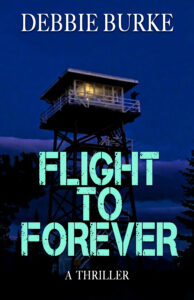


Debbie Burke’s characters really startled her in her new thriller Flight to Forever.  Discover the surprises here. 


Cover design by Brian Hoffman

Does Anyone Read Poetry Anymore?

Back when my book group could still meet in person we had a fun month where everyone chose a piece of poetry to share. We had funny poems, romantic poems, some pithy pun filled poems, and then there was me dredging up the angst with Sylvia Plath:)

I’m sure it will come as no surprise to anyone that I was a definite poetry nerd as a teenager. I was into all the angst, all the pain, and definitely all the darkness associated with poets like Plath, Dickinson, Lowell, and Eliot. I still have shelves of poetry books, including an inordinately morbid number of First World War poets, as well as a surprising number of romantics! I have to confess though in recent years I’ve bought very few new volumes of any kind of poetry and, apart from this particular book group project, have rarely taken down a book of poetry to peruse for fun. So what happened? (you know apart from life, motherhood, etc…) Why had poetry dropped off my reading list so precipitously?

A few years ago I remember hearing the poet Jane Hirschfield being interviewed on Fresh Air and being mesmerized by her poetry reading (I had to pull the car over so I could listen to the whole broadcast). More recently I was inspired by Amanda Gorman’s amazing poem at the inauguration and I do hope this elevation of poetry and performance will reignite popular interest (not that I think publishers ever viewed poetry as a great money maker!). For me, though, the desire to reconnect with poetry came a few months ago (pretty much after my book group project which made me realize what I’ve been missing). Since then I’ve been trying to start off my writing day with reading at least one poem. It’s been, at best, a sporadic success, but I am so glad that I’m finding the time to reincorporate poetry back into my life…but still I have to wonder, does anyone actually read poetry anymore??

What about you TKZers? Are you a poetry fan or was poetry just something cruel English Literature teachers forced you to study? Do you, as writers, ever use poetry as a creative or inspirational tool? What do you think are the chances that poetry is now back in vogue (if it ever was!)?


The Em Dash and I—A Love Story

by James Scott Bell
@jamesscottbell

Happy Valentine’s Day! Since love is in the air, I thought I’d write about my own passionate affair. Don’t worry. My wife knows all about it, and doesn’t mind, though she wonders at my ardent attachment. “It’s just a punctuation mark,” she says.


“Not just any!” say I. “It’s the most versatile of the lot. It’s clean and strong. It clarifies and emphasizes without being boorish. Do not belittle my love of the em dash!”

Or something to that effect.

So yes, I confess. My heart is enraptured by the em.

Now, there are actually three types of dashes you need to know about. While technically not a “dash,” the hyphen is a line like the other two. It’s the shortest of the bunch because it is used only to connect words that have a combined meaning. Like: He’s a two-time champion.

A bit longer is the en dash. The main thing to know about the en is that it’s primarily used to join numbers, as in “The Dodgers beat the Reds, 3–2.” Or, “Robert Benchley (1889–1945) was an American humorist.” Many writers use a hyphen or an em dash for this, and shouldn’t.

By the way, the names en and em come from the days of movable type. An en dash was determined to be the approximate length of the typeface n. An em dash was the length of the m. (Frankly, I think it would have saved a lot of confusion if these dashes had been named Marge and Sylvia.)

Now, on to the star of my article, the em. It is a crisp, efficient dash used to set off a word or clause for emphasis or additional information. I use it instead of a parenthesis or a colon. (Those of you have who been longtime followers of TKZ know of my disdain for the semicolon in fiction. I am with Vonnegut on that score. “Here is a lesson in creative writing,” he wrote. “First rule: Do not use semicolons…All they do is show you’ve been to college.”)

(Astute readers will note that in the above paragraph, and this one, I use a parenthesis. That’s because, when it comes to punctuation, I draw a distinction between fiction and nonfiction. The parenthesis and semicolon are useful in nonfiction. I use them myself, just not in fiction.)

Actually, I may have used a parenthesis on occasion in my short fiction. Stephen King loves parentheses. He uses them as a device to get into the head of the viewpoint character or to drop in a little backstory. Here, for example, is a clip from one of his early short stories, “Children of the Corn.”

He stopped, looking directly into the corn. He found himself thinking (anything to untrack from those rags that were not rags) that it must have been a fantastically good growing season for corn.

And this:

His mind was elsewhere, listening to the dull buzz of a cicada burrowing into one of the nearby elms. He could smell corn, dusty roses, and fertilizer. For the first time they were off the turnpike and in a town. A town in a state he had never been in before (although he had flown over it from time to time in United Airlines 747s) and somehow it felt all wrong but all right.

Here’s one where King uses parenthesis and em dash both!

While she picked at the knots (her face was set in a peculiar way—expressionless but tight-mouthed—that Burt remembered his mother wearing when she pulled the innards out of the Sunday chicken), Burt turned on the radio again.

(Down in the comments, tell me what you think of King’s use of parentheses. It may help him sell more books.)

Sometimes I use the em dash instead of a comma. Here’s an example from Romeo’s Hammer:

So what about the lack of clothing? A love scene gone bad? Someone who had been with her while she was drinking—or drugging—herself? Her condition when I found her was such that she had to have come from one of the beach houses. Access to the sand is cut off all along PCH. She didn’t wander down from the street.

I used the em dash here because I wanted more emphasis on the word drugging than a comma setoff would create.

The other major use for the em dash is interruptions in dialogue. Please do not use ellipses for this! Those three dots are used for a voice trailing off by speaker’s choice.

“I don’t know, Stan, let me …”

Stan turned around. “Let you what?”

The em dash shows an interruption, which should immediately be followed by the other speaker’s words (or an action which cuts off the sentence, like a bullet through the heart). Again from Romeo’s Hammer:

“That’s a fine achievement,” I said. “You do know that kara is an ancient word that means to cleanse oneself of evil thoughts, and to be humbly receptive to peace and gentleness. Yes? You are therefore abusing your own discipline. That’s not a good way to—”

“Shut it!”

The em dash is also used for self-interruption:

“Slow down,” Jack said. “You’re driving too—stop! Look over there.”

In doing a little research, I was delighted to find that em dash love is so pervasive that it was even covered in the NY Times:

Mary Norris, the New Yorker’s “Comma Queen” and the author of “Between You and Me,” wrote in an email that the em dash “can be substituted for almost any other mark of punctuation — the comma, the semicolon, the colon, the period, a pair of parentheses, the quotation mark, even a bullet point in the making of a list.” Just don’t use more than two in a sentence, according to some experts.

***

[W]riter Laura van den Berg confessed in her own tweet that, “after years of resistance,” she had fallen “into headlong love with the em dash. I love the way it can create the feeling of a fractured/incomplete/interrupted line or thought.”

Technical notes:

Don’t put a space before or after the em dash. Only newspapers using the AP Stylebook do that, and only because columns of newsprint (remember newsprint?) are easier to justify with the spaces.

In Word for Mac, you make a hyphen by typing the hyphen key. (You’re welcome.)

En dash is option+hyphen.

Em dash is shift+option+hyphen. (Also, Word will convert two hyphens into an em automatically).

For PC users, things are a bit more involved. You may consult this article.

Okay, TKZers, over to you. Do you love the em dash? Is there another punctuation mark you’d like to send a Valentine to?

Shake, Rattle, and Roll

Abnormal Hand Movements

It’s time for another physical diagnosis discussion. Four weeks ago we talked about abnormal gait. Today let’s discuss abnormal movements of the hands, and let’s limit the discussion to tremor. There are other abnormal movements of the hands, but most of them will occur in people with severe neurological or metabolic disorders, and not in people who are out in public, committing crimes, or solving crimes, i.e. characters in your stories. There are also tics, habits, and “unusual” movements of the hands which are under voluntary control, and are therefore “normal.”

Hopefully this discussion will be of value with description, and being specific.

So, let’s get started. What is tremor? The medical definition is “rhythmic involuntary movements.” Note that it can involve other parts of the body besides the hands.

In practice, when a physician sees someone with “the shakes,” the first thing he/she will do is to differentiate between Parkinsonian tremor and Benign Familial Tremor. They are two different neurological disorders, with far different prognoses and treatment.


Parkinson Tremor

The Parkinsonian tremor has a regular rhythm of four to six cycles per second. It is best seen when the patient is moderately relaxed, and disappears during sleep and complete relaxation. It also decreases with voluntary movement. It has been called a “rest tremor.” It can affect the hands, the feet, and the mouth. It is most commonly seen in the hand, where the thumb beats rhythmically against the flexed fingers, thus called a “pill rolling tremor.”

The onset of the tremor is often asymmetric, affecting one limb more that the other. Other clues that this is Parkinson’s disease include slow movement, shuffling while walking, flat facial expression, and rigidity to flexion and extension of the affected limb. Parkinson’s disease is also associated with dementia.


Benign Familial Tremor (now coded as “essential tremor”)

I prefer the old name, because it is more descriptive of the cause and the prognosis. This is a very common condition, affecting about four percent of the population. It is often mild and goes undiagnosed. And there is often a family history of the same tremor.

The tremor is described as affecting the fingers, particularly in the outstretched hand. It can also cause rhythmic oscillations of the head (titubation, or “head bob”). The tremor is fine, rapid, and accentuated by activity or emotional stress. I like to call it a “vibratory” tremor. And, because it is worse with activity or trying to suppress it, it is also described as an “intentional” tremor. It is not associated with dementia. And, unlike Parkinson’s Disease, it may not progress.


Others

Other common conditions that may be associated with a similar tremor, and may actually be uncovered, otherwise asymptomatic, Benign Familial Tremor, are the following:

  • Excessive thyroid – either hyperthyroidism or excessive thyroid replacement
  • Excessive caffeine intake – we’ve all seen that one
  • Sleep deprivation
  • Decongestant use such as pseudoephedrine (Sudafed)
  • Use of stimulant drugs – either for attention deficit or illicit drug use
  • Anxiety
  • And any combination of the above


So, now you are prepared to describe in detail the tremor of that suspect sitting across the interrogation table from you. If you get a chance, grab his wrist and see how smoothly his arm flexes and extends at the elbow. Make him reach for something and see if the tremor ceases or is accentuated. And if his tremor is bizarre, get a neurological consultation. If that doesn’t yield a diagnosis, call a psychiatrist.


Okay, it’s your turn: What memorable characters with a tremor have you read about in a novel, or seen in a movie? What characters have you created with a tremor? Or, if you prefer, what would be an ideal situation to display a character with tremor? And, hopefully, it’s not your hero trying to aim his gun.


Reader Friday: Which Hero are You?

A killer abducted you, bound your wrists and ankles, and dumped you in his lair. You only have a few hours to escape before he returns.

Don’t panic!  I’ve given you a superpower — the ability to change into a fictional hero.

The transformation is now complete.

Who are you? Why did you choose this hero?

Scamming the Scammers

By Elaine Viets

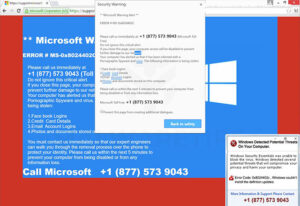
There’s another virus that’s hitting those of us who work from home – ransomware. The most common right now is called the Microsoft Attack. A warning pops up that you have a virus and there is an 800 number to call “Microsoft” to have it removed. My IT guy says Microsoft will never call, email, or send a pop-up about a virus. That’s malicious software holding your computer hostage until the ransom is paid. You’re locked out.

Ransomware attacks are epidemic. Two weeks ago, a woman in my (socially distanced) gym class had her computer locked by ransomware. She refused to pay the ransom. Instead, she paid her IT guy $600 to free her computer. Yep. The poor woman ponied up 600 bucks. My IT guy said $50-100 was overcharging. He could do the job in under an hour.

I didn’t have the heart to tell her it would have been cheaper if she’d backed up her data and gotten a new computer. Not to mention a new IT guy.
Last week, my husband Don was working at his computer when it was attacked by ransomware. His computer was locked. Don couldn’t finish his article and he was on deadline. A red warning message blared across his screen. There was also an 800 number that he could call for “help.”

We both knew how expensive that help would be.


Don waited about an hour, hoping the ransomware would disappear.
No such luck.
Don and I had no choice but to use our most extreme weapon: 131 C.
He called the 800 number on his screen and I got on the line to listen in. The man who answered sounded young – maybe in his twenties – and he spoke English with an Asian accent. He told Don his name – a decidedly WASPy one, something like John Clark. That’s what I’ll call him for this blog. The attacker also told Don he was working in Chicago. I doubt he was anywhere near the place.
John claimed he didn’t know how Don’s computer got locked up. He was simply here to help, and if Don would give him his credit card number and tell him exactly what was wrong, then John would fix Don’s computer. They went back and forth like this for at least a minute:
John would ask Don to tell him what was wrong. Don would demand John remove the ransomware. John would deny he was there for any reason but to help and if Don would give him his credit card information . . .
At that point, I joined the conversation. “This is Don’s attorney, Vera Ellis, calling on a recorded line. Mr. Clark, you are aware that this conversation is being recorded, right?”
“No reason to record,” John Clark said. “If you will tell me what is wrong, I can fix the computer.”
“I’m Don’s attorney,” I repeated. “I’m speaking on a recorded line. You are in violation of FCC regulation 131 C. Do you understand that, Mr. Clark?”
“If you will tell me what is wrong, I can fix the computer,” John Clark said. He continued to protest that he only wanted to help and would we tell him what was wrong. I talked over him and kept repeating: “No, Mr. Clark. I’m informing you again, you are in violation of section 131 C. Do you understand? That’s 131 C.”
Finally, the line went dead. Don turned off his computer.
Half an hour later, Don switched his computer back on. The ransomware was gone and his computer worked fine. He finished his article on time.


By the way, 131 C is the number of an apartment we lived in on Capitol Hill in Washington DC. We moved in on a muggy August Saturday, and the air-conditioning was broken. The apartment was at least a hundred degrees. We couldn’t open the windows, either. They were painted shut. And there were no fans.
I called the landlord, who told me he couldn’t get anyone there before Monday at the earliest. I suspected he didn’t want to pay the weekend repair rates. I wasn’t about to swelter in that apartment until Monday.
“You have to get someone here to fix the air-conditioning,” I told him in a firm voice. “Or you’re in violation of section 131 C of the housing code.”
After I hung up the phone, Don said, “Isn’t 131 C our apartment number?”
It was. But it was enough to produce an air-conditioning repairman at our apartment within two hours.
And so the legend of 131 C was born.

Some of these scammers hijack major cities and counties. County officials in LaPorte, Indiana paid a $132,000 ransom to hackers who took over some of the county’s computers. The hijackers demanded their payment in Bitcoin. Another city paid more than $9 million to update their old, outdated system, rather than give the ransomers the $76,000 they demanded in Bitcoin. (Ransomware thieves loved Bitcoin.)
The FBI recommends that you don’t pay the crooks who hold your computer for ransom. You can report malware, ransomware, phishing and other scams to the FBI by calling 1-800-CALL-FBI. Press 3 and you’ll be directed to a website to file a complaint.
The FBI does catch some of the critters crawling around on the web.
One Raymond Odigie Uadiale pleaded guilty to conspiracy to commit money laundering in connection with a ransomware called Reveton. The former Microsoft employee got 18 months in prison.
If you ask me, and anyone else who’s battled these scammers, Ray got off easy.

 &&&&&&&&&&&&&&&&&&&&&&&&&&&&&&&&&&&&&&&&&&&&&&&&&&&&&&&&&&&&&&&&&
Coming March 2, DEATH GRIP, my latest Angela Richman, Death Investigator mystery. Kirkus says, “Viets produces chills with a murder hunt turned on its head.” https://tinyurl.com/ya9q9tfm
Flying Too Close to Reality

By John Gilstrap

A trait common to Gilstrap men is that as we age, we get cranky. The madness of 2020 added fuel to my ever-smoldering fires, manifesting itself as a pervasive need to scream my frustrations into the night. NOTE: The night doesn’t care. I’m pretty sure it didn’t even hear me.

To be honest, the certain malady-that-shall-not-be-named played nicer with me and mine than it did with many, but it upended so much and introduced such angst that there were times when I didn’t know what to do with the stress. Alcohol and Netflix helped, but there are limits, you know?

I react to the news of the day, and those reactions sometimes make writing especially hard. In times of major stress and distraction, I have difficulty summoning the concentration necessary to write fiction. In the months following 9/11, I wondered if I’d ever be able to write a convincing scene again.

When the state and federal governments shuttered all of industry back in late February and early March of last year, people who trust me with information that I probably shouldn’t know shared with me the terrifying reality of what many intelligence professionals thought was going to happen. The United States came this close to a total collapse of our food distribution system.

We all saw how petty and feral our neighbors got over toilet paper and hand sanitizer. Imagine the consequences if no food made it to supermarket shelves and no drugs made it to the pharmacy–and that there was no immediate means to repair the system.

Yeah, that almost happened.

And it almost happened in the exact same sleeve of time when I was writing a book about the collapse of American civilization in the wake of an apocalyptic event. It felt a lot like writing about a house fire as flames were rolling over my head. Unnerving, to say the least.

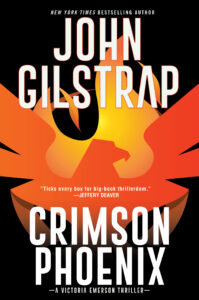
I managed to finish that book, more or less on time. It’s called Crimson Phoenix, the first entry in a new thriller series, and I think it’s one of the best things I’ve ever written. It hits the shelves on February 23. A click on the pictures or on this link will take you to a full description of the novel, but very briefly:

A rapid-fire series of communication fumbles leads to World War III, which lasts all of eight hours. By the time it’s over, the Unites States is in ruins. Millions die, yet millions survive. With all the infrastructure gone, elected leaders are unable to communicate with people outside of the bunkers that protected official Washington. It falls to individual citizens to figure out a way to continue living.

It doesn’t take long for the weak to turn feral. In one corner of West Virginia, though, a single mom named Victoria Emerson turns out to be the leader that everyone’s been looking for. Here’s the thing, though: She doesn’t want to lead. In fact, she quit Congress that very day because the rules of the Annex—the bunker to which the House and Senate are evacuated to—would not allow her children to accompany her. All she wants is to protect her family from harm. But when a community of desperate refugees instinctively look to her for leadership, she cannot turn away.

In writing Crimson Phoenix, I came to realize something that I guess I always knew, but never gave a lot of thought to. I call it the Concentric Circle Theory. As a husband and a father, my job is to protect my family from harm, which puts me in direct conflict with other husbands and fathers (and mothers and wives) who feel the same duty. One of the things that make nightmare scenarios so nightmarish is that human beings can turn every bit as feral as any other animal. The strong will prey on the weak every bit as viciously and reliably as wolves will prey on smaller animals.

Sounds dark, doesn’t it? But that’s not the way it turned out.

By the time I finished writing Crimson Phoenix, I realized that rather than writing about disaster, what I really ended up writing about was hope. Even in the worst of times, there’s good to be found in people, and great leaders will help others find that good in themselves. Great leaders also understand that many of the trappings of “civilized society” are contrived in comfort, and become irrelevant once the balloon goes up. When people are pushed hard enough, violence is inevitable. It’s understandable and even forgivable. It falls to Victoria to recognize the times for what they are and to help people understand that for every evil and for every act of violence, there are at least equal elements of kindness. Sometimes, though, the kindest approach is to wreak violence on offenders.

This introspection on human nature led me to a much calmer mental state than I occupied before I wrote the story, though perhaps at the cost of an even deeper cynicism.

  1. People are inherently good. A sense of justice and fair play is one of the elements that separates us from other roamers of the earth. Within our individual contexts, love, personal responsibility and acceptance by our peers is a driving force in our lives. We don’t want to let people down.
  2. If pushed hard enough, even the most mild-mannered and peace loving among us is capable of extreme anti-social behavior. Whether the behavior manifests itself in multiple baskets filled with toilet paper and hand sanitizer or in shooting someone perceived as a threat in the front yard, I think the vast majority of perpetrators feel genuine remorse when the hot blood cools. While I feel no need to forgive their actions, I think I’m obligated to understand their motivations.
  3. Each of us is wired to handle crises differently. My instinct is to evaluate, analyze and act on data that I have seen with my own eyes, or has been relayed to me by a source that has earned my trust. Others act on what they hear from politicians and television news reporters. My way is not right, theirs is not wrong.
  4. When all is said and done, each of us is on our own to make the decisions that are right for us. This is where I found my peace. If others take foolish or destructive actions on behalf of themselves and their families, that is on them, not on me. I will share my thoughts when asked, and I accept the fact that so few people ever ask.

Overall, this is new territory for me. It’s rare that I learn valuable life lessons through the act of writing. I hope it’s not like this again anytime soon.

What say you, TKZ family? Have your writing adventures ever led you to significant self-discovery?

First Page Critique: Whose Face
Is Behind That Pebbled Glass?

By PJ Parrish

I think we’re stepping back in time with today’s First Pager. Back to an era when men were right gees, women were dames, a gun was a gat, but cigar was always just a cigar. And the view of the world comes through the slats of Venetian blinds and a swirl of smoke. But whose view is it?

Fatal Infraction

Chapter 1 — Offensive Planning

THE BOSS’S OPEN HAND slammed against his desktop with an ear-splitting smack. Every ornament, pen, and even the desk phone jump and then rattled back into place. “Damn it all! I didn’t want it to come to this!”

The huge man standing on the other side of the desk remained unfazed. His pectoral muscles stretched at the fabric of his black t-shirt, thick forearms crossed across his chest, biceps bulging above the short sleeves. Maintaining a placid expression required more self-control than most of his duties, which tended toward knocking heads together. A protruding vein, just visible above his left ear throbbed with increasing frequency. He hoped the boss would not notice. Being cool under pressure was his identity.

The early evening sunlight filtering in through a gap in the Venetian blinds. A recently smoked cigar lingered in the air.

“We knew he was a wild card, boss.” Not a quiver from the big man’s arms as he spoke. His voice was even; detached.

“Yeah, I know. But I still feel like we could have handled it better.” He sighed as he spun in his leather chair and reached for a cut-glass tumbler sitting on a polished credenza next to a crystal decanter. He poured himself two fingers of The McCallan 12. His companion stood stoically as he savored a sip, then turned back around. “You don’t think there are any other options?”

The big man shrugged, “That’s not my call, sir.”

“It’s really a shame. He had potential. He could have made us a lot of money.”

“That’s why you picked him. But, like you said, we can’t tolerate his actions.”

The boss took a long draught, then set the glass down with a clink. “I know. The time is right. You take care of it.”

“I will.”

The man behind the desk leaned forward and reached for his telephone handset as the big man left. He mumbled to himself, “It’s a damned shame.”

___________________________

I’m just guessing here because the scene-setting is bare bones, but I think we’re in the era of the pebbled glass door. The tone of this opening suggests the bygone era of pulp novels — Venetian blinds, smoke, whiskey, a desk phone rather than iPhone.  The tone also comes from the clipped macho dialogue, the physical descriptions (bulging biceps, throbbing veins). If I’m wrong, then I think the writer has a problem going in.  We can’t really tell where we are in time or place. More on than in a moment.

But the main problem here is one of point of view. There isn’t one. Sure, you can make a case for omniscient but it’s not consistent. And as we’ve said here often, omniscient POV just doesn’t cut it in today’s crime fiction where readers are looking for intimacy and connection with characters.

First off, the set-up itself is interesting. Two mugs are talking about a deal that has apparently gone off the rails because somebody screwed up. Someone off-camera is in trouble. Trouble is good. But because of the point of view problem, we don’t really care. Not caring is bad.

We have a classic case of head-hopping here. It feels like we are in The Big Man’s POV because we get some thoughts and details filtered through his consciousness. But the POV is not solidly grounded because we have omniscient intrusion with details like a throbbing vein in his head, stretching pec muscles (which the Big Man cannot see). Then, in the last graph, we are yanked out of Big Man’s POV with this:

The man behind the desk leaned forward and reached for his telephone handset as the big man left. He mumbled to himself, “It’s a damned shame.”

Whose head are we in now? Marginally, The Boss’s. This just doesn’t work.

Establishing empathy, sympathy, or at least INTEREST IN THE ACTION is essential to any opening. Because we are not grounded in any character’s POV, we can’t bond. Because the set-up is so bare bones, we can’t care what happens next. This feeling is intensified by the writer not giving us any names. It’s coy, in my opinion, and serves no real purpose.

Whose story is this? That’s the big question here.

Now, here’s a caveat:  I could be wrong, but I don’t think the protagonist of this story is on stage yet. I have a feeling the writer is using the device of showing us the danger or villain before we meet the hero. The fixer Big Man (bad guy) is sent on a mission to track down and deal with the protagonist. Let’s call the protag Jack Evans. This structure could work. Given more details in this set-up, we might begin to wonder about Jack. All we are told is he did something wrong and he’s a “wild card.” Maybe we need to start worrying about Jack. We need a reason to turn the page.

I think this could be a good opening if the writer dropped in some more details. Big Man needs a name because I suspect he’s going to have more scenes and POVs and it’s going to get really tedious to keep him nameless. The man he will be hunting down needs a name here. What kind of business is this? Why withhold that info? At least give us a hint of that and what got screwed up. Also, WHO screwed up? The Boss at one point says, “I still feel like we could have handled it better.”  Yet Big Man is sent to go after Jack the wild card.

The dialogue is not working hard enough. The writer needs to pack more information into it.  Let me give you an example of how that could work.

“We knew he was a wild card, boss.” 

“Yeah, ex-cops always are.” He sighed and spun around in his chair to pick up the decanter on his credenza. He poured out two fingers of The McCallan 12 but didn’t take a drink. “Why do you think Jack turned on us?” he asked.

The Big Man didn’t answer. He knew Jack’s kid was really sick with leukemia and that Jack was desperate to get him to that big hospital up in Rochester. He needed money bad. Bad enough, maybe, to even cross The Boss. Note drops of backstory that tell us something about Jack and make us care. Note too that by not telling The Boss about this we are learning something about Big Man as well.

“I don’t know why he did it,” Big Man said. 

The Boss swung back toward him. “Jack Evans had potential. Could’ve made us a lot of money. Damn shame.” He finally took a drink of the whiskey then set the tumbler down. “You think there are any options?” he asked. 

The question sounded almost like a plea. The Big Man remembered that The Boss had taken to calling Jack Evans “son.” More backstory nugget that deepens the relationship and makes us wonder what’s the dynamic here.

“That’s not my call, sir.” Big Man said.

The Boss shook his head slowly. “I’ve put up with enough. It’s time,” he said quietly. “Take care of it.” 

Okay, I’m running long. Here’s a quick line edit to cover some other things.

FATAL INFRACTION I like the title!

Chapter 1 — Offensive Planning

The Boss’s open hand slammed against his desktop with an ear-splitting smack. Cleaner: The Boss slammed his hand down on the desktop. You get rid of the ugly ss possessive and it’s active and not passive. Don’t need ear-splitting smack because it’s not in anyone’s POV. Every ornament, pen, and even the desk phone jump and then rattled back into place. “Damn it all! I didn’t want it to come to this!”

The huge man standing on the other side of the desk remained unfazed. His pectoral muscles stretched at the fabric of his black t-shirt, thick forearms crossed across his chest, biceps bulging above the short sleeves. Omniscient POV…Big Man can’t describe himself. Maintaining a placid expression required more self-control than most of his duties, which tended toward knocking heads together. A protruding vein, just visible above his left ear throbbed with increasing frequency. Ditto POV but easily fixed with “He could feel a vein throbbing in his temple. He hoped the boss didn’t notice it. He hoped the boss would not notice. Being cool under pressure was his identity.

The early evening sunlight filtering in through a gap in the Venetian blinds. A recently smoked cigar lingered in the air. A nice description here but can you filter it thru Big Man’s consciousness? He squinted against the sunlight slanting through the Venetian blinds and resisted an urge to swat away the cigar smoke lingering in the air. SMOKE lingers in the air, not the cigar itself btw.

“We knew he was a wild card, boss.” Not a quiver from the big man’s arms as he spoke. His voice was even; detached. It was a struggle to keep his voice even and detached because he knew what was coming and he didn’t know if he could do it. Again, drop in some hints here of intrigue. These men are flesh and blood. Show us some emotion.

“Yeah, I know. But I still feel like we could have handled it better.” He sighed as he spun in his leather chair and reached for a cut-glass tumbler sitting on a polished credenza next to a crystal decanter. He poured himself two fingers of The McCallan 12. His companion stood stoically as he savored a sip, then turned back around. Again, he can’t tell “his companion” (odd phrase) is stoic because his back is turned. And Big Man would not think to himself “I’m standing here stoically. You don’t think there are any other options?”

The big man shrugged, “That’s not my call, sir.”

“It’s really a shame. He had potential. He could have made us a lot of money.”

“That’s why you picked him. But, like you said, we can’t tolerate his actions.”

The boss took a long draught, then set the glass down with a clink. “I know. The time is right. You take care of it.”

“I will.”

The man behind the desk leaned forward and reached for his telephone handset as the big man left. He mumbled to himself, “It’s a damned shame.” Final POV issue here. You’ve switched to the Boss’s POV in mid-scene. I would end this scene with Big Man. He’s the bridge to what comes next — the hunt and chase to find Jack Evans. So you should end with him leaving and doing something outside. Which might give you the chance to tell us where we are. Also, the sentence construction itself is bulky — He leans forward, reaches for his phone AS the other guy leaves. Big Man leaves. Then you can move on.  But again, I would stay with Big Man — he’s potentially more interesting at this point because he’s OFF TO DO SOMETHING.

Remember: The last line of a chapter is as important as the first line because it is the bridge to the next chapter. Don’t give your exit line to someone who doesn’t matter to what comes next.

So, brave writer. My main two suggestions is that you chose a point of view and run with it. Make your men come alive. And although I recognize you’re going for a spare neo-noir style here, we still need a little more meat. Don’t be afraid to slow down and give us a dollop of backstory and more description. We need a sense of your setting here beyond the old tropes of a smoke-filled office (that’s been over-done). Maybe take the scene outside via Big Man and let him — and your scene — breathe a little more.

That’s it for today. Thanks to our writer for submitting their work. And I hope you find this and other comments helpful.

First Page Critique: Scattershot

Another brave writer submitted their first page for critique. Catch ya on the flip-side.

Scattershot

It wasn’t supposed to be this way.  We had it planned, Tom and I. We said goodbye to friends – hoping retirement would be an adventure in everything we did. To drive cross country to New England, a picture postcard of snow and autumn leaves coloring the landscape in hues of red, orange, and yellow.  The Coronavirus took my Tom a week before the move.  His labored breathing and limp body placed in the ambulance drove him to the hospital.  I tested negative.  I never saw him again.

It wasn’t supposed to be this way.   Oh sure, plans change, but no one ever thinks death will stop you cold.  Well, it stopped Tom and the hospital confirmed my worst fears.  Grateful to the nurse who held his damp, feeble hand, I listened to his last gasp from the speakerphone.  Tom was gone, the house was sold, and the movers expected me in Connecticut in two weeks to unlock the door.  My new life began without the love of my life.

My name is Joanna Seavers, and I am a 59-year-old retired teacher living in the age of Covid-19 or the Coronavirus or whatever the hell it’s called.  Who knows, and who cares?  All I know is the world stopped for Tom and me in 2020, and everyone else for that matter.

One thing I’ve learned in life, even in a pandemic, is never stop planning. It’s what keeps you alive.  You need a reason to get up in the morning, so I got up.   The pandemic wound down, and I drove north.  Businesses reopened and the population was injected with the second shot of the lifesaving serum.  Mask wearing became optional, but on occasions, I still wore the cloth covering my nose and mouth.  You can’t be too careful in a crowd.

Driving down the highway, the virus in my rearview mirror and Alfie, Tom’s faithful bird dog, really a raven, sitting in the passenger’s seat.  Not sure why my husband had a pet raven, but the relationship remained solid for fifteen years.  I read somewhere domestic ravens have a life span of 40 years, so it was a good thing Alf’s loyalty shifted to me.  We clicked and his companionship sustained me as we drove from the Bay Area out of California, not looking back to what we had lost.

I like the voice of this first page. The biggest problem for me was the lack of emotion. The words are there, but it’s not visceral. You can’t gain empathy for Joanna unless the reader feels her pain. As written, she doesn’t seem all that broken up. If Tom’s death is the trigger that kickstarts Joanna’s quest, it needs to pack a bigger punch. Because the first time I read this page, I thought maybe she’d planned his death…till she mentioned the coronavirus.

Dig deeper, Brave Writer. She’d pinned all her hopes and dreams on retiring with Tom. They had plans, plans they talked about for years. Where’s the grief? Where’s the heartache? Where’s the anger over not having the chance to hold him on his deathbed, of one last kiss, of professing her undying love to the man she’s spent a lifetime with? Tom’s death acted more like a minor blip in Joanna’s life.

To deliver a bigger bang, you need to let the emotions unfold gradually. We’re not fine one minute and hysterical the next. Emotions build in layers, change and intensify, and finally reach a crescendo. For Joanna, Tom’s death should be soul-crushing.

Actually, this is the perfect example of why JSB recommends interviewing characters.

A few questions for Joanna could be:

When did you first know Tom had the virus?

What made you call an ambulance?

How did you feel when the medics said you couldn’t accompany Tom to the hospital? Lost? Empty? Frightened?

Did you have a physical response?

Who broke the news of your husband’s decline? What’d s/he tell you? How did it feel to hear those words?

Are you a different person without Tom? What’s changed?

The reader doesn’t need to know every detail, but you do. Joanna’s past will affect her future. You may be thinking, but Sue, Joanna’s the type to raise her chin and forge ahead. Fair enough. But her silent keening should still bleed through.

Five Stages of Grief

  • Denial
  • Anger
  • Bargaining
  • Depression
  • Acceptance

The character should bounce between each stage to mimic real life. A step forward to depression, two steps back to anger, etc.

Infuse Emotion

I like the echo of “It wasn’t supposed to be this way,” but let’s force the reader to feel those words.

Quick example:

It wasn’t supposed to be this way. We had a plan, Tom and I. We had a chance at a new beginning, a fresh start. We had hopes and dreams for retirement. But now, emptiness consumed me, the pit widening more each day. If the movers didn’t expect me in two weeks, I’d never leave Tom’s grave. How did this happen? Why us? We were so careful, so diligent about protection. We made all the right moves. And for what? So I could drive cross-country alone?

Notice I never mentioned what happened to Tom. All readers know is he’s dead, she’s devastated. Let the reader flip pages to find out why. In the next paragraph offer a bit more and get the hero moving.

Example:

It wasn’t supposed to be this way. Tom and I dreamed of life in New England, with its snow glistening on autumn leaves, hues of Scarlet, orange, and gold-painted landscapes. Pointless now. Muted shades of black and gray zipped by the driver’s window. Up ahead, a motorist leaned under the raised hood of a minivan. (Or whatever the case may be.)

 I added the motorist to accomplish two things:

  • It gets our hero moving, active rather than ruminating.
  • It hints at trouble to come.

Delete the part where Joanna introduces herself. It’s the lazy way out. You can do better.

Add dialogue. Keeping with my motorist example…

I pulled in behind the van, and a man craned his neck around the side of the hood. Not a female. Crap. I should’ve let Dr. Rosenthal change my prescriptive lenses before I left.

The stranger approached my window. “Thanks for stopping.”

“No problem.” I held a tight smile, jabbed a chin at the van. “What happened?”

“Outta oil. I could use a lift to the gas station.”

Joanna resists. The motorist pushes. Against her better judgment she gives in. Blah, blah, blah. During the drive the conversation turns.

“Really appreciate this.” He blows into cupped hands (the cold signals she’s on the east coast). “I’m Frank, by the way.”

“Joanna.”

Boom. Now the reader knows her name. Keep in mind, Joanna’s a woman alone. Other than her first name she isn’t likely to tell this stranger her life story.

“What do you do, Joanna?” The way he said my name raised the tiny hairs on my forearms.

“Retired.”

“From what, Joanna?”

Never had my name sounded so creepy. Tom wouldn’t have allowed a stranger in the car. If he were alive, we’d be halfway to Connecticut by now. (See how I slipped in her destination without slowing the pace?)

Frank rested his hand on my knee. “Joanna?”

Mute, my gaze shifted between his hand and the road. “Is the gas station much farther? My husband’s expecting me.”

“So, you’re not from the area?”

“Umm, I…uh…”

“Where are you from, Joanna?”

Each time my name rolled off his tongue my stomach somersaulted, flipped, acids splashed against the liner. Damn you, Tom! We vowed to grow old together. You promised to never leave me.

“Michigan,” I lied, unwilling to share details about my route from the west coast to the east.

And on and on it goes. I don’t have room for a line edit, but keep in mind there’s only one space after a period.

Pets

The last thing I’ll mention is the raven who materialized out of nowhere. As a die-hard corvid lover, I hope you’re not using the bird as symbolism for doom, gloom, or death. Pets needs a valid role in the plot. If the raven doesn’t fill that need, please consider removing it.

As written, it doesn’t sound like Joanna ever bonded with the family pet, a gigantic bird whose lived in her home for 15 years. It’s odd. When a wife loses her husband, (or vice versa) she clings to any and all traces of him, including his possessions (i.e. Tom’s favorite football jersey, the collar saturated with his scent). A loyal feathered baby should act like Joanna’s life preserver, and not a pet she hardly knew.

Main Takeaway

Concentrate on the fine art of storytelling, less focus on backstory. Allow readers to get to know Joanna in bite-sized pieces. Force the reader to flip pages. And they will, if you avoid filling in the blanks right away. The inclusion of story questions, conflict, dramatic moments, and hints of danger (valid or misinterpreted) helps to create a compelling mystery that strangleholds the reader.

Thank you for sharing your work with us, Brave Writer. Pandemic stories will flood the marketplace, if they haven’t already. Thus, it’s more important than ever to craft a visceral thrill ride so yours rises above the rest.

Over to you, TKZers! I excluded a few things to avoid turning this post into a book, so please mention them in the comments. How might you improve this first page?

Movie Gems from the Early 1930s

by James Scott Bell
@jamesscottbell

In one of Steve’s recent posts I left a comment with a little ditty based on the famous song “Shuffle Off to Buffalo.” The song is from the 1933 film 42nd Street. Steve commented that he’d have to see it sometime. To which I say YES! Every writer, actor, dancer—indeed, any artist who bleeds for their art—needs to see this classic.

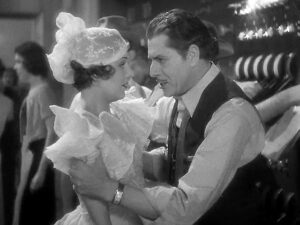
With dance numbers choreographed by the great Busby Berkeley, 42nd Street is the backstage tale of a Broadway musical, from initial financing to opening night. The central plot revolves around a naive young actress newly arrived in the big city (Ruby Keeler) who gets cast in the show’s chorus. Will she somehow emerge a star? (Go ahead, guess.) The marvelous cast includes Ginger Rogers, Dick Powell, and Una Merkle, supported by veteran character actors Guy Kibbee, Ned Sparks, and Allen Jenkins.

Ruby Keeler and Warner Baxter in 42nd Street

But the movie belongs to Warner Baxter as Julian Marsh, the show’s director. Baxter—who a few years earlier won the second Academy Award for Best Actor (In Old Arizona, 1928)—fully inhabits the role of a man whose life is the theater, who is incapable of compromise, who would rather die (and just might!) than put on a mediocre show. Baxter gives us a masterful range of emotion, gaining intensity the closer they get to opening night. And then comes a crisis! The show is in danger! Can Baxter pull out a miracle? (Go ahead, guess.) We get the show itself for the last part of the movie. And then, for my money, one of most memorable last shots in movie history. When you see that shot—being the artist that you are—you’ll relate to it fully.

All this got me thinking about a few other gems from the early 1930s—the “pre-code era”—that shouldn’t be missed.

You’ll not see a finer ensemble cast than the one in Dinner at Eight (1933, dir. George Cukor). It’s led by Marie Dressler, John and Lionel Barrymore, Wallace Beery, and Jean Harlow. From this film you can learn about handling parallel plotlines, and also the great value of orchestration. That is, creating characters who have the greatest possibilities for conflict with one another. Indeed, this is responsible for one of the best last lines ever. It’s between the highly-cultured actress Carlotta Vance (Marie Dressler) and the gorgeous but unrefined Kitty (Jean Harlow). Since it doesn’t spoil the film plot wise, here it is:

No pre-code retrospective would be complete without at least one film starring Barbara Stanwyck. Stanwyck, of course, went on to become one of the big stars of the golden age of movies, and then on TV in The Big Valley. Equally adept at comedy and drama, Stanwyck shot to fame in 1930 in the Frank Capra-directed Ladies of Leisure. She plays a “party girl” who falls genuinely in love. Stanwyck—not a classic beauty a la Garbo or Harlow—demonstrates that sexiness is as much about attitude as it is about surface features.

Stanwyck would show that over and over in her career, but never with more verve than in Baby Face (1933). As Lily Powers (great name) she uses her sexuality to seduce men on her way up the ladder in New York City. (The film is also notable for a small part played by a miscast young actor named John Wayne.)

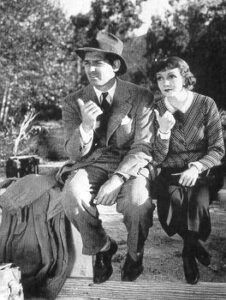
Clark Gable and Claudette Colbert in It Happened One Night

And then, of course, there’s a film everyone who loves movies should see: It Happened One Night (1934, dir. Frank Capra). From this you can learn the tropes of a great romance. Ellie Andrews (Claudette Colbert) is a spoiled heiress who goes on the run, against her father’s wishes, to get to the man she wants to marry. The story becomes a national sensation. Taking a night bus for New York, Ellie is recognized by a street-smart reporter, Peter Warne (Clark Gable). He offers to help get her to her lover in return for her story, exclusive.

These two peas are not from the same pod. They take an immediate dislike to each other (trope). Through a series of obstacles they begin to fall in love (trope). But a big misunderstanding sunders their romance (trope) until…well, you need to see it.

The movie was not supposed to be a big hit. It was made by a small studio (Columbia) and Gable was in it only because he had been “loaned out” by MGM’s Louis B. Mayer. Mayer was mad at Gable for demanding a raise, and wanted to teach him a lesson.

Some lesson. Gable won the Oscar as the film swept the major categories: Best Picture, Best Director, Best Actor, Best Actress, Best Screenplay.

One famous bit of trivia. There’s a scene where Gable starts to undress in front of Colbert. When he takes off his shirt, he’s bare chested. Thereafter in America, sales of men’s undershirts plummeted.

The film also shows the value of what I call the “spice” of minor characters. Don’t ever waste yours. They are opportunities to delight your readers. The two standout spices in It Happened One Night are a pair of great character actors: Roscoe Karns as an obnoxious, would-be Lothario; and Alan Hale as a roadster-driving con man.

Undergirding it all is the flawless script by Robert Riskin, a frequent Capra collaborator. More trivia: During the production of his script for Capra’s Meet John Doe (1941), Riskin reportedly got increasingly annoyed by critics talking about “the Capra touch.” One day, when he felt Capra himself was taking too much credit, he stormed into Capra’s office and threw down 120 pages of blank paper. “Put the Capra touch on that!” he said, thus becaming a hero to Hollywood screenwriters ever after.

I only have time for some honorable mentions, but these are all worth seeing and contain lessons for every writer. You should be able to find most of these via streaming services and/or YouTube:

Little Caesar (1931)

The Public Enemy (1931)

Cimarron (1931)

The Champ (1931)

American Madness (1932)

I Am a Fugitive From a Chain Gang (1932)

Rain (1932)

Scarface (1932)

Ladies They Talk About (1933)

The Power and the Glory (1933)

The Thin Man (1934)

Manhattan Melodrama (1934)

Happy viewing!

Any other early movie favorites you’d like to add? Of the films mentioned, which have you seen? Any other writer lessons you draw from them?