7 Tips For Producing More Words

by James Scott Bell
@jamesscottbell
We all know this to be true: to make serious dough as a writer means a) writing a lot; and b) writing well. This latter consideration is why TKZ has been around as long as it has (and we’re proud to say we are once again a Writer’s Digest Best 101 Websites for writers). We care about our craft and love helping writers get better.

As for writing a lot, most of you know that my best advice is writing to a quota. I’ve done this for 25 years. I keep track on a spreadsheet my daily, weekly, and yearly output. I used to go for a daily quota, but would feel guilty when I had to miss a day for some reason. Now I use a weekly number, and divide that by six days (I take one day off to recharge). If I miss a day I can readjust and add more words to the other days. 

I’ve also made a study over the years of writing efficiency. I don’t like wasting time when I write. I want to get the words out and stories completed. Here are some of the things I do. Maybe a few of them will help you, too. 

  1. Writing Sprints

Sometimes you can sit down at the keyboard and pound out 1,000 words or more in a state of delightful flow. Other times writing seems like walking in snow shoes through the La Brea Tar Pits. On days like that it feels daunting to contemplate 1,000 words. So I break it down into writing sprints.

A sprint is 250 words. That’s all. A nifty 250. Your Ficus tree can write 250 words. Don’t be shown up by a Ficus tree. Just do it.

Then rest. Catch your breath. Walk around a bit. Then come back and do another 250. 

Repeat until your quota is done.

Remember this rule, too: when you write, don’t stop to edit. Keep going. Which leads us to #2: 

  1. Place Holding

Often in your writing you’ll come to a spot where you’ll need to spend time on things like research, coming up with a name for a new character, specific details of the setting, and so on. When I come to such a point I put in a placeholder (three asterisks ***). That way I can keep on writing and later come back during editing time and fill in the info. 

I might be writing along and put in: ***POLICE PROCEDURE. This tells me there’s a specific detail I need to research on that point.

Or a new character comes in. I might use a descriptive word and do the name thing later: ***SNARKY. My placeholder brings me to this spot, I created the name, then do find (SNARKY) and replace with the name.

This keeps me writing “in the zone.” 

  1. Scene Storming

If you take just 2 -3 minutes to “scene storm”—brainstorming with a scene goal in mind—you’ll write a scene with an organic connection to the overall story and, as a bonus, save time in the revision stage. Yes, you’ll need to edit your immortal prose, but it won’t necessarily be a macro edit. In other words, you usually won’t have to throw out entire scenes and write new ones.

To storm a scene, ask three basic questions. 

First, what is the viewpoint character’s OBJECTIVE in the scene? What does she want? If she doesn’t want anything, don’t even think about writing that scene. 

The objective can be external or internal. 

Examples of an external objective:

  • Question a witness
  • Confront a boss
  • Hide from a stalker
  • Get a weapon
  • Avoid being followed
  • Steal the money
  • Gain access to a location

Examples of an internal objective:

  • Figure out the next move
  • Get a handle on emotions
  • Analyze the situation
  • Relive a memory (e.g., flashback)

Next, come up with a list of potential OBSTACLES to gaining the objective. This is where conflict, external and/or internal, develops. Obstacles can come from another character who has an agenda directly opposed to your Lead. Or it can be something physical, like the bridge is out or the car won’t start.

Finally, what will be the OUTCOME of your scene? Success or setback? Usually the latter makes for greater suspense, but occasionally you’ll want a success…so long as it leads to more trouble! 

My favorite example of this is from the movie The Fugitive. Remember when Richard Kimble is posing as a hospital custodian? He’s on the trauma floor when a doctor asks him to help by taking a kid on a gurney down to an observation room. But he knows from what the kid is saying and a sneak look at the x-rays that the kid needs to be operated on, stat. In the elevator he changes the orders and delivers the kid to an operating chamber, saving his life. Success! But he was observed looking at the x-rays by the doctor, and she confronts him and starts calling for security. Now he has to make an escape. More trouble!

So just a few minutes considering Objective, Obstacles, and Outcome will have you writing faster because you know where you’re going. 

  1. Riff like jazz

Now and then I like to riff on an emotional moment within a scene. When I come to a place where a strong emotion is felt by the Lead, I write 100 or 200 words without stopping, finding various ways to describe the emotion. I might use metaphors, memories, smells, colors, whatever comes to mind. I write these really fast, letting the intensity of the moment drive the words. 

I analyze later, and may end up using only one or two lines. This may, at first blush, seem like inefficient writing, since I toss out a lot of it. But in this case it’s worth it, because the lines I use will be some of the best writing I’m capable of.

  1. Write something on your next project

Wait, what? You don’t have your next project ready to go? You need to be more like a movie studio! You have one novel in production (your WIP). But you also have your next “green-lighted” project, the one that will be given your full attention when the current work is finished.

If I hit a snag in my WIP, I let it rest and go over to my next project. I have it set up in Scrivener and look at my scene cards on the corkboard. I’ll choose one that calls out to me and write 250 words or so for that scene. Then back to my WIP.

In addition to your WIP and your next, you should also have several projects “in development.” Everything from one-line ideas to elevator pitches. Give these some thought every week in a dedicated “creativity time.” See my post on “Chasing a New Idea.

  1. Write dialogue only

By writing just the dialogue—and by that I mean no descriptions or action beats—you can generate a lot of words that will help develop the scene. You go back later and insert the other stuff. I know what my scene is going to be about (via scene storming). By just writing dialogue I allow my characters to improvise. It’s fun to hear what they come up with.

  1. Drink stronger coffee

Hey, it worked for Balzac. Of course, his 50-cup-a-day habit led to his untimely death from caffeine poisoning. But he did produce the work!

My tongue is firmly planted in my cheek, of course. Well, a little. I really mean this tip to be: take care of your brain. Get enough sleep. Exercise. Eat salmon and blueberries, nuts and dark chocolate. 

And yes, “the science” says that moderate coffee intake is good for the gray cells, and for other things like reducing the risk of Type-2 diabetes and liver disease. So enjoy a cup or two of joe as you write. Your brain will thank you as your fingers fly across the keyboard. 

Now if you’ll excuse me I have some writing to do on my WIP. If you have any tips that have helped you with writing production, please share them with us!

Serialized Fiction and Vella – What Do You Think?

By Steve Hooley

*Our website is having problems this morning, not allowing comments. Please check back later to see if the problem has been resolved. Sorry for the inconvenience, and thanks for stopping by.

I chose the topic of serialized fiction – a look back and a look forward – for today’s discussion, because Kindle has recently announced that it is entering the market. Vella is the name of Kindle’s new platform for serialized fiction. Let’s look at it, as well as some other sites, and then discuss reasons for considering serialization, and some creative ways to do so.

First of all, what is serialized fiction? The Free Dictionary defines it as “a novel, play, etc, presented in separate installments at regular intervals.” Wikipedia states, “In literature, a serial is a printing format by which a single larger work, often a work of narrative fiction, is published in smaller, sequential installments.”

The history is interesting, with serialization being around for several hundred years, since the development of movable type. Early authors who used it successfully include Charles Dickens, Wilkie Collins, and Sir Arthur Conan Doyle.

Here is a list of  sites offering writers the opportunity to serialize their fiction:

Vella: Kindle Direct Publishing announced in April the launch of Vella and gave a brief description. Basically, writers (currently available to U.S. writers only) will use Kindle Direct Publishing as they already have, and where they can write or upload their stories to Vella. (See the second article below for many of the details.) It is available to writers now. Readers can access stories in the next couple months.

Readers will access Vella on their phones on the Kindle Vella app for iOS or Android, or on the Kindle Vella website on desktop. Readers can read the first three episodes for free. After that they will buy tokens to unlock additional episodes. Episodes can range from 600 to 5000 words, and the price will vary according to length of the episode.

Writers will receive 50% royalties from the tokens purchased. Some estimates of earnings showed a 3000-word episode (or chapter) would pay about $0.15. Extrapolated, a 30,000-word novella would equal $1.50 – 0.45 (first three episodes free) = $1.05. And a 90,000-word novel would pay $4.50 – 0.45 = $4.05.

Tokens can be purchased in larger quantities, decreasing their price, and decreasing writers’ royalties. And Kindle plans to sell the tokens through other channels, which will take a 30% cut, meaning the writer will earn 15% less

Here are links to articles with more detail:

https://selfpublishingadvice.org/self-publishing-news-what-is-kindle-vella/

https://blog.reedsy.com/kindle-vella/

Potential benefits include higher earnings than with Kindle Unlimited (time will tell), and the possibility of reaching a younger market (teens) who often don’t own a Kindle and read on their phones. Longer works would pay better, because the first three free episodes would be a smaller percentage of the whole. And the cost of cover art could be significantly less, with nothing more than an image required. (No text.)

Caveats from experienced writers include the fact that payment from Kindle has changed in the past, and apparently token prices have already been discounted in certain situations (benefiting Kindle, but decreasing royalties for writers).

Now to other sites. And here’s a link to a more detailed article:

https://medium.com/@eliangonz/serialized-fiction-190ef5f65bda

Royal Road: mostly Litrpg and Sci-Fi. No system for monetizing the stories. Stories must be approved to be published.

Pros: Decent interface. Good community.

Cons: No reading app. No monetization option.

Webnovel: Big site. Most popular genres are translations from Chinese romance novels. Writers are contracted to provide a minimum word count per month in order to get paid.

Pros: Good interface. Excellent reading app. Easy system to get featured. Responsive community on Discord. Lots of readers.

Cons: No straightforward monetization option.

Tapas: Good interface. Oriented toward comics. After getting 25 subscribers, writers can ask for donations to unlock the rest of the chapters.

Pros: Excellent interface. Excellent reading app. Straightforward monetization system.

Cons: More for comics. Getting featured is out of writer’s control.

Moonquill: new as of 5/19. Can monetize your work from get go with an ad system.

Pros: Good interface. Monetization system, but it had not been implemented as of 5/19.

Cons: Relatively new. Caters to authors already on Webnovel.

Wattpad: The biggest site. It has launched careers for some writers. Requires constant interaction with readers. Writers are using it to attract readers to their subsequent novels. Difficult to navigate. No monetization.

Pros: Biggest site with largest following.

Cons: Bad interface. No monetization.

Medium: Have to subscribe to read. Have a paid partnership program. Not a lot of serialized fiction.

Pros: Good interface. Easy to publish. Has a monetization option.

Cons: Subscription program for readers. Payment only through Stripe.

Radish: Has had issues with censorship and removal of works. Payment issues. Can’t edit stories once they are published. Mostly romance.

Pros: Pretty interface.

Cons: Problems with transparency, payment, and removal of content.

Dream:

Cons: Many people have advised against working with them. Require exclusivity. Concerns with payment after initial payment.

Patreon: JSB uses this site successfully for short stories. I asked him what he thought about using it for serialization. Here’s his answer:Patreon isn’t a dedicated platform for short fiction. An author could certainly try to gain patrons for such a thing, as I have. But the lure of a Vella or a Radish is the potential to gain a huge following and, thus, some nice payouts.”

Reasons to consider serialization: Here’s one writer’s list of possible reasons (his opinions):

https://blog.usejournal.com/serial-storytelling-part-one-is-it-worth-it-6f6a94954afa

  1. If you have an experimental idea. For example, this writer was the first to publish a novel on a series of Twitter tweets.
  2. If you have access or can publish your serial on an established literary platform.
  3. You have a good fan base and the marketing know-how to make dollars at self-publishing.
  4. You have the will to transform serial storytelling into success no matter the risk.

But other than that, most articles came down to the conclusion that serialization has more potential for exposure, less potential for making money. And one author added the caveat that it may require a lot of interaction with readers.

The above writer who gave the list of possible reasons for serialization, also listed the following possible sites for serialization:

  1. Social media platforms
  2. Journals and anthologies
  3. Newspapers
  4. Blogs (he listed Medium – see above)
  5. Wattpad – he described as the “grandmother of it all.”
  6. Amazon (and that’s what Vella is)


Now it’s your turn:

  • What serialized fiction sites did I miss?
  • Do you plan to try Vella or one of the other sites?
  • What has been your experience (or that of colleagues) with any of the sites? Pros and cons?
  • What do you think the perfect site for serialized fiction would consist of?
  • Bonus points: What creative alternatives can you think of for serialized fiction? Example: convincing your local library to serialize local writer’s stories on a weekly library blog.

Reader Friday: Work in Progress

Tell us about your WIP in three or four sentences (no time like the present to nail your elevator pitch). Please include genre.
How’s the writing going?

Are the words flowing from your fingerprints?

Or are you bleeding for every word?

For non-writers or if you’re in between projects: Tell us about the last book you read (in three or four sentences).

What Makes A Good Author Newsletter?

By John Gilstrap

Every email I send includes an invitation to subscribe to my author newsletter. I have amassed a pleasing number of subscribers, and I appreciate every single one of them. But I have no idea what to do with them.

I get the idea of sending out newsletters to people who are interested in my books and, I guess, in me. But I rarely publish newsletters because I don’t know what to say. I mean, let’s face it, a self- aggrandizing look-at-my-shining-new-book email is not exactly an engaging communication. It’s self-promotion. And there’s a place for that.

But I think a newsletter should be something people find informative, interesting and engaging. This is where things fall apart for me. I recently broke a toe. It hurt like the dickens, my foot swelled to the point that I had to wear one of those stupid boots, and now it’s getting better. That was very much the focus of my attention for a couple of weeks, but do people want to read about that? They have their own problems, after all, and many of them would trade theirs for the relative nuisance of my hurts-like-hell fractured toe.

My wife and I are building our dream home in West Virginia. That’s interesting to us, but the books I write are all about heroics and high stakes. Is the new house interesting for others to read in a newsletter from a guy who writes thrillers?

Dear TKZ family, this blog post is all about your comments. What would you like to see in an author newsletter? Not necessarily mine in particular, but in the larger sense? First-time authors and decades-long veterans are all seeking to grab the attention of readers, but I think it’s destructive to bang one’s own bell continuously. So, where’s the balance? What would you like to see? Are there any author newsletters that you think knock it out of the park? If so, share the links.

On the flip side, what kind of newsletter sends you straight to the mark as spam button? (No need to share those links.)

The Pros and Cons of Using Profanity In Your Stories

By PJ Parrish

Note: This post contains some salty language. 

Got an interesting fan email the other day. It was from a long-time reader who had just gotten around to getting our most recent Louis Kincaid book The Damage Done. She started off by telling us how much she loved our books but then went on to lament our use of…blue language. Here’s the nut graph of the letter:

I’m not a prude and my reading tastes go more toward more hardboiled authors than cozies.  In your latest book I counted 35 “damns” or “dammits,” 40 “hells,” almost as many “sh*ts” and 10 f-bombs. I realize that criminals and police officers use profanity. But I wonder if in your attempt to be realistic in your writing, you go too far in trying to mimic their speech.

First, I was sort of impressed that she took the time to count all the bad words. But second, and more important, I understood what she is saying. And it got me thinking — not for the first time because I’ve gotten letters like this before — about how we crime dogs deal with profanity in our novels.

Early in our series, my sister and I salted our dialogue with more profanity than we did later. I think it was because we did, indeed, get sucked into the notion that such language gave our books the imprimatur of “hardboiled.” (read that as “serious,” which is a really misguided distinction that many in our business still cling to.)

But as we got better at our craft, we realized that while yes, cops and bad guys swear and use un-PC vulgarities, we didn’t have to. At least as much as we were doing. Profanity, like adjectives, needs to be used sparingly, in my humble writer-opinion. You don’t need purple prose descriptions. So maybe you don’t need blue language crutches?

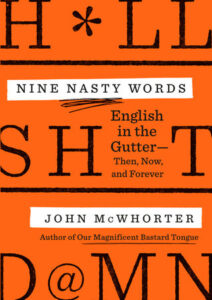
My writing life seems peppered with synchronicities, and sure enough, as I was working on this post yesterday, I happened upon a TV interview with John McWhorter, an associate professor of linguistics at Columbia University. He was on TV to promote his latest book, Nine Nasty Words: English in the Gutter — Then, Now, and Forever.

Fascinating guy. He talked about how our favorite nasty words (up two from George Carlins’ infamous Seven Words You Can Never Say on Television) have evolved over time to the point that even the shock value of the f-bomb has become diluted and it’s now commonplace.

He pointed out that, over the centuries, what we think of as nasty has evolved. In medieval times, when religion was the center of life, swearing to God was “a big deal.” But over the years, “God damn him” was shortened to “damn” and became less a “command to condemn,” as much as a “mere bark of annoyance,” McWhorter says.  To my mind, “damn” has faded from navy blue to soft denim.

McWhorter went on to say that as the power of religion waned, our obsession with our body functions — especially sex and excrement — became the focus of our profanity. Growing up in the Fifties, I remember just some kid whispering “fart” brought on a spasm of giggles. I don’t think I ever even heard the f-bomb until late high school. I suspect most elementary school kids today have a working, if clandestine, relationship with it.

Digression alert: If you want to blame someone for f—k, you can look to the Vikings, McWhorter says. When they invaded England in 787, they came armed with the f-bomb.

“A now obsolete Norwegian word like fukka would have been a fine candidate for what became our four-letter word of choice,” he said in an interview with the New York Post. “No squinting is necessary — fukka meant exactly what it looks like.”

It became common in England after that. One of the earliest recorded uses was in 1528 when a nameless monk was critiquing Cicero’s De Officiis and lamented the annoying  annotations of “a f-kin’ abbott.”

“After the 1500s, ‘f–k’ is rarely printed, not even appearing in dictionaries from 1795 to 1965,” McWhorter writes. I just checked my own 1971 edition of the Oxford English Dictionary, vol. 1 and no f-bomb. The English have apparently cleaned up their act. Although I don’t think my English friend Crazy Tim got the memo since he peppers his emails with such a panoply of purple prose that I have to resort to Googling “Dirty Brit Slang” to translate.  I’ve learned such useful insults as pillock, wanker, tosser to add to my favorite — twit.

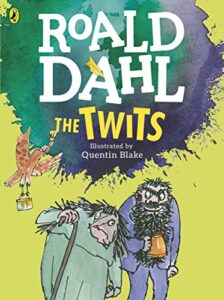
Digression alert: Children’s author Roald Dahl wrote a book called The Twits – a twisted tale of a vicious married couple who love to torment their pet monkeys and each other. (Mrs. Twit loves to take out her glass eye and drop it in Mr. Twit’s beer.) “Twit” has lost its original punch, and now is used, rather sweetly, for someone who’s being silly.

McWhorter thinks we make too much of profanity. In our long evolution of what we accept, he thinks the real forbidden words today are slurs, such as the N-word or “f—-t,” which originally meant a bundle of sticks but morphed into an insult for homosexuals.

So what does this mean for us crime dogs? Well, as I said, I thought it was good for me to clean up my act. Any time I find myself typing a blue word, I stop and think: “Do I really need this here?” I think it’s up to each of us to find our own paths, based on our writing styles, the tone of our books and yes, our personal beliefs.

Your writing should never call undue attention to itself, I think. Sure, your protag or bad guy might be profane, and well-placed small doses of profanity can add verisimilitude to your story. But your goal is to create believable characters, not make your readers get their knickers in a twist.

I have good friends who cringe when I let out a modest “damn” because they are deeply religious and consider it blasphemous. I try to respect that. I have other friends who use the f-bomb in daily speech with complete abandon. I myself use it. I guess because, as Professor McWhorter notes, swearing sometimes just feels good. He says that’s the way our brains process language and studies have shown that when humans swear, the right side of our brains — the area associated with emotion and cathartic expression — lights up on imaging scans.

“Curse words are not words, in a sense,” McWhorter says. “They’re eruptions.”

So, before I leave and let you all weigh in on where you stand about eruptions in your writing, I give you one last thing. It is from Monty Python, who elevate irreverence to a high art. I love this skit. But then, I am such a twit…


Titles and Comp Titles — How To Find the Best Ones For Your Book

I asked my dear friend Ruth Harris to dazzle us with her experience of choosing titles and comps, and she delivered. Big time.

Ruth is a New York Times, award-winning bestselling author whose novels have sold millions of copies in hardcover and paperback editions. Translated into 19 languages and sold in hardcover and paperback editions in more than 30 countries, her books were Literary Guild, Book-of-the-Month Club and book club selections around the world. Ruth is also a former Editor, Editor-in-Chief and Publisher at Big Six and independent NY publishers who knows the publishing business from both sides of the desk.

And so, she’s an author who knows what works and what doesn’t. Enjoy!

A Prince by any other name would still be a Prince. (I hope.)

Meghan by any other name would still be a princess.

Ditto Diana.

Lord or Lady. Peasant or serf.

Professor or student.

Beginner or expert.

Titles orient us to where we are and what we should expect next.

Doesn’t just apply to people, either. Also applies to books, because time-pressed readers/editors/agents take only a few seconds to make their buy decision, and authors have the same few seconds to make their sale.

If you’re aiming for a traditional publishing deal including relevant comp titles in your query letter is a must, because comp titles define the expectations and positioning of your book. Well-chosen comp titles provide a target in a crowded marketplace, and will affect your cover, blurb and sales pitch.

Agents and publishers ask for comp titles because they need a quick shorthand way to establish the basis for sales expectations and marketing. The agent/editor/potential reader needs a reference point, and, if your book will appeal to readers who enjoy legal thrillers, steamy romance or epic fantasy, you’re providing a valuable selling tool by providing appropriate comp titles that give a solid clue about which market you’re aiming at.

Meaning before details.

According to John Medina of the University of Washington, the human brain requires meaning before details. When listeners doesn’t understand the basic concept right at the beginning, they have a hard time processing the rest of the information.

Bottom line for writers: The title and the cover—image plus title—have to work as a unit to explain the hook or basic concept first. Wrong image and/or misfit title confuse the would-be buyer and you lose the sale. On-target image plus genre-relevant title and the reader/agent/editor will look closer.

Your cover indicates visually by color, design and image what the reader can expect inside—a puzzling mystery, a swoony romance, futuristic scifi, or scary horror—but the first words the prospective reader/agent/editor sees are the ones in the title.

Your title tells readers what to expect.

You’re unpublished but your title is awfully close to Nora Roberts’ newest or…ahem…a clone of James Patterson’s most recent? Come on. Get real. Please. For your own sake.

Your book is about a modest governess in 19th Century London who falls in love with the maddeningly handsome Prince who lives in the castle next door, but your title promises hotter-than-hot, through-the-roof sales like, oh, maybe, 50 Shades Of Grey? Really? 51 Shades of Grey is the best you can come up with? Seriously?

If you’re in a quandary about choosing a title for your book here are Anne’s 10 Tips for Choosing the Right Title for Your Book.

You can also research successful titles in your genre for inspiration. Whether your genre is romance or suspense, you will find that certain words recur. Just be aware that most publishing contracts give the publisher the right to change the title. Sometimes the author is pleased.

Other times? Not so much. (Don’t ask me how I know, but horror stories abound.)

If the title you’ve chosen for your book is your idea of the one and only, check your contract to make sure you have the last word on title. The reality, though, is that few author have this right and, if you’re just starting out, you won’t. Sorry about that, but it’s the reality.

If you’re self-pubbing, you control the decision about titles. And, if you think of a better title in the future, you can easily change a title later.

All about comp titles.

The writer’s version of GPS, your comps tell readers/agents/editors where they are and what they can expect if they go further. That’s why a poorly chosen title or the wrong comp titles are an invitation to nowheresville for you and your book.

A sweet romance compared to a horror epic called Tarantula Invasion? I don’t think so.

Scifi comped to something titled A Duke For The Duchess? Nope.

Serial killer police procedural titled Miss Emily’s Quaint Cupcake Cafe? You’re joking, right?

Comp titles are books that are similar to yours. Comps help agents/editors/readers figure out who your book will appeal to and how big the potential audience might be. Comps give the Art Department or your cover artist a starting point and help them understand what is required.

Comps are indispensable to the sales department at a publisher and serve the same purpose in your blurb. Sales reps have only a few second to interest a buyer or bookstore owner. Being able to tell them that New Book X is like Old Book Y is useful shorthand telling the prospective buyers something about the likely audience and sales potential.

  • “If you like X, you’ll love Y”
  • “If you like action-adventure with strong female leads, you’ll like Y”
  • “If you like Regency romance, you’ll like Y”
  • “Readers who like Dean Koontz will love Y”

Another approach is X is like Y—with a twist.

  • “Cozy mystery with dragons”
  • “Historical mystery with space ships”
  • “Romantic suspense in a gay retirement home”

A third example is X meets Y—with a twist.

  • “Jack Reacher meets Jane Austen”
  • “Fan fiction meets literary memoir”
  • “Leo Tolstoi meets K-pop.”

Do’s and don’ts of choosing comp titles.

  • Do stay within your own genre (or genres if you write mash ups).
  • Do keep it realistic. Choose comps with the same likely sales pattern: out of the gate with a burst or a long, slow and steady sales arc, front list star vs backlist stalwart.
  • Do keep it recent: choose titles published within the last two or three years so that they are still fresh in the minds of reader/agents/editors/sales staff/store buyers. Pointless to choose a comp from a decade ago that no one remembers.
  • Don’t abandon common sense and compare your book to a #1 NYT bestseller or the latest gee-whiz phenom.
  • Don’t mix formats. If your book will be offered in a digital edition, don’t compare it to a hardcover title and vice versa.
  • Don’t jump genres. Compare apples to apples, oranges to oranges. That is, compare scifi to scifi, thriller to thriller, epic fantasy to epic fantasy, literary fiction to literary fiction.
  • Don’t ignore demographics. If your book will appeal to women, be sure to choose comps that will appeal to that same reader. Don’t choose a comp that will appeal to young adult readers or males looking for hairy-chested adventure in the remote jungles of Borneo.

Where to find good comp titles.

Amazon, Barnes & Noble, Kobo and the gang.

Because readers of romance tend to buy more romance and readers of action-adventure tend to buy more action-adventure, type the title of a book similar to yours into the search window of any book seller to find recommendations under headers like:

  • “Customers who bought this also bought”
  • “What customers bought after viewing this”
  • “Trending now”
  • “Pageturners”
  • “Monthly picks”
  • “Frequently bought together”
  • “Favorite authors”

Goodreads

Tell Goodreads what genre you’re interested in and they will provide a list of titles.

Or you can enter comp titles you’re already considering to ask for more suggestions.

You can also describe the kind of book you’re looking for—“thriller set in Iceland,” “mystery in Uruguay,” “cozy mystery in Nantucket,” or “scifi in a crippled space capsule”—for suggestions.

Goodreads Choice Awards lists their annual picks by category if you’re looking for even more inspiration.

Bestseller lists.

The middle or lower down titles in the NYTimes and the USA Today lists are good starting points, but don’t overlook your town or city. Your local bookstore will know what books are selling well in your area.

If your book is of regional interest—New England, Florida, the Far West—local bestseller info will be valuable and all you have to do is ask.

Librarians can help you ID relevant books that float just below the top bestsellers. We not talking mega authors and books, but titles just below the top ten or twenty that have reliable sales records and are known by buyers/agents/editors/retailers.

BookBub.

Sign up—it’s free—and ask for recs in genres similar to yours or by authors who appeal to the same readers you are looking for.

BookBub also has extensive genre lists that can be helpful as well as real-time updates from authors who write books similar to yours.

More help.

You’ll find more ideas for finding comp titles in this marketing-oriented post by Penny Sansevieri about Finding and Using Competing Book Titles in Your Book Marketing

Dave Chesson’s Publisher’s Rocket uses up-to-date market research data to quickly identify relevant comp titles, categories and keywords.

NerdyBookGirl offers a helpful FREE Book Category Hunter.

★★★★★“WOW! WHAT A STORY!”★★★★★

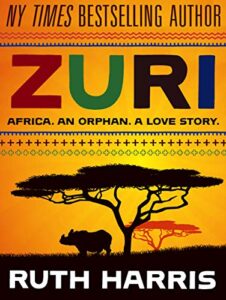
“A master storyteller coaxed me through a maze of fascinating, brilliant, tragic, and heartwarming twists and turns, and left me feeling uplifted and satisfied. ZURI slides to the top of my favorite books of 2020!”

—Sue Coletta, award-winning, bestselling author


99c Sale. Ends soon.

Amazon

Barnes & Noble 

Google Play

Kobo

Apple iBooks

Tips For Formatting Your Book

by James Scott Bell
@jamesscottbell

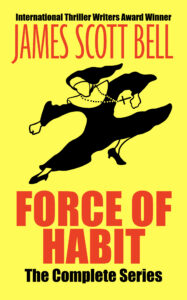
Allow me to get some shameless self promotion out of the way: Today is the release of FORCE OF HABIT: THE COMPLETE COLLECTION. The ebook is available for a limited time for the deal price of $2.99. (Outside the U.S. go to your Amazon store and plug this into the search box: B091DRDWRJ.)

Okay, now let’s talk about formatting your book. If you’re an indie writer, this is fundamental. But traditionally published writers may also wish to self publish some work (e.g., a short story or novella) as added marketing.

Formatting is critically important, because readers have been conditioned to expect a certain look. Like no spaces between paragraphs and standard indenting. If your formatting is clumsy a reader may set the book aside even if you have a solid story going.

For your book’s interior, you have two choices: You can learn to do your own formatting, or you can hire it out. For the latter, you may expect to pay somewhere in the range of $300–$800 for an EPUB and pdf file. (Note, the mobi format for Kindle is not being used anymore. EPUB is now the standard. However, you may wish to create a mobi file in order to send out an ARC that can be sideloaded onto a Kindle device.)

I’ve not used formatting services myself, but a few I’ve heard good things about are Booknook, EbookPbook, and BookDesignTemplates.

Reedsy also offers design services (and in addition has a free formatting app for DIY).

So let’s say you decide to format your own books. There are many options (and please share in the comments any you have found helpful).

I use Scrivener for my writing, and have used it in the past for my formatting. It’s tricky to get it right, however, and the formatting choices are limited. This blog post offers some useful Scrivener tips in that regard.

At one time I also used the free formatting app Calibre. I’ve not seen the latest iteration, but I think it’s still safe to say it does an adequate job.

The biggest problem I see with these options is that when you want certain design elements, like drop caps or ornamental breaks, it’s hard to get them to come out right.

Amazon now offers a free program called Kindle Create. I haven’t used it, but it looks pretty good. It seems to be a decent, though limited, alternative to my app of choice, Vellum.

Vellum is a Mac-only program that is so simple to use, with such beautiful results, that I cannot recommend it highly enough. It’s well worth the price, because you’ll probably be using it the rest of your indie life. (NOTE: I am not affiliated with Vellum, so get no compensation from recommending it.)

Broadly speaking, you choose a design template from the Vellum library. Within a template you select various options, such as how you want opening paragraphs to look, if you want drop caps, and what style of ornamental break you like (you can import your own, too). Front matter and back matter are easy with Vellum’s pre-designed pages.

(NOTE: Although Vellum is a Mac-only program, I understand you can use a “Mac emulator” to run it on a PC. One such option is discussed here.)

The design choices in Vellum fit different genres. You can test the various styles, which show up instantly onscreen, and soon enough you’ll find the look you prefer.

For the pdf/print version, you can change the trim size, margins, and font size.

Vellum also automatically puts in a scene break line at the bottom or top of the page. This is incredibly helpful, as those breaks are hard to see on your own. (What I’m describing is when a scene ends at the bottom of a page and a new scene begins at the top of the next page. Good typography demands an ornamental line, such as ***, to indicate this for the reader.)

Another plus is the ability to put in different front and back matter for the ebook and print. For example, in your ebook back matter you’ll want to include direct links to your newsletter sign up, other titles, and the online store review page. But links don’t work in print, so you design those pages differently and choose “Include in Print only” from a drop down menu.

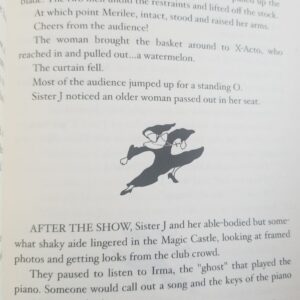
I have to say, the print edition of FORCE OF HABIT is gorgeous. For my fiction, I choose cream paper over plain white. It just looks and feels better to me. For my ornamental break I used the flying fists of fury nun design. The pages look like this:

Print Formatting Errors to Avoid

At a conference years ago, a writing friend joined a bunch of us who were sitting around, and showed us a copy of her new, DIY print version, several copies of which she’d consigned to the conference bookstore. I gave it a quick glance…and almost didn’t have the heart to tell her of a glaring formatting error. At the end of one her chapters was a blank page. But she had the title-header at the top of the page and the page number at the bottom.

Ack! A reader seeing that will think there was a printing error, and the book is missing text!

A blank page, if you have one, should be as clean as driven snow (as an L.A. resident I don’t know why I choose this metaphor). Vellum knows this, and takes off header/page number when you have a blank page.

Another error is having even-numbered pages on the right hand side. Never! Always start your book (after front matter) with page 1 on the right.

Isn’t it quite amazing that today an author can create both an e- and print book that looks every bit as good as a something from a big publishing house? (The answer you’re looking for is YES.)

So what is your formatting process? What programs do you use? And please share any additional tips you have!

In Praise of the Antikythera Mechanism!

When I was last here two weeks ago I discussed ancient books and authors. I was gratified to receive a number of comments on the topic, including one from Dan Phalen, who wondered what would become of our digital prose. Dan used the example of an archeologist coming upon an iPhone a thousand years from now who would be faced with the task of coaxing digital text from the device.  

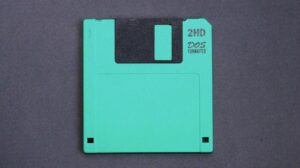
Dan’s example isn’t going to have to wait for one thousand years to occur. It’s happening right now. Remember floppy disks? Some of you may not. They were and are these square things that were read by something known, by amazing coincidence, as a floppy disk drive. If some of you have a bunch taking up space in a forgotten corner of your office you might be surprised and disappointed to find that the data on them is corrupted or bye-bye. On the other hand, some companies, like Boeing, the airplane people, still use them.  Think about that the next time you are in the air and you hear your pilot say “Uh-oh” on a hot mike, followed by an extended period of turbulence.

There are also .art files. Back when AOL was (almost) the only game in town and you downloaded pictures from the internet using AOL those pictures were saved in the form of an .art file. A great many of those are corrupted as well. I have tried several programs to open them but none have worked. AMF. That said, the unknown of the obsolete goes back much, much further than the most recent turn of the century. More on that in a minute.

I did another research deep dive — this one into the topic of information storage retrieval — and almost didn’t get this post written because of it. I was in so deep and had to come up so fast that I am still recovering from the bends. I did find a number of interesting websites dealing with the topic of retrieving data from obsolete technical doo-dahs. I’ll (attempt to) limit my discussion to two of them, which hopefully will be particularly relevant for those of you who labor in the historical fiction grammar mine. As an aside, let me note that there doesn’t seem to be an agreed-upon definition of what “historical fiction” is. For our purposes, we’ll call it a story set at least twenty-five years before the year in which the story is written. That would be from the beginning of all of this around us to…um…1996. That is disconcerting because I can remember a number of major events in my life from that year but not what I had for lunch yesterday. Oh, the humanity!

Onward. There is a wonderfully nerdy (and I say that with the highest respect) site named the Museum of Obsolete Media which is a time bandit of the highest order. If you look under the “Popular Tags” section you will see links to decades beginning with the 1860s. If you are neck-deep in writing a series set in the 1900s and want to see what was there in 1906 that ain’t no more and want to use it as a starting point for some element of your novel, this is the place to go for that and so much more. I was surprised when looking through my own timeline to note how many cutting-edge items (at that time) were listed that seemed futuristic but are now practically forgotten. Anyone want to buy a non-functioning Apple Newton?

Obsoletemedia.org is a labor of love. If you want to get up to your neck in things, however, the oft-forgotten but absolutely indispensable National Archives has an area — a very, very large area — devoted to “special media preservation.” That area has everything from wire recordings and machines to play them on to that new iPhone that you’ll brick in two years. It is particularly noteworthy that you can email questions to them about such topics and the worker bees there will happily email you back with everything you ever wanted to know about, say, wax cylinder recordings, the same way that your local library still does for more mundane topics. 

It all sounds very cool. The problem, though,  is that all of that data, particularly the digital type on collections such as the ones in the National Archives, is sitting on a time bomb. The immediate problem with contemporary “media preservation” is that digital media isn’t built to last. It is fragile coming out of the box and deteriorates relatively rapidly.  That is but one reason that I can’t open .art files I made twenty years ago but I can go on eBay and buy photographs taken in the 1800s. As far as digital information is concerned, there is more and more of it being made, lost, and found even as there are fewer people dedicated to exploring the obsolete storage mechanisms and preserving what they find. Information is being lost, as is the ability to retrieve it in the first place. Meanwhile, wire recordings made by Thomas Alva Edison still work and can be repaired.

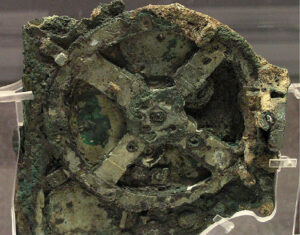
Getting back to archeologists and the like…this photo may look like the water shutoff valve in your basement

but it is something called the “Antikythera Mechanism,” considered to be the world’s oldest computer. It is believed to have predated Bill Gates’ monster by around two thousand years. The Antikythera Mechanism was discovered amidst the ruins of an ancient shipwreck in 1901. It was not until 2008 that it was recognized for what it was (“Why…that’s an Antikythera Mechanism!”). Yes. It took a looong time for archeologists and scientists to figure out what the f-heck it was and what it could do, which was predicting solar eclipses and organizing calendars (“Meet Lycastra on the down-low. 4P by the sundial”). It can probably do a heck of a lot more, such as spontaneously opening dimensions between our reality and the netherworld on July 11, 2021.  What I find particularly interesting is that our contemporary technology had to catch up with the Antikythera Mechanism so that it could be recognized for what it was. Otherwise, it would probably be a paperweight on a desk of a Greek fishing boat.

Sobering, isn’t it?

 I had a conversation last week with my granddaughter, who is starting high school next year. We talked about fields of study. My advice to her was to master computer systems and storage retrieval. “This is all going to break down,” I said. “All of it. It’s not a question of ‘if’ but a question of ‘when.’ When all the king’s horses and men need those digital bits put back together be ready to be the one to do it. You’ll be able to name your own price. Settle for nothing less than your own island and a bunch of people — well paid, but well paid by somebody else — to look after it.” 

When I think about the Antikythera Mechanism, that advice looks better with each day. 

So what technological device, program, or storage entity do you miss? Windows 7 is an okay answer.


Reader Friday: Your First Novel

“Most people think they have a book inside them. That’s usually the best place to keep it.” – James Scott Bell
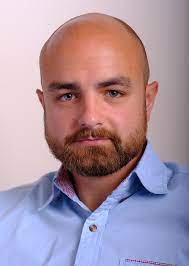
What was the first full-length novel you ever wrote, whether it was published or not? How did it turn out? What did you learn? What did it tell you about yourself as a writer?

Ethics, Integrity & Trust for Writers

Several days ago, my writer friend Adam Croft and I were exchanging emails. We keep in regular touch, and Adam serves as a mentor to me. For those of you who don’t know the name, Adam Croft is a highly successful indie crime writer from the UK. I brag that Adam and I go back long before he became famous and when I still had hair.

Adam had just come off a bad experience with an online scammer who offered kick-back money—big money—to other unethical online scammers who recommend scams like useless writing courses sold at ridiculous prices. Adam vented to me about the downward spiral of suckering-ins going on, and how well-intended, trusting writers get thoroughly hosed by unscrupulous shysters.

“With you, dude,” I replied to Adam, as the old cop in me has long detected some of these writing “gurus” who produce online courses sell snake oil from Brother Love’s Travellin’ Salvation Show. Then, yesterday morning, I clicked on the Indie Author Mindset Facebook Group that Adam Croft facilitates and saw this post. I PM’d Adam and asked if I could share it with Kill Zoners and he said, “Yes, absolutely fine posting stuff on the blog.”

So here it is:

——

Ethics, Integrity & Trust. (By Adam Croft)

Last night, I received an email which — for me — summed up many of the ways in which this industry has taken a wrong turn.

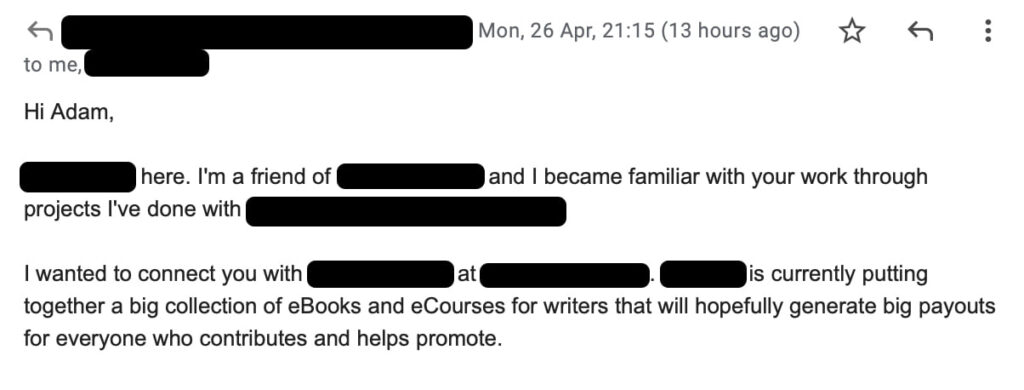
I’ve attached a screenshot (with names redacted) as an image on this post.

It’s nothing new or revolutionary. These things come through all the time. But it symbolizes something we need to address.

Look at the wording. There’s no mention whatsoever of helping authors, providing education, or doing our best to help those at the start of their journey. Instead, the main (and only) selling point is that it’ll ‘generate big payouts’ for me.

I repeat: this email is nothing new or revolutionary. And do you know why? Because our industry is absolutely full of this.

Promoting and referring other people’s products and services is big business. I know providers and ‘gurus’ who make thousands upon thousands each month purely by telling new and inexperienced authors to take certain courses or buy certain products.

Many courses — even the really expensive ones — pay referrers 50% as a kickback. Of course these people recommend them to their followers — they get hundreds of dollars each time someone signs up. Why wouldn’t they?

Because when you see someone recommending a product, you will likely assume it’s a genuine recommendation. Sometimes it might be. But the vast majority of products and services in this industry are recommended because they pay well for the person recommending them.

When I started The Indie Author Mindset, I was very clear that I would only recommend products and services I’ve used myself, and would recommend otherwise. Affiliate and referral fees were irrelevant. Money and ‘big payouts’ don’t motivate me. Ethics, integrity, and trust do.

Those three words have always been difficult ones. They’re the reason I wavered for two years before setting up The Indie Author Mindset. They’re the reason I was extraordinarily cautious about what paid content I offered for a short while. And they’re the reason I stopped doing so.

So let me be clear about a few things:

1. I receive absolutely no financial inducements, incentives, or rewards from any products, services or resources I recommend. My integrity and your trust mean far more to me than money.

2. I do not provide paid courses, coaching, or any other form of ‘upsold’ products. You are not a commodity to me.

3. I have always modelled my career on ensuring I am financially — or otherwise — beholden to nobody, allowing me to speak freely and honestly.

I choose to operate this way for three reasons:

1: It allows me to give advice with complete integrity and transparency.

2. It allows you to trust my advice. You know absolutely that my only interest is in helping you and your books, not lining my pockets.

3. My fiction books do very well indeed, so I don’t need to top up my earnings by taking money from other authors.

I love helping authors at all stages of their careers. When I started publishing more than a decade ago, the advice just wasn’t there. I was one of the early writers fumbling through the mists, trying to work out how on earth we could make this work.

The issue then was a lack of information. Now the opposite is true. Many authors mention being overwhelmed with stuff. And the reason for a lot of that is because it’s impossible to know what’s good advice and what someone is pretending to advise because they get a financial kickback for doing so.

I hope The Indie Author Mindset helps you cut through that crap. I hope that by sharing this email and writing this post I can reinforce that I won’t have any part in it. That I put my personal integrity and your trust before all else.

I’ve spent too many years at the forefront of this industry to prioritize ‘big payouts’. My focus will always be on levelling, improving, and preserving a strong indie publishing industry for authors like you for years to come. I’d far rather my legacy be visible in that way, than on a balance sheet. My fiction books do just fine on that front, and I don’t need to exploit anybody in doing so.

It all comes back to those three words: Ethics. Integrity. Trust.

——

Bio from Adam Croft’s Website

With over two million books sold to date, Adam Croft is one of the most successful independently published authors in the world, and one of the biggest selling authors of the past few years, having sold books in over 138 different countries.
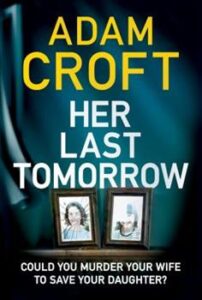
To date, Adam has achieved seven Amazon storewide number 1 bestsellers, in the United Kingdom, United States, Canada and Australia.

His 2015 worldwide bestseller Her Last Tomorrow became one of the bestselling books of the year, peaking at number 12 in the combined paperback fiction and non-fiction chart.

His Knight & Culverhouse crime thriller series has seen huge popularity worldwide, with his Kempston Hardwick mystery books being adapted as audio plays starring some of the biggest names in British TV.

In 2016, the Knight & Culverhouse Box Set reached storewide number 1 in Canada, knocking J.K. Rowling’s Harry Potter and the Cursed Child off the top spot only weeks after Her Last Tomorrow was also number 1 in the same country.

During the summer of 2016, two of Adam’s books hit the USA Today bestseller list only weeks apart, making them two of the most-purchased books in the United States over the summer.

In February 2017, Only The Truth became a worldwide bestseller, reaching storewide number 1 at both Amazon US and Amazon UK, making it the bestselling book in the world at that moment in time. The same day, Amazon’s overall Author Rankings placed Adam as the most widely read author in the world, with J.K. Rowling in second place.
In January 2018, Adam’s bestselling book to date, Tell Me I’m Wrong became a worldwide bestseller and quickly went on to outsell Her Last Tomorrow.

Adam is considered to be one of the world’s leading experts on independent publishing and has been featured on BBC television, BBC Radio 4BBC Radio 5 Live, the BBC World ServiceThe GuardianThe Huffington PostThe Bookseller and a number of other news and media outlets.

In March 2018, Adam was conferred as an Honorary Doctor of Arts, the highest academic qualification in the UK, by the University of Bedfordshire in recognition of his services to literature.

Adam presents the regular crime fiction podcast Partners in Crime with fellow bestselling author Robert Daws.

——

Note from Garry Rodgers: I’ve known Adam Croft for nearly a decade and I can personally vouch for his outstanding ethics, integrity, and trustworthiness. Two years ago, Adam developed his Indie Author Mindset program which was completely game-changing for me. The program consisted of two books, a series of tutorial articles, and a Facebook group page.

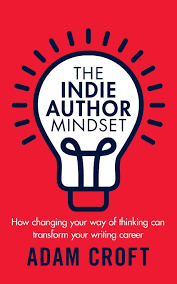
Adam Croft’s two books, The Indie Author Mindset and The Indie Author Checklist, are available through major online retailers. Unfortunately, Adam has discontinued his tutorials, but his Facebook site still thrives and is open to everyone who believes in making the indie writing world a better place.

Kill Zoners — What’s your experience with paid-content recommendations sent your way? And poor-value material? We’d all like to hear.