By Elaine Viets

Feeling discouraged, writers? Tired of papering your walls with rejection slips?
When I feel down, I turn to the good book. Not THE good book, but a good book by Elaine Borish called “Unpublishable! Rejected writers from Jane Austen to Zane Grey.”

If you’ve been rebuffed by a publisher, you’re in good company. So was Agatha Christie. Borish says it took Dame Agatha four years to find a publisher for her first novel, “The Mysterious Affair at Styles” – and then it sat on a desk for another eighteen months. The publisher suggested some changes to the ending, and Agatha made them. Belgian detective Hercule Poirot finally made his debut in 1920.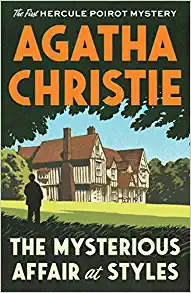
Agatha Christie wrote more than ninety titles, and “The Mysterious Affair at Styles” is still in print.
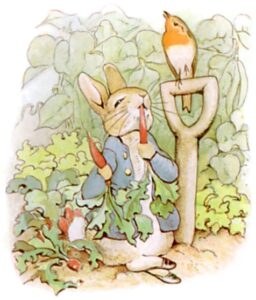
Beatrix Potter, the creator of Peter Rabbit and Flopsy, Mopsy and Cottontail, was a hybrid author. Her “Peter Rabbit” was rejected by six publishers. She used black-and-white sketches, since she was worried that color pictures would make the book too expensive for children. Beatrix finally self-published “Peter Rabbit.” It went through two printings.
In 1901, Beatrix submitted Peter Rabbit again, and the traditional publisher politely rejected it: “As it is too late to produce a book for this season, we think it best to decline your kind offer at any rate for this year.”
The next time Beatrix submitted the book, she had color illustrations. The first edition sold out before the 1902 publication. By 1903, sales were multiplying like, well . . . rabbits. She’d sold 50,000 copies, and lived hoppily ever after.
Dorothy L. Sayers’ books were definitely not for children. “Whose Body?,” the first mystery by the rebellious Oxford scholar, was rejected by several UK publishers for “coarseness” in 1920. Today, the risque parts wouldn’t raise an eyebrow. The novel opened this way:
“Oh, damn!” said Lord Peter Wimsey.
Besides that four-letter word, Dorothy L.’s first book is about the disappearance of a Jewish financier, Sir Reuben Levy. Borish tells us, “When a naked corpse turns up in a bath, Inspector Sugg is eager to identify him as Levy.” Lord Peter says it can’t be “by the evidence of my own eyes.”
And the evidence? The body was (gasp) uncircumcised.
Dorothy L., desperate for money, revised her story, making sure the body could not be mistaken for a rich man. The deceased had “callused hands, blistered feet, decayed teeth” and more. An American publisher bought “Whose Body?” It was published in New York in 1923, and Dorothy was on the way to fame and fortune. Borish writes, rather gleefully, “consider the last words spoken by Lord Peter in the last novel: ‘Oh damn!’”
 George Orwell had his masterpiece, “Animal Farm,” turned down by no less than T. S. Eliot, a big deal at UK publishers Faber and Faber. Like many in the upper echelons of publishing, Eliot missed the point when he rejected Orwell: “Your pigs are far more intelligent than the other animals, and therefore the best qualified to run the farm . . . What was needed (someone might argue) was not more communism but more public-spirited pigs.”
Another publisher, Fredric Warburg, took the book and paid Orwell a hundred pounds. Orwell had the last laugh – Borish says the book sold 25,000 hardcovers in the first five years.
Anthony “A Clockwork Orange” Burgess had a novel about his grammar school experience – “The Worm and the Ring” – rejected because it was “too Catholic and too guilt-ridden.”
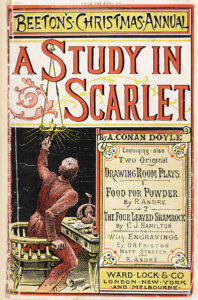 Publishers outdid themselves with boneheaded reasons to reject bestsellers. Conan Doyle’s first Sherlock Holmes novel, “A Study in Scarlet,” was turned down by the prestigious Cornhill magazine because it was too much like the other “shilling shockers” already on the market. The editor said it was too long “and would require an entire issue” – but it was “too short for a single story.” Another publisher sent the manuscript back unread. A third bought the rights for a measly twenty-five pounds, and let it sit around for year. It was published in 1887, and then brought out as a book, but Conan Doyle didn’t get any money from that because he’d sold the rights. Worse, the book was pirated in the U.S. Doyle wrote a couple of historical fiction works. Then an American editor, looking for UK talent, had dinner with Doyle and Oscar Wilde and signed them both up. Wilde wrote “The Picture of Dorian Gray” and Doyle did “The Sign of the Four.”
These writers endured humiliation, insults, swindles – and in many cases, poverty – and still went on to write books that are read today.
Orwell talked about an embittered Russian who said, “Writing is bosh. There is only one way to make money at writing, and that is to marry the publisher’s daughter.”
Obviously, we writers have to pay attention to rejections sometimes. My agent gave me a good rule of thumb: “If you get the same reason for rejection repeatedly – your plot isn’t twisty enough, or you have too many secondary characters – it’s time to pay attention.”
How many times have you ignored rejections?
 Kings River Life says “Late for His Own Funeral” is “a fascinating exploration of sex workers, high society, and the ways in which they feed off of one another.” Buy my new Angela Richman, Death Investigator mystery here. https://tinyurl.com/4dn2ydfd





 I live in a small tourist town in the northern Rockies. One of the downtown anchor businesses is a kitchen shop. My two cozy mystery series are both set in food-related retail shops, one here and one in Seattle’s Pike Place Market. It’s been a natural combination, and the kitchen shop sells dozens of my books every year to both locals and visitors. To my surprise, it’s also sold more than 100 copies of my first suspense novel, Bitterroot Lake, a hardcover without a single cupcake on the cover. Why? My guess: The bitterroot is the state flower and the word is echoed in landmarks throughout the area, giving it a strong regional appeal.
 BLIND FAITH (written as Alicia Beckman), is out October 11 from Crooked Lane Books, in hardcover, ebook, and audio.
 But there’s one name that deserves to be mentioned here, for he was a quadruple threat: he could sing, dance, and act equally well in comedy or drama. His star flew across stage, screen, TV, and Vegas.
 “Success is not the result of spontaneous combustion. You must set yourself on fire.” – Reggie Leach, retired Canadian hockey player.