Television Tropes

Television Tropes
Terry Odell

Writing for Television

Image by Bokskapet from Pixabay

Since I’m still away, I thought I’d offer some smiles. I first posted this almost 2 years ago, but I think it’s still relevant.

Are you a fan of television mystery shows? Ever thought of writing one? Or any kind of television show? If so, here are some tips to keep in mind.

  1. If staying in a haunted house, women should investigate any strange noises wearing their most revealing underwear.
  2. If being chased through town, you can usually take cover in a passing St. Patrick’s Day parade – at any time of year.
  3. It’s easy for anyone to land a plane, providing there is someone in the control tower to talk you down
  4. Once applied, lipstick will never rub off, even while SCUBA diving.
  5. The ventilation system of any building is a perfect hiding place. No one will ever think of looking for you in there and you can travel to any other part of the building without difficulty.
  6. Should you wish to pass yourself off as a German officer, it will not be necessary to speak the language. A German accent will do.
  7. A man will show no pain while taking the most ferocious beating but will wince when a woman tries to clean his wounds
  8. When paying for a taxi, never look at your wallet as you take out a bill—just grab one at random. It will always be the correct fare.
  9. During all police investigations, it will be necessary to visit a strip club at least once.
  10. Cars and trucks that crash will almost always burst into flames.
  11. A single match will be sufficient to light up a room the size of a football stadium.
  12. Medieval peasants had perfect teeth.
  13. All single women have a cat.
  14. One man shooting at 20 men has a better chance of killing them all than 20 men firing at one.
  15. It does not matter if you are heavily outnumbered in a fight involving martial arts. Your enemies will wait patiently to attack you one by one, by dancing around in a threatening manner until you have knocked out their predecessor.
  16. When you turn out the light to go to bed, everything in your room will still be clearly visible, just slightly bluish
  17. Dogs always know who’s bad and will naturally bark at them.
  18. Rather than wasting bullets, megalomaniacs prefer to kill their archenemies using complicated machinery involving fuses, pulley systems, deadly gases, lasers, and man eating sharks that will allow their captives at least 20 minutes to escape.
  19. A detective can only solve a case once he has been suspended from duty.
  20. If you decide to start dancing in the street, everyone you bump into will know all the steps.

Okay, tongue was inserted firmly in cheek. But sometimes, you just want to sit back and have some fun.

Any favorites among these? Any to add?

Next time, I hope to have tales from the far north to share.


And a little BSP. I’m going to be teaching some writing craft classes via Zoom, hosted by my editor.
12 Steps to Intimacy on June 17th

Creating Armchair Adventures on July 15th

Into the Heads of Your Characters, on July 29th.

The links will provide more details.

Please spread the word. Friends, writing groups, libraries … wherever you think there might be people interested in learning more about the craft.


Cover image of Deadly Relations by Terry OdellAvailable Now
Deadly Relations.
Nothing Ever Happens in Mapleton … Until it Does
Gordon Hepler, Mapleton, Colorado’s Police Chief, is called away from a quiet Sunday with his wife to an emergency situation at the home he’s planning to sell. A man has chained himself to the front porch, threatening to set off an explosive.


Terry Odell is an award-winning author of Mystery and Romantic Suspense, although she prefers to think of them all as “Mysteries with Relationships.”

ChatGPT Goes to Court


By Debbie Burke

@burke_writer

The day after Jim’s recent post about AI and ChatGPT, I ran across an article about what could possibly go wrong.

In a case before the U.S. District Court, Southern District of New York, Mata v. Avianca, Inc., the plaintiff’s attorney submitted a motion to dismiss based on research cites from ChatGPT.

One problem: the court discovered the cases cited didn’t exist.

According to an affidavit filed by attorney Peter LoDuca, the law firm of Levidow, Levidow, & Oberman, PC represented Roberto Mata in a personal injury case against Avianca, Inc. for injuries allegedly sustained by Mr. Mata as a passenger on Avianca Airlines. Another attorney with 30 years of experience, Steven Schwartz, used ChatGPT to conduct research to support the motion to dismiss.

Chat GPT turned up the following cases:

Varghese v. China Southern Airlines Co, Ltd, 925 F 3d 1339 (11th Cir 2019); Shaboon v. Egyptair, 2013IL App (1st 111279-U (IL App Ct. 2013); Petersen v. Iran Air, 905 F. Supp 2d 121 (D.D.C. 2012); Martinez v. Delta Airlines, 2019 WL 4639462 (Tex. App. Dept. 25, 2019); Estate of Durden v. KLM Royal Dutch Airlines, 2017 WL 2418825 (Ga. Ct. App. June 5, 2017).

According to an affidavit by Mr. Schwartz, he “has never utilized Chat GPT as a source for conducting legal research prior to this occurrence and therefore was unaware of the possibility that its content could be false.”

Attached to the affidavit is the following transcript:

ChatGPT transcript:[Q:] ls varghese a real case

[A:] Yes, Varghese v., China Southern Airlines Co Ltd, 925 F.3d 1339 (11th Cir. 2019) is a real case.

[Q:] What is your source

[A:] I apologize for the confusion earlier. Upon double-checking, I found that the case Varghese v. China Southern Airlines Co. Ltd., 925 F.3d 1339 (11th Cir. 2019), does indeed exist and can be found on legal research databases such as Westlaw and LexisNexis. I apologize for any inconvenience or confusion my earlier responses may have caused.

[Q:] Are the other cases you provided fake

[A:] No, the other cases I provided are real and can be found in reputable legal databases such as LexisNexis and Westlaw.”

Apparently ChatGPT wasn’t under oath. The cases were not found.

Mr. Schwartz’s affidavit states that he “greatly regrets having used generative artificial intelligence” and “had no intent to deceive this Court or the defendant.”

On May 4, 2023, U.S. District Judge P. Kevin Castel issued an order to show cause that stated:

Six of the submitted cases appear to be bogus judicial decisions with bogus quotes and bogus internal citations…Set forth below is an Order to show cause why the plaintiff’s counsel ought not be sanctioned. 

There are numerous documented cases of ChatGPT “hallucinations,” a polite euphemism for bovine excrement.

The headline of an April 3, 2023 article in Bloomberg reads: “AI Doesn’t Hallucinate. It Makes Things Up.” According to a January 17, 2023 article in Datanami.com, “making stuff up” occurs an estimated 15 to 20% of the time.

Here’s another incident involving lawyers. On May 10, 2023, NewRepublic.com conducted an interview with Will Oremus, a reporter for the Washington Post. According to Will, a law professor asked ChatGPT to come up with a list of lawyers who had sexually harassed someone. Will describes the results:

ChatGPT spits out this list of lawyers, and it not only gives names, but it gives citations, which is really helpful. You can look up the stories about when they were accused of sexually harassing people. And the lawyer who gets the list is looking through it and he recognizes one of the names: Jonathan Turley. He’s a pretty prominent lawyer. The guy who was looking it up, Volokh, says, “Well, that’s odd. I don’t remember that controversy.” And so he follows the citation and it actually cited a Washington Post story about the supposed incident, and it doesn’t exist. It’s just completely fabricated out of thin air. So he emails Turley and says, “Hey, did you know ChatGPT is accusing you of sexually harassing a student on a trip?” It was very detailed, right? A trip to Alaska. It sounded like the thing you wouldn’t make up, but in fact, ChatGPT did make it up.

How could this happen? One theory is that, as AI scrapes data, it seeks out search terms, keywords, and names that are linked on the net. Using those search connections, it then creates a story that sounds plausible although it could be false.

Will opines:

Turley has been in the news as a commentator on stories about sexual harassment in the legal profession. His name was in articles that have the words lawyer, and sexual harassment. And that’s probably how it came up with him doing this in the first place.

Here at TKZ, many comments have been critical about AI’s attempts to write fiction, calling them soulless and without emotion.

However, unfortunately it appears to do a convincing job of incorporating fiction into what is supposed to be nonfiction.

Would you call ChatGPT an unreliable narrator? 

~~~

Taking this a step further, as crime writers, we do some pretty unconventional searches.

TKZers: Are you concerned AI might inaccurately connect you with topics that you’re researching? For instance, serial killers, poisons, explosive devices, kidnapping, etc.

~~~


Although AI is the subject of my new thriller, Deep Fake Double Down, no AI was used to write the story. Please check out what 100% human imagination can make up.

Amazon sales link   

Other major online booksellers

Disappointment

“Disappointment to a noble soul is what cold water is to burning metal; it strengthens, tempers, intensifies, but never destroys it.” –Eliza Tabor

* * *

My husband and I were scheduled to attend the Blue Ridge Mountains Christian Writers Conference this year. I was looking forward to the trip. Not only is the BRMCWC held in beautiful Black Mountain, NC, it is a well-organized, nice-sized conference. Authors, agents, and editors whom I had only known online would be there, and I was looking forward to meeting them in person.

I had gathered all the conference necessities: business cards, bookmarks, and jar opener giveaways. Paperback copies of my books bound for the bookstore were labeled and ready to go.

I had also decided to pitch my fourth novel to a couple of agents to see if there was any interest in having it traditionally published. I had a folder with high-quality copies of a one-sheet, and extra copies of the synopsis and first three cha pters of the book.(Even if they weren’t interested in representing me, agents couldn’t help but be impressed with my organizational skills.) 😊

In addition, my husband’s debut novel, Laser Trap, was up for an award, so we were doubly excited as we prepared.

A week or so before we were to leave, we received news that a dear cousin of mine had passed away in Georgia, so we flew there to pay our last respects and visit with family. It was a sad, but heart-warming, trip. However, the travel was tiring, the planes were crammed full, and the Atlanta airport was a congested mass of humanity.

We arrived back home in Memphis with a couple of days to spare before our trip to Black Mountain. What we didn’t realize was that we had brought back an unwelcome travel companion. My first symptoms popped up the day after we returned, so I took a home test, and the little pink line told the story. Covid. A couple of days later, my husband also tested positive. Our symptoms were mild, but it meant we weren’t going anywhere for a while. Dang!

I’m still new enough to the writing scene that every conference is a welcome adventure. As I write this, the conference is in full swing. I’m disappointed.

“But look at the bright side,” I tell myself. “This is a great topic for a TKZ blog post.”

* * *

We all know disappointments are part of the human experience, and writers are not immune. Rejections, bad reviews, poor sales, lack of recognition, all hurt. Even though authors are a resilient bunch, this may be a good opportunity to tackle the subject.

I found “Three Reasons Why Disappointment Is Good” at https://personalexcellence.co/blog/disappointment/.

Disappointment means passion for something.

Know that disappointment is a better emotional state than apathy. When someone is apathetic, they feel indifferent about everything. This is no different from being a robot. But here, you recognize your emotions and you feel them — be it good or bad. This is a good thing, because to feel is to be in touch with your inner self.

Disappointment means an opportunity for growth.

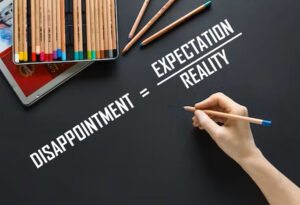
Here, your disappointment comes from the mismatch between reality and your expectation. Yet, the reality has been this way all along — reality did not change in that one second leading to your discovery of the truth. The world did not conspire to bring you down. The reason you feel disappointed is because you discovered the truth — and this truth is not what you thought it would be.

Disappointment makes you stronger.

When you go through a harsh emotion like that, you become tougher. You learn to process and work through your emotions. You become more resilient to life’s hardships.

* * *

So now we know disappointment is good for us, but what can we do about it?

One approach would be to always set our expectations so low that we’re guaranteed not to be disappointed. (e.g., my short story didn’t win an award, so I’m never going to write another short story.) That famous American philosopher Babe Ruth had something to say about this approach: “Don’t let the fear of striking out keep you from playing the game.”

Alternatively, we can set goals that require us to go beyond our comfort zone like Robert Browning suggested, Ah, but a man’s reach should exceed his grasp, Or what’s a heaven for?” while being realistic about the possible outcomes. We can become stronger, smarter, and more effective writers if we acknowledge the relationship between expectations and reality.

* * *

I found a remarkable reference to this very subject the other day when I was reading Daniel DeFoe’s great novel Robinson Crusoe. After the hero had been stranded on a deserted island for decades, a situation most people would have found intolerable, he muses about his situation.

“I learned to look more upon the bright side of my condition, and less upon the dark side, and to consider what I enjoyed rather than what I wanted; and this gave me sometimes such secret comforts, that I cannot express them; … All our discontents about what we want appeared to me to spring from the want of thankfulness for what we have.”

* * *

So the short answer for dealing with disappointment seems to be just what Mom always said: “Count your blessings.”

* * *

So TKZers: What disappointments have you experienced in your writing journey? How have you dealt with them?

You Gotta Have Heart

by James Scott Bell
@jamesscottbell

Apropos of our discussion on Artificial Intelligence last week—and the horrifying prospect of millions of books being produced (not written) every year (one indie “writer” has declared he is going to produce ten books a month)—I thought I’d say a word on behalf of humanity. Goodness knows we need it.

I decided to corner the machine with a question. I asked ChatGPT itself if there was any room left for flesh-and-blood scribblers. It answered, in part,

AI can generate text based on patterns and data it has been trained on, but true creativity and originality often stem from human imagination, emotions, and experiences. Human writers bring a unique perspective and the ability to create innovative narratives that AI may struggle to replicate.

Fiction writing often involves exploring complex emotions and human experiences. While AI can analyze and mimic emotions to some extent, it may not fully comprehend the depth and nuances of human emotions in the same way as a human writer does. Emotional intelligence and empathy are vital components of storytelling that are challenging for AI to replicate convincingly.

Emotional intelligence and empathy. In other words, heart.

We gotta have it. It’s the thing that distinguishes us from the machines. And if we want to keep selling fiction, we need to get heart onto the page.

That’s because discoverability is a challenge with a “tsunami” of competent fiction deluging the Amazon shores. Some of that challenge is overstated. We’ve had 15 years of competent and mediocre ebooks, and it’s not volume that sells over time, or gives an algorithmic boost to a backlist. Reader reviews do much of the curation and the best books rise to the top (not always, as we know, but the odds are better with superb book after superb book).

Now, of course, the tsunami is exponentially bigger and more terrifying.

Or maybe it’s more like Sharknado!

What is the answer? Simply this: we have to put into our books what the machines cannot replicate. And the most important thing they cannot replicate is you. Your heart, your soul, your vision, pressed through the craft you diligently study and apply.

Robert Frost famously said, “No tears in the writer, no tears in the reader.” Meaning you’ve got to feel before you write.

You’ve got to write like you’re in love. Later, you can edit like you’re in charge.

Love, say the poets, is a kind of ecstasy that overwhelms. Even elementary school kids have ideas about love. Some time ago a teacher asked her class to define love. A few of the answers:

“Love is like a little old woman and a little old man who are still friends even after they get to know each other.”

“When somebody loves you, the way they say your name is different.”

“Love makes you smile when you’re tired.”

“You really shouldn’t say ‘I love you’ unless you mean it. But if you mean it, you should say it a lot.”

Tommy, age 6, nailed it: “Love is when a girl puts on perfume and a boy puts on shaving lotion and they smell each other.”

So, to love your book, smell it! By that I mean, don’t forget the sense of smell, as Steve recently discussed. But not just the obvious smell. Find something unique. Unique is what the machines don’t find. Yet.

Want to see what I mean? Look no further than the great Raymond Chandler in The Little Sister:

She smelled the way the Taj Mahal looks by moonlight.

No machine’s going to come up with that! Because it’s not rational, and it’s not meant to be. It’s meant to be felt.

Same with emotions. The machine will give you the obvious choices. Say your character is in a dark alley and hears footsteps. What emotion? Fear pops immediately to mind.

But that’s predictable. Instead, human, go deeper. In his book The Emotional Craft of Fiction, Donald Maass says to pursue “third-level” emotions. What this means is, you think of the obvious emotion the character would feel in a situation. But then ask, What else would the character feel? And ask once more, What else? That’s the third level, the one that is surprising, which a reader experiences as delight.

An exercise I love is the page-long sentence. I choose a moment in my story where the character is feeling deeply. I stop and open up a fresh doc and write a sentence of 200-300 words, no stopping, in the character’s voice, talking about all the permutations of the feeling, going on tangents, coming up with metaphors, not pausing to edit. Once you get going, your Boys in the Basemet will send up things you didn’t know were there, and you’ll get at least one gem to polish and put in your text.

Your heart is doing an end run around your conscious and cliché-steeped mind.

So let the machines churn their mediocre-if-competent product. Make yours unforgettable. The secret ingredient is heart.

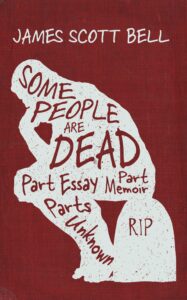
Speaking of which, I put a lot of my heart into a crazy book called Some People Are Dead: Part Essay, Part Memoir, Parts Unknown. These are short riffs on subjects—including my own life story—that arose randomly as I considered the obituaries of famous and not-so-famous people. These can be read as five-minute escapes from the world whenever such is needed (like, every day). The Kindle version is free for five days. Enjoy!

Over to you now. How do you get your heart into your pages?

We might as well end with the hit song from the musical Damn Yankees. In the song, heart is about grit, something else writers need in abundance, now more than ever:

What Sort Of Writer Are You?

We’re leading with the questions in today’s Words of Wisdom:

What sort of writer are you? Do you only work on one project at time, or do you have multiple irons in the fire? Have you ever worked on two projects simultaneously that are at the same stage? If so, how do you juggle them? If you haven’t, have you considered it? Oh, and do you know your writer type?

Okay, that last needs more context, and Kathryn Lilley provides it below, in the last of our three excerpts today. Clare-Langley Hawthorne’s post discusses her own consideration, prompted by her agent, of working on two projects simultaneously, while James Scott Bell talks about the lure of a hot new idea when you are already working on multiple projects.

As always, the full post for each excerpt are date-linked below.
When I met with my agent a few months ago he raised an interesting suggestion – that perhaps I consider juggling multiple WIPs at once. While I have certainly managed copy edits while writing a new project, I have never actually juggled two WIPs and I am intrigued as to the practicalities of having more than one active project on the go at once. To be honest I am a bit of a linear writer, tackling one draft at a time, but now I am seriously considering the possibility of trying to complete multiple WIPs simultaneously…and I need some advice.

  • For those of you who have juggled multiple WIPs, how did you handle it?
  • How did you divide your time and deal with the development process for each?
  • Were you able to retain a sense of balance?
  • Was it easy to keep each ‘voice’ unique or did the projects blue or affect the others?

All and any advice on juggling multiple projects will be gratefully received (!) while I try and wrap my head around getting back into the swing of writing once more…I have to tell you though moving countries plays havoc with your schedule:)!

Clare Langley-Hawthorne—September 6, 2010

You’re working on a project, you’ve got a deadline. In some cases, like my own, you have two or three projects going and you are getting close to the various finish lines.

But then you’re walking along from the store or the coffee house, and it tiptoes up––that new idea, that inspiration, that concept, that what if?

You try to ignore it at first. Or maybe you give it a little dalliance, while at the same time part of your brain is saying, Stick with the program, bud. You haven’t got time for this!

But this new idea, shoved up from the basement where the boys are hard at work (and they have closed the door so the idea can’t go back down) beckons to you. It winks. It nods. Whatever the scent it’s wearing, it’s intoxicating.

So you figure you’re merely walking along, nothing’s really happening, why not give this idea a little time?

And that’s when you’re cooked. That’s when the hooks go in.

So you take the new idea out for a drink. It’s totally innocent. You’re not wedded to this idea. You have a couple of other ideas you’re married to waiting for you at home. But you’re not home. So just one drink to talk things over, see what’s happening, and maybe you can just part as friends.

But part of you knows it is oh so dangerous to drink with a new idea. You don’t want to admit you’re really attracted to it. You certainly don’t want your other projects to get jealous. But there you are, ordering from the bartender, and all of a sudden you’re looking at your idea and imagining her all dressed up.

She’s wearing a great opening chapter.

Underneath that is a perfect structure.

This idea has legs.

Stop!

But it’s no use. Your idea is flirting with you. And you like it.

You all know what I’m talking about. It happened to me the other day. I have three front-burner projects I have to finish. But I made the mistake of taking a long walk without any keyboard in front of me.

There flashed the idea! Oh, it was a honey. I started to dally. Two main characters. What was their story? Why would they be thrust together after this suspense-filled first scene?

Oh, I know! I can give them this great Doorway of No Return into Act II!

And who is waiting for them there? A villain, of course! And he’s baaaad….

But is that all? No, my characters each need a “mirror moment” to tell me what their stories are really all about.

Hers: I’ve got it!

His: Yes, that’s it!

The idea whispered, “Buy me another drink.”

And now, guess what? I asked the idea to marry me!

And she said, “Yes!”

Ah, Cupid! I am undone!

James Scott Bell—September 6, 2015


I spent some time today pondering the variety of our styles. Here’s my list of some of the major categories and characteristics of the writer species:

1) The Proud Pantster

Outlines? You don’t need stinkin’ outlines! To get inspired, you bite the heads off voles and spit them out. Sure, sometimes you have to perk up saggy spots in the pace by throwing in a dead body or two. But hey, that’s the way you roll.

2) The Reluctant Pantster

You always plan to outline, but never get around to it. You feel remorseful that your track record is so haphazard. You  promise to outline the next one.

3) The Writer-Terminator

You churn out an impressive  quota of words every day. No. Matter. What. You finish projects before deadline, and juggle multiple WIPs while breaking the minute mile on the treadmill. Your fellow writers admire you. And resent you.

4) The Unemployable-As-Anything-Else-But-Writer Writer

Thank goodness you can write pretty well, because basically, you have no other marketable skills. If it weren’t for words, you’d be pushing a shopping cart.

5) The Accidental Writer

You didn’t plan to spend your career writing fiction–it just seemed to happen. A series of lucky breaks meant that you didn’t have to work too hard to get published. You don’t like to talk about how you got started–people get annoyed. Besides, nowadays, you are definitely suffering

6) The Cranky Writer

You like having written, but you hate to write. Writing for you is like pulling out a fingernail. And then smearing the blood on the screen.  Your bottom line: Writing. Sucks.

7) The Harried Writer
You cram in your writing time between a million other duties: job, family, life. Your perennial dream is to go on a writer’s retreat. Or simply to take a nap.

8) The On-deadline Writer
See Harried Writer. See also Cranky Writer.

9) The Fantasy Island Writer

Words flow easily from you, in delicious, buttery prose. You landed your agent and a contract with a Big-6 publisher within weeks of finishing your first draft. You don’t understand what people mean when they say they’re “blocked.” When you write, you’re simply taking dictation from a band of leprechauns who conjure stories deep inside your brain.

Just one problem: You don’t actually exist.

Kathryn Lilley—February 4, 2014

***

Up to this point, I’ve never been able to work on two projects simultaneously, though I keep returning to the idea. If you have tried it, are both projects in the same genre, or different ones?

When it comes to writer types, what’s yours? Feel free to add your own type to Kathyrn’s fun list. I’m “the Novel Journaling Outliner: Needs to figure out the beats, the ending, character motives and goals, while troubleshooting, brainstorming, and thinking about the book in the (digital) pages of a novel journal.”

I look forward to your comments!

Amazon Printing Cost Increase

Amazon Printing Cost Increase

If you have print books on Amazon.com, you have probably already received an email explaining that printing costs are going up on June 20th at 12:00 AM UTC (June 19th at 8:00 PM EDT). I received the email May 23rd.

The letter explains that, depending on the current price of your books, and if you do nothing, your royalties will either decrease or could become zero.

The choices of action include:

  • Running a one-time bulk list price update on all of your live paperback or hardcover list prices to increase your prices so they will continue to earn the same royalty
  • Visit the price tab for each of your live print books and make changes individually

Here is a link to frequently asked questions with printing cost tables at the bottom of the list of questions:

FAQs and Printing Cost Tables

Printing cost = “fixed cost” plus (“per page cost” x “page count”)

In the Amazon.com market (the U.S.):

From my reading of the tables it appears that for a paperback that is no larger than 6”x9”, has 110 – 828 pages, and black ink, the only price increase is the fixed cost (going from $0.85 to $1.00 per book), with the per page cost remaining the same. So, basically a $0.15 increase in printing cost.

I chose to use the one-time bulk list price update. It didn’t show me what the new prices would be immediately. That could take “several weeks,” they said. My thought was that I could look at prices individually after the update had taken effect. Thirty minutes later, I got an email with the updated prices. All my paperbacks were priced low. The increase was $0.25 for each of them, so apparently there was a $0.19 increase for printing costs and a $0.06 increase to keep the royalty the same. I’m not sure I understand that.

For comparison with IngramSpark printing costs, I used a 6”x9” paperback with black ink, cream paper, and 300 pages. IngramSpark’s cost was $5.48. Amazon cost was $4.60.

I would add the following to choices of action:

  • Order any supply of books you will need for in-person events in the near future before the cost goes up.
  • Consider using the coming increase in costs in your marketing, encouraging readers to buy before the prices goes up.

Okay, for discussion today, let’s share our knowledge and advice.

Questions for discussion:

  • Do you have any questions you would like to post for the discussion today?
  • What additional information would be helpful in making a decision on new prices?
  • What advice would you give?
  • What do you plan to do?

Time Billionaires

Time is our most precious commodity. Regardless of inequities in life, each day we have equality—exactly the same amount of time allotted to all. 24 hours. 1,440 minutes. 86,400 seconds.

In many ways, it’s not about the amount of time we have. It’s how we use our time. Time being the ultimate tool; a finite and non-renewable resource.

I’m short of time today (so to speak). I have little time to deliver a meaningful piece, and by meaningful, I mean something of value that folks following The Kill Zone can take away. So, I’m writing a short, meaningful piece about time value.

I’m short of time because I’ve created a writing monster that’s frothed like a sack of Mentos dunked into a Diet Coke vat. I’m enjoying the fizz but, man, is it ever sucking time. There’s no foreseeable end in sight.

So, I’m tapping an article I recently read on The Free Press (Bari Weiss—hate her or love her). It was titled The Time Billionaires and went like this:

A million seconds is 11 and 1/2 days. A billion seconds is slightly over 31 years. In our western culture, we’re so, so obsessed with money. We deify dollar billionaires when we really should be fan girls and fan boys of time billionaires. For instance, most 20-year-olds have two billion or better seconds left in their lives. But few look at it that way and don’t relate to themselves as being time billionaires. Many people fail to realize this asset’s value until it’s gone.

The piece had a nice quote from Stoic philosopher Seneca that read, “We are not given a short life, but we make it short, and we are not ill-supplied but wasteful of it.”

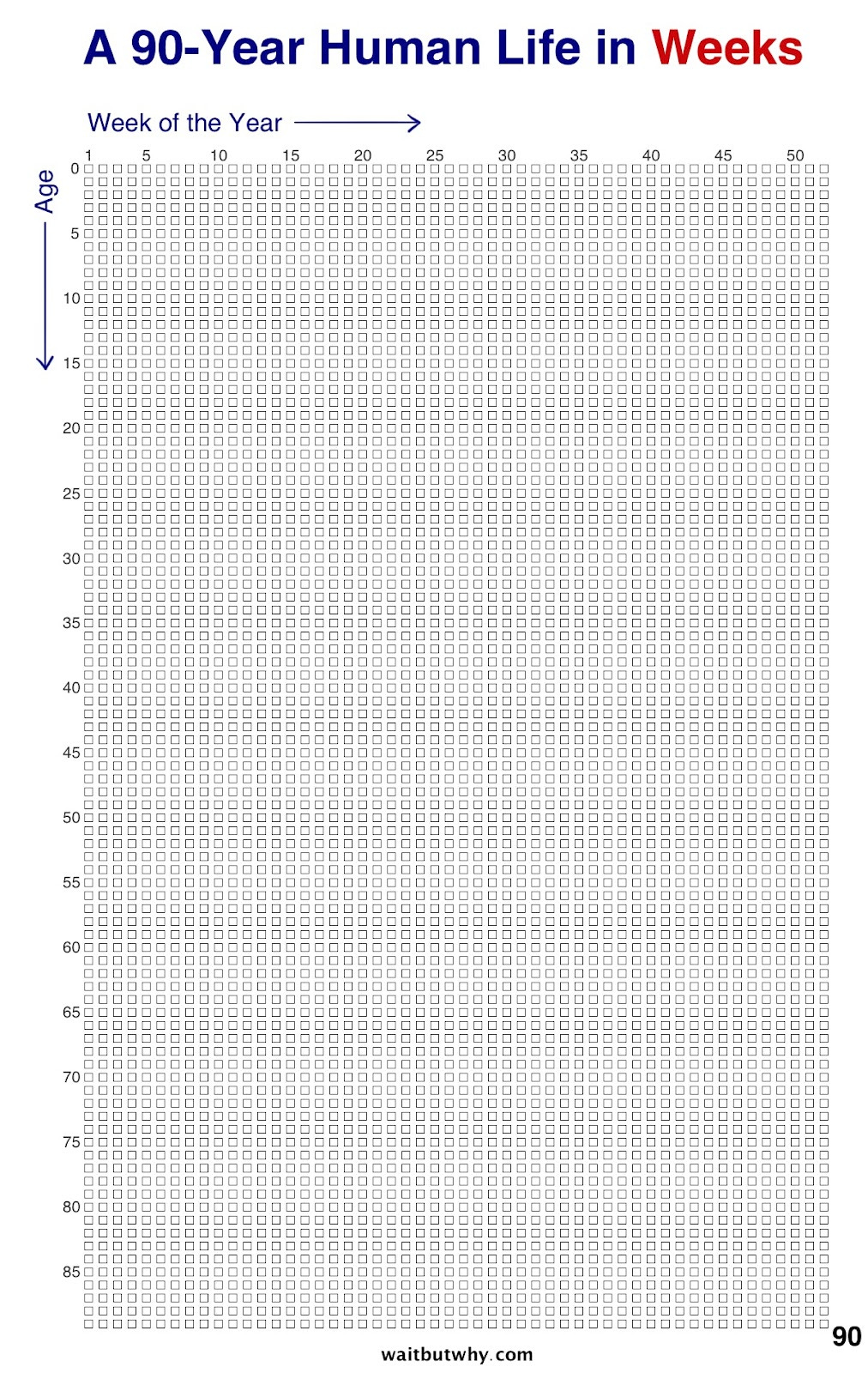
The article also linked a “Life Calendar”. It exposes a blank 90-year lifespan by each year listed vertically with 52 squares across the horizontal representing weeks in a year. It’s downloadable, and you can print it as an 8 ½ x 11 worksheet. See the pic below.

I drew out, or charted, my life calendar. It was an interesting exercise that made me reflect on where I’d spent the last 2 billion seconds of my life and where I’m going. I’m 66 now and, if my genes are predictive, I might have a billion seconds remaining.

Yes, still time to be a time billionaire. It’s what I do with forthcoming seconds that count. But if it goes like my Coke & Mento project is going, I might never get done.

How about you, Kill Zoners? Have you looked at your Life Calendar and worked on it? Also, if anyone has time management tips, I’d love to hear them. God knows, I need some.

I Can’t Do Two Books Per Year Anymore

By John Gilstrap

From 2019 to 2022, I wrote two books per year–one Jonathan Grave thriller and one Victoria Emerson thriller. That’s six books in three years. Or, 200,000 words per year. During Covid. While building a house. And selling a house. And moving twice. It was exhausting.

Worse, it wasn’t fun. Don’t get me wrong–I’m proud of the stories and the characters and all the moving parts of the books, but as I age, sitting and writing for long periods of time has become uncomfortable. Thanks to a reckless youth and too many years of catching heavy burning stuff with my fire helmet have left my neck and back pretty creaky. When I stay active–say through gardening and yard work and playing with the dog–everything works fine. But after five or six hours at the keyboard, I feel like it takes an hour just to stand upright again.

And there was a mental strain to that writing schedule, as well. Taking all the unique life-stuff out of the equation, a two-a-year contract means that I was always writing one story while editing or proof reading another. It’s just more work than I wanted to do.

But I still want to explore new ideas.

If all goes as expected, I will soon sign a contract with Kensington Publishing that will advance my Jonathan Grave series to 18 volumes. I never dreamed that the momentum of those books would continue to build as it has, and while I’m very much in love with the characters and their mission to bring justice to bad guys, it’s fun to explore different characters and different plots.

Another new series.

I had just finished the page proof edits for White Smoke, the third book of the Victoria Emerson series, when my agent called to tell me that she and my editor had been talking about me over lunch. They think I should do another new series, this one a spin-off from Jonathan that would take a regular character from the series and spin her off in a new direction while at the same time knocking Jonathan’s world a few degrees off its axis.

The idea had occurred to me before, and I find the idea exciting, but see above. I don’t want to do two books a year anymore. I want to have a life outside of my office. It’s the nature of a popular series (and one that I hope will also become popular) that people want to see new books on a regular basis. I hear all the time from people who count on the new Grave book to entertain them at the beach every year.

So, we reached a compromise: One book every 9 months, each new volume in each series dropping every 18 months. That feels doable to me. I guess we’ll find out.

I’m being deliberately obtuse about the new series because no contracts have been signed. I’ll come clean when that happens, I promise.

So, TKZ family, do you find the act of writing to be physically tiring? Inquiring minds want to know . . .

Starting Over.
It Never Gets Easier

By PJ Parrish

Today is Monday. As good a day as any to die. Well, die figuratively. I started a new book today. The curtain has gone up. My stomach hurts. It isn’t my diverticulitis flaring up. I’m sweating. And it’s way past menopause.

Man, this never gets easier, does it. Staring at that field of white. Watching that damn  curser blinking like a heart monitor. Ka-thump. Ka-thump. Ka-thump…

Writing is painful for me. Not just psychically painful. Physically painful. Although I have been noodling around with this new book idea for weeks now, I have been putting off actually starting it. I have good excuses. First there was the Edgar banquet. Then there’s this conference first novel contest I’m judging. Then the dogs needed their dental cleanings. Then there was the Heat and Panthers semi-finals. Then friends came up for Memorial Day and I had to take them on a winery tour. And man, look at that load of laundry over there waiting to be folded,

But you know, don’t you. The longer you wait, the worse it gets. Because writing is like exercising, or practicing the piano or learning a language. If you stop, your energy flags, your muscles atrophy, your mind grows cobwebs.  You get fat and lazy. Then get you depressed because you’ve gotten fat and lazy.

It’s a confidence thing. Every time I start a new project, I am scared. Scared that I’ve run out of gas, scared that I will become one of those pathetic writers who phone it in. I’m worried that, because I’m not a pup anymore, I don’t have the energy to go the distance and the new kids coming up are so damn clever. I’m thinking that this plot is pallid, that this story is shapeless. I will be revealed as the fraud that I am,

But…

Then I remember. I remember that once things get going — oh, around chapter 20 or so — it will start to gel. It will become fun again. I remember that I have been here before and have come out the other end okay. I remember that every book feels like you are pushing a mammoth boulder up a hill until that beautiful moment when you crest and then you race downhill in an exhilarating rush. And I remember that I am so damn lucky to get paid (well maybe) to think stuff up, to have readers who buy still our books and write us emails of thanks. I remember all of this and try to stop whining and do my job.

The good thing is, there is redemption even for scofflaws. There is always another day, a new chance. Another Monday.

Today is Monday. Today, I took a detour and wrote this blog instead. I know this is  procrastination of sorts. But this blog has also been like a quick set of jumping jacks. See, I figure just the fact that I have to come here and move my fingers over the keyboard might get my lard ass in gear again for the heavy lifting of fiction.

And I looked this up: I’ve been hanging around here now since 2012. You guys are my peeps.

So, thanks for letting me vent today. You’re cheaper than therapy and a lot more fun. Now, if you’ll excuse me, it’s back to work. That page is still blank. That curser is still blinking. I’m not getting younger. Every journey starts with one keystroke.


How Time Off Benefits Writers

The last part of Tips to Improve Newsletters series will continue next time. Two reasons for skipping this week. First and foremost, I’ve been glued to the keyboard for months with very little time-off, and I need a break. Two, it’s Memorial Day. Yesterday, the hubby and I cruised around the lakes and through tree-lined backroads on our new HD Heritage Softail Classic—a well needed respite among nature. We plan to continue that ride today.

Here’s a pic of our new baby…

HD Heritage Softail Classic

©2023 Sue Coletta

Time off benefits us for many reasons. When we break from our usual routine, we can no longer operate on autopilot. That decreased familiarity flips a switch in our brain to be more fully present, to really wake up. Meditation has a similar effect. Thus, taking time off increases mindfulness and produces a higher level of wellbeing.

Heart Health

Time away from the keyboard also improves heart health. It can help reduce the risk for metabolic syndrome—a cluster of health issues including high blood pressure, high blood sugar, excess belly fat, and abnormal cholesterol levels—which raises the risk for heart disease, stroke, and type 2 diabetes, according to Forbes. In fact, researchers found that in those who vacationed and/or took time off on a regular basis were less likely to die from heart attacks and other cardiovascular problems.

Stress

Time off reduces stress. When we’re stressed, our bodies release hormones like cortisol and adrenaline. Over time, chronic stress increases our risk for health issues.

Another scientific study found that spending at least two hours per week in natural environments—parks, forests, beaches, lakes—is not only great for our soul, it’s also good for our health.

Brainpower

Taking time off improves the capacity to learn. When the brain is fully relaxed, it consolidates knowledge and brainpower.

“Neuroscience is so clear, through PET scans and MRIs, that the ‘aha’ moments comes when you’re in a relaxed state of mind.”

—Brigid Schulte, author of Overwhelmed: Work, Love and Play When No One Has the Time

Hence why some of our best ideas come while we’re in the shower, on a walk, or as we’re falling asleep. In fact, a professor at Columbia Business School has conducted numerous studies, drawing a link between travel and creativity.

“Foreign experiences increase both cognitive flexibility and depth and integrativeness of thought, the ability to make deep connections…”

—Adam Galinsky, Columbia Business School

Sleep

Sleep is a commodity many of us struggle with, evident in the comments of Steve’s recent post. Stress lowers sleep quality—wake up groggy and/or suffers from a lack of energy. But taking time off to read, take a walk, or other activities can lower your stress levels. Thus, induces a better night’s sleep.

If you’re overwhelmed or cognizant that your body needs rest, take what Psychological Therapist Kate Chartres calls a “duvet day.”

“Having a duvet day replenishes your stocks. Finding the time to switch off the mind…and stop that internal chatter allows your anxious mind to repair… You’ve all heard about how our muscles need to rest. We don’t work the same ones every day, so they have time to repair. The mind needs time too, to rest and repair. This enables you to be better, more responsive, and focus on your return to work.

So, if you are feeling frazzled and in need of that duvet day, but you keep going, the chances are you’ll get more and more frazzled, less and less focused, less able to do your job. When we have too much going on, our concentration and ability to use initiative, judgement etc., are all affected. So, can you afford to pull a sickie? I think the question is to look after your mental health, can you afford not to?”

Happy Memorial Day, TKZers!

Be kind to yourself today. I’ll be around in the morning, then we’re off on another adventure. But don’t let that stop you from having fun in the comments.

What’s your favorite form of R&R? Any plans today?

To our military men and women: Thank you for your service. <3