Lessons Learned in NaNoWriMo 2014

James Scott Bell
@jamesscottbell


And so ends another November and the keyboard-clacking madness that is NaNoWriMo. It seems like each time I get a little something different out of it.

This time I worked on the third book in a series (the books will be published close together next year). I did some pre-planning along the lines I’ve suggested before. I killed that first day, hitting 3k words. And I was off to the races.

Only this race had some hurdles.

I did make the 50k mark on the last day, but barely. I lost at least four full writing days due to Bouchercon and a family matter that had me driving a car for about 16 hours over two days. But that’s part of the NaNo experience and a good lesson for writers who want to do this professionally—life often intrudes, but you find a way to write through it. 

The book is not finished, BTW. Since I’m aiming for 70-80k it’s still in production. I’m trying to keep the NaNo MoJo working, though. Which leads me to the following lessons I pass along to you.

1. Deadlines work

Remember what Douglas Adams, author of The Hitchhiker’s Guide to the Galaxy, once said? “I love deadlines. I love the whooshing noise they make as they go by.” Every writer who has written under contract knows what he means. 

The “pressure” of NaNo is good for a writer. If you fall too far behind you’re cooked. So you do whatever it takes to keep to a daily word count. You adjust your goals to make up for lost time. 

Out of NaNo, I’m sticking to a SID — self-imposed deadline. Writing down the date you want to finish and putting it where you can see it daily helps.

2. Scrivener rocks

Scrivener was a big help this year. I made heavy use of the Outline View. Scrivener lets you color-code your scenes and then view them in an outline format. You can customize this view. I show my scene titles, the scene synopsis (which you can generate AFTER you’ve written the scene. Scrivener will even auto-generate a scene synopsis with one click), and my own added timeline, which is of tremendous importance. Thus, I can see at a glance what I’ve done and on what day and time the scenes take place. 

I found this to be valuable as I began the writing day. I did my Grafton journal notes (see my post on that), then looked over the outline which showed what I’d already written, as well as  future scene ideas. In this outline view you can instantly add a scene you think needs to go in between other scenes.

3. Trust but verify

In NaNo there are times when you have to be willing to try something risky, or follow an idea that pops into your head. Pure pantsers love that. No problemo, they say.

But there is a problemo. Unlike what some may advocate, not every spark of inspiration or tangent is good just because it’s new. Indeed, one of these could take you to a bog where your story drowns, and a good deal of NaNo is wasted.

The answer, I found, is to take ten minutes of breathing time when something totally unexpected pops up. Journal about it. Write some notes. (Here again Scrivener comes in handy. Each scene in your story has its own “Document Notes” section. You can record your ideas and thinking there, work things out).

4. Nothing beats full immersion in a story

All writers know the feeling of getting away from a WIP for awhile, then coming back to it and finding it hard to get into the story again. NaNo keeps you immersed in your story. This is good for you and for your novel. Not necessarily good for your spouse. When Mrs. B asked me in October if I was going to do NaNo again, I nodded. And she did not look pleased. So I tried to stick to the final lesson:

5. Don’t forget the important people in your life

I was intentional about trying to carve out evening time with my wife. But she knows me well after 34 years together. I get that faraway look as she’s talking…I have to ask her to repeat things…I nod my head at the wrong time….I excuse myself to go write something….I forget to pick up the milk at the store.

Once I got out of the shower thinking about my story. I went to the sink as usual, thinking, thinking, and put some gel in my hair, brushed it, then got ready to shave. And realized I had put shaving gel on my head and was about to lather my face with hair gel. 

Most writers are like this. We’re strange creatures, rare birds, a little funny in the head. Our loved ones have to put up with this. So be kind! Take them out to dinner and try to forget, for a couple of hours, that you’re a writer.

Unless, of course, you see a particularly interesting character over at the bar…

So anybody got a major lesson or two they’ve learned this year on the writing of fiction? 


THE AFFAIR: It’s About an Author. Really.

My latest television addiction is the Showtime series The Affair. True, the primary plot of the show, as the title indicates, concerns a relationship between two folks who are married, but not to each other. Each episode is divided into two thirty-minute 
he said/she said segments which usually (but not always) show the same events from the markedly different viewpoints of the two participants in a game of Jump the Fence, carried out in the resort town of Montauk on Long Island. Both of the main characters in The Affair are Americans portrayed by British actors Ruth Wilson and Dominic West. Wilson (the unforgettable Alice in Luther) plays the role of the troubled and complex Alison Lockhart, a Montauk “townie” waitress who has married into a family with deep roots in the community. She attracts the not-unwelcomed attention of Noah Solloway, who with his wife Helen and four children are spending the summer in Montauk with Helen’s parents, Bruce and Margaret Butler. Noah is played by West (he looks like a young(er) Gordon Lightfoot), who was Detective Jimmy McNulty in The Wire.  Noah and Alison continue to happen upon each other (it’s a small island), one thing leads to another, and soon the disaffected Noah and the rumpled, damaged, but still-hot Alison are steaming up a local bed-and-breakfast, a vacant house, and various bodies of water. Yep, The Affair is about infidelity, for sure, but the plot elements also include a murder mystery, an island crime caper, and a few other things. What has really attracted my attention to the show (other than Ruth Wilson, of course) is that The Affair is about novel writing and authors.

How’s that? Noah  is a New York City public schoolteacher who, as The Affair opens, has recently published a mildly acclaimed but poorly selling novel, and he has a problem. As the saying goes, one has their whole life to write their first book and six months to write their second. While Noah doesn’t have writer’s block, he is not exactly inspired to write Number Two. What makes things worse is that Bruce, Noah’s father-in-law, is a wildly successful, well-known author whose literary work has earned him enough money to live next door to God. Bruce manages to effortlessly exude a smarmy confidence that he wears like a custom-tailored suit, particularly whenever his much less successful son-in-law is in the room. Bruce does so with facial expressions and pithy comments, among other things, and thus manages to convey the impression that he is three hundred pounds of horse manure jammed into a two hundred pound sack. He can do this while stating the truism that while everyone has one good book in them, they almost never have two, or on another occasion, telling Noah the secret of his excessive success. Bruce’s every move consists of helping Noah with one hand while belittling him with the other. Even when Bruce arranges an introduction and meeting with his agent for Noah, it’s a trap which, it is implied, will be sprung by the failure of Noah’s best efforts. Noah for his part is lacking in confidence and probably for good reason. There is, to note but one instance, a classic scene in one of the episodes where Noah has followed Alison to the town library on the pretext of “accidentally” running into her. He finds his book standing forlorn on a shelf as he lurks between the aisles. The library still uses the ink-stamp method of date-due notification; a quick glance at the inside front of his book tells Noah that no one has bothered to check it out. No words are necessary; the look on Noah’s face speaks volumes.

The Affair is a multi-layered drama, a cautionary tale about a man who gets what he thinks he wants — in a number of ways — only to find that having is not the same as wanting (as Mr. Spock pointed out in the “Amok Time” episode of Star Trek) and that some desires are better left unsatisfied (as Garth Brooks pontificated in the song “Unanswered Prayers”). In the case of The Affair, the dream, or at least one of them, is a published novel. The lesson of the series seems at this point to be that success is not a panacea for all of one’s ills, and that sometimes success is anything but

Enough of the gloom, however. What book, film, or television series concerning an author would you recommend to the rest of us? And yes, you’re allowed to mention Castle, or Murder, She Wrote.

First Page Critique of Cruel Sacrifices

Jordan Dane
@JordanDane
 
Happy holiday season, TKZers! What better way to spend the season than partaking in a little murder and mayhem. For your reading pleasure, we have an anonymous first page critique entry entitled: Cruel Sacrifices. My comments will be on the flip side. Enjoy. And to work off those holiday calories, join in with your comments.

 
July 4, 2011/Baton Rouge, Louisiana
“Please don’t do it! I’m sorry, I didn’t mean to!” the girl cried.


“Oh really, now?” the killer calmly stated.
  
“Yes, I am so sorry! Please don’t kill me!”


The killer looks into the girl’s eyes. The killer saw only fear and misery there. Then the killer glanced down at the girl in disgust. The killer never thought that they will see the day that this whining creature will be on her knees, begging anyone for anything. The killer remembered when this girl used to hold her head up high, played guys and then throw them away like trash. Party like it was the end of the world. This girl cared for absolutely no one but herself. The girl’s whimpers brought the killer back to the present.


“I’m sorry, okay, I didn’t mean to hurt him!” her tears fell onto the ground. She tried to get up but slipped again on the hard concrete. The killer cocks the pistol, aiming it with perfection on the girl’s face.


“Get up!”


The girl gradually got up. She shook all over. A violent tremor went through her. She glances around at the fireworks in the distance. She yearns to scream for help. She knew what would happen if she did. She didn’t bother to test it. She glanced quickly back at the killer, at the nose of the pistol aimed at her.

What kind of gun is that? She thought. Is that a Glock or a Magnum? She didn’t know the first thing about guns. She sniffled.


“You broke his heart; you do know that, don’t you? He cried that night in my arms. He never went to sleep that night,” the killer told her.


“I’m sorry, I didn’t know. It was just a joke! You have got to believe me!” the girl broke down again.


“It was just a joke to you! My brother’s heart was only a game to you, you wench!” the killer screamed at her, eyes full of rage.


“Please! Don’t shoot! I really did like him, ya know.” The girl wrapped her arms around herself. “It was only a game! We were only joking, please!”


“That was no game! No joke! You humiliated him in front of everybody! You broke his spirit, lost his trust, his outlook on life,” the killer quietly told her, with a pang of sadness.


Comments:
1.) This is obviously a flash back with a clear tag line as to time, date and location. A reader can clearly see what is happening when. I like the use of tag lines to orient the reader in a quick fashion. Also the scene starts with a dialogue line and pulls the reader into the scene right from the first line without too much back story or explanation to slow the pace.


2.) The description “the killer” is used before the killer kills. That begs the question – in whose POV are we? A killer would not usually refer to themselves as a killer, especially if they haven’t killed yet. It implies the killer is something coming from the girl facing the gun. Picky I know, but it drew me out of the intro.


3.) The overuse of the reference “the killer’’ is distracting to me. (It’s used 11+ times in this short intro.) I think this is because the author does not want to identify the gender of the killer, but there are more subtle ways of avoiding gender in the narratives by establishing the POV as the person with the gun, then focusing on what he or she sees (ie the girl).


EXAMPLE:
The killer looked into the girl’s eyes and saw only fear and misery. Perfect. Whiny little bitch probably never imagined the day would come when she’d be on her knees, begging for her pathetic life. This girl used to hold her head up high, played guys and then threw them away like trash. She cared for absolutely no one but herself. Her whimpers meant nothing. After what she’d done, how could she expect mercy?


4.) Nearly the whole short paragraph before this line, starting with ‘the girl gradually got up…’ is in the girl’s POV. I would recommend picking one point of view and sticking with it. I generally select the person with the most to lose. In this case, it may be the girl with the gun pointing in her face. She’s scared out of her mind, maybe only seeing a shadow with a dim light reflecting off the gun. Perhaps the killer doesn’t say much, to not giveaway the gender. But if the author stayed in the killer’s point of view, it’s easier to hide gender. Whatever the reason, pick a character to place the POV and stick with it during the scene, rather than weakening the introduction by ‘head hopping’ between characters.


5.) There is a tense problem throughout. Lines like – the girl cried & the killer stated – are past tense, yet there are examples of present tense, ie ‘the killer looks into the girl’s eyes’ and ‘the killer cocks the pistol’.


6.) There is also a point of view problem. The start of the story appears to be in the killer’s POV, yet later it switches to the girl’s, ie ‘What kind of gun is that? she thought.’ And even in the killer’s POV, the perspective is muddled (ie ‘the killer screamed at her, eyes full of rage’ – How can the killer see his/her own eyes filled with rage?).


7.) In addition, if I had a gun in my face, the last thing I’d be thinking of is ‘what kind of gun is that,’ especially if I didn’t know guns. If the scene is written in the girl’s POV, the author could focus on the physical manifestations of fear, which in turn would ramp up the suspense.


I sense the killer might have more justification than revenge for his/her brother’s embarrassment – maybe the brother committed suicide and there is no going back. Whatever the premise, I have a sense that this author understands pace and tension. There’s a natural storytelling skill here. We have all had to relearn grammar and author craft issues, like point of view. Hang in there, author.


What say you, TKZers? Any constructive criticism for our brave author?

The Magic of Words

Nancy J. Cohen

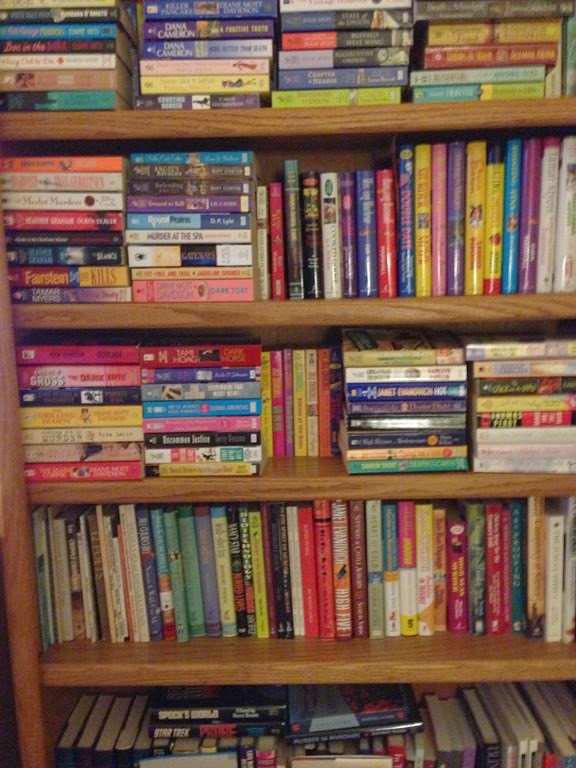
As I switch my gaze from the iPad where I am proofreading my next Marla Shore story to our bookshelf crammed with mystery novels, I marvel at how mere words on a page have the ability to transform into a mental image in our minds. In addition, those among us who have the gift of reading fiction can transport ourselves to any realm, time or place and put ourselves into any fictional role we desire.

IMG_0048

Not everyone is blessed with this ability. Those who read nonfiction or fashion magazines, for example, may lack this talent or deny it in themselves. It’s their personal preference not to read fiction but it’s also their loss. We possess a gift in being able to glimpse a page of words and fly away to another world in our imaginations. How does this happen? What transformation occurs in our brains to allow us to visualize scenes based on black type against a white page? Surely studies must have been done to show how this works. It never ceases to amaze me. I feel sorry for people who do not share my enjoyment in reading stories.

As this ability to transform words into images is a human trait, let’s admit that what each of us perceives is related to our personal lifespace. Lifespace is a concept I learned in nursing school and carried over to teaching writing. In character development, you take your main character and write her name in a circle on a piece of paper. Draw cartoon bubbles around her head. In these spaces, fill in what’s in your character’s mind at a given moment in time. What are her immediate concerns? Tasks to complete? Daily goals? That’s her lifespace. Do this for your protagonists and you’ll get inside their heads.

How you read words on a page and perceive them will differ from how I do it, because we each perceive the same scene from different viewpoints.

Here’s an example. “She strolled along the beach, head down, contemplating the seashells and damp weeds strewn across the sand. Her skirt blew in the breeze while a forlorn horn blasted from a ship headed out to sea. The ocean’s vastness swallowed a freighter’s silhouette against the darkening sky. Deep blue waters beckoned for her to shed her earthly concerns….”

What mood are you getting from this short piece? Are you feeling sad? At peace? Tempted to go skinny dipping? How you feel will be partly due to the words and the imagery they provoke and partly due to your own life experience and how you perceive the world.

I love reading stories. I want to share my passion, although I understand people’s reading tastes differ. But what wondrous worlds these other folks are missing. And what a wonder it is that we can take mere words on a page and use them to transcend to another universe. Wouldn’t you agree?

Women Doing Men…and Vice Versa

Got a great fan letter the other day from a lady named Rose O’Malley:

Dear P.J.: My husband is a Stephen King fan. Has read all his books and needed a new author. We went to the bookstore and found your first Louis Kincaid book. Well, he is hooked and is always looking forward to the next one. Here’s the funny part. He doesn’t think women can write as good as men. He thinks P.J. Parrish is a black man. I just found out when I went to your website [that you are women]. This is a good one. I can’t wait to tell him.”

Wish I could say this is rare. But we get a lot of fan letters that come addressed to Mr. Parrish. Whatever the reason — that our protag is a man or our style hardboiled — many of our readers assume we are male.

Now I’m a card-carrying feminist. (Well, I would carry one if there WAS a card). And I used to be miffed about this Mr. Parrish thing, believing that I had a duty to carry the standard for female crime writers. (Maybe I did strike a blow for the crime writing sisterhood in the O’Malley household at least.) But you know, after living fifteen years now as the neuter P.J. Parrish, I no longer take offense. I’ll let reader Wade Beeson, in his email to us, tell you why:

“As a compliment, I could not decide if you were male or female, as you seem sensitive and understanding of both sexes. Thank you for a provocative read.”

The women writing men and men writing women thing is a pretty hackneyed subject. It’s dragged out for at least one conference panel a year. And I suspect the men are as tired of explaining how they “do” women as I am tired of talking about how I “do” men.

It boils down to one thing for me: If you can’t slip into the skin of another sex (or race or anyone outside your paltry sphere of experience) you have no business even trying to write. Failure to write believable characters of ANY kind is the supreme failure of the imagination.

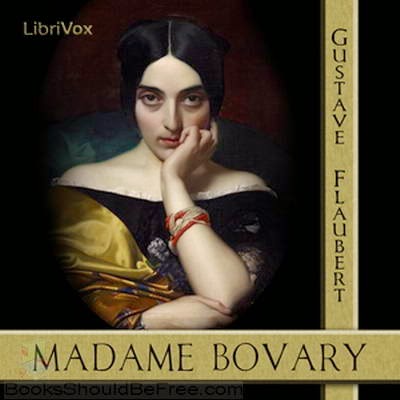
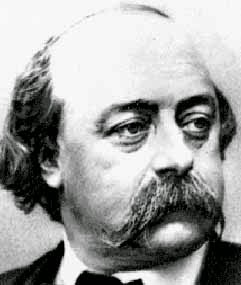
Madame Bovary is one of my favorite books. From the first time I read it, I was awed by Emma. And by her creator’s ability to bring her to such vivid life. At that time in my life, I had just run my Visa up buying a designer purse when my rent was overdue. How did Flaubert understand how I sank to that nadir?

Flaubert “did” women well. But when he said “Bovary, c’est moi,” he wasn’t claiming he was his character. Actually, he once admitted he was terrified by “the need to invent.” (Which I find vastly comforting!) He was a literary magpie who read medical textbooks to write about clubfeet, observed the town folks around him, and when he had to write a chapter about an agricultural fair, actually went to one.

It’s said he probably even stole the whole idea for Bovary from a scandal that was going on near his town at the time, buying into the advice of his friends who told him “write what you know.”

For years after his book came out, he peevishly maintained he just made the whole damn thing up.

But Flaubert WAS Bovary in a very basic way. His powers of observation, his imagination, his sensory antennae, his understanding of human nature — all those things that make up what we call writer’s talent — it all allowed him to inhabit other skins. It allowed him to create one of literature’s greatest female archetypes.

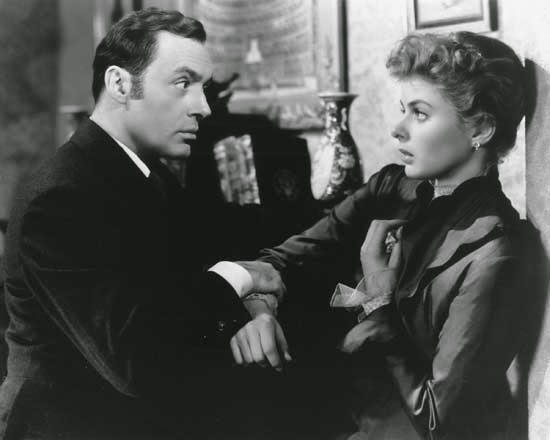
This man-woman thing is swirling in my head today as my sister and I write chapter 38 of our new book. The finish line is in sight, but it has been a hard race. See, this book is the first in a new series featuring a female protagonist. Now we wrote a female protag before when we gave Louis’s lover Joe Frye her own stand alone. But this charcacter isn’t a tough homicide cop like Joe. Gaslight.) Also, she is an unreliable narrator, which is a bitch to write well. It is exhausting being in her head. So for the first time in years, I can sympathize with those of you just starting out — those of you still trying to fit into that new skin. She’s a rich socialite whose life goes to hell when she comes to believe her husband is trying to kill her. (Yeah, I know…Ingrid Bergman in Gaslight.)

Our new woman is taking shape. As are the men around her. A whole new world is coming to life every day under my fingertips. It is frustrating, frightening all over again. And deeply thrilling. I tapped into something inside myself to become Louis. I will plumb the female side of myself for this new chararacter. (I have never been a rich socialite, after all…despite buying that designer purse.) I’ll willingly lose something of myself.

Here’s Flaubert talking about that process:

“What a delicious thing writing is — not to be you anymore but to move through the whole universe you are talking about. Take me today, for instance: I was a man and woman, lover and mistress; I went riding on a fall afternoon beneath the yellow leaves, and I was the horse, the leaves, the wind, the words he and she spoke, and the red sun beating on their half-closed eyelids, which were heavy with passion.”

Isn’t that, in a nutshell, why we write?

Tricks & Tips for Catching All Those Little Typos in Your Own Work

by Jodie Renner, fiction editor & author of writing guides
Whether you’re writing a blog post, a magazine article, a short story, an assignment, or a book, it’s important to go over your work several times to make sure it’s polished and flows well. No matter what your you’re writing, you’re your credibility will be eroded if readers find mispelled misspelled words, misused words, missing or extra words, or other typos. And  a recent study published in Huffington Post points to a close correlation between accuracy of writing and income from writing — a no-brainer.

I’ve presented workshops and written several articles (here’s a good one) on tips for approaching the whole editing and revising process, starting with macro issues like logistics, characterisation, plot, and pacing, and working your way through awkward phrasing and wordiness down to micro errors like spelling and punctuation. In fact, I’ll be presenting a workshop called “Revise for Success,” a step-by-step approach to revising your novel, at Steven James’ writers conference, Troubleshooting Your Novel, in Nashville on January 17.

For a whole book on how to nail this critical process to create a novel that shines, check out James Scott Bell’s excellent Revision & Self-Editing for Publication. Writers also find my Fire up Your Fiction very helpful.

For today, my topic is on that final step, after you’ve resolved all big-picture content problems and even most style issues, such as slow pacing, awkward sentence structure, or overly wordy phrasing. My tips today are on the final “proofreading” step, how to ferret out those tiny little gremlins that escape your notice when you’re concentrating on content and even style issues.

When we read our own work, we’re so familiar with what we want to say that we fill in words that aren’t actually on the page, and skip over slightly misspelled words that still pass spellcheck, or little words that shouldn’t be there. Of course, getting detail-oriented, eagle-eyed nerdy friends who are great at spelling to read it carefully is a great option, if you know of some. If not, or in addition to that, I’m providing some tips for fooling your brain into thinking it hasn’t read this story before.

As someone trained to see errors, I find them everywhere – on signs and menus, in blog posts and articles, on website copy, and in published books. As an example, here’s the description of a workshop that appeared on a conference website a while back, which I’ve shortened and disguised a bit. Can you spot the 9-10 errors in this description? (Just for fun, I’ve added a few more errors.)

Copy with little typos: One of the most important ways to connect with your audience an attract new readers is through author interviews and public readings. How can you master the the confidence and skills to successfully preform in front of an audience? There are a few time tested trick to perform you work well for an audience. This workshop will discuss techniques for speaking in pubic and will also cover using social media sites lie YouTube to to host audio versions of your work.

 Errors fixed in blue: One of the most important ways to connect with your audience and attract new readers is through author interviews and public readings. How can you master the confidence and skills to successfully perform in front of an audience? There are a few timetested tricks for performing your work well for an audience. This workshop will discuss techniques for speaking in public and will also cover using social media sites like YouTube to host audio versions of your work.

And I just happen to be judging short stories in the thriller genre for Writer’s Digest’s Popular Fiction 2014 contest, where I was given 147 short stories and asked to choose only 10 of those to go on to the next level. Since I have to reject 137 of these stories, I have to be pretty ruthless, and any that aren’t polished won’t make the cut. Typos or spelling errors on the first page are an automatic no. As are long boring descriptions, a confusing opening, cardboard characters, lack of tension or intrigue, tedious repetitions, and switches in verb tense.

Here are some tips for fooling your brain into thinking your story is something new, something you need to read critically and revise ruthlessly before it reaches the demanding eyes of a literary agent, acquiring editor, contest judge, or picky reviewer.

1. Set it aside for a while. First, if you can, put your article, blog post, or short story away for a day or two before revising and editing it, and your book manuscript away for a few weeks or even a month, if possible, so you can come back to it with fresh eyes and a bit of emotional distance. If you’re on a tight deadline, start at #2.

2. Start with Word’s spell-check and check those squiggly red and blue lines under words. Don’t rely on Spellcheck, though, as it misses a lot (like the well-known gaffe above, “pubic” for “public”), and often suggests changes that make something correct incorrect. For example, in the Agent Dallas thriller manuscript I’m editing for L.J. Sellers, The Trap, MS Word suggests that “I like your thinking” (as in “I like how you think”) should be “I like you’re thinking.” And it often suggests the wrong its/it’s, and misses all kinds of typos in manuscripts I edit, like “crowed” for “crowded,” “father” for “farther,” “county” for “country,” and “manger” or “manager.” So definitely don’t trust spell-check blindly.
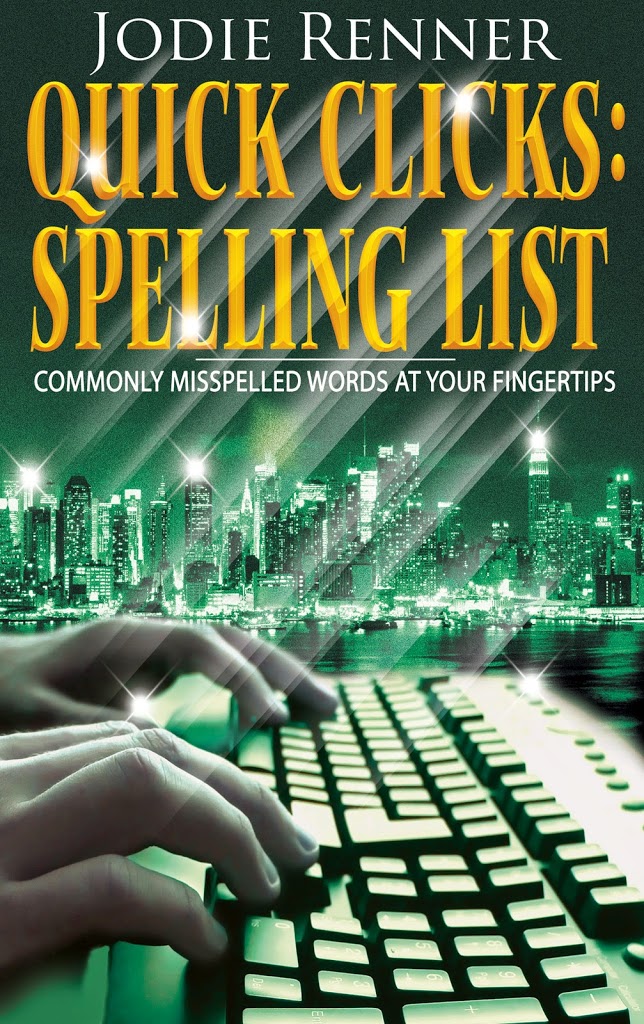
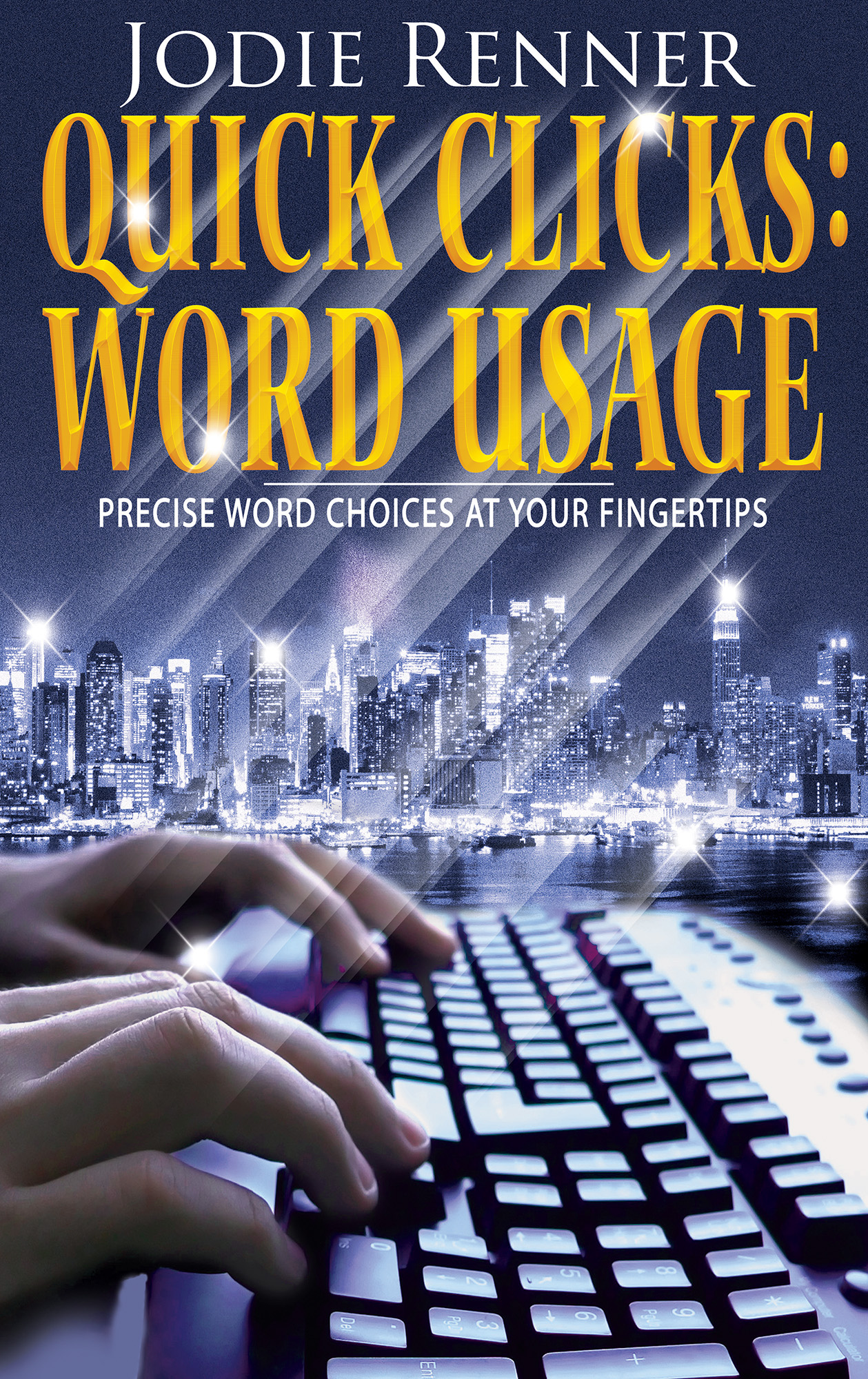
3. Use my two quick, clickable e-resources to verify spelling and word choices: QUICK CLICKS: SPELLING LIST – Commonly Misspelled Words at Your Fingertips, and QUICK CLICKS: WORD USAGE – Precise Word Choices at Your Fingertips. Click on the titles to check them out. These handy resources will save you tons of time looking up words in the dictionary, and every word is verified as correct.

4. Do a search (“Find”) for words you know how to spell but tend to spell wrong when you’re in a hurry, especially ones spell-check won’t flag, like “you” for “your,” or “your” for “you’re,” “there” for “they’re” or “their,” etc.

Then choose some of the following strategies, which are also excellent for picking up on clunky sentences and awkward phrasing.

~ Increase the size of the type to 150% or 160%, by clicking on the + sign at the bottom right of the document.

~ Change the font to one that looks quite different to fool your eyes and brain into thinking this is new material you’ve never read (or thought of) before, so you need to pay close attention.

Try Comic Sansor Franklin Gothic Book or Book Antiqua.

~ Format it to book size, like 6″ x 9″, change the font to something nice, like Georgiaor Cambria, change it to single-spaced,  format it to two-column landscape, so it looks like an open book, then print it up and read it in a different location, somewhere you don’t write, preferably out of your home.

~ Send it to your Kindle or other e-reader and read it in a different location, preferably not at home.

~ In a print version, place a ruler or piece of paper under the line you’re reading to keep from skipping ahead. Or keep your finger under each word as you read.

~ Read it out loud. Wherever you stumble, your readers will, too. This will also help with punctuation. If you pause briefly, put in a comma. If you pause for longer, put in a period. (Best to avoid or minimize semicolons in fiction, and keep them right out of casual dialogue. And reserve exclamation marks for when someone is screaming or yelling, shocked, or in pain.)

~ Read the whole thing backwards or upside down (!). I’ve heard these suggestions, but haven’t actually done this myself, and probably won’t.

~ Get your computer to read it aloud to you, while you follow along. Newer versions of Word offer this, and Macs do, too. In Word 2010, for example, here’s how you enable text-to-speech: First, add “Speak” to the Quick Access Toolbar. Along the very top above “File,” the line that starts with W for word, at the far right is a down arrow. Click that. It will say “Customize Quick Access Toolbar.” Click “More Commands.” In the “Choose Commands” from the list, select “All Commands.” Scroll down to the “Speak” command, select it, and then click “Add.” Click “OK.” When you want to use the text-to-speech command, you’ll use the icon on the Quick Access Toolbar, which looks like a speech bubble on a cartoon. To hear some text read aloud, highlight the paragraph or chapter you want to hear aloud, then click the Speak icon on the toolbar.

Follow along the text while listening to the text being read aloud. Stop it whenever you need to add or delete a word, or fix awkward phrasing.

~ If you’re self-publishing, get a sample book printed by CreateSpace (or IngramSpark) and read it somewhere else in your home, in a room where you don’t work, or better yet, away from your home, like in a coffee shop, a park, or the beach. I read one of mine in book form, pen in hand, on vacation in Puerto Vallarta, while stretched out in a chaise longue under one of those grass huts, and I caught all kinds of repetitions, sentences that didn’t flow as well as they could, were too wordy, or generally needed polishing, etc., as well as the odd typo.

Writers – do you have any other strategies to add for catching all those little typos lurking in your manuscript? Let us know what works for you in the comments below.


Jodie Renner is a freelance fiction editor and the award-winning author of three craft-of-writing guides in her series An Editor’s Guide to Writing Compelling Fiction: FIRE UP YOUR FICTION, CAPTIVATE YOUR READERS, and WRITING A KILLER THRILLER, as well as two clickable time-saving e-resources, QUICK CLICKS: Spelling List and QUICK CLICKS: Word Usage. She has also organized two anthologies for charity: VOICES FROM THE VALLEYS – Stories and Poems about Life in BC’s Interior, and CHILDHOOD REGAINED – Stories of Hope for Asian Child Workers. Website: www.JodieRenner.com; blog: http://jodierennerediting.blogspot.com/; Facebook , Amazon Author Page.

Profits of Doom?

James Scott Bell
@jamesscottbell

Cassandra, prophetess of bad tidings

There’s a bit of a buzz (meaning less than a meme, but more than idle chatter) about declining profits for indie authors. If I’m tapping into this correctly, there are more than a few writers who’ve experienced  significant drop offs in their Kindle royalties. Some attribute this to the Kindle Unlimited program. Others say it’s the massive entertainment options that compete for our attention. 

Or could it be that the ever-increasing number of titles sprouting like steroid-laced Kudzu each day offers too doggone many choices?

That is the view of Mark Coker, founder of Smashwords, who has (perhaps reluctantly) donned the robes of a Cassandra. On his blog recently he issued this prophecy:

The gravy train of exponential sales growth is over. Indies have hit a brick wall and are scrambling to make sense of it.  In recent weeks, for example, I’ve heard a number of indie authors report that their sales at Amazon dropped significantly since July when Amazon launched Kindle Unlimited… Some authors are considering quitting. It’s heartbreaking to hear this, but I’m not surprised either. When authors hit hard times, sometimes the reasons to quit seem to outnumber the reasons to power on. Often these voices come from friends and family who admire our authorship but question the financial sensibility of it all…. 


[E]very year there will be more and more books for readers to choose from. Unless the number of readers and the number of books read by readers grows faster than the number of titles released and ever-present, there will be fewer eyeballs split across more books. This means the average number of book sales for each new release will decline over time unless readership dramatically increases, or unless we see an accelerating pace of transition from print reading to screen reading.


He was challenged on his assertions on the Passive Voice blog. To one commenter Mr. Coker responded


[I]f you’ve got a better method of describing the big picture dynamic, please share. I’m open to suggestions. If ebook readership (both a function of the number of ebook readers and the number of ebooks read by readers) is spread thinner across an ever-growing, ever-accessible number of books, and the growth in ebook supply exceeds the growth in consumption, then what happens? Very simple question. Does the average new release get more readers or fewer?


I’ll take a stab at answering. I don’t believe that ebook readership is “spread thinner” because of an “ever-growing” number of titles. In fact, readers never choose from the whole universe of books. They filter their choices through author favorites, recommendations, genre preferences. They usually stick to certain places they like to shop for their books. Rarely, if ever, do they pull a Captain Kirk and blast out into the great unknown seeking new life and new civilizations. 

Thus, an expanding universe of content does not have a proportional negative effect on readership. 

One might call it a “discoverability” issue. But again, I don’t see a causal effect here. As I’ve emphasized over and over, by far the best discovery tool is word of mouth, which is based upon the writing itself. The more quality you produce, the greater the word of mouth. This will happen no matter how vast the sea of options out there. Add to this the author who wisely becomes an “ownllist” writer, and there is no reason to believe that we’re only going to see profits of doom henceforward.

Mr. Coker also says there is more quality now in indie books, making competition tougher. I do think he’s right about that. There are a number of reasons this is so, including more trad-midlist writers ditching the old system and jumping into the new. I think, however, Mr. Coker overestimates the breadth of the effect. Quality is always the toughest thing to produce in any enterprise. We have more of quality indie books, true. But not nearly so many that it makes competition any more formidable than it’s always been.

The writers who do the best in the future are going to be just like the writers who’ve done the best in the past. They will write books  readers love and keep that their primary mission.  

For those writers I still say there is good money to be made and deep satisfaction to be enjoyed in self-publishing. In fact I wrote a book about that. (In the interest of full disclosure, and adding to the anecdotal evidence, my own revenue has ticked upward in each of the last four months. I don’t have my novels in the KU program).

I therefore agree with Orna Ross, founder of the Alliance of Independent Authors, who says in a post at The Guardian: “Many of the association’s members are earning significant salaries now. I’m not talking here about the outliers, like the Kindle millionaires, but the many who are earning enough to leave their day jobs, feed their families, pay their mortgage, afford comforts and luxuries. And let us not forget that sales doesn’t just equal money, it equals readers. It’s one of my great delights to witness what this does for their confidence in themselves and in their work.”

One last thought. Mr. Coker surmises that, “Some authors are considering quitting.” Well, those are precisely the authors who should quit. This has never been a profession for the easily discouraged. As David Eddings has said, “Keep working. Keep trying. Keep believing. You still might not make it, but at least you gave it your best shot. If you don’t have calluses on your soul, this isn’t for you. Take up knitting instead.”

It’s always been the case that the successful writers are the ones who can’t not write. Who exhibit persistence, discipline, production of words. Who write even in the face of serial rejection or dismal sales. These writers keep punching. As the old boxing guys used to say, you always have a puncher’s chance.

Can you accept that? Then politely tell Cassandra to put a cork in it…and get back to the keyboard.


Holiday Weekend

By Mark Alpert


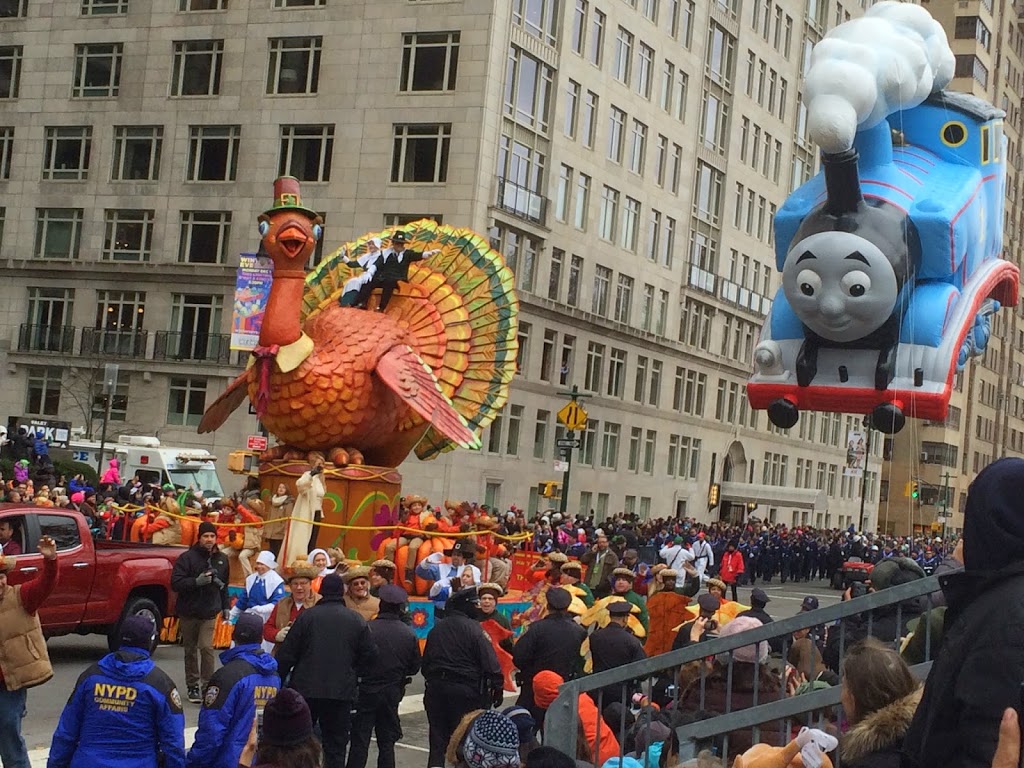
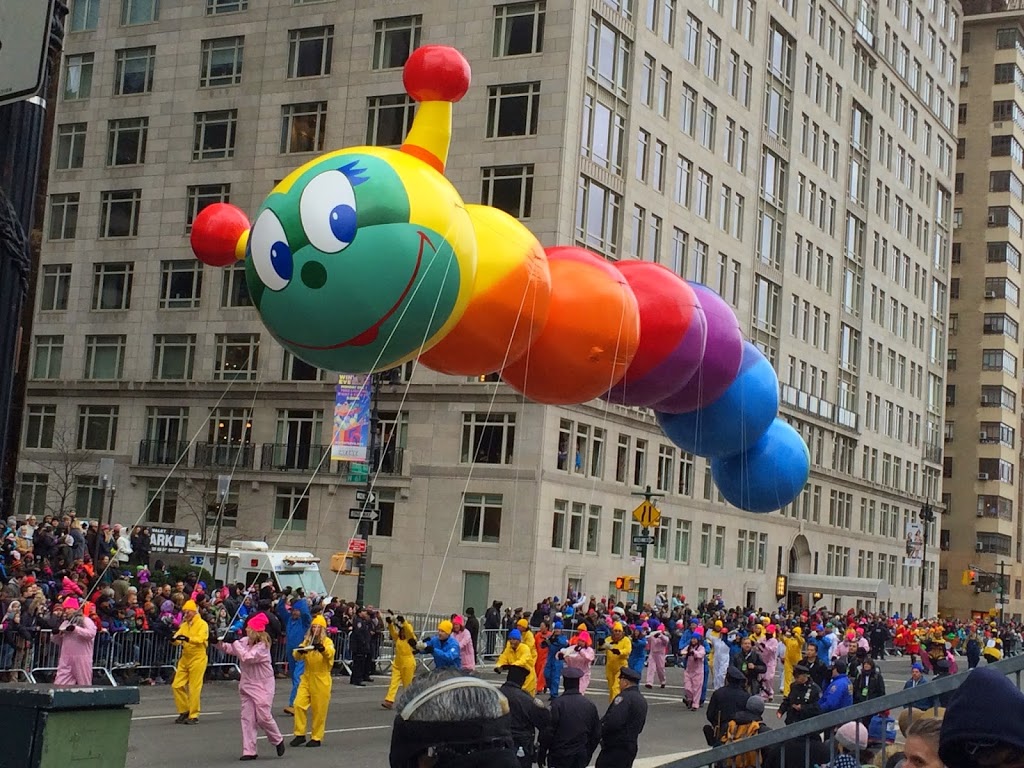
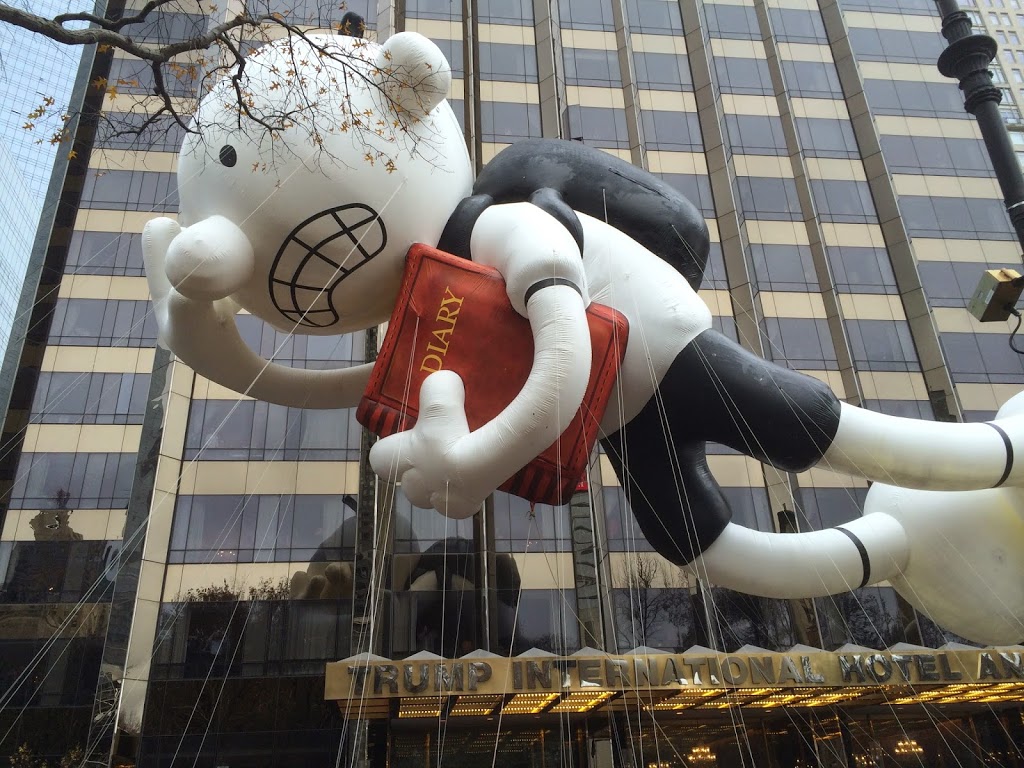
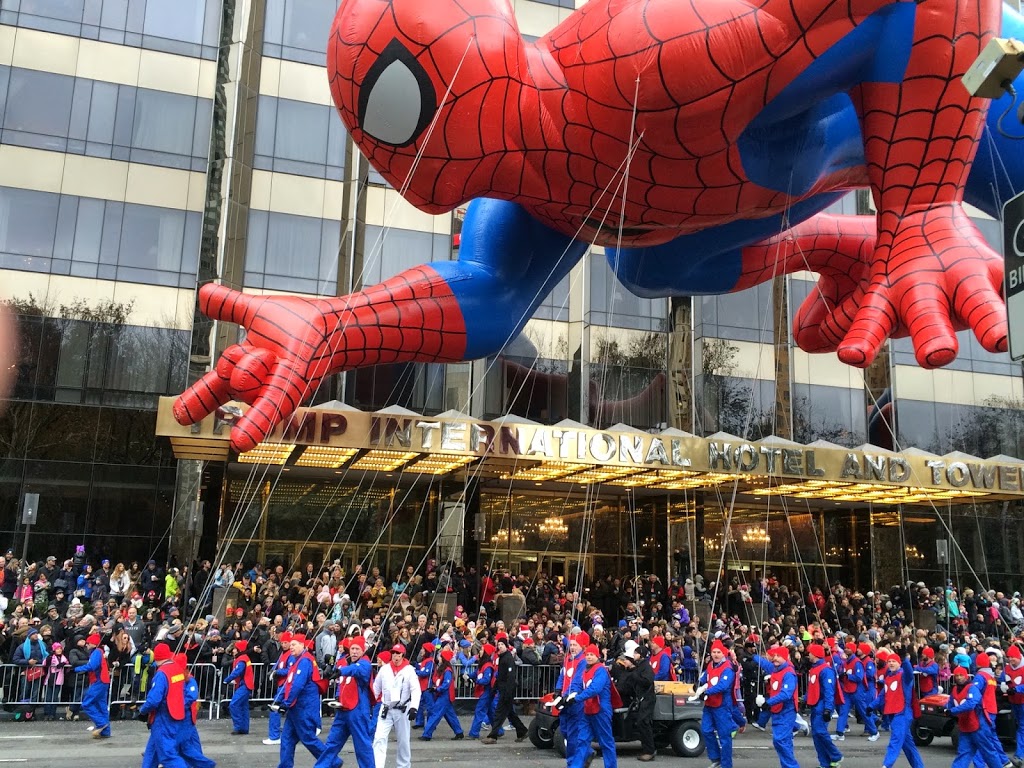
Like most Americans, I engaged in an orgy of consumption this weekend. In the semi-comatose state brought on by my turkey binge, I can’t write anything sensible. But here are a few photos I took at the Thanksgiving parade. Have a great holiday, everyone!