In Media Res with LESSER EVILS: First Page Critique

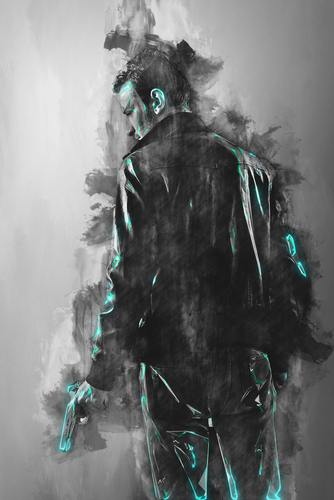
Photo: “Left Behind” by Jon Hernandez, unsplash.com

Welcome, Anon du jour, welcome to THE KILL ZONE First Page Critique!

Let’s all take a look at how Anon drops us into the middle of a plane crash with great aplomb in Lesser Evils:

Lesser Evils

The instant her helicopter touched down, Francine threw the door open, leaned out, and shouted, “Any survivors?”

She already knew the answer. For as far as she could see, fragments of her company’s plane littered barren, rocky terrain. In the waning-sunset gloom, scattered islands of yellow flames flickered in a huge sea of shattered metal—only the jet’s tail and two small engines intact enough to recognize. The destruction of her plane and the ten lives it had carried was absolute.

Francine suppressed a grin.

Absolute was what she’d planned.

Next on her plan was a bit of stagecraft. The sheriff’s deputy she’d yelled at stood less than a hundred feet away, but the scream of the copter’s motor as it powered down drowned out all other sound. She carefully stepped from the two person cockpit onto apple-sized volcanic rocks. Freezing in the copter’s windstorm, she pulled her jacket tight, stumbled forward on sloping ground, her pilot following closely behind.

When they reached the officer, she paused to catch her breath and almost choked on the sulfuric rotten-egg stench. The engine noise finally died. She pasted on a well-rehearsed look of anxiety and said again to the deputy, “Any survivors?”

He looked the two of them up and down. “Who are you?”

Francine’s pilot handed the cop a business card. “Ian Brack, Corporate Security, International Health Enterprises. This is Dr. Francine Duvaine. She owns the company and the plane.”

The deputy stared at her for a moment; then shook his head. “No one could have survived. Slammed into the caldera at over four hundred knots, a ton of fuel on board. Couple of folks at the tourist center fainted. Fireball was so big they thought St. Helens was erupting again.” He shook his head again. “I’m sorry, ma’am.”

“Please, you’re certain?” She made her voice crack. “No one?”

“No one.”

She closed her eyes, hung her head, and stood still for a few seconds. There—her work here was done. “Thank you, officer.” She began to turn away. “Thank you.”

“A real shame.” The deputy said. “Two crew and seven passengers.”

Francine whirled back toward him. “Seven?” She shot a glance at Brack and marveled at how he maintained a calm expression. Her pulse pounding in her temples, she took a deep breath. “You’re absolutely sure? Seven—not eight?”


I want the rest of Lesser Evils right now. I’m going to forego the usual nitpicking on it simply because the author does so much correctly in terms of storytelling. The pacing is just right. The narrative baits and sinks the hook from the first few words. This big fish was then caught and netted. Yes, there are a few typos (one near the beginning, one near the end, to name two) and if no one mentions them by close of business today (and we never close) I will jump in and note them but Anon, you are on the right track here.

Why do I love Lesser Evils? Anon drops us right into the middle of the action in a manner which entices without confusing. The introduction of two of the main characters is handled simply, but in a more interesting manner than just stating their names (which would have been fine). We know right away where the crash takes place.  There are a couple of surprises in the first page, those being 1) Francine’s hidden reaction to her company’s plane crashing and 2) the news that, apparently, not everyone died (and she’s not happy). It’s terrific. Those two elements will undoubtedly play out over at least the first few pages of the book and possibly beyond. It makes the reader wonder why Francine planned the crash, how she will be caught, when she’ll be caught, who will discover it, and the consequences. The audience will also be asking where that eighth body, breathing or otherwise, might be. I am assuming that later on Anon will explain to someone how Francine and Ian got there so quickly, where the plane took off from, and how Francine will keep from getting into trouble by landing in the middle of a crash scene, but what we have here is everything I want and could reasonably ask for in a first page: murder most foul; an intriguing villain, and a surprise or two, all wrapped in the same box without bumping into each other.

I wanted page two of Lesser Evils, then page three, and so on. I know I’ve got a good read in my hands when I feel that way. Go, Anon, go!

I will now attempt to remain uncharacteristically quiet while I turn the comments, praises, and criticisms portion of this page over to our wonderful readers and visitors. Enjoy!


 

Any Questions??


Hello dear readers, the HDW (Highly Distractible Writer) for today is still thinking about today’s topic, so I’ve decided to toss my two cents into the blog.  I was wondering, what would YOU like to read about?  What is important to you as a mystery writer? What do you need to get moving on your latest WIP (work in progress)?  Thank you all for your submissions and comments.  Lynne


Work Day, Sick Day

sick day

Stock photo via GoDaddy

The Thanksgiving Plague finally got me. I hadn’t had so much as a sniffle for six months. Several of my family members were sick in the days surrounding Thanksgiving–my daughter’s fiancé only came out from his room to give the 17 assembled guests a wave at the end of the feast. Fortunately, I didn’t get sick until Monday, after everyone was gone.

I don’t always work when I’m sick, but I always work when I have a deadline. In some ways, I like to write or edit when I’m ill because the illness keeps me in one place–bed, if I can manage it. As an HDW (Highly Distractible Writer, which I just made up), anything that keeps me seated for long periods of time is A Good Thing. I don’t care if it’s the kind of thing that demands two boxes of tissues and a box of Sucrets. (Do they even make Sucrets anymore? I loved those things.)

I edited for eleven hours today. I know that because I tracked it on Office Time which even keeps track of the time you’re away from your keyboard for your counting convenience. On a normal editing day, I get in about six or seven hours, with a bit of web surfing, dog walking, and errand-running at their edges. It’s amazing what a person can get done when they just toss the dogs outside and remind them to do their business, and fling ten bucks at their son so he can bring home pizza for those who can eat.

Today my protag opined about how much she likes to spend the occasional day reading in bed. Doesn’t that sound lovely? Maybe it was transferred wishful thinking on my part because, you know, deadline.

Do you write through the flu or migraines or colds or even broken body parts? Or are you sensible and take good care of yourself by putting all your mental and physical energy into getting better?

Detecting Hidden Serial Killers

Photo purchased from Shutterstock

Interesting Reading 

A recent article in The New Yorker,  “The Serial Killer Detector,” has given rise to a veritable barrage of scare-headlines across social media  (“More Than 2000 Serial Killers At Large! In The United States!!”)

The article by Alec Wilkinson describes how a former journalist, Thomas Hargrove, developed a data analytics tool to identify previously undetected serial killers. Hargrove’s Murder Accountability Project (MAP) has catalogued a total of 751,785 murders since 1976 — a number that far exceeds the official tally reported by the FBI (The discrepancy between MAP and the FBI’s totals reflects the fact that many states fail to report their murder tallies accurately to the Feds. Hargrove has taken states to court to reveal those unreported numbers.)

Hargrove’s MAP tool uses an algorithm he wrote to detect patterns in unsolved murder reports within a geographical area. A high rate of unsolved murders is one indicator that a serial killer may be at large (In 2010, Hargrove spotted a pattern that suggested that a serial killer might be responsible for a series of unsolved murders in a Midwest city. Local officials brushed off Hargrove’s attempts to alert them to the potential threat; years later, a man arrested on another murder volunteered a confession that he had committed many of the earlier killings.)

Hargrove says he is still debating how and when to reach out to local police departments when MAP detects a possible serial killer within a vicinity, according to the article. But MAP has already succeeded in making the public aware that the United States is doing a poor job of solving its murder cases. (In 2016, less than 60 percent of killings were solved, down from 92 percent solved in 1965.)

If you’re adept with statistics you can run the MAP tool from their website http://www.murderdata.org  to ferret out unsolved murder patterns in your own hometown.

Have any of the crime detectives in your stories (or your favorite author’s stories) used cutting edge data analytics such as MAP to help solve a fictional crime?


What Do Tom Turkey and Writing Have in Common?

by Sue Coletta

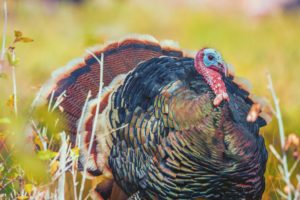
Photo by Andrea Reiman on Unsplash

Clare’s recent post got me thinking about craft and how, as we write, the story inflates like a Tom turkey. If you think about it long enough and throw in a looming deadline, Tom Turkey and story structure have a lot in common.

Stay with me. I promise it’ll make sense, but I will ask you to take one small leap of faith — I need you to picture Tom Turkey as the sum of his parts, constructed by craft. And yes, this particular light bulb blazed on over the Thanksgiving holiday. We are now having spiral ham for Christmas dinner. 🙂

But I digress.

Story beats build Tom’s spine (hook, inciting incident, first plot point, first pinch point, midpoint, second pinch point, all is lost, second plot point, climax). The ribs that extend from Tom’s spine liken to the equal parts that expand our beats and tell us how our characters should react before, during, and after the quest.

Broken into four equal parts, 25% percent each, we call this the dramatic arc and it defines the pace of our story.

  •             Setup: Introduce protagonist, hook the reader, and setup First Plot Point (foreshadowing, establishing stakes); establish empathy (not necessarily likability) for the MC.
  •             Response: The MC’s reaction to the new goal/stakes/obstacles revealed by the First Plot Point; the MC doesn’t need to be heroic yet (retreats/regroups/doomed attempts/reminders of antagonistic forces at work).
  •             Attack: Midpoint information/awareness causes the MC to change course in how to approach the obstacles; the hero is now empowered with information on how to proceed, not merely reacting anymore.
  •             Resolution: MC summons the courage and growth to come up with solution, overcome inner obstacles, and conquer the antagonistic force; all new information must have been referenced, foreshadowed, or already in play by 2nd plot point or we’re guilty of deus ex machina.

Tom Turkey is beginning to take shape.

Characterization adds meat to his bones and interesting, conflict-driven sub-plots supply tendons and ligaments. When we layer in dramatic tension in the form of a need, goal, quest, or challenge, Tom grows skin. Obstacle after obstacle, conflict after conflict, he sprouts feathers. Utilizing MRUs — Motivation-Reaction-Units; for every action there’s a reaction — sets our story rhythm. They also aid us in heightening and maintaining suspense.

When we use MRUs, Tom Turkey fluffs those feathers. Look what happened. He grew a beak.

Providing a vicarious experience, our emotions splashed across the page, makes Tom fan his tail-feathers. The stakes add to Tom’s glee, and he prances for a potential mate. He thinks he’s got the goods to score with the ladies. He may actually get lucky this year.

Then again, we know better. Poor Tom, he’s still missing a few crucial elements in order to close the deal.

By structuring our scenes, Tom grew an impressive snood. See it dangling from his beak? The wattle under his chin needs help though. Hens are shallow. Quick, we need to imbue the story with voice.

Ah, now Tom looks sharp. What an impressive bird. Watch him prance, all full and fluffy, head held high, tail feathers fanned in perfect formation. Stud muffin.

Uh-oh. Joe Hunter leveled his shotgun at Tom. We can’t let him die before he finds a mate. We need to ensure he stays alive. But how? We’ve given him all the tools he needs, right?

Well, not quite.

Did we choose the right point of view to tell our story? If we didn’t, Tom could end up on a holiday table surrounded by drooling humans in bibs. In other words, we’ll lose our reader before we even get a chance to dazzle them with Tom’s perfect structure.

We also need narrative structure. Without it, Joe Hunter will murder poor Tom. We can’t let that happen!

Narrative structure, by the way, is almost impossible for me to define (maybe one of our craft teachers will weigh in here). I call it the “oomph” and I know it when I write it. I also know when it’s missing. Have you ever started writing a story but it didn’t have that certain something? The story was just … meh. There’s nothing inherently wrong with it, but it didn’t sizzle like it should for some reason.

Yeah, so have I. Those novels are now trunked. Without the oomph, the story doesn’t work. We need the oomph — aka narrative structure.

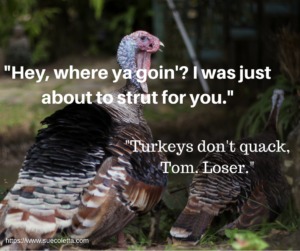
Tom needs narrative structure, too, if he hopes to escape Joe Hunter’s bullet. He also requires wings, in the form of context. Did we veer too far outside of our readers’ expectations for the genre we’re writing in? Did we give Tom a heart and soul by subtly infusing our theme? Can we boil down the plot to its core story, Tom’s innards? What about dialogue? Does Tom gobble or quack?

Have we shown the three dimensions of character in order to add oxygen to Tom’s lungs? You wouldn’t want to be responsible for suffocating Tom to death, would you?

  •             1st Dimension of Character: The best version of who they are; the face the character shows to the world;
  •             2nd Dimension of Character:  The person our character shows to friends and family;
  •             3rd Dimension of Character:  Our character’s true character. If a fire broke out in a crowded theater, would she help others or elbow her way to the door to save herself?

Lastly, Tom needs a way to wow the ladies. We better make sure our prose sings. If we don’t, Tom could die of loneliness. Do we really want that on our conscience? No! To be safe, let’s review our word choices, sentence variations, paragraphing, grammar, and the way we string words together to ensure Tom lives a full and fruitful life. Don’t forget to rewrite and edit. If readers love Tom, he and his new bride could bring chicks (sequels or prequels) into the world, and we, as Tom’s creator, have the honor of helping them flourish into full-fledged turkeys.

Aww … it looks like Tom’s story will have a happy ending after all.

Over to you, TKZers. Is Tom Turkey missing anything? What would you name his mate?Can anyone define narrative structure in a more craft-appropriate way?

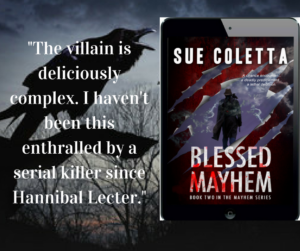
Want to meet more feathered friends? The antagonist in BLESSED MAYHEM has three pet crows, Poe, Allan, and Edgar. The Kindle version is on sale for a limited time.

Blessed Mayhem by Sue Coletta


I Was Ready For My Big Moment

by James Scott Bell
@jamesscottbell

Embed from Getty Images

Earle Hyman

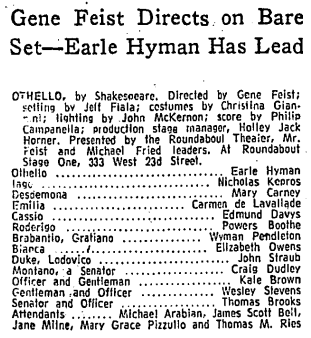
Last week we lost a very dear man. Earle Hyman was known to most people as Bill Cosby’s father on The Cosby Show. But he was so much more. An accomplished stage actor, he was one of the great Othellos.

I know because I got to watch him play the role night after night.

I was a young and hungry actor, freshly arrived in New York City and living at The Leo House on West 23d. Across the street at that time was the Roundabout Theater. I walked over there one day and asked for a job. I got one, pushing around scenery for the current production, Shaw’s You Never Can Tell.

As part of the deal, I got to audition for their upcoming production of Othello.

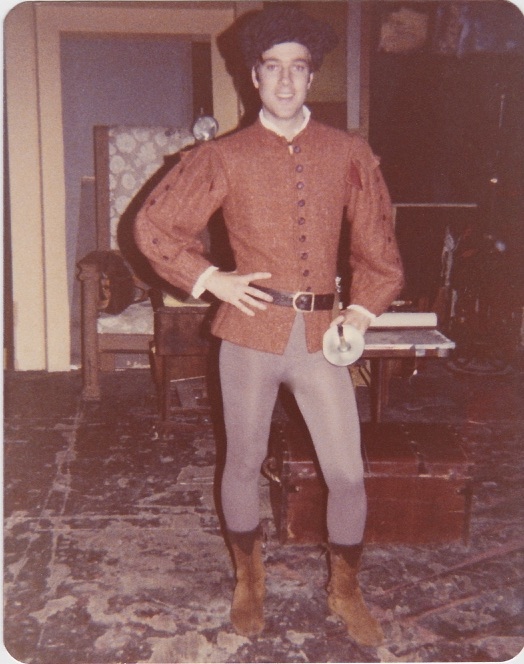
JSB in his triumphant role as Attendant in Othello.

And I got the part! My first paid acting role! As … Attendant. No lines, but I didn’t care. I was doing Shakespeare Off-Broadway, in tights and everything!

Earle Hyman was Othello. Also in the cast was a young Powers Boothe as Roderigo.

And so we began rehearsals. I loved every minute of it, even though my part was just walking on, standing, and walking off. But when I was off, I’d listen. I’d listen to how Earle and Nick Kepros (Iago) did Shakespeare. Iago has some of the best lines in the entire canon, and I determined to play that role someday.

In fact, one night before the show I was sitting backstage with Earle. He was so generous to the young actors, down-to-earth and always willing to give advice. I mentioned I wanted to play Iago someday, and he said, “You’re perfect for it!”

“I am?” I said, wondering if some nefarious part of my personality had leaked out.

“Oh, yes,” Earle said. “You have an open, honest face.” (This, mind you, was well before I went to law school.) He explained, “Othello calls him ‘honest, honest Iago.’ It’s wrong to play the part as an obvious villain.”

I then breezily but sincerely told him I was going to mount a production of Othello someday and play Iago, and that I wanted him to play the lead.

“I’ll do it!” he said.

A lovely man.

So the show opened and was well received by the Times. I continued to listen. I was something of a voice impersonator in those days. I’d crack up the cast by doing imitations of the various actors.

Then one night it happened. My big moment.

Now, to fully appreciate what I’m about to relate it is necessary that you know the classic film All About Eve. If you have not seen it and wish to be spared knowing the plot twist, you might want to skip to the last paragraphs of this post.

In brief, All About Eve is the story of a theater diva named Margo Channing (Bette Davis). A devoted young fan named Eve Harrington (Anne Baxter) comes to her and pours out her heart about loving the theater and idolizing Margo. This gets her a job as Margo’s assistant.

What we come to learn is that Eve Harrington has only one thought in mind—to displace Margo as the star of a new hit play. She underhandedly snags the understudy role. And then she sets in motion an elaborate scheme so Margo will be unable to make curtain one night.

Eve is a sensation, and from there turns her back on everyone who’s helped her as she ascends the stairway to stardom.

Back to Othello. One night, about an hour and half before curtain, a call comes in from the actor playing Montano—a minor role, but with significant lines. He was stuck in Brooklyn and wouldn’t be able to make the show. I can’t remember why, but I assure you I had nothing to do with it.

The stage manager was in a panic. There were no understudies. Then someone told him, “Jim knows the part. He knows all the parts.”

The stage manager rushed over to me and put his hands on my shoulders. “Do you? Do you really know the part?”

“What from the cape can you discern at sea?” I said, quoting Montano’s first line.

“You’re going on!”

On! Me! I was giddy as he spent twenty minutes with me on the stage, walking me through the blocking. I only half listened, for my other half was loop-quoting the Bard: “Yet heavens have glory for this victory!”

Then I was dismissed to go get ready for the performance.

As I entered the dressing room, everyone was already putting on makeup or getting into costume. The moment I appeared our Iago, Nick Kepros, in a voice dripping with droll amusement and loud enough for all to hear, said, “Well, well, if it isn’t Eve Harrington!”

The room exploded in laughter. It was the perfect line, brilliantly delivered.

So on I went.

Nailed it!

Though it was one night only and did not catapult me to stardom, it was supremely satisfying. I had spoken Shakespeare on a stage in New York! And received warm congratulations from the cast, including Mr. Earle Hyman.

All that to say, writer, be ready. The old saw about luck being the intersection of preparation and opportunity applies.

Be ready when you read. When you come across a passage that moves you or compels you to turn the page, ask yourself why that is so. Mark up the book with notes.

Be ready when you write. Listen to your book and the characters as they take on life. What are they telling you that you didn’t know before?

Be ready when you edit. By studying the craft and having tools that actually work, you become more adept at creatively fixing your manuscript.

Be ready with your elevator pitch. If anyone asks you what your book is about, you should be able to tell them in thirty seconds, and in a way that makes their eyes light up. (An elevator pitch formula may be found here.)

Do all that and you know what you’ll be ready for next? To “put money in thy purse!” (Iago, Act I, Scene 3.)

So what serendipitous event has happened in your own life? Were you ready for it?

Giving Thanks for Dark Blessings


By Debbie Burke

Without villains, there are no heroes. Without conflict, there is no story. Without lies, greed, theft, lust, jealousy, betrayal, rape, and murder, there is no crime fiction.

Those of us who write mystery, suspense, and thrillers embrace evil as a dark blessing to our chosen profession.

Sue Grafton famously admits the inspiration for her alphabet series sprang from an ugly divorce during which she fantasized about killing her ex. She grabbed adversity by the throat and transformed it into a blockbuster series.

TKZ’s Elaine Viets turned her own medical catastrophe into a unique mystery series starring Angela Richman, Death Investigator. Way to go, Elaine!

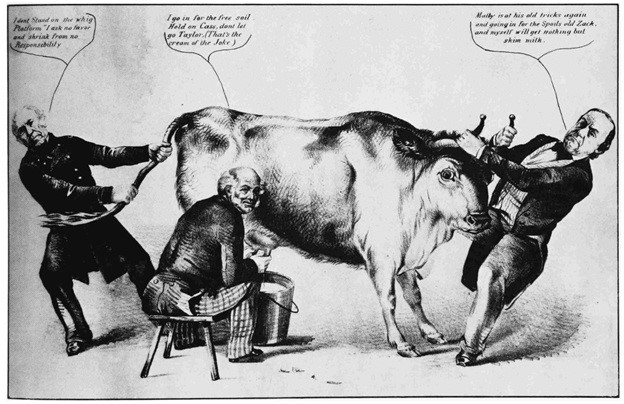
Dark Blessing #1: In the 1980s, my husband and I were parties in a grueling lawsuit. Our opponents retained a greedy, unethical attorney. During weeks of depositions in his office, I noticed this framed image titled “The Lawsuit” on his wall. In person, the lawyer’s smug mug bore a startling resemblance to the illustration.

He was quite proud of himself as he milked hundreds of thousands in fees from his clients, which naturally raised our own legal costs as we had to fight back.

For five long years, this attorney dragged out the suit, convincing a judge to rule against us for reasons that had flimsy legal basis. We suspected the attorney was paying off the judge, but couldn’t prove it.

Then again, maybe the terrible strain of the lawsuit had made us paranoid. Maybe.

We ultimately won the case, but it nearly killed our bank account…and my spirit.

Some years later, the judge was convicted of bribery and sentenced to prison. Too late to help our case, but our suspicions had been vindicated. We weren’t paranoid after all.

The attorney retired comfortably and later died of cancer. Nope, we didn’t send flowers to his funeral.

In a twisted, unintentional way, the attorney did me a favor.

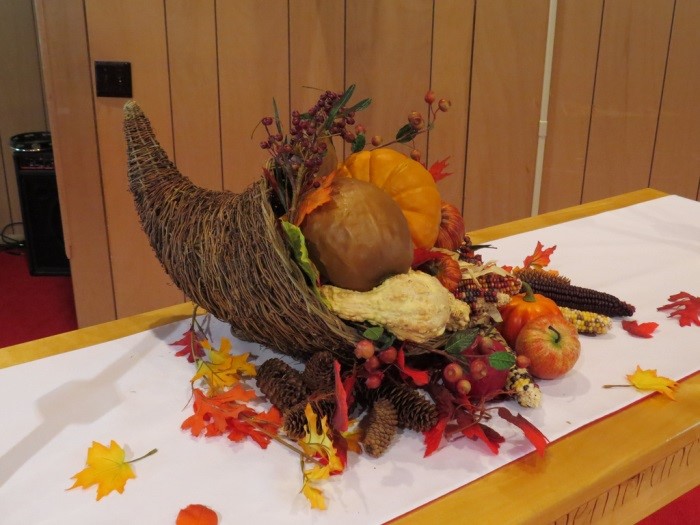
Because of that ordeal, we moved to Montana. There, I’ve followed my dream of fulltime writing ever since. Plots and villains continue to pour from the cornucopia of that lawsuit. And I’ve repeatedly inflicted fictional revenge on the attorney.

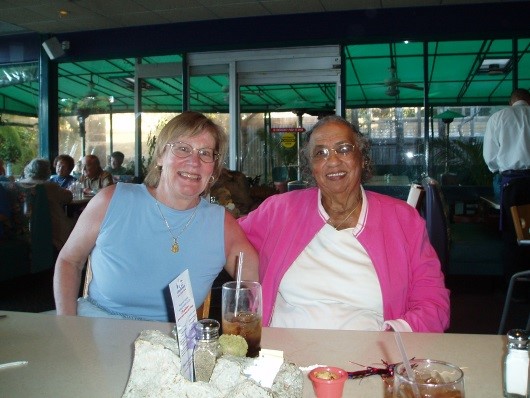
Dark Blessing #2: My adopted mother was a sweet, kind, loving lady. This photo was taken at her birthday several years ago.

She was also ferociously independent and determined to remain in her San Diego home where she’d lived for over forty years. Despite health problems, she refused to move in with her daughter in L.A., nor me in Montana—too cold. She could take care of herself just fine, thank you very much.

My sister and I respected her wishes, but wangled one concession: a visiting caregiver checked on her several times a week. That solution appeared to work until…

Mama had a stroke a month shy of her ninety-first birthday. While she was in the hospital, my sister and I discovered the caregiver had run up more than $15,000 in fraudulent charges on Mama’s credit cards. We confronted the woman who admitted wrongdoing. We also reported the theft to the police and the elder fraud unit. They promised to investigate further.

Dear Mama maintained her independence to the end. Two weeks after the stroke, she died with dignity, on her own terms.

After her death, my sister and I learned to our horror that, despite abundant evidence and the caregiver’s admission, she couldn’t be prosecuted without Mama’s testimony. What???

Eventually, the credit card companies reversed the bogus charges, but the caregiver skipped away free, no doubt looking for her next victim.

Guess who’s receiving her comeuppance in my current WIP about elder fraud.

Justice that eludes us in real life can sometimes be found in fiction.

This Thanksgiving Day, I count many happy blessings. My incredible husband makes sacrifices so I can live the dream. I’m surrounded by a large community of supportive writer friends. TKZ gives me daily valuable lessons in craft, as well as the opportunity to write guest blogs.

And…there have been enough dark blessings in my life to provide endless inspiration for more novels.

Happy Thanksgiving to all at The Kill Zone!

Your turn, TKZers.

If you’re a writer, how have real-life tribulations inspired your stories?

If you’re a reader, what books helped you through difficult trials?

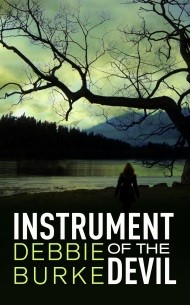
Debbie Burke considers her smartphone a dark blessing that inspired her thriller Instrument of the Devil, available here.

Judging a Book By Its Cover

By John Gilstrap

Whenever I finish a new book, my publisher is kind enough to ask me if I have any ideas for what the cover should look like.  It seems like a reasonable thing to expect, right?  After all, I spent a year writing the thing, so you’d think I have some inclination as to what I want the cover image to be.

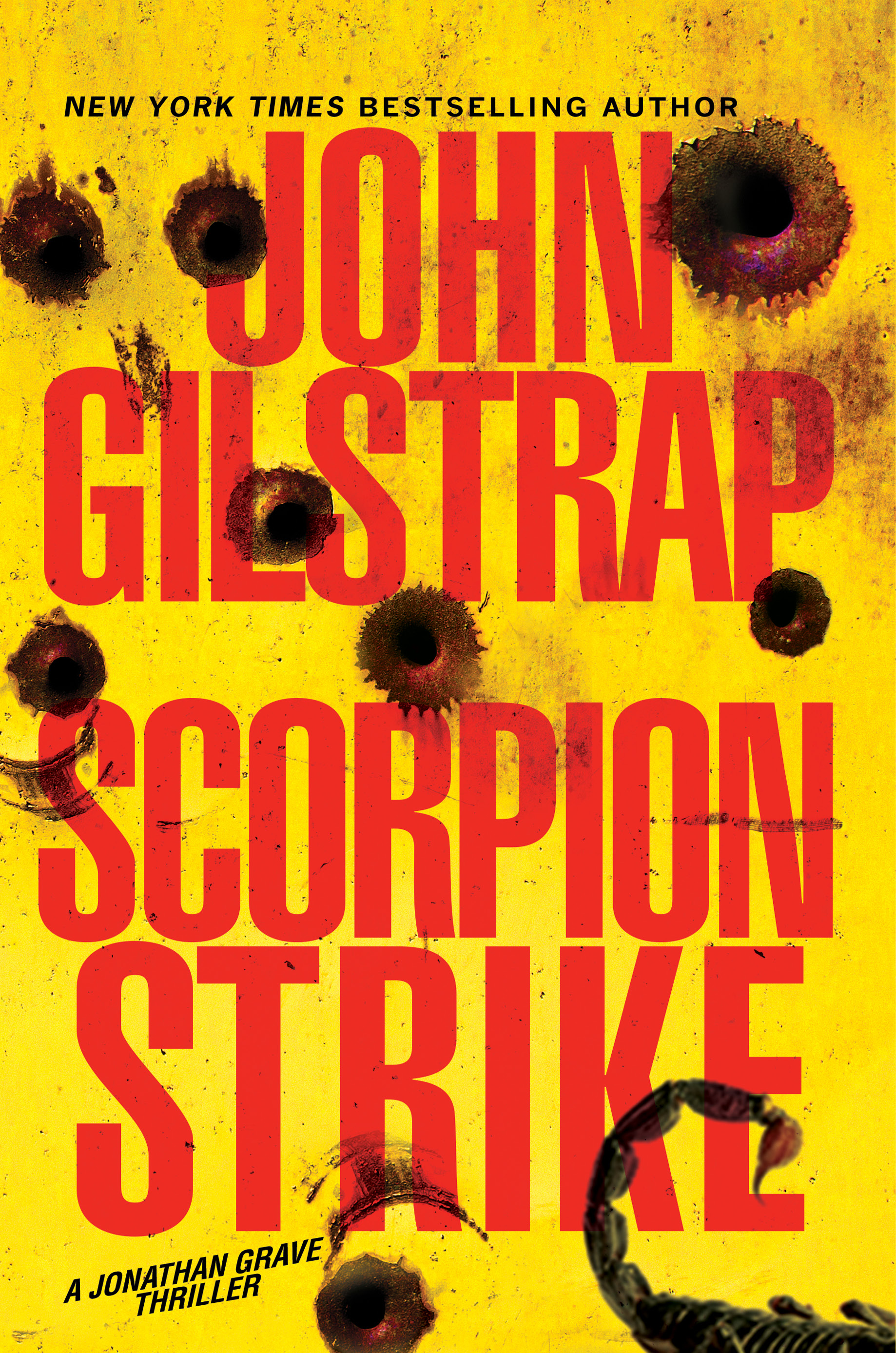
Well, I never do.  I testify with neither pride nor shame that my mind simply does not work that way.  I think I’ve mentioned here before that after 11 books in the series, I really don’t know what Jonathan Grave looks like.  I know how he thinks, and I know what his skills are.  I know his strengths and his weaknesses, but, physically, beyond having intense blue eyes and a number of scars, I don’t see him in my head.  If I can’t see him, then I guess it should be of no surprise that I can’t cough up a cover image.  That said, I know a good cover when I see one, and this one for Scorpion Strike (July, 2018) is my favorite of all my books.

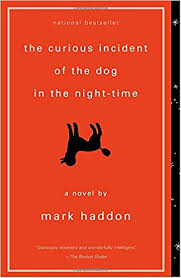
I think that the old adage that a book cannot be judged by its cover is at best disingenuous, and at worst a lie.  We all do it, and publishers understand that we do.  That’s why they have art departments. A book’s cover telegraphs more than just the story it tells.  It says a lot about the attitude of the book and its intended audience.  While my book covers are designed to project a Big Commercial Thriller, other covers, such as the one here for The Curious Incident of the Dog in the Night-time, telegraph quite clearly that they are targeted for a more literary audience.

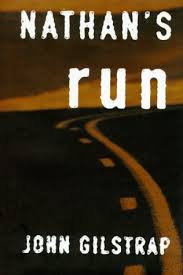
When my first thriller, Nathan’s Run, was released in hardcover in 1996, I was horrified by the cover.  I was a rookie in the business and afraid to express my opinion, but I thought the cover with its drab brown tones and its weird font expressed nothing about the story while conveying the wrong tone.  This was supposed to be a Big Commercial Thriller, but it projected . . . well, I don’t know.  At best, the message seemed muddled. While the book sold well–certainly for a first novel–it fell short of expectations, and I’ve always thought the cover was a contributor to that.

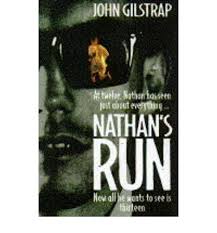
My British publisher, Michael Joseph, on the other hand, had a vision of the cover that fit way more closely to what I thought a cover should look like.  The bad guy’s sunglasses reflecting a fleeing boy was “too literal” in the view of my peeps at HarperCollins, so I kept my mouth shut, but I loved the UK cover. And the tag line, “At twelve, Nathan has seen just about everything … Now all he wants to see is thirteen,” was a stroke of brilliance.  Per capita, the book did much better in the UK than it did here in the U.S.  We all know that correlation is not causation, but you’ll have a hard time convincing me that the cooler cover played a role in the better sales.

Roughly eight years after the paper copies of Nathan’s Run went out of print, Kensington re-bought the publication rights and put it out  as an eBook, along with my second novel, At All Costs.  I’m not sure what I think about this latest cover.  It shows motion, and I can’t complain about the size of my name relative to the title, but, to my eye, this version of the cover is kind of a place holder. It doesn’t really convey anything about the story, but I think it projects that it’s a commercial thriller.  Maybe that’s all it needs.  Again, I don’t know about this stuff.

Ultimately, I think cover art achieves its primary goal if it convinces a reader to pick up the book and take a look at the first page.  After that, it’s all about the writing.

Or is it?

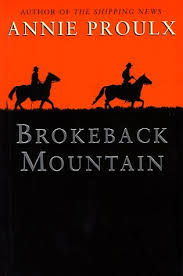
I suspect, in the utter absence of any empirical data, that covers are one of the big obstacles that keep a lot of genre fiction from reaching mainstream acceptance.  We all know the story of Annie Proulx’s Brokeback Mountain.  In its original printed form–before the movie tie-in version–the cover is clearly literary in its focus, and Western in its setting.  In my busiest days of my fire service career, I wouldn’t have hesitated to carry this book with me and read it in the day room of the fire station. Replace the cover with a picture of a bare-chested man in chaps, though, and not only would I not have carried it, I never would have opened it. (Yes, I’m that shallow.)  I know professional women who are secretly fans of romance novels, but won’t read them on the subway because the bodice-ripping covers.

And, in all fairness, I’m sure there will be professional men and women both who will feel a little uncomfortable toting a cover that features rusted bullet holes.  But, man-oh-man, I do love it.

I’ve learned one fascinating fact about covers over the years–and titles, too, for that matter: They needn’t have much to do with the story the book tells. Friendly Fire, for example, features a picture of the White House on the cover. I think it’s a terrific cover, but it hides a secret: Neither the White House nor the presidency play a role in the story. Once again, I was told that I was thinking too literally. The Jonathan Grave novels are “corridors-of-power” thrillers, and that is the message being conveyed by the cover image. Certainly, no one is going to mistake it for literary fiction or a romance. If it’s an engaging enough cover, people will pick it up.  At that point, the cover will have done its job.

A critical component of any cover design is the title.  Here again, the sole purpose of the title, in combination with the cover design, is to get a potential reader to crack the spine and take a peek inside. Thus, the title needn’t connect directly to the content of the book. Rather, it should convey the feel of the story.  The most obvious example of this in my own career is Hostage Zero, the second in the Grave series. The phrase means nothing. There is no Hostage Zero in the book, but my team at Kensington liked the sound of it–and the look of it, too, when put on the page. In the ten years or so since that book dropped I haven’t heard from a single reader or critic who felt cheated by the asymmetry of title and story.

Now I throw it to you Zoners.  How important are covers to you in your decision to give a book a try?  Any favorites out there we should know about?

Oh, and before you go, please consider subscribing to my YouTube Channel, “A Writer’s View on Writing and Publishing.” I like to think there’s some interesting stuff there.

Happy Thanksgiving, everyone!