Photo courtesy of Alex Holyoake from Unsplash.com
I had an interesting experience a few nights ago. I consider it to be a writer’s dream. Literally. I dreamt an entire novel in one night. Better yet, I woke up and remembered every bit of it, from beginning to (happy though bittersweet) ending. I reached for the notepad and pen that I keep at the bedside for such occasions and scribbled the notation “when Ed dropped in” so that I would remember to work on it the next morning. The dream was so vivid and compelling, however, that I got up, grabbed my Chromebook, and typed a synopsis, outline, and what passed for my early purposes as a first, last and middle chapter. I’ve been working on it since. Every once in a while, however, a little voice in my head will pipe up (I call it my “pipsqueak”) and say, “No. You don’t know how to do this.” It’s right. I don’t know how to do “this.” I refuse, however, to let “this” stop me.
The “this” with respect to my work in progress is that it is probably a romance novel. That’s a section of the bookstore that I don’t normally walk through. I read The Bridges of Madison County when it was first published, but that was a long time ago. For right now, however, I am going to worry about writing the story I am going to tell the best way I possibly can, and not worry about the genre thing. That’s an issue for down the road.
The title of the work, at least as of this moment, is The Lake Effect. It has elements of science fiction (with the sharp edges filed off) that form the bedrock of the plot. Almost all of the book takes place in a tiny village in northern Ohio, with a dip into a small town in southern Louisiana and, for about half of a crucial moment, in rural France. There’s a tough and tender female protagonist who functions as the fulcrum of the novel, and while there is a love triangle of sorts she isn’t Princess Leia and the story will never be mistaken for Part Ten of Star Wars. There are some quietly suspenseful moments, and there is also a “ticking clock” of sorts, but you won’t find any explosions, karate, or gunfire. Yes, this work in progress is quite different for me. It is uncharted territory, but that’s okay. I’m walking forward with eyes open and hands steady, and fingers typing away.
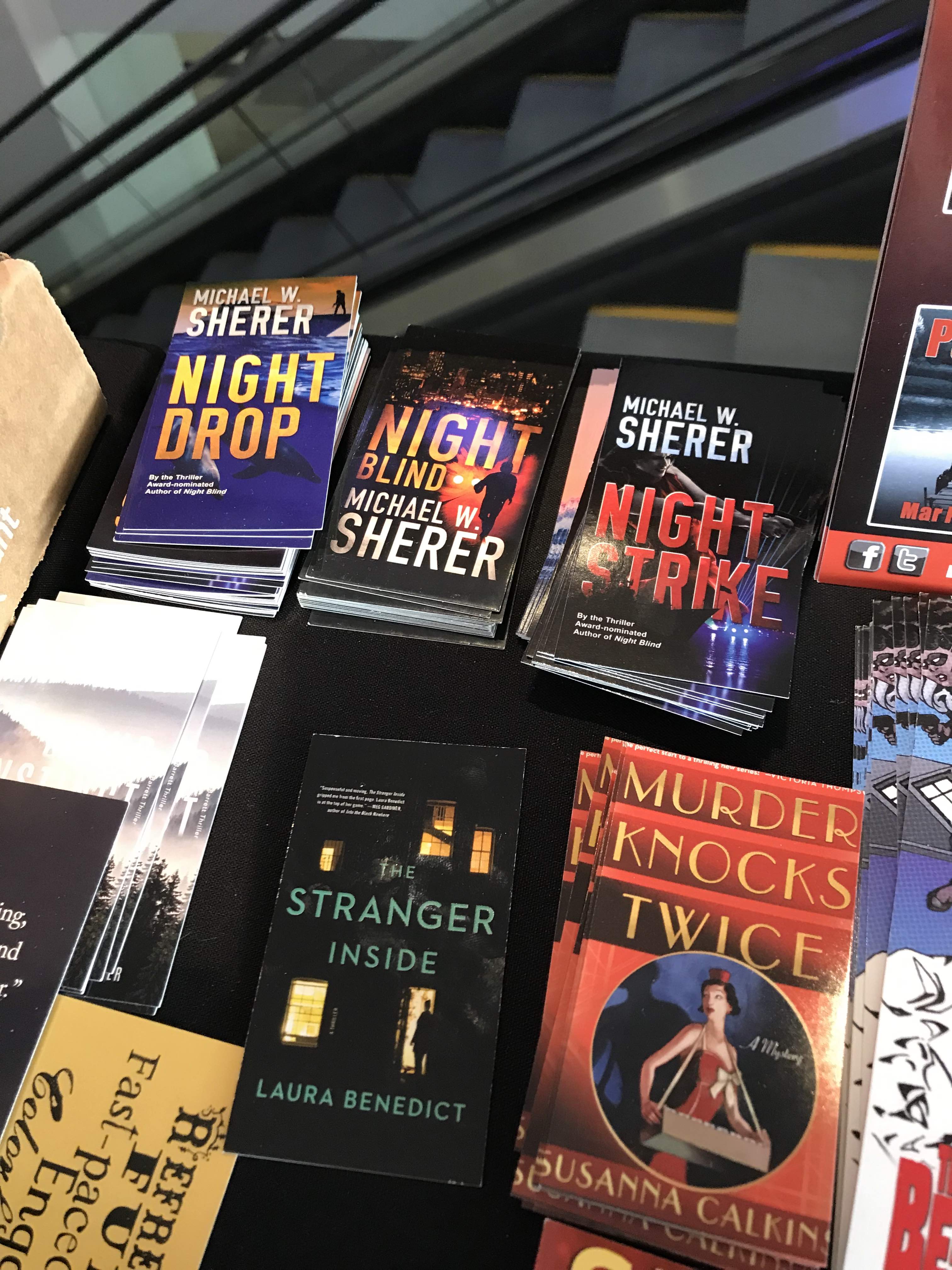
So why go outside my comfort zone? One reason is that I don’t leave a gift on the table. The gift, in this case, is an entire novel dreamed out and remembered. It may not be the type of story I usually try to tell, but it’s the one I have, and the one that I will give to you one way or the other. The genre is irrelevant. Authors, as we know, actually do jump genres without breaking kneecaps. Blake Crouch started by writing serial killer novels, jumped to a contemporary western, and then wrote science fiction novels. He had two — TWO! — television series adapting his works in the same year (!) and another one is coming. TKZ’s own indescribably wonderful Laura Benedict recently blurred her own fiction lines, moving seamlessly from the supernatural suspense genre to the domestic thriller shelves, and with superlative results (read The Stranger Inside if you haven’t as yet). Going back a bit, an author named John Jakes wrote a ton of science fiction and western novels which anyone who read them loved. Very few read them. He then turned to writing historical fiction and not only had lines of folks waiting to buy and read the new ones but also had them adapted to television. Think Paul Sheldon in Misery by Stephen King without the alcohol and the crazy fan. Richard Matheson, a much-beloved horror author who King has credited as his major influence, wrote Somewhere in Time, a romantic novel with science fiction overtones which is treasured to this day. There are many other examples. I’m not going to compare myself to all of those wonderful, successful authors (and the others I haven’t named) who have done this. I will, however, use them as models.
Oh, another thing. I am miserable at outlining. A lot of writers are. I have a friend and client, an author who writes novels in huge chunks but never outlines. He emailed me the other morning to tell me that he had written 22,000 words in the last four days and still had no idea where his latest novel was going. I understand. But. I have an entire outline. It has a beginning and an ending and a wonderful middle — usually the hardest part — so I am writing most of the middle first, going, like John Coltrane, in both directions at once while listening to the Top 40 songs of 1944 for inspiration. I’ve changed a few things in the original outline along the way, not because the original idea did not work, but because I thought of something else that worked better. There is a mentality at work — and it’s not just with me — that says if one has an outline you have to rigidly stick to it. No. It’s your outline. You can change it if you want when you want and for whatever reason you want. Think of it as a house that you love but are going to remodel. To go back to Misery, the ending of that book is far, far different from what King originally envisioned. While his original ending appeals to me in a sort of sick, twisted way, I think he ultimately wrote a better book. All he did was change his outline just a bit.
My advice du jour, after saying all of that, is 1) don’t give up the story you have for the story you want. They might both be the same thing; 2) outline. You can change it. It’s yours. You will, however, have a clear idea initially of where you are starting, where you are going, and how you are going to get there. Just leave yourself free to make rest stops, take detours, and see the sights along the way; 3) if you get an idea in the middle of the night, get upright and commit as much as you can to paper, screen, or whatever. You can change it later, run with it, or put it aside, but once you forget it, it’s gone; and 4) don’t listen to your pipsqueak under any circumstance.
Now please enjoy your weekend, and thank you for dropping by.