Can Hypnagogia Improve your Fiction Writing? Find Out

Jordan Dane
@JordanDane

Purchased from iStock by Jordan Dane

I really liked TKZ contributor Debbie Burke’s Feb 5th post “Eight Tricks to Tap into your Subconscious for Better Writing.” The mind is an interesting resource for writers. I’ve heard other authors say they dreamed a plot or how certain insights come to them while they sleep. I’ve personally had strange experiences in what I call “twilight sleep,” the realm between sleep and fully awake.

Many experts on dream studies say that dreams exist to help us solve problems we’re experiencing in our lives, or can help us tap into memories and process emotions. It’s possible that if you go to bed with a troubling thought – like a plot point that’s implausible or a character motivation that doesn’t feel right – sleep will allow your mind to come up with a resolution by the time you wake up.

Our own James Scott Bell has a term for this phenomenon. He calls the working brain at night – the boys in the basement. They don’t need to sleep. I’ve experienced this many times. That’s why I keep notepads near my nightstand or jot down ideas on my phone when they come to me after I wake up.

LUCID DREAMS 

Have you ever sensed you were dreaming INSIDE of a dream? You might’ve experienced a “lucid dream.” Research has shown that lucid dreaming is accompanied by an increased activation of parts of the brain that are normally suppressed during sleep. Lucid dreaming represents a brain state that falls between REM (rapid eye movement) deep sleep and being awake.

Some people who are lucid dreamers are able to influence the direction of their dream, changing the story, in a manner of speaking. While this may be a good tactic to take, especially during a nightmare, many dream experts say don’t force it. It’s better to let your dreams occur naturally.

HYPNAGOGIA

Hypnagogia is the transition between wakefulness and sleep. It’s what I call “Twilight Sleep” and it has nothing to do with sparkling vampires. It’s a state of mind where you may experience lucid dreaming.

In this state, you can tap into all the good ideas you have stored up, uninhibited by rational thought and insecurities. You’re open to all things. It’s how authors can go to bed knowing our manuscript has a flaw, but not knowing how to fix it. Our mind (or the boys in the basement) come to our assistance during the night when we are open to ideas.

Hypnagogia can also manifest in other ways, like when we may hear strange noises in our house–at the moment we wake up–and we KNOW someone has broken in. This could explain the monsters in our closet when we were kids or how we see dangers hidden in the shadows of our room. We’ve tapped into the primitive primal fear that animals experience where they trust their instincts (in order to survive) and react on pure reflex.

I have an experience like this and never forgot it. It happened in the afternoon while I was napping after a long exhausting day at work. I had the sensation that I was dreaming inside a dream, but I was certain someone was in the empty room with me. I even felt the bed move when they sat next to me. I got the sense they were staring down at me. I was so terrified (my body reacted with the fear – my heart raced and my lungs heaved) that I refused to open my eyes. I was so sure my nightmare would be confirmed. I sensed being touched, but still, I didn’t open my eyes. I never did. But I never forgot the feeling of abject, paralyzing fear and have written it into my stories.

Hypnagogia might possibly be one of the mind’s most vital tools for creativity and for tapping into the words to describe the high tensions or emotions we need to write a scene we may never had experienced personally.

How do we tap into Hypnagogia when we need it?

I believe it takes time to train our minds to open like this, but it could be a good exercise. I know that when I first started writing, I had to tap into my brain to hear dialogue from my characters and visualize each scene. Over time I got better at it. Now it’s impossible for me to be in public. I have no filter between my brain and my mouth. Have any of you experienced this? Oy. It can be a curse, but no regrets. I love how it works when I write–so worth it.

Some authors use image boards to trigger their imagination for the world they are creating, but what if you could tap into twilight sleep and manipulate ideas in your mind – to imagine them more deeply? Find a dark room in the afternoon and relax. Shut your eyes and clear your mind. I sometimes visualize numbers floating in the darkness behind my closed eyelids and count down until I am completely relaxed.

You don’t want to fall asleep, so you might consider holding something that will wake you if it falls. Salvador Dali used to hold steel balls that would make a noise when they dropped. Thomas Edison used to hold a metal ball over plate tins that would cause a racket if he let them drop. Test what works best for you in this process.

Does it help to record your results immediately after? A nearby notepad could help solidify your ideas visually as you write them down. Try these sessions for a short period and make the most of them as you get better. I find that if nothing else, the quiet time is good for the soul.

Tips to Recall Your Dreams

If you are a sound sleeper and don’t wake up until the morning, you are less likely to remember your dreams compared to people who wake up several times in the night. Try these tips to improve your ability to remember your dreams:

1.) Wake up without an alarm. You are more likely to remember your dreams if you wake up naturally than if you use an alarm. An annoying alarm can shift your focus to turning the blasted thing off and away from your dream.

2.) Tell yourself to remember. If you want to recall your dreams and make a fully aware decision to do so, you are more likely to remember your dreams in the morning. Before you go to sleep, tell yourself that you want to remember your dream. It may take practice.

3.) Dream playback. If you think about the dream right after waking, it may be easier to remember it later. Which has worked best for you? Making note of it immediately after or is it better to have patience and recall it later?

SUMMARY – This may seem odd if you hadn’t considered it before, but if you’ve been writing for years, can you recall how much your imagination has grown since the beginning? How has your process changed over the years? Have you noticed the changes? As I write, I find it easier to tap into my imagination now than when I first started out. Like I said, my mouth has no filter, by design. This is a good thing as a writer. Not so much if you hang around normal people.

FOR DISCUSSION

1.) Has anyone experienced Hypnagogic writing? What were the results?

2.) Do you know anyone who has experienced dreams that they used in their writing? Has it happened to you? Tell us about it.

Write Where You Know, or Not, and a New Release


I’m not comfortable setting stories in places I haven’t lived or visited. Years ago, I wrote what I thought was a pretty good little story about a girl who’s held captive by a mad piano tuner. Okay, I know. Maybe a piano tuner isn’t the first bad ‘un to come to mind  when you’re thinking of thriller villains. But have you ever read the late William Gay’s story, “The Paperhanger?” You should. It’s brilliant. And I have a surreal story called “When I Make Love to the Bug Man” that’s been anthologized and is taught in some university writing courses. (You would like it unless you have a phobia of spiders that extends as far as the written page.)

Anywho…I wrote the piano tuner story to submit to an industry anthology years ago. One of the requirements was that it had to be set in Prague. I know people who have been to Prague. It’s known for Dvorák and Mozart, and impressive architecture. Only about one tenth of my story took place outside the apartment, if that. It was not chosen for the anthology. In fact, I’ve submitted four stories over the years to two different industry anthologies, and none of them have been accepted. The fact that those competitions are often themed makes the stories hard to sell elsewhere, but whatever. Writing is practice never wasted.

My takeaway from the Prague disaster is that I should stick closer to home. (And that submitting to industry anthologies is a crap shoot I’m not destined to win.)

I’m perfectly happy to set a story nowhere. An isolated mansion. A suburban condo. A backyard in summer. A mid-range hotel room. It’s part of the beauty of our U.S. of A. There’s anonymity out there if you want it. Though, now that I think of it, I also set a story in a Hall of the Gods that was definitely nowhere in particular.

All of my novels are set in places I’ve lived: Virginia-3, Ohio-1, Kentucky-3, Missouri-1. The one I’m working on now is also Kentucky. The Virginia and Kentucky landscapes are similar, in parts. Devil’s Oven is the only one set on a mountain. I’ve never actually lived on a mountain, but I’ve lived in valleys surrounded by them, and hung around on a few. Close enough, I figure.

The Cincinnati book is the one most colored by childhood memories of the town’s geography. (There are demons in that book, but I didn’t know any.) As I wrote, the image in my mind was of a big, old city, full of great hills hung with layers of narrow houses that were kept from falling into the river by a bit of dirt, hillside stairs, and a few trees.

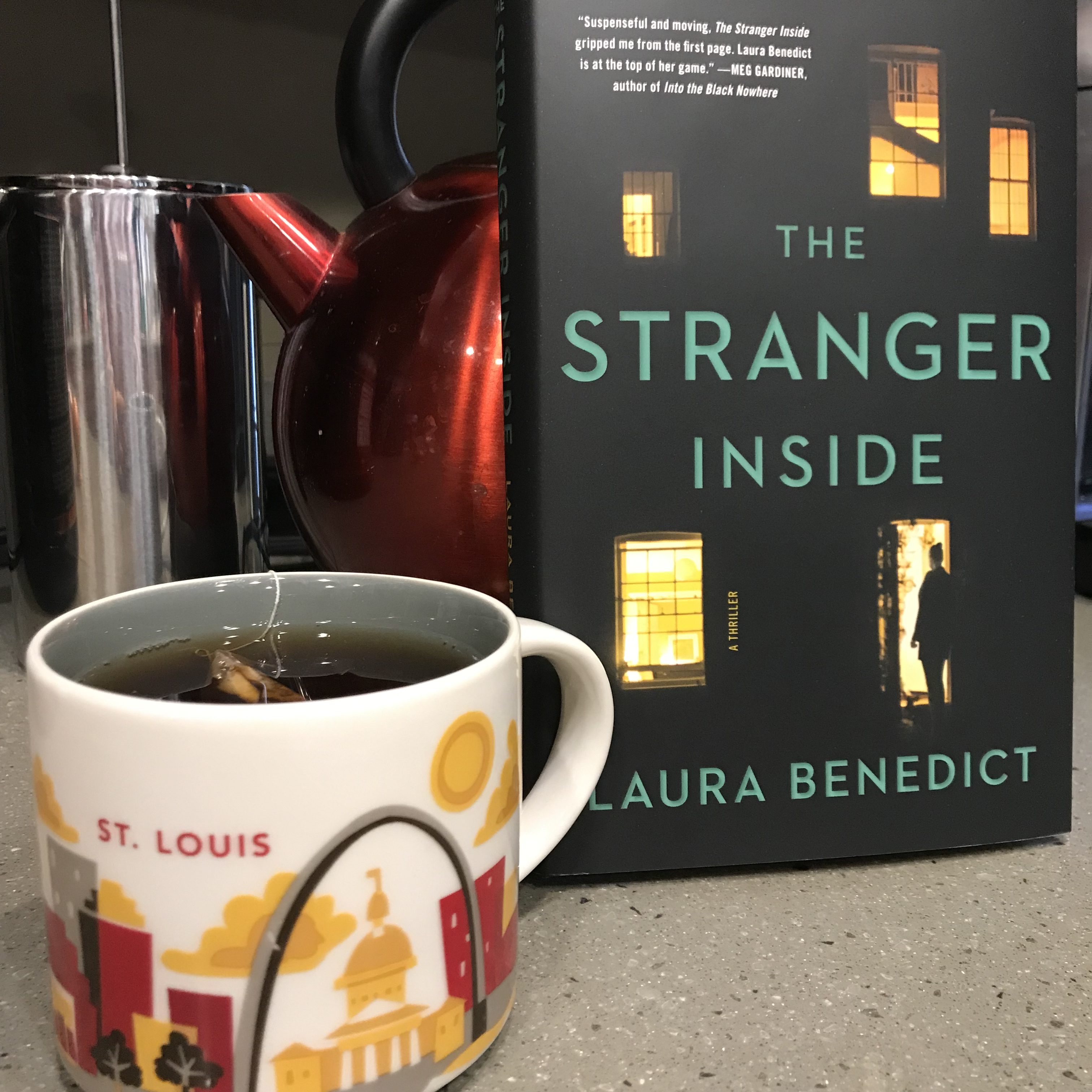
Before I wrote my new novel, THE STRANGER INSIDE, I’d only set a couple of short stories in St. Louis.

The Missouri side of the St. Louis Metro Area is made up of 79 neighborhoods within the city limits, and dozens of small municipalities in St. Louis County. No matter if you are in one of these smaller municipalities, residents are either from North County, South County, West County, or the Mid-County. When I lived in St. Louis throughout the 80s, I lived in Ballwin (far west), University City in the (in-) famous Loop near WashU. Kirkwood (also west but southwest, sort of) and Clayton. There’s not a lot of geographical variation. The differences tend to be starkly economic and racial–not so different from any major urban area.

In St. Louis, if someone asks you where you went to school, they mean high school. It’s midwestern in the sense that residents are generally friendly, no matter what part of town they’re from. If you’re from Ladue or Clayton or Glendale, people will assume that you’re wealthy, and if you’re from far South County you might as well be in the Ozarks, and if you’re from North County, well, let’s just say that if you live past or west of the airport, you might be looking at Iowa. Okay, I’m exaggerating. But the different areas do have distinct personalities. And if you look at the census data of the past couple decades you’ll see that it doesn’t change all that much.

Most of my characters are from Mid-County–Ladue and Richmond Heights, with a bit of Webster Groves and Kirkwood to give it an old-time, leafy, suburban flair. My protagonist’s ex lives with his new husband in historic Lafayette Square in the house they once shared. She’s good with that. And one significant character lives in a high-rise apartment in the city, overlooking Forest Park. I confess I did make up a state park. And there may be a few  fictional details at which a native St. Louisan may wrinkle their nose. So, apologies for that. What can I say? I plead fiction.

Of course, all of these geographic details will matter little to the casual readers of THE STRANGER INSIDE. Unless they’re from or know St. Louis well, they won’t much see the distinctions. But the distinctions made a huge difference for me as I was writing. It’s not that I’m resorting to stereotypes, but just using a kind of character shorthand. That shorthand is very handy.

I’m super excited about THE STRANGER INSIDE. It’s a psychological suspense novel. Sometimes it’s called a thriller. And there’s a murder mystery. The biggest difference between this novel and my first six is that there are zero ghosts or supernatural incidents. (My seventh was a cozy mystery.) It was a lot of fun to write.

What about you? Do you write about faraway places? Or do you stick to places you know? Why or why not?

Also, surprise! I’m going to give away a signed copy of THE STRANGER INSIDE at 9:00 p.m. (CST) to one random commenter. But definitely check back to see if you’ve won, because I can’t tell you how many books I haven’t been able to give away because the winner disappeared forever. The winner should reach out to me at l.benedict@laurabenedict.com

Eight Tricks to Tap Your Subconscious for Better Writing

by Debbie Burke

@burke_writer


The subconscious is the writer’s superpower. Ideas, imagination, and inspiration live in that vast reservoir.

The goal is to open a channel between the conscious mind and the subconscious to allow free flow between them.

Like a physical muscle, the subconscious is a mental muscle that can be made stronger with exercise. Many writers don’t use it enough because they don’t understand its value or don’t know how to tap into its depths.

Creative Commons license

The mind is often compared to an iceberg—only a small part shows as “conscious” while the unseen majority is “subconscious.”

What is the subconscious? Novelist/writing instructor Dennis Foley reduces the definition to a simple, beautiful simile:

The subconscious is like a little seven-year-old girl who brings you gifts.

Unfortunately, our conscious mind is usually too busy to figure out the value of these odd thoughts and dismisses them as inconsequential, even nonsensical.

The risk is, if you ignore the little girl’s gifts, pretty soon she stops bringing them and you lose touch with a vital link to your writer’s imagination. But if you encourage her to bring more gifts, she’s happy to oblige.

Sometimes the little girl delivers the elusive perfect phrase you’ve been searching for or that exhilarating plot twist that turns your story on its head.

At those times, she’s often dubbed “the muse.”

The trick is how to consistently turn random thoughts into gifts from a muse. Here are eight tips:

#1 – Be patient and keep trying.

Training the subconscious to produce inspiration on demand is like housetraining a puppy.

At first, it pees at unpredictable times and places. You grab it and rush outside. When it does its business on the grass instead of expensive carpet, you offer lots of praise. Soon it learns there is a better time and place to let loose.

Keep reinforcing that lesson and your subconscious will scratch at the back door when it wants to get out.

#2 – Pay attention to daydreams, wild hare ideas, and jolts of intuition. Chances are your subconscious shot them out for a reason, even if that reason isn’t immediately obvious.

Say you’re struggling over how to write a surprise revelation in a scene. Two days ago, you remembered crazy Aunt Gretchen, whom you hadn’t thought about in years. Then you realize if a character like her walks into the scene, she’s the perfect vehicle to deliver the surprise.

#3 – Expect the subconscious to have lousy timing.

That brilliant flash of inspiration often hits at the most inconvenient moment. In the middle of a job interview. In the shower. Or while your toddler is having a meltdown at Winn-Dixie.

Finish the task at hand but ask your subconscious to send you a reminder later. As soon as possible, write down that brilliant flash before you forget it.

#4 – Keep requests small.

Some authors claim to have dreamed multi-book sagas covering five generations of characters. Lucky them. My subconscious doesn’t work that hard.

Start by asking it to solve little problems.

As you’re going to bed, think about a character you’re having trouble bringing to life. Miriam seems flat and hollow but, for some reason you can’t explain, she hates the mustache on her new lover, Jack. Ask your subconscious: “Why?”

When you wake up, you realize Jack’s mustache looks just like her uncle’s did…when he molested Miriam at age five.

Until that moment, you didn’t even know Miriam had survived abuse…but your subconscious knew. That’s why it dropped the hint about her dislike for the mustache. She becomes a deeper character with secrets and hidden motives you can use to complicate her relationship with Jack.

#5 – Recognize obscure clues.

This tip takes practice because suggestions from the subconscious are often oblique and challenging to interpret.

You want to write a scene where a detective questions a suspect to pin down his whereabouts at the time of a crime. You ponder that as you drift off to sleep. The next morning, “lemon chicken” comes to mind.

What the…?

But you start typing and pretty soon the scene flows out like this:

“Hey, Fred, you like Chinese food?”

“Sure, Detective.”

“Ever try Wang’s all-you-can-eat buffet?”

“That’s my favorite place. Their lemon chicken is to die for.”

“Yeah, it’s the best.”

[Fred relaxes] “But not when it gets soggy. I only like it when the coating is still crispy.”

“Right you are. I don’t like soggy either.”

“Detective, would you believe last night I waited forty-five minutes for the kitchen to bring out a fresh batch?”

“Wow, Fred, you’re a patient man. About what time was that?”

“Quarter to eight.”

“So you must have been there when that dude got killed out in the alley.”

[Fred fidgets and licks his lips] “Um, yeah, but I didn’t see anything. I had nothing to do with him getting stabbed.”

“Oh really? Funny thing is, nobody knows he got stabbed…except the killer.”

Lemon chicken directed you to an effective line of questioning to solve the crime.

#6 – Tiny details pay big dividends.

You’re writing a story about a woman, Susan, searching for her dead grandmother’s missing diamond. In the description of Granny’s garden, an empty snail shell appears. Seems kind of silly but it’s first draft so you leave in the detail. You can always cut it later.

In the second draft, you realize, when Susan was little, she and Granny used to collect snail shells.

Now Susan goes outside and picks up that empty shell you’d left earlier in the garden. The diamond falls out.

Before she died, Granny hid the diamond where only her beloved granddaughter would think to search because of her long-ago interest in snail shells.

Like the mustache mentioned earlier, you didn’t know the story needed that detail but your subconscious did. It planted the seed, sat back, and waited for you to recognize it.

#7 – Bigger problems need more time.

In my WIP (working title: Eyes in the Sky), an unseen mastermind is pulling strings to cause harm to the main characters. At page 100, that antagonist is revealed to the reader but remains unknown to the protagonists.

A beta reader suggested keeping his identity secret until even later to increase suspense. It was a great point but would require major rewriting.

For several weeks, I pondered the problem both consciously and subconsciously.

At last, my muse offered a different solution. The mastermind is still identified at page 100. But now suspicion additionally falls on a minor player. That secondary character has an even more compelling motive to harm the protagonists. I simply hadn’t recognized it until my subconscious brought it to my attention.

Rather than withholding the identity longer, instead I beefed up the additional suspect to make the reader wonder which antagonist is the ultimate villain.

Tip #8 – Practice trigger activities.

Whenever a story gets caught in a corner, I go for a walk. I stretch out stiff muscles, breathe fresh air, and let my mind wander.

Before long, the solution pops up from my subconscious and I rush back to the keyboard.

Walking is my trigger activity. It works. Every. Single. Time.

That’s because, for years, I’ve conditioned my subconscious. Like a bell at a factory that signals the start of the shift, a walk signals my subconscious that it’s time to go to work.

Through experimentation, you can find a trigger activity that opens the channel between your conscious and your subconscious. It might be listening to music, reading, playing basketball, meditation, skydiving—what you do doesn’t matter, as long as it works for you.

Once you find your best trigger, use it whenever you need your subconscious to produce. The more often you use it, the stronger the reinforcement between the activity and the results.

Photo credit: Pixabay


That little seven-year-old girl wants to please you. She is happy to bring gifts as long as you keep encouraging her.

When the channel between the conscious and subconscious flows freely, the deep well of imagination bubbles up.


Your writing will show the difference.


TKZers, do you have favorite tips to access your subconscious?


Post script: recently Joe Hartlaub blogged about improving creativity by writing with a font called “Comic Sans.” Sounded pretty woo-woo but I always trust Joe’s advice so I tried it while drafting this post. It works. Thanks, Joe!


Debbie Burke is still trying to figure out the hidden meaning in the latest five-star review for her thriller Instrument of the Devil :

“Very easy to apply. Great instructions…Product works great just like the expensive ones you buy at the store.”

Whatever.

It’s available on Amazon here.

First Page Critique: Death in London

Happy Monday! Today’s first page critique is for a historical novel entitled Death in London. My comments follow. Enjoy!

Death in London

The messenger arrived mid-morning. Sam had been at the office since dawn, trying to update and reconcile the Tangier accounts. When the young urchin coughed Sam was startled.

“God save me boy, I didn’t hear you.What do you want?”

“Beg your pardon Sir, Message from the Duke, Sir.”

Ever since the debacle with the Dutch fleet, the Duke of York had become obsessed with wanting regular updates about the provisioning of the fleet. As if Sam didn’t have enough on his plate, now he had to go to Whitehall immediately.  He knew the tide was coming in, so Sam decided to go by water. The walk from his office in Seething Lane to the wharf only took a few minutes. With the incoming tide came the smell of salt on the air, and the promise of the fine autumn days to come.

Sam was short but stocky, and had large inquisitive brown eyes.  His mouth, when it wasn’t smiling, looked as if it was going to. His full lips looked like they were made for kissing, and he used them somewhat more than he should. With autumn underway, these mornings were getting cooler, so Sam had put on his favourite cloak, he especially loved the plush lining in deepest red. His boots were shining with the silk ribbons shining in the sunlight, so he felt dressed well enough for the visit to the Royal Court.

As he sat in the back of the ferryman’s boat Sam had that feeling of sadness that still came over him on a regular basis. Not as often as it used to, but regular enough. Elizabeth’s death had been so sudden, and such a shock. He realized with a start that it had been just over a year ago. Work kept him so preoccupied that it was only these times on the river that he had time to think and mourn.

Sam had plenty of female company when he wanted to. Too much according to his closest friends Will, and Jane. But when you lose the person you married when she was only 14, and had had the tempestuous life they had shared for fourteen years, “getting over it” was easier said than done.

At the Duke of York’s chambers in Whitehall, Sam was able to put the Prince’s mind at rest. The spars coming from the Baltic would arrive in good time and be of high enough quality for His Majesty’s fleet. When it came to the detail, Sam was grateful he was able to talk numbers that befuddled the Duke. Some years before Sam has made sure he was schooled in some arithmetic, so was able to give the Prince more information about quantities than the he was able to absorb.

My Comments

Overall, I found this first page engaging and interesting. I wanted to know more about Sam and his life and would definitely have kept reading. There was good use of selective background details and a great sense of place – in fact I would have liked a little bit more about the sensory impact of traveling the river and the London streets as Sam made his way to Whitehall.

Even after just one page, Sam is an interesting protagonist which is why I think I would prefer the third paragraph not be focus on his outward appearance. The physical description didn’t really sound like one Sam would give of himself – and it took me out of the story – while the other paragraphs provide a good balance of Sam’s thoughts and feelings as well as his background, while keeping the momentum of the story going. I preferred the close POV with Sam and his inner thoughts.

Specific Comments

Historical era/period:  I wasn’t entirely sure when this story was taking place. References to the Duke of York as ‘Prince’ made me think we must be around the Georgian era (I am assuming the Duke of York is Prince Frederick, George III’s son-??)  but I wasn’t exactly sure. The costume description sounded Georgian-ish (cloak and ribbons on boots) but there weren’t enough obvious cues (wigs etc.) and the fact that Sam married a girl of 14 threw me off a bit. I’m no expert on Georgian or Regency era marriages but this seems pretty young – so then I wondered if this was set earlier than I thought. The fact that I was second guessing the time period as a reader signals to me that the writer should give some more clues to ground the reader right from the start in era/historical time period. Given how well the writer created a sense of place with the river and the trip to Whitehall, I think the writer will easily be able to do this.

Tension/Suspense: For a first page, I think I would have liked a little more ‘oomph’ and dramatic tension – perhaps something that can foreshadow the mystery to come (I’m assuming there’s a mystery given the title ‘Death in London). This foreshadowing could come anywhere in this first page (not necessarily the first paragraph as I like how it moves us straight into dialogue and acton – it provides good momentum). At the moment all the reader knows is that Sam is good at finagling the accounts for the Prince/Duke of York – which doesn’t necessarily provide a lot of dramatic tension.

Minor quibbles:  

1) A general reader may not know that the Duke of York is also a Prince so switching between these terms could be confusing.

2) Non-nautical types (like me!) might not know what ‘spars’ are:) A little more context for the fleet would be helpful.

3) I was unsure why Sam wanted to befuddle the Prince with the numbers – is he trying to swindle or cover something up?? That didn’t seem in keeping with his character (at least what we know so far)

All in all, I thought this was an engaging first page and most of my comments are pretty easy fixes. Bravo to our brave submitter!

TKZers what advice or comments would you provide?


No More Platform Anxiety, Please

by James Scott Bell
@jamesscottbell

A recent post by agent Janet Kobobel Grant offers some welcome relief on the dicey subject of “platform.” I’ve been slapping that particular bongo for years. How are new fiction writers supposed to create a following before they have any books out? I even pulled up a comment I made on TZK ten years ago (before I was a contributor!), to wit:

By far and away the best “platform” for us is OTHER people yakking it up about our books. Word of mouth has always been the most powerful marketing tool. You don’t get that by blogging, tweeting or shouting. You get it ONLY by writing books people talk about. That has to be job one.

The flip side is the best promoter in the world cannot overcome a book that fizzles with the reading public. It can get you a strong introduction, but from there the book takes over. If it does fizzle, the answer is not more promotion; the answer is a stronger book.

Yet many a publisher has pushed platform building, even for unpublished writers, leading to increased levels of scribal stress and sales of Pepto-Bismol.

A platform, as the book industry sees it, is whatever you do to engage and interact with a significant portion of the public. That includes social media, blogs, vlogs, podcasts, and even good old public speaking.

All of those things take effort and cut into a writer’s creativity and productivity time. So does it make sense to spend that capital trying to create a platform at the expense of writing good books?

There is no shortcut to platform success, either. Sure, you can farm 50,000 Twitter followers, but how many of them are truly interested in you? Or you in them (shown by actual engagement)? That’s the key to social media. Thus, I was glad to read Janet’s comments:

The second group of editors I met with started off our conversation by saying they have come to realize it’s unrealistic to expect a newer novelist to have a large platform. Upon what foundation can a fiction writer build that platform? Especially as a debut novelist, you can only engage potential book-buyers so much in your writing and research endeavors before your attempted connections take on a bland sameness.

However, Janet continues, these fiction editors do want to see that a writer is “willing” to engage in platform building. Which means at least one social media footprint. The big takeaway is something I’ve advised for years:

These editors believe that choosing to focus on one aspect of social media is the best route to go. Rather than dabbling in several mediums but not really figuring out what works for you, dig into one medium and gather all your friends or followers in that one spot.

So which social media outpost is best for you? Read and reflect on Sue Coletta’s excellent post on the topic. Be sure to follow the links and also read the comments. You’ll make wiser social media choices if you do.

Janet Grant concludes:

I hope you’re taking a deep breath as you consider that some of the pressure to collect names and online connections has let up just a bit. None of these editors would say platform isn’t important. But each of them would say she—and the whole publishing team—is taking a more nuanced look at the planks of each writer’s platform.

By the way, if you want to plow right through the nuance, write a book that blows them all away. Then you can talk about platform all you want.

As I was prepping this post, an article entitled “How to Reduce Marketing Anxiety and Confusion by industry expert Jane Friedman appeared on the PW site. Jane writes, in part:

In a great scene from Lost in Translation, Bill Murray’s character says, “The more you know who you are and what you want, the less you let things upset you.” If I could customize that for today’s authors, I’d say, “The more you know who you are as an author and what readership you seek, the less confused you’ll be about marketing.” And the less you’ll be influenced by the crowd.

It’s easy to feel anxious about your progress when you see your peers engaging in new forms of publishing or marketing and you feel pressured to join. But the more you’re focused on your own long-term outcomes and how to wisely use your time and resources, the better prepared you’ll be to consider or experiment with new tactics, adopting or discarding them as you see fit.

So how is your platform anxiety these days? Does it ever detract from your writing? What are you doing about it?

Where Inspiration Comes From

By John Gilstrap

Over the weekend, on the heels of the SHOT Show in Las Vegas, I participated in a small, 20-person writers’ retreat, and I was reminded at how inspirational it is simply to be in the presence of other writers.  No fans, no industry people, just other authors who are doing their best to carve a living out of a crazy business.

I’ve been doing this a long time, yet there’s always another tidbit or two to be learned from others, even if it’s a different squint on a common problem.

Sunrise at Monument Valley, Arizona

Fired up with creativity, Joy and I joined with another couple and headed off for a week in the Great Southwest.  Our final destination was Santa Fe, New Mexico, but our first stopping point was Monument Valley, Arizona.  We stayed at The View Hotel on the Navajo Reservation, and Mother Nature presented us with the very best she had to offer.

I don’t remember the last time I had an unobstructed view of a moonless, entirely dark night sky.  The sight of billions of stars, stretching from horizon to horizon brought tears to my eyes.  It centered me.

And when I awoke the next morning, I was greeted with a sight that turned out to be photo-friendly.  The sun rose slowly against the big sky, and every few minutes the light changed again.  After a couple of snapshots, I realized I was squandering my gift from God.  Moments like that are meant to be experienced. They are meant to be savored.  It sounds corny, but something changed in me.

I’m better because of the experience.

What fleeting moments in your life have had a profound impact on you?

Fair warning: I’ll be savoring Santa Fe when this is published, so I won’t be participating much in the responses.

Our Flawed But Fab Jury System
And a Few Other Favorite Things

By PJ Parrish

When you read this, I will be sitting on a hard plastic chair somewhere in the bowels of the Leon County Courthouse. Duty calls…

People go their entire lives without getting called to serve on a jury. Me, it’s like the common cold. It always finds me. And no matter what I say in voir dire, I have almost always gotten seated. Must be my honest face.

I’ve been called up nine times and been seated on seven juries. A couple cases were settled and the others were pretty ho-hum. A man we convicted of drunk driving, who luckily didn’t kill anyone. A city contractor caught driving a garbage truck without the proper permits who we convicted but knocked down his fine to $30 because he was a working guy. Then there was the woman who was suing a trucking company for hitting her car, claiming extreme emotional and physical distress. It was so bad, her tearful daughter vowed on the stand, that mom became a recluse who couldn’t walk or even reach down to pet her dog Charlie.  So sad…until the insurance company’s lawyer showed us a video of the woman coming out of a strip mall, holding her hands high, a gesture I immediately recognized as someone who had just gotten her nails done. A second video showed her bending down, grabbing the floor mat out of her car and banging the hell out of it against a curb to get the dirt out. I think we awarded her a couple hundred bucks toward medical bills. Or a new manicure..

I always thought these mundane cases had no real effect on people’s lives. Until the last jury I served on. It involved a cop and a black teenager. The cop was accusing the kid of assault after a routine traffic stop. To make a long story short, the cop’s case didn’t hold water and after about an hour of deliberation, we decided the kid didn’t do it. I will never forget the sight of that kid and his mom breaking down and sobbing after the verdict.

Life, when it really hits you in the face, is always stranger and more poignant than fiction.

So tomorrow, as I sip my cup of bad vending machine coffee and await my turn, I will be thinking again of our peer judicial system. Flawed as it may be, as it still has the power to humble me. If you’ve got any stories to tell about your own brushes with it, weigh in today while I am tied up. (I will try to reply as I can, if the wifi is working.)

Or you can have some fun and play the following game. It’s called These Are A Few of My Favorite Weird Things. Hit it, Maria!


(Aren’t you glad I spared you a video of Julie Andews?)

1. Favorite Movie Most People Have Never Seen

Mine is the Bagdad Cafe. It is a 1987 comedy-drama set in a desolate truck stop and motel in the Mojave Desert. I’m told it’s loosely based on Carson McCullers’ novella The Ballad of the Sad Café, but I’ll be danged if I see it. It’s about two women, a lonely German tourist and an irascible black mom, who chuck their husbands and form an unlikely friendship. Jack Palance is great as Rudy Cox, a strange Hollywood set designer who desperately wants to paint the zaftig Frau Münchgstettner.  At first, the movie feels just weird and angry. But it  weaves a magic about how one person can change another’s life. And the song I’m Calling You (nominated for Oscar) is haunting:

2. Favorite Book Nobody Else Has Read

Mine is Time And Again by Jack Finney. I don’t remember how I discovered this book. Probably in a used book store on one of my pre-Kindle travels because I always run out of things to read and have to scout out the nearest English-language bookstore. Actually, lots of folks know about this book. Stephen King calls it “a great time-travel novel” and I think our own James has mentioned it. In a nutshell:

When advertising artist Si Morley is recruited to join a covert government operation exploring the possibility of time travel, he jumps at the chance to leave his twentieth-century existence and step into New York City in January 1882. Aside from his thirst for experience, he has good reason to return to the past—his friend Kate has a curious, half-burned letter dated from that year, and he wants to trace the mystery. But when Si begins to fall in love with a woman he meets in the past, he will be forced to choose between two worlds—forever.

It was written in 1970 and supposedly Robert Redford tried to make a movie out of it. Lionsgate recently optioned it again. In 1980, the Christopher Reeve/Jane Seymour weeper Somewhere In Time used the exact same time-travel technique as Finney’s book. The book has lots of cool photos of old New York.

3. Favorite Disgusting Food

On my first trip to Paris with husband two, we were young and foolish. Our French was pretty bad back then and there was no such thing as iTranslate. We went to a restaurant called Le Petit Zinc and, feeling frisky, ordered something called ris de veau. It was delicious, tasty meaty morsels swimming in Madeira mushroom sauce. We finally asked the waiter what it was, and he had his fun with us, saying “C’est testicules.”  That we understood.  We didn’t care.

4. Favorite Thing To Do When No One Is Looking

Sing Bohemian Rhapsody in the car. Very loudly.

5. Favorite Opposite-Sex Guilty Pleasure Movie

Okay, guys have to tell their favorite girl flick. Ladies have to come up with a man-movie. I have a couple favorite guy movies, like The Guns of Navarone and all the Dirty Harry movies. But I never turn down a chance to watch The Dirty Dozen. I’ll stop channel-surfing and watch it. Can’t help it. It gets to me every time.

6. Favorite Book I Wish I Had Written

I like everything Joyce Carol Oates writes. Even when she’s off, she’s better than 99 percent of the writers out there. I discovered her with 1986’s Marya and followed her through her normal literary stuff, and her detours into crime fiction and erotica. But the book that always stayed with me is Because It Is Bitter And Because It Is My Heart. Set in the early 1950s, it tells the story of the friendship between a young white girl named Iris Courtney and black teenager Jinx Fairchild. They are united by a murder that they commit in self-defense. I wasn’t writing crime fiction when I read this, but I believe this book planted the seeds in my sub-conscious to want to explore the psychology of murder that colors my own work to this day. Here’s the opening.

“Little Red” Garlock, sixteen years old, skull smashed soft as a rotted pumpkin and body dumped into the Cassadaga River near the foot of Pitt Street, must not have sunk as he’d been intended to sink, or floated as far. As the morning mist begins to lift from the river a solitary fisherman sights him, or the body he has become, trapped and bobbing frantically in pilings about thirty feet offshore. It’s the buglelike cries of gulls that alert the fisherman—gulls with wide gunmetal-gray wings, dazzling snowy white heads and tail feathers, dangling pink legs like something incompletely hatched. The kind you think might be a beautiful bird until you get up close.

Every time I read it, it makes me want to be a better writer.

7. Favorite Weird TV Show

When I was a kid, my dad used to let me stay up late to watch One Step Beyond. It was an anthology about the paranormal and anything that defied logic. The phlegmatic John Newland (“Your guide to the supernatural”) would tee up every episode with the disclaimer that they were based on “the true human record” as this great creepy music played in the background (“Fear” composed by Harry Lubin and covered by the Ventures in 1964. Click here to listen.) This was unlike The Twilight Zone, which debuted nine months later and was fictional. This was REAL! Really cool stories with cool actors (one episode paired Warren Beatty and Joan Fontaine.) My dad loved this show. But then he also sat out in the yard with his binoculars looking for flying saucers.

8. Favorite Bucket List Thing I Probably Won’t Get Around To Doing

I really want to go to the moon. NASA estimates that a round-trip ticket to the ISS on the SpaceX Crew Dragon or the Boeing CST-100 Starliner would cost about $58 million. I don’t have enough Sky Miles for that.  So I will settle for parachuting out of a plane. If George H.W. Bush can do it at age 90, I still have hope. My husband tells me he will veto this, so I will just have to outlive him.


Could Alexa Solve Murders?

Debbie and I were surfing the same wavelength this week. If you didn’t get a chance to read her post, be sure to check it out.
As technology has become more integral to daily life, authorities have increasingly sought evidence from mobile phones, laptops, social media, and even a video game.

Last summer, I heard about a murder case in Arkansas. The high-profile defense attorney, Kathleen Zellner — best known as Steven Avery’s attorney in season two of Making a Murderer — petitioned the court for Amazon Echo recordings.

The Amazon Echo entered the November 2015 murder case after Victor Collins (47), a former Georgia police officer, died in the suspect’s hot tub. An observer told police he’d heard music streaming through the device that evening.

Zellner’s client, James Bates, invited two friends to his Bentonville home to watch college football, drink beer and shots of vodka. After the game, the three men slipped into Bates’ hot tub. Around 1 a.m., Bates said he went to bed. When he woke in the morning, Collins was floating face-down in the hot tub.

The defense contended the death was a tragic accident, stemming from high levels of alcohol. At the time of death, Collins’ blood-alcohol content was at .32, four times the legal limit to drive in Arkansas.

Investigators believed Collins’ body showed evidence of strangulation prior to drowning. Signs of a struggle they’d seen in the house, including a broken shot glass, dried blood on the floor, injuries to both Collins and Bates, and indications that someone hosed down the patio and hot tub before police arrived. They further contended Bates’ water heater, another smart device, recorded an exorbitant amount of water used in the early morning hours, in what investigators believed was an attempt to conceal the crime. The defense argued the same amount of water had been used 12 hours prior to the night in question.

After Amazon released the recordings, the prosecution dropped all charges against Bates. Why? The DA stated, “They cannot meet the legal requirements to proceed.” No further mention of the Echo recordings, but writers don’t need the outcome to envision the story Alexa might tell.

See where I’m going with this? We could spin the recordings anyway we want. Keep that in mind while you read this next case.

Fast-forward to January 27, 2018, when Amazon Echo recordings could solve a brutal double homicide.

In my home state of New Hampshire — a 30-40 minute drive from where I live — two slayings rocked the quaint Farmington community. In the early morning hours of January 29th, Dean Smoronk returned home after a trip to Florida. When he arrived, his live-in girlfriend, Christine Sullivan, and a friend, Jenna Pellegrini, who was staying with the couple at the time, were both missing. He called 911 around 3 a.m., and said he thought there’d been a murder.

When officers arrived at the scene, Smoronk pointed out a large blood stain on the mattress in the upstairs bedroom and dried blood in the kitchen, with a blood smear on the refrigerator. Hours later, New Hampshire State Police found the two women cocooned in tarps, stuffed under the porch. Eight stab wounds littered Sullivan’s body, her skull fractured by a blunt object. Pellegrini’s head, face, and chest showed 48 stab wounds.

During the search, investigators also found several knives wrapped in a flannel shirt — the same flannel shirt worn by Timothy Verrill, caught on the home’s surveillance footage that night. Verrill was a known drug dealer in the area. At the time of the killings, he was friends with Sullivan and Smoronk. Some speculate he was also Pellegrini’s boyfriend, but there’s some conflicting evidence on whether that’s true. Allegedly, Verrill feared the two women were working with authorities on an undercover sting, of which he was the intended target.

State Police seized an Amazon Echo from the crime scene. Had Alexa recorded the murders and subsequent cover-up?

On Oct. 30th, Senior Assistant Attorney General Geoffrey Ward asked the judge to direct Amazon.com to produce any recordings made between Jan. 27 and Jan. 29, 2017, suggesting evidence of the murder and/or hindering prosecution could be found on the device.

In the motion, made in lieu of an application for a search warrant, Ward wrote, “As part of the normal functioning of an Echo electronic device, activated either intentionally or accidentally by ‘wake up words,’ audio recordings are made from the moment when the device is activated. Specifically, when the Echo detects a ‘wake up word(s),’ the device begins audio recording through its integrated microphones, including recording the fraction of a second of audio before the ‘wake up word(s).’”

Wake up words include Amazon and Alexa, but as Debbie pointed out, Alexa records even when those words aren’t mentioned.

Ward’s motion also asked for a wider scope in order to identify cellular devices that paired with the smart speaker within the same time period.

The judge ordered Amazon to hand over the recordings. No word yet on what Alexa overheard that night. The trial begins in May, 2019.

So, TKZers, if you were writing these stories, what would you reveal in the recordings? Get your creative juices pumping by including a jaw-dropping twist!

WINGS OF MAYHEM is on sale for 99c.

“The story spins ahead with escalating velocity and well-rendered literary layers, always leaving the reader pleading for more information while delivering just enough with exquisite timing, always nailing a clear and rationale dissection of what seemed in the moment like insanity or illogic. The craft of the writer is on display from page one, with intense pacing, deeply drawn characters and a matrix of plot elements that never lets you see the big picture as completely as you think you do, thus setting up an ending that demands you stick with it until the final, unexpected twist.” ~ USA Today Bestselling Author Larry Brooks


Jack Kerouac On Writing

by James Scott Bell
@jamesscottbell

Fasten your seatbelts.

We’ve written about Robert A. Heinlein’s rules and Elmore Leonard’s rules. Are you ready for Jack Kerouac’s?

Like most college liberal arts guys in the 70s, I went through a big Kerouac phase. It started, of course, with On the Road, the slightly fictionalized account of Kerouac’s roamings in post-World War II America.

There’s a myth that Kerouac completed his most famous novel in three weeks, on a rolling scroll of butcher paper, so he wouldn’t have to stop to remove pages from the typewriter. Indeed, much of On the Road was written in first draft that way, but Kerouac re-worked the manuscript several times before it was published.

Kerouac’s reputation (and, some might argue, the beginning of his ruin) was made when the New York Times called On the Road “a major achievement.” Not all critics were so moved. Time magazine characterized it as a “barbaric yawp of a book.” And later, Truman Capote would snarkily remark (did he ever remark un-snarkily?) that On the Road is “not writing. It’s typing.”

In any event, at one point Kerouac was asked to memorialize his writing advice. Let’s ride:

  1. Scribbled secret notebooks, and wild typewritten pages, for yr own joy
  2. Submissive to everything, open, listening
  3. Try never get drunk outside yr own house
  4. Be in love with yr life
  5. Something that you feel will find its own form
  6. Be crazy dumbsaint of the mind
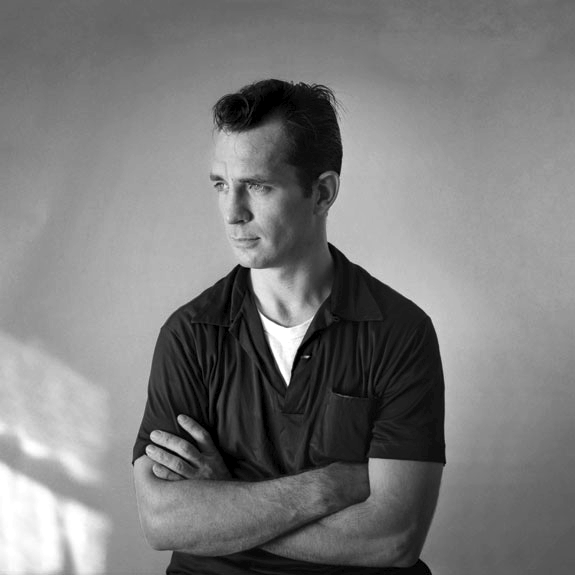
  7. Jack Kerouac. Photo by Tom Palumbo

    Blow as deep as you want to blow

  8. Write what you want bottomless from bottom of the mind
  9. The unspeakable visions of the individual
  10. No time for poetry but exactly what is
  11. Visionary tics shivering in the chest
  12. In tranced fixation dreaming upon object before you
  13. Remove literary, grammatical and syntactical inhibition
  14. Like Proust be an old teahead of time
  15. Telling the true story of the world in interior monolog
  16. The jewel center of interest is the eye within the eye
  17. Write in recollection and amazement for yourself
  18. Work from pithy middle eye out, swimming in language sea
  19. Accept loss forever
  20. Believe in the holy contour of life
  21. Struggle to sketch the flow that already exists intact in mind
  22. Don’t think of words when you stop but to see picture better
  23. Keep track of every day the date emblazoned in yr morning
  24. No fear or shame in the dignity of yr experience, language & knowledge
  25. Write for the world to read and see yr exact pictures of it
  26. Bookmovie is the movie in words, the visual American form
  27. In praise of Character in the Bleak inhuman Loneliness
  28. Composing wild, undisciplined, pure, coming in from under, crazier the better
  29. You’re a Genius all the time
  30. Writer-Director of Earthly movies Sponsored & Angeled in Heaven

This is not exactly the stuff of structure. Indeed, while On the Road is linear in form, Kerouac’s subsequent work became more and more experimental—with the attendant decline in sales. (I will not pause here to once again emphasize the correlation between structure and sales, even though I just did). He died of alcoholism in 1969 at the age of 47, twelve years after publication of On the Road.

What Kerouac and the Beat Generation writers were after was a new kind of prose, a sort of be-bop rhapsody that most truly captured an experience. In that regard, these wild ideas are good for getting out of the way of yourself, to become a “crazy dumbsaint of the mind.” The writing then becomes a kind of “tranced fixation dreaming” and makes writing “for yr own joy” possible.

This is all fine as far as it goes. Kerouac thought that was far enough. But it proved otherwise. For at some point “yr own joy” needs to translate to the readers. On the Road did that. So, too, did his next-most successful novel, The Dharma Bums. After that, things started to get sketchy.

I retain a warm place in my heart for Kerouac. He meant a lot to me in my early formation as a writer. At its best his prose is vibrant, emotional, ecstatic, as in this famous passage from On the Road:

The only people for me are the mad ones, the ones who are mad to live, mad to talk, mad to be saved, desirous of everything at the same time, the ones who never yawn or say a commonplace thing, but burn, burn, burn like fabulous yellow roman candles exploding like spiders across the stars and in the middle you see the blue centerlight pop and everybody goes “Awww!”

I am literally going to be on the road today, driving back to L.A. from Las Vegas (no, I didn’t put it all on red. Came for a meeting and research for my next novel). I’ll check in, but please talk amongst yourselves. Have you read Kerouac? What do you find of value in his advice?