Know Your Genre and Do the Research – First Page Critique: The Nature of Things

Jordan Dane
@JordanDane

Wikimedia Commons – Author Cliff (GIANT PACIFIC OCTOPUS) https://www.flickr.com/people/28567825@N03

An intrepid anonymous author has submitted their first 400 words of “The Nature of Things” for critique. My feedback follows. Please help this author and provide your constructive comments, TKZers. Enjoy.

***

“Couldn’t have happened to a nicer fella,” said the reporter.

Anna perused the mutilated body. Damage to the head. Impressive gash in the temple and the empty eye sockets.

“Who or what do you think did this?” the reporter prompted. “You were invited out for an expert opinion. Do you think a man or animal killed him?”

The cuts to the head and upper torso were massive and random. It was hard to recognize the face with most of it eaten.

The salty Oregon coastal breeze wafted into the cave opening. It mingled with the stench of rotting flesh warming in the sun. The smell of death has many scents.

“Looks like our friend here met up with some pretty irate sea dweller,” she said. “I’m thinking giant Pacific octopus.”

“How so?”

“See the cuts? How they’re sometimes random, then more concentrated at the injury sites? Looks like damage from an octopus beak to me. Sliced open the soft spot near the temple to get to the soft stuff inside.”

A grisly sight to behold. More hideous than the one she saw one night long ago. Same result. Different circumstances.

“You recognize this guy at all?” the reporter said.

“Why would you say that? Not much left here to recognize.” said Anna.

“No particular reason. You being a marine biologist in this area, thought maybe you might have seen someone hanging about the coastline lately.”

“I’m mostly out in the big ocean. Deep sea. But a person can get lost very easily if they want to.”

Like Pa’s buddy, Ray, from the Viet Nam war. Ray wanted nothing to do with people after being discharged and returned to the states. The hatred and name calling were too much to take. One of the reasons Momma and Pa had moved so far out in the woods of Oregon. Homesteading far away from the prying eyes of local busybodies. Small towns are like that. Gettin’ in other peoples’ business was not just normal. It was a way of life.

She said, “My guess is he went diving in this cave and surprised a trapped and hungry animal. Tentacles most likely grabbed his head and the beak started gnawing away.”

“Detectives just left,” he said checking his notes. “They noted extra shoe prints in the sand. Must’ve had somebody with him.”

“It’s a public beach. Footprints could be from anyone. Anytime,” Anna said.

FEEDBACK

OVERVIEW – I enjoyed this author’s “stick to the action” writing. The author jumps into dialogue without over-explaining the action.

POLICE PROCEDURE ISSUES – Right off the bat, I’m left wondering how a reporter would be inside the crime scene tape, which is the way this appears. Anna (whoever she is to the investigation as an expert) is examining the body, up close. She’s carrying on a conversation with a reporter as they apparently stand over the body.

Standard police procedure is that medical examiners or coroners (there’s a difference) would make the call on the cause and manner of death. The ME or coroner would take charge of the body and would not leave the corpse behind or bring in anyone at the scene to give an opinion on how the person died. That would be done in the autopsy, if the examiner needed the assistance.

For avid crime fiction readers, this opener would read as implausible for these reasons. That’s a “throw the book against the wall” error, in my opinion. Despite what I may like about this author’s writing, I’m not as forgiving on poor research and lack of knowledge on police procedure.

OCTOPUS KILLS HUMAN? – This seemed odd to me. I had to query it online. Most octopus or squid can cause harm to a human, but not death. Many species are venomous, but they’re mainly harmful to their usual prey and not harmful enough to kill a person. The Humboldt Squid is known to attack a human being en masse and there are videos of these attacks. Very creepy. Is this story about a giant squid or octopus? There’s not much known about them, only if they are found dead and can be studied. If this story is about the JAWS equivalent to a giant octopus, introducing that possibility through Anna in the first scene seems too soon. It would be best to build on the suspense.

GENERAL QUESTIONS – Why would the reporter say, “Couldn’t have happened to a nicer fella” in the first line? There’s no follow up on why the reporter disparaged the dead man. Then the reporter asks Anna if she knew the dead guy, without offering an identity. It would appear that the reporter doesn’t know the dead man either, so why the first line insinuation?

Why keep Anna’s last name a secret? This excerpt reads like a first draft with details stripped out. Now is the time to layer in details that don’t overwhelm the reader and slow the pace, but will add a gripping setting with details of who is on that beach with the corpse.

There’s also an assumption that the corpse is dead because a man or animal killed him (the reporter asks). A body could’ve been dumped in the water with animals eating at the corpse or damage sustained from churning in the water over rocks. The reporter is asking questions and leading the reader by TELLING what they should know. I would suggest that if Anna is the expert, let her examine the body and give her opinion to a detective or medical examiner/coroner. A reporter would be the last person allowed onto a crime scene when the body is still exposed. Also, if I were the reporter who got beyond the police barrier, I would be taking photos with my phone. Asking questions is secondary to getting those gruesome pics.

Why would the eyes have been eaten out of the body? Would an Octopus be so selective? Seems like a delicate procedure to focus on the eyes like that.

SHOW – DON’T TELL – In the dialogue lines, the reporter tells Anna what the author wants the reader to know. A sneaky way to TELL and not SHOW. Here are some examples of TELLING lines:

Reporter: “You were invited out for an expert opinion…” (Anna would already know this. A reporter would not.)

Reporter: “You being a marine biologist in this area, thought maybe you might have seen someone hanging about the coastline lately.” (Again, Anna would already know her occupation, but why would the reporter know?)

Reporter: “Detectives just left,” he said checking his notes. “They noted extra shoe prints in the sand. Must’ve had somebody with him.” (Reporter is TELLING the reader what the author wants them to know. Why isn’t the detective the one talking to Anna? And why isn’t she the ME or coroner? The author must do the research to make this more plausible.)

Maybe make Anna be the person who spotted the body on the beach and called it in to the police. She’d be involved and have to be questioned on the spot. A reporter wouldn’t be allowed near the body, especially if the next-of-kin notifications have not been done. Major No No.

BACKSTORY DUMP OUT OF CONTEXT – Because of the spartan style of this author’s voice, not much is known about Anna. Not even her last name. The excerpt below feels out of context. I would prefer the author stick to the action and layer in more details of the setting and the feeling of standing over a gruesome body than to read the details below that could be pieced in later when they fit better.

Like Pa’s buddy, Ray, from the Viet Nam war. Ray wanted nothing to do with people after being discharged and returned to the states. The hatred and name calling were too much to take. One of the reasons Momma and Pa had moved so far out in the woods of Oregon. Homesteading far away from the prying eyes of local busybodies. Small towns are like that. Gettin’ in other peoples’ business was not just normal. It was a way of life.

SETTING CAN ENHANCE THE SCENE – Is the weather cold and windy? What are the waves doing? Are they a calm ebb and flow of water or do the waves dramatically crash onto a rocky shoreline? The Oregon coast is mostly rocky, but pick a spot and describe it so a reader from the area recognizes the setting.

How does the sea mist and air feel on her skin as she stares down at a grotesque corpse? Sand carried in the wind and salty sea air can feel gritty on the skin. The brackish water has a smell that can mingle with the stench off a putrid corpse. Is the body tangled with seaweeds? Have other creatures crawled onto the body as the ocean laps around it?

I would recommend focusing on selective details that ADD to the setting and the emotion the author wants the reader to feel when they read this intro. Don’t write volumes that slow the pace, but pick the most essential descriptors that will trigger memories in the reader, even if they’ve never visited the Oregon coast.

CHARACTER ESSENCE – I had mentioned that the backstory dump seemed out of context, but nothing is known about Anna up until that point. Let the reader in on who she is without TELLING the reader in that backstory dump. The same way it is important to stick to the action and not TELL the reader about the character, try sharing details about Anna that SHOWS who she is.

What is she wearing? Does her clothing and other details say anything about who she is? Proper footwear? Jewelry? How does she fix her hair? Are her nails short or long, polished or not? You don’t need to describe all of these points, but have an idea who she is and pick the most essential ways to show the kind of woman she is to the reader by subtly filtering the most essential details into the narrative.

Is she repulsed or clinical about examining the corpse?

Is she observant about the details of the body AS WELL AS the details of the whole crime scene and who is there?

If Anna is the star of this story, the author could set her up better than the way she comes across in this intro. The reporter seems to know more than she does, for example. I have some suggested changes listed below:

SUGGESTED CHANGES – SUMMARY:

Pair Anna up with a detective that might challenge her. Have there be friction between them because she is an outsider and not a detective. If she proves to be a necessary expert where the detective is forced into using her, the friction you start with will only enhance the story line. Have her mind work like a detective as she clinically examines the dead body and doesn’t act squeamish. Any dialogue in an introduction like this could be like reading a game of cat and mouse. The lines would SHOW who these two are and how they’re matched for each other. Have him obviously trying to get her insights then try to get rid of her, while she keeps adding things that make him wonder if she might help him more. Do they know each other from the past? That could be fun.

Layer in more setting that enhances the morbid scene. That would be delicious.

Tease the reader with what killed the man and not spill the beans right away. It’s very cool that we could be talking about a giant octopus – an 8-legged JAWS creature. Milk that. I can hear the dialogue between the detective and Anna now. He thinks he knows how the guy died. Body dump. The sea and its creatures did the damage, but what if at the end of the scene, Anna breaks the news that the man died from a rare octopus attack. Have her hint that it’s not the first as she walks away. That could be a chilling start.

OVERALL – I really liked the voice of this author. Like I said before, this reads like a first draft and stark, bare bones writing. But it’s a good place to begin to fill in details that can only enhance the writing. Many of the typical beginner mistakes are not raging in this intro. Yes, the lack of crime scene research would be a deal killer for me as a reader, but if the author has a good foundation on writing, the research can be learned and developed. There’s lots to tweak with this beginning, but there’s a great deal of promise here. Good luck with your project, anonymous.

DISCUSSION:

What do you think, TKZers? Provide your feedback in your comments.

Quit Trying to Write


You were expecting Yoda?


Having coffee this morning? Yum!

Now, try to pick up the cup. Go on… Are you touching the cup? No, no, no–that’s not allowed. You’re only allowed to try to pick it up.

Is your hand hanging uncertainly in the air?

This is not a trick. Okay, maybe it’s a little tricky, but it demonstrates something very important. Trying doesn’t get things done. It isn’t a thing. There is only doing. *insert Yoda here*

I think I read the phrase “I’m trying to write a (insert genre) novel” online five or six times a week. Although I empathize with struggling, beginning, and frustrated writers–as I’ve been them all–I want to gently shake these “trying” authors by the shoulders of their faded university sweatshirts and tell them to stop trying and just keep writing.

Either you’re writing a novel, or you’re not writing a novel. We can prepare ourselves to write. We can take a break from writing, or we can quit writing, or we can continue writing until we’re finished, and start the next one.

If you’re bogged down, or stuck, admit it. Don’t hide it. Ask for help, then quickly get back to your keyboard. Don’t worry: if you’re thinking constructively about your work, you’re still writing. But don’t think too long. Take an afternoon, or a day. Don’t lose your momentum, even if it’s the momentum of the  hundred words you wrote during the fifteen minutes before breakfast yesterday.

If you’re writing, you’re a writer.

Keep writing.

Help other writers.

Don’t bother trying. Make the choice to do, and not give up.


Are there things you find yourself “trying” to do, instead of doing them?

(for me it’s “trying” to lose weight)


Mystery Publishing News – Recent Shakeups

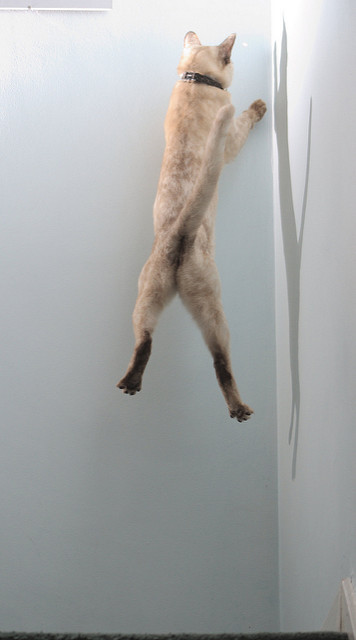
Adrian Midgley captures “Pekoe” defying gravity to catch that $&#% dot.


An author in search of a publisher often feels like a cat trying to catch a laser pointer. The target moves up the wall, down the stairs, sideways, backwards, and spins you around in circles. Even when you’re lucky enough to catch one (either a laser dot or a publisher), it can vanish without warning.

What’s a cat—or an author—supposed to do to keep up to speed?

In a constantly changing market, below are several recent developments affecting mystery presses:

Midnight Ink – The October, 2018 announcement that Midnight Ink would shut down came as a big shock to authors and employees alike. The respected crime fiction imprint was established in 2005. According to a Publisher’s Weekly article in November, 2018, the Minnesota-based publisher Llewellyn withdrew from the fiction market to concentrate on nonfiction, leaving MI out in the cold.

Spokesperson Kat Sanborn said:

“We had good reviews, but the sales just weren’t there for [Midnight Ink],” Sanborn said, noting that the 250 backlist titles will remain in print, and that frontlist will be marketed and promoted as usual. “We’re just not accepting new manuscripts,” she said.

Twenty titles that were already in progress will be rolled out during spring/summer 2019.

Three MI editors were laid off, including Terri Bischoff, who didn’t stay unemployed for long, landing on her feet with a new gig at Crooked Lane Books. She is now Senior Editor at CLB, a crime fiction publisher founded in 2014.

Several orphaned MI authors have found new homes at Crooked Lane, Severn River Publishing, and Seventh Street Books.

~~~~~

Seventh Street Books – SSB is undergoing changes as well with a new owner. Formerly owned by Prometheus Books, in November, 2018 SSB was bought by Start Publishing. Dan Mayer remains as Editorial Director.

Publisher’s Weekly reported:

“Prometheus Books sold its two genre imprints to Start Publishing. Publisher Jonathan Kurtz explained the sale by saying he wanted to return the publisher to its nonfiction roots. Prometheus expanded into fiction in 2005 with the launch of Pyr, which focuses on science fiction and fantasy novels. In 2011, it added the crime fiction imprint Seventh Street Books. Pyr has a backlist of 170 titles, and Seventh Street’s backlist stands at about 90.”

~~~~

Poisoned Pen PressIn December, 2018, Publisher’s Weekly announced the acquisition of PP by Sourcebooks:

“Sourcebooks has announced that it has acquired most of the assets of Poisoned Pen Press and that the award-winning crime and mystery publisher will become Sourcebooks’ mystery imprint.”

The staff, including PP’s founder Robert Rosenwald and Editor-in-Chief Barbara Peters, will reportedly stay on and become Sourcebook employees. The offices remain in Scottsdale, AZ.

~~~~

Kindle Press – The Amazon imprint stopped accepting new submissions in spring of 2018, leaving me and a hundred or so other authors orphaned.

~~~~

I’ve been looking for a new house since then and have received offers from several well-known publishers like Fly-By-Night Press and No-Advances-R-Us, LLC.

Which raises the question: how does an author find a reputable house that’s likely to be in business for longer than it takes the ink to dry on the contract?

The answer is research. Vetting publishers sounds daunting but here are three shortcuts:

#1  Mystery Writers of America – MWA regularly updates their list of approved publishers. To be included on that list, a press must adhere to “professional standards of good business practice and fair treatment of authors.”

Here’s a partial list of qualifications:

  • Must be in business for at least two years;
  • Must have paid a minimum of $1000 within the past two years to at least five authors who are not owners of the company;
  • Must have published at least two works of crime-related fiction or nonfiction in the past two years;
  • Must meet other standards outlined in MWA’s Approved Publishers Guidelines.

#2  Writer Beware – a great watchdog website that alerts writers to scams, cons, questionable business practices, and outright fraud. Although affiliated with Science Fiction and Fantasy Writers of America (SFWA), their investigations and warnings cover all genres. Writer Beware is the first place I research a publisher.

#3  Ask other authors – Gone are the days when an author stayed with the same house for his/her entire career. In the past couple of years, Big Five houses decided to focus on blockbusters, pretty much to the exclusion of mid-list authors. As a result, many popular authors were dropped even though they had successful series.

Fellow writers/orphans are often willing to share their war stories about publishers.

Some authors have gone on to work with smaller presses. I know a few who now have contracts with several different houses at the same time.

Others decided to indie-publish or go hybrid.

The Authors Guild features a Back-in-Print program for previously published books where the author has gotten the rights back. For a fee, AG will assist in converting to new formatting for re-release as ebooks and/or print on demand (POD) hard copies. They also help with distribution.

When a publisher makes you an offer, the legal department of the Authors Guild will review and analyze the publishing contract. That single service makes their $125 membership fee worthwhile. Fly-By-Night and No-Advances-R-Us offered me contracts which I sent to AG’s attorneys. They helped me make the informed decision to say, “Thanks but no thanks.”

And now, if you’ll excuse me, I have to go chase that little red dot that just flickered across the ceiling . . . . . . . .


TKZers, do you have a favorite news source that keeps you up to date on the publishing industry?


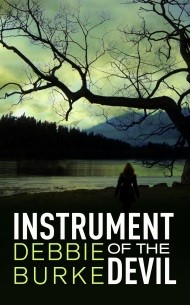
Even though Debbie Burke is an orphan, her thriller Instrument of the Devil is still available here.

Citizen’s Police Academy

My local police department runs an annual citizen’s academy designed to provide insight into the operation of local law enforcement and (I suspect) as a way of counteracting some of the many misconceptions that abound about the police. This year, despite the fact that I don’t write contemporary mysteries or police procedurals, I decided to enroll – figuring, hey you just never know (research is research after all, and inspiration can strike anywhere, anytime!). This free program is 12 weeks long (yes, you read that correctly!) and for three hours each week we learn about the whole range of operations: from patrol procedures, evidence/crime lab and computer forensics, investigations, 911 center operations, to the K9 unit, traffic and the local jail. We also get CPR certification as well as a firearms training (which should be interesting given how gun-averse I am!) and a chance to do a ride-along as well as a 911 ‘sit-along’.

Last week we had our session with one of the current patrol team leaders and it was already an eye opener for me – both in terms of the the range of calls they handle and the amount of equipment they have on hand to deal with these. All the patrol officers in our local police department undertake their own (non-felony) investigations and have facial recognition software as well as fingerprinting and DNA kits in their patrol cars. They also all carry drug testing equipment as well as Narcan (which is a sad reflection of the opioid crisis in America today). Even in our relatively safe community they have to be prepared to respond to active shooter calls and SWAT team situations. It sounded to me like one of the greatest challenge for a patrol officer today is handling the stress/mental health challenges of dealing with such a wide range of calls – one minute you could be dealing with a teenage suicide, the next a coyote attack, then a routine traffic stop, followed by a stolen vehicle report, a drug overdose, and then a call like the Aurora theater shooting. Another key takeaway (for me) was that law enforcement is nothing like it’s depicted on TV or in the media. So if that’s the case, how do I make sure I don’t fall into the same trap (if I ever do decide to use this as research for a novel)??

I’ve already lined up a 3 hour Friday night ride-along with one of the female patrol officers which I’m pretty excited about – I specifically asked for a female patrol officer because I know I lean towards strong female protagonists in my books. However, I’m used to writing about women who lived 100 years ago…so where do I start getting into the mindset of a modern day female police officer?

This is where I want to get input from you, my knowledgable TKZers!  What do you think are some of the biggest misconceptions about the police in books/media today? What mistakes do you see often in mystery novels about local law enforcement? What questions would you ask a local female patrol officer if you were doing a ride-along?


How Long Should A Sentence Be?

by James Scott Bell
@jamesscottbell

Riffing off of Kris’s post on paragraphs and pacing, I want to drill down into the length of sentences. Kris touched on it, quoting Ronald Tobias: “Short sentences are more dramatic; long sentences are calmer by nature and tend to be more explanatory or descriptive.”

We all know thriller writers favor short sentences. And maybe today, as attention spans constrict ever … Squirrel! … more, all genres (save “literary”) may lean toward lean.

But an intriguing article over at Literary Hub makes an impassioned plea for the “long and complicated sentence.” The author, Joe Moran, writes:

The style guides say: keep your sentences short. Write cleanly, cut as many words as you can, and don’t overburden your reader’s short-term memory by delaying the arrival of the full stop. But sometimes a sentence just needs to be long…

A long sentence should exult in its own expansiveness, lovingly extending its line of thought while being always clearly moving to its close. It should create anticipation, not confusion, as it goes along. The hard part is telling the difference between the two…A long sentence can seem thrillingly out of breath, deliciously tantalizing, so long as we feel the writer is still in charge…

Every writer is a poet by default and every sentence a little poem. The longer the sentence, the more closely it resembles poetry, or should do.

That last point reminded me of what the great John D. MacDonald once said he strived for. He wanted “a bit of magic in [the] prose style, a bit of unobtrusive poetry. I want to have words and phrases that really sing.”

MacDonald was clear, however, that he wanted those sentences to serve the story, never yank the reader out of it. That’s the essential principle in my view. The prose is the servant of the story, not the other way around.

Moran goes on:

For the American writing teacher Francis Christensen, learning to write was also about learning to live. He believed that teaching his students how to write a really great long sentence could teach them to “look at life with more alertness.” It should not just be about ensuring that the sentence is grammatically correct, or even clear. The one true aim, he wrote, was “to enhance life—to give the self (the soul) body by wedding it to the world, to give the world life by wedding it to the self.” He wanted his students to become “sentence acrobats” who could “dazzle by their syntactic dexterity.”

I agree that a great long sentence should be a look at life with more “alertness.” But you have to watch it with the “dazzle” part. You don’t want the reader stopping to think, Who does this joker think he is? Just get on with it! As Moran rightly notes:

A long sentence too should be a beautiful, indelible gift. It should give pleasure without provisos, not buttonhole and bedazzle the reader with virtuosity.

The way to do that is to make sure the sentence is consistent with the narrative voice.

But suppose you write in a lean, mean style. Would there ever be occasion for you to consider a long sentence? Yes—to show us the inner life of a character in moments of high emotional intensity. For example:

Horace McCoy

Horace McCoy was one of the great noir pulp writers, part of the Black Mask crew. His most famous novel is They Shoot Horses, Don’t They? He had an innate power in his prose, and most of the time it’s as hardboiled as a twenty-minute egg. But every now and then he’ll pull you in with style for the purpose of illustrating heightened emotion.

Here is a passage from his 1938 novel, I Should Have Stayed Home. We’re in the first chapter, and desperation is squeezing the narrator, a struggling actor in Hollywood. He’s been cooped up all day in his little apartment and has to get out. He charges out into the night. Note how the sound of the sentences gives the impression of someone walking fast and agitated.

On Vine Street I went north towards Hollywood Boulevard, crossing Sunset, passing the drive-in stand where the old Paramount lot used to be, seeing young girls and boys in uniform hopping cars, and seeing too, in my mind, the ironic smiles on the faces of Wallace Reid and Valentino and all the other old-time stars who used to work on this very spot, and who now looked down, pitying these girls and boys for working at jobs in Hollywood they might just as well be working at in Waxahachie or Evanston or Albany; thinking if they were going to do this, there was no point in their coming out here in the first place.

The Brown Derby, the sign said, and I crossed the street, not wanting to pass directly in front, hating the place and all the celebrities in it (only because they were celebrities, something I was not), hating the people standing in front, waiting with autograph books, thinking: You’ll be lighting for my autograph one of these days, missing Mona terribly now, more than I had all afternoon, because passing this place that was full of stars made me more than ever want to be a star myself and made me more than ever aware of how impossible this was alone, without her help.

Not only does this provide a window into the narrator’s inner life, it also weaves in the description of place and a bit of exposition, too. Triple duty.

So don’t be afraid to expand the occasional sentence if the moment is right. If it doesn’t work out, you can hit the delete key. But if it does work, you’ve hit the delight key—for you and the reader both.

READER FRIDAY: Share How You’ve Used Family & Friends for a Book Plot

After Sue Coletta’s post “When Real Life Collides with Fiction,” I wondered how many other TKZ members have stories about the many ways an author can abuse family and friends for the sake of a book. I’ve heard of wild stories at writer conferences where authors talk about staging a crime scene using friends as attackers & victims or cornering a relative to brainstorm a murder over Thanksgiving pumpkin pie.

In what ways have you used the people in your life for research or to develop a book plot?

Introducing TRUE CRIME THURSDAY

by Debbie Burke

@burke_writer

Welcome to True Crime Thursday, a new feature on TKZ. The fourth Thursday of each month will showcase:

  • Interesting, unusual, or bizarre crimes;
  • Legal developments;
  • Colorful criminals whose antics boggle the mind.

Photo courtesy of Pixabay

A real-life incident just might inspire the plot for your next novel.

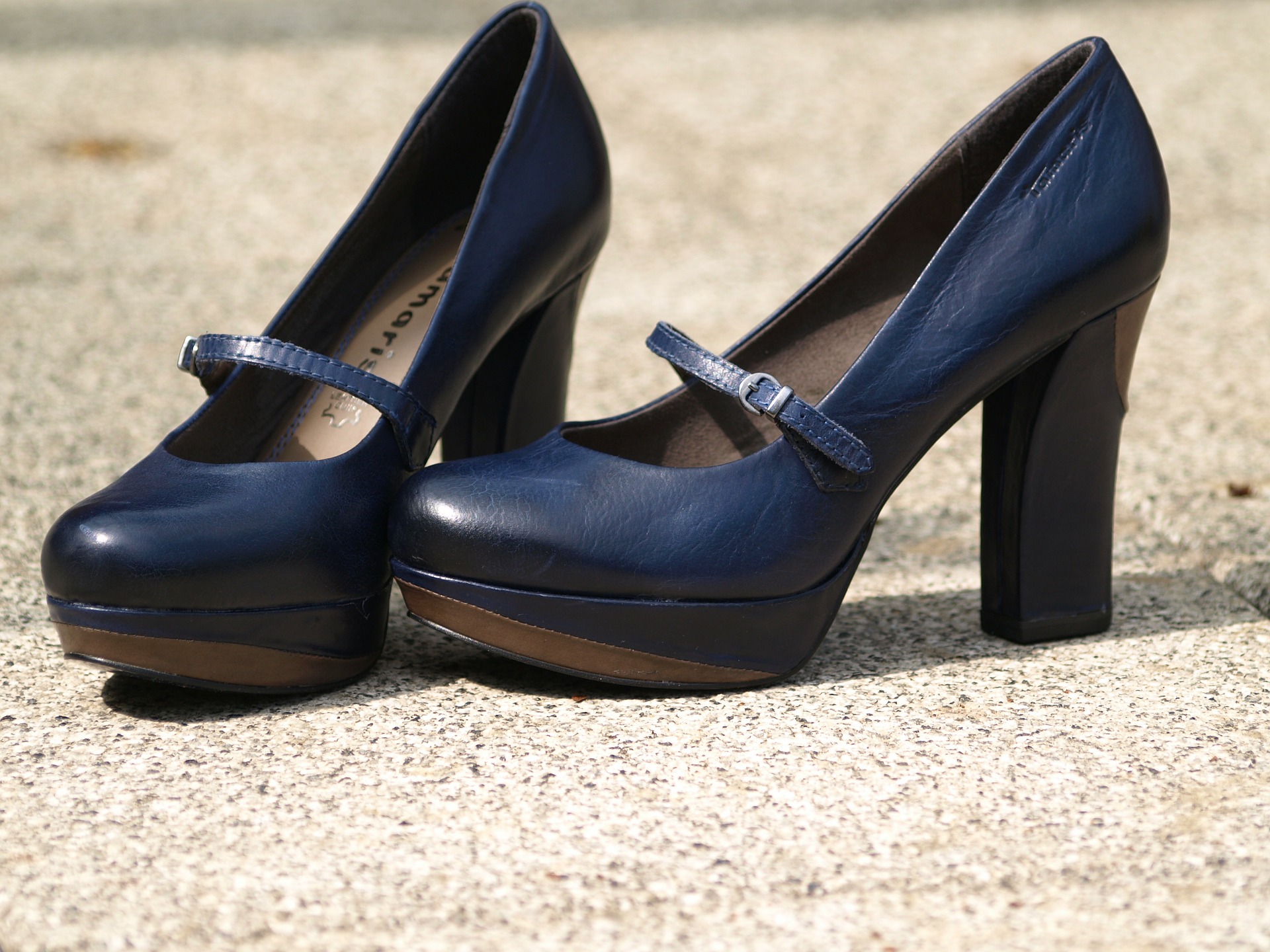
To kick off True Crime Thursday, check out the lady who thought her high heels were a good hiding place for cocaine


The Page Proof Nightmare

By John Gilstrap

[COMMERCIAL: The latest video on my YouTube channel is all about sex, violence and bad language in fiction.]

In the traditional publishing world, milestones define the production cycle of a book.  You turn in the manuscript, then you get the global edit from the editor.  Next come the larger structural changes and you turn those in.  Copy edits are next, those niggling little change-which-to-that kinds of changes.  (Or why did-that-guy’s-name-change-between-Chapter-Four-and-Chapter-Fifteen kinds of changes.)

The final step is the one I hate–the page proofs.  That milestone is my last shot at making sure that the book is exactly what I want it to be.  Did the copy edits I rejected make it through anyway?  Have any other errors made it through?  Does the plot really make sense?

For me, this is a staggeringly stressful process.  First of all, I suck as a copy editor.  I’m not a details-oriented reader.  Once I get lost in the “fictive dream” (thanks for the phrase, Brother Bell), I don’t see the little stuff.  So, for the page proofs, I have to force myself to . . . Read.  Every.  Word.  It takes forever.

I hate page proofs.

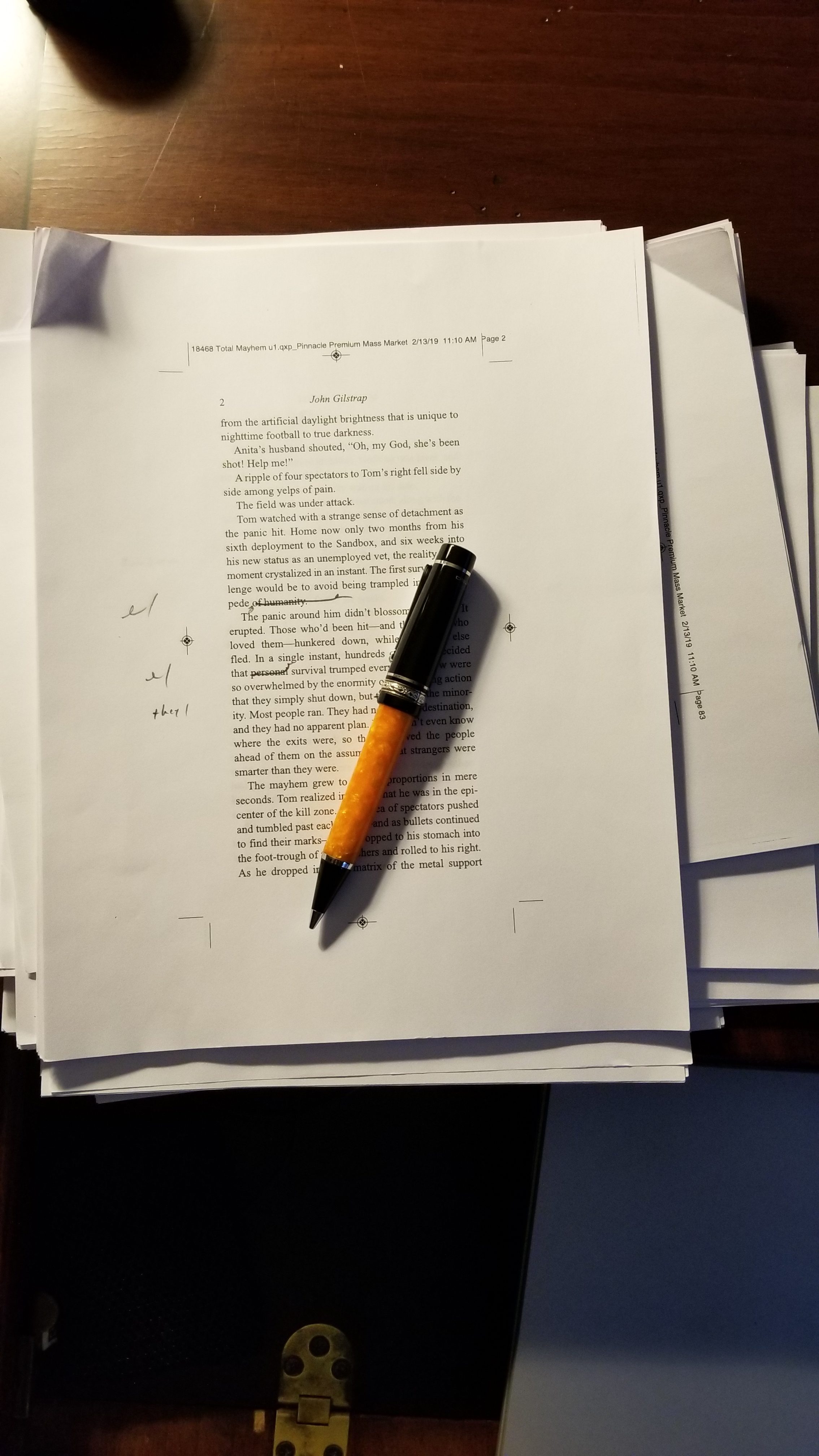
My beloved Delta mechanical pencil sits atop the dog eared pages where I made changes.

But it helps a little to have traditions in place to get me through.  It starts with the Delta mechanical pencil.  I’m a fountain pen purist when it comes to hand writing my manuscripts, but for me, editing must be done with a pencil.  This Delta pencil has been my go-to editing instrument for at least the last 15 books.  I like the weight of it, the balance.  And it will always write, irrespective of the angle, whether I’m sitting upright or reclining in a chair.

I grab a hunk of pages and start reading.  Where I note a change, I dog ear that page, but all the pages have to stay in order for a while because it’s not unusual to have to refer back.

After Lord knows how many sessions of detailed reading of a story I am sooo sick of reading, I finally reach the last page.  I turn it over and put it atop the 500-page mound of paper.  In the case of the latest of the Grave novels, Total Mayhem (July 1, 2019), whose page proofs I finished just this morning, I had marked changes on 90 of the book’s 480 pages.

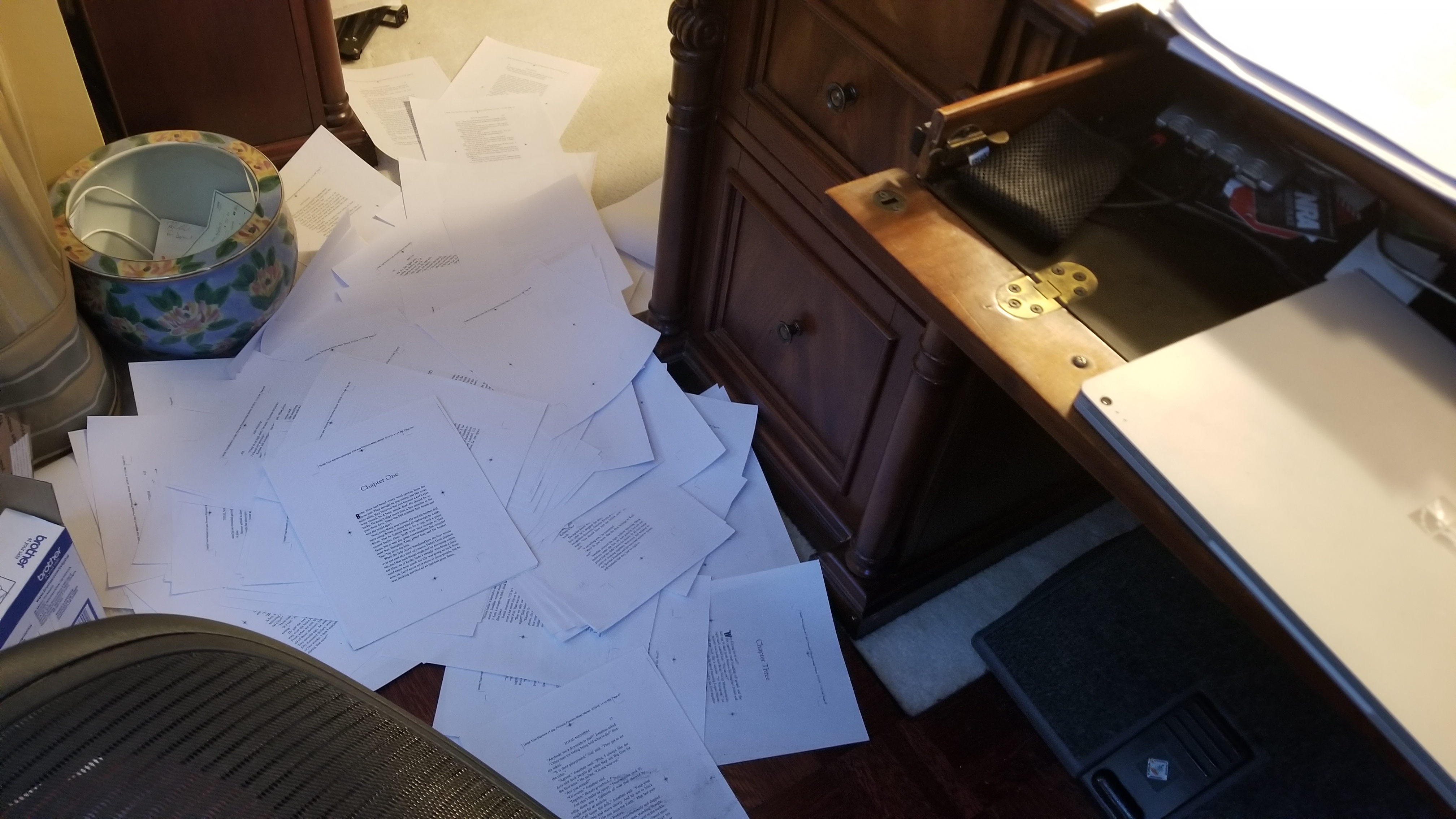
The good pages get tossed to the floor for recycling.

Those pages go to my office, where I sit at my desk and take a last look at every page.  (I can’t count on myself to have dog eared every page where I’ve made a change.)  The clean pages get tossed on the floor, and I stack the edited pages into a new pile.  That pile then gets separated into mini-stacks of ten pages each.  This morning, I scanned the stacks into my computer as PDFs, and then I emailed the PDFs to the production editor at Kensington.

So now it’s official.  Total Mayhem is in the can.  I couldn’t change a word of it even if I wanted to.  The good news is that I really like the story.  Now I just have to deliver two new manuscripts in the next 12 months.  (Yes, I’m out of my mind.)

So, TKZ family, are there parts of the writing/editing/production process that you hate?  Parts that you love?

Final note: Today is my birthday!  As you read this, I be getting prepped for/undergoing/recovering from an epidural injection in my cervical spine to relieve the pain of a pinched nerve.  I expect to be fine, but my responses here might be slow.  Do I know how to celebrate or what!

Pacing and Spacing:
The Power Of Artful Paragraphing

“All my stories are cinematic…every paragraph is a shot.” — Ray Bradbury

By PJ Parrish

The woman in my workshop had a question. I didn’t have an answer.

“How long should my paragraphs be?” she asked.

In years of teaching writing workshops and doing too many critiques to count, I had never really thought about that. I weaseled my way through the answer, saying that it was a feeling of sorts, that you just had to trust your instincts, find your style. More word gumbo about gotta have rhythm and there were no rules…

It wasn’t until I got home from the conference that I remembered Ray Bradbury. I had lost his book Zen In the Art of Writing years ago, maybe had lent it to someone. But I sorta remembered he mighta maybe said something about paragraphs. So I got a new copy of the book.  Here is what he said in his essay “Shooting Haiku in a Barrel.”

“All the paragraphs are shots. By the way the paragraph reads, you know whether it’s a close-up or a long shot…I may be the most cinematic novelist in the country today. All of my short stories can be shot right off the page. Each paragraph is a shot.”

I didn’t realize that his idea that each paragraph of a story was a camera shot had been the basis of my own writing for decades. It was a sub-conscious thing. Or was it? Was hitting the ENTER key actually a conscious choice? I dug deeper and found Joyce Carol Oates:

One of the qualities of writing that is not much stressed is its problem-solving aspect, having to do with the presentation of material: how to structure it, what sort of sentences (direct, elliptical, simple or compound, syntactically elaborate), what tone (in art, “tone” is everything), pacing. Paragraphing is a way of dramatization, as the look of a poem on a page is dramatic; where to break lines, where to end sentences.

Which led me to Ronald Tobias’s “The Elements of Fiction Writing: Theme & Strategy,”

The rhythm of action and character is controlled by the rhythm of your sentences. You can alter mood, increase or decrease tension, and pace the action by the number of words you put in a sentence. And because sentences create patterns, the cumulative effect of your sentences has a larger overall effect on the work itself. Short sentences are more dramatic; long sentences are calmer by nature and tend to be more explanatory or descriptive. If your writing a tense scene and use long sentences [me here: or long paragraphs], you may be working against yourself.

Then I thought, maybe we should ask a lawyer.

(Pause while I wait for you to stop laughing).

If you’ve ever tried to read a legal brief, you know about bad writing. But here are two pretty decent lawyers on the subject of pacing:

We simply don’t have time to ferret out one bright idea buried in too long a sentence. — Justice Ruth Bader Ginsburg.

You want [a brief] to be a little bit of a page turner, to have some sense of drama, some building up to the legal arguments. — Justice John Roberts

Maybe it was all those piano lessons, but when it comes to pacing, I always used to think of writing in musical terms. Composers use punctuation to speed up or slow down pace and musicians use types of “articulation” to enhance whatever mood they are going for — intense? dangerous? romantic? thoughtful?

Sound familar? Good writers have similar tools — punctuation, length of sentences and paragraphs (short and choppy or longer and measured?) to create an emotional response in their readers. The best writers understand this not only creates emotion, it provides variety on each page and over the whole book.

But pacing is also a visual thing. Which brings us back to the humble ¶.  Which has, I just found out today, a fancy name — the pilcrow.  I don’t think most writers devote enough brain power to the pilcrow. But to my mind (and eye) it is a potent little tool that can really help you pace your story.  How many paragraphs you use per page, and how long or short your paragraphs are should be conscious choices you make. Consider this:

Fragments, the length of sentences, punctuation, and how often you paragraph can all work to give a particular pace. If you really think about, you’ll realize that you can use sentence and paragraph structure to create a feeling of speed or slowness, depending on what kind of emotional response you want to induce in your reader.

Or how about this:

Think of it! You can move a reader through a story fast. Their hearts will race!

Or you can slow them down and make them use their heads.

It’s all in how your sentences look on the page.

The same thought but expressed two different ways. The first is measured, more academic in pace, meant to make you slow down and digest the thought. The second is lively and urgent, making you anticipate an important climax-point. Neither is correct. They are just two different styles of pacing, word choice, sentence length and paragraphing to different affect. Here’s another example from a real novel:

There was less than an hour of daylight left, and Louis had the thought that maybe they could set up roadblocks and operate them through the night. But even as that thought moved through Louis’s mind, so did doubt. Maybe they were just chasing air. And if they were, he couldn’t help but worry about his future, and that of his boss, Captain Steele.

Louis heard a sudden rustling in the trees. He drew his Glock, but all he saw was a squirrel scampering across a fall log and leaves skittering in an eddy of wind. But then he heard something else. What was it? A voice? Shut, shut, shut…

What was he hearing? Was it real words or was it just the freakish whistling sound of the wind in the iron train trestle below? The sound came again. Shut up…

He could tell now it wasn’t the wind. It was real words, someone talking. Suddenly, two men bolted from the trees near the entrance to the trestle. One was dressed in camouflage, and the other man was wearing dark pants and a yellow dress shirt. The men ran away, stumbling toward the trestle in a clumsy run, with one man pulling the other man along.

“Captain Steele!” Louis shouted.

Compare that to this version:

They had less than an hour of daylight left. Maybe they could set up roadblocks and operate them through the night. But Louis had his doubts. Maybe they were just chasing air. And if they were, he couldn’t stop thinking about his future. And Steele’s.

A rustle in the trees came to him on the wind.

Louis drew his Glock and turned, scanning the brush. A squirrel scampered away. Leaves skittered across the path.

Then something else…a voice?

Shut, shut, shut…

Words? Or was it just the freakish whistle of wind in the iron train trestles below?

The sound came again.

Shut up…

No wind. Real words. Louis spun.

Two men bolted from the trees. One in camouflage, the other in dark pants and yellow shirt. They stumbled toward the trestle in a clumsy run, one pulling at the other.

“Captain!” Louis shouted.

The second one is from our most recent Louis Kincaid thriller The Damage Done as it actually appears on the page. The first one I rewrote to make it purposely turgid. Why is the second one better? Lots of reasons. First, we’re at the climax, deep into an action scene. We’re deep in Louis’s point of view (where we should be). It’s cold, getting dark, everyone’s on edge. Louis’s adrenaline is pumping. We need you to feel that.  So we need you to read fast.  We kept every sentence as short as possible to simulate Louis’s nervous thoughts.  We have eliminated every descriptive word possible because this isn’t the moment to be “writerly” about wind eddies, squirrels or even the fact the man is wearing a dress shirt (it registers to Louis only as a flash of yellow.) We don’t even need to repeat the captain’s name in the last line because in this frantic action, Louis would just yell out “Captain!”  And we kept the paragraphs as short and punchy as possible.

Now, notice how each scene looks on the “page.”  As I said, writing is aural, but it’s also visual. Why?

  • Too many long paragraphs per page are hard on the eye. It can read “old-fashioned” or worse, “textbook.” Long graphs worked for Dickens and Bronte. Not so well for today’s mysteries and thrillers.
  • White space on a page spells relief. It balances the larger blocks of expository writing. If you don’t believe me, ask any artist about the value of negative space. Or go read Elmore Leonard.  Dialogue provides “white space.”
  • Paragraphs pack emotional punch. Longer ones make the reader slow down, which you want them to do at times. But short paragraphs, say for an action scene, quicken the pace and the reader’s pulse.
  • And something to consider: Ebooks are often smaller in format than tree books, often giving the illusion of a blockier text per page.

Last week, one of our First Page Critique folks submitted his sample called Samuel’s Mine.  It got some good reviews, and I liked it as well. But I thought it could have used some judicious paragraphing, so I asked the author for permission to re-run it here as a lesson.  Here is how he wrote it:

CHAPTER ONE

Oddly enough her fingernails were left unbroken. Each nail remained intact, as sharp and fresh as they had been right before Julia went to sleep. The bright pink polish now served as a beacon of hope in this otherwise despondent room. She looked around, unbelieving, and still trying to figure out the situation. How did she get here? Where is here? She remembered talking to Jacob on the phone. She remembered painting her nails sitting on the edge of her bed. All else was a fog, like unrecognizable shadows in the poorly lit recesses of her brain. Something was there but yet nothing.

She turned her head. Her neck seized instantly with stiff pain. Oh dear Christ! A thick perspiration began its slow descent down her forehead. She lay across the floor with a dull but growing pounding building inside her head. She rarely got headaches. I fell, she thought. The fog in her head was drifting away as her surroundings grew clearer. I fell..how could I fall? Sharp jabs of pain filled her upper body. No, No, I couldn’t have. This isn’t right. She winced while moving her head to the left. The room was dark and she could smell mildew. The perspiration slid a smooth path down her face although a chill ran through her. The fog finally lifted from her head leaving the remnants of ache and confusion. How did I get on the floor?

Her body shuttered, skin prickled, as a chilling draft surfaced. She could hear the faint shuffle of footsteps above her. Julia’s legs; however, were cramped and stiff pressed on the cold floor. In fact, the floor she was on was not a floor, but rather stones. She can see them now – large cobblestones like the ones that used to line the streets in the City. They were now biting against her body and left prickles on her skin. Goosebumps. This is not right. She scanned the room fighting the ache, unknowing where she was. Stone block walls now came into her ever-strengthening sight. And that smell was more than mildew, but what?

The thick moisture moving down from her brow found her parched lips and with a fine swoop of her tongue, Julia tasted it. At first the sheer moisture was soothing to her mouth, but shortly the taste surfaced. It was not sweat. This tasted coppery. She had her fair share of fights and busted her lip a few times playing hockey. Julia was tough and knew this taste well. It was the taste of blood.

Now I’m going to simply delete a few words and sentences and add more paragraphs:

CHAPTER ONE

Oddly enough her fingernails were left unbroken.

Each nail remained intact, as sharp and fresh as they had been right before Julia went to sleep. The bright pink polish was like a beacon of hope in this dank and dim room.

She looked around, trying to figure out the situation. How did she get here? Where is here? She remembered talking to Jacob on the phone. She remembered painting her nails sitting on the edge of her bed. All else was a fog, like unrecognizable shadows moving through her brain. Something was there, yet nothing was there.

She turned her head. Her neck seized up with pain.

Oh dear Christ!

She was laying down, her legs were twisted painfully underneath. A dull pounding was building inside her head. 

I fell…

The fog in her head was drifting away as her surroundings grew clearer. 

How could I fall? No, No, I couldn’t have. This isn’t right.

She slowly moved her head to the right, wincing. Now she could see that the walls were made of stone. And she could smell something awful, worse than mildew. Sweat slid down her face even as a chill ran through her. She became aware of the coldness of the floor beneath her. She reached out and felt it. No, not a floor — rough, more like cobblestones.

She heard the sound of footsteps above and lay still, holding her breath.

The sweat was moving down her cheek. Her parched lips parted and she tasted it.

Not sweat. It tasted…metallic, like copper.

Then she knew. She had busted her lip a few times playing hockey. It was blood. Her own blood.

Notice how the first version LOOKS on the page. Each paragraph is of almost equal weight. Why did I add these graphs? Well, this is an action scene, quiet though it is. We want to feel the tension. The woman is just gaining consciousness so her thoughts should be fuzzy and fragmented, so the pacing should reflect this “dreamy” state of mind. To enhance the intimate point of view, her thoughts should be paragraphed and italicized rather than imbedded in the narrative and attributed with “she thought.” Notice, too, how more urgent the second version looks on the page. And there are a couple of cool moments that just need to stand out on their own.  Like the first image of the fingernails and the last image of her blood.  If you land upon a good image, sometimes you need to let it sing solo high in the trees.

Now, I am not saying my version is the best, because paragraphing also goes to the point of individual style. And some writers have a more legato (connected) style while others favor more staccato (shorter and punchier).  But I do think good pacing is a combination of both. You gotta know when to hit ENTER.

Because, as Ray Bradbury said, each paragraph is a mini-scene and when you hit ENTER you are helping your reader enter a new scene, thought or action. I’ll leave you with one more example. It’s from one of my favorite opening pages from a novel.

PART I

It was a pleasure to burn.

It was a special pleasure to see things eaten, to see things blackened and changed. With the brass nozzle in his fists, with this great python spitting its venomous kerosene upon the world, the blood pounded in his head, and his hands were the hands of some amazing conductor playing all the symphonies of blazing and burning to bring down the tatters and charcoal ruins of history. With his symbolic helmet numbered 451 on his stolid head, and his eyes all orange flame with the thought of what came next, he flicked the igniter and the house jumped up in a gorging fire that burned the evening sky red and yellow and black. He strode in a swarm of fireflies. He wanted above all, like the old joke, to shove a marshmallow on a stick in the furnace, while the flapping pigeon-winged books died on the porch and lawn of the house. While the books went up in sparkling whirls and blew away on a wind turned dark with burning.

Montag grinned the fierce grin of all men singed and driven back by flame.

That’s the opening to Ray Bradbury’s Fahrenheit 451. I love the way the first line sits there all alone, like a roadside sign that you’re entering hell.  I love the juxtaposition of the next long graph with its gorgeous imagery and the nonchalance of the unnamed man. And then, a third paragraph that bam! gives us our arsonist-star by name. I love the way this page looks and sounds. Bradbury could have made this all one graph. But no, he chose three.

That, folks, is master pilcrowing.


Wounded Writer Syndrome

By Sue Coletta

Being a writer can be traumatizing.

Back in October I finished writing Silent Mayhem, a book that deeply affected me.

Sure, I was passionate about the story — I wouldn’t have written it otherwise — but it morphed into more than that; it slashed open another part of me.

I’m still not sure if I’m feeling my own emotions or my character’s, the line between reality and fiction blurred beyond a rational explanation.

While writing, I became the vessel and something else inside me wrote the story, my soul taking it places I hadn’t foreseen in the planning stage. This sounds like a good thing on the surface, but something occurs in the story that wounded me on such a deep personal level. Was it the best thing for the Mayhem Series? Absolutely. This series of events became the catalyst for the next book. And yet, I was still grappling with how to move past it.

The holidays rolled around, and I reverted back into my happy-go-lucky self again. During that time, I started writing Book 4 of my Grafton County Series, but even this new storyline pierced several layers of my heart, illuminating the fact that I may never escape emotional turmoil.

Fast-forward to the beginning of February. My publisher and I worked with the cover designer for Silent Mayhem. On the day the final cover popped into my inbox, my editor sent back the first round of edits.

No big deal, I told myself. I’m a professional. I’ll just leapfrog into the story, bang out the edits, and then plunge back into my WIP. Easy peasy, right?

Wrong.

I read the story one last time from start to finish, making my corrections along the way. Well, I soon found myself in the same quandary, the storyline almost crippling me emotionally.

Friday night I finished my edits and had planned to reopen my WIP on Saturday morning, but as I sat at my desk, I wasn’t able to let go of Silent Mayhem, the storyline tearing open scars I didn’t even know existed. No matter how hard I tried, I couldn’t shake off the emotional upheaval. This isn’t the first time it’s happened, either. Unlike before, though, I don’t have the luxury of processing my feelings ad nauseam, or even take a well-earned break. Grafton County, Book 4, is due in March.

So, what do you do? Exercise, read, watch a movie … anything to take your mind off the story, right? But what if you still can’t flip the emotional switch to off?

I turned to our ol’ friend Google for the answer. Surely other writers have experienced the same thing. One brave soul must have written about it, right? Surprisingly, I couldn’t find one post. Not one! I read about specific emotions that may lie at the heart of my unrest … grief, betrayal, uncertainty, vengeance, etc. etc. But nowhere could I find advice on this topic as a whole.

What would you even call it, Wounded Writer Syndrome?

Psychology Today has a fantastic article about trauma and how writing about it can help heal us. Writer’s Digest also advocates using a traumatic experience to fuel our writing. Harvard Medical School uses the term “expressive writing” when writing becomes cathartic after a difficult life event. But what if writing caused the trauma?

After a lot of soul-searching, I came up with my own way of coping.

The first step is the hardest of all. It requires us to delve deep within our psyche and unearth the root cause. At what point in the story did our emotions entangle with the character’s? Where did we lose control? Is there a certain scene or chapter that arouses a physical reaction, like crying, shaking, or squirming in the chair? If we’re able to pinpoint the exact moment that first had a profound effect on us, the healing process can begin.

Expressive writing may hold the key to healing a wounded writer’s soul, even if the trauma’s self-inflicted. Expressive writing is also beneficial to our overall well-being. Researchers studied the effect of expressive writing on everything from asthma and arthritis to breast cancer and migraines.

They conducted a study in Kansas, where women with breast cancer experienced fewer symptoms and went to fewer cancer-related appointments in the months following expressive writing. The aim of the study wasn’t to combat the disease, and the authors of the paper don’t claim the actual cancer cells were affected. However, the study shows other aspects of the women’s health improved faster than the control group, who merely stated facts rather than expressing the emotional impact of the disease.

From BBC.com

What does the act of committing words to paper do? Initially it was assumed this simply happened through catharsis, that people felt better because they’d let out their pent-up feelings. But then Pennebaker began looking in detail at the language people used in their writing.

He found that the types of words people used changed over the course of the four sessions. Those whose wounds healed the fastest began by using the word “I” a lot, but in later sessions moved on to saying “he” or “she” more often, suggesting they were looking at the event from other perspectives. They also used words like “because”, implying they were making sense of the events and putting them into a narrative. So Pennebaker believes that the simple act of labelling your feelings and putting them into a story is somehow affecting the immune system. 

I propose the same holds true for those of us afflicted by Wounded Writer Syndrome. Find the exact moment in your story and write about how that scene, or scenes, affected you, the writer. At that point, we can then piece together our shattered spirit … just in time to traumatize ourselves all over again with the next book. 🙂

Have you experienced Wounded Writer Syndrome? What are some ways that helped you heal?