When Verbs Go Rogue: First Page Critique

Another brave writer submitted their first page for critique. My comments will follow.

Monstruo Cubano

Once inside La Libreria de Juan Carlos, Brook Harper squeaked in horror. She gaped at the rows of mildewed shelves lined not with books, but broken dishes and food encrusted utensils.

Venturing several steps further inside, Brook recalled the colorful display boasting overpriced tourist maps and Spanish-English translation books at the Miami Airport several weeks prior, and scanned the shelves for any hint of a travel section. Instead she discovered old soda cans and chewed apple cores had been tucked into the front window, obscuring the outside world with a thick layer of grime.

Brook hurried through an aisle, determined to inquire about a beginner’s Spanish book, but leapt wildly into the air. A hole in the crumbling wall revealed a nest of swarming cockroaches.

Brook skittered backwards, knocking into a shelf and sending dishes flying. Desperately searching for the exit, she spotted “SALIDA” over a doorway across the room, and bolted.

Sprinting down the aisle, something caught Brook’s foot and she was sent sprawling on the filthy floor. Scrambling upright, Brook saw a heap of crusty laundry. Peering closer, Brook shrank backwards as the rags sprang to life and eyes glared out.

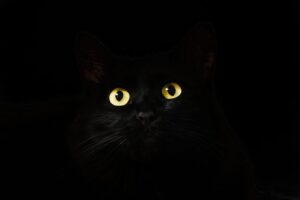
Brook launched herself over the mangy cat and darted down another aisle. Soon she was sidestepping dozens of cranky felines, while her eyes watered from the lethal stench.

She rummaged in her handbag for a handkerchief, but found none. Instead she settled for her sleeve and groped along the wall, swiping at hissing tabbies and the foul air, until she had reached the shop’s back hallway.

Brook sprang over the last few cats and then let out a blood curdling scream. An enormous man leered over her. His girth topped his height by twice, and nearly a foot of it peeked out from underneath his soiled shirt on which a tiny badge was pinned deeming him the shopkeeper.

Juan Carlos’s bloodshot eyes were fixed on Brook, while his yellow teeth gnashed menacingly and his hair was slicked into an oily ponytail.

He reached out a greasy hand and thrusted a sign reading “Cookbooks, 2 for 1” at her.

“I’m sorry, I – I gotta run,” Brook choked out as she hurdled through the door, trampling a cat.

Brook burst into the scorching, bustling streets of Old Havana, and doubled over at the waist, sucking in the sweet smell of briny sea and exhaust fumes that were delightfully feline free.
Thank you, Brave Writer, for submitting your first page. A public critique takes guts, and I admire your courage.

From this small sample I assume s/he is just beginning their writing journey. So, TKZers, please be gentle and kind in your comments and suggestions (I know you will).

With that in mind, I offer the following critique.

Using a foreign language on the first page is a huge risk. As someone who doesn’t speak Spanish, my eyes glazed over when I read the title of the library. It wasn’t until the second read-through that I stopped long enough to figure out “La Libreria” meant “The Library.” That’s a problem. Most readers won’t bother to read the scene a second, third, or fourth time.

For more on using foreign languages, see this 1st Page Critique.

I want to point something out that you might not be aware of, Brave Writer. Note all the words in blue…

Once inside La Libreria de Juan Carlos, Brook Harper squeaked in horror. She gaped at the rows of mildewed shelves lined not with books, but broken dishes and food encrusted utensils.

Venturing several steps further inside, Brook recalled the colorful display boasting overpriced tourist maps and Spanish-English translation books at the Miami Airport several weeks prior, and scanned the shelves for any hint of a travel section. Instead she discovered old soda cans and chewed apple cores had been tucked into the front window, obscuring the outside world with a thick layer of grime.

Brook hurried through an aisle, determined to inquire about a beginner’s Spanish book, but leapt wildly into the air. A hole in the crumbling wall revealed a nest of swarming cockroaches.

Brook skittered backwards, knocking into a shelf and sending dishes flying. Desperately searching for the exit, she spotted “SALIDA” over a doorway across the room, and bolted.

Sprinting down the aisle, something caught Brook’s foot and she was sent sprawling on the filthy floor. Scrambling upright, Brook saw a heap of crusty laundry. Peering closer, Brook shrank backwards as the rags sprang to life and eyes glared out.

Brook launched herself over the mangy cat and darted down another aisle. Soon she was sidestepping dozens of cranky felines, while her eyes watered from the lethal stench.

She rummaged in her handbag for a handkerchief, but found none. Instead she settled for her sleeve and groped along the wall, swiping at hissing tabbies and the foul air, until she had reached the shop’s back hallway.

Brook sprang over the last few cats and then let out a blood curdling scream. An enormous man leered over her. His girth topped his height by twice, and nearly a foot of it peeked out from underneath his soiled shirt on which a tiny badge was pinned deeming him the shopkeeper.

Juan Carlos’s bloodshot eyes were fixed on Brook, while his yellow teeth gnashed menacingly and his hair was slicked into an oily ponytail.

He reached out a greasy hand and thrusted a sign reading “Cookbooks, 2 for 1” at her.

“I’m sorry, I – I gotta run,” Brook choked out as she hurdled through the door, trampling a cat.

Brook burst into the scorching, bustling streets of Old Havana, and doubled over at the waist, sucking in the sweet smell of briny sea and exhaust fumes that were delightfully feline free.

Look at all those strong verbs! You didn’t take the easy road, like “walked” for example. Strong verbs create a more vivid mental image. Problem is there’s way too many. In this short sample I counted at least 43 verbs. The second thing that jumped out at me was all the chaos in this first page. Don’t get me wrong, conflict is a good thing. It’s how we use it that matters. If the conflict doesn’t drive the plot in some way, then we need to rethink our opener. I’m not saying that’s what occurred here, but I want you to ask yourself…

Does the library or shopkeeper play a pivotal role in this story? What are you trying to accomplish with this scene? Does this opener set up a future scene? The answer should be yes. Otherwise, you’re wasting precious real estate.

For more on the best place to start a novel, see this post.

I love how you took advantage of smell, rather than relying only on sight. When I finished reading this submission, I felt like I needed a shower to get rid of the cat stench. Good job! We want our reader’s emotions to match our point-of-view character.

Now, take a deep breath, Brave Writer. This next part might be a bumpy road for you, but I’m hoping you’ll find value in my demonstration of how to write tighter and more concise.

Monstruo Cubano (Consider changing the title to English. Don’t limit your target audience. Back in 2014, Joe Moore wrote an excellent post on the subject.)

Once inside La Libreria de Juan Carlos, Brook Harper squeaked in horror. Brook Harper squeaked in horror when she stepped inside La Libreria de Juan Carolos, the closest library to her new apartment in Miami. (reworded to ground the reader) She gaped at the Rows of mildewed shelves housed lined not with books, but broken dishes and food-encrusted utensils instead of books. Did she have the right address? (added to show her confusion; for more on Show vs. Tell, see this post, which also dips a toe into distant vs. intimate/deep POV.) When she’d arrived at the airport several weeks ago, colorful displays advertised tourist maps and Spanish-English translation books, but this place didn’t even resemble those brochures.

Venturing several steps farther inside, Brook recalled the colorful display boasting overpriced tourist maps and Spanish-English translation books at the Miami Airport several weeks prior, and scanned the shelves for any hint of a travel section. Instead she discovered Old soda cans and chewed apple cores had been tucked into littered the front window, the outside world obscured by a thick layer of grime.

Stay in active voice, not passive. An easy way to spot passive voice is to add “by zombies” at the end. If the sentence still makes sense, it’s passive. Example: Old soda cans and chewed apple cores had been tucked into the front window by zombies. Since the sentence still makes sense, it’s a passive construction.

Where did they keep the Brook hurried through an aisle, determined to inquire about a beginners Spanish books? Brook hurried down an aisle, but leaped (leapt is archaic, use leaped) leapt wildly (adverbs and too many verbs and/or adjectives muddy the writing. For more on “writing tight,” see this post) into the air when a . A hole in the crumbling wall revealed a nest of swarming cockroaches. I think “swarming” here creates a good visual, so I’m leaving it alone. Be sure to read JSB’s post, though. Too much description detracts from the action.

Brook skittered backwards (“backwards” is the British spelling of “backward.” Also, “skittered” might not be the best word choice. I’d rather you show us the action. Example: Brook’s boots shuffled backward), knocking into a shelf. Dishes crashed to the floor. (added for sentence variation; for more, see this first page critique) and sending dishes flying. Desperately searching for the exit, she spotted “SALIDA” over a doorway across the room, and bolted (If Brook doesn’t even know beginners’ Spanish, how does she know SALIDA means EXIT? Something to think about).

Sprinting down the aisle, something caught Brook’s foot wedged under peeling linoleum and she sailed through the air, landed face-first she was sent sprawling on the filthy floor. Cat urine coated her palms and one cheek. Vomit lurched up her throat. Why did she ever come to this hellhole? Maybe her new boss wouldn’t notice her bilingual inadequacies. Good looks had gotten her this far (or whatever fits the character).

If you’re not using dialogue between two characters, inner dialogue allows the reader to get to know Brook. Who is she? Why is she in Miami? Where is she from? Is she shy or extroverted? We don’t necessarily need to know these things, but you do. For more on building a character, see this post and this post).

Okay, I’ll stop there.

TKZers, how might you improve this first page? Please add the advice I skipped. Together we can help this brave writer up his/her game.


How Will Our Fiction Change Post Pandemic?

by James Scott Bell
@jamesscottbell

So I’m writing away on my WIP a couple of weeks ago when I suddenly stopped short (no, not the Seinfeld kind; the Hey, wait a second kind). What did it was a scene where my Lead gets introduced to someone and they shake hands.

Will anybody be doing that when this stinking, rotten, unprecedented pandemic and societal shutdown is over? I’ve heard several folks (including President Trump and Dr. Fauci) suggest that we should scrap handshakes altogether.

Wrap your mind around that. We’ve been shaking hands since Socrates was a baby. It is a way to say hello, make a deal, show good faith, express gratitude or admiration. The Civil War ended when Grant offered his hand to Lee and the two warriors shook. (On the other hand, some handshakes haven’t worked out so well. See Chamberlain, Neville, who declared “Peace in our time” after shaking hands with that Austrian paperhanger with the Charlie Chaplin mustache.)

Even if the handshake is not officially dispensed with, a large swath of people won’t do it anymore. This will have to be reflected in our fiction.

And what the heck will replace it? Please, please, I beg on my knees…not the elbow bump—the ugliest, ungainliest contortion outside a game of beer-bong Twister. Some are touting the Hindu namaste, a slight bow with both hands pressed over the heart. Others advocate the slight nod. Former hippies have resurrected the peace sign.

What will your characters do?

Hugs are also certain to go the way of the Blue-Footed Booby. Which makes me sad. I’m a hugger. If I know the person and haven’t seen them in awhile, I do the grizzly. I always give and get lots of hugs at church. But post-pan will people be too nervous to give or receive a hug?

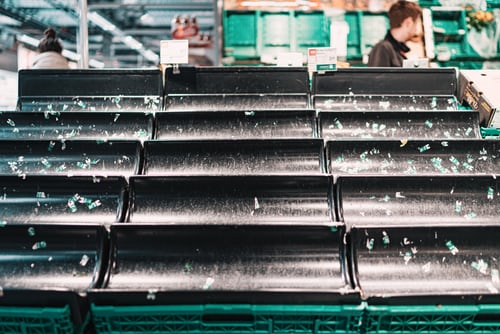
How will social gatherings change? What if you have a scene in a baseball stadium, movie theater, or shopping mall? Our scenes will have to reflect the “new normal.” But what will that look like? What details will we need to emphasize?

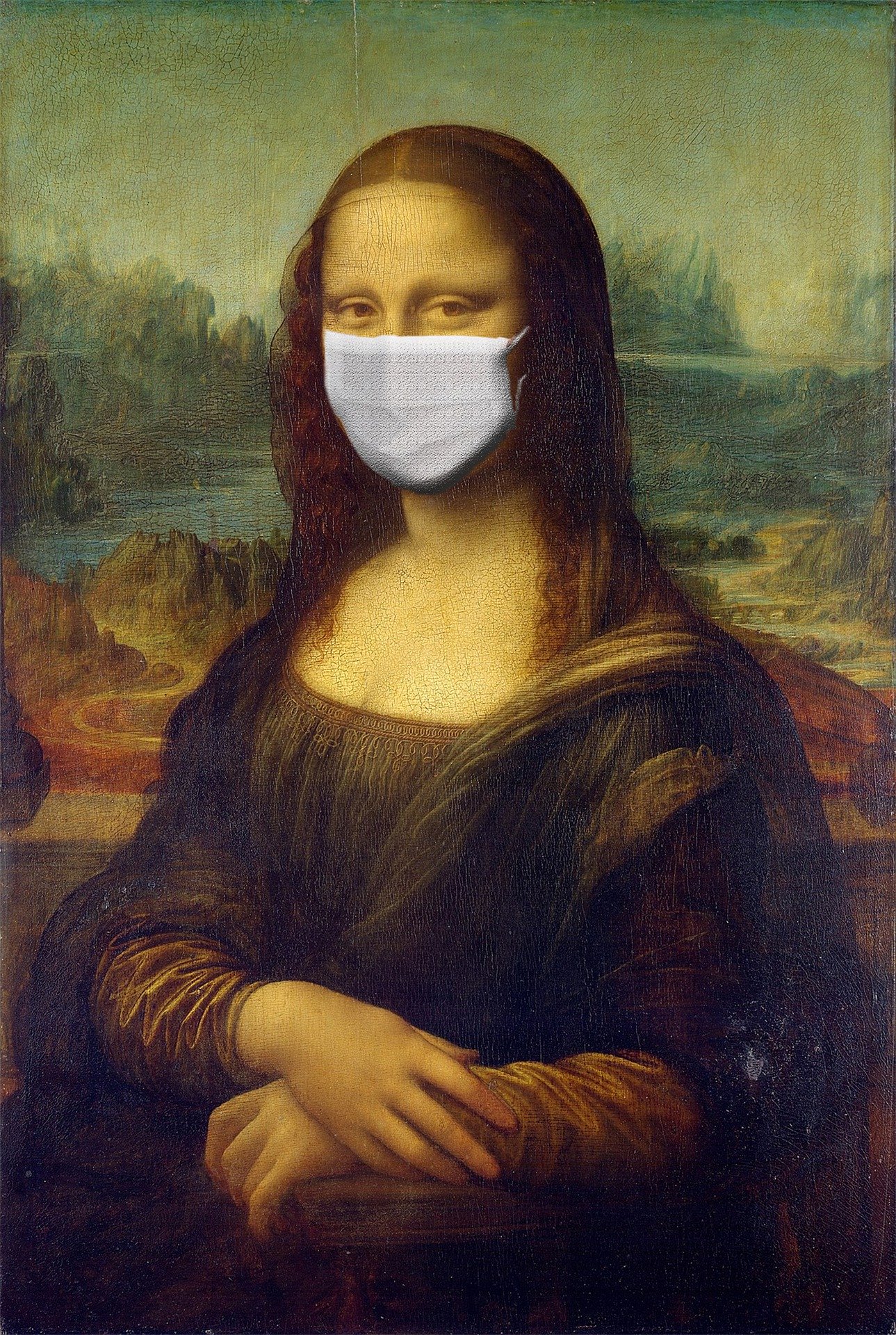
What about the courtroom scene? Will they still pack a jury box? Will a criminal defendant who has been in the viral hothouse of the country jail be required to wear a mask?

How about restaurant scenes? Will servers wear gloves to go with their masks? And beauty salons and coffee houses—how will people space themselves in these venues? What will be happening on airplanes and buses and subways? What will folks be nervous about? Will a sneeze start a bar fight? Almost surely if a Raiders game is on.

If there is a Raiders game!

And what are we to do about little action beats like stroking the chin or rubbing the eyes? Careful, or you might get angry emails saying, “Your characters touch their faces! What are you teaching our children? Do you want to kill us all?”

Here’s another kettle of trout: the rules of romance. Will dates be dictated by distance? What’s a man supposed to do at the end of the evening? Will a kiss ever be just a kiss? Or will it be a negotiated transaction with terms, conditions, representations, and warranties?

Will a man who wants to get serious give his prospective lover flowers or a twelve pack of toilet paper?

Maybe love scenes will have to go like this:

Chase looked into Dakota’s eyes, eyes that said Yes and I don’t care about germs. He leaned forward then, reaching out tenderly, wantingly, and with a hand trembling with desire, he unhooked her mask.

I ask you: What changes do you foresee in our social habits post-pandemic? How will all this change our fiction? 

Salt Pork Bacon

Photo by ?? Claudio Schwarz | @purzlbaum on Unsplash

You may have noticed that things are a little interesting at the moment. Jobs, schools, vacations, careers, and the like are all upended. We are not used to that on such a wide and all-encompassing scale. We all to varying degrees have become used to getting what we want when we want it and doing what we want when we want to do it. All that got upended, however temporarily, in a hurry just a few weeks ago. Were you ever told that it only takes one person to change the world? That turned out to be true. All it took was one guy licking the wrong bat and here we are…

…so I was in the middle of working on something when a new album crossed my desk by a vocal group calling themselves “The Legendary Ingramettes.” My first thought was “Wow. Not too humble.” My second thought, which I had about thirty seconds into the first song, was “It ain’t braggin’ if it’s true.” I have been playing the album over and over since then.  The song that I want to share with you today, particularly if you feel as if all of what is going on is never going to end, is “Beulah Land/I Wanna Go There”, or at least the first three minutes and thirty seconds of it. That introduction is a narrative spoken over a piano/bass accompaniment, with the narrator’s voice threatening to take right off to the stratosphere on every tenth syllable or so. She is telling a story that everyone needs to hear right now. It’s better and more vivid than anything you will see or hear on Netflix. Consider it as an example of oral tradition. 

Some of our younger visitors may not be familiar with the term “oral tradition.” I would ask that they think of it as an ancestor of the podcast. Before we had our television, computers, and phones people sat and with family and friends and told stories. Some had been passed down to the storyteller from older relatives while others were cases of first impression, but the best of them were told and retold. Some folks, particularly those in the American South, became really good at it, which is why some of our greatest authors come from that region. 

What you hear described in the first few minutes of “Beulah Land” is about growing up without and finding joy in it. The story told is not an exaggeration. I have heard similar stories from people of the same age and background as the Ingramettes. One wonderful lady of my acquaintance had four sisters and grew up in the rural South in a very small home that had one bathroom. She told me that she never saw her dad use the facilities because, when nature’s call came upon him, he took a walk (sometimes a run) into the woods to answer it, so as to not tie up the facilities should his wife or daughters need them. The common theme that runs through my friend’s story and the story in “Beulah Land” is generally, “Yeah, I guess we were poor, but we never knew it. It wasn’t that bad.” I listen to “Beulah Land,” and I remember my friend’s story, and when I come out the other end my conclusion is that I am the most fortunate person who has ever walked on earth, comparatively. Particularly now. Next time I get impatient waiting in line or get cut off by somebody passing across two lanes I’m going to try to remember the story about salt pork bacon and getting ready for Sunday morning on Saturday night. I’m going to particularly attempt to remember it in a few weeks or months when things are more or less back to normal. 

Please enjoy and be comforted.


Reader Friday: Description

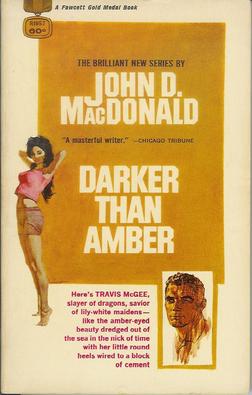
She sat up slowly, looked in turn at each of us, and her dark eyes were like twin entrances to two deep caves. Nothing lived in those caves. Maybe something had, once upon a time. There were piles of picked bones back in there, some scribbling on the walls, and some gray ash where the fires had been. (Darker Than Amber by John D. MacDonald)

Share one of your favorite examples of description from a novel.

Describe Your #StayHome #Quarantine Life in a Book Title (& More)

Jordan Dane

@JordanDane


When I believed the stay home order might only be for a month, I was determined to make the most of the isolation. After all, the end was in sight, right? But the Corona Virus has such dire outcomes for some that I get the sense this won’t be over soon.

I’m primary caregiver for my parents. We’re fortunate they have their health (and humor) but that doesn’t keep me from worrying about them. Their independent living apartment complex has implemented tighter rules to restrict access for their facility to outside visitors (except in certain circumstances). I’m grateful. They have a restaurant that delivers to their door and they are encouraged to stay home and order.

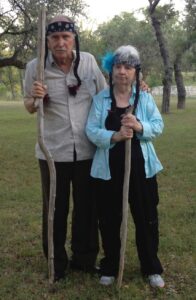
My parents celebrating Willie Nelson’s birthday. Don’t ask.

But I miss seeing my mom and dad. I miss hugging them. I miss my siblings. We talk on the phone and text all the time as a family, but it’s not the same. I’m sure you guys know what I mean. I miss what I can’t have and it’s getting old.

Basically the walls of my home have closed in on me. I fixated on stocking my shelves with grocery items I don’t normally eat. I haven’t resorted to SPAM yet, but I’m sure that day will come. You know what they say–it can’t go bad if it was never good in the first place. Did you know that you can slice SPAM thin and use it to oil your furniture? It’s quite versatile–if you can put up with the flies–but I digress.

What if this quarantine order lasts for months? I would need a different mindset for the long haul. I might have to exercise or get rid of my weight scale, but in the mean time, I could use my TKZ family for a little fun. We can all use a good laugh these days.

DISCUSSION (Something for everyone):

1.) Describe YOUR QUARANTINE LIFE in a book title.

2.) What movie title best describes your SEXY SIDE?

3.) What book or movie title best describes PARENTING?

April Fools’ Day Literary Hoaxes

Happy April Fools’ Day.

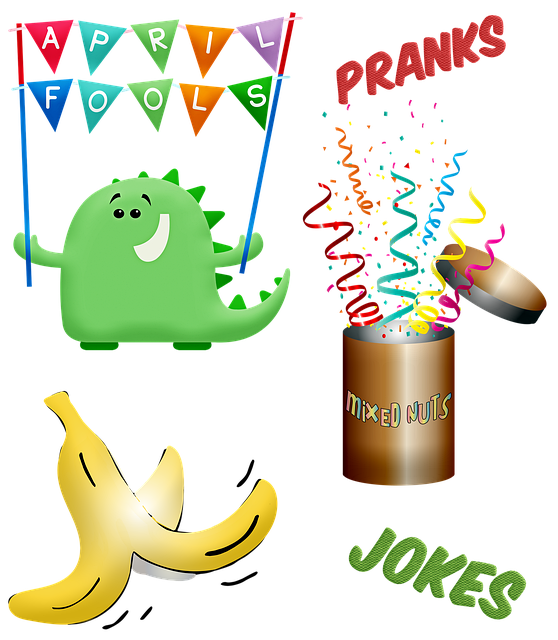
April FoolWhen my brother was about 3 or 4, he loved April Fools’ Day. I think he regarded it as a chance to tell little lies, like “You have dirt on your face,” or “Your shoes are untied,” and then shouting “April Fool.”

Some people go to great lengths to fool the public, like the great spaghetti harvest or the Sydney iceberg.

But when did this tradition of pranks originate?

Some historians speculate that April Fools’ Day dates back to 1582, when France switched from the Julian calendar to the Gregorian calendar. People who were slow to get the news or failed to recognize that the start of the new year had moved to January 1 and continued to celebrate it during the last week of March through April 1 became the butt of jokes and hoaxes.

There’s also speculation that April Fools’ Day was tied to the vernal equinox, or first day of spring in the Northern Hemisphere, when Mother Nature fooled people with changing, unpredictable weather, something we Coloradans know all too well.

Since this is a writing blog, I hit the Google Machine for some literary “pranks.”

Here are a few.

Naked Came the Stranger, by Penelope Ashe
The Hoax: America goes nuts for a salacious novel of sex and drugs.
The Truth: A group of journalists purposefully wrote a terrible book to prove American culture is vulgar, which everyone kind of assumed anyway.

A Million Little Pieces, by James Frey
The Hoax: Wrote a harrowing memoir about his struggle with addiction.
The Truth: It was more novel than memoir; he got caught; made an enemy of Oprah.

Coffee, Tea or Me?, by Donald Bain
The Hoax: Memoir reveals the wild and crazy lives of airline stewardesses (which is what we used to call female flight attendants).
The Truth: A ghostwriter is hired to pen memoir of wild and crazy stewardesses, discovers they’re actually kind of boring, makes up a bunch of stuff, and makes millions.

The Painted Bird, by Jerzy N. Kosinski
The Hoax: Polish American author writes a harrowing memoir of his experiences during World War II…
The Truth: …but it’s a cobbled-together skein of plagiarism and lies.

Go Ask Alice, by Anonymous
The Hoax: The diary of a troubled, drug-addicted teen is published in order to scare kids straight.
The Truth: Well, yes, except the diary was a forgery, penned by a therapist.

Atlanta Nights, by Travis Tea
The Hoax: “Travis Tea” submits a salacious novel to a seedy publisher.
The Truth: “Travis Tea” is actually a group of sci-fi and fantasy authors seeking to expose an unscrupulous publisher.

Any April Fools’ Day memories to share? Best pranks? Given the “outside” world, a few laughs are welcome.

Image by Annalise Batista from Pixabay


Terry Odell is an award-winning author of Mystery and Romantic Suspense, although she prefers to think of them all as “Mysteries with Relationships.” Follow her on Facebook and Twitter.

Who’s Zoomin’ Who?

by Debbie Burke

@burke_writer

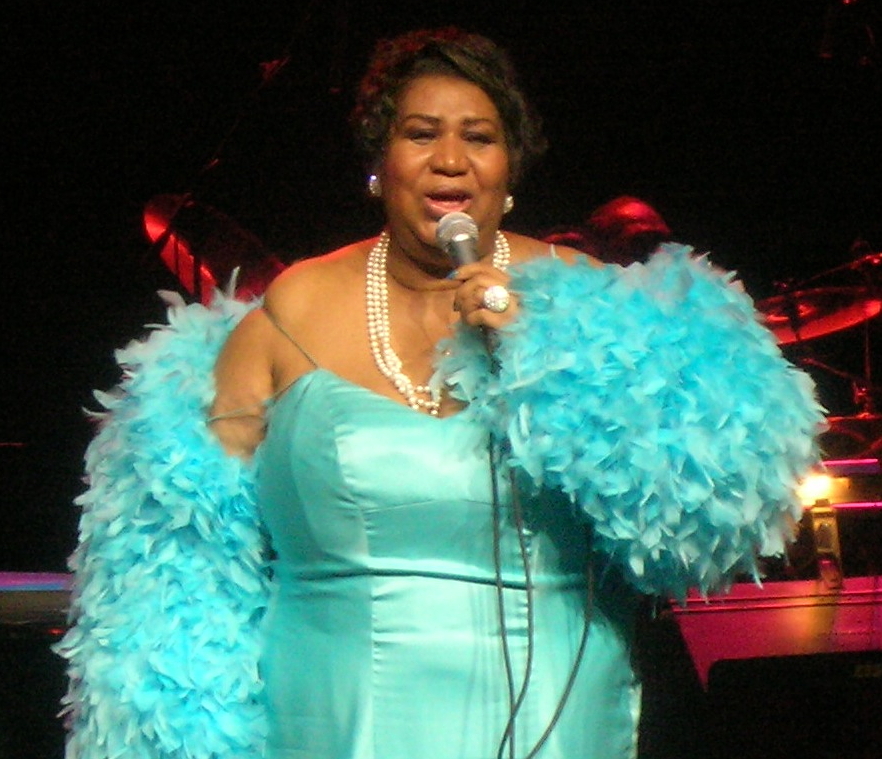
Photo credit: Ryan Arrowsmith, Creative Commons

For your listening pleasure, here’s the late, great Queen of Soul Aretha Franklin singing Who’s Zoomin’ Who?

The answer is: millions are zooming.

Zoom is a videoconferencing service, similar to Skype but easier to use, where a number of people can see and talk to each other via their computer cameras and microphones. Until recently, Zoom has been used mostly by business.

An Authors Guild newsletter brought Zoom to my attention as an alternative for writers  to connect with readers in the face of cancelled book launches, appearances, and tours.

[BTW, if you are not already a member of the Authors Guild, consider joining. Their lawyers reviewed three book contacts for me, worth far more than the $135 annual dues. Daily discussion groups are excellent sources of knowledge and experience shared by pros. Okay, end of commercial.]

Because Zoom is live, people at meetings can interact and ask questions. It enables authors to chat with book clubs and give readings and presentations.

Zoom’s basic option is free and allows from three to 100 participants, with a 40-minute time limit. Pro options start at $14.99/month and offer unlimited meeting time and other bells and whistles, including webinars, education courses, toll-free call-in numbers, etc.

Sounds like the perfect venue for authors and readers to connect, right?

Except there’s a hitch: you must give Zoom permission to access your computer. Whenever a third party gets inside your computer, there are inherent risks.

Last year, a massive security breach was discovered at Zoom. Cyber-security expert Jonathan Leitschuh reported the flaw in this article. His analysis is highly technical and much of it went way over my head. But it’s still well worth reading for his summations.

To paraphrase in simple non-geek terms, Zoom is essentially a virus, albeit a benevolent one, that opens a back door in your computer to activate your camera and microphone, letting you see/hear others and they see/hear you.

However, a flaw enabled hackers to hijack Mac users’ cameras, obtain personal data, and insert malware without the user’s knowledge.

Jonathan expressed concern about Zoom’s slow response to patch the flaw and their rather cavalier attitude toward their customers’ security.

Additionally, even if you uninstall Zoom, the capacity remains for third parties to access your computer to do mischief. Jonathan’s article delves deeply into Zoom’s inner workings and suggests workarounds.

For those of us who are less techie, here’s an article from Consumer Reports with ways to protect your camera and mic from hacking.

Zoom-Bombing” is another problem. This recent article from Forbes describes how trolls broke into a Zoom meeting and inserted pornographic videos. When they were blocked, they simply chose new user names, joined the meeting again, and inserted more “bombs.”

Zoom’s privacy statement reveals they share your information with third parties like Google and Facebook. In other words, data mining. 

With COVID 19, Zoom use has exploded and its stock is going to the moon. This article in the Motley Fool says:

“Why Zoom is a solid long-term bet:

While Zoom stock has already more than tripled from its original IPO price, it still has the potential to create massive wealth for long-term investors. The enterprise collaboration segment is expected to top $48 billion in 2024, up from $31 billion in 2019.”

With shelter-in-place restrictions, hundreds of thousands of people are conducting virtual meetings about every subject from Aardvarks to Zumba. With many more potential targets for malicious hackers to exploit, I expect attacks will zoom up faster than the stock.

While I don’t seriously believe hackers are dying to break in on my upcoming meeting with a book club, I am concerned. When personal data is vulnerable, losses can be drastic.

Each of us must decide if the risks outweigh the benefits of using Zoom.

~~~

TKZers: Have you used Zoom or other videoconferencing tools? What has been your experience?

~~~


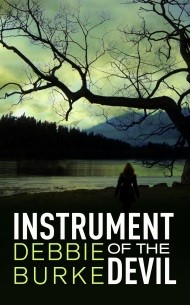
Last day to download Debbie Burke’s thriller, Instrument of the Devil, for only $.99 here.

Comforting Creative Outlets


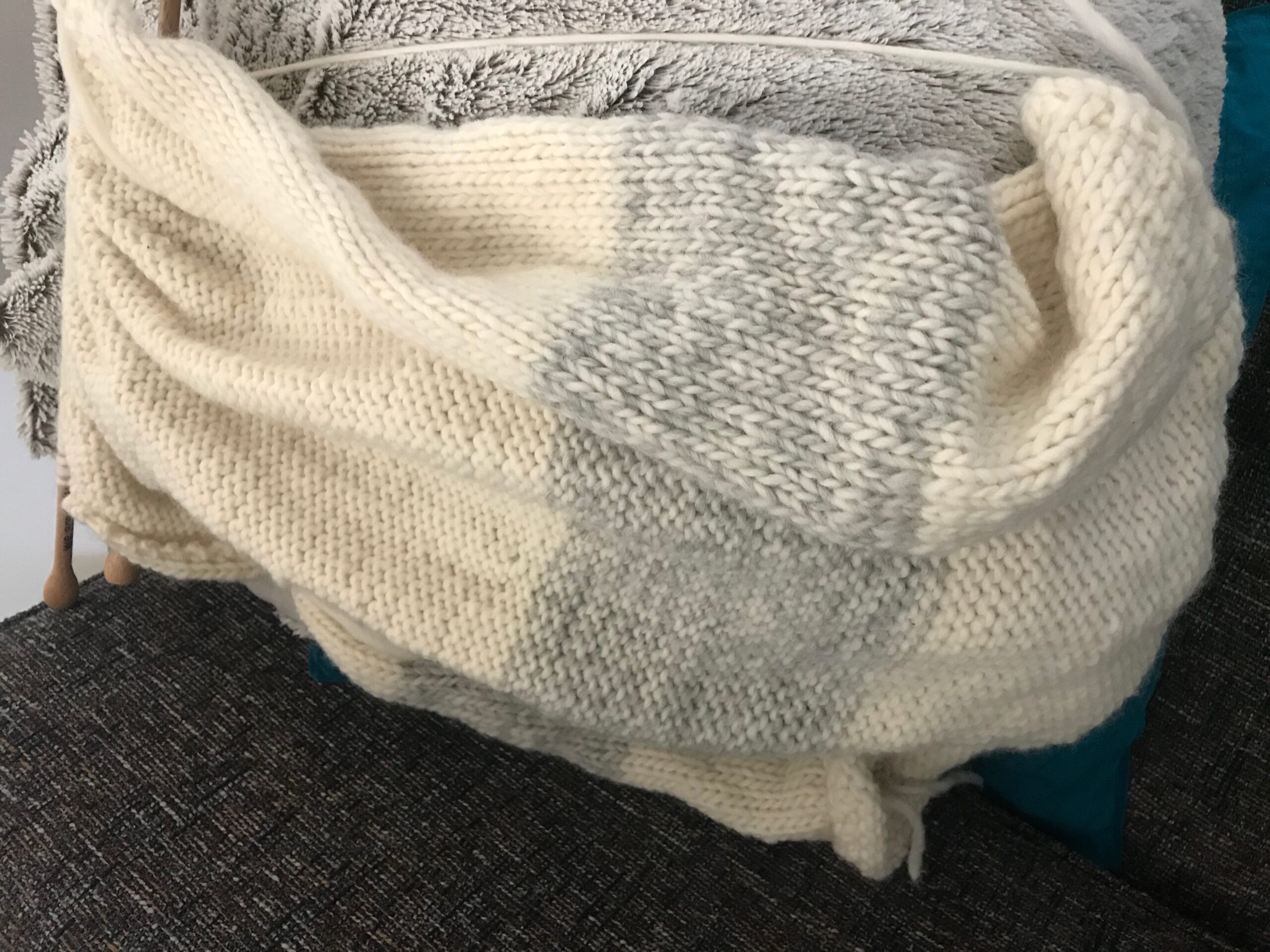
If you’re like me, every day has started to become a bit of a blur…but happy Monday all the same! After reading Sue’s great blog post last Monday (Why the World Needs Creatives More than Ever) I started to feel less guilty about my complete inability to write last week – I definitely felt my overall anxiety had depleted my creative reserves (not to mention having a household full of boys trying to work/being out of school). Instead of writing, I found myself turning to what I now call my ‘comforting’ creative pursuits – namely sketching and painting (as well as my less comforting, more challenging, creative pursuit – the dreaded knitting!).

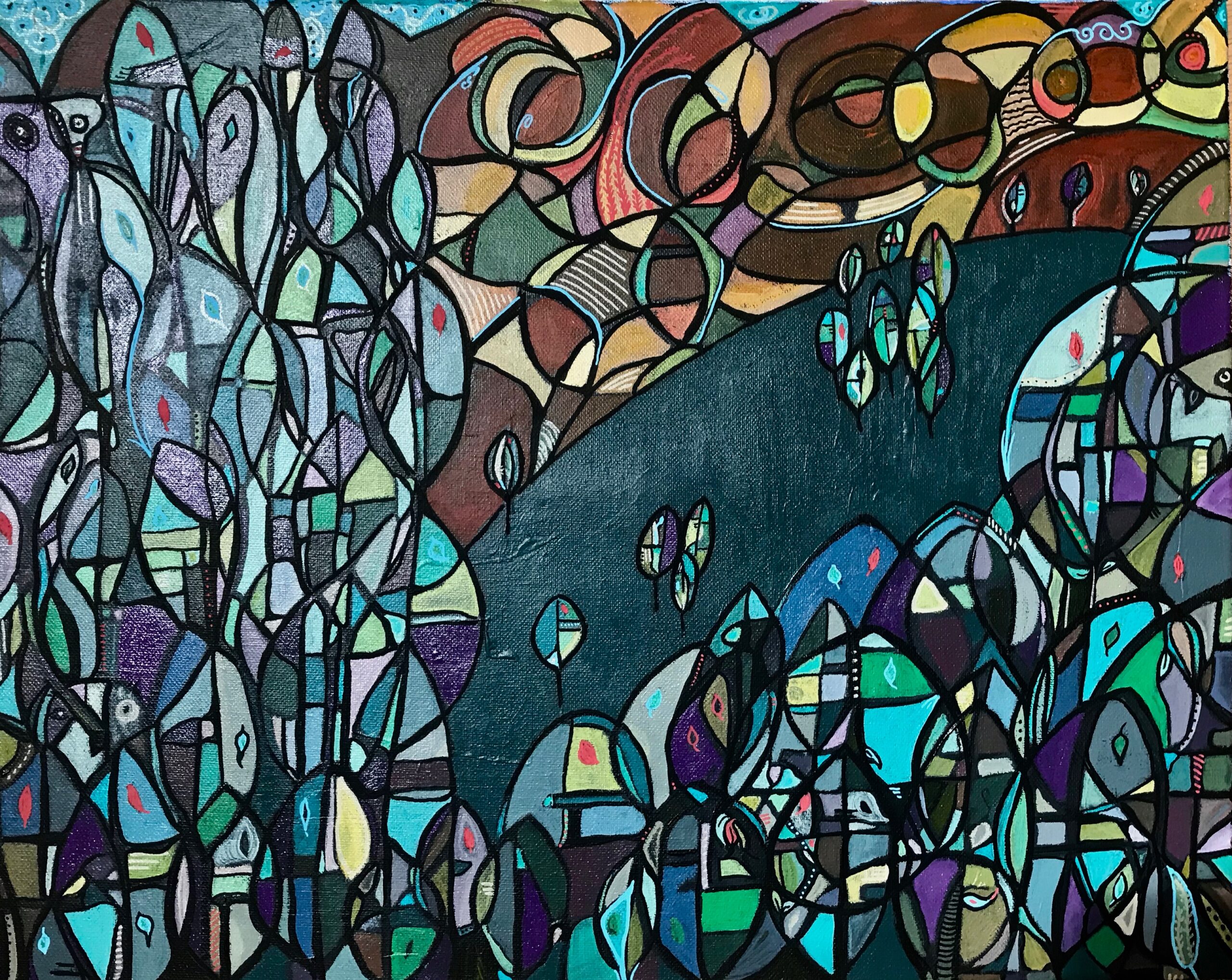
I’ve dabbled in painting for years, always enjoying the fun of doing something for the pure pleasure of it. I’m not particularly good but also not particularly bad, so it’s a hobby that can be both satisfying and comforting. Unlike my writing, I don’t feel the pressure to excel or try to make a living out of it and, because I lean towards abstract art, my paintings don’t even have to look like anything in real life (bonus!).

The last couple of weeks I’ve found that getting absorbed in a painting is a great stress reliever. I get to just focus on the stroke of the paintbrush and the subtleties of color. It enables me to get engrossed in something other than compulsively checking news apps or social media – and time does seem to pass in a completely different way when I’m painting (hours seem to float by, calm and serene – it’s lovely!).

Next week my boys start back at school via remote learning and hubby will continue to work from home, so I need to set up a new schedule – one that reintroduces some decent writing time (I feel I really ought to get that back into focus!) and which, I hope, will also include time to paint. In these troubling times, I feel I need my comforting creative pursuits more than ever…

So TKZers what are your ‘comforting’ creative outlets? Are you having trouble focusing on your writing – or are you using this pandemic as a way of channeling your thoughts and feelings at the moment (I feel completely stymied in this regard!). What creative pursuits are you turning to? Books for me are also a comfort – although I had started a post-apocalyptic YA novel that might need to get re-shelved for while for my own mental health…

BTW – here’s a photo of my latest painting  ‘in progress’ – no judgement please:) When it’s finished it will hopefully look a little like the one at the top of this post (which I finished last week:))

Oh, and here’s a photo proving I have actually made some progress knitting!!

Let’s Have Some Fun

by James Scott Bell
@jamesscottbell

Goodness knows, we need all the fun we can get right now. So in lieu of my usual craft column, I’m declaring today an official TKZ Fun Zone (TKZFZ). Let’s play a game.

The name of the game is Less Interesting Books. You take a well known title and change a word or two to come up with a not-so-compelling alternative. For example:

Moby Bob
The Mediocre Gatsby
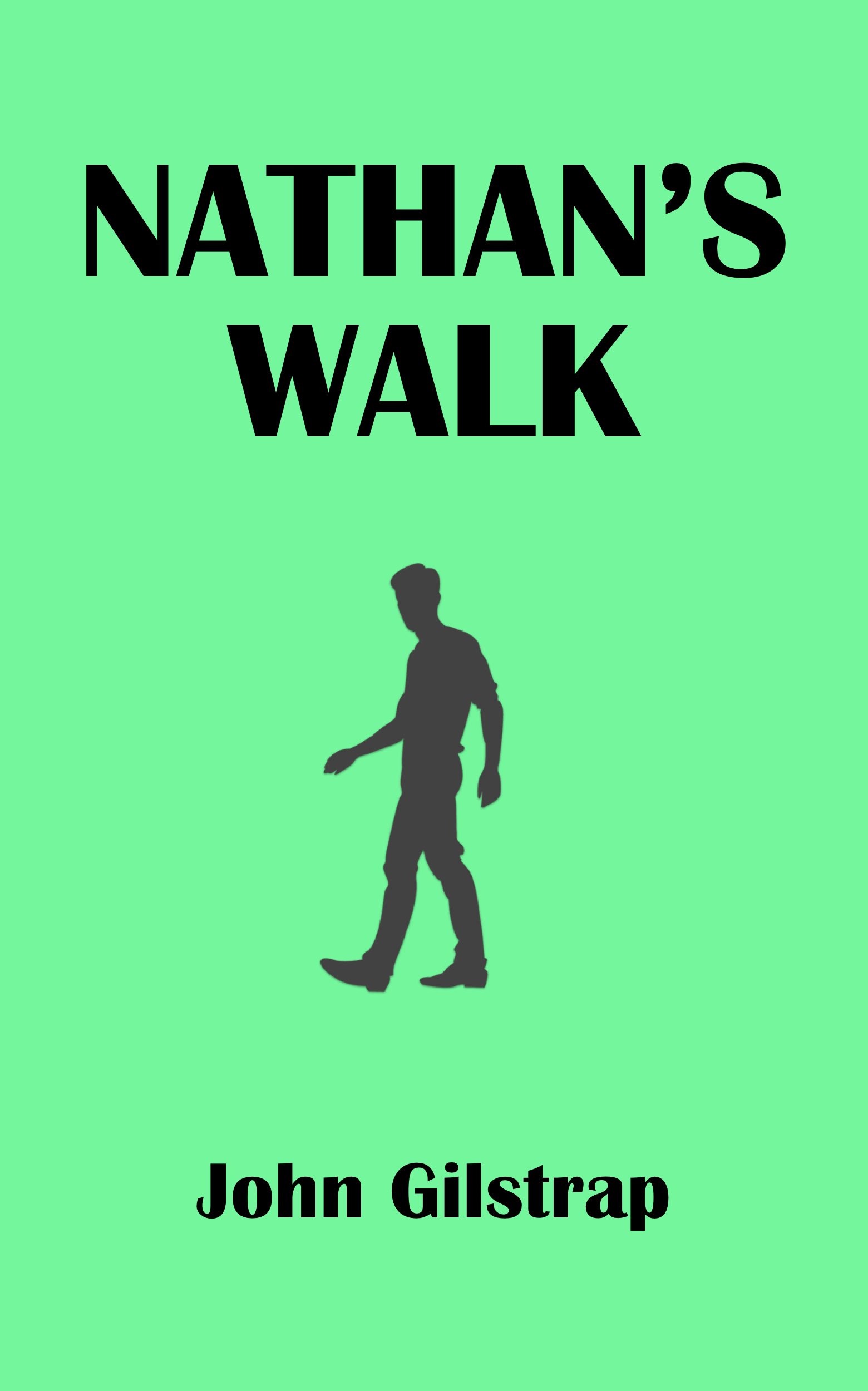
Nathan’s Walk

That’s all there is to it. One rule: One title per comment (that way if someone wants to give you a high five, they can). If you come up with another title, just leave another comment. Clear?

Okay, boys and girls, let’s play!