Reader Friday: Writing From Emotions

Sue Grafton, Wikimedia Commons (Mark Coggins)

Before Sue Grafton hit with her alphabet series, she went through a bitter divorce. In an interview she said, “I used to lie in bed at night just thinking of ways to do him in. And I came up with some doozies. But I knew I was going to get caught at it because I credit the police with quite a bit of intelligence. And I knew I’d flub it. So I thought, why don’t I put this plot between the covers of a book and get paid for it? And that launched this whole new career.”

Have you ever written anything to more positively channel some of your, er, more antisocial emotions?

True Crime Thursday – Scams That Target Writers

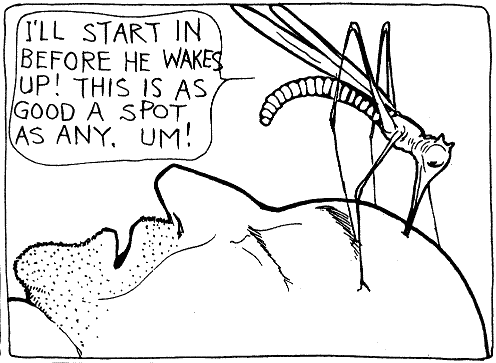
Public domain, Winsor McCay, Dream of the Rarebit Fiend, 1909

By Debbie Burke

@burke_writer


Like mosquitos in summer, scammers keep buzzing in with new tricks to suck the blood from writers. Here are three that recently hit my radar:

Scam #1 – We Pay You to Write!

A couple of months ago, several members of the Authors Guild received emails from individuals claiming to need articles or workbooks written for an upcoming seminar. The bait is a substantial fee and a promise of wider recognition through their organization. They may claim to have a disability, with the inference that if you write for them, you also enjoy the satisfaction of helping. Or…if you don’t write for their worthy cause, you should feel guilty. Con artists are masters at manipulation.

Here’s a sample invitation from “Paula Smith”:

Hello, My name is Paula, an academic consultant. I have a speech distorting condition called Apraxia. I got your contact details online and I need your service. Can you write an article on a specific topic for an upcoming workshop? The article is to be given as a handbook to the attendees of the workshop. I have a title for the article and have drafted an outline to guide you. Please get back to me for more information

(442) 278-5255

Paula

Fortunately, the author who received the solicitation investigated a little deeper and discovered “Paula’s” phone number had numerous complaints against it for fraud. A helpful resource to check out questionable phone numbers is callername.com.

More writers added their suspicions to the Authors Guild discussion group but weren’t sure how the scam worked.

Then AG member and travel writer Lan Sluder offered the following enlightening explanation:

This is a scam that is well known in the hospitality (lodging) industry. The target is usually smaller inns, hotels and B&Bs. Someone makes what seems a legitimate reservation, often for several rooms, and pays by check or credit card. There are various versions, but typically the inn owner is overpaid or part of the reservation is cancelled or changed and the scammer wants a refund. Much later, the original credit or check payment is found to be invalid, and the inn owner is out hundreds or thousands of dollars. Some of these scammers are pretty clever, and it’s not always easy to tell an authentic reservation from a fake one. Occasionally, hotel owners or reservations offices are fooled into thinking it is an actual guest reservation.

I’ve written a number of travel guides and other travel books that review hotels so I get a lot of these scam emails due to mistakes by the less sophisticated scammers.

A similar scam exists targeting attorneys, CPAs and small businesses of all kinds. I guess now the scammers are starting to target writers.

——————————
Lan Sluder
——————————

Another AG poster who’s a member of the American Translators Association added that their members have also been targeted and shared the story of one victim. The scammer “overpaid” then asked the translator to wire money for the refund. Unfortunately, she did, shortly before the scam check bounced and she was out $2000.

Ouch!

Scam #2 – Fake Marketing Offers

These scammers keep reinventing themselves with different aliases and websites. Be wary of anyone who calls out of the blue or sends an email with wording similar to this:

Dear Author,

Our expert book scouts discovered your fabulous novel and we are excited to offer you an amazing opportunity. Because we believe so strongly in the bestseller potential of your book, we want to invest [fill in outrageous amount of money] in your marketing and publicity at absolutely no cost to you. We will reserve a place of honor for your book at the upcoming [fill in prestigious book fair or festival]. Your success will be our reward.

Sincerely,

A Company That Believes in Your Fantastic Talent (smirking)

After a few more flattering emails, they swoop in for the kill shot:

We reaffirm you do not have to pay one penny for our fabulous marketing package because our faith in you is so strong. To be fair, we know you’ll want to contribute your part by paying the bargain registration fee of only [fill in hundreds to thousands of dollars].

Here’s a post from YA author Khristina Chess who was contacted by Readers Magnet. Interestingly, they claim to be accredited by the Better Business Bureau as of 2019. However this BBB link shows multiple complaints against them.

Here’s a list of companies that engage in practices that may technically be within the law but slide into slimy.


Before you engage any writing-related services, check them out on Writer Beware  whose mission is:  “Shining a bright light into the dark corners of the shadow-world of literary scams, schemes, and pitfalls.”

A big thank you to Writer Beware for watching out for writers!

Scam #3 – Impersonating Agents and Editors

Earlier this year, intrepid Victoria Strauss covered cases of scammers who assume the identity of legitimate agents or editors then contact unsuspecting authors. Of course, struggling writers are understandably thrilled to have a big-name agent contact them. Just be sure the person is who they claim to be. Here’s Victoria’s post.

On July 16, agent Victoria Marini @LitAgentMarini tweeted the following warning after learning someone had co-opted her name:

“It has come to my attention that someone is impersonating me online, likely in an attempt to scam writers. I am not associated with WritersDesk LLC, nor do I sell videos, materials, editorial work, or any other good or service. Many thanks to @victoriastrauss.”


Protect yourself from true crimes against writers. Always verify the source.

 ~~~

TKZers: Have you been solicited by questionable people or companies regarding your writing? Please share your experience and outcome.

 ~~~


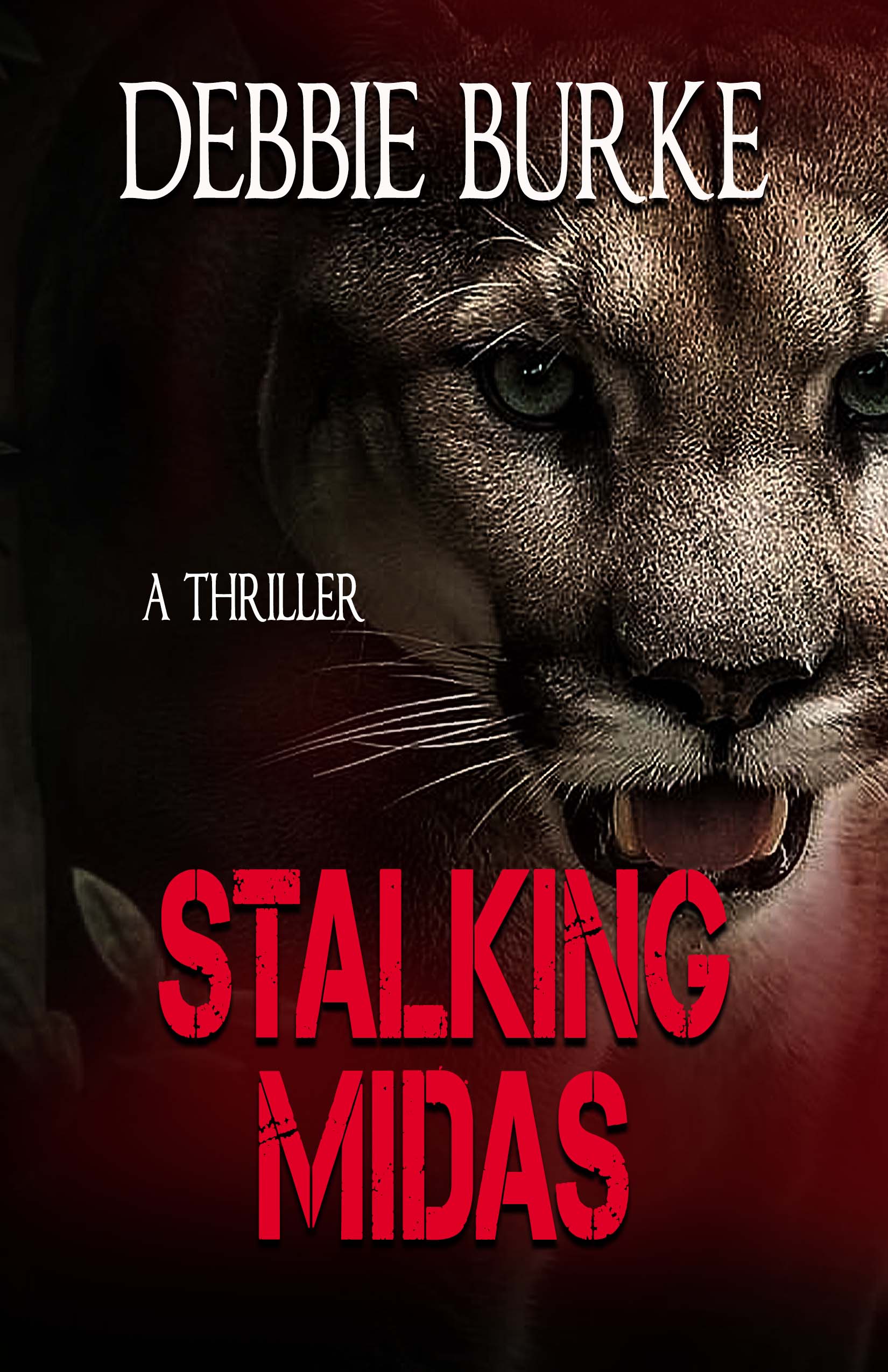
Check out a devious scam with a unique twist in Debbie Burke’s thriller, Stalking Midas, available at this link.

If They Buy the Premise

If They Buy the Premise …
Terry Odell

A comment from my editor on my current manuscript, saying “This should have come up 200 pages ago” was a good reminder about using foreshadowing.

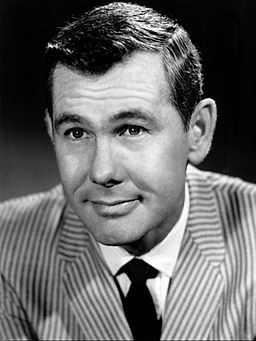
If they buy the premiseIn talking about comedy, Johnny Carson said, “If they buy the premise, they’ll buy the bit.”

The same goes for fiction. You have to sell the premise early on. You can’t stop to explain a character’s skill set, motivation, or fear at the height of the action. Nor can you bring in great-uncle Phineas in the last chapter of your mystery and reveal him as the killer. No fair using the deus ex machina method of resolving your story.

Consider Raiders of the Lost Ark. If the movie had opened with Indy in the classroom, would viewers have “bought” that he was really capable of everything he’d have to do in the movie? No, but by showing him in the field in a life-and-death situation first, we’ll accept that he’s a lot more than a mild mannered college professor.

Before James Bond pulls off his miracles, we’ve seen Q show him the gadgets that will save his life. We know MacGyver has a strong background in science, so he’s got the theory and knowledge to pull off his escapes using duct tape and a Swiss Army knife.

Foreshadowing isn’t only for the “Big Stuff,” though. You should consider making sure you’ve set things up for the “Little Stuff” as well. Think of setups as breadcrumbs you scatter for readers to follow.

You should set things up early on, and in a different context. Setup Scenes should occur throughout the book, and should set up minor plot points as well as major ones.

Example. In a scene from my When Danger Calls, my stalwart hero has been tasked with supervising two little girls who are playing with dolls. They come downstairs and show their mom the fancy braids he’s created.

Would my macho covert ops guy really know how to braid a doll’s hair, or did I stick it in because I thought it would be a cool way to move his relationship with the mom along? Would I have to stop the story to explain where he acquired the skill? Not if I’ve shown it, and better to do it in an entirely different context. Earlier in the book, readers see this:

Ryan leafed through the snapshots while he waited for the earth to start revolving again. He knew which one he wanted as soon as he saw it. He remembered the day it had been taken, right after he’d won third prize at the fair with Dynamite, his pony. He’d been so sure he’d get the blue ribbon and hadn’t wanted to pose for the family picture his grandfather insisted on taking. He saw the look in his mother’s eyes. So proud, she’d made him feel like he’d won first prize after all.

There’s no mention of him actually braiding the horse’s mane or tail, but it shows that he’s had experience with horses, all couched in a scene that’s about something entirely different—his emotional reaction to seeing old family photos.

Then, later in the book, when the girls display their dolls’ hairdos, Mom asks where Ryan learned to braid. One of the girls responds, “On real horses. He used to braid their hair. For shows.”

You’ve set the premise, so reader should buy the bit.

We know Indiana Jones is afraid of snakes at the very beginning of the movie. Because of that opening scene, we know to expect something with snakes, which adds to the tension.

Lee Child foreshadows almost everything he shows in his books. In Gone Tomorrow  a fellow passenger rambles on about the different kinds of subway cars in New York. That tidbit shows up front and center later on in a high-action climactic scene. And even the little things, that might not be significant plot points, such as the origin of the use of “Hello” to answer the phone will appear, letting the reader know that the character was paying attention, too.

What will lead to book-throwing by readers? How about this?

Hero and heroine are hiding and the villains are closing in. (Since I write romantic suspense as well as mystery, the genre requires both as protagonists, but it could be your hero and partner, or someone he’s been charged to protect.)

The hero is injured. He hands the heroine his gun and asks her if she can shoot. She says, “Of course. I’m a crack shot,” and proceeds to blow the villains away (or worse, has never handled a gun before, but still takes out the bad guys, never missing a shot). Not only that, but she is an expert in first aid and manages to do what’s necessary to save the hero’s life. Plus, she’s an expert trapper and can snare whatever creatures are out there. Or, maybe she has no trouble catching fish. And she can create a gourmet meal out of what she catches. All without disturbing her manicure or coiffure.

Believable? Not if this is the first time you’ve seen these traits. But what if, earlier in the book, the heroine is dusting off her shooting trophies, thinking about how she misses those days. Or she’s cleaning up after a fishing trip. Maybe she has to move her rock climbing gear out of her closet to make room for her cookbooks. You don’t want to dump an entire scene whose only purpose is to show a skill she’ll need later. Keep it subtle, but get it in there.

When you’re writing, it’s important to know what skills your characters need to possess. You might not know when you start the book, but if you’re writing a scene where one of these skills will move the story forward, and there’s no other logical way to deal with the plot, then you owe it to your readers to back up and scatter those breadcrumbs.

What about you? How do you make sure you’re not entering into deus ex machina territory? What kind of breadcrumbs do you scatter? How do you hide the clues?


Terry Odell is an award-winning author of Mystery and Romantic Suspense, although she prefers to think of them all as “Mysteries with Relationships.” Follow her on Facebook and Twitter.

First Page Critique – Donny Malone

Photo credit: Thomas Wolf, Wikimedia CC

By Debbie Burke

@burke_writer


Please welcome today’s Brave Author who’s submitted the first page of a historical Crime Novel. Give it a read then we’ll discuss it.  

 ~~~

Donny Malone

Larry began eating at Vicenzo’s after his last picture went bust and his fourth wife fled with the remaining cash. It was a cheap breakfast joint off Santa Monica’s Broadway and Sixteenth.  A SWELL LITTLE JOINT, he wrote Howard Miller in a telegram arranging the meeting.

Miller was one of those full-time writers on the payroll at Paramount. Swell kid. Owed Larry too. Back in seventeen, Larry accepted Miller’s romance script titled: The Loving Call. Anyway, cut a long story short, the picture made money. Big money. Made Howard Miller a star. Or as much a star as its possible to be for a writer. Still, he had the manner of a kid from the Bronx, old Howie. He’d still roll up his sleeves when the L.A. sun hit noon. He’d still greet a guy with a firm, two-handed grip, and look any maître d’ in the eye without flinching. Howard weren’t into none of that small talk baloney neither. Soon as Vicenzo filled the coffees, he got down to talking shop.

“So Larry,” he asked. “How’s the kid?”

He was asking about Malone.

“Donny’s swell. Donny’s Donny.”

“Cos last I heard, Malone burnt his bridge back to vaudeville.”

“Donny’s done with that vaudeville hooey. Gets into L.A. tomorrow. Donny’s big time.”

“I hope you’re right.” Howard sighed, shaking his head. He dropped two sugar cubes into his coffee. Gave it a stir with his finger. “Since Malone gets his kicks making Mackenzie Campbell out like a chump.”

“Mack’s done. Donny’s contract was up.”

“I’m talking about Mack’s wife.”

“They were done.”

Done, Larry? You think Campbell – Campbell – is letting Malone cross the country with that broad?”

Larry didn’t know what Mack had planned. Never thought to wonder. All he knew was Donny Malone didn’t belong in no dying nineteenth-century circus act. This was a kid who could jump from a railway bridge onto a series of fast-moving carriages. Who would do it in a hot minute for a twenty-cent bet. A kid with the acrobatics of Buster Keaton. The dashing victory-smile of Fairbanks. And Larry wasted no time telling him. Put on his Hollywood voice and told the kid straight. Told him, ‘Donny. Baby. You ain’t signing with that bum another season.’

“So what he say?” Howard asked.

~~~

Let’s start with the title. On its own, Donny Malone isn’t intriguing. I immediately thought of the 1997 film Donnie Brasco with Johnny Depp and Al Pacino. Unless a person is famous or notorious, a name doesn’t generally make a good title because the reader doesn’t yet understand the reference. A better title could hint at the bygone era of Hollywood that might attract readers who enjoy the noir genre.

This first page does a nice job echoing conventions of pulp fiction and noir. A telegram  sets the time as early to mid-20th century in Santa Monica. The language is sharp, crisp, and slangy, further setting the period tone.

Brave Author introduces Larry who’s down on his luck, reduced to eating at a dive café after suffering professional and personal misfortunes in the Hollywood film industry.

Howard Miller’s character is established with backstory (more on that in a moment) as a successful Paramount screenwriter who is indebted to Larry. The inference is that Larry contacted Howard to call in a favor since Larry’s career is evidently languishing.

The subject of their conversation is an unseen third character, actor Donny Malone, followed quickly by the introduction of two more unseen characters: Mackenzie Campbell and Campbell’s wife with whom Donny has or had a relationship. Campbell is apparently not someone to mess with, raising a possible threat to Donny. The reference to an expired contract indicates Donny and Campbell once had legal obligations to each other but that’s now over.

The potential for conflict is present, although the reader isn’t sure yet what the conflict is. For the reader to fully engage with the story, s/he needs to understand the relationships among characters and what their opposing goals or agendas are. Suggest you fill in those aspects quickly in the pages that follow. 

The lead-off sounds promising but I see four issues that need work.

First problem: What is Larry’s profession? He’s in the Hollywood film business but in what capacity—producer, director, talent agent, actor, writer? The lack of that knowledge makes it difficult to pin down what he wants and what he hopes to accomplish by meeting Howard. It sounds as if Larry might represent Donny as his talent agent but that’s not clear.

The character sketch of Howard is well done. Describing him as a “swell kid” reinforces appropriate slang of the era. “Back in seventeen” narrows down the time closer to the 1920s.

However, it also highlights the second problem: most of that paragraph is an information dump about Howard. After the line “Still, he had the manner of a kid from the Bronx, old Howie” I suggest you cut the rest of the paragraph and save it for later in the story.

The following lines confused me:

Soon as Vicenzo filled the coffees, he [which he? Vincenzo or Howard] got down to talking shop. 

“So Larry,” he [again, which he? Vincenzo or Howard] asked. “How’s the kid?” 

Easy fix: Soon as Vicenzo filled the coffees, Howard got down to talking shop. 

“So, [need comma] Larry,” he asked.

The mention of sugar cubes and Howard stirring coffee with his finger were wonderful little details that again reinforce the era. Fun fact: restaurants replaced sugar cubes with packets after World War II.

The third problem is yet another info dump, this time about Donny Malone.

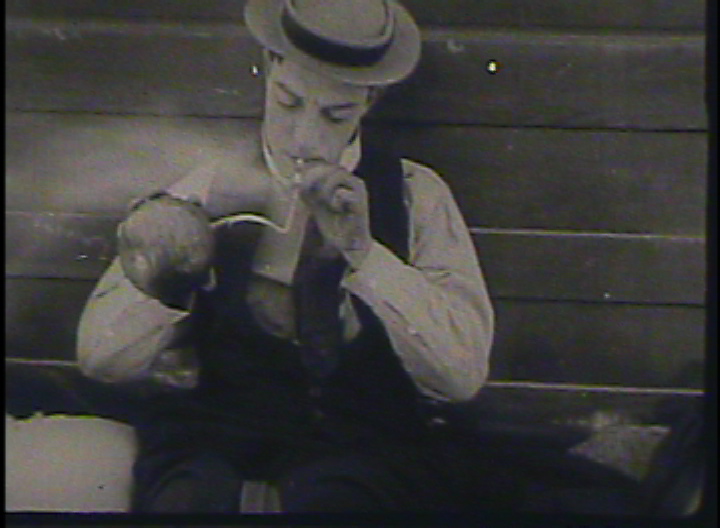
Buster Keaton, photo credit: Wikimedia Commons

“All he knew was Donny Malone didn’t belong in no dying nineteenth-century circus act. This was a kid who could jump from a railway bridge onto a series of fast-moving carriages. Who would do it in a hot minute for a twenty-cent bet. A kid with the acrobatics of Buster Keaton. The dashing victory-smile of Fairbanks. And Larry wasted no time telling him. Put on his Hollywood voice and told the kid straight. Told him, ‘Donny. Baby. You ain’t signing with that bum another season.’”

While the description of Donny is compelling and shows he has great star power, it’s still an info dump.

Don’t feel bad, Brave Author. We all struggle with finding the right balance between telling just enough background information to orient the reader and over-telling that halts the story’s forward movement.

Also, if this whole paragraph is Larry’s thoughts, the transition back to the conversation with Howard is a bit bumpy. ‘Donny. Baby. You ain’t signing with that bum another season’. Because of the single quotes around these sentences, I had to reread to determine if Larry is reviewing the conversation in his head or if he’s telling Howard about it.

In the passage below, Larry and Howard are already talking about Donny:

“Donny’s swell. Donny’s Donny.” 

“Cos last I heard, Malone burnt his bridge back to vaudeville.”

“Donny’s done with that vaudeville hooey. Gets into L.A. tomorrow. Donny’s big time.”

“I hope you’re right.” Howard sighed, shaking his head. He dropped two sugar cubes into his coffee. Gave it a stir with his finger. “Since Malone gets his kicks making Mackenzie Campbell out like a chump.”

“Mack’s done. Donny’s contract was up.”

“I’m talking about Mack’s wife.”

“They were done.”

Done, Larry? You think Campbell – Campbell – is letting Malone cross the country with that broad?”

Why not continue the conversation and incorporate Larry’s thoughts about Donny into dialogue?

Here’s a different way to convey the info:

Larry didn’t know what Mack had planned. Never thought to wonder.

One side of Howard’s mouth pulled down, unconvinced.

Larry leaned close and put on his Hollywood voice. “Listen, Howard, for a twenty-cent bet, this kid will jump from a railway bridge onto a fast-moving train. He’s every bit as good an acrobat as Buster Keaton. Plus, he’s got that Fairbanks smile. I didn’t waste no time telling him straight. ‘Donny. Baby,’ I says, ‘you ain’t signing with that Campbell bum another season.’”

The reader still doesn’t know exactly what’s happening or what conflicting agendas are in play among Larry, Howard, Donny, Campbell, and Campbell’s wife. But enough hints have been provided to promise the reader that fireworks are ahead.

The fourth problem is point of view. It feels off. Sometimes the voice sounds as if an unseen narrator is telling the reader about Larry rather than Larry thinking to himself.

Vintage films often used voice-over narration to explain context and introduce characters. A prime example is the 1944 classic Laura where Clifton Webb talks to the audience about her murder. If this is the effect Brave Author is striving for, it doesn’t quite succeed.

Currently, readers favor deep point of view, inside the main character’s skin, thinking his thoughts, experiencing his sensations and physical reactions. Yet that doesn’t feel quite right for this historical piece.

So I confess I’m stumped how to handle POV except to suggest that Brave Author study classics written during this time period to pinpoint how those authors treated POV to achieve their tone. If TKZers have other ideas, please chime in.

There are minor problems with word repetitions and typos:

“Or as much a star as it[‘]s possible to be for a writer.” I smiled at the humorous observation that the writer is definitely at the bottom of the movie industry food chain.

The word “swell” is used three times on the first page. If “swell” is a verbal tic Larry falls back on when he’s nervous, three times might be okay but more than that may wear thin with readers. Perhaps change one to a similar slang term for the era, e.g. Vincenzo’s is the bee’s knees. Same suggestion applies to “joint,” used twice in the first paragraph. And “still,” used three times in the second paragraph.

The last line So what he say? might be slang but could also be a typo. So what‘d he say? sounds more natural. 

Overall, this page is well written and captures the time, speech patterns, and period slang in a style that’s reminiscent of noir pulp fiction. The reader doesn’t yet understand the story problem or what’s at stake. However, the historic setting and the voice are intriguing enough that I’m willing to read on to discover if Larry is a sour-grapes loser, a hustler seeking a shortcut back into the big time, a determined guy who refuses to give up, or someone else. Knowledge of his profession would help frame his personality.

This promises to be an entertaining trip into the gilded age of Hollywood where treachery lurks beneath the glamorous veneer.

BTW, Jim Bell has discussed pulp fiction and noir here. On Patreon, he offers short stories set immediately after World War II about a studio fixer in the Hollywood film industry. You might check out how our resident expert handles his first pages.

Best of luck to you, Brave Author. You’re off to a good start.

~~~

TKZers: What do you think of Donny Malone? What suggestions can you offer our Brave Author? How would you handle POV? 

~~~


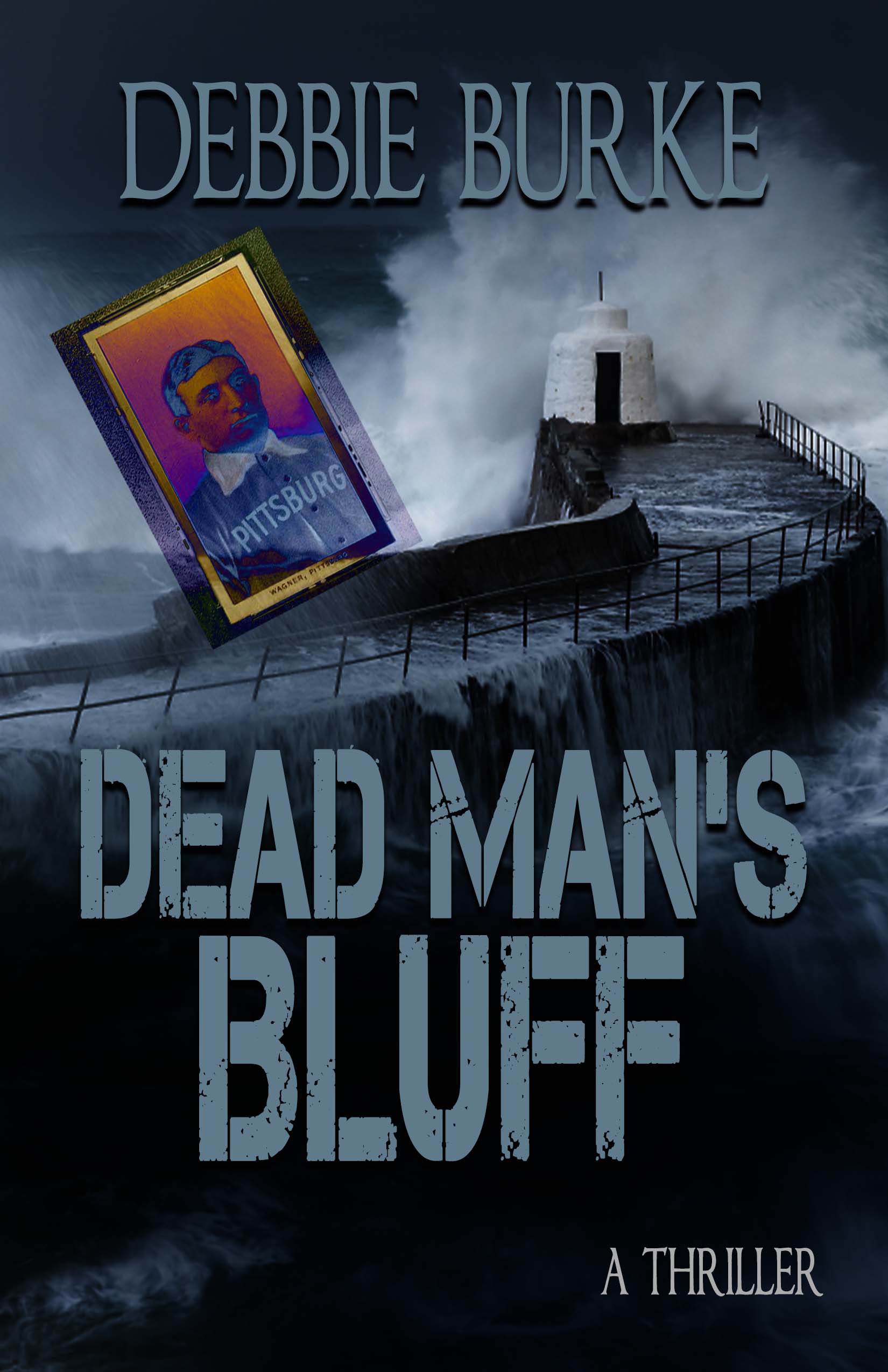
Debbie Burke’s new thriller, Dead Man’s Bluff, is on sale at the introductory price of only $.99. Please check out the link here.

How To Craft An Elevator Pitch That Sells

It’s my distinct pleasure to introduce Ruth Harris to TKZ, with an excellent post about how to craft an elevator pitch that sells. Take it away, Ruth!

Is this a dream? Or will it be a nightmare?

There you are—

  • At a conference in line for coffee. You turn around. The person behind you is Big Shot Editor at publishing collosus, Simon, Macmillan & Random Penguin.
  • Waiting for a taxi in the rain when an empty cab/your Uber pulls up. The woman next to you is publishing’s hottest agent. She is drenched and on her way to an important meeting. She asks (begs) to share your ride.
  • On a plane and your seat mate is the famous movie producer who’s known for lavishing Big Bucks on hot, new properties.

It’s do or die time.
You have seconds…
Then what?
Do you panic?
Freeze?
Are you tongue tied?
Do you babble?
Or have you prepared—and practiced—a killer elevator pitch?
Are you ready to razzle dazzle em?
And if not, why not?
Because the well-crafted and polished elevator pitch can make the difference between meh and a reaction that will be passionate.

Meaning before details: start with the big picture.

Readers/editors/agents take only a few seconds to make their buy decision.
Authors have the same few seconds to make their sale.
According to molecular biologist John Medina of the University of Washington School of Medicine, the human brain requires meaning before details. When listeners doesn’t understand the basic concept right at the beginning, they have a hard time processing the rest of the information.
Bottom line: explain the hook or basic concept first.
Then go into the details.

Example #1:

“Susie is trying to kill David by putting arsenic in his Red Bull because he cheated on her with her best friend, Elaine, but then Peter and Marie die.”
Uh. What? Who’s doing what to whom and why should anyone care? Big Shot agent yawns, checks the time, can’t wait to get out of elevator.

Instead: A betrayed wife’s murderous vengeance ends in the death of two innocent children.
Big Shot agent’s ears perk up. S/he is dying to know more.
Then come the details.

Example #2:

“Tim has to get to the coal mine before Wyatt so he can warn his brother about the goons hired by the 93-year-old evil mastermind who owns the mine and plans to destroy humanity with nukes.”
Huh? Followed by sound of confused Very Important editor’s brain switching off as s/he thinks about what to have for lunch.

Instead: Estranged brothers must work together to make their way past vicious dogs and armed guards to enter an abandoned mine and save the world from nuclear annihilation.
Very Important editor’s eyes widen. S/he can’t wait to hear what comes next.
Then come the details.

Don’t be afraid to be outrageous.

A famous but obnoxious TV chef hides from a serial killer in a London training school for snooty butlers.
An opposites-attract romance between a plumber’s apprentice and a poet with a stopped-up sink.
A loud-mouthed, crass political pundit gets drunk and comes to in a Buddhist monastery dedicated to serenity and meditation.

Don’t be afraid to refer to other books or authors, hit movies or TV series.

Gone With The Wind—as written by John Le Carré.
Gone With The Wind—as written by Michey Spillane
Gone With The Wind—as written by Barbara Cartland.
James Bond meets Hannibal Lector. They do not discuss fine wine and gourmet menus.
Game of Thrones. In a submarine.

Bottom Line: Sell the sizzle. Not the steak.

It’s old but relevant advice.
Before launching into the details of plot and character, you need to provoke excitement and curiosity first. That’s why the hook or the killer concept is the most important thing you’ll write.
It must be short, simple, clear, memorable, and easily repeatable.

Keep it short.

But my book is a 200K fantasy epic. You expect me to explain it to someone in a short sentence?
Yep.
Two Stanford grad students had an idea they thought would change the world, but they needed money to turn their idea into reality. Here’s their pitch to potential investors. “Organizes the world’s information and makes it universally accessible.”
In 9 simple words and 69 characters (less than the length of a Tweet), that elevator pitch bagged the needed $$$.
The two grad students, Sergey Brin and Larry Page—and their company, Google—were in business.

KISS (Keep It Simple, Stupid).

Shakespeare said it this way: “Brevity is the soul of wit.”
Mies Van Der Rohe’s approached it from another angle: “Less is more.”
So did Albert Einstein who explained his Theory of Relativity in three letters, one number and an equal sign: E = mc².
Steve Jobs heeded their advice to make Apple one of the world’s most successful companies.

  • 1984 won’t be like “1984”
  •  Think Different.
  •  iPhone — “Apple Reinvents the phone”
  •  iPod — “1,000 songs in your pocket.”
  • MacBook Air — “The world’s thinnest notebook.”

Apple website and stores, company execs, sales reps, and press releases are all on board and repeat these simple phrases over and over.
You can follow the same approach by using your hook—short, simple, memorable, repeatable—everywhere.

  • As a headline for your blurb
  • As a tweet or newsletter subject line
  • To introduce yourself to your audience when you start a speech
  • On the home page of your website
  • On your business card
  • On your author page
  • In your author bio
  • As a keyword

How simple? How about this?

The hot new bestselling thriller, The Chain, was launched with a three-word pitch: “Jaws for parents.”
Simple, to the point, easy for everyone to remember, easy for anyone to repeat.

Or this?

English mystery author, Adam Croft, launched his successful self-publishing career with a simple question: “Could you murder your wife to save your daughter?”

Embrace the power of repetition.

Successful politicians—ones who become President—embrace the power of repetition.

  • The New Deal
  • Make America Great Again
  • Nixon’s The One
  • Give Em Hell, Harry
  • I Like Ike
  • All the Way With LBJ
  • Change We Can Believe In

Advertisers have learned the same lesson. They spend millions of dollars to repeat the same simple phrases over and over because they understand the power of repetition.

  • Nike — Just Do It
  • Hallmark – When you care enough to send the very best
  • Burger King – Have it your way.
  • U.S. Marine Corps — Semper Fi
  • Bounty — The Quicker Picker Upper
  • Lay’s — Betcha Can’t Eat Just One
  • Dunkin’ Donuts — America Runs on Dunkin’
  • The New York Times — All the News That’s Fit to Print”

Savvy politicians and advertisers don’t get bored with the repetition. Neither do their audiences. Emulate their success and don’t be afraid of repetition.

Make it memorable—and easily repeatable.

You will be the first to use your elevator pitch—but you do not want to be the last.

  • Agents need a powerful hook to pitch publishers and TV and movie producers.
  • Editors need a potent pitch to persuade their advertising, marketing and sales departments that your book is worth their time and energy.
  • Your fans and readers will use your great hook to spread the word when they recommend your book to friends and family.
  • Bloggers and reviewers will use your words to attract their readers.

10 tips for creating a powerful pitch.

  1. Research the headlines and blurbs of the bestsellers in your genre. What exact words do they use? What exact words occur over and over? Make a list of the ones you find most powerful and exciting, and use them for inspiration.
  2. Read the book descriptions on promo sites and keep the ones you love to refer to when you write your own fab elevator pitch.
  3. Be on the lookout for taglines other authors use to pitch their book in their FaceBook, BookBub, and Amazon ads.
  4. Read your own book—even if it’s for the fiftieth time!—to search for interesting words and turns of phrase. You might come upon a forgotten gem that’s just perfect.
  5. Consult your dead darlings, the ones you killed, (You do save them, don’t you?) for more ideas.
  6. Consider chapter titles that might make a great hook or pitch intro.
  7. Here are 5 suggestions from BookBub about how to write a killer elevator pitch.
  8. David Gaughram offers excellent advice about how to compose great text for ads and shares some terrific examples from the movies that will give you more good ideas.
  9. E = mc² might not mean much to a lot of people but the right audience (other physicists) will feel the thrill. Focus on your readers—romance/horror/fantasy/cozy mystery—and, like Einstein, talk to them in the language they use themselves.
  10. Practice your pitch over and over. In front of a mirror, your significant other, your friends, family, the dog until you are completely comfortable and confident sharing your brilliant idea!

Heed the 3 Rs: Remember, Repeat, Recycle to ride your elevator pitch to the top.
As the Nike ads advise: Just Do It!

FOR READERS WHO LOVED WATER FOR ELEPHANTS.

They rescue endangered animals, but can they rescue each other?

Find ZURI on Amazon.

Ruth invites you to join her newsletter. Or connect with her on Twitter or at Anne R. Allen’s Blog . . . with Ruth Harris 

Stir Your Echoes

by James Scott Bell
@jamesscottbell

Some of you will recognize in my title an homage to Richard Matheson and his novel Stir of Echoes (one of his best!) Not very clever, but I had a heck of a time coming up with something better.

But I digress.

What I wanted to tell you is that the other day I picked up a novel in a long-running series by a mega bestselling writer (now deceased). It was one of the later books in the series which, truth be told, was starting to run a little thin. Some critics have noted this, but I’m a fan of the early books so I thought, What the hey?

Unfortunately, I was only a few chapters in when I decided to set the book aside. I just got the feeling that this one was mailed in, that the writer wasn’t working hard anymore.

The final straw was a grating echo.

A writing echo is the close repetition of a word or phrase:

Monica charged into the room.
“So there you are!” she said.
Harvey said, “You don’t understand.”
The girl in the bed elbowed Harvey. “I think she does.”
“See you in court,” Monica said as she charged out the door.

The obvious echo here is charged. The words occur in close proximity. The echo clangs on the ear of the reader. It’s what I call one of those writing “speed bumps” that, even for a brief moment, can take the reader out of a smooth, fictional ride.

So don’t put them in.

But an echo is easy for a writer to write and overlook when editing his own manuscript. It should be something a good editor or reader catches for you.

In the novel I’m talking about, either the editor was asleep at the switch or, more likely, the manuscript went straight to copy editing. After all, the mega bestselling author sold 80,000 hardcovers out of the gate. Plus, he probably made it clear he was not going to edit the thing anyway.

So a clunky, clumsy echo found its way into the book:

Shepherded by the detail cop, it backed up out of sight. Somebody held up a clacker board in front of the camera.

A few paragraphs later:

Shepherded by the detail cop, the limo backed up out of sight. I’d been around movie sets before.

Now, one might argue that this glaring echo was somehow intentional stylistically. But there is no stylistic reason for it. If you’re going to echo intentionally for effect, you do it in a way that is unambiguous—usually following the “rule of three.” To wit:

I devoured the sandwich.
I devoured the fries.
I devoured the news, then decided it was time to get my butt in gear.

Or you can do a double:

I cancelled my subscription, then Twitter cancelled me.

All the way home I screamed at the injustice of it all. When I walked through the door, Stan screamed at me for being late.

In both cases, the echo is a pleasant one, and the reader knows it.

Two observations:

  1. The more distinct the word, the greater the echo

Common verbs like run, walk, went don’t stick out so much, though in the same paragraph you should really choose another verb. Someone who runs into a room can scurry out, for example. Just don’t have them scurry in, too.

  1. Do a word to search for your personal bugaboos

I always have a word or phrase that repeats in my first drafts. Mrs. B catches these, and I then search for that echo throughout the document and make changes accordingly.

Do you ever catch echoes in your own writing? What are some of your frequently repeated words or phrases?

Why Readers Love Crime Thrillers — With Adam Croft

I’m thrilled to host Adam Croft as a guest on the Kill Zone. Adam is one of the leading indie authors in today’s crime thriller market. He’s sold over two million books in the past few years and several times he’s held the #1 Best Seller spot on all of Amazon—ahead of names like JK Rowling, James Patterson, and the King (Stephen King, that is.)

I’m also proud to say (brag) that Adam and I have been friends since 2014. That was before Adam Croft was famous and when I still had hair. We’ve cross-blogged, shared personal emails, had some laughs, and he’s been a highly-influential mentor on my writing and publishing journey through his leadership in The Indie Author Mindset.

But, enough of what’s in it for me. Here’s what Adam Croft has to say about why readers love crime thrillers.

——

Human beings are fascinated by death and reading crime thrillers. As morbid and unsavory as that sounds, it’s a good job they are as otherwise I wouldn’t be here writing this article and you wouldn’t be reading it.

If we did not have a fascination with death, one of the world’s most popular and enduring fiction genres would not exist and I’d be out of a job. So I’m pretty pleased that we do. But, what has caused us to be hardwired to think in this way? What makes death and murder in particular so fascinating to us?

Fascination goes hand in hand with intrigue, and it is to intrigue that we must turn first. Naturally, human beings are intrigued by why someone would want to kill another human being. To most of us, committing a murder is unthinkable.

Of course, we’ve all known people that we’d love to kill, but actually contemplating doing it is something entirely different. This intrigue surrounding those who do, then, is entirely natural. It’s one of society’s final taboos, and we are naturally intrigued by the ways in which people murder each other.

There’s also a sense of needing to understand, which is what compels our sense of intrigue. Naturally and evolutionarily, we feel the need to understand the situation of murder in order to protect our species and prevent or predict future occurrences. It would be fair to say that this is an in-built, animalistic sense, which puts our fascination at a level much deeper than sheer intrigue.

However, this would be a little too simplistic. Why, then, do real-life murders not fascinate us as much as they did in Victorian times, when newspaper circulation figures would regularly treble off the back of a good murder?

Nowadays, we’re far more satisfied to get our dose of death through fiction like crime thrillers. We know fiction isn’t real, so the purely evolutionary theories go out of the window at this point. In my opinion, it’s the complexity and make-up of the murder mystery or crime thriller novel which provides the fascination here.

The truth is that most real-life murder is actually incredibly pedestrian. There’s a fight and someone dies. A jealous husband murders his ex-wife. There’s a gangland killing. No particular element of mystery comes into play with any of these situations, which leads me to posit that our fascination with murder is no longer rooted in our desire to protect our species but instead with the logic of the puzzle and the mystery surrounding a well-constructed crime thriller novel.

The longevity of the mystery/crime novel is rooted in its complexity and infinitely changing forms. The number of ways in which a crime is committed, and the reasons for someone wanting to commit it, is what keeps crime thriller novelists like me in a job.

A clever and sophisticated plot is what readers crave, and it’s the reason why Agatha Christie is the best-selling author of all time. Her proficiency for developing the twists and turns and ingenious plots for which she was most famed is the reason why people keep going back to her time after time.

The most us modern-day mystery and crime thriller writers can hope for, following far behind in her wake, is that we might be able to side-step the reader somewhere along the way and leave them guessing to the last.

It would be far too simplistic, though, to say that we’re now purely interested in the type of brain-teasing mystery akin to a crossword puzzle. There’s certainly still a psychological element involved, which is why psychological thrillers are huge business.

As a species, we pay attention to these sorts of plots because we have an animalistic need to know we are safe. We need to understand the mind of the killer.

This understanding is the reason why psychology courses and degrees are so popular in the western world, and particularly in Britain, where the murder mystery is particularly venerated.

Human beings have an innate desire to understand ourselves and other human beings.

If you’ll forgive me adopting a purely political point of view for a moment, this is a very heart-warming realization from a progressive perspective, as our need to understand each other as human beings is something which we’ve been sadly lacking for most of our existence as a species.

We can be sure that crime fiction will last, and there are a number of reasons for this. Crime’s bedfellow in terms of sheer popularity is undoubtedly the romance genre; a type of book which offers resolution and has well-rooted and respected forms and conventions.

Naturally, it has had to adapt and recent years have seen the rise of rom-coms and even the sub-genre of erotica (although many, including myself, would either put erotica into a sub-genre of thrillers or a genre all of its own).

Mystery, too, has had to adapt. Writers such as P.D. James have prided themselves in breaching the (admittedly small) gap between crime and literary fiction, combining a well-written book with a tight and intricate plot.

It would be worth me noting here that the concept of ‘literary fiction’ does not exist to me. The only great literature is a book that you enjoy. Crime thriller novels, generally speaking, have the added benefit of being stripped of pretension and putting the reader first, not setting the writer on an undeserved pedestal. The enduring popularity of the genre is a testament to its superiority.

It would be fair to say, then, that the crime thriller and mystery genre can be expected to live on. As our fascination with death and our need for logical complexity continue to be fused together beautifully by fiction, we can be assured of even more great books to come. It’s because people love to read crime thrillers.

——

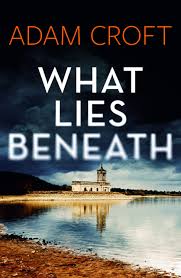
With over two million crime thriller books sold in over 120 countries, Adam Croft is one of the most successful independently published authors in the world. His crime thrillers Her Last Tomorrow and Tell Me I’m Wrong topped the Amazon and USA Today charts. His new release, What Lies Beneath, starts a new series for Adam that might exceed everything he’s already accomplished.

And, Adam Croft was an accomplished stage actor before turning indie-writer ten years ago. His first crime thrillers were the Knight & Culverhouse series. He also developed his Kempston Hardwick series before writing super-successful stand-alones. Now, Adam is off on a new venture with What Lies Beneath being Book 1in the Rutland series where he bases crime thriller fiction on a real location in the UK. It’s available for pre-order now and out on July 28th, 2020.

The University of Bedfordshire bestowed Adam an Honorary Doctor of Arts for his outstanding contribution to modern literature. As well, Adam has been a regular on the HuffPost, BBC Radio, The Guardian, and The Bookseller. He also hosts a regular podcast called Partners in Crime with fellow bestselling author Robert Daws.

But, for Kill Zone followers—especially crime thriller writers—Adam Croft has outstanding resources through his Indie Author Mindset books, courses, podcasts, and Facebook Group. Adam states his tipping point as a commercial writer was when he changed his mindset to believe in himself and treat his writing as a professional business.

Obviously, it paid off.

Courage in Fiction

By John Gilstrap

I’ve knocked around in my corner of the entertainment business for a quarter of a century now. Over the years, I’ve seen and heard a lot of snide talk and snobbery among authors and critics that belittles books, films and TV shows for their lack of . . . shall we say importance?

Snottery knows no bounds, it seems. Self-published authors take in on the chin quite a lot, but so do romance authors and those who write cozy mysteries and horror. When speaking a few years ago to a group of students in an MFA program, the professor who introduced me warned the assembled body to have an open mind even though I was “content to write nothing more important than commercial fiction.” If you’ve attended any of my seminars since then, you might remember that I now introduce myself as a writer of commercial fiction, whose work will likely never be taught in the classroom. I consider that to be something of a badge of honor.

I write and I consume the creative works of others for one primary purpose: to entertain or be entertained. Hard stop. If the material I’m consuming also educates, informs or instructs me at the same time, that’s terrific, but it’s not a requirement.

That said, I’m not an easy audience. The classics that I’m supposed to say I love because I make my living as an author–Hemingway, Marquez, Joyce, Fitzgerald, et. al.–for the most part put me to sleep. And Michener. Good God, James Michener. I stipulate that these authors are all brilliant, and that they have changed people’s lives, but I am unable to plow through their stories from beginning to end. Perhaps I’m a lazy reader.

Or perhaps I prefer to read great stories well told in voices that resonate in my head. Give me a Stephen King or Stephen Hunter or Tess Gerritsen or James Scott Bell, put me in a quiet room with a wee dram of smoky scotch, and I will be transported to wherever they take me.

What they write–what we write–may not be important (remember, that’s the word we agreed on), but the works inspire. Powerfully drawn good guys bring justice to powerfully drawn bad guys. Some leave more blood on the ceiling and walls than others, some present more moral ambiguity than others, but after the last page turns, right and wrong are sharply defined.

Last week, my fellow bloggers here at TKZ wrote of old television shows and old comedians. As I read those posts and the responses, it occurred to me that the common trait shared by writers, actors and comedians is a commitment to telling stories that move their respective audiences in some way. That’s what entertainment is, isn’t it?

And it works best when it surprises us. M*A*S*H was primarily a comedy, but who among us didn’t choke up the first time we learned of Henry Blake’s final plane trip? To this day, even though I’ve seen the episode a dozen times or more, the room still gets dusty every time I watch Andy Taylor open the window and tell Opie to listen to those birds that will never see their mama again.

Which brings us to the topic of courage (or lack thereof). Every week, my DVR records episodes of “12 O’Clock High”, starring Robert Lansing as General Frank Savage. I remember watching it as a kid, but all I remember are the scenes of aerial battle. The stories are really very complex and often quite moving. When you consider that the series aired when World War 2 wasn’t yet 20 years in the past, and that more pilots died in the 8th Air Force out of England than did all of the Marines in the Pacific theater, the story lines are particularly courageous. Battle fatigue (PTSD), cowardice, reckless bravery, loss of friends and the futility of war are all addressed in those episodes. They entertain because they resonate, and they resonate because we care about these young men who are forced to take exceptional risks for the benefit of others. We see courage in action. And it’s inspiring.

Fictional courage–whether on the page or on any size screen–starts with the writer, not with the characters. I tell myself that there are places I won’t go in my work, but that’s really a lie. I’ve harmed children and animals in my books, but never gratuitously. Still, I get hate mail whenever I do, and that’s fine. I figure that I moved that reader, and therefore I did my job. Sure, I moved them in a direction I didn’t intend, but at least they cared enough to write a note.

Plain vanilla stories are always safe, and they’re certainly not important. But if they’re not even inspiring, doesn’t that just make them irrelevant?

So what about you, TKZ family? What risks are you willing to take in your reading and your writing?


First Page Critique: Making Us
Care About A Guy Going Bad

By PJ Parrish

We’re off to the hoosegow, the clink, con college, the gray-bar hotel for today’s First Page submission. That much is certain. But I’m gonna need your help on figuring out some of the other things going on here. Please give your time to our writer and don’t be shy about weighing in with some pointers, praise and punditry.

Case Runner

The funny thing is, my folks wanted me to be a lawyer.

It’s a profession. You’ll always make a living. Like Uncle Mike.

That was before Uncle Mike, my father’s older step-brother, went to prison for skimming trusts. He died there, in pretty short order.

After sitting through more of Dad’s drunk disorderly and domestic abuse hearings than I could count, I wasn’t interested in law. I majored in computer science, with a minor in bookmaking, as a runner for Sweet Clete Sojack. I had a little credit card harvesting going on the side: go-go growth businesses practically invited me to grab their transaction data for resale, and in a pinch I could Netstumble my way into wide-open WiFi.

But I was better at getting the info than covering my tracks, so I also did a little time. Unlike Uncle Mike, I not only got out in 18 months, but emerged with a profession, funnily enough related to law, in about the same way as I was related to Uncle Mike.

You can learn a lot of things in prison. Some, a lot, we’ll leave unsaid. But you meet people who see things just a little differently, the spaces between the itch and the scratch where money can be made.

One of these people was Simon Vann, who had been a plaintiffs’ attorney until a case where much of his plaintiff class turned out to have already handed over powers of attorney to out-of-state relatives before signing with him. The houses, the cars, the boat, the sugar on the side, were all gone in a flash. He blamed himself for one thing and one thing only.

“I called the wrong case runner. Tried to save a few bucks.” He waved liver-spotted hands around the prison library. “Worked out great, huh?”

I asked him what a case runner was.

“See, there are laws against an attorney cooking up a cause of action and then finding warm bodies for plaintiffs. They call it ‘champertry’. So there’s a service, kind of a grey area, people who generate leads, finding and referring people whose issues jibe with the theory of the case. For a small fee per head, the attorney gets parties already qualified by the case runner.” Simon stared at the book in his hand, a history of power boats. “He hopes.”

______________________________

I’m back. First off, I really like this writer’s voice. It’s unique, punchy and gives me a pretty decent feel for the narrator’s character — or lack of same. But we need a bit more flesh on the bones, which I will get into in a moment.

This opening is essentially back story. Which is a no-no, yes? Well, not necessarily. What I call character-intro openings can be effective when done well. But the writing must be razor sharp for the reader to be patient and wait for something to happen ie action.

One of the best character openings, which I often cite in workshops, is in Steve Hamilton’s debut A Cold Day In Paradise. He is introducing his series character Alex Knight with this paragraph:

There is a bullet lodged in my chest, less than a centimeter from my heart. I don’t think about it much anymore. It’s just a part of me now. But every once in a while, on a certain kind of night, I remember that bullet. I feel the weight of it inside me. I can feel its metallic hardness. And even though the bullet has been warming inside my body for fourteen years, on a night like this, when it is dark enough and the wind is blowing, the bullet feels as cold as the night itself.

Yes, this is backstory, but the bullet next to heart image is compelling and deeply personal.  Here’s another slow backstory character opening that I like, from Tana French:

My father once told me that the most important thing every man should know is what he would die for. If you don’t know that, he said, what are you worth? Nothing. You’re not a man at all. I was thirteen and he was three quarters of the way into a bottle of Gordon’s finest, but hey, good talk. As far as I recall, he was willing to die a) for Ireland, b) for his mother, who had been dead for ten years, and c) to get that bitch Maggie Thatcher.

All the same, at any moment of my life since that day, I could have told you straight off the bat exactly what I would die for. At first it was easy: my family, my girl, my home. Later, for a while, things got more complicated. These days they hold steady, and I like that; it feels like something a man can be proud of. I would die for, in no particular order, my city, my job, and my kid.

Slow, measured, nothing happening here but the character trying to get into our heads. This goes to French’s style. And here is maybe my favorite character-doing-nothing-but thinking opening, from Mike Connelly’s The Poet.

Death is my beat. I make my living from it. I forge my professional relationship on it. I treat it with the passion and precision of an undertaker — somber and sympathetic about it when I’m with the bereaved, a skilled craftsman with it when I’m alone. I’ve always thought the secret to dealing with death was to keep it at arm’s length. That’s the rule. Don’t let it breathe in your face.

But my rule didn’t protect me. When the two detectives came for me and told me about Sean, a cold numbness quickly enveloped me. It was like I was on the other side of the aquarium window. I moved as if underwater — back and forth, back and forth — and looked out at the rest of the world through the glass. From the backseat of their car I could see my eyes in the rearview mirror, flashing each time we passed beneath a streetlight. I recognized the thousand-yard stare I had seen in the eyes of fresh widows I had interviewed over the years.

So yes, you can start by having your character thinking instead of doing. But it damn well better be so compelling that your reader is as well hooked as a fighting marlin. Does the opening to Case Runner succeed? Do you find this Unnamed Man narrator seductive? Does he force you to turn the page?

Well, almost. As I said, the voice has great tone to it. But it lacks the empathy bond that both Connelly and Hamilton forge. Other than the fact Unnamed Man is a bit of wise guy, I don’t get much sense of personality or feel much connection to him. I know that empathy for a character needs to be built over the course of an entire book, but we don’t know quite where we’re going with Unnamed Man here.

And here’s the rub. I think, though I am not sure because the writer isn’t specific enough, that Unnamed Man is going to go to the dark side and become a case runner. Which makes him at best an anti-hero. Will we want to root for him if he’s got the morals of a slug? Is the plot’s trajectory going to create a character arc that has him finding his way back into the light? We can hope.

Couple years ago, Steve Hamilton, on hiatus from his Alex Knight character, started a second series starring an anti-hero named Nick Mason.  Here’s the book’s teaser back copy:

Nick Mason is out of prison. After five years inside, he has just been given the one thing a man facing 25-to-life never gets, a second chance. But it comes at a terrible price.

Nick Mason is out of prison, but he’s not free. Whenever his cell phone rings, day or night, he must answer it and follow whatever order he is given. It’s the deal he made with Darius Cole, a criminal kingpin serving a double-life term who still runs an empire from his prison cell.

Forced to commit increasingly more dangerous crimes, hunted by the relentless detective who put him behind bars, and desperate to go straight and rebuild his life with his daughter and ex-wife, Nick will ultimately have to risk everything–his family, his sanity, and even his life–to finally break free.

See the point I am trying to make for our writer? If your guy starts out as a black hat, you need to make us care that he has a chance. He needs a journey, not just of plot but character. Redemption is a powerful theme in fiction. I hope this is where our writer is taking us.

Okay. But we have a basic structure problem beyond that. And it creates confusion. When and where is this scene taking place? After several paragraphs of backstory, in which we learn that Unnamed Man served 18 months in prison and got out, we get the first “action” scene — Unnamed Man talking to Simon Vann. They seem to be in a prison library, so that made me assume that Unnamed Man is also a prisoner. See the problem? The writer told us he was out, yet here we are behind bars. This is not a flashback; it is poor structure. Plus the writer tipped his plot hand too early by revealing in backstory narrative that he emerged from prison ironically with a new profession related to the law.

If the writer wants to stay with this backstory opening, he needs a way to gracefully transition to the PRESENT IN PRISON. Which is where the story really starts. It can be as simple as “I was thinking of my Dad (or Uncle Milt) or whatever, when I walked into the library and saw Simon Vann sitting at a table surrounded by a twelve volumes of The Supreme Court Reporter. 

Then have Unnamed Man go over and strike up the conversation. The way it is written is so bare bones we can’t easily figure out what is going on, where we are, and why this encounter is even happening. Give it dramatic context.  Has Simon been considering trying to drag Unnamed Man into his case runner scheme? Has Unnamed Man heard that Simon is recruiting? We need context. This is all happening in a plot vacuum.

Now let’s talk about the idea of case running itself. I’ve never heard of it, but then I am not steeped in law or legal thrillers. My sister Kelly knew immediately but she can quote every line of dialogue from Law & Order.  If, like me, you didn’t know what a case runner is, could you figure it out from Simon’s description? I’d guess no. Here is what Simon says:

“There are laws against an attorney cooking up a cause of action and then finding warm bodies for plaintiffs. They call it ‘champertry’. So there’s a service, kind of a grey area, people who generate leads, finding and referring people whose issues jibe with the theory of the case. For a small fee per head, the attorney gets parties already qualified by the case runner. He hopes.”

This sounds like something out of Wikipedia, not like a person would really talk. It needs to be filtered through Simon Vann’s particular personality prism. And again, it needs context. Why did this topic even come up? Why are they talking about it? It is just thrown out there with no reason, so why do we care? It needs to be a scene, with logic and dialogue between the two characters.

I found a good lawyer’s site that explains it better than Simon did — which is saying alot considering how bad lawyers are at breaking things down in real English. Essentially, case running is a fancy name for ambulance chasing. Bear with this long explanation because it goes to a point I want to make, again, about character arc:

More often than not, “ambulance chasing” is carried out not by attorneys, but by others known as “runners”. Case runners are not licensed to practice law. Rather, they are hired by accident attorneys to do whatever is necessary to get accident victims to hire a personal injury lawyer. And it doesn’t stop there. After the runner gets the injured accident victim to hire the lawyer, the victim is then coerced into going to a doctor who also works with the runner.

In order for these predatory “runners” to find their prey, they listen to police scanners; offer significant cash bribes to accident victims; they confuse the injured accident victims with false information; and, before an ambulance arrives, offer them rides right from the accident scene to a medical office, where the runner will get paid a handsome “referral fee” by the doctors- thousands of dollars. Sometimes, the runners don’t get to the accident scene in time to lure accident victims away from proper medical care. But that doesn’t stop these runners from harassing accident victims. Hospital workers, ambulance drivers, even police officers will sell these runners your most personal information for hefty prices. Armed with this information, runners and ambulance chasers will visit houses, text, call, and write accident victims until they relent.

Make no mistake about it- hustling cases like this is illegal and unethical. But since there is more money to be made selling accident victims and their personal, private information to the highest bidder than there is selling drugs on the street; the “runners” aren’t running scared. Instead, they are running all the way to the bank.

Wow…really good fodder for a anti-hero plot, right? He’s a sleazy, Better Call Saul type of dude who preys on vulnerable people and sells your personal info on the street to the highest bidder! Now that’s a great start for any character, so kudos to the writer for recognizing this potential.

But…

If Unnamed Man remains a predator throughout the whole book and learns nothing, what happens? We won’t care about him. And that is death to any book.

So, to go back to structure again, this opening really needs a good scene of extended dialogue between Simon Vann and Unnamed Man explaining what a case runner is and it needs to set up the plot catalyst that Unnamed Man is going to the dark side.

Let me do some quick line editing to make a few other points.

The funny thing is, my folks wanted me to be a lawyer.  I assume the writer means that it’s ironic that his parents wanted him to be a lawyer but then he became a case running sleazo?

It’s a profession. You’ll always make a living. Like Uncle Mike.

That was before Uncle Mike, my father’s older step-brother, went to prison for skimming trusts. He died there, in pretty short order.

After sitting through more of Dad’s drunk disorderly and domestic abuse hearings than I could count, I wasn’t interested in law. Nice bit of sad backstory, but it could be a tad more personalized. After sitting in the back of too many courtrooms next to my crying mother, watching my dad….I majored in computer science, where? We need to know where this story is taking place and this would drop a hint. with a minor in bookmaking, as a runner for Sweet Clete Sojack. I had a little credit card harvesting going on the side: go-go growth businesses practically invited me to grab their transaction data for resale, and in a pinch I could Netstumble my way into wide-open WiFi. Again, this is nice voice but it’s a little thin. Can we have a hint as to why a guy who made it to college felt compelled to run numbers and steal credit card info? The problem is, you are really setting him up as unlikeable.

But I was better at getting the info than covering my tracks, so I also did a little time. Again, a little thin on telling details. What was he busted for? Can you make it more personal and involving for us? Unlike Uncle Mike, I not only got out in 18 months, but emerged with a profession, funnily enough related to law, in about the same way as I was related to Uncle Mike. On first read, this seems like cheeky good writing. But it is really confusing because in a couple graphs, we’re right back in prison. And, dear writer, you gave away your main plot point too easily. Him emerging from prison with a dark side job is a cool BAM! plot moment. Don’t bury it in a tossed-off narrative comment.

You can learn a lot of things in prison. Some, a lot, we’ll leave unsaid. But you meet people who see things just a little differently, the spaces between the itch and the scratch where money can be made. Syntax problem here. Do you mean they see things just a little clearly, like recognizing that space between the itch…

One of these people was Simon Vann, who had been a plaintiffs’ attorney until a case where much of his plaintiff class turned out to have already handed over powers of attorney to out-of-state relatives before signing with him. The houses, the cars, the boat, the sugar on the side, were all gone in a flash. He blamed himself for one thing and one thing only.  How does he know this? 

“I called the wrong case runner. Tried to save a few bucks.” He waved liver-spotted hands around the prison library. “Worked out great, huh?”

I asked him what a case runner was. Again, this conversation must have the structure and context of a dramatic scene. Why are they talking about this? You have to slow down and choreograph your scene with more detail and clarity. 

“See, there are laws against an attorney cooking up a cause of action and then finding warm bodies for plaintiffs. They call it ‘champertry’. So there’s a service, kind of a grey area, people who generate leads, finding and referring people whose issues jibe with the theory of the case. For a small fee per head, the attorney gets parties already qualified by the case runner.” Simon stared at the book in his hand, a history of power boats. “He hopes.” As I said, the definition of case runner is essential to your book. You have to break down in layman terms, even if it’s coming from the mouth of a lawyer. Remember, Unnammed Man is NOT a lawyer, so he can ask “dumb” questions for the reader. First, figure out a reason for this conversation to be happening, then give us DIALOGUE ie action. Example:

I had heard around the exercise yard that Vann was looking to hire someone to work on the outside. It was big money for little work, rumor was. I was getting out in eight weeks and with my record had no chance of scoring something big in the computer biz.

Simon looked up at me as I approached his table. “I hear you’re looking for work,” he said.

How he had figured that out I’d never know. But I took it for a cue to slide into the chair across from him.

Then start the dialogue about what a case runner is. And your plot and character is off and running.

One last nit. You notice how annoying it was for me to keep using the phrase Unnamed Man? You need to find a way to gracefully tell us your guy’s name and quickly.

So, I hope you find this useful and not too discouraging. As I said, you’ve got some writer chops. You just need to figure out the structure issues and more important, how you want to make us want to root for your guy. Thanks for submitting!