Minutiae

I just returned from Boucheron in New Orleans. The first time I was there in 1975, Mardis Gras was in full swing and most folks were juiced to the gills. I say most, because I only remember bits and pieces of that six-day trip. Today, people still drink there, heavily, and not just at night. As the sun lowers in the thick, humid air, neon still shines bright, reflected in puddles of fluids I don’t care to ponder.

But back to Bouchercon. This mystery thriller gathering of writers and fans is likely the largest in North America. There were panels, presentations, and lots of authors. Many of them drinking. Other than going out for meals (and they were all splendid) I spent most of the time in the bar, talking with other attendees, who may or may not have been partaking of spirits and club soda.

If you’ve never been to any writers conference, the bar is where business takes place. No matter if you drink or not, it’s like a Serengeti  watering hole and almost everyone gathers there at one time or another in the evenings.

For some of us, it’s early afternoon.

Besides networking as we call it, I was on a panel along with four other excellent authors who shared their thoughts on “setting.” as a character. We’re all nice people, and everyone agreed that settings can  become a character that can, and will, drive a story.

If you don’t think so, read Fear in a Handful of Dust by John Ives, the pseudonym of a prolific author, Brian Garfield.

I picked that title up back when it was released in 1978 and was blown away by Ives/Garfield’s gritty dialogue and the reality of people struggling to survive in the desert. The cast is limited to essentially five characters, an insane mental patient, and four doctors.

The sixth character is the Mojave Desert.

But that’s not what this blog is about…sorry.

It’s also not about making sure your microphone is turned off. One of the panelists almost said something that would have followed her for years. Remember. All mikes are hot, whether they’re turned on or not. And now, finally, back to my original subject.

During the course of our panel discussion that wandered nearly as much as this blog, fellow participants mentioned that in one of his own novels, a troll emerged at an earlier conference to bring up what that individual thought was an important mistake in let’s say, Mr. Smith’s novel.

“At one point in your latest work, you write that it rained on May 25, 1964. Well, that’s incorrect. I looked it up through Goggle, ChatGap, and an old man who siad he was there, but I’m not sure, because he’d been at a conference and couldn’t remember much about what happened, but the point is, through rabbit holes and research, I discovered that it in fact didn’t rain that day like you said. Did you realize that?”

Personally, I would have suggested that the troll kiss my…

However, Mr. Smith was shaken by that point. He shouldn’t have been.

He should have said in a loud, firm voice, “It’s fiction, you moron!!! Take it as entertainment and not nonfiction.”

So maybe Mr. Smith wanted it to rain that day in his book in order to accomplish some plot point, mood, or setting. Who’s to say a tiny little cloud didn’t pop up in Nebraska and drop an inch of rain in about an hour.

Case in point. Here in the Dallas/Ft. Worth metroplex, the National Weather Service office is at the DFW airport. That’s where records and airplanes are kept, but Texas is such a strange animal that it has rained at my house only thirty miles away while not a drop fell at the airport.

Therefore it was recorded as a rain-free day.

When I was a kid playing softball at my uncle’s house in the country, a cousin knocked a fly ball over the roof and into the front yard…where it was raining, though not a drop fell in the back yard. So we all ran around to the other side to get soaked, much to our mother’s pleasure.

And while I’m rambling around here on several subjects, let me point out to everyone that the thermometer at DFW is surrounded by concrete! It’s hotter there than at my house where we have trees and grass, so in my humble opinion (and that’s the only one that counts right this moment, in my opinion), the days when we reach that magic (gasp) number of 100 only counts in the middle of all that concrete!

Envision me shouting this fact like Sam Kinison.

So with that, please return to your writing. Be accurate with real places (one way vs. two-way streets for example), tell your fictional story (maybe change the name of your town so your streets can run the way you want them to), and don’t worry about the minutiae!!!

Pronounced muh-NOO-shee-ee, it refers to the small, precise, and often useless details or trifling matters of something, often in a literal sense.

Sam Kinison again, worrying about these things will only give you an ulcer!!!!

Reader Friday-What’s Your Rallying Cry?


Motto: Adage, aphorism, maxim, rallying cry.

Famous people are famous for their mottos. They spew them out when they’re in front of a microphone and their fans.

Here’s a few: (Photo credits to Pixabay)

Question for TKZers this morning.

What are the words you live by no matter the circumstance that might arise in your world?

Here’s mine: This is all temporary.

(Click to view on Amazon)

  • Let’s hear yours. That thing you think when all is sunshine and roses–or, when the bottom drops out of your life.
  • How does your motto show up in your writing? Do you choose to read stories that illustrate your motto?


Cozy Detective Tips

By Elaine Viets

You knock on your neighbor’s door, and it swings open. Funny, Melanie always locks her door. You step into the hall, and see Melanie on the living room rug, dead as a mackerel. The police say Melanie’s death was an accident. She tripped.

But you know Melanie was no klutz. You’re sure she was murdered. The suspects could be her soon-to-be-ex-husband, her new boyfriend, or her boyfriend’s wife.

How do you investigate Melanie’s death if you’re a cozy detective?

You don’t have access to local, national or law enforcement databases, AFIS fingerprint databases, and other official sources.

Many writers cozy up (sorry) to someone in law enforcement. Even that shrewd spinster, Miss Jane Marple, had Sir Henry Clithering, a retired Scotland Yard commissioner, to make sure the local cops didn’t kick her off a case. Dame Agatha’s other creation, Hercule Poirot, had Inspector James Japp.

There are other ways to get information besides befriending a cop.

Check the suspect’s official biography.

Look at verifiable facts such as the suspect’s parents’ names, marriages and divorces. Check for brothers and sisters. Crooks can make up entire fake families.

Better yet, maybe your suspect doesn’t get along with their real family, and those relatives will happily spill the tea to your cozy detective.

Check the suspect’s birthplace and birthday, education, marriages and divorces.

College and high school yearbooks may have information about the suspect’s early years, as well as some mortifying photos.

You’d be surprised how many serial killers are well educated. The Unabomber went to Harvard. At age 16, no less. The Roadside Strangler graduated from Cornell.

Amy Bishop graduated from Northeastern and was hired at the University of Alabama. When she was denied tenure and her appeals were turned down, Amy was furious. At a faculty meeting Amy shot six people and killed three. Anyone who’s sat through faculty meetings might have some sympathy for Amy.

Check the suspect’s military service.

What does it mean if your suspect served in the military?

Not a whole lot. At least 20 serial killers served in the military, from Oklahoma bomber Timothy McVeigh to David Berkowitz, the Son of Sam. Uncle Sam gave serial killer Jeffrey Dahmer an honorable discharge after two years because Dahmer’s performance was impaired due to alcoholism.

Check the suspect’s social media, including LinkedIn, Twitter and Facebook.

Dozens of killers have confessed on Facebook or Twitter. Some even livestream the murder.

Check the local police records, if they’re available.

 Not just for arrests, but for incident reports, including neighbor complaints, reports of thefts, noise, and more. Your suspect could be the complainant, witness or suspect. Never underestimate fights between neighbors. In New York, Houston and other cities, people have been shot dead over parking spots.

Check with the Better Business Bureau. If the suspect has a business, you may find out he’s a cheat and a liar.

Check with delivery people.

 Do you have a friend or a relative who’s a delivery person? FedEx, UPS,  Amazon, as well as Lyft and Uber drivers, have all kinds of useful information. They  know who gets a fifth of Scotch delivered every Thursday, and who had to go to the hospital because her boyfriend broke her arm.

In one of my novels, a pizza delivery person gave my amateur detective the information to solve a murder, thanks to the delivery person’s dashboard cam.

Last but not least

don’t forget to Google the suspect’s name.


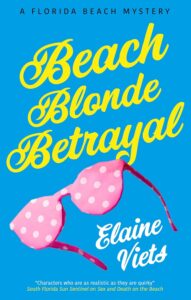
“Sex and Death” on the Beach, the first book in my new Florida Beach series, is on sale at Thriftbooks.com. Save $7! https://tinyurl.com/57wkt7e5

Finished the Draft. Now What?

Finished the Draft. Now What?
Terry Odell

marked up manuscript printed in 2 columns

Since my last post, I reached “the end” of the current manuscript. Yippee! Of course, now the real “fun” begins. Editing. Previously, I’ve talked about how I attempt to fool my brain with printing the manuscript in columns and in a different font. You can find that post here. That’s what I’ll be doing for the next several weeks before sending it off to my editor.

One thing I’m super happy about is that I found a title. I know some authors can’t start writing without one. For me, it’s usually the last thing I come up with. I can think of only two exceptions. What’s In A Name? got its title when I was forced to fill out an entry sheet for a RWA chapter contest. There was this big, blank line that said “Title.” The title was almost a placeholder, but I realized that it actually fit the story. Subconscious at work? Maybe. Probably.

The other one was Starting Over which is exactly what I was doing. It wasn’t so much a name of the manuscript, but rather the name I gave the folder in my computer where I would be saving drafts, chapters, notes, etc. The title worked, for the book, too, as it turned out.

When rights reverted, indie publishing still wasn’t a thing, so I approached another publisher. They accepted it, but didn’t want the same title, so it became Nowhere to Hide, which I kept when rights from that publisher reverted to me.

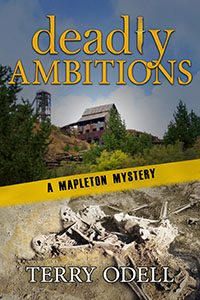
What was I talking about? Right. The new book and its title. It’s part of my Mapleton Mystery series, and the pattern for titles throughout has been a two-word title, the first word being “Deadly.” You’d think coming up with one word would be easy. Ha! Not for me.

Since I had finished the draft, I had some idea of a theme (I don’t think of those when I start, either). It came to me. Deadly Ambitions. It worked, my writing buddy liked it, and my editor liked it.

That puts me one step closer to publication.

But first, I have to whip this draft into shape.

We talk about first pages a lot here at TKZ. They’re important. Very important. It’s been months since I’ve written my first chapter, and there were changes as there always are when I’m starting a new book. Am I starting in the wrong place? Am I info dumping? Will it entice new readers to keep going? (The current wip is the 9th novel, and the 12th work in my Mapleton mystery series.) I write them so they can be read as stand alones, but there’s always the temptation to make sure new readers don’t feel confused when I introduce recurring characters. I know that bugs the heck out of me, which is the main reason I prefer to start with book one in a series. JSB is always saying readers will wait for answers, but how long?

My Mapleton books are small town police procedurals. Sort of. I’ve had reviewers comment that there’s a “cozy feel” to them. But they definitely do not fit the rules/guidelines/expectations of a cozy.

When I’m reading, I like seeing the off-the-job side of my protagonist. Through the series, Gordon has dated, become engaged, married, and is now at the “newlywed phase is starting to wear off” point. Angie, his girlfriend-fiancé-wife has been with him in some capacity since book one.

My dilemma, as is frequently the case, is how much page time she gets, along with how much page time Daily Bread, the diner she runs, gets. Are readers going to want to skim those scenes to get back to the Cop Stuff and Chief Stuff Gordon has to deal with? In the current book, she’s playing a significant role and is personally involved in one of Gordon’s cases. (No spoilers.) She’s part of the opening scene, but is it too much? Not enough? I’ll pose that question to you, TKZers.

These were the opening paragraphs in my first draft.

Gordon Hepler, Mapleton, Colorado’s Chief of Police, moseyed over to Jerry Illingsworth, newly elected mayor of the city. This was Jerry’s night, and it was in full swing. The event room at the Community Center was filled with his supporters, all enjoying the food and drink.

Angie, his wife, was in charge of the food, and she’d done a great job, deviating from the usual fare at Daily Bread. Jerry had requested something more upscale, and she’d been happy to comply, especially since her restaurant was closed for remodeling. The extra work provided much needed income.

Gordon snagged a shrimp-topped canape—Angie’s term. Gordon called them nibbles—from a passing server. The group around Jerry wandered off, and Gordon moved in to congratulate the new mayor.

“Would it be inappropriate for me to say It’s about time?” Jerry gave a quiet laugh. “Three recounts before Nelson Manning accepted—reluctantly is too kind a word—defeat.”

When I started my edits, I thought I’d devoted too much ‘dumping’ of who Angie was and her role, so I tightened it to this. (Only the second paragraph was changed.)

Gordon Hepler, Mapleton, Colorado’s Chief of Police, moseyed over to Jerry Illingsworth, newly elected mayor of the city. This was Jerry’s night, and it was in full swing. The event room at the Community Center was filled with his supporters, all enjoying the food and drink.

Gordon snagged a shrimp-topped canape—his wife Angie’s term—from a passing server. She was the chef, so she would know. Gordon called them nibbles. The group around Jerry wandered off, and Gordon moved in to congratulate the new mayor.

“Would it be inappropriate for me to say It’s about time?” Jerry gave a quiet laugh. “Three recounts before Nelson Manning accepted—reluctantly is too kind a word—defeat.”

What’s your take? Too much? Too little?

~~~~~

woman pouring a smoked Manhattan into a glassOh, and for those of you who are interested in my images from our anniversary getaway last month, you can find them here.


New! Find me at Substack with Writings and Wanderings

Danger Abroad

When breaking family ties is the only option.

Madison Westfield has information that could short-circuit her politician father’s campaign for governor. But he’s family. Although he was a father more in word than deed, she changes her identity and leaves the country rather than blow the whistle.

Blackthorne, Inc. taps Security and Investigations staffer, Logan Bolt, to track down Madison Westfield. When he finds her in the Faroe Islands, her story doesn’t match the one her father told Blackthorne. The investigation assignment quickly switches to personal protection for Madison.

Soon, they’re involved with a drug ring and a kidnapping attempt. Will working together put them in more danger? Can a budding relationship survive the dangers they encounter?

Available now.

Like bang for your buck? I have a new Triple-D Ranch bundle. All four novels for one low price. One stop shopping here.


Terry Odell is an award-winning author of Mystery and Romantic Suspense, although she prefers to think of them all as “Mysteries with Relationships.”

Fight, Flight, Freeze, or Fawn?

by Debbie Burke

Most people are familiar with “fight or flight” response to a threat. Physiologist and Harvard Medical School chair, Walter Bradford Cannon isolated those two reactions in the 1920s after observing animals in the lab. When animals were frightened or under stress, they displayed behaviors that evolution had programmed into them millions of years before for survival. Faced with a threat, animals either stood their ground and fought the attacker or ran away from it.

Photo credit: Bernard Dupont CC by SA 2.0


Our human ancestors developed the same programming. They either grabbed a big stick to fight off the lion or they ran like hell to escape it.

These physiological reactions are involuntary, triggered by the autonomic nervous system. Signs include dilated pupils, heightened hearing, racing heart, rapid breathing, and tense muscles to prepare the body to fight or run away.

“Freeze” is a third possible reaction to threats and wasn’t widely recognized untill the 1970s. Its evolutionary purpose may have been to avoid attracting the attention of a predator. If the prey didn’t move, the predator would hopefully not notice it and walk on by.

Public domain photo

I’ve watched young fawns remain completely still to blend in with cover. However, when deer freeze in the headlights of your speeding car, that option often doesn’t work out well for survival.

Recently I learned about a fourth reaction: fawn. The term was coined by psychotherapist Pete Walker in 2003 to describe behavior intended to appease the threat and avoid being harmed.

Photo credit: Andrew Lorenz CC by SA 3.0

For instance, dogs may roll on their backs and display their bellies to acknowledge the dominance of another dog. Crouching and cowering are also signs of fawning.

This reaction is often seen in human abuse victims who try to please or show subservience to a potential attacker to deflect violence. They also may agree with the threatening person, hoping to head off an argument that could lead to possible abuse.

This article by Olivia Guy-Evans describes physical responses that occur in the body during fight, flight, freeze, or fawn.

While fight, flight, and freeze are instinctual, fawn is a learned behavior, according to Shreya Mandal JD, LCSW, NBCFCH. When faced with chronic stress and threat, some people develop the fawn reaction to survive.

In a June 2025 article in Psychology Today, she writes:

“Rooted in complex trauma, the fawn response emerges when a person internalizes that safety, love, or even survival depends on appeasing others, especially those who hold power over them. It is a profound psychological adaptation, often shaped in childhood, in homes where love was conditional, inconsistent, or entangled with emotional or physical threat.

“For many survivors, especially those from marginalized communities, fawning becomes a deeply embodied pattern. As a trauma therapist and legal advocate, I’ve witnessed this adaptive strategy in clients across many settings: survivors of interpersonal violence, those navigating carceral systems, immigrants shaped by colonial legacies, employees navigating toxic work environments, and children of emotionally immature parents. The fawn is the child who learns to become invisible or overly helpful to avoid punishment. It’s the adult who minimizes their needs in relationships. It’s the employee who fears negative consequences and retaliation. It’s the incarcerated woman who apologizes before speaking her truth in court.”

The person may not consciously be aware of what they are doing. They simply understand they will “stay safe by pleasing the powerful.”

As crime writers, we often put our characters in conflict with others. When you write these scenes, try viewing them through the lens of what Pete Walker calls the “four Fs.”

Do they fight the threat?

Do they flee?

Do they freeze in their tracks?

Do they fawn to appease the attacker?

Their reactions depend on their individual personalities and psychological makeup. Often their behavior is shaped by childhood trauma that conditioned their responses to conflict.

If you’re not sure how your character would react to peril, try writing short sample scenes. In the first example, have them fight. In the second, they flee. In the third, they freeze. In the fourth, they fawn. Which of the four scenes seems the most authentic for your character’s personality and background?

Another prompt to develop your character is to put them in a risky situation and free-write what they do. They may surprise you by reacting in a way you didn’t expect. A character you thought was timid may stand their ground and put up a ferocious fight. A blustering, aggressive character may freeze or fawn when faced with actual danger.

When a character surprises you, dig deeper into the reasons behind their action. Were they the only defense between their younger sibling and an abusive parent? Were they punished without reason or treated unjustly? Did they resolve to never be put in a submissive position again?

Short writing prompts like these help you get to know your character and learn how they react under stress. Their background may not be shown in the story but you, as the author, will better understand how to portray them in an authentic, realistic way.

~~~

TKZers: When confronted with danger, does your main character fight, flee, freeze, or fawn?

~~~


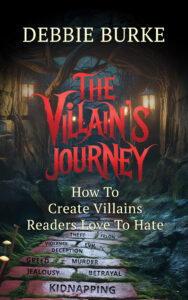
Debbie Burke’s new book The Villain’s Journey-How to Create Villains Readers Love to Hate is now for sale in hardcover, as well as ebook and paperback.

Fear of Failure

* * *

Babe Ruth played professional baseball for 22 years (1914-1935) and is considered one of the greatest players who ever lived. He had almost 3,000 hits in his career, averaging more than one hit per game. For many years, he held the record for the number of home runs hit during a single season (60 in 1927). His total number of home runs over his professional career was 714, a record which stood until 1974.

But there’s another statistic you may not have known: Babe Ruth struck out 1,330 times. Apparently, he never let the fear of failure keep him from playing the game.

* * *

Fear is part of being human. It goes along with the DNA, and it can be healthy because it instills the instinct for survival we all need. But fears can be unhealthy if we give in to them and become more cautious than we need to be.

Once we let our fears control us, things can get out of hand. A phobia is defined as an irrational fear of something that causes anxiety when a person is exposed to that particular thing.

We all know about fear of heights (acrophobia) and fear of spiders (arachnophobia), but when I searched around for a complete list, I found more than one hundred things on healthline.com to be afraid of! Here are a few I found interesting.


Fear of flowers (anthophobia) – Better not go for a walk in my neighborhood.

Fear of numbers (arithmophobia) – I have a friend who insists she “can’t do numbers”

Fear of books (bibliophobia) – Oh no!


Fear of failure (atychiphobia) – Ah, now here’s one we can relate to.

* * *

Failure is something we all experience, but I suspect the fear of failure is more acute in disciplines that require creativity than in other areas. The very word “create” implies something new, and that means it may not work.

I’ve read research that shows high achievers are very likely to experience fear of failure. (I imagine some of us here at TKZ fall into this category.) Having achieved success in their professional lives, these folks see anything less than a fabulous accomplishment as inadequacy.

Many high achievers will work hard to avoid that stigma, but others would rather drop out of the race than risk what they perceive as failure.

So how do authors stay in the game and handle that scary thought that they won’t be able to write another book as good as the last one?  There are ways to minimize those concerns. According to an article on betterhealth.vic.gov.au, the same things that enhance creativity can be used to fight the fear of failure.

“There are several ways you can try to fight your fears.… Simple changes, like exercising regularly, can reduce your stress levels. So can eating healthy meals, getting enough sleep, and reducing or avoiding stimulants like caffeine and alcohol.”

And don’t forget the Babe. You can’t hit a home run if you don’t step up to the plate.


So TKZers: Do you experience a fear of failure in your writing? How do you fight it?

* * *

The saga continues with Knights in Manhattan, the second novel in the Reen & Joanie Detective Agency middle grade mystery series.

  • Joanie is afraid of flying.
  • Reen is afraid she might not catch the thieves.
  • Mrs. Toussaint isn’t afraid of anything.

Join the fun with the R&J Detective Agency as they track down nefarious crooks in Manhattan. New York will never be the same.

$1.99 on Amazon, Barnes & Noble, Kobo, Apple Books, and Google Play

Reader Friday-Caption This!

Don’t you just love playing with words and ideas? I do! As authors, one skill we work hard to develop is using words that evoke pictures in the readers’ minds. This morning, let’s flip that around a bit, and use a picture to evoke words. Photographers and painters are masters at that, right?

There’s a game going around social media called Caption This! I thought it’d be fun for us to compete this morning, and come up with some original captions for this picture.

Caption This!


Go ahead. Stare at it for awhile and let your creative juices flow. What is this image saying to you?


What Good Are Your Cracks?

Some days, I sit down to write and wonder what the hell I’m doing.

The words don’t flow. The structure feels off. My confidence has left the building and is probably sitting at a pub somewhere ordering beer, wings, and nachos without me.

You’d think after years in law enforcement, forensics, and now crime writing, I’d be bulletproof by now—impervious to self-doubt and rejection. But nope. There are days I feel like a cracked pot.

And that, my fellow Kill Zoners, brings me to a story I want to share with you. It’s an old one. A quiet one. But it says everything a writer needs to hear.

The Story of the Cracked Pot

There was an old man who lived in a village in India. Every morning, he would place a long stick across his back, hang a water pot from each end, and walk several miles to the river to get fresh water for his family.

But the two water pots were not the same. One had a series of small cracks in its side, causing it to leak.

The old man would fill both pots at the river, but by the time he got back to his home, the cracked pot would be half empty, the water having leaked out during the walk.

The cracked pot grew increasingly ashamed of its inability to complete the task for which it was made. One day, while the old man filled the two pots at the river, the cracked pot spoke to him.

“I’m sorry. I’m so embarrassed that I cannot fulfill my responsibilities as well as the other pot.”

The old man smiled and replied, “On the walk home today, rather than hanging your head in shame, I want you to look up at the side of the path.”

The cracked pot reluctantly agreed to do as the old man asked. As they left the riverbank and started on the path, he couldn’t believe his eyes.

On his side of the path was a beautiful row of flowers.

“You see,” the old man said, “I’ve always known you had those cracks, so I planted flower seeds along your side of the path. Each day, your cracks helped me water them. And now, I pick these flowers to share their beauty with the entire village.”

We All Leak a Little

That story gets me every time.

Because if you’ve ever tried to create something from nothing, to sit at a keyboard and bring life to characters who don’t exist yet, then you know what it means to question your usefulness. You know what it feels like to compare yourself to someone else’s perfect pot—and wonder why your own words keep leaking out, incomplete, imperfect, maybe even irrelevant.

But what if your cracks are the very thing that make your writing beautiful?

What if the years you spent doubting yourself taught you empathy—and now your characters breathe with it?

What if the rejections, the self-edits, the tough critiques… what if those watered something beside the path you just haven’t noticed yet?

I’m not here to hand you a participation ribbon or pat your head and say, “You’re special.” You already know writing is hard. It takes guts. It takes sitting with discomfort and pushing through.

But I am here to tell you that those imperfections you think are holding you back?

They’re feeding the flowers.

Keep Leaking

Maybe your story structure feels like a mess. Maybe your plot sagged in Act Two and hasn’t recovered. Maybe someone told you you’d never make it—and part of you believed them.

Here’s what I want you to remember.

There is no perfect pot.

Even the bestselling author you admire struggles with the page. Even the literary genius has doubt gnawing at the back of their brain. The difference is, they kept walking the path. Cracks and all.

And if you do the same—keep showing up, keep pouring yourself into the process, keep leaking a little water every day—you’ll be amazed at what grows.

You don’t have to be flawless to be useful. You don’t have to be brilliant to be beautiful. And you sure as hell don’t need to write like anyone else to make an impact.

You just need to walk your path.

Let the seeds you’ve planted over the years—your discipline, your voice, your scars, your strange and wonderful perspective—be watered by your imperfections.

Keep writing.

You have no idea how many flowers are blooming because of you.

Kill Zoners – Show us your cracks.

Plot As A Utility

By John Gilstrap

Today’s Killzone post will reappear as a handout in a couple of weeks at the end of a panel entitled, “Settings and Secrets” at the always-terrific Creatures, Crimes and Creativity conference in the Washington, DC suburb of Columbia, Maryland. Here’s the setup, what the moderator has sent to us:

This weekend I researched “setting in novels” and found the following varying, although accurate depending on one’s viewpoint, definitions:
  • The setting of a story is defined as the time, duration, and place an author chooses to write about.
  • The four types of setting are: physical, social, historical, and psychological.
  • The five types of setting in fiction: realistic setting, fantasy setting, science fiction setting, historical fiction setting, contemporary setting.
  • The core elements of setting are time, place, mood, context.
  • There are three different kinds of story setting: temporal, environmental, and individual.

As a self-schooled pantser who’s seen considerable success in the novel writing business over the past three decades, the one rule I preach the loudest to anyone who will listen is that there are no rules in the world of fiction. When I see definitions assigned to the elements of creativity, I feel my jaws lock. Then, when a hard number is assigned to those elements, I growl. Creativity defies numerical value, and I think it’s a mistake to set struggling writers’ minds wandering on a journey down that road.

Stories are about interesting characters doing interesting things in interesting places in interesting ways. There you have the traditionally accepted three elements of story: character, plot and setting. But they are not separate elements and they cannot be addressed separately. (Okay, that sounded like a rule–but it’s what works for me.)

Setting, per se, in most modern fiction, is important only to the degree that it establishes the place where scenes unfold, since every scene has to happen somewhere. All else being equal, a scene that occurs in an interesting location is inherently more engaging than a scene that occurs in an uninteresting one. Rocket science, right?

The secret sauce in making a setting pop lies in its presentation. I believe in filtering everything through the perceptions of a character with enough detail to orient the reader, but without so much description as to stop the action of the story. I like to stay with suggestive terms that let readers fill in their own blanks.

Irene crossed the threshold into a marble monument to money and poor taste. The footprint of the foyer equaled that of her first house, with pink veined walls that climbed thirty feet to an arched ceiling adorned with images of mostly-naked cherubs swimming through the heavens. Twenty feet straight ahead, at the head of the first flight of the grand staircase, at the spot where the risers split to form a giant Y, stood a stone carving of Carl Adams himself, dressed as Caesar, and looking far more fit than Irene imagined Carl had ever been.

In my mind, as a thriller writer, that setting is a utility for the future. Yes, it’s the place where the rest of the scene unfolds, but note that there’s no detail on the type of marble or on what the cherubs are really doing. There’s a dismissiveness to the tone of the description that lets the reader know that Irene is not a fan without having to actually articulate the fact.

Note that I said the setting was a utility. It’s a storytelling tool. It’s a leverage point for advancing plot or character. In my head, that foyer with the statue seems like a great place for a climactic gunfight, but because I truly am a pantser–I write without knowing what’s coming next–I don’t yet know if the story will take me back around to the mansion to make it happen.

But let’s say, for the sake of argument, that I decide that I do want a big scene of violence in the mansion and I want it to involve the structure being on fire. Well, okay, no big deal. Since marble doesn’t burn, I would go back to the description of money and poor taste and replace that veined marble with mahogany and ebony. Maybe there are vaulted wooden beams and the statue becomes something tasteless in the vein of a cigar store Indian. That would make a great fire. If that was that was the way I went, then I’d have to plant something in the setting that would provide a means of escape for my heroes.

In my stories, setting serves the character and the plot, and is the easiest element to mold to every other component of good storytelling. Depending on your genre and you character, be mindful of the level of detail. If your character is lost in the woods, is he going to be noticing the difference between pin oaks and live oaks and white oaks and red oaks? Or even the difference between oaks and maples? Hardwoods versus evergreens, maybe?

The key questions for you as the writer are, do your descriptions of setting advance both the plot and the character without upsetting the pacing? That’s the test.

Story Structure: The Case For Building A Ranch, Not A Tri-Level

By PJ Parrish

A couple weeks ago, I posted about a writer who was having problems taming her backstory beast. Click here to review. She was really struggling because she was beginning to realize she actually had TWO main plots but one was disguising itself as backstory.

It got me thinking about simple story structure. Which is never really simple.

Simple explanation: Story structure (also known as narrative structure or plot structure) is a way of ordering all of the events in your book. Every story has a beginning, middle and end.

Not so simple part: There are myriad ways you can present your events in a story. And that’s what got my writer friend in trouble. She was having a really hard time figuring out how to structure her story. I suspect many of you out there have fought the same battle.

I often think of plot structure as architecture. There are countless ways to build a house. You can have a simple ranch. This is your basic whodunit, thriller or romance with a solid linear plot. You go in the door and progress easily through the rooms. It might be a small ranch house; it might be a grand one. But it is always built to lead you through with logic, harmony and balance. Call it fictional feng shui.

COTE DE TEXAS: Total Renovation for a 1960's Houston Ranchburger

You can have a three-story filigreed French colonial. Twisting subplots, big cast of characters, high intrigue, multiple points of view, complex time-shifting narrative, unreliable narrators, multiple suspects. (James Ellroy’s LA Confidental comes to mind) See photo below!

French Colonial Architecture | French Colonial House Design Style

Then there are the butt-ugly houses. Maybe they started out as a basic ranch but the writer lost control and start just tacking on action scenes, distracting subplots, and dumb secondary characters, hoping this would dazzle readers and hide the sad fact that the writer didn’t really know what the hell they are trying to say to begin with. (See this mess below)

When Bad Additions Happen to Good Homes

Or sometimes, writers can’t figure out what KIND of book they’re writing. They deperately mix sub-genres (am I writing a a cozy or hardbioled? Should I give my hero a girlfriend? Maybe he needs a dog who helps him solve cases!) and they end up with something like this:

r/CrappyDesign - This monstrosity of a house in my town.

And then there are the tri-level builders. This is where I see writers mostly fail. You remember these houses from the 50s and 60s. You go in the door but you can’t decide whether to go up, down or sideways. Is that the basement or the rec room? And where the hell is the john? This, I think, is what happened to my writer. She had two main plots, a couple subplots and she just couldn’t figure out the best way to get in the door.  1960's Split Level Renovation - Contemporary - Atlanta - by Pythoge Custom Homes and Renovations | Houzz

I love ranch houses. They are simple, linear, and you can’t fall down the stairs or get lost in them. For all you scholarly crime dogs out there, this basic ranch house plot structure has a fancy name —  The Fichtean Curve. John Gardner usually gets credit for this in his 1983 book The Art of Fiction. But this sturdy structure has been basis for countless novels, especially commercial fiction.

The Fichtean Curve: Examples of This Basic Plot Structure

Let’s break down the architecture. (I’m going to rely on Jaws as my example, because it’s a basic thriller plot that all of you know.)

Step 1: Rising Action

The story starts with some kind of inciting incident. What our own James calls a break in the norm. A murder, an abduction, a crisis of some kind that gets the narrative ball rolling. In Jaws, in the opening scene, a skinnydipping girl is devoured by a shark on Amity Island.

The main character has to WANT something. (to solve the case, save the child, catch the serial killer. And the WANT relates, in the best fiction, to some inner conflict for the hero. In Jaws, Chief Brody needs to figure out how to catch the serial killer shark.

The plot progresses through a series of crises wherein the protag faces set-backs that raise the stakes and things become more personal to the protag. In Jaws, Brody faces myriad obstacles, including the dumb mayor, free-lancing yahoos in skiffs, his own fear of water, and eventually the Ahab-ian shark-hunter Quint. Quint also represents one of the most effective tension-creating devices in rising action — a riff in the team.

Step 2: the Climax

Rinsing action is the bulk of your structure, but the climax is the apex. It could be a final battle or confrontation, a big reveal or giant plot twist. In Jaws, of course, the climax builds as the Orca slowly gets destroyed, Quint gets eaten, Hooper is lost, and Brody becomes isolated on the sinking mast, praying his last bullet will hit its target. Which it does in spectacular fashion.

The Shark Is Broken: Jaws feud was 'legendary'

Step 3: Falling Action

Also called the denouement. The bad guy is vanquished. The child is saved. The case is solved. We get to take a well-earned breath. Any plot loose ends are wrapped up. (Although not all stories have an extended falling action. Jaws’s denouement is brief.) But beyond tying things up, the purpose of falling action is also to give you the writer an opportunity to emphasize the theme of your story, and stress how the hero has been impacted.  It’s not how the detective works the case. It’s how the case works on the detective.

One last point, because I’ve gone long here today. There are many other ways to structure your story. And depending on how firm your grasp is on your craft, you might be comfortable with more complex architecture. We can talk about that another day.  But when it doubt, bet it all on the ranch.