My Cure for Writer’s Block

By John Gilstrap

Perhaps the title of this post is a bit misleading.  Truth be told, I don’t believe in writer’s block.  There are days when the creativity feels like it won’t flow at all, and there are certainly days when I would prefer to do something other than tying my backside to the chair and hammering out words, but that’s what everybody feels about any job on some days.

“Writer’s block” is, I believe, too often an excuse to be wielded on those days when a writer would prefer to play hookie.  There’s nothing wrong with playing hookie, but whilst playing, it’s disingenuous to complain about not getting stuff done on your manuscript.  There truly is no substitute to a writer writing, even when the words don’t flow easily.

I think of creativity as a flow, and the writer as the pump.  When the pipes are filled and the pressure is even, creativity pours out of us, sometimes in such volume that we can’t handle it all.  Then stuff happens in our lives or in our surroundings that causes intellectual cavitation, and our pump loses prime.  All that flow reduces to a pool, and it’s hard work to get it going again.

Everybody has a proprietary secret sauce to re-prime their own pipes, but one that always works for me is to return to the basics: pen and paper.  I posted a video on the topic on my YouTube channel.  I don’t know why it works, but somehow, the tactile connection between my brain and the page, flowing through an old-fashioned fountain pen, never fails to set me straight.  For every book I write, I’d guess 20% of the prose starts as being written longhand.  Once the story is flowing again, I type up the handwritten pages and I’m off and running.

What about you?  Any tricks you want to share for getting past the story parts that don’t seem to want to work?

Reading For Survival

The man who won’t read good books has no advantage over the man who can’t read them. — Mark Twain

By PJ Parrish

Saw a depressing video on Facebook the other day. People on the street were being polled about what was the last book they read.

The guy then asks folks to name an author. Any author. Crickets. Sigh.

I know we here at TKZ are preaching to the choir. But I also think maybe we need to be more worried about this.  I’m not going to talk politics here, rest assured, but I am going to say that our ability to absorb information seems to be questionable, at best, these days. And we need to be smart right now. About a lot of things.

We need to read.

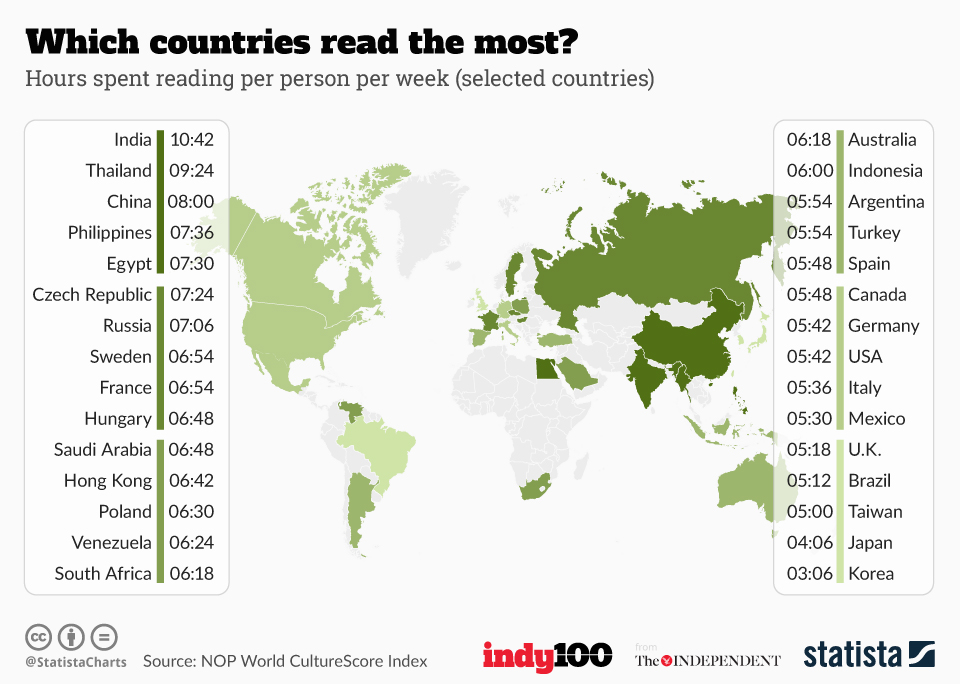
The latest Pew poll I could find on this subject says that  28% of adults ages 50 and older have not read a book in the past year, compared with 20% of adults under 50. . And as a country, we’re at the bottom of the reading pack.

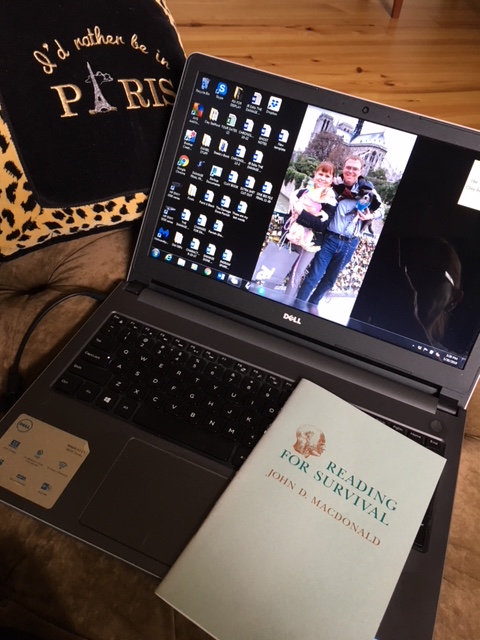
This subject slid to the front of my brain only because I was cleaning out my file drawer in my office. I found a slender little booklet that I had thought I had lost years ago. It’s a copy of an essay that John D. MacDonald wrote for the American Library Association and the National Endowment for the Arts.

It’s called Reading For Survival.

Now, if you think it’s some dust-dry diatribe, some shrill screed about how we’re raising a generation of morons, well, then you must not have read John D before. It reads like, well, one of his novels. (By the way, I didn’t know James and I would be writing about JDM in the same week. Click here to go back and read his post on what JDM taught him.)

A little background:  Years ago, a friend of mine, Jean Trebbi, had a local TV show in South Florida called Library Edition. Jean was a force in the literary community. She was the head of the Broward County Center for the Book, a tireless supporter of all authors and most any book. In 1985, she interviewed MacDonald on her program, and when the camera stopped rolling, he kept going, but wanting to talk about non-readers instead of his own books.

Jean suggested he should write something on the subject for NEA and the Library Association. MacDonald didn’t want to do it, fearing he would be just preaching to the converted, but he finally agreed — with the caveat that he could use “colorful enough language to it will be quoted, sooner or later, to a great many non-readers.”

Things didn’t go well. “I could not make the essay work and I could not imagine why,” he recalls in the booklet’s forward. “I must have done two hundred pages of junk.”

Does hearing that make you feel any better about your own writing problems?

Jean Trebbi, finally wrote him asking what he hold-up was and MacDonald told her he had written a hot mess. Jean suggested using the device of a conversation between Travis McGee and and his friend Meyer. And that is what he did.

MacDonald called it “a small, mangy, bad-tempered mouse of 7200 words.”  But as I re-read it the other day, I realized its message is as vital today than it must have been thirty-one years ago. MacDonald said the theme of his essay was “the terrible isolation of the non-reader, his life without meaning because he cannot comprehend the world in which he lives.”

If that doesn’t set off in a bell in your head, you haven’t been paying attention to what’s going on in our country these days.

The essay opens like a vintage MacDonald novel.  Thunderclouds are gathering over the slips at Bahia Mar and McGee and Meyer are sitting on the deck of the Busted Flush. And next time someone tells you never open with weather, read them this:

The big thunder-engine of early summer was moving into sync along Florida’s east coast, sloshing millions of tons of water onto the baked land and running off too quickly as it always does.

An impressive line of anvil clouds marched ashore on that Friday afternoon in June, electrocuting golfers, setting off burglar alarms, knocking out phone and power lines, scaring the whey out of the newcomers.

The power goes out and Meyer puts down his book, and McGee says that it’s too dark to read anyway. (weather as metaphor!)

“I wasn’t reading, Travis,” Meyer said. “I was thinking about something. A passage in the book started me thinking about something.”

Over the next twenty-two pages, Meyer — whose mind is like a maze — spools out his argument — that man’s brain evolved the way it did, creating a genetic storehouse of memories, out of the pure need to understand his environment and thus survive.

Meyer concocts a prehistoric man named Mog and his modern counterpart Smith. Mog happens upon some fruit but he’s wary of eating it. Using all his memory skills, he decides to not chance it, that it’s a trap. His modern counterpart, Smith, gets a job offer at twice his salary. But using his memory skills, he deduces the employer is in a high risk banking arena with bad management turnover rates. So he says no.

“Back in prehistory,” McGee offers, “man learned and remembered everything he had to know about survival in his world. Then he invented so many tricks and tools, he had to invent writing. More stuff got written down than any man could possibly remember. Or use. Books are artificial memory. And it’s there when you want it. But for just surviving, you don’t need the books. Not any more.”

Books are artificial memory. Don’t you love that? But then Meyer lays it on him:

“So why are we doing such a poor job of surviving as a species, Travis?”

MacDonald goes on to say that the world of prehistoric man was small, limited to what the man could see, hear, taste, eat, kill, carry and use. But to modern man, who can read and remember, the world is huge and monstrously complicated.

“The man who can read and ponder big realities is a man keyed to survival of the species. He doesn’t have to read everything. That’s an asinine concept. He should have access to everything, but have enough education to differentiate between slanted tracts and balanced studies, between hysterical preachings and carefully researched data.”

Makes you wonder what MacDonald would have thought of today’s fake news debate, Facebook’s propaganda problems and the isolated little echo chambers we’ve crawled into. MacDonald and McGee go on:

“To be aware of the world you live in you must be aware of the constant change wrought by science, and the price we pay for every advance. These are our realities, and, like our ancestors of fifty thousand years ago, if we — as a species rather than an individual — are uniformed, or careless, or indifferent to the facts, then survival as a species is in serious doubt.”

So what’s the answer? Meyer thinks he knows:

How do we relate to reality? How do we begin to comprehend it? By using that same marvelous brain our ancestor used. By the exercise of memory. How do we take stock of these memories? By reading, Travis. Reading! Complex ideas and complex relationships are not transmitted by body language, by brainstorming sessions, by the boob tube or the boom box. You cannot turn back the pages of a television show and review part you did not quite understand. You cannot carry conversations around in your coat pocket.

Ha! What would MacDonald have to say about Tivo and iPhones?

Meyer is worried, he tells Travis, that non-readers are disenfranchised, cut off from any knowledge of history, literature and science. And worse, they become negative role models for their children, who will in turn, “become a new generation of illiterates, of victims.”

“The non-reader, Travis, wants to believe. He is the one born every minute. The world is so vastly confusing and baffling to him that he feels there has to be some simple answer to everything that troubles him. And so, out of pure emptiness, he will embrace spiritualism, a banana diet, or some callous frippery like Dianetics.”

Or worse. Name your modern opiate.

MacDonald died Dec. 28, 1986, a few months after finishing the essay. I really wonder what he might think of where we are today, of what he might think watching those blank-eye folks on the beach, trying to think of one author’s name.  What would he make of the fact we are barraged with information twenty-four hours a day, yet we seem to be growing not smarter but more lost and disconnected?

The essay ends with Meyer saying that he has no cure to offer, but that just identifying the disease is a good first step. But then he adds:

“Bleak, my boy. Bleak indeed. And so let us trudge back toward home, and stop at the bar at the Seaview for something tall and cold, with rum in it.”

“Beautifully said,” I told him.

On the way back, I told him that he had made me feel guilty about my frivolous reading fare of late, and what might I read that would patch up my comprehension and my conscience at the same time.

Meyer thought about it until we had our drinks. He took a sip, sighed, and said, “I’ll lend you my copy of Barbara Tuchman’s A Distant Mirror.”

I am halfway through it. And the world has a different look, a slightly altered reality. That fourteenth century was the pits!

I ordered the Tuchman book from Amazon. (My local bookstore can’t get it, I tried). Now I am going to go mix a stiff gin and tonic, crack it open and try to get some badly needed sense of perspective.

Happy reading, folks.  By the way, I am on the road today, probably somewhere near the Michigan-Indiana border as you read this. So if I can’t reply quickly, please chat among yourselves.  Will check in when I get home to Traverse City, MI.


Recognizing Writing Tics – First Page Critique

By Sue Coletta

We have another brave writer who submitted their first page for critique. I took the liberty of breaking up the paragraphs for easier reading. Anon, white space is our friend. My comments will follow. Enjoy!

Untitled

The smell of burning wood and flesh began to be drowned out by the sound of screams…the screams of a woman. Deafening and chilling screams, echoed through the steel door.  Andromeda found herself in a small room, with cold metal walls, a plain steel table, metal bed with a thin mattress and blanket, and an uncomfortable looking metal chair. She was a tall, beautiful young woman, whose long black hair fell down to her shoulders, and slightly covered her almond shaped face.

An eerie chill pierced the air in the room, and Andromeda wasn’t sure if the goosebumps that followed were because of the woman screaming, or the total lack of insulation in the room – likely a combination of both.

Andromeda looked around the room, her heart pounding through her chest. Her attempts to remember how she got here was futile; the only thing she remembered was cleaning up after her best friend and roommate Sofia, who was recuperating from the flu.

After disposing of soiled tissue paper and disinfecting their dorm room, Andromeda turned on some classical music and tucked herself in bed. After that, there was a black spot in her memory. She sat up in the bed that she woke up in, and began to stretch and look around the room.

Dressed in a white t-shirt, gray fleece shorts, and white socks, she began to walk around the stark and unoccupied room, looking for anything that may give her a clue as to where she was. She wrapped her arms around her body, bracing herself for the shudder and chills that followed.

The room had the look and feel of a military interrogation chamber: there were no windows, no traces that anyone even knew she was there. But someone knew she was here, the same someone who put her in this place. Suddenly, Andromeda was reminded of the screams as they began again, growing increasingly louder, followed by a loud “BOOM!” Andromeda ran to the door, preparing her mind to bang on the door with all of her might, to hell with alerting whomever put her in this room; the only thing on her mind was escaping. However, before she could even touch the door, it receded into the floor.  Andromeda fell face first onto the cold, hard, metal floor of the hallway. The palms of her hands were burning, and so were her legs.

***

After reading this piece several times, I still can’t figure out if it’s a dream sequence or if it’s the opener for a fantasy novel. The last line indicates the events happened in the real world—how else would her hands and legs be burning?— so my guess is we’re in a fantasy world. If this is a dream, however, we need to be careful not to trick the reader. Opening with a dream is risky. Does that mean we can never do it? No. But we do need to learn the rules of storytelling before we break them.

Let’s set aside the last two sentences for a moment.

Our hero is actively searching for a means of escape while at the same time, wrestling with how she landed in an unfamiliar room. Anon didn’t give away too much too soon, either. Which is great. An opening page should raise story questions and pique the reader’s interest. Our goal is to make it impossible not to flip the page. Anon, I really hope this isn’t a dream, or it’ll undo all the conflict and tension you’ve worked so hard to create.

Writing Tics

Believe me, we all have our fair share of words we favor, extra words (overwriting), and unnecessary words that get in the way. The trick is learning how our writing tics weaken our writing.

This first page is littered with began. It may seem nitpicky to mention it, but it popped right out at me. Our goal is for individual word choices to deliver the right balance of cadence, emotion, transparency, and rhythm, so the reader enjoys the story with no hiccups. Words like began and started detract from the action.  Allow me to show you what I mean.

First line of the excerpt …

The smell of burning wood and flesh began to be drowned out by the sound of screams…the screams of a woman.

If we only remove “began to be” …

The smell of burning wood and flesh drowned out the sound of screams … the screams of a woman.

See how more immediate that reads? Next, let’s shuffle a few words around so the reader can share in the experience.

Screams drowned out the smell of burning wood and flesh … the screams of a woman. 

Better, but it still needs a few tweaks. By being specific and intentional we paint a more vivid picture …

High-pitched screams collided with the stench of burning flesh … screams of a woman.

Next line: remember to introduce the hero right away so the reader knows who’s telling the story. While we’re at it, let’s deepen the point of view by removing all telling words i.e. smell, sound, remember, knew, thought, felt, etc.

Inside the cramped room with metal-lined walls, Andromeda [last name] jolted upright in an unfamiliar bed, the bare mattress yellowed, torn.

Adding Inner dialogue allows the reader to empathize with our hero. Let’s add that here …

Where was she?

We still need sensory details and conflict …

Rotted meat blended with the warmth of a campfire. Plumes of smoke billowed through the barred-window in the steel door—her only source of air. And light. No windows, no other doors, no means for escape. A steel hydraulic table sat in the corner, a trickle of blood snaked down one leg, the remaining surface polished to a glossy shine.

Hero’s reaction …

Andromeda’s heart thrashed, rattling her ribcage. Was her captor incinerating live victims?

Put it all together …

High-pitched screams collided with the stench of burning flesh … the screams of a woman. Inside the cramped room with metal-lined walls, Andromeda [last name] jolted upright in an unfamiliar bed, the bare mattress yellowed, torn.

Where was she? 

Rotted meat blended with the warmth of a campfire. Smoke billowed through the barred-window in the steel door—her only source of air. And light. No windows, no other doors, no means for escape. A steel hydraulic table sat in the corner, a trickle of blood snaked down one leg, the remaining surface polished to a glossy shine. 

Andromeda’s heart thrashed, rattling her ribcage. Was her captor incinerating live victims?

See how these tweaks pull the reader deeper into the story?

Because it feels like this brave writer is early on in their journey, I added a few quick tips rather than bleed red ink all over the excerpt. I’d hate to be responsible for shattering the magic that keeps us thirsting for knowledge, keeps us creating. The beginning of our journey is an important time in every writer’s career. The muse is running wild and possibilities are endless.

Quick tips

  • Watch your adverbs; words like suddenly don’t add tension;
  • Be specific; rather than “some classical music,” name the composer;
  • All caps are reserved for acronyms, not for words like “Boom”;
  • Use active voice, not passive; this post may help;
  • Followed by, for the most part, is similar to began and started in that we need to reword to make the action more immediate;
  • Anytime you write “herself” you lessen the point of view i.e. tucked herself in bed. Instead, try something like: she slipped under the covers. Or, she swung her legs under the blanket.

I hope these tips help with your next draft, Anon. If this first page isn’t a dream, you have the makings of an intriguing story. Wishing you the best of luck!

Over to you, TKZ family. What tips would you give this brave writer?


…for the repose of the soul…

Photo courtesy Eberhard Grossgasteiger through unsplash.com

Fair warning: this is going to be a very dark and sad post. You might want to go elsewhere, to a place where quiet is disturbed only by laughter and where there is no fear or bad endings instead of reading what follows.

I am blessed with living on a very nice street in a very nice neighborhood. What little crime occurs here tends to be transitory. Maybe the police will stop an intoxicated driver or there will be a bit of vandalism or a fight at one of the schools. It’s generally boring, and that’s how we like it.

I received a telephone call from D, my good friend and former brother-in-law, on Monday, June 4 at about 7:35PM. D lives one street over from me. He has worked in law enforcement and has a friend on our local police force. D seemed hesitant at first when I answered. “Um, Joe,” he said, “You didn’t, uh, just kill (your wife) did you?” I assured him that I had not. He told me that his policeman friend had called him a few moments before and told him that there had been a murder on my street involving a married couple. I went outside to find the house across and five up from mine surrounded by police cars. The short version of what was gradually revealed is that the husband (J) and wife (D) who lived there had been having marital problems and had separated in anticipation of a divorce, with the husband living elsewhere but occasionally visiting his wife. They sought the advice of a family lawyer like the ones found at Http://www.petersmay.com/, so hopefully, everything will be sorted. According to witnesses, J on the day in question had been at the house but was seen exiting with blood on his hands and confessed to his brother via telephone and to a neighbor in person to killing D. J then got in his car and left. The neighbor went over to the house and looked in the front window, saw D’s body, and called 911. J was quickly apprehended and arrested. He is currently in custody as the justice system moves forward.

J and D were what I would call “waving” neighbors. I had two conversations with J in twenty years, both occasioned by our shared backgrounds — we both misspent our formative years in the Cleveland area — but were not what anyone would call close. I saw and talked with D more, but not much more, and our conversations were short and hardly substantive. I do remember feeling bad for her a few years ago when J set up what was supposed to be a celebratory birthday display for D on their front yard. I am not lacking a sense of humor, and such has often been characterized, not inaccurately, by people who know me as extremely inappropriate. I felt so bad for D about what was in their yard, however, that I had to restrain myself from tearing it down. I can’t imagine that D’s birthday was happy that year. I am further unable, as more official information trickles out concerning what allegedly occurred last week, to remotely imagine what D’s last minutes were like.

The damage that was inflicted upon D during her last minutes on earth — as indicated by the charges against J, which I won’t get into here — and which resulted in her death radiates far beyond the house where she and J lived and raised a family. They have three adult children, two of whom are engaged to be married, with all living out of state. Losing both parents at once in very different ways will undoubtedly leave a mark. Worse, to my mind, is that D’s mother is still with us. Parents usually go ahead of their children and the passing while tragic is the normal order of things. The death of a child at any age before a parent is not something, I would think, from which one could ever recover. I can’t imagine what she is going through or will face.

A number of automobiles have driven down the street at regular intervals since D’s murder, negotiating the cul-de-sac where my house rests before making their way back up toward what they no doubt regard as the murder house. Neighbors have been taking care of the yard, but I can’t imagine anyone ever wanting to live there again. How dreadful is that place. I struggle daily — hourly — with my faith, but when I drive by that house the words of a prayer that I haven’t said in decades rise up unbidden inside me. I hope that they do some good, somewhere, somehow:


…may her soul and all the souls of the faithful departed rest in peace. Amen.


First Page Critique: No Such Thing as Enough

Go Daddy Stock photo

Greetings and Salutations, happy readers!

It’s my pleasure to bring you a new First Page Critique. The chapter is the first from a novel called, No Such Thing as Enough.

Jamie Frampton took seventy-five feet to die. The first bullet entered his chest and blew out his back, leaving blood spatter on the brick wall of the alley. A crooked blood trail marked the cement where he staggered between the Chinese take-out place and the hardware store. Finally, he left a pool of blood where he collapsed on the North Main Street sidewalk after turning right and taking his last steps, trying to get home, the shooter putting another bullet in his head. The skinny seventeen-year-old had put up a good fight, but he lost.

Jamie’s mother, Alice, rousted me out of bed with a phone call at about 3:00 AM. “Pastor Rathbone, my boy is dead.” Her voice came through flat, expressionless. “Please come down to North Main Street. Maybe you could tell me where God was when my boy was dying? Or maybe you could tell me why God didn’t care that my boy was murdered in the street?” She cried as she hung up, leaving me sitting in my underwear, staring at the receiver.

I tried to place her face, but nothing registered. She had to be a member of the congregation, but I couldn’t remember ever seeing her. In a church the size of the Dayton Crossing Christian Tabernacle, that was easy. How had my predecessor, Pastor Richmond, been able to keep track of so many people?

I wondered what Alice expected me to do or say. Where was God when we needed him? I had no idea. I had struggled with that question most of my life, and still I had no answers. Nevertheless, it was my job to bring comfort—not that anything I could say would really comfort her—so I threw on some clothes and headed out to downtown Dayton Crossing.

***************

While I do enjoy working with writers who have that new baby writer smell (Mmmmmm, those potent combinations: Fearlessness/fearfulness. Inventiveness. Enthusiasm/despair. Overconfidence/zero confidence.), it’s always a pleasure to work with a writer who has read a lot of fiction and can construct not just a pleasing sentence, but a well-thought-out paragraph. Hear, hear, brave author! You’re off the ground, but let’s work on your aim.

I was going to start off with a most obvious comment about presenting a logical sequence of events, which is something a lot of us struggle with. What comes first, second, third, etc.?

But I’m going to short circuit that comment with an observation that came to me on my fourth or fifth reading of this opening: It reads exactly like a novelized screenplay. While I’ve only written one produced screenplay, and a handful of live theater pieces, I have—if there were such a thing—an unofficial  doctorate in crime television viewing.

[Opening]

Setting: dark, urban alley

Seventeen-year-old boy walking downtown at night is ambushed, shot in the chest with a high-caliber bullet by a shadowy assailant who could be either a man or woman. He staggers, badly wounded, through an alley leaving a trail of blood. He’s thinking of home (perhaps he’s just been on his phone, calling Mum to say when he’ll be home), and is desperate to get back there, but we can tell by the music he won’t be saved. He collapses on North Main Street, and the assailant shoots him in the head.

[Main titles]

Scene

Slightly tatty, darkened bedroom

Rathbone, a middle-aged man, ruggedly handsome buy not cocky, fumbles for the ringing phone. A woman speaking in a rather monotone, expressionless voice is on the line. She launches into the tale of her son being murdered, while Rathbone frantically feels around for the Dayton Crossing Christian Tabernacle membership directory. Who is this woman, and what is she saying? He sits up, wearing only his underwear. She hangs up, now weeping, and he’s left still puzzled as to who exactly she is. He stares at the receiver, still wondering if he’s supposed to remember who she is.

Rathbone puts on clothes, obviously pensive. He’s not sure what she expects from him, but he knows it has something to do with comforting her. He leaves the house in a God-existential crisis to meet her.

(I’m guessing that he shows up on the scene and finds himself more drawn to solving the crime than comforting the expressionless Alice? It’s a solid start to a story.)

***************

Most of the opening chapter is in Rathbone’s first person POV. But the very first paragraph—the establishing shot, if you will, is rather omniscient, with a bit of authorial editorializing thrown in for good measure. “The skinny seventeen-year old had put up a good fight, but he lost.” Something/someone with a personality is making this comment.

Who is saying this? I’m intrigued. The description of Jamie’s path is extremely specific. Are the mentioned places important?

First line: “Jamie Frampton took seventy-five feet to die.” I like this sentence. It sets up the paragraph well, and I suppose it connects to the specificity of his path. But in the end I find it awkward. Maybe more detail to improve the rhythm.

“Jamie Frampton took a 147-grain, .9mm bullet to the chest, but it took him two minutes and seventy-five frantic, painful steps to die.” If you’re going for drama, go big!

Consider doing one of two things with this paragraph. You can make it a prologue or the first chapter by itself. Back off on the editorializing unless that voice is going to reappear many more times throughout the book. The other thing you could do is give us—or give Rathbone—this information when he’s hanging around the crime scene. Perhaps the guy is a garrulous detective or M.E. who sees Rathbone as non-threatening because of his profession.

It just doesn’t work where it now is.

Rathbone seems a pretty sensible guy. Very philosophical and a bit troubled. Let him have his way with his story, and don’t be afraid to take chances with him.

It’s a terrific start! Just remember that what works in a screenplay won’t translate directly into a novel.


First Page Critique: Tenor Trouble

Today’s first page critique is entitled Tenor Trouble, and raises many of the issues we’ve addressed here at the TKZ such as the appropriate entry scene for a novel, the use of description/backstory, and clarity in POV. Kudos to our brave author for submitting this page. My comments follow.

Tenor Trouble

“Oh no, my dear. No. You simply should not even think about auditioning for this role.”

Melissa stared at her teacher, all joy flooding from her. “I shouldn’t?”

“No, no.”

Helena Montague tapped her lacquered fingernails on the shiny surface of the vocal score for Othello, which had arrived from Amazon that morning.

Melissa had been delighted that she had caught the postman before she had to leave the flat for her ten-thirty seminar on Media Adaptations of Dickens, because she went straight from work to get to Glasgow in time for her singing lesson. It was possible, of course – even probable – that the Grande dame of British opera already had the score somewhere on the shelves that lined the music room in her elegant West End townhouse, but some instinct had made Melissa hold back on mentioning her plans until she had her own copy in her own hands.

It made it real, somehow. Melissa had been so keen to get her score that she hadn’t waited for the bulk order for the company to come through from Harmony Music, but had summoned one overnight from Amazon as soon as the choice of show was officially confirmed. Not that there had ever been a great deal of doubt about whether Agnes Farquhar’s choice of Verdi’s Otellofor Doric Opera’s next production would be voted through by the Committee.

And when she had ripped off the cardboard packaging in her kitchen that morning, and gazed reverentially at the glossy cover – identical to last year’s score, with the exception of the name of the show, framed in red – she marveled at how lightweight and relatively slender the book was. It was astonishing to think that this insubstantial volume held within it the whole of such a great work.

Now she looked at the same score on the lid of the baby grand piano, tingling with dismay. “Um – why?”

My Comments

Overall Feedback

First off, I thought the first three lines of dialogue worked really well at capturing my attention and interest. Unfortunately, after that, there is far too much narrative about Melissa’s purchase of the score for Othello and her traveling to her singing lesson, which stalls the action and drains the first page of the initial dramatic tension established.

The key to this first page is, I think, establishing emotional resonance. We want to feel (and care about) Melissa’s anticipation about auditioning as well as her dismay when her teacher immediately dismisses the prospect. To do this, the author could easily reduce the various paragraphs to one or two sentences. For example, something like “Melissa clutched the glossy score to Othello that she’d eagerly had shipped overnight and stared at Helena Montague, once the Grande Dame of British opera, in dismay.” Then the scene could immediately move to providing us with more action to give the reader a tantalizing glimpse of the novel to come.

I’m assuming the novel isn’t just about Melissa’s dashed hopes so I’d like to see some kind of foreshadowing of the drama (or mystery) to come. If this is a murder mystery, the reader should start to feel a sense of anticipation that a crime is about to occur.

More Specific Comments

Dialogue

I thought the dialogue was effective – from the initial first line I already had a good sense of Helena’s arrogance as well as Melissa’s insecurity. The teacher-student relationship was obvious. I think more dialogue rather than narrative would have strengthened this first page. That being said, we also need more action in order to become committed to following (and caring about) Melissa as a character. The dialogue so far makes her seem insecure and submissive (although that is possibly understandable when faced with the Grande Dame!).

POV

I confess I got a little confused at the start when the POV seemed to shift from Melissa to Helena Montague tapping her lacquered fingers (an image I liked BTW) on the vocal score that had arrived from Amazon that morning. It made me think (incorrectly) that it was Helena who ordered it. I think this page would work better if the author stuck close to Melissa’s POV and we knew quite clearly that we were observing Helena through her eyes.

Extraneous Information

As I already noted in my overall comments, there is far too much background detail in this first page that weighs down the scene. Do we really need to know that Melissa has a ten-thirty seminar on Media Adaptations of Dickens? Likewise, do we need details such as it was Agnes Farquhar’s choice of Verdi’s Otello for Doric Opera’s next production or that a committee voted on it? Probably not. Even though Melissa’s delight and reverence for the score packs some emotional punch, this could be portrayed more succinctly. We don’t need all the details regarding her ordering it on Amazon, intercepting the postman, or how she felt opening the package.

A first page is the reader’s initial entry point to the story and so every line, every word counts. My advice to our brave submitter would be to get straight to the heart of the matter and the initial incident which (I assume) sets up the conflict for the rest of the novel.

First Scene

One question I would ask our submitter is whether he or she thinks this is the best place to start the novel – could this confrontation occur perhaps later in the first chapter or even in chapter 2? Since I’m not sure where the story is heading, I can’t answer this myself but I do wonder if this chapter contains sufficient dramatic weight to start a novel. Although Melissa’s disappointment is evident, we probably need more intrigue/drama to become fully invested in her as a character. Sometimes it helps for a writer to take a step back and re-evaluate the best place to start the story so that it grabs the reader’s attention and doesn’t let go. Maybe (and I don’t have any idea about the actual plot for this book so I’m just throwing it out there) this novel starts with the discovery of Helena’s body and then moves to this scene as Melissa grapples with her mixed feelings over her singing teacher’s demise…

All in all though, well done to our brave submitter.

So TKZers what feedback would you provide or add?


Pixar Storytelling – 20 Points Writers Can Learn From Animated Stories

JordanDane
@JordanDane

I ran across this great video posted on Youtube that features the 20-pt advice of Emma Coats, a master storyboard artist with Pixar. The narrator of this video is writing coach Mike Consol. It runs through tips on storytelling. Whether you are a novice writer or a seasoned pro, you can learn a lot from these amazing gems.

For your convenience, I posted Pixar’s 20 points in summary and my paraphrasing, but it’s worth it to watch the video for more. Jot down the tips that speak to you and try some if you haven’t.

1.) Create characters that people admire for more than their successes.

2.) Write what is interesting for your readers, not just you as a writer.

3.) Create a character story arc using these basic lines:

Once upon a time there was _____
Every day _____
One day _____
Because of that _____
Until finally _____

4.) Simplification & focus is important. Simplifying the flow to the essence of the story is freedom for the writer. (This is like the ELLE method of sharp fast-paced writing used in the scenes of Law & Order TV series – Enter Late, Leave Early.)

5.) What is your character’s comfort zone, then throw them a major curve ball. Challenge them and give them a twist of fate.

6.) Create an ending BEFORE you write the middle. Endings are tough. Know them upfront.

7.) Finish your story by letting go of it. Nothing is perfect. Move on. You can do better the next time.

8.) Deconstruct a story that you like. What do you like best about it? Break it down. Recognize the elements.

9.) Put your story on paper and not just keep it in your head.

10.) Discount the first few plot/story ideas that come to you. Get the obvious stuff out of the way and clear your mind for new story ideas that will surprise you.

11.) Give your characters opinions. Passive characters are boring.

12.) Ask yourself – why must I tell THIS story? This will be the heart of your story and the essence of storytelling.

13.) Ask yourself – If I were my character, how would I feel? Emotional honesty brings authenticity and credibility to your writing. If the story puts the character in over-the-top circumstances, the emotional honesty can help the reader relate to the character and draw them in.

14.) What are the stakes? Give your readers a reason to root for your character. Stack the odds against your character and make them worthy of their starring role.

15.) No work is ever wasted. If it’s not working, let it go and move on. The idea or writing might be used at another time when it’s more suitable.

16.) Know the difference between doing your best and fussing.

17.) A coincidence that gets your character INTO trouble is a beautiful thing, but a coincidence that gets your character OUT OF trouble is cheating. Don’t cheat.

18.) Take the building blocks of a movie or story that you do NOT like and rearrange them into a story that is better.

19.) A writer should identify with a situation or a character. Figure out what would make YOU act that way to make it read as authentic.

20.) What is the essence of your story and then figure out what is the most economical way to tell that story.

FOR DISCUSSION:
1.) What tips did you find most helpful?
2.) Are there tips listed that you are eager to try?

Stories Are Always Better When Something Happens

By John Gilstrap

Mr. or Ms. Anonymous has submitted a page for us to critique.  As always, the italics are mine, for the sake of clarity.  First the submission, and then I’ll see you on the flip.

Title:  Octobers Fire

The Dodge pulled up to the edge of the cliff. The man cut the engine, then the headlights. Stepping out of the car, he spent a few moments letting his eyes adjust, listening to the ticking of the hot engine block as it cooled. It was deep in the night, the hour when everyone and everything is slumbering, and the stillness was palpable. Even the crickets were asleep.

This hour was the sole domain of insomniacs.

The sliver of a crescent moon inched towards its zenith. To the west, lights from the boxy tract homes of San Amaro Hills spilled into the orange glow of the coastal cities, and to the south, a few twinkling lights peeked from the lush foliage protecting the old growth mansions of Rancho Alto. To the east, he gazed into the blackness of Fairy Glen. Its undulating hills were carpeted in shaggy chaparral, just a shade darker than the black velvet sky, freckled with stars, that hung above it. The perfect hunting grounds.

As the man’s eyes adapted, he could make out the depth of the quarry below him, the scarred surface of the granite torn away by machines and men. He pulled a half smoked cigar from the case in his pants pocket, stuck it in his mouth, but then decided against lighting it. He would savor it when the job was done.

He saw headlights approaching, bouncing and jarring up the hill.

He’d had a plan–make small talk, act jovial, share a few beers–but now found his patience was short. The thought of the whole charade seemed more distasteful than the job itself. The Rohypnol in his pocket could go to good use elsewhere, he wasn’t worried about that. He pictured a new, spectacular kind of death.

In his experience, investigations were clumsy. Police grasped at the first assumption and held on tight, like a dog with a bone. Nobody would miss this poor kid enough to investigate his death fully. It probably wouldn’t even make the local news.

He looked around his feet for the perfect rock, not too big, not too small. He remembered his boyhood in Bogota, pitching for his street gang’s stickball team. As the second car pulled up to his, he couldn’t help but smile. He still had a good arm.

=

It’s Gilstrap again.  Let’s start with the positives.  I think the writing here is very strong.  I like the details of the ticking engine and the stillness of the night.  The imagery of looking out over the sleeping town of boxy tract homes worked for me.  Kudos on that.  I have some niggling suggestions for strengthening the prose, which I’ll present below, but overall, the prose stitches together nicely.

All that’s missing is a sense of story.  And that brings us to the not-so-positives.  In these 400 words, we meet an insomniac with no name who for reasons unknown is preparing to do harm to someone else with no name.  From this sample, I could be equally convinced that the story is about either a serial killer or a werewolf.  (We learn that the remote outdoors are the “perfect hunting grounds,” yet we are also told that the hunter knows that the bouncing headlights are delivering a “poor kid” who is targeted for a “new, spectacular kind of death.”  Those are ominous phrases that ultimately have no meaning for the reader.)

I wonder more and more whether writers who submit their first-page samples have ever bothered to read the feedback given to their predecessors.  The problems that haunt this piece have mostly been discussed here on TKZ many times before.

Give us a name.  It’s impossible for a reader to bond with a pronoun or nameless entity.  The man, the boy, the woman, etc. have no humanity without a name attached. We don’t need much.  No backstory, no physical description.  Just a name will do to bring a spark of life to a character we’re meeting for the first time.

Give us action.  Lovely description is, well, lovely, but it’s not a story.  In this sample, I believe I would open with the approaching headlights.  Think of that as the framework to support the why of the story.  Consider:

Zachary Childress caressed the bottle of Rohypnol in his pocket as he watched the headlights approaching through the blackness.  They bounced and jarred up the rough hill, but they were still too far away for their engine noise to pierce the silence of the night.  Just a few feet away, the engine of his Dodge pickup ticked as it cooled.

Maybe that’s not where your story is going, but the point is that in just a few words, we know that a guy with an old-fashioned name means to make use of a date rape drug on the occupant of the approaching vehicle.  We also know that Zachary has only recently arrived.  From here, if you want to throw in a paragraph about the beauty of the night, that’s fine, but understand that that description stops the story.  (Your audience is not reading to find out what the evening looks like.  They’re reading to find out what he has in mind for his victim.)

Instead of transitioning to description, I would transition to his internal monologue.

Okay, enough of that.  Instead of rewriting your story, let me offer some suggestions on your story as it is.  The bold writing is mine.

Title:  Octobers Fire [Are we missing an apostrophe here?]

The Dodge [Give a little bit more here.  Pickup truck, maybe?] pulled up to the edge of the cliff. The man cut the engine, then the headlights. Stepping out of the car, he spent a few moments [This phrase makes me crazy.  A moment is an undefined unit of time, so a few is as long as only one.  If you mean seconds, say seconds.  Otherwise, one moment will do.] letting his eyes adjust, listening to the ticking of the hot engine block as it cooled. It was [Weak construction.  What was?  Better to say “This was the hour when everyone . . .]deep in the night, the hour when everyone and everything is slumbering, and the stillness was palpable. Even the crickets were asleep.

This hour was the sole [Really? The sole domain? What about firefighters and shift workers? Beware the unnecessary modifier.] domain of insomniacs.

The sliver of a crescent moon [As opposed to a sliver of a full moon? I’d pick either crescent or sliver, but not both] inched towards its zenith. To the west, lights from the boxy tract homes of San Amaro Hills spilled into the orange glow of the coastal cities, and to the south, a few twinkling lights peeked from the lush foliage protecting the old growth mansions of Rancho Alto. To the east, he gazed into the blackness of Fairy Glen [Be careful not to confuse your reader. Fairy Glen may well be a real place, but I’ve never heard of it. To me, this implies that Unicorn Alley may be around the corner, and that this is a fantasy/SF story.]. Its undulating hills [Do hills undulate, absent an earthquake?] were carpeted in shaggy chaparral, just a shade darker than the black velvet sky, freckled with stars, that hung above it. The perfect hunting grounds.[Except he’s not really hunting here, is he? Again, in context, “hunting” makes me think that he has not yet chosen his prey, but I think he in fact has.]

As the man’s eyes adapted, he could make out the depth of the quarry [Quarry is a bad word in this context. In the previous paragraph, you speak of hunting, and now you speak of quarry.  Beware of homonyms.] below him, the scarred surface of the granite torn away by machines and men. He pulled a half smoked cigar from the case in his pants pocket, stuck it in his mouth, but then decided against lighting it. He would savor it when the job was done.

He saw headlights approaching, bouncing and jarring up the hill.

He’d had a plan–make small talk, act jovial, share a few beers–but now found his patience was short. The thought of the whole charade seemed more distasteful than the job itself. [Does he in fact find the job distasteful?] The Rohypnol in his pocket could go to good use elsewhere, he wasn’t worried about that. He pictured a new, spectacular kind of death. [Presumably for his victim? What does he envision here?]

In his experience, investigations were clumsy. [This is a weird, jarring pivot.  Is he a cop?  If not, this seems like a non-sequitur.] Police grasped at the first assumption and held on tight, like a dog with a bone. Nobody would miss this poor kid enough to investigate his death fully. It probably wouldn’t even make the local news.

He looked around his feet for the perfect rock, [I thought it was dark. How does he see?  Is the rock his murder weapon?] not too big, not too small. He remembered his boyhood in Bogota, pitching for his street gang’s stickball team. As the second car pulled up to his, he couldn’t help but smile. He still had a good arm. [When I first read this, I presumed that he had somehow injured his other arm. Now, I think you mean a good pitching arm.]

First Page Critique: Opening
With A Big Bang…In Theory

By PJ Parrish

Get ready, because we’ve got a lot of action in today’s First Page submission. Explosions! Body parts! Fiery cars!  Whew…

I’ll be back in a…uh, a flash and we’ll talk about this.

Ice Hammer: Invincible

A blinding white light exploded across his senses. Light so bright it seemed like it had physical texture, burning white trenches across the inside of his eyeballs. A wall of sound struck a second later, with the force of a hammer blow from a giant blacksmith’s forge. It knocked Brad Stone and the other men in the room off their feet. Shards of window glass sprayed their faces and hands like hundreds of flying razor blades.

He struggled back to the window, carefully raised his head to look outside and stared down at the mess his men had created on the street below. Vehicles smoldered in front of the high-rise hotel. Arms, legs, heads, and torsos lay scattered across the pavement amidst pieces of vehicles and weapons.

Flames licked up from the underside of the overturned Suburban, its glossy black paint shimmered in the fiery reflection.

A hand appeared from inside the vehicle. A person, struggling their way out. A head and shoulders raised from the open window. The person, a woman, pushed herself up until she was half out of the vehicle. What looked like tears of blood streamed across her cheeks.

She pushed her hair out of her eyes and looked up in Brad’s direction.

Youngmi.

His wife.

His heart trembled in his chest, the sight filling him with horror.

He had seen his wife’s dead body only a few days after the war had started, two years earlier. He’d been certain it was her. She was in her new Mercedes SUV with the custom license plates. She was wearing her favorite t-shirt. And she was definitely dead. Her face had been blown apart, opened up and peeled back, like a rose blossom from the gardens of hell.

This version of Youngmi stared at him, shock and recognition mingled with terror. The flames reached the fuel tank and erupted in a roaring blaze. The fire stretched its greedy fingers around the edge of the armored SUV and caught her clothes.

She did not scream, not at first. Her mouth hung agape as she realized her own husband had killed her.

The flames erupted with new energy, enveloping her body. Her clothing lit like a human torch. Her face contorted in agony and the scream finally came.

“BRAAAAAAD!”

Her voice echoed his name across the city, bouncing off the walls of the surrounding buildings.

___________________________

Dontcha just hate slow starts?  I’m kidding, of course. We’re always harping here at TKZ about the need to get out of the gate fast.  Now, if you’re a regular here, you know not to take that literally.  Getting off to a fast start in a thriller is a good idea, and I suspect we’re in thriller territory here. But that doesn’t mean you literally have to start with a car chase or flying body parts. (See Jame’s Sunday post about omniscient point of view openings for one reference). You can create tension with a slower approach.

That, as you can see, is not the case here. Things literally start with a bang. Our writer has dropped us smack into the middle of a crisis — an explosion that propelled the protag (I think) across the room and then he staggers to the window to see all hell breaking loose down on the street. What’s not to like?

Nothing, in my humble opinion. I think this is a good door by which to enter the story.  James’s axiom of “act first, explain later” is in full bore here.  And the part about the wife — supposedly dead but now appearing in the burning car — is intriguing, to say the least.

So, good set-up, writer!  But there are some problems in the execution here. We have some issues with lack of clarity: Where are we? What exactly is going on here? We have some overwriting going on. Here’s a good guideline to keep in mind: The more intense the action, the less “writerly” your writing should be. And at times, the word choices are jarringly tone-deaf, out of tune with the tone of the scene itself. More on that small but important detail in a second. Let me go through this with a fine-tooth pencil:

A blinding white light exploded across his senses. Not a bad opening line. Light so bright it seemed like it had physical texture, burning white trenches across the inside of his eyeballs. Not sure I get this image. Maybe burning the inside of the lids? A wall of sound struck a second later, with the force of a hammer blow from a giant blacksmith’s forge. I’d end after hammer. It knocked Brad Stone and the other men I’d lose them for now. Focus on your main guy; the spear-carriers clutter things up esp in the first graph! .in the room off their feet. Shards of window glass sprayed their faces and hands like hundreds of flying razor blades. Way too many metaphors in this opening graph. Turn this into action: The window shattered and the shards razored into his face.  

He struggled back to the window, carefully raised his head to look outside and stared down at the mess his men had created on the street below. This was a big hiccup for me. HIS MEN detonated a lethal bomb in a street? Is Brad a terrorist? Because we have no context — is this a foreign locale? Are we in wartime? — I am confused about Brad’s role here and am not liking the fact he’s the cause of the carnage. Vehicles smoldered in front of the high-rise hotel. Arms, legs, heads, and torsos lay scattered across the pavement amidst pieces of vehicles and weapons. You need to tell us how high up he is. I know, it’s a stupid detail but important because he is about to recognize his wife’s face. You say only that vehicles are on fire “in front of the high-rise hotel.” Is Brad in this hotel or it is across the street? 

What blew up? Where was the bomb? (I assume it was a bomb). The Suburban is overturned, but if the bomb was under it, it would have been blown to bits like the other vehicles you mention. (You don’t tell us it’s armored until way too late). And you miss chances to enhance the mood here — where’s the acrid black smoke, which might partially obscure his view? What does this smell like? Screams? People running or staggering away? Why are there weapons laying about on the street? Again, because there is not even a HINT of place or context, this doesn’t add up. 

Flames licked up from the underside of the overturned Suburban, use of “the” implies specificity. So it was the target? Otherwise, it is merely a Suburban. Also, these cars are common in the U.S., the Mideast and only a few other countries, so make sure you’re right on it. It’s also the car of choice of secret service. its glossy black paint shimmered in the fiery reflection. Now here is where I think you’ve gone off-key.  This is a hell scape. Brad would not be noticing “glossy” paint “shimmering.”  Watch your tone. 

A hand appeared from inside the vehicle. More likely, a hand appeared out of a shattered driver’s side window? A person, struggling their way out. A head and shoulders raised from the open window. The person, a woman, pushed herself up until she was half out of the vehicle. What looked like tears of blood streamed across her cheeks. This construction implies Brad is thinking this, but again, its tone is off. Her face is simply covered in blood. 

She pushed her hair out of her eyes She wiped the blood from her eyes and looked up in Brad’s direction.

I think you need a physical beat here before her name. One, the odd name is not easily digested as name on first glance. Two, GET US IN BRAD”S HEAD FIRST.

Brad froze. Brad’s heart stopped. Brad grabbed the edge of the broken window and stared down. Something, anything.

Youngmi. Put this in itals. It’s a direct thought with no attribution. Plus, the stress is nice.

His wife.

His heart trembled in his chest, Another example of off-key tone. This word choice is too soft, too tender for the action. the sight filling him with horror. Show me, don’t tell me. 

He had seen his wife’s dead body only a few days after the war had started, two years earlier. Problem with clarity here. We need a better transition. I didn’t get this the first time read it. Thinking I was dense, I tried it on two other people. They missed it too, asking me, “so she was already dead? Is she dead now?” When you’re doing a fake-out like this (nothing wrong with that!), you have to make it clear that’s what it is. Something needed here, like:

But it couldn’t be her. She had died two years ago. He had seen her body, seen her slumped behind the wheel of her new Mercedes SUV.  Seen her blood soaking the front of her favorite Bob Seger t-shirt. And when he had finally walked around to the window, he had seen her face — blown apart, opened and peeled back, like some grotesque flower.

He’d been certain it was her. She was in her new Mercedes SUV with the custom license plates. She was wearing her favorite t-shirt. And she was definitely dead. Her face had been blown apart, opened up and peeled back, like a rose blossom from the gardens of hell. This is you, the writer talking, not Brad thinking. Stay in his sensibility.

You’ve just been in a mini-flashback. You need a transition back: Now, he stared down at the woman in the Suburban. And she stared back at him. Or, the black smoke cleared and he stared down again at the woman in the Suburban.  

Another point: This is an armored SUV in some kind of war-zone place. Yet Brad doesn’t think, what the hell is she doing driving an armored car? 

This version of Youngmi stared at him, shock and recognition mingled with terror. Why would she look up to some random window in the high-rise? Makes no sense. She’s got other things to worry about. Also, the recognition thing has to be conveyed through Brad’s consciousness: 

What was it he saw in her face? Terror…but something more. Brad felt his gut clench. She was looking right at him. Jesus, did she recognize him? (You can do better, but you get the point).

The flames reached the fuel tank and erupted in a roaring blaze. The fire stretched its greedy fingers Get out of the way of your story! Too writerly. Stay in Brad’s senses. around the edge of the armored SUV THIS IS AN IMPORTANT DETAIL and this is much too late to toss it in. It implies war but you’ve given us nothing else to support that. and caught her clothes.

She did not scream, not at first. Her mouth hung open agape as she realized her own husband had killed her. You just shifted to her point of view. You must stay with Brad. You have to filter this revelation through him. Also, SHE’S NOT YET DEAD (at least this time), so the best she can think, “My husband is trying to kill me.”  But again, this doesn’t add up giving the scant info you’ve given us. This implies the Suburban was the bomb target. Was it? Now, because you belatedly mention it being armored, it could survive a bomb, but you must be clear on what is going on here. Maybe before the hand snaked out of the window, you can give Brad a thought about the mission of his team here?  

The flames erupted with new energy, enveloped her body. Her clothing lit like a human torch. Her face contorted in agony and the scream finally came.

“BRAAAAAAD!”

Her voice echoed his name across the city, bouncing off the walls of the surrounding buildings. There is chaos going on down in the street. Probably sirens by now and screaming. Nothing is going to echo here. 

In summary, we have a bang-up set-up here that needs some work. So what? All of our openings need work. So, dear writer, dig back in and you’ll be on the right track.

Give us a little bit more info about where we are and the context. Are we at war? Is this a terrorist hit by Brad and his men? What are they doing here? What is the mission — we need a hint at least. I really have a problem with a hero-protag being willing to sacrifice innocent lives on a crowded street like this, no matter who he thought was in the Suburban. Clean up the imagery and make this scene feel more visceral. Thanks for submitting and good luck.