by Debbie Burke

Johnny Worthen author photo
Multi-genre author Johnny Worthen is a colorful character, both literally and figuratively. For his talk at the October Colorado Gold conference, he appeared barefoot, wearing a bright tie-dyed t-shirt reminiscent of the psychedelic ’60s. The tie-dye theme repeats on his business card and website, complete with photos and video of him goofing around.
It’s not a stretch to imagine Johnny in school as the class smartass. I’m guessing he drove his teachers crazy yet also earned their grudging respect because of his obvious intelligence and insatiable hunger to learn.
He graduated magna cum laude from the University of Utah and recalls: “Armed with two humanities degrees, I naturally gravitated to the food service industry.”
Similar ironic humor comes through his entire presentation along with his social media posts.
His website logline states: “I write what I like to read. That guarantees me at least one fan.”
At a later-in-life crossroads, he chucked his previous careers and experience to take up writing professionally. His work spans multiple genres: sci-fi, YA, humor, horror, mystery, and upmarket fiction. His appetite for continuous learning also led him back to his alma mater where he now teaches creative writing, sparking similar desires in his students.
Johnny’s opinions are as vivid as his tie-dyed wardrobe yet also down to earth and well-grounded in classical literature.
To open his talk, he immediately punctured glamorous illusions about writing: “Writing is not a profession. It’s a trade.” A trade, he says, that one learns by doing, not studying.
The topic of his presentation was subtext, exploring the meaning that lies beneath the surface of what’s being said on the page.
He cites surprising statistics: only seven percent of communication is verbal; 38% is tone of voice; 55% is body language, adding up to 93%. The overwhelming weight of communication is non-verbal.
His teaching style demonstrates those statistics. He asks a question. Next, he darts to and fro around the room, scanning for people who raise their hands. Then he stops in front of a person, pins them with an intense gaze, and gestures for them to answer. When they respond, he rewards them with a fist-bump or other non-verbal encouragement.
He likens subtext to Hemingway’s “iceberg theory” about dialogue. It’s the “theory of omission,” where implied elements and negative space convey the meaning of a story more effectively than words on the page.
The example he cited was the short story, “Hills Like White Elephants,” where a couple talks about a number of subjects while avoiding the most critical topic: the abortion they’re considering. The words pregnancy and abortion are never spoken out loud, but they permeate every sentence.
Johnny believes reading has never been a passive endeavor. A book requires interaction: writers create scenes that readers in turn visualize. Those scenes come to life in the reader’s own imagination.
He contrasts that experience with videos that require no interaction. A movie or TV show can play in the background whether or not anyone is watching.
Subtext can be direct or indirect, shown with irony and contrast. He refers to The Godfather as a classic example. During the baptism ceremony, while Michael Corleone vows to renounce Satan and all his works, at the same moment, jump cuts show Michael’s henchmen carrying out his orders to exterminate his gang rivals.
In the mystery genre, subtext contains clues and pieces that will ultimately solve the crime. Part of the reader’s enjoyment of mysteries is trying to fit the disparate pieces of the puzzle together. When they figure out the puzzle, they feel smart. When they don’t figure out the solution, they admire the author’s skill at misdirecting them. Either way, they’re satisfied.
Johnny laments that today’s readers often want to be spoon-fed. He’s annoyed that they don’t want to do any work to understand the meaning of a story. They want to be TOLD what’s going on, rather than figure it out for themselves based on what the author SHOWS.
He attributes much of that lack of attention to “second screen viewing.” People are often watching a film or TV show at the same time they’re scrolling on their phones. Because they’re distracted by the second screen, they need to be constantly reminded what’s going on in the film.
Johnny believes humans are “meaning-making machines.” Asking the question why is uniquely human. Animals simply accept circumstances and find ways to survive them. In contrast, humans are driven to ask why circumstances happened. Why did someone behave that way? What is the meaning behind actions and events? Why does one exist in this universe? What is the meaning and purpose of one’s life?
Early in his life, Johnny recognized words not only led him to answers but also more questions in a never-ending chain reaction. Curiosity leads to learning that leads to answers that lead to new questions.
Today, he asks those questions of others, guiding them to find their own answers in their own words.
At the bottom of Johnny’s website, he poses one last burning question:
“Why Tie-Dye? I was told at my first Grateful Dead show that you wear tie-dye not for yourself but for your friends. You’re welcome.”
Thanks, Johnny, for asking questions that caused me to ask more questions!
***
Learn more about Johnny Worthen, his books, appearances, teaching, and his tie-dyed wardrobe at his website.
***
TKZers, do you include subtext in your stories? How do you handle the deeper meaning behind the written word?
***
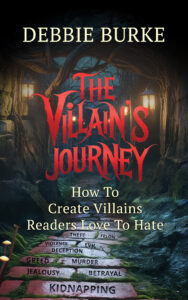
Learn how to master subtext for villains and antagonists in Debbie Burke’s award-winning book:
The Villain’s Journey-How to Create Villain’s Readers Love to Hate.