Top Ten Tips for Amazon eBook Publishing Success

It doesn’t matter if you’re traditional or indie published—if you want to make money in the eBook business you’ll have to deal with Amazon. Amazon is the biggest eBook distributor out there—the top dog, by far. So, if you want to run with the big dog, you’ll have to learn how to pee in the tall grass.

I think most Kill Zone followers are writers. Many KZrs might already enjoy great publishing success with whatever book type they write or publishing platform they use. However, Amazon dominates book distribution and sales. To compete in the book field’s tall grass, you must be comfortable with publishing on Amazon. These ten tips will help.

To start—I’m no Amazon publishing or marketing expert. Many resource folks and guides are out there that teach Amazonese, and I’ll provide links to the ones I find credible. What I’m doing in this post is offering what’s worked for me in my journey paddling up the Amazon eBook river.

I self-published my first eBook in 2012. It took me a year to research, write, and produce a 115K word crime novel which did pretty well on the Amazon charts. Eight years later, I have twenty publications up on Amazon that includes true crime, crime fiction, historical non-fiction, craft guides, and self-help eBooks. I didn’t publish anything for two of those years while I wrote web content for my daughter’s agency. This year, however, I’ve indie-published five eBooks with the plans for two more in a series before 2020 is done.

Enough about me. You want to know what’s in this for you, and I’m happy to share my experience by giving you ten tips for Amazon eBook publishing success. I’m also going to give you some meaningful stats about what’s producing a positive return on eBook publishing investment.

Tip #1 — Understand the Amazon System

This might sound basic and it is. To use Amazon successfully (success, by definition, is different things to different people), you need to understand that Amazon is a unique distribution system that produces most of its orders online through impersonal ’bots. There are humans employed somewhere in the Amazon jungle, I’m told, but they’re rarely seen. More to come later about contacting a live elf…

There’s an excellent Amazon course put on by Tracy Atkins and delivered as the Amazon Success Tool Kit through Joel Friedlander at The Book Designer. Here’s a page from their playbook.

There are four key concepts you must understand to successfully use Amazon as an online bookseller. They include:

Concept One: Amazon is first and foremost a search engine, and you must make your book an easy-to-find product. You need to think about Amazon as a search engine instead of a retail store. Amazon is more like Google than Walmart. When you look for a book on Amazon, you’re accessing a huge database that finds the most relevant matches based on the metadata provided for the product. (More about what “metadata” really means coming up.)

Concept Two: Amazon is a data gathering and filtering tool. It employs a sophisticated and intelligent software system that stores a large product catalog as well as masses of information on sales history and buyer preferences. Amazon uses this information to build customer profiles and make the most relevant product recommendations. When you use Amazon, it’s always taking notes and trying to figure you out in a logical way.

Concept Three: Amazon is highly visual and so are people when they shop so make your cover count. This thing about people judging books by their covers is 100% right when it comes to online book buying and selling. The brains at Amazon know this and give preference to visually enticing covers that work to draw customer attention at the thumbnail size. A great cover is paramount to success on Amazon.

Concept Four: Amazon is big and highly connected. You can use its integrated ecosystem to build your brand and sell more books if you thoroughly understand how Amazon works as an online business model. There are many components in the Amazon composition that range from eBook production to support sections like Author Central, Popularity and BestSeller lists, as well as Goodreads, Kindle Unlimited, Kindle Owners Lending Library, Audible, and even good ole paperbacks shipped through print on demand.

Tip #2 — Work With Amazon’s Algorithms

“What, really, is an algorithm?” you might ask. Good question, because having a basic grip on what Amazon’s algorithm(s) is/are puts you into a headspace where the whole eBook publishing platform kind of makes sense. They’re nothing to be afraid of because Amazon does all the algorythiming for you.

Amazon currently (2020) uses a software system called the A9 Algorithm. How it works at the molecular level is a closely-guarded system. If they tell you, they gotta kill you. But, Amazon freely encourages you as a publisher, to make full use of their billion-dollar A9 Algorithm system.

Algorithms are computerized, step-by-step instructions or formulas for solving problems or completing tasks. The A9 version takes customer interests and matches them relevantly to what you have for sale. I’m told the name algorithm comes from a Persian mathematician named Al Ghorwarizimi, not from a dance move choreographed by an ex-Vice President of the United States.

Google is one giant algorithm as well. Google searches query inputs and matches them to relevant information or metadata that display in relevant order on SERPS (Search Engine Response Pages). There’s a key difference in how Google and Amazon algorithms respond to user requests, though.

Google likes to direct information for free. The A9 at Amazon is a business tool that puts strong emphasis on sales conversions. Amazon has a vested financial interest in using your inputted metadata to promote product listings that will likely result in sales. Amazon moves listings to the top of their equivalent SERPs based on recent strong sales history and high conversion rates.

It’s your job to provide Amazon with the best information or metadata you can. What you put into Amazon’s algorithm system is what you get out. It’s called optimizing metadata, and this is where a lot of publishers fail when they post products (eBooks) on the ’Zon.

Tip #3 — Optimize your Metadata

Don’t let this phrase intimidate you. If you’ve studied how the internet works or how you can best sell eBooks online, you’ll see “optimize” and “metadata” popping up everywhere. It’s as common as SEO (Search Engine Optimization).

“Optimize” means making the most of. “Metadata” is geek-speak for information, but it’s not just hidden html code, stuffed long and short tail keywords, or fold placement of ledes. Optimizing your metadata on Amazon starts with your dashboard and pretty much ends there. It’s a matter of entering relevant information (metadata) and making sure that all the boxes are filled in (maximized).

This sounds like a commonsense thing, and it is. But, you’d be surprised how so many publishers don’t know what to put into Amazon and how to trigger the A9 algorithm to hear “pick me!” That goes for the Big-5 publishers who promote Big-Names **ahem – King, Patterson, Rowling, Steele, and Cornwell**. Some of the prominent paper-pushers eat dust left by metadata-optimizing indies. **ahem – Howie, Green, Croft, Hawking, and Andre**.

Here are the main metadata spots to optimize on your Amazon dashboard:

Title — This sounds like a no-brainer, a done-deal, but the title has to be relative to the book’s content, genre, or product placement. That goes for the sub-title as well.

Series — Without a doubt, the best way to make money with Amazon eBooks is to write in a series and profit by read-through. Make sure the series number is part of the metadata.

Description — This might be the second most important chunk of metadata to optimize. Your product description or blurb (jacket copy) is what a prospective buyer first sees after clicking on your cover image. Whole books are out there on optimizing product descriptions or sales copy and I won’t get further into it here. But… make your lede (hook) counts in the first few lines which is all a clicker first sees and triggers them to Look Inside and hit the Buy Now button.

Keywords and Categories — These are the third and fourth most important metadata pieces to optimize. In fact, they’re so important that I’ve included categories and keyword optimizing as a tip of their own.

Manuscript — Yes, your manuscript is metadata. It’s also your product’s core and it has to be professional. You do need an editor regardless of your budget. Your opening has to be strong as it’s the hook that gets the Buy Now pressure once your metadata has done its job to get the Amazon customer to Look Inside.

Cover — This is the number one metadata set-piece to get right. It’s not just for getting a click into reading your optimized metadata. Your cover haunts or halos your product all the way through the promotion cycle. Did you know your cover image is the only thing Amazon Marketing Services allows when you pay-to-play their system? Same thing with pay-to-play email list sites like Booksy, ENT, Robin, and Librarian. The only cover ad-slack you get is from BookBub, but they also want your cover to be a big part of the image (or creative, as they call it).

ISBN (International Book Standards Number) — You don’t need an ISBN to publish your eBook on Amazon. However, they do add to the professionalism offered by the product, and you’ll need one if you want your book to show up in libraries.

KDP (Kindle Direct Publishing) Select Enrollment – (Exclusive or Wide) — Big decision here. Do you want to stay exclusively published on Amazon and enjoy their perks? Or do you want to widely publish on other eBook platforms like Kobo, Nook, Apple, and Google? This is such an important deal that I’ve done a separate tip on Exclusive vs Wide.

Royalty and Pricing — Again, this is so important for eBook publishing success on Amazon that it gets its own tip.

Tip # 4 — Categories and Keywords

Although Amazon is an online, algorithmic-driven supermart for books, it’s laid out similar to a bricks & mortar bookstore. Categories are the departments where your eBook sits and Keywords are the metadata directions showing a shopper how to find your book in the massive Amazon store. It’s really not that difficult to optimize your keyword and category metadata even though the eBook gurus tend to make a big deal about it.

The trick to optimizing Amazon eBook metadata is to make sure you use as much space as allowed with RELEVANT information. Having said that, your book description doesn’t have to be as long as allowed (4,000 characters), because few people will ever read that much in a blurb. But, keywords and categories are the place to be a pig at the smorgasbord.

You’re allowed two primary categories when you first publish your eBook on Amazon. That’s pretty tight when you consider that Amazon has hundreds of primary and sub-categories on everything from Alchemy to Zen. You need to pick the best two, get the product activated, and then email Amazon from your dashboard to boost that up to ten categories.

They’ll do it. There are humanoid bottic-elves behind that dashboard, and I’ve communicated with them. You just have to provide the category paths and they’ll set you up with five times the exposure you’re initially offered.

Keywords are another metadata area where people pull their hair out and cut their arms trying for perfection. Tip? Don’t spend hours working the search bar or spending megadollars on keyword optimizing tools because the truth is… keywords don’t really matter unless you’ve already triggered the A9 algorithm to know you’re there. That’s from priming the pump through pay-to-play promotions. More on this in another Tip.

But, you do need keywords and you’re best to stuff them into keyphrases where the string of words gives you far more exposure than a single word can carry. Here’s an example of keyphrases from one of my based-on-true-crime series:

True Crime Homicide Investigation, Detective Police Procedural Procedure, Psychological Crime Thriller, Robbery and Murder, Suspense Murder Mystery, Stolen Guns Gun Store Robbery Murder, Canadian North American Crime Fiction

Amazon only allows you 50 characters per keyphrase so make the most of them. Above all, make them relevant to your book and something that a prospective reader would realistically search for. Oh, make absolutely sure that you don’t violate Amazon’s terms and conditions by entering misleading promotional stuff in your keywords like “bestseller”, “book of the year”, or ‘Better than Stephen King”. You might get your account terminated.

Tip #5 — Proper Pricing

Amazon lets you price your eBook anywhere above 0.99 cents. That has some qualifiers. Between 0.99 and $2.98 you’ll get 35% royalty. Between $2.99 and $9.99 you get 70% which is a pretty sweet deal. Anywhere above ten bucks gets you 35 on the dollar.

Amazon doesn’t want you pricing too low or too high. After all, they’re in this to make money and I don’t hold that against them. This is all about a balance of pricing right for the best return and all kinds of authors have all kinds of ideas on price points. Here’s what’s working for me… at least right now.

I’m producing a series based on true crime stories that I was involved in. Investigating them, that is. Not committing them. I’m up to number five in a planned twelve-book run and I’m starting to hit the “tipping point” where read-through is returning a positive return on investment.

I have book one listed as perma-free on Amazon. You can’t do this yourself except for the five free days per ninety-day cycle they allow you on exclusive KDP Select. Instead, I “went wide” with the series and published on Kobo and Nook. These guys (Kobo and Nook) let you do pretty much anything you want with price structure, so I set the series-one book at free on Amazon’s competitors.

Then, I emailed the bottish-elves from the dashboard and asked them to price match. They did, and now I have the first book as perma-free to offer as a loss-leader on the pay-to-play promo sites. I have a break down on promos in an upcoming tip.

The other big pricing point is making sure your Amazon dashboard is synced to international pricing. For me, $2.99 is the sweet spot for my eBooks and I set the US price at Amazon.com to $2.99. Behind the scenes, the price elf automatically sets the international prices on Amazon.ca, Amazon.uk, Amazon.au, etc according to the current exchange rate so you’ll see weird numbers like $3.34, £4.21, €4.04, or figures like that.

There’s something in marketing magic about the .99 price. Once you set your Amazon.com price to $2.99, take the few minutes to go into the international sites on your dashboard on the royalty and pricing section and manually change the Amazon suggested conversions to a smooth-reading .99 version. Trust me. It’s optimizing metadata like this that works the Amazon big picture.

Tip # 6 — Exclusive or Wide

This is the big debate, especially in the indie community. I was exclusive on Amazon for a long time before a few of my much more successful indie friends said, “Garry. WTF are you doing staying exclusive in KDPS? You’re leaving a lot of money on the table by not going wide.”

So, I bit the bullet this April and published my new series on Nook and Kobo. I haven’t left Amazon by any stretch, and I still make the most money there. It’s just that Amazon no longer lets me play in KU (Kindle Unlimited), KOLL (Kindle Owner Lenders Library), Kindle Countdown, and the Kindle Freebie 5-Day promos. Well, that’s the price you have to pay to go wide.

However, my sales on Kobo and Nook have far exceeded the pittance I made on KU and KOLL. By far. I only have my series books wide so far and I’ll move my backlist over some day. I also plan to publish on Apple and Google, but there’s only so much time in a day when I’m trying to crank out a new book in a two-month sequence as well as writing Kill Zone and DyingWords blogs.

Tip #7 — eBook Layouts

I do my own eBook formatting. I write on a PC Word.doc and then convert the file on Calibre to a Kindle/Mobi file. Yes, I know the MAC people love Vellum for file conversion, but I’m comfortable with my Windows 8. I can take a Word.docx and run it through Calibre (free download) in two minutes and it comes out clean. Then, I upload the Mobi metadata file to the Amazon dashboard and Bob’s your uncle.

Amazon allows you to directly upload a Word.doc and their system is supposed to convert it to Mobi. My experience is a direct Word upload to Amazon comes out like Uncle Bob’s breakfast and if you knew my Uncle Bob you wouldn’t like it. Do it right and your metadata eBook file will read like a professional submission.

Front matter and back matter are two hot topics. I’m a firm believer in minimizing your front matter and maximizing your backside. There are good reasons for this.

Nobody cares if you dedicate your book to Uncle Bob who, in my case, died of cirrhosis of the liver because of what he had for breakfast every day. Nobody cares about your poetic quote and nobody cares about your copyright and nobody cares about your table of contents. Get all this crap out of the front and out of sight of the potential reader who clicks Look Inside and wants to get right to your hook. That causes a Buy Now With One Click and that sells books.

Back matter is REALLY important for book sales, though—especially in a series. This is where you create read-through. It takes a bit of tedious work, but if you carefully link the other books in your series with one-click buy buttons to your Amazon and other eBook retail sites, it’ll pay back big time.

It also works to link your newest release at the opening of the front matter right after the title and before the story starts. This one little move has given me amazing results in compounded sales through that tempting click-bait. Do it. Do it. Do it.

*  *  *

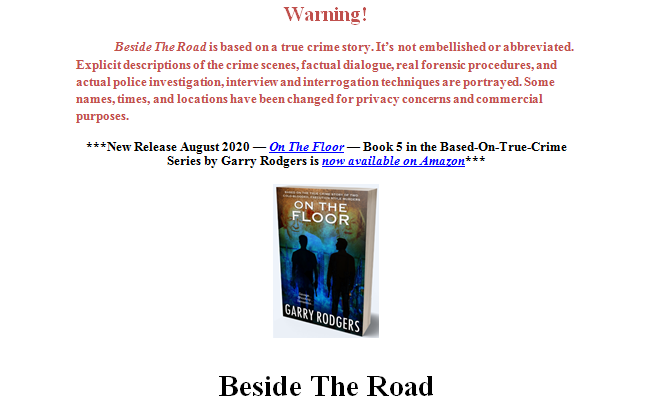
Screenshot of what an Amazon browser first sees when they Look Inside or buy Beside The Road which is book 4 in my Based-On-True-Crime Series. It immediately links the viewer to my latest release, On The Floor, and has an amazing conversion factor.
Tip #8 — Use Amazon Resources

From reading the boards and the blogs, I get the impression that some authors seriously mistrust Amazon as a bookseller. They suggest Amazon is out to game or cheat the little guy and eventually plan to take over the world. That’s not my experience.

It’s quite the opposite. From what I’ve seen, Amazon has a massive amount of information on its site to help publishers and other product promoters. Same with many internet sites. If you’re serious about making eBook publishing on Amazon a success, it’s necessary to read the instructions. Here are links to the best Amazon publishing resources:

Amazon Website KDP JumpStart

Amazon Website KDP Terms Conditions

Amazon Website KDP University

Amazon Success Toolkit — The Book Designer with Tracy Atkins

How To Sell Books by Truckload on Amazon 2020 Edition — Penny Sanserveri

Amazon Decoded — David Gaughran

Tip #9 — Prime the Amazon System

Publishing one eBook on Amazon won’t cut it. Not if you want to be a commercial success, that is. You have to have a catalog of new releases and a solid backlist. This gives what’s called “churn” in ‘Zonspeak. Amazon will churn (sell) your books as long as you have saleable products on your catalog that are metadata optimized. There’s a caveat, though. You have to prime Amazon’s system.

What do I mean by priming the system? That’s my own analogy. What it means is you have to do something to make Amazon responsive to your eBook (yes, a product) and make it worth Amazon’s while to elevate it through their algorithms and show it to prospective readers (paying customers).

Right now, in the Amazon sphere, that comes from paying-to-play. You have to spend money to make money and you have two main options. One is advertising your product(s) on big discount email sites like Booksy, EReader News Today (ENT), Fussy Librarian, and Robin Reads, as well as smaller sites like Book Gorilla, Rune, and Many Books. Your other option is the paid click sites like BookBub, Facebook, and Amazon’s own Marketing Services (AMS).

This is where the series perma-free and read-through strategy shines. What works to sell eBooks on Amazon is to advertise your perma-free on paid sites like Booksy and ENT. You’ll get hundreds or thousands of downloads (ie – new readers) who will read-through to buy the rest of your series. What also works (although I’m just starting to experiment) is to run paid ads on the click-sites.

Tip #10 — Real Examples of Amazon eBook Publishing Success

I primed the Amazon system on a recent book launch with a stacked promotion. “Stacked” means I did a strategic series of sequential paid ads to promote my newest book in my based-on-true-crime series. I did this by pushing my Book One perma-free on the paid discount sites with Book Five highlighted and linked in the front matter like you saw in the previous screenshot. Here are the download stats:

Day 1 Promotion: EReader News Today — 2,794 free / 228 sales

Day 2 Promotion: Free Booksy — 1,578 free / 123 sales

Day 3 Promotion: Fussy Librarian — 1,402 free / 312 sales

Day 4 Promotion: Robin Reads — 1,034 free / 103 sales

Day 5 Promotion: Many Books — 162 free / 50 sales

Day 6 Promotion: Book Gorilla — 51 free / 64 sales

Day 7 Promotion: Book Runes — 296 free / 41 sales

My pay-to-play promotions on the discount email list sites cost $565. Gross revenue on paid sales (based on a $2.00 royalty) was $1,842. So, deducting the ad costs, the net was $1,277. That’s an excellent seven-day return on investment by anyone’s standards. It also led to a big organic sale increase as people in post-promotion bought read-throughs.

“Wait! Garry — You gave away 7,317 free eBooks on Amazon? Like… WTF were you thinking?”

No, I just gained 7,317 new potential readers by paying to advertise a perma-free and let the read-through, paid-sale, miracle materialize. My organic purchases significantly increased since I primed the Amazon pump. So did my email list. The traffic also pushed my perma-free to the #1 Bestseller spot in the Crime Thriller (Free) category. Now, I’m experimenting with a BookBub Ad promotion before trying FB and AZ clicks. Wish me luck.

Kill Zoners — What’s your experience with Amazon eBook publishing? Any tips for us?

Garry Rodgers is a retired homicide detective and forensic coroner. Now, Garry has reinvented himself as a somewhat successful self publisher who’s trying to figure out what works to sell books.

Besides crime writing, Garry Rodgers spends time putting around the saltwater near his home on Vancouver Island in British Columbia on Canada’s west coast.


Reader Friday: Name an Activity You’ve Never Tried

What’s one activity you’ve always wanted to try but haven’t?


This activity might include writing in a different genre, bungee jumping, paragliding, skydiving, public speaking, writing from a new perspective, or scaling the side of a mountain.

What prevented you from doing this activity?

Age should never be a deterrent, but let’s face it, older bones may be more brittle, eyesight may not be as sharp . . . blah, blah, blah. You know the drill.

With that in mind, if you were twenty years younger, would you try this activity? What is it about this activity that appeals to you?

How To Speak Cop — Version 1.0

As a retired police officer and now starving artist writer, I pay attention to others who write true crime and crime fiction. I read (actually skim) more for craft than story because I’m still very much in the learning curve when it comes to writing. Like the investigation business, I think a writer never stops discovering new techniques and benefiting from mistakes. A regular flaw I see in reading some crime publications—the writer just doesn’t know how to speak cop.

Every vocation has its lingo. In my shadow life, I’m a ticket-holding marine captain. An old boat skipper. I know Sécurité, Pan-Pan, and Mayday-Mayday-Mayday. They’re common emergency calls in the airplane world, as well. Industries like film production have their unique terms like Rigger, Gaffer, and Abby Singer Shot. And the sex trade has… well…

I think that in writing convincing crime stories, whether true or false, it’s critical to get the cop-speak right—specific to the specific location (as variances exist). Part is not being scared to use to F-word because all cops and crooks swear. The trick is using it sparingly and not mimicking a realistic alcohol-fueled-end-of-the-night party at a truck loggers convention. Trust me. I’ve been to one.

Setting profanity aside, there are day-to-day conventions in police terminology. Some writers get it right. Some don’t. The difference is in research, connections, understanding locality, and personal experience. Here are the basics in how to speak cop. Version 1.0.

Radio Procedure – The Ten Code

I’ve never heard of an English-speaking police department that doesn’t use some sort of ten code on the radio. Some officers are so indoctrinated that they write tens in their reports. The reason for a ten code radio procedure is brevity. It’s not for secrecy. That’s a whole different matter with encrypted devices and mission-specific codes. Here are the most common ten codes that seem to be universal.

*Note – 10-Codes greatly vary between jurisdictions. These are the most common ones*

10-1 — Unable to copy

10-4 — Copy, Yes, Affirmative, Acknowledged

10-6 — Busy, Occupied, Tied-up

10-7 — Stopped, At scene, Out of vehicle

10-8 — Back in service, Available for calls

10-9 — Repeat, Say again, I didn’t understand

10-10 — Negative, No, It’s BS

10-12 — Stand by, Stop transmitting

10-19 — Return to, Go back

10-20 — Location

10-21 — Call by phone

10-22 — Disregard, Fuhgetaboutit

10-23 — Arrived at Scene

10-27 — Driver license info requested

10-28 — Vehicle plate info requested

10-29 — Check person/vehicle/article for wanted

10-33 — Emergency! Officer Down! Officer in Peril!

10-60 — Bathroom Break

10-61 — Coffee break

10-62 — Meal break

10-67 — Unauthorized listener present

10-68 — Returning to office (RTO)

10-69 — Breathalyzer operator required

10-100 — I have no f’n idea what you’re talking about

The Phonetic Alphabet

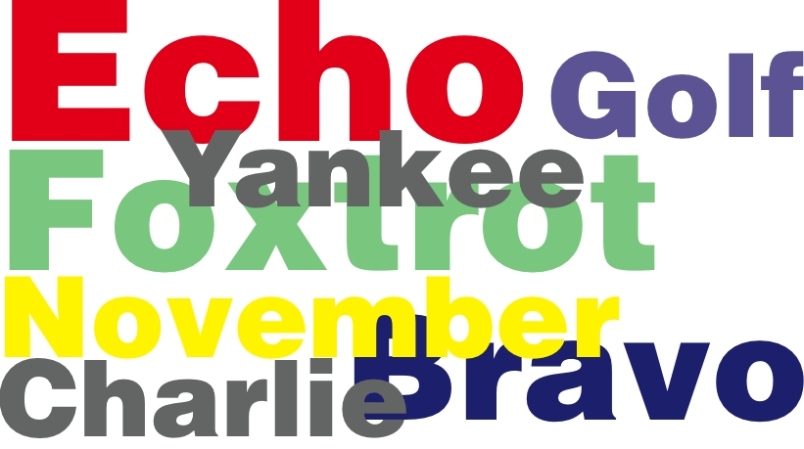
I see this screwed-up so often. Some attempts are quite creative. Amusing, if not hilarious. “Bob” for B is real common. So is “Dog” for D. But, I’ve heard “Banana” and “Dillybar”, and I’ve heard “Limmo” for L, “Monica” for M, and more “Nancy” than I can count. Then there’s “Sylvester-as-in-Stallone”, “Tattoo”, and “Ugly”. Here are the right phonetic alphabet radio calls (worldwide):

Note: Phonetic alphabet pronunciations vary in regions. These are the universal ones that international transportation uses.

A — Alpha

B — Bravo

C — Charlie

D — Delta

E — Echo

F — Fox or Foxtrot

G — Golf

H — Hotel

I — India

J — Juliet

K — Kilo

L — Lima

M — Mike

N — November (not Nancy)

O — Oscar (not October)

P — Papa (not Penny or Pork Chop)

Q — Quebec

R — Romeo

S — Sierra

T — Tango

U — Uniform

V — Victor

W — Whisky

X — X-ray

Y — Yankee

Z — Zulu

The Rank System

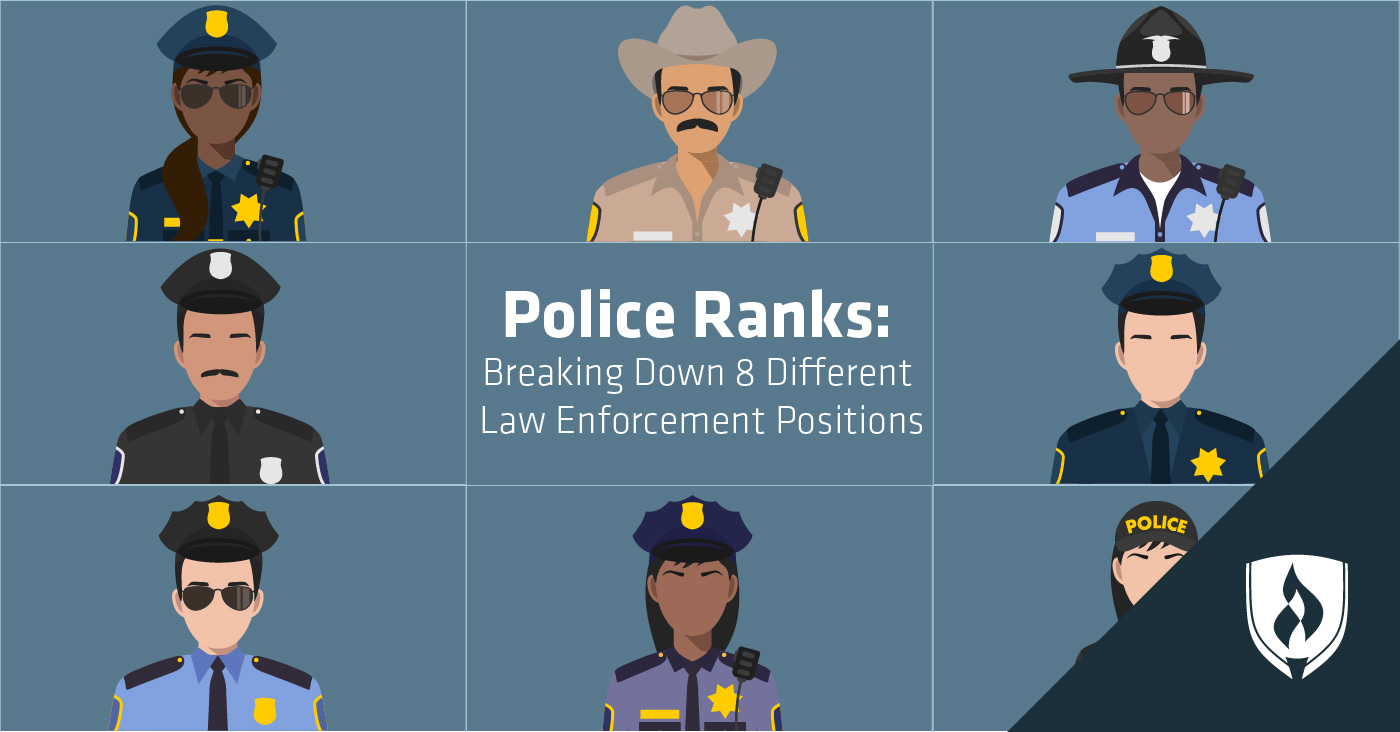
There are two main ranking systems in the western police world. One is the constabulary like used in British Commonwealth countries. The other is military which is common in U.S. jurisdictions. Both are top-down rankings where they start with an omniscient power that oversees minions. Here are typical organizational charts for the two structures.

Constabulary Commissioned Officers

Commissioner

Deputy and Assistant Commissioners

Superintendents

Inspectors

Constabulary Non-Commission Officers

Staff Sergeants

Sergeants

Corporals

Constables

Military-Style Police Officers

Chiefs

Deputy Chiefs

Colonels

Majors

Captains

Lieutenants

Sheriffs

Military-Style Police Rank & File

Sergeant

Detective Sergeant

Detective

Deputy

Officer

General Cop Speak

I see a lot of crime books where the protagonist is a high ranking police officer like a DCI (Detective Chief Inspector) or a Precinct Captain. These sound good and powerful, but the reality in police investigations is the grunts do most of the work. Detectives, Beat-Officers, and Constables go out there and arrest suspects, interrogate them, and then get their butt roasted in court.

Commissioners are politicians and serve at the pleasure of their master. Superintendents, Sheriffs, and Inspectors are budget-driven paper-pushers. Most Staff Sergeants and Captains spend more time on HR matters than criminal overseeing. It’s the Lieutenants, Sergeants, and Corporals that supervise the police workhorses—the deputies, constables, and officers.

I could go on about cop-speak like surveillance terms. “R-Bender”. “Stale Green”. “Crowing”. “Taking Heat”. Or, administrative stuff that takes up most of the time. “Per-Form”. “C-264B”. And, “Leave Pass”.

Cop Speak Resource

I’m steering you to B. Adam Richardson. Adam is a still-serving detective with a Southern California Police Department. Adam can’t reveal his true name or actual location because of security reasons, but Adam runs two Facebook sites dedicated to helping crime writers get it right. Here’s the link to Writers Detective and his FB rules:

https://www.facebook.com/groups/WRITERSDETECTIVE/

“There has been some discussion in this group about what the rules are. Since my day job is all about enforcing rules, I wanted to let this group grow on its own and develop its own feel without me having to create rules.

I have seen other groups that are nothing more than mean/cynical replies to honest questions and spammy book promos. I hate those.

For the most part, I have been quite happy that this has grown into a very supportive group. I want our atmosphere of support and the celebrating of writing milestones to continue.

Although I am the one that started this group, I don’t own this group. You do. The intended purpose of this group is for writers like you to find the law enforcement related answers you’re looking for. I try my best to keep up with the Q&A, but I can’t answer every question. The beauty of this group is leveraging the collective experience and/or research of the membership. So, allow me to clear something up:

Anyone can post a question or an answer in this group.

We have a wealth of collective knowledge and experience in here. I know our members include a former CSI tech, a criminal defense attorney, a former MP, a former Coroner, and a ton of crime-fiction writers with solid research into serial killers, forensic science, and criminal psychology. That’s just the members I know about and that doesn’t even include the cops in the group. You do not need to be a cop to answer questions in here.

Yes, the quality of the answers will vary. I want to recognize that everyone offering an answer is doing so to help a fellow writer and spark discussion.

Many have come to this group seeking answers from a cop’s perspective and we’ll continue to offer that. I fully admit that answers coming from a cop’s perspective aren’t always right either. (Just ask a defense attorney.)

Often, the reality of how things play out on the street is very different from how textbooks and courtroom testimony portray things. We (the cops in this group) do try our best to give you the truth of what we’ve seen and experienced. I just ask that you recognize that our answers may differ from what research into a subject indicates. Research, textbooks, and courtroom testimony often paint things in black and white, while reality is a blur of varying shades of gray. Recognizing these differences are key to identifying and capturing realism for your own stories.

Sure, there may be answers posted that are solely based upon what someone saw in an episode of Miami Vice or CSI…but I’d prefer to not censor answers, especially when the poster’s intention was to be helpful. It is up to you to figure out what is relevant, factual, and useful for your own writing projects.

I propose we start using our Like buttons to act like a Reddit/Quora style “up-vote” on best answers to a particular question.

There may be some debate over answers, but that is to be expected. We can all learn from civil discussions about the issues at hand. These debates happen in criminal justice all the time; it’s the very basis of our judicial process.   ~ Adam”

Adam R. also has a FB site at Writers Detective Bureau. Check out this link:

https://www.facebook.com/writersdetective/

So, that’s it for How To Speak Cop — Version 1.0. Anyone interested in a more detailed post… Version 2.0 ?

— — —

Garry Rodgers is a retired homicide detective with a second career as a forensic coroner. Now, Garry has re-invented himself as a writer with a based-on-true-crime series on cases he was involved in. Check out Garry Rodgers on his Amazon Author Page, Twitter, Facebook, and his website at DyingWords.

Garry’s newest book in the true crime series, On The Floor, will be out in mid-August 2020.

How To Get Away With Murder

Murder. It’s forever been the stuff of books, movies, poems and plays. Everyone from Shakespeare to Agatha Christie told foul-play murder stories. That’s because, for gruesome reasons, murder cases fascinate people.

I think murder is the great taboo. It’s also the great fear of most people except, maybe, for public speaking. Jerry Seinfeld quipped, “At a funeral, the majority of people would rather be in the casket than giving the eulogy.”

Yes, murder is the ultimate crime. In mystery books and Netflix shows, murder cases are solved and neatly wrapped up in the end. This leaves the reader or audience with the satisfaction of knowing who done it and probably why.

That’s not always the truth in real life. Many murders go unsolved for a long time. Some go cold and are never resolved. Statistics vary according to region, but probably a quarter of murders never get cleared.

Thankfully, most murders are easy to solve. They’re “smoking guns” where the killer and victim knew each other, the killer left a plethora of evidence at the scene or took it with him, witnesses saw the murder take place, or the bad guy confessed to the crime. That’s really all there is to getting caught for committing a murder.

So, why do roughly twenty-five percent of people get away with murder? It’s because they don’t make one of these four fatal mistakes. Let’s look at each in detail and how you can get away with murder.

Leaving Evidence at the Scene

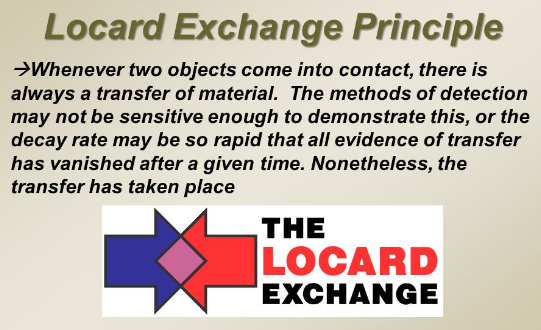
Did you ever hear of Locard’s Exchange Principle? It’s Murder Investigation 101. Dr. Edmond Locard was a pioneer in forensic science. Dr. Locard held that at every crime scene the bad guy would leave evidence behind that would connect them to the offense. Locard summed it up this way:

“Wherever he steps, whatever he touches, whatever he leaves, even unconsciously, will serve as a silent witness against him. Not only his fingerprints or his footprints, but his hair, the fibers from his clothes, the glass he breaks, the tool mark he leaves, the paint he scratches, the blood or semen he deposits or collects. All of these, and more, bear mute witness against him. This is evidence that does not forget. It is not confused by the excitement of the moment. It is not absent because human witnesses are. It is factual evidence. Physical evidence cannot be wrong, it cannot perjure itself, it cannot be wholly absent. Only human failure to find it, study and understand it, can diminish its value.”

Dr. Locard was absolutely right—most of the time. That quote was from the early 1900s. It was long before the sophistication of DNA profiling and amplifying light to find invisible fingerprints. Today, trace evidence shows up at the micro level, and there’re ingenious inventions used to find it. But… not always.

I’m familiar with a high-profile and unsolved murder case from 2008 where two killers enticed a female realtor to a house and savagely stabbed her to death. It’s a long story. A complicated story. And, so far, they’ve got away with the murder.

The victim was totally innocent. She was set-up as a sacrifice to protect someone else who was a police informant. The police know full well who the killers are—a Mexican man and woman from the Sinaloa drug cartel—but they’ve never been charged. It’s because they left no evidence of their identity at the scene. They’ve also never broken the other three murderer-catching rules.

There’s more to scene evidence than DNA and fingerprints. There are dozens of evidentiary possibilities including hairs, fibers, footwear impressions, chemical signatures, organic compounds, match heads, cigarette butts, expended shell casings, spit chewing gum, a bloody glove or a wallet with the killer’s ID in it. (Yes, that happened.)

Removing Evidence from the Scene

The flip side of Locard’s Exchange Principle is the perpetrator removing evidence from the scene that ties them back to it. This can be just as fatal to the get-away-with-it plan as left-behind evidence. And, it happens all the time.

Going back to the unsolved realtor murder, there’s no doubt the killers left with the victim’s blood on their hands, feet and clothing. This innocent lady was repeatedly shived. The coroner report states her cause of death was exsanguination which is the medical term for bleeding out.

For sure, her killers had blood on them. But, they made a clean escape and would have disposed of their blood-stained clothes. That goes for the knife, as well. Further, the killers did not rob the victim. They didn’t steal her purse, her identification, her bank cards or even the keys to her new BMW parked outside.

The killers also didn’t exchange digital evidence to be traced. They used a disposable or “burner” phone to contact the victim to set up the house showing. It was only activated under a fake name for this one purpose and was never used again. The phone likely went the same place as the bloody clothes and knife.

Being Seen by Witnesses

I once heard a judge say, “There’s nothing more unreliable than an eyewitness.” I’d say that judge was right, at least for human eyewitnesses.

Today’s technology makes it hard not to be seen entering or exiting a murder scene. There’s video surveillance galore. Pretty much everywhere you go in an urban setting, electronic eyes are on you. You’re on CCTV at the gas station, the supermarket, the bank, in libraries, government buildings, transit buses, subways and on the plane.

In bygone lore, the killer often wore a disguise. That might have fooled human surveillance, but it’s hard to trick cameras that record evidence like get-away vehicles with readable plates. It’s also hard to disguise a disguise that can be enlarged on film to reveal uniquely identifiable minute characteristics.

Back to the unsolved realtor slaying again. The killers were seen by two independent witnesses when they met their victim in the driveway outside the show home. One witness gave the police a detailed description of the female suspect and worked with an artist to develop a sketch. It’s an eerie likeness to the Mexican woman who is a prime person-of-interest along with her brother—a high-ranking member of the El Chapo organization.

Unfortunately, there’s just not enough evidence to charge the Mexicans. They left no identifiable trace evidence behind at the crime scene. Whatever evidence they might have taken from the scene hasn’t been found. There was no video captured and the eye-witnesses can’t be one hundred percent positive of visual identity.

There’s also the fourth missing piece to the puzzle.

Confessing to the Murder

Murderers are often convicted because they confessed to the crime. Sometimes, they confess to the police during a structured interrogation. Sometimes, they confess to a police undercover operator or paid agent during a sting operation. Sometimes, their loose lips sink their ship by telling an acquaintance about doing the murder. And sometimes, they’re caught bragging about the murder on electronic surveillance like in a wiretap or through a planted audio listening device—a bug.

Police also arrest and convict murderers after an accomplice turns on them and decides to cooperate with the investigation in exchange for a lesser sentence. Then, there are the revenge situations. The murderer has confessed to an intimate partner who they thought they could trust and couldn’t.

That has yet to happen in the unsolved female realtor murder. There is no doubt—no doubt—that a group of people know what happened in her murder. It’s known, with probable certainty, who the Mexican pair are. It’s also known, with probable certainty, who the real police informant was and who conspired to protect them by offering the innocent victim as a sacrificial slaughter to appease the Sinaloa cartel’s “No-Rat” policy.

This murder case can be solved once someone in the group decides to reveal evidence implicating the killers. That likely won’t be anything in the Locard arena or in the eye-witness region. It’ll be an exposed confession that will solve this case.

Someone will eventually talk. The current problem is that everyone in the conspiracy circle is connected by being blood relatives, being a member of the Hispanic community and being involved in organized crime. Their motive to talk is far outweighed by their motive to stay silent.

Takeaway for The Kill Zone Gang

If you’re a mystery/thriller/crime writer, always consider these four crime detection principles when working your plot. No matter how simple or complex your plot may be, the solution will come down to one or more of these points. If it doesn’t, then your antagonist is going to get away with murder.

———

Garry Rodgers is a retired homicide detective and forensic coroner, now an investigative crime writer and successful indie author. Garry also hosts a popular blog at his website DyingWords.net and is a regular contributor to the HuffPost.

Garry Rodgers lives on Vancouver Island in British Columbia at Canada’s west coast. He’s a certified 60-Tonne Marine Captain and spends a lot of time around the saltwater. Follow Garry on Facebook, Twitter and BookBub. He has stuff on Amazon, Kobo and Nook, too.


The Pandemic Invades Fiction – Is it a Game Changer?

Jordan Dane
@JordanDane

The longer I am cooped up behind my four walls, the more my mind wanders on how every day life will be changed by a life threatening virulent pathogen. When I thought the lock down would be for a month, I imagined it to be a vacation or an indulgence. But now that I see the virus invading all aspects of our lives – now and in the future – Covid19 will have an impact that we are only beginning to grasp. Similar to how 9/11 changed our sense of security in the world, how we traveled and how we fear “the other,” we will be defining this experience in new ways that will affect our writing too.

Writers at fanfiction.net are adapting very quickly to story lines that involve current events. They take their favorite TV shows or classic literature and add a COVID angle. Below are some spins I thought would give you an idea what I am writing about – my take.

1.) Imagine romance during the time of a pandemic. How would people “meet”? How would they practice social distancing & not jeopardize the important people in their lives? Is there an APP for that? Would they revive AVATARS to experience the physical aspects of a relationship from a safe distance? Let your imagination run wild. Stories could be romantic comedies or deadly angsty serious.

Picture a modernized version of ROMEO & JULIET where one family has antibodies but the other is pure blood and want to remain that way. Put two young lovers at the apex of a pandemic where governments must decide which family or race should be allowed to survive. A sick romance with a Hunger Games twist?

TAMING OF THE SHREW adaptation where genetics brings two unlikely & resentful lovers together for the sake of the human race’s survival.

2.) DOCTOR DOLITTLE UNDER QUARANTINE – A children’s book where the doctor only has animals to talk to.

3.) STEPHEN KING’S ‘IT’ ADAPTATION IN THE HORROR GENRE – where an isolated anti-hero has a lifelong neuroses about hygiene and disease and crosses the path of a vindictive serial-carrier (aka Pennywise, the clown). A series by the name of KILLING TIME.

4.) LES MISERABLES in a SciFi futuristic genre – Imagine a post-pandemic world where the politics of our time creates a rift between the classes. Rebellion born from pandemic and isolation.

5.) MAGAZINE SERIAL – For writers looking for a writer’s outlet. New York Magazine is looking for fresh takes on pandemic stories. Add the right amount of cynicism and angst with a vivid imagination, and you might sell your pitch.

What would happen if you wrote a series from the perspective of THE VIRUS? Think FANTASTIC VOYAGE (the movie) meets THE HOST (Author Stephenie Meyer-YA), a pathogen could be a sentient being (either from another planet or an awakened yet ancient species living deep in the rain forest until it’s disturbed). The only way they can survive is to inhabit a host and they live their lives by adapting to the human body and “living vicariously” through a larger host. 

FOR DISCUSSION:

1.) Have you been thinking of writing a story influenced by Covid19 or a pandemic? Tell us about it.

2.) How would you reinvent a classic literature or more modern bestseller to inject it with a deadly virus? Get creative.

PANDEMIC PASTTIMES:
If you’re going stir crazy during the Covid19 pandemic, Audible is generously offering FREE READS at this LINK. I love audio books and listen to them most nights. I can’t wait to dive into these Audible gems. The star series of the lot is Harry Potter by J. K. Rowland but there are books for young readers as well as literary classics for all ages.

Tips on Writing a Domestic Thriller

Jordan Dane

@JordanDane

image purchased for use by Jordan Dane

Domestic/psychological thrillers have found greater traction since Gillian Flynn’s GONE GIRL & THE GIRL ON THE TRAIN by Paula Hawkins. James Scott Bell’s YOUR SON IS ALIVE is a great example of a domestic thriller. Laura Benedict’s upcoming book THE STRANGER INSIDE is a novel I can’t wait to read. I’ve pre-ordered it and you can too. Release is coming Feb 5, 2019.

These books remind us that readers are drawn to “reading what they know” but with a twist. The domestic thriller brings terror into the home/life of an average family or allows readers to see what might be held secret behind a family’s locked doors.

This seems like the ultimate terror, to set a story inside anyone’s house, but it can keep your writing sharp and focused on tough subject matter. Maybe your story will hit too close to home, making it a challenge to write.

Keys Factors for Writing Domestic/Psychological Thrillers

1.) Set your domestic thriller in familiar settings. Give the reader comfort until they realize your novel doesn’t take place in Mayberry. Set your story in a small town, on a commuter train, in a home with a family who could live next door to you, or create a situation that seems harmless at first until it escalates into a terrifying tale. Much like Stephen King is partial to turning everyday objects into nightmares–I’ll never use a turkey carving knife again–it’s important to think through an effective setting that lulls the reader into a false sense of security until you pull the rug out.

2.) Make your story hinge on familiar subjects. I’ve suggested a few below, but I’m sure you could come up with more that could be turned on its ear with escalating tension. Use your own personal experiences to discover what might touch your readers.

  • A marriage that doesn’t need much to send it over a cliff
  • Sibling rivalry
  • Neighbors from Satan
  • A clandestine love affair
  • School rivalry/Helicopter moms competing against each other
  • Parenting – Lots of possibilities
  • Family relationships
  • Boyfriends/Girlfriends/Jealousy

3.) Now ask yourself the critical question of “what if…” What are the worst plot twists that could happen in the world you’ve created? Think WAY out of the box. Use a dartboard to add some unpredictability to your brainstorming.

4.) Make your character(s) real. Imagine people you have known, but elevate them into a major player’s role in your story. It helps to start with the familiar to make it real, but then your character would take on his/her own journey. Remember, your characters need to be real and not supersized into movie star status. Take “every man or every woman” and force them to step into an horrendous plot. Make your starring character(s) believable.

5.) Give your characters flaws that could prove to be fatal. It’s a balancing act to pick vulnerability that doesn’t make them appear too weak. Give them insecurities they can overcome in a believable way, without making them whiners. Force them to face their insecurities. Are they capable of overcoming their worst fears? Give them a chance to do it. Will they? Dig deep with a journey for your character to survive through your plot. They must struggle to gain ground or appear that they never will. Nothing trite will work here. It must seem insurmountable. I found a great resource for character flaws – 123 Ideas for Character Flaws

6.) Unreliable narrators are gold in this genre. What if your main character doesn’t know what going on? Use it. Are they so paranoid that their very nature can’t be trusted? Great plot twists can abound with the use of unreliable narrators or unreliable secondary characters. Once the readers starts to question what’s going on, you have them hooked deeper.

7.) Bend those plot twists. In order to play with the minds of your characters, you must get into their heads and mangle their reality. It’s not easy to write and set up a major plot twist, so plan ahead and let your imagination soar. Sometimes you will know the plot twist that will come at the end – the big finale twist. Other times you can filter unexpected plot twists through the novel at key intervals to escalate the stakes & create key turning points that take the plot in different directions.

8.) Don’t be afraid to SCARE your readers. Make their skin crawl with the anticipation of something bad about to happen. Titillate them with the build up and add twists to keep the tension going. What would scare you? Picture times you might have told ghost stories around a campfire and what made you jump. That adrenaline rush is what you want to give your readers. I often like to walk the edge of the horror genre, but these days, books are written with multiple genres to tell a good story. Don’t be afraid to add elements of horror or mystery to your suspense thriller.

FOR DISCUSSION:

1.) Share your current writing projects & genre. What has got you excited in 2019?

2.) Have you read a good domestic thriller lately? Please share the novel and the author.

On Fishing For A Story

Hemingway Fishing

Ernest Hemingway working on his hook.

Analogies about writing, especially about how to write, abound. In my first writing book I beat them to death (because I love analogies), and have since been beaten senseless by some reviewers who don’t care (or know) that analogies are a proven and strategically effective way to teach.

So I was delighted to see Jim Bell’s analogy about playing basketball a couple of weeks ago (and another in the first paragraph yesterday), if nothing else than it allows me to point to him if someone reading TKZ isn’t appreciative of the analogy I am about to offer in today’s post.

Thanks, Jim, for opening that can of worms (itself an analogy, for the record).

All of the analogies I have employed – flying an airplane, playing golf, cooking, building a bridge, a few others – become a thematic chorus when considered en masse. The message is clear, and twofold: professionals can wing it and play loose with the core principles (just like when Michael Jordan shot and made a free throw in an NBA game… with his eyes closed), in a way that less experienced cannot and should not.

At the core of each of these avocations there are unimpeachable truths…

… essential physics that are not to be messed with. When a proven professional does so – and we all do it from time to time… because we can – even a little, they do so in context to an evolved storytelling sensibility and learning curve that a newbie does not yet possess.

In effect, they can do it with their eyes closed, in a way that would make the rest of us look silly.

You don’t tee off with a putter in the name of your art, you don’t under-cook the chicken in the name of table appeal, you don’t build a bridge on sand for obvious reasons, and so on.

The second thing is this: the same is true, every bit as true, for authors who are navigating, cooking up, teeing up, or building a novel. Mess with the core physics of the craft and your story will crash and burn. And when you are rejected, it will most likely be because of an ignorance (as in, to ignore) or a lack of regard (as in, to over-estimate your skills) of the core physics of storytelling.

And so we come to today’s analogy: fishing.

When I was a kid my father took me fishing several times each summer. He selected the tackle, baited the hook, threaded the line, made my casts and, when something nibbled, put his hands on mine as we played the line before setting the hook and reeling in. Then he gave me credit for landing “a big one.” The result was a few fabulous rainbow trout breakfasts and more than a few thrown-back bottom fish, not to mention some of my most precious childhood memories.

There came a point when I was a teenager too cool to fish with my father, so off I went with friends to fish on our own and talk about girls we could not catch from the bank of a river containing fish we could not catch. That period of my fishing life lasted about ten years, when that teen independence gave way to young adult cluelessness.

Over that decade, I caught exactly zero fish.  Not one.

Because I was imitating what I had seen my father do for me, and had been too proud or busy or stupid to learn those basics on my own. He smiled when he realized the life lesson to be learned from this failure, a lesson that took years to sink in for me.

I haven’t been fishing since, perhaps disqualifying me from using this analogy at all.

Except… it works.

I can’t help but think about how those fundamentals and processes of fishing are parallel in every way to the experience of learning how to write a novel. How the selection of the story, the way we set it up, the way we play the line and set the hook, are not only essential, but complex and nuanced, not remotely something that can be done without instruction or via imitation.

New writers must be excused from what they don’t yet know, because there is something noble about attempting to learn by doing. At least for a while. But when that takes place in a vacuum, without a parallel experience of learning and apprenticeship, the nobility of it fades away like a fish fleeing from a poorly tied fly.

Most writers come to the intention of writing a novel based upon their reading experience…

… usually joyous, but often riddled with a wildly uninformed belief that they can do what those authors they read can do, or worse, do anything they want – as a reader of novels. Some writers believe this is all you need, that writing is purely intuitive, a misperception reinforced because so many of the authors they’ve read made it look easy.

Logical and functional is not synonymous with easy. Just ask Michael Jordan as he lined up to shoot that free throw with his eyes shut.

Writing stories from this limited base of knowledge is no different that believing you can fly the plane after years of sitting in coach… that you can whip up a killer chicken piccata because you’ve been ordering it for years at the Cheesecake Factory (their best dish, by the way)… that you can hit a nine iron off the tee of a 205 yard par three because that’s what Tiger does… or that you can design and build a functional bridge because you’ve been driving across one for years on your way to work.

Or – I forgot perhaps my favorite analogy, so here goes: You believe that you can take out your own appendix because it took your doctor only fifteen minutes to get that job done. (I smiled when I just saw that Jim used nearly this exact analogy yesterday in the first paragraph of his terrific post; analogies are universal and eternal, and they often speak things more clearly than the direct route can achieve.)

My wife, who is an excellent cook, has for years been trying to nail a chicken piccata that holds a candle to the Cheesecake Factory’s (the recipe for which is not for public consumption), and she’s finally resigned to simply going there to enjoy this dish. Just like we can try to write like Stephen King, using his process (as described in his book, On Writing*), but until you know what he knows, that may not – probably won’t – serve you.

By implication, King is saying that all you need to do is just write. Imagine a surgeon being told, in her first year of med school, that all she needs to do is just cut.

Of course those are silly and obvious comparisons. 

And yet, so many writers attempt to write a novel from an equally consumer-focused and over-simplified learning curve (and dare I say, naive), and as a result they inevitably crash, burn, throw up and, like me, fail to catch a single fish for decades or more.

But that’s not you, you’re saying. You attend writing conferences and read all the writing books, maybe even mine and Jim Bell’s.

Which is great, keep going. But ask yourself this: are you truly and deeply internalizing the principles you read there, and are you practicing and applying them in a way that trumps the in-the-moment bliss of storytelling, which is what some writing gurus tell you is the only thing you need to pay attention to?

Do you know the difference between a concept and a premise?

Do you understand the nature of classic story structure, or even believe in it in the first place? Do you know the role of theme in a story? Do you understand what creates drama and suspense, and how to pace it over the arc of the narrative?

Do you believe you can simply make up the forms and standards and processes by which these things are made manifest in your story?

Professional writers know these things, and they just don’t do it any other way than the prescribed and proven way, no matter how they choose to describe their process.

Something to think about the next time it’s just you and a pole on a peaceful afternoon at the river, waiting for the next story to descend upon you from heaven.

*****

*In his book On Writing, King advises writers to take their initial story idea and just sit down and start writing from it, allowing an inner sense of story to help navigate the road leading to the best possible story. He omits, however, to add that this works for him, which by definition could mean that unless and until you know what he knows, the results you achieve may not compare to his, and thus, rendering this among the worst writing advice ever rendered… this being my opinion, of course. I’m no Stephen King, either, but at least I know what a writer must understand before that or any other method of writing a story will bear fruit, or not take you a decade to write, which is why I’m here.

*****

Larry’s new writing book, Story Fix: Transforming Your Novel from Broken to Brilliant” is available now in digital formats on Amazon.com and BN.com, and will be out in trade paperback within the next few weeks. Analogies kept to a minimum, he swears.  Visit Larry’s website at http://storyfix.com/.

Flickr photo from Don…The UpNorth Memories Guy… Harrison.