Mindset, Motivation, and Tchotchkes

Writer’s block.

I had writer’s block.

I’d sat down, opened a blank page, and stared at the screen. I’d realized, on short notice, that I had a Kill Zone post due the next morning and it was four in the afternoon. I knew I had limited time to do a decent job as I skipped through my Kill Zone idea list.

Storytelling in Totem Poles   Nope, too long.  The Pareto Principle for Writers   Same. Uh-uh.  Multi-Tasking vs Mono-Tasking   Can’t do it justice.  The Psychology of Neckties for Homicide Investigators.   Not today.  Neurodivergent Authors   Phhh…  Sturgeon’s Law of 90%   Not possible.  Do You Read Your Reviews?   Naw.  Effective Book Covers with Elle J. Rossi   Geeze, I haven’t even started Elle’s questionnaire.

I sat with the blank page open, leaned back, and looked around my writing room for alternative ideas. My space is full of sayings for stimulus as well as tchotchkes for mindset and motivation. I’m a big believer in the muse, and my muse (since rehab) shows up sober, dressed, and ready to help when required.

Not this afternoon.

I got up and searched for a topic I could bang out fast and still provide value to whomever might so read. Nothing came. Yet I knew it was out there—not far out there—actually very close by.

I’m a nostalgist… if there is such a word. I have a nostalgic yearn for things old and bygone. Like the 1920s, for instance. Part of my studio is set up like a 1920s private detective office. (See the pic)

It’s got authentic props or tchotchkes like a rotary phone, an Underwood No. 5 typewriter in perfect working condition, a suspended metal warehouse lamp with a brown Edison bulb, a blown-glass ashtray and a fired-clay, Sears Roebuck coffee cup dated 1924, a corkboard pinned with relevant stuff, and a framed photo of some floozie who’s my idea of the perfect femme fatale.

Above and to the left are other motivational tchotchkes to set the mindset. A 1920s Electrohome tube radio that sort of works. (I can only dial a Vancouver traffic station on it, and I promise you the zoo-on-wheels in this place is not like a calm and orderly ‘20s road.) A bunch of flash cameras. Leather-cased binoculars. A violin case containing a Thompson .45 machine gun, or at least a reasonable facsimile. A prized, original silkscreen Maltese Falcon movie poster. And vintage neckties. I swear I have 500 ties, and there’s a profound psychological secret for that which I’ll reveal to you in some future piece.

I sat at my 2020s workstation and stared at the screen. Nothing was on it. I looked to my left at three framed affirmations I read every morning. One is deeply personal, and it reflects why I do this stuff. Words like financial, sense of purpose, sense of accomplishment, recognition, learning, opportunity, and legacy—leaving something behind when I’m gone.

The second affirmation is a quote on commitment by Johan Wolfgang von Goethe that’s supposed to bust through the ice of writer’s block like a massive polar bear snatching a fat little seal. It mentions Providence moving when one commits. But this afternoon, it appeared Providence was working at St. Elsewhere.

My third framed factoid is The Muse from Stephen King in On Writing. I won’t bore you with the entire thing ‘cause most of you writers know it by heart. I re-read it for the second time this day and came to the guy with the cigar and the little wings has a bag of magic part.

“Come on, buddy. Open the bag, man.” I said it out loud. “Help me out, O Twisted One.”

And then it happened. Out of nowhere, my muse said, “Just write about what you’re seeing around you and thinking in the moment. Experiencing. Call it Mindset, Motivation, and Tchotchkes or something like that.”

So, this post appeared, and it took me under an hour.

I’m a big believer in mindset, motivation, and tchotchkes. I think my muse pulled something of value from the magic bag and got its point across this afternoon, but I’d like to leave you with something from hardboiled & noir crime writer, Megan Abbott. She said this in a CrimeReads Shop Talk interview:

“Tchotchkes are stuff I look at to stimulate my imagination. When I look at all the tchotchkes above and around my desk—it’s weird. Writing is weird. You have to trust that you’re going to create this mental path so that readers can tunnel into your brain and experience this thing. So, for me, that’s really weird on its own. Deep down, though, I know I need discipline, mindset, and motivation in order to produce. Tchotchkes help me do that.”

Kill Zoners—Does this ring true to you? Do you have certain props or tchotchkes to help stimulate your imagination? Please share how you get into the right mindset and get motivated.

BTW, tchotchke is pronounced ‘chach-kee”. Sort of how a New England crime writer  😉  would say “church key”.

Research Resources

By John Gilstrap

Google is nice and convenient and all, but I miss the multi-volume encyclopedias of my youth. I used to take a volume down and read it like a book–okay, it was a book, but work with me here. So many fascinating facts to learn, people to meet and places to visit, all from the comfort of the living room.

But that was different than what’s required to research a book. When you’re telling a story that is outside the real world of what you already know, you’ve got to find the way to inject the verisimilitude necessary to make the story resonate for the reader.

HEADS UP: At the end of this post, I’m going to ask the members of my TKZ family to help out. I know we have folks here who write about topics that are completely alien to me. In the comments, please share the sources and websites that help you with the details of the worlds you create.

Consider faking it–making stuff up.

Research and writing are two different tasks, though for research junkies they can feel very much the same. In reality, especially if you’re on a deadline, unnecessary research is an advanced form of procrastination. As you approach the opening to the rabbit hole, ask yourself this question: Does this part need to be real?

Many of my books are set in and around the areas where I grew up, in the suburbs of Washington, DC–Fairfax County, Virginia, to be exact. Given the nature of the stories, though, where local politicians are corrupt and incompetent, I decided to create Braddock County, Virginia, which, if you know the area and pay close attention, you’ll recognize to be parts of not only Fairfax County, but also of Prince William and Fauquier Counties.

Think of the burden I’ve lifted from my shoulders. If I wrote about the Fairfax County Police (as opposed to the Braddock County Police), I’d need to know their command structure, the weaponry they use, their shift schedules and the details of their uniforms. The Braddock County cops wear whatever I tell them to put on.

Remember, that you’re writing fiction. By definition, it’s okay to make stuff up if it doesn’t ruin the story.

Wikipedia and YouTube

Your novel is not a doctoral dissertation. The sources you use to write your fiction don’t need to stand up to academic scrutiny. Keep it as simple as possible. For the subject matter I write about–weaponry, military tactics, machinery operation, etc.–Wikipedia and YouTube do for me everything that needs to be done. Almost.

Develop your stable of experts

Nearly everyone is an expert at something. As a Type A extrovert, when I meet someone, I chat them up and get to know what they do. If their life’s work is in an area relevant to what I write, we exchange business cards. When I’m back to my desk, I send them a brief email telling them how much I enjoyed our conversation and promising/warning that I will be giving them a call if I ever need assistance in research. No one has ever said no. Not ever.

My virtual Rolodex is filled with the names and contact information for people I’ll probably never speak to again, but they’re there if I need them.

It’s hard to replace real exposure

“Hey, Loo, just got a call from EOC. They’re detailing the wagon and crew to Twenty-Seven.”

Translation: “Excuse me, Lieutenant. Just got a call from the Emergency Operations Center and their sending the pumper and its crew to Fire Station Twenty-Seven.”

Every group, like every geographic region, develops a patois that is unique to them. The only way I know of to actually learn those speech patterns and traditions is to immerse yourself in that world. How do you do that?

You make a phone call and ask. Whether it’s the police station, the local hospital or an Air Force base, there’s someone on staff whose job it is to give you a tour and answer your questions. While you’re there, you trade business cards with as many subject matter experts as you can find.

Write around what you don’t know

Jonathan Grave has access to vast amounts of intelligence data that is collected by his right-hand-gal, Venice Alexander. Venice is a master computer hacker, with cyber skills that rival any expert in the world. Like Jonathan, I don’t understand how she does what she does, but she’s able to take an order from her boss and return vast amounts of information. And she does it all off the page, presumably between the chapter breaks.

I’m not a technology guy. As such, I know that the deeper I research the topic and present my research on the page, the greater chance that I’m going to get a very important something wrong. So, I write around the holes in my knowledge.

Okay, your turn

It’s a big world out there, and we’re all chasing different research rabbits down different holes. Please share your tricks and sources and websites for the topics near and dear to you. Consider them to be virtual business cards to help other writers find the information they’re looking for.

Protagonists Who Come
Out Of Nowhere

“I like it when a flower or a little tuft of grass grows through a crack in the concrete. It’s so f–n’ heroic.” — George Carlin

By PJ Parrish

One of the most important decisions a novelist faces is: Who is going to tell this story?

Well, that’s easy, you say. That’s the job of the protagonist, right? Well, it isn’t always that simple, I am here to plead today. This is on my mind lately because I’m watching an excellent TV series called A Small Light, which is the retelling of the Anne Frank story.

The story of the teenage diarist is ingrained in our culture. What’s the point of rehashing it? But A Small Light is told entirely from the point of view of Miep Gies, a young Dutch woman who risked her life to shelter Anne Frank’s family from the Nazis.

Miep is just an ordinary girl trying to grow up in hard times. She’s a twentysomething slacker with no husband and no job prospects. She charms her way into a job working for Otto Frank at his company. But as the Nazis advance, Miep finds herself smuggling the Franks to the annex above Otto’s Amsterdam offices one at a time.

Anne is relegated to the margins as the story focuses on the growing relationship between Miep and Otto Frank. By shifting the spotlight to a secondary character,  the story comes alive and feels very fresh, even though we know the tragic outcome.

We mystery and thriller writers often use the word “protagonist” as a synonym for “hero.” The protag is the person who gets the call to action, solves the murder, rescues the missing child, saves the world from the incoming comet. But it’s often more complicated than that, especially given how much genre-bending and style experimentation is going on these days. The standard old blond with the great gams who asks the private dick to find her missing husband just isn’t the standard anymore.  We’ve grown beyond that.

I’m not even sure I even know what a protagonist is anymore. So let’s try some definitions. From Stephen Koch’s Writer’s Workshop: The protagonist is the character whose fate matters most to the story. I definitely buy that.

But the writer’s website Dramatica takes it one step further:

  • A Main Character is the player through whom the audience experiences the story first hand.
  • A Protagonist is the prime mover of the plot.
  • A Hero is a combination of both Main Character and Protagonist.

Confused? Yeah, me too. Let’s go to an example most of us know — the movie The Shawshank Redemption. But let’s look at it through its source, Stephen King’s novella Rita Hayworth and Shawshank Redemption.  In King’s iconic book, Andy Dufresne’s story of injustice and escape is narrated entirely by fellow inmate Red (Morgan Freeman in the movie). The book opens with a long recitation by Red on how he got to prison and ends thusly:

I have enough killing on my mind to last me a lifetime. Yeah, I’m a regular Neiman-Marcus. And so when Andy Dufresne came to me in 1949 and asked if I could smuggle Rita Hayworth into the prison for him, I said it would be no problem at all. And it wasn’t.

And later, Red summarizes Andy’s opaque character:

I knew him for close to thirty years, and I can tell you he was the most self-possessed man I’ve ever known. What was right with him he’d only give you a little at a time. What was wrong with him he kept bottled up inside. If he ever had a dark night of the soul, as some writer or other has called it, you would never know. He was the type of man who, if he had decided to commit suicide, would do it without leaving a note but not until his affairs had been put neatly in order.

So in the book, who is the protagonist? I would vote for Red. Andy Dufresne is the story-driver, but Red, even though he is a “secondary” character, is the one whose heart and mind we are living in. More important, he is the one who changes the most over the course of the story. At the end, we shed tears not for Andy, but for Red.

A couple more prime examples of secondary characters who act as narrator-prisms for main characters and thus almost become “main” characters in their own right:

  • Dr. Watson. The Sherlock Holmes books are written from his point of view, all observations of Sherlock solving the crimes. Witness:

“You have brought detection as near an exact science as it ever will be brought in this world.” My companion flushed up with pleasure at my words, and the earnest way in which I uttered them. I had already observed that he was as sensitive to flattery on the score of his art as any girl could be of her beauty.”

  • Chief Bromden. In Key Kesey’s One Flew Over the Cuckoo’s Nest, the primary conflict is between McMrphy and Nurse Ratched, but the chief is the consciousness through which we view this and Kesey’s views on mental illness.

I been silent so long now it’s gonna roar out of me like floodwaters and you think the guy telling this is ranting and raving my God; you think this is too horrible to have really happened, this is too awful to be the truth! But, please. It’s still hard for me to have a clear mind thinking on it. But it’s the truth even if it didn’t happen.

  • Scout from To Kill a Mockingbird. The true “hero” of the story is her father, Atticus, who defends an innocent man, confronts a lynch mob, and faces retaliation against his family. But the story emerges from the emotional prism of the narrator Scout. Like Red in Shawshank, Scout is the one who changes over the story. Thanks to Atticus’s heroism, she learns that evil can be lessened by compassion.

Mockingbirds don’t do one thing but make music for us to enjoy. They don’t eat up people’s gardens, don’t nest in corncribs, they don’t do one thing but sing their hearts out for us. That’s why it’s a sin to kill a mockingbird.

While researching this post, I found out screenwriters have a name for this type of character — Supporting Protagonist. Some writers chose someone who does NOT have a central role to narrate the story. A Supporting Protagonist is someone who would normally be a secondary character but is actually the main character. It can, as in A Small Light, put a fresh spin on what’s expected.

There’s another type of protagonist that I love — what I call The Hero To Be Named Later. This is a character who emerges out of the pack or obscurity and is called upon to save the day. The reasons might vary:

Shlubb turn savior (Chief Brody in Jaws who can’t even swim)

I Didn’t Raise My Hand! (Han Solo in Star Wars, essentially a jerk who wants nothing to do with anything where he might get hurt).

Default Diva. (Ellen Ripley in Alien, who just wants to collect her paycheck and go home with her cat)

Not So Innocent Bystander. (Michael Corleone in The Godfather who sulks in the shadows until the Sonny sets).

Let’s look at the last two (two of my favorite movies, by the way). Alien opens with an ensemble cast — the crew aboard the salvage freighter Nostromo. We assume the protagonist is Captain Dallas, given his cool stewardship. But as the xenomorph picks off crewmen one by one, Ripley emerges as the badass leader.

I’ve saved the best for last. The Godfather trilogy, taken as a whole, is about Michael taking over the family business and losing his soul. But in the first movie, Vito Corleone is vividly the protagonist, with his sons in orbit around him. Sonny dismisses Michael as “that sad thing over there.” It’s not until halfway through the movie that it becomes clear that Michael is the protagonist. His father shot, abandoned in the hospital, Michael whispers: “Just lie here, Pop. I’ll take care of you now. I’m with you now. I’m with you.”

Michael has looked in mirror. A protagonist is born.


Tips to Improve Newsletters Part II: Design

Designing an author newsletter can be a daunting task. Whether you‘re a seasoned veteran or a firsttime author, it‘s important to create an effective newsletter to nurture the author/reader relationship and expand your audience. 

Ready to roll up your sleeves and dive in? Cool. Let’s do this.

K.I.S.S.

A simple design works best. As JSB mentioned in the comments of Part I, many of us suffer from newsletter fatigue, so don’t confuse readers by adding more than a few key features. A minimalist style keeps the focus on the content.

Email services like MailerLite or MailChimp offer multiple templates that don’t require any tech skills to customize. Most are drag & drop.

Header Image

A high-quality header image sets the tone for your newsletter. I use the same header as my website, so readers instantly recognize the email is from me.

Catchy Headline

If your headline allows the reader to think, “Meh. I’ll read it later” chances are they’ll never get around to reading the newsletter. An irresistible headline encourages the reader to open your email as soon as it hits their inbox. Headlines aren’t easy. I still haven’t mastered them, but I have learned a few tricks.

  • Make readers feel like they’ll learn something. Example: How to Decipher Crow Language
  • Or focus on actionable steps. Example: Befriend Crows in 5 Easy Steps
  • Or solve a problem. Example: 6 Ways to Spend Less Money on Crows (if any of you ever receive an email with this headline, please forward it to me. LOL)

Once you have your header image and headline, it’s time to focus on your content.

Content

As I mentioned in Part I, give more than you receive. The majority of your newsletters should not ask your audience to buy anything. Condition them to click links, yes, but not a purchase link. For example, to match one of the above headlines, I could include a link to a live feed of crows building a new nest. Which, by the way, often includes weaving metal wires into the base to strengthen the foundation.

By giving more than you receive, you build trust. After all, you wouldn’t shove your book(s) in the face of someone you just met in person. Correct? Same principles apply.

The content should be concise, focused, and relevant to your theme. For a refresher on theme, read Part I. One of the easiest ways to lose subscribers is to overwhelm readers with too much information. No one will take the time to read a lengthy newsletter. Instead, fulfill the promise in your headline. Nothing more, nothing less. If you have more to say on the subject, save it for next time. The perfect length for a newsletter, so it’s worth your readers’ time but not time-consuming, is about 3-4 paragraphs.

Call To Action

At the end of your newsletter, include a clickable call-to-action button with compelling language like “Watch Live Feed” or “Download Free Book.” One of my favorite calls-to-action is “Hit Reply.”

Before the CTA, I ask a question. A few examples are:

  • Tell me about your favorite childhood pet.
  • Have you ever seen a bald eagle up close? What about a golden eagle? What was that experience like for you?
  • Have you ever been whale watching? How’d you feel when the whale breeched?

Note the words in bold. When you ask readers to hit reply, you are initiating a friendly conversation. Not only do you get to know your readers but you’re nurturing the author/reader relationship. And you’d be surprised how much people appreciate an author asking them anything, even if it’s only, “How’s your day going? You doin’ all right today?”

Too many authors toss out orders without giving two sh*ts about the people who read their books. Things like, buy my books, review my books, tell all your friends about my books, preorder my new release, follow me on every social media site and share all my posts. I saw your review on Amazon, but why didn’t you also review on BookBub and Goodreads and B&N and Apple and Google Play and Kobo?

Sadly, I’m not exaggerating as much as one might think. Not long ago, I unsubscribed from a well-known author’s newsletter after she told me to buy two copies of her new book, one for me and one for a friend. Seriously? I don’t care who you are. I’m not buying two $20 paperbacks because Miss Bigshot Author ordered me to do it. In fact, I stopped reading her books altogether. I’d rather support authors who appreciate their readers. How ’bout you?

Another author messaged me on social media to tell me she thanked me for my help in the acknowledgments, then had the audacity to say, “Buy the book to see your name.” If that wasn’t bad enough, she then asked if I could buy it that second — not later that night or in the morning — I had to buy the book right then. And, get this, send her a screenshot of the confirmation page as proof of purchase! The nerve of some people.

Ahem. Anyway…

By asking a simple question at the end of my newsletter, I’ve received some truly heartwarming responses. Readers just want to know they’re more than a sale to us. They want to be seen. Don’t we all? So, be genuine, be kind, and show your humanity.

Okie doke. Well, since we didn’t get to onboarding sequences and other time-savers, stay tuned for Part III.

Amidst a rising tide of poachers, three unlikely eco-warriors take a stand to save endangered Eastern Gray Wolves—even if it means the slow slaughter of their captors.

Restless Mayhem is available at all online retailers.

Writing Sprints

by James Scott Bell
@jamesscottbell

There are many ways to write a novel. That much has been made quite clear on TKZ and in the comments thereto.

Some outline, then write. Some write and don’t outline. Many do it a bit of both.

Not many do it the Dean Koontz way. I shake my head in wonder at his method and output. In Dean Koontz: A Writer’s Biography, he describes it thus:

I go through a manuscript, slow page by slow page. Every page may be revised as few as twenty times or more than a hundred. Then at the end of every chapter, I print out and read it, because it looks different in hard copy. I pencil the changes in and then go back and include them. Then I go on to the next chapter.

Whew!

Of course, Mr. Koontz has been a full-time writer virtually his whole career, and has a work ethic second only to the harvester ant.

The rest of us mere mortals must find our own way. Especially those with what Brother Gilstrap calls “a big-boy job.”

For me, the daily writing quota has been the key. For most of my career the goal has been 6,000 word per week (I take one day off to recharge).

Early on, I’d sit down at my keyboard and type for as long as it took to reach my quota. Some days the words flowed. Other days it was like extracting moisture from a cactus.

Then one day I read something about exercise that helped change things. I always thought the benefits of aerobics was to do a certain minimum—say, thirty minutes straight of walking or jogging. But I discovered that three stints of ten minutes was just as good.

I liked that because I tend to get bored when walking, even if I’m on the treadmill watching a movie or listening to a book.

So now I try to get ten minutes of walking in early in the morning, to make twenty minutes later more doable.

And the same applies to my quota.

Even before I walk, I try to get some writing done. I sprint. I go for what I call a “Nifty 350.” Sometimes it’s just 250 (that number is important to preserve the rhyme scheme. I don’t know how to rhyme, say, 243, except with “afternoon tea.”)

Anyway, whatever I do makes the quota easier to complete later in the day.

I also carry my trusty AlphaSmart with me when I’m out. I may stop in at Coffee Bean and do more words there, come home, and do more. If I have to wait in an office, I peck out some words. (Young people always ask me what that is. When I explain that it’s just for text and runs forever on AA batteries, they’re somewhat astonished. I then tell them about rotary phones, manual typewriters, and Ed Sullivan. And words they will never hear, like, “Check your oil, sir?”)

Another benefit of writing sprints is that in between sessions my boys in the basement are working on the project. They send up notes for me to incorporate when I get back to writing. All they ask is that I send down some coffee and the occasional apple fritter.

Intentional writing sprints can serve you just as well. A friend of mine has written a several excellent legal thrillers on his commuter train ride to and from the city where he practices law.

So now I ask: Have you ever considered making writing sprints a regular practice? What is your method for producing the words (and I don’t mean by asking AI to do it for you!)

Show, Don’t Tell

There’s a Deadline Beast lurking in the near future, so this post will be brief, for me.

You’ve heard or read this before, but even writing today’s post revealed some laziness on my part and I cleaned up several pages of my work in progress.

“Don’t tell me the moon is shining; show me the glint of light on broken glass.” Anton Chekhov

“In writing. Don’t use adjectives which merely tell us how you want us to feel about the thing you are describing. I mean, instead of telling us a thing was “terrible,” describe it so that we’ll be terrified. Don’t say it was “delightful”; make us say “delightful” when we’ve read the description. You see, all those words (horrifying, wonderful, hideous, exquisite) are only like saying to your readers, “Please will you do my job for me.  C.S. Lewis

The late E. L. Doctorow, author of twelve historical fiction novels said, “Good writing is supposed to evoke sensation in the reader – not the fact that it is raining, but the feeling of being rained upon.”

And then there’s King Stephen who is always delicate as a chainsaw. “Your readers, without even realizing it, will love you for it, because it engages them, it draws them into the story. If you show, you don’t need to tell. If she kicks him in the balls, the reader gets that she’s angry. You don’t need to say it.”

In my personal writing experience, this is one of the hardest things to learn, second only to finding your writing “voice.”

The following is from my newest work in progress, a traditional western.

One of the newer glassy-eyed inmates with a wispy mustache passed us at the same time his stomach growled, looking for a place out of the searing sun and somewhere safe to eat. Swift attacks to steal our twice-a-day allotment usually spilled more than they gained. Escobedo had only been in Purgatorio for a week, and in those few days the slender man lost half of his rations.

He sat only a dozen feet from us norte americanos and wolfed down his meal. The two fresh cuts over one eyebrow and the opposite cheekbone was proof of another hard night.

Andelacio Morales rose from where he squatted with a clot of other prisoners near the long row of outside cells and swaggered across the bare yard. Even me and the boys steered clear of him when we could, but from the look in Morales’ eye, that was about to change.

Morales’ worn-out shoes crunched on the yard’s gravel and sand packed hard by decades of footsteps. The prisoner in for life towered over Escobedo who kept his eyes lowered to the tin plate between his knees. The young man’s head ducked and what little spirit was left in the newest inmate evaporated.

As I said, this piece isn’t yet finished, but this example avoids weak telling words and phrases like “I heard,” (Morale’s crunching footsteps) “He felt,” and “was afraid” (Escobedo’s fear demonstrated in the last sentence). Telling words, and phrases pushes the reader out of the story. Don’t tell us that your characters are happy, sad, scared, giddy (I especially hate that word), hot, hungry, or mad.

You want readers to be in the scene, and not on the outside looking in. Your writing should pull readers into the world you’ve created so they can use their senses based on their own memories and experiences.

Examples:

Tell: The sound of gunfire reached his ears.

Show: The hard, flat reports of gunfire came as almost physical blows.


Tell: The wildflowers were pretty.

Show: The prairie was a carpet of color, nodding and swaying in the wind.


Tell: He smelled bacon when he walked into the café.

Show: The aroma of frying bacon wrapped him in comfortable memories of vacations and café breakfasts.


Tell: She heard the sound of birds in the trees.

Show: Birds flittered in the branches, and a mockingbird went through her repertoire of songs.


Tell: Bill was divorced.

Show: Bill’s fingers absently went to the pale skin on the fourth ring of his left hand, feeling was as strange as his empty bed.


“You don’t write about the horrors of war. No. You write about a kid’s burnt socks lying in the road.” —Richard Price

Show, don’t tell, allows the reader to experience the story through actions, words, subtext, thoughts, senses, and feelings rather than through your explanations and descriptions. If your character is afraid, let them feel his pounding heart, or the sharp pain in her stomach. A shortness of breath is terror, and the urge to flee is natural.

Pick out a couple of pages in your own WIP and clean them up as I get out of here. Don’t tell readers something is terrifying, like an impending deadline. Show them.

Biphasic Sleep and “The Watch” Syndrome

Are You Working Overtime at Night?

First Sleep, Second Sleep, and “The Watch”


Do you wake up at night? Do you have to eat a snack, drink some milk, or read a book to return to sleep? According to the Cleveland Clinic, one in three adults worldwide have insomnia symptoms (30% in the U.S.)

The NHSinform (National Health Service of Scotland) lists the following as common causes of insomnia: stress, anxiety, poor sleep environment (uncomfortable bed, too much light, noise, too hot or cold, alcohol, caffeine, and change in work hours).

But, have you ever considered that the cause may be “The Watch?” A forgotten medieval habit of sleeping in two shifts, once in the evening and once in the morning (“first sleep” and “second sleep”), included a period of wakefulness and activity in between – “the watch.” This unusual phenomenon of double sleeping, or “biphasic sleep” was common in England and Europe (and other societies around the globe) during the Middle Ages and until the industrial revolution.

The watch followed a period of sleep of usually about two hours, and lasted typically from 11:00 pm to 1:00 am. “This period of wakefulness was a surprisingly useful window in which to get things done. People did just about anything and everything after they awakened from their first sleep… from tending to ordinary tasks, such as adding wood to the fire, taking remedies, or going to urinate (often into the fire itself).

“For peasants, waking up meant getting back down to more serious work – whether this involved venturing out to check on farm animals or carrying out household chores.

“The watch was also a time for religion,” with specific prayers for exact time periods.

“But most of all, the watch was useful for socializing – and for sex.”

And, not unexpectedly, “criminals took the opportunity to skulk around and make trouble.”

So, is there any evidence that this is a normal circadian pattern?

In the early 1990s, a study by Thomas Wehr experimented with shortening men’s hours of light exposure to only ten hours per day, with fourteen hours confined to a dark room. After four weeks, the men were sleeping in a divided pattern of two halves with one to three hours in between of wakefulness. Wehr had reinvented biphasic sleep.

Another study, in 2015, involved volunteers from a remote area in Madagascar that had no electricity and no lights at night. The volunteers wore an “actimeter” that could track sleep cycles for ten days. The researchers found that subjects with no artificial light had a period of activity from about midnight until 1:00 or 1:30, then would fall back to sleep until 6:00 a.m. and sunrise.

Why has this pattern of biphasic sleep disappeared?

Actually, it still exists in small areas of the world, but the evidence seems to point to the Industrial Revolution, with artificial lighting as the cause for the end of biphasic sleep.

But, do some of us maintain a hidden need for a natural sleep pattern? Is it possible that our modern lifestyle and pattern of sleep is not what our bodies and brain really crave?

Do you have insomnia? Does it occur at a specific time? How long does it usually last?

What do you do to get back to sleep?

Do you make use of this time for writing or reading?

Have you found a book you would like to nominate for most likely to make you sleepy?

Good Luck and Good Advice


By Elaine Viets

What a week of ups and downs. I broke my collarbone. My right collarbone and I’m right-handed. I wish I had a good story to go with it, like I was outrunning the cops in a high-speed chase, but I tripped and hit a wall. Yep, tripped.


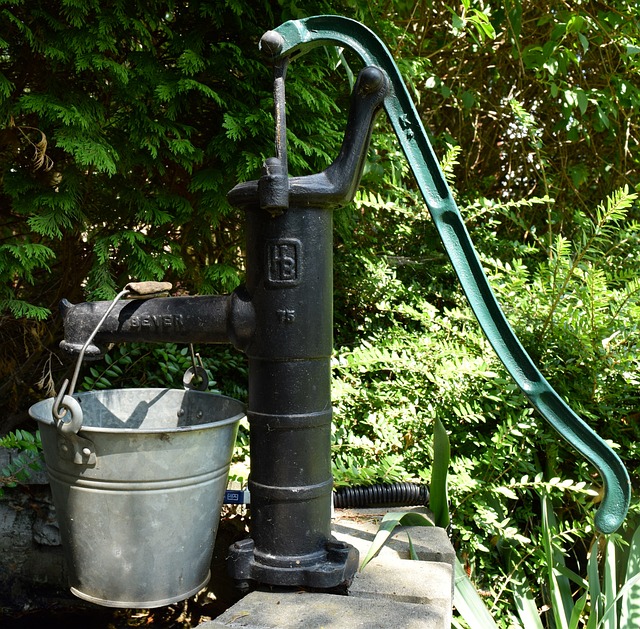
The brakes failed on my husband Don’s car in our condo parking garage. (That’s it above, leaking on the garage floor.) The car hit a wall and was totaled. Don walked away without a scratch, and no one was hurt. A minor miracle, and we’re both grateful.


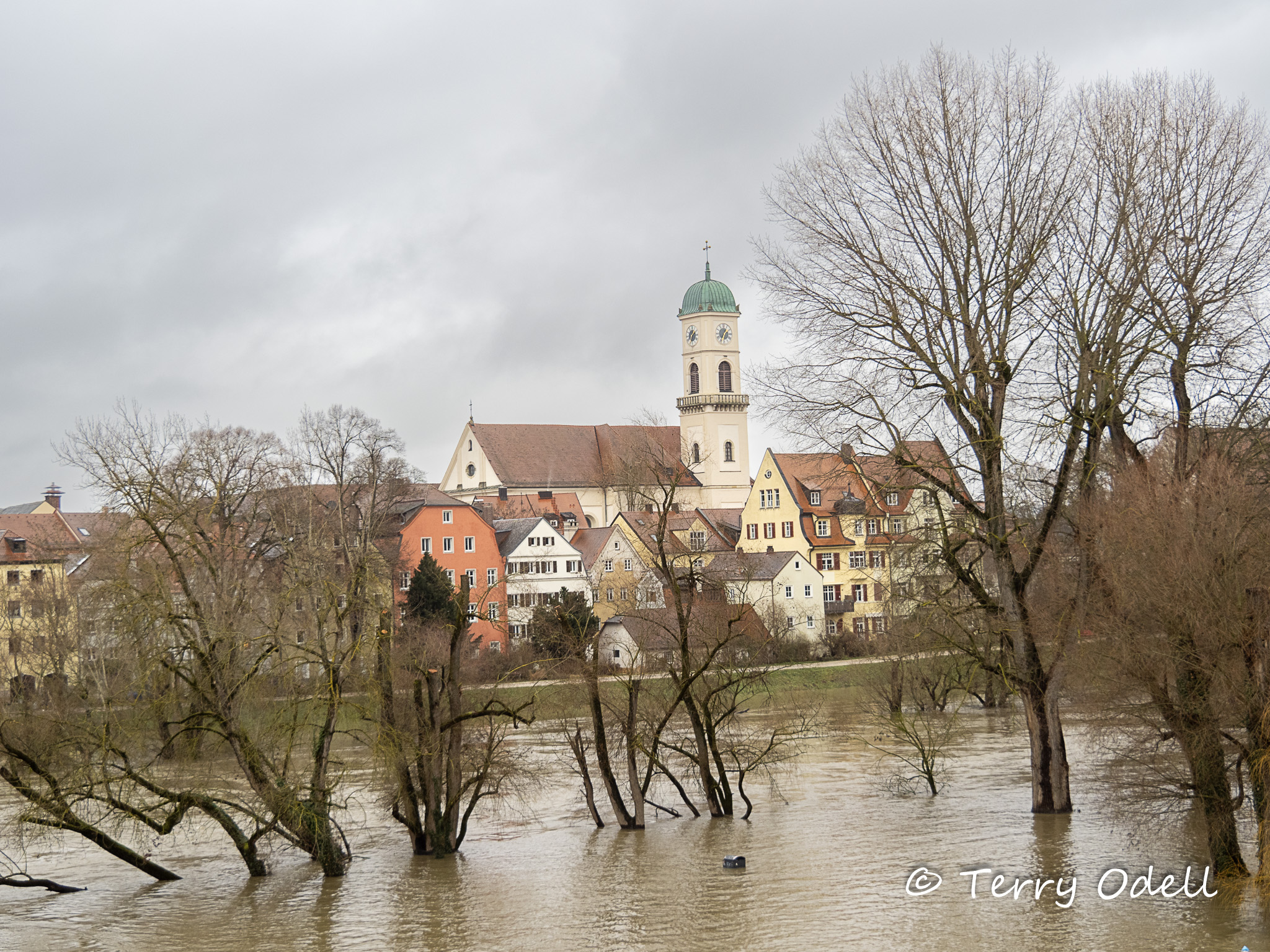
My car (the green one with water up to its hubcaps) survived the great Florida flood and it’s ready to drive. Except I can’t drive it because of the busted collarbone.
But along with this steaming pile of lousy luck, there is some good news. Very good news.

The Malice Domestic mystery conference is honoring me with the Lifetime Achievement Award for Malice 36 April 26-28, 2024. Malice Domestic is an annual fan convention in Bethesda, Maryland. I’m thrilled to be part of a star-studded line-up next year.
Lori Rader-Day will be Toastmaster. She’s nominated for the Edgar Award, and won the Agatha, Anthony and Mary Higgins Clark awards. The award-winning Sujata Massey, who writes historical and mystery fiction set in Asia, is Guest of Honor. Noted blogger Kristopher Zgorski of BOLO Books, will get the Amelia Award. There’s more, much more, but there always is at conferences.
I learn a lot by talking to other writers and readers. At the recent Malice Domestic convention, we were talking about the good career advice we received. Many of these tips have been discussed in TKZ, including the importance of persistence at all stages of your career. And, don’t quit your day job.
But the most helpful advice for me, now that I have 34 books out, came from my current agent.
He had me re-read all my books, from the beginning to the current novel, and report back to him.
The results were enlightening. Novels that I thought were my best had major flaws. I repeated certain catch phrases. In some, I waited too long to start the mystery. There were good things, too. But I learned a lot.
I recommend this for every writer. If you only have one or two novels, take time to analyze them. If you have several unpublished novels, do the same thing. Analyze your body of work.
I probably won’t be stopping by today because I’ll be in St. Louis for a book signing, busted wing and all.
Tell us what writing advice works for you, TKZers.

############################################################################The Dead of Night, my new Angela Richman, death investigator mystery, is available in book stores and online:
Buy from Bookshop.org, and your purchase will help support local bookstoreshttps://tinyurl.com/yet7h56d
Barnes & Noble: https://tinyurl.com/2wdzhjh5
Amazon: amazon.com
PLEASE NOTE: Prices for e-books and hardcovers vary. Please check that you have the lowest.

What’s The Big Deal About Was?

What’s The Big Deal About Was?
Terry Odell

When I finished my first novel, the only paths to publication were vanity presses and agents. When I found my first, last, and only agent, she returned my first chapters with every use of the word was circled in red. Everyone said “Was is passive writing. Don’t use it.” I might not have been an English major, but I knew enough to know that “was” is the past tense of “is” and there’s nothing wrong with writing in the past tense. Now, it might not be the strongest of words, and when paired with an “ing” verb, might not be the most exciting way to express something, but it’s not passive. (I wrote about the dangers of using ‘ing’ construction in another post.)

Passive voice is something else again. Consider The dog bit the boy versus the boy was bitten by the dog. The former is active voice, the latter is passive voice. (I know someone out there is saying, “But what about The dog was bitten by the boy? That’s passive voice, but unexpected, and therefore more interesting.)

The following are passages from books written by best-selling authors. I wonder if their editors circled all their “was” usages in red—and “were” as well. Yes, there are  a couple of passive voice sentences in there. Their editors didn’t cut them, either.

The body was crumpled beside a Dumpster midway down the alley, but my view was blocked by a woman in a T-shirt and shorts, and two men in dark sport coats. The woman’s T-shirt was fresh and white and made her stand out in the dingy alley as if she were on fire. The older suit was a thick man with shabby hair, and the younger detective was a tall, spike-straight guy with a pinched face.  The Forgotten Man, Robert Crais


The shooter was trained, the shooter was a killing machine, but he was still human. Now, breathing hard, he tasted blood in his mouth like you might after a tough run; and all the time, he was looking for lights, he was looking for an alarm, a cry in the dark.  Heat Lightning, John Sandford.


Sheriff Goodman was into his thirtieth hour without sleep. He was dazed and groggy and barely upright. But he kept on going. No reason to believe the abductors had stayed in the vicinity, but he had his guys out checking any and all vacant buildings, barns, huts, shelters, and empty houses. He himself was supplementing their efforts by covering the places they weren’t getting to. He had found nothing. They had found nothing. Radio traffic was full of tired and resigned negativity.  A Wanted Man, Lee Child


The general public was for the most part under the impression that the gang wars that gripped most of South L.A. and claimed victims every night of the week came down to a  Bloods versus Crips battle for supremacy and control of the streets. But the reality was that the rivalries between subsets of the same gang were some of the most violent in the city and largely responsible for the weekly body counts. The Rolling 60s and 7-Treys were at the top of that list. Both Crips sets operated under kill-on-sight protocols and the score was routinely noted in the neighborhood graffiti. A RIP list was used to memorialize homies lost in the endless battle, while a lineup of names under a 187 heading was a hit list, a record of kills. The Black Box, Michael Connelly.


Now, if you want to know a usage that bugs me, it’s using “start” where it’s not really needed. “The phone started to ring in Bob’s pocket.” What’s wrong with “The phone rang in Bob’s pocket?”

Or, “He started to walk away.” Unless he turns around and comes back, why not “He walked away.”?

What about you TKZers? Any “rules” you disagree with? Words or usages that bug you?


Cover image of Deadly Relations by Terry OdellAvailable Now in Digital, Paperback, and Audio
Deadly Relations.
Nothing Ever Happens in Mapleton … Until it Does
Gordon Hepler, Mapleton, Colorado’s Police Chief, is called away from a quiet Sunday with his wife to an emergency situation at the home he’s planning to sell. A man has chained himself to the front porch, threatening to set off an explosive.


Terry Odell is an award-winning author of Mystery and Romantic Suspense, although she prefers to think of them all as “Mysteries with Relationships.”


Writers and Age


Photo credit: Pexels -Vlada Karpovich

By Debbie Burke

@burke_writer


A February 2023 article in The Guardian gives hope to us writers of a certain age. According to the story, “older, unpublished writers are now at a premium – with radical, edgy women aged into their 80s particularly sought-after.”

During the economic downturn that began in 2008, mergers and downsizing of publishing companies led to many older, experienced editors being culled to reduce costs. If they were replaced, new hires were younger people willing to work for less money.

Because of that, publishing tended toward a youth-oriented culture. Many agents and editors are Millennials (1981-1996). That led to significant ageism, with older writers being shoved aside unless they were already big-money successes.

I know of one seasoned author who reported a rejection where the agent said, “Your turn is past.”

Wow.

At a conference several years ago, I pitched a twentyish agent with a book in my Tawny Lindholm Thriller series that stars characters in their 50s. In conversation, there was a passing mention of AARP. She authoritatively informed me, “You can’t join AARP at fifty.”

Oh really? That’s news to all the people who receive solicitations to join around their 50th birthday. 

Her incorrect statement was one reason I decided to end the quest for traditional publication and self-publish instead. I didn’t need to fight another uphill battle in the face of arrogant ignorance.

But recently “old” has become cool.

A prime reading demographic are Boomers (born between 1946-1964). They are retiring at increasing rates, have discretionary income to buy books, and time to read them. And they are interested in substantive topics of health, family, giving to others, and quality of life, rather than the celebrity scandal du jour.

Lisa Highton, an associate agent at Jenny Brown Associates, says: “The vast majority of books are bought by women aged 45 and above. They’re a hugely important demographic and increasingly, want to see themselves represented in books.” She adds, there is “value [in] their collected, distilled wisdom, their lifetime of reading and radicalism that is not possible for younger writers.

According to Cherry Potts, Arachne Press, there is a “very willing readership” for the work of older women “including that most elusive of reader: the white middle-aged man”.

Leading the trend are a number of recent bestsellers by older women like the debut novel by Bonnie Garmus, Lessons in Chemistry and The Paper Palace by Miranda Cowley Heller. The latter book features characters in their 50s and addresses the long-taboo subject of senior sexuality. 

An 81-year-old friend, Marie F. Martin, just completed her seventh novel, a mystery set in 1952 on a Montana farm. She didn’t start writing until she was 70 and has learned, refined, and honed her craft to a high gloss. The latest is her best book yet.

Marie caught the self-publishing trend early on and did well with six books. For her seventh, she decided to query agents and publishers. Again, she’s on the leading edge of a trend. I hope she’s accepted and achieves success—she’s earned it. But, if not, she won’t be disappointed. She’ll self-publish again. Marie’s equanimity carries her over the rollercoaster of despair and elation that goes with a writing career.

In my last post, Editor/Janitor”, I mentioned retired newspaperman George Ostrom.

Since then, I saw George and his wife having dinner at the senior community where they live. He’s now almost 95 and in declining health. During his long newspaper career, he had a reputation for calling out BS, sometimes to the angry dismay of prominent citizens.

That evening, I went over to their table, introduced myself, and kiddingly asked him, “Are you the Editor/Janitor of the Kalispell Weekly News?” 

An awkward hesitation followed.

Uh-oh. By trying to be funny, had I inadvertently embarrassed him?

“Why?” he finally asked. “Do you wanna hit me?”

To my great relief, his humorous spirit remains intact.

Like wine, writers improve with age. Unlike athletes, writers don’t peak in their 20s and 30s then go downhill.

The longer writers live, the more problems we’ve had to solve, the more fascinating and frustrating people we’ve known, the more experiences we’ve enjoyed or suffered. That huge reservoir adds richness, texture, and depth to the stories we create.

Insight and wisdom are hard-earned. By sharing those gifts with readers in books, articles, and blog posts, writers can shine a light on truths that lead to realization, understanding, and empathy for the human condition. Those truths endure through time.

Take heart, senior writers. Contrary to the rejection cited above, our turn is not past.

~~~

TKZers: Have you experienced ageism when submitting to editors and agents?

Who’s your favorite senior writer?

~~~


The lead characters in the Tawny Lindholm Thriller series are still kicking ass in their 50s. Please check out the new release Deep Fake Double Down, on sale now at Amazon and other major booksellers.