
Better Brainstorming…
Even If You Write Alone

creative-brainstorming

It is easier to tone down a wild idea than to think up a new one.” — Alex Osborn

By PJ Parrish

I don’t know how you guys do it. Those of you who write alone, I mean.

I am blessed in that I work with a co-author, my sister Kelly. Our collaboration began more than 20 years ago and has lasted through 20-some books (counting the ones that didn’t get published). And while we have had our disagreements over the years, we have always understood the power behind the notion that two brains are better than one.

I want to talk today about brainstorming.

This came about because I was cleaning out my computer folders the other day. I have one folder I labeled BRAIN LINT. This is just a depository for all the stuff I can’t find a good place for but am too gutless to throw out. In this folder are still-born story ideas, pictures cadged from iStock that were meant to inspire, old newspaper articles about bizarre crimes and weirdos, and one completed manuscript that is so bad I keep it just to remind myself of how far I have come and how far I could fall.

When I was cleaning out the lint, I found one gem. It is a transcript of a story conference in 1978 between Steven Spielberg, George Lucas and Lawrence Kasdan. They were brainstorming about a possible movie. It didn’t have a title then, but it would eventually be made under the title Raiders of the Lost Ark. You might have heard of it.

Here’s just one exchange:
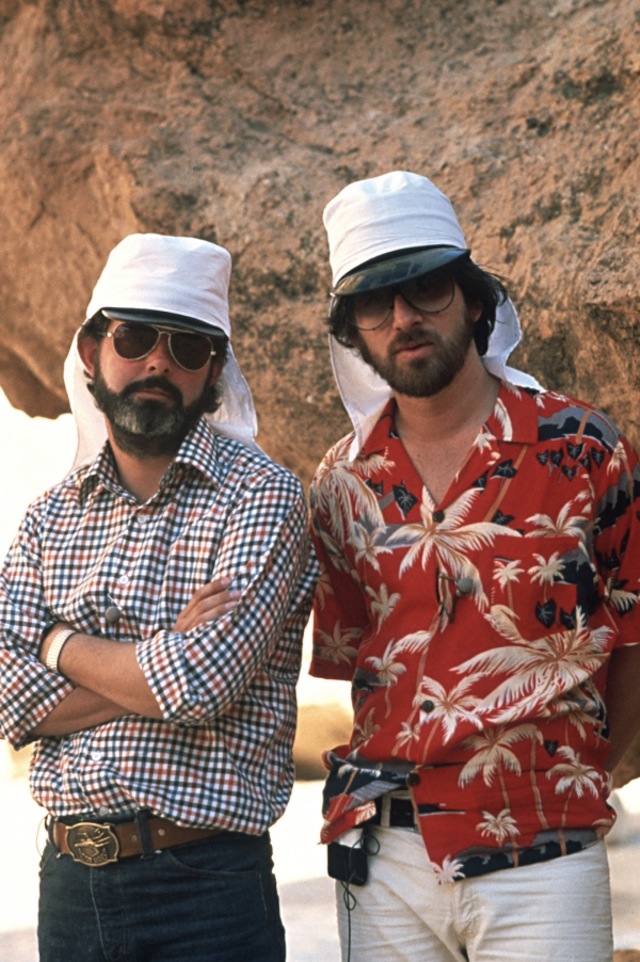
george-lucas-steven-spielberg-looking-radLucas: We want to make a very believable character. We want him to be extremely good at what he does, as is the Clint Eastwood character or the James Bond character. James Bond and the man with no name were very good at what they did. They were very fast with a gun, they were very slick, they were very professional. They were Supermen.
Kasdan: How do you see this guy?
Lucas: Someone like Harrison Ford, Paul LeMatt. A young Steve McQueen. It would be ideal if we could find some stunt man who could act.
Spielberg: Burt Reynolds. Baryshnikov.
Kasdan: Do you have a name for this person?
Lucas: I do for our leader.
Spielberg: I hate this, but go ahead.
Lucas: Indiana Smith. It has to be unique. It’s a character. Very Americana square. He was born in Indiana.
Kasdan: What does she call him, Indy?

I still can’t get the image of Baryshnikov in a fedora out of a mind. But that was how Indiana Jones was born, out of a brainstorming session between three creative guys. What a strange word – brainstorming. Ever wonder where it came from?
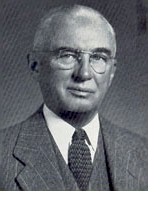
AFOsbornWell, in 1919, Alex Osborn, an ex-newspaper man from Buffalo, joined with Bruce Fairchild Barton and Roy Sarles Durstine to form the hugely successful BDO advertising agency. Osborn went on to write many books on creativity but he’s the one who coined the term “brainstorming.”

Nowadays, “brainstorming” is a catch-all for any type of creative group grope. But I thought it might be interesting to go back and see what Osborn had to say about it back in 1953 and find out if it could help writers today. Well, guess what? It’s still good advice, whether you are collaborating, working in a critique group — or even flying solo.

Here’s my main take-aways from Osborn’s ideas on brainstorming.

1. Think up as many ideas as possible regardless of how ridiculous they may seem.  It’s unlikely you’ll get the perfect solution right off the bat, so he recommends getting every idea out of your head and then go back to examine them afterwards. An idea that may sound crazy may actually turn out to work with a little modification.

Doesn’t this make sense when you’re plotting? I know when Kelly and I talk, we throw everything on the wall. You need to take the same approach with yourself. Write down every idea and let them bake for a while. Sometimes, the most outrageous thing leads to something useful.

2. Don’t be judgmental. All ideas are considered legitimate and often the most far-fetched are the most fertile. Ideas can be evaluated after the brainstorming session but judgments during the process should be withheld.

Are you sometimes too hard on yourself? Do you think, “Oh, that’s so stupid, no editor will ever buy it.” Or maybe you are a self-doubter, telling yourself, “I don’t have the chops to try this technique.” Or: “This is a great idea but it’s so complex so I won’t even try.”

3. Go for quantity not quality. Don’t get hung up (like I often do) on coming up with the most clever solution to your writing problem. Let your brain waves flow so the bad stuff bobs up to the surface along with the good. Osborn said: “Creativity is so delicate a flower that praise tends to make it bloom while discouragement often nips it in the bud. Forget quality; aim to get a quantity of answers. When you’re through, your sheet of paper may be so full of ridiculous nonsense that you’ll be disgusted. Never mind. You’re loosening up your unfettered imagination—making your mind deliver.”

Osborn’s books were geared more toward corporate types trying to get their teams to think more creatively on things like how to get traffic flowing better in big cities. But take a look at his suggestions for improving creativity and see if there’s not something here for us mere writers:

1. Break up the problem into smaller pieces. For writers, this can mean tackling each plot or character problem as manageable bites, not getting overwhelmed by the idea that you’ve got 400 pages to fill. Get that first draft written then go back and fix your plot holes or layer your characters better.

2. Search for alternatives. If you’ve painted yourself into a plot corner, look for a different way out than the old ways.

3. What can be borrowed or adapted? Read other writers and learn from them.

4. Modify with new twists. There aren’t many new plots in crime fiction but there is always a way to put your own fresh imprint on them.

5. Is there something that can be magnified or minified? Maybe the stakes in your thriller aren’t high enough. Maybe you need to play down a secondary character who is overshadowing your hero. Are you larding in too much research?

6. What can be substituted? Maybe if you changed your location the story would suddenly come alive. Would your mystery work better in a small town where you could exploit the English village dynamic? Is your setting banal and underwritten? Are you hitting all the wrong clichés if your book is set in Paris or some other iconic place?

7. What can be re-arranged? Maybe you’re writing in the wrong point of view? Try switching from first to third. Or maybe the guy you think is your hero is really the bad guy?

8. Consider the vice versa. I love this one. Do just the opposite of what you are now doing. Is your protag male? Switch gender! Are you relying on tired character tropes (lonely alchoholic PI, sweet antique store owner who solves crime). Make your brain do a 180 and examine what is on the flip side. I did this with my latest book. The woman I thought was my protag turned out to be one of two in a dual-protag parallel theme story.

Okay, enough lessons. Let’s end by going back and eavesdropping some more on the Indiana Jones brainstorm session. CLICK HERE to read the whole thing.
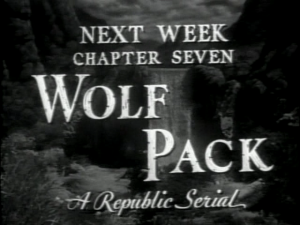
97147d290117720Lucas and Spielberg started with the idea that they wanted to make a movie that was like old Republic serials of the Thirties (Zorro, Dick Tracy, Red Ryder). Something had to always kept happening, every ten minutes or so another cliff-hanger situation. From there, the guys dreamed up Indiana Smith and other elements. In the beginning, even the ark was just a MacGuffin.

Lucas: The thing is, if there is an object of antiquity, that a museum knows about that may be missing, or they know it’s somewhere. He can go like an archeologist, but it’s like rather than doing research, he goes in to get the gold.
Spielberg: His main adversaries will be the Germans?
Lucas: Yeah, I think they should be. I’ve been trying to move him around the world a little bit to see if we can’t get a little Oriental influence into it just for the fun of it. I may have fit it in. The fun thing is, he’s a soldier of fortune, so we can move him into any sort of exotic thirties environment we want to.
Spielberg: Keep him out of the States. We don’t want to do one shot in this country.
Lucas: The film starts in the jungle. South America, someplace. We get one of these great scenes with the pack animals going up the mist-covered hills. Very exotic mist-filled jungles and mountains.
Spielberg: Where he goes into the cave?
Lucas: This is where he goes into the cave. We had it where there’s a couple native bearers, whatever, and sort of a couple of Mexican, well not Mexican…
Spielberg: They’re like Mayan.
imagesLucas: They’re the third world local sleazes…[LATER] He goes into this very sleazy Casablanca type club and makes contact with this agent. The agent is a girl. She’s sort of a Marlene Dietrich tavern singer spy. A German lady singer. She’s really a double agent.
Spielberg: I like the idea that she’s a heavy drinker and our hero doesn’t drink at all. She gets drunk a lot. She’s beautiful and she gets really sexy when she’s drunk, and silly. And he doesn’t touch the stuff.
Lucas: I don’t want to soften her. I like the fact that it’s greed. I like all the hard stuff, but you’re going to love her.
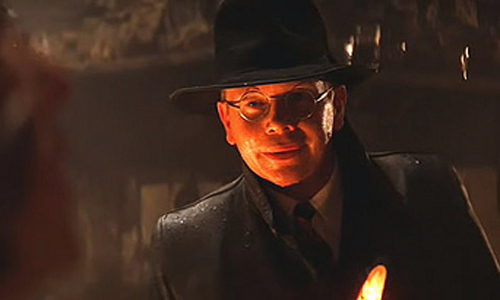
Raiders-of-the-Lost-Ark-indiana-jones-23708996-500-300Spielberg: There should be a real slimy German character. He’s the only gestapo involved there. Every time you see him, you know it’s going to be the worst pain, death by torture. This guy looks like a ferret. He’s got that slick black hair. His name is Himmler or something like that. He’s a stocky short guy, a master torturer.
Lucas: What can he chase them with? What if he jumps on a camel?
Spielberg: I love it. It’s a great idea. There’s never been a camel chase before.
Lucas: Is this camel going to chase a car?
Spielberg: You know how fast a camel can run? Not only that, he can jump over vegetable carts and things. We still have the big fight in the moving truck to do. And now we have a camel chase.
Lucas: We’ve added another million dollars.
Spielberg: Not really. How much trouble can a camel be?

And then they talk about the big scene toward the end where Indy and Marion are tossed into that deep tomb and the bad guys cover it up with a rock. They’re trying to figure out what is in the tomb that’s dangerous and how Indy gets out. They decide there is a huge artesian well that opens up and he and Marion are in danger of drowning. Then somebody suggests there are also wild animals in the tomb, like tigers.

Spielberg: It would have to be a neighborhood tiger.
Lucas: There aren’t any tigers out there.
Spielberg: I’m not in love with the idea.
Lucas: You could have bats and stuff, make it slightly spooky.
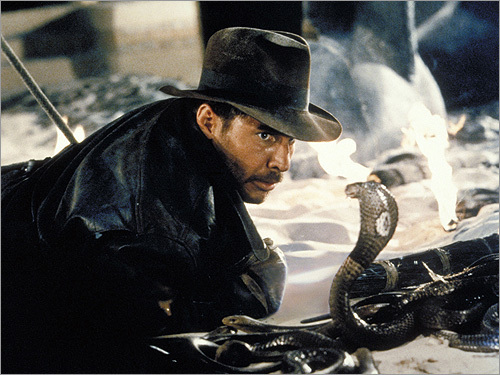
Spielberg: What about snakes? All these snakes come out.
Lucas: People hate snakes. Asps? They’re too small.
Spielberg: It’s like hundreds of thousands of snakes.
Lucas: When he first jumps down in the hole, it’s a giant snake pit. Then when he says they’re afraid of light, they throw down torches. You have a whole bunch of torches that keep the snakes back. So he only has one more torch, and the snakes start coming in. He sits there with one torch, knowing that when the torch goes out… It’s the idea of being in a room, in a black room with a lot of snakes. That will really be scary.
Spielberg: The snakes are waiting, looking at him. Thousands. And the torches are burning down. He’s trying to keep it going. The torch goes out. The whole screen goes black. The sound of the snakes gets more intense. You hear him backing up. The camera pans and suddenly you see, it’s black, but there’s light coming from several cracks. It’s not completely black. That leads him to an opening. To a rock that isn’t so flush against the other rocks. He knows there’s access. He keeps pushing on it, he gets a little more room.
Lucas: We shouldn’t have any snakes in the opening sequence, just tarantulas. Save the snakes for now.
Spielberg: It would be funny if, somewhere early in the movie he somehow implied that he was not afraid of snakes. Later you realize that that is one of his big fears.
Lucas: It should be slightly amusing that he hates snakes, and then he opens this up, “I can’t go down in there. Why did there have to be snakes? Anything but snakes.”
raiders-of-the-lost-ark

Now, aren’t you glad they didn’t go with the tigers?
Create a Fascinating, Believable Antagonist

villainJodie Renner, editor & author  @JodieRennerEd

For a riveting story, be sure to challenge your hero – or heroine – to the max. Readers need to be constantly worrying about him. Which means his life is in upheaval and he’s struggling, dealing with increasing conflict in the form of serious opposition or threats. One or more forces of opposition should threaten the protagonist or stand in the way of his goals.

Challenges don’t need to be in the form of an actual character. They can be some other kind of opposing force or idea, like a fear, phobia, prejudice, or handicap that is preventing the character from reaching her goals.

The main threat in fiction usually comes in the form of an antagonistic character, who isn’t necessarily a murderous villain. Other determined opponents include romantic rivals, “mean girls,” schoolyard bullies, competing colleagues, or sports rivals.

Antagonists can also fall into a gray zone of opposition characters who aren’t really evil, just at odds with the protagonist we’re rooting for. They can be fascinating too, as we don’t know if they’re going to change sides, so they’re often unpredictable. A few examples include the Tommy Lee Jones character chasing Harrison Ford’s character in the movie The Fugitive and Sheriff Teasle in First Blood, who is after our hero, John Rambo. Or how about Han Solo from Star Wars? Not a villain, but not a good guy, either. He sparks things up though, doesn’t he? We wonder whether these somewhat likeable or understandable bad guys could switch sides at any time.

To pose a credible, significant threat and cause readers to worry, your antagonist should be as clever, powerful, and determined as your protagonist. Challenges and troubles are what make your main character intriguing, compel her to be the best she can be. They force her to draw on resources she never knew she had in order to survive, defeat evil, or attain her goals.

For today’s post, we’ll assume your antagonist is a villain – a mean, even despicable, destructive character we definitely don’t want to root for. He needs to be a formidable obstacle to the protagonist’s goals or a menace to the hero’s loved ones or other innocents. And thrillers, fantasy, and horror require really frightening, nasty villains.

Most of the bad guys in movies and books want the same thing: power. Or maybe revenge or riches. And they don’t care who gets hurt along the way. Or worse, they enjoy causing pain, even torturing their victims.

The antagonist needs to be powerful, a game-changer. As Chuck Wendig says in his excellent blog post 25 Things You Should Know About Antagonists,” “The antagonist is there to push and pull the sequence of events into an arrangement that pleases him. He makes trouble for the protagonist. He is the one upping the stakes. He is the one changing the game and making it harder.”

The protagonist and antagonist have clashing motivations. Their needs, values, and desires are at odds. The antagonist and protagonist could have completely opposite backgrounds and personalities for contrast – or be uncomfortably similar, to show how close the protagonist came or could come to passing over to the dark side.

Most readers are no longer intrigued by “mwoo-ha-ha,” all-evil antagonists, like Captain Hook in Peter Pan. Unless you’re writing middle-grade fiction, be sure your villain isn’t unexplainably horrid, evil for the sake of evil. Today’s sophisticated readers are looking for an antagonist who’s more complex, realistic, and believable.

Chuck Wendig suggests antagonists should be depicted as real people with real problems: “People with wants, needs, fears, motivations. People with families and friends and their own enemies. They’re full-blooded, full-bodied characters. They’re not single-minded villains twirling greasy mustaches.”

For a believable, fascinating antagonist or villain, try to create a unique, memorable bad guy of a type that hasn’t been done to death. Try to give him or her an original background and voice.

Remember that the antagonist is the hero of his own story. He thinks he’s right. He justifies his actions somehow, whether it’s revenge, a thirst for power, ridding society of undesirables, or payback. He may even feel he has a noble or just goal, as in the serial killer of prostitutes.

To create a worthy opponent for the protagonist and a realistic, believable, complex antagonist, get into his mind-set. Ask yourself these questions:

  • What does the antagonist want or need?
  • Why is he determined to go after it?
  • What drives the antagonist? Greed? Revenge? Hatred? Anger? Hurt?
  • What is his biggest motivation? To avenge past wrongs? To gain ultimate power?
  • Who does he want to suffer or lose out? Why?
  • How does he justify his actions? What does he tell himself?

Now create a backstory for your antagonist. Most of it will not show up in your story, but you need to get a handle on what makes him tick to ensure he acts in ways that are in keeping with his background.

Develop his voice. As you do for the protagonist, you can write a free-form rant, where he goes on and on about why he hates someone or something, wants to get revenge, needs to find and kill certain people, and so on.

Show his justification for his goals and actions. Why does he think he’s right and justified in his actions? This will create a more believable, more determined bad guy.

Perhaps identify at some point in your narrative a flashback or allusion to an experience that shows the antagonist as a victim – abused or neglected, treated cruelly by family or others in power. This can create a spark of sympathy while also potentially foreshadowing a particularly nasty incident. (Thanks to thriller author Tom Combs for this suggestion.)

Write some scenes purely from the antagonist’s point of view, away from the protagonist, so readers can find out what makes him tick and how twisted he is. This also creates reader concern for the protagonist, which is always a good thing.

Make him scary, a force to be reckoned with, but not all-powerful, as that’s unrealistic. Give him a few weaknesses, too.

And for added complexity and dimension, take it one step further by showing a human side of the antagonist, something readers can actually relate to, might be afraid they could also fall into. That amps up the tension and reader involvement.

So to create a fascinating, believable antagonist or villain, try to make him or her unique. Delve into their background, find out the goals and motivations that drive them forward. Get into their mind and try to understand them. How do they justify their actions?

Give us a complex villain we love to hate – or a gray antagonist who makes us squirm!

TKZers – Who are some powerful villains who made you shiver in novels or films?

Captivate Your Readers_med– And what about your favorite “gray” antagonists or anti-heroes?

And for a future article, what do you think about all the gray protagonists or anti-heroes cropping up in novels, movies, and TV shows, like Nick in Gone Girl and Walter in Breaking Bad? Do you welcome that trend toward a flawed, unlikeable protagonist? Or do you yearn for more admirable, ethical, heroic heroes to root for?

Jodie Renner is a freelance editor and the award-winning author of three craft-of-writing guides in her series An Editor’s Guide to Writing Compelling Fiction: Fire up Your Fiction, Writing a Killer Thriller, and Captivate Your Readers.

Where Do You Get Your Ideas?

Light BulbAuthors who’ve been around awhile, and have more than a few books out there, are often asked two questions.

The first is, “Where do you get your ideas?”

I like how Harlan Ellison used to answer that: “There’s a swell idea service in Schenectady. Every week I send them twenty-five bucks, and every week they send me a fresh six-pack of ideas.”

Every now and then someone would ask him for the address of the service, and Harlan would do to that person what Harlan always used to do all such folks, i.e., not suffer them.

The other question we’re asked is, “Which book is your favorite?”

The answer is complicated. There are books we love because we worked so hard on them. Others because they were so much fun to write. And still others because they helped pay the mortgage.

But when I am asked about a series, I pause a moment, then name my legal thrillers featuring Ty Buchanan. They originally came out in beautiful hardcover editions, then trade paper.

As Seinfeld would say, yadda yadda yadda, I am pleased to report that I’m now releasing all three books in new digital editions. And to celebrate, I’m pricing each one at $2.99 for this kickoff period.

series

Allow me to tell you how I got the idea for the series, and indeed for each book. It started with my regularly scheduled “creativity time.”

Back when newspapers existed, I would read either the L.A. Times or the L.A. Daily News, and one legal newspaper, the L.A. Daily Journal. I’d scan for interesting stories or legal issues, and clip them and throw them into a box. Every now and then I’d go through that box, seeing if the ideas still interested me.

One item kept vying for my attention. It was a tragic story about an L.A. man who shot his young wife to death, then drove to a freeway overpass, got out, shot himself, and fell 100 feet to the freeway below. He crushed a Toyota, killing the driver. How bizarre is that?

So one day I wrote this up as an opening scene. When I got to the part about the woman being killed, I made up a character: Jacqueline Dwyer, a twenty-seven-year old elementary school teacher.

And then I paused, switched to a First Person POV voice, and wrote:

This would have been simply another dark and strange coincidence, the sort of thing that shows up for a two-minute report on the local news—with live remote from the scene—and maybe gets a follow-up the next day. Eventually the story would go away, fading from the city’s collective memory.

But the story did not go away. Not for me. Because Jacqueline Dwyer was the woman I was going to marry.

Who was narrating? That’s how Tyler Buchanan was born. I made him an up-and-coming, hotshot lawyer with everything going his way, until this. And especially after a shady guy finds him and tells him Jacqueline was still alive after the crash … and someone murdered her.

That book became Try Dying.

Book #2, Try Darkness, was based on a story I clipped from the legal paper. It was about illegal evictions from downtown transient hotels. There was a trick landlords were using to get around the law, so I made one of fhs evicted a mother with a six-year-old daughter, who comes to Ty for help. And then she turns up dead, and the plot, as they say, thickens.

The last book in the trilogy is Try Fear. Again, this came out of a real story I clipped. One Christmas season the LAPD stopped a very large man on suspicion of driving under the influence. He was about 6’5”, 280 pounds. He was also wearing nothing but a Santa hat and a G-string.

I found myself thinking, This has to be Ty’s next client. So that’s how Try Fear begins.

The reviews were kind. Please allow me to toot two small horns:

“Engaging whodunit series … Readers will enjoy Bell’s talent for description and character development.” –– Publishers Weekly

“The tale equally balances action and drama, motion and emotion. Readers who pride themselves on figuring out the answers before an author reveals them are in for a surprise, too. Bell is very good at keeping secrets. Fans of thrillers with lawyers as their central characters—John Lescroart and Phillip Margolin, especially—will welcome this new addition to their must-read lists.” — Booklist

I’ve been asked many times if I might add another book to this series. I’ve considered it, but I also think the series ends in exactly the right spot, with exactly the right scene, and indeed, even the right line. I am hesitant to mess with that. But if you do decide to read all three books, I would love to hear what you think I should do!

The books are on Kindle and Nook, and soon will be on Kobo and in print. If you want to know when, you can subscribe to my email alerts and I’ll be sure to let you know.

KINDLE:

Try Dying – Ty Buchanan Legal Thriller #1

Try Darkness – Ty Buchanan Legal Thriller #2

Try Fear – Ty Buchanan Legal Thriller #3

NOOK:

Try Dying – Ty Buchanan Legal Thriller #1

Try Darkness – Ty Buchanan Legal Thriller #2

Try Fear – Ty Buchanan Legal Thriller #3

Now we turn to you, TKZers. What is your favorite way to get ideas? And have you ever been to Schenectady?

Reader Friday: Who Would Play YOU in a Movie of Your Writer Life?

WRITER

HERE is a link of the 50 best movies about writers, ranked, that inspired this post:


1.) If you could cast the movie of your writer life, who would play YOU in the starring role?


2.) Who would play your agent?


3.) For those overachievers out there (ie Basil Sands), what would your story log line be for the plot?


What A Freelance Editor Brings to the Table

Jordan Dane
@JordanDane

Matrice

Editor: Mary-Theresa Hussey

My guest today is my favorite editor (for my Young Adult books at Harlequin Teen), Mary-Theresa Hussey. Her passion for books shows in everything she does. I love collaborating with her. She has a meticulous eye for detail, but her true strength lies in her realistic understanding of character motivation and the emotion of a story. I’m proud to have her as my guest today at TKZ. Welcome, Matrice!

***

So you’ve written your book shared it with a critique partner, revised it, set it aside for a bit, revised it once more and are ready for the next step. Your mother, friend and sister love it and think it’s perfect.

What’s next? Well, it does depend on your goals for that novel. Do you want to find an agent? A publisher? Self-publish it? Go Indy? Do you want to share it with a few people or the wider world?

If you’re aiming at an agent or publisher, you might feel it’s in solid shape and you’ll wait for those professionals to give feedback and direction. That can be the right route if your project fits in with their goals as well.

However, if you haven’t gotten many bites, or you want to go indy, then you might want to investigate working with a freelance editor. The editor might help pinpoint some areas that will capture that agent/publisher or else give you the confidence to self-publish yourself. Freelancing can be hard for anyone who decides they are interested in going down that path. But knowing that various aspects like the finances can be handled with a simple invoice template, this means one less aspect to think about. You’ll have more time to focus on what you love to do, which is writing.

Luckily there are some places where you might be able to get the resources you need to help you along with your freelance career, for example, using an invoice template could be a good way of keeping on top of your clients.

So what does the freelance editor bring to the table?
She represents the reader in the bookstore or booksite, the ones who will pay to read your book—and hopefully all the ones after that!
She is not your friend or critique partner who listened to you talk about all the characters and plot and goals. If it’s not on the page for her, she’s going to question it and ask why—or why not.
She has not been in your mind to understand the motivations or conflict or themes. Though you don’t need to hit the reader over the head, sometimes you’ve got to explain the elements that you know but the reader doesn’t have a clue about.
She doesn’t love your darlings in the same way, and will tell you to cut or trim or toss as needed.
She’s caring but dispassionate. She’s looking for what will make the best story and draw that reader to the end. She won’t aim to hurt your feelings, but will challenge you on what makes a better novel.
She should be reading the manuscript that you’ve polished, gotten feedback on and are confident is ready to go, not the first draft. Have it in as strong as possible a shape so it’s better for both of you.
She should also have a knowledge of and appreciation for the genre you’re writing in so that the notes are targeted to your goals, not her own ideal book.
She has a strong sense of grammar, of rules, and knowing what to encourage as your voice and when to rein in flights of fancy.
She may, depending on the agreement, be able to give you feedback on titling, copy and other material. But that can be an editor specific element.
Most important, depending on your needs, you might want a development editor, line editor or copy editor. Make sure you know what you want and hire the right person at the right stage! Some editors are especially talented in one area or another. Make sure you’re getting the right person for you at the right time.
The Developmental Editor is looking at the big picture of pacing and structure and characterization and plot. She’s not going to focus on grammar or eye color or such, but is looking at the overall goals of your story and how you are achieving them.
The Line Editor will probably note specific areas where pacing or structure or characterization needs to be tweaked, but hopefully all those elements will have been addressed. She’s going to be looking at the specifics of reading the manuscript, looking for errors in fact and name and restructuring sentences. She does read it line by line to see if the author has expressed herself as clearly as she could.
The Copy Editor focuses on the details. She will know what all the characters names are, and their relation to each other and probably hair and eye color, but isn’t going to ask if the pacing is too slow. She’ll fix all the grammar issues and typos, but won’t comment on inconsistent characterization—unless the character is misstating facts between chapters. She’ll find the typos but won’t question the plot (unless you have your character walking out of the room twice—that she’ll notice!).

An editor—freelancer or not—will wear many hats, but there are some things she probably won’t do.

She’s not a writing teacher. She won’t teach you the ins and outs about craft. She should be able to point out the errors and why something would be better in another form, but it probably won’t lead to hours of one-on-one discussions about the reasons behind your choices and her corrections.
Since she probably won’t take the time to teach you how to write a better story, she’s also not going to (depending on the agreement) rewrite the book. She’s working with your words and making suggestions, not rewriting everything herself. She’s certainly planning on helping improve the story, but it’s your writing that is the base of it all.
Along those lines, she may or may not be a writer herself. If it’s important to you one way or the other, check that out first! It can be incredibly helpful at times to have an editor who is a writer, but sometimes not.
The freelance editor is not a publisher. She probably knows a bit about self-publishing and has picked up information on metadata and ISBNS, but it will be the author’s responsibility to work through the process.
She’s also not likely to be a miracle worker. No editor can guarantee the book will be picked up by an agent or publisher or become number one on the bestseller list. What she can strive for to the best of her knowledge and ability is that all the elements that make a stronger story have been reviewed and addressed and there are minimal errors of grammar and typos in the story.
Naturally, I think a good editor brings a lot to the table, but the author has to do the work first and understand her own goals for the project. It’s best if you are both on the same page going in, so you end up in the strongest possible position at the end of the revision/edit. In the end, it’s the author’s name on the book, and the author who stands behind her words.
So what are you looking for in an editor? Any good or bad experiences? Do share what you can.
Matrice

After a long editorial career at Harlequin, Mary-Theresa Hussey is now offering her years of experience to authors and industry professionals as a freelance editor. She’s passionate about books and good stories–and she wants to be sure that they are well told. Check out her site at www.GoodStoriesWellTold.com

Do Your Homework

By Joe Moore
@JoeMoore_writer

You’re writing a novel. Maybe you’ve even finished it. Congratulations. The hard part is over, right?

Wrong.

First, you need to define your audience. It’s important that you know what type of person or group will go out of their way to find and pay to read your book. What are the characteristics of your target reader such as their age, gender, education, ethnicity, etc. Is there a common theme, topic or category that ties them together? And even more important, what is the size of your target audience?

For instance, if your book is a paranormal romance set in the future in which the main characters are all teenagers, is there a group that buys lots of your type of book? If not, you might need to adjust the content to appeal to a broader audience. Change the age of the characters or shift the story to present day or another time period. If your research proves that a large number of readers buy books that fall into that category, making the adjustment now could save you a great deal of frustration later.

Next, you need to define your competition. Who are you going up against? If your book falls into a specialized sub-genre dominated by a few other writers, you might have a hard time convincing a publisher that the world needs one more writer in that niche.

The opposite problem may occur if your genre is a really broad one such as cozy mysteries or romance. You’re going to have to put a unique, special spin on your book to break it out of the pack. Or accept the fact that the genre and your competition is a wide river of writers, and you only hope to jump in and go with the current. Either way, make the decision now, not later.

The next issue to consider is what makes your book different from all the others in your genre. Do your homework to determine what the characteristics are of books that your potential audience loves. This can be done online in the dozens of Internet writer and reader forums. And you can also do the research by discussing the question with librarians and books sellers. Once you know the answers, improve on what your target audience loves and avoid what they don’t.

Just keep in mind that you can’t time the market, meaning that what’s really hot right now might have cooled off by the time your book hits the shelves. The moment you sign a publishing contract, you’re still as much as 12-18 months behind what’s on the new release table right now. This timetable can be greatly improved with indie publishing, but you still have to take the time to analyze your audience in either case.

Another detail to consider in advance is deciding how you’ll market and promote your book. Sadly, this burden has fallen almost totally on the shoulders of the author and has virtually disappeared from the responsibilities of the publisher. Start forming an action plan including setting up a presence on the Internet in the form of a website and/or blog. Also, is there a way to tie in your theme to a particular industry? How can you promote directly to your audience? For instance, if your romance novel revolves around a sleuth who solves crimes while on tour as a golf pro, would it be advantageous to have a book promotion booth at golf industry tradeshows? If your protagonist is a computer nerd, should you be doing signings at electronics shows? How about setting up a signing at a Best Buy or CompUSA? Follow the obvious tie-ins to find your target audience.

Writing is hard work. So is determining your target audience and then promoting and marketing to them. Like any other manufacturing company, you are manufacturing a product. Doing your homework first will help avoid needless detours on the way to publication.

Flight From Hell Yields Insight About Customer Service

Deathspiral1I have to fly across the country frequently these days on family business. Because I’m a nervous flyer, I normally don’t think too much about the customer service during a flight–I’m too worried about the plane crashing. But last night’s experience gave me a new perspective on the topic of customer service. I’ve started to think there are some best practices in customer service which should apply to a writing career.

I should add that in addition to being afraid of flying, I’m prone to superstition, plus I resist changes to routine. On my recent cross-country trips, therefore, I have flown on the same airline, in the same seat on the same row, every time. Each of these flights turned out to be a pleasant experience (aside from my epic battles with white knuckle syndrome, which isn’t the airline’s fault).
Last night I took a different airline for the first time for my usual trip. It was the same airplane model, same seat and row. Only the customer service was different.

And how. Here’s the way it went down: the exact same trip, on two different airlines.

Airline A

Upon entering the cabin, I was greeted by a flight who asked me if she could hang up my coat for me. Another crew member distributed beverages before takeoff, and told us what types of food were available. The crew patrolled the aisle regularly, making eye contact with passengers and making sure needs were being met. They smiled at us a lot. They made us feel like they wanted us on their plane!

Airline B

Upon entering the cabin, I was ignored by the flight attendant, who was engaged in an animated personal discussion with a colleague. She looked startled when I asked where I could hang up my coat, and checked my ticket to make sure I was actually entitled to coat hanging privileges. The animated personal discussion continued during the preparation for takeoff, with brief, obligatory pauses to make announcements required by the FAA. The flight magazine was a month out of date, so we couldn’t discover what food choices would be available. When the flight attendant finally took our orders, I asked if the entree (it turned out to be pasta, hooray!) contained meat. She wasn’t sure, and didn’t find out. (The pasta did have meat, this vegetarian discovered later for herself).

The flight crew evidently enjoyed each other’s company a lot, because they spent the entire journey talking among themselves. At one point an attendant from another section came forward, looking distressed. This new conversation was punctuated by dramatic hand gestures. The distressed newcomer was even shielding her mouth from view of the passengers as she continued talking.

Having taped and watched every episode of AIR DISASTERS, I immediately suspected that the flight attendants were talking about some kind of problem with the plane.

“Is everything okay?” I asked one of them, when I finally caught her attention.

“Yes. Why?” She paused, and then it seemed to dawn on her why I’d asked the question. “Oh, we’re just talking about life. You know, girl stuff.”

“As long as you aren’t talking about broken-airplane stuff,” I said.

She retreated with a doubtful look on her face. The chat fest resumed.

When we eventually landed in Washington, three hours late, I discovered that I’d forgotten to pack my laptop, on which I’d written my post for today. So I’m writing this rant on my iPad, which hates interacting with WordPress. (Okay, that one’s not the flight crew’s fault.)

Customer Service and Writing

The flight episode gave me a new appreciation for the importance of customer service. I think writers would benefit by developing some best practices of our own in that regard. Here are some suggestions:

When using social media, don’t talk “at” people in a one-sided conversation. Engage in actual conversations.

Always maintain a friendly, polite tone in public forums.

Answer emails promptly.

In short, make your readers and public feel like you’re glad they made the decision to board your flight. They’ll reward you with return visits.

Can you add any customer service best practices that writers should follow? Or better still, anything we should avoid doing?

Do your Research!

imagesToday I leave for a very exciting trip to India – not only am I excited because it’s a place that’s been on my (long) ‘must see’ list for ages but also because it gives me a chance to do some ‘on the ground’ research. I’m lucky that my love of travel and history can be combined in this way, but I also understand that I have an obligation to future readers to get the details of any story I write as accurate as possible. Although ‘on site’ research isn’t always possible, few things compare to actually breathing in the air of the place you plan to write about or to feel, smell, hear and touch the very things your characters will experience.  The immediacy of this kind of research will (I hope) translate into a more visceral sensory experience for the reader as well.

Following Jim’s theme from yesterday’s blog post – I also feel strongly that one of the top things guaranteed to make a writer fail is a failure to do research. This research includes critical information about the publishing and writing industry as well as everything pertinent to the book a writer is hoping to complete. And when I say everything – I mean everything. Readers today demand a compelling and accurate story – and be assured, if you fail to research something properly there will be an army of readers out there eager to tell you so!

This research can usually be done at the desk top – with the internet offering a wealth of information that was never as readily accessible as it is today. I can read antiquarian books that have been electronically scanned, view newspaper columns from a past era – even look up the weather reports for a particular date I have in mind. As a historical writer, I feel an obligation to get the facts right as much as possible and I have been known to spend way too many hours researching furnishings, paintings, and books that will comprise less than a few sentences of background in my novels (what can I say, I love my job!). Still – nothing quite compares to the thrill of actually being in the place you want to write about.

So today I go armed with notebooks, computer and camera as well as all my (aging) senses – hoping to capture the essence of place and history for India that I want to capture in my future story. My travels will include Delhi, Agra, Hyderabad and Udaipur, and, I know I will find the experience overwhelming and confronting at times, as I witness the juxtaposition of modernity and history, poverty and riches first hand.

Unfortunately, I may not be able to view this post or comment as much as I’d like (as I’ll be flying part of the day), but I would like to hear from my fellow TKzers on a place that they would like to visit as research for an possible book they’d love to write.

So what country or place is on your ‘must see’ list for a possible future book? Have you ever given up on a book after realizing the writer failed to do their research?


The Ten Commandments of Writing Failure

new_cokeMr. Donald Keough died this past week. He was 88 and was for a time the number two man at Coca-Cola. This was during an era called the “soda wars.” Keough’s job was to beat back the challenge of Pepsi, which was winning the younger set while Coke was out there trying to teach the world to sing in perfect harmony.

Keough was also the mastermind of one of the worst product blunders in history.

The original formula Coke (at least the one that came after they took the cocaine out of it) was, and is, the best tasting cola ever. It was Fred Astaire to Pepsi’s journeyman hoofer. It was Spencer Tracy to Pepsi’s high school senior starring in the school production of Our Town.

But for some unknown reason––probably due to overpaid consultants––Keough decided to change the formula, and “New Coke” was born. With great fanfare they rolled it out. And the country responded with a loud, collective YECCH!

So passionate was the push back that only 10 weeks later they brought the old formula back, calling it “Classic Coke.”

timenewcoke-copyAnd sales boomed. The controversy had become national news. The publicity turned out to be priceless.
Some cynics suggested the whole thing had been planned.  If so, it was brilliant. But when asked Keough said, “We’re not that dumb and not that smart.”

Later on, with a bit of self-deprecatory wisdom, Mr. Keough wrote a book called The Ten Commandments for Business Failure. I thought they might also apply to writers, especially now that self-publishing is a viable business option for the “authorpreneur.” Let’s have a look.

1. Quit Taking Risks

Resting on your laurels. Mailing it in. Doing the same old, same old. Maybe that works for a few traditionally published and bestselling authors. But for the true writer, the one who wants to honor the craft and get better, risk taking is part of the plan. Risk in characterization and plot and style and theme. That, in turn, brings a certain excitement to the writing, and you know what? Readers can sense that you’re excited. That makes your writing more appealing.

2. Be Inflexible

“Flexibility,” writes Keough, “is a continual, deeply thoughtful process of examining situations and when warranted, quickly adapting to changing circumstances.” These days, every writer, no matter who butters their bread (i.e., New York or Seattle) needs to be aware of process, changes in the marketplace and distribution channels, and quality improvements.

3. Isolate Yourself

Success in business means being in touch with both workers and customers. A good manager is one who walks around and knows what’s going on in the building and in the satellite offices.

Writers, who by the very nature of the work spend most of their time alone, need to know how to nurture a fan base, work social media wisely, grow an email list and, if contracted with a traditional house, schmooze a little with the increasingly nervous staff therein.

4. Assume Infallibility

You want to fail at this game? Then put a chip on your shoulder and always blame somebody else. Your critique group is a great place to start. Tell them you’ve forgotten more about writing than they’ll ever know. Reject editors’ notes. Then rail at the marketplace when your books don’t sell. Do anything but admit you have weaknesses that need to be addressed.

5. Play the Game Close to the Foul Line

What Keough means by this is that cheating, even a little, will eventually catch up with you. In recent years we’ve seen instances of plagiarism and sock-puppetry snag writers and impact careers. Trust is built up over time but can be lost in an instant. Just ask Brian Williams.

6. Don’t Take Time to Think

The saying in business is “data drives decisions.” You have to stop doing things that don’t lead to profit and do more of the things that do. Which is why traditional publishing companies drop authors who aren’t selling enough books. If you are a midlist writer and that has happened to you, maybe it is time to think … about going indie.

For the full-time indie writer, data is available so you can see what’s selling and how certain promotional ventures pay off. You can keep on developments via many fine blogs (start with The Passive Voice, a good aggregator of publishing news).

When I was running a small business I took time each week for “thinking, planning, and studying.” I called this my “TPS time,” which must never be confused with the TPS in this clip.

7. Put All Your Faith in Experts and Outside Consultants

Writers, more than ever, need to take responsibility for their own careers, no matter what side of the walls of the Forbidden City they’re on. You cannot simply hand everything over to an agent or publisher. You have to know what questions to ask and what terms to refuse. You have to know how to limit a non-compete clause and define “out of print” in a way that is meaningful and fair.

If you self-publish, the worst thing you can do is give some outfit thousands of dollars to get your book out there, and then thousands more for them to “market” your book. You need to know how to do this yourself. You need a plan, like the one I’ve followed and put into a book, which is on special now for 99¢ (you also have to know how to spot a real bargain, and this is one of them).   

8. Love Your Bureaucracy

In business, the bigger the organization the harder it is to move. Traditional publishing has been living this challenge for the past five years. Why only five? Because when digital publishing took off in 2008-09, the main reaction of the Bigs was to see it as a blip, nothing to worry about. They had their comfy bureaucracies.

Oops. Now we see all the changes that have been happening inside the Forbidden City, from the cutting of editorial staff, to tussles with Amazon, to new direct-to-consumer programs. It’s been a difficult transition period and it’s still going on.

The indie writer, on the other hand, can move quickly, but can also fall in love with systems that aren’t ultimately helpful. For example, if you’re spending 80% of your time on social media and 20% on your writing, you’re actually heading backwards.

9. Send Mixed Messages

In business they say “the main thing is to keep the main thing the main thing.” As a writer, your main thing is to tell great stories. If you also want to be a bad-boy blogger, or a mouthpiece for some political persuasion, just know that readers will have mixed reactions. If that doesn’t bother you, fine. Just be intentional about it.

I consider myself a writer first and a teacher of writing second. What I do on this blog and in social media is consistent with those two things. That doesn’t mean I won’t share the occasional opinion, or even write a book with opinions in it [drop intriguing teaser about upcoming book here]. But I keep most everything consistent with those two roles.

10. Be Afraid of the Future

Oh, this is major. For 150 years the publishing industry has operated one way. It had a settled distribution system and there were plenty of bookstores for their stock. All that has changed in a flash, leaving agents, editors and trad-based writers wondering how this is all going to shake out. To which the answer is: no one knows. It’s like what old Carson the butler says with a sigh in a recent episode of Downton Abbey: “The nature of life is not permanence, but flux.”

So the successful writer keeps writing and doesn’t let anxiety freeze up his flying fingers. Keep writing, keep trying to get better.

Keough finishes his book bonus eleventh commandment:

11. Lose Your Passion for Work, for Life

You’ve got to find ways to keep the joy in your writing life. That doesn’t mean it’ll always be unicorns and rainbows. A lot of the time it’s tar pits and tsetse flies. But an inner core of love for what you do, and hopes for what you can achieve, will keep the fire burning.

When the flame begins to dim, take a couple of days to relax, regroup, rethink. And reread. Take a few of  your favorite novels off the shelf (or off your ereader) and look at a few chapters. Get caught up again in the romance of great storytelling. Soon enough you’ll be itching to get back to the keyboard.

So here’s today’s command: write your best scene ever. When you’re done, pour yourself a Coke … the real thing. Once in a blue moon the calories won’t hurt you!

Using Fence Post Characters

fortitude My favorite stories, written by me or someone else, are those dealing with characters best described as “fence post” characters which usually possess at least two or more of these traits: they are out of their element; in at least potentially in trouble: they have little or no idea how they got where they are; and have to rely on their skills and wits, to get out of the situation, though they appear to be ill-suited to do so. Think of a turtle on top of a fence post, if that helps. Sometimes a character like that can make, or save, the story you are telling, particularly if it just isn’t working otherwise.

I thought of this while binge watching a new dramatic series named Fortitude. It’s on the Pivot Network, which you’ll find in the equivalent of the nosebleed seats of your cable television system.  Fortitude is set in a desolate section of Solvard, a Norwegian territory; the title is the name of the small town where almost of the story takes place. Two murders bookend the first episode, and at first it looks like your typical whodunit which will be investigated by a barely competent sheriff who may well be in the tank for some special interests relating to tourism as well. Everything changes, however, in Episode Two, with the arrival of our “fencepost” character in the form of Detective Chief Inspector Morton. Brilliantly played by the criminally underappreciated Stanley Tucci, Morton is 1) an American; 2) an ex-FBI agent now working for the London Metropolitan Police; and is 3) investigating the circumstances surrounding the death of one of the murder victims, who is a British citizen in 4) a God-forsaken area of Norway that looks like Boston (or Columbus, Ohio) did last week. Morton’s arrival puts almost everyone concerned in high dudgeon, particularly the sheriff (at least at first), but there isn’t much anyone can do about it because of some treaty of some sort which gives Morton jurisdiction. Morton no sooner sets foot on the slippery ice when he starts uncovering things, frozen ground and non-stop snowfall notwithstanding. Think of a cross between True Detective and Twin Peaks (the television series, not the restaurant chain) and you’ll have a vague idea of where things seem to be going. Morton, however, out of his element but not out of his league, is the fulcrum which takes the story off in an entirely new direction.

You can do this in your own work. If your story or novel isn’t working, change up your primary character. Make them uncomfortable in their own skin. Change gender or race or education level, just for a start. Even a small difference taken to its conclusion, logical or otherwise, can change the character and or the story dramatically. Downsizing your character’s abilities, such as they are, and throwing them to the sharks when they can’t swim works even better. I read a book several years ago — and I apologize out front for not being able to recall either the name or the author (yes; I’m getting old) — of an Asian father whose daughter disappears while attending college in England. He doesn’t speak English but makes the trip, determined to find her, armed with little more than fortitude and a keen power of logic and observation.

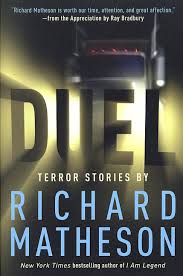
I do recall the name of a short story — because I have read it at least once a year since it was published — which puts a somewhat unassuming turtle on top of a very dangerous fence post. I’m speaking of “Duel” by Richard Matheson. “Duel,” in case you haven’t had the pleasure, concerns duela motorist named “Mann” who is terrorized along several miles of highway by a trucker. The story was written over four decades ago, some eighteen years before the term “road rage” ever entered the nation’s lexicon, but still reads well. Mann is not Jack Reacher, or even his baby brother; he is totally out of his element and just wants to be left alone to keep driving. It doesn’t happen, of course, but what does will keep you reading. Steven Spielberg made an excellent attempt at capturing Matheson’s magic in a made-for-television movie, but you have to read the story to really appreciate what Matheson did so well.

Now, if I might ask…authors: have you tried this? And readers: have there been any fish out of water characters that you have enjoyed in novels, stories, or films? Please. Share with us.