
Writer, tell us your story’s plot in six words. Here are a couple of examples:
THE SHINING: Novelist cures writer’s block with axe.
FLIGHT: Saving plane easy; fighting booze hard.

Jordan Dane
@JordanDane
Happy holiday season, TKZers! What better way to spend the season than partaking in a little murder and mayhem. For your reading pleasure, we have an anonymous first page critique entry entitled: Cruel Sacrifices. My comments will be on the flip side. Enjoy. And to work off those holiday calories, join in with your comments.
July 4, 2011/Baton Rouge, Louisiana
“Please don’t do it! I’m sorry, I didn’t mean to!” the girl cried.
“Oh really, now?” the killer calmly stated.
“Yes, I am so sorry! Please don’t kill me!”
The killer looks into the girl’s eyes. The killer saw only fear and misery there. Then the killer glanced down at the girl in disgust. The killer never thought that they will see the day that this whining creature will be on her knees, begging anyone for anything. The killer remembered when this girl used to hold her head up high, played guys and then throw them away like trash. Party like it was the end of the world. This girl cared for absolutely no one but herself. The girl’s whimpers brought the killer back to the present.
“I’m sorry, okay, I didn’t mean to hurt him!” her tears fell onto the ground. She tried to get up but slipped again on the hard concrete. The killer cocks the pistol, aiming it with perfection on the girl’s face.
“Get up!”
The girl gradually got up. She shook all over. A violent tremor went through her. She glances around at the fireworks in the distance. She yearns to scream for help. She knew what would happen if she did. She didn’t bother to test it. She glanced quickly back at the killer, at the nose of the pistol aimed at her.
What kind of gun is that? She thought. Is that a Glock or a Magnum? She didn’t know the first thing about guns. She sniffled.
“You broke his heart; you do know that, don’t you? He cried that night in my arms. He never went to sleep that night,” the killer told her.
“I’m sorry, I didn’t know. It was just a joke! You have got to believe me!” the girl broke down again.
“It was just a joke to you! My brother’s heart was only a game to you, you wench!” the killer screamed at her, eyes full of rage.
“Please! Don’t shoot! I really did like him, ya know.” The girl wrapped her arms around herself. “It was only a game! We were only joking, please!”
“That was no game! No joke! You humiliated him in front of everybody! You broke his spirit, lost his trust, his outlook on life,” the killer quietly told her, with a pang of sadness.
Comments:
1.) This is obviously a flash back with a clear tag line as to time, date and location. A reader can clearly see what is happening when. I like the use of tag lines to orient the reader in a quick fashion. Also the scene starts with a dialogue line and pulls the reader into the scene right from the first line without too much back story or explanation to slow the pace.
2.) The description “the killer” is used before the killer kills. That begs the question – in whose POV are we? A killer would not usually refer to themselves as a killer, especially if they haven’t killed yet. It implies the killer is something coming from the girl facing the gun. Picky I know, but it drew me out of the intro.
3.) The overuse of the reference “the killer’’ is distracting to me. (It’s used 11+ times in this short intro.) I think this is because the author does not want to identify the gender of the killer, but there are more subtle ways of avoiding gender in the narratives by establishing the POV as the person with the gun, then focusing on what he or she sees (ie the girl).
EXAMPLE:
The killer looked into the girl’s eyes and saw only fear and misery. Perfect. Whiny little bitch probably never imagined the day would come when she’d be on her knees, begging for her pathetic life. This girl used to hold her head up high, played guys and then threw them away like trash. She cared for absolutely no one but herself. Her whimpers meant nothing. After what she’d done, how could she expect mercy?
4.) Nearly the whole short paragraph before this line, starting with ‘the girl gradually got up…’ is in the girl’s POV. I would recommend picking one point of view and sticking with it. I generally select the person with the most to lose. In this case, it may be the girl with the gun pointing in her face. She’s scared out of her mind, maybe only seeing a shadow with a dim light reflecting off the gun. Perhaps the killer doesn’t say much, to not giveaway the gender. But if the author stayed in the killer’s point of view, it’s easier to hide gender. Whatever the reason, pick a character to place the POV and stick with it during the scene, rather than weakening the introduction by ‘head hopping’ between characters.
5.) There is a tense problem throughout. Lines like – the girl cried & the killer stated – are past tense, yet there are examples of present tense, ie ‘the killer looks into the girl’s eyes’ and ‘the killer cocks the pistol’.
6.) There is also a point of view problem. The start of the story appears to be in the killer’s POV, yet later it switches to the girl’s, ie ‘What kind of gun is that? she thought.’ And even in the killer’s POV, the perspective is muddled (ie ‘the killer screamed at her, eyes full of rage’ – How can the killer see his/her own eyes filled with rage?).
7.) In addition, if I had a gun in my face, the last thing I’d be thinking of is ‘what kind of gun is that,’ especially if I didn’t know guns. If the scene is written in the girl’s POV, the author could focus on the physical manifestations of fear, which in turn would ramp up the suspense.
I sense the killer might have more justification than revenge for his/her brother’s embarrassment – maybe the brother committed suicide and there is no going back. Whatever the premise, I have a sense that this author understands pace and tension. There’s a natural storytelling skill here. We have all had to relearn grammar and author craft issues, like point of view. Hang in there, author.
What say you, TKZers? Any constructive criticism for our brave author?
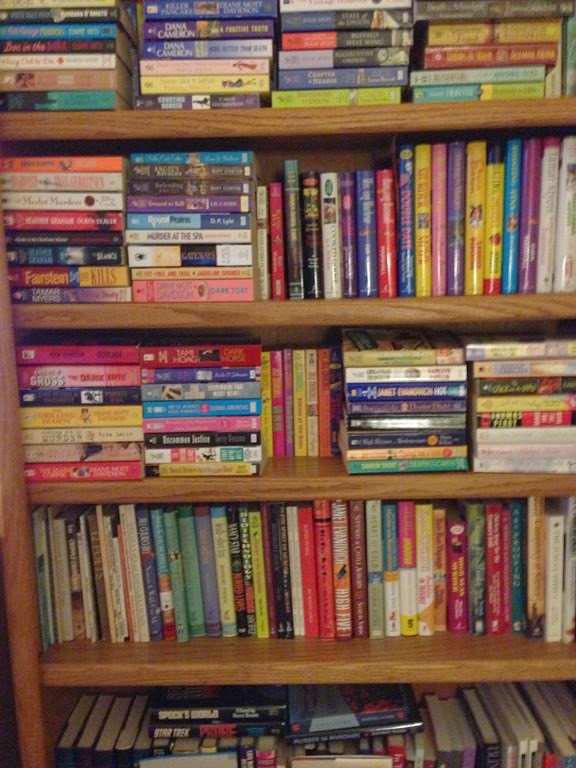
As I switch my gaze from the iPad where I am proofreading my next Marla Shore story to our bookshelf crammed with mystery novels, I marvel at how mere words on a page have the ability to transform into a mental image in our minds. In addition, those among us who have the gift of reading fiction can transport ourselves to any realm, time or place and put ourselves into any fictional role we desire.
Not everyone is blessed with this ability. Those who read nonfiction or fashion magazines, for example, may lack this talent or deny it in themselves. It’s their personal preference not to read fiction but it’s also their loss. We possess a gift in being able to glimpse a page of words and fly away to another world in our imaginations. How does this happen? What transformation occurs in our brains to allow us to visualize scenes based on black type against a white page? Surely studies must have been done to show how this works. It never ceases to amaze me. I feel sorry for people who do not share my enjoyment in reading stories.
As this ability to transform words into images is a human trait, let’s admit that what each of us perceives is related to our personal lifespace. Lifespace is a concept I learned in nursing school and carried over to teaching writing. In character development, you take your main character and write her name in a circle on a piece of paper. Draw cartoon bubbles around her head. In these spaces, fill in what’s in your character’s mind at a given moment in time. What are her immediate concerns? Tasks to complete? Daily goals? That’s her lifespace. Do this for your protagonists and you’ll get inside their heads.
How you read words on a page and perceive them will differ from how I do it, because we each perceive the same scene from different viewpoints.
Here’s an example. “She strolled along the beach, head down, contemplating the seashells and damp weeds strewn across the sand. Her skirt blew in the breeze while a forlorn horn blasted from a ship headed out to sea. The ocean’s vastness swallowed a freighter’s silhouette against the darkening sky. Deep blue waters beckoned for her to shed her earthly concerns….”
What mood are you getting from this short piece? Are you feeling sad? At peace? Tempted to go skinny dipping? How you feel will be partly due to the words and the imagery they provoke and partly due to your own life experience and how you perceive the world.
I love reading stories. I want to share my passion, although I understand people’s reading tastes differ. But what wondrous worlds these other folks are missing. And what a wonder it is that we can take mere words on a page and use them to transcend to another universe. Wouldn’t you agree?

Got a great fan letter the other day from a lady named Rose O’Malley:
Dear P.J.: My husband is a Stephen King fan. Has read all his books and needed a new author. We went to the bookstore and found your first Louis Kincaid book. Well, he is hooked and is always looking forward to the next one. Here’s the funny part. He doesn’t think women can write as good as men. He thinks P.J. Parrish is a black man. I just found out when I went to your website [that you are women]. This is a good one. I can’t wait to tell him.”
Wish I could say this is rare. But we get a lot of fan letters that come addressed to Mr. Parrish. Whatever the reason — that our protag is a man or our style hardboiled — many of our readers assume we are male.
Now I’m a card-carrying feminist. (Well, I would carry one if there WAS a card). And I used to be miffed about this Mr. Parrish thing, believing that I had a duty to carry the standard for female crime writers. (Maybe I did strike a blow for the crime writing sisterhood in the O’Malley household at least.) But you know, after living fifteen years now as the neuter P.J. Parrish, I no longer take offense. I’ll let reader Wade Beeson, in his email to us, tell you why:
“As a compliment, I could not decide if you were male or female, as you seem sensitive and understanding of both sexes. Thank you for a provocative read.”
The women writing men and men writing women thing is a pretty hackneyed subject. It’s dragged out for at least one conference panel a year. And I suspect the men are as tired of explaining how they “do” women as I am tired of talking about how I “do” men.
It boils down to one thing for me: If you can’t slip into the skin of another sex (or race or anyone outside your paltry sphere of experience) you have no business even trying to write. Failure to write believable characters of ANY kind is the supreme failure of the imagination.
Madame Bovary is one of my favorite books. From the first time I read it, I was awed by Emma. And by her creator’s ability to bring her to such vivid life. At that time in my life, I had just run my Visa up buying a designer purse when my rent was overdue. How did Flaubert understand how I sank to that nadir?
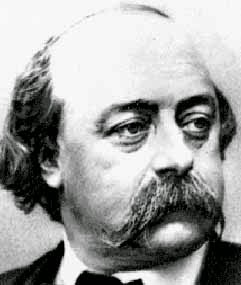
Flaubert “did” women well. But when he said “Bovary, c’est moi,” he wasn’t claiming he was his character. Actually, he once admitted he was terrified by “the need to invent.” (Which I find vastly comforting!) He was a literary magpie who read medical textbooks to write about clubfeet, observed the town folks around him, and when he had to write a chapter about an agricultural fair, actually went to one.
It’s said he probably even stole the whole idea for Bovary from a scandal that was going on near his town at the time, buying into the advice of his friends who told him “write what you know.”
For years after his book came out, he peevishly maintained he just made the whole damn thing up.
But Flaubert WAS Bovary in a very basic way. His powers of observation, his imagination, his sensory antennae, his understanding of human nature — all those things that make up what we call writer’s talent — it all allowed him to inhabit other skins. It allowed him to create one of literature’s greatest female archetypes.
This man-woman thing is swirling in my head today as my sister and I write chapter 38 of our new book. The finish line is in sight, but it has been a hard race. See, this book is the first in a new series featuring a female protagonist. Now we wrote a female protag before when we gave Louis’s lover Joe Frye her own stand alone. But this charcacter isn’t a tough homicide cop like Joe. Gaslight.) Also, she is an unreliable narrator, which is a bitch to write well. It is exhausting being in her head. So for the first time in years, I can sympathize with those of you just starting out — those of you still trying to fit into that new skin. She’s a rich socialite whose life goes to hell when she comes to believe her husband is trying to kill her. (Yeah, I know…Ingrid Bergman in Gaslight.)
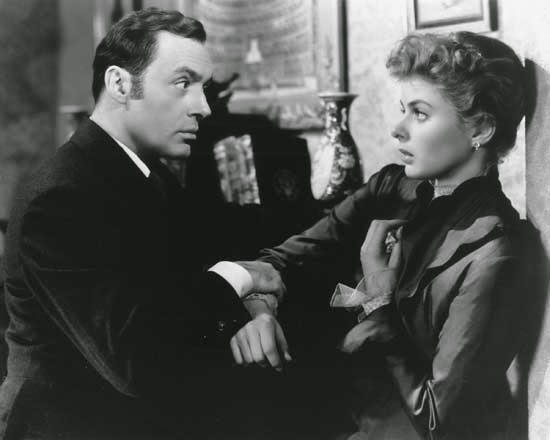
Our new woman is taking shape. As are the men around her. A whole new world is coming to life every day under my fingertips. It is frustrating, frightening all over again. And deeply thrilling. I tapped into something inside myself to become Louis. I will plumb the female side of myself for this new chararacter. (I have never been a rich socialite, after all…despite buying that designer purse.) I’ll willingly lose something of myself.
Here’s Flaubert talking about that process:
“What a delicious thing writing is — not to be you anymore but to move through the whole universe you are talking about. Take me today, for instance: I was a man and woman, lover and mistress; I went riding on a fall afternoon beneath the yellow leaves, and I was the horse, the leaves, the wind, the words he and she spoke, and the red sun beating on their half-closed eyelids, which were heavy with passion.”
Isn’t that, in a nutshell, why we write?
by Jodie Renner, fiction editor & author of writing guides 
Whether you’re writing a blog post, a magazine article, a short story, an assignment, or a book, it’s important to go over your work several times to make sure it’s polished and flows well. No matter what your you’re writing, you’re your credibility will be eroded if readers find mispelled misspelled words, misused words, missing or extra words, or other typos. And a recent study published in Huffington Post points to a close correlation between accuracy of writing and income from writing — a no-brainer.
I’ve presented workshops and written several articles (here’s a good one) on tips for approaching the whole editing and revising process, starting with macro issues like logistics, characterisation, plot, and pacing, and working your way through awkward phrasing and wordiness down to micro errors like spelling and punctuation. In fact, I’ll be presenting a workshop called “Revise for Success,” a step-by-step approach to revising your novel, at Steven James’ writers conference, Troubleshooting Your Novel, in Nashville on January 17.
For a whole book on how to nail this critical process to create a novel that shines, check out James Scott Bell’s excellent Revision & Self-Editing for Publication. Writers also find my Fire up Your Fiction very helpful.
For today, my topic is on that final step, after you’ve resolved all big-picture content problems and even most style issues, such as slow pacing, awkward sentence structure, or overly wordy phrasing. My tips today are on the final “proofreading” step, how to ferret out those tiny little gremlins that escape your notice when you’re concentrating on content and even style issues.
When we read our own work, we’re so familiar with what we want to say that we fill in words that aren’t actually on the page, and skip over slightly misspelled words that still pass spellcheck, or little words that shouldn’t be there. Of course, getting detail-oriented, eagle-eyed nerdy friends who are great at spelling to read it carefully is a great option, if you know of some. If not, or in addition to that, I’m providing some tips for fooling your brain into thinking it hasn’t read this story before.
As someone trained to see errors, I find them everywhere – on signs and menus, in blog posts and articles, on website copy, and in published books. As an example, here’s the description of a workshop that appeared on a conference website a while back, which I’ve shortened and disguised a bit. Can you spot the 9-10 errors in this description? (Just for fun, I’ve added a few more errors.)
Copy with little typos: One of the most important ways to connect with your audience an attract new readers is through author interviews and public readings. How can you master the the confidence and skills to successfully preform in front of an audience? There are a few time tested trick to perform you work well for an audience. This workshop will discuss techniques for speaking in pubic and will also cover using social media sites lie YouTube to to host audio versions of your work.
Errors fixed in blue: One of the most important ways to connect with your audience and attract new readers is through author interviews and public readings. How can you master the confidence and skills to successfully perform in front of an audience? There are a few time–tested tricks for performing your work well for an audience. This workshop will discuss techniques for speaking in public and will also cover using social media sites like YouTube to host audio versions of your work.
And I just happen to be judging short stories in the thriller genre for Writer’s Digest’s Popular Fiction 2014 contest, where I was given 147 short stories and asked to choose only 10 of those to go on to the next level. Since I have to reject 137 of these stories, I have to be pretty ruthless, and any that aren’t polished won’t make the cut. Typos or spelling errors on the first page are an automatic no. As are long boring descriptions, a confusing opening, cardboard characters, lack of tension or intrigue, tedious repetitions, and switches in verb tense.
Here are some tips for fooling your brain into thinking your story is something new, something you need to read critically and revise ruthlessly before it reaches the demanding eyes of a literary agent, acquiring editor, contest judge, or picky reviewer.
1. Set it aside for a while. First, if you can, put your article, blog post, or short story away for a day or two before revising and editing it, and your book manuscript away for a few weeks or even a month, if possible, so you can come back to it with fresh eyes and a bit of emotional distance. If you’re on a tight deadline, start at #2.
2. Start with Word’s spell-check and check those squiggly red and blue lines under words. Don’t rely on Spellcheck, though, as it misses a lot (like the well-known gaffe above, “pubic” for “public”), and often suggests changes that make something correct incorrect. For example, in the Agent Dallas thriller manuscript I’m editing for L.J. Sellers, The Trap, MS Word suggests that “I like your thinking” (as in “I like how you think”) should be “I like you’re thinking.” And it often suggests the wrong its/it’s, and misses all kinds of typos in manuscripts I edit, like “crowed” for “crowded,” “father” for “farther,” “county” for “country,” and “manger” or “manager.” So definitely don’t trust spell-check blindly.
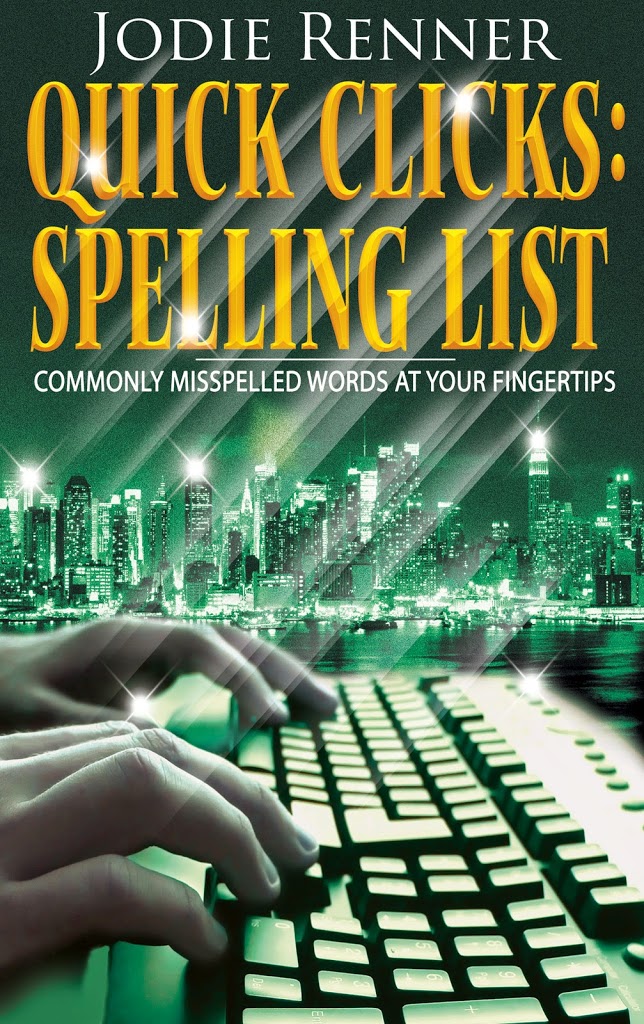 3. Use my two quick, clickable e-resources to verify spelling and word choices: QUICK CLICKS: SPELLING LIST – Commonly Misspelled Words at Your Fingertips, and QUICK CLICKS: WORD USAGE – Precise Word Choices at Your Fingertips. Click on the titles to check them out. These handy resources will save you tons of time looking up words in the dictionary, and every word is verified as correct.
4. Do a search (“Find”) for words you know how to spell but tend to spell wrong when you’re in a hurry, especially ones spell-check won’t flag, like “you” for “your,” or “your” for “you’re,” “there” for “they’re” or “their,” etc.
Then choose some of the following strategies, which are also excellent for picking up on clunky sentences and awkward phrasing.
~ Increase the size of the type to 150% or 160%, by clicking on the + sign at the bottom right of the document.
~ Change the font to one that looks quite different to fool your eyes and brain into thinking this is new material you’ve never read (or thought of) before, so you need to pay close attention.
~ Format it to book size, like 6″ x 9″, change the font to something nice, like Georgiaor Cambria, change it to single-spaced, format it to two-column landscape, so it looks like an open book, then print it up and read it in a different location, somewhere you don’t write, preferably out of your home.
~ Send it to your Kindle or other e-reader and read it in a different location, preferably not at home.
~ In a print version, place a ruler or piece of paper under the line you’re reading to keep from skipping ahead. Or keep your finger under each word as you read.
~ Read it out loud. Wherever you stumble, your readers will, too. This will also help with punctuation. If you pause briefly, put in a comma. If you pause for longer, put in a period. (Best to avoid or minimize semicolons in fiction, and keep them right out of casual dialogue. And reserve exclamation marks for when someone is screaming or yelling, shocked, or in pain.)
~ Read the whole thing backwards or upside down (!). I’ve heard these suggestions, but haven’t actually done this myself, and probably won’t.
~ Get your computer to read it aloud to you, while you follow along. Newer versions of Word offer this, and Macs do, too. In Word 2010, for example, here’s how you enable text-to-speech: First, add “Speak” to the Quick Access Toolbar. Along the very top above “File,” the line that starts with W for word, at the far right is a down arrow. Click that. It will say “Customize Quick Access Toolbar.” Click “More Commands.” In the “Choose Commands” from the list, select “All Commands.” Scroll down to the “Speak” command, select it, and then click “Add.” Click “OK.” When you want to use the text-to-speech command, you’ll use the icon on the Quick Access Toolbar, which looks like a speech bubble on a cartoon. To hear some text read aloud, highlight the paragraph or chapter you want to hear aloud, then click the Speak icon on the toolbar.
Follow along the text while listening to the text being read aloud. Stop it whenever you need to add or delete a word, or fix awkward phrasing.
~ If you’re self-publishing, get a sample book printed by CreateSpace (or IngramSpark) and read it somewhere else in your home, in a room where you don’t work, or better yet, away from your home, like in a coffee shop, a park, or the beach. I read one of mine in book form, pen in hand, on vacation in Puerto Vallarta, while stretched out in a chaise longue under one of those grass huts, and I caught all kinds of repetitions, sentences that didn’t flow as well as they could, were too wordy, or generally needed polishing, etc., as well as the odd typo.
Writers – do you have any other strategies to add for catching all those little typos lurking in your manuscript? Let us know what works for you in the comments below.
Jodie Renner is a freelance fiction editor and the award-winning author of three craft-of-writing guides in her series An Editor’s Guide to Writing Compelling Fiction: FIRE UP YOUR FICTION, CAPTIVATE YOUR READERS, and WRITING A KILLER THRILLER, as well as two clickable time-saving e-resources, QUICK CLICKS: Spelling List and QUICK CLICKS: Word Usage. She has also organized two anthologies for charity: VOICES FROM THE VALLEYS – Stories and Poems about Life in BC’s Interior, and CHILDHOOD REGAINED – Stories of Hope for Asian Child Workers. Website: www.JodieRenner.com; blog: http://jodierennerediting.blogspot.com/; Facebook , Amazon Author Page.
James Scott Bell
@jamesscottbell

The gravy train of exponential sales growth is over. Indies have hit a brick wall and are scrambling to make sense of it. In recent weeks, for example, I’ve heard a number of indie authors report that their sales at Amazon dropped significantly since July when Amazon launched Kindle Unlimited… Some authors are considering quitting. It’s heartbreaking to hear this, but I’m not surprised either. When authors hit hard times, sometimes the reasons to quit seem to outnumber the reasons to power on. Often these voices come from friends and family who admire our authorship but question the financial sensibility of it all….
[E]very year there will be more and more books for readers to choose from. Unless the number of readers and the number of books read by readers grows faster than the number of titles released and ever-present, there will be fewer eyeballs split across more books. This means the average number of book sales for each new release will decline over time unless readership dramatically increases, or unless we see an accelerating pace of transition from print reading to screen reading.
[I]f you’ve got a better method of describing the big picture dynamic, please share. I’m open to suggestions. If ebook readership (both a function of the number of ebook readers and the number of ebooks read by readers) is spread thinner across an ever-growing, ever-accessible number of books, and the growth in ebook supply exceeds the growth in consumption, then what happens? Very simple question. Does the average new release get more readers or fewer?
By Mark Alpert



We’re interrupting this holiday programming to ask our friends for a favor: please nominate The Kill Zone for the annual “Top Ten Blogs For Writers” contest hosted by WriteToDone. Click the link for details.
I’ll be flying most of the day and may not get to respond to your comments. In case I don’t, here’s wishing all my TKZ blogmates and friends a wonder Thanksgiving Holiday.
—————-
Someone once asked: “I’ve heard writers talk of being ‘in the zone’ regarding their writing, which I take to mean being in an altered state of extreme creativity. But how, without drugs or other stimulus, do you get into that state?”
In fact, we hear the term in the zone used often, not only with writers, but athletes, artists, and just about any activity that requires skill, creativity and deep concentration.
So what is “the zone” and how do we enter it? Why is it so hard to remain there for extended periods of time?
Being in the zone can last for a few minutes, a couple of hours or a whole day. For those that never seem to enter the zone, it might be because they try too hard to do so. Sort of like when we stop trying to solve a problem, the solution suddenly comes to us through our subconscious.
Let’s try to define what being in the zone means, especially when it relates to writing. For me, it’s a mental state where time seems to disappear and my productivity greatly exceeds normal output. It might start after I’ve finished lunch and sat down at my PC to work on a new chapter. Without any feeling of the passage of time, I suddenly realize a couple of hours have gone by and I’ve produced 1000 words or more. I don’t remember the passage of time or anything that deals with my surroundings. I only remember “living” or becoming immersed in the story’s moment, having the words flow from a deeper source, and “awakening” from the writing zone as if only a few moments have passed.
I’ve never been hypnotized, but I can assume that being in the zone is somewhat like self-hypnosis. My body remains in the here-and-now, but my creative senses somehow find a hidden room inside my mind, a place normally under lock and key. And I’m able to enter it for a short time to let what’s there emerge into the light of day.
It can also feel like driving down the Interstate on a long trip deep in thought and suddenly realize I can’t remember the past ten miles.
I’ve never been athletic, but I bet it’s a similar scenario: a golfer is able to tune out the surrounding crowd of tournament spectators, the dozens of network cameras, the worldwide audience, the cheers from the distant gallery as his opponents make a great putt, and he’s able to enter a place where only his game stretches out before him. The rest slips by in a blur. Personal mind control.
So what is a good method for getting into the zone? Some writers use the “running start” technique by reading the previous day’s work or chapter. It gets them back into the story and hopefully the new words start to flow.
Others listen to music. This is something I often do. Nothing with lyrics, though. I listen to movie scores or piano and guitar solos. I find that it can help set a mood or become background “white noise” that blocks out other audible distractions. That’s because, for me, the biggest obstacle to zoning is distractions. It’s important to reduce interruptions and distractions by creating an environment where they are minimized. This means shutting my office door, closing the drapes on the windows, unplugging the phone, disconnecting Internet access, and most of all, choosing a time to write when those things can be fully managed. Doing away with distractions is no guarantee that I will enter the zone at will, but it does give me a fighting chance to at least knock on the door to one of those dark, hidden rooms upstairs and let my story flow out.
How about you Zoners? What’s it like for you to write in the zone? And do you have a method to slip easily into the zone?
—————
“Cotton Stone is a heroine for the ages.” – Douglas Preston, #1 New York Times bestselling author.
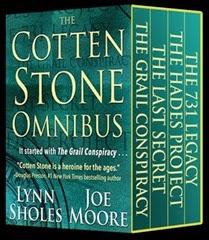 Less than a week to go until the release of THE COTTEN STONE OMNIBUS. The collection includes the complete series: THE GRAIL CONSPIRACY, THE LAST SECRET, THE HADES PROJECT and THE 731 LEGACY. All 4 thrillers for only $7.99. Pre-order now!
