Surprised Laura Hale – by Jon ‘ShakataGaNai’ Davis
At the risk of earning a permanent place on Santa’s naughty list, what’s the worst thing you’ve ever done (as a writer) to one of your characters?

I am very happy to have my dear friend, Desiree Holt, on TKZ. With over 200 books under her belt, USA Today called her “the Nora Roberts of erotic romance.” She’s a multi-award winner, critically acclaimed author of all things romance and action/adventure, and she has been featured on CBS Sunday Morning National TV Show (an amazing feature that had me giggling) and in The Village Voice, The Daily Beast, USA Today, The (London) Daily Mail, The New Delhi Times and numerous other national and international publications. She is a very generous person and always inspires me to keep the faith and the fun in my writing. I love her dearly and am proud to be a contributing author to her new Amazon Kindle Worlds series. A great combination of romantic suspense and action/adventure. She’s giving me the freedom to put my Jordan Dane spin on her Omega Team world and I’m having a blast! Take it away, Desiree.

Thanks so much for the opportunity to guest blog with you today.
My first love, both in reading and movies/television has always been suspense/action adventure. So when I finally discovered the lure of romance, it was a natural for me to combine everything. In recent times I had drifted slightly away from that but now I am back to romantic suspense/action adventure with a vengeance
I’ve had the opportunity to interview at length two men who definitely could be part of The Omega Team. When I lived in Texas they were, at different times, my firearms instructors, one a former Delta Force and one a former Force Recon Marine. They willingly gave of their time so I could get every detail of my stories exactly right. Any mistakes I have made as I wrote other series are truly my own. Their knowledge—and my copious notes—stood me in good stead as I attacked this new project.
I was very excited when Amazon invited me to create a World specifically for their Kindle Worlds. I love the essence of these stories and the men and women who are the silent heroes.
As I dug into creating the series, based around a private security agency, I realized just how valuable people like this can be. There are places where the government cannot take a role, where men and women have to operate in the shadows to successfully accomplish their mission and no word of it can leak. Every agent is either former military or formerly in some branch of the police, from local departments to the FBI.
The first three stories, laying the basis for this world—The Omega Team—have already been released to give people a taste of what is to come. The Kindle World of The Omega Team will officially launch February 16 with a select group of authors, including my special friend Jordan Dane.
So what is The Omega Team?
In this age of danger and conflict, when security is a high priority, a new entity is born. Whatever your needs, they will protect you. They are The Omega Team.
Grey Holden was raised to believe in honor and duty and the dedication of men to fighting evil. Both his father and grandfather taught him the tradition of the Omega Male, men who carry a resourcefulness, cunning and strength to get a job done with their own skill. They take great pride in what they do without it manifesting as “ego.” They differ from the typical Alpha Male who MUST absolutely be perceived by his peers as the toughest, most popular, and smartest. An Omega Male cares little for this recognition…but knows that he is all those things and more. It’s what made him a good soldier and what makes him a good security and covert agent. Athena Madero fits perfectly into his world. They meet when separately they are trying to prove that a wealthy and high profile political figure is actually The Snake, a shadowy arms dealer whose weapons armed the insurgents that Grey was fighting in Afghanistan.
They form The Omega Team, an agency that takes on even the most dangerous cases. They draw as members of the team former military such as Delta Force, SEALs, Force Recon Marines, Coast Guard, Night Stalkers and others, law enforcement and private security who have the same code of conduct and dedication they do. They will also work with similar agencies on joint ventures. Headquartered in Tampa, Florida, they accept assignments all over the world, no matter how dangerous.
They work in the shadows, riding the raw edge of danger. Their passion for their work is as hot as their passion for the men and women they love. When all else fails, they are there for you—The Omega Team.
And a little taste to tempt you for the first three books:
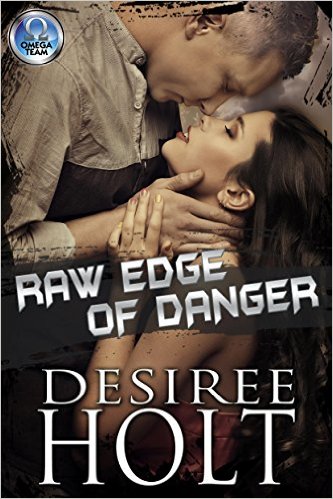
Romance Author Desiree Holt
Raw Edge of Danger
Grey Holden was on a mission to find the source of illegal arms. The death of his best friend on a compromised mission left him filled with anger and dedicated to bringing down whoever was responsible. Athena Madero had her own mission, to take down a major politician who had been preying on young girls. She hated him enough to quit her job as a cop and go on her own hunt for evidence. When she and Grey crossed paths, chemistry sparked and suddenly, unexpectedly, shockingly, there was a lot more between them than searching for evidence and pinning down a traitor. In a split second, they were riding the raw edge of danger. Together.
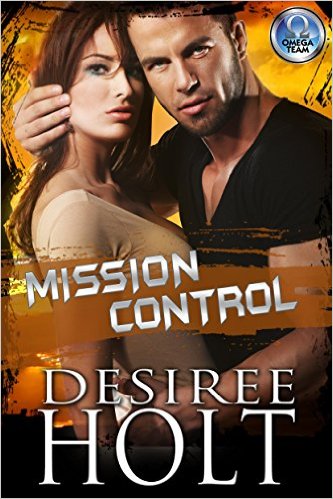
Mission Control
Krista (Kris) Gauthier and Mason Rowell are like oil and water from the moment they meet. He never expected the team from Mission Control, the security agency made up of former military, to send a woman to lead the team he hired to fix his problem: find out who is helping smugglers cross his land from the border. Their antagonism is only heightened by the sexual attraction that keeps blazing out of control. Neither of them is happy about the fact they keep falling into bed together and Mason, who values his unattached existence, can’t wait for the team to be finished and Kris to be gone. But when the bad guys are identified and caught and Kris is wounded in the process, the thought of losing her nearly destroys him, and makes him take another look at their relationship.
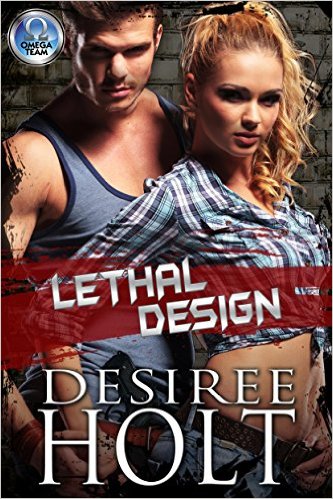
Lethal Design
Someone is putting a kink in Shannon McRae’s very orderly life. The video games she designs aren’t about electronic battles or gory crimes. Her projects include team building exercises for executives. It’s bad enough she’s plagued by possessions moved out of place, flat tires, strangers following her at night. But most importantly, someone is messing with her current project, corrupting the file so she has to rework it over and over. When activities escalate, Athena Madero decides it’s a case for the top security and protection agency, The Omega Team, which she owns with her partner with Grey Holden. Owen Cormier has been isolated emotionally most of his adult life. Twelve years fighting wars haven’t made him warm and fuzzy. Then he discovers his new client is the one night stand he could never get out of his mind. When the case is over, will he just be able to walk away?
FOR DISCUSSION:
So what do you think of private security agencies? The subject has been debated every since they first appeared on the scene. Do you think they serve a useful purpose? If so, why?
GIVEAWAY: I hope you will leave a comment to enter. Winners will be picked randomly. First place winner will receive digital copies of all three books. Second place winner will receive an Omega Team coffee mug.

Desiree Holt Giveaway
Desiree Holt
www.desireeholt.com
desireeholt@desireeholt.com
Dear Friends,
I regret to announce that I am leaving the Kill Zone. I’ve been blogging on this site for five years, and it’s gotten harder to think of things to say and to cover new ground. I have learned much from my illustrious comrades, and I’m grateful for the time spent in this writing community. To readers and my fellow authors, your feedback and responses have been highly gratifying and much appreciated. I wish you all the best and a Happy New Year. It’s been a blast.
Please note that you can still follow my posts at Nancy’s Notes from Florida. I’ll hope to see some of you there when I’m not popping in at the KZ to leave a comment. Blessings to you all.
Nancy
More than any avocation I can think of, writers are likely to view the holidays as a time to get more work done, especially if it means they get some time off from their day job.
In theory… could be. In reality, there are risks.
This plan can be hazardous to your health and your writing if:
Many writers have discovered that this last one – getting away from it all for a while – can be some of the most creatively productive hours you will retrospectively realize you’ve spent as a writer. Here are a few things to consider.
Read a Bestseller
The dirty little secret among working writers is that we don’t read as much as we would like to, or that we should. Find that book you haven’t gotten to, or have in mind, and lose yourself in it. Go ahead, tell yourself this is your time… but the truth is you’ll be reading to learn how that writer did what they did.
Which is a good thing. A great thing. The more you understand about the craft of fiction, the more you realized you can’t “un-see it” when you read it out there.
Catch Up On Your Craft
It can be hard to dive into writing books and websites while you’re in the middle of a project. And yet, there is so much to learn, so much valuable and immediately applicable information that may contribute to the very project you are putting on hold until the Super Bowl.
This isn’t a long range strategy, more like a steroid shot at halftime to make you stronger when the clock starts ticking again.
Hey, you’re already here, reading The Kill Zone. Spend a few hours catching up on the archives. Read one or more of Jim Bell’s terrific new ebooks on craft. For that matter, read my new writing book on craft, too, which I promise you will take you to a higher level.
Even seasoned pros, upon going back to training camp, see immediate payoffs in their WIP, because no matter how hard you try, it’s never that far off your radar.
Test Fly Your Premise
Chances are most people in your life know you’re a writer. That doesn’t mean they’ll ask you about your work at the office or neighborhood party – there’s often about a 30-second window for your answer to “what are you working on here?” before their eyes glaze over –but if the opportunity presents itself, pull out your story pitch and let it fly. Then ask for feedback, assuring that you are seeking brutal honesty.
The look on their face is, by the way, just as informative as the words they say to you in that moment. They won’t be brutally honest, by the way, but you’ll see it in their eyes. Confusion never hides.
You may find that the plot twist you had planned in the middle – the one in which your hero is suddenly visited by the ghost of their high school creative writing teacher urging you to go plumbing school – isn’t as clearly logical or clever as you believed it to be.
Read From Page One
If you do have a WIP, stop writing it and begin reading it. Not necessarily editing it – this goes contrary to the common advice to not edit while you write, which isn’t something I buy into but won’t be the nay-sayer here until I get to write an entire post about it, which is forthcoming in 2016. Find a way to do this away from a keyboard (like, put it on your e-reader or even go old school and print it out), and read as if you are an agent or an editor or someone browsing through Barnes & Noble.
Do this from a story perspective, rather than that of a line-editor. The payoff may prove to be significant… because if there’s a reason you story may not work, chances are it’s already on the page. Use this time to find it.
Journal New Story Ideas
The world is your idea machine, if you look in the right places. Go to a bookstore and read as many hardcover dust jackets and paperback covers as you can.
Got Netflix? There’s an entire free channel available that is nothing but movie previews, where you can get Hollywood’s best story pitches in two minute bites. (Notice that every movie trailer shows you five essential things, see if you can find them in each preview you see: the premise and the concept that fuels it, the first plot point, the first half of the character arc, and some hints of the story points beyond the FPP that turn it all into an immersive experience.)
Have a notepad nearby. Not only will you want to capture those flashes of inspiration. Trust me, it won’t be ripping off anything you see; what will happen is your brain will take something you’ve just absorbed and send it hurdling toward another story opportunity that isn’t in front of you at that moment… that happened to me watching the preview of the new Netflix series Jessica Jones (killer, by the way), when out of the blue a new thriller landed on my head with an almost audible thud.
Embrace the Siren Call of Your WIP
Which, if you’ve done this right, is calling to you from behind the closed door of your writing space. Imagine yourself as Kirk Douglas, roped to the mast of that ship as the sirens wail Celine Dion ballads from the shore, driving you crazy with desire.
Don’t go to her. Your heart will go on. Missing your story is healthy. Being too close to it… that’s the point here.
Wishing you all a very happy, relaxing and productive holiday season. The best story of all is the one you are living, and like the stories on your hard drive, you have control over what happens next. Make it count this year.
It seems to me there’s been a lot of talk recently about writing for love. Over at Writer Unboxed, for example, Bruonia Barry recounts a harrowing journey toward her third novel. She missed her deadline—by two years! She went through “publishing hell” and some life challenges, but the real issue was the book itself.
I couldn’t go forward with what [the publisher] wanted me to write, and I couldn’t go back. I began to hate writing. It had become about product not process. It was no longer a passion, it was a job. I felt chained to my desk. My family’s livelihood depended on it. I was resentful. And growing to hate the career I’d longed for all my life. I told myself, I’d finish the book, but it would be my last.
A new agent and a talented freelance editor came into Barry’s life and helped her see the story was “better than I thought.” And she found a way for the book to take on “a life of its own” again.
The book is arguably the best I’ve written so far. It sold in two days to a better publisher who offered (ironically, I think) an even better deal. I am now a hundred pages into my fourth book, and I’m once again loving the process. But I will never again elevate the deal over the work. Or pitch a story I’m not yet sure of just for the sake of fulfilling a contract or receiving an advance. Lesson learned. For me to write anything I’m proud of, it can only be for love.
Good for her and her writing.
Though I sometimes wonder what the great pulp writers of old would have thought of this notion of writing for love. I’ve read a number of biographies of writers like Hammett, Chandler, Erle Stanley Gardner, Robert E. Howard––and they never thought in those terms. What they thought about was their next meal. They wrote for money. They wrote during the Depression. They wrote for markets, like Amazing Stories and Dime Detective and Black Mask. At a penny a word, they didn’t have the luxury of waiting for the muse to tickle their fancy. They had to type and type fast.
Back then, it seems to me, most writers who made a go of it thought of writing as a job, which required certain skills, just like bricklaying or carpentry. They got good at what they did and when they finished a solid story they felt satisfaction, for a job well done.
They felt even better when they got the check.
These days the debate seems to come down to an either/or exchange.
You should only write for love. That’s what makes your writing great.
No, you should write for money. That’s how you get to make a living at this.
I touched on this issue last month in my post “The Writer and the Market Should Be Friends.”
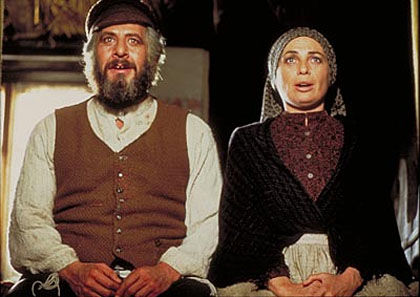
Today I want offer an analogy that hit me after I watched a bit of Fiddler on the Roof the other day.
My favorite song from that show is the little duet in the middle. Tevye and Golde have been married twenty-five years. It was an arranged marriage. Tevye now asks Golde, “Do you love me?”
She sloughs it off at first. Why is he asking now? Maybe it’s just indigestion. But Tevye persists. “Do you love me?”
Golde: Do I love him?
For twenty-five years, I’ve lived with him,
Fought with him, starved with him.
For twenty-five years, my bed is his.
If that’s not love, what is?
Tevye: Then you love me?
Golde: I suppose I do.
Tevye: And I suppose I love you, too.
Tevye and Golde: It doesn’t change a thing, but even so,
After twenty-five years, it’s nice to know.
A writer who is writing for a market is getting into an arranged marriage. He studies what’s being done, gets ideas, shapes them to fit. Eventually he gets married to one and sets off to write the book. He brings his skill set to it, does the best he can.
There are challenges along the way. Every book has them. It’s never all lollipops and roses. There may even be knockdown, drag-out fights.
But in that struggle the professional writer begins to feel something a little like love. For the characters, for the plot, for that next scene. And certainly he’s going to keep on to the end, and fix things when he gets there.
If that’s not love, what is?
It doesn’t change a thing, but even so, after twenty-five chapters, it’s nice to know.
By Elaine Viets
Were the nearly 150 tweets from a stripper nicknamed Zola, a wild tale about strippers, suicide, kidnapping and murder, true?
Is Zola a real stripper who spent a wild weekend in Florida “trapping” – ie, hooking – with Jessica, a woman she met at Hooters?
Or was this a hoax?
These questions have set the blogosphere a-Twitter ever since Frazier Tharpe wrote a blog called “Zola’s Twitter Tale of Strippers in Florida Is Easily the Wildest Thing You’ll Read All Week.”
All week?
Zola’s story wins for the year, fact or fiction.
Warning: This story is X-rated. So be careful reading it at the office.
 Tharpe writes, “It starts when Zola, a loquacious Hooters waitress, strikes up a friendship with a ‘white bitch’ customer (Zola’s words, not mine) who several tweets later is revealed to be named Jessica. The two ‘girls’ (Tharpe’s words, not mine) get to vibing over their shared ‘hoeism,’ forming such a bond that the next day said White Bitch Jessica invites Zola to travel to Florida with her. Zola, despite reservations over having just met ‘this here bitch,’ agrees to go because apparently Florida is ripe for dancing and ‘hoeism,’ and one can rake in as much as $15k.”
Tharpe’s blog was only the start. Rolling Stone wrote: “Zola Tells All: The Real Story Behind the Greatest Stripper Saga Ever Tweeted.” There were thoughtful commentaries, serious stories about sex trafficking, moralizing, grandstanding and movie deal rumors. Bloggers denounced Zola as a hoax – possibly a hoax to promote Beyonce. Although that hoax story may be a hoax, too.
Whether this “insane, epic story” Tharpe wrote about is a hoax or not, here’s what’s real:
It’s damn good story telling.
I’ll give you the first few tweets from @_zolarmoon, aka Azaih King. You can read the rest here. 
Http://www.complex.com/pop-culture/2015/10/zola-twitter-insane-epic-story
(1) AZIAH KING: Okay listen up. This story is long. So I met this white bitch at hooters. I was her waitress! She came in with this old ass big ass black dude
(2) So you know as a hooters girl we have to talk to our customers. So I sit wit them & we get to talkin & she tells me she dances! So I’m like
(3) Oh yes bitch me too! Then she tells me this hulking black man is her sugar daddy. & I’m like oh yes bitch me SD at home. I feel it I feel it
(4) So we vibing over our hoeism or whatever. & we exchange numbers!! & we like “next time u dance hum ima come dance wit you1” & they leave
(5) So THE NEXT DAY I get a text like “BITCH LETS GO TO FLORIDA!” & I’m like huh??? She’s like “I’m going to dance in Florida, let’s go!!”
(6) Now I’m skeptical like DAMN bitch we just met and we already taking hoe trips together???? BUT I had went to FL 2 months prior & made 15K
(7) So lowkey I was down. So I was like “okay I’ll go. Who’s all going & when we leaving.” All this bitch says is “be ready by 8”
And they’re off to Florida for mayhem and murder.
What can we learn?
I love Zola’s direct style. She told a quick, clean story.
I’ve read too many mysteries with philosophical drug dealers and killers rationalizing their brutal crimes. “Philosopher crooks” are mystery writing staples, popular in crime fiction, TV shows and movies.
But how real are these characters?
I’ve lived in iffy neighborhoods on Capitol Hill and in St. Louis. I’ve been stopped by enterprising locals, who said, “Give me your money, bitch.”
Direct and to the point.
They did not lament their poor education, lack of economic opportunity, sick mothers (as in parents) or hungry children. They did it – and paid for it later.
Maybe.
Members of the demimonde, like Zola, have poor impulse control. They’re never sorry, unless they’re caught.
Too often, we clutter our mysteries with low-rent crooks who agonize, apologize and justify their crimes because that’s what WE would do.
But what would THEY do?
Is Zola’s Twitter saga real? I can’t say.
But it sounds real.
And that’s what’s important.
+++++++++++++++++++++++++++++++++++++++++++++++++++++++++
 Want something sweet for Christmas? I’m giving away Murder With All the Trimmings, my fourth Josie Marcus Mystery Shopper mystery. To win, click Contests at www.elaineviets.com
This will be my last post for 2015. Since 2008, TKZ has traditionally taken a 2-week Winter Hiatus, so I’ll return on January 6 after celebrating the Holidays with my family and friends. I’d like to take this opportunity to wish my blog mates and blog friends the very best for this holiday season and the coming year. Now on to Plotting Tips.
When you write a story, whether it’s short fiction or a novel-length manuscript, there are always two major components to deal with: characters and plot. Combined, they make up the “body” of the story. And of the two, the plot can be thought of as the skeleton while the characters are the meat and muscle.
When it comes to building your plot, nothing should be random or by accident. It may appear random to the reader but every twist and turn of the plot should be significant and move the story to its final conclusion. Every element, whether it deals with a character’s inner or outer being should contribute to furthering the story.
In order to determine the significance of each element, always ask why. Why does he look or dress that way? Why did she say or react in that manner? Why does the action take place in this particular location as opposed to that setting? If you ask why, and don’t get a convincing answer, delete or change the element. Every word, every sentence, every detail must matter. If they don’t, and there’s a chance they could confuse the reader or get in the way of the story, change or delete.
Your plot should grow out of the obstructions placed in the character’s path. What is causing the protagonist to stand up for his beliefs? What is motivating her to fight for survival? That’s what makes up the critical points of the plot—those obstacles placed in the path of your characters.
Be careful of overreaction; a character acting or reacting beyond the belief model you’ve built in your reader’s mind. There’s nothing wrong with placing an ordinary person in an extraordinary situation—that’s the formula from which great stories are made. But you must build your character in such a manner that his actions and reactions to each plot point are plausible. Push the character, but keep them in the realm of reality. A man who has never been in an airplane cannot be expected to fly a passenger jet. But a private pilot who has flown small planes could be able to fly a large passenger plane and possibly land it under the right conditions. The actions and the obstacles can be thrilling, but they must be believable.
Avoid melodrama in your plot—the actions of a character without believable motivation. Action for the sake of action is empty and two-dimensional. Each character should have a pressing agenda from which the plot unfolds. That agenda is what motivates their actions. The reader should care about the individual’s agenda, but what’s more important is that the reader believes the characters care about their own agendas. And as each character pursues his or her agenda, they should periodically face roadblocks and never quite get everything they want. The protagonist should always stand in the way of the antagonist, and vice versa.
Another plot tripwire to avoid is deus ex machina (god from the machine) whereby a previously unsolvable problem is suddenly overcome by a contrived element: the sudden introduction of a new character or device. Doing so is cheap writing and you run the risk of losing your reader. Instead, use foreshadowing to place elements into the plot that, if added up, will present a believable solution to the problem. The character may have to work hard at it, but in the end, the reader will accept it as plausible.
Always consider your plot as a series of opportunities for your character to reveal his or her true self. The plot should offer the character a chance to be better (or worse in the case of the antagonist) than they were in the beginning. The opportunities manifest themselves in the form of obstacles, roadblocks and detours. If the path was straight and level with smooth sailing, the story would be dull and boring. Give your characters a chance to shine. Let them grow and develop by building a strong skeleton on which to flesh out their true selves.
 Pardon my posting a tad late this morning. I’ve been on quite the journey the past couple of weeks. We were scheduled to go to Maui last month, and we did go–but not before 1) I developed a major flu-like illness,; 2) I developed a severe eye infection that kept me from seeing well, which caused me to 3) fall down a significant flight of stairs, which rendered me black and blue on the left side from head to toe.
It was the head part of the bruising which caused the most consternation, travel-wise. I was forced to wear a low-brimmed hat and sunglasses, otherwise I looked like a domestic abuse victim, and people would be shooting my husband suspicious glances. The facial bruising did come in handy a couple of times, however. When we checked into the Westin  and were told all the ocean front rooms were booked, I removed my glasses, assumed maximum pathetic expression, and told them I was there to recover and I needed to spend the week looking out at the ocean. We were instantly upgraded to an ocean front suite. (Yes, I’m not above using whatever I can use to get what I want). We spent Thanksgiving seeing an awesome Elvis impersonator performance (he had an excellent voice and physical resemblance to Elvis, right down to the aging King’s paunch).
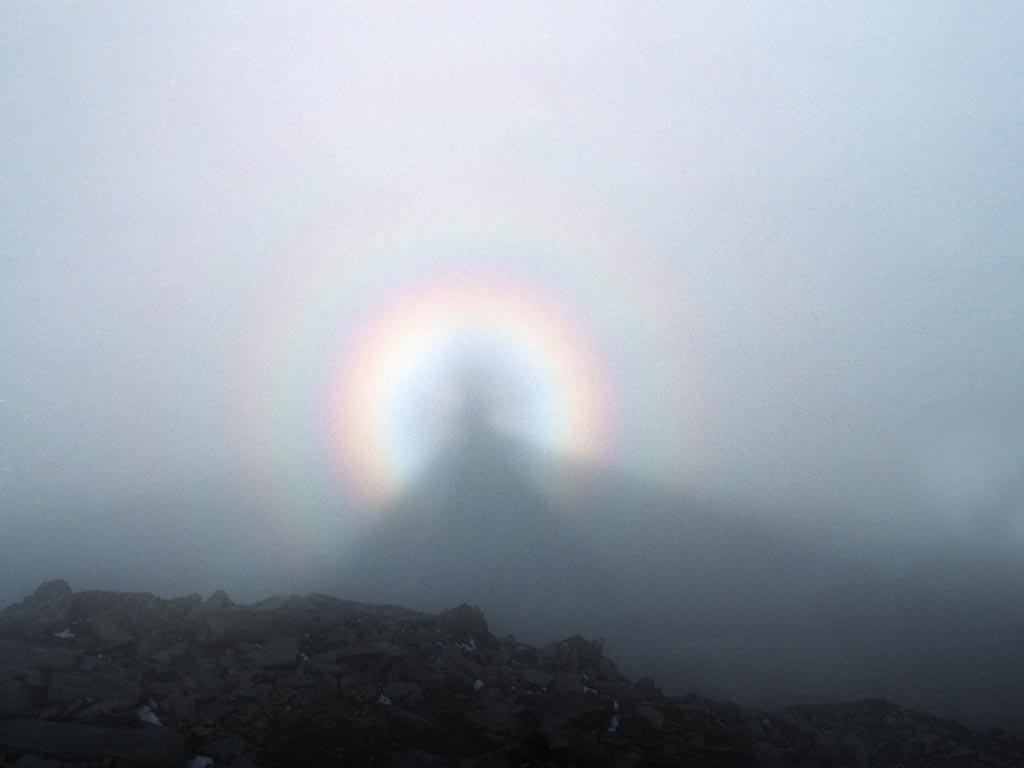
Brocken’s Ghost optical effect atop Maui’s volcano
 It turns out that Maui has some very posh urgent care facilities specifically for tourists, called Doctors on Call. I got to know the fine medical professionals there on a first name basis, especially after I made the insane decision to go up (and more importantly, down) the hair-raising ride to Maui’s volcano. The top of the that volcano is one of only three places on earth where you can see an optical effect known as the “Specter of the Brocken,”–which means, you can see your shadow cast on the clouds below, surrounded by a rainbow. (You can also occasionally catch a glimpse of the same effect from an airplane, when the plane casts its shadow on the clouds below. Look for it sometime.) Seeing that view and surreal, moon-surface landscape was worth the trip, even if I had to pay for the trip by tossing my cookies nonstop for the next eight hours, until Doctors on Call reopened.
At some point during the trip I felt moved to look into the world of Hawaiian literature, which for practical reasons, includes book about Hawaii. I learned to my dismay that one of my oldie Nancy Drews, MYSTERY ON MAUI, is no longer available in hardback, only e-book now.) (Too bad, too–the hardcover had Nancy sporting a killer Babes On The Beach yellow bathing suit on the cover). Although there are wonderful books available by authors who are actually from Hawaii, my favorite book, and I believe still bestselling book of all time about those islands, remains HAWAII by James Michener. The book is episodic, with each chapter written from a different character’s point of view. The story culminates with a character the writer called “The Golden Man,” a person who is culturally and racially the result of the millenia of immigration to the islands. We met many such Golden People on our trip,  including the man who drove our bus on the volcano drive. He’d grown up in “old Hawaii,” part of a large family that made its living fishing and working in the sugar fields. After a stint in the Army, he’d been transporting tourists on that volcano drive for the past 25 years. And yet still he conveyed a sense of excitement as he described the Hawaiian culture, the history of the gods and tribes that founded human culture on the islands. He was able to convey the current challenges that Maui, and other islands face–threats to native wildlife by the encroachment of development, land prices that have risen from $100 per acre to $1 million in less than one person’s lifetime. Our driver was a mixture of native Hawaiian and some European background. That’s important in Hawaii, because you have to have a minimum percentage of “native” Hawaiian ethnic background in order to qualify for some generous educational and civic opportunities that were set up specifically for Hawaiians by one of the original island queens. Our bus guide was a perfect ambassador for educating visitors about the New Hawaii. I believe he may have been the embodiment of Michener’s “Golden Man.”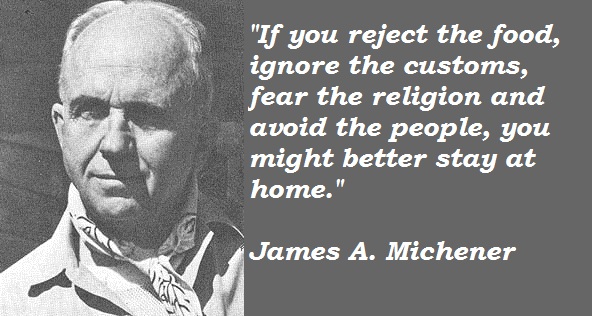
So, have you been traveling during the holidays? Enjoying life at home? Either way, what book or series best represents the place you’re visiting, or the place you call home?
By my reckoning, this is my last blog post until January 2016 (with TKZ’s regular winter hiatus coming up) and I thought it was important, especially given recent tragic events, to end the year on a more hopeful note – focusing on why, for us as writers and readers, mysteries still matter, perhaps more than ever.
When I talk at book events I’m often asked why I chose to write a mystery. My answer is that I actually never originally set out to write a mystery but rather a hybrid of a range of genres with historical fiction at the core. However, before I sold my first book, my agent felt the book really fell squarely within the mystery genre and that is how we pitched the book to potential publishers. I’ve since found the mystery/crime fiction genre to be an ideal vehicle for my work – providing a framework which enables me to explore characters, history and events in a way that also keeps me focused on keeping the reader engaged.
As a reader of mysteries, thrillers and crime fiction, I also enjoy being transported to different eras, places and the deeper (often darker) aspects of humanity that I wouldn’t otherwise be able to experience. Mysteries provide me, as a reader, a vicarious means through which I can try and comprehend the world – in terms of the good, the evil and the grey areas in between. So why do mysteries matter, especially when faced with the complexities and tragedies of our modern world?
Here’s what I think:
So what do you think? Why do you write and read mysteries?Why do they matter to you?
Here’s wishing you a safe, joyous and book filled holiday season.