Let Me Tell You a Story [Video]

By Sue Coletta

In the video, I tell you a story. After you watch it, we’ll deconstruct how and why I told the story this way. I’m hoping this will help new writers who submit their first pages for critique. For the seasoned writers, please add tips that I’ve missed.

Pardon my lack of acting skills. LOL Catch ya on the flipside.

Did you notice all the things I didn’t say? Learning what not to write is just as important as learning what to put on the page.

The first line tells the audience “someone I buried thirty years ago visited” but I’m vague. The audience doesn’t need to know more than that yet. Tease the reader into finding out on their own.

Our characters experience a slow build of emotion. In the video, I breeze over sharing my emotions because it’s visual. With the written word, we need to describe what the character is feeling, thinking, internal body cues, what she smells, etc., to paint that same vivid picture in the reader’s mind. Which, in my opinion, is why books are more visceral than movies. The reader experiences the story right along with the characters.

Let’s tear apart the transcript to see the inner workings of the scene.

Please note: For some reason I told the story in present tense. Let’s blame the humidity. 🙂 In writing, however, we should remain in past tense, with a few exceptions that’ve been discussed on TKZ before. I corrected the tense in the transcript below.

Blue brackets show the structure, green shows Motivation-Reaction Units (MRUs). Notice the rhythm.

Ready? Here we go …

Someone I’d buried over thirty years ago visited me last night. [HOOK] Hooks the reader right away and plants story questions in their mind. A good opening line forces the reader to continue. It also hints at the story to come and defines the genre.

The next paragraph introduces the main character without bogging down the writing with backstory. At the same time, we’re giving the reader a reason to empathize with, or relate to, our hero.

I was sitting at my desk, reading my manuscript, reading the story through one last time, second-guessing every move I made from the opening scene to the end, when static from the TV drew my attention. <-- First hint of trouble. [GOAL] [MOTIVATION IS 2ND PART AND TWO LINES BELOW]

It was off. Yet, it popped, crackled, hummed. <-- We’ve begun to build suspense. I should add, in writing it’s best to substitute a generic word like “it” with the item we want the reader to visualize. [CONFLICT]

We’d just bought the television last December. <-- One line of backstory to show why this situation is unusual. Don’t tell me it’s goin’ already. <-- Inner dialogue helps the reader relate to our hero. [REACTION]

When silence enveloped the room, I shrugged it off as one of life’s mysteries and got back to work. <-- Adds to characterization and sets up the following inner dialogue, so the reader doesn’t get confused. [1ST HALF IS MOTIVATION, 2ND IS REACTION]

Gee, I really love the storyline, the way it ebbs and flows. But is that the right word? Is this the right reaction for the scene? I don’t know …

Pop. Crackle. Hum. <-- There’s the conflict again — the antagonist force isn’t going away. [DISASTER] [MOTIVATION]

My gaze shot to the flat-screen. That’s weird. It’s almost like it’s trying to turn itself on. That can’t be right … can it? <-- Reaction, emotions building. If written, I’d trigger the senses here. [REACTION]

As my jaw slacked, voices in the other room whirled me around. I was alone in the house. <-- Stakes. [MOTIVATION]

Maybe the breeze carried my neighbor’s conversation through the screens. Wouldn’t be the first time. <-- Reaction. Even though emotions are on the rise, our hero still tries to reason the strange happening away. [ABOVE IS ALL REACTION] [REACTION FOR MRU, TOO]

Once again, I focused on my manuscript. <-- Hero tries (and fails) to ignore the conflict. I guess that word works. Yeah, it’s pretty good. Plus, I’m running out of time. <-- Inner dialogue allows the reader inside the hero’s head.

I glimpsed the clock. One hour left to turn it in. <-- Micro-conflict.

I read on.

The voices from the sunroom grew louder and more intense. <-- Antagonist force grows stronger and more visible. Stakes rise. Suspense increases. [DILEMMA] [MOTIVATION]

What the heck’s goin’ on? <-- Reaction. If this was a written scene rather than a visual one, I’d add more emotion and inner turmoil here. [REACTION]

Unable to concentrate, I swiveled out of my desk chair. <-- Our hero is forced to act.

Slow. Cautious. I snuck through the kitchen to the French doors. <--Action, punctuated with sentence fragments to help build suspense. Crackling blurs the voices of talk radio. <-- The hero realizes what’s happening. This also sets up the reveal at the end of this scene. [LAST SENTENCE IS MOTIVATION]

My eyes widen in disbelief. With my head swiveling like a pinwheel on a stick, scoping out the room in all directions, I tiptoed toward the stereo. <-- The hero’s emotions have reached a crescendo. If written, add more visceral details. [DECISION] [REACTION] Sure enough, the switch clicked up one notch to AM. <-- The antagonist force is revealed, but we still don’t know why or what it wants. When we raise more story questions we force the reader to flip the page. [MOTIVATION]

Oh. My. God. She’s come back. <-- Sets up future scenes and, hopefully, makes the reader fear for our hero. [REACTION]

Now, could I have shared a better story? Absolutely. But the reason I chose to use this particular story is because everything I told you in the video is true. This happened to me last week.

Quick SEO tip: When including video in your post add [Video] to your title. The bracketed word tells bots to crawl the post. Google, Bing, Yahoo, etc. give video the highest priority. I’ll share more SEO tips with you soon or you can learn more here!

TKZ family, please share your favorite writing advice, writing quote, or something that resonated with you that will help new writers on their journey.
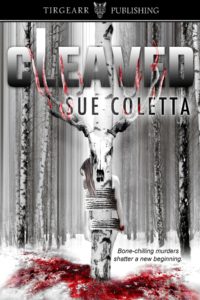


Read the opening scene of CLEAVED, and you’ll see the same storytelling structure in action.


Be Clear About WHO and WHERE in the Opening

by James Scott Bell
@jamesscottbell

Greetings, first-page-critique fans. We have another one for you today, with my comments following. Pick up your favorite blue pencil, but don’t do anything with it, as it might damage your screen. Here we go:

The two camouflaged motorcycles approached the intersection from the east in a bowl of dust, and the soldier in front raised his hand to signal a stop before skidding to a halt. The second biker pulled up next to him, and they carefully observed their surroundings before they cut the engines. They sat motionless for a few moments, and listened for any sounds from the dense vegetation and trees around them. The first rider pointed to the intersection and identified the four spots where the disturbances in the road indicated the presence of landmines. He took his binoculars from the bag strapped to his chest, and scanned the area before he zoomed in on the identified spots. The mines were strategically planted in the middle of the intersection, and he noticed a wire connecting the four mines, lightly covered with gravel. He knew they were booby-trapped and if one were triggered, all four would explode in a split second.

They felt the vibration before they heard the sound of the vehicle approaching at a very high speed. Charlie looked up from the map he was balancing on the handlebars of his bike. Keith lowered the binoculars and turned to Charlie with a frown.

“What are they doing on the road? We have not cleared it yet?” Keith said as he got off his bike and reached for his rifle strapped to his back. He turned his head sideways to identify the direction of the sound and approaching vehicle. They both looked up and saw the dust rising above the trees to the south of the intersection as the sound became louder. They realized the danger at the same time and as Charlie grabbed his rifle from his back, he shouted to Keith.

“Hit the deck! They are not going to stop!”

They scrambled in opposite directions to the side of the road, slid underneath foliage to take cover, and rolled over to face the intersection. The black Mercedes Benz entered the intersection at high speed and detonated the first landmine with the left front wheel. The explosion of the first mine hit the rear end of the car, and the chain of explosions propelled the car forward in pieces of junk and parts that flew in all directions. The second mine struck directly under the engine which became airborne and landed a few hundred yards away from the rest of the car. It all happened in super slow motion.

***

JSB: We’ve got the raw material for a good opening page here. I like a thriller that begins with a Mercedes blowing up. But like all raw material it has to be refined. The first problem is, not surprisingly, Point of View. (I say this, author, so you’ll know it’s quite common. Once you get a real handle on POV your fiction will be 80% better.)

You start us out in Omniscient POV. There’s nothing technically wrong with this if you later drop us into Third Person. This move used to be done all the time, where the opening chapter would take a wide-angle view of a setting before focusing on a character. The famous opening of Grace Metalious’s Peyton Place is like that:

Indian summer is like a woman. Ripe, hotly passionate, but fickle, she comes and goes as she pleases …

The town lay still in the Indian summer sun. On Elm Street, the main thoroughfare, nothing moved. The shopkeepers, who had rolled protective canvas awnings down over their front windows, took the lack of trade philosophically and retired to the back rooms of their stores where they alternately dozed, glanced at the Peyton Place Times and listened to the broadcast of a baseball game.

This goes on for several pages before Metalious gives us the protagonist, Allison McKenzie.

Today’s page, however, doesn’t use omniscience for a wide-angle view of the setting or the circumstances. Instead, the focus is on two riders, who are given names in the second paragraph. Thus, there is no reason for the omniscient beginning. It merely operates to keep us at a distance from the people involved.

Further muddying the waters is something that should never be done—simultaneous POV. Whenever you have a collective “they” feeling or thinking or hearing the same thing, we’re in more than one head and our attention is split. It also violates common sense about life. No two people ever feel or think or perceive in exactly the same way.

they carefully observed their surroundings

They felt the vibration

They both looked up and saw

They realized the danger at the same time

This dilutes the scene and robs it of emotional impact. So my main piece of advice is to re-write the whole thing from either Charlie’s or Keith’s POV. Have all the observations filtered through one of them. This is how readers relate to story. The first thing they want to know about a scene is WHO it belongs to.

Now, regarding the setting. I have no idea WHERE we are. There’s dense vegetation, but also an intersection. There’s camouflaged motorcycles and a black Mercedes. You use the terms soldier, rider, and biker interchangeably.

Where are we? What are the circumstances? War zone? Drug zone? South America? Africa? Soldiers? Mercs?

You can easily use dialogue and interior thoughts to give us essential information. When I advise act first, explain later I’m referring primarily to backstory. That can wait. What we need up front are a few drops of context, which can be woven in with the action.

Here is how David Morrell begins his international thriller, Extreme Denial:

Decker told the Italian immigration official that he had come on business.

“What type?”

“Corporate real estate.”

“The length of your visit?”

“Two weeks.”

The official stamped Decker’s passport.

Grazie,” Decker said.

He carried his suitcase from Leonardo da Vinci Airport, and although it would have been simple to make arrangements for someone to meet him, he preferred to travel the twenty-six kilometers into Rome by bus.

Go thou and do likewise.

Now a technical question: Can you see landmines? I thought the point of landmines is that they’re hidden and finding them requires some kind of metal detector or radar or robot. If I’m wrong I’m still raising a question many readers will have, so you should clarify it, once again with a bit of dialogue or interior thought. Because this book seems intended for military-thriller fans, every detail of an operation has to be accurate and precise or you will surely hear about it from readers and reviewers.

Style note: When using a dialogue attribution, it goes after the first complete sentence or clause.

NO: “What are they doing on the road? We have not cleared it yet,” Keith said.

YES: “What are they doing on the road?” Keith said. “We have not cleared it yet.”

Or the attribution can be placed before the dialogue:

Keith said, “What are they doing on the road? We have not cleared it yet.”

You can also use an action beat before the dialogue:

Keith lowered the binoculars. “What are they doing on the road? We have not cleared it yet.”

One last note on dialogue (because it’s the fastest way to improve any manuscript). Make sure it’s true to the characters. Would Keith really speak without contractions? Probably not. Thus:

“What’re they doing on the road? We haven’t cleared it yet.”

Finally, as we’ve noted many times here at TKZ, white space is a reader’s friend. Your paragraphs are too “blocky.” Don’t be afraid to break them up into two or three.

So, author, I do want to know who was in that Mercedes, who Charlie and Keith are, and where they are operating. I also want to know whose scene this is. Clarify those things, and I will likely turn the page!

The floor is now open for further critique.

Communicating from Beyond the Grave

Photo courtesy sommi, unsplash.com

I recently had what I’ll call an “episode” which caused me to pause and remind myself of my mortality. The circumstances aren’t important here other than to note that my immediate thought at the time was, “I don’t want to go out like that!” I did begin thinking, however, about what would occur if I suddenly found myself standing before the ultimate throne of judgment and the potential mess I would leave behind, and I’m not just talking about the collection of music and reading material I have. I’m referring to things left unpublished and unsaid, which would include both words most tender and the slings and arrows which the French refer to as l’esprit d’escalier.

There are also footprints through cyberspace to consider. Most of us have anywhere from one to a couple of hundred passwords for various things from email accounts and insurance policies to online collections of pornog…er, erotica and everything in between. I’ve seen those adorable little notebooks with the legend “Password Keeper” on the covers in gold and bold letters, created for the purpose of letting the owner mark down each and every one of their online passwords but which make it easy for whoever picks their pocket or grabs their carry-about to access their life and fortune. You don’t want one of those. You want something a little more secure. Many of you probably have a LastPass account which functions like the memory of a twenty-two-year-old who has never sampled drugs or alcohol and which will let you access whatever whenever you need it (though God help you if you forget the magic twanger for your LastPass account itself). At some point, your significant someone may need to access all of those passwords, including “iwant2writelikeJSB!” for Google Drive or “eyehaveAsecretcrush0n(initials deleted)” for your photos in your cloud storage. Then there are all of those works in progress on which you’ve been working progressively, including the masterpiece that you finished just before that one hundred plus percent blockage of the left anterior descending coronary artery that’s been manifesting itself as that numbness in your left arm which you’ve been 1) ignoring or 2) attributing to epicondylitis for the last six weeks suddenly decides to turn off the tap.  Wouldn’t it be nice, don’t you think, to have something that would store everything from your passwords to your documents for your spouse, successor, agent, administrator, and/or beneficiary might need and get it to each and all without worrying about a court order to open your safe deposit box, or to cause a scavenger hunt through a bunch of file boxes? Here’s something else. Rather than inconvenience everyone by forcing them to attend a funeral service (or to manufacture an excuse to be absent) wouldn’t it be better to record pre-morbid messages telling folks exactly what they meant to you and which would be sent to them after your death, since we know not the date, place or the hour?

There are, interestingly enough, a number of websites that will do just that. I had never heard anyone mention such a thing until a day or two ago, but such services have been around since 2012, which is a technological eternity ago. I don’t get out much, but you would think that because I don’t get out much I would know about this. That said, there are quite a few of them, and the services offered differ from site to site, as do the cost (though many are free). What they basically offer, however, is an ability to provide delivery of online documents, lists, and multiple media files to a person or persons of your choosing. You deposit the files electronically and provide the site/service with the emails of the people to whom you want to be able to access the files. There’s a dead man’s switch (and yes, there is an app available by that name) attached to some of the services which, if you don’t check in at regularly designated intervals to demonstrate that you are not on tour with the Choir Invisible, will assume that you are dead and will then send a link to your files to your personal Max Brod. Others, when you do not check in, will query your most trusted friends (again, you supply the list) to make sure that you have really passed on (as opposed to drying out after the most recent Bouchercon). There is an incomplete list of such sites here but there are others with such warm and cheery names as ifidie.org and emailfromdeath.com that will get the job done as well.

I’m not endorsing any particular service here, having just become aware of them myself. It’s certainly something that I am going to explore, however, and not just as a tool for estate planning. This whole topic opens up a potentially rich new vein of story possibilities in what my bud Marcus Wynne calls the grammar mine. Here is one: someone receives an email correspondence from a long-estranged deceased friend which contains a cryptic video file showing a murder. I won’t ask you what yours might be, but please take a moment to check out one or more of the links and then tell us: would one of these services be of any particular benefit to you? Or does the paper file in the cabinet (or safe deposit box) work just fine for your purposes? Please let us know. And stay safe and healthy. As for me, I’m going to go write a final blog post as a goodbye. I hope it’s not needed for a long, long time.


Pages and Pruning Shears

(This week’s post is a repeat from 2013, but the concept is always, always relevant for me: the parallels between gardening, writing, and editing.)

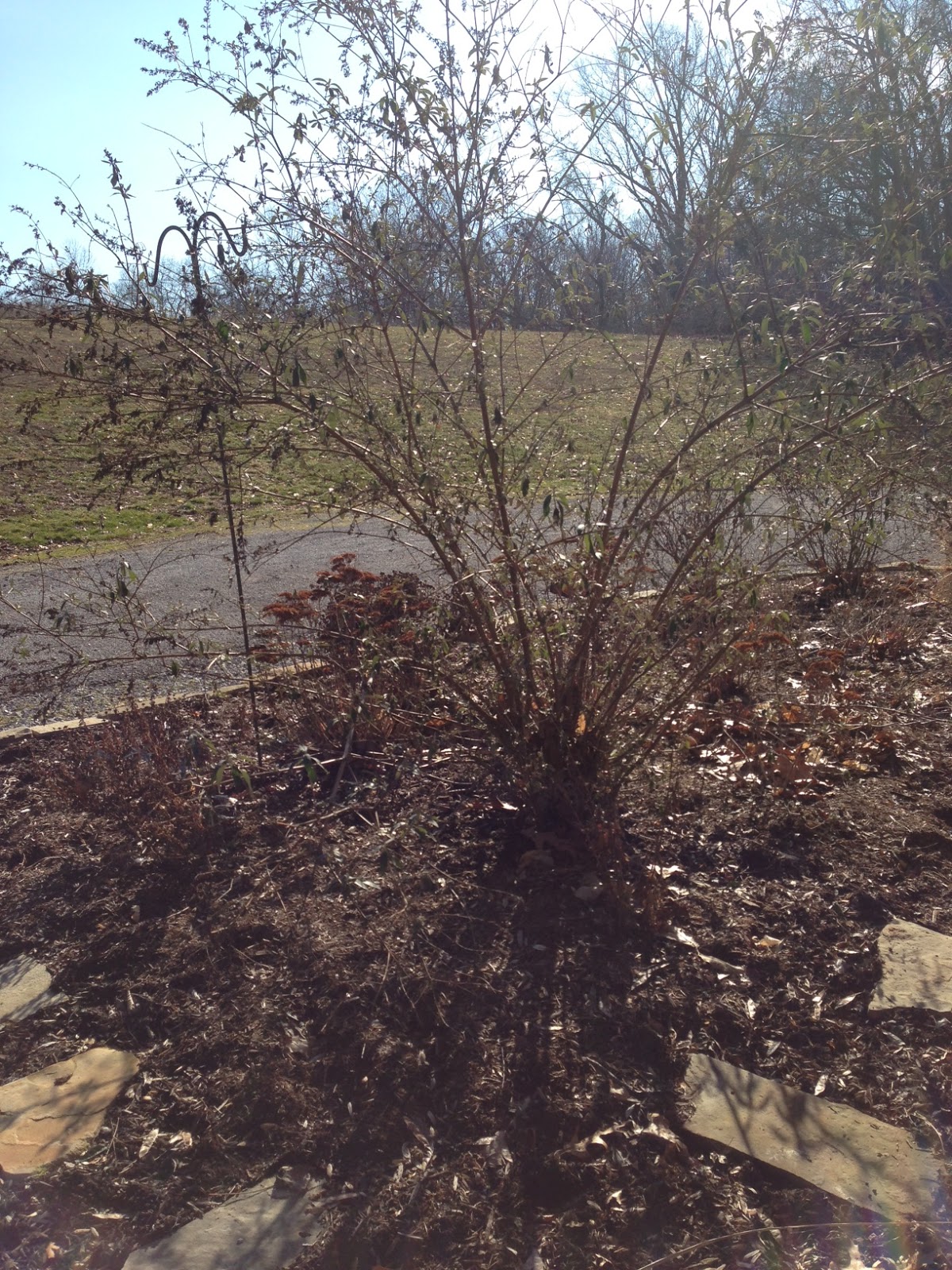
This is the hot mess that is my beloved butterfly bush, and I can’t wait to set to work on it with my pruning shears. And not just the pruning shears, but the limb lopper, as well. Okay, maybe not the limb lopper, which extends to seven feet long and is generally reserved for trees–but definitely one of the larger pruning tools in the garage.

The first time I owned a butterfly bush was back in Virginia (*sniff* I miss that place so.). We planted three in a corner of the yard, just in front of a stand of impenetrable wild blackberry bushes. The butterfly bushes were a triangular oasis in that unkempt place, a bit of gaudy, fragrant dishabille among the thorns. I had only heard of butterfly bushes, and imagined them to be magical things. And they really are rather magical in the way they attract hundreds of butterflies, bees, and hummingbirds. The scent! Rich and sweet. If you think of a rose as smelling like a woman’s subtle perfume, the scent of butterfly bush blossoms is like a faceful of flower candy.

Imagine my distress when the landscaper told me that, every year, I had to cut away nearly all the bushes’ limbs, down to a height of between fourteen and eighteen inches. I was stunned. It sounded so brutal. So violent.

Come early spring, my only confidence in the project came from the fact that the landscaper told me that if I didn’t do it the bushes’ growth and flowering would be very poor. On a sunny day, I headed up the hill with my pruning tools and gloves, and our beloved German Shepherd, T.J. (He was there to help me be brave, bless him.) In the spirit of sensitivity, I would love to tell you that I timidly snipped and snapped with the smallest tools, cutting off the old wood with a delicate hand. But I did not. First, I apologized to them for the pain I was going to cause, and then I went after them like I was out for revenge. I had those three large bushes trimmed down to their proverbial nubbins in no time flat.

It was…fun.

Knowing that I’m slicing and dicing those poor limbs for a worthy cause helped my enthusiasm, but that doesn’t really explain the pleasure I took from it. The whole exercise felt very cleansing. Renewing–both for the bushes and for me

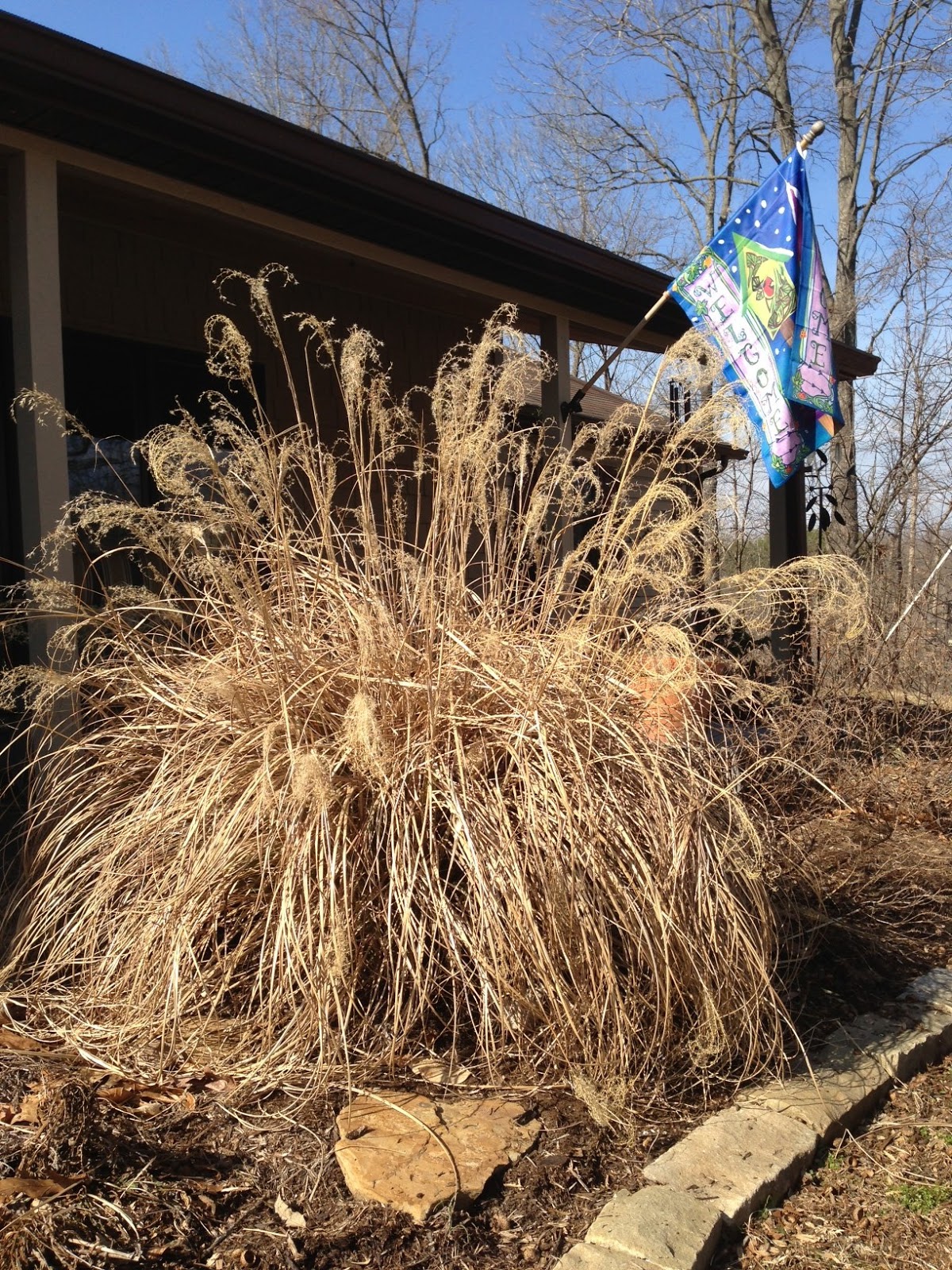
It shouldn’t surprise me, I guess, that I’m able to draw a distinct parallel between my now-mania for pruning bushes (and those troublesome clumps of decorative grasses) and my burning desire to hack my current novel-in-progress to bits with my electronic snippers.

Right now my WIP is at about 95 thousand words, headed for at least the 100K mark. It’s big, and floppy, and well-aged at this point. Is it bearing fruit? Well, mostly. Is there dead wood? I suspect there’s plenty.

Many, many writers I know hate the editing process. Me? Last week I ripped out a parallel-plot section of the novel that was about 6K words and rewrote it so that it’s now 11K word, and only re-used about 1500 words of the original section. (If you know my work, you know I’m a sucker for parallel plotting. No distressingly long paragraphs of exposition for this girl. If I want you to know about something I want to tell you ALL about it. Dammit. And you’re welcome : )

My love of editing holds me back, frequently. Everyday I have to stop myself from starting at page one, and rewriting until I get to the end. Didn’t some famous writer like Hemingway actually do that? Madness. That’s the way I write short stories–but we’re talking about an hour or so of editing every day for a story. Writing a novel that way would add months, even a year to my process. So, some days, I futz around with editing a chapter or two before I get down to the real work. Right now, the real work lies in ending the book.

Writing the original story is much more difficult for me than editing what I already have on paper. Really. Writing is painful for me. It’s all tied up with fear and judgement and more fear and more judgment. Now that I think about it, I could be doing a lot less painful things–like editing other people’s work. But, no. I really do like having written. That’s the point. Seeing the thing done. Then I get to play with it. Enjoy it. See it as something new in the world.

There’s a saying that should be tattooed on the forehead of every barista in every coffee joint where writers work. It’s been attributed to writers from Nora Roberts to Jodi Picoult, but it really is just a truism:

You can’t edit a blank page.

Just like you can’t prune the hell out of a bush that hasn’t yet bloomed.

Instead of maundering on about the comparison, I’ll go ahead and set myself a little challenge…to get those 6 or 7 K words done in the next couple of weeks, before I take the shears/pruners/clippers to my favorite bush in the garden. If I don’t get it done, the bush will be a sad thing this summer, with far fewer blooms, birds, and butterflies. And I won’t get to go mad, mad, mad with sharp things. Which, in the end, would be the real shame, yes?


What’s In An Author’s Chair?

Photo purchased from Shutterstock

Back in 2002, author JK Rowling donated the chair she had used while writing the first two Harry Potter books to a children’s charity. Instead of donating the humble chair in its original condition (Rowling reportedly described the chair as something that could have been “purchased from a junk shop for a tenner”), she hand painted it in rose, gold, and green paints, infusing it with a bit of literary magic.

Do you gravitate to a special author’s chair while writing? If so, what is it about that particular chair (or couch, or coffee shop booth) that helps get your creative engine running?

Update: Sorry for delays in responding to folks: I’m away helping the family celebrate my father’s 90th birthday, too busy celebrating!

Photo purchased from Shutterstock

By The Book

One of my favorite parts of reading the NYT Book Review is reading the interview in the ‘By the Book’ section (you may also recall some controversy when an author poo-poo’d genre fiction in one such interview). I love seeing that other writers have far too many unread books on their nightstands and that, quite often, are as disappointed by some of the so-called ‘great books’ as we all are – it’s also a great way to get insight into the workings of a writer’s mind, their literary loves and hates, their passions as well as their favorite authors.

One of this week’s questions prompted this particular blog post – after all it’s Memorial Day weekend so most of us are enjoying a long weekend, hopefully spending at least some time thinking about those who gave the ultimate sacrifice for their country (and saying a thank you to all that have and who continue to serve) as well as setting some time aside for reading and/or writing.

The question this week was: What’s your ‘go to’ classic? And your favorite book no one else has heard of…

For me, my ‘go to’ classic is Joseph Conrad’s Heart of Darkness. I studied it in my final year of high school and fell in love with it (so much so that my husband even bought me one of those prints that recreates the entire book in the shape of the continent of Africa). There’s something about the journey itself (both physical and metaphysical) as well as the lush, powerful prose that lured me in and wouldn’t let go. If I was asked to take one book to a desert island, Heart of Darkness would be it (despite the fact that it’s hardly the most uplifting tale to have with you!).

The second question is equally easy for me to answer and stems back to another book I studied in my final year of high school. It’s a book by an Australian author, David Malouf, entitled An Imaginary Life and, although it’s about the Roman poet Ovid in exile who encounters a feral child, it really deals with the whole concept of knowledge, language, imagination, civilization, man’s relationship with nature…you get the picture. Again, the lush, poetic prose is what really drew me in, as well as the amazing ability of David Malouf to describe the most complex, deep rooted concepts in the most simple yet magical terms.

I was recommended this book by my English teacher after I couldn’t get into the assigned text, Fly Away Peter (also by David Malouf). This novel is set in Australia during the First World War and, after being obsessed with British First World War poets and books like Testament of Youth, it seemed too simplistic and understated to appeal to my more dramatic tastes. My teacher, however, wisely told me to read An Imaginary Life first and then re-read Fly Away Peter…and I fell in love not only with An Imaginary Life but also David Malouf (I’ve bought and read every novel of his since). Reading that book was an almost mystical experience and yet (sadly) it’s not a novel I think many people have heard of…

So TKZers in the spirit of ‘By the Book,’ what is your ‘go to’ classic and what is your favorite book that no one else has probably heard of?


Your Writing Sweet Spot

by James Scott Bell
@jamesscottbell

“Things were tough at the moment. I hadn’t worked in a studio for a long time. So I sat there, grinding out original stories, two a week. Only I seemed to have lost my touch. Maybe they weren’t original enough. Maybe they were too original. All I know is, they didn’t sell.” – Joe Gillis (William Holden) in Sunset Boulevard

Ah, poor Joe. We can feel his pain (not really, since he’s narrating this as a corpse floating in a swimming pool. But I digress). Still, I love how screenwriters Billy Wilder and Charles Brackett captured the writer’s dilemma—what should I write that has a decent chance to sell?

For writers still operating in the world of traditional publishing, that question is more important than ever. Publishing companies are being squeezed and must concentrate on big hits to survive. This makes it harder for a newbie to break in or, if they manage to get ushered through the gates of the Forbidden City, to receive what used to be called a “decent advance” and marketing support.

Indie writers must be market conscious, too, as the crush of content and reading choices grow ever larger. If you want to make decent scratch you have to provide products (plural) that a good number of people will want to buy.

The danger, of course, is the temptation to jump on a trend, or try to replicate what’s already been done. But demanding readers don’t want something that feels same-old. They want to be delighted, surprised, swept up. So do acquisitions editors.

They all want originality.

Just not so much that they can’t figure out what ride they’re on.

Which reminds me of the famous quip by Samuel Johnson who had been asked to review a manuscript. He wrote, “Sir, your book is both good and original. Unfortunately the parts that are good are not original, and the parts that are original are not good.”

Um, ouch.

(As long as we’re on the subject of literary snubs, I can’t help but quote what is reputed to be the shortest book review ever, attributed to Ambrose Bierce: “The covers of this book are too far apart.”)

So how could we have helped Joe Gillis? Where is the sweet spot for the writer who needs to sell in order to get his car out of hock?

As I assert in Voice: The Secret Power of Great Writing, the sweet spot is where you find the most joy. Way back in 1919, a professor of writing at Columbia University, Clayton Meeker Hamilton, said this:

In the great story-tellers, there is a sort of self-enjoyment in the exercise of the sense of narrative; and this, by sheer contagion, communicates enjoyment to the reader. Perhaps it may be called (by analogy with the familiar phrase, “the joy of living”) the joy of telling tales. The joy of telling tales which shines through Treasure Island is perhaps the main reason for the continued popularity of the story. The author is having such a good time in telling his tale that he gives us necessarily a good time in reading it. (A Manual of the Art of Fiction.)

I think Professor Hamilton nailed it. When an author is joyous in the writing, it pulses through the words. When you read a Ray Bradbury, for instance, you sense his joy. He was in love with words and his own imagination, and it showed.

“For the first thing a writer should be is––excited,” writes Bradbury in Zen and the Art of Writing. “He should be a thing of fevers and enthusiasms. Without such vigor, he might as well be out picking peaches or digging ditches; God knows it’d be better for his health.”

“Let her go!” says Brenda Ueland in If You Want to Write. “Be careless, reckless! Be a lion, be a pirate!”

You liked to play those things when you were a kid, right?

So play! Here are three ways to do it:

  1. Go to risky places. Bungee jump off the Bridge of Banal. The cord of a solid concept will keep you from crashing into the gorge.
  2. Have fun with minor characters. Make them spicy, not mere walk-ons. Never underestimate the power of comedy relief in a thriller. Alfred Hitchcock did it in almost every film (e.g., Thelma Ritter in Rear Window; Hume Cronyn and Henry Travers in Shadow of a Doubt).
  3. Make things harder on the main character. You thought that setback was bad? Make it worse. (This form of joy is not veiled sadism; it’s plot happiness! Readers will love you for it.)

So what about you? Where do you find your writing sweet spot?

Virtual Vigilantes – Revenge of the Scambaiters

From: “HALLIBURTON AWARD”
Date: Sun, 06 May 2018, 01:41:36 +0100
Subject: Congratulation You Have Won !!
Hello Dear,
This is to officially inform you that a total of $ 3Million USD has been donated to you by Halliburton Company.

As you can imagine, I was thrilled to receive this message. Such a warm, gracious salutation. They don’t even know me but they address me as “Dear.” How touching.

If you have an email address (and who doesn’t have several?), you’ve probably received numerous 419 scams, named for the Nigerian criminal code section about fraud since many operations originate there and in West Africa.

For your listening pleasure, here’s a catchy tune about 419 scammers entitled “I Go Chop Your Dollar.”

Advance fee schemes are the most popular: the mugu (Nigerian Pidgin for “big fool”) is asked to wire money in order to receive lottery winnings or awards, like the $3MM from my generous friends at Halliburton. Or the fraudster spins a tale of the death of a loved one (often related to a dead dictator like Gadaffi) who’d secretly stashed millions, now inaccessible. If you, dear trusting victim, will help by sending money for bribes, bank fees, etc., the bounty will be split with you. No extra charge for misspellings and fractured syntax in their communications.

Most of us wisely hit “delete” and don’t give spam a second thought.

But there are virtual vigilantes who fight back by scambaiting. The Better Business Bureau defines scambaiting as “getting even with person or a business that has either scammed you or attempted to scam you.”

Some scambaiters tie up criminals in long, convoluted email and phone exchanges with the goal of wasting as much of the scammer’s time as possible to prevent them from targeting other victims.

However, more aggressive vengeance seekers, like 419eaters.com, engage criminals in a “cyber-sport” game to turn the fraud back on the perpetrators. Some scambaiters cooperate with law enforcement to ensnare con artists. Many, however, act as freelance vigilantes.

Initially, the scambaiter pretends to play along with the scheme. He regretfully cannot follow the scammer’s original instructions but offers an alternative plan. For instance, he may answer along these lines:

My dear Friend,

Even though I’ve never met you, I can tell you are a person of the highest integrity. I put my absolute faith in you as my honorable friend that you will guarantee I will receive my reward as soon as I transfer the required fee to you. In order to facilitate that, please fly to London at your earliest convenience where my bank is located, and check into the Ritz (or the Savoy or other expensive accommodations the scammer has to pay for). While you are there, my trusted advisor, the Barrister Dr. Mon T. Python, will meet with you to arrange transfer of my monies into your hands.

Most sincerely with undying gratitude for allowing me to be of service to you,

I. M. Sucker

Except there’s always a slight regrettable hitch…One delay follows another, always with sincere apologies, while the scammer runs up expenses waiting to collect from Mr. Sucker.

Another variation moves the delivery location from place to place, necessitating more travel, time, and cost, sending the eager scammer on a wild goose chase in pursuit of his elusive fortune.

In one elaborate scheme, “Shiver Metimbers,” a well-known scambaiter, strung along the scammer “Mr. Martins” for several weeks. Finally Shiver had a long conversation by cell (recorded and available for listening below) that he was on his way to the Western Union office to deliver the money. In the background, traffic noise indicated a busy urban street.

As Shiver claimed to be entering Western Union, a sudden, loud crash could be heard, along with screeching brakes and blaring horns. The cell remained on so Martins could hear screams of agony, arriving sirens, concerned police and emergency personnel.

Guess who the unfortunate fake victim was?

Poor Mr. Martins remained in limbo for several days. One can only imagine his dilemma. Should he stay, hanging on the chance he’ll still receive the money? Or cut his losses and return home empty-handed?

Finally the frantic Martins reached “Gladys Knight,” Shiver’s pip of a secretary (half the fun seems to be making up names of players). Miss Knight regretfully informed him that her boss had been tragically killed.

Even more tragically, the promised money got lost in the confusion.

In addition to wasted time and money, the scammer is often publicly humiliated as well. He may be required to send embarrassing photos as proof of his “true” identity to receive the promised money. Such photos become “trophies” on the scambaiter’s wall of shame, shared all over the net.

The Better Business Bureau and law enforcement strongly advise against scambaiting. Revenge against criminals can be dangerous. Even experienced scambaiters like Shiver Metimbers warn of the dangers. After all, these folks are criminals. They could wreak vengeance of their own if the scambaiter isn’t highly skilled at hiding his location and true identity.

This topic started plots swirling in my head. Elusive scammers lurking in cyberspace seeking hapless prey; angry victims trying to get back their money; even angrier fraudsters who’ve been suckered.

When I did a Google search for novels about scambaiting, I found none, only a compilation of scambaiting stories by Shiver Metimbers.

Hmmm. Is this an untapped reservoir for crime fiction?

To work, the setting would obviously need to be broader than protagonist and antagonist squaring off at dueling computers. Still the concept intrigued me.

What do you think, TKZers?  Have you read stories about scambaiting? Do you see potential for a new fictional trend?


Update: In last month’s post about cadaver dogs I mentioned a pending search for a skier who’d gone missing last February in Montana. A few days after my post, the mission was launched with dog teams brought from other areas. A couple of hours into the search, a Golden Retriever from Colorado located the skier’s body buried under avalanche debris. Here are more details: Flathead Beacon news story. After months of uncertainty, the family at last has closure.


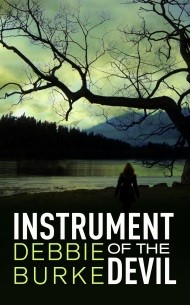
The Kindle version of my thriller Instrument of the Devil is on sale for $1.99 until the end of May.

Try a cheap thrill!