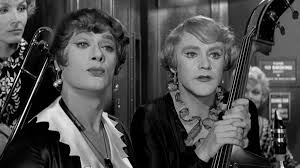
Tony Curtis and Jack Lemmon in Some Like It Hot (1959)
If you needed some good, solid laughter what movie, TV show or comedian would you turn to?

By Debbie Burke
This ordinary-appearing video commercial promotes a family business based in Atlanta that hides a dark secret.
There’s a business term Cost of Goods Sold. In today’s true crime case, it’s redefined as Cost of Goods Stolen.
Richard (“Mr. Bob”) Whitley, 70, and his daughter Noni Whitley,47, ran Closeout Express and Essential Daily Deals which were online storefronts selling products below wholesale.
How could they charge prices that were too good to be true?
The merchandise was stolen. Their inventory was supplied by professional shoplifters known as “boosters.”
Between 2011 and 2019, the Whitleys operated an Organized Retail Crime (ORC) organization, selling more than $6,000,000 in stolen merchandise.
ORC is essentially the 21st century version of old-fashioned fencing.
According to the FBI:
An ORC operation refers to a professional shoplifting, cargo theft, or retail crime ring, or other organized crime occurring in a retail environment. Robert Whitley was the owner and operator of Closeout Express. Noni Whitley worked with her father and helped operate and manage their ORC operation.
The Whitleys hired boosters who preyed on small businesses as well as national drug store and supermarket chains including CVS, Kroger, Publix, Target, and Walgreen’s. They shoplifted over-the-counter medications, shaving razors, oral care products, and health and beauty aids.
Boosters then delivered large garbage bags full of stolen merchandise to the Closeout Express warehouse where the Whitleys paid them in cash.
The Whitleys’ online storefronts operated as third-party sellers on Amazon Marketplace, Walmart Marketplace, and Sears Marketplace. They processed tens of thousands of orders and delivered the stolen products via the U.S. Postal Service.
After nearly a decade in operation, the Whitley family business was shut down by the FBI and U.S. Postal Inspection Service. A joint task force recovered more than a million dollars in stolen goods at the warehouse and several Atlanta residences.
On October 5, 2021, Robert Whitley and Noni Whitley were sentenced to federal prison under the following terms:
Robert Whitley a/k/a Mr. Bob, 70, of Atlanta, Georgia, was sentenced to five years, ten months in prison to be followed by three years of supervised release. He previously pleaded guilty to one count of interstate transportation of stolen property.
Noni Whitley, 47, of Atlanta, Georgia, was sentenced to five years in prison to be followed by three years of supervised release. She previously pleaded guilty to one count of conspiracy to commit interstate transportation of stolen property.
Both defendants were also ordered to pay $4,348,762.90 in restitution to the victim retailers.
Shopping online is easy, fast, and convenient but e-commerce can also hide an underbelly of sneaky fraud.
When prices are too good to be true, you might be buying stolen property.
How can you tell if products are stolen?
Here are warning signs.
What happens if you unwittingly purchase stolen property? According to Findlaw.com:
Although you will likely not be charged with a crime, if you unknowingly bought stolen goods, you will probably have to return them to the rightful owner. The thief (or thieves) will then owe you the purchase price in restitution.
Good luck collecting restitution from criminals in federal prison.
The Traveling Writer
Terry Odell
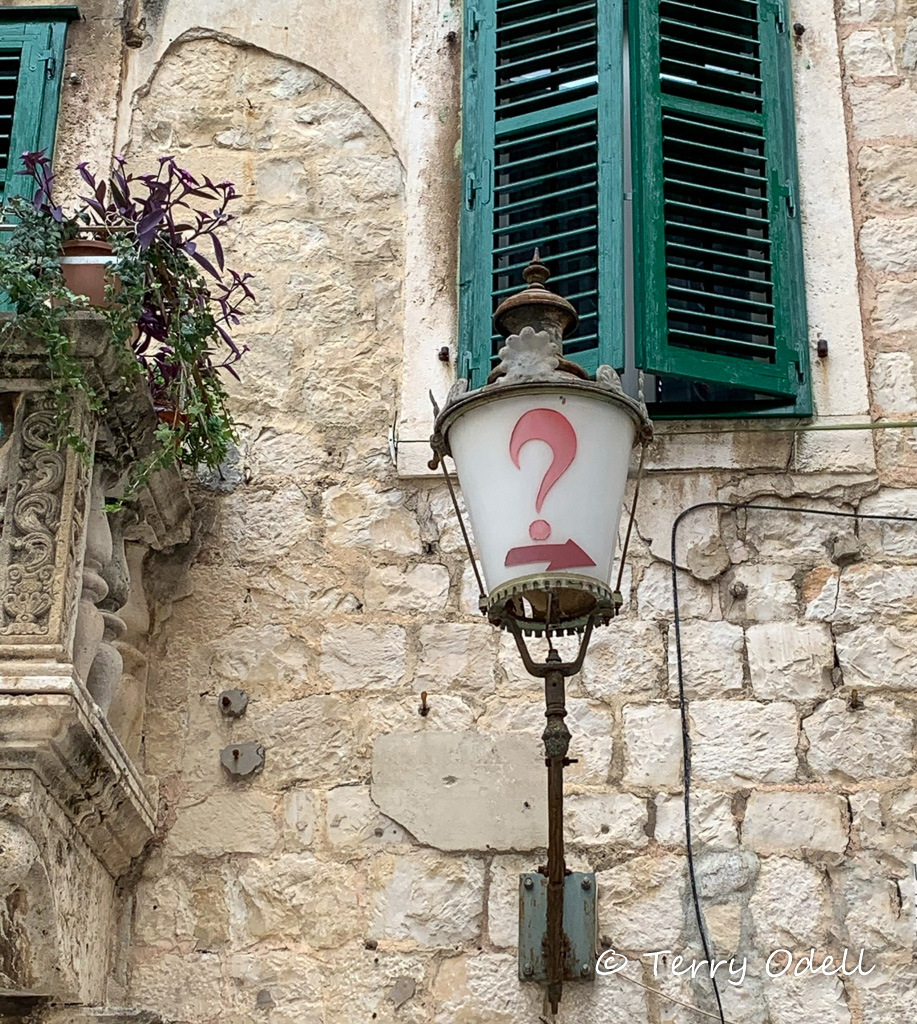 I’m back on my mountain after a 12-day “vacation.” (Can writers ever take vacations?) I was part of a photography tour of the Dalmatian coast, starting in Split and ending up in Dubrovnik (with an add-on day to Bosnia & Herzegovina). I’m recapping some ‘travel’ bits on my own blog, but this is a writing blog, so I’ll talk about the trip from a writer’s perspective.
In my current WIP, one of my main characters is an aspiring photographer, so I’ll be able to incorporate some of the lessons I learned into this book. Of course, I didn’t have to go to Croatia to learn these techniques, but as long as I was there …
However, this is about using travel for a book that hasn’t been written yet. Last time, I talked about things I’d be looking as writing fodder. While I don’t want to downplay the fantastic time I had on the trip, as writers we know that only trouble is interesting and it’s critical to create tension. With that in mind, here are some observations that might make it into the book I hope to write next.
Characters
Setting
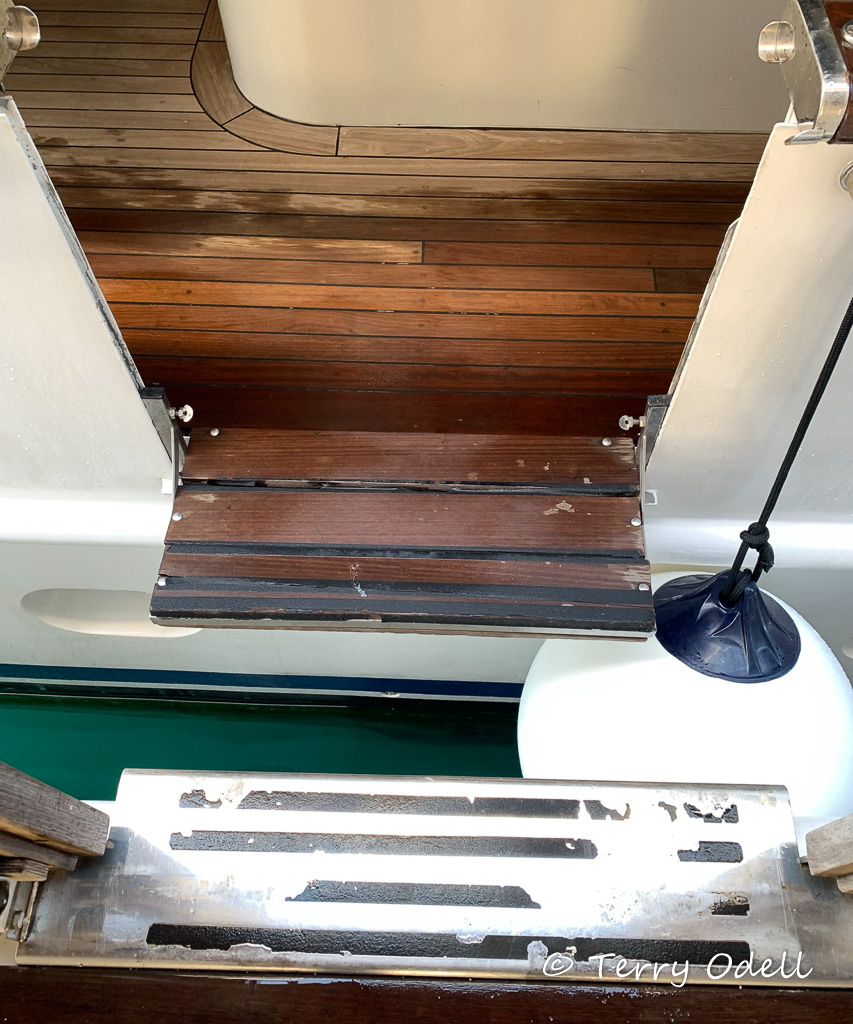
Docking in ports. The ships line up parallel, often 5 deep, so you have to cross through them to get to the dock. “Minding the gap” could become an issue for a passenger with mobility issues. (You can click any of the images below to enlarge)
 Language. That can be a biggie. I’m guessing most Americans aren’t as familiar with Slavic languages as they are with Latin-based ones. Even if you’re reading signs along with a tour guide, what she’s saying doesn’t look anything like what you’re seeing. Our phonics don’t work there.
The Croatian alphabet has the following additional letters: č, ć, dž, đ, lj, nj, š and ž but doesn’t have q, w, x, or y.
There’s a death of vowels (Island of Hvar, and Krka National Park) and they seem to toss Js in at random.
 Hint: Download Google translate, set it to the language of the country you’re in, and you can use the phone’s camera to get a translation of writing. Great for notices on shopfronts, menus (although almost all have English translations), brochures, signage at venues. Schools start teaching English at an early age, so most people have a rudimentary grasp of the language, especially those in the service industry.
Okay, that’s enough “trouble.” A little more about the trip from the tourist standpoint.
Everyone was friendly. Our boat had about 30 passengers. Eleven of us were on the photo tour, and another couple was from England. The rest were Germans. The tour company used to give tours only in English, and international passengers were aware and dealt with it. Because of Covid, the company needed to expand its market, and offered dual-language tours. This meant that all communication on board and on our guided tours was given twice: once in English, once in German. I heard a lot of German growing up, although we didn’t speak it at home. I took two years of German in college. After a couple glasses of wine, enough of it came back so I could make myself understood to some of the German passengers. (Impressed the heck out of my son!)
The food was amazing. We had the typical European buffet breakfast every day, and lunches were four course fine dining meals. Any of the courses would have been a full meal for me. How our chef on board produced this in a tiny kitchen never ceased to impress.
Portions everywhere were huge. A personal pizza would feed two easily—and with Italy so close (now and historically), pizza was everywhere. So was gelato.
And perhaps Croatia’s most recent claim to fame (and a boost to its economy): Game of Thrones was filmed there. There are memorabilia shops, special guided tours, and LOTS of people taking pictures.
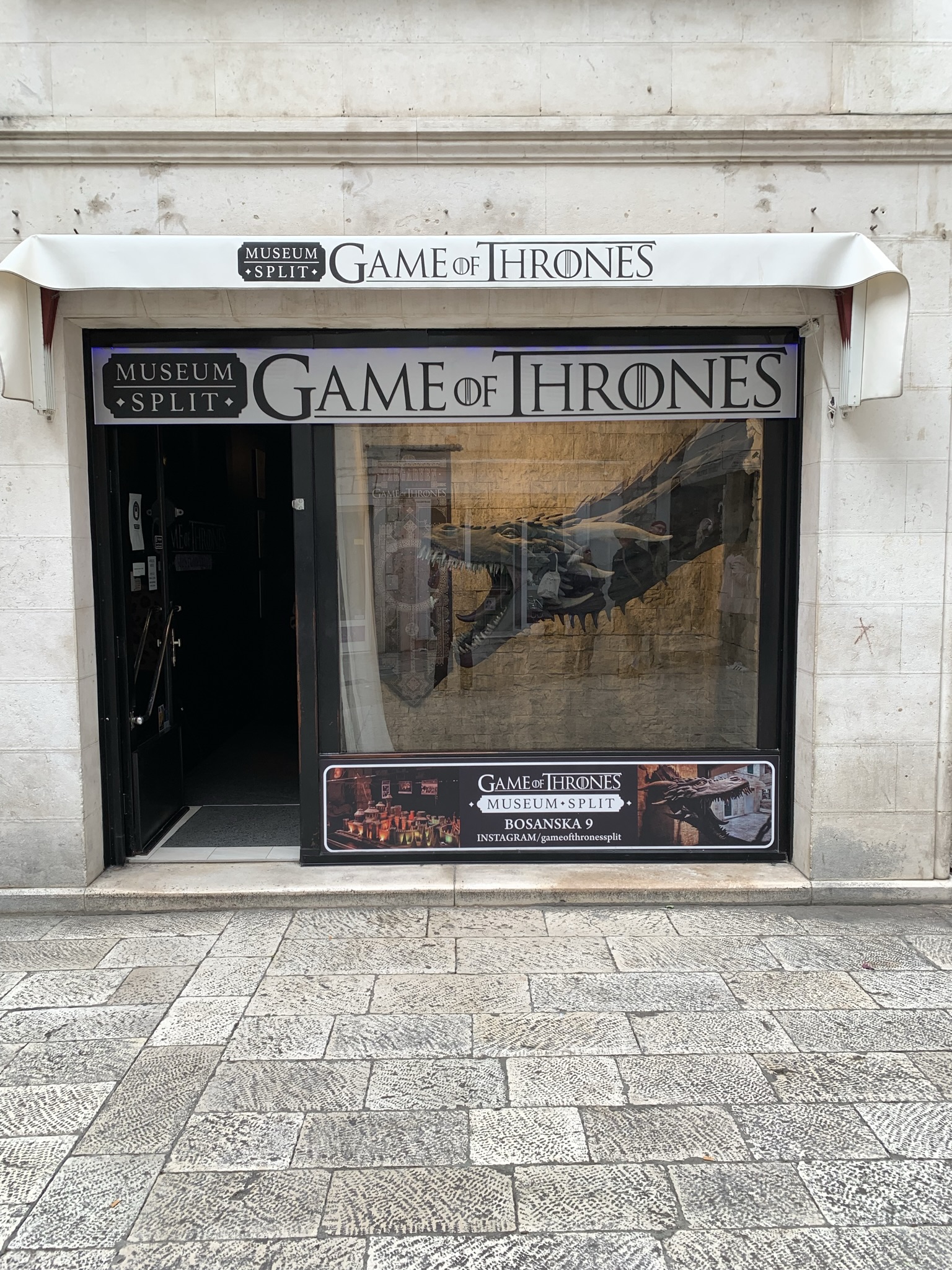 As someone who never watched the show, I simply admired the scenery and buildings for what they were, not what they pretended to be.
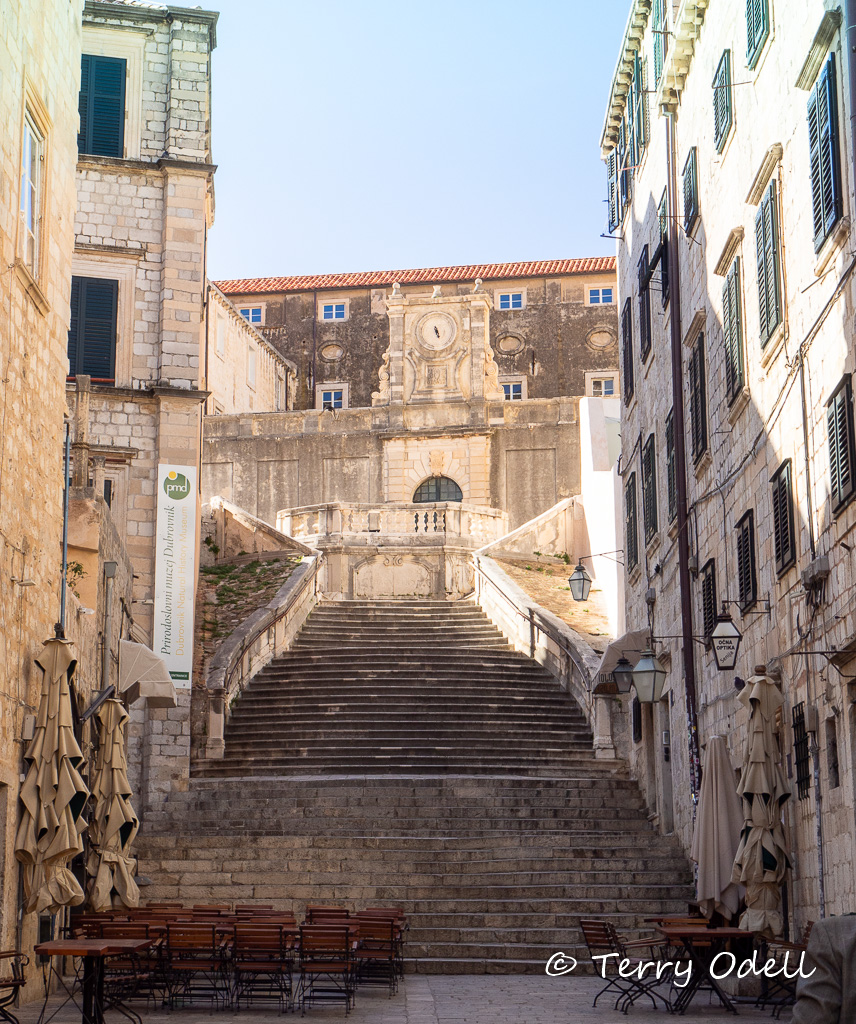 In closing. This was a photography trip for me, so I have been working on getting my images sorted, processed, and uploaded. If you’d like to see some of them, I’ve started a slideshow, which is still getting updated. (Click the triangle at the top right to start the show.) A lot of these images are “assignments” from our instructor, so they’re not typical travel-brochure shots. He suggested we try things like car trails, close-ups, long exposures, low angles (hard on aging knees), monochrome, motion blur, multiple exposure, pan blur, panoramic, reflections, textures, varying depth of field. Can’t say I tried all of them, or was successful at the ones I tried, but it was a fun way to look at the country alongside of the history provided by our tour guides.
Notes to self. Take pictures of signs so you know where you were. Update a journal no matter how tired you are at the end of the day. Don’t expect your brain to work the way it does at home. Think of “conference brain” and how all the new input overloads it. I knew I wouldn’t be writing, so I brought along a printout of as far as I’d gotten in the current WIP, thinking I could do some preliminary editing. Despite reading the words, trying to fool myself into thinking I was editing turned out to be a wasted effort. So, it’s back to work I go.

Image by Rebecca Scholz from Pixabay
One last tidbit. Residents of the Dalmatian coast prefer German shepherds. Dalmatians, they say, are too much trouble.
All right, TKZers. Questions? Comments? Suggestions for others?
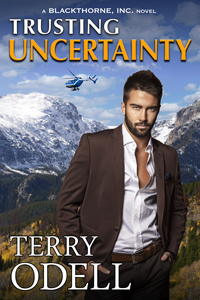 Available Now Trusting Uncertainty, Book 10 in the Blackthorne, Inc. series.
You can’t go back and fix the past. Moving on means moving forward.
Terry Odell is an award-winning author of Mystery and Romantic Suspense, although she prefers to think of them all as “Mysteries with Relationships.” Follow her on Facebook and Twitter.

Gerd Altmann – Pixabay
by Debbie Burke
Full disclosure: I’m lousy at social media.
My writing bona fides are respectable with six published thrillers, numerous nonfiction articles, and this wonderful gig on TKZ.
Yet, after three years on Twitter, I have a low three-figure following. Pitiful, huh?
Clearly, I’m doing something wrong.
Social media is that annoying stone in my already-uncomfortable marketing shoe. For contemporary authors, it’s a fact of life that we may not embrace but we can’t dismiss it either.
Recently, during an off-air discussion with TKZ regular Ben Lucas, he mentioned he was working on his as-yet-unpublished first novel and…
…he had more than 12,000 Twitter followers.
What???
How does a writer without a single book to sell develop such an impressive presence on social media?
I needed to know more. So I asked him.
His answers are today’s post.
Take it away, Ben!
~~~
Debbie: How has an as-yet-unpublished author collected 12K Twitter followers in less than a year?
Ben: First, I wanted to thank Debbie for allowing me to post on TKZ. I hope she keeps this line in so that you all know I’m grateful to be given the opportunity to share. This is a new personal high, and I hope to return the favor.
Technically, I’m a new author, but I’ve studied the craft for over a decade. Most of this is not new information, just good use of good advice. I have 12.5K Twitter followers, 9.8K on LinkedIn and another 5K on Facebook. These are the links:
The obvious question is, why am I doing this if I have no book to sell? It’s a line item of a giant checklist to help my future launch be successful. 2011, my first go around getting a book published was a disaster—many lessons learned. A big failure on my part was not using good advice or best practices.
But in 2020, (me having regrets), I listened to James Scott Bell on Great Courses. My immediate takeaway was marketing is crucial. That experience started my WIP, but also made me determined to brand myself. After more careful study, I started my social media building last December.
Marketing and branding are kind of related, but different. Marketing is the efforts you make to generate sales. But, branding is the business image you create. As I went along, I built my social media base to create goodwill and credibility whenever I can, (e.g. branding).
For the record, I have no illusions, as I’m keeping my hopes high and my expectations low. None of this is guaranteed, especially if my book comes out and SUCKS!
James Scott Bell says you can’t sell books on Twitter. I think he’s 100% right. If there is an effective marketing technique on social media, I haven’t seen it yet. Actually, besides announcing great deals, a lot of sales tactics on Twitter leave me feeling awkward and tacky. But, there are more important things that social media will offer you, which branding seems the best effort.
My overall goal is to not be forgotten before I even get started. Multiple experts helped to develop my approach:
Post something at least once a day. Twice maximum. Any less and you are forgotten. Any more than twice, you are a nuisance. (I’ve actually stopped following people because they constantly send out four posts an hour and I don’t have time to follow it all).
You can’t just publish text as a social media post. You need something visual that should have a common look/feel. Canva.com comes in handy.
You need to follow other people back. Following other people back on social media will help you get into an algorithm. In short, if you are connecting to other readers and authors, Twitter will also suggest you as a connection to other like-minded individuals.
One reason people are following me is because I’m asking them to. I’m soft, not pushy, but consistent. For example, my common lead for my posts, “I would appreciate your support/follow on Twitter—for more information about me and my upcoming projects sign up for my newsletter https://therealbenlucas.com/contact/ #readmore #writingcommunity #writing #quoteoftheday.”
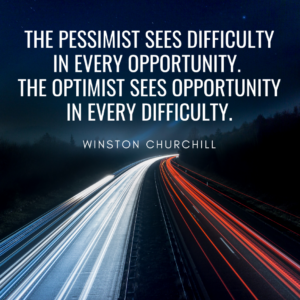
Here’s an example of something created using Canva. I send out a visual quote every day similar to this one:
Debbie: Are all your tweets on writing/reading?
Ben: Yes. Everything I tweet or post is about writing or others in the #writingcommunity.
Debbie: Do you contribute to/take part in groups not related to writing/reading?
Ben: No. All my efforts are about writing. I’m making new friends and relationships. I’m finding this very rewarding.
Debbie: Did you already have an established following for some other interest?
Ben: No. None. I have lots of other interest but nothing I wanted to write about. Being an author is my passion, and I spend nearly all my free time pursuing it.
Debbie: How much time do you spend on social media each day?
Ben: I spend about an hour a day on social media (all three sites). I’ve become highly efficient—I had to, otherwise this can consume you like a shark devouring a guppy. Routine for me is important since I manage five people during my day job, have a wife, three kids, and a needy dog.
My daily routine is to wake up the kids, get people fed, go to the computer and post my daily thing. I’ll wish my followers a happy birthday or congratulations on their life events. I read TKZ, and if I can, add something to the conversations. After that, I do my day job and then try to write a thousand words between the remaining madness. At the end of the day, I interact online with some followers.
Debbie: What’s your day job?
Ben: I’m a Safety Manager for a construction company that services oil and gas. I have been in occupational safety and health for twenty-five plus years.
Debbie: How did you find your particular niche?
Ben: This question made me think of two different things.
If I do my job right, company culture is positive. Do it wrong, you have a negative impact or feeling.
Same thing goes here too, that I’m shaping my followers to feel good about connecting with me. My hope is my actions will lead to a positive opinion about who I am and what I do.
Debbie: You talk quite a bit about “brand.” Can you sum up in a sentence or two what your brand is?
Ben: For me, branding is two-fold.
I base my actions on four words which are sincerity, success, tolerance, and tact. (Posted on my Ted Lasso wall), my daily focus.
Brand statements to me are secondary, but I have one. “Ben Lucas is an author, rooted in thriller storytelling, who is inspired by the high and lows of the world oil industry.” For me, my brand statement will develop as my work matures.
Debbie: Do you ever attract “creepy” followers? If so, how do you handle them?
Ben: YES! This kind of stuff happens a lot to me because I tend to follow everyone back. But, don’t be afraid to follow other people. Be open to other like-minded individuals. If you follow others who are like-minded, you will build more followers. Connections can build even more followers and potential readers of your materials.
Overall, here are your best defenses:
Don’t follow people back if they appear to be scammers. I think there are some great articles on TKZ that go into a lot of details of what to look for.
Don’t answer back any direct or personal mail on social media, (like Twitter), unless you know the person. Social media is meant to be ‘social’ and you should communicate in group discussions or comments on posts. Once those conversations happen in private, things can get awkward fast.
Do not give out your personal details online.
You are in control—therefore, take control of the situation and block those people making things awkward. If it feels odd, be safe, block them, and make a report.
Debbie: Do you have a short synopsis of your upcoming book?
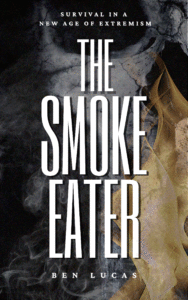
Ben: It’s called The Smoke Eater
(JSB Inspired Tagline)
Survival In a New Age of Extremism
When terrorist radicals are thrown into the mix, Reid’s new job turns deadly.
Desiring a fresh start, broken firefighter Reid Harris goes to Azurbar to work at the massive BuHasa facility. His new employer doesn’t care that he can’t pass the physical.
On his first day, Reid witnesses a stunning incident that determines his new norm. Martial law drives surging terrorism. He expected hard times, but now worries he can’t meet work demands. On top of Reid’s fear of dying on the job, a Azurbaree national with a vicious obsession further threatens his survival.
This is my working cover, which I made on Canva.com:
BTW – Recent posts on TKZ made me rethink my publishing strategy. My gut is telling me to buckle down and find an agent. I was inspired when I saw John Gilstrap’s video of his agent and editor being in sync with each other. He’s very fortunate to have people like that on his side. Going to start that process and see where it might take me.
~~~
Thank you, Ben, for sharing your well-thought-out strategy. You are setting yourself up for a successful launch. Let us know when that happens.
~~~
Social media sidebar bonus courtesy of Authors Guild member Joanna Malaczynski:
Social Media Market Share (Source: StatCounter)
#1 Facebook – Approximately 70% of the market
#2 Pinterest and Twitter – Approximately 10% of the market each
#3 YouTube and Instagram – Less than 5% of the market each (BUT SEE BELOW about the significance of YouTube)
#4 Tumblr and Reddit – Approximately 1% of the market each
Most Popular Search Engines (Source: Search Engine Journal and Visual Capitalist)
#1 Google – about 60.5 billion monthly visits
#2 YouTube – about 25 billion monthly visits
#3 Amazon – about 2.4 billion monthly visits (but used more as a search engine than Facebook)
#4 Facebook – about 20 billion monthly visits
~~~
TKZers: Feel free to share your social media handles in the comment section. Someone might want to follow you and you might find someone you want to follow.
~~~
Debbie Burke’s new resolution: tweet more about her series Tawny Lindholm Thrillers with Passion. Please check them out at this link. 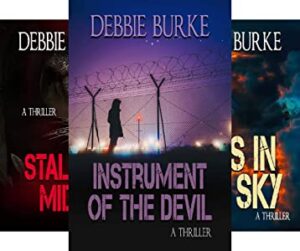
It’s with decidedly mixed feelings that I write this final blog post for TKZ. It’s certainly been a good run and, having been here from the start, I am sad to be leaving…but the time has come and I am thrilled to be passing the blog baton on to a regular TKZ contributor, Kay DiBianca (Welcome Kay!).
Not being one for long goodbyes, I thought I’d end with a brief distillation of some of the advice I’ve given over the years to all those looking to establish a writing career (something definitely not for the faint of heart!). While there is no one path to publication or success, I have always strived to be supportive and encouraging of all those committed to their craft, and I continue to believe that there are huge opportunities despite (and more often because of) ongoing changes within the publishing industry. Publication can be a daunting ambition but communities such as TKZ are great places to both learn and share advice. So here are final words of wisdom (such as they are!):
Know Thyself: It’s taken me many years to accept the kind of writer I am but now I understand my motivation, process, and limitations. I know for instance that I’m motivated by traditional publishing, that I’m incapable of writing to word count deadlines, and that I am and probably always will be a historical fiction writer. I also know that I’m unlikely to ever write erotica or horror:)
Be Brave: As my recent blog post regarding my art illustrated, much in the way of success relies on being brave. Putting your work out there, risking rejection and failure, is critical and yet almost all the writers I know have periods of insecurity and angst. I’ve learned that (at least for me) the key is to take a deep breath, do my very best creative work, and then let it out into the world…which (again for me) is a very brave thing to do:)
Be Kind: The writing community is generally extremely supportive so try to be a part of someone else’s success rather than relishing their failure. I have benefited from the kindness of many fellow writers, readers, agents, and editors…and truly hope to be able to do the same for others. Unfortunately, there are so many toxic and divisive threads and platforms online that writers can get caught up in – all of which detract from the creative process – so it’s best to ignore these as best you can. Sadly no community is immune from this at the moment, so although I say be kind, I do not mean be passive…just try to walk away from the worst of it!
These three pieces of advice seem pretty measly, but I hope that my blog posts over the last years have helped at least some of you in TKZ community find your own creative path and success. Wishing you all even more success in the future. Happy writing!
Clare
by James Scott Bell
@jamesscottbell
 A controversy over an award-winning female thriller author has broken out in Europe. That’s because the female thriller author doesn’t exist. “She” is really three men who have been writing under the pseudonym Carmen Mola. When one of their novels won a million-euro prize, the trio stepped out from anonymity to claim it.
The men, all in their 40s and 50s, denied choosing a female pseudonym to help sell the books. “We didn’t hide behind a woman, we hid behind a name,” Antonio Mercero told Spanish newspaper El País. “I don’t know if a female pseudonym would sell more than a male one, I don’t have the faintest idea, but I doubt it.”
But this ruse required a web of (shall we be gracious here?) fabrications to create the illusion of a real-life writer whose backstory itself was a marketing tool. They made Mola a “university professor and mother of three, who taught algebra classes in the morning then wrote ultra-violent, macabre novels in scraps of free time in the afternoon.” They even commissioned a noirish photo of a woman, facing away from the camera. It appeared on their agency’s website but has now been scrubbed. The three dudes are there instead, and appear quite happy.
Not everyone is fine with this.
Beatriz Gimeno, a feminist, writer, activist – and former head of one of Spain’s national equality bodies, the Women’s Institute – attacked the men for creating a female persona in their publicity for Carmen Mola books, over several years.
“Quite apart from using a female pseudonym, these guys have spent years doing interviews. It’s not just the name – it’s the fake profile that they’ve used to take in readers and journalists. They are scammers,” she said on Twitter.
Several questions arise. Is writing under a pseudonym always some form of “scam”? Or is it the sex change and fictional biographical details that are the sticking point?
In the “old days” a pseudonym was often used so a writer with a name could branch out into other genres. Agatha Christie was, of course, the most popular mystery writer of all time. Her name on a book meant clues and suspects and sleuths. So when she wanted to do romances she adopted the name Mary Westmacott to keep readers from confusion or frustration. She wrote six Westmacott books and managed to keep her true identity unknown for twenty years.
Evan Hunter (whose real name was Salvatore Albert Lombino!) always considered himself a “literary writer.” To earn extra dough he wrote police procedurals under an alias so the critics would not look at his “serious” work with a jaundiced eye. But as Ed McBain he produced a remarkable run of noir that made him a multi-millionaire. The truth came out eventually, though Evan was probably always a little jealous of Ed.
Some writers wanted to have more books published per year than a single contract would allow. Dean Koontz at one time was writing under nine or ten pseudonyms, including a female guise.
Then there is Stephen King, alias Richard Bachman. When he published under that pseudonym he included an elaborate backstory for Bachman:
Although King initially created Richard Bachman to experiment with literary ideas under the veil of secrecy, the author elaborated on his alter ego’s character to create a more comprehensive author bio. Apparently, Bachman wrote his novels by night, working on his dairy farm in New Hampshire during the day. He lived with his wife Claudia, mourned his son who had died at a young age in an accident, and underwent surgery for a brain tumor that isolated him from interviewers. King also included a picture of his agent’s insurance broker on the inside folds of the books.
Well, a bookstore clerk in D.C. did some digging when he found Bachman’s writing a whole lot like King’s. King was outed, and it ticked him off. He’d been planning to publish Misery as a Bachman. Now that he was “caught” he told the world that Bachman had died of “cancer of the pseudonym.” He went further, stating that Bachman’s widow had “discovered” unpublished manuscripts in Bachman’s attic: The Regulators (1996) and Blaze (2007)!
But what about men writing as women, or women as men? J. K. Rowling wanted to write crime fiction and wanted those books to stand on their own. So she chose a male pseudo, Robert Galbraith. And made up a backstory, that asserted Galbraith was “a former plainclothes Royal Military Police investigator who had left in 2003 to work in the civilian security industry.”
The first book, The Cuckoo’s Calling, received generally positive reviews. But soon the secret got out—and sales of the book jumped 4,000%!
If you go to the Robert Galbraith author page on Amazon you’ll see a photo of J.K. Rowling, and this explanation:
J.K. Rowling’s original intention for writing as Robert Galbraith was for the books to be judged on their own merit, and to establish Galbraith as a well-regarded name in crime in its own right.
Now Robert Galbraith’s true identity is widely known, J.K. Rowling continues to write the crime series under the Galbraith pseudonym to keep the distinction from her other writing and so people will know what to expect from a Cormoran Strike novel.
So…is making up a backstory for a pseudonym out of bounds? Or is it just another aspect of marketing? Does it matter if the author is using a persona of the opposite sex? Do readers care if the ruse is discovered? Didn’t seem to hurt King, Rowling, or the Spanish guys.
What do you think, TKZers?
By Deb Gorman

Today, we are honored to have Deb Gorman, one of our faithful TKZ community, presenting a post on a technique she has discovered for marketing. Pleas join me in welcoming Deb. And thanks, Deb, for agreeing to share your idea.
Steve Hooley
***
Steve Hooley, you could’ve knocked me over with the proverbial avian integumentary appendage when I received your invitation to guest blog on TKZ. I was nervous about accepting because most of the time I feel I have a lot to learn from all of you, with nothing to offer in return.
But, of course, I couldn’t turn down the opportunity. I know every author starts out unpublished and that includes those who roam these hallowed halls, so I decided to take the plunge.
I get up every morning thinking, okay, today I’m going to create a page or a chapter or a section that will blow my readers away. And then I remember I have very few readers—and BTW, all are precious to me—so the blowing away won’t be a hurricane. Maybe a soft breeze.
As I write this post, my first two novels are with an agent. Scary. Very scary. She has read one and sent some work for me to do on it. I actually sent it back to her this morning. No contract, though . . . yet. (Note my confidence.) The other novel will be read in the next few weeks and she’ll get back to me. I have to remember that she asked to read them in their entirety . . . so I count that a minor miracle.
Whew! Got that out of the way. Now, to the subject of today’s post—a marketing method I’ve discovered. The newbie talking about the most difficult part of authoring? Hope I get this right.
As you might guess, I’m no marketing expert. (A nod to you TKZers who are, and I study every post you put out about it.) But, having said that, I have discovered a fabulously fun way of marketing a forthcoming novel. I may have mentioned it a time or two in TKZ comments.
It’s called Character Interviews.
Now, there’s nothing new about interviewing your characters. (Nod to JSB) Some of us have discovered secrets hoarded by our characters when we invite them to a private sit-down during the draft process.
But I took it a step further, deciding it might be a fun way to market the story before . . . well . . . the story. Full disclosure: this idea is not my own. I was trolling SM one day and someone (sorry, can’t recall who) mentioned it in passing. I jumped on it.
The idea is to wait until you have a draft of the entire story. Then go through it and search for your characters’ quirks, weird stuff they say and do, fears and failures. Pick your first character to put on the hot seat and sit him/her down and start the grilling. Just for yourself. I am amazed at how much I discover about what makes my rascally friends tick.
Then, I craft it into interview form. At this point, I pick and choose what to reveal to my blog post readers. I don’t want to give away the farm, just a chicken or two, to up their curiosity.
Here’s an excerpt from my latest character interview with the irascible Jake Gruber, from my WIP, No Tomorrows.
Deb: Jake, are you there? Were you able to retrieve your newspaper from the street?
Jake: Yeah, I’m here. Dang newspaper guy . . . hardly ever gets it to my porch these days. Things just ain’t like they used to be.
Deb: That must be aggravating. Have you complained?
Jake: Don’t do no good–but I’m sure your readers don’t want to hear about my newspaper problems. What do they want to hear? Can’t believe there’d be anything interesting enough about me–
Deb: I understand you’ve been neighbors of the Lees for quite a while. You must know them quite well after, what, twenty years or more?
Jake: Don’t hardly know ’em a ‘tall, Deb. We hardly speak. But that’s just fine with me. ‘Bout the only thing they ever say to me is “good morning”. And about the only thing I say to them, well, actually to that strappin’ young man, Roger, is “take care of your danged dandelions over there!”
Deb: Yeah, I think I heard something like that from Annie when I talked to her. But, let’s get to the rest of my questions, okay? Do you have a family? Annie wasn’t so sure you’d–
Jake: No.
Deb: No? There’s no one?
Jake: No.
Deb: But, I kinda heard through the character grapevine that you had–?
Jake: Move on. And what in blue blazes is a character grapevine? You authors are weird, almost certifiable I’ve heard. But that don’t mean I have to spill everything to people I don’t know . . . heck, people I can’t even see . . .
Deb: Okay, okay, Jake. So, I heard you were in Vietnam during the conflict. Would you be willing to tell us just a bit about that?
Jake: Sure I’ll tell you a bit. It wasn’t a conflict. It was war. Conflict’s just a word the government uses to deny responsibility for its boys and girls on the front lines. And you can quote me on that.
As I mentioned, I discover tidbits about my characters during this process. In Jake’s case, I knew he’d been to Vietnam, but I wasn’t aware of how he felt about the word conflict. Tiny detail, yes, but it plays out in the story when he has a conversation with the main character, Annie Lee. And did you notice how I discovered how he feels about authors? Before the interview, I had no idea.
During this interview, Jake goes on to become even more cranky and close-mouthed, especially after I try to get him to talk about . . . well, I won’t give away any more chickens today. The interview ended with him hanging up on me and my readers.
You can read two of my character interviews here and here. The first link is Jake’s interview in full; the second is one from my other forthcoming novel, The Master’s Inn.
Some of my friends and readers have commented, after reading an interview, “I can’t wait for your novel to be released!” Music to my ears, as you can imagine.
I’m discovering there are some quite creative ways out there to market ourselves and our stories. The trick is to find what works for you, and hone it as you would any other craft hack.
Okay, over to you, TKZers.
Do you interview your characters during the drafting process?
Can you think of ways to improve on this idea?
What other places besides my blog could I use this?
Thanks again, Steve, for asking me to guest post, and I hope my tiny offering sparks some creative marketing ideas for y’all.
I will be in and out today due to some unexpected family responsibilities and the funeral of a good friend. I will answer all comments as soon as I can. Thanks for your patience.
***

Deb Gorman, owner of Debo Publishing, lives where she was born and raised, in the beautiful Pacific Northwest with her husband, Alan, and their very smart German Shepherd, Hoka. They have seven children, 24 grandchildren, and five great-grandchildren.
Deb enjoys writing stories of reconciliation and redemption in families who are hurting, interwoven with threads of suspense. And that describes most, if not all, human families.
You can connect with Deb here.
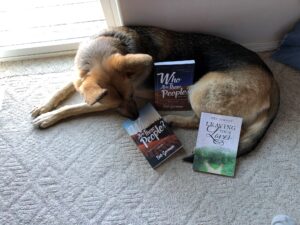
BOOKS BY DEB GORMAN
AVAILABLE AT https://www.debggorman.com, Amazon, and Barnes & Noble
I never thought I’d live this long. I turned 65 on Tuesday. Officially, I’m a Senior. I legitimately qualify for sympathetic elderly discounts, and I’m gonna pocket the 10 percent—not feeling the least bit guilty over getting geezer graft.
I’ve made 65 trips around the sun. Some were easy. Some were hard. One year, I survived three fatal gunfights within two months—one leaving my police partner and best friend dead beside me. And I witnessed two miraculous childbirths within three years—our daughter Emily and our son Alan—one of whose delivery was not at all easy on my wife Rita’s body.
Many of my life experiences, from trauma to triumph, were terrific.
Some I’d love to relive. Some I’d like to reverse. But I’m happy, very happy, to be here and continue enjoying life.
I guess I’ve lived this long because, despite the odds of succumbing to high-risk behavior, the Creator purposely let me trip 65 times around the sun and learn a few bits. I believe in the Creator, and I believe the Creator approves of me passing-on these 65 bits from 65 trips.
——
Bonus Bit: When playing Monopoly, spend all you have to buy, barter, or trade for the strategic orange properties at the end of the second stretch just before Free Parking. Don’t bother with Utilities or Railroads.
——
What about you Kill Zoners? Whether you have more or less than 65 trips under your hat, how about sharing life bits you’ve found?
——
 Garry Rodgers is a retired homicide detective and coroner with over three decades of experience in human death investigation. Now, Garry has reincarnated as a crime writer who regularly contributes to the Kill Zone.
Garry Rodgers also runs his own blog at DyingWords.net where he provokes thoughts on life, death, and writing. Check it out. You can also follow Garry at GarryRodgers1 on Twitter.
When I was younger, I thrived on horror stories. I read every word Stephen King wrote, and I’d be first in line for the slasher movies of the ’70s and ’80s. I lost my taste for them during my fire service years, and abandoned them entirely once I started a family. I don’t know if there’s a nexus in there, but that was the timing of it.
That’s also about the time when I realized that energy lives on past the lives of some, and that those energies are drawn to me. Or, maybe it’s the other way around.
Two stories (of many I could share):

CHRIS DORST | Gazette-Mail
Ten, maybe fifteen years ago, I signed on for a midnight tour of Moundsville State Penitentiary in West Virginia. It’s supposed to be one of the most haunted spots in America (aren’t they all?), and I thought it would be a hoot. I talked Jeffery Deaver into coming along. We climbed onto a bus around 6 pm and drove off into the night.
The tour was led by a self-proclaimed ghost hunter who channeled Van Helsing, complete with the floppy fedora and flowing great coat. When we arrived at the prison grounds, Van saw ghosts everywhere, just hangin’ around the yard. “There’s one! There’s one!” Jeff and I thought it was a hoot.
Then we entered the hospital wing of the abandoned fortress. If you’ve seen One Flew Over The Cuckoo’s Nest, you know what the place looks like. There’s a common room that was overseen by a nurse’s station, beyond which there are a couple of operatories and then another common room. This repeated five or six times.
Remember, the only lighting we had were the flashlights that we brought with us, so eerie doesn’t quite touch the atmosphere at zero-dark-early. We walked into the first one or two of the operatories, looked around, checked our watches and began talking about how we might work our way back to the bus.
The mood of the evening changed when we crossed the threshold of what I believe was the third operatory. I stopped about three steps in and could not go any farther. A dark energy surrounded me–that’s the best way I can put it, a nearly electrical feeling on my skin, but more than that, I felt so terribly sad. It was the kind of sadness that comes after the loss of a loved one. It was unbearable.
I turned and walked back out into the hallway, and the feeling vanished, as surely as if a switch had been flipped. Deaver reported feeling “something” but he night have been humoring me. Everyone else seemed to be fine. I went to Van Helsing and asked if that room was particularly energized? His response: “You notice I stay in the hallway, right?”
As the tour moved on, I told Jeff that I needed to go back. I needed to know if it was some kind of trick that Van was pulling. We parted from the group and walked back. This time, when I crossed the threshold, my knees nearly buckled. The feeling was beyond awful. It felt soul stealing.
That was the only notable incident on that tour, but later research showed that that room was used to perform lobotomies back in the ’50s or ’60s.
Now, fast-forward a few years. I was in Boston, staying at one of the fancy chain hotels to attend a board of directors for the trade association I worked for. (I’m not sandbagging on the name. I really don’t remember which one, and given the story to come, it’s best not to guess and be wrong.)
About 2:30 in the morning, I was sound asleep, alone in my room, sleeping on my left side, as I am wont to do, when someone grabbed my shoulder with both hands and placed his face about an inch from mine.
I shot out of bed, ready for war. I don’t think I’ve ever been so startled, before or since. Nobody was there, but I could still feel the imprint of his hand on my shoulder. I turned on the light, and the first thing I did was check my door. Not only was it closed, it was locked on the inside.
This was not a dream. It could not have been a dream. I saw him, for God’s sake. But several thorough searches revealed that I was still alone. The most vivid goddamn dream in the history of nightmares.
It takes a while for the body to process that much adrenaline, but ultimately, I fell back to sleep. Shortly after the sun came up, I rose, showered, tied myself into a business suit and headed down to the staff breakfast room. I was the last to arrive, but that wasn’t uncommon, given my relationship with mornings. As I sat down with my banquet eggs, I relayed the story of my nightmare, and conversation stopped.
My boss paled and asked, “What room are you in?”
“Twenty-one forty-four,” I answered. (I don’t remember the real room number.)
A gasp went around the table. By boss was staying in 2244, and one of our VPs was staying in 2344. All of us had the exact same “nightmare” within minutes of each other.
Creepy, eh? Okay, there’s a coda to the story. I was on the hook for a very important, very serious presentation to a filled ballroom at 8 am the next morning. After an endless string of meetings, I returned to my room at around 11 pm. Out loud, I said, “Okay, look. I know you have a job to do, and I respect that. I respect that I am in your space, but I really need to sleep tonight, so I’d appreciate it if you’d leave me alone.”
In general, I’m not a deep sleeper in a hotel, but that night, I slept like, well, the dead.
I haven’t studied this stuff, and I don’t pretend to understand it, but I’ve come to believe that something about what makes us human projects energy, and I think that some people are better tuned to it than others. I think I’ve posted here before that I have a very strong Spidey sense about others. My first impressions of people rarely prove themselves wrong. (Truthfully, I can’t remember a single time.)
When my son was 14 or so, he got separated from the group on a camping trip and became the focus of a National Park Service search party. (In case you’re wondering, parents are not informed of ongoing searches when they are in their early stages.) He and a buddy were lost in Washington National Forest all night. Everybody turned out fine, but he tells a great story of what it’s like being in the middle of nowhere on a moonless night as the batteries in your flashlight begin to die.
We learned about the search after he returned home a week or so later. Here’s the thing, though: On the night he was lost–at the hours he was lost–I couldn’t sleep. Instead, I got up and wrote about a young teenager lost in the woods.
Okay, now that I’ve revealed my crazy card, what say you, TKZ family? In this season of spooks and witchcraft, do you have any stories to share?