
By Debbie Burke
Today let’s welcome another Brave Author who submitted a first page of a story in the horror genre. Please enjoy then we’ll discuss.
Or, the Devil You Don’t
Chapter 1
Nothing on earth compares to autumn in North Carolina.
Nothing.
I close my eyes and let my head fall back. Sunlight filtering through baring branches warms my face. After a moment, eyelids drift open and I marvel at how the sunlight seems to catch on the edge of each brightly colored leaf, holding just long enough to suggest luminescence, before breaking free.
The Colonel would have been livid.
“Is it almost over?” I ask, leaning so only Carl can hear me.
“Not quite, Debra,” he says. “Be patient.”
“Be patient,” I say, under my breath, face distorted.
If the Colonel were still alive, he certainly wouldn’t stand for it—the weather, I mean. He would have insisted it mirror the melancholy of the gathering.
It doesn’t.
Instead, it mocks us. If it were up to him, he’d cancel the whole damn thing.
He would say the day of a funeral should be bleak, a bitter wind blowing—the kind of wind that bites as it slides past your cheek. The skies must be gray. Perhaps even a light rain. Yes, rain would be perfect. Everyone huddled under black umbrellas.
Why does no one else appear to agree? Sadly, their loss is not so personal. They stand around uneasily, in obligatory attendance only, serving time graveside—staring at the shoes of the person next to them as if they are the most fascinating things on earth. The man in the black pin-stripe suit stretches his arm to sneak a glance at his watch. They never knew the same Colonel I did.
Nervous energy bids my fingers to pick imaginary lint from the front of my drab dress. I feel the eyes of every person here staring at me.
In the background, the minister’s drones.
“We have all been touched by Thomas Edward’s life and story, and each of us feels this loss deeply. But we cannot change…”
I glare upwards with all my might, willing the birds to cease their songs. They ignore me. Apparently, I have no ability to communicate with birds.
~~~
Right off the bat, the title is intriguing. The author takes a well-recognized saying—the devil you know or the devil you don’t know—and cuts the phrase in half, leaving only the second part, which is more sinister because it taps into the primal fear of the unknown. This is a good title choice for the horror genre.
My only question is the comma. It’s distracting and not necessary. I suggest you cut it.
But that’s a very tiny nit to pick!
This is a quiet, slow-burn beginning. The sensual description—how the sunlight seems to catch on the edge of each brightly colored leaf, holding just long enough to suggest luminescence—is beautiful. The reader briefly feels lulled by the warm sun until the next paragraph: The Colonel would have been livid.
That’s a shocking statement that contrasts with the lovely setting.
We talked recently about pros and cons of opening a story with the weather. I think this works because of the surprise twist that the Colonel would be angry. Why? Who is this character who would cancel his own funeral because he doesn’t like the weather?
Debra goes on to describe the gloomy conditions the Colonel would have preferred, pulling the reader deeper into the story as more questions arise.
Sadly, their loss is not so personal is an oblique, understated way of expressing the sorrow that Debra feels. She sounds wistful that other people didn’t know him as well as she did. They are only there because they have to be. The description of them is spot on: serving time graveside—staring at the shoes of the person next to them as if they are the most fascinating things on earth.
However, the next paragraph contradicts that because she says everyone is staring at her. Maybe add a bit of transition that changes their focus from shoes to her. Does she cough, hiccup, or make a gesture that draws their attention? Plucking a bit of lint isn’t enough to cause people look up. What if she shifts her stance, twisting her ankle, and has to catch herself?
They never knew the same Colonel I did. That raises more compelling questions. What was the nature of their relationship? Was he family? A lover? Her commanding officer? Why did he open up to Debra? What did he have to hide from other people?
Her grief is further expressed in her frustration that the birds won’t shut up when she glares at them. That adds an ironic bit of humor that echoes the Colonel’s imagined annoyance with the weather. Both characters wish they could control nature but they can’t.
By the end of the first page, the reader still knows very little about Debra, Carl, the Colonel, how he died, what their connection is, and why she mourns him. But the Brave Author’s skillful, subtle, yet vivid writing seduced me. I want to turn the page to learn the answers to those questions. I also want to find out how horror will be introduced into the story.
Awkward phrasing caused a few small bumps:
Baring branches stopped me, maybe because it came right after another word, filtering, that also ended with ing. Perhaps just cut baring.
…eyelids drift open sounds disembodied. Suggest you add my eyelids drift open.
“Be patient,” I say, under my breath, face distorted. She might feel her facial expression, but she can’t see it.
…wind that bites as it slides past your cheek. Biting is sharp and sliding is smooth. Maybe use a different verb that goes better with bite, like tears or rips.
In the background, the minister’s drones. Is this a typo? Should it read: In the background, the minister drones.
Brave Author, I had to work hard to find suggestions to improve this first page. I don’t generally read horror, but I would definitely read more. Great job and best of luck with this intriguing story!
~~~
TKZers: Any suggestions for the Brave Author? Would you turn the page?
If not, do you prefer a faster beginning?

 Many writers are not content merely to write a good story. They want to “say something.” This is not a bad impulse. We are awash in a culture of the trivial, the trite, and the downright stupid. It is part of the writer’s calling to stand against all that.


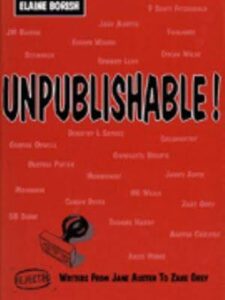
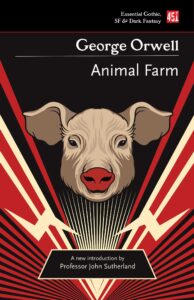 George Orwell had his masterpiece, “Animal Farm,” turned down by no less than T. S. Eliot, a big deal at UK publishers Faber and Faber. Like many in the upper echelons of publishing, Eliot missed the point when he rejected Orwell: “Your pigs are far more intelligent than the other animals, and therefore the best qualified to run the farm . . . What was needed (someone might argue) was not more communism but more public-spirited pigs.”
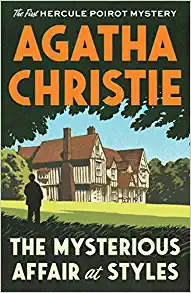
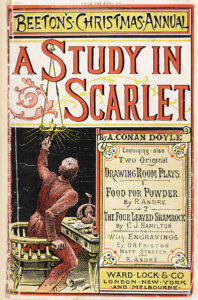 Publishers outdid themselves with boneheaded reasons to reject bestsellers. Conan Doyle’s first Sherlock Holmes novel, “A Study in Scarlet,” was turned down by the prestigious Cornhill magazine because it was too much like the other “shilling shockers” already on the market. The editor said it was too long “and would require an entire issue” – but it was “too short for a single story.” Another publisher sent the manuscript back unread. A third bought the rights for a measly twenty-five pounds, and let it sit around for year. It was published in 1887, and then brought out as a book, but Conan Doyle didn’t get any money from that because he’d sold the rights. Worse, the book was pirated in the U.S. Doyle wrote a couple of historical fiction works. Then an American editor, looking for UK talent, had dinner with Doyle and Oscar Wilde and signed them both up. Wilde wrote “The Picture of Dorian Gray” and Doyle did “The Sign of the Four.”
 The other day, I saw a Facebook post from my friend Joseph Finder. I like Joe a lot. We’ve been on panels together. He writes good books that sell really well. He’s a really nice guy. But this photo at left that he posted the other day made me want to…heck, I don’t know what. This is Joe’s writing office. It’s perfect. How would someone NOT get inspired sitting in a place like that? Why can’t I have a writing house like that? Maybe I’ll go up to Cape Cod and TP his…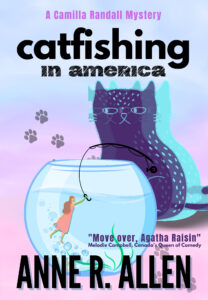
 Anne R. Allen is a popular blogger and the author of the bestselling Camilla Randall Mysteries as well as the Boomer Women Trilogy and the anthology Why Grandma Bought that Car (Kotu Beach Press.) Her most recent mystery is Catfishing in America (Thalia Press) a comic look at romance scams. Her mystery The Gatsby Game is being published in French at the end of this month. Anne’s nonfiction guide, The Author Blog: Easy Blogging for Busy Authors, is an Amazon #1 bestseller that was named one of the 101 Best Blogging Books of All Time by Book Authority. She’s also the co-author, with Catherine Ryan Hyde, of the writer’s guide How to Be a Writer in the E-Age. She blogs with NYT million-copy seller, Ruth Harris, at “Anne R. Allen’s Blog…with Ruth Harris.” You can find them at
  We’re over halfway through the year (ack!), so it seems an apt time to catch up on a few publishing business items. Here are five that recently caught my eye. Additions and prognostications are welcome in the comments.