About Sue Coletta

Sue Coletta is an award-winning crime writer of environmental thrillers, psychological thrillers, and narrative nonfiction/true crime. An active member of Mystery Writers of America, Sisters in Crime, and International Thriller Writers, Sue's Murder Blog has won many awards, including Feedspot and Expertido.org's “Best 100 Crime Blogs on the Net.” Check out her posts on the Kill Zone and Story Empire, where she's a regular contributor. Sue lives in New Hampshire, her humble abode surrounded by nature and wildlife, and exclusively writes gripping environmental thrillers now, with a focus on wildlife conservation. Oh, how she enjoys killing poachers! Sue also works as a freelance writer. Topics involving wildlife and environmental sciences are her personal favorites. Though modest about it, Sue's appeared on the Emmy award-winning true crime series, Storm of Suspicion, and three episodes of A Time to Kill on Investigation Discovery. Learn more about Sue and her books at https://suecoletta.com

First Page Critique: Envy Rots Your Bones

Another brave writer shared their first page for critique. Enjoy! My comments will follow.

Chapter One

Envy Rots Your Bones

Grandma Iris had never cradled me like she did that Bible. Sat across the table, she held it tight to her chest, tracing her bony finger down its decorative spine. The golden crucifix embedded in the book’s cover glinted as dawn streamed through the window. A wink… or a jeer… It knew it was Grandma’s favourite.

Jealousy stroked at me, teasing, and I swatted it’s claws away. Envy rots your bones. It’s a sin, I reminded myself. One of Grandma’s many teachings.

Leather creaked as Grandma delicately opened the book upon the table.

“Are you ready, Elisa?” A demand masked as a question.

I inhaled deeply, the cold dusty air of the dining room filling my lungs. I promised Grandma I would do better, be better, this time. And yet, for the second time that afternoon, I sinned.

“I’m ready,” I lied.

Her eyes flickered to mine. Somehow her wrinkles deepened, eyes became darker when they settled on me. And without another word, she fired the first test.

“Luke 1:47?”

With no time to comprehend the question, scripture tumbled out of me.

“My soul magnifies the Lord, and my spirit rejoices in God my Saviour.”

Grandma nodded, a fleeting gesture of approval. “Psalm 107:1?”

Again, I answered without pause, without a doubt. “Give thanks to the Lord for He is good. His mercy endures forever.”

“Excellent, Elisa,” she said, flicking through the dog-eared pages. “Psalm 18:3?”

I opened my mouth, expecting the answer to dance off my tongue again, but… nothing. Only silence filled the room. Scrunching my eyes, I frantically searched the depths of my mind, bible verses scrambled in my head.

‘When you ask, you do not receive,’ – no, not that one. ‘Come near to God, and he will be near to you’– not that either. 

I could feel her narrow gaze pinned to me now. Waiting, watching as I drowned amongst the scripture. Her fingers rapped against the oak table, underscoring each second that drifted by, still without an answer, still sinking. How silly of me to make false promises. Of course, Grandma would be disappointed, she always was.

Disappointed.

The word buzzed in the forefront of my mind, sending a ripple of familiarity through me. I said it out loud, feeling each syllable float from my lips.

Dis-a-ppoint-ment. 

And with that, I burst to the surface.

“In the midst of disappointment, know that God is listening and-”

But before I could complete the verse, a whoosh of air and the scent of old leather gushed towards me. Pain erupted in my cheek, knocking the words from my mouth and throwing me sideward. As I slammed into the floorboards, my eyes sprung open, just in time to see Grandma lower the bible back to the table.

* * *

Y’know what I love most about this first page? The scene is so complete and compelling, it could double as flash fiction. Anon didn’t feel the need to waste precious real estate by describing the room or the characters in detail. Instead, we’re dropped into the middle of a tense moment, and we cannot look away. This writer also gained empathy for the main character and showed us a lot about the relationship between Elisa and Grandma without resorting to telling. And the voice? Excellent.

I do have a few comments/suggestions, but nothing major.

Chapter One

Envy Rots Your Bones 

Grandma Iris had never cradled me like she did that Bible. (<– Compelling first line) Sat Aacross the table, she held it the book tight to her chest, tracing her bony finger down its decorative spine. The golden crucifix embedded in the bible’s book’s cover, glinted as dawn streamed through the window.

*Side note: Holy Bible, since it’s a title, should be capitalized; the bible—not a title—should be lowercase. Some writers prefer to always capitalize Bible. If you’re consistent, I don’t think it’s a big deal either way. When in doubt, listen to your editor.

A wink… or a jeer… It knew it was Grandma’s favourite.

*Side note: When I received the first page, Lynne noted: “UK writer.” Hence the British spelling of certain words, like favourite vs. favorite and Saviour vs. Savior. Please be aware, US spelling is the preferred industry standard.

Jealousy stroked at me, teasing, and I swatted it’s its claws away. (<–Love that line!) Envy rots your bones. It’s a sin, I reminded myself (<–we know it’s inner dialogue without this attrib.). One of Grandma’s many teachings.

Leather creaked as Grandma delicately opened the book upon the table. “Are you ready, Elisa?” A demand masked as a question.

I inhaled deeply (showing the act of inhaling implies deeply, so the adverb isn’t necessary), the cold dusty air of the dining room filling my lungs. I promised Grandma I would do better, be better, this time. And yet, for the second time that afternoon, I sinned. <–Excellent! These last two sentences say so much.

“I’m ready,” I lied.

Her eyes flickered to mine. Somehow her wrinkles deepened, eyes became darkened when they settled on me. And without another word, she fired the first test. (<– Slight hiccup here. As written, it implies “without another word” from Grandma. But I think you meant Elisa. Easy fix. “Without another word from me”)

“Luke 1:47?” (see below for citing scripture in dialogue)

With no time to comprehend the question, scripture tumbled out of me (comprehend isn’t the correct word. If she didn’t understand the question, she wouldn’t be able to cite the verse. Try: Without much forethought… Or leave out altogether: Scripture tumbled out of me). “My soul magnifies the Lord, and my spirit rejoices in God, my Saviour.”

Grandma nodded, a fleeting gesture of approval. “Psalm 107:1?”

Again, I answered without pause, without a doubt. “Give thanks to the Lord for He is good. His mercy endures forever.”

“Excellent, Elisa,” she said, flicking through the dog-eared pages. “Psalm 18:3?”

I opened my mouth, expecting the answer to dance off my tongue again, but… nothing. Only Silence filled the room. Scrunching my eyes, I frantically searched the depths of my mind, bible verses scrambled in my head.

When you ask, you do not receive,.(Removed single quotes and incorrect usage of en-dash.) No, not that one. Come near to God, and he will be near to you’–. Not that either. 

I could feel Now, her narrowed gaze pinned to on me now. Waiting, watching, as I drowned amongst the scripture. Her fingers rapped against the oak table, underscoring each second that drifted (drifted implies slow. Try: ticked, fled, drained, raced, sped, or another strong verb for fast) by, still without an answer, still sinking (<– Nice visual). How silly of me to make false promises. Of course, Grandma would be disappointed, she always was. (Suggestion: Of course, Grandma would be disappointed, her usual state of mind.)

Disappointed.

The word buzzed in the forefront of my mind, sending a ripple of familiarity through me. I said it out loud, feeling each syllable float from my lips.

Dis-a-ppoint-ment. (Would she really say this out loud in front of Grandma?)

And with that, I burst to the surface. (Consider deleting. I understand Elisa is metaphorically bursting to the surface, but it stopped me. Perhaps others will feel differently.)

“In the midst of disappointment, know that God is listening and—” (Use em-dash, not en-dash, to indicate cut off speech. For more on em-dashes, see this post)

But before I could complete the verse (Redundant since you went through the trouble of showing us the verse had been cut short), aA whoosh of air and the scent of old leather gushed (rushed?) towards me. Pain erupted in my cheek, knocking the words from my mouth, and throwing me sideward. As I slammed into the floorboards, my eyes sprang open, just in time to see catch Grandma lowering the bible back to the table.

The Editor’s Blog has a fantastic article about numbers in fiction. For citing scripture in dialogue, they recommend the following:

For dialogue, spell out the numbers as words. Do this whether a character is saying just the chapter or just the verse or is including both. “My dad always quoted Romans twelve to me.” “My grandmother’s favorite verse was Jeremiah twenty-nine eleven.” “I can’t remember if the verse he quoted was nine or nineteen.” (Could you make an exception for the Psalms? Probably so. “My niece learned how to say Psalm 23 in four languages.” If you consider psalm plus the number a title, I’d say that would work. I don’t know that other books and chapters, however, would get the same treatment.)

Outside of dialogue, use the typical convention for chapter and verse when you include both. Make this one of your exceptions to the rule about when to write out numbers. So—The text he’d quoted was Genesis 3:23.

Yet if you’re using only the verse, spell out the number (use a numeral for numbers greater than 100)—The text he quoted was verse twenty-three.

Also spell out the numbers if you’re not including the book and verses in the typical reference style—The text he was hunting for was in Luke—verses four through eleven of chapter six.

In a reference to the chapter only, you may want to adjust the wording—The text he quoted was from the third chapter of Genesis.

Could you write Genesis 3 or 1 Timothy 5? Probably. And I’d suggest using that format for the Psalms, writing Psalm 119 or Psalm 23. Yet such a format with other bible books might be difficult for readers, at least at first glance. You may want to play around with how you say it if you’re only including the book name and chapter number without a verse number. After all, many people would understand easily if you wrote—He loved the Twenty-third Psalm.)

Brave Writer, I really enjoyed this first page. Thank you for sharing your work with us.

I’d turn the page to find out what happens next. What about you, TKZers? Any suggestions/comments for this brave writer? Favorite line?

How To Spot + Rewrite Fluff

Those dang pesky buggers that sneak into first drafts and weaken the writing are called filler words and phrases—also known as fluff.

If a filler word serves a purpose, keep it. The objective is to tighten the writing by eliminating unnecessary words and anything the reader might find distracting.

For example, a Bigshot Author I adore had the strangest writing tick in her debut novel. It’s a good thing I unknowingly started with book 5, or I might not have devoured two of her thriller series. I can’t tell you her name, but I will share the tic.

“Blah, blah, blah,” she said, and then, “Blah, blah, blah.”

“Blah, blah, blah,” he replied, and then, “Blah, blah, blah.”

Almost every line of dialogue had “she said, and then.” The writing tic distracted me, yanked me right out of the story, and made me want to whip my Kindle out the window. To this day I recall favorite passages from many of her high-octane thrillers, but I couldn’t tell you the basic plot of her debut till I jumped over to Amazon to refresh my memory. She’s since re-edited the novel. 🙂

FILLER WORDS

Just

Just should almost always be murdered.

Original: I just couldn’t say goodbye.

Rewrite: I couldn’t bear to say goodbye.

That 

That litters many first drafts, but it can often be killed without any harm to the original sentence.

Original: I believe that all writers kill their darlings.

Rewrite: I believe all writers kill their darlings.

The original and rewrite have another problem. Did you catch it?

Believe in this context is a telling word. Any time we tell the reader things like “I thought” or “He knew” or “She felt” or “I believe” we slip out of deep POV. Thus, the little darling must die.

Final Rewrite: All writers kill their darlings.

So 

Original: So, this huge guy glared at me in the coffee line.

Rewrite: This musclebound, no-necked guy glared at me in the coffee line.

Confession? I use “so” all the time IRL. It’s also one of the (many) writing tics I search for in my work. The only exception to killing this (or any other) filler word is if it’s used with purpose, like as a character cue word.

Really

Original: She broke up with him. He still really loved her.

Sometimes removing filler means combining/rewording sentences.

Rewrite: When she severed their relationship, his heart stalled.

Very

Here’s another meaningless word. Kill it on sight.

Original: He made me very happy.

Rewrite: When he neared, my skin tingled.

Of

To determine if “of” is needed read the sentence with and without it. Does it still make sense? Yes? Kill it. No? Keep it.

Original: She bolted out of the door.

Rewrite: She bolted out the door.

Up (with certain actions)

Original: He rose up from the table.

Rewrite: He rose from the table.

Original: He stood up tall.

Rewrite: He stood tall.

Down (with certain actions)

Original: He sat down on the couch.

Rewrite: He sat on the couch.

Original: He laid down the blanket.

Rewrite: He laid the blanket on the floor.

And/But (to start a sentence)

I’m not saying we should never use “and” or “but” to start a sentence, though editors might disagree. 🙂 Don’t overdo it.

Original: He died. And I’m heartbroken.

Rewrite: When he died, my soul shattered.

Also search for places where “but” is used to connect two sentences. Can you combine them into one without losing the meaning?

Original: He moved out of state, but I miss him. He was the most caring man I’d ever met.

Rewrite: The most caring man I’d ever met moved out of state. I miss him—miss us.

Want(ed)

Want/wanted is another telling word. It must die to preserve deep POV.

Original: I really wanted the chocolate cake.

Substitute with a strong verb.

Rewrite: I drooled over the chocolate cake. One bite. What could it hurt?

Came/Went

Came/went is filler because it’s not specific. Substitute with an a strong verb.

Original: I went to the store to buy my favorite ice cream.

Rewrite: I raced to Marco’s General Store to buy salted caramel ice cream, my tastebuds cheering me on.

Had

Too many had words give the impression the action took place prior to the main storyline. As a guide, used once in a sentence puts the action in past tense. Twice is repetitive and clutters the writing. Also, if it’s clear the action is in the past, it can often be omitted.

Original: I had gazed at the painting for hours and the eyes didn’t move.

Rewrite: For hours I gazed at the painting and the eyes never wavered.

Well (to start a sentence)

Original: Well, the homecoming queen made it to the dance, but the king didn’t.

Rewrite: The homecoming queen attended the dance, stag.

Basically/Literally

Original: I basically/literally had to drag her out of the bar by her hair.

Rewrite: I dragged her out of the bar by the hair.

Actually

Original: Actually, I did mind.

Rewrite: I minded.

Highly

Original: She was highly annoyed by his presence.

Rewrite: His presence irked her.

Or: His presence infuriated her.

Totally

Original: I totally did not understand a word.

Rewrite: Huh? *kidding* I did not understand one word.

Simply

Original: Dad simply told her to stop.

Rewrite: Dad wagged his head, and she stopped.

Anyway (to start a sentence)

Original: Anyway, I hope you laughed, loved, and lazed during the holiday season.

Rewrite: Hope you laughed, loved, and lazed during the holiday season.

FILLER PHRASES

As with all craft “rules,” exceptions exist. Nonetheless, comb through your first draft and see if you’ve used these phrases for a reason, like characterization. If you haven’t, they must die. It’s even more important to delete filler words and phrases if you’re still developing your voice.

A bit

Original: The movie was a bit intense. Lots of blood.

Rewrite: Intense movie. Blood galore.

There is no doubt that

Original: There is no doubt that the Pats will move on to the playoffs.

Rewrite: No doubt the Pats will move on to the playoffs.

Or: The Pats will be in the playoffs.

The reason is that

Original: The reason is that I said you can’t go.

Rewrite: Because I said so, that’s why. (shout-out to moms!)

The question as to whether

Original: The question as to whether the moon will rise again is irrelevant.

Rewrite: Whether the moon will rise again is irrelevant.

Whether or not

Original: Whether or not you agree is not my problem.

Rewrite: Whether you agree is not my problem.

Tempted to say

Original: I am tempted to say how beautiful you are.

Rewrite: You’re beautiful.

This is a topic that

Original: This is a topic that is close to my heart.

Rewrite: This topic is close to my heart.

Believe me (to start a sentence)

Original: Believe me, I wasn’t there.

Rewrite: I wasn’t there.

In spite of the fact

Original: In spite of the fact that he said he loved you, he’s married.

Rewrite: Although he professed his love, he’s married.

Or: Despite that he said he loved you, he’s married.

The fact that

Original: The fact that he has not succeeded means he can’t do the job.

Rewrite: His failure proves he can’t do the job.

I might add

Original: I might add, your attitude needs adjusting, young lady.

Rewrite: Someone’s panties are in a bunch. *kidding* Adjust your attitude, young lady.

In order to 

Original: In order to pay bills online, you need internet access.

Rewrite: To pay bills online you need internet access.

At the end of the day

Original: At the end of the day, we’re all human.

Rewrite: In the end, we’re all human.

Or: In conclusion, we’re all human.

Or: We’re all human.

Over to you, TKZers. Please add filler words/phrases that I missed. I’m hoping this list will help Brave Writers before they submit first pages for critique.

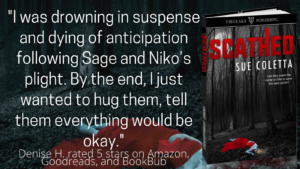
“I did not think this series could become more compelling, oh how wrong I was! Coletta delivers shock after shock and spiraling twists and turns that you will never see coming. I was glued to the pages, unable to stop reading.” 

Look Inside ? https://buff.ly/3hmev0C

Merry Misdirection

Misdirection is the intentional deflection of attention for the purpose of disguise, and it’s a vital literary device. To plant and disguise a clue so the reader doesn’t realize its importance takes time and finesse.

The most important thing to remember is to play fair. Clues must be in plain sight. We cannot reveal a clue that wasn’t visible earlier. That’s cheating.

A few years ago, I read a novel about [can’t name the profession without giving away the title]. The protagonist located the dead and solved every mystery with invisible clues. After I whipped my Kindle across the room, I took a deep breath and skimmed the story searching for the clues. Never found one. Not one! The author’s name now sits at the pinnacle of my Do Not Read list.

A key feature of good misdirection means you brought attention to the clue, and the reader still missed it.

A magician uses three types of misdirection:

  • Time: The magician has the silk scarf balled in one fist before he begins the trick.
  • Place: The magician draws your attention to his right hand while the real trick is happening in his left.
  • Intent: The magician leads you to the decision he wants, but afterward you’ll swear you had a choice.

Notice any similarities to writing?

Misdirection can be either external or internal. External would be when the author misdirects the reader. Internal is when a character misdirects another character.

Misdirection is different than misinformation. We should never outright lie to the reader. Rather, we let them lie to themselves by disguising the clue(s) as inconsequential.

How do we do that?

When you come to a part of the story where nothing major occurs, slip in a clue. Or include the detail/clue while fleshing out a character’s life.

Examples:

One character chats with another as they drive to a designated location. Is the locale a clue in and of itself?

What about the title of the book? The reader has seen the title numerous times, yet she never gave it much thought until the protagonist reveals its meaning to the plot.

Clandestine lovers meet in a hideaway. While there, one of the characters notices a symbol or sign. Later in the story, she finds another clue that relates to the sign or symbol. Only now, she has enough experience to interpret its true meaning.

A kidnapper chalks an X on a park bench to signal the drop-off spot. What if a stray dog approaches the kidnapper? If he reads the dog’s tag to find his human, the clue takes center stage, yet it’s disguised as inconsequential.

In all four examples the arrival of the clue seems insignificant at first. The reader will notice the clue because we’ve drawn attention to it, but we’ve framed it in a way that allows the character to dismiss it. Thus, the reader will, too.

False Trails

The character knows the clue is important when she finds it, but she misinterprets its meaning, leading her down a dead end.

What if we need to supply information on a certain topic, but we don’t want the reader to understand why yet? If we take the clue out of context and present it as something else—something innocuous or insignificant—we’ve misdirected the reader to reach the wrong conclusion.

An important factor of misdirection is that the disguise must make sense within the confines of the scene. It should also further the plot in some way.

“Misdirection can be used either strategically or tactically. Strategically to change the whole direction of a story, to send it off into a new and different world, and have the reader realize that it’s been headed that way all along. Tactically to conceal, obscure, obfuscate, and camouflage one important fact, to save it for later revelation.”

— The Writer magazine

Character Misdirection

Character misdirection is when the protagonist (and reader) believes a secondary character fulfills one role when, in fact, he fulfills the opposite.

Two types of character misdirection.

  • False Ally
  • False Enemy

These two characters are not what they seem on the surface. They provide opportunities for dichotomy, juxtaposition, insights into the protagonist, theme, plot, and plot twists. They’re useful characters and so much fun to write.

A false ally is a character who acts like they’re on the protagonist’s side when they really have ulterior motives. The protagonist trusts the false ally. The reader will, too. Until the moment when the character unmasks, revealing their false façade and true intention.

A false enemy is a character the protagonist does not trust. Past experiences with this character warn the protagonist to be wary. But this time, the false enemy wants to help the protagonist.

When Hannibal Lecter tries to help Clarice, she’s leery about trusting a serial killing cannibal. The reader is too.

What type of character is Hannibal Lecter, a false ally or false enemy?

An argument could be made for both. On one hand, he acts like a false enemy, but he does have his own agenda. Thomas Harris blurred the lines between the two. What emerged is a multifaceted character that we’ve analyzed for years.

When crafting a false ally or false enemy, it’s fine to fit the character into one of these roles. Or, like Harris, add shades of gray.

Mastering the art of misdirection is an important skill. It’s especially important for mysteries and thrillers. I hope this post churns up new ideas for you.

Do you have a false ally or false enemy in your WIP? What are some ways you’ve employed misdirection?

This is my final post of 2021. Wishing you all a joyous holiday season. See ya in the New Year!

Female killers are often portrayed as caricatures: Black Widows, Angels of Death, or Femme Fatales. But the real stories of these women are much more complex. In Pretty Evil New England, true crime author Sue Coletta tells the story of these five women, from broken childhoods to first brushes with death, and she examines the overwhelming urges that propelled these women to take the lives of more than one-hundred innocent victims. If you enjoy narrative nonfiction/true crime, Pretty Evil New England is on sale for $1.99. Limited time. On Wednesday, Dec. 15, the price returns to full retail: $13.99.

Reindeer Fun

The holiday season is a hectic time, with planning the perfect family celebration, shopping for gifts, decorating the house, inside and out, and mailing cards.

Many have stopped the tradition of sending holiday cards. For me, there’s something so special about peeking into the mailbox to find a card. It means someone took the time to wish you happy holidays, trekked down to the Post Office, or raised the tiny red flag on their mailbox to signal outgoing mail. It’s a beautiful tradition that I fear new generations will let slip away (along with cursive handwriting). I love the holiday season, the frigid temps thawed with magic, possibilities.

With the frenzy of Black Friday and Cyber Monday, I thought I’d share 10 fun facts about reindeer, originally posted on my blog in 2018.

1. A Reindeer By Any Other Name is Still a Reindeer

In some regions of the world, Reindeer are called caribou. In North America reindeer refers to Eurasian populations and caribou refers to wild populations

2. Reindeer Belong to the Cervidae Family

Reindeer — aka Rangifer Tarandus — have 14 subspecies, including deer, elk, moose, and wapiti. All Cervidae have antlers, hooves, and long legs.

3. Girls Can Do Everything Boys Can Do

Reindeer are the only species of deer in which both males and females grow antlers, and they grow a new set every year. Male antlers can grow up to 51 inches long and weigh up to 33 pounds. A female rack can grow up to 20 inches long.

According to the San Diego Zoo …

Antlers are the reindeer’s most memorable characteristic. In comparison to body size, reindeer have the largest and heaviest antlers of all living deer species. All antlers have a main beam and several branches or tines that grow from the frontal bones of the skull. Sometimes little branchlets or snags are also present. The tip of each antler is called a point. Unlike horns, antlers fall off and grow back larger every year.

As new antlers grow, the reindeer is said to be in velvet, because skin, blood vessels, and soft fur cover the developing antlers. When the velvet dries up, the reindeer rubs it off against rocks or trees, revealing the hardened, bony core.


4. Santa’s Reindeer Must be Female

Since males grow antlers in February and females in May, they both finish growing antlers at the same time. But male and female reindeer shed antlers at different times of the year. Males drop antlers in November, leaving them antler-less till the spring. Female reindeer keep antlers through the winter months. They’re shed when calves are born in May.

Thus, since Santa’s reindeer all have antlers, he must have an all-female team. ?

5. Males are From Mars, Females are From Venus

Male and female reindeer use antlers in different ways. Males wield them as weapons against potential predators. They also showcase impressive racks to woo females. Although females also war with these handy weapons, they mainly use antlers to clear snow while foraging for food.

6. Reindeer Come in a Variety of Colors

Depending on the subspecies, region, sex, and even the season, reindeer fur ranges from dark brown in woodland subspecies to nearly white in Greenland. A reindeer’s coat is dark in the summer, light in winter.

Reindeer have two coats:

  • an undercoat of fine, soft wool right next to their skin
  • a top layer of long, hollow guard hairs

The air trapped inside the guard hairs hold in body heat to keep the animal warm against wind and cold. The hollow hair help the reindeer float, which aid them in swimming. Did you know reindeer could swim?

7. Adorable Furry Hooves

A reindeer’s furry hooves give the animal an advantage when walking on frozen ground, ice, mud, or snow. Spongy footpads help them strut through marshy fields. In the winter, the hooves harden to dig into ice or snow while anchoring the reindeer from slipping.

When a reindeer swims, their broad, flat, two-toed hooves allow the animal to push water aside. They even have a dewclaw which acts as an extra hoof to assist in climbing rugged terrain.

8. The Nose Knows

A reindeer’s specialized nose helps to warm incoming cold air before it hits their lungs. Like dogs, their super sniffer can find food hidden under snow, locate danger, and recognize direction. Reindeer are the only subspecies of deer to possess a furry nose.

9. Herd Life

Reindeer hang in herds. Not only are they safer from predators but they’re social animals, chatting among themselves with snorts, grunts, and hoarse calls, especially during mating season. Calves bleat to call their mother.

Reindeer travel, feed, and rest in a herd of 10 to 100s. In the spring, reindeer may even form super herds of 50,000 to 500,000. These super herds follow food sources, traveling up to 1,000 miles during harsh winters.

10. Catch Me If You Can

During migration, reindeer cover 12–34 miles per day and can run at speeds of up to 50 mph. Even a day-old calf can outrun an Olympic sprinter!

Hope you enjoyed these reindeer facts. Which one is your favorite?

Reader Friday: Writer Friends

Writer friends are the absolute best. They lend advice, encourage when things seem bleak, and help celebrate successes.

Give a shout-out to one special writer friend in your life.

How’d you meet?

Why did you choose this writer?

Cue Words in Dialogue

A cue word, as I call it, sends a subtle cue to the reader for who’s speaking. Using a cue word(s) in dialogue helps to establish a character and adds to their characterization. In my Mayhem Series I have a foil character who says “Woot! Awesomesauce.” These words no one else in the series would ever say. They are uniquely hers. She also says “ship” rather than swear. In my Grafton County Series, an important secondary character uses “Minga” which is Italian slang used in place of WTF? And like my Mayhem Series character, no one else in the series would say her cue word. It is uniquely hers.

Think about the people in your life. Have you noticed subtleties in their speech? We all have favorite words and phrases. Our characters should, too.

In The Darkness by Mike Omer has the perfect example of cue words in action. They jump right out. Never does Omer describe the following eyewitness in detail. Instead, he lets the dialogue form a clear picture in the reader’s mind.

“Well, like I said, me and Jeff—he don’ live here no more because he moved out with his mother because his parents got divorced, so he and his mom moved in with his grandparents down south—we were walking around a while ago, I think it was a year and a half ago, because Jeff moved away last summer and it was just before then…I remember he was talking about how his parents were getting a divorce because they were fighting all the time, and we saw this guy.”

“What guy?” Foster asked.

“A guy where you built that tent over there. He dug a pit, he had a shovel and a bunch of other tools, and he wore some kind of maintenance suit, but we knew he wasn’t maintaining shit, because there are no pipes or wires or anything there, right? Jeff’s dad used to be a plumber working for the city before he got fired, because he drank all the time, so he knew there was nothing there—also this guy didn’t look like a plumber.”

“What did he look like?”

“I don’t know, man. He was white for sure, but we were too far away, and we didn’t want to get any closer because we didn’t want him to see us.”

Notice how he slipped in race? Most “white” people wouldn’t mention the guy was “white” right away. It’s another subtle cue word that adds brushstrokes to the mental image we’re forming of Paul, the eyewitness.

“Why not?”

The author breaks up the dialogue by bringing the reader’s attention to the conversation through Tatum, the POV character, who’s not involved in the questioning.

The rhythm of the conversation was hypnotic, Foster asking pointed questions fast and short and the boy answering in long, serpentine sentences, their structure mazelike. Tatum could almost imagine this being a stage act accompanied by the strumming of a single guitar.

Did he have to bring attention to the dialogue? No, but by letting the POV character mention the contrast between detective and witness, it further cements the mental image and adds characterization for Tatum so we don’t forget he’s there. It wouldn’t be as effective if he allowed Tatum to dwell on it too long. One short paragraph, then segue back to the conversation. Notice where he places the cue word when we return.

“Because Jeff said he was someone from the Mafia and that he dug a pit to stash drugs in or money or a body, and we didn’t want him to see us—we’re not idiots—we stayed away, but we were careful to see exactly what he was doing, and this guy dug there all day, like nonstop.”

Boom — first word is because. Is there any question who’s speaking?

Notice also how Omer chose to exclude most body cues and tags. This demonstrates how to let dialogue do the heavy lifting.

“Did you tell your parents? Tell anyone?”

Now he adds a body cue, but not to indicate who’s speaking. He adds it to show indecisiveness.

Paul seemed to hesitate for a moment and stared downward at his shoes, biting his lips.

“You didn’t want to,” Tatum said. “Because you were hoping he’d stash money there.”

See how Tatum used the cue word? Empathetic people are like parrots. We can’t help but use the cue word when responding to someone like Paul. This subconscious act adds another layer to the characterization.

“It ain’t against the law to say nothin’,” Paul muttered.

“So this guy digs a hole.” Frustration crept into Foster’s voice (now that Tatum’s involved in the conversation it’s important to ground the reader). “Then what?”

“Then he left. So we waited until was dark, and we went there, because we figured maybe he stashed some money there, so we could take some of it—not too much, y’know. Jeff really wanted cash because his dad was unemployed, so he figured he could maybe help out a bit, and I wanted cash because…” He paused. His own motives probably hadn’t been as pure as Jeff’s.

“Because cash is a good thing to have,” Tatum said. “Go on.”

Even without the dialogue tag, the reader knows Tatum responded because he used the same cue word earlier. See how powerful they can be? Foster would never get sucked in like Tatum. It’s not in her character.

Do any of your characters use cue words?

Reader Friday: Writing Conferences

Do you have a favorite writing conference? Please explain.

What is your #1 tip for attending a writing conference?

If you’ve never been to a writing conference, what’s stopping you?

If you could attend any conference, which one is at the top of your list?

*Please note: I’m headed to the New England Crime Bake, so I won’t be around today. Don’t let that stop you from having fun. 🙂

First Page Critique: City of Caves

My apologies to the brave writer who submitted this first page for critique. I meant to do it sooner, but I’ve had an insanely busy October.

The writer says the genre is paranormal/horror. My comments will follow.


City of Caves

The strange sounds emanating down the dank, dark tunnel, sent shivers down Albie Halstead’s spine. Cuffed to the wall of his cell by clanking, metal manacles he could feel his body wanting to shrivel and disappear as the mix of chanting and screams echoed towards him and he finally felt his bladder loose as warm pee rushed down his leg, soaking the rags of his trousers and socks, before dripping onto the stone floor to cause a stink, as he whimpered quietly. Hoping they’d forget he was there.

They’d just taken Esme. The screams had been hers and he’d squeezed his eyes shut, to somehow stop himself from imagining what they must be doing. To somehow stop hearing her cries of pain. To somehow pretend that he wasn’t there at all.

When the two men had dragged him in here to this dark place, she’d already been a prisoner and he’d taken in her pale face, torn dress and the chains attached to both of her wrists and ankles and neck and he’d tried to escape again. Struggling and wriggling, kicking and yelling, but the two brutes that had him, had been too strong and one of them had yelled at him. ‘Keep still, yer little bugger! Or you’ll regret it!’

He had not kept still. Continuing to fight, trying in vain to free a hand or a foot or something, so that he could fight back and escape.

It landed him a fisticuff to the face and then, his gut, knocking the wind from his lungs and putting stars in his eyes, as he flopped over and had his own body attached to the stone wall of the cell. He was vaguely aware of them slamming the heavy wooden door and locking it with a key that clanged an echo of its own down the tunnel. Then the laughing of the two men as they walked away.

It was some time before he looked up and could focus his gaze on the young girl on the opposite wall.

She looked to be about his age, if he had to guess.

‘How did they get you?’ She whispered, as if afraid to speak too loudly and attract attention to herself.

‘Coming home. From down the pit.’

‘What’s your name?’

‘Albie. What’s yours?’

‘Esme.’

There seemed nothing else to say for a while.

I like the imagery in this first page, but we need to discuss a few important areas of craft. The first of which is continuity. In paragraph two, Esme had just been taken out of the cell. Then we’re told what happened to Albie in the past. We swing back to the current situation and Esme is sitting across from him. Only now, Albie has no idea who she is. See the problem?

Let’s take a closer look. My comments are in bold.

City of Caves (The title intrigues me.)

The strange sounds emanating down the dank, dark tunnel, sent shivers down Albie Halstead’s spine.

Not a bad first line, but I think you can make it even better. Rather than “shivers down the spine” (overused body cue), describe what he’s hearing. “Strange” is too generic for a first line.

Example:

Disembodied cries snaked through a catacomb of underground tunnels. Hooded guards dragged Albie Halstead through a dark, dank maze, his bare feet dragging behind him.  

Cuffed to the wall of his cell by clanking, metal manacles (I realize you’re trying to avoid repetition by using manacles rather than cuffs, but it doesn’t work. The imagery should be clear and concise.) he could feel his body wanting to shrivel and disappear as the mix of chanting and screams echoed towards him and he finally felt his bladder loosen as warm pee rushed down his leg, soaking the rags of his trousers and socks, before dripping onto the stone floor to cause a stink, as he whimpered quietly.

Do you realize the above sentence is 67 words long? It’s exhausting to read. Break up the text to make it easier to digest. Good writing has a mixture of short and long sentences. Short sentences pack a punch and are used for emphasis. Longer sentences add rhythm. Too much of either becomes redundant and weakens the writing. By varying sentences, we add interest, drama, and hold a reader’s attention. 

Example (continued from earlier example):

Helpless to fight back, his captors shackled him to the cell wall. Metal clanged against stone. When he straightened, a young girl sat across from him, streaks of tears bleeding black mascara over a crooked nose—bloody and swollen. Screams pierced the chanting outside the door. Albie squeezed his eyes closed. How did this happen? He attended church every Sunday, escorted the elderly across busy roadways, and volunteered at homeless shelters. He’d more than repaid his debt to society. Yet here he sat. Isolated. Shivering. Alone.

Except for her. [Segway into dialogue]

The details I added probably don’t match your storyline. Doesn’t matter. What I’m trying to demonstrate is how to include hints of who Albie is and why we should care if he’s being held prisoner. It’s not enough to show a harrowing situation. Readers must connect with the main character, or at least empathize with his situation.

They’d just taken Esme. The screams had been hers and he’d squeezed his eyes shut, to somehow stop himself from imagining what they must be doing. To somehow stop hearing her cries of pain. To somehow pretend that he wasn’t there at all. I like the rhythm here, but the action occurs prior to the scene. When we tell the reader what happened in the past, even if it’s only minutes earlier, we remove conflict and tension.

When the two men had dragged him in here to this dark place, she’d already been a prisoner and he’d taken in her pale face, torn dress, and the chains attached to both of her wrists and ankles and neck, and he’d tried to escape again. (46 words) Struggling and wriggling, kicking and yelling, but the two brutes that had him, had been too strong and one of them had yelled at him. ‘Keep still, yer little bugger! Or you’ll regret it!’

He had not kept still. Continuing to fight, trying in vain to free a hand or a foot or something, so that he could fight back and escape.

It landed him a fisticuff to the face and then, his gut, knocking the wind from his lungs and putting stars in his eyes, as he flopped over and had his own body attached to the stone wall of the cell. (41 words) He was vaguely aware of them slamming the heavy wooden door and locking it with a key that clanged an echo of its own down the tunnel. Then the laughing of the two men as they walked away.

The above three paragraphs have the same problem as the one preceding it. The action occurs prior to the scene, robbing the reader of experiencing the abduction and feeling Albie’s terror.

It was some time before he looked up and could focus his gaze on the young girl on the opposite wall. This implies Albie doesn’t know the young girl, but earlier you wrote “They’d just taken Esme.” If he knew her name then, why is this girl a stranger now?

She looked to be about his age, if he had to guess. If they’re about the same age, why would Albie refer to her as “the young girl”?

‘How did they get you?’ She whispered, as if afraid to speak too loudly and attract attention to herself. Good job here. And believable.

Side note: If you plan to publish traditionally or self-publish for an American market, use double quotes for dialogue, not single.

‘Coming home. From down the pit.’

Is the pit a well-known place? If he’s talking to a stranger, the pit might mean nothing to Esme. If it is well-known by the locals, include a line or two to ground the reader.

Example:  

Everyone in [town/city] worked at the pit at one point or another. Rumors circulated about the landfill being the most haunted place in [state], but Albie never believed the hype. Until now. [Include a hint of the paranormal element here]

‘What’s your name?’ (see below)

‘Albie. What’s yours?’

‘Esme.’

These three lines of dialogue come across as too on-the-nose. Granted, it’s an easy way to sneak in names, but it’s unrealistic in this situation. They’ve been kidnapped, beaten, held prisoner. More realistic questions might be: Why us? Will they kill us? Rape us? Sell us to the highest bidder? Who are these guys? What do they want?

Their top priority would be to figure out why they were taken and how to escape. The last thing on their minds should be getting to know one another. They’re shackled to the wall! Weird chanting, disembodied screams! At any moment they could die! Sheer terror should bleed through every word.

Brave Writer, I hope I wasn’t too hard on you. I worked on this for hours because I believe in you. If I didn’t think you had the writing chops to turn this into a compelling story, I wouldn’t have taken the time. Curse me, throw things, then roll up your sleeves and dig in. You’ve got this. 🙂 

TKZ family, what advice would you give this brave writer?