Fluff, Flab, and Filler

Canada wildfires are affecting the air quality in my area. The National Weather Service wrote, “acceptable; however, the air quality may pose a moderate health concern for a very small number of individuals.”

Strange statement, considering three out of four of my closest friends feel like they have a sinus infection or head cold. I wouldn’t classify 75% as a “very small number of individuals.” Also, who writes for the National Weather Service? Can’t be a professional writer, or “very small” wouldn’t be the term they used.

Substitutes for “very small”

  • Tiny
  • Minuscule
  • Minute
  • Few
  • Diminutive
  • Limited
  • Trifling
  • Teensy-weensy
  • Slight

The subject of fluff arose last week while I was reading a brand new writer’s partial manuscript, including a prologue that was all backstory—important for her to know but irrelevant to the reader.

Rather than teach her how to tighten her writing, I focused on scene structure and techniques to force her characters to do something, anything. After several pages of notes, the fluff conversation could wait. The last thing I wanted was to obliterate a young writer’s dreams. Instead, I gave her a gentle nudge in the right direction.

For those farther along in their journey or career, recognizing fluff is an important subject. Those pesky buggers that sneak into first drafts and weaken our writing are better known as filler words and phrases aka fluff or flab.

If a filler word serves a purpose, such as to enhance characterization in dialogue, keep it. The objective is to tighten the writing by eliminating unnecessary words or phrases that might distract the reader.

Filler/Fluff/Flab Words 

Just

Just should almost always be deleted.

Original: I just couldn’t bear to say goodbye.

Rewrite: I couldn’t bear to say goodbye.

That

That litters many first drafts, but it can often be deleted without any harm to the original sentence.

Original: I believe that all writers should kill their darlings.

Rewrite: All writers should kill their darlings.

The original sentence has another problem. Did you catch it? Believe in this context is a telling word. Any time we tell the reader things like “I thought” or “He knew” or “She felt” or “I believe,” we slip out of deep POV. Thus, the little darling must die, as I did in the rewrite.

So

Original: So, this huge guy glared at me in the coffee line.

Rewrite: This musclebound, no-necked guy glared at me in the coffee line.

Confession: I use “so” all the time IRL. It’s also one of the (many) writing tics I search for in my work. The only exception to eliminating this, or any other, filler word is if it’s used with purpose, like as a character cue word.

Really

Original: She broke up with him. He still really loves her.

Sometimes removing filler means combining or rewording sentences.

Rewrite: When she severed their relationship, his heart weakened.

Very

We’ve established where the National Weather Service went wrong with very, but I’ll include it anyway.

Original: He made me very happy.

Rewrite: When he neared, my skin tingled.

Of

To determine if “of” is necessary read the sentence with and without it. Makes sense without it? Delete. Doesn’t? Keep it.

Original: She bolted out of the door.

Rewrite: She bolted out the door.

Up (following an action)

Original: He stood up tall.

Rewrite: He stood tall.

Down (following an action)

Original: He sat down on the sofa.

Rewrite: He sat on the sofa.

Want(ed)

Want/wanted are telling words. Rewrite to preserve deep POV.

Original: I really wanted the chocolate cake.

Substitute with a strong verb, such as: I drooled over the chocolate cake. One bite. What could it hurt?

Came/Went

Both are filler words because they’re not specific enough.

Original: I went to the store to buy my favorite ice cream.

Rewrite: I raced to Marco’s General Store to feed my craving for coffee ice cream.

Had

Too many had words give the impression the action took place prior to the main storyline. If it is used in a flashback, one had in the opening sentence signals the beginning, one at the end closes the scene. But if it’s clear the action occurred in the past, had can often be omitted.

Original: I had gazed at the painting for hours, waiting for the eyes to move.

Rewrite: For hours, I gazed at the painting. The eyes never moved.

Well (to start a sentence)

Original: Well, the homecoming queen attended the dance without the homecoming king.

Rewrite: The homecoming queen attended the dance, stag.

Literally/Basically

Original: I basically had to drag her out of the bar by her hair.

Rewrite: I dragged her out of the bar by her hair.

Original: I literally laundered money today. Still plucking bills from the lint filter.

Rewrite: I laundered money today. Still plucking bills from the lint filter.

Actually

Original: Actually, I did mind.

Rewrite: I minded.

Highly

Original: She was highly annoyed by his presence.

Rewrite: His presence infuriated her.

Totally

Original: I totally didn’t understand a word.

Rewrite: Huh? *kidding* I didn’t understand a word. Was that English?

And any other -ly adverb. Can you substitute with a strong verb or noun instead?

Anyway (to start a sentence)

Original: Anyway, I hope you laughed, loved, and lazed on your summer vacation.

Rewrite: I hope you laughed, loved, and lazed on your summer vacation.

Fluff Phrases

Most of these phrases should be omitted. If used for a purpose, like to enhance characterization with a catch phrase, feel free to keep it. Otherwise, delete. It’s even more important to eliminate fluff if you’re still developing your voice.

A bit

Original: The movie was a bit intense. Lots of blood.

Rewrite: Intense movie. Blood galore.

There is no doubt that

Original: There is no doubt that football season begins in the fall.

Rewrite: Football season begins in the fall.

The reason is that

Original: The reason is that I said you can’t go.

Rewrite: Because I said so, that’s why (shout-out to moms everywhere!).

The question as to whether

Original: The question as to whether the moon will rise again is irrelevant.

Rewrite: Whether the moon will rise again is irrelevant.

Whether or not

Original: Whether or not you agree is not my problem.

Or worse: Whether you agree or not is not my problem.

Rewrite: Whether you agree is not my problem.

This is a topic that

Original: This is a topic that is close to my heart.

Rewrite: This topic is close to my heart.

In spite of the fact 

Original: In spite of the fact that he said he loved you, he’s married.

Rewrite: Although he professed his love, he’s married.

Or: Despite that he claimed to love you, he’s married.

The fact that

Original: The fact that he has not succeeded means he cannot do the job.

Rewrite: His failure proves he cannot do the job.

In order to

Original: In order to pay bills online, you need internet access.

Rewrite: To pay bills online, you need internet access.

At the end of the day

Original: At the end of the day, we’re all human.

Rewrite: We’re human. Fallible.

Not gonna lie

This phrase irritates me, is overused by the younger crowd, and only raises questions.

  • Why would you lie? We’re having a friendly conversation.
  • Never considered you’d lie, but now I’m suspicious.

Original: Not gonna lie, that chocolate cake almost killed me.

Rewrite: That chocolate cake almost killed me.

I’ve joined the crowd affected by air pollutants from the wildfires. Please bear with me today. Not feeling my best. But don’t let that stop you from adding filler words & phrases I missed.

Even More Villainous Words of Wisdom

Villains are the catalysts for mysteries and thrillers. Without them, there would be no murder to solve, no threat to stop, no dastardly deed to foil. They test the hero to the utmost, and must be confronted in one form or another by story’s end. Furthermore, not only are villains essential to mysteries and thrillers, they are also vital in many other genres ranging from fantasy and science fiction, to action, adventure, westerns and others.

Today Words of Wisdom returns to this evergreen topic once more with three insightful excerpts from the KZB archives. Elaine Viets offers advice on creating likeable villains. Becca Puglisi discusses villain backstories and their connection with the hero. Finally, Debbie Burke, who just published an insightful book on villains, shares wisdom on the villain’s story and behaviors.

The original three posts are all well-worth reading in full. As always, each excerpt is date-linked to the full version.

Make your villains smart. Or at least crafty.

Tiffany quickly becomes the fourth wife of rich old Cole Osborne and they live in luxury in Fort Lauderdale.
“I never went to college, but I wasn’t stupid,” Tiffany said. “I knew now that Cole had tied the knot with me, my struggle had just begun. Cole was very, very classy, and I had to fit in with his rich friends.”

Make your villains self-aware.

The Joni Mitchell song was Tiffany’s anthem, and she recognized herself in the lyrics of “Dog Eat Dog.” Especially the part about slaves. Some were well-treated . . .
And some like poor beasts
Are burdened down to breaking
Tiffany said, “This was a dog eat dog world – more so than the trailer park where I used to live. I was a well-treated slave, and I’d sold myself into slavery, but I knew that.”
Our villain has knows she’s living in comfort, but she can’t get comfortable.
“One misstep, and I’d be one of those poor beasts, working again at the local hardware store or greeting people at Walmart. I had a prenup that would give me a measly hundred thousand dollars if we divorced, but if I could hang on until Cole died, I’d get half his fortune.”

Make your villains work for their success. That way, readers can root for them.

Cindy knew she’s landed her pretty derriere in a tub of butter, but she knew her work has just started. Among other things, Cindy changed her name to a classier “Tish.”
She also “made friends with his housekeeper, Mrs. Anderson. She’d been with him for twenty years and three wives. I slipped her a little extra out of my mad money account that Cole gave me, and Mrs. A told me where to shop on Las Olas, the local Rodeo Drive, and which saleswoman to make an appointment with. She also advised me to ditch my long fake nails and get a nice, refined French manicure, then sent me to a salon where I had my long hair tamed into fashionable waves and the color became ‘not so blonde’ as the tactful stylist said.”

Make your villains aware of the stakes if they fail.

Now readers have more reasons to root for them.
“As I got into my mid-twenties, I had to work hard to keep my girlish figure,” Tiffany said. “My trainer was worse than a drill sergeant, and I endured endless runs on the beach. Awful as it was, it beat standing on my feet all day on a concrete floor, running a cranky cash register for nine dollars an hour.”

Create a conflict – and an even worse villain.

Tiffany says, “I thought I could sail smoothly into Cole’s sunset years and collect the cash when he went to his reward. But then that damn preacher showed up. The smarmy Reverend Joseph Starr, mega-millionaire pastor of Starr in the Heavens.”
As much as we may dislike money-hungry Tiffany, the bloodsucking TV preacher is even worse. He plays on Cole’s fear of death and walks off with a check for a million dollars on his first visit – and the Reverend has his sights set on more.
“Starr would work on Cole’s guilt and milk him for every dollar – my husband was one big cash cow,” the practical Tiffany said.
Now that her husband was in the hospital on life support, Tiffany has to find a way to kill her husband and put the blame on the Reverend Starr.
Does Tiffany succeed? Or does the Reverend Starr walk off with the money? You’ll have to read “Dog Eat Dog” to find out – and see if I made you root for her.
Tell us, TKZers. How do you humanize your villains?

Elaine Viets—June 10, 2021


THEY HAVE A BACKSTORY (AND YOU KNOW WHAT IT IS) 

Authors know how important it is to dig into their protagonist’s backstory and have a strong grasp of how it has impacted that character. Yet one of the biggest mistakes we make with villains is not giving them their own origin story. A character who is evil with no real reason behind their actions or motivations isn’t realistic, making them stereotypical and a bit…meh.

To avoid this trap, know your villain’s beginnings. Why are they the way they are? What trauma, genetics, or negative influencers have molded them into their current state? Why are they pursuing their goal—what basic human need is lacking that achieving the goal will satisfy? The planning and research for this kind of character is significant, but it will pay off in the form of a memorable and one-of-a-kind villain who will give your hero a run for his money and intrigue readers.

THEY SHARE A CONNECTION WITH THE PROTAGONIST 

In real life, we have many adversaries. Some of them are distant—the offensive driver on the highway or that self-serving, flip-flopping politician you foolishly voted for. Those adversaries can create problems for us, but the ones that do the most damage—the ones we find hardest to confront—are those we share a connection with. Parents, siblings, exes, neighbors we see every day, competitors we both admire and envy, people we don’t like who are similar to us in some way…conflicts with these people are complicated because of the emotions they stir up.

The same is true for our protagonists. The most meaningful clashes will be with the people they know. Use this to your advantage. Bring the villain in close and make things personal by engineering a connection between the two characters. Here are a few options for you to work with.

  • Give Them a Shared History. The more history the two have, the more emotion will be involved. Guilt, rage, grief, fear, jealousy, regret, desire—strong feelings like these will add sparks to their interactions. They’ll cloud the protagonist’s judgment and increase the chances their villain will gain an edge.
  • Make Them Reflections of Each Other. What happens when the protagonist sees him or herself in the villain? A seed of empathy forms. The hero feels a connection with the person they have to destroy, which complicates things immensely. Personality traits, flaws, vulnerabilities, wounding events, needs and desires—all of these (and more) can be used to forge a bond that will add complexity and depth to this important relationship.
  • Give Them a Shared Goal. When your hero and your villain are pursuing the same objective, it accomplishes a number of good things. First, it ensures that only one of them can be the victor, pitting them against each other. But they’re also more likely to understand one another. They’ll have different reasons and methods of chasing the dream, but the shared goal can create an emotional connection.

Becca Puglisi—September 5, 2022

The villain’s story is thus one of declining power while the hero’s story is one of rising power…In defeat, the villain’s mastery is handed over to the hero.  The villain’s deficiencies of character have been exposed; the hero’s deficiencies have been corrected.  The two journeys, one the inverse of the other, are completed.

In another article, Scott traces the stages that cause some people to become villains, both in real life and in fiction:

  • The pre-villain is an ordinary person living in an ordinary world that is safe and familiar.
  • Something happens that hurls this ordinary person into the “special world” that is dangerous and unfamiliar.
  • Often this new dangerous world is the world of abuse, with the ordinary person at the receiving end of emotional or physical abuse.
  • Typically, the abuser is a parent, but sometimes another authority figure, peers, or harsh social conditions damage this ordinary person.
  • The ordinary person suffers psychological harm that can assume the form of narcissism, psychopathy, depression, or schizoaffective disorders.
  • This mental illness distorts the ordinary person’s views of themselves and the world, often producing an extreme self-narcissism and/or collective narcissism of their community or nation.
  • The ordinary person remains unaware of their skewed perception of reality and is never able to acknowledge their damaged state nor their need for psychological and/or spiritual help.
  • As a result of their untreated trauma, the villain undergoes terrible suffering, often in private, but is unable to learn or grow from it. Their deep fears and sadness transform into anger.

Okay, that covers the villain’s backstory and motivations but…

What about mysteries where the villain is hidden until the end? How does a writer handle the origin story and motivations when the villain’s point of view is never shown?

We’ve all watched films with the tired old trope where the hero is captured and tied to a chair. Then, because the writer couldn’t think of a less clumsy device, the villain bares their soul to the hero, revealing they were driven to exterminate humanity because they’d been potty-trained at gunpoint.

To avoid that pitfall, Chris Winkle of Mythcreants.com offers these suggestions:

The most important method of showing your villain’s character arc – or any character arc – is demonstrating a change in behavior. If you keep their arc simple enough, that could be all you need. The basic unit of changing behavior would look like this:

  1.  
    1. The villain shows a clear pattern of behavior.
    2. An event occurs that would reasonably impact the villain.
    3. The villain shows a different pattern of behavior. 

Chris outlines several options for the unseen villain’s character arc:

Gain/Loss:

“The villain gains and/or loses something they care deeply about, and that drives their character change. Usually what they gain or lose is a person they love, but it can be anything as long as you can show the audience why it’s so important.”

Obsession: 

“This is a villain that changes their motives during the story because they acquire a new obsession or goal. Often that obsession is the main character, but it also might be a shiny new superpower.”

Revelation: 

“This is a great arc for villains who think they’re doing the right thing and consider all the harm they cause justified. In this arc, they have a revelation that challenges this belief, forcing them to adapt.”

Chris’s summary:

If you want a sympathetic villain and you can afford to give them their own viewpoint, that’s great. Give them a deep arc your audience will remember.

Debbie Burke—September 13, 2022

***

  1. Is it important to you for villains to be likeable? If so, how do you build that likeability?
  2. How much do you consider your villain’s backstory, and also any connection with your hero?
  3. What do you think about the advice Debbie shared about the stages of becoming a villain and showing their character arc?

The Backwards Law for Writers

I stumbled across the subject of The Backwards Law by accident—a happy accident that led me to The Subtle Art of Not Giving a F*ck. Excellent book that I devoured in two sittings.

The Backwards Law proposes the more we pursue something, the less satisfied we become. For writers, the constant pursuit of “more” causes us to feel horrible about where we are and what we’ve achieved. The harder we try, the less likely we are to succeed.

On the surface, it seems like the opposite of perseverance, doesn’t it? But it’s not. The Backwards Law goes much deeper than that.

Think of it this way:

  • Trying too hard to be creative or write something brilliant often leads to writer’s block, self-doubt, and a feeling of being disconnected from the work.
  • Only focusing on the end result—recognition, success, publication—causes unnecessary anxiety and pressure.
  • The fear of making mistakes or writing poorly will paralyze a writer and often will lead to abandoning the WIP.

“Wanting a positive experience is a negative experience; accepting a negative experience is a positive experience.” Mark Manson – The Subtle Art of Not Giving a F*ck.

Alan Watts, the philosopher who coined the phrase, describes The Backwards Law as being in a lake. If you relax and put your head back, you’ll float. But the more you struggle and flail to try to stay afloat, the more you will sink.

Often our search for “more” has the opposite effect. It shines a spotlight on what we lack.

Life Examples

  • The more we cling to a loved one, the more they will feel suffocated and in need of space.
  • The more we obsess about accumulating money, the more poor and unworthy we will feel.
  • The more we pursue trying to feel happier all the time, the more we will reinforce this idea that we are fundamentally lacking and irreparable.

Do you even know what you want?

Sure, selling millions of copies of your book sounds great, but is that why you wrote it? Or maybe, you can’t define what you’re chasing. You just want more.

“Two reasons that you don’t really know what you want. Number one: you have it. Number two: you don’t know yourself, because you never can. The Godhead is never an object of its own knowledge, just as a knife doesn’t cut itself, fire doesn’t burn itself, light doesn’t illuminate itself.” ~ Alan Watts

In The Subtle Art of Not Giving a F*ck, Mark Manson tells the story of a talented young guitarist who was kicked out of his band in 1983, after they had just been signed by a record label. No warning. No reason given. No discussion. They woke him up and handed him a bus ticket.

After much self-pity on the ride home to LA, the guitarist vowed to start a new group that would be so successful, his old band would seethe with jealously. And so, with only that thought in mind, he worked tirelessly to find the best musicians. He wrote dozens of songs. Practiced day and night. Revenge became his muse.

Within two years, a record label signed his new band. One year later, their first record went gold. The guitarist’s name? Dave Mustaine, lead guitarist in the heavy metal band Megadeath, which went on to sell over 25 million albums and tour the world many times. Mustaine is considered one of the most influential musicians in the history of heavy metal music.

Sounds like the story has a happy ending, right?

Not quite.

The band who kicked him out was Metallica, which has sold over 180 million albums worldwide and is considered by many to be one of the greatest rock bands of all time.

Because of Metallica’s fame, Mustaine considered himself a failure. Despite all he’d accomplished, in his mind, he would always be the guy who got kicked out of Metallica and nothing more. Whether he realized it or not, Mustaine used Metallica’s success and popularity as his life-defining measuring stick. Even after all of Megadeath’s success, he could never be happy, because he based his self-worth and music career on something he had no control over.

This story perfectly illustrates The Backwards Law in action.

Accept imperfection and you’ll feel perfect. Accept loneliness and you’ll feel content alone. Accepting a negative experience is a positive experience. But fighting a negative experience means you’ll suffer twice.

  • When we stop trying to be happy, we’ll be happy because there’s nothing we need beyond what is.
  • When we stop trying to be rich or massively successful, we’ll live in abundance because we’re content with what we have and anything on top of that is a bonus.

Thus, the only way to have what we want is not to want it. And that’s what The Backwards Law teaches us.

Being aware of the workings of The Backwards Law doesn’t mean that we should never set goals, never have ambitions, or never chase our dreams. Rather, The Backwards Law teaches us not to be fooled by the idea that the pursuit of happiness (whatever that looks like to you) leads to happiness. When in fact, the opposite is true. And with that knowledge, we’re able to enter the blissful state of enjoying the journey.

“The mystery of life is not a problem to be solved but a reality to be experienced.” ~ Alan Watts

How do we get what we want without trying?

Depends on what we want. If we strive to write the best damn book we can, the following tips should help.

Mindful Writing: Practice mindfulness while writing. It’ll help you become more aware of your thoughts and feelings without judgment, allowing you to be more present in the moment.

Step Away: It’s okay to step away from the WIP to clear your head. Go for a walk. Take a shower. Read a book. Exercise. I do this all the time when I’m working out a plot issue. Nine times out of ten, the answer reveals itself as soon as I stop thinking about it.

Accept Imperfection: Give yourself permission to make mistakes in early drafts. It’ll allow you to experiment and explore different ideas without fear.

Stay Present: Enjoy the journey of bringing your idea to life. Have fun with your characters. Revel in that perfect sentence or paragraph you wrote yesterday, then continue on.

The Backwards Law for writers is about shifting from a place of striving and pressure to a place of flow and acceptance. 

By letting go of the need to control the outcome and embrace the process, we’ll unlock creativity and produce more authentic and fulfilling work.

Have you heard of The Backwards Law? It’s as true for writing as it is for life.

Series Words of Wisdom

A great mystery or thriller series can have lasting popularity. But how do you create a one that will go the distance with readers?

Today’s Words of Wisdom has you covered. James Scott Bell provides five qualities in the best series characters. John Gilstrap discusses planting fodder for a future series in that first book even as each book can stand on its own. Finally, Sue Coletta assembles advice from several other Kill Zone authors on building series.

All three posts are well worth reading in full, and as always are date-linked at the end of their respect excerpts.

I see five qualities in the best series characters. If you can pack these in from the start, your task is half done. Here they are:

  1. A point of uniqueness, a quirk or style that sets them apart from everybody else

What is unique about Sherlock Holmes? He’s moody and excitable. Among the very staid English, that was different.

Jack Reacher? Come on. The guy doesn’t own a phone or clothes. He travels around with only a toothbrush. Funny how every place he goes he runs into massive trouble and very bad people.

  1. A skill at which they are really, really good

Katniss Everdeen is killer with the bow and arrow.

Harry Potter is one of the great wizards (though he has a lot to learn).

  1. A bit of the rebel

The series hero should rub up against authority, even if it’s in a quiet way, like Miss Marple muttering “Oh, dear” at the local constabulary. Hercule Poirot is a needle in the side of Inspector Japp.

  1. A vulnerable spot or character flaw

Robert E. Howard’s Conan the Cimmerian has a vicious temper that sometimes gets the better of him.

Sherlock Holmes has a drug habit.

Stephanie Plum keeps bouncing between two lovers, who complicate her life.

  1. A likable quality

Raymond Chandler’s Philip Marlowe has some of the greatest quips in the history of crime fiction. We like them because Marlowe is also vulnerable—to getting beat up, drugged, or otherwise manhandled by forces larger than himself (like Moose Malloy).

Wit is one of the great likability factors.

Another is caring for others besides oneself. Stephanie Plum has a crazy family to care for, not to mention her sometime partner Lula.

James Scott Bell—August 13, 2017

A series is more episodic.

My Jonathan Grave thriller series is not a continuing story, but is rather a collection of stand-alone stories that involve recurring main characters.  Jonathan Grave’s character arc over the course of eleven books now is very long and slow, while the arcs of the characters he interacts with are completely developed within each book.  There are Easter eggs for readers who have read all the books in order, but I am careful to make each episode as fulfilling for a reader who picks up  Book Ten as their first exposure to the series as it is for a reader who’s been with me from the beginning.

Writers like the always-fabulous Donna Andrews write series that are driven as much by place as by characters.  The people in her fictional town of Caerphilly, Virginia, are a hoot, even though an extraordinary number of people are murdered there.

Jeffery Deaver’s Lincoln Rhyme solves a new crime by the end of every book.  While Rhyme’s medical progress as a quadriplegic is continually evolving from book to book, as is his relationship with Amelia, a new reader is well-grounded in any story, without benefit of having read the previous ones.

A stand-alone, well, stands alone.

When I finished Nathan’s Run, the story was over.  There was no place I could feasibly have taken Nathan or the other characters to tell a new story.  That was the case with each of the following three novels and, of course, with my nonfiction book.  I think the primary characteristic of a stand-alone is that “The End” means the end.  The character and story arcs have all been driven to ground.

A series takes planning.

When I was writing No Mercy, the first book in the Grave series, I knew in my heart that I had finally landed on a character who could support a series.  What I didn’t know was whether or not a publisher would buy it, and if they did, whether they’d support the idea of developing the one story into many.  Still, I made a conscious effort to plant as much fodder as I could for potential use in future stories.  For example:

  1. Jonathan is a former Delta Force operator, leaving the potential for stories dealing with his days in the Unit.
  2. His hostage rescue activities are a covert part of a legitimate private investigation firm that does work for some of the largest corporate names in the world.  This sets up potential stories set in the world of more common private investigators.
  3. Jonathan is the primary benefactor for Resurrection House, a school for the children of incarcerated parents.  When every student has parents with lots of enemies, there’s lots of potential for future stories.
  4. His home, Fisherman’s Cove, Virginia, is the town where he grew up.  This puts him in the midst of people who already know the darkest secrets of his childhood and accept him for who he is.  Or they don’t.  This sets up the potential for small  town conflicts.

John Gilstrap—November 21, 2018

From Jordan Dane:

  1. Create a large enough world to sustain a series if it gains traction by planting plot seeds and/or character spinoffs in each individual novel. With the right planted seeds, future stories can be mined for plots during the series story arcs. An example of this is Robert Crais’s Elvis Cole PI series where his main character Cole is plagued by his past and his estranged father until THE FORGOTTEN MAN, a stellar novel in the middle of the series that finally provided answers to the mystery.

Crais often plants seeds that he later cultivates in later books. It takes organization & discipline to create these mysteries and track the seeds to save for later.

  1. Endings of each novel in a continuing series are important to readers if your book release schedule has long lags in time. A major cliffhanger can be frustrating for readers to discover at the end of a book before they realize the next novel won’t be released for 6 months to a year.

If your planned series isn’t limited to a certain number of stories (ie Hunger Games – 3 novels) where the overall story arc will be defined, an author might consider writing series novels that read as standalones with a tantalizing foreshadowing of the next story to hook readers. Creating an intriguing mystery to come will pique reader’s interest, rather than frustrate them with a huge cliffhanger they may have to wait a year to read.

See these tips in action in Jordan’s Mercer’s War Series.

From James Scott Bell:

  • Give your series character one moral quest that he or she is passionate about, to the point where it feels like life and death. For example, my Mike Romeo series is about the quest for TRUTH. This is the driving force for all he does. It gives both character and plot their meaning. A quest like this will carry from book to book.
  • Give your series character at least one special skill and one special quirk. Sherlock Holmes is a skilled stick fighter (which comes in handy). But he also shoots up cocaine to keep his mind active. Mike Romeo has cage fighting skills. He also likes to quote literature and philosophy before taking out a thug.

From Joe Hartlaub:

Sue, I love Jordan’s suggestions, particularly #2, about the works being standalones with a foreshadowing of what is to come. Who among us read Stephen King’s Dark Tower trilogy and got to the end of The Dark Tower III; The Waste Land to find the cast aboard a sentient, suicidal choo-choo heading toward oblivion? That was all well and good until we all had to wait six friggin’ years to find out what happened next in Wizards and Glass. 

  • I have one suggestion, which I call the Pop Tart model. Pop Tarts started with a basic formula; they were rectangular, were small enough to fit into a toaster, large enough to pull out, used the same pastry as a base, and started with a set of fillings and slowly added more and different ones over the years. So too, the series.
  • Design a character with a skill set consisting of two or three reliable elements, decide whether you are going to make them a world-beater (Jason Bourne), a close-to-homer (Dave Robicheaux), or something in between (Jack Reacher), and bring in a couple of supporting characters who can serve as necessary foils (Hawk and Susan from the Spenser novels) who can always be repaired or replaced as necessary. Your readers will know what to expect from book to book but will be surprised by how you utilize familiar elements.

From Laura Benedict:

The best series do a good job of relationship-building, along with world-building.

  • Give your main character …
  1. someone to love and fight for,
  2. someone to regret knowing,
  3. someone to respect,
  4. someone to fear.
  • Be careful about harming your secondary characters because readers get attached. If you’re going to let a beloved character go—even a villain—make the loss mean something.

See these tips in action in The Stranger Inside.

Sue Coletta—January 14, 2019

***

  1. What do you think of Jim’s five character qualities for series characters, as a writer or a reader? Any additions?
  2. When it comes to series, again as either a writer or a reader, what do you think of the easter eggs and ongoing “fodder” John mentioned?
  3. What do you think of the advice Sue shared? Anything especially resonate with you?

Joe Hartlaub Words of Wisdom

TKZ lost a beloved member of our family recently when alumnus Joe Hartlaub passed away. Debbie Burke did a wonderful post about some of his contributions here a few days after his passing.

I only knew Joe through his posts and comments at TKZ, but his warmth and wit shown through in his words. He encouraged me in my writing endeavors, and was over the Moon for me when he learned I had writing going to Luna aboard the Peregrine lander as part of the Writers on the Moon project. My bi-weekly Saturday TKZ spot was held by Joe before he retired from the blog, and passed it to Steve Hooley, who later passed it to me.

As Debbie noted in her post, Joe wrote on a wide range of topics. Today I’m sharing some of his writing wisdom. Since I couldn’t stop at three excerpts, we have one very short excerpt and three longer ones. Each post is date-linked at the bottom of their respective excerpts and are well-worth reading in their entirety.

I say to all: if you have a project of any sort uncompleted, for whatever reason: pick it up, resume work, and get it done. Nine words: so easy to hear, so quick to write, so hard to do. But please take the advice, so that you are not repeatedly kicking your own posterior down the road as I have been for the last few days.

May 23, 2015

My wife Lisa’s greatest joy — after her husband, of course, and our ungrateful, unappreciative daughter — is her enjoyment of wild birds. We (well, she) has a couple of large, impervious-to-squirrels feeders set up outside of our kitchen window, and Lisa will spend hours photographing the birds that come to take advantage of the seemingly endless supply of seed that is there for the taking. One characteristic of birds, however, is that they are slobs. They drop seed, they leave husks, and…well, you know the rest. We as a result get a nightly show in the form of nocturnal creatures gathering at night beneath the feeders in a heartwarming tableau. The opossums are first to arrive. They get there early to begin eating the seed that has been left on the ground. They eventually, however, are rudely shoved aside by the raccoons, the neighborhood bully boys who push aside the opossums as if they aren’t even there. The collective attitude of the masked bandits changes quickly, however, when the skunks arrive. Their “outta my way, kid” demeanor quickly changes to, “Oh, my, hello, Mr. Skunk! How nice to see you! We’ve been saving this pile of seed just for you.” Skunks are just so gentle and shy and cute as they walk up and begin eating. They don’t take any mess, however. I did see a young raccoon, one who apparently didn’t get the memo, try to nudge a skunk out of its way. The skunk engaged in some non-violent resistance, turning around and putting his tail up, resulting in three raccoons setting new distance and reaction records for standing side jumps. I didn’t know raccoons could jump sideways. They apparently can, if properly motivated.

What do those cute vignettes have to do with writing? Quite a bit, actually. After you’ve been writing for a while, you’re going to get the sense of what works and what doesn’t for you. Write what works for you. If you are good at writing action scenes but poor at writing dialogue, go with the explosions and karate and make you characters strong and silent. If you’re not able to write a convincing love scene without embarrassing yourself, don’t entangle your character in anything other than barb wire. If you can write great sex scenes but drop the thread on complex mysteries, keep the mystery simple and secondary to the amorous scenes in the bedroom or elsewhere. Our friend the opossum’s main strengths are to convincingly play dead (we’ve all run into folks like that, haven’t we, heh heh) and get places early. If you are good at writing action scenes, start with a strong one and jump from one to another. Your story may be best served by letting the plot drive it. As far as the skunk goes, we’re talking cute but dangerous. “Dangerous” isn’t too strong a word; making that midnight run out to a Sam’s Club for several five-gallon cans of tomato juice to erase the scent of skunk spray will make a believer out of you. So…the character is going to drive your story. Cute but dangerous? Think of Jack Reacher as played by, uh, Tom Cruise. If you are blessed with the ability to let plot and characters drive your novel, you’re like a raccoon. You can sense your story’s weaknesses and strengths, and sense when something can play out a bit or, alternatively, when it’s time to wrap it up.

Which animal are you when you write? One of the above? Or another? And why?…oh, and the animal at the top of my humble offering today? To paraphrase Raymond Chandler…”What. The owl? Oh. I forgot about him.” Not really. Owls are skunks’ natural predators. The reason? Owls don’t have olfactory glands.

May 21, 2016

I am miserable at outlining. A lot of writers are. I have a friend and client, an author who writes novels in huge chunks but never outlines. He emailed me the other morning to tell me that he had written 22,000 words in the last four days and still had no idea where his latest novel was going. I understand. But. I have an entire outline. It has a beginning and an ending and a wonderful middle — usually the hardest part — so I am writing most of the middle first, going, like John Coltrane, in both directions at once while listening to the Top 40 songs of 1944 for inspiration. I’ve changed a few things in the original outline along the way, not because the original idea did not work, but because I thought of something else that worked better. There is a mentality at work — and it’s not just with me — that says if one has an outline you have to rigidly stick to it. No. It’s your outline. You can change it if you want when you want and for whatever reason you want. Think of it as a house that you love but are going to remodel. To go back to Misery, the ending of that book is far, far different from what King originally envisioned. While his original ending appeals to me in a sort of sick, twisted way, I think he ultimately wrote a better book. All he did was change his outline just a bit.

My advice du jour, after saying all of that, is 1) don’t give up the story you have for the story you want. They might both be the same thing; 2) outline. You can change it. It’s yours. You will, however,  have a clear idea initially of where you are starting, where you are going, and how you are going to get there. Just leave yourself free to make rest stops, take detours, and see the sights along the way; 3) if you get an idea in the middle of the night, get upright and commit as much as you can to paper, screen, or whatever. You can change it later, run with it, or put it aside, but once you forget it, it’s gone; and 4) don’t listen to your pipsqueak under any circumstance.

April 6, 2019

It sometimes helps, however, to sit back for a moment (as opposed to a week, or a month, or longer) to discern what is one’s prime motivator, regardless of what they are trying to accomplish. I was reminded of this last week as I listened to a lecture titled “Counseling Your Client to Reduce Stress & Succeed in Litigation” given by Alan S. Fanger, Esq., as part of the lawline.com legal education series. Mr. Fanger, the president of EmpowerLegal, Inc. touched upon many subjects dealing with how to prepare a client for trial.  My major takeaway from his presentation, however, was a discussion concerning how to successfully accomplish a task. Mr. Fanger put forth the proposition that it is more important to focus upon what needs to be done to perform the task successfully than upon the consequences of the failure to do so. He concluded that focusing on consequences rather than how to do the job will guarantee failure.

Mr. Fanger used an example from the world of professional football to illustrate his point. You don’t have to be a football fan to appreciate it.  There was a cringe-inducing moment during the 2016 NFC Wild Card playoff between the Minnesota Vikings and Seattle Seahawks. A Vikings player named Blair Walsh was tasked near the end of the game with kicking a field goal which would have, all other factors being equal, won the game for Minnesota. It was a short kick (for a professional football player) of twenty-seven yards. Walsh missed it, in front of God and everybody. It wasn’t as if Walsh was pulled out of the stands to make the effort, either. The game in question was a low scoring one. Walsh had actually scored all nine of Minnesota’s points during that game by kicking field goals from longer distances. He missed that last one, however. It was indeed a bitter pill to swallow, one that some football fans remember to this day. While none of us can accurately predict what goes through anyone’s mind in the moments before making an attempt at a task, Mr. Fanger submitted that perhaps Blair Walsh was more focused on the enormity of what would happen if he failed — losing the game and thus failing to advance to the Super Bowl that year — than upon what he needed to do to succeed.

That conclusion may or may not be true. It makes sense, however. You may have heard of something which is currently called “analysis paralysis.” It’s a term applied to overthinking, which is easy to do because in a very subtle way it delays the need to make a decision as to what to do. Let’s look at a very famous incident that required immediate decision and focused implementation. I am sure that the name Chesley “Sully” Sullenberger is familiar to all of you. Captain Sullenberger was piloting a commercial airliner when a bird strike shortly after takeoff from LaGuardia Airport disabled his aircraft’s engines. Captain Sullenberger, a veteran Air Force and commercial pilot, made some calculations and concluded that landing at an airport wasn’t an option. He made a decision and told his control tower, “We’ll be in the Hudson.” That is where he landed his plane. The conclusion of that particular incident would have been quite different if Captain Sullenberger had focused upon and overwhelmed by the consequences of failure — job loss, destruction of property, and, oh yeah, loss of life — instead of upon the best method (under the circumstances ) of landing the plane and the passengers with which he had been entrusted. He made a decision and acted on it, focusing on what he needed to do to succeed. “We’ll be in the Hudson,” Just so.

Think about Captain Sullenberger the next time you sit down to write and find that the old bugaboo — “I gotta finish this” — gets in the way. You probably have near at hand everything you need to succeed, including writing instruments, a command of language, imagination, the will to start, and your own mind.  I had all of those within reach when I began writing today’s post. I didn’t consider what would happen if I didn’t. It was more constructive and more fun, actually, to start writing and see, to paraphrase Dorothy Sayers, where my whimsy would take me. The finished product is just a bit different than what I had envisioned it would be, but that’s okay, too. I’m happy with it. I don’t know if I kicked it between the goalposts, but I think I landed in the Hudson, and I hope I didn’t lose anyone.

January 25, 2020

***

There you have it, four pieces of writing wisdom from Joe Hartlaub.

Please share you thoughts on these in the comments below.

Immersion Technique #WriteTip

Every character is the hero of their own story. Even the villain.

We’ve talked many times about the importance of fleshing out characters. This time let’s reframe the narrative for those who may not grasp the finer details of crafting a compelling villain.

It’s easy to tell a fellow writer to slip into the villain’s skin and view the world through their eyes—I’ve given the same advice—but for those who haven’t mastered characterization, it may not be enough.

  • How does one craft a killer when they’ve never committed a crime?
  • How can we champion a villain’s efforts with no real-world experience?

Sure, we can draw conclusions and make assumptions. Is that enough for readers?

  • Is there a way to pull from life experience, to really feel what it’s like to transform into somebody else?

Yes, there is. And it’s called immersion. Method actors use the same technique.

The dictionary defines immersion as “deep mental involvement.” It can also mean engagement, as in a mixture of how much you’re paying attention, how submerged you are in an experience, and how it affects you emotionally.

Immersion, whether real or imagined, taps into fundamental psychological principles like perception, emotional engagement, and the sense of presence. It involves a combination of sensory stimuli, cognitive engagement, and emotional resonance that creates a feeling of being completely absorbed in the experience.

Immersive experiences are rich and complex, drawing upon personal experiences, and engage with emotions through the manipulation of the five senses. They’re described as transformational, intense, sometimes hectic, and provoking.

What we see tells us a lot about the world around us, but what the body experiences is much more powerful.

How we immerse ourselves in a life unlike our own starts with walking in their shoes. Listen to the villain’s favorite music. Eat their favorite foods. View the world through their eyes.

  • What’s their culture like?
  • What’s their theme song?
  • What’s their religion, politics, and views on other hot topics?
  • Do they like the rain? Cold weather? Scorching hot sun?
  • Are they happy with where they live? Or have they been trying to escape the area for years?
  • What do they do for a living? Do they have buddies at work?
  • Are they body conscious and drink water all day? Or do they drink black coffee till noon, then switch to scotch?
  • Do they smoke? I’m not proposing you start smoking but you can pretend.

Even if the character’s actions rub against your values and beliefs, you must find at least one redeeming quality, or at least be able to empathize with a part of them.

Take Ed Kemper, for example. His mother was a severe alcoholic who favored his two sisters and never missed the chance to belittle him. Ed’s father, a World War II veteran, hated his wife. The couple divorced when Ed was still in grammar school.

Living with his mother was no picnic. She locked him in the cellar for days and/or weeks at a time—alone—a bare lightbulb hanging from a wire in the center of the dark and creepy space. Since the door locked from the outside, the only way out was through a trap door beneath the dining room table.

Trapped, Ed lay on the cold cement floor staring into the flame of the furnace. And it was then, he later told an FBI profiler, he saw the face of the Devil for the first time. That period of his life exacerbated his already fractured mind.

Later, at age 14, his father sent him to live with his grandparents in California. Interestingly, Maude (grandmother) was an extra in Gone with the Wind and a writer for Redbook McCall’s. Even so, Ed hated living there, calling his grandfather “senile” and his grandmother, well, this is how he described her…

“She thought she had more balls than any man and was constantly emasculating me and my grandfather to prove it. I couldn’t please her. It was like being in jail. I became a walking time bomb, and I finally blew.”

And blew he did, with the murder of his grandparents. Authorities sent him to Atascadero State Hospital, a maximum-security facility where doctors subjected him to various tests. One of which illuminated his genius IQ. They also diagnosed him as a paranoid schizophrenic.

In the six years he spent at the institution, he became one of the doctors’ favorite patients. They even allowed him to assist in conducting tests on other inmates, until 1969 when they released him into his mother’s care.

Big mistake. At 6 ft. 9 inches tall and 250 pounds, Ed was a mammoth with a genius IQ and a rage inside him.

After killing and decapitating six young women, he finally turned his wrath on Mother—the true source of his hatred—murdering, decapitating, and using her head as a dartboard. He also tore out Mother’s vocal cords and shoved them down the garbage disposal. When the disposal spat the gristly innards back out, he said to himself,

“That seems appropriate as much as she’d bitched and screamed and yelled at me over so many years.”

With his personal monster dead, Ed turned himself into police. He had no reason to kill anymore. He’s lived at California Medical Facility in Vacaville ever since. As a model inmate, he’s allowed to work as an audiobook narrator.

If Ed Kemper was a fictional villain, how would you make him the hero of his own story?

We’d need to focus on the abused little boy, alone and frightened, that still cried inside him and the personable guy who doctors adored. Does that mean I agree with what he did? Absolutely not. But as writers, we must find a way to justify his actions. We must. Otherwise, the villain will fall flat.

Now, don’t tell the reader what redeeming qualities you clung to while writing. Show them a tidbit here and there—just enough to pique curiosity and drive the plot—that make him feel more human. Or let the hero figure it out on their own.

If the villain is a series character, only reveal enough to intrigue and drive the plot. I did this with my serial killer named Mayhem. In three books, I showed him as a merciless serial killer. I also showed his love of animals, especially his sidekick Poe, the crow, and how tender he could be when caring for a wife stricken with ALS and his close relationship with his daughter and grandson.

Mayhem loves fine wine and is an expert chef, but he’s offended by bad language and numerous other things, especially rapists, cannibals, and child killers. Readers fell in love with Mayhem. Deeply in love. So much so, I had to transform him into an antihero in later books.

Readers understand, even champion, why he kills.

We did the same with Dexter. Who didn’t love to watch him murder other serial killers? Genius on Lindsay’s part.

Find a different angle for your villain. Copycats aren’t unique or memorable. Villains are some of the most difficult characters to craft because they do bad things. I also find villains and antiheroes the most rewarding to write.

The next time you craft a character vastly different from yourself, try immersion. It works for the entire cast, including heroes, sidekicks, foils, secondary characters, etc.

Chiastic Structure

Chiasmus – noun – a reversal in the order of words in two otherwise parallel phrases, as in “He went to the country, to the town went she.”

* * *

I recently encountered an episode of Thomas Umstadt Jr’s Author Media podcast entitled How to Write Enduring Best Sellers with the Two-act Chiastic Structure. I wasn’t familiar with the term “chiastic”, so I listened and learned a lot.

According to Umstadt

Western storytelling is typically based on the three-act structure. … However, the three-act structure is not the only story structure. There is an ancient story structure that dates back to the time of oral storytelling. This ancient structure is still popular in the East, yet it appeals to modern Western readers.

This two-act concept is the chiastic structure, and it can be used for sentences, poetry, stories, or even series. A famous example of a chiastic sentence was used by President John F. Kennedy in his inaugural address:

“Ask not what your country can do for you—ask what you can do for your country.”

No matter what length, the chiastic structure follows an ABBA model and can be illustrated by two lines crossing like this:

In the Kennedy example, A = “your country” and B = “you.” The second part of the statement is a mirror image of the first.

* * *

But chiastic structure gets really interesting when it’s applied to stories. Check out this example from Wikipedia that shows the Biblical narrative of Noah and the Ark as it moves from A to the midpoint and then resolves from the midpoint back to A’.

Amazing!

* * *

I tend to think of story structure more as an arc. Rising action, crisis and midpoint, falling action and resolution.

However, after I read about chiastic structure, I realize I’ve used a modified form of it a couple of times in my books. In my first novel, The Watch on the Fencepost, the story begins when a young woman finds a mysterious watch on a fencepost which propels her on a quest to find the truth about her parents’ untimely deaths. Their deaths represent the loss of her closest relationships. The book ends when she finds another watch on the same fencepost that solidifies her relationship with a man who will become a special part of her life.

I always thought of this kind of writing as bookends to a story, but there’s a lot more to chiastic structure. I suppose the internal chapters have to mirror each other. I haven’t tried anything close to this, but it would be interesting to outline a story with that structure.

* * *

So TKZers: Are you familiar with chiastic structure? Have you used it in your own writing? Is it something you think you may want to use in the future?

* * *

Coming Soon!

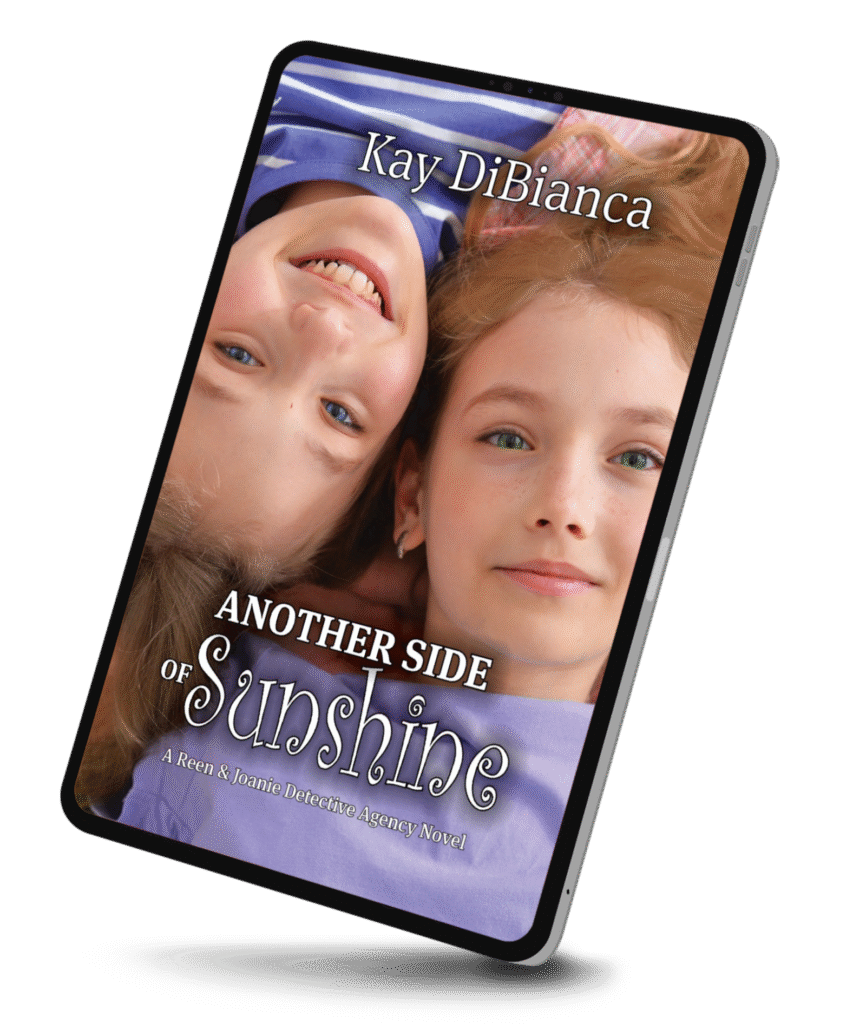
Another Side of Sunshine
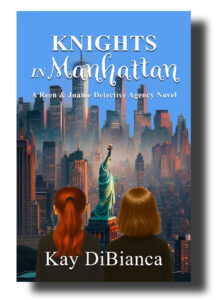
A Reen & Joanie Detective Agency Mystery

Spunky ten-year-old Reen and her shy nine-year-old cousin Joanie go on a quest to find a treasure hidden by the mysterious Mr. Shadow. Along the way, they discover new insights into friendship and fair play.


Scars Tell a Story #WriteTip

Close-up of a scarred male lion

Click to Enlarge

While watching my wildlife gorge on peanuts, bread, almonds, dates, and raisins one morning, an impressive male bluejay caught my attention. Tall, well-built, and mysterious. The moment he landed on the food table in front of my window, the scarring on his face came into focus, and I wondered what happened to him.

Scars tell a story, an undeniable truth of the past. Perhaps “Scar” had a run-in with a hawk in his youth. The scars looked old, as though they’d formed during his development years or changed him as a young adult. The feathers atop the usual bluejay markings were much darker — midnight black — the skin obviously disrupted by a traumatic experience.

What was Scar’s wounding event? Did he fight this battle alone? Or did a predator kill his entire family in the nest?

I can only speculate. The answers died long ago.

All in all, Scar is a happy little dude, but also more cautious than the others, which adds some validity to my hypothesis as to how he received the scars. I’m intrigued by Scar, and pray a human didn’t hurt him. He piques my interest. Keeps me guessing about his past.

If Scar was a character in a novel, I could never stop flipping pages until I’d unraveled the mystery behind his scars. The author would have hooked me simply by showing me his face. What seems like a minor detail like a scar adds to the hero’s characterization. And you can bet an emotional scar lurks behind the physical disruption. All species, including humans, are affected by past events.

bluejay on snow

Not Scar. I cannot photograph him while we’re building trust.

Take Scar, for example. He waits for others to sample the food before he takes a bite. He watches how I interact with the other bluejays before he approaches.

He’s careful.

Reserved.

Suspicious of humans or new food sources.

The rest of the party (my favorite collective noun for a group of bluejays) scream with excitement and joy.

Not Scar. He’s quiet. Hangs back. Learns. Only after he’s gathered enough intel to satisfy his inquisitive mind does he feel safe enough to fly closer. I admire that about him. It shows he’s intelligent.

As writers, we’re told to include emotional scars but we also shouldn’t avoid physical scars. And not only for villains. Heroes wear scars, too.

Tattoos are often reminders of a special time in one’s life or symbolize what the wearer loves, embodies, or believes in. They can also help the wearer regain control over a trauma or cover, even enhance, a physical scar.

Years ago, I knew a young woman who was born with a cleft palate and left with scars from the corrective surgery. She never felt beautiful. All she could see were her scars. But she was beautiful, inside and out. Since few could make her see herself through their eyes, she turned to drugs and alcohol and eventually lost her life.

Some say, it’s more difficult for women to deal with facial scars than men. I know from personal experience that isn’t necessarily true. Both men and women try to hide scars public. It’s easier than having to retell — or relive — the story behind them.

Back in 1995, I was involved in a car accident that threw me into the windshield. Half conscious, I opened my eyes while stuck in the glass and tried to break free. The movement tore off my left eyebrow, eyelashes, upper eyelid, a chunk of my nose, split open my upper lip, and cracked all my teeth. The hospital called in a plastic surgeon to repair the damage to the left side of my face. Doctors told me I’d never regrow my eyebrow or eyelashes. For a girl in her twenties, it was devastating news.

I’ve never been one to follow the norm, or listen to doctors who think they can predict the future. Instead, I prayed for a miracle. Little by little, as I picked glass shards out of both eyes for several weeks, tiny hairs filled in my eyebrow and my lashes sprouted new growth. The doctors couldn’t believe it. My progress from the accident to full eyebrow and lashes is now in medical journals.

The emergency plastic surgery left me with scars on my eyelid, nose, and above my left upper lip. If you and I met in person, you might never notice. I only allow those closest to me to see my scars without makeup. When I’m tired, they pop right out. Not sure why scars get more visible then, but I’m not alone…

A dear friend for the last 30+ years got badly injured on a motorcycle when his gas tank exploded. The melted skin covering his right armpit looks like it belongs to Freddy Kruger. And the deep scarring on his forehead and zipper-like indent in his skull are still prominent 40 years after the accident. I love his scars. He wouldn’t be the same man without them.

Not only are scars reminders of past trauma but how one dealt with the injury and pain, then and now.

Like me, my friend also covers his scars in public. Only those closest to him are allowed to see the extent of his old injuries (2nd dimension of character = the person family and friends know). Neither of us regret our scars. They remind us that we’re lucky to be alive, along with all our other physical scars. Doesn’t mean we want to share them with the world (1st dimension of character = one’s public face).

See how a detail like a scar can inform one’s character? Keep it in mind while crafting your hero or secondary characters. Just remember to note them in your story bible, so a scar on the left cheek doesn’t move to the right in subsequent chapters and/or books. LOL

Would anyone like to share their scars and the story behind them? Have you ever seen a scarred bluejay or other backyard bird? I don’t dare photograph Scar until he gets to know me better, or the trust we’ve built may crumble.

Bad Decisions

Every choice comes with a consequence. —Roy T. Bennett

* * *

Human history is strewn with the results of bad decisions.

  • Someone decided to fill the Hindenburg airship with hydrogen rather than helium. Thirty-six people died.
  • The captain of the Titanic decided to maintain speed through the icy waters of the North Atlantic even though icebergs had been reported in the area. More than fifteen hundred people died.
  • Napoleon decided to invade Russia and lost most of his army. Nearly a million people died.

* * *

Sometimes a disaster isn’t the result of just one bad decision, but many small ones.

Take the story of the Titan missile disaster, for example. (Most of the facts cited here were taken from the This American Life podcast, Episode 634. A transcript can be found here.)

As most of us know, there are missile silos located all over the United States. They house intercontinental ballistic missiles that are armed with nuclear warheads intended to keep us safe by preventing bad actors from trying to attack the U.S.

Missile sites are placed deep underground with heavily insulated control centers nearby, and lots and lots of concrete and steel between the silo and the outside world.

Now you might think ICBMs just sit in their silos waiting for something to happen. But actually, the missiles have to be maintained just like any other manmade artifact. You would think that such a high-stakes situation would be so closely monitored that nothing could go wrong.

You would think.

In September 1980, the Titan II missile in Damascus, Arkansas was scheduled for maintenance. The Titan II, at that time the most powerful weapon in the American nuclear arsenal, was loaded with two different liquid fuels in separate compartments rather than the solid fuel used in later missiles. If the highly volatile, toxic liquid fuels escaped or met unexpectedly, there could be a disaster.

Two young men were assigned the maintenance task. The first one, we’ll call him Primary Worker, was experienced. The second, let’s call him Trainee, was in training.

The task was straightforward. One of the missile’s fuel tanks was low on pressure, so all they had to do was take off a cap and add some fuel.  Sort of like pumping gas into your car. Primary Worker was familiar with the procedure. No problem.

In order for the work to begin, however, the hydraulic platform, which was like an elevator that went up and down the side of the missile, had to be lowered. But there was a problem with the platform, and the maintenance guys had to wait for a couple of hours while workers fixed it.

At this point, it was late Friday afternoon, heading into evening. You can just imagine two young men who are eager to meet friends and start the weekend being told there was a delay. It must have been frustrating. We all know what it’s like when we have something planned, but somebody throws a wrench into the works. (This will be extremely meaningful later.)

Finally, the hydraulic platform was repaired. The two young men donned their protective suits and started down the long tunnel to the silo. At some point, they realized they had forgotten the torque wrench that was required for the job.

Rather than causing a further delay by getting out of his suit, following all the protocol of going back to his truck to retrieve the torque wrench, and then redoing everything, Primary Worker made Bad Decision #1: ignore the regulation and use a huge, two-piece ratchet wrench which he had with him. Trainee questioned the decision, but Primary Worker said he’d done it before, and it was not a problem.

The two men proceeded to the silo and took the hydraulic platform up. When it stopped, they were roughly eighty feet above the base of the missile.

The platform had a rubber bumper that was supposed to be flush against the side of the missile to prevent anything from dropping, but the equipment was old, and there was a gap between the platform and the missile.

The two men used the ratchet wrench to remove the cap from the missile. Everything went smoothly.

Bad decision #2: One of the men handed his part of the wrench to the other one. The other man dropped it.

Are you getting worried yet?

The socket fell between the platform and the side of the missile. Of course, it gained momentum as it plummeted eighty feet. My husband calculated it was probably going about fifty mph when it hit the thrust ring that the missile sat atop, bounced, and—you guessed it—punctured a hole in the side of the missile. Fuel began to spray out. What are the chances?

At this point, the maintenance men should have radioed the control center and told them about the accident. They didn’t.

Bad decision #3: Instead of contacting the control center and owning up to what had happened, Primary Worker simply called in and said there was a cloud of vapor coming out of the side of the rocket. The maintenance men were ordered back to the control center.

Alarms began to sound in the control center. Horns were going off, lights were flashing, and people there were rushing around trying to understand the problem, but it didn’t make sense because they didn’t have the whole picture.

When the maintenance men got back to the control center, they saw the chaos that was in progress, but they made Bad decision #4: they still didn’t let the authorities know that the side of the missile had been punctured. Since the fuel compartments were pressurized, at some point enough fuel would leak out, the bottom compartment would collapse, and there would probably be an explosion. But the people in the control center didn’t know how to treat the problem because they didn’t know what the problem was.

Finally, one of the controllers suspected the maintenance men were holding something back, so he approached them and insisted that they say exactly what had happened. They finally came clean.

When the truth became clear, the people in the control center realized an explosion was imminent. They contacted their superiors.

The question was whether to remain in the control center which was designed to withstand a nuclear hit, or to evacuate.

Bad decision #5: The commanding officer ordered them to evacuate.

When the explosion came, there were men outside in the fields and woods around the complex. Huge chunks of metal and concrete debris, some as large as a school bus, rained down. The lid of the silo, a 1.5-million pound slab of concrete and steel, was hurled over 500 feet.

The nuclear warhead ejected from the missile and landed in a ditch a quarter mile away from the silo. It didn’t detonate. If it had … well, let’s not think about that.

So there you have it. A perfect storm of bad decisions. At each stage, the stakes were raised that led to a disaster.  It could have been worse.

Incidentally, the accident prompted a change in regulations. Workers now have to attach their tools to themselves by a lanyard. Good decision.

* * *

Although we try to avoid making bad decisions in real life, they can be the stuff of great fiction. After all, bad decisions are usually born out of base human fallacies: fear, hubris, anger, greed, envy, lust, impatience, frustration… The list goes on. And these make wonderful fodder for storytelling. As each bad choice is made in a story, it ratchets (pun intended) up the tension. Each new decision raises the stakes and ensures the reader will turn the page.

Think of some of the great fictional examples of bad choices.

  • The Trojans decided to accept the gift of a wooden horse from the Greeks.
  • The mayor of Amity Island in the movie Jaws decided to keep the beaches open even though there had been a shark sighted in the area.
  • Scientists decided to use DNA extracted from fossilized mosquitoes to create dinosaurs in Jurassic Park.

It just goes to show you:

Bad choices make good stories.Rajkumar Hirani

* * *

So TKZers: Can you think of any examples of bad decision-making from books you’ve read? How about characters in your own books. Have they made bad choices?


Private pilot Cassie Deakin has to decide whom she can trust while she’s looking for a murderer. Her bad choices almost get her killed.

Available at  AmazonBarnes & NobleKoboGoogle Play, or Apple Books.


Let’s Talk Turkey #WriteTip

I moved into my new place last week. Hence why you haven’t seen me in the comment section. It took two weeks to pack. I’m now unpacking. I found a cozy little abode on the New Hampshire seacoast, near the Massachusetts border. It’s the best of both worlds — two minutes from anything I might need, yet a quiet country setting with plenty of wildlife.

As I gazed out my kitchen window for the first time, five huge male turkeys stood sentinel in the yard. Soon, twenty-five more joined them to socialize, feast, and play. The original five Toms guard the property all day. There’s also an adorable opossum and three albino skunks — stunning all white fur — who come nightly to eat alongside the resident stray cat. All four share the same bowl.

Why can’t humans put aside their differences like animals can?

For my fellow crow lovers out there, a murder of crows arrived on day two. Or Poe and the gang followed me. Sure sounds like Poe’s voice, but I can’t be certain until I set up their feeding spot and take a closer look. My murder has white dots, each in different spots, which helps me tell them apart. Plus, Poe has one droopy wing.

As I watched the five Toms this morning, it reminded me of a post I’d written back in 2017 (time flies on TKZ, doesn’t it?). So, I thought I’d revamp that post a bit, and tweak for our pantser friends.

***

Clare’s recent post got me thinking about craft and how, as we write, the story inflates like a Tom turkey. If you think about it long enough and throw in a looming deadline, Tom Turkey and story structure have a lot in common.

Stay with me. I promise it’ll make sense, but I will ask you to take one small leap of faith — I need you to picture Tom Turkey as the sum of his parts, constructed by craft. And yes, this light bulb blazed on over the Thanksgiving holiday. We are now having spiral ham for Christmas dinner.

But I digress.

Story beats build Tom’s spine. Think of each milestone as vertebrae. Pantsers, let the story unfold as it flows. You can always check the beat placement after the drafting stage.

The ribs that extend from Tom’s spine liken to the equal parts that expand our beats and tell us how our characters should react before, during, and after the quest.

Broken into four equal parts, 25% percent each, this is the dramatic arc. It’s a natural progression that many writers do instinctually. If you want to check your work after the drafting stage, pantsers, the dramatic arc should look like this…

  • Setup (Page 1 – 25% mark): Introduce protagonist, hook the reader, setup First Plot Point through foreshadowing, stakes, and establish empathy (not necessarily likability) for the MC.
  • Response (25% – 50% mark): The MC’s reaction to the new goal/stakes/obstacles revealed by the First Plot Point. MC doesn’t need to be heroic yet. They retreat, regroup, and have doomed attempts at reaching their goal. Also include a reminder of antagonistic forces at work.
  • Attack (50% – 75% mark): Midpoint information/awareness causes the MC to change course in how to approach the obstacles; the hero is now empowered with information on how to proceed, not merely reacting anymore.
  • Resolution (75% – The End): MC summons the courage, inner strength, and growth to find a solution to overcome inner obstacles and conquer the antagonistic force. All new information must have been referenced, foreshadowed, or already in play by 2nd Plot Point or we’re guilty of deus ex machina.

Tom Turkey is beginning to take shape.

Characterization adds meat to his bones, and conflict-driven sub-plots supply tendons and ligaments. When we layer in dramatic tension in the form of a need, goal, quest, and challenges to overcome, Tom’s skin forms and thickens.

With obstacle after obstacle, and inner and outer conflict, Tom strengthens enough to sprout feathers. At the micro-level, MRUs (Motivation-Reaction-Units) — for every action there’s a reaction — establish our story rhythm and pace. They also help heighten and maintain suspense. If you remember every action has a reaction, MRUs come naturally to many writers. Still good to check on the first read through.

MRUs fluff Tom Turkey’s feathers. He even grew a beak!

Providing a vicarious experience, our emotions splashed across the page, makes Tom fan his tail-feathers. The rising stakes add to Tom’s glee (he’s a sadist), and he prances for a potential mate. He believes he’s ready to score with the ladies. Tom may actually get lucky this year.

Then again, we know better. Don’t we, dear writers? Poor Tom is still missing a few crucial elements to close the deal.

By structuring our scenes — don’t groan, pantsers! — Tom grew an impressive snood. See it dangling over his beak? The wattle under his chin needs help, though. Hens are shallow creatures. 😉 Quick! We need a narrative structure.

Narrative structure refers to the way in which a story is organized and presented to the reader. It includes the plot, subplot, characters, setting, and theme, as well as techniques and devices used by the author to convey these elements.

Now, Tom looks sharp. What an impressive bird. Watch him prance, full and fluffy, head held high, tail feathers fanned in perfect formation.

Uh-oh. Joe Hunter sets Tom in his rifle scope. We can’t let him die before he finds a mate! But how can we save him? We’ve already given him all the tools he needs, right?

Well, not quite.

Did we choose the right point of view to tell our story? If we didn’t, Tom could wind up on a holiday table surrounded by drooling humans in bibs. We can’t let that happen! Nor can we afford to lose the reader before we get a chance to dazzle ’em.

Tom needs extra oomph — aka Voice. Without it, Joe Hunter will murder poor Tom.

Voice is an elusive beast for new writers because it develops over time. To quote JSB:

It comes from knowing each character intimately and writing with the “voice” that is a combo of character and author and craft on the page.

That added oomph makes your story special. No one can write like you. No one. Remember that when self-doubt or imposter syndrome creeps in.

If Tom hopes to escape Joe Hunter’s bullet, he needs wings in the form of context. Did we veer outside readers’ expectations for the genre we’re writing in? Did we give Tom a heart and soul by subtly infusing theme? Can we boil down the plot to its core story, Tom’s innards? What about dialogue? Does Tom gobble or quack?

Have we shown the three dimensions of character to add oxygen to Tom’s lungs? You wouldn’t want to be responsible for suffocating Tom to death, would you?

  • 1st Dimension of Character: The best version of who they are; the face the character shows to the world
  • 2nd Dimension of Character:  The person a character shows to friends and family
  • 3rd Dimension of Character:  The character’s true character. If a fire breaks out in a crowded theater, will they help others or elbow their way to the exit?

Lastly, Tom needs a way to wow the ladies. Better make sure our prose sings. If we don’t, Tom might die of loneliness. Do we really want to be responsible for that? To be safe, let’s review our word choices, sentence variations, paragraphing, white space, grammar, and how we string words together to ensure Tom lives a full and fruitful life.

Don’t forget to rewrite and edit. If readers love Tom, he and his new mate may bring chicks (sequels or prequels) into the world, and we, as Tom’s creator, have the honor of helping them flourish into full-fledged turkeys.

Aww… Tom’s story has a happy ending now. Good job, writers!

For fun, choose a name for Tom’s mate. Winner gets bragging rights.