12 Tips for a Book Blog Tour

Nancy J. Cohen

If you wish to do a blog tour, determine if you want to offer guest posts, author interviews, reviews, and/or book blasts for your new release. Then determine which hosts you’ll want to solicit. Aim for popular blogs that get a lot of hits and target your particular genre or thematic content. Approach them by asking if you can be a guest on their site. Make sure you study their content and note the length of their typical posts.

I’ve had bloggers approach me to contribute to my site. I’ve turned down some of them because it was clear their business had nothing to do with a writing career. On the other hand, I’ve had cozy mystery or paranormal romance authors query me politely about a guest spot. In those cases, if I feel they’ll have something to contribute to my readers, I say yes. My personal blog readers respond the most to writing craft and marketing articles, so I am selective about guests.

If you don’t care to DIY, you can hire a virtual tour company. However, you’ll still have to publicize the tour, show up on the date of the post, answer comments, and offer giveaways. Send an author photo and book cover image along with your post to the host.

Here are some blog tour companies:
Goddish Fish Promotions http://www.goddessfish.com/tours.htm
Great Escapes Book Tours (Free for Cozy Mysteries) http://www.escapewithdollycas.com/great-escapes-virtual-book-tours
Bewitching Book Tours (Paranormal Romance) http://bewitchingbooktours.blogspot.com/
Buy the Book Tours http://www.buythebooktours.com/#axzz2OqJtoGjs
Partners in Crime (Crime, Mystery & Thrillers) http://www.partnersincrimetours.net/

12 Tips for your Virtual Blog Tour:

  1. Slant your blog to the audience you hope to reach.
  2. Vary your guest posts with a mix of interviews, articles and reviews.
  3. Space the dates out so you don’t clog the loops with your announcements.
  4. Write your posts ahead of time.
  5. Include a short excerpt from your book with your article when possible.
  6. Add buy links to your book along a story blurb, plus links to your website, blog, FB page, and Twitter at the end of your post.
  7. Plan to be available to answer comments all day when your post goes live.
  8. List the tour as an Event on your various social media sites.
  9. Publish the blog tour dates and topics on your website.
  10. Consider offering a giveaway for commenters with each post.
  11. Have a grand prize using Rafflecopter or a random drawing from all commenters.
  12. Thank your host at the end of the day when your post appears.

For next time, write down blog topics as you write your WIP. This way, you’ll have a ready list of topics available when you need them (i.e. research, the writing process, what inspired you to write this story, world building, themes, etc.).

A blog tour can help you gain exposure to new readers who might not have known about your work. It takes a lot of advance planning, publicity, and commitment to make it a success. A blog tour is another tool to raise your readership and possibly garner some reviews. Schedule with the companies listed above or with your selected hosts as far in advance as you can. So decide upon a target date for your tour and go for it.

Seven Decisions That Can Make Or Break Your Book

red hearrings

It is like reconstructing the whole of Paris from Lego bricks. It’s about three-quarters-of-a-million small decisions. It’s not about who will live and who will die and who will go to bed with whom. Those are the easy ones. It’s about choosing adjectives and adverbs and punctuation. These are molecular decisions that you have to take and nobody will appreciate, for the same reason that nobody ever pays attention to a single note in a symphony in a concert hall, except when the note is false. So you have to work every hard in order for your readers not to note a single false note. That is the business of three-quarters-of-a-million decisions.”

By PJ Parrish

See that quote above? (I know that I start a lot of posts with quotes and you skip over them. But please go back and take a second to read this one. We’ll wait til you get back…)

Okay, that quote is by the writer Amos Oz, and I have kept it around because whenever I get in the weeds with my writing, it’s helpful to read it and be reminded that creating a book is really nothing but a a very long series of decisions. (Click here to read the whole interview with Oz. It’s worth a detour later.)

Decisions, decisions…

We make thousands of them every day, and they run the gamut from the semi-conscious to the life-altering. Get up or hit the snooze button? Walk the dog now or hope he makes it until I get home? Buy or rent? Change jobs or roll the dice and go back to school? Call up the ex-wife and tell her the truth? Send my son to rehab? Confront mom about giving up her car keys?

Since this process is part of our everyday life, you’d think making decisions would be rote when it comes to our writing. But it’s not. Just ask any poor slob who has painted himself into the plot corner and said, “Oh crap, now what?”

Like Amos Oz, I think a good novel is made by careful and calculated decision-making. Not that there isn’t room for serendipity, flights of fancy, and raw passion. Yes, characters take on a life of their own, but we still hold their reins. Yes, we can’t anticipate every detour, but we can keep the car under fifty as we career down the road less written about. When it comes to writing, I really believe in the virtue of control. (Hey, whatcha want? I’m a Scorpio with Virgo rising). So I’d like to talk today about how to make our decision-making more acute.

I just finished critiquing a partial manuscript of an unpublished author (I do this for charity). And while there was good stuff going on, I sensed that the writer wasn’t in control of his decisions. He was like a guy thrown into a swift-moving river and had relinquished his fate to the rapids and rocks instead of making an effort to steer toward a goal. He was letting his plot and characters propel him forward rather than using his craft oars to guide him toward where he really wanted to go.

Years ago, I went on a white-water rafting trip on the Nantahala River (where part of Deliverance was filmed. That’s me middle right in the picture above). It was white-knuckle stuff, but I always had faith that our guide could get us through. He knew where the rocks and whirlpools were, when we needed to pull right, or when we needed to ford a bad stretch. He made decisions.

Okay, enough with the metaphors. Give me a rock I can grab onto, I hear you saying. So let’s try to break down the big decisions you need to make that can make or break your book.

1. Where do I start?

We crime dogs get drilled into us that a fast break from the gate is vital to mystery and thrillers, and while I believe you can risk a slow opening if it is well done, I think your POINT OF ENTRY is the single most important decision you make. Yes, the opening must be compelling and hint at what’s to come. But enter too early and you risk throat-clearing. (Detective awakened by phone call in night summoning him to crime scene. Ho-hum). Too late and you risk confusion. (What the heck is going on here? Who are these people? Where am I in time and place?).

Let’s take a look at one opening. It’s a little long but worth dissecting:

Dawn broke over Peachtree Street. The sun razored open the downtown corridor, slicing past the construction cranes waiting to dip into the earth and pull up skyscrapers, hotels, convention centers. Frost spiderwebbed across the parks. Fog drifted through the streets. Trees slowly straightened their spines. The wet, ripe meat of the city lurched toward the November light.


The only sound was footsteps. Heavy slaps echoed between the buildings as Jimmy Lawson’s police-issue boots pounded the pavement. Sweat poured from his skin. His left knee wanted to give. His body was a symphony of pain. Every muscle was a plucked piano wire. His teeth gritted like a sand block. His heart was a snare drum. The black granite Equitable Building cast a square shadow as he crossed Pryor Street. How many blocks had Jimmy gone? How many more did he have to go?


Don Wesley was thrown over his shoulder like a sack of flour. Fire-man’s carry. Harder than it looked. Jimmy’s shoulder was ablaze. His spine drilled into his tailbone. His arm trembled from the effort of keeping Don’s legs clamped to his chest. The man could already be dead. He wasn’t moving. His head tapped into the small of Jimmy’s back as he barreled down Edgewood faster than he’d ever carried the ball down the field. He didn’t know if it was Don’s blood or his own sweat that was rolling down the back of his legs, pooling into his boots.


He wouldn’t survive this. There was no way a man could survive this.


This is from Karin Slaughter’s lastest, Cop Town. Why do I like this opening? Because even though she uses a lot of description, the effect is visceral and immediate. She could have started with the shooting incident itself, but haven’t we all read that a million times? No, she dives into the bleeding heart of the scene by showing a cop carrying his dying partner. What is left UNSAID is compelling and makes us want to read on: What happened? Why didn’t he just get in his squad car and drive? Where is he going? Are both men shot? Turns out, Jimmy carries his partner to the hospital but does he survive? You have to read on…you just have to. Cop Town is up for the Best Novel Edgar this year, by the way.

2. Whose story is this?

Every story needs a protagonist. That much we all know. But sometimes, in the hurly-burly of writing, we can lose sight of who owns the story. The result can be that seductive secondary characters take over, or the villain (whom we all love to lavish our attention on) becomes hyper-vivid. The protag-hero is, to my mind, the hardest character to create because you must invest so much of the story’s logic and impact in him that he can mutate from calm center to sidelined cipher.

Sometimes, you might start out telling the story from one character’s POV, believing he is your hero, but then a second character elbows into the spotlight. This happened to me with my current book. I opened with a woman waking up in a hospital with concussion-induced amnesia and she has a gut-punch fear that her husband tried to kill her. So she bolts from the hospital and goes on the run. She’s my unreliable narrator protag, I thought. Until her husband hires a skip tracer to bring her home. It took fifty-some pages before I realized I had a full-scale dual-protag story on my hands.

Now this is not to say you can’t have a teeming cast in your story. I’m still slogging through Ken Follett’s The Pillars of the Earth. Early on, I was captivated by the protag Tom Builder, but whenever Follett moved away from Tom, I got impatient. Later in this massive book, the protag spotlight shifts to his step-son Jack. I missed Tom badly.

Don’t confuse point of view shift with protagonist. A book can have numerous POV’s, but the STORY’S ARC is usually best tethered to one character’s journey. The Lord of the Rings is a sprawling saga with at least three major heroic types. But isn’t Frodo the true protag? (Not sure…throwing it out for discussion).

And be careful about setting up a false or “decoy” protag. This is a character that dominates so much of a book in its early going, that the reader begins to identify with her and invest in her journey. But then this character is marginalized (usually killed). Think of Marion Crane in Psycho, who dominated the movie for 47 minutes until Norman Bates stepped out of the shadows to become the putative protag. It could be argued that Stieg Larsson’s Mikael Blomkvist is a decoy protag, because while most the plot’s machinery is built around him, Lizabeth Salander is the true action hero and embodiment of the story’s themes. At the very least, I’d consider them dual protags.

A word about unreliable narrators and dual protags: Neither is easy to pull off. Believe me, I know — now. Being in the POV of an unreliable narrator is exhausting for the writer and can, consequently, tire the reader as well. As for dual protags, you the writer will tend to bond more strongly with one over the other. So will your readers. Unless you are confident of bringing two equal beings to life, stay with one protag. You don’t want your reader saying, “Gee, I wish Tom the Builder would come back.”

Don’t juggle with chain saws until you’ve mastered machetes.

3. What am I trying to say?

We’ve had great posts here on the subject of theme. I’m going out on limb here and say all good books have themes.  Yes, your goal might be modest — you just want to entertain readers. (Don’t we all?) But beneath the grinding gears of plot, even light books can have something to say about the human condition. A romance might be “about” how love is doomed without trust. A courtroom drama might be “about” the morality of the death penalty. Good fiction, Stephen King says, “always begins with story and progresses to theme.” And often, you don’t even grasp the theme until later in the book or even during rewrites.

Last week, our new publisher sent us a long questionnaire. They wanted our ideas on cover design, colors, typography, who we thought our audience was, and whose books are similar to ours. They also asked us to write our own back copy. Not because they wanted us to do their job; they wanted us to be able to articulate the essence of our story. And I tell you, if you can’t write your own back copy (about two paragraphs), you might not have a grip on your story and what it is about.

They also asked us some other pointed questions: What are your major and minor conflicts? What is the book’s theme(s)?  What are the recurring visual motifs or symbols? What is the book’s tone and mood? Which leads me to…

4. What mood am I in?

My publisher’s questionnaire listed some “mood” words to help us: haunting, witty, intense, sweet, hopeful, psychological, somber, epic, tragic, foreboding, romantic. They were asking us this because they want the design and promotion to enhance our chances for success in a cacophonous book market. You, too, have to think about this as you write your book, whether you self-pub or go traditional. What kind of world are you asking your reader to enter? How do you want them to feel? Once you can answer this question, you then must use all your powers and craft to create what Edgar Allan Poe called “Unity of Effect.”  Every word and image, Poe believed, had to be carefully chosen to illicit an emotion. In his short stories, it was fear, of course. In his poems, you could argue, he was going for melancholy. What are you aiming for?

5. Where am I?

Don’t neglect your setting. I know…that’s stating the obvious. But I’m often surprised at how paltry setting is rendered in crime fiction. We need to know where we are very early in the story, preferably inserted gracefully into the narrative flow via sharp description. Yeah, you can slap one of those tags at the beginning of chapter one — Somewhere in the Gobi Desert, Sept, 1904.  I concede that you need signposts at times; I’ve used them myself. But they can be a crutch. As a reader, I prefer to be parachuted into a place and use my senses rather than have the writer stick a sign in my face. Here’s a nice free-fall:

Exmoor dripped with dirty bracken, rough, colorless grass, prickly gorse, and last year’s heather, so black it looked as if wet fire had swept across the landscape, taking the trees with it and leaving the moor cold and exposed to face the winter unprotected.

That’s Belinda Bauer opening her thriller Black Lands. Now I don’t have the foggiest where “Exmoor” is, but I have a pretty good notion it’s a dark place somewhere up by England where bad stuff happens.

6. Am I doing this for me or for the story?

The story always has to come first. You can’t kill someone off just because you’ve stalled in the middle and you’re desperate. You can’t let a character hog the story just because you’ve fallen in love with her or she’s easier to write than your protag. You can’t add a twist just because you think it will make you look clever. All twists must be organic, emerging from the plot, not from your “hey-watch-this!” writer ego.  Go back to question 2: Whose story it is? Well, it’s not yours; it’s your characters’s. It’s not about you using fancy words or filigreed metaphors. It’s not about you trying to transcend the genre, win some award, or anything else. It’s about the people in your book.

As Elmore Leonard once said, “Always write from a character’s point of view. Write in their language to keep the sense that it’s their story. They’re the most important thing.”

This one is dear to me because my collaborator-sister Kelly and I sometimes have two distinct ideas of where a story might be going or what a character is like. We’re often asked if we argue. No, we don’t. Because we know that our egos don’t matter; only the story does.

7.  Does this make sense?

As I typed that headline above, I started hearing Olivia Newton John: “Let’s get logical, logical! I wanna get logical! Let me hear you characters talk! Let me see your story walk!”  So my last question here is a plea for simple clarity in three things: your writing style, plot structure, and character motivation. Let’s break them down:

Writing style: Don’t confuse your readers. Chose the simplest but most evocative words you can find. As Stephen King says, “One of the really bad things you can do to your writing is dressing up the vocabulary, looking for long words because maybe you’re a little ashamed of your short ones.” In other words, most the time a lawn is just a lawn, not a verdant sward.

Be clear in your directions when you move your characters through time and space. If someone enters a room, tell us. If you jump ahead three days in time, tell us.  This is the “busy work” of fiction writing but it’s no less important. If your reader can’t follow the simple physical movements in your story, they will give up on you and your book.

Plot structure: Your story must have a durable thread of logic that runs from beginning to end. Events on your plot arc must emerge organically and not from coincidence. (no deus ex machina or long-lost Uncle Dickie from Australia showing up in chapter 40 to announce he is the killer) Your details of police, legal and medical procedure must ring true. Your twists and turns must be well-planned and hard-earned. Does the plot, as a whole, make sense? And if you write sci-fi, dystopian fiction or horror, does the artificial world you create obey the rules of its own logic and does it FEEL believable?

Character motivation: Man, is this one important. I can’t believe I left it for last. Characters are your lifeblood and if you want the reader to believe in them, to care about them, to root against them or cheer for them, they must be multi-dimensional and “real.”  They must conform to their own internal logic. They must be true to their personalities. We’ve all read books where we say, “Shoot, that guy would have never done that!” The writer has not done her job in this case, has not asked herself: “Does this make sense for this person to do this?” This post is running long, so I’m going to advise you to go back and read Jodie’s excellent post yesterday on consistency in characters. As she says, “Don’t impose your preconceived ideas on the character – you risk making him do things he just wouldn’t do. Know your characters really well and the rest will naturally follow.” CLICK HERE TO GO BACK.

Decisions, decisions…

As Amos Oz said in his quote above, nobody ever pays attention to a single note in a symphony in a concert hall, except when the note is false.

Make Sure Your Characters Act in Character!

Captivate_full_w_decalby Jodie Renner, editor & author @JodieRennerEd

DO YOUR CHARACTERS’ DECISIONS AND ACTIONS SEEM REALISTIC AND AUTHENTIC?

Have you ever been reading a story when suddenly the protagonist does or says something that makes you think, “Oh come on! Why would he do that?” or “This is crazy. Why doesn’t she…?” or “But I thought he…!” or “I didn’t know he/she could [insert extraordinary ability].” The character seems to be acting illogically, to be making decisions with little motivation or contrary to his personality, abilities, or values

I see this problem a lot in fiction manuscripts I edit. The author needs something to happen for the sake of the plot they’ve planned out in advance, so they force a supposedly intelligent character to do something contrary to common sense and their best interests, like recklessly putting themselves in danger.

For example, I once edited a book where the highly educated, intelligent heroine rose from her bed in the middle of the night and, without telling her husband where she was going or even leaving a note, drove to a remote warehouse to find some incriminating evidence, knowing the killer was likely to return – which of course he did, and attempted to kill her. It made for an exciting scene, but unfortunately, the otherwise savvy character came off looking like a foolhardy, impulsive airhead. I couldn’t help wondering, why wouldn’t she tell her husband? Better yet, call the police and let them handle it.  Even police, who are trained for these situations, usually get backup.

Moving your characters around like pawns to suit the plot, if it doesn’t make sense for who they are, could have your readers scratching their heads in disbelief or, worse, throwing your book across the room, then writing a scathing one-star review of it.

Don’t force your characters, kicking and screaming, into actions they just wouldn’t do.

Readers won’t suspend their disbelief and bond with the character if they don’t “buy” what the character is doing and why. An engrossing story needs realistic characters dealing with adversity in bold but realistic and plausible ways.

To make a character’s decisions and actions convincing, take care when creating their background, character, abilities, and motivations.

Background, character, and personality

Of course, you don’t want to make your hero or heroine ordinary, timid, or passive, with few daring decisions, because that would make for a ho-hum book most readers wouldn’t bother finishing. But on the other hand, if you’re going to have them perform daredevil feats, be sure to build that into their makeup.

First, get to know your main characters well. Take some time to develop their background, character, and personality. Are they athletic or more cerebral? Risk-takers or cautious? Do they embrace change, enjoy challenge, love to learn new things? Or do they prefer to stay within their comfort zone? To plumb their depths, do some free-form journaling in which they express their strongest desires, fears, hopes, secrets, regrets, and gripes.

Are they physically capable of what you want them to do?

Abilities

If, for a riveting plot, you need your hero to do something heroic, almost superhuman, make sure he has the determination, strength, flexibility, and endurance to do that. Although it’s amazing what people are able to do under duress with the adrenaline flowing, it’s more credible if your character is already at least somewhat fit. Does he work out a lot to maintain muscle mass, agility, and endurance? How? Also, he’ll need to be intelligent, skilled, and resourceful.

If he needs special skills, show earlier on that he possesses them and how it all makes sense, given his overall makeup. In one novel I edited, the sedentary, slightly overweight, middle-aged protagonist fought off a strong attacker with quick, expert martial arts moves. This was an “Oh, come on!” moment, given his lifestyle, age, and paunch.

In The Hunger Games, we learn early on that Katniss is an expert at archery, which is a huge factor in her survival later. A nerdy banker probably doesn’t do kickboxing on the side, so you may need to make him less desk-bound and more athletic for it to work. Or give him another profession.

If you’re writing fantasy, of course you have more leeway with unusual characters and situations, but if you’re writing a realistic genre, with no supernatural or paranormal elements, make sure the character’s actions are realistic and make sense.

Motivations

Is your hero sufficiently motivated to put his life on the line? Do those motivations fit with his belief system, background, and immediate needs? If you want or need a character to do something dangerous, go back and give him some burning reasons for choosing that course of action.

Perhaps he finds himself in a life-and-death situation for himself or someone he loves, or innocent people are in grave danger. His love, concern, and determination will make him more selfless and daring, bringing out courage he never knew he had.

As Steven James advises in Story Trumps Structure, as you’re writing your story, ask yourself , “What would this character naturally do in this situation? Is he properly motivated to take this action?”

Causality

Be sure your narrative is also shaped by the logic of cause and effect. For your story to be believable, character decisions and reactions need to plausibly follow the original stimulus or actions. If your character overreacts or underreacts to what has just happened, they won’t seem “in character” or real.

Be sure every decision and action makes sense with what preceded it. As James suggests, as you go along, continually ask yourself, “What would naturally happen next?”

So don’t force your characters to act in uncharacteristic ways because your plot needs them to. Readers will pick up on that. Rather than insisting certain events or actions happen as you had planned, instead allow the natural sequence of events and logical reactions to shape your plotline.

Go through your story to make sure your characters are acting and reacting in ways that are authentic to who they are and where they’ve come from, and that they’re sufficiently motivated to take risks. Also, do their reactions fit with the stimulus? Is that a logical response to what happened?

Ask yourself, as you’re writing, “Is there a way to accomplish this that fits with the character’s values and personality?” If not, I suggest you either change the plot (have them make a different decision and rewrite where that leads them) or go back and change some of the character’s basic attributes, values, and skills. Or add in incidents in their past that have shaped them in ways that will justify their current actions.

That way your plot will flow seamlessly and your characters will seem real. There will be no bumps, no hiccups where readers will be suddenly jolted out of the story.

As William Faulkner advised one of his fiction-writing classes,

“…get the character in your mind. Once he is in your mind, and he is right, and he’s true, then he does the work himself. All you need to do then is to trot along behind him and put down what he does and what he says.”

So don’t impose your preconceived ideas on the character – you risk making him do things he just wouldn’t do. Know your characters really well and the rest will naturally follow.

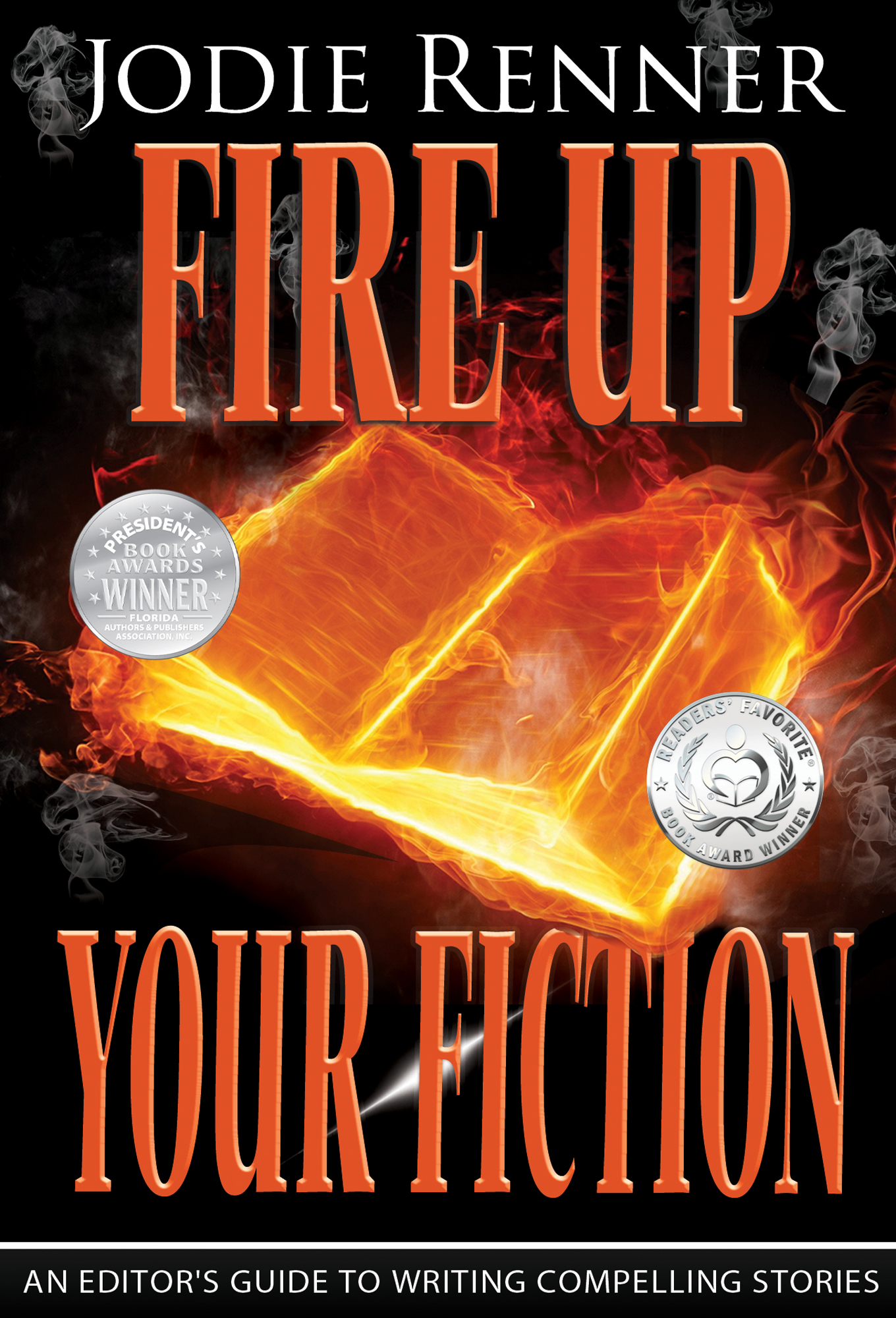
Fire up Your Fiction_ebook_2 silversJodie Renner is a freelance fiction editor and the award-winning author of three craft-of-writing guides in her series An Editor’s Guide to Writing Compelling Fiction: Captivate Your Readers, Fire up Your Fiction, and Writing a Killer Thriller. She has also published two clickable time-saving e-resources to date: Quick Clicks: Spelling List and Quick Clicks: Word Usage. You can find Jodie at www.JodieRenner.com, www.JodieRennerEditing.com, her blog, http://jodierennerediting.blogspot.com/, and on Facebook, Twitter, and Google+.

“Story. Dammit, story!”

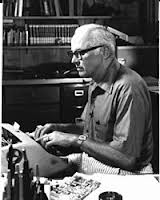
John D. MacDonald typingIn his introduction to Stephen King’s first collection of short stories, Night Shift, John D. MacDonald explains what it takes to become a successful writer. Diligence, a love of words, and empathy for people are three big factors. But he sums up the primary element this way: “Story. Dammit, story!”

And what is story? It is, says MacDonald, “something happening to somebody you have been led to care about.”

I want to home in on that something happening bit. It is the soil in which plot is planted, watered, and harvested for glorious consumption by the reader. Without it, the reading experience can quickly become a dry biscuit, with no butter or honey in sight.

Mind you, there are readers who like dry biscuits. Just not very many.

MacDonald reminds us that without the “something happening” you do not have story at all. What you have is a collection of words that may at times fly, but end up frustrating more than it entertains.

I thought of MacDonald’s essay when I came across an amusing (at least to me) letter that had been written to James Joyce about his novel Ulysses. Amusing because the letter was penned by no less a luminary than Carl Jung, one of the giants of 20th century psychology.   

Here, in part, is what Jung wrote to Joyce (courtesy of Brain Pickings):

I had an uncle whose thinking was always to the point. One day he stopped me on the street and asked, “Do you know how the devil tortures the souls in hell?” When I said no, he declared, “He keeps them waiting.” And with that he walked away. This remark occurred to me when I was ploughing through Ulysses for the first time. Every sentence raises an expectation which is not fulfilled; finally, out of sheer resignation, you come to expect nothing any longer. Then, bit by bit, again to your horror, it dawns upon you that in all truth you have hit the nail on the head. It is actual fact that nothing happens and nothing comes of it, and yet a secret expectation at war with hopeless resignation drags the reader from page to page … You read and read and read and you pretend to understand what you read. Occasionally you drop through an air pocket into another sentence, but when once the proper degree of resignation has been reached you accustom yourself to anything. So I, too, read to page one hundred and thirty-five with despair in my heart, falling asleep twice on the way … Nothing comes to meet the reader, everything turns away from him, leaving him gaping after it. The book is always up and away, dissatisfied with itself, ironic, sardonic, virulent, contemptuous, sad, despairing, and bitter …

Now, I’m no Joyce scholar, and I’m sure there are champions of Ulysses who might want to argue with Jung and maybe kick him in the id, but I think he speaks for the majority of those who made an attempt at reading the novel and felt that “nothing came to meet them.”

I felt a bit of the same about the movie Cake, starring Jennifer Aniston. When the Oscar nominations came out earlier this year it was said that Aniston was “snubbed” by not getting a nod. I entirely agree. Aniston is brilliant in this dramatic turn.

The problem the voters had, I think, is that the film feels more like a series of disconnected scenes than a coherently designed, three-act story. The effect is that after about thirty minutes the film begins to drag, even though Aniston is acting up a storm. Good acting is not enough to make a story.

Just as beautiful prose is not enough to make a novel. Years ago a certain writing instructor taught popular workshops on freeing up the mind and letting the words flow. The workshops were good as far as they went, but this instructor taught nothing about plot or structure. Finally the day came when the instructor wrote a novel. It was highly anticipated, but ultimately tanked with critics and buyers. And me. As I suspected, there were passages of great beauty and lyricism, but there was no compelling plot. No “something happening to someone we have been led to care about.”

Of course, when beautiful prose meets a compelling character, and things do happen in a structured flow, you’ve got everything going for you. But prose should be the servant, not the master, of your tale.

Let me suggest an exercise. Watch Casablanca again. Pause the film every ten minutes or so, and ask:

1. What is happening?

2. Why do I care about Rick? (i.e., what does he do that makes him a character worth watching?)

3. Why do I want to keep watching?

You can analyze any book or film in this way and it will be highly instructive. You’ll develop a sense of when your own novel is bogging down. You can then give yourself a little Story. Dammit, story! kick in the rear.

A New Day, A New Genre

Jordan Dane @JordanDane

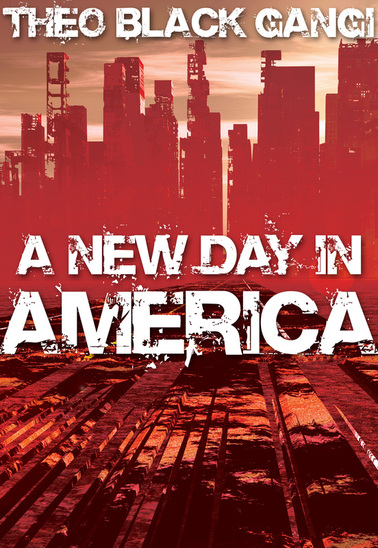
New Day Book Cover
My guest today is Theo Gangi, the Director of the writing program at St Francis College. His stories have been anthologized in First Thrills, edited by Lee Child, The Greensboro Review, The Columbia Spectator and the Kratz Sampler. His articles and reviews have appeared in Buzzfeed.com, The San Francisco Chronicle, Mystery Scene Magazine, Inked Magazine and Crimespree Magazine. Theo and I first met in NYC when our books debuted in 2008 at ITW’s Thrillerfest. I’ve enjoyed his gritty writing ever since. Please welcome Theo, TKZers.


A New Day, A New Genre


I admit it– the inspiration for my new novel A New Day in America was not mine initially. The somewhat notorious writer James Frey approached me with the idea for the tale of Nostradamus Greene and his daughter Naomi: a post-apocalyptic father-daughter survival story.

If I’d had a project I was in love with at the time, I’m not sure how I would have reacted. Screenwriters are accustomed to inheriting ideas and collaborating, but the mythology of the Novelist is the lone, solitary storyteller. However, once I found an inspiration to draw on, the work became mine as much as anything I’ve written.

The post-apocalyptic world—the desolate lands, the loss of the structure of civilization, the father who braves survival, and the daughter who has seen too much—recalled a story from my formative years.


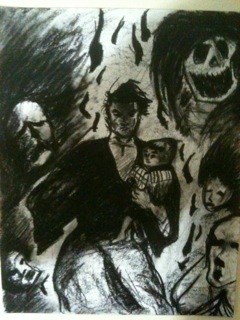
ogami.artwork


Apocalypse stories, while set in the future, are actually a return to the past. The time after modern civilization would resemble the time before it. The landscape of feudal Japan felt just right. Samurai assassin Itto Ogami and his son Daigoro serve as a great model for Nostradamus Greene and Naomi. Doing some sketches, I even found some visual symmetry. The paradox of the killer-father character has a brutal simplicity. A man with a gun is a killer. A man with a gun and a child at his back is a hero.

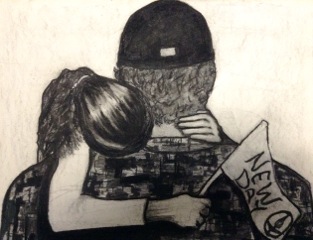
NOS.NAY.ART

The idea was freeing for a couple of reasons. For one, I had some much-needed simplicity, and in the past I’ve had a tendency to over-complicate my work. Second, I got to play with reality itself.

My first book, Bang Bang, is a hardboiled, botched-robbery sort of urban crime thriller. While the hero’s ability to rack up a body count of a dozen or so in a single night might stretch the realm of reality, the book is firmly set in the real world. For A New Day in America, writing in a post-apocalyptic world meant I could create the whole thing. I had to invent setting, history, events, and the all-important rules.


As a writer I always saw craft as a kind of minimalist-vs-maximalist approach. My biggest influence was Elmore Leonard, who famously didn’t write the parts the reader ‘skips anyway’, and once said he read Hemingway every morning before writing, to get the feel of reduction in his writing process. I love Dashiell Hammett, whose minimal approach to books like Red Harvest and The Maltese Falcon would’ve made Hemmingway proud (‘The stuff that dreams are made of’ is an invention of filmmaker John Houston, and far too sentimental for Hammett). The idea being, don’t waste the reader’s time and attention on an eloquent description of a back alley, because the reader know what a alley looks like, and wants to know what your characters will do and say, not that there’s a garbage can that’s tipped over, or a couple of chicken bones in the gutter. The empty spaces of great noir are poetic in and of themselves.
When writing in a world that has suffered a recent apocalypse, you can’t get away with that approach. If you allow the reader the space to fill in your apocalyptic world, they will likely visualize some stock imagery from this movie or that. Mel Gibson will poke his head out of a tricked out Mad Max vehicle in the background. A zombie might appear in the reader’s imagination even though there are no zombies in your book. To write in a speculative world is to build one. Visuals such as a New York City skyline that looks like a king’s crown—skyscrapers line the outer rim, but nothing stands within.


newday.sunset.gun


The process required quite a bit of overwriting and then cutting, so the sense of the world was greater than the word count. World building aside, the fundamentals are the same as any kick-ass thriller: Danger, conflict, bravery, human connectivity and impossible choices. The America that’s reduced to rubble offers a vehicle for the same challenges that the best thriller heroes endure—back to the wall, knife to the throat, what do you do? How do you find a way to assert yourself on a world that’s gone to hell? Is your next move moral or practical? Can you save them all? Can you save the ones that matter most?


The apocalyptic scenario creates a series of Sophie’s Choice sorts of situations. I’ll relate it this way– say there’s a train bearing down the tracks full of ten innocent people. The track forks: one way is a brick wall. The other way is your child tied to the rails. You stand at the switch. Which do you chose?


I imagine most people would chose to save their child, as I would. But what if there’s 100 people on that train? 1,000? A New Day in America is about a father who makes the decision to save his child over and over again.

newday.skyline.crown

Question 1: TKZ Question for Discussion: If you could take a few non-essential luxuries in your survivalist bunker, what would they be?

Question 2: Have you ever written a book that wasn’t your original idea?
Author Photo
https://www.facebook.com/NEWDAY.TBG
https://twitter.com/tprgangi
http://theogangi.com/

Tips for researching your story

By Joe Moore
@JoeMoore_writer

My co-author, Lynn Sholes, and I write globe-hopping thrillers that always deal with some form of futuristic technology—human cloning, quantum computing and mechanics, string theory, human cell regeneration, faster-than-light propulsion, and many other yet-to-be-developed science. We spend a great deal of time before and during the drafting of our manuscript researching or story. Often, we call upon experts to help us formulate our fictionalized theories. For instance, we contacted a famous geneticist and asked: “We know you can’t regenerate an entire human body from just a sample of DNA, but if you could, how would it be done.” The result was the science in THE PHOENIX APOSTLES.

I find researching for our novels to be as much fun as writing them. It’s the excitement of uncovering those tidbits and morsels of fact that add seasoning and spice to the story. I believe that research adds layers to a story. It keeps the story from becoming thin and two-dimensional. With the right amount of research, we can round out character’s lives, locations, settings, and atmosphere. Each layer helps transport our readers into a more fascinating and realistic story-world. Some genres demand more research than others—science fiction, medical, legal, criminal, and historical to name a few. But all books can benefit from in-depth research.

The general rule in researching for a manuscript is: more is better during the collecting stage but less is better during the writing stage. Here are some tips to help find the right balance.

When we research, we collect a great deal of material, almost always more than we need. We come across a lengthy article on a topic and highlight a dozen of those tasty info tidbits. The skill to researching is to choose one or two that will enhance the reader’s experience without bogging down the tale or turning our writing into a dry college lecture or travel guide. If you have a number of research items available for a particular scene, pick the one that helps put a little bit more icing on the story cake. Ask yourself which one helps develop the character or move the story forward the best. That’s the one to use. Keep the others in mind in case they’re needed later. Also remember that choosing the right research data will help lend authenticity to our writer’s voice.

Another tip is to never talk down to the reader by using information from our research that they might not understand. Never confuse the reader or push them out of the story by making them feel they’re not as smart as the writer. It’s really easy to put a book down and move to another out of frustration. Keep it simple—but not too simple. There are a number of ways to talk down to the reader. Avoid them all by not talking over their heads or dumbing down the information as if you were explaining it to a child. Even if the readers may not totally understand a fact or word, use it in such a way that they can mostly grasp the meaning from the context of the scene.

Avoid throwing in facts from your research just to prove you know how to look stuff up. Again, use your research only if it helps build your characters or advances your plot. Showing off your knowledge is not why the reader enjoys reading.

Lastly, avoid the dreaded info dump. Spread out your research information in just the right amounts to keep the reader from skimming over pages or skipping ahead. Your novel can educate readers and take them to places they’ve never been, but don’t forget that first and foremost, the reader wants to be entertained, not go back to school. Sprinkle in your research like spices and seasoning in a gourmet dish. Too little creates a bland taste, too much creates heartburn.

Zoners, any other researching tips and experiences to share?
—————————-

tomb-cover-small“Vengeance can be earth-shattering.”
Max is back! Coming in July, Maxine Decker returns in THE TOMB, book #3 in the Decker series. This time around, the former OSI agent risks her life to stop the elimination of an entire branch of the U.S. Government.

First Page Critique: BIRTHRIGHT

1JupiterAscendingToday we are pleased to present another first-page submission. This story is called BIRTHRIGHT. First, the page. Then my notes.

BIRTHRIGHT

She knew if she walked through the door, things would never be the same. It would be an admission of humanity. A bow to the ordinary.

She had been sent to inform and invigorate the people of Liberty so they could stand up to the coming onslaught. Even as she arrived the enemy grew as it traveled, dragging able-bodied men from villages as they passed and forcing them into servitude. To bring an entire village together and equip its people to do battle was a monumental task, one no mere mortal could hope to accomplish. That’s why the Council saw fit to send her to this place. It wasn’t a question of her ability, nor of her knowledge. It was a question of birthright. Her father was Leader of the Council. It was an incontrovertible fact that his heirs would step into his role when he relinquished it. It had always been that way. It would always be. Such was the way of her kind.

She stepped into the heart of Liberty, the center of the village, and slowly turned. The courthouse sat vacant—the laws of the land, as well as much of the building, long ago turned to dust. A tattered flag sagged on a pole in front of a tall brick garage. Then she saw it. The old gray-stoned library, heavily pasted with vines rooted to the mortar, bundling the building itself into a green-wrapped package. She stared up at the roof, at least thirty tridents high. The crane of her neck made her wobble. She had never looked up before; only down. She hurried to the doorway, slashed at the vines until the way was clear. What was inside stole her breath. She had never seen a book before. Now she was in an entire building of them. So many, she thought they might count as high as the stars. She breathed deeply. The scent of books was new to her and she paused to relish it. This was where it would all begin. After all, this was where it once ended.

KL’s Notes:

On the plus side, I should say that I like the opening line.

“She knew if she walked through the door, things would never be the same.”

It’s hard to write a first line that immediately grabs a reader. Well done!

I also enjoy the way the writer describes the moment the narrator first sees the library.

“Then she saw it. The old gray-stoned library, heavily pasted with vines rooted to the mortar, bundling the building itself into a green-wrapped package.”

That’s a good visual image.

But in other ways, this narrative runs into some craft-related headwinds. Here are some areas that could be improved.

A Case of Backstory Blues

The writer grabs my attention at Line One. But from there, things go awry. The story falls into a notorious swamp known as Backstory. The entire second paragraph gives nothing but character background. That information should be woven in later, after we are immersed in the main character’s situation. We preach this lesson all the time here at TKZ: Stay in the moment with your character and scene! Let us see her in action in the moment, and then tell us how she arrived at that juncture.

Character Challenge

As I read this page I was reminded of a film I saw last weekend, “Jupiter Ascending.” (A completely dreadful film, btw, but that’s for another review).  In that story, there’s a claque of one-percenter aliens known as The Entitled. The Entitled get to hog all the good stuff in The Universe because, well, they were born to rule.

As the title of this first page, BIRTHRIGHT, makes clear, the main character has arrived in Liberty village simply because she was born into the right family. I’m assuming the story will present at least two challenges: 1) Can she save the Lost World? 2) Does she have anything going for her other than her birthright?

Action Needed

Theodore Roosevelt famously coined the phrase, “Get Action!” I think this page could use some action. Or should I say, interaction. On my first reading, I assumed that the village of Liberty was totally abandoned. Then I realized that the character’s challenge is to mobilize the demoralized inhabitants. Shouldn’t we get some sense of someone else in this scene, or at least a reminder of that they exist? A secondary character would be an excellent way to introduce some of the backstory information that is dumped at the reader in the second paragraph. (For example: an enslaved villager suddenly sees the Council’s Heir materialize in town. How does he react?)

Wording Notes

There were a few awkward or confusing phrases here and there. (Redundant use of “heart of” followed by “village center”; “The crane of her neck made her wobble.”)

Final Notes

Overall, I think eliminating the early introduction of backstory, plus using action to show the character’s situation, would improve things immensely. Thank you to this intrepid writer for the submission!

TKZers, your thoughts about this page?

Mob Rules?

Two recent articles in the New York Times  caught my attention – not just because they highlight the frenzy of vitriol that so often explodes on social media but also  because they point to a disturbing ‘faceless mob’ mentality permeating our digital lives. As a writer, an active presence online (to both market and publicize my work as well as create connections with my readers) is, however, a necessity but one which, especially after reading these articles, I increasingly view with trepidation.

The first article “Feed Frenzy‘ details the misery of online ‘shaming’ victims – people like Lindsey Stone and Justine Sacco who, because of inappropriate and ill-advised jokes/tweets, were subject to relentless (and I mean relentless) Twitter attacks that all but ruined their lives. I have always been cautious about what I tweet but after reading this article I’m not sure I want to tweet anything ever again!

The second article entitled ‘The Epidemic of Facelessness‘ points to the dissonance between the world of faces (the real world of interpersonal communication) and the world without faces (our increasingly ‘anonymous’ digital lives). Apart from the disturbing number of ‘troll’ incidents reported with varying degrees of threats of person violence against actual people, there is also the basic lack of humanity and compassion that we now see spreading across the digital world. The article highlights a few key rules we need to adopt when ‘conversing’ through Twitter, Facebook and other social media. One is ‘Never say anything online you wouldn’t say to someone’s face’ (something you’d think would be pretty obvious) and the other is ‘Don’t listen to what people wouldn’t say to your face’ (a much harder proposition I think for most of us).

Now I’m pretty sure I’ve never said anything on social media that I wouldn’t say to someone in person. Likewise, however, there are many things I won’t say on social media that I would say to someone’s face – and that self-censorship is starting to make me feel disheartened. It’s hard to be a writer in this digital age and not engage online with readers across a range of social platforms and media – but  often I feel that I cannot really present myself authentically on social media because of the risk of trolls, flame-wars and all the other horrible reactions seemingly innocuous posts or tweets can inflame (as anyone who’s ever been on any social media has witnessed). I find myself refusing to comment not just on political or social issues that I would otherwise freely discuss, but also hesitating to post or comment on a range of issues that in my ‘real world’ I wouldn’t even think twice about talking about. It’s become an issue not just about professionalism versus personal disclosure but about censoring my online ‘appearances’ to the extent that I fear I must be very boring indeed!

So what do you TKZers think about the current state of our ‘faceless’ digital world? How do you navigate the treacherous digital waters?

Have you ever been the subject to the kinds of ‘faceless’ attacks these articles discuss? Do you, like me, censor how you appear online (not just out of professionalism, but also out of fear?). Does the current ‘faceless mob’ mentality affect how you market and publicize your work online? What about what you actually write? Are you even hesitant to deal with controversial political or social issues in the work itself?

Top Ten Things You Need to Know About the Writing Life

Jean Arthur

10. You have to love it

If you don’t love to write, if it’s not something you are virtually compelled to do, you’re not truly living a writing life. You could be a business person who wants to use writing as a vehicle for making some extra cash. You could be someone who journals as a form of therapy. That’s all legit. It’s just not a love for telling stories.

But if you have some inner compulsion to write, embrace it, because that will show in the writing itself. And you’re also going to need some love when you get hit with disappointment. Thus:

9. You have to learn to handle discouragement

If you’re going to do this, write for your life, you have to become a bit of a Sherman tank (as opposed to buying a fifth and getting tanked). You need a tough hide and forward drive. Because there are plenty of things to get you down.

Like the sound of crickets when your book launches. Or the screech of a hater leaving an unfair review. Or you looking at your work and thinking, This stinks. Who am I kidding?

Just know that all writers have gone through similar discouragement, it’s part of the life, it’s even part of the training. Those scars on the soul make you human, and humanity is what you need in your fiction.

8. It’s hard work

If your writing is going to be any good, that is. The best writers sweat over their labors, always trying to get better. They produce the words on a scheduled basis. This is called a quota.

By the way, I don’t want to hear any whining about a quota. There were times I didn’t want to go to court to defend a man so guilty his dog left him. But that was my job. I went and did it.

Show up. Write. Do your best. Take a break now and then—I take Sundays off completely—and then get back to the keyboard.

7. It’s a craft

The writing life is also about skills. Painters have paint, musicians have notes, surgeons have scalpels and forceps and malpractice insurance. And they all have mentors and journals and long periods of study.

Super Structure blueprint coverWho would tell a young golfer just to grab a club and start hacking balls around? All that produces is a menace to gophers. Sure, every now and then one might succeed, like a Bubba Watson. But you can count those guys on one foot with a toe missing.

Write and learn. Learn and practice.

(This seems an apt place to tell you that my new book, Super Structure: The Key to Unleashing the Power of Story is now available in print as well as E.)

6. It’s about steady growth

Forget the million-dollar advance on your debut novel. Or the viral downloading of your first e-novella. Not going to happen.

If you want to lead a writer’s life and even make some money at it, be prepared for an apprenticeship of years. I’ve been at this business for over two decades. The first five years brought me nothing, but all that time I was studying the craft like a madman and writing and writing.

I eventually landed a five-book contract, but did not quit my day job. I still had to get better, and that was my goal. It was only after ten years of steady production that I felt I could call myself a professional writer.

Even if you self-publish fast, it’s going to take time to grow a readership, and that’s only if you’ve followed all the above steps consistently.

5. It’s a fellowship

No, we don’t have a ring. Or even a secret sign. But writers do have each other, and we are, in large part, supportive. Every now and then a sour apple slips in––some egomaniacal writing brat, a sock puppet who tears down his rivals under a false name, or (worst of all) an odious plagiarizer.

But at conferences and local gatherings, online or in person, wherever authors congregate you’ll find fellow travelers willing to give you a tip or some encouragement. It’s good to remember that while we write alone, we are also “social people who can greatly benefit from balancing solitude and community.”

4. Don’t get hooked on the ups

It’s fun to land on a bestseller list, or making it to #1 in an Amazon category, or getting an email from a true fan who loved your book, or finding your bank account unexpectedly and substantially expanded one month. All these are nice, and to be enjoyed for what they are.

Just remember one thing: Don’t let them go to your head. Don’t expect that they will be easily repeated. Don’t let them inflate your ego. And especially don’t let them keep you from continuing to work and grow. The literary landscape is littered with the dry husks of careers that flowered briefly but were not sustained because of hubris, ego, fear, booze, or simple neglect.

Enjoy a victory for a day or two, then concentrate on your current project.

3. Now is the best time to live the writing life

We’re in year number eight of the digital era in publishing. Since the introduction of the Kindle at the end of 2007 more writers are making more money than at any time in history. Some are killing it, many are making a living, scores more are realizing a nice side income, and almost anyone who is serious is making enough to support at least a Starbucks habit.

This was never possible before. Ever since old Gutenberg set movable type, the power to publish belonged to those who owned the presses and dealt with bookstores selling paper copies. Writers were at the mercy of commercial interests. If those interests ever felt your value had diminished, they could end your participation––and maybe your career––by not offering you another contract (or, worse, canceling the current one).

The landscape has changed forever. There are new challenges to face, of course (*cough* discoverability *cough*). But writers have always had challenges. What’s new and life-altering is that they now have options.

2.  It’s a business life, too

A writing life, as opposed to a writing hobby, must include plans based upon sound business principles. I’ve written a whole book about those principles, but suffice to say here that you only grow a business in two ways: First, by finding new customers. Second, by selling more products to your existing customers.

Learn how to do both and keep on doing it, and you’ll be living the writer’s dream.

1. It’s a great way to live, period

A life that nurtures your creative side is a great life, an expanded life. As long as you don’t forget the other things that matter—your loved ones, friendship, community—being a working writer is about the best thing there is to be.

Why? Because you see things deeply. You vibrate with emotion. You are not a mushroom stuck in the bog of existence. You have feeling, will, verve, and even joy if you’ll allow it to happen. As a writer who cares, works, trusts, produces, and keeps on trying you will be living proof of the credo of one of my favorite writers of all time, Jack London:

I would rather be ashes than dust!

I would rather that my spark should burn out

    in a brilliant blaze than it should be stifled by dry-rot.

I would rather be a superb meteor, every atom

    of me in magnificent glow, than a sleepy and permanent planet.

The function of man is to live, not to exist.

I shall not waste my days trying to prolong them.

I shall use my time.

So what about you, writing friends? Anything you’d like to add to the list?