Zipper Rescues and the Importance of Communication

By John Gilstrap

Fair warning:  This week’s post has very little to do with the craft of writing.  In fact, it’s sort of a one-off non sequitur.  I wrote it because I told these stories to some friends the other night, and they said, “You really should write those.”  Well, this was the only venue that came to mind, and really, it does have a strong message about the importance of effective communication.  So, here we go . . .

When I was 13 years old, I had to inform my mother that I had contracted gonorrhea.  But more on that later.

One lesson I learned through the fire and rescue service is the importance of detailed, explicit communication when dealing the the victims of mishaps.  As a medical provider with an important job to do, I occasionally lost track of how easily patients could be distracted more by perception than reality.

By way of background, EMT school trained us not just in overall emergency medical care, but also for some very specific rescue techniques.  For example, there is such a thing as a “zipper rescue”, which is prompted by a “zipper injury.”  This is a condition that in my experience applies exclusively to males who are in a hurry.  Consumption of alcohol is frequently a factor.  You’ve got the picture, right?  Whether you want to or not?  (I see you squirming over there!)

As you can imagine, patients who are suffering from this particular malady are often distraught, and always pretty bloody.  Our protocol for zipper rescues was pretty simple: You use a pair of scissor to cut the zipper out of the trousers to take the tension off of things, and then transport the patient to the ER, where doctors would take care of the more detailed work.  Honestly, you’d be shocked to know how many times I had to employ this technique in the field.  It helped to have a college in close proximity to the firehouse.

This brings me to my communication failure.  In this case, the patient was younger than usual–say, 12 or 13–and as far as I could tell, he was stone cold sober.  He’d just been rushing things a bit too much.  I assured him (and his mom) that this was something I was trained to take care of, and that soon he’d be feeling better.

Then he saw the scissors.

He, uh, jumped to the wrong conclusion.  So did Mom, actually, which I found a little startling.  Yeah, I kind of dropped the ball on that one, and no amount of backpedaling and explanation could stem the panic.  I put the scissors back in the aid box and we transported him as-is, trousers and all.  When the medical director asked me why I had violated the protocol, I explained.  I’m not sure I’ve ever seen a doctor laugh that hard.

Which brings me to my adolescent venereal disease.  And again, it comes down to garbled communication.

If you’ve ever been a young teen boy–or if you’ve had them in your life–you know that certain . . . obsessions kick in as the hormones hit.  Showers become longer and alone time becomes more important.  Are you with me?  Now remember, we’re talking about the early 1970s in a house where certain things were never discussed.  Never.  Those corners of life were giant voyages of discovery.

So, there I was in Mr. Binion’s English class when all the girls were herded out of the room and the school nurse came in with her film strip projector and a lecture on the perils of venereal disease–or, simply, VD.  Why this presentation was made in English class rather than, say, PE or Shop class, is a secret known only to the administration.

I’m confident that we probably learned important stuff that day, but the one detail that nailed me to my chair was this: One of the primary symptoms of gonorrhea is . . . wait for it . . . a milky white discharge from you-know-where.

Well, shit.  For the life of me, I couldn’t figure out how or where I got infected, but I was INFECTED!  At the rate I was going, blindness and dementia couldn’t be more than a week or two away.  Days, maybe.  I needed a doctor, and I needed one, like, yesterday!

When I walked home from the bus that afternoon, Mom knew that something was wrong.  I tried denying it for a while, but ultimately, the tears came, and with them, the devastating news of my disease.

And I saw the look.  My mom’s eyes would flash when she was amused–almost literally–and that’s what I saw.  She tried to keep her poker face, presumably to save me from humiliation, but I knew then that I had somehow miscalculated.  Things weren’t as bad as they seemed.  That night, my dad and I had the most awkward conversation of my life.

Happy Holidays, everyone!  I’ll see you in the New Year.

Kids, Don’t Try This At Home:
Some Really Awful Opening Lines

By PJ Parrish

It is a dark and stormy night.  Really.  The wind is wailing against the window panes as I write this.  No snow down here in Tallahassee, but we’re getting the rear end of the big winter storm that is pounding across the country.

I’d say this is as good a time as any to talk about some really really really bad opening paragraphs.  Plus, the holidays are upon us and I have to go to fight the huns and visigoths at the mall soon, and don’t have a lot of time and energy to give you any good craft advice tonight.  My brain is fried.  I’ll bet yours is as well. So…

My last post of 2019 is devoted to one of my favorite writing contests — the Bulwer-Lytton Fiction Contest! It’s held every year by the English Department of San Jose State University. Entrants are invited “to compose the opening sentence to the worst of all possible novels.”  The contest is named after the esteemed English novelist and playwright Edward George Bulwer-Lytton. Here’s the opening of his 1830 novel Paul Clifford:

It was a dark and stormy night; the rain fell in torrents, except at occasional intervals, when it was checked by a violent gust of wind which swept up the streets (for it is in London that our scene lies), rattling along the housetops, and fiercely agitating the scanty flame of the lamps that struggled against the darkness.

Man, it just doesn’t get any better than that.  Although many writers, since 1982, have been inspired to try. The contest honors bad openings in all genres — click here to read them all. Here’s this year’s Grand Prize winner.  I’m not sure what the genre is, but I think the world is coming to an end.

Space Fleet Commander Brad Brad sat in silence, surrounded by a slowly dissipating cloud of smoke, maintaining the same forlorn frown that had been fixed upon his face since he’d accidentally destroyed the phenomenon known as time, thirteen inches ago. — Maxwell Archer, Mt Pleasant, Ontario, Canada

And since I am sucker for a pun, here’s the Grand Panjandrum’s Special Award:

Emile Zola wandered the dank and soggy streets of a gloomy Parisian night, the injustice of the Dreyfus affair weighing on him like a thousand baguettes, dreaming of some massage or therapy to relieve the tension and pain in his aching shoulders and back, and then suddenly he thought of his Italian friends and their newly invented warm water bath with air jets and he rapturously exclaimed that oft misquoted declaration — “Jacuzzi!” — Robert R Moore, North Falmouth, MA

Geez, I wish I had written that. Here’s the winner in Romance:

The villa in Tuscany is abandoned now, and nature, in the form of invasive vegetation, is reclaiming the small vineyard where Rodolfo and Susannah made love each afternoon, beginning with the creeping Coccinia virginiana, followed by the woody Polemonium gloriosa, and ending, of course, with the drooping Glandularia vulgaris. — Bob Pellicone, Lincroft, NJ

Wasn’t this made into a chick-flick starring Diane Lane and that really hot Italian guy? But I’ve saved the best for last.  Here are the winner and runners-up from the Crime/Detective category. I’ve also added some critiques after each because, as we all know, we can learn a lot from awful writing. Read on, crime dogs, and for the moment at least, feel a million times better about your own work in progress. I know I do.

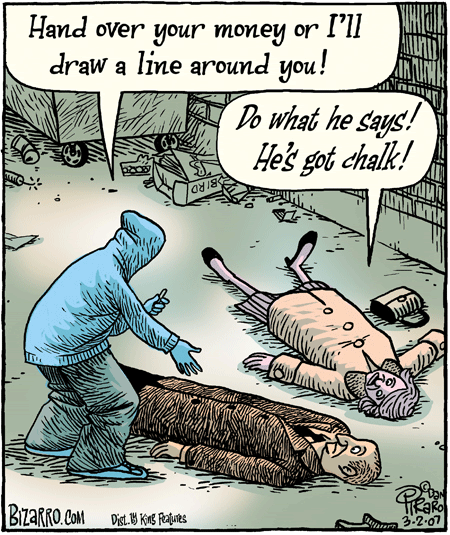
Realising that his symptoms indicated a virtually undetectable, fast acting neurotoxin, CIA coroner Quinn Abner frantically wrote up the details, lay on the floor and, as a professional courtesy, did his best to draw a chalk outline of himself. Jeremy Das, Loughborough, England.

What’s wrong here? Well, we all know better than to start a novel out with a gerund phrase, right? Tsk, tsk…


Olivia followed her breasts into my office where I was studying the dead flies on the window sill and dropped a large brown envelope on my desk, which rearranged the dust as it came to rest next to my right elbow, causing me to lose interest in the flies as I watched her walk away, watched carefully while wondering if the motion of her hips could bring a dead man back to life, which led to wondering what she could do to a man who was still alive. —  Will Dennehy, Cambridge, MD

Oh no, no, no…not another dame walks into the pebbled-glass detective office! This is a cliche, of course. Don’t let this happen to you. (Fred MacMurray could have used that advice).

As he pounded on the door, Billy ‘Four-Toes’ Capalone, wondered, not for the first time, if he wouldn’t have been better off in the joint, or even taking a concrete nap, but instead, he straightened his tie and gripped his bible, determined not to blow his cover in the Jehovah’s Witness Protection Program. — Arlen Feldman, Colorado Springs, CO

How many times has James told us not to open with a character wondering? Egads…

Eyes bleary from yet another night of fruitlessly staking out the Ritz Motel in West Hollywood’s seedier quarter, hoping to get some usable dirt on Mrs. Hennigan’s wayward hubby Bill, Niles Cranworth, P.I., pushed the start button, cranked the wheel over, and pointed his well-traveled Chrysler 300 southward on La Cienega Boulevard (“La Cienega,” he noted with irony, being Spanish for “the cienega”). — Andrew Lundberg, Los Angeles, CA

Well, at least we know where we are in this opening. But I think the writer’s research is showing.

Detective Wilhelm Schmidt’s raspy voice poured through the telephone receiver like a dump truck of gravel unburdening its load—much like the trucks that worked around the clock at Rohrer’s Quarry off of 1-81, transporting payloads of lime, sandstone, crushed rock, and gypsum—though with Detective Schmidt’s heavy German accent, excavation on its own would not suffice, and a second, albeit entirely different industry would need to be invoked to really paint a crystal clear picture of his voice. — Cody Hanna, Lancaster, PA

There’s nothing worse than a writer in love with the sound of his own metaphor.

Prisoner #4420991 selected two large snow cones for his pre-execution last meal, much to everyone’s surprise, but #4420991 knew that death by lethal injection would come as sweet relief when balanced against the snow cone headache he expected to have. — Greg Homer, Diamond Springs, CA

Don’t ya hate it when the bad guy doesn’t have a name?


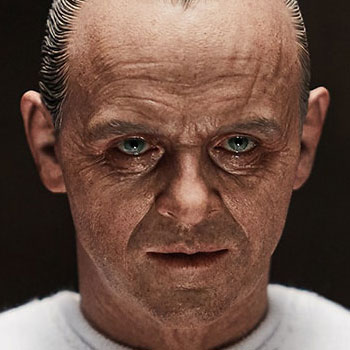
“I remember the moon had a face like Hannibal Lecter and that the wind blowing through the trees reminded me of the music from Psycho,” stated Effie Laudermilk as she sat in the courtroom stand on trial for the murder (which she vehemently denied) of her boyfriend whose partially eaten body was found in his car at the bottom of a pond. –Randy Blanton, Murfreesboro, TN

You know, I sorta kinda like this one. Peace out to all our friends here at the Kill Zone.  An end-of-the-year tip of the hat to all of you who comment on our posts. May all your book ideas be merry and bright, and all your pages not white. (ie blank). And a big shout-out to all our First Page Critique writers. Yoose guys rock. See you next year.

Just Breathe… You’ve Got This

By Sue Coletta

Writers wear many hats… wife/husband, mother/father, sister/brother, friend, marketer, editor, (some add) publisher, (some add) cover designer, (some add) audiobook narrator, (some add) speaker, (some add) coach, housekeeper, bookkeeper, blogger, social media user/expert, tax preparer, holiday host, baker, cook, etc., etc., etc.

Under the best of circumstances, it’s a lot to juggle. During the holiday season, forget about it. Feeling overwhelmed is the new normal, especially if you’re hosting a holiday event.

First, breathe. You’ve got this.

When chaos starts shaking the to-do list in my face, I close my eyes, lean back, and breathe… It’s amazing what a few deep breaths can do. There’s a running joke in my family that I’m so chill, I’m practically a corpse. It’s true! My blood pressure rarely, if ever, rises above 110/60, even under stressful conditions. And you know why? Because I take advantage of the most powerful and the most basic gift we have — the ability to breathe.

It may not sound like much of a superpower, but controlled breathing improves overall health. Controlled breaths can calm the brain, regulate blood pressure, improve memory, feed the emotional region of the brain, boost the immune system, and increase energy and metabolism levels.

The Brain’s Breathing Pacemaker

A 2016 study accidently discovered a neural circuit in the brainstem that plays a pivotal role in the breathing-brain control connection. This circuit is called “the brain’s breathing pacemaker,” because it can be adjusted by alternating breathing rhythm, which influences our emotional state. Slow, controlled breathing decreases activity in the circuit while fast, erratic breathing increases activity. Why this occurs is still largely unknown, but knowing this circuit exists is a huge step closer to figuring it out.

Breathing Decreases Pain 

Specifically, diaphragmatic breathing exercises. Ever watch an infant sleep? Their little tummy expands on the inhale and depletes on the exhale. They’re breathing through their diaphragm. We’re born breathing this way. It’s only as we grow older that we start depending on our lungs to do all the work.

Singers and athletes take advantage of diaphragmatic breathing techniques. Why not writers? If you find yourself hunched over the keyboard for too long, take a few moments to lay flat and concentrate on inflating your belly as you inhale through your nostrils. Then exhale while pulling your belly button toward your core. It takes a little practice to master the technique. Once you do, you can diaphragmatically breathe in any position. The best part is, it works!

Count Breaths for Emotional Well-Being

In 2018, another scientific study found that the mere act of counting breaths influenced “neuronal oscillations throughout the brain” in regions related to emotion. When participants counted correctly, brain activity showed a more organized pattern in the regions related to emotion, memory, and awareness, verse participants who breathed normally (without counting).

Controlled Breathing Boosts Memory

The rhythm of our breathing generates electrical activity in the brain that affects how well we remember. Scientists linked inhaling to a greater recall of fearful faces, but only when the participants breathed through their nose. They were also able to remember certain objects in greater detail while inhaling. Thus, researchers believe nasal inhalation triggers more electrical activity in the amygdala (brain’s emotional center). Inhaling also seems key to greater activity in the hippocampus, “the seat of memory,” according to Forbes.

Relaxation Response

The “Relaxation Response” (RR) is a physiological and psychological state opposite to the fight-or-flight response. RR therapy includes meditation, yoga, and repetitive prayer, and has been practiced for thousands of years. These stress-reducing practices counteract the adverse clinical effect of stress in disorders like hypertension, anxiety, insomnia, and aging.

Yet, research on the underlying molecular mechanisms of why it works remained undetermined until a 2017 study unearthed a fascinating discovery. Both short-term and long-term practitioners of meditation, yoga, and repetitive prayer showed “enhanced expression of genes associated with energy metabolism, mitochondrial function…” and more efficient insulin secretion, which helps with blood sugar management. Relaxation Response also reduces the expression of genes linked to inflammatory responses and stress-related pathways. In simpler terms, controlled breathing helps boost the immune system and improve energy metabolism.

Creativity

This probably goes without saying, but I’m mentioning it anyway. Good brain health increases creativity. Creativity helps inspiration. And inspiration ups word counts.

With all the rushing around for the holidays, combined with writing deadlines — either self-imposed or contracted — please take the time to breathe. Your body and your muse will thank you later. 🙂

Happy Holidays, my beloved TKZers! May all your writer dreams come true in 2020.


Set Up a Command Post Inside Your Character’s Head

by James Scott Bell
@jamesscottbell

Here is another first page for critique. It brings up a major issue that applies to all writers, but especially those writing fantasy and speculative fiction.

See you on the other side.


The Guide

Sam woke up in the middle of a field with a headache and a fuzzy memory of cold, rushing water. A thin black cat sat on the lowest branch of a large dead tree a few feet away. The cat hopped down from its perch, and disappeared behind the large trunk of the tree with a flick of its tail, as if to say, “Follow me, human.” After several minutes of walking, it turned around and stared. In an instant, the cat was gone and in its place, a man. “Make thy purpose known, mortal.”

Startled, Sam asked “Who are you?”

The man spoke, “I am Andrian, Guider of souls. Who might ye be, and from where do ye hail?”

“My… my name is Sam. I come from Oregon.”

“What bringst thee to my realm, ‘Sam’ of ‘Oregon’?”

“I… saw… a cat. I guess it wanted me to follow?”

“Ah, Cailleach.”

Once again, he was gone. In his place, the black cat from only moments ago. Just as quickly as he disappeared, he returned to his human form.

“Don’t– do that… It makes my headache worse…”

“My apologies. Be ye hungry?” There was something in his voice this time that sounded like….hopefulness? Curiosity? It was hard to tell. Nevertheless, Sam obliged. The man turned around, “Follow me.”

The man turned and began walking away. It was only after they reached an impassable wall of stone and being asked a direct question that he spoke again.

“How are we going to get past this cliff?”

“Do not worry. It is simply a cloaking spell I cast on my land, so that I may be hidden from view and protected in case something happens again.” He walked into the stone, and disappeared.

Sam asked, “What do you mean, ‘Something happening again’?”

He replied, “It is of no importance. Come, I shall give thee a meal.”

They crossed the barrier and Sam’s ears were filled with the sound of rushing water. Once through, the sound immediately stopped. Many different types of rare, colorful birds in all different sizes and colors sat perched on various branches. Andrian reached out, and a large white bird landed on his arm. The bird spoke, “Master has brought home a visitor?”

“Aye.”

***

JSB: Introductory note: I have a feeling the title here is for the chapter, not the book. If it is for the chapter, it’s fine. If for the book, please read my post on titles, for you can do much better.

A few months ago I wrote about the most important question you can ask about a scene. It is, Would they really? Is this how the characters would really act and speak under the specific conditions of that scene?

This is the overarching criticism I have of today’s piece. The result is that the reader, rather than being pulled into a unique story world, is kept at arm’s length. We don’t experience the scene along with the main character; we watch from afar. And Sam’s lack of reaction, resistance, wonder, fear, trembling or anything beyond “startled” runs afoul of the would they really? test. We get the feeling the characters are game pieces on a plot board being moved by the author, not living, breathing people making the moves themselves.

I want real characters here because I like this set-up—waking up in an alternate world. Yes, it’s been done, many times before, in fantasy and even, in a way, in noir (guy wakes up with amnesia). But that doesn’t mean a writer can’t tackle it afresh and put his unique stamp on it. Also a situation isn’t a cliché for a new reader (I’m assuming YA audience here).

So go for it.

But let’s make the “it” better.

Sam woke up in the middle of a field with a headache and a fuzzy memory of cold, rushing water.

Instead of starting us off in Sam’s head, allowing us to vicariously experience this most mind blowing of circumstances, the line merely tells us what’s happening. We need to be feeling, along with Sam, his groping toward consciousness. The only way to do that is to climb inside Sam’s head and lock the exit. Within his cranium is where you must set up your entire command post for the duration of your novel.

Firmly ensconced therein, you can only look through his eyes and think his thoughts. Since he’s just waking up he wouldn’t know that he is “in the middle of a field.” He has to find that out. Start by giving us his first sensations of waking. What does he see? What does he smell? (Smell is especially promising here. Wet dirt? Grass? Dung? Give us something!)

Weave in his pounding head and the memory of cold, rushing water (I like that last bit, as it dangles a mystery).

A thin black cat sat on the lowest branch of a large dead tree a few feet away.

Don’t just toss this in! Give it to us in real time, with vivid description and strategic revelation. What do I mean by the latter? My strategy would be to start with the tree and end with the cat, like a slow pan in a movie.

Describe the tree. Don’t just tell us it’s dead. Give us the gnarls and knots, the sharp witch fingers of the empty branches.

And when he finally gets to the cat, don’t let it just sit there. Make it ready to pounce and, more important, have it staring right at Sam! That’ll send a nice chill up the ol’ spine. We need more description of this kind, grounding us firmly in the reality of this unreal world. Channel your inner Stephen King. (Read, for example, the first page of The Gunslinger and you’ll see what I mean.)

The cat hopped down from its perch, and disappeared behind the large trunk of the tree with a flick of its tail, as if to say, “Follow me, human.” After several minutes of walking, it turned around and stared. In an instant, the cat was gone and in its place, a man. “Make thy purpose known, mortal.”

Okay, I’m lost. If the cat disappeared behind the trunk, where does the “several minutes of walking” come from? It took me a couple of readings to figure out that Sam is following the cat. But you don’t have that in there! So it seems like the cat walks away, or around the tree (?) but is still near Sam. You need a beat of Sam following. This is a perfect place to stretch some tension and give us more description of the world.

And how does the cat get “gone”? Does it just vanish? (Later, you imply that the cat and “the man” are the same, just different forms. A more liquid transformation would be the better choice.)

Next, you have the appearance of the “man.” And that’s all you give us, save for the Monty Pythonesque speech pattern. What the heck does he look like? His clothes, his coloring, his adornments? We desperately need these.

BTW, don’t take the Monty Python reference as a dig. You obviously want this scene (and, I’m assuming, the novel) to have some humor. That’s fine, but the humor needs to come out of the “reality.” If you don’t make us believe what Sam is experiencing, the humor will fall flat.

The late Danny Simon (Neil’s older brother, who taught both Neil and Woody Allen how to write narrative comedy) talked about knowing your “bubble.” He meant your story world. He said, “You must know ‘the world’ — physical and every other way — that you’re going to write about. That will suggest possibilities. You must ‘see’ all the characters in the scene, all the physical stuff, too. Each action of the characters is going to cause a re-action among other characters or the environment.” (And if you’re going to write with humor, you would do well to study the only known copy of notes from Danny Simon’s famous comedy-writing class.)

Startled, Sam asked “Who are you?”

Startled? I should say so! But I don’t tell the reader. Show it! Does Sam scramble backward? Lose his breath? Think he’s going crazy? Can he even speak?

The man spoke, “I am Andrian, Guider of souls.

We don’t need The man spoke. That’s obvious. Give us an action beat or description. He raised his arms or His eyes burned.

“My… my name is Sam. I come from Oregon.”

“What bringst thee to my realm, ‘Sam’ of ‘Oregon’?”

 Okay, the fun begins. I’d lose the internal quote marks, though. That will confuse your intended audience, and isn’t needed. If you want to imply hesitation, he could say something like “Sam of O-Re-Gone?”

“My apologies. Be ye hungry?” There was something in his voice this time that sounded like….hopefulness? Curiosity? It was hard to tell. Nevertheless, Sam obliged.

 Obliged is a wrong word choice. Sam obliged implies action, but there is no action, nor even a call to action. He was simply asked a question. So have Sam answer or nod.

The man turned around, “Follow me.”

The man turned and began walking away.  

That’s one turn too many. It would mean the man is walking away, only backwards. Remember, visualize every single beat through Sam’s eyes. Easy fix: just lose one of the turns.

It was only after they reached an impassable wall of stone

Whoa! That was fast. They get to a “wall of stone” in a nanosecond of fiction time. I mean, there is pace, and then there’s warp speed (which, you’ll recall from Star Trek, blurs everything).

Don’t skip what we need to see and experience. It won’t hurt your pace if, again, you’re stretching the tension. Stretch it! What is Sam feeling as he follows? In fact, why is he following in the first place? There’s no hesitation or doubt. Would he really (not have any)?

And man, we need to see this “wall of stone.” How would Sam describe it? What would he notice? How would it make him feel?

and being asked a direct question that he spoke again.

You make it clear in the next line that it is Sam speaking. It’s his voice. But that means you don’t need to tell us he’s about to speak again in the previous line. Let the action do the work. The words he spoke again are superfluous.

“How are we going to get past this cliff?”

I don’t know what I’m supposed to see. A wall is not a cliff. A cliff has no wall. Ack!

They crossed the barrier

What barrier? It’s gone. And you don’t cross a barrier anyway. You cross a chasm. You scale or go around a barrier.

Many different types of rare, colorful birds in all different sizes and colors sat perched on various branches.

Another great opportunity for description! Let us see these birds as Sam does! Reds and yellows and oranges and purples! And unless Sam is an ornithologist he’s not seeing “rare.” He’s seeing other-worldly. How would Sam react to that?

Whew. Okay, I’ve been tough on you, writer, because you have a situation that would make me want to turn the page…IF I was fully invested in Sam and IF I could SEE this world. So please do this for me: climb inside Sam’s head and don’t come out until you’ve done a complete re-write of this opening scene. And I mean complete. Forget what you’ve written and start with a blank page. Go step-by-vivid-step. Take your time.

Weave us a dream!

Comments are welcome.

Gonna Find Out Who’s Naughty or Nice…

Photo by Karina Thomson from unsplash.com

The Christmas song “Santa Claus Is Comin’ To Town” is weighing on my mind right now, and the reason isn’t just the season.  It is also because of the verse in the song which lightheartedly notes that Santa is making a list and checking it a couple of times for the purpose of finding out who is naughty or nice. Santa isn’t the only one who is doing that. Just about anyone — including you, and you, and you — can do it, too.

I had the occasion recently to get a look at an evidence list prepared by a local police department with regard to a homicide. I’ am not referring to the murder which occurred on my street last year. The one which I am discussing here took place in a neighboring suburb and involves a woman who has been charged with murdering her husband, who was a prominent physician in the area. The police in the course of their investigation subpoenaed, among other things, recordings made by the couple’s Echo devices; their ring cam and trail cam video recordings; and the ring cam video recordings of the house across the street from them. You may not know that your Echo and Apple devices aren’t listening only when you say, “Alexa, order me a pizza from Donatos” or “Siri, what is traffic like?” No, they are listening to everything you say, recording it, and storing it offsite in the cloud. Yes, I know, we have been assured that such recordings are erased after a certain amount of time. They aren’t, and police departments are increasingly utilizing these recordings in investigations. I don’t know about you, but I wouldn’t want to be sitting in a defendant’s Timberlands in court when an Alexa device plays back a recording of the accused telling someone, “I’m gonna kill that (insert your own term of endearment)!” This is thanks to technology in general and to devices in particular which may be sitting in your home.

Photo by Nvdu from unsplash.com

Did I mention police departments? Many or perhaps all of you have heard of ALPRs, or Automatic License Plate Readers. ALPRs take many forms. If you are fortunate enough to traverse a toll road on a regular basis you are probably aware that these devices are set up at the booths to scan your license plate. Should you blow through the gate without paying the piper your license plate number is duly recorded and read, the better so that the turnpike authority can send you an extremely expensive ticket. Similar units that do much more are now installed in police cars. They scan the license plates of parked and driven cars as the officer drives down the street. If the scanner detects a plate registered to someone who (to name one example) has a driver’s license which is suspended said someone’s information pops up on the unit’s screen, as does the license plate, the make and model of the car, and all sorts of other information. ALPRs were primarily used only by larger metropolitan police forces until recently. The cost of the hardware and software, however, has been reduced to the point that the price is within reach of most departments. Oh, a variation of it is available to you as well. Something that I call “ALPR lite” can behad bay anyone. It won’t give you the name, address, and vitals of everyone who drives by your house but it will record the license plate of any vehicle driving by the scanner hardware and the time of day it does it. It will also collate it. Anyone owning the hardware and possessing a subscription to the service can note how frequently a car bearing a certain plate number is driving past their house and the times that the visits occur. If there are frequent break-ins to homes or vehicles during times that coincide with the appearance of the vehicles or if the same vehicles pop up during porch pirating incidents this information can be given to the police for follow-up investigation. ALPRs are primarily being purchased and used by neighborhood associations and apartment complexes, but the price is under one hundred dollars per month and dropping. I would guess that within a couple of years — or maybe a few months — anyone who wants the service will be able to get it for less per month than for what they are spending on their overpriced coffee fix.

I mention this for a couple of reasons. From a professional standpoint, I am not seeing any of this technology being mentioned in mystery or domestic thriller fiction. That doesn’t mean that authors aren’t doing it, but I read enough of a cross-section of books in those genres that I would expect to be encountering it.  I can, without hardly trying, think of a few different ways that a writer stuck on a plot could build a whodunit using an ALPR or Echo-type device as a foundation. 

One last thing. Everything that makes you YOU is being analyzed, collated, considered, and shared as you do your holiday shopping and spending. The folks who issue those store loyalty cards that you scan at the checkout compile your purchasing data and sell it. Do you use credit cards or have installment loans? The information as to how you pay your debt each month is strained, drained, blued, tattooed and passed on. If you would like to see how your financial practices are sliced and diced, take a few minutes and check out this article, which discusses the minutia contained in your credit report and why you may or may not have difficulty the next time you go a financial institution looking for a loan. It’s fascinating information and it might provide an initial bit of grist for that financial thriller you’ve been thinking about writing. 

Photo by Edrece Stansberry from unsplash.com

I’m not trying to frighten you. I’m attempting to forewarn you by turning on a light to reveal a corner of the world that you may not be aware of. It isn’t just Santa who knows all about you when you are sleeping and what you are doing when you are awake. Be forewarned. And with that knowledge, please have a Merry Christmas and a Happy New Year. We’ll see you in 2020 if the creek doesn’t rise. 

Photo by Metin Ozer from unsplash.com

READER FRIDAY: Tell Us About the Novel You’re Most Proud of

When someone asks me to recommend one of my books, I never know what to say. Beauty is in the eye of the beholder and all my children are beautiful in different ways. My stock answer (in my head) is – my next one, because I’m always striving for a challenge and trying something different.

But if you had to pick…

Tell us about a novel you wrote that you’re most proud of and why.

First Page Critique: The Blood Zone

By Elaine Viets

Today, another Brave Author gives us a first page to critique, The Blood Zone.
Let me take a deep dive into this first page, and then you, TKZ readers, can give our author your thoughts. Here’s the page, and my critique follows.

###                                                   ###                                                            ###

The Blood Zone

They’d lost contact with the dive team over an hour ago.

Reece Jordan looked up from her monitors and through the foot-thick tempered glass window. The one hundred meters of water above muted the sun’s radiance. At best, it illuminated the depths like moonlight through a cathedral’s windows.

Her chair squealed as she shifted back to the screens. She did her best to ignore the sound. Everything creaked, squeaked, or shed rust flakes in an underwater habitat like Sirenica. On a bad day, her monitoring center sounded like a fleet of cars with worn-out brakes.

A rap-rap-rap came from the open hatchway. Jordan didn’t look up. She knew her boss’ tics better than anyone.

“Anything?” Dylan Sawyer asked. The woman’s short blonde hair clung to her scalp as if she wore a skullcap. Another perk of living in a high-moisture environment.

Jordan shook her head. “Not a peep. I’ve got both ROVs on a search pattern.”

The remotely operated underwater vehicles were the size of large dogs. They sported a pair of grasping claws on either side of a cyclopean camera lens. Each could operate long distances without a tether.

But the ocean was a big place.

“Shouldn’t have sent them down there in suits,” Sawyer muttered under her breath. “I told them we needed that fourth minisub.”

“Peterson would’ve said something if he felt uncomfortable.” That was an understatement. Peterson and the two other men on his team had a combined fifty years of experience working under deep dive conditions.

“Even three people can get the nark. At the same time, too.”

Jordan nodded. Nitrogen narcosis could hit hard and fast at this depth. A too-quick depth change could fog the brain as effectively as chugging a bottle of Tennessee whiskey.

Her monitor emitted a ping.

“I’ve got something.”

In an instant, Sawyer was up and looking over her shoulder. “Show me.”

Jordan tapped a few keys. The monitor switched over to one of her ROV’s cameras. Her breath whistled out through her lips as the image of two divers came into focus.

Peterson swam with a crab-like motion. His right arm curled around one of his fellow divers, dragging him forward through the water. Dark streamers of some strange material rippled from the edges of the two men’s suits.

“The hell is that?” Sawyer peered at the screen. “And what’s that black cloud trailing them?”

Jordan swallowed. “It’s blood.”

###                                                             ###                                          ###
Elaine Viets’ comments
This is an excellent beginning, with one major problem: Where the hell are we? As readers, we’re as adrift as the three lost divers.
This problem can be easily remedied in the third paragraph, Brave Author. Tell us about the underwater habitat, Sirenica. You say it’s rusting and noisy, but how old is it? How many people live aboard? What is their purpose: Are they oceanic researchers? If so, which ocean? Are they explorers on another planet, and this takes place in a sci-fi future? Let us know.
Otherwise, there’s much to like here, starting with the title, which immediately grabbed my attention. The writing is clear and crisp, and the various dangers are pointed out quickly: the divers could be lost in a vast ocean, or suffering from nitrogen narcosis.
A few nits to pick: I’d change moonlight through a cathedral’s windows to moonlight through a cathedral window.
Also, I’d say the woman’s short blonde hair clung to her scalp like a skullcap, not as if she wore a skullcap.
And is clinging, damp hair really a “perk” – a benefit? Or is it simply a “result” of living in a high-moisture environment?
And finally, you need a more specific object in this sentence: “Shouldn’t have sent them down there in suits” might read better as:“Shouldn’t have sent the divers down there in suits.”
Otherwise, you have a good beginning with a nice, creepy opening. Well done, Brave Author. I hope the rest of this adventure makes it to publication.

****
Can you kill someone with a pink plastic flamingo? Read The Pink Flamingo Murders and find out. Win the new e-book version by clicking Contests at www.elaineviets.com

When a Writing Break Turns Into a New Novel: J.T. Ellison

Laura Benedict here. Refilling, refueling, refreshing…There are many names for it, but they all refer to giving our creativity the chance to enjoy a well-earned rest. To give it some space, and let our subconsciouses play so we can come back and mine it when we’re ready. My guest today is my good friend, J.T. Ellison, and she and I have had hundreds–yes, hundreds–of conversations about staying creative and navigating flashes of burnout for over a decade. Given that J.T. has published 22 novels since 2007, along with a significant number of stories, novellas, and anthologies, she knows well the challenges of keeping her work fresh and herself productive, yet also sane.

Welcome, J.T.!

* * *

Credit: Krista Lee Photography

“I’ve always wanted to write a boarding school mystery…”

Let me set the stage. 2018. St. Petersburg, Florida. Bouchercon. A long lunch with an editor, a publisher, a spouse, and a completely burned out author.

I’m not one for tears, but I was feeling it that day. I’d been juggling too much, jumping back and forth between my books and my co-written series, work for the TV show, traveling all over the place, and I was feeling it. I tend to bite off more than I can chew anyway, but at that moment, I had the horrible sense that writing had become work. It’s happened a couple of times in my career, so I recognized what I needed. A break.

Of course, that’s the very last thing any editor wants to hear, but I didn’t think I had a choice. It was take a break or flame out completely.

I’ve worked with my team long enough to be comfortable being honest with them. We talked frankly about author burnout, about finding the joy in the work, about how sometimes, you have to take a break from the grind, write something that you know will be fun. And the words slipped out: “I’ve always wanted to write a boarding school mystery.”

Though I wasn’t actively writing this story, I already had a character – Ash Carlisle. I already knew she was British, and was coming to America to attend an elite boarding school. I knew I wanted her to go from revered to reviled. That’s all I had. But my editor’s face lit up, and I knew I had to find a way to write the book. Just not then.

We left the lunch with a plan for me to regroup and get back to them when I thought I was ready to jump in. I planned to take the rest of the year off – two full months – and then spend six months on a new co-written book, then write the boarding school mystery.

We had scheduled a few days between events to go across the state for some east coast beach time. On the drive over, I was kicking myself. I’d had a conversation about burning out with another author friend, Carla Neggers, who rightly pointed out that some people have to work for a living and we writers have it pretty cushy. She didn’t exactly say suck it up and get back to work—or maybe she did, there was a lot of wine that night—but that’s what I heard. I was relaying this to my husband, feeling silly for my whining. “She’s right, of course. It’s not like I’m digging ditches. If I took a little time off now, maybe I could write the book by February.”

We talked it through. I only had one tour event left after Bouchercon, but February was only four months away. I had the setting, the main character, and the semblance of a plot. It wasn’t like I’d need to do a lot of research—I attended an all woman’s boarding college and was planning to use it as my setting anyway. We’d just been to Oxford, so Ash’s hometown was fresh in my mind. I had a sense of who she was. And it would be a fun book to write. A really, really fun book to write. Hauntings and history, secret societies and hazing, all against a backdrop of one of the prettiest campuses in the country.

I texted my editor, who said yes, they could work with February. I took three full days at the beach to recharge my batteries, handled a couple more events. And then off I went. I started writing in early November and the story just poured out. It was so much fun. I rediscovered the joy of writing. I wrote a few scenes in screenplay format to make sure the visuals worked, played and played with it, hit my usual ¾ of the way in block, where I need to blow up the book to make it all make sense. I even went so far as to change POVs after I’d written a large chunk of it, which truly brought it to life.

I made that deadline (with a small two week extension). My editor loved the book. And here we are, 14 months after my temporary meltdown, and GOOD GIRLS LIE is about to be in stores. It feels like a huge triumph, because this book refilled my well so completely that I found a new joie de vivre for my writing. It’s amazing to me how these things work themselves out.

I think it’s very important for writers—artists in general—to take a step back when they’re feeling burned out or discouraged. You may think you need months off, but a few days at the beach could be the ticket. Or writing a book that you’ve had simmering in your subconscious, one that you want to write, that you know will be a blast to experience. Your passion project will refill your well, and isn’t that what we all want?

Have you ever wanted to take a break from writing, or been forced to by life circumstances? How did you find your way back?


J.T. Ellison is the New York Timesand USA Today bestselling author of more than 20 critically acclaimed novels, including TEAR ME APART, LIE TO ME, and ALL THE PRETTY GIRLS, and coauthored the “A Brit in the FBI”series with #1 New York Timesbestselling author Catherine Coulter. J.T. is also the EMMY®Award-winning co-host of the television series A Word on Words. Her forthcoming novel, GOOD GIRLS LIE, was a LibraryReads Pick for December 2019 and received a starred review from Publishers Weekly. For more, please visit www.jtellison.com, or visit her online @thrillerchick. An excerpt of GOOD GIRLS LIE is available now.


First Page Critique – Hell Hath No Fury

by Debbie Burke

@burke_writer

Please welcome today’s Brave Author with a submission titled Hell Hath No Fury. Take a look then we’ll discuss it.

Photo credit: Fernando Aguilar, Unsplash

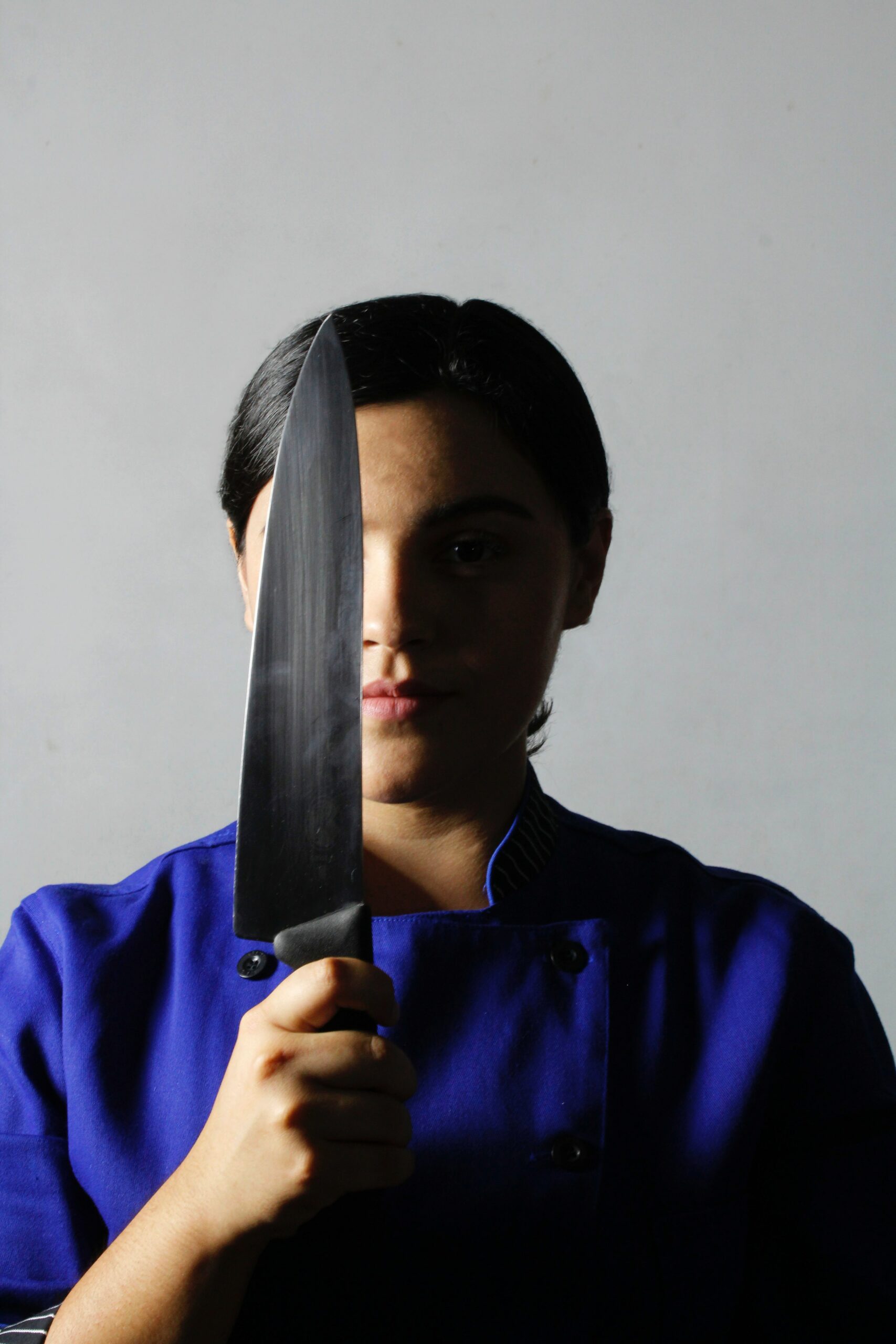
A DROP OF BLOOD CLUNG PRECARIOUSLY to the tip of the chef’s knife. On the fluffy white carpet of Madeline Hawthorne’s bedroom, a nasty red stain was forming. The woman gripping the knife breathed in staccato gasps; the muscles in her arm twitching after her recent exertion.  Madeline lay on her stomach on the king-sized bed, wearing a silver silk nightgown with two ragged gashes in its back.  Blood welled up from the wounds and ran down her side onto the satin sheet.  Madeline groaned and moved her left arm.

“I said die, bitch!”

The knife sliced into Madeline’s back five more times in quick succession.  Blood spatter covered the woman’s face and arms as well as her blouse.  She was petite, but the muscles in her arms and shoulders were well-defined, honed by hours in the gym and the dance studio.  Her calves, visible below her dark skirt were lithe and slender.  She tensed for another lunge, but there was no need. She stood over the dead woman while her pulse steadied and her breathing slowed to normal.  A dark pool had formed on the bed and ran in two thin rivulets off the edge of the mattress and down onto the stained carpet.  After a few minutes of motionlessness, she calmly laid the knife down on a bloodless space near the foot of the bed and wiped the handle with a portion of the comforter, leaving bloody streaks.  Then she reached down and removed her shoes, which had mostly avoided the flying blood.  She carefully walked to the bathroom and set the shoes down on the floor, then walked around the bed, not stepping in the obvious patches of blood, until she reached a closet door.  She opened it and went inside, then reached up to the shelf over a row of dark men’s business suits and removed a wooden case.

John had shown her the box once, after they had sex in his bed while his bitch wife was away for the weekend visiting her mother. He was unnaturally proud of his Colt Python .357 Magnum with the 4-inch barrel. She removed six bullets from a cardboard box lying next to the gun inside its case and loaded each of the revolving chambers, then took the gun back to the bathroom.  She sat down on the edge of the marble bathtub to wait.

~~~

The title Hell Hath No Fury makes a great first impression. The familiar phrase is commonly attributed to Shakespeare. But the source is actually a 1697 play, The Mourning Bride by William Congreve.

Here’s the original version:

“Heav’n has no rage, like love to hatred turn’d,/Nor Hell a fury, like a woman scorn’d.”

No matter who said it, the quote fulfills requirements of a compelling title for a murder mystery. A female who’s suffered betrayal and rejection is consumed with passionate vengeance. Since titles can’t be copyrighted, Hell Hath No Fury has been used before. I suggest the Brave Author do a net search to find other books with that name and how recently they were published. If it’s not overdone, it’s an excellent choice for a murder mystery.

Now to deconstruct the first page.

At TKZ, we stress the importance of hooking the reader with action or a disturbance. Today’s first page kicks off with a gruesome stabbing, immediately followed by the promise of further violence as killer lies in wait with a gun for her next victim. The Brave Author sets up a tense situation that pulls the reader into the story in media res. Well done!

Let’s get into specific details:

Point of view – Keeping the killer’s identity secret is standard for mysteries.To accomplish this, the Brave Author starts in omniscient POV where the events unfold like a movie. The killer is described by an unseen narrator. The reader knows what she looks like but not who she is.  Except for her pulse steadying, the reader is not inside the character until the last paragraph, when the POV shifts to her thoughts.

The risk is the reader isn’t yet invested in the character therefore may not read further to learn what happens to her. This is the eternal balancing act for authors. How do you start with action but, at the same time, make the characters fascinating enough for the reader to turn the page?

Using deep POV, the author might go inside the killer’s head sooner to share her visceral reaction as she plunges the knife, feels the resistance of Madeline’s muscles against the blade and the warm blood spatter on her face, as well as her rage against her romantic rival. BUT, that technique takes a chance of exceeding the reader’s gore tolerance.

Personally, I don’t mind the camera-eye POV in the first three paragraphs. It’s gory but doesn’t sicken me enough to stop reading. But that’s only one person’s opinion.

The fourth paragraph hints at the killer’s motives. At first blush, the stabbing appears to be a crime of passion by a jealous other woman. Then it grows more sinister when the killer waits to ambush John. Will she succeed with a second murder? The reader turns the page to find out.

Analysis of the craft details:

The Brave Author uses a number of unnecessary adjectives and adverbs. Strong verbs and vivid nouns paint the picture. Modifiers simply dilute the impact.

A DROP OF BLOOD CLUNG PRECARIOUSLY to the tip of the chef’s knife. Clung is a strong verb that implies precarious so you don’t need the adverb.

The chef’s knife is specific but also a bit misleading. For a moment, I thought the chef was a character rather than an adjective to describe the type of weapon. Suggest you delete chef’s to avoid confusion or use a more generic term like butcher knife.

…a nasty red stain was forming. Blood by itself evokes a strong reaction in readers so nasty is unnecessary.

The knife sliced into Madeline’s back five more times in quick succession. Sliced doesn’t accurately describe the normal movement in a knife attack. Slashed, plunged, stabbed are better verbs.

Blood spatter covered the woman’s face and arms as well as her blouse. Confusing because you refer to Madeline in the previous sentence then use “the woman” in the next. It’s not clear right away that the woman is not Madeline. Better to say: Blood spatter covered the attacker’s face and arms as well as her blouse. More changes to this sentence in a minute.

Extra credit for using the correct terminology: spatter rather than splatter.

…thin rivulets. A rivulet is thin by definition. A specific noun doesn’t need to be modified.

…stained carpet. With the vivid description of blood spatter and dripping blood, the reader already assumes the carpet is stained without being told.

After a few minutes of motionlessness, she calmly laid the knife down. Calmly contradicts the anger and passion the murderer shows with repeated stabbing. Rewrite to clarify.

She carefully walked to the bathroom and set the shoes down on the floor, then walked around the bed, not stepping in the obvious patches of blood, until she reached a closet door. 

Suggest you replace carefully walked with tiptoed.

Delete obvious. Patches of blood are visible, therefore obvious.

Is the following action unnecessary? The killer removes her shoes, goes to the bathroom, and sets them on the floor. She returns to the bedroom to get the gun from the closet then goes back into the bathroom to wait. Is the first trip needed? Seems like wasted action that doesn’t add to the story.

Since the killer is covered with blood, a normal reaction might be to immediately wash her hands and face, suggesting a Lady Macbeth conscience. However, if she ignores the sticky spatter, that cues something entirely different about her. I suggest you exploit this opportunity to show more of her personality.

Overwriting – Tighten the prose and delete unnecessary words. Here’s some line editing:

A DROP OF BLOOD CLUNG PRECARIOUSLY to the tip of the chef’s knife. A red stain pooled on the fluffy white carpet of Madeline Hawthorne’s bedroom, a nasty red stain was forming. The woman gripping the knife breathed in staccato gasps; [replace semicolon with a period]. The muscles in her arm twitcheding after her recent from exertion.

[new paragraph] Madeline lay on her stomach on the king-sized bed,  wearing a silver silk nightgown with two ragged gashes in its the back of her silver silk nightgown.  Blood welled up from the wounds and ran down her ribcage side onto the satin sheet.  Madeline groaned and moved her left arm.

“I said die, bitch!”

The knife sliced plunged into Madeline’s back five more times in quick successionBlood spatters covered the attacker’s face, arms, and blouse.  covered the woman’s face and arms as well as her blouse.  She The woman was petite, but the with well-defined muscles in her arms and shoulders were well-defined, honed by hours in the gym and the dance studio.  Her calves, visible below her dark skirt [add comma], were lithe and slender.  She tensed for another lunge, but there was no need.

[new paragraph] She stood over the dead woman, knife hanging at her side, and breathed deeply while her pulse steadied and her breathing slowed to normalA dark pool had formed spread on the mattress bed and ran in two thin rivulets off the edge of the mattress and down onto the stained carpet.  When her pulse steadied, After a few minutes of motionlessness, she calmly laid the knife down set the knife down in a clean area at the foot of the bed. She wiped the handle with a corner of the comforter, . on a bloodless space near the foot of the bed and wiped the handle with a portion of the comforter, leaving bloody streaks.  Then she reached down and removed her shoes, which had mostly avoided the flying blood.  She tiptoed carefully walked to the bathroom and set the shoes down on the floor. then walked around the bed, not stepping in the obvious patches of blood, until she reached a closet door.  She opened it and went inside, then Avoiding patches of blood, she walked around the bed to the closet. Inside, she reached up to the shelf over above a row of dark men’s dark business suits and removed a wooden case.

John had shown her the box once, after they had sex in his bed while his bitch wife was away for the weekend visiting her mother. He was unnaturally proud of his Colt Python .357 Magnum with the 4-inch barrel. She opened the case to reveal the gun and a cardboard box of ammunition beside it. She removed six bullets from a cardboard box lying next to the gun inside its case and loaded each of the revolving chambers. Gun Revolver in hand, she returned then took the gun back to the bathroom.

[new paragraph] She sat down on the edge of the marble bathtub to wait.

~~~

Overall, this first page has action, tension, and conflict with a promise of more to come. With a little line editing, this works well at drawing the reader to turn the page. Well done, Brave Author, and thanks for submitting.


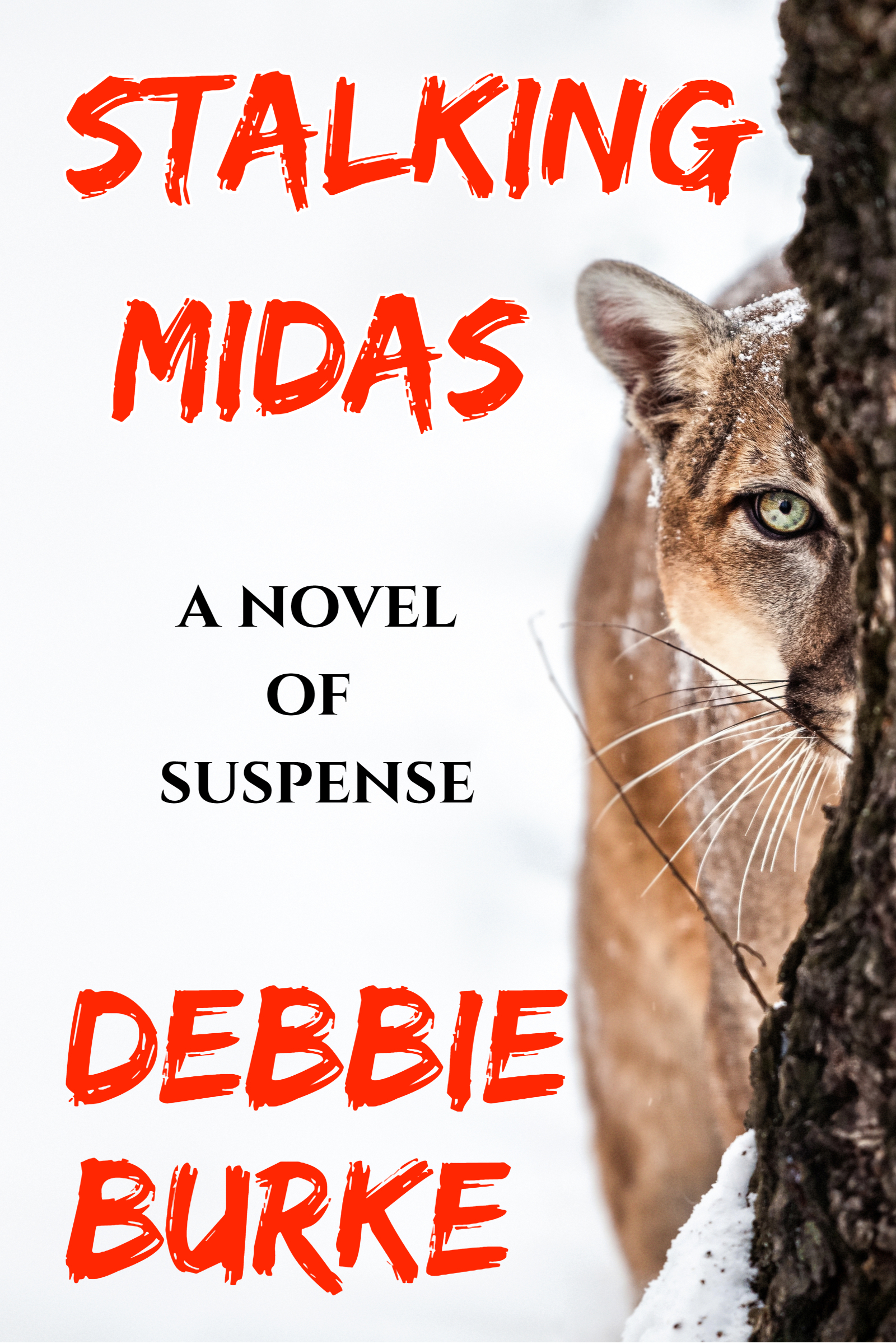
As an aside, my recent thriller Stalking Midas starts with a murder, too. The killer, also female, is immediately identified. The story question is not “Whodunit?” but rather “Will she get away with it?” Please check out the Look Inside feature at this link and let me know what you think.


TKZers, what are your opinions about starting a book with a murder on the first page?

Do you have suggestions and feedback for our brave author?


Warmest holiday wishes to everyone in the TKZ family. I’m honored to be a part of this creative, supportive community. Looking forward to seeing you in the New Year!

First Page Critique: The Great German Escape

This is my last blog post for 2019 before we head to our holiday break, and I have a first page critique for a novel entitled The Great German Escape for you to enjoy and provide feedback. My comments follow – as always, thank you for all your great comments and feedback to our brave submitters this year. I think we all learn from these critiques:)

The Great German Escape

As the American army captain exited the front gate on July 2, 1943, Wehrmacht Major Kurt Jaeger’s heart raced. The accountability formation confirmed the presence of eighty-three officers. All recently arrived. All from Rommel’s Afrika Korps. All adjusting to a zoo life existence.

Jaeger’s gaze shifted to the southwest guard tower. Behind it, a thin brown haze curtained the southern horizon. Hanging in front, a makeshift plywood placard branded him a failure. Stomach acid burbled as he read A – 12, B – 2.

Out of the corner of his right eye, he spied the German Commander step forward. The man set two marred futbols on the ground. As his routine, Oberst Heinrich von Richter’s gaze swept left to right first.

Biting the inside of his cheek, Jaeger focused straight ahead. Outside the interwoven wire fence, American soldiers clustered, anticipating the day’s entertainment.

“This morning,” von Richter said. “We demonstrate endurance … resistance … expected by our leaders … our countrymen. This current state is not static … though some of you believe it to be.” Again, his gaze traversed the formation, stopping periodically, then continuing. “War is dynamic. Today’s vanquished … becomes … tomorrow’s victors. Preparedness is imperative.”

More American soldiers appeared, some jostled for a better view. A clamminess broke out on Jaeger skin.

“In combat,” von Richter said, “two critical skills are speed and agility. The footrace I’ve designed test these attributes. Barracks commanders, choose your representative.”

Jaeger read the sign, hesitated, gulped, faced about. Thirty-six pairs of eyes focused on him. Scanning the first rank he spied a thin, leggy Oberluetnant. The man’s gaze averted his. Afraid? The Barracks B leader thought. Stand here and choose a competent winner.

In the second row, a lithe Hauptmann puffed his chest out, his head nodding left.

Another movement captured Jaeger’s attention. His counterpart, Major Heinrich Weiss, Barracks A, stood in the middle of his platoon, talking to a soldier.

“We ain’t gots all day,” an American shouted. A ripple of laughter emitted from their side of the fence.

Weiss tapped the man’s shoulder, and they moved up front.

Jaeger studied the man next to the twitching Hauptmann.  “Luetnant Fogel, step forward.”

Eyes wide, the man blurted, “Herr Major, I’m no runner.”

Jaeger’s stomach acid roiled. To change his decision would suggest him weak, indecisive. Through clenched teeth, he said, “Do not shame us. Run the race.”

My comments:

Overall

I enjoyed this first page and can definitely see, from both the title and first scene, this turning into a great war-time adventure novel, focusing on the German experience (and escape I assume from the POW camp). However, I do think this first page could benefit from some overall revision, as well as some minor tweaks to address specific concerns.

First, I think this first page would benefit from additional description/sensory details to help firmly establish both the setting and the main characters. A first page should ground a reader with a sense of place and introduce enough details regarding the main character to get a reader invested – so far this page is almost there, but not quite. I also think that some tweaks to the dialogue would help. I’ve provided my advice on these overall comments below:

Grounding setting and characters:

I felt like there were a lot of names and specifics but, despite these, I found it hard to visualize the scene or get invested in the characters. In terms of characters, just in this first page we have five characters identified by name: Wehrmacht Major Kurt Jaeger, Oberst Heinrich von Richter, Major Heinrich Weiss, as well as an Oberluetnant (unnamed) and a German soldier called Hauptmann – that’s a lot for a reader to digest, especially as, at this stage, the reader doesn’t know who is going to be a major or minor character (apart from Jaeger, who I’m assuming is the main protagonist).

Despite all the names, we get only a a few visual cues so it’s hard (for me at least) to visualize all these people, or to know who is likely to become crucial to the plot. My recommendation would be to cut down on the names/titles at this early stage so the reader can concentrate, and become invested in, a key character from the get go.

Likewise, although we get specifics like the date (July 2, 1943), barrack numbers (A – 12, B – 2.) and some hints as to composition of the POW camp (All from Rommel’s Afrika Korps), apart from a vague reference to a ‘thin brown haze’ on the horizon, I can’t really visualize the camp. Where are we? Europe? North Africa? Given the Americans are in charge of the POW camp it’s important for me to understand the greater context – were the Germans captured after a particular battle or American victory? How long has Jaeger been at the camp? Why is this competition/race so important to him (and it doesn’t make a lot of sense, given his stress levels, why he would chose a random soldier who isn’t a runner – surely, for something this important, Jaeger would have been better prepared??)

In addition, I think some further background on Jaeger on this first page would help establish his motivation and character. I was a little confused by: ‘Hanging in front, a makeshift plywood placard branded him a failure’- – I’m assuming he feels a failure because he was captured but then I wasn’t sure why his ‘stomach acid burbled’ as he saw the barrack numbers. Has his barrack lost previous races? The more we know what’s at stake here, the more we can be invested in both Jaeger as a character and the outcome of the race.

Dialogue

I wasn’t completely sure why von Richter’s speech seemed so disjointed but I found it  distracting and it confused me as his words didn’t seem to match the ‘entertainment’ that was being organized (namely a race between the barracks). If there is a hidden meaning or wider implications of his speech I think we need more context to understand this.

Other specific comments.

I also had a few smaller, more specific ,comments about elements in this first page that I found distracting or confusing. These are easily rectified but important nonetheless.

  • The number of times left and right identified was distracting: Just in one page we have ‘out of the corner of his right eye, he spied the German Commander’ followed by ‘Oberst Heinrich von Richter’s gaze swept left to right first’ and then ‘Hauptmann puffed his chest out, his head nodding left’. For me this was too repetitive on one page.
  • I was confused why the ‘two marred futbols’ were placed out for a running race – at first I thought there was going to be a football match between the barracks or between the Germans and the Americans.
  • Using specific numbers became distracting: eighty-three officers; thirty-six pairs of eyes…I started trying to do the math as to how many people were there when I should have been focusing on characters and plot.
  • “We ain’t gots all day,” an American shouted – I assuming this was supposed to be “We ain’t got all day.” Be careful of even small typos like this on your first page.

As you can see from my comments, I think this page would benefit from further revision – but the key elements are there. A race in a German POW camp where there is clearly more at stake than the reader first believes – with some revisions, I think this first page could create some great tension to get this story off and running! (Pardon the pun!)

So TKZers what advice would you offer our brave submitter?