Inspiring Quotes From Inspiring Crime Thriller Writers

If you’re a writer—crime thriller or otherwise—sometimes you need a break… then a kick in the butt to get back in the chair and your fingers on the keys. I’m going through this after taking a two-week writing hiatus. Rita (my wife of 37 years) and I took a vacation, and Rita forbid (forbade?) me to write during our time away.

So, I’m back home and started to type a new manuscript that’s book 6 in my based-on-true-crime series. Although I know the story inside out, I confess I had a hard time getting in the chair and placing my fingers on the keyboard. Knowing I also had a Kill Zone post due this week, I decided to do a two-birds-with-one stone thing and get something stirring.

I spent an evening surfing the net and searching for motivation and creativity support. It worked. In the past three days, I’ve written 8991 words in my Between The Bikers manuscript. My renewed energy and creative juice is partly thanks to taking a writing break and finding inspiring quotes from inspiring crime thriller writers. I’d like to share some of them with you.

——

The way to write a thriller is to ask a question at the beginning, and answer it at the end. ~Lee Child

Place the body near the beginning of your book—preferably on the first page, perhaps the first sentence. ~Louise Penny

I’m interested in starting stories at the moment of some crisis to see how the character deals with it. ~Paul Auster
Figure out what exactly is at stake, and how to establish it quickly. That’s your conflict. ~Katia Lief

I’m always pretending that I’m sitting across from somebody. I’m telling a story, and I don’t want them to get up until I’m finished. ~James Patterson

Life is about working out who the bad guy is. ~Sophie Hannah

An initial crisis may produce a question, one that takes the form of a challenge to the reader: Can they solve the puzzle before the answer is revealed? In its simplest form the crisis is a murder and the question is whodunit? ~Unknown

I can’t start writing until I have a closing line. ~Joseph Heller

Often know how the book will end and have imagined a number of major scenes throughout, but not always how I will get there. When I’m about two-thirds done I re-outline the whole book so I know that I’m delivering on all I promised. ~Jeff Abbott

Crime stories are rarely about crime. They’re a study of its aftermath. ~Unknown

The only writers who survive the ages are those who understand the need for action in a novel. ~Dean Koontz

People don’t read books to get to the middle. They read to get to the end. ~Mickey Spillane

I do extensive outlines before I write a single word. ~Jeffrey Deaver

Plot develops from the initial setup of the characters, their conflicts and the location. This development is fueled by the characters’ decisions. These choices should be tough and compromising with high risks of failure. ~Unknown

I like to come up with a massive scale concept and throw in very ordinary characters because I think if you have a massive scale concept with massive scale characters they tend to cancel each other out. People have more fun if they can imagine how either themselves or the type of people they know would react in a bizarre situation. It’s a bit boring if you know how some highly trained soldier is going to react to a situation. It’s not very interesting compared to how someone who is an electrician or a schoolteacher might react to a situation. ~Christopher Brookmyre

The first chapter sells the book; the last chapter sells the next book. ~Mickey Spillane

Readers have to feel you know what you’re talking about. ~Margaret Murphy

Keep asking ‘Who wants something?’ ‘Why do they need it?’ and ‘What’ll happen if they don’t get it? ~Unknown

A man’s grammar, like Caesar’s wife, should not only be pure, but above suspicion of impurity. ~Edgar Allan Poe

Chapters are shorter than they used to be, and I have to be creative about ways to keep the pace moving: varying my sentence length, making sure each chapter ends on a note of suspense, keeping excess narration to a minimum. ~Joseph Finder

My ideas? Headlines. The human heart. My deepest fears. The inner voice that says: if it scares you, it’ll scare readers too. ~Meg Gardiner

Surprise is when a leader is unexpectedly shot whilst giving a speech. Suspense is when the leader is delivering a speech while an assassin waits in the audience. ~Unknown

I’d have to say that most of my ideas originate with everyday anxieties. What if I forgot to lock the door? What if a horrific crime happened next door? What if my daughter didn’t show up at work? What if I woke up one day and the house was empty? ~Linwood Barclay

Ideas are not the hard part of writing. I have ideas all the time. The challenge is understanding which ideas are the most interesting and powerful and dramatic, and then finding the best way to bring them to life. It’s all in the execution, because the idea is where the work begins, not where it ends. ~Jeff Abbott

If you don’t understand that story is character and not just idea, you will not be able to breathe life into even the most intriguing flash of inspiration. ~Elizabeth George

 The character that lasts is an ordinary guy with some extraordinary qualities. ~Raymond Chandler

You’re looking for your character who’s got the absolute most at stake, and that’s the person who you want your story to be about. ~Daniel Palmer

Keep a plate spinning until the final paragraph. Then let it fall. ~Unknown

Books aren’t written, they’re rewritten. Including your own. It is one of the hardest things to accept, especially after the seventh rewrite hasn’t quite done it… ~Michael Crichton 

You can always edit a bad page. You can’t edit a blank page. ~Jodi Picoult

When you’re editing write the following words onto a Post-it note in big red letters and stick it on your monitor: ‘Who Cares?’. If something has no bearing on the story, leave it out. ~Stuart MacBride

If I waited for perfection, I would never write a word. ~Margaret Atwood 

The best advice is the simplest. Write what you love. And do it everyday. There’s only one way to learn how to write, and that’s to write. ~Steve Berry
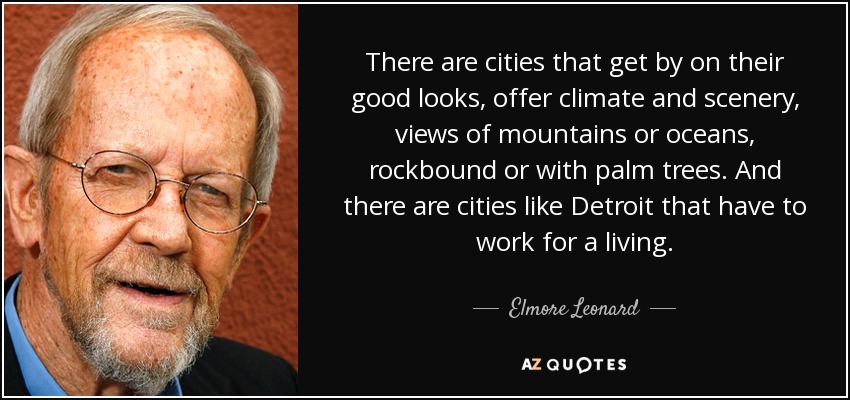
Don’t go into great detail describing places and things… You don’t want descriptions that bring the action, the flow of the story, to a standstill. ~Elmore Leonard

Read aloud. And not just your own work. Read good writing aloud.

Listen to the sound the words make. ~Unknown

A good novel tells us the truth about its hero; but a bad novel tells us the truth about its author. ~G K Chesterton

Write about what you never want to know. ~Michael Connelly 

I always refer to style as sound. The sound of the writing. ~Elmore Leonard

Before you can be a writer you have to experience some things, see some of the world, go through things – love, heartbreak, and so on -, because you need to have something to say. ~John  Grisham

Writing is work. It’s also gambling. You don’t get a pension plan. Other people can help you a bit, but ­essentially you’re on your own. ­Nobody is making you do this: you chose it, so don’t whine. ~Margaret Atwood
The words characters use and the gestures they make should be enough for the reader to know who is talking and how they’re feeling. ~Unknown

I try to leave out the parts that people skip. ~Elmore Leonard

Writing is the flip side of sex – it’s good only when it’s over. ~Hunter S Thompson

My task, which I am trying to achieve, is, by the power of the written word, to make you hear, to make you feel – it is, before all, to make you see. ~Joseph Conrad

Write every day even if it is just a paragraph. ~Michael Connelly

All the information you need can be given in dialogue. ~Elmore Leonard

Have something you want to say. ~Ian Rankin

Any author, like their protagonist, must endure sacrifice, or be willing to do so, ~Unknown

There are only two pieces of advice any would-be writer needs. The first is Give up. Those who heed that don’t need to hear the second, which is Don’t give up. ~Mick Herron

My purpose is to entertain myself first and other people secondly. ~John D MacDonald

I never read a review of my own work. Either it was going to depress me or puff me up in ways that are useless. ~Paul Auster

I owe my success to having listened respectfully to the best advice, and then going away and doing the exact opposite. ~G K Chesterton
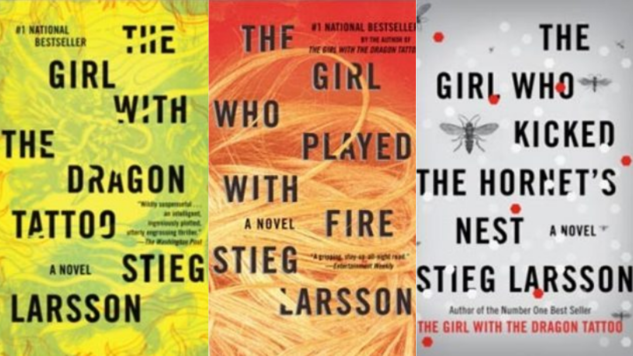
I abhor crime novels in which the main character can behave however he or she pleases, or do things that normal people do not do, without those actions having social consequences. ~Steig Larsson

The best crime novels are all based on people keeping secrets. All lying – you may think a lie is harmless, but you put them all together and there’s a calamity. ~Alafair Burke

With the crime novels, it’s delightful to have protagonists I can revisit in book after book. It’s like having a fictitious family. ~John Banville

I think the “crime novel” has replaced the sociological novel of the 1930s. I think the progenitor of that tradition is James M. Cain, who in my view is the most neglected writer in American literature. ~James Lee Burke

The most difficult part of any crime novel is the plotting. It all begins simply enough, but soon you’re dealing with a multitude of linked characters, strands, themes and red herrings – and you need to try to control these unruly elements and weave them into a pattern. ~Ian Rankin

Crime fiction makes money. It may be harder for writers to get published, but crime is doing better than most of what we like to call CanLit. It’s elementary, plot-driven, character-rich story-telling at its best. ~Linwood Barclay

Crime fiction confirms our belief, despite some evidence to the contrary, that we live in a rational, comprehensible, and moral universe. ~P.D. James

Most crime fiction, no matter how ‘hard-boiled’ or bloodily forensic, is essentially sentimental, for most crime writers are disappointed romantics. ~John Banveiile

And there are rules for crime fiction. Or if not rules, at least expectations and you have to give the audience what it wants. ~Tod Goldberg

Crime fiction is the fiction of social history. Societies get the crimes they deserve. ~Denise Mina
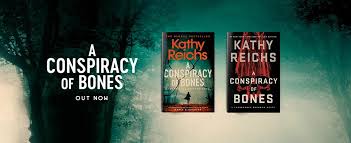
One of the surprising things I hadn’t expected when I decided to write crime fiction is how much you are expected to be out in front of the public. Some writers aren’t comfortable with that. I don’t have a problem with that. ~Kathy Reichs

The mainstream has lost its way. Crime fiction is an objective, realistic genre because it’s about the real world, real bodies really being killed by somebody. And this involves the investigator in trying to understand the society that the person lived in. ~Michael Dibin

Anyone who says, ‘Books don’t change anything,’ or – more commonly – that crime fiction is the wrong genre for promoting social change – should take a closer look. ~Andrew Vachss

The danger that may really threaten (crime fiction) is that soon there will be more writers than readers. ~Jacques Barzun

I’ll bet you $10 right now that there are an awful lot of literary writers who started a long time ago and now they find themselves in this place where secretly they feel trapped. And you know what they really read for fun? They read crime fiction. ~Robert Crais

There is sometimes a feeling in crime fiction that good writing gets in the way of story. I have never felt that way. All you have is language. Why write beneath yourself? It’s an act of respect for the reader as much as yourself. ~John Connolly
It wasn’t a decision to become a writer. I wanted to become a writer of crime fiction. I was very specific. ~Michael Connelly

Crime fiction, especially noir and hardboiled, is the literature of the proletariat. ~Adrian McKinty

There are a number of writers who believe it is their duty to throw as many curve balls at the reader as possible. To twist and twist again. These are the Chubby Checkers of crime fiction and, while I admire the craft, I think that it can actually work against genuine suspense. ~Mark Billingham

I had done 12 little romance books, and I decided I wanted to move into crime fiction. ~Janet Evanovich

I respond very well to rules. If there are certain parameters it’s much easier to do something really good. Especially when readers know what those are. They know what to expect and then you have to wrong-foot them. That is the trick of crime fiction. And readers come to crime and graphic novels wanting to be entertained, or disgusted. ~Denise Mina

Most crime fiction plots are not ambitious enough for me. I want something really labyrinthine with clues and puzzles that will reward careful attention. ~Sophie Hannah

I’ve always been drawn to the extremes of human behavior, and crime fiction is a great way to explore the lives and stories of fascinating people. ~Nick Petrie

The best crime stories are not about how cops work on cases. It’s about how cases work on cops. ~Joseph Wambaugh

If you don’t have the time to read, you simply don’t have the tools to write. ~Stephen King

What about you, Kill Zoners? What great writing quotes do you have? What would you like to share?

——

Garry Rodgers is a retired homicide detective and forensic coroner, now a struggling crime writer and indie publisher. Garry has twenty pieces up on Amazon, Kobo, and Nook including his Based-On-True-Crime Series featuring investigations he was involved in while attached to the RCMP’s Serious Crimes Section.

Garry Rodgers also has a popular website and regular blog at www.DyingWords.net. When not writing, Garry spends time putting around the saltwater near his home on Vancouver Island in British Columbia at Canada’s southwest coast.
Knives Out! Every Writer
Needs Sharper Tools

It’s none of their business that you have to learn to write. Let them think you were born that way.” — Ernest Hemingway

By PJ Parrish

If you want to do it right, you need a good sharp knife.

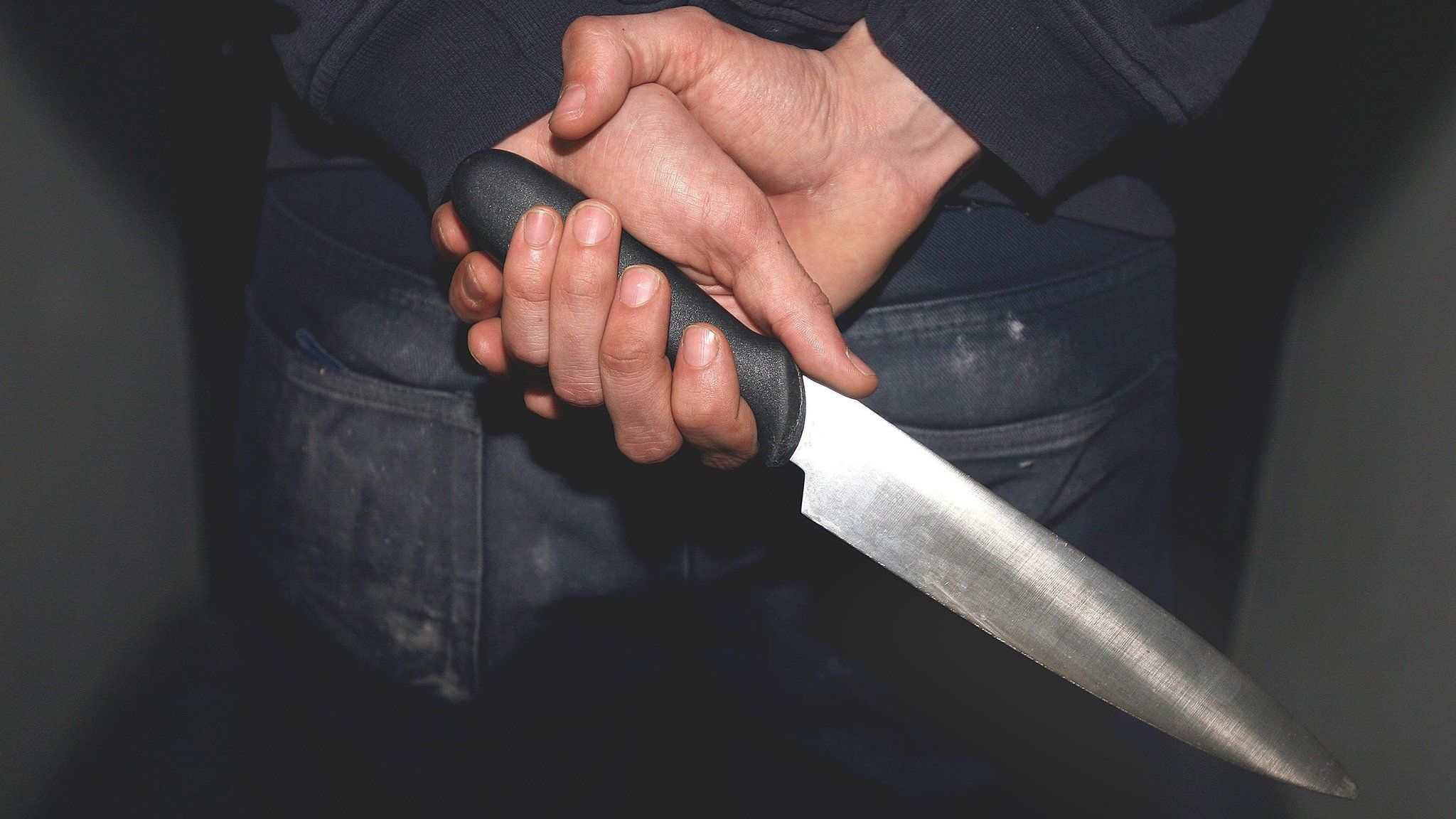
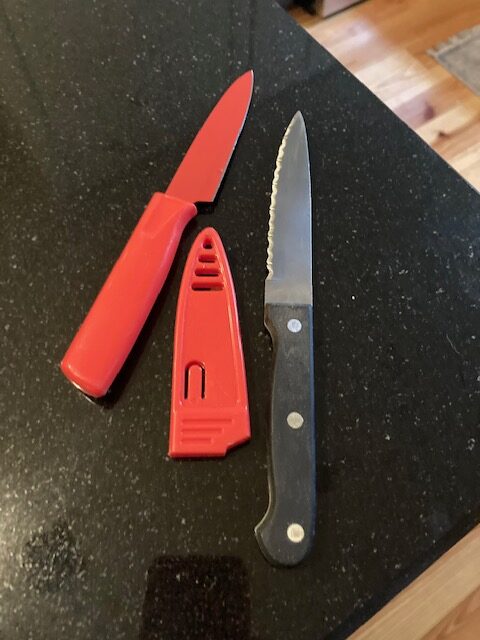
I never believed this until recently. For decades, I struggled along with cheap knives picked up at yard sales or the sale rack at Target. Useless, these dull tools all eventually found their way to a sad dark drawer of my kitchen, leaving me dependent on one little plastic job and an old serrated steak knife to do everything I needed, from slicing a tomato to carving a turkey. (See actual evidence below).

Which leads me to my friend Peter. He was a terrific cook and believed in good knives. He had a set of Wüsthof knives, which I came to learn was the ne plus ultra of knives. He kept them sharpened, whetted and ready. When he would come to my place for dinner, he would scoff at my pitiful duo. “You can’t be a serious cook without good knives,” he said.

Peter left me his knives when he died last spring. They came to me in a box, gleaming and razor sharp. They frightened me. I was sure I’d slice an artery if I tried to use them.

Well, I didn’t. I came to appreciate the way the paring knife could effortlessly slice a tomato paper-thin. I loved the way the 8-inch utility knife churned through an onion. Carving a roast with the 10-inch chef’s knife was an epiphany. The right tools have made me a better cook.

Life is like this. Sometimes, you’re tempted to make do with the inferior, to take the easy route, to tackle a task with less-than. You folks out there who do carpentry or gardening know what I mean. You buy shoddy tools, you get shoddy results. Or you have to work twice as hard. Or you slice off a finger.

You can probably tell by now that this is a metaphor. As in life, as a writer you can’t get the job done with acquiring the right tools. You have to learn the craft. And here’s something you’re not going to like to hear: What tool you seem to lack, that’s the one you need the most.

Where do you find the right tools? Well, there are a million how-to books out there in the ether. Not all are good. Most are dull, and many are useless and should be stuck in a kitchen drawer. So let me suggest you start with The Kill Zone archives. Our contributors are laser-focused on practical craft advice, and a couple of us have written some pretty good how-to books. See that search box at the right top of this page? Type in what you need and you’ll find the tools.

Don’t be afraid to face your weakness. Find the right knife for the job you need done.

Are you bad at plotting? Does your story have a thicket of sub-plots obscuring the true story? Does your plot lack dramatic arcs (“What’s an arc?”) Does your middle act sag? Well, type “plot structure” in the search box.  Great tips galore. Start with this one from James Bell, which is a basic lesson in why plot and character go hand in hand. Trouble coming up with a great ending? Debbie has it down. Type in sub-plots, or three-act structure, layering scenes or chapter transitions and you’ll find more knives.

Are your characters lacking? Are they stereotyped, unbelievable, wooden or one-dimensional? Every great story begins and ends with great characters. If this is your weakness, find the tools to help.  Start with this post from Laura Benedict. Need to learn about motivation? Type in “man in the mirror” or “What does your character want?”

Does description leave you cold? We can’t all be Elmore Leonard. Most of us need at least a little descriptions to make our readers care. I love description so whenever my sister and I got to this, she’d shovel the football to me. Or she’d send me back a chapter she had worked on with big read capitals saying: INSERT DESCRIPTION OF MANSION HERE. I finally forced her to do it herself so she could learn. And she did. Start with this post for some great tips.

Stymied about your setting? You can’t tell a story without creating a world. Setting is, to my mind, one of the most neglected aspects of craft that I see in our First Page Critique submissions. If you struggle with this, check out Terry’s guide here. Or read Jordan’s inspiring take.

Is your dialogue tone-deaf? Dialogue is action. Dialogue is sleight of ear. Dialogue is hard to get right. It might be the hardest writing craft to master. Here’s a terrific primer from emeritus TKZer Jodie Renner to start with. What point of view works best for your story? Let John Gilstrap clarify things here. Should you use a dialect? Read this first.  Does your dialogue sound fake? Try this knife. 

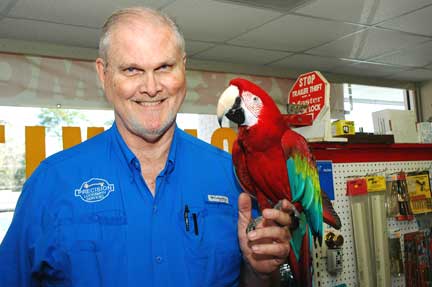
One last piece of advice. Knives get dull. Even the really good German ones. You have to get them professionally sharpened, at least every couple months. I go to Precision Sharpening & Key Shop where Jeff (that’s him and Bird at left) keeps me sharp.  Not sure where the metaphor is here, other than to say that even old dogs like me — even the most experienced writers, and especially the well-published — need to keep their craft honed.  Or they lose their edge. And as anyone can tell you, when you lose your edge, you lose your readers.  And now, I am off to pick up my knives from Jeff. Stay sharp, my friends.

This post is dedicated to my friend Peter, who loved food, knives and the Redskins.


Mixed Up Words

Mixed Up Words
Terry Odell

Judging from some recent posts, it’s looking like we all need a break from what’s happening around us. I thought I’d follow in the footsteps of Debbie’s mondegreens, Elaine’s eggcorns, and and JSB’s bloopers with a little more fun with words—although I’m sure they weren’t fun for the authors who made the mistakes.

These errors are from the spectrum of publishing—from indie to major publishing house authors. Whether or not some of these were typos on the part of the author and missed in editing, or whether the author didn’t know the correct word doesn’t really matter. However, given editorial passes these days are often far fewer than in the past, it behooves the author to get as much right as possible, and not hope an editor will find and fix errors. Sometimes it’s the little things that get overlooked, such as a NYT best-selling author having “That to” instead of “That, too.” (and there are different house style for the comma, but that’s not the error.)

Below are examples. Spellcheck wouldn’t have flagged any of them. Do you recognize these vocabulary errors? I’m sure you do. Why didn’t the editors?

  1. Rowdy little hoard
  2. His jacket was pealed back
  3. The car pealed away from the curb
  4. He’s cooling his heals in the lockup
  5. A single star shown brighter than any other
  6. The plain of his abdomen
  7. Ran her fingers down his chest toward his naval
  8. The bullet had come to rest against the seventh vertebrae
  9. Emerged like a breach birth
  10. “You saved his life today. He’ll probably give you an accommodation or something.”
  11. “The state trooper gave the children law enforcement’s universal anecdote: orange juice and candy bars.”
  12. He was injured trying to diffuse the bomb.
  13. She poured over the pages of the book.
  14. She peddled her bike down the sidewalk
  15. He waited with baited breath.
  16. He knocked on the door jam before entering the room.

And, one I didn’t learn until a reader (not my editor) pointed it out: discrete vs discreet.

What errors have you found in recent reading? The floor is yours.


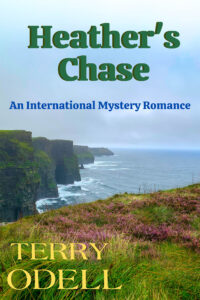
Heather's ChaseMy new Mystery Romance, Heather’s Chase, is now available at most e-book channels. and in print from Amazon.

Terry Odell is an award-winning author of Mystery and Romantic Suspense, although she prefers to think of them all as “Mysteries with Relationships.” Follow her on Facebook and Twitter.

First Page Critique – The Recruiter

Photo credit: Thomas Quine, Creative Commons lic.


Please welcome today’s Brave Author who submitted the first page of The Recruiter for feedback. Enjoy the excerpt then we’ll talk about it.

~~~

The butt of the revolver smashed into my face, slicing open a half-inch gash above my left eyebrow. I pressed a hand to my bleeding forehead and cursed.

“You have a smart mouth,” Mr. White said.

“And you’re wasting my time,” I replied, feeling the sting of sweat in the wound. As soon as I pulled my hand away, I could feel the blood begin to pool again. In a few seconds it would trickle down and stain both my shirt and suit jacket a deep red.

Shit. I just had them both dry cleaned.

“Your time is my time,” Mr. White said. With his thick Eastern European accent, the line sounded more cartoonish than I bet he intended.

“Not until you pay me it isn’t. And for the past half-hour I’ve sat here and answered questions about everything from my shoe size to my favorite porn star.” I turned to the hired muscle standing behind me, the one whose gun now had drops of my blood on its handle. Guy was wearing Ray Bans even though it was 1:30 in the morning and we were inside an empty bar. Douchebag. “By the way,” I said to him, “my favorite porn star? It’s your Mom.”

This time the butt came down on the back of my neck. I almost passed out but bit my tongue until the gray spots in my vision disappeared. I spat a mouthful of pink saliva onto the dirty floor and sat up.

“I’m a thorough businessman,” Mr. White said as he twisted a pinkie ring between his thumb and forefinger. Another unintentionally cartoonish move. “And I don’t make deals with someone based solely on their reputation without asking some questions of my own.”

“Cut the shit. My reputation is the only reason your boy hasn’t blown my brains out all over this table and we both know it.” To that, neither man had a reply. “So if you’re done with the HR interview, let’s talk about why I’m sitting here, because it sure as hell isn’t for the company.”

Mr. White twisted his pinkie ring a few more times–gold, of course, and shiny–before he finally smiled. He nodded to Ray Bans and a black briefcase fell on the table in front of me. A thin cloud of dust from broken peanut shells and cigarette ash puffed up where it landed.

~~~

First off, congratulations to today’s Brave Author for an action-packed start. Nothing like the protagonist being pistol whipped to catch the reader’s attention.

Immediately following are a couple of great lines that firmly establish the genre as gritty and hard-boiled:

“In a few seconds it would trickle down and stain both my shirt and suit jacket a deep red.

Shit. I just had them both dry cleaned.”

Clearly, this ain’t the first rodeo for the as-yet-unnamed protagonist. For now, let’s call him Tough Guy or TG.

TG is no stranger to violence. In fact, he provokes it:

“By the way,” I said to him, “my favorite porn star? It’s your Mom.”

That earns TG another thump on the back of his neck.

The Raymond Chandler vibe predisposes me to like this page because Chandler is my all-time favorite author. The writing is crisp, clear, and error-free. The voice is strong and sardonic. The description is sparse but still paints a vivid picture of a grimy, low-end bar.

“A thin cloud of dust from broken peanut shells and cigarette ash puffed up where it landed.”

Good job of drawing the reader deeper into the story with action and unanswered questions. We want to learn who these people are, why they’re meeting, and what’s at stake.

We know Tough Guy isn’t tied up since his hand is free to wipe away blood. That raises more questions: Why does he tolerate being smacked around? Why does he bring more abuse down on himself? To prove his toughness?

Cops, private investigators, and fixers in 1930s and ’40s movies behaved that way and the audience bought it. But contemporary readers will wonder about TG. If he’s really that good, he could–and would–disarm Ray Bans after the first blow. Further, a pro would not risk unnecessary injury simply for the sake of hurling a snarky insult…even though the line about mom being a porn star is very funny. 

Here’s a possible different approach: TG baits Ray Bans with the insult about his mom, knowing the guy will retaliate. He’s prepared for the attack and takes the gun away, making RB look stupid in front of his boss. TG also makes himself look smarter and more competent to the reader.

Suggest you identify the protagonist on the first page by having Mr. White address him by name. Two possible opportunities: “You have a smart mouth, Mr. XYZ.” Or “Your time is my time, Mr. XYZ.”

A few small nits:

A revolver is generally perceived as a weapon from an earlier era. Semi-auto pistols with high capacity magazines are more likely to be today’s gun of choice for the well-armed thug.

Unless Tough Guy can see himself, he can’t know the gash is a half-inch long. Suggest you just use “gash” without the measurement.

“I could feel the blood begin to pool again.” Blood wouldn’t pool if it’s running down his face. Blood generally pools on a horizontal surface like a floor or table.

The blood on the gun butt is more likely to be smears than drops.

None of these issues is significant and all are easily fixed.

My biggest concern is the portrayal of Mr. White which veers into clichés. Mr. White’s thick Eastern European accent, pinkie ring, and stock dialogue have been done in countless books and films. The Brave Author even acknowledges that by calling him “cartoonish.”

Unless this is meant to be a satire, like Steve Martin’s Dead Men Don’t Wear Plaid (1982), the author might consider a fresher approach to describing the heavy.

There are some great humorous lines.

“Guy was wearing Ray Bans even though it was 1:30 in the morning and we were inside an empty bar. Douchebag.”

“So if you’re done with the HR interview…”

Overall, this page is well written, strong, and compelling. I’m sure Brave Author will find a fresher way to characterize Mr. White.

The excerpt was a pleasure to read. It was also difficult to critique because I found so few problems. All were minor and readily fixable by this obviously capable writer.

A fine job, Brave Author! Thanks for submitting. Let us know when this is published.

~~~

TKZers: What are your thoughts on The Recruiter? Any ideas for the Brave Author? Would you keep reading?

~~~


Coming soon! Debbie Burke’s new novella, Crowded Hearts, will be FREE for a limited time. Watch for the announcement here at TKZ.


Literary Themes

I don’t usually think of myself as a writer who sets out with any particular theme(s) in mind when I start a novel – usually my books begin with either a character or a historical event that sparks my imagination and then (as I am a planner not a pantser) the plot and details follow. While I know I am drawn to particular historical periods, character traits, and (dare I say it) political movements and issues, I hadn’t really ever thought about thematic elements in my work until I was putting together an updated project grid listing my current and proposed writing projects. It was only then that I saw some of my little thematic quirks – and of course now I’ve seen them I can’t unsee them!

Literary themes usually address fundamental aspect of society or humanity. In crime fiction issues such as the concepts of justice, punishment, and the nature of good and evil, inevitably come into play. When I think about some of my own favorite writers I soon realize they turn to similar themes in their work. In a series, these themes may recur because they underlie a protagonist’s backstory or motivation (childhood trauma, addiction, poverty etc.) but exploring thematic elements can also (accidentally perhaps) reveal a lot about an  author and the issues they keep come back to in their work.

It was interesting to see the kind of themes that seem to recur in my own books as they certainly seem to suggest I have a few existential and philosophical debates that remain unresolved in my subconscious:) Some of the particular themes I noticed (in no particular order) include:

  • Patriotism (I often seem drawn to characters fighting for political independence or going against the established notion of patriotic duty);
  • Good versus evil in a spiritual/supernatural sense (I often explore religious, occult, and spiritualist ideas);
  • A women’s role in society (okay, no surprise there, since I have suffragette characters!);
  • Dislocation (My characters are often feel they don’t belong or are disassociated from the life they currently live);
  • Loss (this surprised me as I hadn’t realized just how many characters I have dealing with the aftermath of loss).

In addition, I also found that I seem to have an inordinate interest in both India and Ireland. The latter is probably explained by my Irish roots (thanks Ancestry.com!) but I’m not sure about the India obsession (I’d like to think I lived there in a previous life, but given my Ancestry.com results I would have been too poor to leave the farm in Ireland!). I also have a weird attraction to the year 1916…with 3 unrelated books set in that year without me consciously realizing it!

So TKZers, have you ever explored the themes that underlie the books you write or the books you love to read? When you look at your own work, do you see recurring themes? If so, what are they?


Fun With Bloopers

by James Scott Bell
@jamesscottbell

We had some fun with typos recently. Fun, sure, except when they happen to you. I hate typos! They are the sand fleas of publishing. You shake off the sand from the beach, and you think you’ve got rid of them all. But sure enough, when you get in the car and start driving away, one shows up in your armpit.

So it is with typos. Even after paying a proofreader, you’re apt to get an email from an astute reader who will point out that a character should be eating out of “wooden bowl,” not a “wooden bowel” (an actual typo in a novel by a friend of mine).

Yes, typos can provide a chuckle. Even more amusing are bloopers, those verbal miscues from actors and speakers uttered over various airwaves.

The word “blooper” was popularized by a radio producer named Kermit Schaefer, who was the first to research and document these fluffs. He put out several books and a couple of LPs with them (in the latter, he sometimes reproduced the blooper with actors when he couldn’t secure a copy of the sound recording. But they were otherwise legit).

The blooper that got Schaefer started was made by radio announcer Harry von Zell in a 1931 broadcast honoring President Herbert Hoover. Von Zell told the audience they would next hear from President “Hoobert Heever.”

Oops. And on live radio there are no re-takes.

So, because I wanted to have some laughs today, here are a few of my favorite bloopers:

“And Dad will love Wonder Bread’s delicious flavor, too. So remember, get Wonder Bread for the breast in bed.”

“This is the British Broadcasting Corporation. Our next program comes to you from the bathroom at Pump…pardon me, the Pumproom at Bath.”

“And just now we’ve received a new stock of Reis Sanforized sports shirts for men with 15 or 17 necks.”

“Mrs. Manning’s are the finest pork and beans you ever ate. So when you order pork and beans, make sure Mrs. Manning is on the can.”

Laundromat commercial: “Ladies who care to drive by and drop off their clothes will receive prompt attention.”

Fight night broadcast: “It’s a hot night in the Garden, folks, and I see at ringside several ladies in gownless evening straps.”

On an early TV game show called Two for the Money, a young lady was asked her occupation.
“I work for the Pittsburgh Natural Gas Company,” she said.
“And how is business?”“Wonderful. Over ninety percent of the people in Pittsburgh have gas.”

NBC radio: “Word comes to us from usually reliable White Horse souses.”

Disc jockey: “You’ve just heard the front side of Doris Day’s latest hit, “Secret Love.” Let’s take a look at her backside.”

Steve Allen

But my favorite blooper of all time is really a “save.” It was made by the great Steve Allen. Most youngsters today have no idea who Allen was, so I’m glad you asked. He was one of the great natural wits. As the first host of the Tonight Show, he set the stage for late-night comedy ever after. When he wasn’t being funny he was writing songs…lots and lots of songs (the most famous of which is “This Could Be the Start of Something Big.”) On top of that, he wrote several books on subjects as wide ranging as public speaking and religion.

Here is an example of Allen’s on-the-spot wit. He was to do a live commercial for Fiberglas. There was a Fiberglas chair on the stage, and Allen was to hit it with a hammer and then announce, “Yes, ladies and gentlemen, this chair is made of genuine Fiberglas!”

But when commercial time came around the temperature in the studio was colder than usual. So when Allen hit the chair, the hammer went right through it, leaving a gaping hole. A major visual blooper that would have had most hosts stymied. But Allen, without missing a beat, looked into the camera and said, “Yes, ladies and gentlemen, this hammer is made of genuine Fiberglas!”

Priceless. Which is why, when you can swing it, giving your character something witty to say at just the right moment delights the reader. But it’s not easy to do. One method I suggest in my book, Writing Unforgettable Characters and in a post last month, is “curving the language.” Write out a plain vanilla line, then bend it and play with it.

So a line like, “She looked like a million dollars” (cliché) can become, “She looked like a million dollars tax free” (Harlan Ellison). Or, “I became a made man when you were in high school” can turn into, “I made my bones when you were goin’ out with cheerleaders!” (Moe Green to Michael Corleone in The Godfather).

Your characters will thank you for saving them from bloopers.

Do you have a favorite blooper, maybe even from your own life?

True Crime Thursday – How to Murder Your Husband

by Debbie Burke

@burke_writer

This case sounds like an episode of Murder She Wrote.

Nancy Brophy Booking Photo

On June 2, 2018, Dan Brophy, 63, a chef and instructor at the Oregon Culinary Institute in Portland, was shot once in the back and once in the chest. Both shots went through the heart, killing him.

In September 2018, Dan’s wife, romance novelist Nancy Brophy, was charged with the murder of her husband of 27 years.

Nancy has been held without bail in Multnomah County Inverness Jail since her indictment. Here’s a link to her booking record.

In April 2020, her attorneys requested Nancy, now 70, be released due to danger from COVID 19. The judge denied the request.

Here is the State’s Memorandum in Support of a Denial of Bail.

The memorandum asserts the alleged motive is more than a million dollars in life insurance, policies which Nancy apparently sold to herself. She reportedly paid more than $16,000 in premiums to keep the policies current while falling $6000 behind in mortgage payments on the couple’s home.

Portland Monthly recounted the chronology of Dan’s murder on June 2, 2018:

[Nancy] had told police she was home when she learned something happened at the culinary institute the day her husband was killed. But a surveillance camera recorded her driving her Toyota minivan west on Jefferson Street, directly in front of the school, at 7:08 a.m.

At 7:21, Dan disarmed the school’s alarm. At 7:28, the surveillance camera again captured Nancy driving on Jefferson Street. At 7:30, Dan’s colleague arrived at OCI, and at 8, his body was discovered as students entered the kitchen.


The murder weapon is believed to be a Glock 9 mm handgun but it has not been found.

The state’s memorandum also asserts that Nancy owned a Glock 9 mm but a forensics expert did not think that particular weapon fired the fatal shots. However, before the murder, Nancy had purchased a different Glock barrel and parts on eBay, giving rise to speculation she swapped parts.

A search of Dan’s phone revealed a bookmarked article on their shared iTunes account entitled “10 Way to Cover Up a Murder.”

A short story written by Nancy entitled “How to Murder Your Husband” appeared on the blog SeeJanePublish in 2011. That site is not now publicly accessible.

The website Nancy Brophy Writer does not appear to have been updated since early 2018. The “About” page includes this passage:

I live in the beautiful, green, and very wet, Northwest, married to a Chef whose mantra is: life is a science project. As a result there are chickens and turkeys in my backyard, a fabulous vegetable garden which also grows tobacco for an insecticide and a hot meal on the table every night. For those of you who have longed for this, let me caution you. The old adage is true. Be careful what you wish for, when the gods are truly angry, they grant us our wishes.

Nancy Brophy’s trial is scheduled to begin September 28, 2020. Stay tuned.

~~~


Debbie Burke’s new novella, Crowded Hearts, is unlike her other thrillers–no crime, no murder, but lots of suspense. Crowded Hearts will soon be released in ebook for FREE to say “thanks” to loyal readers of Tawny Lindholm Thrillers with a Heart.

Cover design by TKZ regular Brian Hoffman. 

Reigniting The Passion

By John Gilstrap

Let me get this out of the way first: I love what I do. I am privileged and honored to make my living by entertaining people with stories. People ask me if or when I intend to retire someday, and I don’t even know what that means. When a novelist “retires”, do the stories just go away? Do characters somehow stop appearing in his head? I’ve always figured that as long as readers keep reading what I write, I’ll continue to feed them with stories.

That said, 2020 has been a helluva year. Beyond all the other weirdness that’s been inflicted on all of us, this is also the year that I signed on to write two full-length thrillers. As always, my next Jonathan Grave thriller will hit the stands in July, but before that, February 23, 2021, will see the release of Crimson Phoenix, the first book in a new series that I’m confident I’ll hawk in a post that is closer to the publication date.

A few weeks ago, our buddy James Scott Bell wrote a post here on TKZ about how Erle Stanley Gardner churned out 100,000 words per month for fifty years. I’m not that guy. If I can pound out 2,500 words in a day, I’m thrilled. My record for one day was 8,000 words and that left me exhausted. I’m not cut out for that kind of production.

So, here we are, in the middle of the pandemic stuff, and as stress rose, avenues for relaxation were shut down.

As a relief valve, I got myself a Zoom account. Every Wednesday evening, I gather with two author buddies at a virtual bar for virtual happy hour. These are folks I’ve known for decades. Every meeting starts with a toast, and then we shoot the sh*t for a couple of hours. It’s surprisingly refreshing.

Because we’re writers, we complain a lot. There’s life, a little bit of politics, the state of the industry, and the ups and downs of daily life.

Sooner or later, we inevitably come to the subject of movies. We talk about some of the contemporary stuff that’s out there (thank God for Amazon Prime and Netflix!), but the real passion for all of us turns out to be Westerns. Tombstone is, of course, the greatest Western of all time–argue this point at your own peril–and there is considerable disagreement about The Wild Bunch being a close second. Shane is a favorite of one of the revelers, but I must confess that I don’t agree. I mean, Alan Ladd? Really?

Then it happened. I said, “We should write a serial Western.”

In that instant, a new project was born. Over the course of 30 minutes, we worked out the only rules: The story will be set in 1880, and each of us will write from the point of view of our own characters. My character is Jake Bristow, a grieving farmer from Virginia. Somehow, for reasons yet unknown, we will all end up in an Oklahoma town on the same date for what will be an epic and legendary gunfight against bad guys we have yet to determine.

Logistically, we each write a chapter in turn. I started the effort and passed it on to the next author in the line, who put brilliance on the page, and then Author #3 took his turn. The ball is back in my court now. In only 9,500 word, we now know who the characters are, what their motivations are, and they’ve already crossed paths. Hint: They don’t like each other very much yet. But we do know why they’re headed to Oklahoma.

At our most recent happy hour, we all revealed that individually, we haven’t had this much fun at the keyboard in a long, long time. The project is liberating. I’m writing in a completely new, different voice and I’m getting lost in new lines of research. Perhaps most refreshing is the element that is inherently missing in writing: the thrill of teamwork among friends. What I find most fascinating is how our vastly different writing styles work in a single stitched-together narrative.

And yes, I’m being deliberately circumspect about mentioning the other authors’ names. That’s not my place.

Now, to the point of this post. The cooperative Western project has reignited the passion for writing in all of us. It’s as if by shifting to another project that is strictly for fun, if only for a few thousand words at a time, the elements that stir creativity get a fresh swirl. That inures to the benefit of every other project on our plates.

I’ve stated in this space more than a few times that half of being a professional writer (a professional anything, really) is showing up to work every day. During the dark days of summer, I confess that showing up had become a drag. Now, I can’t wait. I’m getting up earlier, spending more time at the keyboard. I’m enjoying the process again.

So what about you folks? What are your tricks for reigniting the passion for writing that you know is there, but sometimes dwindles?


It’s STILL A Dark And Stormy
Night…Thank Goodness

By PJ Parrish

I’m a little under the weather this week, so this one will be short and sweet. Okay, not sweet. Maybe snarky. Or snirky with chuckles. Because what else can you be when you are confronted with the utterly stink-ola winners of the Bulwer-Lytton Fiction Awards?

You know Edward Bulwer-Lytton, right? (That’s him above, by the way). He’s the writer who gave us the wonderful “It was a dark and stormy night…” It was the opening line of his 1830 novel Paul Clifford:

It was a dark and stormy night; the rain fell in torrents — except at occasional intervals, when it was checked by a violent gust of wind which swept up the streets (for it is in London that our scene lies), rattling along the housetops, and fiercely agitating the scanty flame of the lamps that struggled against the darkness.

So many things we could pick apart there, right crime dogs? First, contrary to the advice of Elmore Leonard, he starts out with the weather. Second, contrary to James Bell, he slips in a — gasp! — semi-colon. Third, he TELLS us we’re in London instead of finding a graceful way of showing us his location. And fourth, the rest is just a hot wet mess.

To be fair, Edward Bulwer-Lytton was considered quite the writer in his day, even more popular than Dickens. He coined the phrase “the pen is mightier than the sword” and “the almighty dollar.” And he gave us the useful barb “the great unwashed.”  Among Bulwer-Lytton’s lesser-known contributions to literature was that he convinced Dickens to revise the ending of Great Expectations to make it more happily-ever-after.

So how did Edward become a Snoopy cartoon punchline? Back in the ’80s, a San Jose State graduate student named Scott Rice, was sentenced to write a paper on a minor Victorian novelist of his choosing and opted for Bulwer-Lytton. Years later, Professor Rice came up with the idea for the contest. The contest became an international phenomenon, getting thousands of entries every year.

I love reading these every year. (Click here to read them all) The winners are, to me, the Lucille Balls of writing. Lucy Ricardo was infamous in I Love Lucy for being tone-deaf, but Ball herself was an accomplished singer.  Likewise, it takes a pretty darn good writer to write wretched stuff on purpose. So, without further ado, here is the Grand Prize winner for 2020, by Lisa Kulber of San Francisco:

Her Dear John missive flapped unambiguously in the windy breeze, hanging like a pizza menu on the doorknob of my mind.

Now, we critique a lot of opening lines here at TKZ, so let’s examine why this works so well. First, there is the substitution of the word “missive” for the merely banal “letter.” Then we get the nicely active verb “flapped,” but it is gloriously underlined by the adverbial hair ball “unambiguously.” And then, the pièce de résistance — the vivid simile “hanging like a pizza menu” overlaid by the metaphoric wonder “the doorknob of my mind.”  It takes real talent to mix both simile and metaphor…so gleefully gelatinous.  I am in awe.

Okay, a couple more. And this one, crime dogs, is near and dear to our black hearts. The First Prize Award in Detective Crime Fiction this year went to Yale Abrams of Santa Rosa, Ca.

When she walked into my office on that bleak December day, she was like a breath of fresh air in a coal mine; she made my canary sing. 

Man, that’s good. Short, sweaty…definite sense of mood here, right? And notice how gracefully Yale manages to convey that our narrator is male without even telling us? Let’s move on to the Detective Fiction Dishonorable Mentions. And we don’t even have to leave the pebbled-glass office to do it. From Jarrett Dement of Eau Claire:

She sauntered into his smoke-filled office with legs that, although they didn’t go quite all the way to heaven, definitely went high enough for him to see that she was a giraffe. 

What I love about this opening is the amuse-bouche at the end. This is so pedestrian until we get to the unexpected injection of raw animal passion at the end. Here’s another from Paul Kolas of Orlando:

The first thing I noticed about the detective’s office was how much it reminded me of the baggage claim at a nearby airport: the carpet was half a century out of date, it reeked of cigarettes and cheap booze, and I was moderately certain that my case had been lost.

Such an assured sense of voice at work here. You will never mistake this writer for Patricia Highsmith. Onward, to a gem from Leo Gordon of Los Angeles:

The fact that the cantor’s body was covered with a lamb shank, salt water and a mysterious concoction called charoseth, led Chief Passover Homicide investigator Ari Ben-Zvi to describe the pattern of murders as “uneven, perhaps unleavened.”

Kudos to our writer for dropping us right into an action scene — the discovery of a dead body. As James always says, act first, explain later. And I love the symbolic use of the charoseth. It is a sauce used in seders, composed of bitter herbs and sweet fruits, so obviously the writer is using it to set up the idea that this murder will create mixed emotions, a nice motif to support his theme.

And here is our final winner, from Belinda Daly of London.

Handsome French policeman, Andre Poiret, grappled with the puffed-up albino hitman, who was about to shoot the beautiful high-class call girl, Gigi Lamour, who was taking a shower in her apartment, with his big gun. 

Again, we are smack-dad in an action scene. No throat-clearing here. Note the adjective “handsome,” which of course tips us off that Andre is the hero. Ditto “beautiful” which tells us Gigi will be a love interest before she is found floating face down under the Pont Neuf in chapter 20. And leave it to a great stylist to leave the best for last — “with his big gun.”  Obviously, a subtle hint at the sexual tension underscoring the story’s romantic subplot. It couldn’t have been placed more zestfully.

And with that, my friends, I am off to have a good hot shower and a strong martini, one olive and two Advils, please.