Light at the end of the Tunnel

A week or so ago we realized that it’s been a whole year since our boys’ school closed for full in-person learning and my husband had his last day in the office. It was a sobering anniversary but now, especially as both my husband and I have received our first vaccine shots (yay!) and our boys are about to return to full in-person school (double yay!), it feels that there is definitely light at the end of the tunnel. You may recall my blog post talking about last year’s goals as deflated balloons, and it’s taken me up till now to even consider setting some new goals for 2021 (and I’m still super hesitant – don’t want to jinx 2021!).

I was doing some spring cleaning yesterday of what has become my makeshift office and art studio in the basement and soon discovered that I had painted a lot of paintings (like, a lot…) and though my writing output wasn’t terrific, it was heartening to think I had managed to revise one MS and submit it to my agent, and I made a start (of sorts) on a new MS. So things are definitely looking up:)…I think…

Now we’ve passed the grim one year milestone and I look ahead to the rest of the year, I’m torn between being hopeful and terrified at the same time. Do I dare to set ambitious writing goals? Do I assume that somehow the creativity switch can be reset and I’ll suddenly become super productive? I’m not sure I know yet how I’m going to feel about re-inflating all those balloons or what to do with the inordinate number of art projects I seem to have accumulated (and the lack of writing ones to accompany them!). Spring is definitely in the air, and I do see the light at the end of the tunnel, but it also feels a little like a deer in headlights moment.

How about your TKZers, how are you approaching your writing goals for this year?

Writing Tasty Fiction

by James Scott Bell
@jamesscottbell

Here at TKZ we love to talk about the nuances of the craft. These take the form of both things to do and things not to do. As Brother Gilstrap likes to remind us, these aren’t “rules.” They are, however, basics that work every time, and if you choose to ignore them, that’s your business. But if your business is also to make dough with your writing—which means connecting with a large slice of the reading public—you would be wise to attend to the fundamentals.

On the not side, there are what I call “speed bumps.” (Have a look at my post on that subject). These are the little things you can easily overlook, but which cause a jolt to what should be a smooth and emotive fictive ride. Too many of these bumps ruins the whole experience, and does not leave the reader anxious to purchase another of your books.

On the positive side, there are things you can do to help a reader feel more fully immersed in your story. And one of those things is the use of sensory description.

You’ll see a lot written about the sense of sight and sound. The visual and the audible. These are the twin pillars of show, don’t tell.

There’s also the underused but valuable sense of smell.

The other day it occurred to me that not much has been written about the sense of taste. I had that thought as I was reading a noir story by Joyce Carol Oates, “Faithless,” included in the collection The Best American Noir of the Century (eds. James Ellroy and Otto Penzler, 2010). Here’s the opening:

The last time my mother Cornelia Nissenbaum and her sister Constance saw their mother was the day before she vanished from their lives forever, April 11, 1923.

It was a rainy-misty morning. They’d been searching for their mother because something was wrong in the household; she hadn’t come downstairs to prepare breakfast so there wasn’t anything for them except what their father gave them, glutinous oatmeal from the previous morning hastily reheated on the stove, sticking to the bottom of the pan and tasting of scorch.

That word scorch jumped right into my mouth. Most of us think of that word as a verb. Here it’s used as a noun and as such packs a nice, unexpected punch. It deepens the tone of the scene and thrusts us into the experience of these girls. And as I mentioned in a recent post, putting the most expressive word at the end of a sentence can make all the difference. A lesser writer might have put: hastily reheated on the stove, sticking to the bottom of the pan and giving it a scorched taste.

So that’s one good use of taste—to set a tone consistent with the mood of the story.

Another use of taste is to intensify an emotional feeling. In Jodi Picoult’s The Book of Two Ways, the narrator tells us of the first kiss from a long, lost love. Earlier in the book, we are told this about Wyatt, the lover, an archeologist working in Egypt:

I remember how he smelled like the sun baked into his clothes and also butterscotch. How, weeks later I would learn that he kept sweets in his pocket, for himself and to give to the barefoot children who waited for him in the blistering heat at the entrance to the wadi as we left for the day. 

Then, some 75 pages later, after sharing a bottle of champagne:

“This,” Wyatt said, and he leaned forward and kissed me.

The night tightened around us, a noose. Wyatt’s hand slipped under my braid, curving around the nape of my neck. I tasted champagne and butterscotch and shock. Somehow, Wyatt was just as surprised as I was.

We recall the butterscotch, and we’ve just seen the champagne. But tasting shock? What an arresting way to work in this element of the experience (and, once again, at the end of the sentence).

In Hemingway’s story “The Snows of Kilimanjaro,” we are in the POV of a dying man, a writer on safari in Africa. He’s got gangrene in his leg and a rescue plane hasn’t shown up. He goes in and out of memories of his past, including the killing of Greek troops, shot by their own officers as they ran from Turkish soldiers:

That was the day he’d first seen dead men wearing white ballet skirts and upturned shoes with pompons on them. The Turks had come steadily and lumpily and he had seen the skirted men running and the officers shooting into them and running then themselves and he and the British observer had run too until his lungs ached and his mouth was full of the taste of pennies and they stopped behind some rocks and there were the Turks coming as lumpily as ever.

A coppery taste in the mouth is associated with fear. You’ll often see it put this way in stories: His mouth tasted like copper or The coppery taste of fear flooded his mouth. But Hemingway wrote it as the taste of pennies. Specific and vivid.

So:

  1. Use taste to deepen scenes of high emotion.
  2. Hunt for an unexpected word (scorch; pennies) to vivify the moment; readers glaze over what’s bland.
  3. See if you can put that word at the end of the sentence.

Okay, I’ve said a mouthful. Over to you:

Have you thought much about the sense of taste in your writing? Any examples you’d like to share?

Boundaries, Fertile Ground for Conflict

Broken Boundaries

Today we are going to return the favor to the creative nonfiction folks. They have learned that using our techniques for fiction writing makes their stories more interesting. Today we are going to “borrow” from nonfiction to look for ways to make our characters deeper and more interesting to readers. We’ll use the book, Boundaries, written by two psychologists, Drs. Henry Cloud and John Townsend. Published in 1992, revised in 2017, it has sold over 10 million copies, and has led to additional books, Boundaries in Marriage, Boundaries with Kids, Boundaries with Teens, Boundaries for Leaders, and Boundaries in Dating.

The goals of the authors:

  • Help develop healthy relationships
  • Learn when to say yes and how to say no
  • Learn to set limits in life and relationships
  • Understand legitimate boundaries
  • Learn to manage our digital life so it doesn’t control us
  • Learn how to deal with those who are hurt by our boundaries
  • Learn how to deal with someone who wants our time, energy, love, and money
  • Understand why we feel guilty when we consider setting boundaries
  • Know how to answer the idea that boundaries are selfish

Full disclosure: The book is written from a Biblical perspective, but the principles and advice apply to the psychology of all people, regardless of faith, religion, or culture.

So, why are we discussing this topic? Our goal is to reverse engineer the relationship-problem advice (i.e., make trouble), to create conflict, scars, and motivation for the goal/motivation/conflict of our characters.

And, why is conflict so important? Inner conflict is one of the great glues to bond the reader to our characters and keep the reader turning pages. Here are quotes from two top writing coaches and authors:

“Remember, conflict and suspense do not grip a reader unless and until she bonds with a character. Inner conflict is one of the great bonding agents. Explore deeply the inside of your Lead and give us glimpses of the psychological struggle. If you do, we will turn your pages.” p.143, end of chapter 9, “Inner Conflict,” CONFLICT AND SUSPENCE, James Scott Bell

“Inner conflict is an interior war. Like an invasion unfolding live on television, it’s a gripping contest that keeps readers glued. While conflicting feelings are a momentary effect, inner conflict can echo in readers’ minds years after they finish a novel.” p.23, chapter 3, “The Inner Journey,” WRITING 21st CENTURY FICTION, Donald Maass

First, what are boundaries? Boundaries are “invisible property lines” that “define what is me and what is not me…where I end and someone else begins, leading me to a sense of ownership.” (p. 31, Boundaries, 1992 ed.)

Next, let’s look at the four basic personality types in terms of relationships, particularly unhealthy relationships:

  • The Compliant – those who can’t set boundaries and can’t say no to others who seek to invade their boundaries, even when they want to say no
  • The Avoidant – those who set boundaries, even against those who would help them or care for them, and even when they need care or love
  • The Controller – those who aggressively or manipulatively violate others’ boundaries for their own benefit, even when they realize what they are doing
  • The Nonresponder – those who set boundaries against their own responsibility to love, even when it is clearly their responsibility

There are others, and combinations, but these are the four basic types. And by now you are seeing how one, or especially two, of these types in a relationship (marital, friendship, business, family, criminal, anything) could lead to some interesting problems. Boundary problems from a character’s early years or their past can leave scars and set up inner conflict. And that is what we are looking for.

Boundaries, by definition, involve relationships. Unhealthy relationships are usually the result of boundary problems and cause conflict, inner and external. The inner conflict causes, at the minimum, personality issues, and at the worst, motivation for external conflict and criminal acts.

Therefore, looking for (or creating) boundary problems between characters or from their past, can be fertile ground for inner conflict (motivation), which results in external plans (goals), that helps establish a character arc. The motivation, goals, and character arc can then guide the creation of an appropriate plot in which to tell our story.

One additional point with boundary problems, the conflict often ramps up when one person decides to change their boundaries. Here’s a personal example:

I grew up as a first-born, and was nurtured to become a Compliant (turn the other cheek; if they take away your shirt, give them your coat as well). I had no idea there were other options. When I finished my education and returned to my home community, my mother continued to exercise her skill at controlling me. She could talk me into doing almost anything she wanted done. Isn’t that what the eldest is supposed to do? I ended up in a service occupation. People quickly learn if you’re a push-over. I was burning out when I discovered Boundaries. It was life-changing. I foolishly took a copy of the book to my mother for her to read. When I returned the following week, she practically threw it at me. “Who ever gave you this trash?!”

So, Dear Writer, it’s time to plow our past to see what scars we can turn up:

  1. What scars do you carry that have resulted from boundary problems in your past?
  2. Or, if that is too personal or painful, what boundary problems have you observed in acquaintances (no names, please) that have left them with scars and relationship problems?
  3. How might those scars and boundary problems provide material for inner conflict with characters in your stories?
  4. Or, describe for us some of the most creative relationship problems you have developed for characters in your books, especially those that led to inner conflict for a character, and applied glue to the readers’ fingers to keep them turning pages.

A Single Word Can Change the Tone

by Jodie Renner, editor & author 

In your WIP, are you inadvertently tossing in a word here and there that jolts the readers out of your story or gives an incongruous impression?

Once you’ve completed a first or second draft of your story (or your muse is taking a break), now’s the time to go back and reread each scene carefully. Does every word you’ve chosen contribute to creating the overall tone and mood you’re going for in that scene? Or are some of your word choices unintentionally detracting from the impression you want readers to take away?

Is it possible you may have unconsciously inserted the odd “cheery” word into a tense scene in your story? Or a relaxed-sounding word in a scene where the character is stressed or in a hurry? Or maybe your teenager or blue-collar worker sounds too articulate? I’ve seen examples of these quite often in the fiction I’ve edited over the years.

For example, the heroine and hero are running through the woods, pursued by bad guys intent on killing them. The debut author, thinking it’s a good idea to describe the setting, uses words like “leaves dancing in the light” and “birds chirping” and “babbling brook.” These light-hearted, cheerful words detract from the desperation she’s trying to convey as the young couple races frantically to escape their pursuers. In this situation, it would be better to use more ominous words, perhaps crows cawing, a wolf howling, water crashing over rapids, or thunder cracking.

Read through each of your scenes and make sure every word you use to describe the setting, the people, and their actions, words, and thoughts contributes to create the impression you’re going for in that scene, rather than undermining your intentions.
DESCRIBING YOUR SETTING:

Here’s an example, slightly disguised, from my editing. It’s supposed to be a tense, scary moment, but the author has, without thinking about the impact, inserted relaxed, even joyful imagery that counteracts and weakens the apprehensive mood he is trying to convey (my bolding).

He locked the door behind him, his harried mind ricocheting between frightened alertness and sheer fatigue. He took a furtive glance out the window. No one there, so far. Despite the cold, a warming shaft of morning sunlight filtered through the stained curtain, and languid dust particles slow-danced in its beam.

What had he gotten himself into? They would certainly be on to him now—it was only a matter of time before they found him. He looked out again through the thin curtain. Sunbeams were filtering through the branches of an old tree outside the window, the shriveled shapes of the leaves dancing in the breeze, playing gleefully with the light. He swore he saw movement on the ground outside—a figure.

Some of the wording in the two paragraphs above is excellent, like “his harried mind ricocheting between frightened alertness and sheer fatigue” and the phrases “furtive glance,” “stained curtain” and “shriveled shapes of the leaves.” But the boldfaced words and phrases, warming, languid, slow-danced, sunbeams, dancing in the breeze, and playing gleefully with the light weaken the imagery and tone because they’re too happy and carefree for the intended ominous mood. Perhaps the writer, caught up in describing the view outside in a literary, “writerly” way, momentarily forgot he was going for frightened.  

Check to be sure every detail of your imagery enhances the overall mood and tone of the situation.

Here’s another example where the description of the setting detracts from the power of the scene and doesn’t match how the character would or should be feeling at that moment.

The protagonist has just had a shock at the end of the last chapter, where she’s discovered her colleague murdered. This is the beginning of the next chapter, a jump of a few days.

Mary gazed at the brightening horizon, immersing herself in the beauty of the rising sun. She watched as the dawn’s rays danced across the waves. Mary adored this time of day when the hustle and bustle had not yet started, and she could enjoy watching the waves wash in and listening to the seagulls overhead. It was one of the many reasons she loved this area so much.

Since the murder of Teresa three days ago, Mary had been in a state of turmoil. Teresa’s death had changed everything. Gruesome images continually flickered through her mind like an unending motion picture. She could think of nothing else and was racked by guilt.

To me, the two paragraphs seem contradictory in mood. If she’s racked by guilt and can think of nothing else, how can she enjoy the sunrise so much?

Be sure to choose words that fit the mood you’re trying to convey.

THOUGHTS, IMPRESSIONS, & IMAGERY:

Here’s another example of a tense, life-threatening scene whose power and tension have been inadvertently eroded by almost comical imagery.

The room went black and shots rang out in the darkness.

He took to the floor on all fours and, panicking, scrabbled around aimlessly, searching his addled mind for a direction, a goal. He poked his head up and looked around. Spotted the red exit sign of the back door. Loping ape-like across the office floor, he tried to keep his body below the level of the desks—he had seen them do it in the movies, so it was good enough for him. Several more bullets whistled overhead.


The words “addled” and “loping ape-like” seem too light and humorous for the life-or-death scene. Even the bit about seeing it in the movies, so it was good enough for him seems too light-hearted – this could be the last moments of this guy’s life if he doesn’t find a way to avoid the bullets!

Here’s the same scene, rewritten to capture the desperate mood:

The room went black and shots rang out in the darkness.

What the—? He dropped to the floor and, panicking, searching his frenzied mind for a direction, a goal. Get out of here! He poked his head up and looked around. Spotted the red exit sign of the back door. At a low crouch, he set out across the open office, dodging from one desk to another. Several more bullets whistled overhead.

Another example with imagery that’s fresh and creative, but does it actually fit the moment?

A truck came barreling toward them. He wrenched the wheel to the right, and they passed the truck, missing it by inches. Mud splattered onto the windshield, and the wipers smeared it like chocolate ice cream.

I think the chocolate ice cream imagery, although clever, is too positive and playful for the tense, scary moment.

A cliched phrase that doesn’t fit:

The frightening story cut too close to home for Diane. Just the possibility of it happening to her family scared her silly.

My comment to the writer: The word “silly” detracts from your intention to show her nervousness and fear. I’d express this with a less “silly” word. (and less of a cliché).

ACTIONS: The character’s body language and actions need to match the situation.

Don’t have someone “strolling” when they’re worried. Have them “pacing” instead. Similarly, when they’re arguing, don’t have them leaning back in their chair – have them hunched forward, or pointing a finger.

As they entered the police station, a tall, balding man with a goatee and an expensive suit shuffled down the hall towards them. As he passed, he handed a card to Wilson. “I want to see my client now, alone.”

My comment to the author: “I wouldn’t have a high-priced, confident lawyer shuffling. Save that verb for elderly or sick people, or a prisoner with chains.”

Another example of a verb that doesn’t fit the situation:

Joe stood up, shocked and numb, after his boss delivered the tragic news about the death of his friend. He dreaded his visit to Paul’s widow. He sauntered back to his office, his mind spinning.

“Sauntered” is way too relaxed and casual a word for the situation. The guy’s just been told his friend is dead. Maybe “found his way” or “stumbled” back to his office.

Another example: A high-ranking Nazi officer is about to invade the home of a wealthy Jewish family during the Second World War. The author wrote:

He giggled inwardly, thinking about the chaos he was about to bring to the Jews who lived here.

My comment to the writer was: The verb “giggled” fits a couple of schoolgirls, not a nasty Nazi. I suggest “smirked” or “gloated.”

Another example:

At the funeral, the widow caught Peter’s glance and squinted her eyes in accusation. She no doubt held him responsible for her husband’s death.

“Squinted” is like against the bright sun. I’d say “narrowed her eyes” or “glared at him.”

How is your character moving?

Is he strolling, trudging, striding, tiptoeing, stomping, shuffling, meandering, staggering, lurching, sauntering, tramping, slinking, mincing, strutting, pacing, sashaying, marching, or slogging along? Each word paints a very different picture of the state of the character and the situation.

For lots of specific suggestions for choosing just the right verb for the situation, see my post “It’s All in the Verbs” from a few years back here on TKZ. And read the comments there for more great suggestions.

And for specific lists of effective, evocative verbs for various situations, check out my post on my own blog, “People in Motion — Vary Those Verbs!

Make sure every single word fits the scene and enhances the mood.

Even one incompatible word can jolt the reader or dilute the power of a scene.

Can you pick out the word below that deflates the moment?

The guard drew in a shuddering breath as if to cry out. He half-coughed and half-gasped, then started to scream again, this time with enthusiasm. Brad covered the man’s mouth and knocked his gun to the ground.

Rather than screaming “with enthusiasm,” I’d use “in desperation or “in terror” or something like that. The choice of “with enthusiasm” evokes positive, cheery connotations.

Here’s another example of just one word jolting us out of the mood:

They broke the lock on the warehouse and looked around. “Let’s check the big freezers in the back.” He strode over and opened the freezer door. The smell of frozen flesh and blood smacked him in the face. An emaciated, naked man stared at him with lifeless eyes, frozen like a popsicle.

Yes, it’s that word at the end. I imagine the writer was searching for a good word for “frozen like” but “popsicle” is an unfortunate choice as it evokes an image that’s way too upbeat for the situation. Best to look for a more somber or horrific simile (maybe “like a pale slab of beef”).

Read these short passages and see if you can pick out the single word in each that contradicts the desired mood and tone.

  1. As the realization of what had happened hit her, Linda gasped and dropped to her knees, a myriad of twirling thoughts bombarding her mind.
  2. Could Greg have sold him out, led him here into a trap? Tony fixed his friend with an intense stare brimming with disappointment and betrayal.
  3. In the interrogation room, the accused man’s stiff, jaunty movements, drumming fingers, and constant glances around made Derek wonder if he was on something.
  4. The car spun on an invisible axis then crashed into a light post. Steve’s head bounced off the window, and his headache blossomed anew.

Words that don’t fit:

  1. “twirling” seems too light-hearted in this situation, like a dancer or a baton twirling. Maybe “whirling” or “swirling.”
  2. “brimming” is too cheery, too positive. Maybe just “his voice filled with disappointment…”
  3. “blossomed” seems too positive for a headache caused by a crack on the head during a car accident. Maybe just something like “intensified” or rewrite the phrase.

Your turn:

Rewrite any of these sentences with a more apt verb and any other tweaks you’d like to add:

  1. The big man walked into the… 
  2. The little girls danced around the room.
  3. The rabbit/squirrel/deer ran off.
  4. She looked at him, hands on hips. “What?”
  5. The crowd moved along the sidewalk.
  6. The pickpocket ran down the street.

Or feel free to make up one of your own. Have fun!

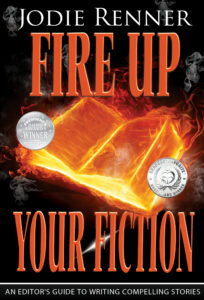
Jodie Renner is a freelance fiction editor and the award-winning author of three craft-of-writing guides in her series An Editor’s Guide to Writing Compelling Fiction: WRITING A KILLER THRILLER, FIRE UP YOUR FICTION, and CAPTIVATE YOUR READERS, as well as two clickable time-saving e-resources, QUICK CLICKS: Spelling List and QUICK CLICKS: Word Usage. Website: www.JodieRenner.com; blog: http://jodierennerediting.blogspot.com/; Facebook. Amazon Author Page.
What We Can Learn From
Movies About Failed Writers

By PJ Parrish

So I’m trying to start a new short story the other day. I am determined to open with the weather. Well, the story takes place in the aftermath of a hurricane, so Elmore Leonard be damned.

But nothing is coming, man. I am as dry as…

…the Sahara Desert.

…as a half-gnawed Milk Bone discarded by a toothless chihuahua.

…as a lasagna that’s been sitting in the back of the fridge for a month and the foil has come off and now it has a brown miasmic crust as dry as…

{{{Argh!}}}}

I gave up and turned on the tube. I swear I am not making this up, but guess what movie was just coming on? Throw Mama From the Train.  Where Billy Crystal has a bad case of writer’s block trying to open his novel with weather. “The night was…”

You’ve been there. I know you have. You stare at the screen, your brain turning to sludge. And you get stuck with one bad opening line that, like a terrible earwig, won’t let go. The night was…humid. The night was hot and sticky. No, that’s humid!

I love this movie because it has so much to teach us about how not to write. There are dozens of great movies like this. And each, in its own way, communicates the agony and yeah, the ecstasy of this crazy little thing called fiction. Let’s review. Roll that beautiful bean footage!

Wonder Boys. This is my favorite writer’s movie. Michael Douglas is a one-hit wonder writer/creative writer professor who’s mired in his 2,500-page second novel. He copes by toking up and bedding his students. But then one of his ladies reads his manuscript and tells him: “Grady, you know how you tell us in class that writers make choices? And even though your book is beautiful, at times it’s very…detailed. With the genealogy of everyone’s horses and the dental records and so on. It sort of reads like you didn’t make any choices.”

The Lesson: Good fiction comes from making a very long series of good decisions. About your plot, your characters’ motivations, what tone you’re going for, what your theme might be. Every sentence is a choice; every verb is a choice. One of the hardest decisions, as Grady discovers, is what to leave out. I often, in our First Page Critiques here, ask writers for more description or mood. But sometimes, you have to trust the reader and leave stuff out. Like leave out adjectives that over-amplify mood and let it emerge through action and dialogue (Show don’t tell).

Finding Forrester. Not my favorite writer flick but it has one good scene. Sean Connery is mentoring a prodigy who can’t get started for fear of failure. The young man sits staring at his computer until Connery hands him one of his own stories and says “Start typing this. Sometimes the simple rhythm of typing gets us from page one to page two. And when you begin to feel your own words, start typing them.”

The Lesson: Don’t just sit there paralyzed. Write something. Write anything. Just get started. Perfection is your enemy. A complete first draft is your goal. It won’t be great. But it will be the raw material out of which you will find your way toward the true story. To paraphrase Woody Allen, a writer is like a shark. If it doesn’t keep moving, it dies.

The Swimming Pool. Charlotte Rampling is memorable as a burned-out sexually repressed mystery novelist who retreats to a house in France and…psycho-sexual mischief ensues. And she finishes her book.

The Lesson: Sarah tells her editor she is “fed up with murders and investigations.” Her editor says, “Well, why don’t you confront your critics and write something completely different?” The idea of turning to something new helped get me out of my doldrums years ago when I felt the juice going out of my series. I wrote my first stand-alone, set in Europe, The Killing Song. It re-energized my need to tell stories again. If you are in a similar dark spot, switch gears. Try a short story. Change genres.

Misery. James Caan, sick and tired of churning out his series, gets trapped in fan-girl hell by Kathy Bates and is forced to resurrect the character he killed off. “You…you dirty bird. How could you? She can’t be dead. Misery Chastain cannot be dead!”

The Lesson: Changing genres can be good. Or it can get your legs broken. Also, be careful who you decide to kill off in your books, especially if the character is sympathetic. Yeah, sometimes you have to kill your darlings but don’t be rash.

The Royal Tennenbaums. About a depressed family of former child geniuses with a great parody of writer-ego-writ-large by Owen Wilson as Eli Cash, who poses for photos holding snakes, wears a cowboy hat and turns out dreck like:  “The crickets and the rust-beetles scuttled among the nettles of the sage thicket. ‘Vámonos, amigos,” he whispered, and threw the busted leather flintcraw over the loose weave of the saddlecock. And they rode on in the friscalating dusklight.”

The Lesson: If you do find success, don’t take yourself seriously. Your work, yeah. But when you show up at Bouchercon, leave the cowboy hat at home, Bucky.

Sunset Boulevard. William Holden’s portrait of down and soon dead screenwriter Joe Gillis is one for the ages. Courtesy of Billy Wilder’s whip-snap dialogue like “Sometimes it’s interesting to see just how bad bad writing can be.”

The Lesson: Be wary of collaborations. And if another writer asks you to read their stuff, be kind. Or you might find yourself face down in a swimming pool, and not a nice sexy one in Provence.

Honorable Mentions:

Kill Your Darlings. Only because it stars Harry Potter as Allen Ginsberg.

Julia. Only because Jane Fonda, playing Lillian Hellman, gets so mad while writing she throws her typewriter out the window. Have so wanted to do that.

Adaptation. Only because Nicolas Cage gives me the creeps with his pitch-perfect personification of the neurotic writer.

Postscript: After you all offered your faves, I have gone back in and added one more. I can’t believe I forgot this one. Talk about neurotic sad writers….how can we forget Miles from Sideways?  He calls his agent to find out what’s up with his novel and well, the publisher has decided to “take a pass.”  Miles doesn’t do rejection well.

Okay, time for you all to weigh in. What movies about writers have moved you? And fora fun, here’s a very clever mash-up video about our favorite writing tool — the good old typewriter!

Watch a supercut of typewriters being used on screen.


Rinse and Repeat

Remember JSB’s post about public speaking? Well, before an exciting opportunity two weeks ago, I reread his tips a gazillion times. What he failed to mention was a bizarre side effect of stress—dry mouth. I noticed it when I did my first Zoom book signing. Which is odd, right? I’ve never had a problem with in-person book signings, but on Zoom? I dried up like the Sahara. Halfway through the event it went away, so I didn’t give it another thought. I Zoomed a few more times without incident.

And then, an Emmy award-winning true crime series asked me to appear on their show. (Can’t tell you which one yet, sorry!) I was fine on the drive over. Nervous as all heck, but other than a thundering heartbeat, I could hide my anxiety. After all, that’s what a professional does. They don’t let nerves get the better of them. Plus, I knew this case inside out. How hard could it be? So what if a camera crew would be focused on me.

My confidence waned on the walk inside, but I was still holding my own. Head held high, shoulders back.

Then I sat in the interview chair.

With that one simple act, all the saliva in my mouth turned to dust. And I mean all of it. My tongue stuck to the roof of my mouth, my lips puckered, and words refused to roll off my tongue with ease. Me on the day of my debut TV appearance…

They offered me bottled water—gallons of it through two and half hours of taping. After the second or third bottle, I think they might’ve figured out I wasn’t an old pro at this TV stuff. 😉 Thankfully, I’d spoken to the producer on the phone several times prior, so he had faith in me. “Get her more water please!” And I drank, and drank, and drank.

Mr. Producer told me several times I did an excellent job. I’ll be the judge of that, thank you…in six months when the episode airs. We did have a lot of laughs. But when you’re discussing a shooting and can’t spit out the word “caliber” because your tongue feels like it’s three sizes too big for your mouth…

Well, let’s just say it isn’t a good look. The more I stressed, the drier my mouth became. Throughout the interview I fluctuated between Lord, give me strength and Someone—anyone—please shoot me! But most of all, I needed more water STAT.

On the plus side, the nice part of working on a true crime show is it’s not taped in front a live audience. All I had to do was string together one good sentence at a time and the editor would grab what s/he needs.

Mission accomplished. That’s a rap!

Shamefaced, I crawled into the passenger seat of our truck—and all at once my mouth regained its moisture. Ain’t that a b*tch? I can hardly wait to see what happens next time. Maybe I’ll grow some weird lump on my forehead. Or better yet, my saliva glands will over-stimulate, and I’ll show up looking like this…

I think it’s fair to say no one will ever ask me to do a TedTalk. Probably best.

To understand my body’s reaction to stress, I researched the subject the next morning to find out why this occurred and what to do about it in the future. Turns out, dry mouth isn’t an uncommon reaction.

Researchers have studied this phenomenon.

The term stress refers to a series of events that lead to a reaction in the brain (perceived stress), activating the physiological fight-or-flight response in the body. Anxiety is also a generalized unpleasant and vague sensation of fear and concern with an unknown origin.

Makes sense.

Psychological conditions might affect both salivary flow rate and xerostomia. Furthermore, it was observed that salivary cortisol levels increased during stress, followed by changes in the composition of saliva.

In simpler terms, stress plays a significant role in reducing the salivary flow rate.

So, what’s my advice in case you experience something similar? Hope you’ve got a nice strong bladder. You’ll need it to hold all the water. No, seriously, pack lozenges. If all else fails, smile! Works every time.

I’m a big believer in laughter. If we can’t poke fun at ourselves, we’ll dwell on the negative. I appeared on an Emmy award-winning true crime show (!), and have spoken to the producer several times since. For me, it’s a dream come true. 🙂

Let’s discuss embarrassing moments! Your turn. Extra points if it relates to writing, reading, acting, etc.

Learning from The Maltese Falcon

by James Scott Bell
@jamesscottbell

Read on to the end of this post, for you will get one of the greatest trivia questions of all time. Use it to flummox your film snob friends (and isn’t that what life is all about?)

The Maltese Falcon by Dashiell Hammett is one of the great American novels. In fact, I think it should replace The Great Gatsby on high school reading lists (that is, if they still have high school reading lists that look at quality fiction for no other reason than that it has quality). The book is more exciting and true to human life than Gatsby, and has all sorts of characters and themes running through it.

I mean, come on! Greed, sex, money, murder, mystery, and the hero’s code. Gatsby teaches kids (who can get through the book) that you don’t always get what you want. The Maltese Falcon teaches a much better lesson: don’t trust somebody just because you think they’re hot like Brigid O’Shaughnessy.

And do the right thing, even if it tears your heart out.

The novel has been made into a movie three times. The first version starred Ricardo Cortez, an actor with a handsome smile and all the acting range from A to B. He had “Latin features” which was a big deal at the time (late 20s, early 30s) because of Rudolph Valentino’s popularity. But Ricardo Cortez was no more Latin than a plate of gefilte fish. He was born Jacob Krantz, son of Morris and Sarah Lefkovitz Krantz, in the Bronx. But the studio heads saw a chance to turn him into a talkies version of Valentino. Thus, the new name.

In this 1931 film, Cortez plays Sam Spade as a kind of laughing Lothario, always giving ladies’ legs a creepy once over. A strange choice, given the tone of the novel, which was captured most brilliantly by the John Huston version starring Humphrey Bogart, made in 1941. (The other version was a loose one, Satan Met a Lady (1936) starring Bette Davis and Warren William. This “light-hearted” rendition was not met with critical acclaim. The leading film critic of the day, Bosley Crowther of the New York Times, said of it, “So disconnected and lunatic are the picture’s incidents, so irrelevant and monstrous its people, that one lives through it in constant expectation of seeing a group of uniformed individuals appear suddenly from behind the furniture and take the entire cast into protective custody.”)

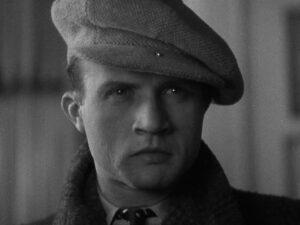
Dwight Frye as Wilmer in The Maltese Falcon (1931)

But I will give the Cortez Falcon props for one great casting decision. In the book there’s a “gunsel” named Wilmer Cook. He’s the henchman and catamite for the fat man, Casper Gutman. While nicely played by Elisha Cook, Jr. in the Bogart film, Dwight Frye makes an unforgettable Wilmer in the 1931 version.

Frye is best known for his portrayal of Renfield in the Bela Lugosi Dracula. Man, you can’t forget his crazy laugh and his desire to eat flies. And those eyes! He was dubbed “the man with the thousand-watt stare,” and that’s what he brings to Wilmer.

More interesting things you should know about The Maltese Falcon:

  • There are three prop falcon statuettes still in existence from the 1941 movie. Each is valued at around $1 million.
  • In the novel, the fat man is Casper Gutman. In the shooting script for the 1941 version, for some unknown reason, he is listed as “Kasper Gutman.”
  • In the Bogart version, the fat man was famously played by English actor Sydney Greenstreet, in his film debut. At 357 pounds, he certainly embodied the character. The Warner Bros. wardrobe department had to make special clothes to fit Greenstreet. Interestingly, Bogart wore his own clothes for the part of Sam Spade.
  • Mary Astor, who plays Brigid O’Shaughnessy, won an Oscar that same year for her role in The Great Lie. She wasn’t pleased. Why? Because she thought she should have been put up for Brigid! She is brilliant in both movies.
  • Bogart, of course, was a noted onscreen smoker (only Bette Davis rivaled him). But the studio didn’t want him to! Why not? Because they thought that audience members seeing Bogie light up might be tempted to step into the lobby for a quick smoke during the movie. In fact, the studio almost fired John Huston over this issue. But Huston convinced them that Sam Spade’s cig was an indelible part of his character, and the cancer nails remained. (Bogart died of cancer at the age of 57. His widow, Lauren Bacall, later admitted, “Cigarettes killed Bogie.”)

Tips for writers from The Maltese Falcon:

  • It may be the greatest “show, don’t tell” novel ever written. It is in what is called Cinematic-Omniscient POV. That’s because there is no dipping into the thoughts or feelings of any of the characters. It’s like watching a movie on the screen. You see the scene and hear the dialogue.
  • The orchestration of characters is brilliant. You should always create your cast to not only be different from one another, but also in such a way that conflict may arise between any of them at any time. Spade, Brigid, Joel Cairo, Gutman, Wilmer, Effie (Spade’s secretary), Iva (Spade’s mistress), and Detective Tom Polhaus are all unique and have various mini-conflicts with each other throughout the book.
  • Hammett was a master of dialogue, too. The characters all speak with unique voices. One of my favorite examples, from both book and movie, is this exchange between Spade and Joel Cairo, coming some time after Spade knocked Cairo out in Spade’s office.

Spade said: “Let’s go some place where we can talk.”

Cairo raised his chin. “Please excuse me,” he said. “Our conversations in private have not been such that I am anxious to continue them.”

Or this between Gutman and Spade:

“Now, sir, we’ll talk if you like. And I’ll tell you right out that I’m a man who likes talking to a man that likes to talk.”

“Swell. Will we talk about the black bird?”

The fat man laughed and his bulbs rode up and down on his laughter. “Will we? We will,” he replied. His pink face was shiny with delight. “You’re the man for me, sir, a man cut along my own lines. No beating about the bush, but right to the point. ‘Will we talk about the black bird?’ We will. I like that, sir. I like that way of doing business. Let us talk about the black bird by all means, but first, sir, answer me a question, please, though maybe it’s an unnecessary one, so we’ll understand each other from the beginning. You’re here as Miss O’Shaughnessy’s representative?”

And now, friends, the great trivia question. Keep this in your back pocket for the next time you get into a film discussion with a know-it-all.

What is the final line in the 1941 movie version of The Maltese Falcon?

You’ll no doubt get the answer that it’s from Bogart: “The stuff that dreams are made of.”

Ah, but there is one more line after that! It’s from Ward Bond, playing Spades’ cop friend Tom Polhaus. He responds, “Huh?”

Have a look!

 You are now the most interesting person in the room. Congrats!

Have you seen or read The Maltese Falcon? (If your answer is no to either, correct that gross mistake ASAP!) What’s your favorite classic detective novel or movie? What can we learn from it?

Losing Your Identity

Good Saturday to you. Please consider this an update to Debbie Burke’s excellent post,  True Crime Thursday – COVID 19 Scams, of just a few weeks ago, as well as an addendum to the wonderful and still pertinent 2012 post by TKZ alum Kathleen Pickering concerning identity theft.

I groaned when I received my post office mail this past Monday. I knew immediately that someone was pretending to be me.

The moan-inducing missive was from the Ohio Department of Job and Family Services (“DJFS”). That agency in Ohio is tasked with administering unemployment benefits, among other things. There have been daily reports of individuals in Ohio having bogus unemployment benefit claims filed in their name using their personal information. The first hint that something is amiss is usually the receipt of a letter from DJFS, noting that they have filed a claim and that an account has been set up for them. That was precisely the type of letter I received, in spite of not having filed a claim. 

The fraud which is occurring is an example of never letting a crisis go to waste. The COVID-19 situation resulted in a great deal of unemployment concentrated in certain industries. Many states — Ohio, for one — wanted to get unemployment benefits to the unfortunate workers in those industries as quickly as possible. This resulted in some instances of “pay now, verify later.”  Someone figured out a way to take advantage of this. 

The scam is fairly easy to do once the scoundrel is in possession of another person’s name, address, and social security number. The despicable cad first sets up a bank account (usually with an online bank) utilizing a newly created email address and a burner phone for contact purposes. They then use the ill-gotten information to file for unemployment benefits and directing that the benefits be deposited to the online bank account. The victim, moi or vous, is usually unaware of this until the agency acknowledges the claim via letter to the victim’s snail mail address. At least two or three weeks of benefits have often been paid by then.  Should the person who is the target of the scam ignore the letter from the DJFS the fraudulent payments can go on for far longer.

It often isn’t immediately a problem for the victim. Whoever is doing this isn’t taking money out of the victim’s legitimate bank account. The problem with the false claim occurs later, as in the following year, when the victim receives a Form 1099 from DJFS noting that “their” unemployment benefit payment (which is taxable) has been reported to the IRS. There are of course other problems having to do with someone having your name and SSN. These would include the ability of someone else to open accounts and apply for credit in your name. 

There is a fix for this and it is free. You just need to do three things and do them immediately.  

The first is that you must immediately go to the website of the state agency that sent you the notification letter. You should find a link there that will take you to a page where you can report that you have had a fraudulent claim for unemployment benefits filed in your name. 

The second is to file an NCDF Disaster Complaint Form with the Department of Justice. This is not as intimidating as it sounds. It is actually quite easy to do and can be done online by following the link above which will give you some additional information and take you to another page where you fill out a form dealing with your complaint.

The third action actually has two components that concern protecting your credit. Part A is checking your credit report at http://annualcreditreport.com, which you should be doing anyway. Part B is placing a free, one-year fraud alert on your credit reports by contacting any one of the three nationwide credit reporting companies online or through their toll-free numbers. The bureau you contact must tell the other two. They are Equifax: 800-525-6285, Experian: 888-397-3742, or Trans Union: 800-680-7289. The companies will let you know if someone applies for a loan or credit in your name. Please don’t tell them that I sent you. 

I hope that you never need any of this. If my experience provides you with the germ of an idea for your next novel, however, that is all to the good. You can possibly ascertain how the personal information of the victims is being acquired. I believe that the databases of state departments of taxation are being cracked. I base this in part on the timing of my experience, which occurred a few weeks after I filed my state return. It could be for any number of reasons, however. 

Photo by sincerely-media on unsplash.com

My question for you today is whether any of you have had this experience within the past several months. that being a fraudulent unemployment claim being filed in your name. I hopefully am a loner, at least among my friends here. Thank you. 


Reader Friday: Are There Rules for Good Books?

Reader Friday: Are There Rules for Good Books?

Reader Friday

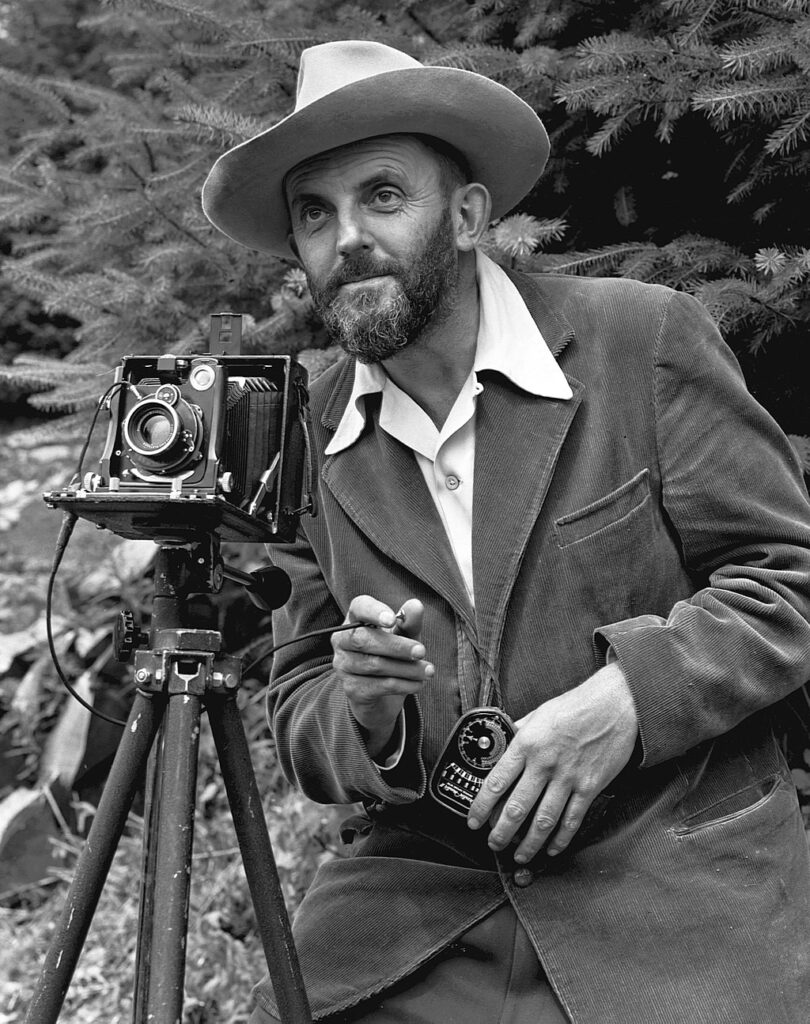
Photo: Ansel Adams with Camera from Wikimedia Commons

My photographer son had an informal holiday party (virtual, of course), and trivia games were played, including quotes from famous photographers. One that caught my interest was this quote from Ansel Adams.

“There are no rules for good photographs, there are only good photographs.”

Do you think this this applies to books, too?

**I’ve been vaccinated, my waiting period is up, and am finally going to see my mom for the first time in over a year. She had COVID, got the antibody infusion, and her doctor said it’s safe to get together. I’m on the road (and in the air) today, so I won’t be around to reply to comments. Don’t let that stop you from leaving them!