A Dog’s Tale

By Debbie Burke

@burke_writer


Happy New Year! Welcome back after TKZ’s annual hiatus. 
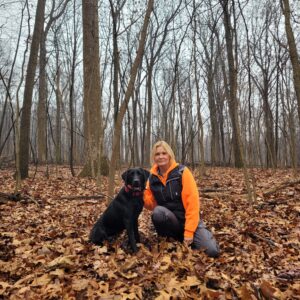
Heroes Kerrie Garges and Gauge

How about kicking off 2022 with a dog story?

Back in 2020, I interviewed Kerrie Garges, a search and rescue volunteer from Pennsylvania, about a bombing that killed three people. 

Kerrie has spent years training her three Labrador Retrievers, Ace, Luna, and Gauge, in various search disciplines (air scent, article scent, human remains, etc.).

A few weeks ago, Kerrie and I reconnected and she brought me up to date on her dogs and their recent activities.

Sadly, Ace passed away last year from bone cancer. Luna is retired because her hips bothered her on long searches but she quite happily watches TV.

Kerrie’s big news was about Gauge. When we last chatted, he was still a rambunctious puppy. He’s now 2 ½ and has recently been certified in Live Find and Article Search.

And he’s now officially a hero. 

Article search involves items that have been worn by or touched by a person that their scent clings to (examples: fabric, leather, metal, plastic). To test dogs, an area 75’ by 75’ is marked off with flags. Within that area, five scent articles are randomly hidden. Dogs and handlers then wait two hours while scent dissipates, simulating conditions that may occur in real-life searches for a lost person.

One at a time, dogs are turned loose in the area with the command “Search” and given 15 minutes to find scent articles. The quest is confusing because other dogs and handlers leave their own scent as well.

Gauge located four articles in the allotted 15-minute time, earning “Article Search” certification. Four hours later, when scent had dissipated even more, he found the fifth article.

Gauge is also training for Human Remains Detection (HRD). According to Kerrie, patients at the University of Ohio hospital can opt to donate their bodies for search work. The Center for Forensics Training Education (CFTE) procures the remains and uses them for training seminars, one of which Kerrie and Gauge participated in last summer.

Not surprisingly, a recently deceased body gives off a much stronger scent than a body that has decomposed for a long period of time.

Cadaver dogs have located bodies of crime victims concealed for 15+ years. But canine noses are even more powerful than previously realized.

In 2018, archaeologists in Croatia tested HRD dogs to see if they could locate burial vaults that radiocarbon dating determined were from more than 2700 years ago. Dogs alerted to limestone slabs where tiny fragments of human bone were uncovered, along with amber beads and other artifacts. Even when no visible skeletal remains were present, dogs still alerted, leading scientists to posit that fluids from decomposition leaked into the porous limestone where odor remained more than 2000 years later.

Back to Gauge’s training with fresher remains…

Kerrie says dogs are allowed to familiarize themselves by sniffing and exploring the recently deceased bodies, sometimes licking and walking on remains. A handler must take care not to give cues that might confuse the dog, such as expressing distaste.

That must be a challenge.

Gauge’s alert signal when he finds his target is to run back to Kerrie and jump on her.

One particularly hot training day, fluids had leaked onto the tarp the cadaver was laid on. Gauge sniffed while walking around in the fluids, then proceeded to alert Kerrie by exuberantly jumping up on her, sharing the odor of decomposition (decomp) clinging to his furry paws. Fortunately, she was wearing a rubberized coat that protected her…somewhat.

He was, after all, doing his job. 

Being certified does not guarantee the dog and handler will be called out nor that they will have a successful outcome. After 12 long years of dog training, Kerrie had never had a live find until…

On October 8, 2021, she answered a call at 5:30 p.m. at the height of rush hour traffic. She was an hour away from the Gordon Natural Area for Environmental Studies, a 126-acre park on the property of the University of West Chester, Pennsylvania. Coincidentally, the park had been a training area for search dogs.

In fact, the man who had given permission to use the area for training was the very one who went missing that evening.

He and his wife were trail keepers. They had ridden a UTV to the end of a service road to work. The wife walked down to their base, expecting the husband to return on the UTV. She waited but he never showed up. His phone pinged to the left of the service road but he was not there.

He was diabetic so there was concern a medical issue had befallen him.

But where?

Two air scent dogs and one trailing dog, their handlers, a nurse, a paramedic, and other volunteers were deployed to search. Kerrie and Gauge did a “quick hastie”, a preliminary reconnaissance check, hiking to the top of the hill where the UTV was found. From there, a grid search began as the three dog teams split up to cover their assigned areas.

The searchers coordinated the different styles of their dogs with the terrain—Gauge is a “long ranger” while the other two stuck close to their handlers.

Soon the sun was down, leaving the area in darkness. Gauge wore a lighted vest and a bell to allow Kerrie to keep track of him. “Darkness brings out the dog’s nose,” she says, “because he can’t see distractions, like deer, during night searches.”

She adds, “You’re running on adrenaline because you’re trying to save a life.”

The terrain was difficult–steep and littered with fallen trees. There were no trails to follow. She recalls that she and her two flankers “did a lot of butt climbing over logs.”

Gauge indicated the scent seemed to be flowing down from the top of the hill and pooling in a lower area.

Then he alerted.

Kerrie couldn’t see any sign of the missing man until she clambered around a four-foot-diameter log.

Tucked beside the log lay the lost man, unresponsive and ashy-gray. Gauge was standing over him. Unlike training sessions where the dog normally was exuberant at finding the target, this time he seemed subdued, perhaps recognizing the seriousness of the man’s condition.

“In the shape he was in, I don’t know how he could have gotten there,” Kerrie says.

The nurse with Kerrie had glucose in her pack. While she and the paramedic tended to the man, Kerrie took Gauge aside, rewarding him with a game of tug of war.

The man was transported for care and recovered.

Gauge scored a live find with only two years of training.

And he became a TV star:

Thank you, Kerrie, Gauge, and other search and rescue volunteers for your lifesaving work!

~~~
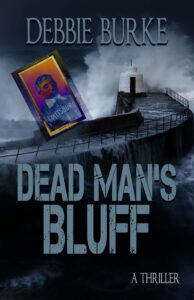


Meet a search dog who turns up unexpected gruesome discoveries in Debbie Burke’s thriller, Dead Man’s Bluff.


Amazon

Other online booksellers

The Adventure Begins Anew

I’m honored to be the first to welcome TKZers to 2022! I hope you had a wonderful holiday season, filled with family, food and fun, and ending with a resolution to begin a new writing adventure in the new year. Consider this quote by Winston Churchill:

“Writing a book is an adventure. To begin with it is a toy then an amusement. Then it becomes a mistress, and then it becomes a master, and then it becomes a tyrant and, in the last stage, just as you are about to be reconciled to your servitude, you kill the monster and fling him to the public.”

While I can’t relate to every one of the phases Mr. Churchill describes, I love the metaphors, and he made me wonder how I would describe.my own adventures in my limited experience of novel-writing. Here goes:

When I begin a new book, I spend some time searching for ideas. Is there some message I want to convey? Or a character who’s anxious to make his/her debut? Is there a particular mystery I want to challenge readers with or a basic theme I’m interested in? I spend time reading good novels and craft-of-writing books. I go for a run and play what-if games. I try not to force the issue, but let my brain relax, hoping for inspiration.



 

Then it happens. Something bubbles up and captures my imagination. Oh, happy day! Now it’s time to get to work.


I pull on my virtual hiking boots, strap my laptop in place, and head out to First Draft Land. Although I have a good idea where I’m going, I’m not entirely sure how to get there, so I wander around for a while. (A long while.)

Even though I made it to the end of the story, it’s just a mess, so I go into revision mode. Applying lessons learned about plot, structure, dialogue, tension, and other TKZ topics, I straighten out some of those detours and rabbit holes. I weed the prose, kill my darlin’s, and heartily eradicate the dreaded adverbs. (Just checking to see if you’re paying attention.) Now we’re getting somewhere:


Having reached what I believe is the end of my writing adventure, I gleefully ship the manuscript off to my developmental editor, convinced she will be delighted with the almost-perfect story. My editor has a very direct approach to feedback as you can see by her response to the manuscript.

Maybe she was just having a bad day, but I trust her judgment, and I take her critique to heart and work some more. The adventure resumes, and we loop through each leg of the journey to clear away the debris so the reader won’t stumble.

Finally, the editor gives it a green light, and I begin the last mile to the finish line. Beta readers come alongside to offer their wisdom, then it’s off to the line editor and proofreader for the final changes. (Who knew it took so many people to write a novel?)

What started as a joyful romp through the garden ends with a quiet sigh of relief and gratitude. There’s only one thing left to do: launch it out into the world.

Success! Adventure complete. Dragons slayed and townspeople rescued. After a short nap, it’s time to start another adventure.

Now where did I put that book on marketing?

* * *

How about you, TKZers. What writing adventure are you planning for 2022? What phases will you go through? How will you manage the long trek to publication?

Merry Writing and a Snappy New Year

by James Scott Bell
@jamesscottbell

Bob Cratchit’s Christmas Dinner, Edwin Austin Abbey, 1875

’Tis the season to be jolly.

Or is it?

One view is offered by Mr. Scrooge:

“Every idiot who goes about with ‘Merry Christmas’ on his lips, should be boiled with his own pudding, and buried with a stake of holly through his heart.”

Thanks, Eb.

At the other end of the spectrum is his clerk, Bob Cratchit:

Then Bob proposed: “A Merry Christmas to us all, my dears. God bless us!”

Which all the family re-echoed.

“God bless us every one!” said Tiny Tim, the last of all.

So what’s it gonna be? You gonna be merry or what? (Why do I sound like I’m grabbing your shirt?)

My favorite dictionary is Webster’s New Collegiate (1960). I have two copies, hoping somehow to preserve the language from the unrelenting lingual onslaught of these latter days. I’ll be the one standing on a hill, waving them around, shouting, “Try and get ’em! Just try!” (Please bury me next to a small town library.)

Here is the definition of Merry:

adj. 1. Pleasant; delightful; of sounds, etc., sweet; of a wind, favorable. 2. Mirthful. 3. Amusing; funny. 4. Marked by gaiety or festivity.

Who doesn’t think we need a little more merriment these days? In life and in writing.

I’ve quoted this before but it’s worth another look:

In the great story-tellers, there is a sort of self-enjoyment in the exercise of the sense of narrative; and this, by sheer contagion, communicates enjoyment to the reader. Perhaps it may be called (by analogy with the familiar phrase, “the joy of living”) the joy of telling tales. The joy of telling tales which shines through Treasure Island is perhaps the main reason for the continued popularity of the story. The author is having such a good time in telling his tale that he gives us necessarily a good time in reading it. — Clayton Meeker Hamilton, A Manual of the Art of Fiction (1919)

How do you get that merriment into your writing? One way is to get so invested in your characters that you can’t wait to see them live and breathe. I believe it was Dwight Swain who advised that whenever your tale is getting to be a slog, do some character work until you get excited again—and you always will.

Another method: Pause occasionally in your plot and ask How can things get worse? That’s how we novelists really get merry—by coming down even harder on our characters!

Another thing you can do is pitch your story to a friend or loved one. I don’t mean the 30-second elevator gab. I mean tell them the story right up to where you are in the manuscript. Try to notice two things:

  1. Are you enjoying telling the story?
  2. Is your audience rapt? Or are they squirming around like they want to check their phones?

Use the answers to these questions to fix what needs fixing. That brings its own kind of joy.

And a Snappy New Year.

snappy, adj., 1. Snappish. 2. Colloq. Full of snap, or life, briskness, pungency, smartness, etc.; as, snappy conversation.

Apply this to your social media. We know that we have to be “out there” in some fashion. Agents and publisher expect it. So do readers. The temptation is to blunder around without thought or plan, thinking that the world is waiting with bated breath to hear whatever jumps to the top of your head five seconds ago.

It isn’t.

Revisit Sue’s advice on these matters. As she notes: “Always conduct yourself as a professional, but don’t hide the real you while doing it. There’s so much garbage and negativity on social media.”

So be brisk, snappy, funny, pungent. If you share an opinion, do it with style and even a little humor. Be someone who’d be a welcome guest at any gathering.

Don’t be a dullard, a dolt or a diva.

Hey, how’s that for a snappy ending to TKZ 2021?

Thank you for all your support over this last, challenging year. I speak for all of us at TKZ when I say your hearty and helpful comments create a welcome oasis in the vast internet wilderness. It’s a pleasure to commune with you each day on all things writing and publishing.

We now take our annual two-week hiatus. May this season be full of abundant blessings for you and yours.

See you right back here on January 3, 2022!

Naps, Breaks, Vacations, and Drifting

Counter-intuitive Routes to Creativity and Productivity

 By Steve Hooley

Christmas is coming and Hanukkah has passed

One week until Christmas. Twelve days after Hanukkah. Family gatherings, parties, and travel, all will cause interruptions in our writing schedules. Are these interruptions good or bad? Do they help or hurt our creativity? Do they increase or decrease our productivity?

As I contemplated a topic for this post, I remembered hearing of references to the benefit of breaks from writing to increase creativity and productivity. I had always been somewhat skeptical, being more of a puritanical believer in “put butt in chair” and write. I thought this might be a good time to take a look at some of that research on breaks.

Before I start on the topic today, I should mention that JSB wrote on a parallel topic this past Sunday, 12/12/21 – “Ways to Write When You’re Not Writing.”

Back to today’s post:

I found an article in Scientific American that summarized some of the recent research. And an article in Writer’s Digest, (Writer’s Digest, May/June 2021, pgs. 40-44, “The Curiously Effective Way to Beat Procrastination,” Michael La Ronn), had caught my eye with a discussion of “drifting.” These two articles are the basis for today’s post.

Summary of research over last ten years

In the article from Scientific American, titled “Why Your Brain Needs More Downtime,” author, Ferris Jabr, begins with a brief intro: “Research on naps, meditation, nature walks, and the habits of exceptional artists and athletes reveals how mental breaks increase productivity, replenish attention, solidify memories, and encourage creativity.”

He describes what happens when we don’t take those breaks, and defines “cerebral congestion” as that “sense of so much coming at you at once, so much to process, that you can’t deal with it all.” He then shifts to the benefit of long periods of time (vacation) away from the cause of the stress.

Apparently, people in the U.S., Canada, Japan, and Hong Kong take the fewest days off work each year (10 days), versus European Union (20 days) or the Netherlands (26 days).

Along with the intuitive belief that such continuous busyness is not healthy, there is now much empirical evidence from studies that “the benefits of vacation, meditation, and time spent in parks, gardens, and other peaceful outdoor spaces, along with napping and unwinding while awake, can sharpen the mind.” It is argued that downtime restores the brain’s attention, motivation, productivity, and creativity.

Unfortunately, the benefits of vacation may fade within two to four weeks.

Boys in the Basement and the Default Mode Network

The really interesting research has revealed how much the brain goes on working when we are not concentrating, working, or focusing. A “mysterious and complex circuit stirs to life when people are daydreaming.” This is called the Default Mode Network (DMN).

Immordino-Yang, a research scientist at USC, in a review of research on the DMN, argues that “when we are resting, the brain is anything but idle and that, far from being purposeless or unproductive, downtime is in fact essential to mental processes…”

Other research suggests the Default Mode Network is more active in highly creative people.

Power Naps

So, if we need to turn our DMN loose to do creative things for our brain, we should take more naps. Right? Many studies have established that naps “sharpen concentration and improve the performance of both sleep-deprived and the fully rested…”

Here, the interesting data is in the length if naps. One study looked at 5, 10, 20, and 30-minute naps. The five-minute naps barely improved alertness. Ten minutes and higher increased performance, but the 20 and 30-minute naps were associated with half an hour or more of “sleep inertia” (post-nap grogginess). The study concluded that 7-10-minute naps were best.

 Restorative Breaks and Mindfulness Training

Here’s my favorite. Breaks taken in a natural outdoor setting (vs. in a setting full of city noise and chaos) led to a 3-times greater improvement in memory. I wonder how the sound of my chain saw (requiring ear protection) affects the benefit of the “natural outdoor setting.”

And, finally, “mindfulness training” (sustained focus on one’s thoughts, emotions, and sensations in the present moment) is believed to “improve mental health, hone one’s ability to concentrate, and strengthen memory.”

 The Bonus, “Drifting”

This if from the article in Writer’s Digest. When I read this article several months ago, I shook my head. I didn’t know what to think. I grabbed a pen and wrote in the margins: “What!?” “A disease becomes a cure.” “Really?” And “Procrastinate, just not too long.”

But, after reading the other article on brain research and the benefits of taking breaks, I’m trying to be more open-minded about this approach.

If you haven’t read this article, I urge you to do so. Basically, the author is arguing for an approach to writer’s block where you “give your mind permission to do whatever it wants to fuel your creativity. Simply put, you let it be curious.” (Drifting). In the author’s case, drifting took the form of three days off just to let his curiosity explore.

Near the end of the article, he lists 5 ways to “Drift Like a Pro:”

  • Read a Book About Something New
  • Consume Other Content
  • Meet New People
  • New Experiences
  • Travel

And in a final section, he writes, “Teach yourself to drift, and enjoy the journey.”

It sounds too good to be true. I don’t know if I could trust myself to drift purposefully or return from the journey. I worry that it could be addictive, or the easy way out.


Okay, time for your thoughts:

  1. What kind of “restorative” breaks have you taken or will you take over the Hanukkah – Christmas holiday?
  2. What type of naps, breaks, vacation, meditation, or drifting do you regularly practice to maintain your creativity and productivity during the rest of the year?
  3. BONUS POINTS – What do you think about “drifting?”


This is my last post before the Christmas – New Year’s break. Have a Merry Christmas and a Happy Productive/Creative New Year! See you in 2022.


How a Ghost’s Evidence Convicted a Murderer – True Crime Story!

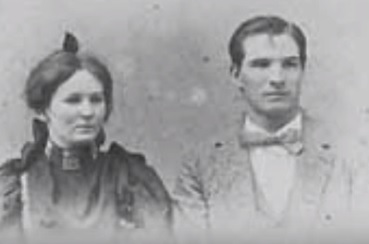
In July of 1897, Edward Stribbling (Trout) Shue was convicted of first-degree murder for strangling his wife and breaking her neck. Trout Shue’s trial, held in Greenbrier County, West Virginia, rested entirely upon circumstantial evidence that strangely proved Shue’s guilt—beyond a reasonable doubt—to jurors who were presented evidence from beyond the grave.

The “facts” included postmortem statements from Shue’s wife, Zona Heaster Shue, who was said to appear before her mother four weeks after death and reportedly told what truly occurred in her murder. It was the first—and only—time testimony from a ghost was admitted as evidence in a United States Superior Court trial, and it helped secure a conviction.

At 10:00 a.m. on January 23, 1897, twenty-three-year-old Zona Shue’s body was found by an errand boy. She was lying on the floor in their house, face down at the foot of the stairs, stretched with one arm tucked underneath her chest and the other extended. Her head was cocked to one side.

Trout Shue arrived home before the coroner, Dr. George Knapp, attended. Shue had already moved his wife’s body to their bed where he’d dressed her in a high-necked gown. As Dr. Knapp began examining Zona, Trout Shue exhibited overpowering emotions and cradled Zona’s head and her shoulders, sobbing and weeping. Dr. Knapp stopped his exam out of respect for the grieving spouse and signed-off the death to “everlasting faint”.

A traditional wake was held before Zona’s next-day burial and attendants noticed peculiar behavior from Trout Shue. When the casket was opened for viewing, he immediately placed a scarf over Zona’s neck as well as propping her head with a pillow and blanket. Shue then put on another spectacular show of grief and made it impossible for mourners to get a close look at her face.
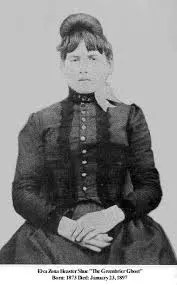
Zona Shue was buried in the Soule Chapel Methodist Cemetery in Greenbrier County. Initially, everyone who knew the Shues accepted Zona’s death as not suspicious—except for her mother, Mary Jane Heaster.

Mrs. Heaster disliked Trout Shue from the moment they met, and she suspected foul play was at hand. “The work of the devil!” Heaster exclaimed. She prayed every night, for four weeks on end, that the Lord would reveal the truth.

Then, in the darkness of night, when Mary Jane Heaster was wide awake, Zona’s spirit allegedly appeared.

It was not in a dream, Heaster reported. It was in person. First the apparition manifested as light, then transformed to a human figure which brought a chill upon the room. For four consecutive nights, Heaster claimed her daughter’s ghost came to the foot of her bed and reported facts of the crime that extinguished her life.
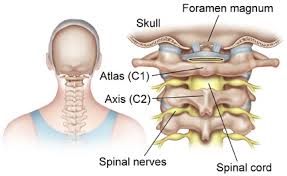
Zona’s ghost was said to reveal a history of physical abuse from her husband. Her death resulted in a violent fight over a meal the night before she was found. Trout Shue was said to have strangled Zona, crushing her windpipe and snapping her neck “at the first joint”. To prove dislocation, Zona’s figure turned its head one hundred and eighty degrees to the rear.

Mary Jane Heaster steadfastly maintained her daughter’s ghost was real and Zona’s reports of the cause of her death were accurate. Heaster was so compelling in her paranormal description that she convinced local prosecutor, John Preston, to re-open the case.

Preston’s investigation found Trout Shue had a history of violence. In another State, he’d served prison time for assaults and thefts. He’d been married twice before—one other wife dying under mysterious circumstances. By now the Greenbrier community was reporting more peculiar behavior from Shue. He’d been making comments to the effect that “no one would ever prove I killed Zona”.

Combined with Coroner Knapp’s admission that he failed to conduct a thorough exam, Preston established sufficient grounds to exhume Zona’s body and conduct a proper postmortem examination.

Zona was autopsied by three medical doctors on February 22, 1897 with the official cause of death being anoxia from manual strangulation compounded by a broken neck. Bruising consistent with fingermarks was noted on Zona’s neck, her esophagus was contused, and her first and second cervical vertebrae were fractured. Anatomically, they’re known as the C1 Atlas and the C2 Axis which combine to make the first joint at the base of the skull.
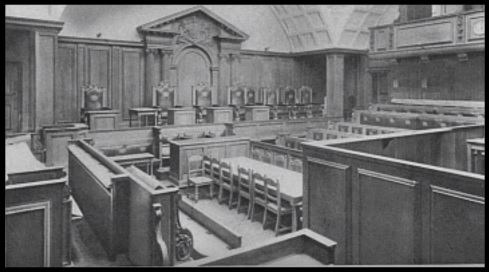

An inquest was held, and Trout Shue was summoned to testify. Although he denied being present at the time of Zona’s death and bearing culpability, he was unable to establish an alibi and was considered an unreliable, self-serving witness. It was ruled a homicide and Trout Shue was charged with her murder.

Trout Shue’s first-degree murder trial began in Greenbrier Circuit Court on June 22, 1897. A panel of twelve jurors was convened who heard evidence from a number of witnesses, including Shue himself.

John Preston was reluctant to subpoena Mary Jane Heaster as a witness, fearing her ghost story would damage credibility. However, Shue’s defense lawyer opened that can of worms and called Zona’s mother to the stand. Evidently, it backfired.

This verbatim excerpt is from the transcript of Mary Jane Heaster’s testimony. It’s still on record in the West Virginia State Archives:

Defense Counsel Question — I have heard that you had some dream or vision which led to this post mortem examination?

Witness Heaster Answer — It was no dream – she came back and told me that he was mad that she didn’t have no meat cooked for supper. But she said she had plenty, and said that she had butter and apple-butter, apples and named over two or three kinds of jellies, pears and cherries and raspberry jelly, and she says I had plenty; and she says don’t you think that he was mad and just took down all my nice things and packed them away and just ruined them. And she told me where I could look down back of Aunt Martha Jones’, in the meadow, in a rocky place; that I could look in a cellar behind some loose plank and see. It was a square log house, and it was hewed up to the square, and she said for me to look right at the right-hand side of the door as you go in and at the right-hand corner as you go in. Well, I saw the place just exactly as she told me, and I saw blood right there where she told me; and she told me something about that meat every night she came, just as she did the first night. She cames [sic] four times, and four nights; but the second night she told me that her neck was squeezed off at the first joint and it was just as she told me.

Q — Now, Mrs. Heaster, this sad affair was very particularly impressed upon your mind, and there was not a moment during your waking hours that you did not dwell upon it?

A — No, sir; and there is not yet, either.

Q — And was this not a dream founded upon your distressed condition of mind?

A No, sir. It was no dream, for I was as wide awake as I ever was.

Q — Then if not a dream or dreams, what do you call it?

A — I prayed to the Lord that she might come back and tell me what had happened; and I prayed that she might come herself and tell on him.

Q — Do you think that you actually saw her in flesh and blood?

A — Yes, sir, I do. I told them the very dress that she was killed in, and when she went to leave me she turned her head completely around and looked at me like she wanted me to know all about it. And the very next time she came back to me she told me all about it. The first time she came, she seemed that she did not want to tell me as much about it as she did afterwards. The last night she was there she told me that she did everything she could do, and I am satisfied that she did do all that, too.

Q — Now, Mrs. Heaster, don’t you know that these visions, as you term them or describe them, were nothing more or less than four dreams founded upon your distress?

A — No, I don’t know it. The Lord sent her to me to tell it. I was the only friend that she knew she could tell and put any confidence it; I was the nearest one to her. He gave me a ring that he pretended she wanted me to have; but I don’t know what dead woman he might have taken it off of. I wanted her own ring and he would not let me have it.

Q — Mrs. Heaster, are you positively sure that these are not four dreams?

A — Yes, sir. It was not a dream. I don’t dream when I am wide awake, to be sure; and I know I saw her right there with me.

Q — Are you not considerably superstitious?

A — No, sir, I’m not. I was never that way before, and am not now.

Q — Do you believe the scriptures?

A — Yes, sir. I have no reason not to believe it.

Q — And do you believe the scriptures contain the words of God and his Son?

A — Yes, sir, I do. Don’t you believe it?

Q Now, I would like if I could, to get you to say that these were four dreams and not four visions or appearances of your daughter in flesh and blood?

A I am not going to say that; for I am not going to lie.

Q — Then you insist that she actually appeared in flesh and blood to you upon four different occasions?

A Yes, sir.

Q  Did she not have any other conversation with you other than upon the matter of her death?

A — Yes, sir, some other little things. Some things I have forgotten – just a few words. I just wanted the particulars about her death, and I got them.

Q — When she came did you touch her?

A — Yes, sir. I got up on my elbows and reached out a little further, as I wanted to see if people came in their coffins, and I sat up and leaned on my elbow and there was light in the house. It was not a lamp light. I wanted to see if there was a coffin, but there was not. She was just like she was when she left this world. It was just after I went to bed, and I wanted her to come and talk to me, and she did. This was before the inquest and I told my neighbors. They said she was exactly as I told them she was.

Now, whether jury members accepted Mary Jane Heaster’s ghost story as being credible, or if it made any difference to their interpretation of the facts, will never be known. And it’s on record the trial judge cautioned jurors about the reliability of circumstantial evidence:

“There was no living witness to the crime charged against Defendant Shue and the State rests its case for conviction wholly upon circumstances connecting the accused with the murder charged. So the connection of the accused with the crime depends entirely upon the strength of the circumstantial evidence introduced by the State. There is no middle ground for you, the jury, to take. The verdict inevitably and logically must be for murder in the first degree or for an acquittal.”

The jury was out for an hour and ten minutes before returning to find Trout Shue guilty of murdering his wife, Zona, in the first degree. He was sentenced to life imprisonment and died of an epidemic disease three years later.

I’d love to travel back in time and be a fly on the wall during that deliberation. What they discussed in that sequestered room has long gone to the grave, but I find Mary Jane Heaster’s testimony about Zona’s fractured vertebrae to be downright spooky.

———

What about you Kill Zoners? From reading Mrs. Heaster’s evidence, do you find her credible? And, by all means, please share with us your true ghost stories!

———

Garry Rodgers is a retired homicide detective with a second career as a coroner investigating sudden and unexplained human deaths. Now, Garry’s come back from the forensic dead and has reincarnated himself as a crime writer.

Vancouver Island on Canada’s west coast is the haunting grounds for Garry Rodgers. In spirit, he maintains a popular blog at DyingWords.net and he occasionally floats in and out on Twitter — @GarryRodgers1. You can find Garry’s flesh-and-blood crime writing works on leading E-tailers —Amazon, Kobo, Apple, Nook, and Google.

2021 Is Getting Small in the Mirror

By John Gilstrap

Folks, I’m not going to try and bluff my way through this post. As I write this, I have what I believe is the flu. Remember the flu? That other respiratory malady that has been around for years? I did get tested for the new malady, and with negative results. So, as I enter my seventh day of fever, I find myself at a loss for writing advice that anyone could possibly find interesting.

Instead, as we here at The Killzone Blog wander up to our annual holiday hiatus, I’ll take this opportunity to express my gratitude to our subscribers and lurkers for all your support over these many years.

Next time we see each other, we’ll be in the embrace of a brand new year. I wish everyone health, prosperity and happiness.

What I Learned From Nora, David and Jean: You Have To Connect

You better make them care…It better be quirky or perverse or thoughtful enough so that you hit some chord in them. Otherwise, it doesn’t work. I mean we’ve all read pieces where we thought, “Oh, who gives a damn?” — Nora Ephron.

I feel like now people want more of a mirror. They want to see themselves in the book that they’re reading. — David Sedaris

By PJ Parrish

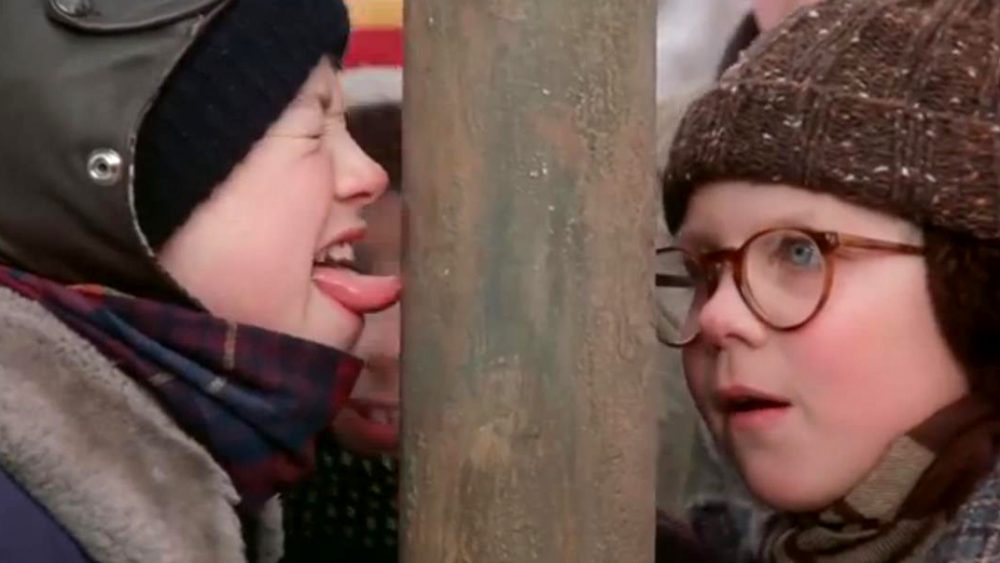
Well, it’s officially Christmas season. I know this because Ralphie is whining about getting a Red Ryder air rifle. Every time A Christmas Story comes on, I am reminded of my own childhood. But I’m also reminded how dependent writers are on our powers of observation and also our storehouses of life experience. And how we use that to connect with our readers.

This point is especially clear to me because I’ve been reading Nora Ephron’s Wallflower at the Orgy, her dispatches as a reporter about the cultural upheavals of the late ’60s. Here’s the opening:

Some years ago, the man I am married to told me he had always had a mad desire to go to an orgy. Why on earth, I asked. Why not, he said. Because, I replied, it would be just like the dances at the YMCA I went to in the seventh grade—only instead of people walking past me and rejecting me, they would be stepping over my naked body and rejecting me. The image made no impression at all on my husband. But it has stayed with me—albeit in another context. Because working as a journalist is exactly like being the wallflower at the orgy. I always seem to find myself at a perfectly wonderful event where everyone else is having a marvelous time, laughing merrily, eating, drinking, having sex in the back room, and I am standing on the side taking notes on it all.

Nora Ephron, director (Photo by Vera Anderson/WireImage)

Which pretty much summarized how I often felt during the ’60s and later when I worked as a reporter. But that’s the beauty of a great writer like Ephron, and why I am drawn to essayists. They see things more sharply than average folk. And they spin what they see into great stories that anyone can relate to. Which is pretty much what we novelists should be trying to do.

You have to connect. But easier said than done, as any writer knows. I remember reading a First Novel Edgar winner a couple years back. Man, the writing just sang! Gorgeous description, a lean neo-noir sensibility. But I always felt as if the writer was holding back emotionally. And this arms-length style eventually left me thinking, “who gives a damn?”

You have to connect. Some things to think about as you grapple with this.

Make your subject relatable in experience. Nora Ephron wrote a terrific essay called “A Few Words About Breasts.”  It was about her agony, as a tomboy, waiting for her breasts to “develop.” When she begged her mother for a bra, her mom said “What for?” She recounts the horror of going alone to the department store and getting fitted for a size 28AA. When I read it, I was smiling, nodding and ultimately crying.

Many moons later, I happened upon her essay on aging gracefully called  “On Maintenance.” Best line about how getting hair highlights changed her life: “…a little like that first brandy Alexander Lee Remick drank in Days of Wine and Roses.”

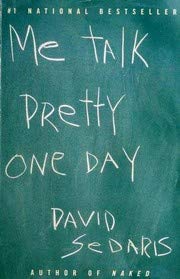
Use Your Experiences to Find Your Own Voice. Another of my favorite writers is also an essayist — David Sedaris. Why do his essays connect with readers? Because he writes with wit and humility of his own experiences. He is a storyteller you want to spend your hours with. His essay on learning French “Me Talk Pretty One Day” articulated all the terror I felt in my first French adult ed course: “Learning French is a lot like joining a gang in that it involves a long and intensive period of hazing.” I’m now taking online Babbel courses now and every time I am “buzzed” for incorrect pronunciation — I have a heavy Detroit/Michigan accent, so I will never say anything in French pretty — I think of Sedaris.  He’s got some really good advice for writers. Click here. This one is among my favorites:

Sad stories, dashed dreams, and memorable mistakes are ammunition for writers. Any experience can be converted into a story, and rough experiences often make the best stories. As a writer, failure is soil for growing heartfelt stories. Vulnerability is a powerful draw. Write down your biggest failures, then review the list to see which ones can be marshaled into relatable stories for your readers.

And about that voice thing? Don’t sweat it too much. When you’re just starting out, you might not be able to articulate exactly what you are trying, in your heart and soul, to get across. So be content with trying to become the best damn storyteller you can. If you are successful at that, the voice thing will emerge by itself. As Neil Gaiman says:

After you’ve written 10,000 words, 30,000 words, 60,000 words, 150,000 words, a million words, you will have your voice, because your voice is the stuff you can’t help doing.”

Which leads me to my final essayist who influenced me as a writer. I first encountered Jean Shepherd’s writing in the ’70s when I was reading Car & Driver magazine. (don’t ask…my ex-husband, a race car nut from Indy was a subscriber.) I loved his columns. He went on to write for Playboy, New York Times and others. Time magazine once described him as a “comic anthropologist.” His talent was noticing and using the mundane details of daily life to tell his stories, filtering them through a sensibility that was, by turns, funny, absurd, sarcastic, and often sad. (For the record, Shepherd hated the word “nostalgia.” I found this out when I interviewed him for a profile in the Fort Lauderdale News.)

I loved his short story about the awful rites of prom-going, “Wanda Hickey’s Night of Golden Memories” because every detail is acute. And also because I was poor pitiful Wanda:

I began to notice Wanda’s orchid leering up at me from her shoulder. It was the most repulsive flower I had ever seen. At least 14 inches across, it looked like some kind of overgrown Venus’s flytrap waiting for the right moment to strike. Deep purple, with an obscene yellow tongue that stuck straight out of it, and greenish knobs on the end, it clashed almost audibly with her turquoise dress. It looked like it was breathing, and it clung to her shoulder as if with claws.
As I glided back and forth in my graceful box step, my left shoulder began to develop an itch that helped take my mind off of the insane itch in my right shoulder, which was beginning to feel like army of hungry soldier ants on the march. The contortions I made to relieve the agony were camouflaged nicely by a short sneezing fit brought on by the orchid, which was exhaling directly into my face. So was Wanda, with a heady essence of Smith Brothers cough drops and sauerkraut.

But Shepherd is best known for A Christmas Story. You’ve seen it. It runs on a loop during the holidays, the 1983 movie about Ralphie, his long-suffering chenille-robed mom and his old man who lusts after a lamp in the shape of a fish-netted gam.  The movie is based on some chapters from Shepherd’s first book In God We Trust (All Others Pay Cash), which were based on Shepherd’s childhood in Hammond, Ind. Why is the movie evergreen? Here’s what Shepherd told an interviewer in 1971:

“You can tell a story about anything. But the only stories that have any fidelity, any feeling, are stories that either did happen to you or conceivably could have happened to you.”

In other words, to be a great storyteller, you have to connect. Merry Christmas, y’all.


Merry Misdirection

Misdirection is the intentional deflection of attention for the purpose of disguise, and it’s a vital literary device. To plant and disguise a clue so the reader doesn’t realize its importance takes time and finesse.


The most important thing to remember is to play fair. Clues must be in plain sight. We cannot reveal a clue that wasn’t visible earlier. That’s cheating.

A few years ago, I read a novel about [can’t name the profession without giving away the title]. The protagonist located the dead and solved every mystery with invisible clues. After I whipped my Kindle across the room, I took a deep breath and skimmed the story searching for the clues. Never found one. Not one! The author’s name now sits at the pinnacle of my Do Not Read list.

A key feature of good misdirection means you brought attention to the clue, and the reader still missed it.

A magician uses three types of misdirection:

  • Time: The magician has the silk scarf balled in one fist before he begins the trick.
  • Place: The magician draws your attention to his right hand while the real trick is happening in his left.
  • Intent: The magician leads you to the decision he wants, but afterward you’ll swear you had a choice.

Notice any similarities to writing?

Misdirection can be either external or internal. External would be when the author misdirects the reader. Internal is when a character misdirects another character.

Misdirection is different than misinformation. We should never outright lie to the reader. Rather, we let them lie to themselves by disguising the clue(s) as inconsequential.

How do we do that?

When you come to a part of the story where nothing major occurs, slip in a clue. Or include the detail/clue while fleshing out a character’s life.

Examples:

One character chats with another as they drive to a designated location. Is the locale a clue in and of itself?

What about the title of the book? The reader has seen the title numerous times, yet she never gave it much thought until the protagonist reveals its meaning to the plot.

Clandestine lovers meet in a hideaway. While there, one of the characters notices a symbol or sign. Later in the story, she finds another clue that relates to the sign or symbol. Only now, she has enough experience to interpret its true meaning.

A kidnapper chalks an X on a park bench to signal the drop-off spot. What if a stray dog approaches the kidnapper? If he reads the dog’s tag to find his human, the clue takes center stage, yet it’s disguised as inconsequential.

In all four examples the arrival of the clue seems insignificant at first. The reader will notice the clue because we’ve drawn attention to it, but we’ve framed it in a way that allows the character to dismiss it. Thus, the reader will, too.

False Trails

The character knows the clue is important when she finds it, but she misinterprets its meaning, leading her down a dead end.

What if we need to supply information on a certain topic, but we don’t want the reader to understand why yet? If we take the clue out of context and present it as something else—something innocuous or insignificant—we’ve misdirected the reader to reach the wrong conclusion.

An important factor of misdirection is that the disguise must make sense within the confines of the scene. It should also further the plot in some way.

“Misdirection can be used either strategically or tactically. Strategically to change the whole direction of a story, to send it off into a new and different world, and have the reader realize that it’s been headed that way all along. Tactically to conceal, obscure, obfuscate, and camouflage one important fact, to save it for later revelation.”

— The Writer magazine

Character Misdirection

Character misdirection is when the protagonist (and reader) believes a secondary character fulfills one role when, in fact, he fulfills the opposite.

Two types of character misdirection.

  • False Ally
  • False Enemy

These two characters are not what they seem on the surface. They provide opportunities for dichotomy, juxtaposition, insights into the protagonist, theme, plot, and plot twists. They’re useful characters and so much fun to write.

A false ally is a character who acts like they’re on the protagonist’s side when they really have ulterior motives. The protagonist trusts the false ally. The reader will, too. Until the moment when the character unmasks, revealing their false façade and true intention.

A false enemy is a character the protagonist does not trust. Past experiences with this character warn the protagonist to be wary. But this time, the false enemy wants to help the protagonist.

When Hannibal Lecter tries to help Clarice, she’s leery about trusting a serial killing cannibal. The reader is too.

What type of character is Hannibal Lecter, a false ally or false enemy?

An argument could be made for both. On one hand, he acts like a false enemy, but he does have his own agenda. Thomas Harris blurred the lines between the two. What emerged is a multifaceted character that we’ve analyzed for years.

When crafting a false ally or false enemy, it’s fine to fit the character into one of these roles. Or, like Harris, add shades of gray.

Mastering the art of misdirection is an important skill. It’s especially important for mysteries and thrillers. I hope this post churns up new ideas for you.

Do you have a false ally or false enemy in your WIP? What are some ways you’ve employed misdirection?

This is my final post of 2021. Wishing you all a joyous holiday season. See ya in the New Year!

Female killers are often portrayed as caricatures: Black Widows, Angels of Death, or Femme Fatales. But the real stories of these women are much more complex. In Pretty Evil New England, true crime author Sue Coletta tells the story of these five women, from broken childhoods to first brushes with death, and she examines the overwhelming urges that propelled these women to take the lives of more than one-hundred innocent victims. If you enjoy narrative nonfiction/true crime, Pretty Evil New England is on sale for $1.99. Limited time. On Wednesday, Dec. 15, the price returns to full retail: $13.99.