by James Scott Bell
@jamesscottbell
 The other day I was rooting around in some old files and found a document from 2003 titled “Budding Author Questionnaire.” I wrote it to answer some questions a high school student sent me. His assignment was to find someone who was doing what he wanted to do someday and conduct an interview.
It was a stroll down memory lane to see what I advised the lad. Remember, this was four years before the Kindle arrived and changed everything. Self-publishing was not an option. The only way forward was by way of the Forbidden City.
Which was probably why Dorothy Parker once quipped, “If you have any young friends who aspire to become writers, the second greatest favor you can do them is to present them with copies of The Elements of Style. The first greatest, of course, is to shoot them now, while they’re happy.”
But one should never toss cold water on the hopes of high school students. They’ll get to real life soon enough.
So I wrote the following answers. I thought it might be fun see if you think any of it still applies…or what you would add. (Do so in the comments.)
Here we go:
What training does a career in writing require?
Mostly it is self training. You must teach yourself to write. You can read good books on writing, take courses, go to writing conferences, etc. But the most important thing you do is write, each day if possible, and apply what you are learning. You learn by writing, trying, seeing where you need to improve, finding out how to improve, and writing some more. There is no shortcut.
In college I wrote to an author I admired asking some of these same questions. He wrote back and said, “Be prepared for an apprenticeship of years.” He was right.
Are you in a particular genre of writing?
I write thrillers, mostly legal thrillers.
What additional special training did it require?
Since I’m a lawyer, I have that background. But I have also written in other fields, such as bio-technology. You can stretch your mind and experience through research, interviewing experts, and actually participating in some activities you wouldn’t normally touch. Writing, in this way, becomes an exercise in personal growth.
What natural abilities or interests are needed for a career in writing?
You should love to read, and be moved by books. You should have some love of words and the rhythms of language. You should be something of a dreamer.
What is the approximate starting salary range for authors?
Using “salary” with fiction writer is like using “sure thing” at the racetrack. There is no regular or predictable income.
Fiction writers get an “advance against royalties” and then the royalties themselves—if any. The advance is a portion of what the publisher thinks the book, when published, will earn in sales. First-time novelists, being unknown commodities, do not demand large advances (though there have been exceptions for first novels that publishers thought would be blockbusters. However, many of these bombed, which hurt the authors’ careers.)
The average annual income for fiction writers in the U.S. is something like $3,000. But that is skewed. A handful of authors make millions; a large number make virtually nothing. My goal, and the goal I advise for new writers, is to try to build your audience progressively by writing better and better books. Gain the publisher’s confidence that you can turn in a solid performance every time. Then you will make some money, too. And there’s always that racetrack chance you’ll win the trifecta, and join the John Grishams or Danielle Steels—just don’t bet the farm on it.
I don’t advise “quitting your day job” too soon. Having a dependable source of income is a wise idea unless and until you have enough of a sales record to be able to count on book income alone. Even then, you might consider keeping a low-stress side job, like price checker at the 99¢ Store.
Is there good job availability for those who choose writing?
There is always room for another superb writer. It’s hard to break in, but if you are consistent and persistent, and show that you can produce over and over again, you might make it.
Would you rate the opportunities for advancement as poor, fair, good, or excellent?
As with anything in our capitalist system, the opportunities for advancement are tied to the value that you offer an employer. If a publisher begins to make money from your books, and you stay productive, your chances to build a career are good to excellent.
But writing, as with all the arts, does not offer as predictable a path as other work, where you can pretty much know that Effort X will result in Reward Y.
That’s why you need to write for more than just financial gain. You’ve got to write because writing itself is a reward.
Could you list a particular advantage to being a writer?
You can’t beat the hours. Or the dress code. During the summer I work in shorts and a Hawaiian shirt. If I go to Starbucks, I wear flip flops.
A particular disadvantage?
Not knowing how much your next royalty check is going to be. Also, writing concerns can easily take over your life, which is a real threat to more important things, like your spiritual life, family life, etc. You have to keep watch. If writing becomes the most important thing in your day-to-day existence, you could end up like Fitzgerald or many another writer who turned to the bottle for solace.
Do you have any special advice for someone interested in writing (such as college courses to take, things to study)?
Read some good books on the craft. Take classes, sure. But remember to put into practice what you’re learning. Try stuff. Show it to others. Get feedback. Develop “Rhino skin,” which means you can take criticism without dying the death of a thousand cuts.
Remember, no criticism of your writing is personal unless it’s accompanied by a punch in the nose.
Are there any current problems faced by most authors?
More and more books are being published, an estimated 114,487 in 2001, compared to 39,000 in 1975. This is good news and bad news. Your chances of being published are increased a bit, but your chances of getting noticed in the avalanche are smaller.
The only way to get (and keep) that notice is to become known as someone who writes quality books—emphasis on the plural.
Why did you choose writing as your profession?
Writing chose me. It was something I couldn’t not do. Even if I never made any money, I was going to write. At the very least I was going to publish at Kinko’s and distribute copies to my family until they shouted “Mercy!” And then I was going to find another family to torment.
Looking back across your career and where you are now, was it worth everything you did, everything you sacrificed to get where you are?
The “sacrifice” is really countless hours spent trying, studying, trying again, surviving disappointment and on and on. But since that was the only way I was going to get anywhere in the writing game, it was certainly worth it. I loved the learning. Flashbulbs would go off when I discovered something, and then saw I could do it. I still love that aspect of the craft. I will never stop trying to learn to do things better.
Not to discount the frustrations and obstacles. They are real. But if writing is what you must do, and you love it, you can keep going. I like this quote from a long-ago professor at the Yale Divinity School named Grenville Kleiser:
Be done with the past, save where it serves to inspire you to greater and nobler effort. Be done with regrets over vanished opportunities, seeming failures, and bitter disappointments….Be done with the “might have been” and think of the “shall be.”
I wish you abundant success in your future endeavors.
Sincerely,
James Scott Bell
 By Elaine Viets
 Badass. One word, no hyphen.
 Bitch. Noun.
 SOB. Noun, capped with no periods.
 Asshat. Here’s a word that seems to be gaining in popularity in novels.
 Asshole. A noun, “usually vulgar.”
 Let’s go to a fairly harmless phrase:
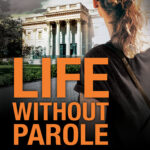 LIFE WITHOUT PAROLE, my new Angela Richman mystery, is out. Publishers Weekly says, “Colorful characters match the crafty plot twists. Viets consistently entertains.” Read the review and order your copy here:
  For instance, I distinctly recall Betty Cutter, not Betty Crocker. She cut her own throat with her kitchen’s electric carving knife and her name was Elizabeth. Same with The Flying Dutchman— a guy named Hoogenstratten (sp?) who, with an alcohol level three times the legal driving limit, crashed his sizzled ultralight after buzzing into high-voltage power lines. Then there was Grizzly Adam whose name was Adam and was mauled to death by a grizzly bear.
 While Barb was messing with his head, I snooped around. It was typical digs for a single pensioner—a bachelor suite crammed with junk. Empty booze bottles and overflowing ashtrays testified to a lifestyle that suggested he should be dead of something by now. I checked for meds, which was routine. The pathologist would want to know what was likely in his system and the toxicology lab would want it for sure.
 Next morning my favorite pathologist, Dr. Elvira Esikanian, was on the roster to autopsy our guy from the kitchen floor. I loved dealing with Elvira. She’s Bosnian with a wicked sense of dry humor and an equally wicked curriculum vitae, including exhuming mass graves for the UN and serving in some of the busiest morgues around the world where she’d often do a dozen different cuttings per day.
 What I saw was a squiggling biological mass of sub-terrain aliens—looking out-of-this-world like agitated, animated, turquoise tampons breathlessly mingling in a magnified mess of greenish-gray snot.
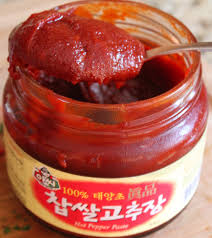 Realizing the lethality of the situation and the danger to others, Barb and I immediately went back to the apartment. There, on the counter, was a jar of red pepper paste with a label indicating it originated in China and was far past its expiry date. A tag showed it’d been purchased at the Dollar Store.
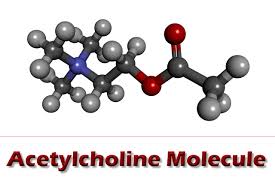 In the case of a muscle contraction, the chemical signal is passed using a neurotransmitter called acetylcholine. This sits in the neuron in a vesicle, a small bubble surrounded by a membrane, until it is required. When the neuron receives a message from the nervous system to initiate a muscle contraction, the acetylcholine is released from the vesicle and passes through the synapse into the muscle fiber.
 The same gruesome stuff in the red pepper paste that painfully killed our old man is commonly stuck into people’s faces to make them look younger and pretty.
 Garry Rodgers is a retired homicide detective and coroner. Now he’s reinvented himself as a crime writer and deadly blogger. Probably an upcoming podcaster, too. 😉