Let Me Tell You a Story [Video]

By Sue Coletta

In the video, I tell you a story. After you watch it, we’ll deconstruct how and why I told the story this way. I’m hoping this will help new writers who submit their first pages for critique. For the seasoned writers, please add tips that I’ve missed.

Pardon my lack of acting skills. LOL Catch ya on the flipside.

Did you notice all the things I didn’t say? Learning what not to write is just as important as learning what to put on the page.

The first line tells the audience “someone I buried thirty years ago visited” but I’m vague. The audience doesn’t need to know more than that yet. Tease the reader into finding out on their own.

Our characters experience a slow build of emotion. In the video, I breeze over sharing my emotions because it’s visual. With the written word, we need to describe what the character is feeling, thinking, internal body cues, what she smells, etc., to paint that same vivid picture in the reader’s mind. Which, in my opinion, is why books are more visceral than movies. The reader experiences the story right along with the characters.

Let’s tear apart the transcript to see the inner workings of the scene.

Please note: For some reason I told the story in present tense. Let’s blame the humidity. 🙂 In writing, however, we should remain in past tense, with a few exceptions that’ve been discussed on TKZ before. I corrected the tense in the transcript below.

Blue brackets show the structure, green shows Motivation-Reaction Units (MRUs). Notice the rhythm.

Ready? Here we go …

Someone I’d buried over thirty years ago visited me last night. [HOOK] Hooks the reader right away and plants story questions in their mind. A good opening line forces the reader to continue. It also hints at the story to come and defines the genre.

The next paragraph introduces the main character without bogging down the writing with backstory. At the same time, we’re giving the reader a reason to empathize with, or relate to, our hero.

I was sitting at my desk, reading my manuscript, reading the story through one last time, second-guessing every move I made from the opening scene to the end, when static from the TV drew my attention. <-- First hint of trouble. [GOAL] [MOTIVATION IS 2ND PART AND TWO LINES BELOW]

It was off. Yet, it popped, crackled, hummed. <-- We’ve begun to build suspense. I should add, in writing it’s best to substitute a generic word like “it” with the item we want the reader to visualize. [CONFLICT]

We’d just bought the television last December. <-- One line of backstory to show why this situation is unusual. Don’t tell me it’s goin’ already. <-- Inner dialogue helps the reader relate to our hero. [REACTION]

When silence enveloped the room, I shrugged it off as one of life’s mysteries and got back to work. <-- Adds to characterization and sets up the following inner dialogue, so the reader doesn’t get confused. [1ST HALF IS MOTIVATION, 2ND IS REACTION]

Gee, I really love the storyline, the way it ebbs and flows. But is that the right word? Is this the right reaction for the scene? I don’t know …

Pop. Crackle. Hum. <-- There’s the conflict again — the antagonist force isn’t going away. [DISASTER] [MOTIVATION]

My gaze shot to the flat-screen. That’s weird. It’s almost like it’s trying to turn itself on. That can’t be right … can it? <-- Reaction, emotions building. If written, I’d trigger the senses here. [REACTION]

As my jaw slacked, voices in the other room whirled me around. I was alone in the house. <-- Stakes. [MOTIVATION]

Maybe the breeze carried my neighbor’s conversation through the screens. Wouldn’t be the first time. <-- Reaction. Even though emotions are on the rise, our hero still tries to reason the strange happening away. [ABOVE IS ALL REACTION] [REACTION FOR MRU, TOO]

Once again, I focused on my manuscript. <-- Hero tries (and fails) to ignore the conflict. I guess that word works. Yeah, it’s pretty good. Plus, I’m running out of time. <-- Inner dialogue allows the reader inside the hero’s head.

I glimpsed the clock. One hour left to turn it in. <-- Micro-conflict.

I read on.

The voices from the sunroom grew louder and more intense. <-- Antagonist force grows stronger and more visible. Stakes rise. Suspense increases. [DILEMMA] [MOTIVATION]

What the heck’s goin’ on? <-- Reaction. If this was a written scene rather than a visual one, I’d add more emotion and inner turmoil here. [REACTION]

Unable to concentrate, I swiveled out of my desk chair. <-- Our hero is forced to act.

Slow. Cautious. I snuck through the kitchen to the French doors. <--Action, punctuated with sentence fragments to help build suspense. Crackling blurs the voices of talk radio. <-- The hero realizes what’s happening. This also sets up the reveal at the end of this scene. [LAST SENTENCE IS MOTIVATION]

My eyes widen in disbelief. With my head swiveling like a pinwheel on a stick, scoping out the room in all directions, I tiptoed toward the stereo. <-- The hero’s emotions have reached a crescendo. If written, add more visceral details. [DECISION] [REACTION] Sure enough, the switch clicked up one notch to AM. <-- The antagonist force is revealed, but we still don’t know why or what it wants. When we raise more story questions we force the reader to flip the page. [MOTIVATION]

Oh. My. God. She’s come back. <-- Sets up future scenes and, hopefully, makes the reader fear for our hero. [REACTION]

Now, could I have shared a better story? Absolutely. But the reason I chose to use this particular story is because everything I told you in the video is true. This happened to me last week.

Quick SEO tip: When including video in your post add [Video] to your title. The bracketed word tells bots to crawl the post. Google, Bing, Yahoo, etc. give video the highest priority. I’ll share more SEO tips with you soon or you can learn more here!

TKZ family, please share your favorite writing advice, writing quote, or something that resonated with you that will help new writers on their journey.


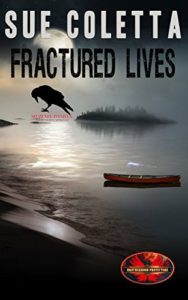
Read the opening scene of CLEAVED, and you’ll see the same storytelling structure in action.


Where Do You Find Inspiration?

By Sue Coletta

Whenever I’m plotting a new novel, I read a lot of true crime stories for inspiration. I may even steal character traits from one real world serial killer or victim and combine them with another. Reading triggers the muse to fire off plot, character, and subplot ideas. Somedays, though, the stories are almost too bizarre to believe. In which case, I’ve merely entertained myself for a while. Nonetheless, I wouldn’t call it wasted time, because true stories have a way of worming into our subconscious mind. When we’re in the writing zone, these alleged “useless facts” can morph into an intriguing scene that we never expected. Don’t you love when that happens?

With that in mind, I pose the following question to you, my dear TKZers. Did you know serial killing families existed? I’ve written about them before on my blog, as well as serial killing couples, which aren’t as rare.

Wes Craven found inspiration for his 1977 slasher film The Hills Have Eyes when he read about the horrors of one particular family of serial killers — the Sawney Bean clan. This is their story. (Did anyone else hear Law & Order’s theme song when they read that line?)

In the times of King James I, Mr. and Mrs. Sawney Bean transformed Bennane Cave, by Ballantrae in Ayrshire, Scotland, into their home. Long, twisting tunnels extended for more than a mile underground. The cave also featured several side passageways to accommodate a growing family. And grew they did. Over the years they created their own army of psychopathic cannabals.

Opposed to getting a job to support his new bride, Sawney Bean resorted to robbery. On the lonely back roads that connected the villages, he’d lie in wait for travelers to pass by. Townsfolk believed the roads were haunted due to the massive amount of disappearances.

A budding serial killer stalked those streets.

Bean’s sole reason for escalating to murder was to not leave witnesses. But then, Agnes, his wife, had an even sicker idea. If they butchered their victims, their remains could provide a high-protein diet, which had the added benefit of evidence disposal. Their relationship had already forced them to flee from their homeland in northern Scotland, after locals repeatedly made accusations of Agnes being a witch, claiming she’d been involved in human sacrifice and conjuring demons.

Over the years Sawney and his wife had fourteen children — all as twisted and evil as their parents — who became an army of serial killing cannibals.

During the next two decades, through incest, the children bore more children, who refined the art of murder and cannibalism, often salting and pickling human flesh. According to the Bean family ledger, found many years later, these incestuous acts brought Bean and Agnes a total of 18 grandsons and 14 granddaughters, now bringing the Bean clan to a total of 48 inbred, cannibalistic monsters.

Decaying body parts washed up on the beaches surrounding Bennane cave. Which prompted massive search parties. But no one thought to check the cave.

In about 1430 A.D., fate intervened when the Bean army — who had split into several small groups to hunt — attacked a man and his wife while on their way home from the fair. Half the Bean clan dragged the woman off her horse and had already disemboweled her before the other half of the group had a chance to wrestle the man to the ground. Fighting for his life, the distraught husband trampled several members of the Bean clan with his horse. This caused such a commotion a group of twenty bystanders came to his rescue.

During an all-out war, the Bean clan found themselves outnumbered for the first time in their pathetic lives. They retreated to the cave, leaving behind the mutilated remains of the man’s wife and a score of witnesses. The surviving victim was taken to the Chief Magistrate of Glasgow to tell his tale. With the longest missing persons list the country had ever seen, they reported to King James I, who arrived in Ayshire with his own army of 400 men and a pack of dogs.

Together with several hundred volunteers, another search was underway. Yet again, no one thought to search the cave. Until one cadaver dog alerted at the entrance.

Nothing could have prepared them for the horrors inside. The Bean family lived in that cave for 25 years. In total, the number of missing persons during that time is said to be over 1000.

Bennane Cave

Torches in hand and swords drawn, the army soldiered into Bennane cave and into the mile-long twisting passageways to the inner sanctum of the Bean lair. Dank cave walls held row after row of human limbs, heads, and torsos displayed like the window of a butcher shop. Bundles of clothes, jewelry, and picked-clean bones littered the ground.

A fight broke out between the King’s Army and the forty-eight Bean members, resulting in the arrest and apprehension of Sawney Bean and his kin.

Their crimes were so heinous that normal channels weren’t enough, so King James I sentenced them all to death. Twenty-seven Bean men were left to exsanguinate after executioners disarticulated their limbs. The twenty-one Bean women were hung, staked, forced to watch their male kin bleed out, and finally. set ablaze. Through the entire ordeal not one member of the Bean family showed any sign of fear or remorse. Instead, they spit obscenities toward their captors.

Until the moment Sawney Bean drew his final breath, he repeated one continuous phrase, “It isn’t over, it will never be over.”

Legend says, one of the daughters escaped during the fight with the King’s Army and a local family adopted her. At seventeen years old, she married and had a son. In hard times they also killed and cannibalized to stay alive. When the villagers caught wind of their gruesome activities they hung the Bean daughter and her husband, but not before her son escaped to America, settling what was then known as Roanke Island. The entire colony later disappeared without a trace.

Legend also says that if you sit under the hanging tree in Scotland, you can still hear the Bean daughter’s bones scrape against the bark.

I’ll end this post the same way it began. Where do you find inspiration?

Nature Provides Amazing Opportunities

By Sue Coletta

It’s no secret that I’m a huge animal lover. Folks who follow me on Twitter may’ve noticed my interest in wildlife, conservation, and protecting our ecosystems.

When our last two dogs crossed the rainbow bridge, part of me died right alongside them. In 10 years we’d lost eight dogs, seven of which died to cancer and one to a brown recluse spider bite. I longed for another to help fill the void, but my husband couldn’t go through the pain again. I understood. Nonetheless, I still grappled with the lack of pitter-pattering of paws across the hardwood. The house didn’t feel the same.  

To help heal, I turned to nature. The woods surrounding our house had to be teeming with life. Surely some little fella needed love.  

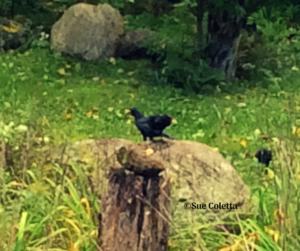
At the time, I was writing Blessed Mayhem and had studied crows extensively. How hard could it be to befriend a crow?  

One day, I piled peanuts on the grass. Circus peanuts, unsalted. In my research I’d discovered that circus peanuts are high in carbs. It takes a high-carbohydrate diet to flap wings. Within thirty minutes, a crow landed in the yard. A bubble of joy burst inside me, a tidal wave of love shattering the protective layer of my heart.  

“Poe?” I said, blurring the lines between fact and fiction.   

Unlike in my book, my Poe turned out to be female. The only reason I knew this was because a few days later, she brought her mate, Edgar, who was noticeably larger. Poe struts with an unmistakable wiggle to the hips and Edgar acts as the great protector. A real man’s man, if you know what I mean. The proud parents flew peanuts back and forth to their nest … in the woods across the street.  

OMG, they had chicks! The helplessness that had consumed me each time cancer stole another dog from us, withered away like lilies in a frozen pond.  

Days turned into weeks as I marveled at their intelligence, grace, and loving nature. My husband got swept up, too. 

Then we had a new visitor. The Marilyn Monroe of squirrels, this gorgeous dirty-blonde with a swanky strawberry-blonde tail sauntered into the yard. Hesitant at first but making a b-line for the peanut pile. Uh-oh, she could be trouble. Would Poe and Edgar accept her, or would they retaliate for the intrusion?  

Since I’d already matched the crow names to fictional pets, why not stay consistent? From that day forward, the sexy squirrel became Shawnee. Then I noticed she was pregnant. If Poe didn’t accept her, how could I ever kick her out? Better lay out two piles of peanuts from now on. 

Fights broke out between the two mothers as I bit all my fingernails to the quick. And then something amazing happened. Little by little, day by day, the taunts, lunges, and overall discourse lessened. It’s like they’d struck a deal — you stay on your side of the yard and we’ll stay on ours. With tiny mouths to feed, the kids remained their top priority.  

Just like that, harmony was restored.  

Neither Poe nor Shawnee cared when Hippy joined the party. Hip is a tiny chipmunk who at the time hadn’t even formed stripes yet. Instead, two dotted lines trailed down his back. My heart puddled into goo. Hippy must be the most enthusiastic of his kind. Each time he scores a peanut he leaps a good four-to-six inches into the air, as if screaming, “Hip, hip, hooray!”

Poe and Edgar brought the chicks once they were old enough to fly. Tears teemed my eyes as they taught their babies how to crack peanut shells against the rock. Their beaks weren’t strong enough yet to pry the shell apart. Shawnee brought her babies, too. Two older chipmunks joined Hippy. That was it. No other birds, no other animals of any kind. Until the sun set in the night sky, when Foxy Lady and her kit, Cornelius, ensured the yard was properly licked clean. Jeff, the opossum, and two of the fattest raccoons on record, the Fatty Patty Twins, also helped with the clean-up. Albeit in shifts. The night crew story I’ll save for another time before this post morphs into a book. 

Back to Poe, Shawnee, and Hip … 

In the yard, I designated a pile of peanuts for each family and they stayed at their respective piles, never encroaching on their neighbor. The two mothers formed the foundation for a mutually beneficial arrangement and everyone played fair.  

The nice thing about crows is, they know how to keep a secret. This becomes especially true with places they feed. Sure, they may bring a guest here and there, but it’s a one-shot deal. If the visiting crow(s) try to hang around, Poe and Edgar escort them past the property lines. Crows also aren’t opposed to playing dead next to a consistent source of food, so other crows flying by will think the feast is toxic. They really are smarter than fifth-graders! 

In New Hampshire, winters are long and brutal. This fact alone worried me. How would my new fur-and-feathered-babies weather harsh conditions? Little did I know, they worked out a solution ahead of time: me. If it isn’t obvious by now, I’m an easy mark, and they knew it from day one. A tilt of the head, a swish of the tail, and I’m out the door, trudging through two feet of snow. My husband also isn’t immune. Thank God, too, because someone needs to shovel a path for them. He’ll even clear the snow around the bottom of Shawnee’s tree so her feet don’t get cold when she climbs down.

During the same blizzard, Odin, our chatty raven who loves to hang out on my deck railing, sang for his breakfast around 6:00 a.m.  

Crows and ravens have an amazing range of calls, which include mimicking other animals. They can even imitate us!  

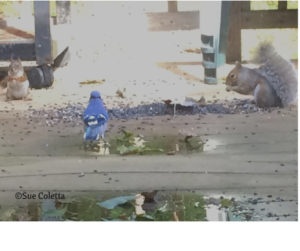
Once the snow arrived, I moved peanut piles up a level to shorten my trek. It seemed like a good idea at the time, but that slight alteration caused a major shift. The waft of peanuts caught the attention of blue jays, who wasted no time in muscling in on the action. Shawnee’s kids had kids of their own, or she’d spilled the beans to one of her squirrel suitors. Between you and me, she’s a bit of a floozie.  

The harmony in the yard became a massive feeding frenzy, new squirrels zigzagging around crows, blue jays divebombing from all directions, warring with one another in mid-air while Poe and Edgar played referee. Add in an adorable red squirrel, aptly named Wile E. Squirrel, and I created the perfect storm. Absolute madness unfolds daily around here … but everyone’s fat and happy.   

The truly beautiful thing is, Poe and Shawnee still eat wing to tail without even so much as a harsh glance. Even after all this time they’ve never broken that initial vow to put family first. Can’t say the same for their offspring, though. If a baby squirrel tries to take off with one of the suet squares (yes, I cut them into bite-sized pieces), the Poe clan gangs up on the poor little fella. Massive black wings flapping behind you will make anyone drop their stash.  

I’ve also witnessed new behavior. Poe and Edgar’s kids – who are huge by the way; they take after their Dad – line up on the lower level, their backs concealed by the skeletal-branches of the bushes. When one of the baby squirrels takes off down the hill with a mouthful of nuts, the wings spread. If he makes it past the defensive line, they soar after him. It’s not like there isn’t enough food to go around, either. I go through 15-20 lbs. of peanuts per week. Maybe stolen food just tastes better.  

Spending time with wildlife is one of my favorite ways to relax. Enjoying nature is an excellent excuse for taking a well-needed break from the computer. Thanks to Jim, TKZers know why it’s important for writers to step away from their WIP from time-to-time.  

My neighbors probably think I’ve lost my mind … again. Passerby’s certainly do. Twice a day, if I haven’t been beckoned, I stand in the yard, hands cupped around my mouth, and call into the sky for Poe. A caw always echoes in return. Within minutes of closing the sunroom door, the yard erupts – a Coletta family signal that a new day has begun.  

It’s impossible to have a bad day when you’re surrounded by tiny paws and talons. Let’s start the week off on a fun note. Do you feed the wildlife around your house? Tell me about the animals in your life.