Multi-tasking

The secret to multitasking is that it isn’t actually multitasking. It’s just extreme focus and organization. —Joss Whedon

* * *

The term “multi-tasking,” sometimes called “multi-processing,” has become part of the lexicon of modern writers. Multi-tasking implies doing two or more things at one time.  Although it’s not possible to have the brain consciously working on two different problems at the same time, many of us say we’re multi-tasking when we think about the plot of our next book while doing brain-free activities like household chores, etc.

In the world of computers, the term “multi-processing” means there are two or more processors, now called ‘cores,’ working inside the computer. Neither of them is doing more than one job at a time. However, since there are multiple cores, they can accomplish multiple tasks in parallel.

The term “multi-programming,” however, describes a single processor that works on one thing at a time, but may swap tasks to be more efficient. For example, if one process has issued a print command, the processor may initiate the print, then return to the original process to continue or even start another process. It may appear that it’s doing multiple jobs at the same time, but it really isn’t.

So multi-tasking for writers where concentration is involved is more like multi-programming. We each have one brain and can only process one thing at a time, but we can swap tasks in and out to maximize our efficiency.

I’ve been thinking about this a lot lately because I’m in the midst of a multi-tasking hurricane. My husband and I are moving to another home, and even though we thought we had pared down all the stuff we own, we seem to have acquired more! I’m sitting in the middle of dozens of boxes, mostly books, with more to be packed. And then there are all the other things that need to be taken care of when moving from one place to another.

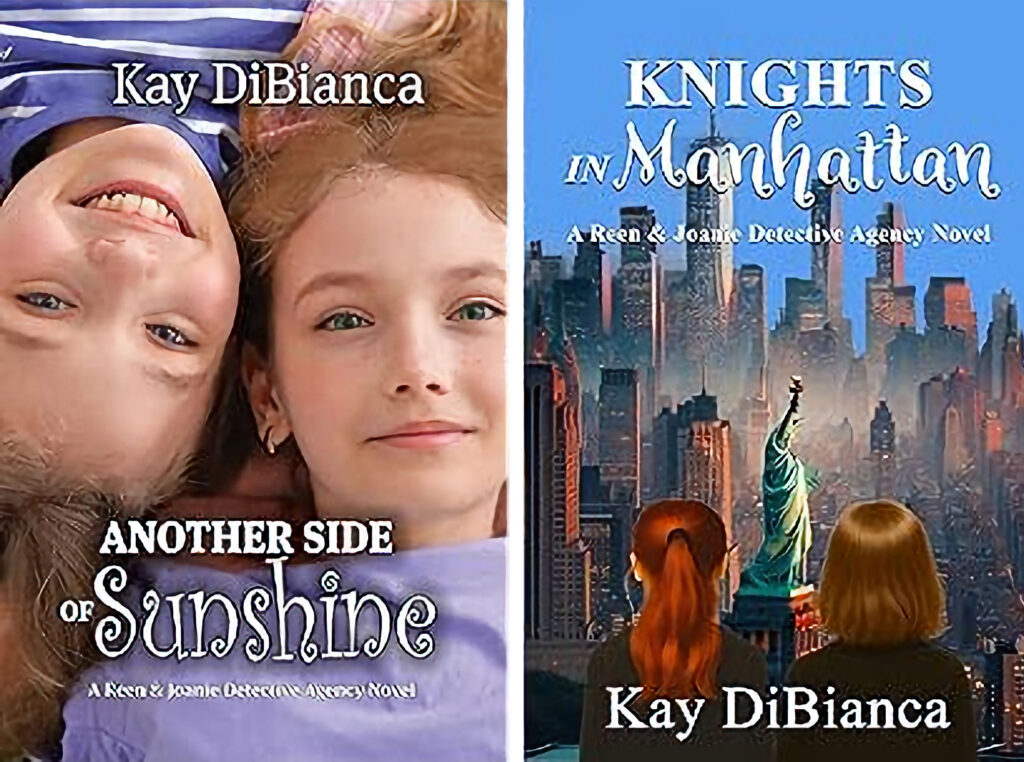
In addition to all that, my first middle grade novel, Another Side of Sunshine, launched a couple of weeks ago and requires some attention in the marketplace. The next book in the series is in the final stages of editing, and I’ll need to spend some time reviewing the entire manuscript and running text-to-speech on it. Then there’s the second book in the Lady Pilot-in-Command series which is partially written but needs significant hours of work. Email requires attention, and there’s always a need to post on social media, run a promotion, communicate with other authors, and of course, write a bi-weekly TKZ post.

In order to accomplish all these tasks and retain a modicum of sanity, I need to multi-program – swap from one task to another in the most efficient way possible. I’m finding that spending 30 minutes to an hour on one thing, then switching to another works pretty well. Refocusing turns my attention to the matter at hand and gives the boys in the basement a chance to continue working on all the other tasks.

I’ll be at the new home today and not sure how much connectivity I’ll have there, but I’ll check in when I can.

* * *

So TKZers: Even without moving from one home to another, there are dozens of writing-related tasks that we have to keep up with. How do you manage them all? Do you divide your day up into time slices? Any secrets you want to share with the rest of us?  

* * *


Cryptic clues, the elusive Mr. Shadow, and the promise of a hidden treasure combine to give the Reen & Joanie Detective Agency their first challenge. But they can’t multi-task. They have to solve the clues in a sequence, and they only have three days to find the treasure before time runs out. Can they do it?

Click the image to go to the Amazon detail page.

Fond Memories of Joe Hartlaub

by Debbie Burke

Over the weekend, I received a punch-in-the-gut email. Joe Hartlaub, longtime TKZ contributor, had passed away suddenly and unexpectedly during a heart procedure.

Joe had been a beloved member of TKZ’s crew, going way back to 2010. His stories were always witty, wise, and warm. While reading his posts, my computer screen suffered many coffee snorts from his killer sense of humor.

He made fun of himself but not of others.

I hope he’s chuckling at today’s tribute to him because I used both “suddenly” and “unexpectedly”, which came to mind after reading his 2020 post about the sudden, unexpected death of a friend.

Joe wrote about anything and everything and we eagerly read his stories, recollections, observations, and insights. He wrote about:

Fats Domino;

Pizza;

His beloved granddaughter;

A feral cat;

Alcoholism;

When his neighbor was murdered.

He wrote about writing, books, movies, and music.

In going back through his posts, I found many first page critiques where his comments clearly but diplomatically explained what the anonymous author needed to do to improve the submission.

One first page critique from 2017 stayed close to my heart cuz it was mine. Joe’s gentle suggestions were mixed with praise that gave me hope my work might someday be published. His encouragement kept me going through many disappointments and setbacks.

Joe said goodbye to TKZ in 2021 with this post and more than a few tears were shed by readers.

This 2020 post is how I want to remember Joe.

RIP, Sweet Joseph.

Creative Words of Wisdom

Recently I’ve been recentering myself on creativity and the creative side of writing. I just finished Elizabeth Gilbert’s Big Magic, which discusses creativity and the creative process, and decided to dive into the KZB archives for more wisdom on creativity.

Unsurprisingly, I hit paydirt.

First up is Joe Moore on the qualities of creative personalities. Then, James Scott Bell talks about both creative time and how it can help keep your brain youthful. Finally, Garry Rodgers lays out how to behaviors that help creativity and those which hinder it.

There has been active debate on whether creative genius is dependent on mental illness or insanity. This debate continues further by stating that madness alone cannot suffice as Source for creativity. Nay, nay. An openness to experience, intelligence and wisdom complete the mysterious formula. They are actually writing papers on the subject. The bottom line: Creative people make creativity a way of life.

We can all name artists, musicians, writers, scientists, etc. who inspire us with their fascinating and divergent thinking. (Look at our own Basil Sands, for goodness sake.) The argument for creative personalities presented by Hal Lancaster during the late 90’s in The Wall Street Journal stated six basic qualities exist:

  1. Keen powers of observation.
  2. Restless curiosity.
  3. An ability to recognize issues that others miss.
  4. An ability to generate numerous ideas.
  5. Persistently questioning the norm.
  6. A talent for seeing established structures in new ways.

Do you see yourself in any or all of the above? I do, which is fun. But, what really appeals to me is the recurring theme of madness in creative beings. After all, if you’re considered a little crazy you need no excuses for your behavior. I like that.

Joe Moore—January 31, 2012

I have long taught the discipline of a weekly creativity time, an hour (or more) dedicated to pure creation, mental play, wild imaginings. I like to get away from my office for this. I usually go to a local coffee house or a branch of the Los Angeles Library System. I also like to do this work in longhand. I mute my phone and play various games, like:

The First Line Game. Just come up with the most gripping first line you can, without knowing anything else about what might come after it.

The Dictionary Game. I have a pocket dictionary. I open it to a random page and pick a random noun. Then I write down what thoughts that noun triggers. (This is a good cure for scene block, too.)

Killer Scenes. I do this on index cards, and it’s usually connected to a story I’m developing. I just start writing random scene ideas, not knowing where they’ll go. Later I’ll shuffle the stack and take out two cards at a time, and see what ideas develop from their connection.

The What If Game. The old reliable. I’ll look at a newspaper (if I can find one) and riff off the various stories. What if that politician who was just indicted was really an alien from a distant planet? (Actually, this could explain a lot.)

Mind Mapping. I like to think about my story connections this way. I use a fresh blank page and start jotting.

After my creativity time I find that my brain feels more flexible. Less like a grouchy guy waiting on a bench for a bus and more like an Olympic gymnast doing his floor routine.

Now, I’m going to float you a theory. I haven’t investigated this. It’s just something I’ve noticed. It seems to me that the incidence of Alzheimer’s among certain groups is a lot lower than the general population. The two groups I’m thinking of are comedians and lawyers.

What got me noticing this was watching Carl Reiner and Mel Brooks being interviewed together, riffing off each other. Reiner was 92 at the time, and Brooks a sprightly 88. They were both sharp, fast, funny. Which made me think of George Burns, who was cracking people up right up until he died at 100. (When he was 90, Burns was asked by an interviewer what his doctor thought of his cigar and martini habit. Burns replied, “My doctor died.”)

So why should this be? Obviously because comedians are constantly “on.” They’re calling upon their synapses to look for funny connections, word play, and so on. Bob Hope, Groucho Marx (who was only slowed down by a stroke), and many others fit this profile.

And I’ve known of several lawyers who were going to court in their 80s, still kicking the stuffing out of younger opponents. One of them was the legendary Louis Nizer, whom I got to watch try a case when he was 82. I knew about him because I’d read my dad’s copy of My Life in Court (which is better reading than many a legal thriller). Plus, Mr. Nizer had sent me a personal letter in response to one I sent him, asking him for advice on becoming a trial lawyer.

And there he was, coming to court each day with an assistant and boxes filled with exhibits and documents and other evidence. A trial lawyer has to keep a thousand things in mind—witness testimony, jury response, the Rules of Evidence (which have to be cited in a heartbeat when an objection is made), and so on. Might this explain the mental vitality of octogenarian barristers?

There also seems to be an oral component to my theory. Both comedians and trial lawyers have to be verbal and cogent on the spot. Maybe in addition to creativity time, you ought to get yourself into a good, substantive, face-to-face conversation on occasion. At the very least this will be the opposite of Twitter, which may be reason enough to do it.

James Scott Bell—July 8, 2018

Improving creativity starts with a foundation of subject knowledge, learning a discipline, and mastering a proper way of thinking. You build on your creative ability by experimenting, exploring, questioning assumptions, using imagination, and synthesizing information. Learning to be creative is like learning a sport. You need a desire to improve, develop the right muscles, and be in a supportive environment.

You need to view creativity as a practice and understand five key behaviors:

  1. Associating—drawing connections between questions, problems, or ideas from unrelated fields.
  2. Questioning—posing queries that challenge common wisdom.
  3. Observing—scrutinizing the behavior of others in, around, and outside your sphere.
  4. Networking—meeting people with both common and different perspectives.
  5. Experimenting—constructing interactive experiences and provoking unorthodox responses to see what insights emerge.

Read this as — listen, watch, ask, mingle, and stir. Sir Richard Branson has a mantra that’s bred into the corporate DNA of his Virgin staff — A-B-C-D — Always Be Connecting Dots. Branson swears that creativity is a practice and if you practice these five behaviors every day, you will improve your skills in creativity and innovation.

Now, if these five behaviors put you in the right direction for improving creativity, then there must be behaviors to avoid. I found eight:

  1. Lack of courage—being fearful of taking chances, scared of venturing down new roads, and timid about taking the road less traveled. Fear is the biggest enemy of creativity. You need to be courageous and take chances.
  2. Premature judgment—second-guessing and early judgment of outcome severely restrict your ability to generate ideas and freely innovate. Let your initial path expand and follow it to its inevitable destination.
  3. Avoidance of failure—you can’t be bold and creative if you fear failure. Creativity requires risk and making mistakes. They’re part of the process.
  4. Comparing with others—this robs your unique innovation and imagination. Set your own standards. Be different. Something new is always different.
  5. Discomfort with uncertainty—creativity requires letting go and the process doesn’t always behave rationally. Accept that there’s something akin to paranormal in real creativity.
  6. Taking criticism personally—feedback is healthy, even if it’s blunt and harsh like 1&2-Star Amazon reviews. Ignore ridicule. Have thick skin, a tough hide, and don’t let criticism get to you.
  7. Lack of confidence—a certain level of uncertainty comes with any new venture. Some self-doubt is normal but if it becomes overwhelming and long-lasting, it will shut down your creative abilities. The best way to create is to first connect with your self-confidence.
  8. Analysis paralysis—overthinking renders you unable to make a decision because of information overload. “Go with your gut” is the answer to analysis paralysis.

Aside from positive and negative behaviors, there is one overall and outstanding quality that drives successfully creative people.

Passion…

Passion is the secret to creativity. It’s the underlying feature that’s laced the successes of all prominent creators in history.

Garry Rodgers—June 29, 2023

***

  1. What qualities do you believe creative people possess?
  2. What ways do you like to let your creativity play?
  3. What behaviors have helped your creativity? What ones have hindered you?

The Creepy Case of the Floating Feet

Between 2007 and 2016, sixteen disarticulated human feet encased in running shoes were found washed up on Pacific Ocean tidal shores in northwest Washington State’s Puget Sound and the southwestern British Columbia Gulf Islands. It’s also known as the Salish Sea.

Theories of dark and sinister forces emerged. A foot-fetish serial killer? A podiatrist cult ritual? A prank pod of kinky killer whales?

The truth, it turns out, was stranger than fiction. And it happened at a time I was a coroner tasked with investigating unexplained human deaths in this jurisdiction.

When I first began contributing to the Kill Zone, Thursdays were marked as true crime sessions. I’ve deviated from that to all sorts of topics I thought would interest readers but, today, I’ve returned to the roots. And rather than rewriting an evergreen post, I’m simply sharing a link to the article I wrote on my home website at www.DyingWords.net. Over the years, this piece has been reproduced by many online agencies including the Huff Post where I once was a regular contributor.

So, if the Creepy Case of the Floating Feet intrigues you, here’s the facts of what happened and why it happened. https://dyingwords.net/the-creepy-case-of-the-floating-feet/


Where An Idea Came From

By John Gilstrap

You don’t work in this business for very long before you’re hit with what I consider to be the largely unanswerable question: Where do your ideas come from? Generally, my truthful answer is, “I have no idea.” They just somehow arrive when I need one.

But with the upcoming release of Burned Bridges, the first entry in my new Irene Rivers thriller series (launched yesterday!), I finally have an answer.

But first, let me share a little bit about the premise of the series. For those who are not familiar with my Jonathan Grave series, Irene Rivers serves as the director of the FBI in each book. At the conclusion of Zero Sum, Irene torpedoes the presidential administration of Tony Darmond, a corrupt, largely incompetent criminal who uses the clout of the federal government for his own personal gain. (He’s been president since I started writing the series in 2007, so don’t read present-day politics into the narrative.) The blowback on Irene is enormous. She resigns her position and intends to escape the madness and corruption of Washington by moving to family land in Jenkins County, West Virginia.

I loved the idea when I pitched it and Kensington bought it, but then I was left with the challenge of hanging a plot onto the premise. That’s always the challenge. But while the Irene books are thrillers, they’re different than the Grave books. I didn’t want to merely create a female Jonathan Grave.

One late autumn afternoon, as I was walking around our property in West Virginia in the company of Kimber, my 22-pound protector and watchdog, I was squeezing my brain to hatch an idea that felt right. I wanted it to be West Virginia-centric, but in the way that C.J. Box’s works are Wyoming-centric.

About midway through the walk, Kimber became fascinated with one of the many limestone caves we have around here. She was pulling on her leash to go into the hole (that’s the Boston terrier in her). As I pulled her back, I said, “Whatever’s in there, you don’t want to meet it. It will ruin your day.”

Ding ding! There it was. The beginning spot to begin building my story.

It’s hard to see, but that hole is the entry to a cave that I will never explore.

Suppose one of Irene’s kids discovered the skeletal remains of a body stuffed into a cave somewhere on her property. Clearly it’s a murder victim, an adolescent male.

Who killed him? Because I write thrillers, the killer has to be someone local.

Suppose the murder happened over 30 years ago. There’s no statute of limitations on murder, so to what lengths will the murderer go to protect his secret?

Now suppose the murderer is an established member of the community–part of a family who’s lived here for hundreds of years. What will the reaction be from the locals when this interloper from Washington, DC, starts uncovering secrets that have long been buried?

Meanwhile, how about Irene’s kids? They’ve been forced to move from the bustling DC suburbs to the middle of nowhere. How are they going to take the move?  One of her kids is a teen, the other a tween, and they have to make their way through new schools where most of their classmates have known each other since kindergarten. How does that go for them?

This is how I “pants” my way through the writing process. Every question needs an answer, but to keep things interesting, each answer needs to trigger a new question. I’m very excited about this book. I love the characters, and I love the twists in the plot.

So, what about you, TKZ family? Can you articulate where your ideas come from?

When The Good Guys Must Die

(Spoiler alert. I am going to kill off some characters today and tell you about it.)

By PJ Parrish

Some of you might know I have a thing for apocalyptic stories. For some odd reason, dystopic fiction really floats my Charon’s Ferry. Give me degraded societies, post-nuclear nilism, and weird games of survival over sunny utopianism any day.

Aside: I am really a nice person. I tend to side with the optimists. You’d even want to sit next to me at a boring wedding.

But this is just my thing. One of my favorite movies is On the Beach, which led me to hunt down a copy of Neil Shute’s excellent source novel. No one dies in On the Beach, but everyone is doomed. The novel quotes these infamous lines from T.S. Eliot’s The Hollow Men: “This is the way the world ends. Not with a bang, but with a whimper.”

I also liked Suzanne Collins’ books and count The Road among my all-time favorite novels. So when we started watching the TV series, The Last Of Us, I was all in for the long haul. The Last Of Us unfolds 20 years after the world is ravaged by a fungal pandemic that transforms humans into aggressive zombies. The hero Joel is a hardened smuggler, haunted by past loss, who is tasked with escorting Ellie, a 14-year-old girl immune to the infection, across the remnants of the US because she might be the key to a cure. They make their grim way from the ruins of Boston to the Montana wastelands, dodging zombies, renegades and what’s left of a foul government force.  Think The Road meets Night of the Living Dead.

It’s really grim, yet strangely life-affirming, focusing on the prickly relationship between Joel and Ellie, and the drama’s main theme of human duality — our equal capacity for love and violence.

But then Joel dies. Not just dies by zombie attack. He is brutally murdered by rogue survivalists. I was crushed. I was so emotionally invested in this character that I almost didn’t want to watch the series anymore. A week later, it still haunts me.

Why kill off a good character? What’s to be gained? In The Road, Cormac McCarthy choses to kill off the father, who is leading his young son through the bleak post-nuclear world. But I sensed it had to end that way. The boy is taken in by a man and woman and the book’s elegiac ending is oddly optimistic:

She [the woman survivor] would talk to him sometimes about God. He tried to talk to God but the best thing was to talk to his father and he did talk to him and he didnt forget. The woman said that was all right. She said that the breath of God was his breath yet though it pass from man to man through all of time.

Once there were brook trout in the streams in the mountains. You could see them standing in the amber current where the white edges of their fins wimpled softly in the flow. They smelled of moss in your hand. Polished and muscular and torsional. On their backs were vermiculate patterns that were maps of the world in its becoming. Maps and mazes. Of a thing which could not be put back. Not be made right again. In the deep glens where they lived all things were older than man and they hummed of mystery.

I felt none of that sense of faith or higher purpose in Joel’s death. I felt only anger at the banal barbarity of it. I’m trying to process this as a writer. Sometimes, good characters have to be sacrificed. I get that. I’ve done it myself.

But killing off a character should always be done with the greatest of care. When done well, it makes us empathize with the extreme emotions characters are feeling. More to the point, it can — should? — provide momentum for the surviving characters. In the case of The Last Of Us, I can see where things are going to go. Joel’s death will spur Ellie to seek vengeance. But somehow it also seems a little cheap, done only by the writers to make me wonder, “What comes next?”

Killing off the good should never be only done as a plot tease. It must have purpose. I’m going to let someone else speak to this. Quoting novelist Karen Outen here, my emphasis in bold:

Killing off a fully realized character tests a story in a way unlike any other. It draws attention to itself, but the writer has to ask: does it draw energy away from or toward the story? Some deaths can render the story superfluous by contrast, or simply suck all the  remaining energy out of a story. At its best, a character’s death should arrest some lines of story movement but create clearer narrative paths—ones of heightened tension—for other parts of the story.

I see death acting as a pinball lever, shooting a story from one path onto another and opening a new world of consequences for the characters and for the story arc. That new thrust can be as exciting for the reader as for the writer, carrying along with it a dizzying array of emotional realities: regret, relief, hubris, grief, joy, fear. The basic question about whether to kill off a character, then, is no different than the question about any narrative choice: does it work? 

Does the death draw energy toward or away from the story? Is the death well earned? Does it propel the story via another character’s arc? Does it work? That’s the bottom line. I am willing to give The Last Of One a little more time to prove to me that it does.

________________

Postscript: I am on vacation for the next two weeks. In Paris, by the time you read this, taking in the sights, sounds and the insouciant house red. The world spins on. So please talk amongst yourselves and I will catch up soon. Bonne journée!

Flaws and All

While thinking about the topic of today’s discussion, I checked my Facebook page (where we all get out writing ideas, right?) and came across a post from Cowboys and Indians Magazine on the 50th anniversary of Willie Nelson’s The Redhead Stranger album.

Good Lord, I’m getting old.

If you haven’t heard this LP, just think Blue Eyes Crying in the Rain.

back in 1975, This concept in country music was a departure from Nashville’s unnecessary symphony orchestration, and Willie wasn’t interested in continuing this new wave of music. He wanted to return to his roots. To do so, he came to Garland, Texas, (where I worked as an educator for 35 years) and recorded this “concept” album in a tiny one-room state of the art recording studio only a block from Garland High School (where I taught from 1985-86, and discovered I had no interest in becoming a vice principal at that level).

This album was based on an entire story revolving around the Red Headed Stranger who lost the love of his life. Conceptionally, the entire soundtrack is about Parson Shay, a flawed man who murders his wife and her lover. Consumed by grief and anger, he becomes a fugitive traveling the west, struggling with the guilt of his actions. Full of rage, he also shoots a saloon girl who he thinks is trying to steal his horse.

The following lyric, “You can’t hang a man for killing a woman, who tries to steal his horse,” is a novel unto itself.

Willie stripped down so much of the instrumentation that it sounds like an old-school band playing in a garage. When he sent the tapes to his record company, they thought it was a bare demo and wanted to add all that crap he hated.

Because he had full creative control, Willie insisted on keeping it simple, and that album is now ranked number 183 on Rolling Stone’s list of the 500 Greatest Albums of All Time and number one on CMT’s 40 Greatest Albums in Country Music.

Not bad for doing what he wanted without interference from others who tend to follow the current trend.

Bill Witliff wrote that wonderful screenplay for a movie based on the album, but you’ll likely recognize one of his more famous movies, Lonesome Dove. Based on the book by Larry McMurtry, Lonesome Dove features two tortured souls, August McCrae and Woodrow F. Call. Gus seeks a lost love, while Woodrow refuses to acknowledge that he loved a prostitute and fathered a child he refuses to recognize.

Many authors explore characters grappling with emotional or psychological trauma that manifests in many ways. This turmoil often stems from loss, or a deep sense of inner conflict, either intentionally revealed by the author, or hinted at through the protagonists’ actions and vague references.

My most recent series featuring Tucker Snow examines a Texas Brand Inspector’s life after his wife and baby are killed by an addict, leaving him to raise a teenage daughter alone. He’s far too impulsive and uses his own brother to step over any imaginary line, laying waste to criminals who, in his opinion, just need killing.

An author doesn’t have to tell readers exactly what drives their characters. The story might, and often does, reveal the emotional issues that drive a protagonist with information revealed throughout the novel.

Mickey Spillane created Mike Hammer, who is driven to seek justice, but he’s a pessimistic creature who survived the Japanese Theater in World War II and struggles to find goodness in the country he fought for.

My good friend John Gilstrap’s Jonathan Grave is another character who seeks justice for all, and his ruthless methods fall outside the law to save hostages most agencies can’t, or won’t save. How do we know what drives Jonathan? Read No Mercy where his backstory is revealed. Is Jonathan flawed? You bet he is.

Aren’t we all?

One reviewer said she particularly enjoyed the “subtle flaws in Grave’s character – flaws he understands and even admits to, but doesn’t necessarily try to correct.”

Other authors have created flawed characters.

Lee Child created Jack Reacher. His major flaw is that he won’t walk off from injustice or a fight. He lays waste to criminals, then moves on to do it again. He prefers isolation, has few social skills, and has an impulsive, extremely aggressive nature.

The Searchers, a novel by Alan LeMay became a John Wayne movie. Amos Edwards (Ethan in the movie) is the most troubled and morally complex character I’ve ever read. Due to a warped sense of honor, Amos is obsessed with finding and killing his captive niece because he believes she’s has been corrupted by her Comanche captors.

Gillian Flynn’s Gone Girl has more than one. “Nick is not the charming hero we’re accustomed to in thrillers; he’s a deeply flawed and morally ambiguous figure whose actions leave us oscillating between sympathy and suspicion,” writes fan Riya Bhorkar. “Amy, on the other hand, is a master manipulator, crafting her own narrative with surgical precision and leaving a trail of devastation in her wake.”

In Shane, Jack Schaefer’s protagonist by the same name is a mysterious drifting gunfighter who hangs up his guns and falls in love with his employer’s wife. He returns to his old ways when her husband is provoked into a gunfight. He kills rancher Luke Fletcher, (Ryker in the movie), reverting to his old self. LeMay skillfully leaves enough crumbs for readers to see he has a number of faults before he rides off, wounded and possibly dying.

So who is your favorite flawed character, and/or have you created such fictional protagonists? And let’s go one step further. Are these these character flaws cut from whole cloth, or do they come from within?


True Crime Thursday – Unsolved Murders Linked to Freeway Killer, Now 80

Photo credit – John Snape Wikimedia.com CCA SA 3.0

by Debbie Burke

@burke_writer

From 1972 to 1983 in southern California, bodies of young male hitchhikers were being dumped near freeways, on beaches, and in parking lots. Many had lethal levels of alcohol and drugs in their systems, and had been tortured, mutilated, sexually assaulted, and strangled.

The so-called “Freeway Killer” eluded law enforcement because of the difficulty of linking the murders with no witnesses and little evidence.

In 1977, Patrick Kearney turned himself into the Riverside County Sheriff’s Office and confessed to more than 30 murders. He was given 21 life sentences. The public breathed a sigh of relief that the Freeway Killer had been stopped.

But murders continued.

In 1980, William Bonin was arrested when police found him inside his van, raping a handcuffed 17-year-old runaway boy. A scrapbook detailing numerous murders was found in his glovebox. Blood and other evidence led to a confession to more than 20 murders, some with the help of accomplices.

Despite multiple prior convictions for sexual assaults on minor boys, Bonin had repeatedly been released from custody. At those times he was deemed no longer a risk to society.

At trial, he was convicted of 10 murders and sentenced to death. Another trial in a different jurisdiction resulted in conviction and death sentences for four additional murders. Again, the public was relieved that the Freeway Killer had been caught.

But murders continued.

In 1983, California Highway Patrol officers pulled over a car for driving erratically. Randy Steven Kraft stumbled out with a bottle of beer and his pants unzipped.

Inside the car officers found the body of a Marine with his pants pulled down. He’d been strangled and sexually assaulted. In the trunk they found a binder with more than 60 coded entries that corresponded to murders Kraft had apparently committed. Evidence also included Polaroids of strangled, bound young men who appeared unconscious or dead.

This Freeway Killer was additionally dubbed the Scorecard Killer because of the binder full of notations about his victims.

Although Kraft never confessed, the evidence against him was overwhelming. He appeared to enjoy the attention at trial and his case dragged on for many months, costing $10 million, the costliest criminal case in Orange County at the time. He was convicted of 16 murders and sentenced to death. Additional murders in Oregon and Michigan were linked to him since he had traveled for work to those states when more bodies, violated in similar ways, had been found.

Kraft is now 80 and back in the news because DNA finally identified the remains of a body found near I-5 in Oregon back in 1980.

Larry Eugene Parks was a 30-year-old Vietnam veteran at the time of his death. His family had lost touch with him. Another dead man, Marine Corporal Michael O’Fallon, had been found in a nearby location a day before. Investigators believed the two murders were connected but couldn’t prove it and the cases went cold.

According to a USA Today story from  May 12, 2025:

Last year, an Orange County Sheriff’s Department investigator contacted the Oregon State Police’s cold case unit, offering to help identify Parks’ remains with the use of forensic genealogy. Possible family members were contacted and submitted DNA samples for comparison, leading to Parks’ definitive identification.

Similarly, in October 2023, Orange County investigators used the technology to identity Michael Ray Schlicht of Cedar Rapids, Iowa, whose body was found in 1974 in unincorporated Laguna Hills, now the city of Aliso Viejo, California. Detectives are likewise working to determine whether Kraft is linked to Schlicht’s death.

This L.A. Times article from November, 2023 describes Schlicht’s identification also by forensic DNA.

Per this May 9, 2025 AP story, Oregon State Police spokesperson Kyle Kennedy says about Parks:

“There’s some evidence that we’re processing to determine that link [to Randy Kraft],” Kennedy said. “We are very confident that we have the correct person of interest.”

In the 1970s and 80s, three different serial murderers, each called the Freeway Killer, terrorized California.

Patrick Kearney, 85, remains incarcerated at Mule Creek State Prison in Ione, CA.

William Bonin was executed by lethal injection in 1996.

Randy Kraft, 80, received a death sentence that was not carried out. The last execution in California happened in 2006. Kraft remains in prison at San Quentin Rehabilitation Center.

~~~

Thank you to TKZ regular Kathy Ferguson who brought the story to my attention.

~~~

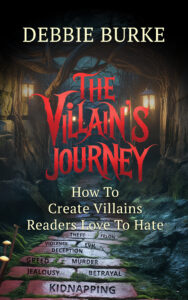
Serial killers are covered in Debbie Burke’s new book The Villain’s Journey – How to Create Villains Readers Love to Hate. 

Publication date July 13, 2025.

Preorder link

Feeling No Guilt

Feeling No Guilt
Terry Odell

As I mentioned in my last post, I was headed out for a Mississippi River cruise vacation, with some extra time in New Orleans. We arrived on schedule, checked into the hotel (and because I always try to stay at the same chain, I’d accrued enough points to be a Diamond Medallion member) and they upgraded us to a suite. With TWO bathrooms! Also free breakfasts and a couple of comped drinks at the bar. And a bottle of wine in the room. And fruit.

But I digress. That’s really not what this post is about. I got home Monday afternoon, a day later than scheduled due to severe weather grounding flights for many hours. We were gone for almost two weeks. I’d brought my Surface to keep up with email and anything else that might need my attention. I figured I’d check things once a day. I also have an iPhone, but I have never gotten comfortable doing anything requiring I go to websites on that tiny screen. I used it primarily as my backup camera. I also have an iPad mini tablet, which is usually my go-to ereader, and not much else.

I printed out my current wip to read for continuity. This one’s got more threads than all my needlework projects, and I wanted to search for dropped threads and make sure my timeline was accurate. Yes, yes, I know I should have been doing this all along, but best laid plans—

Truth be told, I opened my Surface two times on the entire trip—the first being after I discovered that I had a wonky section in my printout and needed to go to the original file for those messed up/missing chapters. The second time was on the boat when we had time before our shore excursion and I did a quick run through my usual sites to make sure I hadn’t missed anything critical. I also read through a couple more chapters of the printout.

However, I made the decision that I was on vacation and being cut off from cyberspace wasn’t going to alter my life. I had already decided that trying to keep my head in the wip would be a lost cause, so I felt no guilt about not making any forward progress. Not to mention, the keyboard on the Surace screws with my muscle memory, and typos abound.

In fact, I finished my read-through on our last day while waiting for it to be time to go to the airport. And that’s the only work-related activity I did on the trip.

I’m subscribed to a number of Substacks and mailing lists. I confess I hit “delete” on just about all of them, since I was getting them via my phone, and I didn’t think the world would be any different if I didn’t read, like, or comment. I don’t know if anyone noticed, but I was absent from my usual commenting on TKZ posts.

I normally post a ‘word of the day’ game on my Facebook page. I didn’t for the duration of the trip. Other than occasional pictures posted to my Facebook accounts, I did nothing with social media. Put my blog on hiatus, too.

The cruise was fantastic, and I suppose if I were on a deadline, I might have squeezed in writing time. I know many authors who find/make the time to work while away. On this trip, I didn’t. And I felt absolutely no guilt. Sometimes time away from the work—literally away can help recharge batteries, provide new insights and if the absence is long enough, make one antsy to get back to the writing.

So, here I am, back on my mountain, dealing with all the myriad tasks that have accumulated. And there are no hotel or boat crew people to take care of them. No more simply walking into the dining room and telling someone what you want to eat. No more walking into the bedroom and finding the bed made, clean towels, and special treats on the table.

If anyone’s interested, I HIGHLY recommend the American Cruise Line for a riverboat trip. The crew bent over backward to make sure we were happy. So much so, that we’ve already booked another trip on the Columbia and Snake Rivers for next year. I’ll be recapping my adventures both on my blog and my substack. Both are free.

And yes, I took pictures, which will have to be sorted and processed. Here are just a few, taken at the zoo (because I’m an animal person) and on our swamp tour (because I’m an animal person).

Oh, yeah. I have a manuscript to get back to as well.

Your turn. How do you deal with going away? Comments are open.


New! Find me at Substack with Writings and Wanderings

Danger Abroad

When breaking family ties is the only option.

Madison Westfield has information that could short-circuit her politician father’s campaign for governor. But he’s family. Although he was a father more in word than deed, she changes her identity and leaves the country rather than blow the whistle.

Blackthorne, Inc. taps Security and Investigations staffer, Logan Bolt, to track down Madison Westfield. When he finds her in the Faroe Islands, her story doesn’t match the one her father told Blackthorne. The investigation assignment quickly switches to personal protection for Madison.

Soon, they’re involved with a drug ring and a kidnapping attempt. Will working together put them in more danger? Can a budding relationship survive the dangers they encounter?

Available now.

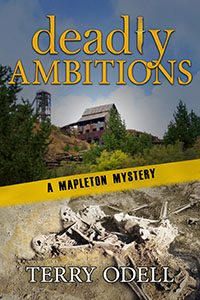
Like bang for your buck? I have a new Mapleton Bundle. Books 4, 5, and 6 for one low price.


Terry Odell is an award-winning author of Mystery and Romantic Suspense, although she prefers to think of them all as “Mysteries with Relationships.”

Are You Ready for AI Agatha?

by Debbie Burke

@burke_writer

Following up on Jim Bell’s discussion of Agatha Christie from Sunday…

The headline in the May 16, 2025 Saturday Evening Post read:

AI AGATHA CHRISTIE WILL TEACH YOU HOW TO WRITE! 

I can’t express my initial reaction because this is a G-rated blog. Suffice it to say, I was gobsmacked, horrified, and disappointed. Taking advantage of the deceased by commercializing and monetizing their image seems disrespectful when the person is no longer around to object. But that’s just me.

The idea of bringing dead people back to life using AI is also creepy but weirdly fascinating. Some music videos of contemporary, living singers performing duets with dead legends have been done quite well.

My fave is the 1989 video of “There’s a Tear in My Beer” with Hank Williams, Jr. playing alongside Hank Sr. who died when his son was only three. That gave this performance special poignance, imagining what might have been if Senior hadn’t died at age 29.

But AI has come a long way since 1989, with deepfakes and phony impersonations. Nothing is sacred anymore. And people will go to any outrageous lengths to make a buck.

The Agatha headline conjured up a TikTok-style, faux-historical bastardization of her image, dancing as she typed on her antique manual typewriter in time to “Puttin’ on the Ritz.”

To my surprise, the video excerpt wasn’t awful and was quite interesting. Dame Agatha’s great-grandson and the Christie estate kept a firm grip on the production, ensuring a tasteful, authentic representation of her. The script used her own words from her writings about her storytelling techniques. No one put words in her–uh, its–mouth. Instead of reading her advice in books, writers can listen to the resurrected author speaking.

The video lasts about 10 minutes but only a few seconds show AI Agatha in action. The majority of the time is spent describing the process that the producers, directors, lighting techs, hairdressers, costumers, and others went through to give an accurate depiction. A human actress combined with AI resulted in an animated life-like Agatha.

Here’s the video:

The AI Agatha course is sold via the BBC Maestro program. It can be purchased by single episode or subscription. The description is at this link.

I’m interested to hear what TKZers think of this revolutionary concept. Please share your opinions in the comments.

~~~


Join Debbie Burke on The Villain’s Journey – How to Create Villains Readers Love to Hate. Follow the steps to the darkest depths of the soul…if you dare!

Preorder now at this link to have The Villain’s Journey delivered to your device on July 13, 2025.