Made in New Orleans

old-mint-2

I received a small envelope from an old friend in June of this year. It contained a silver dollar in a plastic collector’s case. I collected coins a long time ago and am still surprised at how much I remember, including where mint marks are located (or, in the case of the Philadelphia mint, absent) on each coin. The silver dollar in question, minted in 1885, bore the cryptic inscription ‘O’ on its reverse, or “tails” side, under the, um, tail of the eagle. The ‘O,’ I knew, stood for “New Orleans.” I called my friend, an antique dealer of some local renown, and thanked him for the unexpected gift. He advised that he had come across the item and, after making sure that it wasn’t one of of only two hundred minted, sent it to me with the thought that I could take it with me to New Orleans next time I went. I did that when I returned to New Orleans for business and Bouchercon last week and raised him one. I took that silver dollar back to its birthing room, if you will.

The place where I was born in no longer in existence — that covered wagon, alas, was attacked and set afire by Indians, but I digress — but the United States Mint in New Orleans still is. It is imaginatively and accurately known as “The Old Mint,” and does not refer to that unwrapped peppermint that James Scott Bell found in the pocket of a winter coat he hadn’t worn for a few years. No, The Old Mint is at the very edge of the French Quarter, tucked into a corner by the Mississippi River east of the French Market. It’s not a place that is close to tourist interests, so it is quiet, dim, and cool, the entrance way overseen by a somewhat sleepy-looking guard who seemed secure in the knowledge that there was nothing in the building that no one would be interested in stealing, unless steel coin presses weighing around twenty tons were to suddenly become valuable. There were, interestingly enough, a number of people there, and they weren’t drawn by the cost of admission (free!) or the promise of air conditioning on a New Orleans late summer day where the temperature was flirting with 95 degrees by 11:00 AM. No, they were coin collectors, past and present, and by dipping into conversations here and there I learned that they were serious about their hobby. They ranged in age from pre-adolescent (looking like I probably did back then, only skinny) to geriatric (um, looking like I do now, though not as vigorous and virile) and, one and all ,they were as excited to be there as the members of a bachelor party would be at Temptations on Bourbon Street, only quieter. I waited until the herd passed through and then quietly brought my silver dollar over to a press, reached across the barrier, and laid it down on the surface.

And…something connected. It was almost electric. I had set off to do the errand as a lark, and was still inwardly laughing over my good fortune of having literally run into British publishing giants Ali Karim and Michael Stotter, both of whom were in town for Bouchercon, on Chartres Street, and then being the subject of one of Ali’s recorded street interviews. The trip to The Old Mint at that point was almost an afterthought…that is, until the mission was accomplished. It felt as if a circle had been completed, and I suppose it had.

I put the silver dollar back into my pocket and left the Mint museum, though not The Old Mint building. The building is the location not only for exhibits pertaining to the Mint — which was used by both the United States and the Confederate States (at different times, of course) — but also The New Orleans Jazz Museum, which contains a great deal of memorabilia of musical greats who have come and gone but whose influence is still felt, though unfortunately generally forgotten. When I finally left, everything seemed just a tad different. I am at the age where I am deleting material goods rather than acquiring them, but I will hang on to that silver dollar. And it will come back with me to New Orleans when I return, again and again.

It was my favorite trip to New Orleans — and I had just been there three weeks previously — and my favorite Bouchercon to date. I really want to go again so I’m planning another trip near Christmas. My friend recently stayed at the InterContinental Hotel New Orleans so I will have to ask her what it was like. There were many high points…from seeing Laura Benedict at a publisher’s party and meeting Elaine Viets as she tried to sneak past me at a book signing, to meeting and having dinner with a couple of anonymous TKZ fans who have become my new best friends; from taking author Kelli Stanley and Tana Hall to Meyer the Hatter, to getting detained by security at the host hotel (don’t look like Tony Soprano and carry a shotgun bag into a crowded hotel lobby. It has the potential to ruin your day); and of course, running into Ali and Michael just about everywhere…but that silver dollar still carries a faint bit of electricity as it rests in my pocket.

That’s me. What did you do last week?

It’s All in the Verbs

Jodie Renner, editor & author  image

Okay, maybe not ALL, but your choice of verbs can make or break a scene. Have a look at a recent chapter or short story you’ve written. Check the verbs in particular. Maybe even highlight them. Are some or a lot of them bland, vanilla verbs like came, went, arrived, approached, walked, ran, or looked?

Do you have a heavy, tired, or angry character simply walking when he could be trudging or clomping or stomping or plodding? Or an old or ill or exhausted character walking who should be limping or shuffling along? Make the conceited or over-confident guy swagger or strut and the lawyer stride into the courtroom. And be sure your drunk, stoned, or injured suspect is staggering, lurching, wobbling, meandering, or shambling, not just walking. Or perhaps someone is running when sprinting or racing or darting or dashing or fleeing would better capture the situation and her mood.

Of course, sometimes an ordinary character on a regular day is just walking or jogging. But when you need to bring the character and scene to life and add tension (which is most of the time), use all the tools in your toolbox to create sensory impressions for the readers and engage their emotions — make them worry.

If you’ve got a character looking at something or someone, consider whether they really are just looking. Or are they actually peering at something? Or observing or studying or examining or inspecting or scrutinizing it? Or perhaps they’re covertly spying at a group around a campfire. Or maybe they’re glancing around them or catching a glimpse of someone. Or glaring at another person in anger. Or squinting into the distance under the glaring sun.

Be sure your words, especially the verbs, capture the mood you’re after.

And don’t prop up a weak, overused verb with an adverb. Instead of “She walked quietly,” say she crept or she tiptoed or she sneaked or she slinked along the wall.

Fire up Your FictionFor a whole chapter on finding just the right verb for every scenario, check out my award-winning writing guide, Fire up Your Fiction, chapter 21, “Choose Words That Nail It.” Subtopics include People in Motion, Words for “Walked,” Replacements for “Run,” and Different Ways of Looking. (Lots of other great stuff for writers in there, too!)

Let’s add a bit of urgency to the sentence below by changing up the verbs:

The NCIS agents drove to the scene, then went to the back of the vehicle and pulled out their equipment.

Here’s one possibility:

The NCIS agents raced to the scene, then hurried to the back of the vehicle and grabbed their equipment.

Note how changing just three verbs can amp up the scene. You could probably charge it up even more.

Are you accidentally sabotaging your scene by choosing a verb that gives entirely the wrong impression?

Make sure none of your verbs are actually working against the scene, undermining the effect you’re after. Do you inadvertently have characters strolling or ambling or slouching at tense times? Or leaning back during an argument? Be sure not to use shuffling for the walking of someone who isn’t old, sick, weak, or very tired.

Remember that tension and conflict are what drive fiction forward, so unless you’ve got two lovers taking a romantic walk, don’t have your characters strolling along when they should be hurrying or hustling or darting in and out, glancing around and behind them. Relaxed, easygoing verbs aren’t going to get your reader’s pulse quickening and make her want to turn the page to read more.

Also, think about the difference between a smile and a smirk and a sneer. Don’t have a character sneering when they’re just smirking. Sneer means “to smile or laugh with facial contortions that express scorn or contempt.” So if you have buddies disagreeing or teasing each other, you might use smirked, but don’t use sneered. Save that for someone nasty.

There are a lot of nuances for showing a character looking at someone or something. The verbs glare, glance, scan, peer, study, and gaze have quite different meanings, for example.

Do you have characters glaring when you mean gazing or staring or studying or scrutinizing? For example,

Brock glared at the intruder with the gun, eyes wide with fear. He shifted his stare to Gord, mouthing, “Help.”

“Glared” doesn’t go with “eyes wide with fear.” Glared is for anger. Maybe “stared” here? And “shifted his gaze”? Or maybe:

Brock’s eyes widened with fear at the intruder with the gun. He shifted his gaze to Gord, mouthing, “Help.”

How about eyes squinting when there’s no bright light?

At the funeral, the widow caught Adam’s glance and squinted her eyes in accusation. She no doubt held him responsible for her husband’s death.

I’d say “narrowed her eyes” or “glared at him.”

Watch for “happy” verbs that have sneaked into your story at tense times.

Have any happy, carefree words or dreamy imagery somehow slipped into any of your scenes at tense moments? If your two young protagonists are running for their lives in the woods, don’t mention the birds chirping or the brook babbling or the leaves dancing in the breeze. Keep all your imagery scary and ominous – darkness, nasty weather, treacherous terrain, a howling wolf, or whatever.

Find the “happy” or “comfy” verbs that are subtly dissipating the tension in the scene below in a crime novel:

They pursued the getaway car on a dark, lonely country road. Lights from farmhouses twinkled in the distance. Up ahead, they saw the car spin out and crash into a tree. They pulled up behind it and got out. Tony shone his flashlight into the car. The windshield was fractured. Bits of glass sparkled throughout the inside, and steam rose from the damaged engine.

Yes, “twinkled” and “sparkled” normally have positive connotations, so they counteract the tension you’re trying to build in a scene like this.

Similarly, don’t use casual, relaxed language in a stressful situation:

Johnson and Fernandez parked their cruiser at a distance, then jogged at a comfortable pace to the scene of the crime.

Best to not use words like “comfortable” or even “jogging” at a time of stress. Choose words that fit the anxious mood and tone of the moment better.

Or if someone is about to face a harsh boss, be reamed out about his behavior, and likely fired, avoid detracting from the tension like this:

“You can go in now,” the secretary said, holding the door open for him. He found himself in a comfortable outer room with a stunning view, several armchairs, a bookcase, and a sofa against a wall. A large oak door stood closed on the far wall.

At such a tense time, it’s best not to add anything comfortable or any obviously positive words like “stunning.” That dissipates the tension at a time when you need to keep building it. Besides, the guy isn’t thinking about the view or the comfy furniture at this moment!

Here’s an example from a different book, describing the actions of a nasty villain about to shoot someone:

Before: He smiled. (doesn’t sound very nasty)

After, revised by the author: His mouth was twisted in a cruel smile.

So what’s the takeaway from all this? Don’t overdo the bland, boring verbs, or your scenes will be bland and boring. But if you’re looking for a unique synonym and you’re not 100% sure of the nuances, look each one up in the dictionary so you don’t have your character sneering when you mean smirking, or squinting when you mean peering or glaring.

Your turn. Share some possibilities in the comments below if you feel like playing.

How would a bunch of SWAT team members move after a few miles when training on rough terrain in bad weather?

How would two carefree little girls move around the playground?

How about two top contestants on Dancing with the Stars? How are they moving across the ballroom floor?

How about a more vivid way to say “took” or “carried” something?

* * *

Jodie Renner is a freelance fiction editor and the award-winning author of three craft-of-writing guides in her series An Editor’s Guide to Writing Compelling Fiction: Captivate Your Readers, Fire up Your Fiction, and Writing a Killer Thriller, as well as twoCaptivate w Silver decal2 clickable time-saving e-resources, Quick Clicks: Spelling List and Quick Clicks: Word Usage. She has also organized two anthologies for charity, incl. Childhood Regained – Stories of Hope for Asian Child Workers, including a middle school edition. You can find Jodie at www.JodieRenner.com, www.JodieRennerEditing.com, her blog, http://jodierennerediting.blogspot.com/, and on Facebook and Twitter.

The Introvert’s Guide to Writers’ Conferences, or How I Learned to Stop Hyperventilating and Leave My Hotel Room

img_4182

I spent most of this past week encouraging (forcing) myself to leave my room at the Marriott Hotel in New Orleans. It was a nice room, with a lovely view of the city framing the not-so-lovely hotel on the next block. The first room I was assigned was on the fifteenth floor, but before I left the desk, five bucks and a request to not be situated near the elevator bumped me up to the twenty-third. (Also, the thing about being away from the elevator is in my Marriott profile. So much for profiles.) But if I hadn’t had a long list of plans and obligations, I would have been sorely tempted to stay in that room and write and look out the window and order room service and fiddle with the television’s satellite connection to improve its HGTV reception (HGTV is my secret hotel vice because we don’t have satellite at home).

Last week was, of course, Bouchercon, the World Mystery Convention—four days of fun with crime and mystery lovers, readers, writers, agents, booksellers, and editors. I’m not exactly sure about the numbers, but I heard there were almost two thousand attendees, three hundred of whom were writers.

Writers. You know, those people who sit at computers (or with notebooks) communing with the voices in their heads instead of real people.

As a writer who has been in the business for a lot of years, and who doesn’t live in a major metropolitan area, most of my networking is done on the Internet or on the phone. Less frequently in person. Networking can sound a little off-putting: net working. I know what a network is, but the words, separated, bring to mind an image of a fisherman (fisherperson?) handling a huge net full of fish, gathering and sorting, selecting and touching. What if you choose the wrong fish? What if it bites? What if they all escape and you end up with nothing? What if they all dislike you? What if they think you’re pushy and rude? (Okay, maybe that’s not a great analogy.)

Conferences can be tough for someone who doesn’t get out much. I get overwhelmed, which is one of the reasons I often want to hide in my room. But I (and I think I can speak a little bit for other introverted writers) do it because it’s my job. When you meet someone, you never know what kind of influence they’re going to have on your life—or the influence you might have on theirs. You might be looking at your new best friend. Or your next editor. Or your next favorite author. Or the person who will spark your next story idea. Or the person who will talk smack about you in the bar because you didn’t bother to introduce yourself. Does it sounds like a minefield? A game of Risk? Well, it kind of is.

You can sit in your room at home or even at the conference hotel and write. And write. You might even sell your story from that room. You might become the next J.D. Salinger or Don DeLillo or Emily Dickinson. Or not. It can be scary, but in order to give yourself and your work your best shot, you have to venture out. I promise you that venturing out feels just as risky to ninety percent of the other writers you will meet. (You can always return to your room later and throw up, faint, hyperventilate, burst into tears, or tear off all your clothes and crawl into your bed and pull the covers over your head in relief. I have done four of the five.) Sometimes you’ll walk away thinking, “Oh, my God, I sounded like a complete idiot!” But more often you’ll be glad you reached out and risked rejection.

Here are some things to keep in mind if you decide to pop out of your writing cocoon and go to a conference or other gathering of industry folk:

Be confident.

This sounds difficult, I know. Sometimes you just have to fake it until you feel it. The NYT bestselling writer waiting in the coffee line ahead of you sits in front of the same blank page that you do every day, thinking, “What comes next?” You have that in common. You’re there for a reason, so act like it.

Be professional.

This is part of your job. Be sure you note the name of the person you’re talking to. It’s okay to ask, and asking is far preferable to ending up halfway through an impromptu lunch, petrified that you’ll be called on to perform introductions if someone else shows up. If small talk is required, talk about a panel or interview you just attended, or a book you recently read. Not your gallbladder, kids, or most recent tooth implant.

Be ready to learn.

Immerse yourself in the conference agenda. People who are interested in the same things you’re interested in put the panels and events together. It’s not all about networking.

Be curious.

Most people love to talk about themselves. Ask questions about their work, their pets, their hometown, their (professional) passions. Most wildly successful authors are good at making other people feel special in a short space of time. Really.

Be modest.

We’ve all gotten the FB messages: “Hey, we’re friends now. Buy my book!” Every writer wants other people to know about their work. But don’t make that your main goal. Your goal is to learn things, make new friends, and reconnect with old friends. There’s always a good time to exchange cards or bookmarks or websites. Name-dropping is a bit gauche, but allowed in small doses if it’s relevant to the discussion—or makes a better story.

Be gracious.

Be as nice to the mid-list or self-published writer standing beside you as you are to the editor you would kill to have publish you. Chances are you’ll have far more contact with that writer in your career than you will the editor. Not everything is about getting ahead. It’s about being a decent human being. Few things are uglier than people who spend their professional lives sucking up and kicking down.

Be generous.

You didn’t get to where you are as a writer all by yourself. I guarantee that someone around you has less experience. Introduce yourself to someone who looks as uncomfortable as you feel. Make them feel special. It won’t cost you anything, and the benefits are precious.

Be on time.

Even if you consistently run five minutes late every other day of your life, when you’re in a professional situation like a conference, be on time. Schedules can be tight, and people often do things in groups. (But don’t fret about sneaking into panels late, or leaving during. Just be discreet.)

Be available.

If you’re not Cormac McCarthy, or Emily Dickinson, leave your room! Put on deodorant, brush your teeth, comb your hair, and attend a panel, a cocktail party, or a lecture. Or even go hang out in the bar. You’re over twenty-one, and you’re allowed. See and be seen. That’s the way it works.

As I said, you can always go up and hyperventilate in your room—later.


Have you ever attended a writing or publishing industry conference as a writer, or as a fan? Did you find it challenging, or just plain fun?


Laura Benedict’s latest suspense novel, The Abandoned Heart: A Bliss House Novel, will be released on October 11th. Read an excerpt here.

Rejection: The Good, The Bad, And The REALLY Ugly

By Kathryn Lilley

shutterstock_135522785For those of us who still work (or aspire to work) in the land of traditional publishing, we all encounter rejection at some point. Most published authors get turned down by numerous agents and editors on the road to publication. Learning to deal with “No” is part of the writing process—I’d even say it’s one of the most important parts. You have to be able to handle rejection to stick with writing long enough to get better. And let’s face it: when we’re starting off as beginners, most of us have to become better writers in order to produce anything publishable. Agent, editors: those traditional publishing gatekeepers may be the dreaded Gorgons who spew fiery “No!” in boilerplate missives, but they have traditionally served a vital function. They force us to improve our writing.

"Sorry, not for us!"

“Sorry, not for us!”

But no matter how you rationalize it, being rejected feels like total crap. So whenever we get the dreaded “Not for us” email or letter in the mailbox, it can be comforting to recall the rejection-war stories of other writers:

In his book On Writing, Stephen King describes the wad of rejection notes he had stuck on a spike in his bedroom, and the encouragement he felt when he finally got one that said something along the lines of, “Not for us, kid, but try again—you’ve got talent.”

NPR’s Liane Hansen did a story that told the story of how soon-to-be famous writers, including Jack Kerouac and George Orwell, were rejected by the publisher Alfred A. Knopf. Possibly the best of the lot was the one that rejected Kerouac’s On the Road, in which an editor reportedly stated, “I don’t dig this one at all.”

My most memorable rejection came from an agent who had requested to read my manuscript on an exclusive basis. (My advice? Never give an agent an exclusive. It’s a better deal for the agent than the writer.) After keeping me in suspense for a long while, she eventually sent me an email along the lines of:

“Dear Kathryn: I really wanted to like this story. But I just didn’t like the character; I didn’t like the story; I didn’t like the voice. In fact, I just didn’t like anything at all about this story at all.”

Ouch. Fortunately, the next agent who read the manuscript loved the story, agreed to represent me, and quickly got me a series contract.

What about you? What’s been your best/worst rejection letter thus far?

Via catwalker/shutterstock

Via catwalker/shutterstock.com

Who Gets Into the Audition Room, and Why

by Larry Brooks baseball-print

A cynic—probably not an experienced writer in this case—might offer this simple explanation: Well, that’s easy… the stories that get considered are the stories that work.

Sure kid, says the old geezer to the kid with the baseball glove… you want to pitch for the Yankees? Well, that’s easy, just crank up your fastball to 96 miles an hour and paint the black with consistency, and throw in some off-the-table breaking balls to keep ‘em honest… that’s all you need to do.

If you’ve ever played or watched the game, you know how naïve that is. And yet, with writing, far too many new writers, and even some writing teachers, advocate exactly the same clue-light approach.

It reminds me of an old Steve Martin joke: Want to know how to avoid paying taxes on a million dollars? Simple. First, you get a million dollars. Then…

Laughter ensures from those who get the joke. Those who don’t are left hanging in the silence of that imcomplete sentence, already lost.

There are too many writers out there who, relative to craft, don’t get the joke.

Best writing advice ever: never stop learning.

In his Killzone post yesterday, Jim Bell advised us to never back away from studying the craft of writing. Very powerful wisdom, that.

Here’s a subtlety to it: craft is the prerequisite to getting into the game at a professional level. With some odd exceptions (which the cynics latch onto like flies, thus inviting you to play the lowest possible odds in the writing game), nobody ever published a novel that didn’t exhibit some workable degree of storytelling craft (the lack of which is what gets you rejected).

Without it, your story won’t get through the door to the audition room. Agents will pass. Editors will fire off templated rejection slips after reading ten pages. Too many of the writers left out in the rain, wondering why their stories don’t work, haven’t yet encountered enough craft to understand why.

But we aren’t playing merely to get into the audition room.

If that’s your goal, you’re not shooting high enough.

Once inside this figurative audition room, things get even tougher. Because while there are stories out there that are fully-formed and cover all the bases… there is the occasional story that really works. That soars above the others on multiple levels.

And that’s the one they’re looking for.

The criteria for simple completion (enter NaNoWriMo if this is your only goal) is the same for both—in much the same way that every player invited to a pro tryout has a professional-level command of the game they are playing (trust me, because I’ve been there, the guys pitching in the minor leagues throw every bit as hard, and the home runs travel every bit as far, as the guys playing in the major leagues); the punchline is that only a fraction of them will go home with a contract.

You want to be the writer who goes home with a contract.

But beyond simply being considered, in writing the criteria for greatness is found in nuance, details, and the artful application of emotional storytelling power.

Which leaves us with this truth: it is the degree of comprehension—leading to, in rare cases, an elevated story sensibility—applied powerfully and artfully to a story, that separates the complete from the astonishing.

And thus, defines the difference between them.

Every professional in every arena operates from this perspective. They are striving to be the best, not simply to get a seat on the bus.

I know, get it… when you are one of those writers out in the rain (believe me, I have a closet full of umbrellas myself), a seat on the bus seems like success itself.  For the time being, it seems like enough.

But trust me on this, once you get there, you’ll want more.

Here’s the rub: the criteria for breaking in, and then, once published, breaking out (elevating above the midlist into the front window of the bookstore) is exactly the same. It is driven by identical standards and elements and essences of craft.

Agents and editors are looking for home runs. Not just another book to take up space on the B&N rack.

Which means that, as you sit alone at a desk hoping to write a story that will land you an agent that will land you a good publisher who will propel you onto a bestseller list… know that David Baldacci is sitting alone in his writing space working toward the very same end-game criteria and qualitative height that you aspire to.

The only difference, beyond the certainty that he will publish the book he’s working on, may be that he knows the focuses and benchmarks of craft and all its corners and nuances better that you know them.

But—this being the good news, the best news ever—you can fix that, over time.

The point of all of everything we do and learn as writers, stated simply, is to elevate the nature and power of our story sense.

Call it talent, if you prefer. Either way, it’s discerning a killer idea from a vanilla one, and knowing what goes where in the story, and why, to what degree and in what form, better than the other guy… or at least, at a high enough level to earn the respect and shock and awe of all who will read your story.

It’s knowing when and how to break the rules, rather than breaking them without an informed context that rationalizes doing so.

Talent is nothing other than a command of craft to an extent that it informs one’s story sensibilities.

Consistently successful authors, as well as those who break into the business in a big way, have all got it where story sense is concerned. (A caveat here, especially with newly successful writers, is that the book in question may have taken years of work and craft-building before it reached a break-in level of quality.) When you seek to understand what “it” is—a quest that you, as a new writer, absolutely should commit to—you will discover that “it” begins, grows from and depends on, a foundational context built upon the core, imprecise yet inflexible, universal principles of storytelling craft.

If you know what those are, keep going. If you don’t, stop writing and begin studying. Writing is practice and application… both of which require a base of knowledge from which to draw.

Some might wonder what principle-driven story sense even means.

And yet, it’s all out there, waiting to help you raise your game.

Jim Bell breaks the craft of storytelling down into seven primary categorical buckets (with several terrific books that deliver a deep dive into all of them):

1. Plot, 2, structure, 3) characters, 4) scenes, 5) dialogue, 6) voice, and 7) meaning (or theme).

This covers it nicely.

In my work as a writing teacher/speaker/practitioner, I break it all down into 12 categorical buckets (with three bestselling writing books that do the same):

1) concept, 2) premise (they are different essences; the sum of the two equals plot), 3) character, 4) theme, 5) structure, 6) scene execution, 7) voice, 8) dramatic tension, 9) optimal expositional pacing, 10) vicarious experience, 11) hero empathy (rootability) and 12) narrative strategy.

Randy Ingermanson, author of “Fiction Writing for Dummies,” packages it all within a model called The Snowflake Method, and guess what: it’s the same principles.

Because there really isn’t a variation to be found among people who know what they’re talking about.

There isn’t even a shred of contradiction, and very little variance, in these approaches. Each covers the full roster of the craft we are pursuing. You’ll notice that my list adds the forces that make a story better… and yet, those same forces reside at the core of the elements we have in common, as well.

The enlightened writer will be exposed to and engage with craft in all its various presentations.

When you experience these messages from a variety of credible sources (the person leading your critique group… maybe, maybe not), you’ll soon see the commonality and the overlap. Craft is craft… you don’t get to make it up as you go, and it isn’t different from teacher to teacher, even when the parts are labeled differently.

When you get it you’ll see that it’s the same basic core principles being examined and applied, every time. And that it’s the same stuff that all those famous authors and screenwriters you admire are using… and when rendered from an evolved sensibility driving it all to the page, it is what has made them famous in the first place.

Craft awaits you.

It’s like gravity… it doesn’t care what you call it. Yet it governs all that you do… just as it governs all that the nay-sayers do… and it will kill either of us if we forget to respect it.

Don’t Ever Mail It In

by James Scott Bell
@jamesscottbell

Jessica Strawser, editorial director of Writer’s Digest magazine, and soon-to-be debut novelist, tweeted this from the recent WD conference in New York.

I agree. The dread mistake is called “mailing it in.” It’s when you think you’ve reached a certain point in your writing where you don’t have to improve. You’ve had some success, so why sweat and strain?

That’s not how a real writer thinks. How do I define a real writer? It’s someone who honors the craft and never settles. The real writer always sets the bar a bit higher than the last jump.

Mailing it in sometimes afflicts even the A list. A series that catches on in a big way can afford the author the opportunity to spend more time on a yacht than behind a keyboard. I’ve seen that happen a couple of times, and it’s not pretty.

On the other hand, you have a writer like Dennis Lehane. There he was with a popular PI series that he could have sat on. But then he proceeds to write one of the great stand-alone crime novels of our time, Mystic River. Not content with that, a few years later he writes an epic historical called The Given Day. I’m not sure he meant this to be a series, but I suspect the popularity of the novel gave rise to the idea. Now that series character, Joe Coughlin, is going to get the Ben Affleck treatment in a major motion picture.

I like what the Amazon “best books of the month” reviewer said about the second Coughlin book, Lived by Night: “Incredibly, Lehane … becomes more masterful with each book…”

That’s the kind of accolade for which a real writer strives. Because, you see, there is a joy and a satisfaction in the striving itself. The mail-it-inners don’t have that anymore. It’s a loss to the soul.

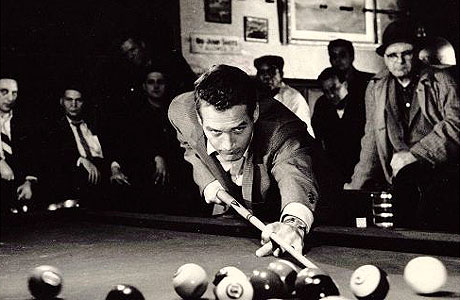
paulnewman460I’ve referred several times to that speech Paul Newman makes in The Hustler, one of my top ten favorite movies. He is “Fast Eddie” Felson, low-level pool hustler whose been told he’s a “born loser” by the satanic gambler played by George C. Scott. One day he describes to his girl, Sarah, what the game of pool feels like when “he’s really going.” It’s…

…like a jockey must feel. He’s sittin’ on his horse, he’s got all that speed and that power underneath him… he’s comin’ into the stretch, the pressure’s on ‘im, and he knows… just feels … when to let it go and how much. Cause he’s got everything workin’ for ‘im, timing, touch… it’s a great feeling, boy, it’s a real great feeling when you’re right and you know you’re right. It’s like all of a sudden I got oil in my arm. The pool cue’s part of me. You know, it’s a pool cue, it’s got nerves in it. It’s a piece of wood, it’s got nerves in it. You feel the roll of those balls, you don’t have to look, you just know. You make shots nobody’s ever made before. I can play that game the way nobody’s ever played it before.

Sarah looks at him and says, “You’re not a loser, Eddie. You’re a winner.”

Eddie looks at her quizzically. And she says, “Some men never get to feel that way about anything.”

Get it? Don’t ever settle for mailing it in.

Now how do you get to that “Fast Eddie feeling”? These things work for me:

  1. Read widely, not just in your preferred genre. I love reading great writing, fiction or non-fiction. Right now I’m reading three books at the same time (do you do this?) I’m reading L.A. Noir by John Buntin (about Chief of Police William Parker and mobster Mickey Cohen, and the battle for Los Angeles); a collection of short stories by John O’Hara; and a two-volume biography of Andrew Jackson published in 1938 (elegant prose here of the kind we rarely see anymore).
  1. Be intentional about studying the craft. What I mean is look for books and articles and blog posts on specific subjects that are chosen to address your own writing needs. I break down the craft into what I call “seven critical success factors” –– plot, structure, characters, scenes, dialogue, voice, and meaning (or theme). I advise you try to locate your weakest area and design a self-study program that lasts a minimum of six weeks. Read books and articles on the subject, and do practice writing. Get feedback on your exercises. What if you took the next year and set out to raise your game in each area? What if you designed seven 6-week courses for yourself? (If you would like a ready-made course of study, I do have one available). Your growth will be tremendous. You’ll feel it. Just like Fast Eddie.
  1. Be a risk taker. Go to new places in your writing. You don’t have to jump genres if you’re trying to build a brand. But do something more, different, deeper in your next book.

Early in his career Dean Koontz was rolling along writing bestselling paperback thrillers under several pen names. But he wasn’t satisfied. So he set out to deepen his characterizations. He studied up on psychology and used what he learned to write Whispers. Would his wide audience for fast-paced thrills like it? It was a risk … and it became Koontz’s first New York Times bestseller.

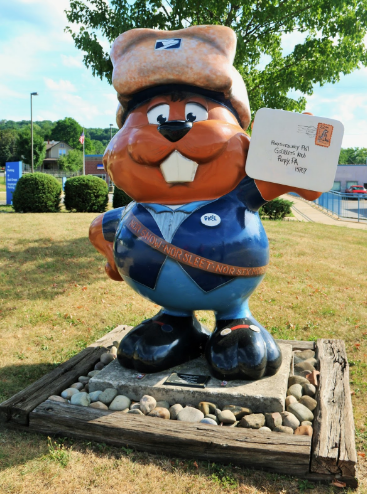
So keep the edge. Make the writing itself (not just the results) the object of your affection. That way you’ll leave behind no regrets when your personal mail is delivered by the groundhog.screen-shot-2016-09-16-at-1-08-22-pm

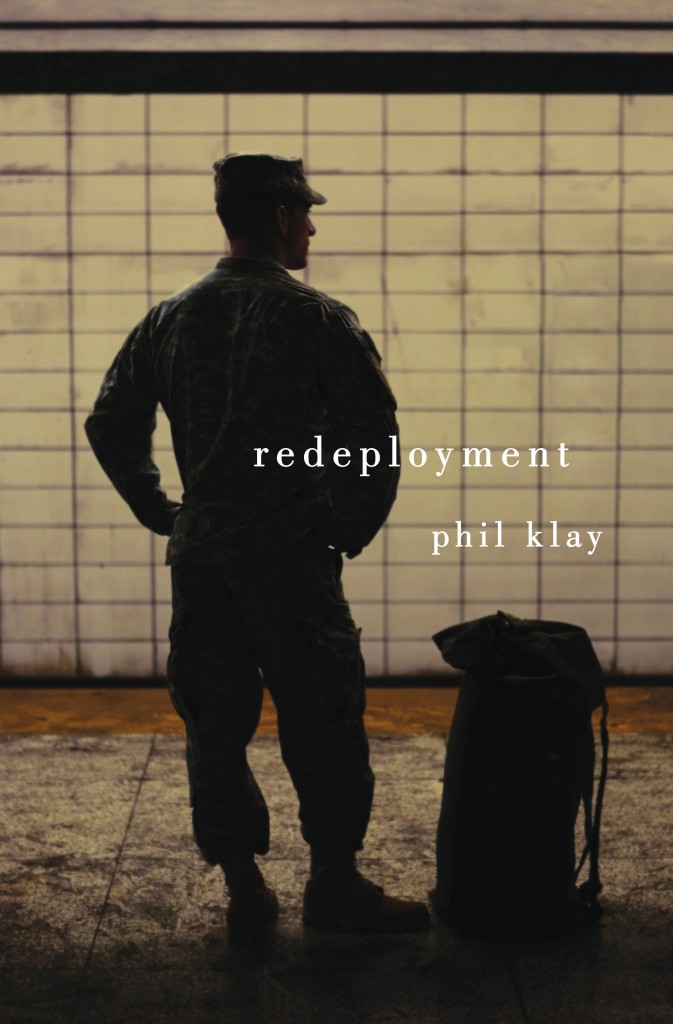
Memorable Military Research Book – Redeployment by Phil Klay

Jordan Dane

@JordanDane

redeployment-673x1024

I heard Phil Klay on MSNBC talking about his fiction book entitled – Redeployment – and I was intrigued. The first thing that grabbed me was the fact that the book is fiction, a group of short stories. Klay is former military (see more about him below) and from what I’ve seen, many war books written by young men of his experience/background, they tend to write non-fiction, so he had me hooked. I also noticed his book was a 2014 National Book Award Winner. Very impressive.

I wanted to read Klay’s book for research. I’m currently writing a few Amazon Kindle World series books involving the military. Reading pure romance books on the subject of military lifestyle wasn’t satisfying my need for authenticity, especially when I’m in the head of my male characters.

I’ve been watching online videos on snipers and reading books written by Navy SEALS. Klay’s anthology is my latest attempt to get a feel for an authentic voice for the character I will be writing shortly. Since my market is generally women readers, I have to temper any research with how I would write a story for women, but I do love discovering male voices that connect with my own life experiences, similar to the guys I worked with in the oil fields. (Yeah, I have stories.)

I feel I must warn readers interested in this amazing book. It’s taken me awhile to read through it. The first person voices in these stories are intimate, poignant, and gripping. They are presented without judgment. It’s a stark reality without any solutions or answers, but I found an honesty to it. These stories have gotten me down and I find I have to pace myself in reading them. I read at night and there are some days I can’t pick up this book, but I love the rich distinctive style of the voices in this anthology. I highly recommend this book. No question. This book would make an interesting read for anyone looking for a good character study.

5 TIPS ON RESEARCH:

1.) GET IT RIGHT – Research is important for authenticity, to insure your book doesn’t get thrown against a wall. There are women readers serving in the military, so I would have to “get it right” for them, yet still appeal to a woman’s desire for romance.

2.) NEVER OVERDO – Too much jargon or acronyms can bore a reader. In my crime fiction books, I will use police procedural language in dialogue, but find a quick way to explain what things mean after I first mention it. It can be tricky, but reviewers have liked the subtle way I do this, without overkill that can slow the pace. It’s all about balance.

Example:

“You have TOD, doc?”

Chambers knew the medical examiner would be challenged to estimate time of death, given the conditions of the body.

3.) CAPTURE THE ESSENCE – Read research related books or watch videos to get a general feel for an attitude, lifestyle, or the types of characters and their backstories you want to portray, but NEVER copy another author’s work. To prevent the temptation, when I read books like Klay’s, I jot down notes of ideas for my own book, then set the research book down for days/weeks before I start on my story and I never read books like this WHILE I am writing. In fact, I don’t read books in the genre I’m writing while I am in the midst of a project. Your mind can put words onto the page subconsciously. Your story MUST be your own, to retain your own voice.

4.) NEED VISUALS – For action scenes or locations, search online for your own visuals. Practice describing what you see, to get your own interpretation as seen through the eyes of your character. If you have video, use your ears too. What sounds do you hear on location? What other senses can you pry from your own experiences? Using all the senses can be a rush, especially if they spring from your own life.

5.) FILL IN THE GAPS – Once you get your character’s voice in your head, add other things that fill in around him. How does he or she dress? How do they live? Who are his/her friends? Who does he/she trust? What baggage does he or she carry? What’s the last thing he or she would do, then make them do it in your story – to face their demons. This gets into character – another topic – but my natural next step after I get a distinctive voice in my head, is to fill in a visual of my character’s life. Then I’m ready to write.

DISCUSSION

1.) What research books have stayed with you long after you’re written the book?

2,) Do you have any recommended reading for me on authentic military action, jargon, and dialogue?

ABOUT THE BOOK

Phil Klay’s Redeployment takes readers to the front lines of the wars in Iraq and Afghanistan, asking us to understand what happened there and what happened to the soldiers who returned. Interwoven with themes of brutality and faith, guilt and fear, helplessness and survival, the characters in these stories struggle to make meaning out of chaos.

ABOUT THE AUTHOR

Phil Klay - Author

Phil Klay – Author

Phil Klay – Author Phil Klay is a veteran of the U.S. Marine Corps and served in Iraq’s Anbar Province from January 2007 to February 2008 as a Public Affairs Officer. His writing has appeared in Granta, The New York Times,Newsweek, The Daily Beast, New York Daily News, Tin House, and The Best American Nonrequired Reading 2012. Klay is a 2014 National Book Foundation’s 5 Under 35 Honoree.

“In Klay’s hands, Iraq comes across not merely as a theater of war but as a laboratory of the human condition in extremis. Redeployment is hilarious, biting, whipsawing and sad. It’s the best thing written so far on what the war did to people’s souls.”
–Dexter Filkins, The New York Times Book Review

Is It Time to Quit the Day Job?

By John Gilstrap

Well, well. It’s been awhile since I wandered into the Killzone. I love what you’ve done with the place. I figure it’s been about six years since I took my hiatus from these halls. I see lots of familiar faces, and a happy number of new ones as well. Now, if you’ll excuse me for just a second, let me go to the fireplace and turn my coffee cup around so it’s facing front again.

When I departed the Killzone after its first three years, I did it in part because the pressures of my day job—which required an insane amount of overnight travel—combined with my annual book contracts left me with too little time to do justice to everything. Something had to go, so the voluntary commitment bit the dust.

Effective January of last year, I departed that day job after 10½ years, and while I’m still busy as hell, there’s room again in the schedule for blogging. When I reached out to my buddy Jim Bell to see if there might be room for a returning emeritus, I learned that Joe Moore was planning his departure, and here we are.

I thought it appropriate for my first foray back into blogdom to talk about making the decision to quit the day job. Most artists have dreamed of turning their back on the workaday world and throwing their entire being into writing or singing or painting or . . . well, you get it. How do you know when it’s time (or if it’s okay) to pull the trigger on a job—or, in my case, on a 35-year career? (I am/was a safety engineer by training and degree, with a special emphasis on explosives, hazardous materials, firefighting and various metals processing operations.)

As a rule, I discourage people from making the jump to full-time writing unless they have a financial backstop—a working spouse, perhaps, with a dependable income stream and employer-paid insurance. I for sure discourage people who have never published a book, or who perhaps have published only one or two okay-performers from making the leap.

Full disclosure: I’m a planner and a risk avoider. I don’t roll the dice on important stuff.

In my world view, you always take care of family first. The baby’s got to have food and diapers, the teenagers have to have as good a shot at a great launch as you can give them. My own experience shows that writing success can be achieved just as well as a part-time endeavor as it can be from a full-time commitment. For me, it played out like this:

Books 1 & 2: Written part time, while working 60 to 80 hours a week.
Books 3, 4 & 5: Written full-time, but supplemented by income from screenplays and insurance paid for by the Writers Guild of America.
Books 6 thru 14: Written part time while working a day job that required nearly 200 nights of travel per year.
Books 15 & 16: Written full-time.

If you’ve got a passion for writing, you’ll find a way to make it work, one way or another. In the vast pantheon of people who tell stories on the page, relatively few of them do so full time. And of those who do, my experience shows that they have a working spouse, or have retired and have an additional source of income. In my own case, I spent 20 years investing and saving for this moment, to the point that if the book market crashes, we’ll still make ends meet.

So, how do you know if you’re ready for the switch to full-time writing? Well, obviously mileage will vary, but here are a few questions to ask yourself.

Can you afford it?

Only you know what your lifestyle needs are, and how much cash flow you require to support it. Only you know how much risk you’re willing to take, and what sacrifices you’re willing to make. Still, here are some realities to consider (We’ll assume that you’re married without dependent children, you’re a 50-year-old sole bread-winner making $100,000 per year from writing alone, and that you live in Fairfax, Virginia):

1. 15% comes off the top for agent commission, leaving you with $85K in taxable income.
2. The $85K puts you in the 25% tax bracket, so $21,250 goes to Uncle Sam.
3. Of the remaining $63,750, you’ll owe another $4,400 to Virginia.
4. That brings us to $59,350.
5. Now remember that since you’re self-employed, you need to cover both the employer and employee share of FICA, so that’s another 15% of taxable income, or $12,750, leaving you with $46,600 to pay bills.
6. Don’t forget health insurance, which is far too moving a target to guess at a number, but plan on about $1,000 per month, provided you stay healthy.
7. Of your $100,000, then, you’ve only got about $34,600 left in truly discretionary income.

The killers here are the 7.5% employer’s share of FICA and the health insurance. For my wife and I, who are both healthy yet take some medications, our insured healthcare costs will approach $30,000 per year until we reach the age of 65.

If you’re on the edge of making the move to full-time artist, invest in both a good lawyer and a good accountant to discuss the advantages and disadvantages of incorporation, and on the structure of the corporation you form.

Can you handle the loneliness?

The first time I left a day job to write full-time, loneliness proved to be my Achilles heel. It’s not that I’m not content keeping my own company, but rather that as a Type A extrovert, I missed the water cooler action. Spending the day playing with your imaginary friends can get to be pretty isolating if you let it.

Are you ready to turn your passion into a real job?

It’s a big deal to entrust your financial future to an industry as capricious as the entertainment business, where your reputation and paycheck are literally tied to your latest effort. Readers’ tastes change, publishers go out of business, editors and agents retire. Any one of those events—or any one of a bajillion others, for that matter—can turn current success on its ear. And you’ll have to adapt. It’s no different than any other business, but in my experience, creative people start a writing business with far less preparation and due diligence than the average entrepreneur. Don’t make that mistake.

Whether you’re traditionally published or you choose the far more challenging self-publishing route, this job is as much about marketing and business management as it is about creativity. While your expenses are tax deductible, they are not free. Those expense reports you used to turn in to the accounting office for reimbursement are now paid out of your own funds. That short story that you used to squeeze out free of charge for a charity anthology now represents real opportunity costs that are measured in real dollars.

Will you be happy with your decision five years from now?

Back when Joy and I were first married, my mother counseled that if we waited to have children or buy a house until we thought we could afford them, we’d never have children and we’d be renting forever. Sometimes, making the decision casts the future. Failure is not an option.

There’s no such thing as security in any job market these days. We all know people who have been laid off without ceremony after having dedicated decades of their lives to the company they loved. Business is business, after all, and there’s rarely room for mercy from the corner offices.

It could be argued that shifting from what I used to call a Big Boy Job to a creative job is no more or less risky than leaving Google to go to work for Apple. They’re all big steps.

They’re all big decisions.