Last week I started organizing end-of-fiscal year tax receipts. Having just returned from Bouchercon, it was a good time to make sure I had my business trip records all in order (read: receipts stuffed into individual envelopes). At first, it was the only trip I recalled, but then I remembered a couple readings in St. Louis I could claim hotel and mileage expenses for. It seemed slim pickings, but I will be touring this month and some of next, so there will be many more envelopes. Then I remembered my writing retreats.
Way back in early January, I needed to get some serious, concentrated words on my WIP, which was due on Valentine’s Day. ( I wrote a bit about it a few Wednesdays ago on my 10K-A-Day post.) I love my family, but if there are other people in the house, my concentration flees. Sometimes I’m able to shut my office door, but I’m always wondering what’s going on on the other side of it. So I often find myself doing things that are not writing during the daylight hours, and only writing after ten p.m. when everyone has gone to bed. I love the quiet. No voices. No music. Not much happening on FaceBook. Snoring animals. Owls outside my window. Those are perfect writing conditions for my ADD brain. Sadly, the not-perfect part is that I routinely go to bed at 1:30 and get up at 7:30. It wears on a body.
So, last January I got myself an AirBnB apartment in St. Louis for several days. It was on a cul-de-sac, and very quiet. Blissfully quiet. Lonesome, even. The chair was uncomfortable and kept me upright. I was paying lots of money to be there, so I was mindful. I only had to cook for myself. (That was weird.) I didn’t stay up all that late, and I wrote in 2-3 long sessions each day. It was my second-favorite writing retreat I’d ever taken, after a solo week at an inn on Ocracoke Island in 2002. (In fact I think it was only my 2nd writing retreat, period.)
But I did get in another writing retreat this year. Over Labor Day Weekend, I went to the Nashville home of another writer—along with four other women. That was something I’d never done before. (Though I did go to a scrapbooking lake retreat around 2004. I didn’t and don’t scrapbook, but I journalled and did needlepoint. On reflection, it was probably a little odd that I went. Still, there was wine and the women were friendly.)
Writing in a crowd felt awkward at first. There was plenty of room to spread out, so we didn’t actually even have to see one another if we didn’t want to. But eventually I adjusted. Everyone was serious about getting words done. Then we gathered for meals, taking turns cooking. In the evening, there was wine and much discussion and much laughter. We talked about our careers and the industry and craft, and told stories that were harrowing or hysterically funny. It was a completely different kind of retreat.
I didn’t get more than five thousand words on that retreat. Hardly comparable to my January trip. But I wouldn’t have missed it for the world. I returned energized and ready to work harder. Writing can be such a lonely job. As here at TKZ, it’s good to be with like-minded people. To share stories and advice and good news and bad. And there’s nothing like face-to-face communication with nary a computer screen in sight.
Have you ever gone on a writing retreat—alone or with other writers?
“{Pain} is justified as soon as it becomes the raw material of beauty.” –Sartre
Whenever the word “pain” is mentioned, I immediately think of MacGregor, my Dog from Hell. Now don’t get me wrong. I love MacGregor. But he’s one of the world’s most demanding, high maintenance dogs. MacGregor is a ninety-pound, natural born herding type breed, long, lean, and somewhat feral looking. He’s a veritable wolf dog. MacGregor should have been born on a sheep farm, not confined within the gated walls of sedate suburbia. At the very least, he should have been adopted by a marathon runner, not by me, the Original Couch Potato. To keep my hyper-amped dog active enough to satisfy his restless herding breed instincts, I have cycled him through a series of dog walkers, hikers, boot camp drill sergeants, and even one former K9 cop turned dog trainer and psychologist. Their unanimous (and very expensive) verdict: MacGregor is indeed The Dog from Hell.
Dog and I hit our personal nadir last month, while I was recuperating from arm surgery. I wasn’t supposed to move my arms very much, so I had his leash fastened around my waist. (Dog people will guess what’s coming next.) As we passed a nearby house, a golden retriever rushed a fence to lodge her vociferous objections to our presence; then, MacGregor lunged left to argue the point, upending me in the process. The result: several bruised ribs, plus black-and-blue contusions from shoulder to knee. (Fortunately my arms were mostly spared.)
As I was sitting in the doctor’s lab waiting to get a chest x-ray to check for broken ribs, I did some agonized reflection on my relationship with my dog. It seemed that both of us had wound up with a lousy deal in our partnership. What could I do to turn the situation around, short of starting my own sheep farm?
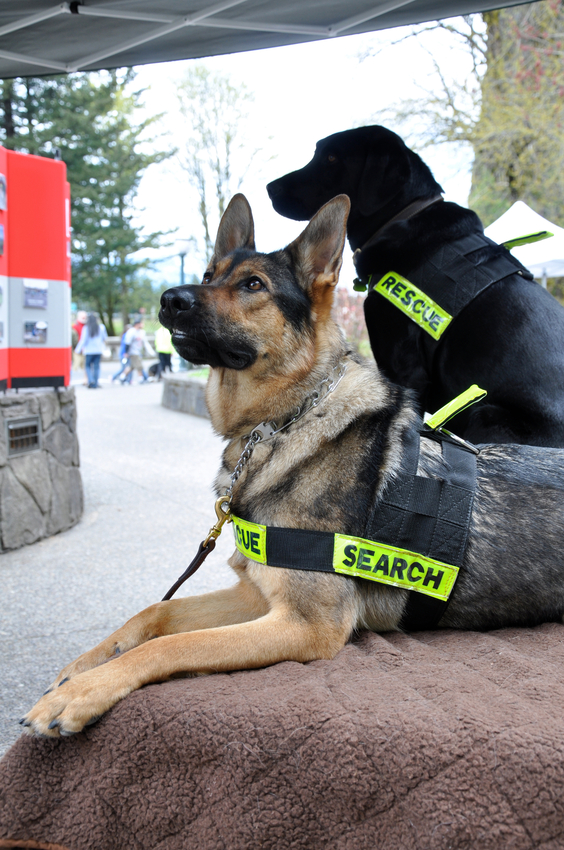
In a moment of desperation, I started thinking outside the box. At some point I stumbled across an interesting site: CARDA, a volunteer search dog organization. If you’re ever lost in the mountains, CARDA volunteers and their dogs are the teams who’ll come looking for you. CARDA services are free of charge to the public and law enforcement. All expenses are paid by volunteers and donations. In each CARDA certified search team, both the human and dog undergo extensive training–it takes three years of training to become certified as a CARDA search and rescue team. Both the human and the dog have to be able to handle the rigorous requirements of search and rescue operations. In a moment of foolhardy optimism about my physical ability to handle hiking anything rougher than a golf course knoll, I submitted an application to CARDA. A friendly-sounding district representative quickly invited me to attend a training class this Wednesday night. (The first class is in Malibu, my kind of place.)
Disclosure: I predict that MacGregor will prove to be a natural as a search and rescue dog, but I’m fairly certain I won’t pass muster as the human half of our equation. The good folk at CARDA may take one look at me and bounce me back to Couch Potato School, to take Remedial Treadmill 101.
But in the end, it’s not important whether the dog and I ultimately graduate as a certified search and rescue team. It’s the journey that’s important. I’ve already latched onto the search and rescue notion as interesting story material. Instead of going to the gym to work out to get in shape for CARDA training, I’ve spent copious amounts of time browsing the web to learn about the culture of search and rescue volunteers (natch, because I like web surfing, not hiking). I’ve discovered all kinds of fascinating stories and camp fire lore about the volunteer search and rescue tradition. However long I survive the training itself, my CARDA experience will serve as research for a new project that’s started bubbling around in my head. For now, I’m calling that project A Working Dog Mystery.
If The Working Dog Mysteries bear fruit, I’ll really owe it all to MacGregor. Or, to put it another way (and misquote the Rolling Stones song):
You can’t always get the dog you want
But if you try sometime you just might find
You get what you need
What about you? Has life ever handed you a lemon in terms of having a challenge or bad experience, and then you transformed that crisis into story material? Tell us about it in the Comments. Thanks!
(If you’re a skimmer, you should know up front that there’s a payoff waiting for you at the end of this post… in the form of a handful of really enlightening movie trailers that can teach you two of the most important things there is to know about storytelling.)
The best way to really learn something from a lecture or a blog or a craft book – to really cement your understanding of it – is to go out and see it in play (within a novel, or in a movie) in the real world of storytelling.
Of course, some writers hear or read something they are told will serve them and dive right into executing it within a draft. Which is a bit like doing surgery the evening after sitting in on a med school lecture, without having witnessed that surgery firsthand.
But this point of craft is too important to not approach with the precision of a surgeon. In fact, your writing road will be long, steep and bumpy – your patient just might die on your table – until you get this one critical point of storytelling firmly implanted within your story sensibilities.
(A reminder… four movie trailers await at the end of this post that will show you this principle in play.)
One of the most important aspects of storytelling, from a structural perspective, is the execution of what many of us call The First Plot (sometimes known as the “call to action”), which is the turning point following the setup of a story (consuming the first 60 to 80 pages in a novel, or about 20 to 28 minutes in a movie) and the actual dramatic spine of the narrative. The First Plot Point launches that dramatic spine by inserting something into the story that changes everything.
Think of these narrative blocks as quartiles. The first quartile is the setup. The second quartile is the hero’s response.
Response to what, you might ask? To the critical narrative moment that divides those two quartiles: the First Plot Point.
The moment where the real drama and quest – the narrative core of the story – actually and fully begins in earnest. How the hero reacts to, attacks and ultimately resolves the problem or quest launched by that FPP moment will become the story from that point forward.
Remember: It isn’t a story until something goes wrong.
And when it does, the hero must respond (because bad things will happen if she/he doesn’t)… with some combination of fleeing, fighting, navigating the unknown, finding help, seeking information or simply surviving what at first seems like unbeatable odds and imminent danger.
The First Plot Point delivers that moment. And when properly handled, does so at the optimal point (within a prescribed range) in the narrative.
So how do we go out there and find this?
How do you see it for yourself? Study it? Prove it to be valid? Or if you’re a non-believer, try to prove it to be a false creed?
Watch a movie trailer, that’s how. Because…
Every movie preview is built around the FPP moment.
Don’t go to the movies much, you say? Good news for you: Youtube is stocked with tens of thousands of movie previews. If you own a smart TV (or Apple TV or Roku), the main menu will have an entire channel devoted to nothing but previews, with literally thousands available. Thousands of opportunities – little two-minute storytelling clinics – that will show you this principle in action.
Two of the four movie trailers shown below are adapted from bestselling novels, which means the very same plot point you are looking for exists within the novel that created it.
It’s important to note, though, that the placement of the first plot point moment within a trailer (where something goes very wrong) doesn’t align with where it belongs within a novel or script. While it may, in fact, appear virtually anywhere within the two minutes of a movie trailer, the optimal placement within a novel or a script remains in a range between the 20th and 25th percentile.
In fact, if the concept itself is the draw (rather than the premise/plot), then up to two-thirds of the trailer might focus there, before it cracks wide open with a First Plot Point that shatters the calm
One other thing to notice.
In addition to the First Plot Point, you will also sense the nature of the setup narrative (the first quartile of the actual story… novel or script) that precedes it. Remember, no matter how much or how little of it you notice in the trailer, the setup is everything that happens before everything goes wrong (thus comprising the entire first quartile of a novel), even when some of it contributes to that pivot.
The first quartile setup is where the concept of your story, as a narrative framework, is shown to the audience.
Okay, let’s watch some movie trailers and find those FPPs.
Jack Reacher, from a novel by Lee Child
Who doesn’t like the Reacher series, right? Well, more than a few didn’t approve of Tom Cruise being cast as Reacher in the first film… but he’s back, and this preview doesn’t disappoint.
The First Plot Point is shown at the 28-second mark (out of a total running time of 1:56). Everything prior to that moment is setup narrative, in this case (because this is a character-centric story) introducing the hero and the conceptual essence of him that invests us in him before he is thrust into harm’s way. (You may have to put up with a few seconds of promotion first… hang in there, hit the Skip button when presented.)
That initial scene with the handcuffs? Total prologue. Other than showing us Reacher himself (thus rendering it a setup strategy), it has nothing at all do to with the plot – the premise – of the story to follow.
The Help, from the novel by Kathryn Stockett
You’ve probably seen the movie and/or read the novel. But notice how the trailer sets up the strong themes before it reveals the First Plot Point (always the mission of the first quartile of a story), which is where Skeeter (one of three hero/protagonists) is launched on her dramatic quest, which is to write her book.
Once she heads down that path, serious drama awaits everyone.
Everything prior to the 1:28 mark is part of the setup of the story (borrowing, in this case, from several places within the story’s structure), before showing us the FPP that launches them all into a quest that is as emotionally resonant as it is dramatic. That moment, by the way, happens at the 24th percentile in both the novel and the film itself… right where it should be according to the principles of story structure.
Two Versions of Tomorrowland – a movie starring George Clooney
All Hollywood movies, and their trailers, are trying to sell you an idea. Sometimes that idea is almost entirely rooted in the concept, rather than the dramatic proposition (premise) of the story. In the first of these two trailers for Tomorrowland (based on an original sci-fi script inspired by an actual Disney place, rather than a novel), the only thing there is the concept. The story itself – the drama, and the FPP that launches it, is completely missing from this version.
Check it out, then watch the full trailer (that does include the drama and the FPP) that follows… and notice the difference. That’s where the learning awaits you.
Now, in this next version, notice the something does go wrong (which wasn’t included in the previous version), shown at the 1:30 mark (the First Plot Point) of the movie). The trailer is 2:23 in total length, so even here, it is the concept – not the drama – that is the main draw.
Too many new authors, who are enthralled with their own concepts, write a novel that resembles the first of these two versions. Which, as a fully-rendered story, doesn’t/won’t-ever work… because there is no dramatic spine/proposition (a plot) to it.
But the second version… that could have been a novel. And in that novel the FPP would not have appeared at the 60th percentile mark, as it does in the preview… it would appear in the 20th to 25th percentile mark, where the principles of structure tell us it works best.
Writers who mess with these principles do so at their own peril.
Just as writers who deny them, but nonetheless nail it in a story (and there are many) do so by virtue of their own story sensibilities, which tells them the exact same thing as does the principle they claim to deny.
Literally thousands of these little two-to-three minute writing clinics are at your fingertips. And nearly every one has something to teach you – by showing you – about two of the most critical elements of a story that works: an appealing, conceptually-driven setup quartile, leading to a story-changing First Plot Point that fully launches the dramatic spine of the story itself.
Get this right – get this principle firmly implanted in your writing head – and you will have achieved a sort of First Plot Point in your career. Only this one – your writing dream suddenly accelerated – will be wondrous, however dramatic it might feel.
The late, great John D. MacDonald (author of the Travis McGee series, but even more enjoyable for me, a string of paperback originals in the 1950s) had a philosophy of writing. It’s found in the introduction to his short story collection, The Good Old Stuff:
First, there has to be a strong sense of story. I want to be intrigued by wondering what is going to happen next. I want the people that I read about to be in difficulties–emotional, moral, spiritual, whatever, and I want to live with them while they’re finding their way out of these difficulties.
Second, I want the writer to make me suspend my disbelief. I want to be in some other place and scene of the writer’s devising.
Next, I want him to have a bit of magic in his prose style, a bit of unobtrusive poetry. I want to have words and phrases that really sing. And I like an attitude of wryness, realism, the sense of inevitability. I think that writing–good writing–should be like listening to music, where you identify the themes, you see what the composer is doing with those themes, and then, just when you think you have him properly identified, and his methods identified, then he will put in a little quirk, a little twist, that will be so unexpected that you read it with a sense of glee, a sense of joy, because of its aptness, even though it may be a very dire and bloody part of the book.
So I want story, wit, music, wryness, color, and a sense of reality in what I read, and I try to get it in what I write.
Isn’t that a nice credo for a writer? And JDM did put all that in what he wrote. Especially unobtrusive poetry, which is why he is still read today when most PBO writers have vanished into the mist.
Now, when it comes to style, we all have preferences. I know Isaac Asimov once explained that he developed a very plain style so he could just get on with telling the story. Maybe that’s the reason I haven’t read a lot of Asimov.
Ah, but Ray Bradbury! Now there’s a stylist. Check out Dandelion Wine or Something Wicked This Way Comes if you want to see what I mean.
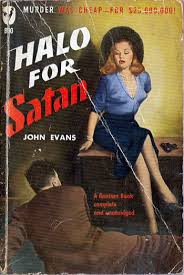
Recently I came across a pulp writer whose work I was unfamiliar with. Howard Browne wrote a series of mysteries under the pseudonym John Evans. They featured Chicago PI Paul Pine. Browne’s model was clearly (and, I believe, admittedly) Raymond Chandler. While Chandler stands alone in the pantheon of stylists, I enjoyed Browne’s unobtrusive poetry. Here are some samples from Halo for Satan (1948):
I shoved open the front door and went into a gloomy hall filled with last year’s air.
It wasn’t much of a room. About large enough to play solitaire if you held the cards close to your chest.
Her right hand was pointing a small blue-steel automatic at the sweet roll I’d had for breakfast.
“Hello there,” I said brightly. It took a little while to get the words out because they had to come all the way up from the cuffs of my trousers.
There was a faded housecoat wrapped primly around her shapeless body and a lacy pink dustcap sat drunkenly on graying hair that probably had already been combed once that month.
Describing his office building:
It was sandwiched between two modern skyscrapers that seemed forever to be trying to edge away from their neighbor. It had a deep lobby, narrow and dim, paneled in gray and white imitation marble, a pair of secondhand bird cages masquerading as elevators and a sullen air of decay. The upper halls smelled like a Kansas hayloft after two weeks of rain, and my fellow tenants ran the type of businesses that attracted more process servers than customers.
Delightful, eh? Well, I think so!
So how can you find your own unobtrusive poetry? A couple of tips:
First, notice things. I mean, notice them through the eyes of your POV character. Take time. Look around at the scene. Watch things happen in the theater of your mind. Make a list of what is seen.
Second, take several stabs at description. Experiment. Use up a whole page (or more if you’re really cooking) and have fun. I guarantee you’ll find some gold which you’ve tickled so she comes out laughing (a line of unobtrusive poetry from the film Treasure of the Sierra Madre).
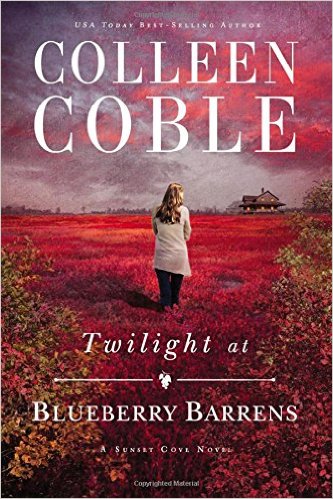
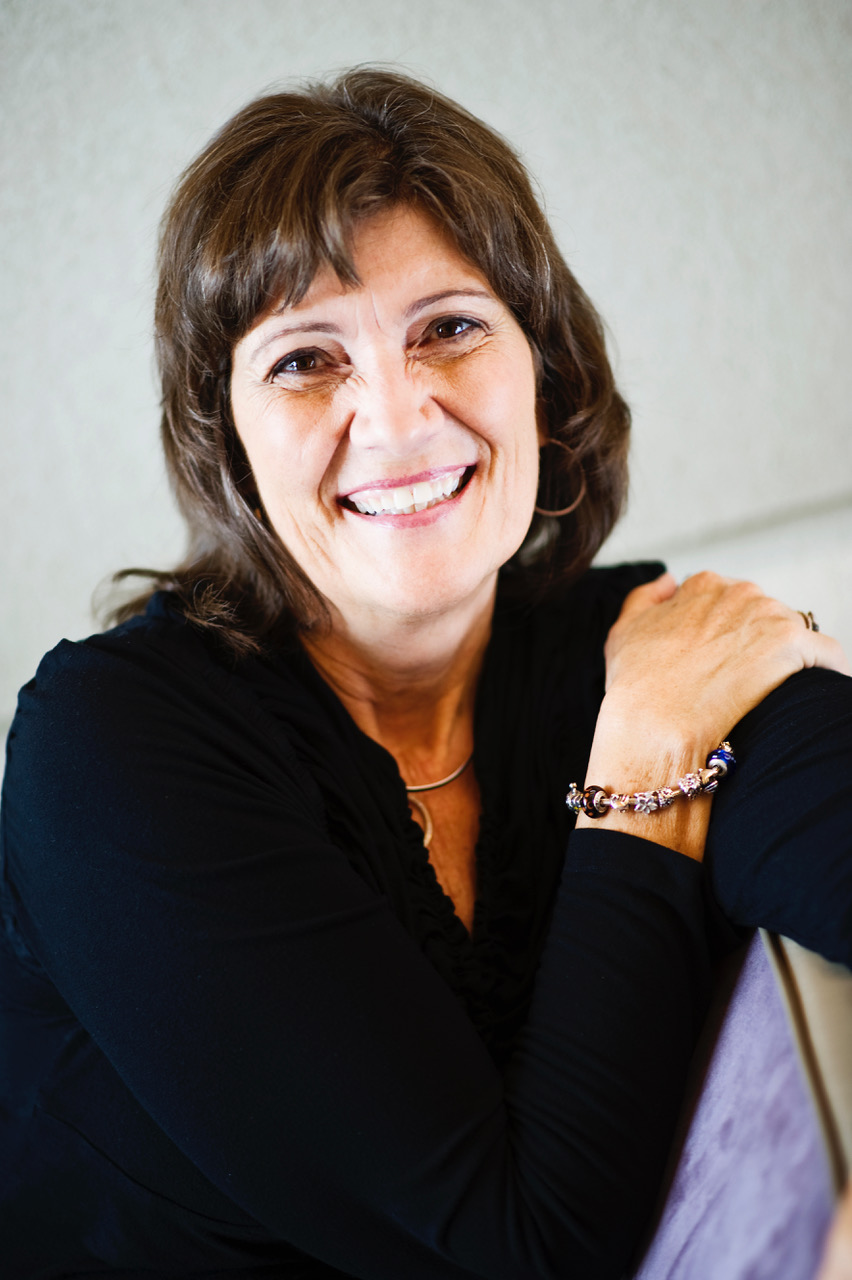
I’m delighted to have USA Today bestseller Colleen Coble as my guest on TKZ. Colleen is an award-winning author with over 2 million books in print and she writes heartfelt and suspenseful romantic mysteries. I’m enjoying her latest Twilight at Blueberry Barrens and I’m a big fan. NYT bestseller Brenda Novak has given it high praise and Publishers Weekly gave Colleen a prized starred review. Please help me welcome her to TKZ.
***
You know the best thing about writing? You never arrive. There is always something you can improve on. Writing isn’t static, and it’s thrilling to know a better, bigger book can be yours to create. So how do we embrace the process of change in our books? Here’s what works for me.
1. Determine what drives your writing:
I think we all figure out fairly soon where we belong in the landscape of the writing world, and what type of story grabs us and doesn’t let go. Part of the evolution of my brand of romantic mystery involved embracing who I was as a writer and letting that strengthen each new book. Readers often tell me I’m way too friendly and outgoing to write about murder. I think they believe only brooding, unsmiling people can write about something so dark. They miss what drives me to write what I write—justice. I look around the world and see no justice, but I can make sure justice prevails in my novels.
Why do you write? The biggest, strongest stories involve something very personal to you. Depending on your personality, it can be cathartic or daunting to let your characters deal with an issue that’s been challenging to you, but it’s always worth it. Put down your guard and let the reader in. Writing should never just be your job. That’s a trap that career novelists can fall into, but the next novel should always be because you have something to say not because you have a deadline!
2. Figure out your strengths:
Don’t assume your strengths are as strong as they can get. An expert at pacing? Flex your fingers and keep the reader up all night. Good at integrating setting into the plot? You can immerse the reader even better with the next book. Great at characterization? You can build an even more compelling character in the next book. The status quo is never enough for the next book. Strive for something bigger and more compelling.
3. Pinpoint your weaknesses:
We all have areas where we are weak. My timelines can get fuzzy, and because I’m a seat of the pants writer, the train can get derailed. But even a pantser like me can get better at thinking through key turning points that lead to a stronger book. There are great writing resources out there to help you with your weaknesses.
This blog and others like it are great resources. There are tons of helpful writing books out there to help shore up where you’re weak. Jim Bell is a long time friend, and his book, Write Your Novel From the Middle, literally transformed my writing even though I’d written well over 50 novels by the time I read it. Never stop learning how to write better. Study up on how other authors do it well. When I wanted to write more suspenseful books, I read excellent suspense like my friend, Jordan Dane’s. I literally devour every book by an author I think I can learn from.
4. Don’t be afraid to experiment.
I remember when chick lit was all the rage. My buddy, Kristen Billerbeck, wrote a chapter to show a friend what it looked like. When I read that first chapter, I knew she’d found her real voice in first person/present tense, even though she’d written over 20 novels by that time. Let your voice evolve and strengthen as you gain more confidence in your ability.
I decided to do more points of view in Twilight at Blueberry Barrens, and I think it worked to build the suspense. After trying something, you can always go back to the way it was if it didn’t work for you.
Discussion: How has your writing evolved from book to book?
Best-selling author Colleen Coble’s novels have won or finaled in awards ranging from the Best Books of Indiana, the ACFW Carol Award, the Romance Writers of America RITA, the Holt Medallion, the Daphne du Maurier, National Readers’ Choice, and the Booksellers Best. She has over 2 million books in print and writes romantic mysteries because she loves to see justice prevail. Colleen is CEO of American Christian Fiction Writers. She lives with her husband Dave in Indiana.
Okay, technically, it’s day-after-launch day. Yesterday saw the arrival in stores of Nick of Time, my first stand-alone thriller in over a decade. Here’s the publisher’s blurb on book:
SHE’S RUNNING OUT OF TIME Nicki Janssen’s days are numbered, but she refuses to accept her fate lying down. Defying her father and doctors, she hits the road with a pocketful of cash, a bus ticket—and a romantic fantasy of riding off with her childhood crush . . . HE’S RUNNING FROM THE LAW Handsome, dangerous Brad Ward is facing a different kind of sentence. Sent to prison for felony murder, he has escaped and rekindled his relationship with Nicki. But when Nicki’s father joins forces with a deputy sheriff, the search for the runaways ignites a manhunt—a blistering chase that accelerates with every stolen car, every act of violence . . .
As much as I love writing the Jonathan Grave series, it was nice to return to my writing roots in Nick of Time to tell a story where the stakes are personal rather than global. I hope the world likes the story as much as I do. (Note: The e-book version of the novel was released in five parts, beginning last April, as a run-up to the release of Friendly Fire in July.) There’s an interesting story behind the story, as well . . .
My writing career can be best tracked on a severe sine curve. I started off with runaway “success” with my first novel, Nathan’s Run. Big advances (in 23 countries!), movie deal, the whole nine yards. Warner Books bought my second book, At All Costs, before Nathan’s Run was published, for even more money and Arnold Kopelson was going to make an even bigger movie. I was set for the big time.
Then reality arrived. Both books sold reasonably well—especially for a freshman writer—but I didn’t come close to earning out my advances. When it came time to sell Even Steven, my third stand-alone thriller, my agent had to break fingers to get a two-book deal from Pocket Books for a tiny fraction of what the first two books sold for. Then the real nightmare began. Pocket became Atria, my editor left, and then the editor that replaced him left. Even Steven tanked, and then Scott Free was essentially remaindered in place.
My next book was at the time called Living Wil, in which a terminally ill teenager named Wilhemina Janssen runs away with her childhood crush. Sound familiar? I couldn’t give it away. The book wasn’t big enough, they said. Since my other books didn’t meet sales expectations, everyone told me that my career as a writer was over. That was 2003.
I thought they were wrong.
I believed that I needed to write something completely different. That’s when I stumbled by happenstance onto a guy named Kurt Muse, whose real life story became the subject of my nonfiction book, Six Minutes to Freedom. My agent at the time refused to represent it for political reasons, so I turned to my good friend and current agent, Anne Hawkins, who had all kinds of difficulty selling SixMin because I am not a journalist. But then the folks at Kensington Publishing decided to roll the dice, and the book did pretty well. In fact, it continues to do pretty well. (Wait till the movie comes out! But that’s a topic for a later post.)
The research I did for SixMin opened doors and provided me with the access I needed to write the Jonathan Grave series, which I’m happy to say seems to have found some traction among readers. I just finished the 9th book in the series, and am under contract for two more.
Meanwhile Living Wil sat in the drawer, where it had resided for a dozen years. On a whim, I took it out one day and read it. Much to my surprise, I loved it. It was a little dated, and my writing style has evolved, but the bones were all there. I sent it to my editor and she loved it, too. So, after a significant rewrite that changed Wilhemena to Nicki and tightened the action, it was ready to go. Parts of Nick of Time still make me cry every time I read them.
I hope you give it a shot, and if you do, I hope you like it as much as I do.
More than that, since TKZ is primarily a writers’ blog, I hope you embrace the big take-away from this peek beneath the book’s kimono: Setbacks are only as important as you allow them to be. What “everybody” says is irrelevant because failure cannot be inflicted on anyone. Failure can only be declared by the individual who decides to give up.
But today — for the first time in months — I feel good enough about the new book to leave it alone for a few minutes.
See, I’ve been working on the same book for too many months now. Nay, I have been working on the same CHAPTER for too many weeks now, and I am beginning to think I will never finish. Part of the problem is that both my co-author sister Kelly and I have had too many personal life intrusions this past year that have affected our ability to maintain momentum. And like Woody Allen’s shark, if your WIP doesn’t move constantly forward, it dies.
But the larger part of our problem is that this book, unlike all our others, is being written on spec. We don’t have a contract for this one yet so we don’t have the tyranny of a contractual deadline. Being a former newspaper person, I have always done my best work under a strict deadline. But with this book, time had been stretched and now the ticking clock sounds as loud as Poe’s tell-tale heart in my ears.
Here’s the thing: The worst thing you can do to screw up your career is to turn in your book late.
Being on time is very important. And it gets increasingly important the further into your career you go. Why? Because you can’t get a foothold in today’s crowded marketplace — or keep one — if you can’t turn out a book a year on time.
Time management is the hardest thing a new writer has to grasp, I think. Before you get published, you have the luxury of limitless time. Time for the virgin writer is a lovely, expandable, ever-accommodating thing. Kind of like a big purse. The bigger your purse, the most junk you carry around, right? Same with deadline. The bigger and looser it is, the more you will abuse it. Trust me. I know.
First-time authors spend YEARS making their books as good as they can. You have to, in order to get an agent to take you on. Ah, but then what? Then you enter the publishing machine and you have to produce another. And another. And yet another. And here’s the worst part of it: Each book has to be better than the last because publishers’ attention spans (dictated by the computers at B&N and rankings at Amazon) are increasingly short.
Here is another thing working against us. Unlike in the good old days, few writers entering the game today will be given the time to find their legs, their voices, their audiences. The reason is awful but pretty simple: It’s all bottom line these days and there are too many young turks waiting to take your place on the publishers list. You have to produce well…and often.
As Jim Bell put it in his Sunday post on industry updates: “My drumbeat has always been: First, write the best book you can every time out! That’s why we emphasize craft here at TKZ. There is no substitute for quality. And if you can up your production, so much the better.”
So, what happens if you are late?
You lose your place in line. I learned this in great detail at a Killer Nashville conference I went to a few years back. There was a very instructive panel with an agent, a Barnes & Noble manager, and the main buyer for Ingram distributors. It was all great advice, but the best insight came when someone asked what happens if you are late delivering your manuscript. All the experts agreed: You don’t want to do this. Ever.
Here’s the simple explanation: In traditional publishing, a publisher creates its schedule at least a year in advance. And when an editor buys your book, the process begins whereby a bunch of folks decide where that book will be positioned to get maximum attention. Publishers jockey around each others schedules, trying not to have their books competing with similar books — or with big star authors. Or Harry Potter for that matter.
So you sign your contract. You get your slot. Say you have a July 2017 release with manuscript delivery Nov. 1, 2016. Now things get more complicated. To over-simplify things:
The cover design is based on your delivery date. Ditto advance reading copies (which are important in getting bookseller buzz). Sales people start gearing up material for in-house and outside catalog placement. Marketing and publicity set a schedule of their own. And in the end, bookstores buy your book based on YOUR firm delivery date. And remember, this is happening for many other books at the same time — from your own publisher and everyone else’s. Every domino is in place.
Then you miss your delivery deadline. You’re two, three, four months late. Life intruded, the kid got sick, you wrote yourself into a corner and had to backtrack, you had writers block, there was that three-week hiking trip in the Cinque Terre you really wanted to go on…blah, blah, blah.
What’s the big deal, right?
That silence you hear is dominos NOT falling. You’ve lost your place in line, Bunky. And guess what? The world — and the process — will keep right on turning without you and your masterpiece. You’ve also been…unprofessional and made yourself a pain in the ass. Not something you want to have a reputation as being. Because publishing? — it’s a small world, after all. Once you’ve been labeled difficult, a prima donna, or unable to produce, that rep will follow you no matter how many times you switch houses.
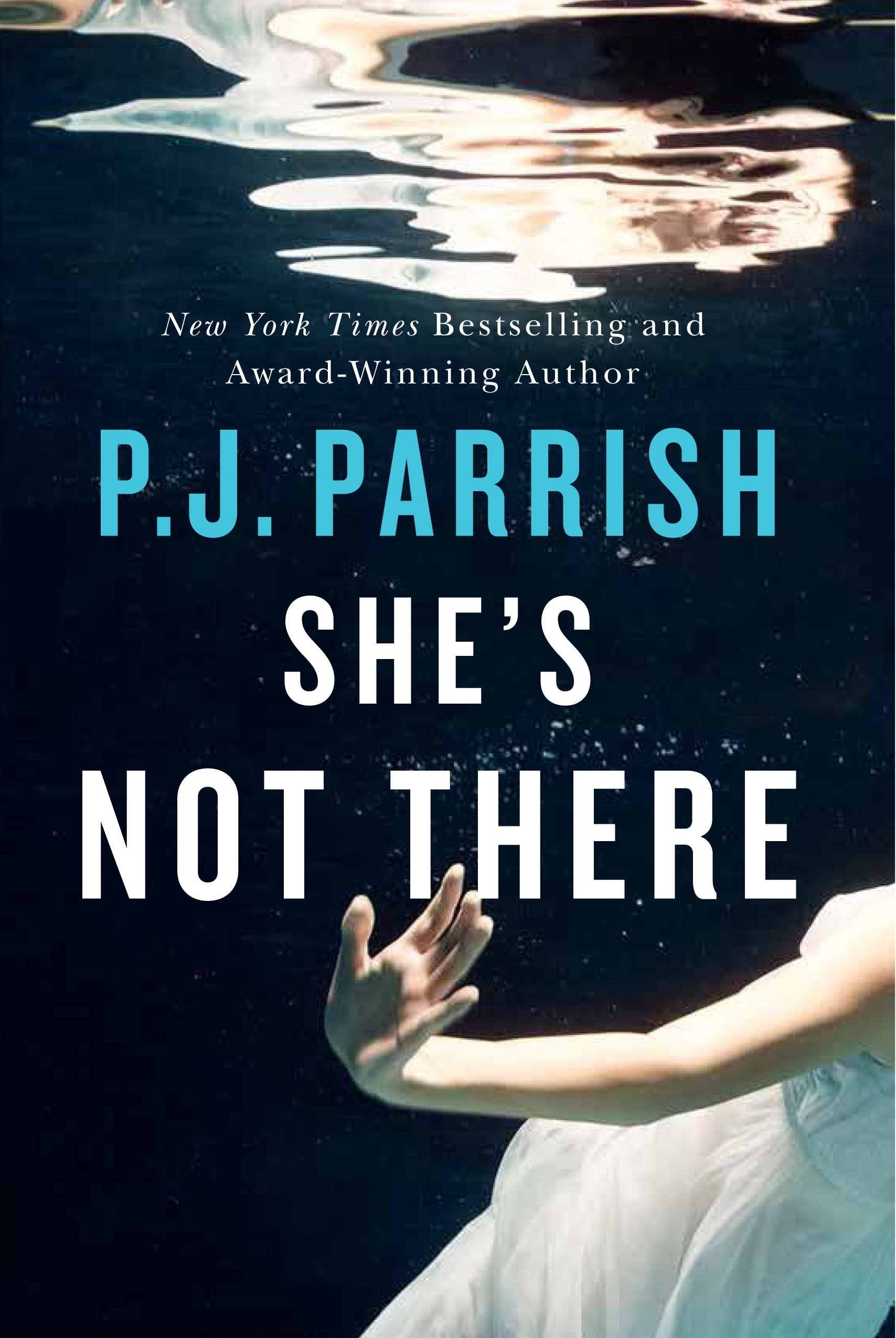
This pattern is the same for eBook-centric publishers like Thomas & Mercer. For our most recent book, SHE’S NOT THERE, our T&M editor gave us a choice of two different manuscript-delivery dates. They bought our book when it was about half finished. One deadline they offered was farther away but the editor was honest and said that meant a less aggressive marketing campaign. The other deadline was pretty tight, but it meant they had more time before pub date and could do more to flog it.
Guess which one we chose? Guess which one we almost blew?
We finished the book by the hardest deadline (we missed by two days) but it about killed us. And to be honest, we weren’t happy with the ending. A week after we turned it in, I worked up the courage to email our editor and told her we thought the ending was rushed and we asked if we could add two or three more chapters. She gave us one week. We made the extended deadline. The book came out on time. But it was really close.
Okay, I’m self-publishing, you say. What does this have to do with me?
Everything.
Having the discipline to adhere to a set publishing schedule is just as important if you are self-publishing. Maybe even more so, because you won’t have anyone nagging you about a deadline. No one will be sending you emails asking, “How’s that book coming?” You won’t have a contract mandating that if you don’t produce, you’ll be facing some legal consequences. If you are self-publishing, having the self-discipline to make deadlines is probably even more crucial to your chances for success because you will be struggling to establish a foothold and claim enough real estate on the vast virtual bookshelf. One book isn’t going to get you anywhere. A whole shelf of good books that come out at nice predictable intervals? Well, readers will notice that. Again, as Jim said: Write a really good book, get it out there, write another really good book. Rinse and repeat. Rinse and repeat…
I am not telling you this to scare you. Well, maybe I am. Because I got scared myself listening to the experts at Killer Nashville and by my experience of almost blowing it with SHE’S NOT THERE. See, I am not a fast writer. Writing is hard, even at times painful, for me. I try to worry each word into place, torture each paragraph into perfection. And that, my friends, leads me to paralysis.
Sometimes, you just have to sit down and let flow out. As the King says in Alice In Wonderland, “Begin at the beginning and go on till you come to the end: then stop.”
Because, as the Queen tells us,
“In this country, it takes all the running you can do to keep you in the same place.”
Not too long ago, my husband learned that his great grandfather had travelled the Trans-Siberian railway at the turn of the last century (just before the Tsar was deposed by the Russian Revolution) to observe birds who made the arduous journey from Russia to Australia as they migrated each year. As a writer of historical fiction, I can only imagine what it must have been like to make this journey at such a pivotal time in Russian history. Not only do I wish I had met Tim’s great grandfather, or that someone had recorded his memories (no one did, unfortunately), but that I also somehow had the ability to go back in time and experience a journey such as this first-hand.
Anyone who’s read my books, knows that I think the early 20th century would have been a fascinating era to live through. On the cusp of what we would consider a ‘modern’ way of life, you would have been able to witness the end of the ‘Belle Epoque’ and the dawn of an era that was both transformative as well as tragic (at the time you could never have imagined the tragedy of two world wars). When I write I try to immerse myself in first hand accounts so I can get the full sensory experience – but those (obviously) cannot compare to actually living through it.
Part of why I love writing historical books is the opportunity to vicariously experience history and I have an exceptionally long list of ‘journeys’ from history I would have loved to have witnessed/been a part of. These include traveling the Trans-Siberian railway in the early 1900s. I would also love to enjoy the luxury of a first-class ocean liner voyage from England to America in the 1910s (though not aboard the Titanic, obviously!). A train journey across India at this time would have also been fascinating.
Even if you don’t write historical fiction I’m sure most of you have dreamed of taking some voyage in the past – something that captured your imagination – something that would have been so unlike the travel we undertake today. So TKZers, if you had the chance to go back in time and make a journey, what kind of journey would that be and why?
And by today, I mean the date of this post. Because the only constant now is change!
If you’re in the writing game to make serious bank, or at least a good side income (and only “blockheads” never write for some kind of income, according to Dr. Johnson), then you need to keep up to date on industry developments.
Now is a good time to look, as reports about the first quarter of 2016 are coming in.
Traditional Publishing Sales Are Down
According PW, sales of adult print books fell 10.3% in the first quarter of 2016, compared to the first period of 2015, and ebook sales in the same category fell 19%. Regarding the latter, industry observer Mike Shatzkin says a big part of the problem is the pricing of ebooks by publishers:
High ebook prices — and high means “high relative to lots of other ebooks available in the market” — will only work with the consumer when the book is “highly branded”, meaning already a bestseller or by an author that is well-known. And word-of-mouth, the mysterious phenomenon that every publisher counts on to make books big, is lubricated by low prices and seriously handicapped by high prices. If a friend says “read this” and the price is low, it can be an automatic purchase. Not so much if the price makes you stop and think.
This puts publishers in a very painful box. When they cut their ebook prices, they not only reduce sales revenue for each ebook they sell; they also hobble print sales.
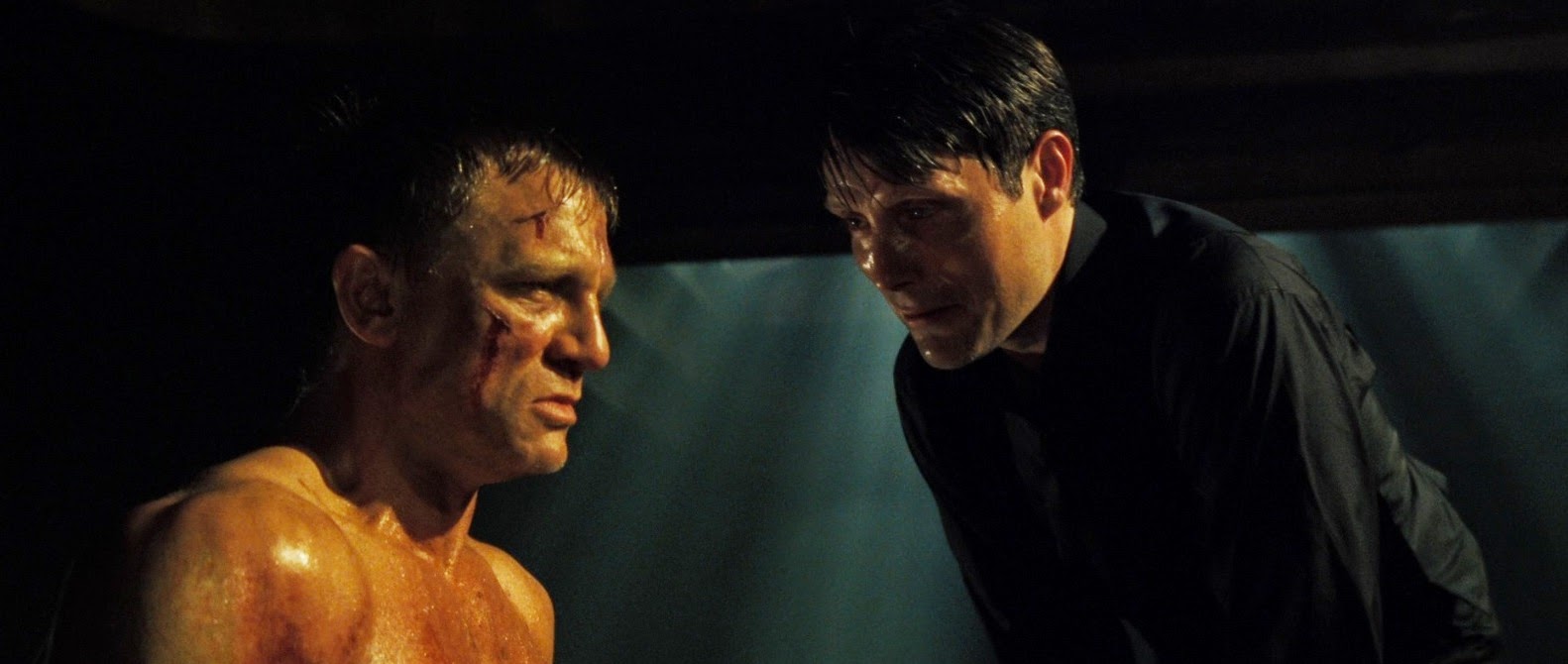
How much of this “pain” can the big publishers endure? Economics in a disruptive environment is merciless. Remember that scene in Casino Royale? (All the men do.) But also recall that Bond got out of it.
Barnes & Noble Barely Hanging On
The biggest bookstore chain has been closing stores and circling wagons. They’ve been emphasizing vibe (coffee house, browsing chairs) but not expanding shelf-space for books. Thus, says another article in PW:
Sales at Barnes & Noble fell 6.6% in the quarter ended July 30, compared to the same period last year. Revenue fell 6.1% in the company’s retail sector, and Nook revenue fell 24.5%. As a result of the lower-than-expected sales, B&N reported a net loss from continuing operations of $14.4 million in the period, its first quarter of 2017, compared to $7.8 million in the first period of fiscal 2016.
We all love bookstores. We hate to see physical shelf space shrink, and brick-and-mortar stores shuttered. A nice development is a rise in the local independent bookstore. Good! There are many cultural benefits to this uptick. However, the scale is small relative to a large chain, and breakout books by new authors cannot be driven on these tiny islands alone.
Meanwhile, Amazon Opens Another Physical Bookstore in San Diego
This to go along with their first such store in Seattle. And there are plans to open stores in Chicago and Portland.
According to industry observer Jane Friedman, here’s what you need to know about Amazon’s bookstores:
They have a relatively small square footage when compared to Barnes & Noble. The most recently opened store is 3,500 square feet, and the average Barnes & Noble is ten times that size, sometimes more.
All the books are face out, so the emphasis is on curation.
No prices are listed; customers have to check book prices on their phones.
On this last point, a marketing professor quoted in the San Diego Union-Tribune says the intent is to “drive consumers deeper into the Amazon system.” The books “act as conversation starters with staffers, who can then teach customers about the benefits of [Amazon] Prime membership.”
Amazon has proven over and over again to be ahead of the curve, as they say, even though the curve these days is as formidable as that tossed by Mr. Clayton Kershaw. Amazon keeps staying in the batter’s box making contact.
What Should Writers Do?
This is a blog for writers, so the key question for me is always what do I and my fellow scribes need to be about in these turbulent times?
My drumbeat has always been: First, write the best book you can every time out! That’s why we emphasize craft here at TKZ. There is no substitute for quality. And if you can up your production, so much the better.
Next, turn your ear to wisdom, and your heart toward understanding (Proverbs 2:2). You need to decide what path to pursue as a writer, and how to do so with eyes open and good business practices. Thus:
The reality is that acquisitions and mergers have hidden the steady loss of market share by the Big 5, market share gladly gobbled up by self-published authors. Coloring books, plays, and rejected rough drafts have also helped the last two years, but it’s hard to rely on these things going forward. And publishers have to stop believing surveys that say people prefer print books. Yeah, the people who don’t read much do.
If the Big 5 are going to continue to guide their businesses by personal editorial tastes, celebrity tomes, and the whims of those who read (but probably don’t finish) 2 – 3 books a year, they’re in trouble. The real market for publishers should be the voracious readers who consume several books a week.
***
For authors, this time of flux is critical. As bookshelves dwindle, and B&N appears on the verge of going the way of Border’s, now would be a terrible time to take a work of art that lasts forever and sign it over to any publisher for term of copyright. The new standard has to be 5 to 7 years of license, or self-publish, until things shake out.
One ongoing debate is about whether an indie author should go exclusive with Amazon in order to take advantage of promotional opportunities (such as limited free pricing), and the page payouts of Kindle Unlimited. I think this is a great option for new writers who need to get eyeballs on their pages so they can begin building a readership. See the substantial discussion and links in the section on Kindle Unlimited in Jane Friedman’s post, mentioned above.
Perspective #2 – Traditionally Publishing Writers
For those writers in the midst of––or are hoping to land––a contract with a Big 5 or other traditional publisher, it’s long past the time when you can leave all contract negotiations to someone else. You must be informed. You need to know what to accept, what to reject, and where to compromise. Which also means knowing what your leverage is. If you are being represented by an agent, this is a conversation to have with them. (Oh, are you looking for an agent? Well, maybe one is looking for you. Keep track of the new agent alerts and other info at Chuck Sambuchino’s Guide to Literary Agents blog.)
Mackay also says, “Make your decisions with your heart and what you’ll end up with is heart disease.” Don’t be so dreamy-eyed about being invited into the Forbidden City that you fail to make rational, long-term decisions.
Be a cork. But be a smart cork. Subscribe to the Publishing Trends blog, which posts links to the “Top 5 Publishing Articles/Blog Posts of the Week.” Also consider a paid subscription to “The Hot Sheet” the twice-monthly industry dispatch written by the aforementioned Jane Friedman and journalist Porter Anderson.
Because information is now the coin of the realm. Get the info, digest it, use it. But don’t ever let it freak you out. Remember:
What about you? Where do you see the publishing industry going? How are you, as a writer, dealing with constant change?