Add A Character, Up Your Word Count!

by James Scott Bell
@jamesscottbell

screen-shot-2016-10-13-at-7-27-53-amSo it’s NaNoWriMo time again. Every November writers all over the world clack away at their kekyboards to complete the first draft of a 50k word novel in one month.

Are you in?

How do you feel? Excited? Afraid? Wondering how you can possibly average 1667 words a day?

All of the above?

Good. Because writing should give you the stomach flutters. That’s how you know you’re engaged and connected. The really good stuff only bubbles up when you are writing out on a limb. You want to push yourself forward, reach for heights you haven’t reached before.

NaNoWriMo is that reaching up on steroids. It’s fun and always a great discipline, even if you come up short of the 50k mark.

Now, just as in the normal writing world there are those who like to wing it with practically no planning at all, and those who want to have at least a roadmap before starting the journey. The great thing about NaNo is it’s for any style of writer.

Today, I want to offer a couple of tips for that fearful moment when you’re 10 – 20k in and you have absolutely no idea what to write next.

One tip was in my recent post about asking what the bad guy’s doing. If you’re stuck in the middle, take half an hour to think about what your antagonist is up to off stage. Have him planning his next few moves. Then go back to your protagonist who will feel the permutations of those moves.

raymond-chandler

Raymond Chandler

The other tip I have for you when you get stuck is to do a variation of Raymond Chandler’s advice about bringing in a guy with a gun.

Yep, introduce a new character.

But what character? How do you choose?

Here are a couple of suggestions:

  1. Open up a dictionary at random. Find a noun. What kind of person pops into your head who you would associate with that noun?
  1. Spin the Writer Igniter. You can also use this cool app to choose a scene, a prop, or a situation.

Now you’ve got a new character ready to enter the fray. Before he or she does, ask yourself how this character will complicate the lead character’s life. Hopefully, you know enough about writing a novel that your Lead is facing a matter that feels like life and death–– physically or professionally or psychologically.

This new character will be the carrier of a subplot. A subplot needs to intersect with the main plot in some significant way––and a way that complicates matters for the Lead.

A new character like this is good for another 5k words at least

Bada-bing! You’ve added to your NaNo word count.

But what if you’re in the final act of your book? The hard part, where you have to figure out how to tie up the loose ends?

Add another character! A loose-ends tier-upper!

But won’t that seem out of the blue? A Deus ex machina?

Not if you go back to Act 1, or the first part of Act 2, and introduce the character there. You’re the writer, remember? You can go back in time in your own book!

This exercise works for NaNo, but also for any novel where you feel that long middle is starting to sag.

Introducing one complicating character gives you lots of plot possibilities. And I love plot possibilities.

So are you planning to NaNo this year? Have you got your idea yet? Or are you going to just wing it that first day?

****

knockoutlogolgAnd just in time for NaNoWriMo, my interactive coaching program, Knockout Novel, is $10 off through November…and you own it for life. You can use it to help you plot all your novels (as our recent bestselling guest attests).

First Page Critique: A Change of Hate

old-monk-useCritiqued by Elaine Viets

Congratulations to the anonymous author who sent in this first-page critique. Submitting your work for a critique is a brave but necessary step toward publication. My comments follow this first page:

A Change of Hate
Movement outside the translucent glass office door caught Madison’s eye. Intrigued by the orange patterns, she watched the flowing waves of color settle, almost motionless. The intense color altered the view through the smoked glass, catching the light from the hall, melding into shadows.
She slid her chair back from the desk and waited.
A slight, almost imperceptible knock, broke the silence. Who knocks on an office door? Madison thought. Watching as the rippling orange movement resumed and the door opened.
She had her answer.
Closing the door gently behind him, a saffron-robed Buddhist monk turned and smiled at the young woman.
The man moved to stand in front of the desk.
In her several years as a legal assistant, this was the first visit by a monk. They were not a common sight in a law office.
Clasping his hands together, he bowed. “Good morning.” His smile accentuated the many nooks and crannies of his face. “Please excuse this interruption. Is this where I might find Mr. Harrison Bennett?”
His quiet tone, hypnotic and calming.
Madison realized she was staring, held by the aura of the man.
“Good morning,” Madison said, regaining her composure. “This is Hawk’s, I mean Mr. Bennett’s office. Do you have an appointment?”
“Ah, of course. An appointment. No, I don’t, I’m afraid,” the man shook his head. “Please excuse me, Miss…?”
“King. Madison King. I am Mr. Bennett’s assistant.”
“I am pleased to meet you, Ms. King. I am sure Mr. Bennett is a busy man. I apologize for arriving unannounced. I find myself in a somewhat difficult situation. I was hoping Mr. Bennett could find the time to speak with me. I knew Mr. Bennett from, well, what seems like a lifetime ago. Perhaps if you told him Thich Quang Duc was here to see him, that might spark an interest. I can wait as long as it takes.” The man bowed again, then sat in one of the chairs, hands folded on his lap, waiting for an answer.
Reaching for the phone, she paged Hawk.
++++++++++++++++++++++++++++++++++++++++++++++++++++++++++++++++
The author has an intriguing setup – a mysterious stranger appears in a law office. This first page shows promise. I’d like to read the novel and find out who this monk is and why he wants to see Mr. Bennett. But the first page is a little too mysterious.
Who is Madison King? The legal assistant is nearly as shadowy as the figure of the monk. She’s described as “young,” but what does that mean? Is she 20, 25, 30? Some specifics could flesh out this woman, and there’s an opportunity in this sentence:
In her several years as a legal assistant, this was the first visit by a monk. They were not a common sight in a law office.
That could be changed to: In her five years as a legal assistant (or however old you want to make her).
What does Madison look like? Give us more details. And use her full name in the first line.
Where are we? Please don’t leave your readers strangers in a strange land. Once again, that sentence could easily give us some clues:
In her several years as a legal assistant, this was the first visit by a monk. They were not a common sight in a (insert city name here) law office.
Is the office used to offbeat clients? Or does this law office serve a more conventional clientele? And what kind of law does Mr. Bennett practice?
About that monk: This sentence says he’s older: His smile accentuated the many nooks and crannies of his face. His tone is “hypnotic and calming.” But give us more detail: Is he tall, short, fat, thin? Is his body bent with age, or is he lean and vigorous?
What time of year is it? What’s the weather? Is it cold outside? Is the radiator rattling? Is the air-conditioner thumping? We need all five senses.
The opening: Movement outside the translucent glass office door caught Madison’s eye. Intrigued by the orange patterns, she watched the flowing waves of color settle, almost motionless. The intense color altered the view through the smoked glass, catching the light from the hall, melding into shadows.
She slid her chair back from the desk and waited.
Think about cutting a little of that description of the colors through the smoked glass. It goes on a bit too long.
Let us know what Madison is feeling. She seems to be alone in an anteroom and someone odd is outside her door. Is she frightened? Does she have a buzzer she can press to alert Hawk that trouble might be approaching? Does she have a gun or pepper spray for protection? Is she trained in the military or has she taken defense classes and feels fearless? Believe me, I wouldn’t sit and wait for a weirdo to walk in the door. I’d have backup.
The office door: Madison is “intrigued” by the movement on the other side of the door. Does she use the office door to size up visitors? Do most visitors wear suits? A slight, almost imperceptible knock, broke the silence. Who knocks on an office door? Madison thought.
Lots of people, when the door is closed. You may want to drop that sentence.
Beware of too many sentence fragments:  Watching as the rippling orange movement resumed and the door opened. His quiet tone, hypnotic and calming. A few give your writing variety. Too many are annoying.

You’re off to an interesting start, Anonymous Author. Build on it and you’ll have a first-rate novel. Thanks for letting us see your first-page critique.
Readers, what’s your opinion?


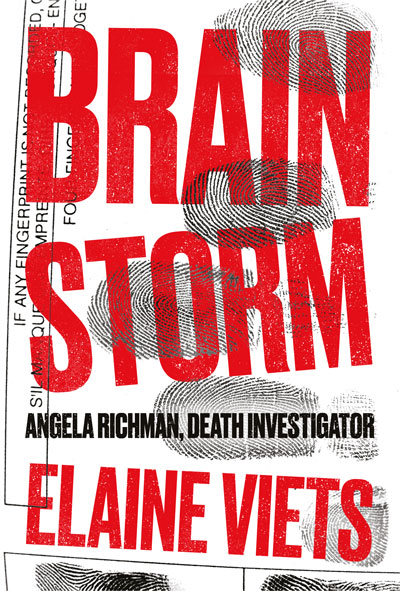
viets-brainstorm-smallDeath Investigator Angela Richman is misdiagnosed by Dr. Porter Gravois, a wealthy  insider. Angela has six strokes, brain surgury and a coma. She’s saved by brilliant outsider Dr. Jeb Travis Tritt. Gravois’s murdered and Tritt’s arrested. Drug-addled, hallucinating Angela fights to save the man who saved her. I lived this story. Buy Brain Storm in tradepaper, e-book and audio here: https://www.amazon.com/dp/1503936317/ref=cm_sw_r_tw_dp_x_B0S.xbE7SZ65V

About Research

By John Gilstrap

Let’s talk research.

I’ve never been a proponent of the old adage, write what you know.  In fact, I think it’s kind of silly.  It’s the rare crime writer who has witnessed a crime, let alone investigated one.  I’ve been fortunate in my own life to be able to look back on some exciting times in the fire service, and in the hazmat business, but those are not the exciting times I write about.  While I’ve been shot at, I’ve never been a position to shoot back.  Basically, I am the three-time survivor of poor marksmanship.  There is a point in every book where at least one of my characters is scared shitless, and those are by far my most autobiographical passages.

Yet I’m pleased to report that I frequently get emails from readers who live the lives I write about telling me that I got it right.  Those letters are always thrilling—way more thrilling than the emails I get about the typo on page 237.

It’s all in the research.  So let’s talk about that.  How can writers learn what we need to know to make our characters smart enough to do the things they do in the stories we write?  It doesn’t have to be as difficult or complicated as some might have you believe.

Research Hack One: Cheat.

The easiest way to pull off the illusion of knowledge is to eliminate the need for reality.  For example, despite have lived pretty much my whole life in Fairfax and Prince William Counties in Virginia, I choose to play out my Northern Virginia police work in Braddock County, Virginia, which does not exist.  That way, I can develop whatever standard operating procedures best serve the story, eliminating a huge research burden.  I don’t need a tour of the jail, I don’t need to know which firearms they carry, what the command structure is, or how shifts are organized.  Do the cops carry their shotguns propped up vertically, or under the front of the seat?  I can make it however I want it to be.  Because the place where the story takes place does not exist, neither do the police agencies, so I can by definition never get any of those details wrong.

Research Hack Two:  Stick to the coast you know.

More times than not, it’s the smaller details of research that screw an author up, and even if you make up cities and counties, you’re going to have to root the reader somewhere in the world.  I’m very comfortable making up locations in the South because I’ve lived here for so many decades.  It’s always the tell of a West Coast writer when a character looks for a “freeway” and gets on “the 495.”  In Virginia, we look for a “highway” and get on “Route 50” or just “50.”  Heading north or south on the Beltway says little unless we know whether you’re on the Inner Loop or the Outer Loop.  For natives, the airports are “National” or “Dulles”.  Maybe DCA for frequent travelers.  Never “Reagan.”  At least not for true locals.  Oh, and we “go to” meetings or “attend” them.  We do not “take” them.

Places like New York and L.A. (and every other famous city, I suppose) have traditions and colloquialisms that can get you in trouble.  So, stay close to home if you can.

Research Hack Three: Think like Willie Sutton

When the gangster Willie Sutton was asked why he robbed banks, he replied, “Because that’s where the money is.”

So, where are the repositories for the information you want to know?  Let’s say you’re writing about a cop.  To be sure, there are great established resources available to you, such as a citizen’s police academy, but remember that there you’ll be getting the view of the agency that the public affairs office wants you to see.  A better choice, in my opinion, would be to attend a conference like Writers Police Academy, where you can get to know the far more interesting underbelly of police agencies.  Exchange business cards and you’ve got contacts.

Can’t afford the money or time to fly to a conference?  Try chatting up a cop.  The less formal the circumstance, the better.  In my experience, everyone—Ev. Ry. One.—likes to share stories about what they do.  Find out where cops gather for drinks after work and go there.  Just hang out and listen.  Actually, that’s a strategy for just about any specialty.  Want to write about quilting? Go where quilters go and then shut up and listen.

When I’m in DC, one of my favorite places to go for soft research is Union Station, the AMTRAK/Metro terminal that is maybe 500 yards from the Capitol Building.  There are restaurants there.  If you park yourself near a couple of Millennials in suits, there’s a 90% chance that they’re oh-so-self-important staffers to a member of Congress, and the inevitable one-upsmanship is fascinating.  The best eavesdropping spot near the White House is the very cozy bar of the Hay Adams Hotel, though given the proximity to the presidential palace, the gossip there tends to be less juicy.

One bit of advice for eavesdroppers: Don’t take notes.  For the ruse to work, you’ve got to seem disinterested.

Research Hack Four: Get a superfast Internet connection and use it.

I understand that professors are loathe to accept Wikipedia as a legitimate source, and when the time comes for me to submit a dissertation, I’ll keep that in mind.  Meanwhile, I’ll remain devoted to it as a bottomless source of really good information.  Never once have I been disappointed when seeking the finer points of weaponry, for example.  I don’t get into the depths of gun porn in my books, but when arming my good guys and bad guys, it’s good to know how much the weapon weighs, how many rounds it holds and what it looks like.  Want to see the same weapon in action?  I guarantee that YouTube has at least two videos of somebody shooting something with it.

Google Earth and its Street View feature are a godsend.  The closing sequence of Final Target includes a chase down the rural streets of Yucatan.  Thanks to Google Earth, I was able to travel the entire route with a three dimensional view, all without the burden of having to go to a place where I’d rather not be.

Research Hack Five: Know the difference between a research trail and a rabbit hole.

We’ve all been there, I’m sure.  You start out looking for the year when the Ford Ranger went out of production, and an hour later, you’ve chased links to a sweet video of singing penguins.  Not that there’s anything wrong with that.

The secret to doing my kind of research is to abide by a certain self-imposed intellectual laziness. When I’m writing a scene and I come across a place where I realize there’s a hole in my knowledge, I drop out to the Interwebs, find out exactly what I need for that scene, and then back out.  Remember this: It’s not important that you know how to do all the things your characters do—or even to know everything they do.  Your job is simply to convince readers that the character knows enough to pull off the story they’re starring in.

Research Hack Six (and maybe it should be Number One): Respect your sources’ time.

As a weapons guy, I’m happy to help people choose a firearm for their characters, but it’s annoying when the discussion includes the difference between a pistol and a revolver.  That kind of basic information is available anywhere.  It is many times more fun to talk about important details with someone who has already done a reasonable amount of research.  Use your human resources for the esoteric details of verisimilitude, not for the 101 level of whatever you’re researching.

Forget Rewriting Your Book
Rewrite Your Attitude

manscreaming-atheists

“Freedom is what you do with what’s been done to you.” ― Jean-Paul Sartre

By PJ Parrish

I apologize ahead of time for being crabby today. Had two encounters with unpublished writers this month. This is kind of like a Yeti sighting but in some ways more terrifying. Because you never know if they’re going to turn on you.

I like helping folks get their manuscripts and careers off the ground. Maybe it’s partly because I set out in life to be a teacher but way back in 1972 when I got out of college, I couldn’t find a job. But mostly, it’s because I was an unpublished author once, rejected by every publisher in New York (yes, every single one) before someone took a chance on me. (Thank you John Scognamiglio at Kensington books). I know the heartbreak. I know how hard and utterly confusing this all is. But I also know — learned this through a couple decades experience publishing books now — how important having the right attitude is. In fact, attitude might be more important than talent in this game. So when I meet an unpublished writer with a bad attitude, I have learned not to waste my time or breath trying to help. Well, actually, this isn’t true.  I still haven’t really learned my lesson because it’s hard to know what kind of attitude you’re dealing with until you get knee-deep in their weeds and, as Jean-Paul says above, you don’t always know what’s been done to a person and how that will manifest itself in their attitude.

Back to the two writers. I had known both of them for a while and had even worked in the newspaper business with one for years (Shoot, he had even been my boss briefly).  I offered ahead of time to read the first 30 pages of their works in progress and give them my feedback. One lived nearby so we met for coffee. The second had moved away up to Pennsylvania but I told him we could talk via emails. Here’s the thing: I pretty much knew before I read their manuscripts which one was going to get published and which one wasn’t.  See if you can:

Unpublished writer A:

Wrote eight books.
Tried writing both romance and mysteries.
Has had all eight books rejected by editors.
Just finished a ninth book.
Queried 12 agents and got one to take her on.
Agent-submitted ninth book was rejected by five New York editors who all said book had promise but was too slow and lacked suspense.
Is still working on Book 9 trying to fix pacing problems.
Is reading books on how to write suspense.
Attended Killer Nashville over summer.
Is thinking she should submit the book to small presses instead of the biggies just to get her foot in the door.
Is working on a new idea and outline about a female PI series just in case an editor wants a series instead of a standalone.

Unpublished Writer B:

Finished one book.
Bought an established author’s critique at a writers conference charity auction. Established writer sent back critique of the first 50 pages with suggestions to improve book.
Didn’t change a thing.
Sent queries to agents. Was very offended by the “lack of personal tone” of the rejections.
Got an eager Florida-based agent to take on him on.
Didn’t change title after agent suggested it wasn’t very marketable.
Book was rejected after multiple submissions.
Didn’t change a thing.
Is looking for a “more connected” agent.
Self-published the book and sent a copy to the established author asking for a blurb. Finally started a new story.
Didn’t like my suggestion that he hone his story down to a single POV and make his plot linear, cutting the confusing flashbacks. Said the book “needed multiple POVs because of the story’s complexity demanded it” and that his book was “not really genre fiction but more literary, like Mystic River.”
Thinks there is a cabal in New York publishing designed to keep authors who have self-published from participating in the traditional system.
Has lots of ideas…

I think you get the idea. Too bad unpub B never will. Yes, you can still write the book you want to and get it published. No, you don’t have to sell out. But you have to be smart.

Being smart means learning your craft and walking before you run. (I’m guessing Unpub B never read the five Pat Kenzie Angie Gennaro books Dennis Lehane published BEFORE Mystic River…even though Mystic River was one of the first manuscripts Lehane finished.).

It means listening to good advice when you are lucky enough to get it.

It means not taking every rejection personally. An agent or editor sends out a hundred SASEs a week and when they say no they aren’t rejecting you. They are rejecting your work. There is a difference.

It means writing maybe ten books before you get it right.

It means not automatically expecting the “big” writers to reach down and pull you up. If it happens, consider yourself blessed and give back when it’s your turn. But don’t whine if it doesn’t happen.

It means increasing your chances by making your work as marketable as you can without being false to the writer you are.

It means not not looking for short cuts.

It means not giving up.

It means having the right attitude.

{{{Sound of me taking in a big inhale and bigger exhale}}}}

Wow. I hope that didn’t sound mean. Thank you, dear friends, for listening to me vent.

_____________________________________________________

Postscript: As I was finishing this Sunday night, I got an email from Unpublished Writer A. She got a nice response back from a small press asking to see a full manuscript. I will keep you posted. I think she’d going to make it.

Character and Conflict

Now that they are in middle school (OMG!) my boys have begun analyzing books in their language arts classes in terms of the classic three-act structure. As part of this they have been identifying and discussing the nature of character and conflict. Now, we here at TKZ have often talked about the need for characters to be placed in conflict to give a book both momentum and purpose. In the mystery and thriller genre usually the nature of the conflict is critical to the plot (without conflict there’s no rising tension or action). Nonetheless, it’s been interesting to observe my own kids analyzing their class book in terms of the nature of the character conflict involved. They have to categorize this conflict in terms of:

  • Character vs. character
  • Character vs. nature
  • Character vs. society/community
  • Character vs. self

In many books a degree of conflict may exist on all of these levels, but I realized, while discussing these elements with my boys, that it would be a useful exercise for me to undertake on my own WIPs – mainly because, if I couldn’t nail down the conflict in my own draft yet, perhaps I didn’t really have as good handle on my character or the plot as I thought.

Even though I am an outliner, I rarely I go through the exercise of analyzing my own book in terms of the character conflict involved – I just assume I know what it is as I piece all the elements together. It’s only when something goes wrong, that I take a step back and try to analyze where things may have gone adrift. Sometimes the issue/problem is that I haven’t articulated in my own mind the true nature of the character conflict involved. Luckily, taking that step back means I can usually resolve the problem:) However, I do think when beginning any new project it doesn’t hurt to ask the question in the first place.

So TKZers, what about you? Do you take the time to identify and analyze your character conflict while your writing or do you go with the flow? How would you characterize the  conflict for your main character in your current WIP?

What Is Your Bad Guy Doing?

by James Scott Bell
@jamesscottbell

stephen-j-cannell

Stephen J. Cannell

Some years ago I had the chance to meet and listen to the late Stephen J. Cannell. Cannell was, of course, the television wunderkind who created such shows as The Rockford Files, Baretta, The A-Team, 21 Jump Street, and others. He wrote at least 450 filmed television scripts. The guy had a Midas typewriter.

In the 90s he started writing crime fiction, then a series of books featuring LAPD detective Shane Scully.

So Cannell was on this panel with Robert Crais and T. Jefferson Parker. Someone asked him a writing question, and Cannell said something to the effect that he always asks, “What’s the bad guy doing?”

Even when the bad guy wasn’t “onstage,” Cannell would be pondering: “What’s the bad guy doing?”

It’s a great question! We writers seldom give the offstage players any mind. I’ve written before of the power of the “shadow story.” What’s the bad guy doing? is one of the key questions to ask in that regard.

Note: you don’t have to be writing about a true “bad guy” to ask this question. It applies to any antagonist.

Let’s say you were writing the novel that became the movie The Fugitive, starring Harrison Ford and Tommy Lee Jones (in reality the movie was based on the hit 1960s TV series starring David Janssen, created by Roy Huggins). In the movie Jones plays U.S. Marshal Sam Gerard. He’s not a bad guy. He is in fact a good guy who happens to be tasked with nabbing Dr. Richard Kimble and sending him back to Death Row.

Let us further suppose that you were writing the novel in First Person or Limited Third Person POV (where you stay with one character’s perspective throughout). You would be in Kimble’s head as he comes home to confront the one-armed man who murdered his wife. Then would come the trial and Kimble’s wrongful conviction.

Next, the prison bus mishap, the train crash, the escape! Then Kimble struggles through the night with his wound and his prison uniform. And you’d come to the next morning when he sneaks into the rural hospital to dress his wound, get some civvies, shave, and get out of there without being noticed.

All very tense. Good job, novelist!

Finally Kimble gets out of the hospital, but not before he is recognized by a wounded prison guard from the bus. To keep the guy quiet Kimble pushes an oxygen mask on his face. And as the paramedics rush the guard inside, Kimble tells them to let the attending doctor know the guy has a puncture in his upper gastric area.

Which causes one of them to ask, “How the hell does he know by looking at him?”

Kimble then hops in the ambulance and takes off.

Nice scene, there, writer! The opening act has been awesome!

But then you come to your project the next day and can’t figure out what to write next. If you’re a pure pantser, of course, you can write about anything. So you do a scene where Kimble falls into a giant hole that spits takes him back in time to the Battle of Little Big Horn. There he tries to save as many wounded as possible until…

Oh bollix, you think. I wish I’d done some outlining! And I wish I knew why I keep using the word bollix!

Now what?

Ask the Cannell question! “Hmm, what’s my antagonist doing while Kimble is at the hospital?”

the-fugitive-1993-film-images-5649b3f8-00a7-4539-b02d-08b1370110bThe nice thing about the movie is we get to see it. We cut back to Gerard at his command post, making plans. We see what kind of team and resources he has assembled.

So back to the hospital. You’re thinking about what Sam Gerard is doing. You imagine him at the crash site, with his team gathered around him. Then one of his people runs up and says, “Hey, we just got a report. Kimble stole an ambulance!” What would Gerard do next?

Order a chopper! Let’s move!

Which gives you the idea for the next scene in your novel. Kimble looks up and sees he’s being chased from the air!

Way back when I was first trying to learn this craft of ours, and writing copious notes on what I learned, I jotted this down: Most of the craft of fiction is knowing what questions to ask at what time.

 I still think that’s a pretty good insight. And What’s the bad guy doing? is a darn good question.

Do you know what yours is doing?

One Morning at Bouchercon

handcuffs

I spoke with author James O. Born a few weeks before New Orleans Bouchercon 2016. Jim is the real deal. He is on the cusp of retirement from the Florida Department of Law Enforcement and previously worked with DEA. He was also Elmore Leonard’s go-to guy on police procedure for over two decades. Jim has written a number of classic detective novels and next year will be moving into an extremely high profile writing slot. As if that isn’t enough, he annually presents an excellent panel on weaponry at Bouchercon each year. Because I was driving to New Orleans and he was flying, Jim asked if I would mind bringing some firearms with me. Jim assured me that he had cleared the presence of the weapons with hotel security and that I would be able to bring the weapons into the host hotel without difficulty.

On the morning in question I drove to the host hotel (I was staying elsewhere) with a square box briefcase containing three handguns and a shotgun bag containing a 12 gauge shotgun. All of the firearms were unloaded. I also had my loaded concealed carry weapon of choice (and my concealed carry permit) in my pocket.The briefcase with the handguns looked like any other briefcase (something like this Filson Briefcase); the shotgun bag with the shotgun inside looked like…well, a shotgun bag with a shotgun inside. I unloaded the car and turned it over to the hotel valet, who asked me conversationally if I was going to do any hunting, to which I replied that I was assisting with a panel at the writers’ convention. I then walked into the lobby, exchanged greetings with the gentlemen at the Bell Captains’ station, then proceeded up the escalator.

police-officer

Courtesy cliparts.co

I had reached the second floor and was walking toward the third floor escalator when I was approached at speed and with purpose by an unarmed security guard who asked me 1) where was I going and 2) what was I doing. I stopped, politely told him, and also mentioned that my presence had been cleared with the head of security. The security guard, civil enough but all business, told me 1) that he hadn’t been advised and 2) to put everything down. I complied; he asked me what I had in the briefcase and I told him, and also advised him that I had a concealed carry permit and a loaded revolver in my pocket. He told me to step back from the briefcase and gun bag, which I did, and then ordered me to take the revolver out of my pocket and unload it. I stepped back, and said politely, “Sir, I will comply with your request, but please note that I am in full compliance with the laws of the state of Louisiana in carrying this. I will happily show you my concealed carry permit as well.” He declined to see the permit, telling me that I had no right to bring a loaded firearm into the hotel (wrong, but I did not press the point) repeating again his order to me to remove the revolver and unload it. I offered to let him remove the gun from my pocket himself, which he declined to do. The entire time that we were having this exchange I kept my voice down, my hands away from my body (except while removing the revolver from my pocket), and my demeanor cooperative and polite. After presenting my revolver, unloading it, and setting it down (he had me keep the bullets) I suggested that we call Jim and get things straightened out. I did just that; Jim came running and after a polite exchange with the guard, the head of security was called. That gentleman confirmed with the guard that all was well, and after a bit of back and forth (which isn’t germane to our purpose today) we all went about our business. Jim’s program was terrific, as always: entertaining, funny, and extremely informative.

monopoly

Courtesy cliparts.co

Why all of this? My first thought upon seeing the guard approaching was that I hoped this wasn’t going to turn into a “thing.” By “thing,” I mean the summoning of a member of the New Orleans Police Department. The department is understaffed, underpaid, and over-regulated; their default response to a lot of situations is, alas, take the subject (which, in this case, would be me) to Orleans Parish Prison. I did not want to go to Orleans Parish Prison (known locally as “OPP”). I could see myself being summarily frog-marched down a long corridor where I would be quickly lost in the bowels of the criminal justice system, undoubtedly acquiring at least a couple of sets of unwanted and untoward stretch marks before things got sorted out (not to mention losing my guns). I could have given the guard an argument about my rights, the limits to his authority, and all of that good stuff, while refusing to comply at every step along the way. No; polite and cooperative, that’s me.

Now. The guard made a bunch of mistakes in dealing with me, and they didn’t have to do with failing to recognize me (“Hey, weren’t you in LA-308?”) or stopping me to begin with. With regard to the latter, he didn’t get the memo about the presentation; stuff happens. If he detected a potential problem he should be stopping me, and I have no business being unhappy, under this fact pattern. But. There’s a right way to go about this:

– A subject is either a) a threat; b) a potential threat; or c) not a threat. If c), there is no reason to be stopping them. The guard obviously regarded me as b), maybe a). So why did he approach me while alone and unarmed? He should have had at least two people with him, so that I was semi-surrounded from the beginning, one in front of me and one on each side. Nothing threatening; just folks have a chat. A couple of the bell captains would have been fine.

– He should have taken me up on my offer to let him remove the weapon himself. That I was a) polite, b) cooperative, and c) older is no reason to assume that I’m not a threat. See the paragraph above. What if I was giving him a load of buena sierra, stopped cooperating, and suddenly pulled the gun out?

– He should have searched me further, and then moved me against a wall, away from the guns, until everything was sorted out. Instead, he let me stand away from, but within arms’ reach of, my guns, and assumed that since I had told him about my concealed carry revolver that I had nothing else untoward in my possession. I did. I was wearing a utility hack knife on a necklace sheath. On those rare instances where I have been stopped and frisked — not because of what I was doing, but because of who I was with — I have been amazed that law enforcement (or whoever) always assumes that if they find two weapons you don’t have a third on you. Some folks do, and they are not all harmless little guys such as myself, full of well-mannered intent and good cheer.

This all could have gone badly. On my end, it’s an example of how being polite, civil, and reasonable can go a long way. On the guard’s end, it’s a cautionary tale. For you, the foregoing is offered as a teaching lesson, not only for your written vignettes but also for your real world dealings. I hope it helps with both. Has anyone else had an experience like this?


Writing Backwards: Sometimes It Works (Guest: Laura Benedict)

Jordan Dane

@JordanDane
 

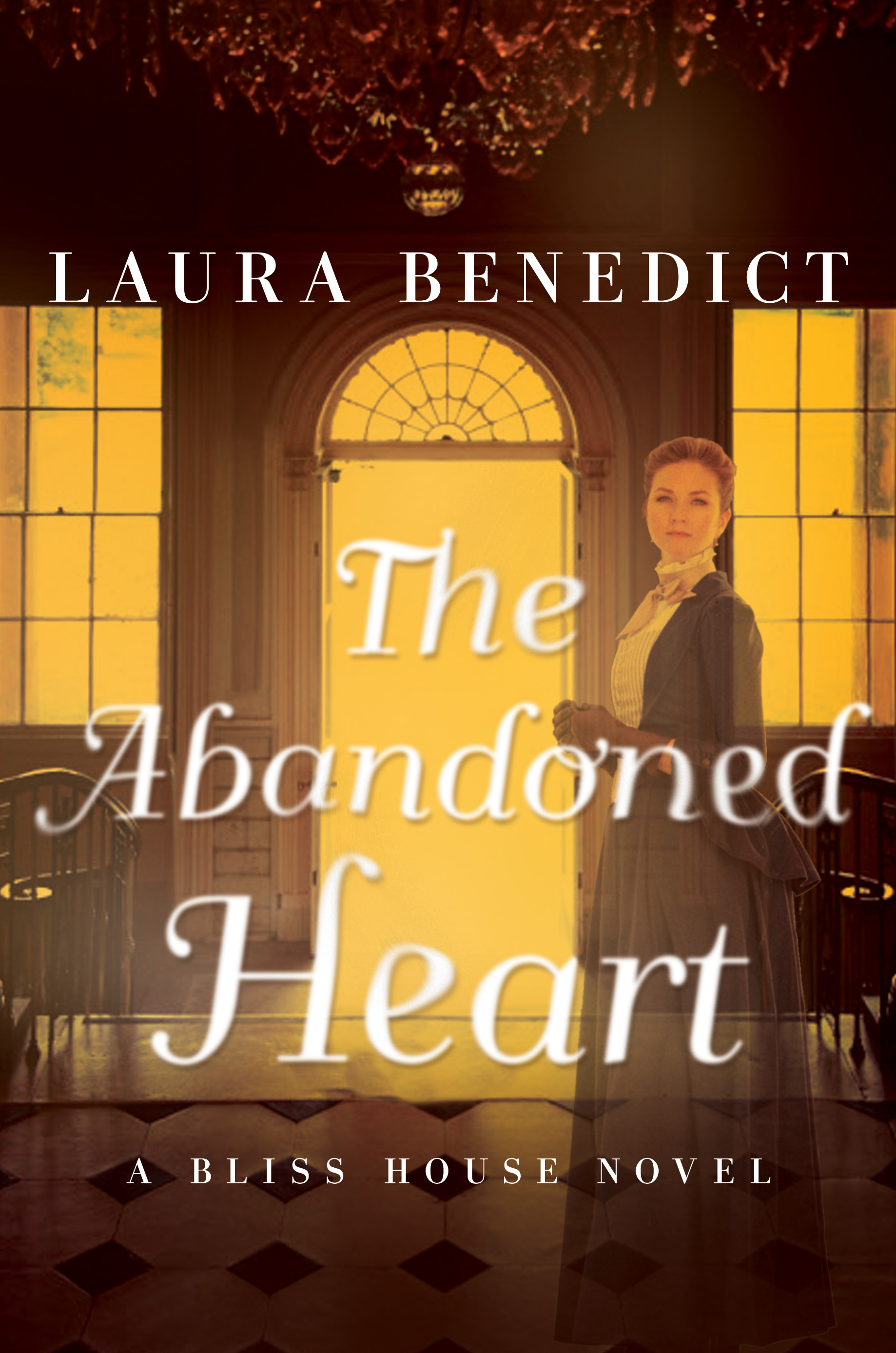
abandoned-heart-_rev-02

Before Laura Benedict joined TKZ as a new member recently, I had lined her up for a guest spot when her new book would be launched. I hope you’ll indulge us in allowing me to keep my promise in featuring Laura and her work. Take it away, Laura.

***

When I decided that I wanted to write a series of suspense novels, I didn’t do what many writers do: plunge a character into earth-shattering change, see how they respond, rebuild their world, have a successful conclusion to the story (meaning they survive), and move on to the next book. No, I wrote a different sort of series.

My vision of the Bliss House novels came to me all at once: five novels set in the life of a grand house that was built in Virginia in 1878 by a Long Island carpetbagger named Randolph Bliss. I knew Randolph Bliss to be an evil sumbitch, but he couldn’t be my series protagonist because of the extended time period, 1876-2014,—though since the supernatural is involved, I guess he technically could have been the protagonist. But the stories that came to me weren’t primarily about Randolph, or any other human. Their common actor, the character that drives the stories, stirs up and engages in conflict, and even changes over the years, is Bliss House itself.

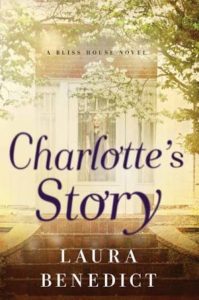
I wrote three Bliss House novels: Bliss House was published in 2014, Charlotte’s Story in 2015, and The Abandoned Heart comes out next week, on October 11th.

Rather than start the saga of Bliss House with the house’s initial construction, I wrote the last book, first. Bliss House is a contemporary novel, set around 2014. By starting at the end, I was able to jumpstart the series with a story in which my protagonist was at its most powerful. (To be clear, though, the series is actually more of a collection of novels than a series. They all work as standalones.)

Oh, did I mention that Bliss House is haunted?

I had long wanted to write a haunted house novel. My favorite gothics—Jane Eyre and Rebecca—are set in houses that heavily influence the novels’ action. And then there are the novels with actively haunted houses: The Haunting of Hill House, The Shining, Hell House, The Turn of the Screw. The Haunting of Hill House, and The Turn of the Screw appeal to me because it’s possible to imagine that their hauntings are psychological, rather than organic. One of the premises of the Bliss House novels is that a house can be imprinted with the personalities and acts of its inhabitants. Thus, by 2014, Bliss House is replete with acts of both evil and goodness. But imprinting can work both ways: a story’s characters can be heavily influenced and even changed—physically and emotionally—by a house’s personality.

Think about your own experience with houses or even other types of buildings. There are buildings that make us feel good, and energized. And then there are the places that seem to sap our energy—a house, a school, a garage, a basement—places where we’ve experienced trauma, or that signal that something is just not right. Sometimes it has to do with unsettling angles and corners. Architecture can be claustrophobic or unfriendly. Every building has a distinct personality.

Years ago I saw a film called The Enchanted Cottage and was mesmerized by its plot: a disfigured WWII pilot played by Robert Young marries a homely young woman played by Dorothy McGuire. They settle in a charming honeymoon cottage in the English countryside, and soon after their marriage, they begin to see each other differently. Whole and attractive. They’re certain that the cottage has worked some magic on them, and they’re eager to surprise their loved ones with the happy results. Of course, it’s revealed to them that they have not physically changed, but now simply see each other through the eyes of love. It’s an unabashedly romantic story, originally written as a play produced just after WWI. I am no eager fan of romantic stories, but I am fond of fairy tales with hints of darkness. Perhaps I’m the only one who saw the possibilities of darkness in this story, of the house that might have manipulated these two people for its own reasons. Was it to trick them? To expose their deepest fears and wishes?

But back to the writing backwards thing. I knew from the moment I wrote the first lines in Chapter One of Bliss House that whatever was manipulating the house’s inhabitants was threaded through the very ground on which it was built:

“The blindfold kept Allison from seeing, but the chilly air around her smelled sweet and damp. There were flowers nearby—roses, she guessed—and the drip drip drip of water. They might be underground, even in a cave.
How thrilling!”

I knew Randolph Bliss and his two (consecutive) wives were at the heart of the story that began nearly a century and a half earlier. There are elements in Bliss House whose significance isn’t seen until they’re introduced in The Abandoned Heart. And there are many things in The Abandoned Heart that I couldn’t see clearly until I had written Charlotte’s Story, which takes place in the 1950s.

I remember thinking that it might be somewhat easier to write the Bliss House novels starting with the last one, rather than starting in 1878. It was not. When a book is written and published, the story is pretty much set in stone. Family lineage of the characters is already chosen and established, including numbers of siblings, and physical traits. The geography is set. The house’s reputation as a dangerous place has to be carefully constructed in order to make it reflect the first (last) book.

The one constant had to be the house, even though its appearance and bearing changes with each book. When Rainey Bliss Adams buys it in 2014, it’s in considerable disrepair because its incarnation as an inn that was the site of a brutal murder meant it was vacant for several years. Rainey makes it the showplace it was when it was first built. In the mid 1950s, in Charlotte’s Story, Bliss House bears the gothic heaviness of a house that’s seen three generations of devastating secrets. But Bliss House truly shines in The Abandoned Heart. It smells of new wood, and new gardens. It’s filled with paintings and exquisite rugs and European furniture. It is surrounded by newly-planted orchards and centuries-old woodlands. Most of its secrets are unborn, and the ones extant are fresh, and perhaps not yet dangerous.

If you read the Bliss House books, feel free to start with the last. Or the first. Or even the middle one. I don’t mind.

To move back in time the way I did seems a little crazy to me now. But the only way to be true to a story is to tell it the way it presents itself. Sometimes stories aren’t logical or easy. Here, backwards isn’t a gimmick. It’s just the way the story happened. I was lucky this time around to have a publisher who didn’t mind my doing something a bit unconventional.

I haven’t decided if The Abandoned Heart is the last you’ll hear of Bliss House. A hundred-plus year-old house has a lot of stories living inside it, and clamoring to be told. Ghosts are…noisy.

FOR DISCUSSION:

1.) Have you ever tried writing a series backwards? Or did you find new inspiration for a series by discovering a great backstory to write about?

2.) Do you believe in ghosts? Have you ever had experiences with the dead?

The Abandoned Heart is available for pre-order HERE, and will be in stores on Tuesday, October 11th. Laura will be touring throughout October and early November in Missouri, Southern Illinois, Kentucky, Ohio, and Virginia. Check her list of appearances HERE.

Charlotte’s Story, the second Bliss House Novel is out now.
charlottesstoryonline

lbenedictcrop415-3

Website: http://www.laurabenedict.com/

Instagram https://www.instagram.com/laura_benedict/

Twitter: https://twitter.com/laurabenedict

Facebook: https://www.facebook.com/AuthorLauraBenedict/