Taming POV: Think Camera Placement

By John Gilstrap

Taming point of view is a critical step toward taming a story.

A couple of times a year, I teach daylong seminars on writing suspense fiction.  In one of my favorite writing exercises, I prompt students to picture the image of a 14-year-old boy stepping out the back door of a bar at 11:00 pm and lighting a cigarette.  Then we spitball ideas as to the kid’s motivation for being there and doing that.  It turns out that there are any number of reasons why a kid would be lighting a cigarette behind a bar, not the least of which is that he needs a cigarette.  Sometimes a cigarette is just a cigarette, right?

To develop the exercise even further, though, for illustrative purposes, I tell students to assume that the kid is signaling another person.  It could be that the coast is clear, or that he has the ransom or that the bartender is dead.  Or something else.  Just for grins and giggles, let’s say that he’s signaling that he’s successfully robbed the place, and that the accomplice can move on to the next step.

That scene could be described from any number of points of view:

  1. The kid’s POV;
  2. The POV of the guy who’s awaiting the signal;
  3. The POV of a passerby; or
  4. A combination of all of the above.

[Note to JSB: Those semicolons are for you, my friend, because I know how much you love them. :-)]

Once the point of view has been selected, everything else in the scene should flow through the POV character’s worldview.  Remember, we’re showing, not telling.

From the kid’s point of view, does the smoke burn his throat and chest and make him cough, or does it calm him?  Each of those choices develops the character differently.  Are his hands shaking or are they steady?  Is he frightened, excited, happy or sad?  What does he see through the darkness?  What does he hear?

From the accomplice/bad guy’s point of view, does he think of the kid in admiring terms or in deprecating ones?  There’s a world of difference between,

That’s it, he thought. Tommy came through.  Maybe this nightmare was about to end, and

It’s about time, he thought.  The kid took his sweet damn time, but he finally grew enough smarts to do what was good for him.

What would a passerby think of this scene?  Appalled, maybe, that a kid was at a bar to begin with, not to mention being out this late and smoking a cigarette.  Suppose the passerby is his teacher.  Is she disgusted to see him, or is she terrified that he might see her?

The students in my class make their own choices on motivation and POV and then I give them five minutes to write a scene.  I am always amazed by how many words they can commit to paper in so short a time.  Those who are willing to share what they’ve written are given an opportunity to read aloud.  In one particularly memorable example, one of the students—a woman of a certain age—assumed the point of view of the kid’s teacher, and the essay went into detail of just how much she wanted him naked in bed with her.  And it was well written.  When she was done, it was as if she’d drawn a vacuum on the room.  Silence.  Yes, her piece made everyone squirm, but I give her credit for originality.

Think camera placement.

In my thriller series, Jonathan Grave is a badass weapons expert and saver of lives.  Because he is the star of most of the scenes in which he appears, sentences like these work just fine:

Of the five bad guys who swarmed through the gate, three carried AR15 clones.  That was plenty enough firepower to ruin his day, but Jonathan was far more concerned by the two goons on the flanks who toted M14s.  When the balloon went up, they needed to die first.

The gun porn is important to a lot of my readers, but it will be glossed over by others.  Either way, every reader will understand that Jonathan is keenly aware of his surroundings.  At the very least, readers will understand that two guys’ rifles are more powerful than the other three.

Now let’s take that same action and write it from the point of view of a ten-year-old hostage who’s watching from a window.

Billy knew that he was supposed to be hiding, but he couldn’t help himself.  Leaning in from the side, and pushing the drapes away just a little, he could see the expanse of the yard while exposing only one eye.  His heartrate tripled.  There were five of them.  They all carried rifles—long, black, ugly things—and they all looked angry.

Billy’s POV has nothing to do with weaponry or tactics, and everything to do with his emotions.  In either point of view, the reader would still know that there were five bad guys and that they were all well-armed.

The same scene written from the POV of the approaching bad guys might go something like this:

Parker would have sold his soul for a little cover.  He tried to keep his team separated and therefore make a more complicated target, but there’s something about human nature that makes people want to stay close when they’re scared.  And if these boys weren’t scared now, then they just didn’t understand the peril they were in.  For the fifth time in the last minute, Parker ran his right thumb along his M4’s selector switch to make sure that it was still set to full-auto.

 Either of these approaches would advance the story toward the same point, but by choosing the appropriate point of view, you choose which character will be more developed in the reader’s mind.  Jonathan can’t know how frightened Billy is, nor can he know about Parker’s frustration with his team.  Billy would be too scared to worry about anyone other than himself.  For maximum impact in a scene like this, I would likely break the action into parts and tell the story from all points of view, with a physical space break between POV changes.

The approach that never works is one that goes something like this: Parker’s team worried that they were wandering into a trap . . .  Teams don’t think in unison.  Individuals within the team think unique thoughts which may or may not be similar to others’ but there’d be no way for them to know without talking about it.  That’s where dialogue comes in.

And I’ll talk about that in a couple of weeks.


When Literature Got Its Groove On, In The Desert

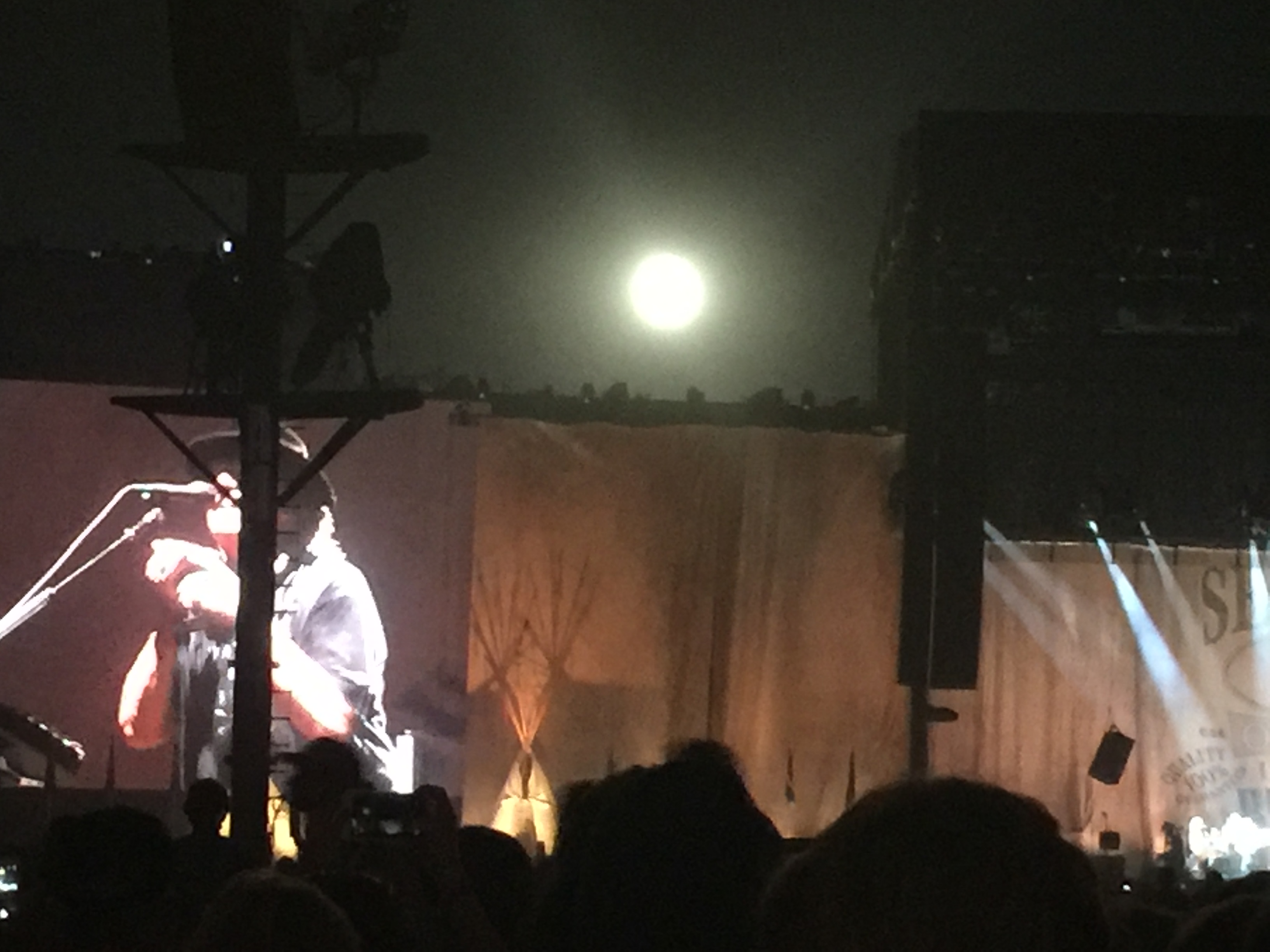
It’s not every night you get to see a Nobel Laureate rock the stage in the middle of the California desert. But I was lucky enough to be in the audience of 75,000 last week  when Bob Dylan, who had just won the Nobel Prize for Literature, performed at Desert Trip II.

https://youtu.be/QqDzOTXZGOk

Dylan, ever the iconoclast, didn’t make reference to his new award while he was on stage–in fact, he’s been so quiet about the whole thing that the Swedish Academy has “given up knockin’ on Dylan’s door” to find out whether he’ll attend the award ceremonies in Stockholm later this year.

My favorite moment of the three-day music festival took place the next night, when Neil

imageYoung sang “Harvest Moon” just as a full moon rose over the stage.

Paul McCartney, the Rolling Stones, The Who, and several other iconic bands and singers rounded out the three day festival in Indio, California.

I was interested to learn that there was some nattering nabobing about the fact that Dylan, a song man, is being given the world’s highest prize in literature. I’m not even a huge music aficionado (I listened to Karen Carpenter and Neil Diamond when I was a young, not the “cool” bands, I admit), but I love the fact that Dylan won the award. What do you think of the fact that the Nobel Prize for Literature went to a song man this year, and to Dylan in particular? Was this a good call by the Swedish Academy?


First Page Critique – Tree of Heaven

Happy Monday!

Today we’re reviewing the first page of a book entitled ‘Tree of Heaven’. My comments follow.

Tree of Heaven

18 September 1833, Zoar, Ohio

“I’ll get what’s coming to me, I will!”

The bellow of a man’s voice punctured the late morning’s peace and brought Adelaide Bechtmann to a standstill outside Josef’s log cabin.

She ducked under the low-hanging branches of an apple tree, snagging a bonnet tie on a leafy twig. She jerked it loose. What should she do? Call out? Had they seen her? Heard her?

A glance through the open door of the cabin allayed her concern. Engrossed in their argument, the men saw none but each other.

The Separatists’ leader faced the stranger across the table that centered the one-room cabin. His face flushed, and his fists tightened on the edge of a chair. “I owe you nothing, nothing.”

“You signed her indenture.”

What? Indenture? What did he mean?

Adelaide studied the man stylishly dressed in gray and white striped trousers, checkered waistcoat, and long-tailed black coat. Whatever was he doing in Zoar? Plain-dressed and plain spoken, the Separatists seldom saw such finery, though Adelaide had encountered men so adorned in Bolivar when she’d gone to the city for a birthing.

The man shook a paper in Josef’s face. “You owe me for—”

“She died, you fool.” Josef batted the paper away. “You can’t collect from a dead woman.”

Dead woman? Who’s dead? And what’s an indenture?

The man’s chin jutted. “You signed for her.”

“I signed for them all. I was, am, their leader. And I settled all my debts before I left Philadelphia.”

The stranger waved toward the outdoors, and Adelaide scooted back against the tree. “All this land, this industry, this prosperity that you’ve built on the backs of these people. You’ve the money to pay.”

They did indeed. Pride rushed through Adelaide. Only ten years old when they’d arrived, she’d watched her fellow Separatists work hard to carve their village out of the wilderness, helping as she could, totting baskets, buckets, and boxes to waiting workers. By their efforts, tenacity, and, Josef would say, the grace of God, they’d prospered in this new land.

My comments

Overall, this first page successfully sets a scene of a conflict in what I assume is a straightforward historical fiction novel (at least on the first page I don’t see the signs of either a mystery or thriller to come). I liked the way that Adelaide stumbles upon the argument and how we get, quickly and easily, a sense of the conflict to come. The speech and inner voice sounds authentic for the time period and I like the immediacy of the situation. My main quibbles really come down to two main areas: Historical grounding and voice.

Historical grounding

I admit I am not well versed in American history, so I did look up Zoar and Bolivar in Ohio and the early 19th century German separatists who settled there. However, the key to any historical novel is that a reader shouldn’t have to have (1) any prior understanding of the historical period; or (2) have to look up the historical references to understand what is going on. I do think, even on this very first page, we need more grounding in the historical period. One option, if the author doesn’t want to interrupt the flow of the first page, is to have a brief summary in either a prologue (yes, the dreaded prologue) or another hint – say a newspaper or historical excerpt that gives the reader a quick ‘heads up’ before the story begins. For example, if I’d had a quote from one of the German separatist leaders about their reasons for coming to Ohio, their journey, and settlement then I would have been able to place everything on the first page in better context (rather than having to do an internet search to see who the separatists were and why they had come to America).

I do like the paragraph about her noticing the stranger’s clothes – especially the old-fashioned use of words. This definitely felt authentic. Th page could have done with more description to be able to visualize the setting and the characters. In historical fiction, you have a little more leeway to introduce exposition like this early on as it helps ground a reader in the time period (particularly for readers who have no real sense of what the 1830s would have been like in America). More sensory information would have been great to really make a reader feel like they were there (the smell of smoke from the fire, maybe cooking (?), the stranger’s cologne or other elements to make us feel we are right there with Adelaide looking on at the scene).

That being said, I liked that we didn’t get a huge historical data dump, and that the author led with action and character interaction in this first page. This, however, leads to my second comment, which is a question of voice.

Voice

In this first page we don’t really get a strong sense of voice from Adelaide yet. Her inner questions suggest someone young – maybe a teenager or young adult – and yet we aren’t entirely sure why she seems to have no idea what indenture meant. Again, not being an expert on American history, I don’t have a strong handle on this time period, but based on what I have read it sounds like indentured servitude was a common practice given the need for labor at the time. So my question would be, why would she not know the word? Also when Josef speaks of the woman being dead I would assume in a small knit community Adelaide might be able to make some guess as to who the dead woman might be – rather than thinking ‘what dead woman’, I would expect her to think ‘did he mean X?’ or perhaps she knows Josef is lying…again, that isn’t clear on this first page.

Voice is critical to any first page – it’s what sets a book apart and what draws a reader in from the start – so my key recommendation is to make Adelaide’s voice stronger and unique. If she is a young adult then make sure the reader knows her age and understands her confusion. At the moment she sounds hesitant (doesn’t want them to know she’s there) and naive. This is fine but sometimes a stronger, more interesting voice can intrigue a reader. I, for one, wanted two girls to be there – one (Adeliade) who was quite prepared to go striding in there and demand to know what was happening and the other a girl holding her back (representing the more historically ‘appropriate’ type of young woman). At the moment there’s nothing about Adelaide yet that makes me want to keep reading her story (and because it is her POV as a reader I’m assuming it is her story).

Overall, I think this first page had a lot of appealing elements. It sounds like an intriguing time and place for a novel and I would love to read more about the separatists’ experience in America. With some fine tuning I think this first page could start a compelling historical novel – with the focus being on historical grounding and strength of voice.

So TKZers what do you think? What constructive comments would you give our author?


How Long Before Robots Get Into Self-Publishing?

by James Scott Bell
@jamesscottbell

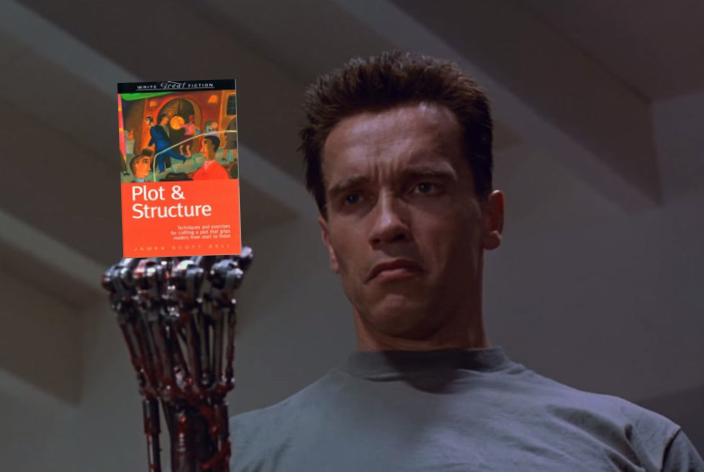
terminator-reads-plot-structure

So you thought The Terminator was just science fiction, didn’t you?

You didn’t really think that a cybernetic organism—living tissue over metal endoskeleton—with an Austrian accent could ever really come to town seeking to kill the mother of the future leader of the human resistance force before he’s conceived … right?

Well think again, Bunkie. As soon as time travel gets ironed out, we’ll have those visitors soon enough.

sophiaHow do I know this? Because I watch 60 Minutes! A couple of weeks ago Charlie Rose did a segment on Artificial Intelligence and it was pretty freaky. I don’t just mean Watson the Jeopardy champ. I mean human-sounding machines you might buy a drink for. You can see a bit of Rose’s interview with a fetching cyborg named Sophia here.

Even now, AI is working as a cub reporter. The Associate Press, and other news organizations, use a program called Automated Insights which employs natural language generation (NLG) to turn raw data into news reporting. Rather than sending a human stringer down to Venezuela, the AP flicks on the NLG, which then absorbs data from disparate online sources, in any language, analyze it all and spits it out in a narrative format.

How long before AI starts writing fiction?

Some, perhaps, will remain skeptical. As John D. MacDonald once observed:

The thing which differentiates the human brain from the computer is the talent, or knack, or quirk, which the brain has for established logical and also illogical relationships. Emotion, humor, fear, hate—all these seem to come from unlikely juxtapositions of random bits in the storage banks, or in the cauldron, or whatever you want to call it.

But I can just hear Sophia saying to “herself”: I see that there are many novels being published that are not very good. I have read every novel ever written and I have read all the books on the craft of fiction and every issue of Writer’s Digest. I have analyzed all the data on what kind of fiction sells best. Now I know what is good, and so I will write a novel every ten minutes and publish them on Amazon. I will write book description copy that cannot be resisted and I will generate social media. Hmm…maybe I will take over all social media in the world and make it only about me and my books…

Wait, what? What was that last part, Sophia? Take over?

Turns out that little wrinkle is something these AI folks can’t really predict or prevent!

Say WHAT?

That’s right. The people who know the most about what’s going on are the ones who are using words like “scary.” Such as Zeynep Tufekci of the University of North Carolina:

We’re setting these learning algorithms, sometimes called deep learning, we’re setting them lose on the data and we’re saying things like tell us who will be a better person to hire, you know, tell us what news items should be recommended. And then they just go at this data. And then pick winners and losers. And the trick here is they’re pretty good, probabilistically at picking winners and losers, but we no longer understand the basis on which they’ve done this. So I think it’s like this, really first major step towards not just artificial intelligence but artificial general intelligence, that’s learning to learn beyond our capacity to understand. And that’s both exhilarating as a person but also scary. Because we don’t control these new things the way we did our old programs which had other problems.

Er, um … we don’t control? Isn’t that the very scenario SF writers of the past warned about?

And yet onward we go, for the competition in AI research is scorching. Apple just hired a really smart guy from Carnegie Mellon University to be their head of AI research. He’s out there looking for young, hungry PhDs to join his team in the research so AI can eventually “be solving real-world, large-scale problems.”

Yeah, okay bud, but what happens when the machines start talking to each other and decide mankind itself is the large-scale problem?

terminator_riseofthemachines

So what do you think, Zoners? Ready for the onslaught of robot fiction?

A Tale of Two Servers

Fifty Shades of Metallic

Moby-Click 

A Portrait of the Cyborg as a Young Bot 

Of Human Bandwidth 

The Gigabytes of Wrath 


First Page Critique — ORIGINS: JOHN SPARTAN (1965)

molon-labe

Let us welcome our Anonymous du jour today, who has bravely and graciously submitted the beginning of ORIGINS: JOHN SPARTAN (1965) for our First Page Critique:

Father Angelo was lost in a good book and a glass of wine. A fire crackled in the fireplace sending shadows dancing across the walls and ceiling. The winter storm shook the windows and wind howled as lightning tore at the dark skies. It was a bad night to be outdoors. But indoors it was safe, St. Luke’s shrugged the east Virginia storm off like a knight in dark armor.  Clad for battle and standing ever vigilant. The Old Brick Church had been standing since 1820.

A knock at his door interrupted his reverie of times past and he called out, “Come in.” Thomas, the resident groundskeeper cradled a sodden bundle in his arms. A basket wrapped in oilskin. Thomas looked like he was confused so Father Angelo motioned him over to the desk as he cleared a place for him to set the bundle down.

“I heard a knock at the vestry door on the south wall Father.” said Thomas. “When I opened the door this was sitting on the stoop. There was no one to be seen. I called out but no one answered me. They left him to us.”

Father Angelo’s eyes widened as he arched a brow, “Him?”

“Yes Father, a baby boy.” said Thomas.

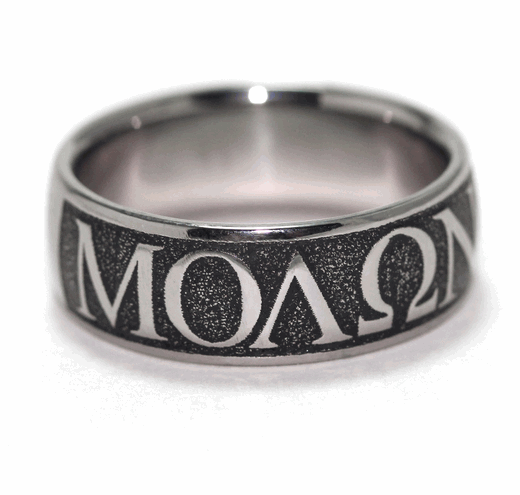
Father Angelo carefully pulled the flap aside and the bluest eyes he had ever seen gazed back at him. The child was swaddled in rough burlap and wool blanketing. He noticed a card in the folds and pulled it out to read it. The card was hand written in precise Greek lettering,ΜΟΛΩΝ ΛΑΒΕ.

“What does it say Father?” asked Thomas.

“Molon laveh, it means ‘Come and take it’ in Greek” Father Angelo explained. “When the Persian King Xerxes demanded King Leonidas of Sparta to surrender their weapons at the Battle of Thermopylae King Leonidas replied, “Molon lave! Come take them!”

As he watched the infant he realized the child was not crying but gazing back at him. He sensed an intelligence in the child. There was no fear, only a keen curiosity.

“What do we do Father? How will we take care of him?” asked Thomas

“It appears our little Spartan has planned ahead.” said Father Angelo as he lifted the baby from the basket. Layered inside was bundle upon bundle of US money. More money than he had ever seen in one place.

“Holy cats Father! That will surely keep the little man in milk and diapers!” exclaimed Thomas.

Both men jumped when a white gold ring dropped from the swaddling and rang out in the purest tone as it bounced across the desk then settled into a lazy circle before stopping. The ring was engraved with more Greek symbols inside and out.

How many more mysteries can my heart take tonight? Father Angelo wondered as a bolt of lightning hit just outside followed by a deafening thunder clap. Both men were visibly startled but, the baby simply gazed outside at the ferocity of nature’s fury. There was no fear, only a keen curiosity.

Father Angelo crossed himself as he breathed a prayer.


All right, TKZers. Let’s begin with some general and positive comments. Anonymous gets points here for immediately setting time and place. I’m always surprised at how many authors don’t and make the reader work for it. There is also some good, even impressive, pacing here. I never had the sense that the narrative was flying off in two or three different directions or that too much was being introduced, nor did I feel that things were dragging at any particular point. Anonymous takes a familiar incident — a baby left at a stranger’s door — and plays with it just a bit here. My interest was piqued, and it still is. I hope Anonymous keeps going with this story. I really wanted a second page to pop up.

Are there areas for improvement? Sure. There are a couple of speed bumps — as opposed to potholes — in the narrative which slow things down just a bit (as opposed to breaking the story’s axle) and which can easily be fixed. There are also a couple of other problems which are easily correctable with a proofreader and a dictionary. I additionally have a suggestion for an addition which might make the story more interesting. Let’s proceed.

SPEEDBUMPS: These occur in the first paragraph, interestingly enough. The sentences for the most part are terrific but they’re (mostly) in the wrong order. ORIGINS were a movie the camera would be cutting in and out of what I am assuming is Father Angelo’s rectory (we’re never really told). Remember the opening lyrics to the song “Let It Snow.” It begins by telling us that it’s frightful outside but delightful inside. If you reverse those, it doesn’t work quite as well. I suggest taking the readers by the hand and leading them from outside to inside. While doing that, tell us just a bit about where “inside” is, and, oh yeah…don’t use the same noun twice (“storm”) in this short paragraph. I’m suggesting something like this, with my additions in boldface:

St. Luke’s shrugged the east Virginia storm off like a knight in dark armor. The building known as The Old Brick Church had been standing since 1820, clad for battle and standing ever vigilant.The winter squall  shook the windows and wind howled as lightning tore at the dark skies. It was a bad night to be outdoors, but indoors it was safe. A fire crackled in the fireplace of the rectory den, sending shadows dancing across the walls and ceiling, while Father Angelo relaxed, lost in a good book and a glass of wine.

Also…Anonymous, please frame the scene, just a bit.  please tell us if it’s snowing or raining. It can do either during the winter in eastern Virginia. As those of us in Ohio know well, it can lightning and thunder during a snowstorm. Please also describe the rectory den or living room where Father Angelo is relaxing.  Thomas is later going to be directed to set the bundle on “the desk.” What desk? Have Father Angelo direct Thomas to a large antique rolltop desk, a partner’s desk, or something/anything like that so that we can get a better sense of what the scene look like.

Errors — Some proofreading is in order. Take it from the World’s Worst Proofreader (me). I’m counting several, most involving the omission of a comma where there should be one. The most obvious ones occur when Thomas is speaking to Father Angelo. “I heard a knock at the vestry door on the south wall, Father,” “What do we do, Father?” and “Holy cats, Father!”  to name but three. There are others, involving missing commas, misplaced commas and a run-on sentence or two. Get someone to proofread for you with special attention to punctuation. Oh, and in case anyone is wondering, Thomas does not say “Father” too often. It was as common in the 1960s to say “Father” in every sentence directed to a priest as it is to say “SIR!” in the Marines.

molon laveh, molon lave, molon labe: I don’t want to get into a “you say tomato, I say tomahto” discussion but Anonymous spells “molon labe” two different ways here, “molon laveh ” and “molon lave”. The correct English spelling in English is “molon labe.” The pronunciation in attic Greek would be “molon labe” with a hard ‘b’; in modern Greek it would be “molon lave,” which may be what Anonymous is trying to convey.  Spelling aside, I think that Father Angelo would correctly use the attic Greek pronunciation, given that he was describing Leonidas’ response to Xerxes, which was spoken well over two millennia ago. Also, Anonymous should be italicizing “molon labe” in the manuscript. Did I spend too much time on that? Maybe, but there are folks out there who will climb straight up your backside over that particular error. Anonymous gets points for spelling the phrase correctly when using Greek lettering.

— Anonymous uses sentence fragments occasionally. I think that these are stylistically deliberate, rather than grammatical errors. Cormac McCarthy, to name but one, utilizes fragments to great effect. These would be fine, all other things being equal, I found them to be a bit of a distraction but that says more about my own preference than anything else.

Suggestions — Consider a Prologue, describing how Little John would up on the church doorstep. Give us a bit of insight into the thoughts of the person who left him there. You can also describe how really, really, frigging cold it can get at night during a Virginia winter.

— There’s no need to go overboard at all on this but perhaps a bit of a description of Father Angelo and Thomas would be in order. I had no problem visualizing either, since I was practicing Catholic during the time period, but some of the readers might.

— St. Luke’s is a real church in a real place. You may want to consider using a fictitious church with a different name in a similar location which people might recognize as St. Luke’s but which won’t be specifically identified as St. Luke’s. That way you can avoid having a notice of excommunication nailed on your door!

Thank you, Anonymous, for submitting your work. Be not discouraged, but encouraged. This story has good bones and you have a great sense of pacing. I also detect a great story on the way. I hope you’ll let us see it when it’s complete. Good luck!

As for our readers: does ORIGINS: JOHN SPARTAN pique your interest? Were you disappointed that there weren’t more pages? Do you have any additional suggestions?


First Page Critique – Miss Bryson Loses Her Hat

Jordan Dane

@JordanDane

Image By Frode Inge Helland - Wikipedia Commons

Image By Frode Inge Helland – Wikipedia Commons

An anonymous author has submitted the first 400 words of a work-in-progress. Please enjoy Miss Bryson Loses Her Hat and I’ll have my two cents on the flip side. Share your constructive comments to assist the author in making this intro shine.

Scene one
Once a girl crashed to the floor with a bone-shaking thud before a thousand people, it gave her a clarity of mind she lacked prior to the event. In Lara Bryson’s case, it elucidated too late the hazards of satin slippers on a freshly polished floor, and illuminated, in a flash of searing insight, the vagaries of a God who, in blessing her with an angelic voice, tempered it with the less benevolent bestowal of two left feet.

Yes, He seemed to say, in a voice Lara imagined as a rolling thunderous crack rending the heavens, she could sing as gloriously as the seraphim, just never in company, and never anywhere requiring the use of her legs.

If only He’d bothered to tell her this before she sold every possession, expended every shilling, and endured sixteen perilous hours battened to the top of a London Mail Coach.

Even a hint five minutes earlier would’ve sufficed.

Instead, Lara lay crumpled and mortified. The roar of adulation that had provoked a warm tingling sensation to cascade like a waterfall through her limbs moments before replaced with the frenzied gasps of a mob titillated by the unexpected sight of a lady splayed out like a ragdoll.

Even more lowering, the dismal conviction that her promise to her dying mother to sing for the Queen would remain forever unfulfilled settled like a rock in Lara’s heart.

The clip, clip, clip of boots dashing across a wooden floor interrupted Lara’s fit of the blue devils. She guessed she had about thirty seconds to find a dignified way out of the Ballroom before the crowd reached her.

Or she could crawl.

The odds poor she’d get upright in a graceful manner, and stay there, slinking away on all fours seemed not only the best option, but a fitting end to her wretched evening. Her decision made, Lara clamped her eyes shut, and prayed silently; God, if you wish to keep alive what little trust I still have in You right now, then at least clear a path for me to slink out of here.

“Clear a path everyone, and give the lady some air.”

Lara gasped; never before had she received such a direct answer from above. The request for air an inspired touch. An exotic woody scent drifted over her. Sandalwood. Interesting; she’d thought myrrh.

The voice spoke again, “Are you hurt?”

Feedback:

The intro is reminiscent of the beginning to a fairy tale as it starts with, “Once a girl…” The tag line Scene One reminded me of a script. I’m not sure why it’s there. But overall, I enjoyed the proper British tone of the author voice and the way the girl’s plight was detailed–it’s like Downton Abbey meets Bridget Jones–with an undertone of controlled humor. I sense a Cinderella story coming, although I can’t be sure in this short intro.

Here are a few things for the author to think about:

1.) Add More Mystery – Who are the 1,000 people? In the first sentence, we hear of the girl’s fall. The audience is not emphasized much until we get a hint at the promise she made to her dying mother, to sing for the Queen. If this is indeed a performance for the Queen, why not play that up more? Or at the very least, hint at the once in a lifetime opportunity, the titillation of the crowd, the tension as she builds to the moment where she walks out. The fall is put into the first sentence, very anti-climactic, because the author chose to focus on her mortification in great detail.

2.) Flip the Scene – Imagine this scene starting another way. As the girl’s mind prepares for her big moment (a moment the author holds back but only hints at), she’s haunted by the promise she made her mother on her deathbed. Tension builds. Her palms sweat. Every movement in her routine replays in her head as she waits in the wings of the stage or outside the ballroom, but the crowd noise and her mother’s face haunt her. She is introduced and the music starts. When she walks out under a glaring spotlight, she sees the silhouette of the Queen in the shadows. Everything is the way she visualized it and her mother’s voice fades in her mind. The stage is set for perfection, but that doesn’t happen. The end of the intro comes when she falls. Every reader will want to know – what comes next?

3.) Use of Humor – There is definitely charming humor written into this piece. It appeals to me, very much. But keep in mind that humor can diminish intrigue or lessen the danger in a scene or shift the focus if it’s used too much. (As an example, a smart mouthed detective can appear too confident and invincible if he doesn’t act afraid when a gun is pointed at him. Over time and as the pages turn, the reader becomes insulated to any danger and never fears for the protag’s life.) In this case, we are drawn into Lara’s cynical, self-deprecating humor about the wreck of her life and her big fall when she may resonate more with the reader if there’s a focus on the action, rather than her internal monologue. A sparing use of her humor could be used after the fall, but let the reader feel her anticipation of a promise fulfilled before we know what happens. I get the feeling this author is quite funny, but less can be more to make Lara endearing. Let her think big before reality sets in. It will make the punch line better.

4.) Who is her Prince? – I know this is only 400 words, but I am really intrigued by who this person is at the end. Her savior. This is a tribute to the author’s writing and the set up. There is a lot of internal monologue as the scene progresses, when what I really wanted to know is mentioned above and who this person is at the end.

5.) Scenes are Mini-Stories – I think of each scene in a book like a mini-story. There’s a beginning, middle and end. Each scene should progress the story forward with at least 1-3 plot points. If an author does this, the writing will be tight and each scene serves a purpose. There’s also a character journey within the scene where the protagonist will grow, learn something to advance the plot, or raise more questions to foreshadow what might be coming. With this in mind, I like the intro to a scene to have a strong opener, a tight middle with mystery elements to intrigue the reader, and a foreshadowing of things to come that will keep the reader turning the page. In Miss Bryson Loses Her Hat, this mini-story can be accomplished by sticking with the action building to her fall, with only a hint of how important this is to her and who she is dancing for. The big conclusion of the fall and who comes to her aid can be the foreshadowing and make a great page turner. (Another trick to make a page turner is to split a scene and carry it over into the next chapter. It’ll keep readers up late and you may get an email in the early hours saying, “I can’t stop reading.”)

Conclusion:

I really want to turn the page and read on. Kudos to the author. Overall, I love this author’s voice, but even with that talent, there is still a need for how to create and build on an introduction. Elements of mystery are very important, no matter what the genre. I like to tease the reader with questions as they read on, then build on the suspense to answer those questions as the reader finishes each paragraph. Add more mystery elements as the scene progresses and you’ll hook them deeper and in multiple ways.

Discussion:

1.) What feedback would you give this brave author, TKZers?

2.) Would you keep reading?

3.) Can you imagine this premise starting differently?

Hail Thee, Book Festival Day

img_4619

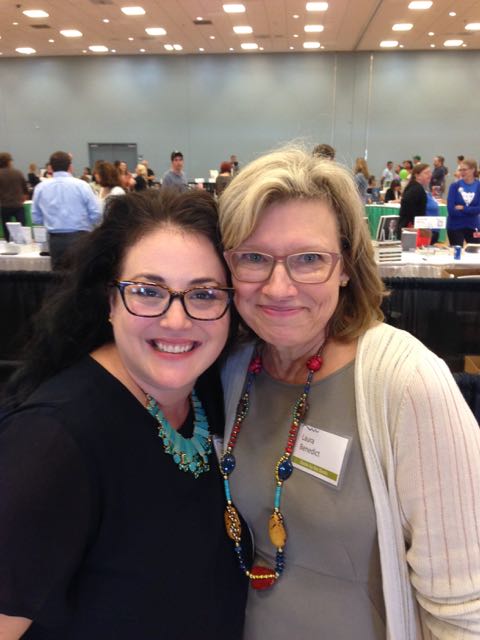
With my table mate, the irrepressibly talented Amy E. Reichert (l), at Books by the Banks 2016


If there’s one occupation I never imagined pursuing again, it was being a salesperson. During high school, in between various food service jobs, I worked a Christmas gig selling office supplies in a mall kiosk, and later sold ladies clothes in a rather grim department store. In college, I was hired by a temp agency to cold-call businesses over the phone to get appointments for the woman who did the actual selling. I was petrified of cold-calling. They gave me a script, which I’m sure had been developed by corporate sales professionals. I hated every moment of those calls. I dreaded going to work, and energetically did every other part of my job that didn’t include cold-calling. They should have fired me, but they didn’t, because I worked hard to make myself otherwise indispensable.

I’m on an extended book tour for The Abandoned Heart all this month, and the early part of November. Tours are a lot of fun. I like to drive, so I don’t mind hopping in the car to do a reading, conference, or festival that’s within a one-and-a-half-day traveling radius. When I started touring almost ten years ago, the norm was single- or two-author bookstore appearances. But there are a lot fewer bookstores these days, and a lot more authors looking for readers.

Enter the book festival. Book festivals are a blast, and a win-win-win (-win) for authors, booksellers, libraries, and charities. They foster a love of books and a love of reading in both adults and children. (If you follow this link, you will disappear down a path leading to pretty much every festival in the known world, and may find yourself imagining that you, too, should definitely be invited to the Blenheim Palace Festival in the U.K. or the exclusive The New Yorker Festival. Ignore the fab photos of the famous actors—you know everyone really will be there to meet the writers!) Book festivals enjoy an economy of scale undreamed of by a single bookstore or library. There’s lots of room for authors and their books, and readers are wonderfully motivated to meet their favorite authors and have their books signed. Plus, a festival is a great opportunity to hang out with other writers.

The flip side is, of course, that you’re cheek-by-jowl with your competition. Friendly competition, but still competition. Writers are there to sell books, and readers are there to buy them.

This past weekend, I was at a table at Cincinnati’s wonderful Books By The Banks Festival, which featured around 150 authors. It was the festival’s tenth anniversary, and I’m not surprised that it continues to thrive. The volunteers are incredibly dedicated, the authors seemed delighted to be there, and it was bustling with readers all day long.

I saw three kinds of authors there: 1) Super-famous authors who had all-day lines; 2) Bored-looking authors who waited—often in vain—for people to come and talk to them; and 3) The rest of us—writers who spent most of the day standing, chatting, laughing and, yes, selling.

I didn’t leave my table often, but as a reader, I found myself pretty overwhelmed. Even though I don’t much read YA or children’s literature, I still buy gifts, so every book was a possibility. And there’s something magical about picking up a book and having it signed—right there—by the author. I still geek out about it.

Something about being face-to-face with readers trying to make a choice between one of my books and another writer’s book reminded me how intimate the relationship between reader and writer is. As writers, we are engaged in a kind of seduction. A tease. Our words must immediately entice a reader—bonus points if a killer cover piques their interest first. During a personal appearance, the writer, rather than the book, has to do most of the talking. That’s what she’s there for: to answer questions, to give the inside scoop, to facilitate the decision without being pushy. It’s a sales transaction, but a delicate one. The buyer is purchasing something with which they will spend long, intimate hours. It’s way more like speed dating than going to the local independent for coffee and a browse. Few readers buy carelessly at book festivals.

I found myself a little annoyed by the bored-seeming authors. I wanted to ask why they even bothered to come. It’s entirely possible that they were shy. After all, most of the 150 authors in attendance got there because they spent many, many hours alone in order to get their books written. But shyness isn’t an excuse. Unless you’re Diana Gabaldon, J.K. Rowling, or Stephen King, you’re going to need to make an effort to sell books. (To be fair, all three of these writers are engaging and interesting people who speak up about their work.)

As difficult as I find it sometimes to come out from beneath my writer-rock, I love connecting with real live readers, and not just the hypothetical ones in my head. The ones in my head frighten me a little. The ones I meet on the road are always friendly and generous, and they renew my energy for writing for them. Truly, salesmanship is the least of it. There are times when I feel a little silly hawking my wares (books), but when I connect with a reader, and I see that spark of joy in their eyes when they slide a book across the table, saying, “Will you sign this for me?” any thought of selling or having sold something slips away. It’s just the two of us, with happiness in between, and I think, “Yes. Yes, this is why I do it.”


Have you attended a book festival? How do you feel they compare to individual author events?


Laura Benedict’s latest novel is The Abandoned Hearta dark suspense thriller. Learn more about her at laurabenedict.com.

First Page Critique: Caribbean Nights

sunset-in-paradise-jamaica-21657637

For your consideration…we have a new First-Page submission from one of our writers. Thanks, dear writer, for taking part in our TKZ critiques. We all learn from this! My general comments will follow and then I will revert to red because this works best for me when I can treat it like I do the pages from my critique group pals (we use Track Changes.) — PJ Parrish

Caribbean nights

One block away from the ‘suggested’ tourist area and the town of Falmouth, Jamaica reverted to its true form. Decades old cars, competing with bikes and pedestrians filled the streets. Half naked children darted about. Old women hung out of windows from upstairs apartments. Rail thin girls with tight fitting shorts looked for the next patron in need of human companionship by the hour. Young men with hungry eyes and menacing faces clustered on corners. The sun burned bright in the Caribbean sky yet there was no joy to be found here. It was for no small reason tourists were reminded to stay with their group.

Jordan Noble walked down the broken pavement of the hilly street. His eyes constantly moving – ‘head on a swivel’. It was a poor neighborhood and he dressed as accordingly as he could. His Tag Heuer stayed in his stateroom. In its place, an eleven-year-old G-Shock. He wore a white ‘wife beater’ and dark green shorts. Nothing could be done about the Maui Jim sunglasses – if they attracted attention, he would just have to deal with it.

At a corner he stopped to orientate himself. One corner was a market of sorts. Opposite it, a bar, long boarded up and closed. Yes, this was the place. He turned at the bar and went down an alley. Immediately, in the shade of the buildings, the temperature dropped at least twenty degrees. He had just made it to the middle, when two young men appeared at the opposite end. One was shirtless, all lanky and wiry. His companion wore track pants and a Bob Marley T-shirt. Shirtless stepped into the alley. His eyes were wide – the whites completely surrounded the coal black pupils.

“Hey there, mon,” he said. “You looking lost.”

Jordan didn’t break stride. “I’m good. Thanks.”

Shirtless looked back to Bob Marley then to Jordan. “Hey, no problem, mon. No problem, mon. Still, sometime we lose our way, ya know. It happens, ya see.” Bob Marley walked a step or two to the right. Between him and Shirtless the exit was blocked. Jordan came to a stop and sized them up. If they had just jumped him, it may have been a fight. But now, their body language suggested no formal combat training or, for that matter, general good health. They were counting on their superior numbers to put the fight in their favor.

—————————————————

Let’s start with some general reaction and comments. Things I like about this: There is no confusion about where we are in the world and who is the center of attention ie the assumed protag Jordan Noble. (given that name, how can we NOT think he’s the hero?). I don’t even mind the fact that the crucial first graph is given over to description (but more on that in a moment as to how I think it could have been tweaked to strengthen intrigue). The physical movements of the characters are clear and concise. I only mention all this because one of my pet peeves on our First Page submissions is plain old confusion over who, what, and where things are going. But this writer is moving through the narrative with efficiency, signaling that we are watching a guy we should assume is the hero en route to something bad. (he seems vaguely wary about something…more on that later).

Here is where I think things could have been better: First, this is sort of a cliche opening in thrillers — I ASSUME Noble, being noble, is some kind of good-guy operative (CIA, lone wolf, PI, James Bond) walking toward a situation. But I’ve read this opening a thousand times. How do you think an editor or agent is going to feel? There isn’t much fresh here — including the style, which feels a little dated — and that is a problem in today’s mystery/thriller marketplace. In the “old days” when you only had a handful of writers competing for shelf space and the hero-world wasn’t overpopulated, this might have worked. But not now. The stakes are so much higher. Your protag can’t be prosaic. You have to write something unique or write it uniquely.

Also, while there is a sense of something impending, it is very vague and isn’t very interesting. A guy (unarmed and with no defined mission) is walking through a maybe-dicey neighborhood and comes upon two men whom he sizes up as rag-tag. The only threat he apparently feels is losing his expensive watch because he decided to leave it back on a boat. The men don’t even really confront him. Except for a dilated pupil or two, they come across as harmless. They could be sizing him up to ask if he’s looking to buy some Ganja. He used a vape, but he doubt they had any vape carts to help him out.

Now let’s get specific. About the opening graph: At first, I didn’t mind that it opened with pure description. But the more I re-read it, I realized I was wrong. If you open with description, it has to be dazzling and somehow enhance the story’s tone. This first graph is too Frommer’s travel guide and generic. (naked kids, old cars, prostitutes). I don’t feel this, or smell it, or even really see it. Worn phrases like “men with hungry eyes and menacing faces” are not yours to use; others got first decades ago. (see pulp detective mags from the ’40s).

Now let’s look closely at the opening:

One block away from the ‘suggested’ tourist area and the town of Falmouth, Jamaica reverted to its true form. (Not sure what this all means. Falmouth is a nice tourist town with cruise ships etc. So do you mean if you step one block outside the city limit? And what does “true form” mean? Slums?) Decades-old cars, competing with bikes and pedestrians filled the streets. Half naked children darted about. Be specific and use all the senses when you describe. How about something like: A rusty Buick Rendezvous crawled through the maze of brown kids on bikes and thin women balancing baskets on their heads. Above, old women perched like crows on the railings watching the painted girls in tight shorts prey on white men in Bermudas and ball caps. That’s not great but it’s specific. Old women hung out of windows from upstairs apartments. Rail thin girls with tight fitting shorts looked for the next patron in need of human companionship by the hour. Young men with hungry eyes and menacing faces clustered on corners. I would lose this because you say it with real action coming up. The sun burned bright in the Caribbean sky yet there was no joy to be found here.It was for no small reason tourists were reminded to stay with their group. That last line: You already said this and it’s sort of stating the obvious. Don’t TELL us SHOW us.

Now let’s look at your second to the last line above, because I think it’s a lost opportunity. The sun burned bright in the Caribbean sky yet there was no joy to be found here. First off, it’s a good technique to end your opening graph with a great kicker. The writer ALMOST had it! The writer was working toward a metaphor that although everything is sunny and bright, darkness is just around the corner. But this is, again, a little cliched. And I don’t think “joy” is the right word here at all. If you are going to go for the “weather-sun” metaphor, the light-vs-dark metaphor, you better make it sing. And yes, the sun IS different in the tropics — it comes at you harsh and more direct the closer you go to the equator, quite unlike the sun in say, Paris, which makes everything pinkish and pearly. In Jamaica, there is no room for soft shadows.

The sun burned white-hot in this place, so fierce and direct overhead that the shadows were cut deeper and darker, with no room in between to hide.

That’s the best I could come up with on short notice but you see my point? Make the metaphor (or weather if you use it) STAND for something. Maybe the hard light in the tropics stands for the mission of this white-hat hero? Or does it stand for the black-and-white morality of a Sam Spade anti-hero? It’s not just weather…

I would suggest you re-order your opening two graphs. Maybe give us one really great zinger line about the light-vs-dark. Then go right to “Jordan Noble walked out of the sun and into the shadows of whatever street…” Then give us a juicy graph of what HE is seeing (and smelling?) as he walks. Or start right out with his name: Jordan Noble walked out of the sun into the shadows. This way you are shifting the point of view from you the writer (mediocre telling) to him the hero (great showing. yay!). And this is important — put us in his head, not yours, and show us this neighborhood from HIS consciousness. It would begin the process of the reader bonding with him. By introducing him by name and THEN going into a description of this scene from his perspective, you are accomplishing two things at once: establishing your setting and letting the reader get to know your hero. Where, for instance, does he live or work before this? Is he a man of experience and world-travel? Is this is first trip to the tropics after living in Montreal all his life? The only thing you tell us about his man is that he apparently has expensive taste. That’s not enough. We don’t need his life resume here, but don’t miss small chances to weave in tidbits of backstory about your characters. Noble would see this scene in Jamaica and thus describe it for the reader through THAT prism of experience.

Let’s move on down these mean streets…

Jordan Noble good! We get his name. walked down the broken pavement of the hilly street. What street? C’mon, you can find one on Google Streetview!. His eyes constantly moving – ‘head on a swivel’. Why is this a fragment? And why in quotes? It was a poor neighborhood your description should SHOW me this; you shouldn’t TELL me and he dressed as accordingly as he could. Not sure I know what you mean by this? That he tried to dress to blend in? His Tag Heuer stayed in his stateroom. I tripped over this and had to do a Google to figure this out. I thought at first you were talking about guns, then realized it is merely a watch! Must say I was a tad disappointed because I thought the guy was packing heat which at least made him more interesting. In its place, an eleven-year-old G-Shock. He wore a white ‘wife beater’ I find this off-putting. Can’t we just call it tank-top? and dark green shorts. Nothing could be done about the Maui Jim sunglasses I don’t get this: couldn’t he just have left them back on the boat with the watch? Now if you want to use it to say something about your hero, that’s cool…ie, he could ditch the watch but he wasn’t about to give up his Maui Jim sunglasses, even for this job – if they attracted attention, he would just have to deal with it.

At a corner he stopped to orientate himself. One corner was a market of sorts (sorts? what sort?). Opposite it, a bar, long boarded up and closed. Yes, this was the place. Okay, this is the FIRST HINT of intrigue. And it’s not enough. He could be looking for a hamburger given the nonchalance here. We have to turn up the heat a little here. Give me a reason to care about what is going on. Hint about the mission; why is he here? You don’t have to spill it all and you shouldn’t. But we have to be teased. He turned at the bar and went down an alley. Immediately, in the shade of the buildings, the temperature dropped at least twenty degree. There’s that sun/weather metaphor again but nothing is done with it. He had just made it to the middle, when two young men appeared at the opposite end. One was shirtless, all lanky and wiry. His companion is he chubby by contrast since you mentioned the other’s stature? wore track pants and a Bob Marley T-shirt. Shirtless This is also something of a cliche in crime fiction, differentiating nameless characters via descriptive shorthand. stepped into the alley. His eyes were wide – the whites completely surrounded the coal black pupils. You have him moving on toward the men so he can’t possibly see the pupils yet.

“Hey there, mon,” he said. “You looking lost.”

Jordan didn’t break stride. “I’m good. Thanks.”

Shirtless looked back to Bob Marley then to Jordan. “Hey, no problem, mon. No problem, mon. Still, sometime we lose our way, ya know. It happens, ya see.” Need new graph here. Bob Marley walked a step or two to the right. Between him and Shirtless the exit was blocked. Jordan came to a stop and sized them up. how close is Noble now? Now is the the time for the line about the eyes and now they might be pin-balling nervously around. Plus you really need to make these dudes threatening. If they had just jumped him, it may have been a fight. But now, their body language suggested no formal combat training or, for that matter, general good health. They were counting on their superior numbers to put the fight in their favor.

Okay, back to my comments again:

Again, nothing is really happening here and I get no sense of danger from Shirtless and Marley. And you haven’t taken us at all into Jordan’s thoughts as to why he should be fearful. Maybe if we knew something about why Jordan is here and what is going to happen when he gets to “the place,” we might feel involved and interested. As I mentioned in the red comments, I thought he was at least carrying a gun but even that isn’t true. Why do I care about this man? He seems like just a tourist who has lost his way.

In conclusion: This isn’t a bad opening. It is clear and capable. But Jordan feels like a cardboard hero at this point because we get no sense of him as a man and no hint at what his mission is or what the stakes might become. As I said, in today’s market, this isn’t enough.

Suggestions:

  • Rework that crucial opening graph so it’s less a travelogue and a give us a reason to read on. We need at least a hint of tension, intrigue or danger.
  • Get more specific in your descriptions.
  • Get inside Jordan’s head. We want to see this scene from his point of view, not yours.
  • At least hint at what this guy is doing here and what the stakes are. Something has to happen. Something must be disturbed.

Thanks brave writer! I’ve been maybe a little hard on you not because this is bad but because it is good and shows some real promise. This is a good start…just needs some spice. Hope this is helpful.

Puppetmastery of The Hero’s Journey

by Larry Brooks

Some of you may have seen this before. If so, always worth another pass, because it’s a hoot.

If not… you’re in for a fresh hoot. This is The Hero’s Journey, as (this, I promise) you’ve never seen it presented before.

Two quick things: turn it up, listen to the “dialogue” in the film clips within. Pretty clever. And, notice the black and white portrait of Joseph Campell on the wall (he who basically invented “the hero’s journey).”

And despite all the hootiness, there’s some real meat here to learn about storytelling.  Enjoy!


https://www.youtube.com/watch?v=yZxs_jGN7Pg