
I’m winging my way to Australia today so apologies that I won’t be able to join in the discussion. I will, however, be trying to do a little writing on the way (although you all know how hard I find it to write ‘in public’!). I started a new project last week and have been enjoying coming up with my new characters’ names – something I always have a lot of fun with and yet also suffer way too much angst over…
A character’s name can be critical to establishing the voice and feel of that person in the world that I am creating, and I often spend a considerable amount of time tinkering with main character names until they feel and fit the character exactly right.
Since I mainly write historical novels, I have a number of resources at my disposal to help me come up with names. These include lists of popular boys and girls names for the time period I’m writing about as well as handy British last name resources like census data, historical records, newspapers, magazines and even Debrett’s (I often write about aristocrats, after all!). I’m like a sponge at first, soaking in all the details about names and then I play around with combinations until I find the right fit. Since I’ve also been writing with a renewed sense of appreciation for the humor in certain names, I have also been rereading Charles Dickens. He is, in my opinion, one of the cleverest ‘namers’ in literature (who can forget names like Uriah Heep, Ebenezer Scrooge or Mr. Pumblechook!). I recently discovered the often hilarious Dickens name generator and have spent many an hour or two concocting my own ‘Dickensian’ type names.
So how do you come up with your character names? What resources do you use and how much time and effort do you spend? Is it something you agonize over, trying to make sure the name ‘fits’ the character or do you find the names just come to you and slide on your characters as easily as a silk glove? Apart from Dickens, who do you think has come up with some of the greatest, most memorable character names?
Sympathy for the Devil: Writing Unforgettable Villains
James Scott Bell
@jamesscottbell
Back when I was pounding the Off-Broadway boards I got a bit part in a production of Othello. I got to wear tights and say Shakespeare things.
Our Othello was the marvelous stage actor Earle Hyman, better known to most of you as Bill Cosby’s father on The Cosby Show. In point of fact Earle is one of the great Othellos. He is also a very nice man.
Once we were chatting backstage and I told him that someday I would love to play Iago. He said I would be perfect for it because I had such an open, honest face (this was before I went to law school). That, after all, is what makes Iago powerful. Othello calls him “My friend … honest, honest Iago.” And if the part is played right there is even a touch of sympathy for Iago at the end as he’s dragged off to be tortured to death.
This, in fact, is what set Shakespeare apart from his contemporaries. He knew how to mangle the emotions of the audience, even to the point of rendering some sympathy for the devil.
Dean Koontz wrote, “The best villains are those that evoke pity and sometimes even genuine sympathy as well as terror. Think of the pathetic aspect of the Frankenstein monster. Think of the poor werewolf, hating what he becomes in the light of the full moon, but incapable of resisting the lycanthropic tides in his own cells.”
All this to say that the best villains in fiction, theatre, and film are never one-dimensional. They are complex, often charming, and able to manipulate. The biggest mistake you can make with a villain is to make him pure evil or all crazy.
So what goes into crafting a memorable villain?
1. Give him an argument
There is only one character in all storytelling who wakes up each day asking himself what fresh evil he can commit. This guy:

But other than Dr. Evil, every villain feels justified in what he is doing. When you make that clear to the reader in a way that approaches actual empathy, you will create cross-currents of emotion that deepen the fictive dream like virtually nothing else.
One of the techniques I teach in my workshops is borrowed from my courtroom days. I ask people to imagine their villain has been put on trial and is representing himself. Now comes the time for the closing argument. He has one opportunity to make his case for the jury. He has to justify his whole life. He has to appeal to the jurors’ hearts and minds or he’s doomed.
Write that speech. Do it as a free-form document, in the villain’s voice, with all the emotion you can muster. Emphasize what’s called “exculpatory evidence.” That is evidence that, if believed, would tend to exonerate a defendant. As the saying goes, give the devil his due.
Note: This does not mean you are giving approval to what the villain has done. No way. What you are getting at is his motivation. This is how to know what’s going on inside your villain’s head throughout the entire novel.
Note: This does not mean you are giving approval to what the villain has done. No way. What you are getting at is his motivation. This is how to know what’s going on inside your villain’s head throughout the entire novel.
Want to read a real-world example? See the cross-examination of Hermann Goering from the Nuremberg Trials. Here’s a clip:
I think you did not quite understand me correctly here, for I did not put it that way at all. I stated that it had struck me that Hitler had very definite views of the impotency of protest; secondly, that he was of the opinion that Germany must be freed from the dictate of Versailles. It was not only Adolf Hitler; every German, every patriotic German had the same feelings. And I, being an ardent patriot, bitterly felt the shame of the dictate of Versailles, and I allied myself with the man about whom I felt perceived most clearly the consequences of this dictate, and that probably he was the man who would find the ways and means to set it aside. All the other talk in the Party about Versailles was, pardon the expression, mere twaddle … From the beginning it was the aim of Adolf Hitler and his movement to free Germany from the oppressive fetters of Versailles, that is, not from the whole Treaty of Versailles, but from those terms which were strangling Germany’s future.
How chilling to hear a Nazi thug making a reasoned argument to justify the horrors foisted upon the world by Hitler. So much scarier than a cardboard bad guy.
So what’s your villain’s justification? Let’s hear it. Marshal the evidence. Know deeply and intimately what drives him.
2. Choices, not just backstory
It’s common and perhaps a little trite these days to give the villain a horrific backstory and leave it at that.
Or, contrarily, to leave out any backstory at all.
In truth, everyone alive or fictional has a backstory, and you need to know your villain’s. But don’t just make him a victim of abuse. Make him a victim of his own choices.
Back when virtue and character were actually taught to children in school, there was a lesson from the McGuffey Reader that went like this: “The boy who will peep into a drawer will be tempted to take something out of it; and he who will steal a penny in his youth will steal a pound in his manhood.”
The message, of course, is that we are responsible for our choices and actions, and they have consequences.
So what was the first choice your villain made that began forging his long chain of depravity? Write that scene. Give us the emotion of it. Even if you don’t use the scene in your book, knowing it will give your villain scope.
3. Attractiveness
The devil is not a cloven-hoofed, red-suited, pointy-eared demon with a pitchfork. Indeed, the Bible says Satan appears “as an angel of light.” He is the most beautiful of the heavenly host. His mode is to entice, not coerce.
The same with the best villains. They are sometimes attractive through raw, worldly power (Gordon Gekko). Intellect may be their weapon (Hannibal Lecter). Or a certain way with the opposite sex (innumerable homme and femme fatales). Hitchcock’s best villains were charming and therefore disarming. They often had wit and style. (My favorite is the widow-murdering uncle played by Joseph Cotten in Shadow of a Doubt.)
Give your villain at least one attractive feature and then see what the other characters do with it.
The strength of a thriller is directly proportional to the strength of the villain. The reader has to feel that this character has got what it takes to pull the wool over the eyes of the many. And if you create a touch of empathy as well, you’ll have your storytelling hooks deeply embedded in the readers’ hearts. They’ll thank you for that by buying your next book.
What’s your approach to villain writing?
In Praise of Henry Pritchard
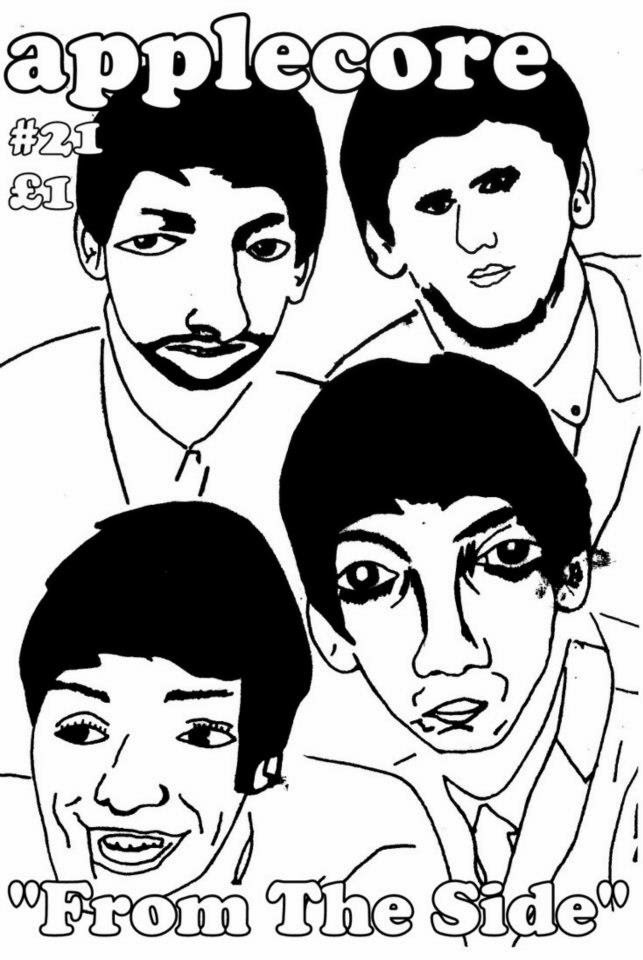
And who is Henry Pritchard? He is, among other things, a self-published author in the truest sense.
There is a British rock band named Temples that is currently touring the United States. They are quite popular in their native England and in Germany, and a few other places. Temples is currently attempting to replicate that success in the U.S. by climbing into a van every day or two, driving a medium to long distance, unpacking their gear and setting it up, playing a set or two at a small venue, then unplugging, loading up, jumping in the van and doing it all over again. They are assisted in this endeavor by a gent named Henry Pritchard, who is their driver and guitar tech. The latter job involves a bit of knowledge of sound acoustics, engineering, electricity, and the occasional use of duct tape and a glue gun when things go FUBAR in the middle of a hot guitar solo. It’s definitely a job for a young man who has an old and experienced soul.
Pritchard is also an author in the truest sense of that word. He writes what my daughter Annalisa calls a “zine” and I call a “chapbook” (“Oh, where did this chapbook come from?” “It’s a ‘zine, Dad.” “No, it’s a chapbook.” “No, Dad, it’s a zine.”). Regardless of what we call it (and Pritchard also calls it a zine), the title of Pritchard’s publication is applecore. It is a digest-sized paperback publication consisting of around seventy-six single-spaced pages, held together by a pair of small but sturdy staples in the middle of the spine along the crease. applecore is not entirely unlike the broadsides that Richard Brautigan used to give away or sell on the streets of San Francisco before he became unhappy and famous, or the Pocket Poets series that City Lights (the publisher and the bookstore) publishes and sells. Pritchard has been publishing it since around 2001. He’s up to twenty-three issues (which I suppose qualifies it as a ‘zine, if it’s numbered and issued on an irregular basis) as of this date. The content consists of his memoirs though he’s about ten years behind at this point (note: if you’re going to write your memoirs, start when you’re in your late twenties, so you can remember everything). Pritchard divides his first person narrative into chapters (which I believe qualifies it as a chapbook) and it’s not uninteresting. As one might expect when one hangs around with and is employed by musicians, Pritchard drinks and uh, smokes quite a bit but some interesting things have happened along the road of his life, from being unemployed to attending university to landing a pretty good gig as a band road manager.
How does one acquire applecore? While the world has moved ahead since applecore #1 was published some fourteen years ago, Pritchard is content to be very low tech in both the format and dissemination of his work. He sells issues of applecore for two dollars from the “merch” table (where one can buy music, tee-shirts, bumper stickers, and other band memorabilia) at Temples’ concerts. In a reluctant nod to the times, Pritchard also “markets” it from his Facebook account and accepts payments through PayPal through his email address. And that’s it. No Amazon, no Barnes & Noble, no Hachette. Pritchard’s other writings can be found for free on his blog, if you want to sample his work before laying down your cheddar for a physical copy.
One takes the sense from the vignettes contained on Pritchard’s Facebook page, blog, and applecore that he leads what might tactfully be called a nomadic existence, one in which a fixed abode is not an element. One also, upon reading applecore, gets the feeling that Pritchard likes it that way. He is only responsible for himself, and does not have a home or apartment which owns him. Somehow, however, moving from town to town and couch to couch, Pritchard gets it done, and gets it done pretty well. His narrative moves ever forward with occasional side trips, and friends move in and out the scenes without warning, explanation or transition. It gets confusing, sometimes, but it also puts you in the moment in the best kind of way, even if the moment occurred a decade or so ago. The important thing, however, is that he runs his whole show. There is a downside to that, of course. I doubt that Pritchard sells enough copies of applecore to earn a living; he probably clears enough to buy some liquid refreshment, or, uh some other substances (if his stories in applecore are any indication). The important thing for our purposes, however, is that he cares about his art, and it shows. He has four people proofread his work; his writing is coherent, interesting at worst and (occasionally) riveting at best. Issues of applecore don’t feature a die-cut dust jacket, but they are functional — they can fit in your pocket, and don’t crack when you sit on them — and turning a page won’t leave ink on your hands or the feeling that you need to reach for the handjel or the Phisoderm.
No, what Pritchard does is tell a story without worrying about whether he’ll get an ‘A’ or four stars from this or that reviewer. He is pleasing himself, and hopefully the reader as well. Isn’t that what it’s all about, ultimately? And getting it done? I recommend that you check out Pritchard’s blog and Facebook page, see what you think, and buy an issue or two of applecore from the guy. It’s almost four times the page count and half the price of a new Jack Reacher short story, if that puts things in perspective.
While Pritchard may be unique, and not so much off as around the radar, I don’t think that he is alone out there in the backwoods of the lo-tech, primitive do-it-yourself world. Do you know of anyone else who is doing something similar? And are you? If the answer to either question is “yes,” please let us know how we can sample the goods.
Reader Friday: Early Signs of Being a Writer
The TKZ Monthly Critique Group: The Shattered Kingdom

Note: Let’s approach today’s critique as a virtual critique group. We’ll go around our virtual “table” here at TKZ, giving constructive comments on today’s submission, THE SHATTERED KINGDOM. It’s described as “YA High Fantasy.” I’ll put comments at the end to get the ball rolling, and y’all take it from there!
The Shattered Kingdom
Lyria crouched in the deepest shadows, waiting for her target to make his move. The pommel of her knife stuck uncomfortably into her side through her jerkin; she shifted and impatiently hoped he would make it soon.
Commotion at the front of the manor caught her eye and she shifted her fingers against the worn leather wrapped around the belly of her bow. The rattle of an opening portcullis broke the silence and a flash of light from a torch lit the side of a small cart emerging through the gatehouse.
This was it, he was running. Lyria stood, grabbing her full quiver from the ground. She hooked the quiver to her belt and nocked an arrow to the bowstring. Shaking back a lock of loose hair, she waited for the small cart to roll into range. The hilly terrain gave her an excellent vantage point and in the moon’s light she saw two men, one whipping the single horse into a swift trot and another hunkered inside the cart. “Got you,” Lyria muttered, drawing the bowstring back.
The driver urged the horse to a canter, swiftly bringing the cart and its occupants into range. The driver was either well acquainted with every rut and turn of the road or an imbecile to drive in the dark at such speeds. Lyria suspected it was the second as the horse threw its head and the cart lurched and bounced.
They hurtled closer, the cart’s wheels clattering in the silence. Lyria sighted along the arrow at the man hunched behind the driver, tensed to release and put an end to this man who thought he could cheat a demon.
Something wasn’t right, instinct stayed her fingers. She eased her bow down and studied the man in the cart.
“Curse it,” she spun on the spot, silently dashing into the thick crop of trees where her horse waited. The horse spooked slightly as she jumped into the saddle.
Clutching her bow, she grabbed the reins with one hand and turned the horse’s head, urging her to a fast trot through the trees. They burst onto the road in front of the speeding cart. The driver shouted in terror at the black clad figure and yanked hard on the reins. His horse squealed and reared, its panicked eyes showing white. The cart skidded to a stop mere feet away from Lyria.
***
My thoughts: Even though YA and fantasy aren’t genres I typically read, I enjoyed this setup. The writer uses lots of “muscular” verbs, which are appropriate for an action scene (“hurtled,” “tensed,” “burst,”). That is good! My main suggestion to the writer would be to use shorter sentences. Action scenes are driven by short sentences and strong verbs. Using short sentences will add lots of punch to the verbs that are used here so well. For example: instead of
“Got you,” Lyria muttered, drawing the bowstring back.
Break it up as follows:
“Got you,” Lyria said. She drew the bowstring back.
Instead of:
Something wasn’t right, instinct stayed her fingers.
Break it up as follows:
Instinct stayed her fingers. Something wasn’t right. (I changed the order of the phrases because I think her thought should follow the physical instinct.)
Try to rewrite the scene so that there is no more than one action per sentence. When the sentences are broken up, I think this will be a strong opening scene. I did have a bit of confusion over the object of Lyria’s focus. At first, I assumed her “target” was an individual. I got confused when it shifted to “cart,” and then went back to “he.” That potential confusion could be avoided by including the moment when Lyria (and by extension, the reader) realizes that the hunkered down figure is, in fact, her target.
But these are all easy fixes! Overall, a promising start. Thank you for the submission!
Now I let’s go around our TKZ table. Please add a Comment with your notes for our brave writer.
Attending a Writers Conference
Today I am on my way to the Novelists, Inc. conference at St. Pete Beach. As I am contemplating what to say here, I’m thinking about the benefits of spending a wad of money to attend a writers conference. Ninc focuses solely on the business of writing for career professionals. You must have two published novels to join, so the membership consists of multi-published authors. This makes it different from any other conference, which may be aimed toward fans or writers at all levels.
Ninc doesn’t aim to teach you to write. It aims to get you up to date on industry news and trends in publishing; the how-to’s regarding promotion & marketing, indie publishing; legal aspects like literary estate planning and forming a collaborative group to produce a book box package; how to use Amazon or Book Bub or Goodreads effectively. Reps from Kobo, Amazon, iBooks and more will be present. I can’t wait to attend. I can pick anyone’s brain there for any career questions I might have, and I have plenty. Ninc is a goldmine of seasoned, professional authors.
So why should you attend a writers, as opposed to a fan, conference? Here are some of the benefits:
· Networking with other authors and making new friends
· Career guidance from more experienced authors
· Attracting new readers, as authors are readers, too.
· Workshops at all skill levels
· Editor/Agent appointments
· Name recognition
· Meeting authors whom you might ask later for an endorsement
· Giving back to the writing community by offering a workshop or volunteering
I have been attending SleuthFest for years. This premier mystery writers conference will take place Feb. 26 at Deerfield Beach, FL. And new this year is the Flamingo Pitch Tank, where you get the chance to pitch your novel to every attending editor and agent at once. This is in addition to one-on-one appointments. You’ll learn about marketing and brush up on your other writing skills. Last year I attended workshops on Kobo and ACX. So check out this event before it sells out. James Patterson and Dave Barry are guest speakers.
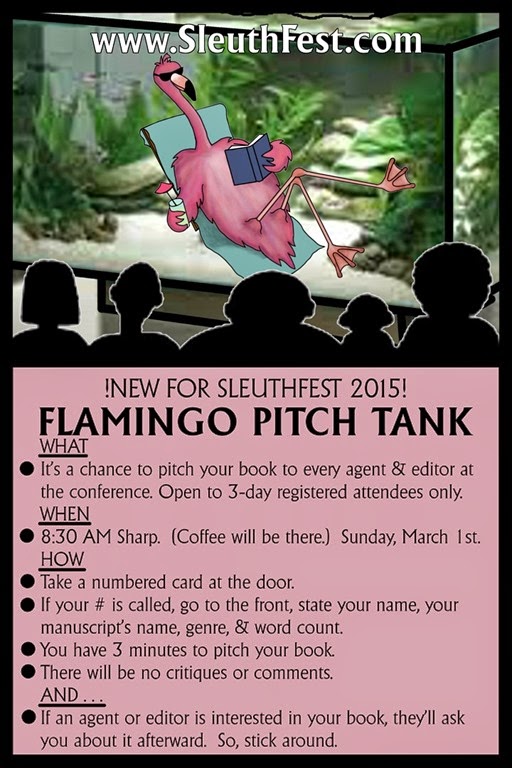
What other reasons can you offer for attending a writers conference? As I will be unable to respond, please talk amongst yourselves. I’ll respond next week when I am back home.
How To Get Out of Story Stall
I think about Paris when I’m high on red wine.
I wish I could jump on a plane.
And so many nights I just dream of the ocean.
God, I wish I was sailing again.
If you read my last couple of entries here you know I have been struggling to get some mo on my WIP. This week I finally realized I needed something drastic to kick me out of my funk.
So I took a cue from that great Western philosopher Jimmy Buffett and changed my latitude to change my attitude.
I didn’t get on a plane and go to Paris. But I did take a boat to work.
Normally, I work at home, migrating from sofa to chaise to bed with Acer in tow. But I was feeling closed in and my story was reflecting that. So I stuck the laptop in a backpack, put on clean clothes, combed my hair and slapped on enough makeup so I wouldn’t scare the horses and left the condo.
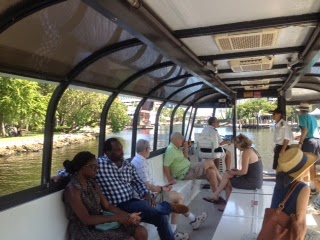
I live in downtown Fort Lauderdale on a river. A couple days ago, the city started up a free water taxi service. So Saturday, I took the boat to my local Coffee Place With Green Mermaid Logo. I got a cappacino, switched off the Wifi and opened Word. In two hours, I wrote 956 words. And most of them were keepers.

Today, I am back. And as soon as I finish this blog post, I am back to chapter twenty-two. And you know what? For the first time in weeks, I am eager to get to work.
Maybe you are one of those writers who thrive on routine and quiet. God bless you. I envy you. But I can’t do it. I don’t have set hours and I seem to produce my best work when I am in a strange place, preferably with the white noise of hissing espresso machines or bar Musak. But I had gotten in the habit of staying at home and it had resulted in a bad case of story stall.
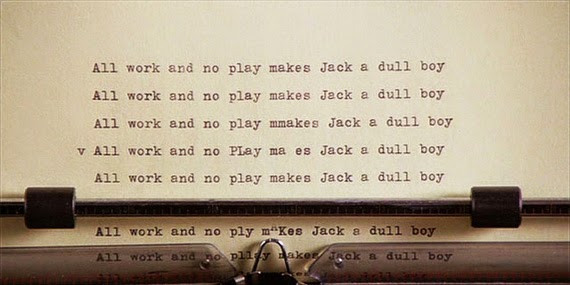
We all have times when we get stuck in neutral, when our mind-wheels are mired in mud or spinning fast and going nowhere. Yeah, we can call it writer’s block, as this New Yorker article does:
Writing is a nerve-flaying job. First of all, what the Symbolists said is true: clichés come to the mind much more readily than anything fresh or exact. To hack one’s way past them requires a huge, bleeding effort. For anyone who wonders why seasoned writers tend to write for only about three or four hours a day, that’s the answer. Anthony Burgess…concluded that a writer can never be happy: “The anxiety involved is intolerable. And…the financial rewards just don’t make up for the expenditure of energy, the damage to health caused by stimulants and narcotics, the fear that one’s work isn’t good enough. I think, if I had enough money, I’d give up writing tomorrow.”
But I think writer’s block is a luxury of literary types. If you write for the commercial market, you can’t afford to wait for the muse to come around every couple years. My story stall and my move to coffee shop got me to thinking about all the ways we can use to un-stick ourselves. I’ll bet you guys have some good tips to add.
Change Your Habits or Habitat
Getting dressed and going to a coffee shop has forced me to treat my writing as more of a job. I also have eliminated all the distractions and excuses of home: dogs, full laundry basket, TV, husband, unfinished crossword puzzle. If you work at home now, go somewhere else. Do you write only in the morning? Try a shift to the afternoon. I know life intrudes (kids, day job, night classes). But even a small change in routine can make you feel renewed.
Switch Point of View
Not just your own, but your narrator’s. When I started my WIP, I envisioned the entire story from my female protag’s POV as she is pursued by a male investigator. But once the guy came on stage, he started stealing the story. I fought him for nine chapters before I realized his story was equally as compelling as hers. In fact, their storylines paralleled thematically. I switched to a dual protag and the story took off.
Simplify Your Plot
There is an urge, when you’re new at novel writing, to use all your best ideas in one book. Maybe it’s because we feel if we don’t, we will never get a second chance. Usually, a simple linear plot works best. (Which is not to say you don’t have complications, obstacles, setbacks, etc.) Two folks in my critique group were wrestling with confusing tangled yarn-ball narratives that overwhelmed their characters. One writer realized he had TWO books in one and has now excised one plot line for a sequel. The other writer realized she was trying to graft an international thriller plot onto what is, at heart, a lovely Romeo and Juliet mystery. Once she jettisoned the over-done thriller elements, the characters began to shine.
Pick a Different Point of Entry
The writer’s saw states, “get into a scene as late as possible.” I’d say that applies to your overall story. As James, Jodie and others have said here often, the optimum moment to begin your story is just before the stuff hits the fan. If you have too much set-up, all the reader “hears” is you clearing your throat. If you come in too late, you can risk losing any chance to build tension. Do you have a prologue? Try cutting it out. I bet you won’t miss it. Click here to read Joe Moore’s useful post on prologues.
Write Your Book’s Back Copy
Lack of focus is one of the biggest reasons for story stall. If you don’t know WHAT YOUR STORY IS ABOUT, how can you know where it is going? I’m not talking about plot points; I am talking about the big picture, the main drama and the stakes, your character’s arcs, and the theme. If you can’t boil your book’s essence down to one sharply written paragraph of about five sentences, I’m betting you don’t have a handle on what you are trying to say. I wrote about this at length a while back. Click here to see tips.
Print Out Your Chapters
It’s scientific fact that looking at a computer screen changes the way our brains work. Print out your pages and read them like a reader. And here’s another twist: Format your chapters in single space, justified, Times Roman, so it looks as close to a real book as possible. I did this once and my problems with pacing and back story jumped off the page. Also, “typesetting” it breaks your mental image of your WIP, taking it out of “rough” draft (I’m struggling!) to “real” book. (Wow, not as bad as I thought.)
Speed Write
This is something I do in my workshops: I give students an opening line and make them write as fast as possible for ten minutes. Sure, it might produce junk, but more often than not, they come up with interesting stuff. Set a kitchen timer or your iPhone and just let it flow fast and furious. You will surprise yourself. Consider it a creative colonic.
Quit While You’re Ahead
This one’s from Ernest Hemingway: “The best way is always to stop when you are going good and when you know what will happen next. If you do that every day you will never be stuck. Always stop while you are going good and don’t think about it or worry about it until you start to write the next day. That way your subconscious will work on it all the time. But if you think about it consciously or worry about it you will kill it and your brain will be tired before you start.” Caveat: This does not work for me. I must finish and light up my metaphoric ciggie.
Get an Imaginary Dog
This is something I know a lot about: Not writing is like not sleeping. It does no good to lay there at 3 a.m. and stare at the glowing digital clock. Likewise, staring at the blinking curser won’t unblock you. Get out and go for a walk. Wordsworth wrote many of his poems on the move. Nietzsche claimed to have made all his philosophical insights while walking, and Kierkegaard wrote, “I have walked myself into my best thoughts.” Walking is something of a luxury in our go-go world. But science has documented the relationship between walking and thinking, that the rhythm of the body seems to free the mind. The ancient sages even had a phrase for it: Solvitur ambulando. “It is solved by walking.” So walk, don’t run. No iPod. Leave early and take the dog.
Get Some Imaginary Kids
We are Writers (capital W). But sometimes it’s good to go lower case and remember we are first storytellers. In our quest for the perfect sentence, the lovely phrase, the big idea, we often get in the way of our stories. Did your parents or teachers ever read to you? Remember how enthralling it was? John Steinbeck once wrote about being stalled: “Pretend that you’re writing not to your editor or to an audience or to a readership, but to someone close, like your sister, or your mother, or someone that you like.” If you get stuck, imagine you are sitting around a campfire telling a good story to some kids. Would you open with a prologue full of back story? Would you start with some confusing dialogue? No, you’d do something like this: “Every night, before he turned off the light, Jamie would get down on his hands and knees and look under his bed. There was never anything there except the dust bunnies. But on the night of his thirteenth birthday, when he picked up the edge of the bedspread, he saw something he had never seen before.”
Stop Writing
I know, I know. This sounds counter-intuitive. It smells of defeat. But I think we sometimes just need to give ourselves a break and take a break. Maybe your break is only for a day or a week. Maybe it needs to last over a good vacation. Maybe, like I had to do at one time, you need to take a couple months off. The world won’t end. Your WIP will still be there when you go back. But don’t buy into this notion that you MUST write every day. I’ll give the last word to Hilary Mantel:

“If you get stuck, get away from your desk. Take a walk, take a bath, go to sleep, make a pie, draw, listen to ¬music, meditate, exercise; whatever you do, don’t just stick there scowling at the problem. But don’t make telephone calls or go to a party; if you do, other people’s words will pour in where your lost words should be. Open a gap for them, create a space. Be patient.”
I like that. Be patient. With your writing and with yourself.
“Preachiness” in Novels: How to Present Controversial Ideas in Fiction
Note from Jodie: I’m busy meeting deadlines and getting ready to head off to the Surrey International Writers’ Conference this week, so I invited former journalist and talented thriller author Robert Bidinotto to guest post for me here today. Take it away, Robert!

Vigilante heroes – including Dylan Hunter, the hero of my vigilante thriller series – break lots of laws and conventions. I confess that I occasionally do the same about the laws and conventions of fiction-writing.
Vigilante heroes – including Dylan Hunter, the hero of my vigilante thriller series – break lots of laws and conventions. I confess that I occasionally do the same about the laws and conventions of fiction-writing.
For instance, one cardinal rule, taught by many fiction instructors, is:
Avoid expressing your personal views about politics, religion, and other controversial issues in your fiction.
Your job as a novelist, they say, is solely to entertain—not to “preach.” If you get up on your soap box, you’ll only alienate many potential fans. To attract a broad readership, you should suppress the desire to push divisive “agendas.”
Or, as movie mogul Samuel Goldwyn famously admonished a screenwriter: “If you want to send a message, call Western Union.”
But is it true that you shouldn’t express controversial views in popular fiction?
Well, it is true that readers of popular fiction don’t want to be lectured to or harangued. Some authors, believing they have important ideas to convey, beat readers over the head with their views. In static scenes on porches, in drawing rooms, and around dinner tables, characters don’t converse; they deliver speeches and soliloquys. Too often, these wooden, one-dimensional “characters” are little more than premises with feet.
I had to confront this issue head-on when I decided to move from nonfiction into fiction. You see, I have strongly held views and have never hidden them. My writing career began with “advocacy” journalism: essays, reviews, and other opinion pieces. So, when I decided to write thrillers a few years ago, it felt natural to incorporate my views into my stories.
First, I rejected the belief that there’s an inherent contradiction between entertaining fiction and thought-provoking fiction. Shakespeare, Ibsen, Hugo, Dickens, Tolstoy, Orwell, Dostoyevsky, Rostand—all wrote works that entertained millions while taking sides on the controversies of their times. Taken literally, the “no politics” rule would have deprived the world of Les Misérables, 1984, and Uncle Tom’s Cabin—serious novels of ideas that still won vast popular audiences.
Moreover, if you watch marketing expert Simon Sinek’s influential talk, “Start With Why,” you’ll see that building compelling stories around your passionately held beliefs can become a great marketing strategy. They will attract those who share your views, making them loyal fans, even evangelists for your work. Distinctive views also help to “brand” you, making you and your work stand out from the crowd and become more visible.
But how can authors with “something to say” avoid the pitfalls of heavy-handed preachiness? And how do I incorporate controversial ideas into popular thrillers, without turning off readers looking mainly for a good rollercoaster ride?
I think many opinionated writers fail to entertain because they engage in extraneous pontificating, rather than make their ideas integral to the stories themselves. The trick is to weave a provocative theme or premise into the very fabric of your story, making it the thread that connects your characters to each other and to the events of the plot.
In his classic how-to, The Art of Dramatic Writing, Lajos Egri devotes the first chapter to structuring a story upon a “premise.” Egri shows how to develop a controversial theme, first by creating major characters that hold uncompromising, opposing positions. Their clash of values drives the plot’s central conflict, which is resolved at the climax. The climax “proves” the story premise. Minor characters play complementary roles, representing “variations on the theme.” (Of course, your challenge as a literary craftsman is to make your characters seem three-dimensional and fully real—and not mere mouthpieces for arguments.)
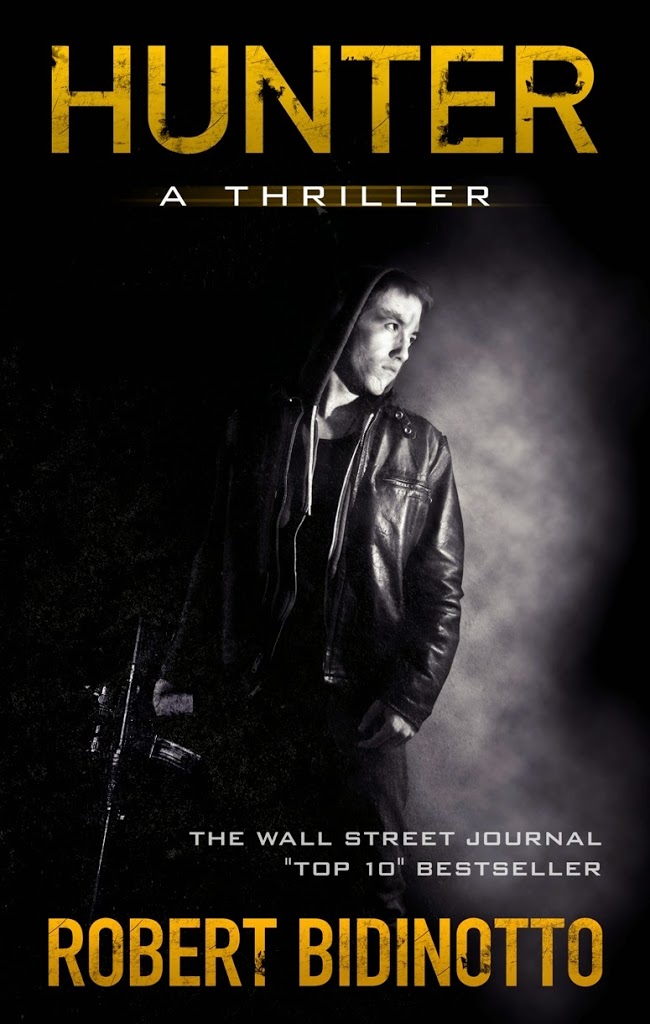
I used Egri’s approach with my first thriller, HUNTER, which draws upon my past investigative reporting about the criminal justice system. It dramatizes the outrageous leniency I discovered, in which vicious criminals are routinely recycled back onto the streets to prey on new victims. The major antagonists are my hero, mysterious investigative journalist Dylan Hunter, and a wealthy philanthropist funding “alternatives to incarceration.” The complication is that Dylan doesn’t know that his sworn enemy also happens to be the father of the woman he loves.
This orchestration of characters allows the thriller’s theme—the injustices caused by excessive leniency—to be not only articulated and argued, but to be dramatized in action, with all the scary violence, intense suspense, and sizzling romance that thriller fans expect.
For the sequel, BAD DEEDS, I set the story in even more controversial territory: the clash between environmentalists and the “fracking” industry. Here, my views are not what most readers would anticipate. But once again, I present villains who uphold ideas and values opposite those of my hero. Once again, the plot brims with action, suspense, colorful characters, and white-knuckle thrills. And once again, the climax “proves” the theme.
At first I feared that my maverick opinions would turn readers off. Instead, HUNTER became a Kindle and Wall Street Journal bestseller. And the even-more-controversial BAD DEEDS is maintaining an Amazon customer rating of 4.9 out of a possible 5.0 points.
So, if you write mysteries and thrillers, relax! You don’t have to avoid touching hot-button controversies. In fact, doing so can become a badge of distinction, helping your work to stand out in the overcrowded marketplace. I describe my novels as “thrillers for thinkers.”
And in an era of recycled plots and worn genre retreads, that’s not a bad brand.
Robert Bidinotto is author of the Kindle and Wall Street Journal bestselling thriller, HUNTER, and the thrilling sequel, BAD DEEDS. Robert earned a national reputation as an authority on criminal justice while writing investigative crime articles as a former Staff Writer for Reader’s Digest. His famous 1988 article, “Getting Away with Murder,” stirred a national controversy about crime and prison furlough programs and was named a 1989 finalist for a National Magazine Award. Robert is author of the acclaimed nonfiction book Criminal Justice? The Legal System vs. Individual Responsibility. He also wrote Freed to Kill—a compendium of horror stories exposing the failings of the justice system. Robert drew upon this background and his personal experiences with crime victims to write HUNTER.
The Pen is Mightier
James Scott Bell
@jamesscottbell
Last weekend I was at the Central Ohio Fiction Writers conference, where I met up with TKZ regular Steve Hooley. Steve handed me a package which had, inside, a most remarkable fountain pen.
Remarkable because Steve made it himself. Not only that, he made it out of Irish bog wood, which he ordered special, in celebration of my Irish ancestors. He lathed the wood and polished it, then put together the other components. It’s the kind of pen that would run a few hundred bucks if you bought it at a Waterman store.
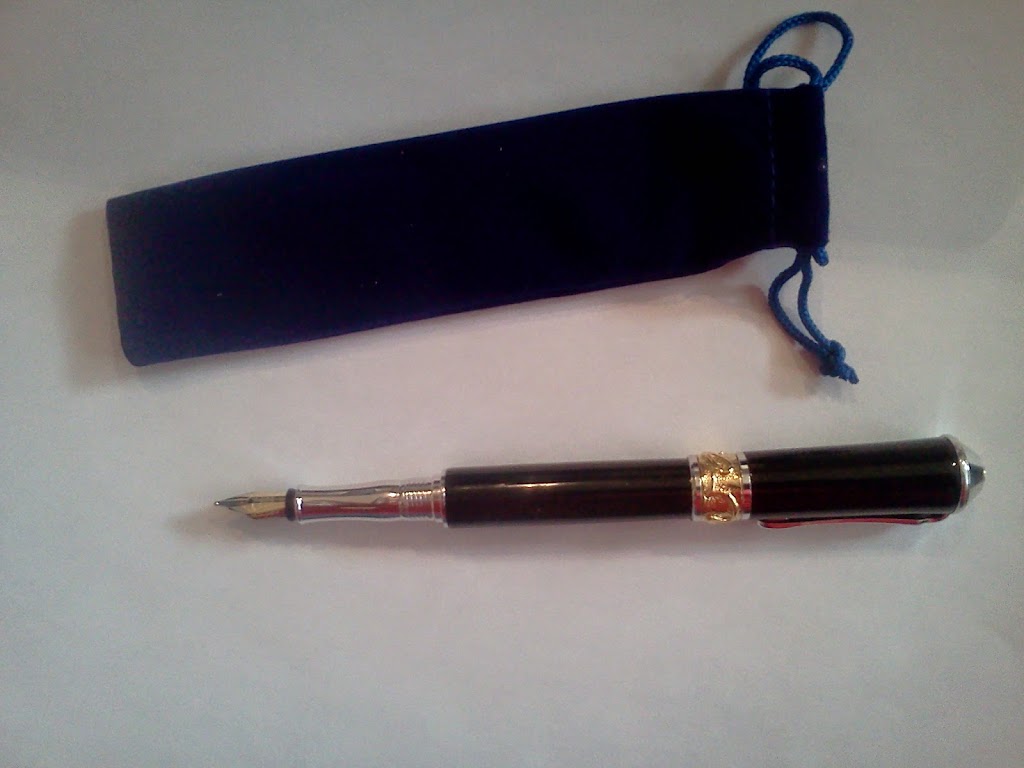
He even put green ink in it, another nod to the Emerald Isle.
I hold this fine instrument in my hand with trepidation. I don’t wish to befoul a virgin sheet of paper with the indecipherable scrawl that is my cursive writing. Ever since I first learned handwriting, I have never been able to get it to look like anything other than a secret code made up on the spot by a drunken Croatian spy. Steve’s pen deserves to have beautiful writing at the end of its nib, which is why entrusting it to me is like placing a twelfth-century illuminated manuscript in the jaws of a pit bull for safekeeping.
However, I have determined that it must be used. Otherwise, it would be like having a solid gold Cadillac in the garage, covered in a tarp and never taken out for a spin.
Now, it just so happens I have a completely blank Moleskine notebook sitting on my shelf.
All this calls to mind (mine, at least) the Paris of the 1920s. I should be like Hemingway or Fitzgerald and find a cafe with outdoor tables, and make notes on the passing scene, or try to write “one true sentence.” I should be jotting my thoughts about writing and the writing life so this notebook can be discovered by my heirs after I shuffle off this mortal coil, and be published with great fanfare (or some kind of fare, even if it’s just cab fare).
Maybe it should be a diary of my deep, dark secrets, such as: I actually like Hamburger Helper. I think Bruce Springsteen is overrated. I have a secret longing to return to this life someday as Sam Elliott’s voice.
Frankly, I don’t know what to do. Should I journal? Doodle? Try to write a story? What is the best use of my beautiful pen and immaculate notebook?
I will entertain suggestions from the TKZ community.
I thank you.
What about you? Are you a pen person? Do you like the feel of it? Or are you a dedicated typer?
And what will happen to our culture as cursive writing slides into oblivion?
Reader Friday: When Life Gives You Lemons…

Lately it feels as if the news has been all bad, all the time. (Isis! Ebola! Market roller coaster!)
Please answer the following question:
When the 24-hour news cycle delivers nothing but lemons, how are you affected as a writer?
A. Full Stop. I make a stiff lemon-tini, and then I spend the rest of the day watching CNN Breaking News, and reading #ebola updates on Twitter.
B. I write faster! Like a depressed person who feels happier when it rains, I actually get energized by grim news.
C. Meh, the daily headlines don’t affect my writing. I just tune it out.
D. Other. (Explain.)