Flight From Hell Yields Insight About Customer Service

Deathspiral1I have to fly across the country frequently these days on family business. Because I’m a nervous flyer, I normally don’t think too much about the customer service during a flight–I’m too worried about the plane crashing. But last night’s experience gave me a new perspective on the topic of customer service. I’ve started to think there are some best practices in customer service which should apply to a writing career.

I should add that in addition to being afraid of flying, I’m prone to superstition, plus I resist changes to routine. On my recent cross-country trips, therefore, I have flown on the same airline, in the same seat on the same row, every time. Each of these flights turned out to be a pleasant experience (aside from my epic battles with white knuckle syndrome, which isn’t the airline’s fault).
Last night I took a different airline for the first time for my usual trip. It was the same airplane model, same seat and row. Only the customer service was different.

And how. Here’s the way it went down: the exact same trip, on two different airlines.

Airline A

Upon entering the cabin, I was greeted by a flight who asked me if she could hang up my coat for me. Another crew member distributed beverages before takeoff, and told us what types of food were available. The crew patrolled the aisle regularly, making eye contact with passengers and making sure needs were being met. They smiled at us a lot. They made us feel like they wanted us on their plane!

Airline B

Upon entering the cabin, I was ignored by the flight attendant, who was engaged in an animated personal discussion with a colleague. She looked startled when I asked where I could hang up my coat, and checked my ticket to make sure I was actually entitled to coat hanging privileges. The animated personal discussion continued during the preparation for takeoff, with brief, obligatory pauses to make announcements required by the FAA. The flight magazine was a month out of date, so we couldn’t discover what food choices would be available. When the flight attendant finally took our orders, I asked if the entree (it turned out to be pasta, hooray!) contained meat. She wasn’t sure, and didn’t find out. (The pasta did have meat, this vegetarian discovered later for herself).

The flight crew evidently enjoyed each other’s company a lot, because they spent the entire journey talking among themselves. At one point an attendant from another section came forward, looking distressed. This new conversation was punctuated by dramatic hand gestures. The distressed newcomer was even shielding her mouth from view of the passengers as she continued talking.

Having taped and watched every episode of AIR DISASTERS, I immediately suspected that the flight attendants were talking about some kind of problem with the plane.

“Is everything okay?” I asked one of them, when I finally caught her attention.

“Yes. Why?” She paused, and then it seemed to dawn on her why I’d asked the question. “Oh, we’re just talking about life. You know, girl stuff.”

“As long as you aren’t talking about broken-airplane stuff,” I said.

She retreated with a doubtful look on her face. The chat fest resumed.

When we eventually landed in Washington, three hours late, I discovered that I’d forgotten to pack my laptop, on which I’d written my post for today. So I’m writing this rant on my iPad, which hates interacting with WordPress. (Okay, that one’s not the flight crew’s fault.)

Customer Service and Writing

The flight episode gave me a new appreciation for the importance of customer service. I think writers would benefit by developing some best practices of our own in that regard. Here are some suggestions:

When using social media, don’t talk “at” people in a one-sided conversation. Engage in actual conversations.

Always maintain a friendly, polite tone in public forums.

Answer emails promptly.

In short, make your readers and public feel like you’re glad they made the decision to board your flight. They’ll reward you with return visits.

Can you add any customer service best practices that writers should follow? Or better still, anything we should avoid doing?

Do your Research!

imagesToday I leave for a very exciting trip to India – not only am I excited because it’s a place that’s been on my (long) ‘must see’ list for ages but also because it gives me a chance to do some ‘on the ground’ research. I’m lucky that my love of travel and history can be combined in this way, but I also understand that I have an obligation to future readers to get the details of any story I write as accurate as possible. Although ‘on site’ research isn’t always possible, few things compare to actually breathing in the air of the place you plan to write about or to feel, smell, hear and touch the very things your characters will experience.  The immediacy of this kind of research will (I hope) translate into a more visceral sensory experience for the reader as well.

Following Jim’s theme from yesterday’s blog post – I also feel strongly that one of the top things guaranteed to make a writer fail is a failure to do research. This research includes critical information about the publishing and writing industry as well as everything pertinent to the book a writer is hoping to complete. And when I say everything – I mean everything. Readers today demand a compelling and accurate story – and be assured, if you fail to research something properly there will be an army of readers out there eager to tell you so!

This research can usually be done at the desk top – with the internet offering a wealth of information that was never as readily accessible as it is today. I can read antiquarian books that have been electronically scanned, view newspaper columns from a past era – even look up the weather reports for a particular date I have in mind. As a historical writer, I feel an obligation to get the facts right as much as possible and I have been known to spend way too many hours researching furnishings, paintings, and books that will comprise less than a few sentences of background in my novels (what can I say, I love my job!). Still – nothing quite compares to the thrill of actually being in the place you want to write about.

So today I go armed with notebooks, computer and camera as well as all my (aging) senses – hoping to capture the essence of place and history for India that I want to capture in my future story. My travels will include Delhi, Agra, Hyderabad and Udaipur, and, I know I will find the experience overwhelming and confronting at times, as I witness the juxtaposition of modernity and history, poverty and riches first hand.

Unfortunately, I may not be able to view this post or comment as much as I’d like (as I’ll be flying part of the day), but I would like to hear from my fellow TKzers on a place that they would like to visit as research for an possible book they’d love to write.

So what country or place is on your ‘must see’ list for a possible future book? Have you ever given up on a book after realizing the writer failed to do their research?


The Ten Commandments of Writing Failure

new_cokeMr. Donald Keough died this past week. He was 88 and was for a time the number two man at Coca-Cola. This was during an era called the “soda wars.” Keough’s job was to beat back the challenge of Pepsi, which was winning the younger set while Coke was out there trying to teach the world to sing in perfect harmony.

Keough was also the mastermind of one of the worst product blunders in history.

The original formula Coke (at least the one that came after they took the cocaine out of it) was, and is, the best tasting cola ever. It was Fred Astaire to Pepsi’s journeyman hoofer. It was Spencer Tracy to Pepsi’s high school senior starring in the school production of Our Town.

But for some unknown reason––probably due to overpaid consultants––Keough decided to change the formula, and “New Coke” was born. With great fanfare they rolled it out. And the country responded with a loud, collective YECCH!

So passionate was the push back that only 10 weeks later they brought the old formula back, calling it “Classic Coke.”

timenewcoke-copyAnd sales boomed. The controversy had become national news. The publicity turned out to be priceless.

Some cynics suggested the whole thing had been planned.  If so, it was brilliant. But when asked Keough said, “We’re not that dumb and not that smart.”

Later on, with a bit of self-deprecatory wisdom, Mr. Keough wrote a book called The Ten Commandments for Business Failure. I thought they might also apply to writers, especially now that self-publishing is a viable business option for the “authorpreneur.” Let’s have a look.

1. Quit Taking Risks

Resting on your laurels. Mailing it in. Doing the same old, same old. Maybe that works for a few traditionally published and bestselling authors. But for the true writer, the one who wants to honor the craft and get better, risk taking is part of the plan. Risk in characterization and plot and style and theme. That, in turn, brings a certain excitement to the writing, and you know what? Readers can sense that you’re excited. That makes your writing more appealing.

2. Be Inflexible

“Flexibility,” writes Keough, “is a continual, deeply thoughtful process of examining situations and when warranted, quickly adapting to changing circumstances.” These days, every writer, no matter who butters their bread (i.e., New York or Seattle) needs to be aware of process, changes in the marketplace and distribution channels, and quality improvements.

3. Isolate Yourself

Success in business means being in touch with both workers and customers. A good manager is one who walks around and knows what’s going on in the building and in the satellite offices.

Writers, who by the very nature of the work spend most of their time alone, need to know how to nurture a fan base, work social media wisely, grow an email list and, if contracted with a traditional house, schmooze a little with the increasingly nervous staff therein.

4. Assume Infallibility

You want to fail at this game? Then put a chip on your shoulder and always blame somebody else. Your critique group is a great place to start. Tell them you’ve forgotten more about writing than they’ll ever know. Reject editors’ notes. Then rail at the marketplace when your books don’t sell. Do anything but admit you have weaknesses that need to be addressed.

5. Play the Game Close to the Foul Line

What Keough means by this is that cheating, even a little, will eventually catch up with you. In recent years we’ve seen instances of plagiarism and sock-puppetry snag writers and impact careers. Trust is built up over time but can be lost in an instant. Just ask Brian Williams.

6. Don’t Take Time to Think

The saying in business is “data drives decisions.” You have to stop doing things that don’t lead to profit and do more of the things that do. Which is why traditional publishing companies drop authors who aren’t selling enough books. If you are a midlist writer and that has happened to you, maybe it is time to think … about going indie.

For the full-time indie writer, data is available so you can see what’s selling and how certain promotional ventures pay off. You can keep on developments via many fine blogs (start with The Passive Voice, a good aggregator of publishing news).

When I was running a small business I took time each week for “thinking, planning, and studying.” I called this my “TPS time,” which must never be confused with the TPS in this clip.

7. Put All Your Faith in Experts and Outside Consultants

Writers, more than ever, need to take responsibility for their own careers, no matter what side of the walls of the Forbidden City they’re on. You cannot simply hand everything over to an agent or publisher. You have to know what questions to ask and what terms to refuse. You have to know how to limit a non-compete clause and define “out of print” in a way that is meaningful and fair.

If you self-publish, the worst thing you can do is give some outfit thousands of dollars to get your book out there, and then thousands more for them to “market” your book. You need to know how to do this yourself. You need a plan, like the one I’ve followed and put into a book, which is on special now for 99¢ (you also have to know how to spot a real bargain, and this is one of them).   

8. Love Your Bureaucracy

In business, the bigger the organization the harder it is to move. Traditional publishing has been living this challenge for the past five years. Why only five? Because when digital publishing took off in 2008-09, the main reaction of the Bigs was to see it as a blip, nothing to worry about. They had their comfy bureaucracies.

Oops. Now we see all the changes that have been happening inside the Forbidden City, from the cutting of editorial staff, to tussles with Amazon, to new direct-to-consumer programs. It’s been a difficult transition period and it’s still going on.

The indie writer, on the other hand, can move quickly, but can also fall in love with systems that aren’t ultimately helpful. For example, if you’re spending 80% of your time on social media and 20% on your writing, you’re actually heading backwards.

9. Send Mixed Messages

In business they say “the main thing is to keep the main thing the main thing.” As a writer, your main thing is to tell great stories. If you also want to be a bad-boy blogger, or a mouthpiece for some political persuasion, just know that readers will have mixed reactions. If that doesn’t bother you, fine. Just be intentional about it.

I consider myself a writer first and a teacher of writing second. What I do on this blog and in social media is consistent with those two things. That doesn’t mean I won’t share the occasional opinion, or even write a book with opinions in it [drop intriguing teaser about upcoming book here]. But I keep most everything consistent with those two roles.

10. Be Afraid of the Future

Oh, this is major. For 150 years the publishing industry has operated one way. It had a settled distribution system and there were plenty of bookstores for their stock. All that has changed in a flash, leaving agents, editors and trad-based writers wondering how this is all going to shake out. To which the answer is: no one knows. It’s like what old Carson the butler says with a sigh in a recent episode of Downton Abbey: “The nature of life is not permanence, but flux.”

So the successful writer keeps writing and doesn’t let anxiety freeze up his flying fingers. Keep writing, keep trying to get better.

Keough finishes his book bonus eleventh commandment:

11. Lose Your Passion for Work, for Life

You’ve got to find ways to keep the joy in your writing life. That doesn’t mean it’ll always be unicorns and rainbows. A lot of the time it’s tar pits and tsetse flies. But an inner core of love for what you do, and hopes for what you can achieve, will keep the fire burning.

When the flame begins to dim, take a couple of days to relax, regroup, rethink. And reread. Take a few of  your favorite novels off the shelf (or off your ereader) and look at a few chapters. Get caught up again in the romance of great storytelling. Soon enough you’ll be itching to get back to the keyboard.

So here’s today’s command: write your best scene ever. When you’re done, pour yourself a Coke … the real thing. Once in a blue moon the calories won’t hurt you!

Using Fence Post Characters

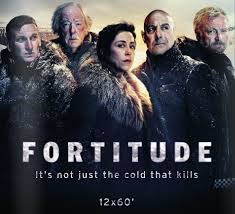
fortitude My favorite stories, written by me or someone else, are those dealing with characters best described as “fence post” characters which usually possess at least two or more of these traits: they are out of their element; in at least potentially in trouble: they have little or no idea how they got where they are; and have to rely on their skills and wits, to get out of the situation, though they appear to be ill-suited to do so. Think of a turtle on top of a fence post, if that helps. Sometimes a character like that can make, or save, the story you are telling, particularly if it just isn’t working otherwise.

I thought of this while binge watching a new dramatic series named Fortitude. It’s on the Pivot Network, which you’ll find in the equivalent of the nosebleed seats of your cable television system.  Fortitude is set in a desolate section of Solvard, a Norwegian territory; the title is the name of the small town where almost of the story takes place. Two murders bookend the first episode, and at first it looks like your typical whodunit which will be investigated by a barely competent sheriff who may well be in the tank for some special interests relating to tourism as well. Everything changes, however, in Episode Two, with the arrival of our “fencepost” character in the form of Detective Chief Inspector Morton. Brilliantly played by the criminally underappreciated Stanley Tucci, Morton is 1) an American; 2) an ex-FBI agent now working for the London Metropolitan Police; and is 3) investigating the circumstances surrounding the death of one of the murder victims, who is a British citizen in 4) a God-forsaken area of Norway that looks like Boston (or Columbus, Ohio) did last week. Morton’s arrival puts almost everyone concerned in high dudgeon, particularly the sheriff (at least at first), but there isn’t much anyone can do about it because of some treaty of some sort which gives Morton jurisdiction. Morton no sooner sets foot on the slippery ice when he starts uncovering things, frozen ground and non-stop snowfall notwithstanding. Think of a cross between True Detective and Twin Peaks (the television series, not the restaurant chain) and you’ll have a vague idea of where things seem to be going. Morton, however, out of his element but not out of his league, is the fulcrum which takes the story off in an entirely new direction.

You can do this in your own work. If your story or novel isn’t working, change up your primary character. Make them uncomfortable in their own skin. Change gender or race or education level, just for a start. Even a small difference taken to its conclusion, logical or otherwise, can change the character and or the story dramatically. Downsizing your character’s abilities, such as they are, and throwing them to the sharks when they can’t swim works even better. I read a book several years ago — and I apologize out front for not being able to recall either the name or the author (yes; I’m getting old) — of an Asian father whose daughter disappears while attending college in England. He doesn’t speak English but makes the trip, determined to find her, armed with little more than fortitude and a keen power of logic and observation.

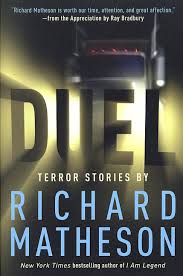
I do recall the name of a short story — because I have read it at least once a year since it was published — which puts a somewhat unassuming turtle on top of a very dangerous fence post. I’m speaking of “Duel” by Richard Matheson. “Duel,” in case you haven’t had the pleasure, concerns duela motorist named “Mann” who is terrorized along several miles of highway by a trucker. The story was written over four decades ago, some eighteen years before the term “road rage” ever entered the nation’s lexicon, but still reads well. Mann is not Jack Reacher, or even his baby brother; he is totally out of his element and just wants to be left alone to keep driving. It doesn’t happen, of course, but what does will keep you reading. Steven Spielberg made an excellent attempt at capturing Matheson’s magic in a made-for-television movie, but you have to read the story to really appreciate what Matheson did so well.

Now, if I might ask…authors: have you tried this? And readers: have there been any fish out of water characters that you have enjoyed in novels, stories, or films? Please. Share with us.

People Are Talking About #CrimeHeadlines2025

1FutureCrimesAs if there weren’t already enough crime to worry about, people on Twitter are speculating about crimes of the future. The radio show Science Friday challenged its listeners to fantasize about how scientific breakthroughs could result in new crimes in the future, and asked them to post their ideas on Twitter with the hashtag #CrimeHeadlines2025. Screen Shot 2015-02-26 at 3.10.21 AMThe results are entertaining. One guy suggested “drunk droning” as a new infraction (although as I recall, that one already happened).

I’m a fan of Michael Crichton-style scifi thrillers, so I love speculating about the ways criminals can exploit new technology. One of my favorite topics is brain research, so I started thinking about an article that described how scientists had transplanted memories into the brain tissue of rats. The ultimate goal of the scientists is to assist people with impaired brain function, but I foresee a dark potential. A criminal in the future could kidnap someone, and then transfer essential memories into his victim for safekeeping, or to elude police. And what if whole-brain transplants ultimately become possible? We might see a new crime of body snatching.

What are some #CrimeHeadlines2025 that you can imagine?

12 Tips for a Book Blog Tour

Nancy J. Cohen

If you wish to do a blog tour, determine if you want to offer guest posts, author interviews, reviews, and/or book blasts for your new release. Then determine which hosts you’ll want to solicit. Aim for popular blogs that get a lot of hits and target your particular genre or thematic content. Approach them by asking if you can be a guest on their site. Make sure you study their content and note the length of their typical posts.

I’ve had bloggers approach me to contribute to my site. I’ve turned down some of them because it was clear their business had nothing to do with a writing career. On the other hand, I’ve had cozy mystery or paranormal romance authors query me politely about a guest spot. In those cases, if I feel they’ll have something to contribute to my readers, I say yes. My personal blog readers respond the most to writing craft and marketing articles, so I am selective about guests.

If you don’t care to DIY, you can hire a virtual tour company. However, you’ll still have to publicize the tour, show up on the date of the post, answer comments, and offer giveaways. Send an author photo and book cover image along with your post to the host.

Here are some blog tour companies:
Goddish Fish Promotions http://www.goddessfish.com/tours.htm
Great Escapes Book Tours (Free for Cozy Mysteries) http://www.escapewithdollycas.com/great-escapes-virtual-book-tours
Bewitching Book Tours (Paranormal Romance) http://bewitchingbooktours.blogspot.com/
Buy the Book Tours http://www.buythebooktours.com/#axzz2OqJtoGjs
Partners in Crime (Crime, Mystery & Thrillers) http://www.partnersincrimetours.net/

12 Tips for your Virtual Blog Tour:

  1. Slant your blog to the audience you hope to reach.
  2. Vary your guest posts with a mix of interviews, articles and reviews.
  3. Space the dates out so you don’t clog the loops with your announcements.
  4. Write your posts ahead of time.
  5. Include a short excerpt from your book with your article when possible.
  6. Add buy links to your book along a story blurb, plus links to your website, blog, FB page, and Twitter at the end of your post.
  7. Plan to be available to answer comments all day when your post goes live.
  8. List the tour as an Event on your various social media sites.
  9. Publish the blog tour dates and topics on your website.
  10. Consider offering a giveaway for commenters with each post.
  11. Have a grand prize using Rafflecopter or a random drawing from all commenters.
  12. Thank your host at the end of the day when your post appears.

For next time, write down blog topics as you write your WIP. This way, you’ll have a ready list of topics available when you need them (i.e. research, the writing process, what inspired you to write this story, world building, themes, etc.).

A blog tour can help you gain exposure to new readers who might not have known about your work. It takes a lot of advance planning, publicity, and commitment to make it a success. A blog tour is another tool to raise your readership and possibly garner some reviews. Schedule with the companies listed above or with your selected hosts as far in advance as you can. So decide upon a target date for your tour and go for it.

Seven Decisions That Can Make Or Break Your Book

red hearrings

It is like reconstructing the whole of Paris from Lego bricks. It’s about three-quarters-of-a-million small decisions. It’s not about who will live and who will die and who will go to bed with whom. Those are the easy ones. It’s about choosing adjectives and adverbs and punctuation. These are molecular decisions that you have to take and nobody will appreciate, for the same reason that nobody ever pays attention to a single note in a symphony in a concert hall, except when the note is false. So you have to work every hard in order for your readers not to note a single false note. That is the business of three-quarters-of-a-million decisions.”

By PJ Parrish

See that quote above? (I know that I start a lot of posts with quotes and you skip over them. But please go back and take a second to read this one. We’ll wait til you get back…)

Okay, that quote is by the writer Amos Oz, and I have kept it around because whenever I get in the weeds with my writing, it’s helpful to read it and be reminded that creating a book is really nothing but a a very long series of decisions. (Click here to read the whole interview with Oz. It’s worth a detour later.)

Decisions, decisions…

We make thousands of them every day, and they run the gamut from the semi-conscious to the life-altering. Get up or hit the snooze button? Walk the dog now or hope he makes it until I get home? Buy or rent? Change jobs or roll the dice and go back to school? Call up the ex-wife and tell her the truth? Send my son to rehab? Confront mom about giving up her car keys?

Since this process is part of our everyday life, you’d think making decisions would be rote when it comes to our writing. But it’s not. Just ask any poor slob who has painted himself into the plot corner and said, “Oh crap, now what?”

Like Amos Oz, I think a good novel is made by careful and calculated decision-making. Not that there isn’t room for serendipity, flights of fancy, and raw passion. Yes, characters take on a life of their own, but we still hold their reins. Yes, we can’t anticipate every detour, but we can keep the car under fifty as we career down the road less written about. When it comes to writing, I really believe in the virtue of control. (Hey, whatcha want? I’m a Scorpio with Virgo rising). So I’d like to talk today about how to make our decision-making more acute.

I just finished critiquing a partial manuscript of an unpublished author (I do this for charity). And while there was good stuff going on, I sensed that the writer wasn’t in control of his decisions. He was like a guy thrown into a swift-moving river and had relinquished his fate to the rapids and rocks instead of making an effort to steer toward a goal. He was letting his plot and characters propel him forward rather than using his craft oars to guide him toward where he really wanted to go.

Years ago, I went on a white-water rafting trip on the Nantahala River (where part of Deliverance was filmed. That’s me middle right in the picture above). It was white-knuckle stuff, but I always had faith that our guide could get us through. He knew where the rocks and whirlpools were, when we needed to pull right, or when we needed to ford a bad stretch. He made decisions.

Okay, enough with the metaphors. Give me a rock I can grab onto, I hear you saying. So let’s try to break down the big decisions you need to make that can make or break your book.

1. Where do I start?

We crime dogs get drilled into us that a fast break from the gate is vital to mystery and thrillers, and while I believe you can risk a slow opening if it is well done, I think your POINT OF ENTRY is the single most important decision you make. Yes, the opening must be compelling and hint at what’s to come. But enter too early and you risk throat-clearing. (Detective awakened by phone call in night summoning him to crime scene. Ho-hum). Too late and you risk confusion. (What the heck is going on here? Who are these people? Where am I in time and place?).

Let’s take a look at one opening. It’s a little long but worth dissecting:

Dawn broke over Peachtree Street. The sun razored open the downtown corridor, slicing past the construction cranes waiting to dip into the earth and pull up skyscrapers, hotels, convention centers. Frost spiderwebbed across the parks. Fog drifted through the streets. Trees slowly straightened their spines. The wet, ripe meat of the city lurched toward the November light.


The only sound was footsteps. Heavy slaps echoed between the buildings as Jimmy Lawson’s police-issue boots pounded the pavement. Sweat poured from his skin. His left knee wanted to give. His body was a symphony of pain. Every muscle was a plucked piano wire. His teeth gritted like a sand block. His heart was a snare drum. The black granite Equitable Building cast a square shadow as he crossed Pryor Street. How many blocks had Jimmy gone? How many more did he have to go?


Don Wesley was thrown over his shoulder like a sack of flour. Fire-man’s carry. Harder than it looked. Jimmy’s shoulder was ablaze. His spine drilled into his tailbone. His arm trembled from the effort of keeping Don’s legs clamped to his chest. The man could already be dead. He wasn’t moving. His head tapped into the small of Jimmy’s back as he barreled down Edgewood faster than he’d ever carried the ball down the field. He didn’t know if it was Don’s blood or his own sweat that was rolling down the back of his legs, pooling into his boots.


He wouldn’t survive this. There was no way a man could survive this.


This is from Karin Slaughter’s lastest, Cop Town. Why do I like this opening? Because even though she uses a lot of description, the effect is visceral and immediate. She could have started with the shooting incident itself, but haven’t we all read that a million times? No, she dives into the bleeding heart of the scene by showing a cop carrying his dying partner. What is left UNSAID is compelling and makes us want to read on: What happened? Why didn’t he just get in his squad car and drive? Where is he going? Are both men shot? Turns out, Jimmy carries his partner to the hospital but does he survive? You have to read on…you just have to. Cop Town is up for the Best Novel Edgar this year, by the way.

2. Whose story is this?

Every story needs a protagonist. That much we all know. But sometimes, in the hurly-burly of writing, we can lose sight of who owns the story. The result can be that seductive secondary characters take over, or the villain (whom we all love to lavish our attention on) becomes hyper-vivid. The protag-hero is, to my mind, the hardest character to create because you must invest so much of the story’s logic and impact in him that he can mutate from calm center to sidelined cipher.

Sometimes, you might start out telling the story from one character’s POV, believing he is your hero, but then a second character elbows into the spotlight. This happened to me with my current book. I opened with a woman waking up in a hospital with concussion-induced amnesia and she has a gut-punch fear that her husband tried to kill her. So she bolts from the hospital and goes on the run. She’s my unreliable narrator protag, I thought. Until her husband hires a skip tracer to bring her home. It took fifty-some pages before I realized I had a full-scale dual-protag story on my hands.

Now this is not to say you can’t have a teeming cast in your story. I’m still slogging through Ken Follett’s The Pillars of the Earth. Early on, I was captivated by the protag Tom Builder, but whenever Follett moved away from Tom, I got impatient. Later in this massive book, the protag spotlight shifts to his step-son Jack. I missed Tom badly.

Don’t confuse point of view shift with protagonist. A book can have numerous POV’s, but the STORY’S ARC is usually best tethered to one character’s journey. The Lord of the Rings is a sprawling saga with at least three major heroic types. But isn’t Frodo the true protag? (Not sure…throwing it out for discussion).

And be careful about setting up a false or “decoy” protag. This is a character that dominates so much of a book in its early going, that the reader begins to identify with her and invest in her journey. But then this character is marginalized (usually killed). Think of Marion Crane in Psycho, who dominated the movie for 47 minutes until Norman Bates stepped out of the shadows to become the putative protag. It could be argued that Stieg Larsson’s Mikael Blomkvist is a decoy protag, because while most the plot’s machinery is built around him, Lizabeth Salander is the true action hero and embodiment of the story’s themes. At the very least, I’d consider them dual protags.

A word about unreliable narrators and dual protags: Neither is easy to pull off. Believe me, I know — now. Being in the POV of an unreliable narrator is exhausting for the writer and can, consequently, tire the reader as well. As for dual protags, you the writer will tend to bond more strongly with one over the other. So will your readers. Unless you are confident of bringing two equal beings to life, stay with one protag. You don’t want your reader saying, “Gee, I wish Tom the Builder would come back.”

Don’t juggle with chain saws until you’ve mastered machetes.

3. What am I trying to say?

We’ve had great posts here on the subject of theme. I’m going out on limb here and say all good books have themes.  Yes, your goal might be modest — you just want to entertain readers. (Don’t we all?) But beneath the grinding gears of plot, even light books can have something to say about the human condition. A romance might be “about” how love is doomed without trust. A courtroom drama might be “about” the morality of the death penalty. Good fiction, Stephen King says, “always begins with story and progresses to theme.” And often, you don’t even grasp the theme until later in the book or even during rewrites.

Last week, our new publisher sent us a long questionnaire. They wanted our ideas on cover design, colors, typography, who we thought our audience was, and whose books are similar to ours. They also asked us to write our own back copy. Not because they wanted us to do their job; they wanted us to be able to articulate the essence of our story. And I tell you, if you can’t write your own back copy (about two paragraphs), you might not have a grip on your story and what it is about.

They also asked us some other pointed questions: What are your major and minor conflicts? What is the book’s theme(s)?  What are the recurring visual motifs or symbols? What is the book’s tone and mood? Which leads me to…

4. What mood am I in?

My publisher’s questionnaire listed some “mood” words to help us: haunting, witty, intense, sweet, hopeful, psychological, somber, epic, tragic, foreboding, romantic. They were asking us this because they want the design and promotion to enhance our chances for success in a cacophonous book market. You, too, have to think about this as you write your book, whether you self-pub or go traditional. What kind of world are you asking your reader to enter? How do you want them to feel? Once you can answer this question, you then must use all your powers and craft to create what Edgar Allan Poe called “Unity of Effect.”  Every word and image, Poe believed, had to be carefully chosen to illicit an emotion. In his short stories, it was fear, of course. In his poems, you could argue, he was going for melancholy. What are you aiming for?

5. Where am I?

Don’t neglect your setting. I know…that’s stating the obvious. But I’m often surprised at how paltry setting is rendered in crime fiction. We need to know where we are very early in the story, preferably inserted gracefully into the narrative flow via sharp description. Yeah, you can slap one of those tags at the beginning of chapter one — Somewhere in the Gobi Desert, Sept, 1904.  I concede that you need signposts at times; I’ve used them myself. But they can be a crutch. As a reader, I prefer to be parachuted into a place and use my senses rather than have the writer stick a sign in my face. Here’s a nice free-fall:

Exmoor dripped with dirty bracken, rough, colorless grass, prickly gorse, and last year’s heather, so black it looked as if wet fire had swept across the landscape, taking the trees with it and leaving the moor cold and exposed to face the winter unprotected.

That’s Belinda Bauer opening her thriller Black Lands. Now I don’t have the foggiest where “Exmoor” is, but I have a pretty good notion it’s a dark place somewhere up by England where bad stuff happens.

6. Am I doing this for me or for the story?

The story always has to come first. You can’t kill someone off just because you’ve stalled in the middle and you’re desperate. You can’t let a character hog the story just because you’ve fallen in love with her or she’s easier to write than your protag. You can’t add a twist just because you think it will make you look clever. All twists must be organic, emerging from the plot, not from your “hey-watch-this!” writer ego.  Go back to question 2: Whose story it is? Well, it’s not yours; it’s your characters’s. It’s not about you using fancy words or filigreed metaphors. It’s not about you trying to transcend the genre, win some award, or anything else. It’s about the people in your book.

As Elmore Leonard once said, “Always write from a character’s point of view. Write in their language to keep the sense that it’s their story. They’re the most important thing.”

This one is dear to me because my collaborator-sister Kelly and I sometimes have two distinct ideas of where a story might be going or what a character is like. We’re often asked if we argue. No, we don’t. Because we know that our egos don’t matter; only the story does.

7.  Does this make sense?

As I typed that headline above, I started hearing Olivia Newton John: “Let’s get logical, logical! I wanna get logical! Let me hear you characters talk! Let me see your story walk!”  So my last question here is a plea for simple clarity in three things: your writing style, plot structure, and character motivation. Let’s break them down:

Writing style: Don’t confuse your readers. Chose the simplest but most evocative words you can find. As Stephen King says, “One of the really bad things you can do to your writing is dressing up the vocabulary, looking for long words because maybe you’re a little ashamed of your short ones.” In other words, most the time a lawn is just a lawn, not a verdant sward.

Be clear in your directions when you move your characters through time and space. If someone enters a room, tell us. If you jump ahead three days in time, tell us.  This is the “busy work” of fiction writing but it’s no less important. If your reader can’t follow the simple physical movements in your story, they will give up on you and your book.

Plot structure: Your story must have a durable thread of logic that runs from beginning to end. Events on your plot arc must emerge organically and not from coincidence. (no deus ex machina or long-lost Uncle Dickie from Australia showing up in chapter 40 to announce he is the killer) Your details of police, legal and medical procedure must ring true. Your twists and turns must be well-planned and hard-earned. Does the plot, as a whole, make sense? And if you write sci-fi, dystopian fiction or horror, does the artificial world you create obey the rules of its own logic and does it FEEL believable?

Character motivation: Man, is this one important. I can’t believe I left it for last. Characters are your lifeblood and if you want the reader to believe in them, to care about them, to root against them or cheer for them, they must be multi-dimensional and “real.”  They must conform to their own internal logic. They must be true to their personalities. We’ve all read books where we say, “Shoot, that guy would have never done that!” The writer has not done her job in this case, has not asked herself: “Does this make sense for this person to do this?” This post is running long, so I’m going to advise you to go back and read Jodie’s excellent post yesterday on consistency in characters. As she says, “Don’t impose your preconceived ideas on the character – you risk making him do things he just wouldn’t do. Know your characters really well and the rest will naturally follow.” CLICK HERE TO GO BACK.

Decisions, decisions…

As Amos Oz said in his quote above, nobody ever pays attention to a single note in a symphony in a concert hall, except when the note is false.


Make Sure Your Characters Act in Character!

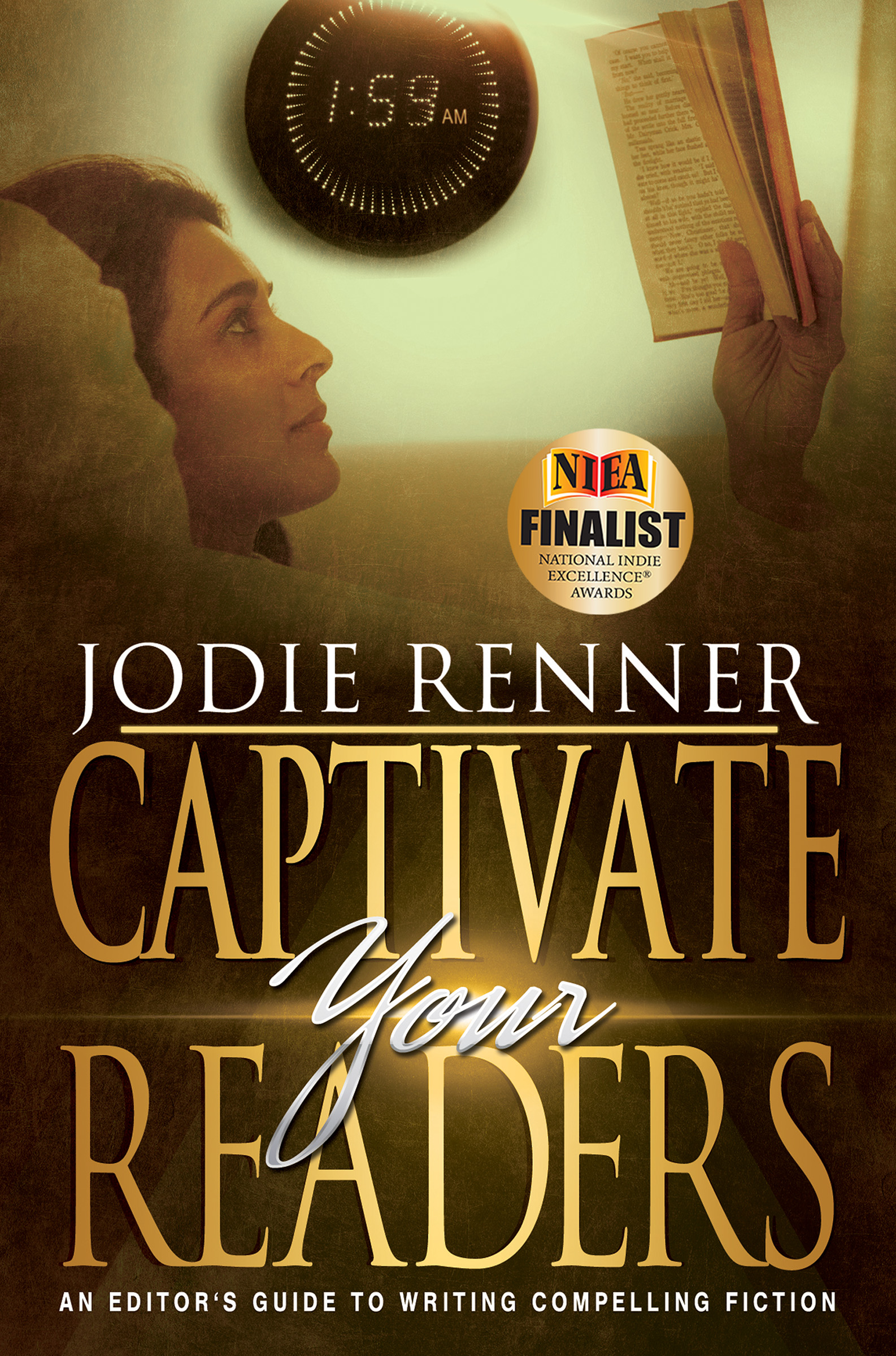
Captivate_full_w_decalby Jodie Renner, editor & author @JodieRennerEd

DO YOUR CHARACTERS’ DECISIONS AND ACTIONS SEEM REALISTIC AND AUTHENTIC?

Have you ever been reading a story when suddenly the protagonist does or says something that makes you think, “Oh come on! Why would he do that?” or “This is crazy. Why doesn’t she…?” or “But I thought he…!” or “I didn’t know he/she could [insert extraordinary ability].” The character seems to be acting illogically, to be making decisions with little motivation or contrary to his personality, abilities, or values

I see this problem a lot in fiction manuscripts I edit. The author needs something to happen for the sake of the plot they’ve planned out in advance, so they force a supposedly intelligent character to do something contrary to common sense and their best interests, like recklessly putting themselves in danger.

For example, I once edited a book where the highly educated, intelligent heroine rose from her bed in the middle of the night and, without telling her husband where she was going or even leaving a note, drove to a remote warehouse to find some incriminating evidence, knowing the killer was likely to return – which of course he did, and attempted to kill her. It made for an exciting scene, but unfortunately, the otherwise savvy character came off looking like a foolhardy, impulsive airhead. I couldn’t help wondering, why wouldn’t she tell her husband? Better yet, call the police and let them handle it.  Even police, who are trained for these situations, usually get backup.

Moving your characters around like pawns to suit the plot, if it doesn’t make sense for who they are, could have your readers scratching their heads in disbelief or, worse, throwing your book across the room, then writing a scathing one-star review of it.

Don’t force your characters, kicking and screaming, into actions they just wouldn’t do.

Readers won’t suspend their disbelief and bond with the character if they don’t “buy” what the character is doing and why. An engrossing story needs realistic characters dealing with adversity in bold but realistic and plausible ways.

To make a character’s decisions and actions convincing, take care when creating their background, character, abilities, and motivations.

Background, character, and personality

Of course, you don’t want to make your hero or heroine ordinary, timid, or passive, with few daring decisions, because that would make for a ho-hum book most readers wouldn’t bother finishing. But on the other hand, if you’re going to have them perform daredevil feats, be sure to build that into their makeup.

First, get to know your main characters well. Take some time to develop their background, character, and personality. Are they athletic or more cerebral? Risk-takers or cautious? Do they embrace change, enjoy challenge, love to learn new things? Or do they prefer to stay within their comfort zone? To plumb their depths, do some free-form journaling in which they express their strongest desires, fears, hopes, secrets, regrets, and gripes.

Are they physically capable of what you want them to do?

Abilities

If, for a riveting plot, you need your hero to do something heroic, almost superhuman, make sure he has the determination, strength, flexibility, and endurance to do that. Although it’s amazing what people are able to do under duress with the adrenaline flowing, it’s more credible if your character is already at least somewhat fit. Does he work out a lot to maintain muscle mass, agility, and endurance? How? Also, he’ll need to be intelligent, skilled, and resourceful.

If he needs special skills, show earlier on that he possesses them and how it all makes sense, given his overall makeup. In one novel I edited, the sedentary, slightly overweight, middle-aged protagonist fought off a strong attacker with quick, expert martial arts moves. This was an “Oh, come on!” moment, given his lifestyle, age, and paunch.

In The Hunger Games, we learn early on that Katniss is an expert at archery, which is a huge factor in her survival later. A nerdy banker probably doesn’t do kickboxing on the side, so you may need to make him less desk-bound and more athletic for it to work. Or give him another profession.

If you’re writing fantasy, of course you have more leeway with unusual characters and situations, but if you’re writing a realistic genre, with no supernatural or paranormal elements, make sure the character’s actions are realistic and make sense.

Motivations

Is your hero sufficiently motivated to put his life on the line? Do those motivations fit with his belief system, background, and immediate needs? If you want or need a character to do something dangerous, go back and give him some burning reasons for choosing that course of action.

Perhaps he finds himself in a life-and-death situation for himself or someone he loves, or innocent people are in grave danger. His love, concern, and determination will make him more selfless and daring, bringing out courage he never knew he had.

As Steven James advises in Story Trumps Structure, as you’re writing your story, ask yourself , “What would this character naturally do in this situation? Is he properly motivated to take this action?”

Causality

Be sure your narrative is also shaped by the logic of cause and effect. For your story to be believable, character decisions and reactions need to plausibly follow the original stimulus or actions. If your character overreacts or underreacts to what has just happened, they won’t seem “in character” or real.

Be sure every decision and action makes sense with what preceded it. As James suggests, as you go along, continually ask yourself, “What would naturally happen next?”

So don’t force your characters to act in uncharacteristic ways because your plot needs them to. Readers will pick up on that. Rather than insisting certain events or actions happen as you had planned, instead allow the natural sequence of events and logical reactions to shape your plotline.

Go through your story to make sure your characters are acting and reacting in ways that are authentic to who they are and where they’ve come from, and that they’re sufficiently motivated to take risks. Also, do their reactions fit with the stimulus? Is that a logical response to what happened?

Ask yourself, as you’re writing, “Is there a way to accomplish this that fits with the character’s values and personality?” If not, I suggest you either change the plot (have them make a different decision and rewrite where that leads them) or go back and change some of the character’s basic attributes, values, and skills. Or add in incidents in their past that have shaped them in ways that will justify their current actions.

That way your plot will flow seamlessly and your characters will seem real. There will be no bumps, no hiccups where readers will be suddenly jolted out of the story.

As William Faulkner advised one of his fiction-writing classes,

“…get the character in your mind. Once he is in your mind, and he is right, and he’s true, then he does the work himself. All you need to do then is to trot along behind him and put down what he does and what he says.”

So don’t impose your preconceived ideas on the character – you risk making him do things he just wouldn’t do. Know your characters really well and the rest will naturally follow.

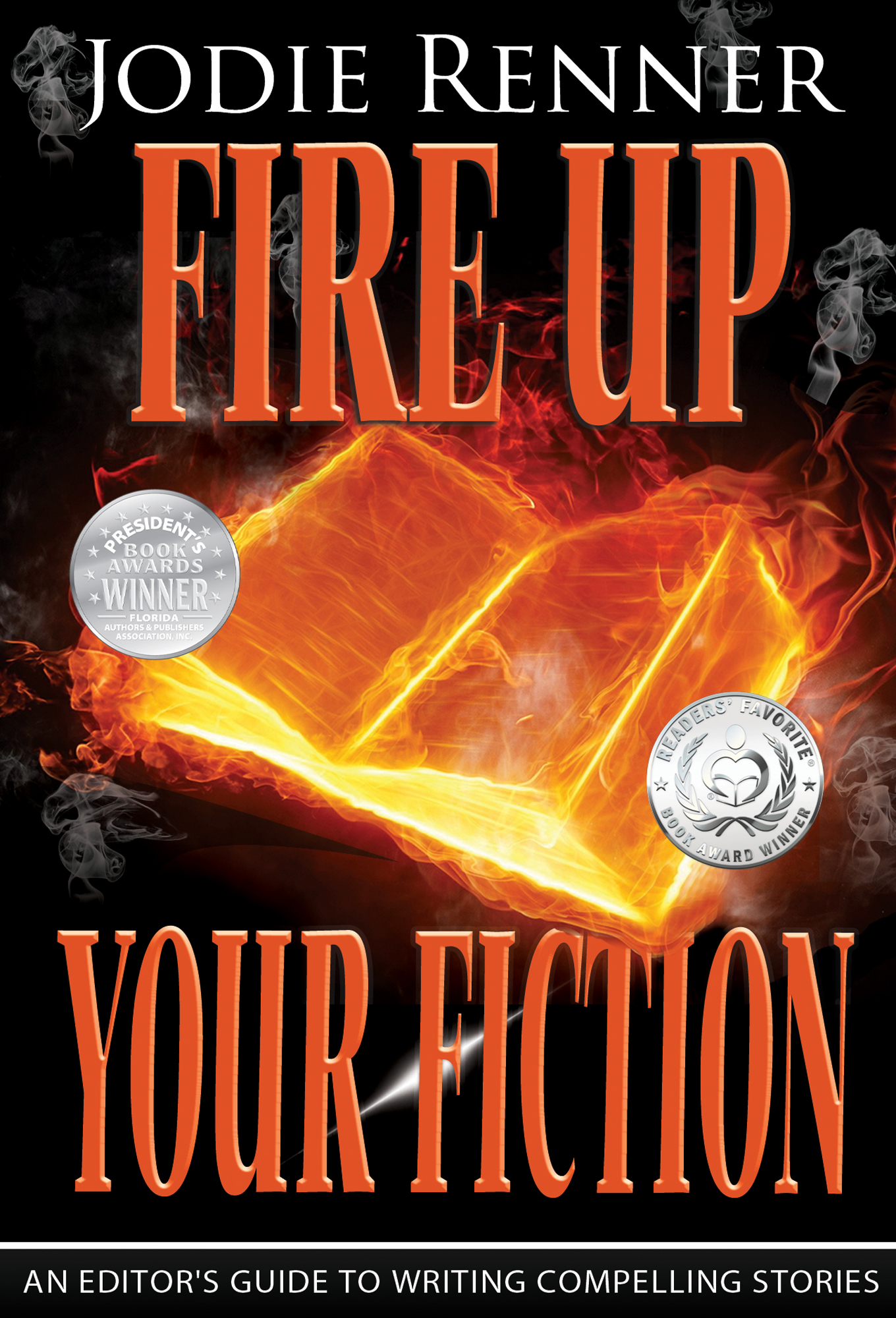
Fire up Your Fiction_ebook_2 silversJodie Renner is a freelance fiction editor and the award-winning author of three craft-of-writing guides in her series An Editor’s Guide to Writing Compelling Fiction: Captivate Your Readers, Fire up Your Fiction, and Writing a Killer Thriller. She has also published two clickable time-saving e-resources to date: Quick Clicks: Spelling List and Quick Clicks: Word Usage. You can find Jodie at www.JodieRenner.com, www.JodieRennerEditing.com, her blog, http://jodierennerediting.blogspot.com/, and on Facebook, Twitter, and Google+.

“Story. Dammit, story!”

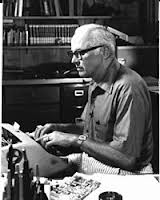
John D. MacDonald typingIn his introduction to Stephen King’s first collection of short stories, Night Shift, John D. MacDonald explains what it takes to become a successful writer. Diligence, a love of words, and empathy for people are three big factors. But he sums up the primary element this way: “Story. Dammit, story!”

And what is story? It is, says MacDonald, “something happening to somebody you have been led to care about.”

I want to home in on that something happening bit. It is the soil in which plot is planted, watered, and harvested for glorious consumption by the reader. Without it, the reading experience can quickly become a dry biscuit, with no butter or honey in sight.

Mind you, there are readers who like dry biscuits. Just not very many.

MacDonald reminds us that without the “something happening” you do not have story at all. What you have is a collection of words that may at times fly, but end up frustrating more than it entertains.

I thought of MacDonald’s essay when I came across an amusing (at least to me) letter that had been written to James Joyce about his novel Ulysses. Amusing because the letter was penned by no less a luminary than Carl Jung, one of the giants of 20th century psychology.   

Here, in part, is what Jung wrote to Joyce (courtesy of Brain Pickings):

I had an uncle whose thinking was always to the point. One day he stopped me on the street and asked, “Do you know how the devil tortures the souls in hell?” When I said no, he declared, “He keeps them waiting.” And with that he walked away. This remark occurred to me when I was ploughing through Ulysses for the first time. Every sentence raises an expectation which is not fulfilled; finally, out of sheer resignation, you come to expect nothing any longer. Then, bit by bit, again to your horror, it dawns upon you that in all truth you have hit the nail on the head. It is actual fact that nothing happens and nothing comes of it, and yet a secret expectation at war with hopeless resignation drags the reader from page to page … You read and read and read and you pretend to understand what you read. Occasionally you drop through an air pocket into another sentence, but when once the proper degree of resignation has been reached you accustom yourself to anything. So I, too, read to page one hundred and thirty-five with despair in my heart, falling asleep twice on the way … Nothing comes to meet the reader, everything turns away from him, leaving him gaping after it. The book is always up and away, dissatisfied with itself, ironic, sardonic, virulent, contemptuous, sad, despairing, and bitter …

Now, I’m no Joyce scholar, and I’m sure there are champions of Ulysses who might want to argue with Jung and maybe kick him in the id, but I think he speaks for the majority of those who made an attempt at reading the novel and felt that “nothing came to meet them.”

I felt a bit of the same about the movie Cake, starring Jennifer Aniston. When the Oscar nominations came out earlier this year it was said that Aniston was “snubbed” by not getting a nod. I entirely agree. Aniston is brilliant in this dramatic turn.

The problem the voters had, I think, is that the film feels more like a series of disconnected scenes than a coherently designed, three-act story. The effect is that after about thirty minutes the film begins to drag, even though Aniston is acting up a storm. Good acting is not enough to make a story.

Just as beautiful prose is not enough to make a novel. Years ago a certain writing instructor taught popular workshops on freeing up the mind and letting the words flow. The workshops were good as far as they went, but this instructor taught nothing about plot or structure. Finally the day came when the instructor wrote a novel. It was highly anticipated, but ultimately tanked with critics and buyers. And me. As I suspected, there were passages of great beauty and lyricism, but there was no compelling plot. No “something happening to someone we have been led to care about.”

Of course, when beautiful prose meets a compelling character, and things do happen in a structured flow, you’ve got everything going for you. But prose should be the servant, not the master, of your tale.

Let me suggest an exercise. Watch Casablanca again. Pause the film every ten minutes or so, and ask:

1. What is happening?

2. Why do I care about Rick? (i.e., what does he do that makes him a character worth watching?)

3. Why do I want to keep watching?

You can analyze any book or film in this way and it will be highly instructive. You’ll develop a sense of when your own novel is bogging down. You can then give yourself a little Story. Dammit, story! kick in the rear.