When was the last time you unplugged completely from the Internet? How long were you offline, and do you think it was good for your writing to do so?
Another Way to Get Your Ebooks into Libraries
Interested in getting your ebooks into libraries and get paid? And would you like to do it without forcing libraries to repurchase your digital offering after a restricted loan count as if it has a limited shelf life? You can upload your ebook into Overdrive or get to Overdrive through Smashwords. Both can be cumbersome systems to work with and have their challenges, there are many e-book programs being developed every year, such as Sqribble, and more and more platforms to read ebooks, not just iBooks.
But I wanted to share a developing alternative.
EbooksAreForever
EbooksAreForever is a platform to help libraries sustainably purchase ebooks from independent authors and publishers. It was launched in March 2014. Since it’s new to me, and I’d been looking for a means to reach out to libraries for my indie pubbed and backlist novels, I thought I’d share what I found.
Ebooksareforever’s philosophy is based around sustainability. They believe libraries should be able to buy ebooks at affordable prices. Since ebooks are digital and not physically degradable items, libraries should be able to own and offer them to loan for eternity.
Authors JA Konrath and August Wainwright co-founded ebooksareforever to sell DRM-free ebooks with no re-licensing restrictions.
“We deliver a curated collection of titles from independent authors and independent publishers and make it as simple as possible for both the author/publisher and the library to interact with the collection and to fairly compensate the author/publisher for every transaction.”
—August Wainwright, co-founder
How does EbooksAreForever work?
I’m excited at the prospect of having a new avenue into libraries, but understandably, libraries need a gatekeeper to ensure quality. How does that work?
Every author and book is approved by a curation team. “We need this because we’re working hand in hand with libraries”, says Wainwright, “and we need to deliver what they’re asking for. We assess by reviews, number of titles the author has available, whether those titles are in a series, quality of cover art, interest in libraries, and genre saturation in our system. We couldn’t be taken seriously if, say, 80% of our titles were romance. It equally wouldn’t work if every book had to have at least 200 reviews on Amazon.”
Good news. If your book is rejected, you can reapply 60 days later.
Each book is purchased by a library on ‘perpetual license’. They pay once and they can use it forever. Only one copy can be checked out at a time.
Will authors get paid?
Yes. Titles are sold to libraries for $7.99 (full-length) and $3.99 to $4.99 for shorter works. Authors receive 70% royalty of every sale.
Ebooksareforever says it hopes to evolve the submission/rejection process once the business grows and the system flourishes, but the current focus is on developing and sustaining a robust system which is a trusted resource and popular with libraries.
They are also working on ‘patron apps’ which will break the business out of the US and allow global libraries to purchase titles with patrons loaning copies using universal apps. This system should also see broader opportunities for author payment. A very exciting prospect.
PROS
• Free to submit
• Author payment
• Set up by authors for authors
CONS
• There are rigorous curation efforts that favor series and higher-profile authors
• For now, it’s limited to US-only
Discussion:
What have you heard about EbooksAreForever?
Any other ways to distribute your ebooks into libraries besides the ones I’ve mentioned?
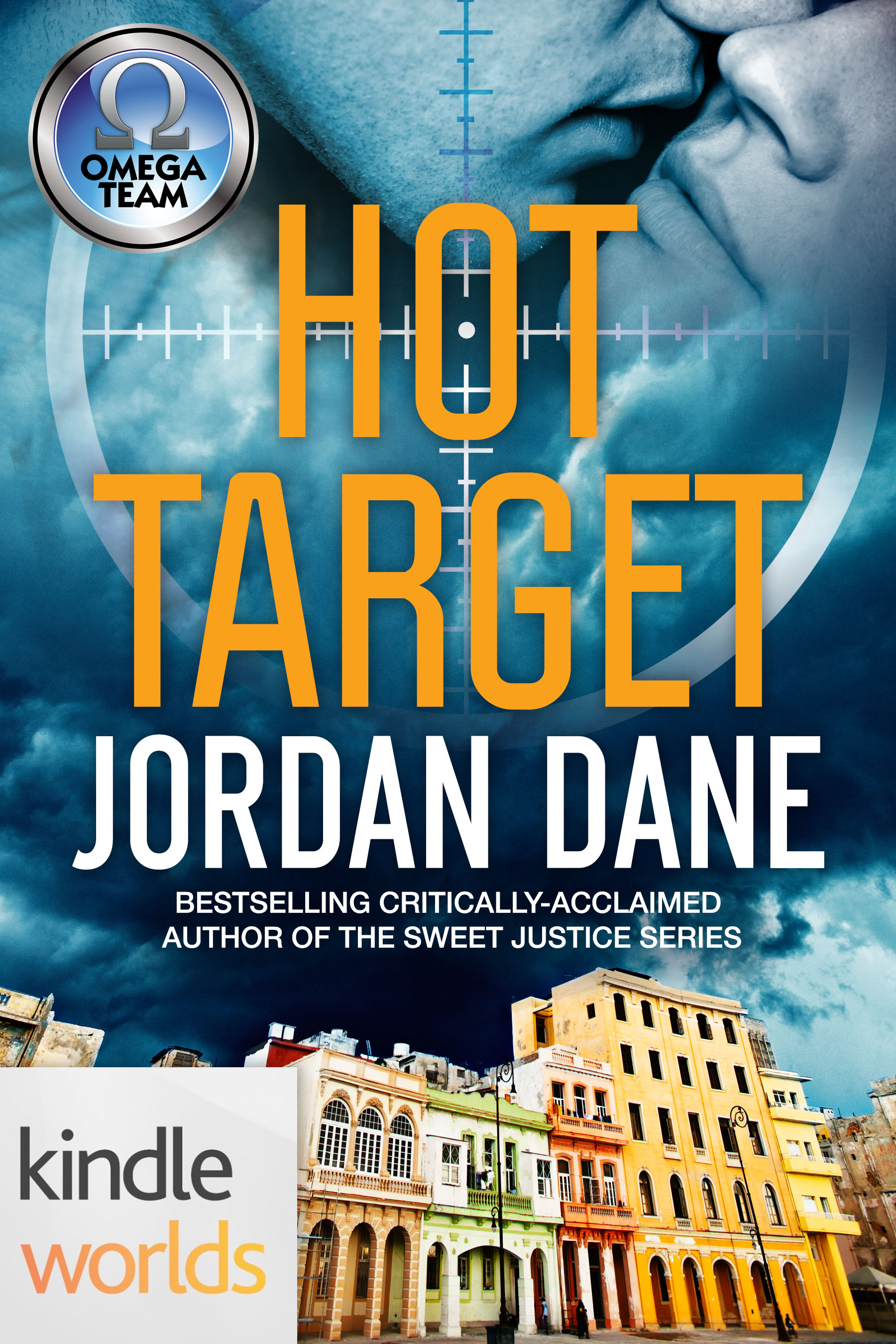
The Last Victim available for ebook preorder at a discounted price. After release, will be available in print and ebook formats.
Too Fast, Too Slow, Just Right
The story in most novels takes place over a period of time. Some are condensed to a few hours while many epic tales span generations and perhaps hundreds of years. But no matter what the timeframe is in your story, you control the pacing. You can construct a scene that contains a great amount of detail with time broken down into each minute or even second. The next scene might be used to move the story forward days, weeks or months in a single pass. If you choose to change-up your pacing for a particular scene, make sure you’re doing it for a solid reason such as to slow the story down or speed it up. Remember that as the author, you’re in charge of the pacing. And the way to do it is in a transparent fashion that maintains the reader’s interest. Here are a couple of methods and reasons for changing the pace of your story.
Slow things down when you want to place emphasis on a particular event. In doing so, the reader naturally senses that the slower pace means there’s a great deal of importance in the information being imparted. And in many respects, the character(s) should sense it, too.
Another reason to slow the pacing is to give your readers a chance to catch their breath after an action or dramatic chapter or scene. Even on a real rollercoaster ride, there are moments when the car must climb to a higher level in order to take the thrill seeker back down the next exciting portion of the attraction. You may want to slow the pacing after a dramatic event so the reader has a break and the plot can start the process of building to the next peak of excitement or emotion. After all, an amusement ride that only goes up or down, or worse, stays level, would be boring. The same goes for your story.
Another reason to slow the pace is to deal with emotions. Perhaps it’s a romantic love scene or one of deep internal reflection. Neither one would be appropriate if written with the same rapid-fire pacing of a car chase or shootout.
You might also want to slow the pacing during scenes of extreme drama. In real life, we often hear of a witness or victim of an accident describing it as if time slowed to a crawl and everything seemed to move in slow motion. The same technique can be used to describe a dramatic event in your book. Slow down and concentrate on each detail to enhance the drama.
What you want to avoid is to slow the scene beyond reason. One mistake new writers make is to slow the pacing of a dramatic scene, then somewhere in the middle throw in a flashback or a recalling of a previous event in the character’s life. In the middle of a head-on collision, no one stops to ponder a memory from childhood. Slow things down for a reason. The best reason is to enhance the drama.
A big element in controlling pacing is narration. Narrative can slow the pace. It can be used quite effectively to do so or it can become boring and cumbersome. The former is always the choice.
When you intentionally slow the pace of your story, it doesn’t mean that you want to stretch out every action in every scene. It means that you want to take the time to embrace each detail and make it move the story forward. This involves skill, instinct and craft. Leave in the important stuff and delete the rest.
There will always be stretches of long, desolate road in every story. By that I figuratively mean mundane stretches of time or distance where nothing really happens. Control your pacing by transitioning past these quickly. If there’s nothing there to build character or forward the plot, get past it with some sort of transition. Never bore the reader or cause them to skip over portions of the story. Remember that every word must mean something to the tale. The reader assumes that every word in your book must be important.
We’ve talked about slowing the pacing. How about when to speed it up?
Unlike narration, dialog can be used to speed things up. It gives the feeling that the pace is moving quickly. And the leaner the dialog is written, the quicker the pacing appears.
Action scenes usually call for a quicker pace. Short sentences and paragraphs with crisp clean prose will make the reader’s eyes fly across the page. That equates to fast pacing in the reader’s mind. Action verbs that have a hard edge help move the pace along. Also using sentence fragments will accelerate pacing.
Short chapters give the feeling of fast pacing whereas chapters filled with lengthy blocks of prose will slow the eye and the pace.
Just like the pace car at the Indianapolis 500 sets the pace for the start of the race and dramatic changes during the event such as yellow and red flags, you control the pace of your story. Tools such as dialog versus narration, short staccato sentences versus thick, wordy paragraphs, and the treatment of action versus emotion puts you in control of how fast or slow the reader moves through your story. And just like the colors on a painter’s pallet, you should make use of all your pacing pallet tools to transparently control how fast or slow the reader moves through your story.
What additional techniques do you use to control pacing?
——————————–
Max is back! THE BLADE, book #3 in the Maxine Decker thriller Series is now available in print and e-book.
How Long Should a Chapter Be?
Half of art is knowing when to stop — Arthur William Radford
By PJ Parrish
This must be the week for throwing out lifesavers. Sunday, James wrote about hearing from a former student who needed help getting over his writing paralysis. Good post for all of us, so click here to read it.
Yesterday, I got an email from a participant who took the two-day fiction-writing workshop Kelly and I gave last summer at Saturn Booksellers in Gaylord, MI. This woman was our best student and her sample chapters showed real promise. She absorbed stuff like a little sea sponge, took criticism like a pro, and was eager to get back to work on her story. But then came her email. Here is her nut graph:
This is probably a dumb question but I can’t find the answer anywhere and I am really worried that I am letting it get to me and prevent me from moving forward. My question is: How long should chapters be?
I started to write her back then realized this is one of those “dumb” questions that isn’t really that dumb. So I am writing to her via our group here at TKZ. Because I know you guys will help me give her a good answer. So…
Q: How long should chapters be?
A: As long as they need to be.
{{{Well, hell, that’s a big help, Sen-Sen breath.}}}
Patience, grasshopper.
Okay, here’s the facile technical answer, according to what I found through a quick Google of writer’s sites: The average word count for a novel is about 4,000 words. For genre fiction, it tends to be about 2,500 and shorter for YA. (The thought being, apparently, that young folks have short attention spans or fall asleep easily. But that didn’t seem to deter JK Rowling.)
This word count thing, as we all know, is about as helpful as advising an aspiring novelist to start at the beginning and keep going until the end. But the email from my workshop friend did get me thinking about the structure of chapters, and how often, when I read a manuscript, I see the writer struggling to figure out how and when to bring a chapter to a graceful, logical and satisfying end.
So I’m going to turn the question around a bit and focus on a different question I often ask of writers, be they raw beginners or even my seasoned critique group buddies:
What is the purpose of this chapter or scene?
I think sometimes we all can lose sight of this important question. As we write, we often charge through scene after scene propelled by raw passion, or a desperate desire to get it all down before it disappears, or grim determination to make a self-imposed daily word quota. In that mad rush, we can lose the focus of what the chapter should be trying to accomplish. You’ve heard this advice, I’m sure:
Make your writing muscular.
Now, that refers to all the usual stuff about using sturdy verbs, active voice, lean evocative description etc. But I think it also means that we should strive to make each scene, and by extension each chapter, work hard to propel the story forward. Maybe I can explain by showing you how Kelly and I approach this. We’re sort of pantsers in outliner’s clothing. We Skype every couple days and talk out where the book is going next. We can see about five or six chapters ahead at a time. We then write out a rough template of those chapters/scenes and what we hope to accomplish in each one. Here’s the actual template for our WIP Louis Kincaid book. Skim as needed:
CHAPTER ONE – Date?
Boys in box. Two unnamed terrified boys are fleeing someone in the dark and hide in a closet. No suggestion of place or date.
CHAPTER TWO – day 1 Saturday April 6:
Louis arrives at church and talks briefly with Steele. Intro Steele as main character. Brief Louis backstory reference on why he is here.
CHAPTER THREE – day 2:
Louis finds new apartment and unpacks his mementos. Insert thoughts about daughter and Joe. Phone call from Joe maybe? Very brief backstory reference to what happened in DOW with Steele. Stress that Louis feels really good about wearing a badge again after wandering so long in PI wilderness. (Set up for Steele show-down later).
CHAPTER FOUR – day 3 Monday morning April 8
Back at remodeled church. Team members show up. Brief info about structure of this State police task force. Steele gives intros and they take their cases. Louis chooses Boys in the Box case.
CHAPTER FIVE – day 3 late night
Emily comes and they go to dinner at bar and talk. Character enhancement scene and intro Emily with bit of FBI backstory. Set up hint that something is troubling Emily (later will reveal suicide of parents, which is why she balks at her assigned case later in book).
CHAPTER SIX – day 4
The meeting in the choir loft. As Louis is packing up file and getting read to leave, he can’t resist asking Steele why? Backstory on what exactly happened in Loon Lake 5 year ago (in L’s thoughts) and what changed Steele’s mind about Louis. Est. tension with Steele.
CHAPTER SEVEN – day 4 later
Louis makes long drive to Upper Peninsula. Heavy description to est mood and sense of remoteness. Meets Sheriff Nurmi. He is invalid but sharp as a tack. They discuss the cold case about boys in box.
Scene break or new chapter?
Louis goes to evidence room and examines the box. Sees marks on inside lid and realizes boys tried to claw way out.
Scene break or new chapter?
Louis goes to local cemetery to see boys graves but can’t find them. More talk with Sheriff Nurmi about what happened to the boys remains. Nurmi suggests he talk to old Rev. Gandy who presided over boys memorial service.
CHAPTER EIGHT or NINE?? Late that day.
Louis checks into the local inn. Reviews case file of boys in his room. Heavy case info scene. Est time line clearly over last 20 yrs of cold case. L Goes to dinner, talks to locals but no one remembers the boys from 20-odd years ago. He drinks too much, falls asleep and has a bad nightmare (IT ECHOES THE OPENING CHAPTER BUT ONLY OBLIQUELY.) Wakes up in a sweat and goes for a scary night run on the Lake Mich. Shore. Feeling of extreme disquiet.
NEXT CHAPTER – early next morning.
Louis goes to visit the abandoned copper mine where the boys in the boy were found. Build Creepy atmosphere. He finds the Catholic medal but it’s too old so he doesn’t know what it is. Other mementoes found? Goes to see Rev. Gandy?
When we do these quick sketch templates, we are hyper-aware of the need to make each chapter “muscular,” to make it work in hard-harness to pull the plot along. But it’s not just about plot here. We also look for secondary purposes, like opportunities to inject spurts of backstory (and thus avoid one giant info-dump) or to illuminate characters or their motives.
Also, by articulating the main focus and the secondary purposes of each chapter BEFORE we start writing, we are positioning ourselves to be able to better recognize a logical place to END each chapter instead of just allowing the chapter to peter out through pure exhaustion or inertia. Which brings me to my next point:
Every chapter should have its own dramatic arc.
We talk a lot here at TKZ about how your entire story have a dramatic arc. But I think it’s helpful to think of each scene/chapter having its own mini-arc. Think, before you write, about what you need to accomplish in each chapter and focus your output to that end. Of course you will veer off on digressions and detours and deadends – that’s why they call it creative writing! But if you have defined the central focus of each chapter beforehand, you will be less tempted to fill the screen with mere typing.
I suspect you will find that each mini-arc has its own natural little conclusion. Think of the end of each chapter as a sort of pause, almost like you are taking a breath before moving on. That’s what you are asking the reader to do if you are breaking your chapters at the right moments. You are sending a subtle signal to the reader: Okay, I’m going to give you a second to catch your breath here. Ready? Now turn that page and let’s move on…
One great thing about crime fiction, propelled as it is by the needs of strong plot, is that it tends to give us plenty of obvious places to end chapters. Here are a couple:
- A significant shift in time or place.
- A change in point of view.
- A new plan of action. You show cops outside planning and preparing to go rescue a hostage. Stop there, then open next chapter with the action itself.
- Introduction of a new twist or information. Say your hero has just learned about a huge new clue. Stop there, then build a bridge to the next chapter. In our last book, Heart of Ice, Louis finds forensic evidence that tells him he has the wrong suspect. It’s a devastating twist that sends the plot careering off in a new direction, so we end with Louis’s partner saying, “Now what?” And Louis says, “We start over. And this time we don’t make any assumptions.” The next chapter opens with Louis back at the murder site, reassessing the evidence.
- The classic cliffhanger. In Heart of Ice, Louis chases a black hat out onto frozen Lake Huron. Here are the last lines of the chapter:
A loud crack, like a rifle shot.
Louis froze. Afraid to look down, afraid to even take a breath.
Another crack.
The world dropped.
Good storytelling is musical. It has pacing and rhythm, and no two writers have the same rhythmic style. If you are doing a good job of identifying the mini-arcs in your chapters, your readers will start to get a feel for your rhythm and will begin to even anticipate it. Which is partly what successful pacing is about: Your reader moving in sync to your writerly rhythms.
So should all your chapters be about the same length? Hard to say. I like a certain consistency when I read and when I write. My chapters tend to run about 2500 words. But when I am nearing the end of the story or in the middle of an action sequence, the chapters tend to get shorter. And sometimes, it just feels right to throw a really short chapter in there to shake things up. Stephen King has a chapter in Misery that’s one word: “Rinse.” And William Faulkner had this classic in As I Lay Dying: “My mother is a fish.” I mean, what can you say after that? So go short if you need to. Vary your rhythm like a scatting Ella. But make it all work as a whole, with purpose, passion and music. Which always comes down to…
Get me rewrite, baby.
Don’t sweat chapter numbering in your first draft. Strive instead for that mini-arc structure and you’ll find, when you go back in the hard light of rewrite time that the story has its own pacing. You might find you need to merge two chapters that feel anemic, or that you need to break up two that feel bloated or aren’t organically connected. In rewrite, you can go back and really listen hard for that natural intake of reader-breath, that pause. Which leads me to the perfect ending…
Gone Walkabout
Avoiding Writing Paralysis Due To Over-Analysis
Got a lengthy email from a writer who has attended my workshops in the past. He gave me permission to paraphrase the gist of his lament.
This writer has worked on his craft for years and felt he was making progress. He produced three novels, and at a conference had good feedback from an editor with a big publishing house. This editor told him it was not a matter of if, but when, he would get a contract from them. He was invited to submit at any time.
That was in 2012. To date he has not submitted anything.
What happened? He describes it as “paralysis by over-analysis.”
I cannot seem to get past the prison of being perfect in the first draft. Like writer’s block, it’s a horrible place to reside. Sometimes its paralyzing to start. At other times its critical negative talk in my mind remembering those sessions I attended.
The sessions he mentions came from joining a local critique group. Unfortunately this was one of those groups that was run by a large ego. The group sessions seemed mostly to be about “building themselves up by tearing down others.” Though this writer had great feedback from beta readers, his confidence was completely shaken as his pages were systematically massacred in the meetings. He finally left the group, but…
… I’m left with a nagging residual feeling that whatever I am writing it not good enough. I continue to write and rewrite my first chapters, never satisfied they’re ‘good enough’ to move on. Even though I’ve not lost the love of the story and series, I have lost confidence in my writing.
Finally, he asks:
Are we wrestling ourselves to be so perfect in a first draft we do not allow for a full first draft to later tackle or add (or subtract) to or from in revision? And why are we so pressured to get it perfect in the first draft? What can we learn or do to get out of that futile mental process?
I wrote him back with some advice, and thought it would be good to expand upon it here. It is based on Robert A. Heinlein’s Two Rules for Writing and Bell’s Corollary.
Heinlein’s Two Rules for Writing:
- You must write
- You must finish what you write
Bell’s Corollary
- You must fix what you’ve written, then write some more
You must write
Like the old joke says, if you have insomnia, sleep it off. And if you suffer from writer’s block, write yourself out of it.
With the paralysis-by-over-analysis type of block, your head is tangling itself up in your fingers, like kelp on a boat propeller. The motor is chugging but you’re not moving. You’ve got to cut away all that crud.
How?
First, write to a quota. I know some writers don’t like quotas, but all the professional writers who made a living in the pulp era knew their value. Yes, it’s pressure, but that’s what you need to get you past this type of block.
Second, mentally give yourself permission to write dreck. Hemingway said that all first drafts where [dreck]. So tell yourself that before you start to write. “I can write dreck! Because I can fix it later!”
Third, do some morning writing practice. Write for 5 minutes without stopping, on any random thing. Open a dictionary at random and find a noun and write about that. Write memoir glimpses starting with “I remember…”
If you’re an extreme paralysis case, try a dose of Dr. Wicked’s Write or Die. This nifty little online app (you can also purchase an inexpensive desktop version) makes you write fast or begins spewing a terrible noise at you. Set your own goal (e.g., 250 words in 7 minutes) and then GO. This could be extremely nerve-racking for some that are trying very hard but not getting anywhere, some writers have tried to free their minds with CBD products like cbd gummy bears and other products.
You are teaching yourself to be free to write when you write.
You must finish what you write
I always counsel writers to write their first drafts as fast as they comfortably can. This means:
- You step back at 20K words and make sure your fundamental structure is sound (are the stakes high enough? Are you through the first Doorway of No Return?) If you are worried about structure, just think of it as writing from signpost to signpost.
- You only lightly edit your previous day’s work, then move on and write to your quota.
- Then you push on and finish.
You must fix what you’ve written …
The time to dig into a manuscript is after it’s done. Put your first draft away for at least three weeks. Then sit down with a hard copy and read the thing as if you were a reader with a new book.
Take minimal notes. Read it through it with one question in mind: “At what point would a busy reader, agent, or editor be tempted to put this aside?”
Work on that big picture first.
Read it through again looking at each scene. Here is where craft study comes in. It’s like golf. When you play golf, just play. Don’t be thinking of the 22 Things To Remember At Point Of Impact on The Full Swing. After a round is when you look back and decide what to work on in practice. And when you have a good teacher to help, you learn the fundamentals and you get better.
Same with writing. There are good teachers who write good books and articles and blogs, and lead workshops. Learn from them. Use what you learn to fix your manuscript after the first draft is done. When you write your next book, those lessons will be in your “muscle memory.” You’ll be a better writer from the jump.
And here I should issue a general warning about critique groups. As with everything in life, there’s the good, the bad, and the ugly. If you find a good, supportive critique group, fantastic. But know there are toxic critique groups, too. Those are usually dominated by one strong voice, with iron-fisted rules about what can never be done, like: Never open with dialogue! No backstory in the first fifty pages! Don’t mention anything about the weather in the first two pages!
There can also be a tone of such ripping apart that soon enough, when you’re all alone, you’ll freeze up over every sentence you write. That’s what happened to the writer of the email.
For further advice on critique groups, see these posts by P. J. Parrish and Jordan Dane.
Paying for a good, experienced editor at some point is worth it. How do you find one? Research and referrals. There is now an abundance of editors out there who used to work for New York houses, until the staffing cutbacks of the last few years. The cost of this is high. Expect between one and two grand. If that’s beyond your budget, then hunt down and nurture a good, solid group of beta readers. See the advice of Joe Moore.
Then write some more
The name of this game is production. My correspondent mentioned a writer he knows who spent eight years workshopping and conferencing the same book, until realizing it would have been much better writing eight books instead.
Make a book a year your minimum. If you want to be a professional writer you have to be able to do at least that. Is it easy? No. If it was, your cat would be writing novels. But as Richard Rhodes put it once, “A page a day is a book a year.” One book page is 250 words.
Just. Do. It.
The good news is I got an email from this author after I answered him and he said
I spent the bulk of Tuesday at the keyboard and wrote/fixed about 4500 words in one of four sessions. I feel liberated and just wanted to thank you. So thank you. Your Rx for my dilemma has been like a reset button. One long overdue.
So, TKZers, have you ever suffered from paralysis by over-analysis? How did you free yourself up to write?
On the Road
I have been known to use this space to prattle on a bit about how to get that creative spark exploding, using a bit of this or that. Here I go again.
I had no idea at all until a couple of hours ago that there is a low-cost transportation service popularly known — to those who know it at all — as the Chinatown bus. Its service area is expanding by the month but its purpose is to get you from your city of residence to Chinatown in New York. It can do this from Columbus, Ohio, to name but one place, for around thirty dollars (the more you plan ahead, the less a ticket will cost you). You show up on the second block of East Main Street downtown at the day and time appointed — buses leave twice a day — and twelve non-stop hours later you are dropped off at a storefront in New York’s Chinatown. I was familiar with Megabus and some of the other curb-to-curb interstate bus services but this is a new one for me. The service has its own website which you can use to book a trip and also discusses the company’s history, which is extremely interesting as well. I managed to quickly find a couple of folks who have used this and who told me some extremely interesting stories about using it. While the service was originally designed to accommodate Chinese and other Asian immigrants, anyone can use it with some money and planning.
Think about that: a non-stop trip to New York for less than it would cost you to drive there. If you got on the bus wanting inspiration, you would almost certainly have something in mind by the time you reached your destination, just by observing your fellow passengers and taking notes. If you weren’t inspired by the trip, certainly being dropped off in the middle of New York will get those creative juices percolating. I’m thinking — yes, you do smell smoke — of taking the Chinatown bus to Thrillerfest XI just for grins next year. And maybe just for the heck of it before that. I may even put it on my bucket list.
Does this appeal to you? Would you use such a trip — or any trip — as an inspirational jump starter? Or do you regard travel, regardless of mode, as a necessary evil that enables you to get where you want to go, and nothing more? And do you have a favorite travel story or novel? Mine is — of course — ON THE ROAD by Jack Kerouac, typed on a roll of toilet paper. Yours?
Reader Friday: Noodling
Let’s Discuss Book Promotion Resources
Off the top I will say that spending a great deal of time doing promotion, instead of writing, is probably not a good thing. Even if you’re an indie author, having inventory to sell is a key way (the best way) to keep your work in front of readers.
Writing new material should be a goal for every author. Having said that, book promotion is a necessary evil, even if you’re traditionally published with book tours and appearances, but even more so if you are an indie or hybrid author straddling business and creative lines.
So let’s talk about promo. It’s been awhile since I looked into this topic. Even if you are traditionally published, it can help to enhance your sales if you assist your publisher with your own marketing strategy – something that isn’t redundant with what they may be doing for you. The average author today can not escape promoting their own books, no matter how big their publisher might be.
Promotion Resources:
BookBub still is a popular option if you are lucky enough to get your book selected by them. It can be costly (depending on what genre you pick to promote your book in) but I’ve heard authors have good odds of making the expense pay off in sales because you get your book in front of readers of your genre. Always a good thing.
Other popular options are:
BookBuzz is a fee-based service company that will help you promote your book in various packages, including getting your book listed on NetGalley for reviews (which costs money). The fees are reasonable and you choose which package best fits your purposes and budget.
BookGorilla is a reader-based service that sends out emails daily, listing great books deals. If you’re offering your book at a discount upon release or for preorder, this might be a good place to reach a vast list of reader members.
Upload Service Question:
For those of you in “the know,” is there a service that will input a new release book into 50+ reader-based sites for a fee? I seem to recall there used to be one but I’ve had trouble locating it online. It would certainly be a cool feature for any author or publisher to find a service like this.
Facebook Parties:
Many authors add Facebook Parties to their launches. It could be part of a virtual tour offered by a service company. It helps to have more than one author of a genre to make the party more fun and generate interest. Has anyone had success with a Facebook Party for a crime fiction book? (Romance and Erotica authors do these quite a bit.)
Promo Question:
Does anyone have promo sites for either promotion service companies to generate buzz or reader-based sites to get new releases into readers’ hands that have paid off? It’s often hard to quantify whether a fee has paid off in book sales, but please share anything you’ve tried with success. I’m especially interested in services for crime fiction, mystery, suspense, and thrillers.
I hope you’ll share what has worked for you. Please join in the discussion. Below are links to promote free or discounted books. Hopefully some are new to you.
ENT (E-Reader News Today)
Pixel of Ink
The Reader Cafe
Free Booksy
Kindle Nation Daily
Digital Book Today
Free Digital Reads
http://ereaderutopia.com/
http://www.humanmade.net/submission-form
http://www.orangeberrybooktours.com/
http://www.bookblast.co/advertise/advertise.php
https://www.themidlist.com/
http://www.ebooksoda.com/
http://www.masqueradecrew.com/2014/10/advertising-options-from-masquerade-crew.html
http://newfreekindlebooks.com/authors
http://kindlemojo.com/
http://www.thekindlebookreview.net/advertise-here/
http://www.bookbear.info
http://www.totallyfreestuff.com/
http://www.icravefreebies.com/contact/
http://blog.booksontheknob.org/about-this-blog-and-contact-info
http://freebooksy.com/editorial-submissions
http://www.kindleboards.com/free-book-promo/
http://indiebookoftheday.com/authors/free-on-kindle-listing/
http://freekindlefiction.blogspot.co.uk/p/tell-us-about-free-books.html
http://www.freeebooksdaily.com/
http://www.freebookshub.com/authors/
http://www.ereaderiq.com/about/
http://ebookshabit.com/about-us/
http://www.blackcaviar-bookclub.com/free-book-promotion.html#.UXFB27XYeOc
http://www.kornerkonnection.com/index.html?fb=ebookkornerkafe
Evolution of a Bad Guy
When I began plotting my second paranormal mystery, Bubba Done It, I knew one thing for sure. All the suspects had the nickname of Bubba. Other than that, I didn’t have a clue.
Before I could cast men in the suspect roles, I considered my setting and the types of characters I needed. I’m familiar with the setting as I use a fictional locale that’s similar to where I live in coastal Georgia. We have townies and imports. We have people with plenty and people with nothing. We have blacks, whites, Hispanics, Asians, even Native Americans. We have a stalled economy and our share of foreclosures.
All of the top suspects needed a motive to kill the banker. Some motives I considered were previous criminal record, financial trouble, and love.
The sheriff immediately adds four Bubbas to his suspect list. Since seafood is the main industry around here, it would be good to have a fisherman Bubba. I also wanted someone who’d moved to the county as a retiree, someone who didn’t quite get locals or their customs. That worked. Two Bubbas down, two to go.
Drugs are a universal problem in today’s world. I decided upon a Bubba with a bad track record as a crackhead, but who had allegedly reformed into an evangelist.
Lastly, I wanted to ensure my sleuth Baxley Powell had a definite call to action. She’d taken the heat in Book 1 as the top suspect, so for Book 2, I found a patsy in her brother-in-law. Why would he want to kill the banker? Baxley knew her Bubba was a dreamer who often needed money for get-rich-quick ventures. Baxley and her husband had bailed Bubba Powell out of financial scrapes for years.
With her husband dead, the task of saving Bubba fell to Baxley. She’s certain he couldn’t have done it.
Or at least she feels that way at first. With each layer of story revealed, she discovers more reasons for the Bubbas to have killed the banker. Her challenge is to sort through the evidence, in this world and the next, to finger the killer.
To summarize:
Populate your suspect list with characters fitting to your setting and situation.
Give the suspects motives to kill your victim.
Layer the suspects’ relationship with the victim to create complex characters.
Make sure the sleuth has a clear call to action.
Buy links for Bubba Done It:
Kindle
Amazon hardcover
B&N hardcover
Connect with Maggie on the web:
Website | Facebook | Twitter | Blog | Goodreads | LinkedIn | Pinterest | Booklover’s Bench |
Amazon Author Central
Southern author Maggie Toussaint is published in mystery, romantic suspense, and science fiction (writing as Rigel Carson). The third book in her Cleopatra Jones mystery series recently won the Silver Falchion Award, while her romances have won the National Readers’ Choice Award and the EPIC eBook Award for Romantic Suspense. Her latest mystery is a book two of her paranormal cozy series about a psychic sleuth, Bubba Done It.