Tips to Include Pets in Fiction

By Sue Coletta

I love writing pets into my stories. Not only is a great way to show a killer’s soft side, but they’ve become important family members for my main characters. In my stories, I’ve used a Rottweiler, English Mastiff, St. Bernard, a calico, tabby, and all-black cat, pet crows, and a black bear.

I’ve even borrowed a friend’s Bulldog, but I felt so responsible for him, I couldn’t include him like I’d originally planned. God forbid I returned him emotionally scarred from the experience. It’s much safer to create a fictional pet.

Need a way to show your character’s quirky side? Include a bearded dragon, snapping turtle, boa, tarantula, or exotic bird.

Is your character adventurous? Give him a pet moose, lion, leopard, or tiger to love. How ‘bout a pet elephant? When writing about pets let your imagination soar.

Fit the pet to a specific character to cue readers about their personality. By using well-thought-out animals, it can say a lot about who they are, where they live, or even, their state of mind. It’s also fun to juxtapose. Give a tattooed biker a Chihuahua or toy poodle. Readers will love it!

A few things to keep in mind when writing pets into fiction…

If you kill the pet, you better have a damn good reason for it, a reason readers will understand.

For example, not long ago my husband and I watched John Wick. [SPOILER ALERT] I fell in love with the Beagle puppy his dead wife sent from the grave. When the bad guys murdered the dog I almost shut off the movie. If my husband hadn’t begged me to keep watching, that would’ve been it for me. Turns out, this moment kicked off the quest (First Plot Point in story structure). Not only is it an important scene, but if it didn’t happen there’d be no story. See? Understandable reason why he had to die. John Wick would not have gone ballistic over a stolen car. The puppy was the only thing left he cared about. It had to happen.

The safer option is to not harm the pets.

Why Does the Character Have That Specific Pet?

As I mentioned earlier, you need to know why the character chose that pet. Is he lonely? Does a couple use their pets to fill a maternal/paternal need? Are you using that pet as a way to show the character’s soft side? Does the pet become the only one who’ll listen to their fears, sorrow, or hidden secrets? In other words, for an introverted character, pets can assume a larger role in the story so your character isn’t talking to him/herself.

As the writer, you need to know why that dog, cat, bird, lizard, or bear is in the story and what role they play. Does a K9 cop track criminals? Did your criminal character train a horse to be the getaway driver? Does the killer feed his pet hogs or gators human flesh? Knowing why that fictional pet exists is crucial.

What’s the Pet’s Personality?

Animal lovers know each pet has his/her own personality. If you’ve never owned the pets you’re writing about, then I suggest doing a ton of research till you feel like you have. For example, while writing Blessed Mayhem I needed to know how crows communicated and how people could interpret their calls. What separated a crow from a raven, what they felt like, what they smelled like, what foods they enjoyed most. In order to make the characters real I spent countless hours of research into the life of crows. I even went so far as to befriend a crow of my mine. Turns out, Poe was female. It didn’t take long for her to bring her mate, Edgar. When they had chicks, they brought them too. It’s turned into a very special experience (story for another time).

What Does the Pet Look Like and How Does S/he Act?

First, you must know the basics … their markings, voice, breed, habitat, diet, etc. Then delve deeper into the expressions they make when they’re happy, content, sleeping, aggravated, and downright pissed off. Every animal has their own unique personality, mannerisms, and traits. Evoke the reader’s five senses. Don’t just concentrate on sight. By tapping into deeper areas, our fictional pets come alive on the page. A scene where the hero or villain cuddles with a pet can add a nice break from the tension, a chance to give the reader a moment to catch their breath before plunging them back into the suspense.

Plus, pets are fun to write.

Does the Basset Hound snore so loudly he keeps the rest of the family awake? Is he now banished to the garage at night? Does the German Shepherd’s feet twitch when he’s dreaming? Does the Mastiff throw his owner the stink-eye when he can’t reach his favorite toy?

Let’s talk dogs. They do more than bark. Use their full range of grunts, moans, groans, happy chirps, and playful growls when your character plays tug-of-war. For cats, nothing is more soothing than a purr rattling in their throat as your character drifts asleep. Soft claws can massage their back after a brutal day.

Years ago, I had a pet turkey who used to love to slide his beak down each strand of my hair. This was one of the ways Lou showed affection. I’d sit in a lounge chair with a second lounge Papa Bear lounge chair behind me, and Lou would work his magic till I became putty in his beak. He knew it, too. After all that hard work, I couldn’t deny him his favorite treats.

Symbolism and Locale

Need an already-creepy area to become even more menacing? Have vultures, eagles, or other carrion birds circle overhead. Use coyotes’ eerie chorus of howls. Crickets and tree frogs symbolize a desolate country milieu or swampland.

Dead silence also works well, but sometimes you need that extra oomph to evoke the correct emotional response. Anyone who’s ever spent time outside, in the dark, with only wildlife around for miles, can tell you their calls have a way of raising all your tiny body hairs at once.

Ever hear a Fisher cat? Their cries sound like a baby being slaughtered. This the best YouTube video I could find, but around here they’re even more sinister. When a Fisher cat screams it’s a tough sound to ignore.

If your character is camping or lost in the woods, ground the reader with the songs of nature and a crackling fire.

Near a lake, use water lapping against the shore.

Listening to nature and animal sounds can also be a great way to trigger the muse.

Consistency

If your characters are snuggling with a pet in the first few chapters, then you must include them in later scenes as well. Otherwise, the home environment won’t ring true. Where’d the dog go? He was in Chapter Three and now, he’s gone. What happened to him? Animal lovers will notice his/her absence.

If your villain is killed and you’ve gone to great lengths to show how much he loves his dogs, then make sure the reader knows what’ll happen to those dogs after his death. Did your hero just orphan them? Or did the villain write them into his will? Maybe he or she has a family member that will care for the dogs. The tiny details matter. Think of it in terms of yourself. If you own an African Gray, then chances are s/he will outlive you. What provisions have you set in place for his/her care after you’re gone? Same goes for fictional pets.

Aging Pets

Everyone ages, even fictional pets. Sometimes the years aren’t kind. Does your dog character limp from arthritis? Then you can’t let him charge out the door with a spring in his step. He needs to lumber into a room. He’s slower than your younger animal characters. His muzzle now has gray. Around the eyes are graying too. Maybe he takes medication for achy joints. By including the aging process readers can relate. We’ve all had older pets, and it broke our hearts to see them age. Unfortunately, your fictional pet needs to age. We can prolong this process, but we need to at least show them slowing down. By doing so, we can also show the emotional angst it causes our character to see them this way.

The Day-to-Day

Does your fictional dog have a favorite squeaky toy? Does your cat like to get high on catnip? Maybe s/he knows where your character stashes the bag, and every time they leave the house the cat gets wasted. Maybe your character goes to the local butcher every Saturday to buy the family dog a bone. If your fictional dog is panting in the summer heat, please give him a bowl of water to cool off. Whatever you do, don’t lock him inside a car in ninety-degree heat.

Ever see a dog drunk on apples? It’s hilarious! Let your fictional dog eat fallen apples, then show him stumbling back to the house. How about peanut butter? Peanut butter and animals can be a winning combination. Does your fictional cat walk on the counters? Does your fictional dog beg for food at the dinner table? On the sly do your children characters slip bacon to him? How ’bout cauliflower, and even the dog spits it out. You get the picture.

Have fun with your fictional pets. I do. They’re some of my favorite characters to write.


What are some ways you’ve used pets in your writing? Have you ever created an exotic pet?
2017 winner of #RBRT Readers’ Choice Award in Mystery/Thriller. Available in paperback and ebook. Look inside HERE.
Review Your Fiction Fundamentals

by James Scott Bell
@jamesscottbell

Things change.

For instance, as of January 1, recreational marijuana use is legal in California. I can’t help but wonder how this is going to affect our traffic problems. I think I know: Now, more than ever, California drivers will seldom leave a turn unstoned.

Ba-dump-bump. Thank you. I’ll be here all week. Tip your waiters on the way out.

Other things don’t change. Grant is still buried in Grant’s Tomb (isn’t that a marvelous coincidence?)

And the foundations of great fiction remain solid and true.

You still need a character and you still need a plot. A plot is the stuff that happens to a character that forces him into a battle requiring strength of will. If you don’t have those elements, you don’t have a story. You might have a slice of life, or a character study. You might even have an “experimental” novel, which is also defined as a novel no one reads.

So know your fundamentals.

But also realize that conditions around you change, which may require applying the fundamentals in a slightly different way.

Case in point: The Golden State Warriors.

Basketball fundamentals include dribbling, shooting, passing, setting screens, playing defense. A coach figures out ways his team can do these things to create high-percentage shots and stop the other team from doing the same.

In the “old days,” the ideal offense was designed around a dominant big man, like Bill Russell, Wilt Chamberlain, or Shaquille O’Neal.

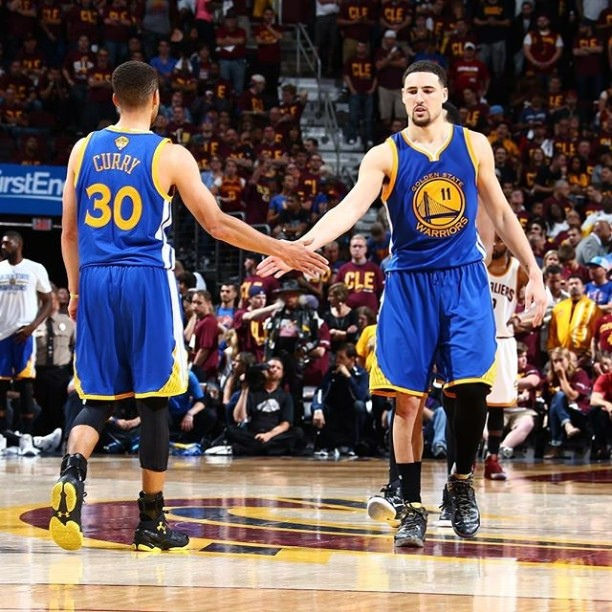
But things have changed because of a couple of kids named Steph Curry and Klay Thompson. These are the two guards on the Golden State Warriors, and they are the best three-point shooters I’ve ever seen. They have made the Warriors the pre-eminent team in the NBA by virtue of their ability to score from twenty-five feet or more.

Now, common sense would tell you that a fifteen-foot jumper has a better chance of going in than a twenty-five footer. And you’d be right. But sports has been taken over by analytics, and the numbers say that a three-point shot, even at a lower percentage, has a higher overall value than a two-pointer. You can look it up.

What’s happened as a result is that the NBA has become three-happy. A big man doing battle below is no longer seen as essential to a championship. Indeed, it may be a liability. If you’re a seven-footer these days, you’ve got to be able to fling the rock. Broad and bulky has been replaced by lean and lithe (e.g., another Warrior, Kevin Durant).

The antiquated notion of trying to get close jumpers, layups and dunks has given way to schemes designed to spring shooters outside the arc. The same fundamentals (passing, screens, shooting) are in play, but applied in a different way.

Which brings us back to fiction writing.

A hundred years ago, the standard point-of-view for a novel was omniscient, often with the authorial voice intruding into matters, as in the opening pages of Theodore Dreiser’s Sister Carrie (1900):

When a girl leaves her home at eighteen, she does one of two things. Either she falls into saving hands and becomes better, or she rapidly assumes the cosmopolitan standard of virtue and becomes worse. Of an intermediate balance, under the circumstances, there is no possibility. The city has its cunning wiles, no less than the infinitely smaller and more human tempter. There are large forces which allure with all the soulfulness of expression possible in the most cultured human. The gleam of a thousand lights is often as effective as the persuasive light in a wooing and fascinating eye. Half the undoing of the unsophisticated and natural mind is accomplished by forces wholly superhuman. A blare of sound, a roar of life, a vast array of human hives, appeal to the astonished senses in equivocal terms.

You almost never see this style today. Hemingway—the Steph Curry of his day—exerted tremendous influence in the 1920s by way of character-centric minimalism (the very opposite of what Dreiser did, above).

By the 1990s, the trend was toward immersive (or deep) POV, which keeps author voice out entirely (unless that voice is itself the point of the novel, e.g., Tom Robbins, Douglas Adams).

It also used to be common—even expected—to have adverbs attached to dialogue attributions. For example, here are some clips from a single page in a1929 novel, The Stray Lamb by Thorne Smith:

“Off again, major,” Sandra said resignedly . . .

“Not a scrap of evidence left behind,” Mr. Long optimistically informed the party . . .

“That depends,” answered Thomas consideringly . . .

Ack! Do that now and your book is likely to be set aside contemptuously.

So … what are the current conditions for the writer of fiction? We all know attention spans are shorter and demands for our time and money louder and more pervasive. Which means getting and holding the attention of the reader from the jump is a major challenge.

The fundamentals are still there to help you, by focusing on the crucial questions:

  • Is your POV consistent and immersive?
  • Is your dialogue crisp and compressed? Can it stand alone without being propped up by adverbs?
  • Is your structure solid? When your book starts to “drag,” do you know why and how to fix it?
  • Are your scenes organic? Do they all have a connection to the overall plot?
  • Do you know how create “jump off the page” characters?
  • Are you aware of the “speed bumps” that interrupt the fictive dream?

We’ve talked about goals and resolutions this week on TKZ. A good thing for the new year. This is my gentle reminder to include craft study on your list. That way, even if you live in California, your books won’t go to pot.

What’s something you’ve recently learned about the craft of writing that is serving you well? What’s an area you need to revisit and shore up?

2018 Writerly Resolutions, Anyone?

Jordan Dane
@JordanDane

Michael Lane – Tacoma

Happy 2018, TKZers! (Sorry for the exclamation point, John. I had to poke you after your great post on Note to Copy Editor.)

Has anyone made any new year’s resolutions for your writing?

I love the start of a new year, especially after I finished December 2017 with time off to replenish the creative well without a deadline to race against. I wanted to spend quality time with family and friends. Mission accomplished.

I have a deadline looming mid-February 2018, so I’m hunkered down with my daily word count, but the time off has done wonders for my enthusiasm.

My 5 Writing Resolutions for 2018

1.) Read Better Books – One of my 2018 resolutions is to read more books from some of my favorite authors. Well-crafted books inspire and challenge me. I love learning new things.

In 2017, I thought that since I read so much, that I should mitigate the hit to my budget by reading free e-books. I DID find some new authors I liked, but they were few and far between. For the most part, I had to stop reading many, many books (which I hate to do), due to the poor quality of the writing.

Some of the chronic problems I saw were novels with excessive passive voice, typos, missing words, rambling internal monologues, back story dumps, chatty dialogue without focus, bland characterizations, misuse of first person POV, characters I didn’t care about, and plots without structure or pace. My version of throwing the book against the wall was to delete/purge the free books off my e-reader.

To kickoff 2018, I’m reading Michael Connelly’s latest – Two Kinds of Truth – & I scored it when it was on sale. Win-Win.

2.) Dare to Try New Things – I have a partially written novel that I will finish in 2018. It involves an aspect of historical writing. It scares me to death. I’ve never taken on such an endeavor, something so daunting for me.

I’ve done my research on Victorian England (countless searches on the Internet and purchasing several research books) and need to infuse my prose with the right time period setting and dialect, without going overboard to slow the pace. It’s been a challenge on layering what I need into every scene, but so far it’s working. I’ve made a resolution to jump back on it after my Feb deadline.

3.) Stay Better Connected with my Family and Friends – This is a personal goal, but it contributes a great deal to my writing inspirations and my positive frame of mind. My close circle gives me the elixir of joy that I need to push myself to new accomplishments. The bigger challenge might be to find face time during the year, in between my deadlines, but this is important to me. It needs to happen.

4.) Add Depth to my Character Voices & Back Story – In my 2018 challenge novel, the one that will have historical elements, I have a unique character that makes me work hard to get her right. I struggle for every word out of her mouth, to make her distinctive. This has not been an easy feat.

As I write, I have my Thesaurus open and often must go back over what I had jotted down in haste, to fine tune her voice and truly listen to her as I edit. One of my pet peeves is to read a book that starts out with great care, but it gets sloppy on the character portrayal in the middle and toward the end. That feels like a cheat to me, so I am putting effort into every scene all the way through.

5.) Find a Better Balance with my Deadlines – I want to find a better balance between writing Amazon Kindle World novellas along with my full novels this year. Kindle World deadlines are totally up to me on how many I agree to write and what those deadlines might be. I will commit to fewer KWs this year (to write in more selected worlds), in order to find time for my full length novels and proposals.


Those are my top five resolutions. They should probably be called GOALS. In my mind they are very achievable and I’m determined to check them off my list as I get them done.

For Discussion:

What about you, TKZers? Have you made any writer resolutions for 2018?

Do you have any rituals for goal setting? How do you celebrate your achievements?

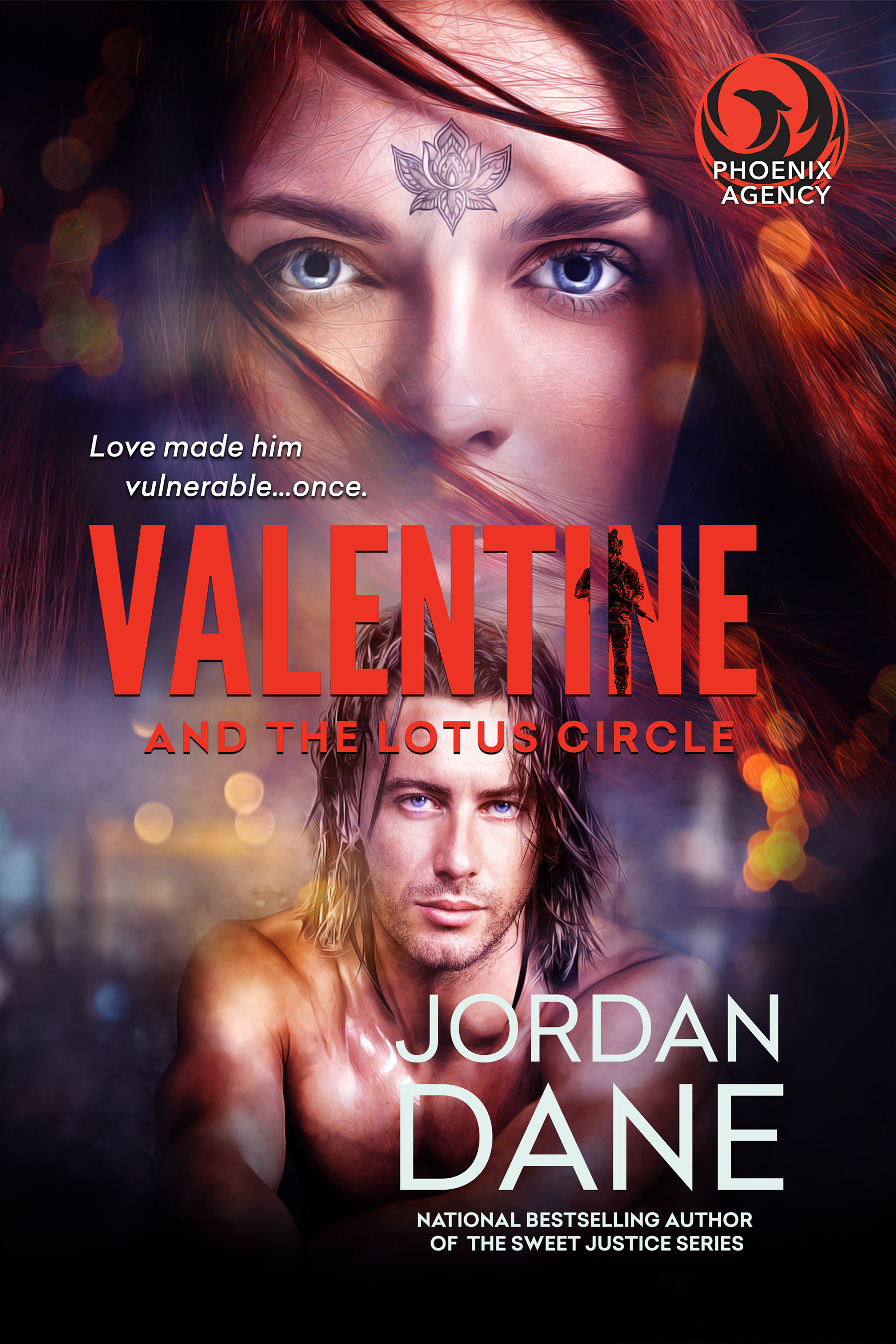
Below is my next cover for a book I haven’t started yet. I have a general idea on the plot and had a broad outline, but after playing with the cover, I’m now inspired to launch into the story. I even changed the title to make it fit.

Cover Design by: Fiona Jayde Media

Valentine & the Lotus Circle

(Novella 2 of 2)

Coming Feb, 2018

Love made him vulnerable…once

Driven by guilt and revenge over a tragic death, Braxton Valentine is coerced into being the latest recruit to the Phoenix Agency as a covert operator and a powerful psychic, but he is not a team player. To confront his rogue ways, the Agency hires a mysterious woman psychic from the ancient and mythical Lotus Circle–and she takes no prisoners.

Note to Copy Editor

By John Gilstrap

After spending a year creating a story line and populating it with characters that I hope are interesting, it’s time to send my novel off to my editor, who will let me know, in blisteringly easy-to-interpret terms, where my efforts succeeded and where they fell short.  I spend as much time as is necessary to repair, prop-up or redesign the story difficulties, at which time I send the manuscript back to the publisher. At that point, I will have fulfilled my D&A (delivery and acceptance) contract element, and, not insignificantly, will get paid.

Just when I think I am done with the story–about the time when I am moving on to the next one–I get the copy edits back. For the most part, copy editors are freelancers, and they may or may not have any familiarity with my work, or even with the genre in which I write. It seems to me (and I say this with a huge amount of respect) that their primary skills are an encyclopedic knowledge of the rules of grammar, and the ability to process the tiniest of details. Combine those traits with a research instinct that borders on obsessive-compulsive, and the ideal copy editor is born.

And I need them. After 18 books, I’ve surrendered to the fact that I will never understand the true use of commas, that the proper use of the words “which” and “that” will be forever beyond my ken, and that I am unable to keep my characters from nodding or sighing too much.  I am wont to have characters sit after they have never stood, and close doors that have never been opened. It is the largely un-celebrated copy editors of the world who keep the reading public from knowing how unqualified I am to do the work that I do.

But sometimes, copy editors change stuff that shouldn’t be changed, and for that reason, as the author, I must approve or disapprove every alteration they propose. At times, knowledge of grammar gets in the way. An example that comes to mind is from a few books ago when the copy editor changed “Jonathan looked at the door the kid had just come through” to “Jonathan looked at the door whence the kid had just come.” While grammatically correct, “whence” is a word that has no place in commercial thrillers. The same copy editor took it upon herself to replace Jonathan Grave’s beloved Colt 1911 .45 with a pistol her research had told her would be more appropriate to his purposes.

Okay, that was a one-off horrible copy editing experience (over 300 proposed changes of which I rejected over 200), and I have it on good authority that she and I will never cross paths again.

The whole agonizing process is made even more agonizing by technology. In the good old days, copy edits came back as a stack of papers with red marks on them. It was actually kind of fun to sit in the lounge chair with a lap desk and either “STET” or approve the changes with a different-color pencil. Now, the copy edits come back as a Word file with Track Changes turned on. I am not allowed merely to reject a change, because that would make my copy different than the publishing house’s copy, and that would screw up the system.  Thus, if I want to reject a change or re-insert a deleted portion, I need to drop my cursor into the appropriate spot and retype.  A simple STET is no longer allowed.

What used to take only a few days now takes a couple of weeks. It’s that long a slog.

So, to ease the process, I took a step several books ago to limit the misunderstandings that might develop between the copy editor and myself. I developed a Gilstrap Style Sheet, which I insert between the cover page and Chapter One of every manuscript I submit.  I thought I’d share it with you.  (I’ve inserted some explanation in italics where I think my reasoning might not be obvious.)

NOTE TO COPY EDITOR: Stylebook notwithstanding, please note the following:

The possessive form of Boxers is Boxers’ (not Boxers’s).  This change does not affect any other names that end with S. (I’ve always believed that when people read silently, they’re really reading aloud without sound, and syntax counts.)

In every case, branches of the US armed services are always capitalized (e.g., Jonathan’s days in the Army; when Henry was in the Navy, etc.)  (Frankly, I’m a little shocked that this is not the convention.)

Consider landmarks within Jonathan’s office to be proper nouns and capitalized as such (The Cave, the War Room, etc.)

Please consider all weapons nomenclature to be correct as written. (e.g., Jonathan carries a “Colt 1911 .45”, even though the official listing might show the pistol to be a Colt M1911A1, and even though there are newer versions of the platform available.  These are very deliberate choices.)

When referencing calibers of weapons, all measurements are singular.  (e.g., an HK 417 is chambered in nine millimeter, not nine millimeters.)

References to federal agencies need no definite article.  (e.g., “He’s with DEA” is fine. He’s not with THE DEA.)

When Boxers or other team members refer to Jonathan as “Boss”, the word should be capitalized.

No semicolons, grammar notwithstanding.

Northern Virginia and the Washington Metropolitan Area are both proper nouns and require capitalization.

Please assume all dialogue to be correct as written.  Feel free to correct spelling and typos, but do not strive to make dialogue grammatically correct.

In dialogue, “Dammit” and “Goddammit” and “Goddamn” should be considered to be correct. (I’ve made an effort to reduce the profanity in my books, and to my eye, the one-word construction is less offensive. It could be that I’m just being strange.)

I intentionally avoid parentheses and single-quote marks in dialogue. Please do not insert them.

As a rule, I dislike exclamation points, and use them sparingly. Please avoid inserting them.

Any thoughts out there about the editing process in general, or copy editing in particular? Any items you think should be added to or removed from the personal style sheet?

Happy New Year, by the way! (Notice the exclamation point.)


New Year First Page Critique:
Resolutions We Shouldn’t Break

I hope that in this year to come, you make mistakes. Because if you are making mistakes, then you are making new things, trying new things, learning, living, pushing yourself, changing yourself, changing your world. You’re doing things you’ve never done before, and more importantly, you’re doing something. — Neil Gaiman

By PJ Parrish

Welcome to the new year, crime dogs. Are we all rested, refreshed and ready to go? I should be since I did nothing during the holiday week except eat, sleep, drink and binge-watch Turner Classic Movies. (I think I have finally completed the Lana Turner oeurve).  The only “writing” thing I did was to judge a contest for non-published thriller writers.  It reminded me of our First Page Critiques, only amped up to 50 pages.

So, before I go into today’s First Pager, I’d like to share some of things I learned while reading these entries.

Two entries were really first rate. Like publishable now. What a joy to read them! I think this is what editors feel when they find a gem in the slush pile.

Most were, well, not publishable. Mostly it was due to the usual stuff we talk about here all the time, but when you read 50 pages, you get a better idea of how things can go off the rails. They made me come up with some writer’s resolutions you don’t want to break.

Don’t give readers the same-old same-old. Maybe it’s because there are so many novels out there now but it’s getting harder, I think, to come up with something truly fresh. As I heard one agent put it once, “Say something unique or say something uniquely.”  Which means you either have to come up with a fabulous new twist on the old formulas (Andy’s Weir’s The Martian = Robinson Crusoe in space or Emily St. John Mandel’s Station Eleven = The Road with Shakespeare). Or you need great writer’s chops to dazzle with singular style. (see Michael Chabon).

In my contest, I had an entry that read like a really cheesy James Bond knock-off, complete with macho hard-drinking spy and dumb redhead CIA agent who whined about her broken high heel and needed saving (Jill Saint John in the movie, I guess).

Don’t confuse the reader.  This was a common sin among the entries. Our stories spool out like David Lean epics in our imaginations, but often there is a short-circuit between brain and typing fingers and the result is an un-tempting ball of confusion. Some scenes I read were so poorly choreographed I had to read them several times before I figured out the action. Some entries never bothered to tell me — in 50 pages! — where the story was taking place or what time frame we were in. And a couple entries had bad head-hopping point of view issues, one so weird I mistakenly thought a third new character had come on stage when it was only the second man’s “sub-conscious” talking. And then there were just big lapses of logic. Like, how in the heck did a housewife from Iowa end up in that Iranian prison? (never explained!).

Don’t give hateful or boring characters the early spotlight. Now, I’m not saying all heroes should be Shane or Charlotte the spider. And yes, many a fine crime novel opens with the killer’s point of view. But don’t waste your precious opening pages on dirt-bags or deadbeats or dumb-as-a-stump bad guys. Unless, as in Lee Child’s Bad Luck and Trouble, they are tossing a man out of a helicopter or something equally cool.  One of my entries I read had this problem — exacerbated by the weakness that the protagonist didn’t show up until almost page 50. At least I think he was the protag.

Don’t crowd the stage too early. One entry had fourteen named characters in the first chapter. And three points of view. Nuff said, right?

Okay, okay, no more with the negative. So what about the two good ones? What set them apart? Well, the characters were flawed but immediately relate-able and even intriguing. Their voices were all distinct, especially one poignant twelve-year-old boy who is about to hang himself until someone stops him. The settings were well rendered but the stories never felt overpowered by description. Backstory was gracefully eye-dropped in at opportune times in the action rather than splatted down via info-dumps. And even though both entries had slow-build openings (no wham-bam shoot-em-up mechanics), I didn’t care because the characters were so rich I really wanted to see what was going to happen to them.

Enough resolutions. Let’s go to a First Pager.  I wanted to get this in because it somehow got lost in my hard-drive and the writer has been patiently waiting. Sorry about that, dear writer. And thanks for submitting. I’ll be back in a moment with comments.

TITLE: UNDER ONE FLAG

CHAPTER ONE

He took three more steps before he jumped over the railing. She followed and landed hard on the lobby floor two stories below. Her right shoulder dislocated on impact. The pain was undeniable. She pushed the pain down and got up.

The front door hit the outside railing when he kicked it open and ran down the stairs. Following after him she didn’t slow down when she deliberately smashed into the door frame popping her shoulder back in place. The sound that emanated from her throat was so high pitched she even scared herself. Exiting the building she slipped on the wet step bouncing on her ass, but she didn’t loose a beat in her pursuit.

Jordon, approaching on her left, called out. “Which way did he go?”

“I’ve got him. Waverly’s been shot. Fourth floor. Stay with him,” she shouted. Turning right she jammed her way through the opening in the fence.

Ahead of her the man was still running along the sidewalk, but with a distinctive limp he did not have when the chase began. Two blocks later he turned south. Only the quick reflexes of the bus driver saved him from being flatten on Humbolt Street. In that instance she managed to cross to the other side of the road before him.

There were only a few people out that time of night. Most moved aside as they passed them, but she didn’t get a clear shot until he reached the corner. She fired and his body jerked. He went down and fell into the street. She was still closing in on him when she heard the tires screeching and then the crunching sound she knew she would never forget.

She could hear sirens approaching from every direction. A car pulled up next to her and two women got out. One approached the body, ran a scanner over it and confirmed the obvious; the man was dead. The other went to check on the driver.

“Sheriff, you alright?” asked Jordan approaching from behind.

“I’m fine. What? Do you think this old lady can’t handle it?” she joked.

“Never doubted it for a second,” he said. “It’s just that you’re bleeding.”

The moment she saw the blood on her thigh her leg began to hurt. However she would never admit it, not even to the EMT who arrived a few minutes later to examine her. She refused to go to the hospital. She accepted the pain killers, ‘Just in case’.

_____________________________

Not bad, not bad at all. This has potential. What’s good is that we open with some hard action. I wasn’t confused and could, for the most part, see what was going on as this chase ensued. There are some nifty active verbs peppered in, which you always want in an action scene. The dialogue is clean. We stay in the protag’s POV and see the scene play out from her senses only.  I also like the way the writer slipped in the fact via dialogue that this woman is the sheriff.  All and all, I don’t have big complaints with this. So let me resort to Track Edits to make a few minor points and mere suggestions (my comments in blue).

He took three more steps before he jumped over the railing. She do we maybe want her name here since she’s the heroine? followed and landed hard on the lobby floor two stories I had to Google to find out if this is possible. Jumping onto hard surface from two stories without really bad injury strains credibility. Maybe cut it to one floor? below. Her right shoulder dislocated on impact. The pain was undeniable. This is you, writer, telling me. You can do better. Show me ie describe the FEELING from her POV. She pushed the pain down and got up.

The front door hit the outside railing when he kicked it open and ran down the stairs. Following after him she didn’t slow down as she followed, when she deliberately smashing into the door frame to pop her shoulder back in place. The sound that emanated from her throat was so high pitched she even scared herself. This woman doesn’t strike me as scaring easily. Is there a better way, more fitting her nature, to express this? Exiting the building she slipped on the wet step bouncing on her ass, but she didn’t loose a beat in her pursuit. If she fell, she lost a beat. Maybe it even works better if she’s on her butt when Jordan skids to a halt near her?

Jordon, approaching on her left, awkwardcalled out. “Which way did he go?”

“I’ve got him. Waverly’s been shot. Fourth floor. Stay with him!” she shouted. Turning right not sure you need this she jammed her way through the opening in the fence.

Ahead of her the man was still running along the sidewalk, Of course he’s still ahead of her; be more descriptive? The guy was running along the sidewalk but with a limp now. but with a distinctive limp he did not have when the chase began. Two blocks later he turned south. Only the quick reflexes of the bus driver Might want to imbed this image more firmly in her POV ie She rounded the corner just in time to see a bus swerve, and get a glimpse of the driver’s panicked face. saved him from being flatten on Humbolt Street. In that instance she managed to cross to the other side of the road before him. Again, exploit the moment. The man smacked into the back of the bus and almost went down. It gave her just enough time to catch up (or something).  Another possible thing to add to the tension etc — her police radio, pinned on her shoulder most likely, would be going crazy. 

There were only a few people out that time of night. Most moved aside as they passed them, She never took out her gun. Also, get in HER pov. Might be cool here to have her thinking about trying to get off clear shot, maybe raising the gun but stopping as a guy walks out of a bar. This part of your story lacks a grit and visceral-ness that gives us a sense about WHAT SHE’S THINKING and FEELING. Just because you’re in action mode, doesn’t mean you can’t give us a fleeting thought. but she didn’t get a clear shot until he reached the corner. New graph? She fired and his body jerked. He went down and fell into the street. She was still closing in on him when she heard the tires screeching and then the crunching sound she knew she would never forget.

I think you need to tell us he got run over. And again, can we have a quick reaction or thought from her? Pretty gruesome to see a guy run over. It would really draw us into HER instead of merely the action.

She could hear sirens approaching from every direction. You can do better. The sirens aren’t really approaching (ugly verb that). They are wailing, keening, screaming. A car pulled up next to her and two women got out. You need to slow down here. Who are these people? I thought they were onlookers at first. Have the sheriff go to the body FIRST. She is your heroine; don’t move your spotlight away from her and onto two spear-carriers. Have the sheriff go stand over the body. She can tell from looking he’s dead. Give her thought. Maybe give the reader a hint about who he is and why they were chasing him. We need a little context here, which could also ratchet up your intrigue. If he’s a high-stakes runner, drop a hint! If he’s an everyday dirt-bag, tell us that and what she thinks about it, that she just jumped down a lobby and dislocated her shoulder for THIS? You’re missing chances to pepper in some plot points. One approached the body, ran a scanner over it and confirmed the obvious; By writing this, you’re taking the “gun” out of your protag’s hand. Give HER this moment. the man was dead. The other went to check on the driver.

“Sheriff, you alright?” asked Jordan approaching there’s that ugly verb again from behind. She ordered him to go check on Waverly, remember. How about this?

Sheriff, you okay?”

She turned and it took her a moment to focus on deputy Jordan’s face.

“I’m fine. What? Do you think this old lady can’t handle it?” she joked. said. Let us read our own interpretation into this line. Don’t spoon feed the reader. Love that you hint at her age here. (This is good example of how dialogue can SHOW instead of the writer telling us in narrative that she’s forty-five.)

“Never doubted it for a second,” he said. “It’s just that you’re bleeding.”

The moment she saw the blood on her thigh her leg began to hurt. However she would never admit it, not even to the EMT who arrived a few minutes later to examine her. She refused to go to the hospital. She accepted the pain killers, ‘Just in case’.  My only comment here is to slow down and let this really play out on camera. Show us, don’t tell us! You need a good transition out of this high-fueled action scene, so why not play it out at the scene as the tension and action wind down. She watches as the CSI people do their thing and the EMT pulls up. One of the techs would routinely check her out and she might resist but in the end, maybe sit on the EMT truck bumper as they maybe try to treat her wound or whatever. This might also, in what I call a quiet moment, give you a chance to tell us what is going on, why the chase? Either she can think about it, or talk to Jordan or someone about it.  Don’t jerk her (and the reader) roughly out of the action and to the hospital. Pace yourself, and your scene. Think of pacing as a roller coaster. You took us up and then plunged us down a steep action hill, so we could use a “quiet moment” after that to catch our breath before we head into the next hill or turn. quiet slow moments are just as important as the fast ones. 

Again, this is a good start, but what you are lacking is feeling, emotion and thoughts from your main character.  We might admire her ballsiness in this foot pursuit, but because you’ve given us not one thought or emotion, we have no reason to emotionally attach to her.  Find that thread and begin weaving it in and you’ll be on your way!

Happy New Year all.

_____________________________


Happy New Year!

Happy New Year TKZers!

Welcome to 2018 and whatever new (or used) resolutions you may have made. For me, after a difficult year health wise, I’m ready to face the new year with both resilience and hope, at least where my writing is concerned. I’m not so much into resolutions for 2018 as I am into consolidating what I learned about myself and my writing process last year.

Despite everything, I feel pretty good about what I achieved – especially the fact that my agent now has three new projects to play with/submit:)  As you know from many of my blog posts, I’ve expanded into YA and MG as well as adult historical fiction/mysteries, and while this has meant a lot of time and commitment, learning and angst, I’ve learned a lot about my writing process as well as my resolve.

In 2018, I plan to continue to apply what I’ve learned and try to be a little more forgiving as far as my writing process is concerned (no more NaNoWriMo regrets for me!). Although I have delved a little bit into social media, I realise that my presence is a little erratic and unfocused so another goal of mine is to reconsider how I approach online and social media – but not to the detriment of my writing (which continues to remain the focus of course!). I also feel that, in the spirit of expanding my writing horizons, I should begin to embrace what I call the ‘difficult’ projects…those ideas/proposals I have avoided so far out of fear that they are too ‘difficult’ to successfully pull off. You know the ones – they continue to buzz about in your brain, demanding to be told, but that little voice inside (the one that hates failure) keeps telling you to wait…keeps telling you your not good enough to write it… Well, I think it’s time to embrace the difficult – be bold  as well as brave – and tackle at least one of these projects this year.

So TKZers what do you plan on focusing on in 2018. What did you learn in 2017 that you can consolidate and use in the coming year as far as your writing is concerned?


Happy Holidays From TKZ!

It’s Winter break here at the Kill Zone. During our 2-week hiatus, we’ll be spending time with our families and friends, and celebrating all the traditions that make this time of year so wonderful. We sincerely thank you for visiting our blog and commenting on our rants and raves. We wish you a truly blessed Holiday Season and a prosperous 2018.

We look forward to ringing in the New Year with you upon our return on Monday, January 1st!

Writers Need to be Amphibious

by James Scott Bell
@jamesscottbell

So here we are at the end of another Kill Zone year. (We’ll be taking our traditional two-week break starting tomorrow.) It’s been an amazing run for this blog, which began way back in August of 2008. I’m in awe of my colleagues, both present and emeriti, for the depth of their wisdom and generosity of spirit toward the writing community.

Emeriti, by the way, is the Latin plural of emeritus.

Aren’t you glad you stopped by?

Reminds me of my favorite Latin joke. Or I should say, only Latin joke.

Julius Caesar walks into a bar and orders a martinus.

The bartender says, “You mean a martini?”

And Caesar says, “If I wanted a double I would have asked for it!”

Speaking of which, 2017 was a year a lot of people ordered doubles. I seriously think we need to take a collective breath and, for a couple of weeks at least, imbibe the true spirit of this season: family, friends, generosity and gratitude.

And just plain old relaxation! So kick back and watch a couple holiday movies (Miracle on 34th Street and the 1951 Christmas Carol are always at the top of my list, though I would remind everyone that Die Hard and Lethal Weapon are Christmas movies, too!)

Don’t stress about things you can’t control (this is the wisdom of the Stoics, and what says holiday fun more than the Stoics?) As Epictetus (b. 50, d. 135) so succinctly put it, “There is only one way to happiness, and that is to cease worrying about things which are beyond the power of our will.”

Changes in technology, Amazon algorithms, the size of advances … these are beyond the power of our will. Ditto the shrinking of slots in traditional publishing catalogues, the number of bookstores that are still open, and bestseller lists (unless, of course, one takes the nefarious road of buying one’s way onto the NYT list, in which case the power of will has been corrupted by the siren song of list-lust. Don’t go there).

Nor can we stuff a stopper in the flood of system gamers, sock puppets, nasty reviewers, and inveterate haters—except to the extent that we adamantly refuse to become one of them.

What is within our power?

Our writing, of course. Our dedication to it. Our determination. Our discipline.

The page we’re working on.

The goals we set and the plans we make.

Concentrate on those things. Chill about the rest.

This is still the greatest time on earth to be a writer. Remember, just ten short years ago there was only one way to get published and into bookstores. The walls of the Forbidden City were formidable indeed.

Then came the Kindle, just in time for Christmas 2007, and suddenly there was another way to get published and into the largest bookstore in the world (with your cover facing out, no less!)

During those heady first years of digital disruption, a few pioneering scribes jumped in and showed massive ebook sales at the 99¢ price point. This got the attention of writers inside (and formerly inside) the Forbidden City, and ushered in a “gold-rush” phase when good and productive writers began to make really serious money going directly to Amazon.

At the same time, traditional publishing began to stagger around like a boxer who gets clocked just before the bell rings to end the round. Many predicted that by 2013 or ’14, the whole traditional industry would be kissing canvas.

Instead, we have entered a new equilibrium where the wild highs in the indie world are leveling off, and the disruptive lows in the traditional world are bottoming out (as one trad insider put it to me, “Flat is the new up.”)

But change, albeit more slowly, continues. Thus, what both of these worlds demand are a new set of business practices. I’ve tried to provide these for the indie writer. I’m not sure who the Bigs are listening to, but I suspect they need more Sun Tzu than Peter Drucker these days.

However, here is one bottom-line truth that applies across the board and will always be apt: What wins out in the end, and perhaps the only thing that does, is quality plus time, which I define as steady fiction production providing a swath of readers with satisfying emotional experiences. This holds true for any genre. You can figure out and strive to do the things that create reader satisfaction.

And what are those things? They are matters of craft. The more you are conversant with the tools and techniques of fiction, the better your quality control. It’s like that inspirational quote from a college basketball player some years ago. During an interview he said, “I can go to my left or to my right. I’m completely amphibious.”

Writer, you have to be amphibious to make it in the swirling ocean and on the rocky shores of the book world today. So my end-of-the-year suggestion is this: Invest in your writing self. Spend a certain amount of money on writing-related improvement, like books and workshops. Go to a good conference and network with other writers. If you’re starting to realize a little income from your writing, set aside a portion of it for this type of ongoing investment.

And do take advantage of one of the best free writing resources around—Kill Zone! Traipse through our library and archives. Subscribe to our feed so you don’t miss a day. Leave comments! We love the writing conversation.

We’re on this journey together, so keep in mind something the great Stoic philosopher Yogi Berra once said: “When you come to a fork in the road, take it.”

Let’s take it in 2018!

Blessings on you this holiday season, from all of us at TKZ to all of you.

…and to all…


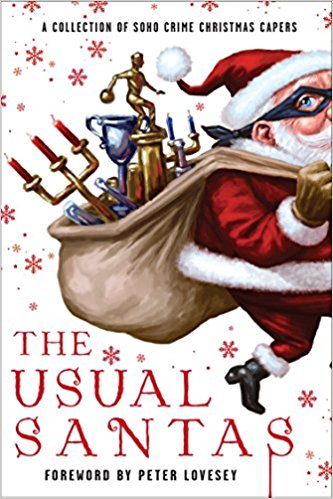
(c) 2017, Soho Press. All rights reserved.

I don’t as a rule like holiday-themed works of art. There are exceptions. Christmas Is a Special Day, an album of Christmas songs by Fats Domino, remains a favorite (in part because it was gifted to me by The Man himself, but that’s another story). I also listen repeatedly to Come On Christmas to Dwight Yoakam, and read The Polar Express by Chris Van Allsburg and “The Gift of the  Magi”  by O Henry a few times as well. Those are the exceptions to the rule, however.

I added one more holiday item to the list this year. It can be found in a recently published anthology titled The Usual Santas which is published by Soho Crime. I was immediately struck by the concept of the collection, that being to take the imprint’s roster of authors and commission Christmas-themed crime and thriller stories from them. It’s a wonderful collection from beginning to end. There is one story that stands out, however, that being “Chalee’s Nativity” by Timothy Hallinan. Tim writes a memorable series about Poke Rafferty, an expatriate American living in Bangkok, which is where “Chalee’s Nativity” is set. Rafferty does not poke his nose under the story’s tent, but Hallinan’s ever-keen eye for observation is fully and accurately street-tuned in this story about two orphans swept up onto the rough and dangerous streets of Bangkok at Christmastime. I have read this story every single day since I first encountered it in October, and will probably continue to do so long after this Christmas has passed. I won’t say that I haven’t complained about anything since I first read it, but this account of mind-numbing poverty, ill fortune, and charity of spirit has renewed my appreciation for what I have, from the moment when I wake up in the morning to the time when I close my eyes in the evening. If you get a chance in the run-up to the holidays please find a copy The Usual Santas and read it (as well as the other stories in the collection). You will be thankful.

Since we are talking about appreciation for what we have, please know that as we wind down 2017 that I appreciate you, and you, and yes, you for coming by this page and spending a few minutes with us here at TKZ and, if you are so inclined, commenting. It means a lot, more than you probably realize. I hope that all of us will continue to make your visit worthwhile.

Best wishes. See you in 2018, if the Good Lord is willing and the creek don’t rise.