Writing For Fame

by James Scott Bell
@jamesscottbell

O quam cito transit gloria mundi. – Thomas á Kempis (“How quickly the glory of the world passes away.”)
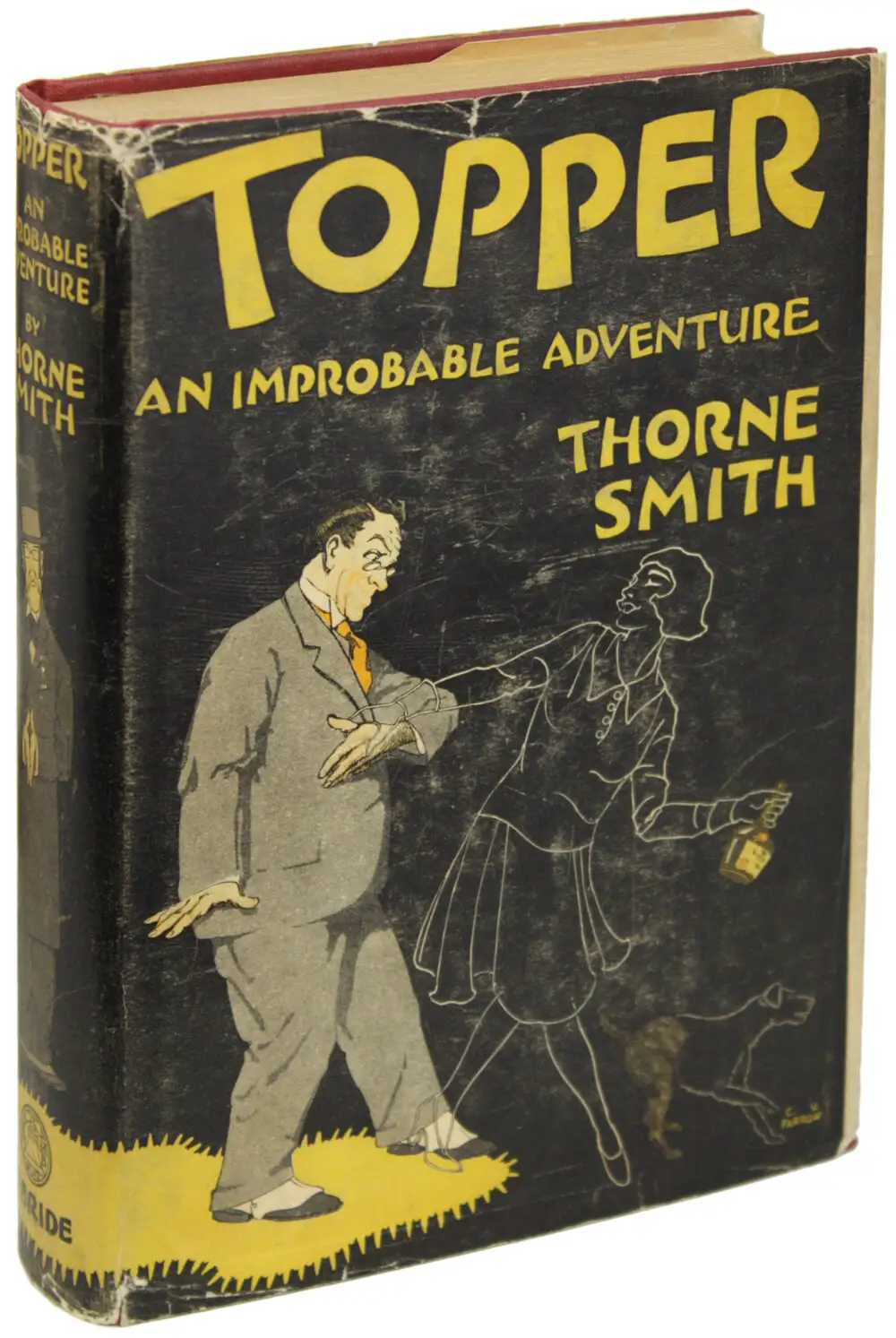
How many people today have heard of Thorne Smith? Or Booth Tarkington? Or Carroll John Daly?

All three were wildly famous in the 1920s. Smith was the author of the popular Topper series of novels about a couple of fun-loving ghosts and their friend, Cosmo Topper. Tarkington won the Pulitzer Prize—twice!—for his novels The Magnificent Ambersons and Alice Adams. And in the world of pulp writing, Daly was as popular as Dashiell Hammett and Raymond Chandler.

They are mostly forgotten now, which is the fate of the overwhelming number of writers who ever lived.

Which brings me to Arthur Schopenhauer. Read any Schopenhauer lately? I read some Schopenhauer in college, and this is what my face looked like after I tried to understand him:
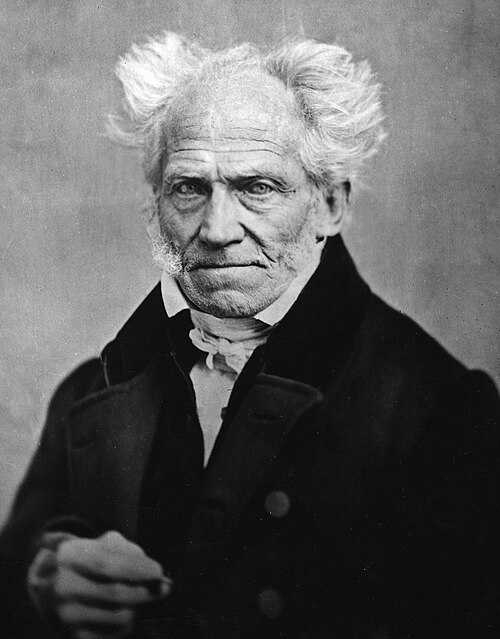
JSB, age 20 (or Arthur Schopenhauer)

But as I did some research in the library of Project Gutenberg, I came across Schopenhauer’s essay on Fame.

“As a general rule, the longer a man’s fame is likely to last, the later it will be in coming; for all excellent products require time for their development. The fame which lasts to posterity is like an oak, of very slow growth; and that which endures but a little while, like plants which spring up in a year and then die; whilst false fame is like a fungus, shooting up in a night and perishing as soon.”

If you write for fame, you’re writing fungus. Worth remembering.

However, we do want our name to be known as a “brand,” meaning a reliable producer of quality fiction. That’s part of a marketing strategy, which also includes self-promotion. Agent Barb Roos has some good advice on this topic.

The notion of self-promotion tends to send authors running from platform conversations faster than a politician dodging a direct question. We see self-promotion as something only self-involved people who clearly think too highly of themselves would do. Of course, we think ourselves too holy, too busy, or too sophisticated to engage in such activity. After all, we are writers, right?

Her bottom line:

If you don’t talk about yourself and what you write, no one else will.

My follow-up point will make you uncomfortable, but it is a truth you must wrap your mind around if you want to survive and thrive in today’s publishing world. Self-promotion is essential to the success of your product.

The trick is to divorce self-promotion from the desire for fame. Schopenhauer again:

“From the point of view of human happiness, fame is, surely, nothing but a very rare and delicate morsel for the appetite that feeds on pride and vanity—an appetite which, however carefully concealed, exists to an immoderate degree in every man, and is, perhaps strongest of all in those who set their hearts on becoming famous at any cost. Such people generally have to wait some time in uncertainty as to their own value, before the opportunity comes which will put it to the proof and let other people see what they are made of; but until then, they feel as if they were suffering secret injustice.”

The desire to have others recognize you as significant (which is what fame is) inevitably leads to comparisons, envy, disappointment, bitterness. Instead, put that emotional energy into writing the best book you can (you, not the machine), pour your heart into your material, and promote it wisely. Rinse, repeat.

And here’s some unsolicited advice for those public figures who violate the maxim: Better to remain silent and be thought a fool than to speak and to remove all doubt.

“And so people who feel that they possess solid intellectual capacity and a sound judgment, and yet cannot claim the highest mental powers, should not be afraid of laborious study; for by its aid they may work themselves above the great mob of humanity who have the facts constantly before their eyes, and reach those secluded spots which are accessible to learned toil.”

But laziness and click-bait catnip is the currency of “influencers” today. For them, I offer Aesop’s fable “The Mischievous Dog.”

There was once a Dog who used to snap at people and bite them without any provocation, and who was a great nuisance to every one who came to his master’s house. So his master fastened a bell round his neck to warn people of his presence. The Dog was very proud of the bell, and strutted about tinkling it with immense satisfaction. But an old dog came up to him and said, “The fewer airs you give yourself the better, my friend. You don’t think, do you, that your bell was given you as a reward of merit? On the contrary, it is a badge of disgrace.”

Moral: Notoriety is often mistaken for fame.

Comments welcome.
Review Your Fiction Fundamentals

by James Scott Bell
@jamesscottbell

Things change.

For instance, as of January 1, recreational marijuana use is legal in California. I can’t help but wonder how this is going to affect our traffic problems. I think I know: Now, more than ever, California drivers will seldom leave a turn unstoned.

Ba-dump-bump. Thank you. I’ll be here all week. Tip your waiters on the way out.

Other things don’t change. Grant is still buried in Grant’s Tomb (isn’t that a marvelous coincidence?)

And the foundations of great fiction remain solid and true.

You still need a character and you still need a plot. A plot is the stuff that happens to a character that forces him into a battle requiring strength of will. If you don’t have those elements, you don’t have a story. You might have a slice of life, or a character study. You might even have an “experimental” novel, which is also defined as a novel no one reads.

So know your fundamentals.

But also realize that conditions around you change, which may require applying the fundamentals in a slightly different way.

Case in point: The Golden State Warriors.

Basketball fundamentals include dribbling, shooting, passing, setting screens, playing defense. A coach figures out ways his team can do these things to create high-percentage shots and stop the other team from doing the same.

In the “old days,” the ideal offense was designed around a dominant big man, like Bill Russell, Wilt Chamberlain, or Shaquille O’Neal.

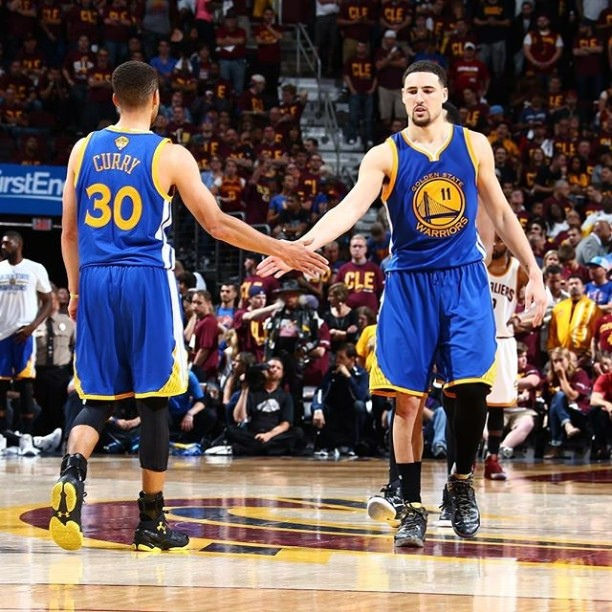
But things have changed because of a couple of kids named Steph Curry and Klay Thompson. These are the two guards on the Golden State Warriors, and they are the best three-point shooters I’ve ever seen. They have made the Warriors the pre-eminent team in the NBA by virtue of their ability to score from twenty-five feet or more.

Now, common sense would tell you that a fifteen-foot jumper has a better chance of going in than a twenty-five footer. And you’d be right. But sports has been taken over by analytics, and the numbers say that a three-point shot, even at a lower percentage, has a higher overall value than a two-pointer. You can look it up.

What’s happened as a result is that the NBA has become three-happy. A big man doing battle below is no longer seen as essential to a championship. Indeed, it may be a liability. If you’re a seven-footer these days, you’ve got to be able to fling the rock. Broad and bulky has been replaced by lean and lithe (e.g., another Warrior, Kevin Durant).

The antiquated notion of trying to get close jumpers, layups and dunks has given way to schemes designed to spring shooters outside the arc. The same fundamentals (passing, screens, shooting) are in play, but applied in a different way.

Which brings us back to fiction writing.

A hundred years ago, the standard point-of-view for a novel was omniscient, often with the authorial voice intruding into matters, as in the opening pages of Theodore Dreiser’s Sister Carrie (1900):

When a girl leaves her home at eighteen, she does one of two things. Either she falls into saving hands and becomes better, or she rapidly assumes the cosmopolitan standard of virtue and becomes worse. Of an intermediate balance, under the circumstances, there is no possibility. The city has its cunning wiles, no less than the infinitely smaller and more human tempter. There are large forces which allure with all the soulfulness of expression possible in the most cultured human. The gleam of a thousand lights is often as effective as the persuasive light in a wooing and fascinating eye. Half the undoing of the unsophisticated and natural mind is accomplished by forces wholly superhuman. A blare of sound, a roar of life, a vast array of human hives, appeal to the astonished senses in equivocal terms.

You almost never see this style today. Hemingway—the Steph Curry of his day—exerted tremendous influence in the 1920s by way of character-centric minimalism (the very opposite of what Dreiser did, above).

By the 1990s, the trend was toward immersive (or deep) POV, which keeps author voice out entirely (unless that voice is itself the point of the novel, e.g., Tom Robbins, Douglas Adams).

It also used to be common—even expected—to have adverbs attached to dialogue attributions. For example, here are some clips from a single page in a1929 novel, The Stray Lamb by Thorne Smith:

“Off again, major,” Sandra said resignedly . . .

“Not a scrap of evidence left behind,” Mr. Long optimistically informed the party . . .

“That depends,” answered Thomas consideringly . . .

Ack! Do that now and your book is likely to be set aside contemptuously.

So … what are the current conditions for the writer of fiction? We all know attention spans are shorter and demands for our time and money louder and more pervasive. Which means getting and holding the attention of the reader from the jump is a major challenge.

The fundamentals are still there to help you, by focusing on the crucial questions:

  • Is your POV consistent and immersive?
  • Is your dialogue crisp and compressed? Can it stand alone without being propped up by adverbs?
  • Is your structure solid? When your book starts to “drag,” do you know why and how to fix it?
  • Are your scenes organic? Do they all have a connection to the overall plot?
  • Do you know how create “jump off the page” characters?
  • Are you aware of the “speed bumps” that interrupt the fictive dream?

We’ve talked about goals and resolutions this week on TKZ. A good thing for the new year. This is my gentle reminder to include craft study on your list. That way, even if you live in California, your books won’t go to pot.

What’s something you’ve recently learned about the craft of writing that is serving you well? What’s an area you need to revisit and shore up?