First Page Critique: TATRICE

Photo (c) Kerrie Kelly via Pinterest

Happy Saturday! Please join me in welcoming Anon du jour for our irregularly featured presentation known as First Page Critique. Our First Page today introduces a work in progress titled Tatrice, so without further ado let’s take a look:

“Donna, get to this address for an interview.”

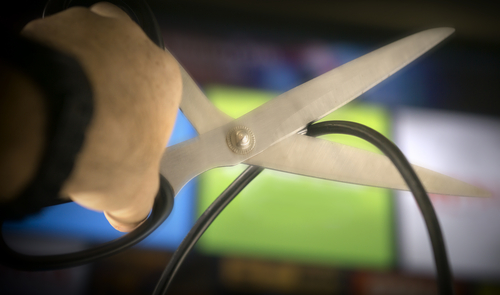
    I took the note and asked my boss, JJ, about my current assignment. He made a throat cutting gesture and I gritted my teeth. Two weeks research shot.

           “When is the appointment?”

           “Now. Get going.”

           “Excuse me, JJ. Who am I meeting?”                                    

           “It’s all there.” He flapped his hand toward the scrap of paper.

           The address was a magnificent Craftsman on the west edge of town. A tall, well-dressed man answered the doorbell.

           “Mr. Bonfig…”

           “Silent g. Bon-feel-ee-oh. Please come in Ms. Burdett.”

           My day went downhill from there.

     Mr. Bonfiglio and I had an unproductive first meeting. He claimed the only chair in the room sized for a lady so I sat on a leather ottoman rather than sink into the matching overstuffed armchair. I didn’t fancy him looking up my skirt. My strategy backfired. Now I found myself in imminent danger of sliding off the slick footstool. The muscles in my calf spasmed into a charley horse and I feared I would sprawl on the floor if my high heel broke. Nevertheless, my precarious seat was an improvement over getting sucked into quicksand cushions.

Since JJ failed to provide the nature of the assignment, I decided to jump right in. I would either stay at the edge of the pool testing the temperature or swim laps with this man.

“What can I do for you, Sir?” Thanks, JJ , for sending me here with nothing to go on. Was I supposed to write a piece on this fabulous house? My fingers itched to click away at the prospect. I flexed my ankle to relieve the cramp and slipped lower on the side of the footstool.

While I uneasily treaded water, he studied me as carefully as a prospective car buyer looking under the hood. Did he wonder why I didn’t take the chair he offered? We silently contemplated one another as I speculated on his marital status. My post graduation goals were to establish my career, get married and start a family before I turned thirty.

Thus far, except for my job, my time had been wasted on warm up exercises. Inexplicably, I was seldom asked for a second date. At age twenty-eight I saw myself as a speed swimmer poised on the starting platform. The finish line painted with that magic number loomed closer each week.

*                                *                              *

 Let’s start with the good, Anon. You do a terrific job in establishing that JJ, Donna’s boss, is a dou…um, jerk in just a couple of lines of dialogue. Donna’s interior dialogue tells us quite a bit about her as well, though perhaps a little early in the game.

Now for the rest. Let us begin with a few typos and then get to the meat of things:

“Two weeks research shot.”

Either “Two weeks’ research shot” or “Two weeks of research were shot” will fix that up.

— Also…”throat cutting,”  “room sized,” “post graduation,” and “warm up” should all be hyphenated. And…

— “Thanks, JJ ,“…let’s get that comma after “JJ” one space over to the left.

As to the meat of things, as it were:

The address was a magnificent Craftsman on the west edge of town. A tall, well-dressed man answered the doorbell.

I visualize a great big space between those two sentences, Anon, and you can help your story by filling it in. So the house where Donna is going is on the west edge of town. What town? How long does it take her to drive there? On the way, maybe Donna in her internal dialogue could tell the reader about the name of the company she works for, the nature of her job, whether JJ treats all of his employees so abruptly, and where she is in the company hierarchy. Perhaps she will be at her destination by the time she gives the reader that information. Donna at that point can give us more of a description of what she sees as she pulls up to Mr. Bonfiglio’s house. What is the neighborhood like? Does the house stick out or blend in? What is magnificent about it? Show us through Donna.


Now I found myself…

Drop the “Now” and begin with “I.” Your narrative is in the first person past so there is no “Now,” only “Then,” and you don’t really need “Then” here, either.


Mr. Bonfiglio and I had an unproductive first meeting.  

Whoops. You’re telling the reader this at the beginning of the meeting. Accordingly, the reader already knows what is going to happen.  Show your audience that rather than telling them. Leave that sentence out, and show the reader throughout the meeting that it is going bottoms up, instead of saying so at the beginning. Let the reader share Donna’s agony as the meeting unfolds, and establish empathy with her. After the interview, you can have Donna thinking about it as she is driving away, something to the effect of,”

“Well, THAT went well!” I thought, as I drove back to the office (or home, or to her favorite tavern, or whatever).


Which brings us to:

My post graduation goals were to establish my career, get married and start a family before I turned thirty.

Thus far, except for my job, my time had been wasted on warm up exercises. Inexplicably, I was seldom asked for a second date. At age twenty-eight I saw myself as a speed swimmer poised on the starting platform. The finish line painted with that magic number loomed closer each week.

This should all go somewhere else, such as after Donna’s meeting. You’re dropping it right at the beginning of her conversation with Bonfiglio and it brings everything to a halt instead of advancing things. The trip back to the office/home/wherever may also be a good place for Donna to review the current state of her life. When you do that, drop the word “(I)nexplicably.” Instead, why don’t you take a couple of sentences to have Donna describe her first dates and why she thinks they go well — shared interests with the person across the table, lots of shared laughs, the other party seemed interested and complimented her frequently — and then end the internal dialogue with Donna talking about waiting for the call that never comes. Communicate Donna’s befuddlement but drop a couple of hints that might indicate why she never gets a callback. Maybe it has something to do with her job, like constant complaints about her boss. 

Also, the metaphor that you used for the state of Donna’s life isn’t quite appropriate. What you are describing — Donna’s goals, and time running out — would more appropriately be described by a ticking clock, or a fuse burning, or, to use your swimming metaphor, the lane getting longer, not shorter, since Donna doesn’t seem to be getting any closer to her goal. I also notice that you like to use a lot of swimming metaphors, Anon. I hope that you are going to connect those to Donna’s life in some way. Maybe Donna was on the swim team in high school or college, or maybe it is her favorite form of exercise of recreation. Either way, it makes for a minor but interesting element of her personality, one that would make her feel more relatable to the reader and could perhaps tie into the main plot later in Tatrice.

Just in closing…I’m having a bit of trouble getting a handle on what sort of novel Tatrice is. I’m not being critical. If I were browsing either in a bookstore or online and saw Tatrice there would be a cover, the inside front jacket flap, or a RIYL hint to help me along before I skimmed the first page. That said, I  am fairly certain that Tatrice is not a thriller, hard-boiled detective novel, or science fiction. I’m guessing that it’s a cozy, cutesy, chicklit, or romance assuming that, on page three, Donna doesn’t look down the street and see the Zombie Apocalypse approaching.  Since I rarely read the latter genres, please accept my comments concerning the substance of the book with that in mind.

I shall now move out of the way and attempt to be uncharacteristically silent while our friends out there offer their own thoughts. Thank you again, Anon, for submitting your work to TKZ’s First Page Critique!



If You Hadn’t Become a Writer, What Else Would Have Filled That Void?

Many writers develop the passion to write because they were avid readers as children. The rabid craze wouldn’t be denied and years later, they have come face to face with an amazing addiction for self-expression.

If you didn’t write, what else would you have done to fill the void? What other forms of self-expression would have taken hold of you? Do you have a secret talent?

Book Clubs – The Human Touch in Marketing

Today, algorithms determine the most minute details of our buying habits, down to the finer points of the dental floss we prefer (waxed or unwaxed, plain or minty). Advertising is a constant blitzkrieg of spam, pop-ups, and phone alerts. Those ads are specific, focused, targeted…and totally impersonal.

For all the information that Google, Facebook, and Amazon collect about us, Alexa’s robotic voice will never replace that of a trusted friend who enthusiastically says, “You’ve got to read this book I just finished!”

In bygone days of the last century, the friendly clerk at the neighborhood bookstore introduced customers to new authors s/he knew they’d love. Back then, it was called “hand-selling.” Such word-of-mouth recommendations launched many unknown books that went on to become bestsellers. I, for one, miss those days.

Today, with a billion books competing for attention, how does an author make a personal connection with readers?

Book clubs provide that opportunity.

Serendipity led to my first appearance as the featured author at a book club. While on vacation in Florida, I reconnected with a Zumba class I hadn’t seen for a year. In catch-up conversation, I mentioned my novel had been published. Joan said, “I’m in a book club. Would you like to speak to us in two weeks?”

Would I??!!

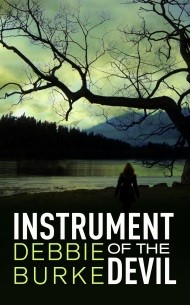
In another bit of luck, Amazon had put the Kindle version of my novel Instrument of the Devil on special for 99 cents during that month. Thanks to the upcoming meeting and people talking about it at Zumba classes, sales experienced a nice spike.

On a Friday afternoon, over drinks and snacks, I met eleven accomplished, professional women from their mid-50s to mid-70s. I knew several from Zumba but most were strangers.

Here in front of me sat the exact people I had in mind as I wrote the story.

And, better yet, they were excited to talk with the author whose book they’d just read.

Book club feedback is solid gold. These are real customers who buy books, not just looky-loos. They constantly browse for new works. They know what catches their interest and keeps them up late, as well as what bores them or turns them off. Most of all, they know what makes them click the “Buy Now” button.

These readers were willing to share their reactions with me—a priceless gift for a writer building a fan base.


If you’re an author in search of book clubs, how do you find them?

A Zumba class might not be the first place you’d think to look, but that’s where I’ve gained followers in Florida, Canada, and Montana. Serious readers can be found at work, on the golf course, at your children’s school activities, at Bible study, while volunteering at the animal shelter. At the next gathering or party you attend, ask if anyone participates in a book club. Chances are the answer will be yes.

In my little Montana town, a local microbrewery hosts a regular reading group–Books and Brews. Why not?

Google: “book clubs near me.” Meetup.com is a great clearing house of specific interest groups. Narrow the search by geographical area, genre, and age range. In the greater Tampa area, I located at least two dozen clubs within twenty miles of our vacation spot.

Many more groups exist under the radar of the internet or meet privately.

Visit the library, colleges, and book stores (if you can find one!). Mention you’re an author who’d like to meet with book clubs. Leave business cards with them so groups can contact you.


Once you hook up with a book club, how do you prepare?

Generally, members read your book before you meet them. If they haven’t, practice your fascinating story summary on them, but don’t give away the ending.

Many readers use Kindles or devices, but some still prefer a print edition, which I offer to groups at my cost. At this point in my career, I’d rather build a foundation of loyal readers than worry about a few bucks. Check your contract to make sure that’s permissible.

Expect FAQs: How long did it take to write? What sparked the idea? Did you make up the characters or are they based on real people? Are the sex scenes autobiographical? Here’s your cue to joke about diligent research.

The question you hope they’ll ask: What’s your next book about? If they enjoyed your first book, they’ll be eager customers for your next one.

Readers love insider knowledge. Give them a sneak preview. They might even agree to be your focus group.

Before meeting with the Florida club, I’d been toiling over loglines and blurbs for Death by Proxy, the unpublished second book in my series. Those can be tougher to write than the novel because the author is too close to his/her own story. Input from your critique group or beta readers, while valuable, is limited because they already know the plot.

You want to seek  out the spontaneous reaction of random customers skimming through book descriptions on Amazon.

I asked the ladies if they’d be interested in hearing my proposed blurbs.

Unanimous answer: “Sure!”

They listened to several choices then voted for the one they liked best. Of course, that’s the one I’ll use.

I also read them the opening pages of the story and gauged their reactions. Was it clear and understandable? Did they get lost? Did they laugh in the right places? Were they intrigued enough to continue?

If their reactions are less than enthusiastic, seize that opportunity to ask what specifically turned them off. Were they confused? Bored? Did they find a character dull, flat, or unlikeable? Ask their opinions about your cover. You might find it’s time to freshen the design.

This is not the time to get defensive. Even if you disagree, give their opinions serious consideration.

After all, they are your readers, the most important people in your writing career.

An author has no way to determine why an anonymous browser on Amazon skipped over one book and bought another. But the book club will tell you. Listen carefully because they’ll give valuable feedback that’s impossible to get otherwise. 


What to bring when you meet a book club:

A smile and a friendly manner so they feel comfortable asking questions. If you’re shy or nervous, learn to overcome that. A stand-offish, aloof author makes a poor impression.

Business cards and swag if you have it–bookmarks, pens, etc.

A sign-up sheet to collect contact information to notify them of upcoming books, appearances, etc.

A signed print copy for the host if you meet at a home.

Do a giveaway. Hold a drawing or contest where the prize is the print edition of your book, or a gift certificate for your next book. Make your guest appearance fun and they’ll remember you.


If you can’t meet in person, try other options:

Skype or Facetime allows an author to speak to book clubs anywhere there’s an internet connection.

Include reading group discussion guides at the end of your books. Here are some samples.

Include a special book club link on your website. Engage readers as described in this article from the Alliance of Independent Authors.


As I bid the Florida book club goodbye, Mary, the Zumba instructor, hugged me and said, “I can’t believe I met a real author.” I assured her that she’d earned far more money from Zumba than I ever would as a writer.

But Mary’s comment made me think about how readers view authors. As we toil at our computers, enduring years of frustration and rejection, our lives don’t feel very glamorous.

But the club taught me that readers are excited to meet the person behind the book they just read. They’re interested in the journey, the setbacks, and the triumphs. They like knowing the inside scoop. If their input helps shape your next book, they’re invested in it.

In an impersonal world, humans still crave connection. Book clubs give writers and readers the chance to make that connection.

As Bruce Springsteen sings:

I just want someone to talk to and a little of that human touch.


TKZers:

If you belong to a book club, have authors made personal appearances at meetings? Did that influence you positively or negatively?

If you’re an author, have you spoken to book clubs? What was their response?


I’d love to talk about Instrument of the Devil with your book club, whether in person, by phone, or Skype. Contact me here.

Tough Love


–GoDaddy stock photo


I have a dear writer friend with whom I talk everyday. We don’t always talk about work, but yesterday she told me it was time to “stop messing around” and finish my proposal for the novel I’ve been dithering with for the past two months. “You’re out of time.”

“But…but…my daughter’s wedding! Ordering things! Cleaning! And what about taxes?” I whined. Except I knew she was totally on target. I’d been resisting, fretting that this novel couldn’t possibly match the promise of the one I’d just turned in. She didn’t respond that I was being foolish, or that I could also get those other important things done. “This is your job,” she said. “If you don’t do your job, you get fired.”

Damn, the truth can hurt. But truth it is. If I don’t write consistently and spend time imagining, plotting out, and writing at least one book and a story or two every year, I get wound up in my own head and go a little crazy. Also, publishing could very well leave me behind. It happens to professional writers all the time. It’s happened to me. Once you have hold of the train, you have to keep moving to stay caught up.

Resistance–real and imagined–provides me with plenty of excuses not to get down to my work. It’s an old, tired story. Writing is my true love, but I can only get it done if I work in spite of my resistance. (This is our theme song.)

I feel awfully fortunate to have someone in my corner who understands what I care about. She focuses my attention on reality instead of standing by and watching me substitute busyness for business. Writing can be such a lonely endeavor. The isolation and the living-in-one’s-own-head can put us at risk for depression or make us twitchy with neuroses. When you spend a lot of time in places that aren’t actually real, the boundary between reality and daydreams blurs.

Having a friend who keeps it real–at least when it counts–can make all the difference in the world. And sometimes you get the privilege of doing the same for her.

If you don’t have one already, make a friend of a another writer. Support that writer and you’ll be helping yourself.

So, TKZers. Where do you get support for your work? What can you offer another writer?


First Page Critique – Topher and Lucy

Another offering from a brave Anonymous Author. See you on the other side.

Topher And Lucy

ONE

You lunge, and strike. Three rapid-fire hits. Splintering wood. Three dents in the bathroom door. Your mother’s voice, coming from the living room, shrills in your ears. You move into the hallway. Muscles taut, nostrils flaring and collapsing with your sucked-in-pushed-out breaths, your hands are curled, the knuckles of the right starting to swell. Your eyes lock on the hall wall just as she steps between it, and you.

Quivering, you balance on the balls of your feet. Like a prize-fighter, itching to dance that half step forward and smash your balled fist into the flesh and bone of the face in front of you. You could put that head through the gyproc. One quick, hard punch. She’s daring you to do it. Just like she dares you all the time. Step out of line so I can throw you out. That’s not what she says, but it’s what she means. Breathe! You won’t hit her. Hurt her, you’ll have the cops to answer to, and you’re already way out of line. How did that happen? You in bed, her face over yours, screaming, Where were you last night? I don’t care if your head hurts. Get up! Then she dumped water on you.

Her mouth moves; sound rings in your ears. Get out! she says.

Fuck! You knew she’d do that. You shout, If I go I’m never comin’ back.

I won’t live with this kind of temper, this kind of threat, she says.

You’re gone, cursing her, shaking your bruised hand. Fuck you, mom. You don’t know a thing! Do you hear me? Fuck You!


Lucy leans against the wall beside the door, hearing Topher rant. Then, the crack of more wood breaking—the garage, or the barn, she thinks. It is not an unexpected sound. In a few minutes there may be tears on her part, self-recriminations, regret. Right now she’s numb. Then, relieved. He’s out the door. He’s cost her so much lately, more than she can pay.

Minutes later, her mind wakes up. The earthquake fund. He’s taken it before.

She runs out to the feed shed, checks the freezer where they store the earthquake kit. The shed’s never locked, the freezer’s not locked when they’re home. If an earthquake hit, keys could get lost. The cash-box key’s inside the zippered pillow-pouch of Harvey’s sleeping bag. The money’s gone. Of course.

***

Today’s Anonymous Author leads with a hard right jab. You certainly grabbed my attention with an explosive, violent character who’s a half-breath away from knocking his mother through a wall. The action is fast and vivid. The conflict is immediately laid out—an out-of-control raging young man (I’m presuming he’s young) and an at-her-wit’s-end mother throwing him out of the house.

In 400 words, you’ve tackled an ambitious task of introducing two clashing characters, each in their own POV.

You’ve further challenged yourself by writing Topher in the unusual second person POV, always a risky proposition. However, I think you pull it off well in the first page. This angry young man is dangerous, barely maintaining control. By using “you” instead of “he” or “I,” you’ve showcased his alienated, fractured personality. He thinks of himself as “you,” an entity separate from himself. I’m curious if Topher remains in second person POV throughout the story.

You carry his psychological quirks even further. He disconnects from the horrific act of wanting to punch his mother by instead referring to the flesh and bone of the face in front of you. You could put that head through the gyproc. He’s objectified her into detached body parts: the face, that head. Chilling.

Another scary aspect is his ability to justify his violent rage by claiming She’s daring you to do it. Just like she dares you all the time. Her peril is real and terrifying.

Yet, he’s oddly fearful of being thrown out of the house, which suggests Lucy has a higher level of power over him. That sets up an interesting dichotomy—his physical strength vs. her superior position. I’m guessing he’s a juvenile who’s still under parental control. While he chafes at that, he’s also scared of being out on his own.

Then you flip into Lucy’s head. You say she’s numb but she has enough presence of mind to know she will have a delayed reaction in the near future. This seems realistic for someone who’s lived under ongoing violence for quite a while—just get through it, get the crazy kid out, and break down later. But she is worried about him stealing her stash of money, which he does. That suggests the family has serious financial problems if she’s so dependent on that.

The earthquake fund introduces another layer of instability (sorry, couldn’t help myself). Where do they live that they find it necessary to set aside money and leave the shed unlocked in case the key gets lost in an earthquake? Although my husband and I used to live near a major fault line in California, we never had an earthquake fund. I want to learn where this scary place is but I’m willing to wait a little longer.

Gyproc was not a familiar term so I Googled it. It’s a gypsum board/drywall material that’s used in Europe, Asia, and the Middle East, but apparently not common in the U.S.

Another clue this story might be set outside the U.S. was the lack of quotation marks around dialogue. Depending on where you market this, you might consider using American-English conventions of grammar and punctuation.

For example:

“Get out!” she says.

You shout, “If I go [add comma], I’m never comin’ back.”

“I won’t live with this kind of temper, this kind of threat,” she says.

Here are some small nits:

Is the title Topher And Lucy? If so, you can do better. At first glance, from the whimsical-sounding name of Topher, I thought it might be a children’s story, which obviously it didn’t turn out to be.

Skip the comma in the first sentence: You lunge and strike.

Splintering wood doesn’t match dents in the door. When wood splinters, it generally leaves sharp, ragged edges because of the grain. Dent seems more appropriate to metal or a surface that, when struck, remains largely intact but with an indentation.

The image of nostrils flaring and collapsing and sucked-in-pushed-out breaths is a fresh way to describe hard breathing. Nicely done.

Your eyes lock on the hall wall just as she steps between it, and you. Even though eyeballs can’t literally lock, that usage is common, although incorrect. However, if you still choose to go with it, consider that eyes usually lock with other eyes, not with an inanimate object, like a wall. Maybe instead: Your stare drills into the wall.

Hall wall is an accidental rhyme that doesn’t read well. Also it seems odd that he would be looking at the wall rather than Lucy. If it’s because he can’t bear to face her, maybe rewrite to show that. Your stare drills into the wall so intently that you almost expect to see two round holes in the plasterboard. Instead, your mother’s face appears, right in the line of your aim.

Step out of line so I can throw you out. That’s not what she says, but it’s what she means. These sentences capture the skewed communication between mother and son. Consider putting Step out of line so I can throw you out in italics to emphasize that’s what he imagines she is thinking.

In the following, I added a clearer attribution and changed dumped to dumps to keep tense consistent. Also suggest you rework the paragraphing:

Breathe! You won’t hit her. Hurt her, you’ll have the cops to answer to, and you’re already way out of line.

How did that happen? You in bed, her face over yours, [added] and she’s screaming, “Where were you last night? I don’t care if your head hurts. Get up!” Then she dumps water on you.

Semicolons belong in nonfiction, not fiction. Replace with a period.

Again, if you’re writing for an American audience, adopt quotation marks around dialogue. And fix the capitalization in the following:

“Fuck you, Mom. You don’t know a thing! Do you hear me? Fuck you!” Mom is used as a proper name, therefore capitalized. You might be attempting to show emphasis by capitalizing You, but the epithet followed by an exclamation mark makes the point.

Lucy leans against the wall beside the door, hearing Topher rant. Use this opportunity to ground the reader a little more in the setting. Lucy leans against the kitchen wall beside the back door, listening to Topher rant.

Minutes later, her mind wakes up. I think she’d remain aware of where Topher is until he leaves and the danger is past. Then she can zone out.

Maybe instead:

It is not an unexpected sound. Neither is the too-high revving of the motorcycle’s engine and the crunch and ping of gravel as he pops a wheelie out the driveway, down the road.

After the engine noise fades away, she allows herself a normal breath, a few moments of silence. Peace.

Then her muscles tense again.

The earthquake fund.
He’s taken it before.

For dramatic impact, suggest you make the last two sentences their own paragraphs.

The money’s gone.

Of course.


Anonymous Author, you’ve done an admirable job on your first page. You dug deep into the heads of two troubled characters, hinted at a threatening setting, and kicked off a chilling conflict that promises future violence. This story appears to fall into the Domestic Suspense or YA genre, with two narrators who may be both unreliable and unsympathetic. I don’t have an emotional connection yet with either one, except to feel sorry for Lucy. But I am curious to learn if Topher’s hatred toward his mother is justified.


TKZers, what do you think about Topher and Lucy? Would you turn the page? Are you engaged with these characters? Where do you think this story is going?


The first page of Instrument of the Devil went through TKZ‘s grinder and came out much improved from readers’ insightful comments. It became page 2 instead!

I highly recommend writers embrace this opportunity for honest, constructive feedback.


Cutting The Commercial Cord

Photo purchased from Shutterstock

Recently the dynamics on commercial social media have become…a tad weird. So yesterday, after one too many hacking episodes, privacy scares, and encounters with online trolls, I took the plunge and deactivated my Facebook account. I’ll miss the ease of staying in touch with certain folks (and of course I’ll miss “Yoga with Baby Goats” and other video gems), but it was long past time to cut my ties with advertising-supported social media.

I started feeling conflicted about commercial social media as far back as 2013, when I wrote “Is Social Media Developing a Personality Disorder?” Five years later, the answer (for me, anyway) is an emphatic “Yes.”

Here at TKZ we made a firm decision at the outset not to go down the commercial advertising route. It’s wonderful that out little corner of the cyber sphere continues to serve as a little oasis of calm amidst the winds of the social media Furies.

I’ll miss seeing everyone on Facebook, of course. And I’ll really miss getting my daily dose of baby goats.

How about you? Is anyone else rethinking their relationship to social media these days?

Nature Provides Amazing Opportunities

By Sue Coletta

It’s no secret that I’m a huge animal lover. Folks who follow me on Twitter may’ve noticed my interest in wildlife, conservation, and protecting our ecosystems.

When our last two dogs crossed the rainbow bridge, part of me died right alongside them. In 10 years we’d lost eight dogs, seven of which died to cancer and one to a brown recluse spider bite. I longed for another to help fill the void, but my husband couldn’t go through the pain again. I understood. Nonetheless, I still grappled with the lack of pitter-pattering of paws across the hardwood. The house didn’t feel the same.  

To help heal, I turned to nature. The woods surrounding our house had to be teeming with life. Surely some little fella needed love.  

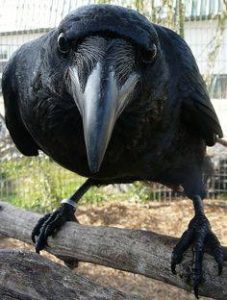
At the time, I was writing Blessed Mayhem and had studied crows extensively. How hard could it be to befriend a crow?  

One day, I piled peanuts on the grass. Circus peanuts, unsalted. In my research I’d discovered that circus peanuts are high in carbs. It takes a high-carbohydrate diet to flap wings. Within thirty minutes, a crow landed in the yard. A bubble of joy burst inside me, a tidal wave of love shattering the protective layer of my heart.  

“Poe?” I said, blurring the lines between fact and fiction.   

Unlike in my book, my Poe turned out to be female. The only reason I knew this was because a few days later, she brought her mate, Edgar, who was noticeably larger. Poe struts with an unmistakable wiggle to the hips and Edgar acts as the great protector. A real man’s man, if you know what I mean. The proud parents flew peanuts back and forth to their nest … in the woods across the street.  

OMG, they had chicks! The helplessness that had consumed me each time cancer stole another dog from us, withered away like lilies in a frozen pond.  

Days turned into weeks as I marveled at their intelligence, grace, and loving nature. My husband got swept up, too. 

Then we had a new visitor. The Marilyn Monroe of squirrels, this gorgeous dirty-blonde with a swanky strawberry-blonde tail sauntered into the yard. Hesitant at first but making a b-line for the peanut pile. Uh-oh, she could be trouble. Would Poe and Edgar accept her, or would they retaliate for the intrusion?  

Since I’d already matched the crow names to fictional pets, why not stay consistent? From that day forward, the sexy squirrel became Shawnee. Then I noticed she was pregnant. If Poe didn’t accept her, how could I ever kick her out? Better lay out two piles of peanuts from now on. 

Fights broke out between the two mothers as I bit all my fingernails to the quick. And then something amazing happened. Little by little, day by day, the taunts, lunges, and overall discourse lessened. It’s like they’d struck a deal — you stay on your side of the yard and we’ll stay on ours. With tiny mouths to feed, the kids remained their top priority.  

Just like that, harmony was restored.  

Neither Poe nor Shawnee cared when Hippy joined the party. Hip is a tiny chipmunk who at the time hadn’t even formed stripes yet. Instead, two dotted lines trailed down his back. My heart puddled into goo. Hippy must be the most enthusiastic of his kind. Each time he scores a peanut he leaps a good four-to-six inches into the air, as if screaming, “Hip, hip, hooray!”

Poe and Edgar brought the chicks once they were old enough to fly. Tears teemed my eyes as they taught their babies how to crack peanut shells against the rock. Their beaks weren’t strong enough yet to pry the shell apart. Shawnee brought her babies, too. Two older chipmunks joined Hippy. That was it. No other birds, no other animals of any kind. Until the sun set in the night sky, when Foxy Lady and her kit, Cornelius, ensured the yard was properly licked clean. Jeff, the opossum, and two of the fattest raccoons on record, the Fatty Patty Twins, also helped with the clean-up. Albeit in shifts. The night crew story I’ll save for another time before this post morphs into a book. 

Back to Poe, Shawnee, and Hip … 

In the yard, I designated a pile of peanuts for each family and they stayed at their respective piles, never encroaching on their neighbor. The two mothers formed the foundation for a mutually beneficial arrangement and everyone played fair.  

The nice thing about crows is, they know how to keep a secret. This becomes especially true with places they feed. Sure, they may bring a guest here and there, but it’s a one-shot deal. If the visiting crow(s) try to hang around, Poe and Edgar escort them past the property lines. Crows also aren’t opposed to playing dead next to a consistent source of food, so other crows flying by will think the feast is toxic. They really are smarter than fifth-graders! 

In New Hampshire, winters are long and brutal. This fact alone worried me. How would my new fur-and-feathered-babies weather harsh conditions? Little did I know, they worked out a solution ahead of time: me. If it isn’t obvious by now, I’m an easy mark, and they knew it from day one. A tilt of the head, a swish of the tail, and I’m out the door, trudging through two feet of snow. My husband also isn’t immune. Thank God, too, because someone needs to shovel a path for them. He’ll even clear the snow around the bottom of Shawnee’s tree so her feet don’t get cold when she climbs down.

During the same blizzard, Odin, our chatty raven who loves to hang out on my deck railing, sang for his breakfast around 6:00 a.m.  

Crows and ravens have an amazing range of calls, which include mimicking other animals. They can even imitate us!  

Once the snow arrived, I moved peanut piles up a level to shorten my trek. It seemed like a good idea at the time, but that slight alteration caused a major shift. The waft of peanuts caught the attention of blue jays, who wasted no time in muscling in on the action. Shawnee’s kids had kids of their own, or she’d spilled the beans to one of her squirrel suitors. Between you and me, she’s a bit of a floozie.  

The harmony in the yard became a massive feeding frenzy, new squirrels zigzagging around crows, blue jays divebombing from all directions, warring with one another in mid-air while Poe and Edgar played referee. Add in an adorable red squirrel, aptly named Wile E. Squirrel, and I created the perfect storm. Absolute madness unfolds daily around here … but everyone’s fat and happy.   

The truly beautiful thing is, Poe and Shawnee still eat wing to tail without even so much as a harsh glance. Even after all this time they’ve never broken that initial vow to put family first. Can’t say the same for their offspring, though. If a baby squirrel tries to take off with one of the suet squares (yes, I cut them into bite-sized pieces), the Poe clan gangs up on the poor little fella. Massive black wings flapping behind you will make anyone drop their stash.  

I’ve also witnessed new behavior. Poe and Edgar’s kids – who are huge by the way; they take after their Dad – line up on the lower level, their backs concealed by the skeletal-branches of the bushes. When one of the baby squirrels takes off down the hill with a mouthful of nuts, the wings spread. If he makes it past the defensive line, they soar after him. It’s not like there isn’t enough food to go around, either. I go through 15-20 lbs. of peanuts per week. Maybe stolen food just tastes better.  

Spending time with wildlife is one of my favorite ways to relax. Enjoying nature is an excellent excuse for taking a well-needed break from the computer. Thanks to Jim, TKZers know why it’s important for writers to step away from their WIP from time-to-time.  

My neighbors probably think I’ve lost my mind … again. Passerby’s certainly do. Twice a day, if I haven’t been beckoned, I stand in the yard, hands cupped around my mouth, and call into the sky for Poe. A caw always echoes in return. Within minutes of closing the sunroom door, the yard erupts – a Coletta family signal that a new day has begun.  

It’s impossible to have a bad day when you’re surrounded by tiny paws and talons. Let’s start the week off on a fun note. Do you feed the wildlife around your house? Tell me about the animals in your life.  

Can Slick Marketing Sell Bad Books?

by James Scott Bell
@jamesscottbell

Kris titled her post last week “Naked Came the Stranger,” and slyly didn’t give us the story behind the title. I’d like to do that now, because I well remember one of the most famous literary hoaxes in publishing history.

This was back in the 1960s, the halcyon days of big, trashy novels like Valley of the Dolls and The Love Machine. A Newsday reporter by the name of Mike McGrady, over drinks with some pals, posited that a novel with no social value and even less literary quality could sell, if it was about sex and had a titillating cover.

To prove it, he got a couple dozen of his newsroom colleagues (19 men and 5 women, including two Pulitzer Prize winners) to conspire to write a lurid tome. The simple concept was a housewife having a series of adulterous flings, one per chapter. As the New York Times put it in McGrady’s obituary, “She has sex with a mobster and sex with a rabbi. She has sex with a hippie and sex with at least one accountant. There is a scene involving a tollbooth, another involving ice cubes…” You get the picture. The conspirators wrote one chapter each, trying their darndest not to make the writing too good.

McGrady edited each chapter, blue-penciling anything even approaching a modicum of literary quality.

The project’s original title was Strangers In The Valley, a cross between Valley Of The Dolls by Jacqueline Susann and Strangers When We Meet by Evan Hunter. But a female colleague, Beulah Gleich, told McGrady that the title was no good. He asked why. She said it needed the word Naked. McGrady suggested The Naked Stranger. Gleich said that was too blatant, that the title should have “more class.” Well, you be the judge.

McGrady decided on the pseudonym “Penelope Ashe” and had his sister-in-law pose for the author photo. (On the back of the dust jacket, “Penelope Ashe” is described as a “demure Long Island housewife.”)

He then submitted it to publisher Lyle Stuart, known for “edgy” books. They accepted it (not knowing it was a hoax) and proceeded to design a salacious cover. If you want to see the entire cover (a rather oxymoronic term considering the context) you can go here. (The photo was purloined from a Hungarian magazine, and when the book became a phenomenon, the photographer and model demanded compensation, and got it.)

When Naked Came the Stranger hit the stores, the reviewers hit back. The Village Voice said the book was “of such perfectly realized awfulness that it will suck your soul right out of your brainpan and through your mouth, and you will happily let it go.”

It became an instant bestseller.

After the book reached the 20,000 sales mark, the hoaxers, perhaps feeling a collective pang of guilt, decided to come clean on The David Frost Show. So the joke was over, right?

Um, no. The book sold even faster, spending 13 weeks on the New York Times bestseller list. It has lifetime sales of over 400,000. Open Road Media has the pub rights now.

I remember my mom and dad laughing about all this while looking at a Life magazine story on the hoax, with a group photo of the co-authors. You can see that photo, along with some others (including one of the cigar-chomping McGrady) by going here.

Takeaways:

1. In the staid publishing world of the 60s and 70s, if a book was about sex, even if poorly written, slick marketing and a suggestive cover sometimes led to heaving, tumultuous, luminescent waves of febrile, smoldering, incandescent sales.

2. That may happen occasionally today, though it’s much more difficult, primarily because of the roiling sea of content now available.

3. If a book is not about sex and is poorly written, slick marketing and a great cover might drive some initial sales, but with a major drop off afterward. This will be of no help to an author’s career.

4. On the other hand, a really good book will always be held back by a bad cover. That will also be of no help to an author’s career.

5. So if you’re self-publishing, don’t skimp on covers. Where do you find designers? Check out 99Designs and this article by Joanna Penn.

6. A great book with a great cover, all other things being equal, is the best driver of what is far and away the most effective marketing: word-of-mouth.

7. Book after book following #4 is the only sure-fire way of building a writing career.

So, writer, don’t play fast and loose with a one-book stand. Commit to a quality relationship with your work, and take a vow to make that a life-long bond.

Okay, Zoners, let’s have your naked opinion. Don’t be a stranger.

Setting Can Add Tension – Use it – First Page Critique: Dancing with the Well-Bred Devil

Jordan Dane

@JordanDane

By Usien – Own work, CC BY-SA 3.0, https://commons.wikimedia.org/w/index.php?curid=22220725

I will be traveling today for a bit of sun and fun. I’ll try to pop back when I can…IF I CAN. For my post, I offer the work of a gutsy anonymous submitter for a first page critique. I’ll have my feedback below. Please add to the conversation with your constructive comments so we can help this author with suggestions for him or her to consider.

The submitter added this insight into their work:

This is a murder mystery set in the early 1990s that digs into the dark, unseemly corners of academia where moral corruption and the abuse of power hide.

***

Club Orleans,
Sayreville, NJ
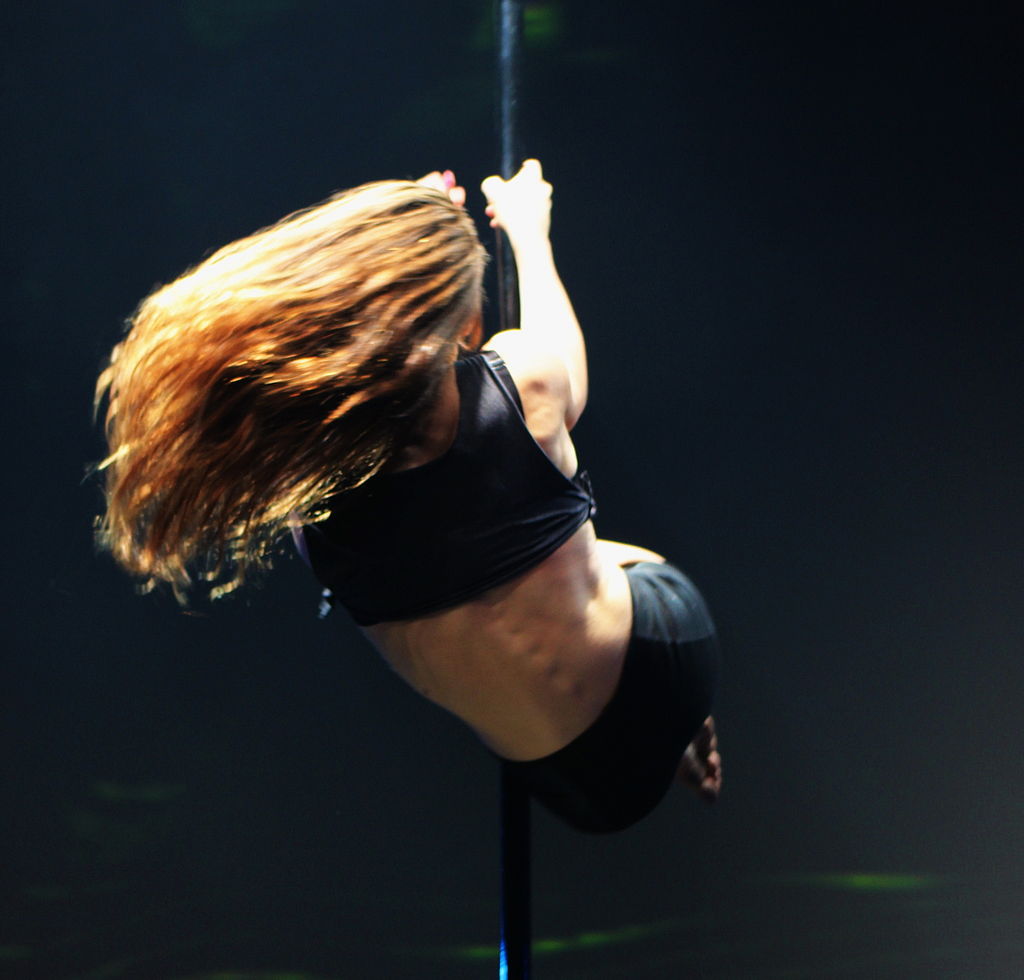
As Megan completed her sinuous corkscrew down the pole she saw him—Professor D.B., the last person she ever hoped to encounter here.

Holy. Fricking. Hell. She released the pole and strutted across the stage away from him, forced on her most seductive stage face, and hoped it hid the rush of fear that filled her stomach to overflowing. She managed to resist covering her all-but-naked breasts.

Her mind flooded with the image of the Psych Department chair dressing her down before sliding the letter across his pompous desk, the letter that would explain that she’d been kicked out of the grad program, and that she might as well pack up her apartment and move back to Gump-ville, Indiana, to the welcoming jeers of everyone who’d ever warned that she was too big for her britches. But it was the thought that followed that made her shudder—the thought of what good old D.B. might propose to keep his silence.

He couldn’t have recognized me. When she started dancing again, she’d gone to great lengths to morph her appearance—heavy make-up, huge eighties hair, costuming—and to transform her persona from Miss Quiet-Studious. Considering she only worked at clubs at least a half-hour from campus (and avoided the elite establishments altogether), she was certain she’d never see anyone from the program. Her transformation was good insurance nonetheless.

As she latched onto the life-preserver thought that D.B. couldn’t have recognized her, the fear dissipated. But what was he doing here? Look, make a last round and call it a night. Stay in persona and treat him like any other customer.

She worked her way around the rectangular bar that surrounded the stage, her nerves increasing proportionally as the number of bills in the elastic of her G-string grew. The whole time, she felt D.B.’s eyes crawling over her body. She suppressed another shudder.

And then she was facing him. “I hope you enjoyed my show.” She tried to keep the right level of sultry in her voice.

“Oh, it was . . . eye-opening, despite how much I missed.” D.B.’s eyes bored into her as he dangled a ten.” Miss . . . ?”

And in those eyes was the damning truth—he recognized her.

FEEDBACK

There is definitely a disturbance happening for Megan. Nothing like an unexpected visitor to your place of employment to rattle you, especially when you are half-naked and plying your best moves on a stripper pole. It’s hard to imagine why a graduate student would be stripping. The money must be good or she must be desperate for funds.

To have a professor be the one to find her is a solid set up. I don’t know why Megan calls him Professor D.B. by his initials for the reader. Why not just say his name since she’s in her head? I had to reread to see if DB is the chair of the Psych department and assumed DB wasn’t the big kahuna. I liked that the author didn’t drift into back story and stay there until the face off when Megan sees in his eyes that he recognizes her, but there is enough back story and “slow the pace” explanations that divert the reader’s attention from Megan’s mortifying moment of being recognized by someone from her graduate program.

This is definitely a page turner, but I would like to offer a few tidbits for the author to consider, to add layers to this intro. The writing is a little sparse and more can be woven into this intro to give a feel for how much Megan has at stake.

GENRE – If I only had this intro as a peek at the genre, I would’ve thought it to be a Harlequin Romance. There’s a hint of humor to Megan as a feisty heroine working her way through her graduate program. Is DB a soon-to-be love interest or a dastardly villain will to blackmail her into his sexual demands? What conflict would they have to sustain a whole novel? From this set up, I don’t know.

From the set up the anonymous author sent with the submission, we see that this is a murder mystery set in the 1990s and it’s about moral corruption and abuse of power in the academic world, but that’s not the feel of this intro. If Megan will be blackmailed by DB to keep her secret in exchange for sexual favors that will grow into a murder, then I would suggest the author layer in more mystery and the threat of coercion to this piece. The reader needs to see Megan’s fear and vulnerability at getting caught and her willingness to do anything to keep her secret. Beyond this short intro, the reader would need to feel her shame if her mother found out, or how her career plans would be dashed.

Words like “Gump-ville Indiana” and “too big for her britches” and “eighties hair” are meant for cliched humor. If this is not the intention with the rest of the story line, then why begin the book with implied humor?

SETTING – I like the world building of a good setting. It doesn’t have to be drawn out or slow the pace, but an effective setting can add to the emotional aspects of the scene. In this intro, I wonder if the setting can be an element of mystery to draw the reader into the scene, where it’s not completely clear where Megan is. The phrase “sinuous corkscrew down the pole” is a dead giveaway where she is and what she’s doing, but what if the description is vague and develops into something more as a tease. (The sample rewrite below was written hastily by me to illustrate the point of focusing on Megan, avoiding back story and adding more of a threat from DB. I’m sure the anonymous author could do better.)

SAMPLE REWRITE WITH MORE SETTING AND LESS BACK STORY

Through the blinding lights of the small stage, Megan caught a familiar silhouette—a tall man standing in the shadows apart from the rest. Something triggered a memory and made her think of him, but he vanished as soon as his face came into her mind. Spirals of smoke clouded the air as she moved and the music built to a crescendo. Her big finish would be next. Her fake eyelashes made it harder to search the crowd for the last person she expected to see.

Please…it can’t be him.

She strayed from her usual routine to stay in the murky corners near the velvet curtain and worked the edge of the stage until she felt the heat off the horde of faceless patrons and heard the low grumbles from her regulars. Megan couldn’t avoid her big finale. She had a reputation to uphold, but as she strutted across the stage and into the spotlight toward the shiny brass stripper pole, she sensed the laser heat off his eyes—Professor D.B. from her Psych department graduate program.

He’d stepped closer to the stage—and her.

After she turned her back on him and reached for the brass pole, she hoisted her body into her signature spiral that had the men hollering for more. With every turn and every impossible stretch of her limber body, she searched the shadows and hoped the professor hadn’t recognized her. She had troweled on enough makeup where her own sweet mother wouldn’t recognize her.

Her future, everything she had worked for, would be riding on whether she had only imagined Professor D. B. in the front row. Adrenaline raged through her body as heat flushed to her cheeks. Oh, God, please no.

OPEN-ENDED QUESTIONS THAT MIGHT ENHANCE INTRO – Here are a few questions that came to my mind that may keep the focus on Megan and the tension, rather than dipping a toe into back story. The back story is sparingly used, but it’s there. It starts in the 3rd paragraph and is threaded through as Megan thinks of the ramifications of getting caught because D.B. might recognize her.

With open-ended, the author can put his or her take on the answers that might make it into a rewrite, to put their own spin on the story. I’ve found that by offering open-ended questions, the author usually comes back with something far better than my rewrite. It’s their story and their characters.

1.) When Megan spots D.B., is she upside down or spinning on a pole with stage lights? This would make it harder for her to see him clearly. She’d have to change her routine to peer through the silhouettes of men and hands touching her costume. It could add to the tension if she catches a glimpse of him, but he disappears–or build up her stress as she sees a familiar face without letting the reader know who she spots until the last minute.

2.) Does she change her routine because she’s afraid of taking off everything if it’s him? Or maybe she does awkward poses to get a better look at the crowd, like looking between her legs upside down. How do patrons of the club react as she changes her routine?

3.) What does the club look like, smell like? Setting might add to her stress if it’s the same “grind” – pardon the pun.

HOUSEKEEPING

In the sentences below, there are words to clean up. I’m not trying to offer different writing. I’d like to use the author’s words to start and clean up from there. I don’t begin sentences with “And,” don’t embed dialogue lines within a paragraph, and try to build stronger sentences and delete uses of “was.”

BEFORE

And then she was facing him. “I hope you enjoyed my show.” She tried to keep the right level of sultry in her voice.

“Oh, it was . . . eye-opening, despite how much I missed.” D.B.’s eyes bored into her as he dangled a ten.” Miss . . . ?”

And in those eyes was the damning truth—he recognized her.

AFTER

“I hope you enjoyed the show.” She fought to sound sultry as she came face-to-face with him.

“Oh, it was…eye opening, despite how much I missed.” DB’s eyes drilled into her as he dangled a ten. “Miss…?”

In his eyes were the damning truth. He recognized her.

Thanks to the author for their submission. I wish you luck on your project. For discussion, please comment with your feedback. Thank you.

1.) Is this a page turning submission for you?

2.) What suggestions would you make for this author?

3.) Bonus points for PUNS in your comments.