Where Do You Find Inspiration?

By Sue Coletta

Whenever I’m plotting a new novel, I read a lot of true crime stories for inspiration. I may even steal character traits from one real world serial killer or victim and combine them with another. Reading triggers the muse to fire off plot, character, and subplot ideas. Somedays, though, the stories are almost too bizarre to believe. In which case, I’ve merely entertained myself for a while. Nonetheless, I wouldn’t call it wasted time, because true stories have a way of worming into our subconscious mind. When we’re in the writing zone, these alleged “useless facts” can morph into an intriguing scene that we never expected. Don’t you love when that happens?

With that in mind, I pose the following question to you, my dear TKZers. Did you know serial killing families existed? I’ve written about them before on my blog, as well as serial killing couples, which aren’t as rare.
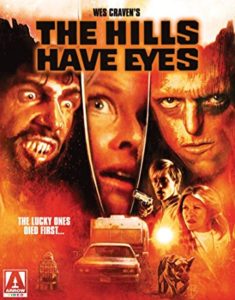
Wes Craven found inspiration for his 1977 slasher film The Hills Have Eyes when he read about the horrors of one particular family of serial killers — the Sawney Bean clan. This is their story. (Did anyone else hear Law & Order’s theme song when they read that line?)

In the times of King James I, Mr. and Mrs. Sawney Bean transformed Bennane Cave, by Ballantrae in Ayrshire, Scotland, into their home. Long, twisting tunnels extended for more than a mile underground. The cave also featured several side passageways to accommodate a growing family. And grew they did. Over the years they created their own army of psychopathic cannabals.

Opposed to getting a job to support his new bride, Sawney Bean resorted to robbery. On the lonely back roads that connected the villages, he’d lie in wait for travelers to pass by. Townsfolk believed the roads were haunted due to the massive amount of disappearances.

A budding serial killer stalked those streets.

Bean’s sole reason for escalating to murder was to not leave witnesses. But then, Agnes, his wife, had an even sicker idea. If they butchered their victims, their remains could provide a high-protein diet, which had the added benefit of evidence disposal. Their relationship had already forced them to flee from their homeland in northern Scotland, after locals repeatedly made accusations of Agnes being a witch, claiming she’d been involved in human sacrifice and conjuring demons.

Over the years Sawney and his wife had fourteen children — all as twisted and evil as their parents — who became an army of serial killing cannibals.

During the next two decades, through incest, the children bore more children, who refined the art of murder and cannibalism, often salting and pickling human flesh. According to the Bean family ledger, found many years later, these incestuous acts brought Bean and Agnes a total of 18 grandsons and 14 granddaughters, now bringing the Bean clan to a total of 48 inbred, cannibalistic monsters.

Decaying body parts washed up on the beaches surrounding Bennane cave. Which prompted massive search parties. But no one thought to check the cave.

In about 1430 A.D., fate intervened when the Bean army — who had split into several small groups to hunt — attacked a man and his wife while on their way home from the fair. Half the Bean clan dragged the woman off her horse and had already disemboweled her before the other half of the group had a chance to wrestle the man to the ground. Fighting for his life, the distraught husband trampled several members of the Bean clan with his horse. This caused such a commotion a group of twenty bystanders came to his rescue.

During an all-out war, the Bean clan found themselves outnumbered for the first time in their pathetic lives. They retreated to the cave, leaving behind the mutilated remains of the man’s wife and a score of witnesses. The surviving victim was taken to the Chief Magistrate of Glasgow to tell his tale. With the longest missing persons list the country had ever seen, they reported to King James I, who arrived in Ayshire with his own army of 400 men and a pack of dogs.

Together with several hundred volunteers, another search was underway. Yet again, no one thought to search the cave. Until one cadaver dog alerted at the entrance.

Nothing could have prepared them for the horrors inside. The Bean family lived in that cave for 25 years. In total, the number of missing persons during that time is said to be over 1000.
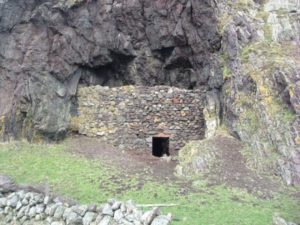
Bennane Cave

Torches in hand and swords drawn, the army soldiered into Bennane cave and into the mile-long twisting passageways to the inner sanctum of the Bean lair. Dank cave walls held row after row of human limbs, heads, and torsos displayed like the window of a butcher shop. Bundles of clothes, jewelry, and picked-clean bones littered the ground.

A fight broke out between the King’s Army and the forty-eight Bean members, resulting in the arrest and apprehension of Sawney Bean and his kin.

Their crimes were so heinous that normal channels weren’t enough, so King James I sentenced them all to death. Twenty-seven Bean men were left to exsanguinate after executioners disarticulated their limbs. The twenty-one Bean women were hung, staked, forced to watch their male kin bleed out, and finally. set ablaze. Through the entire ordeal not one member of the Bean family showed any sign of fear or remorse. Instead, they spit obscenities toward their captors.

Until the moment Sawney Bean drew his final breath, he repeated one continuous phrase, “It isn’t over, it will never be over.”

Legend says, one of the daughters escaped during the fight with the King’s Army and a local family adopted her. At seventeen years old, she married and had a son. In hard times they also killed and cannibalized to stay alive. When the villagers caught wind of their gruesome activities they hung the Bean daughter and her husband, but not before her son escaped to America, settling what was then known as Roanke Island. The entire colony later disappeared without a trace.

Legend also says that if you sit under the hanging tree in Scotland, you can still hear the Bean daughter’s bones scrape against the bark.

I’ll end this post the same way it began. Where do you find inspiration?

My Kind of Thriller

by James Scott Bell
@jamesscottbell

I’m currently working on a new thriller titled The Girl in the Window Who Saw the Woman on the Train Before She Was Gone. I don’t believe in chasing trends, unless it’s this one.

Actually, I wanted to talk about a sub-genre known as the “domestic thriller.” I’m not sure when this was coined, but it’s quite popular now, especially after Gillian Flynn’s runaway bestseller, Gone Girl. More recently, A. J. Finn’s The Woman in the Window has kept readers flipping the pages.

My research didn’t uncover a hard-and-fast definition of the domestic thriller. It seems to be a cousin of the psychological thriller, but with a home setting and (usually) a woman as protagonist and (usually) a male as the villain. A title like It’s Always The Husband (Michele Campbell) will clue you into the vibe.

I don’t, however, consider this a new genre. It’s at least as old as Gaslight, the 1938 play by Patrick Hamilton. You’ve probably seen the 1944 movie version for which Ingrid Bergman won the Academy Award as Best Actress. (I actually like the British version better. Released in 1940, it stars Anton Walbrook and the absolutely amazing Diana Wynyard. Catch it if you can!)

Hitchcock’s Shadow of a Doubt (1943) may rightly be deemed a domestic thriller.

I would classify many of Harlan Coben’s books as domestic thrillers. Suburban setting, ordinary person, crazily extraordinary circumstances.

Which is my favorite kind of thriller. I’ve always loved Hitchcock, and he was the master at the ordinary man or woman theme. My favorite example is the 1956 version of The Man Who Knew Too Much starring James Stewart and Doris Day. The idea, Hitchcock once explained, came from a scene he pictured in his mind. A foreign, dark-skinned man, with a knife in his back, is being chased, and falls dead in front of some strangers. When someone tries to help him, heavy makeup comes off the man’s face leaving finger streaks on his cheeks.

So Hitchcock did that very thing. He had Stewart and Day as tourists in Morocco, and in the marketplace one morning a man with a knife in his back falls at Stewart’s feet. Stewart gets the face makeup on his hands.

Of course, right before he kicks the bucket the dying man whispers a secret of international importance into Jimmy’s ear, and we’re off and running. The bad guys want to know what Jimmy knows and they’re willing to kidnap his son to find out.

Another example: Cary Grant as the ad executive in North by Northwest (1959). Because of a terrible coincidence, he’s taken to be a master spy by two thugs who kidnap him outside of the Plaza Hotel. Cary is going to spend the next two hours on the run. His only consolation is that he gets to meet Eva Marie Saint.

One more, and this one is chilling because it was based on a true story. In Hitchcock’s The Wrong Man (1956), Henry Fonda, a happily married musician, resembles a gun-toting holdup man. He’s arrested and put through the wringer. Will the real culprit be nabbed before they lock the prison doors on Hank?

So why does the “ordinary man/woman” or the “domestic” thriller resonate so well? Perhaps because 1) it’s easy to empathize with the main character; and 2) it helps us deal with one of our darkest fears—having evil show up at our doorstep.

We read these kinds of thrillers, in part, to reaffirm our hope that there’s a moral force in the universe, that justice will prevail, and that we can get through anything if we hang on with courage.

Plus, we all like getting lost in the fictive dream of a page-turner. Escapist entertainment, Dean Koontz once said, is a noble enterprise, considering what we have to put up with on this spinning orb.

So in that spirit, I offer you my latest thriller, Your Son Is Alive.

The idea for the book came from playing the first-line game. That’s where you just make up first lines that grab, not knowing anything else. One day I wrote this: “Your son is alive.”

Who says it? And why? And to whom?

I had to write the novel to find out.

So I did. The ebook is available from Amazon this week at the special launch price of $2.99:

AMAZON

AMAZON INTERNATIONAL STORES

(The print version will be available soon.)

As always, I have tried to write according to Hitchock’s Axiom: “Drama is life with the dull bits cut out.” 

Do you have a favorite kind of thriller?

Not Before Breakfast

Photo by LisaRedfern courtesy pixabay.com

I am not sure if I am actually writing this or not.

You may not understand if you are one of the few people who has not seen the multiplex blockbuster Avengers: Infinity War. The plot basically involves a powerful being named Thanos — think Brock Lesnar in body paint — who (among other things) has to destroy part of the Universe in order to save it. This last gasp measure includes wiping out half of the people on Earth, which he is able to do with a snap of his fingers (I don’t like to do spoilers, but, like, that part of the plot is already out there, and everywhere). The Avengers attempt to stop him, and…anyway, there is a website that you can visit which will tell you whether you are still around or if you were vaporized when Thanos made like Bobby Darin in the interest of preserving all that is, or what is left of it. I checked and it seems that I was expendable and have joined the Hall of Heroes. Of course, no one really stays dead in the Marvel Universe forever so there is going to be some trick that turns things inside out and right side up to set things back to normal at some point down the road.  As for me, I feel like I’m still here, so it looks like I will be able to catch up on this season of Strike Back, keep watching Season Three of Billions, and, of particular importance, write my blog for today, procrastination notwithstanding.

All of this talking and viewing about death, however, got me thinking about mortality. The topic is often the subject of jokes. Abraham Lincoln’s last words, so the joke goes, were “You and your damn theatre tickets.” Bob Hope was asked on his deathbed whether he wanted to be cremated or buried. He reportedly answered, “Surprise me!” I also am fascinated by memento mori in picture form which seems to be a Pinterest topic of interest as well. I hadn’t really thought about the topic until several years ago when I attended a funeral where one of the (adult) grandchildren of the guest of honor was walking around snapping photographs. I was quietly aghast — most of the funerals I had previously been to had been held for Italian relatives and we just don’t do that — but I am sure that the photos will provide fodder for conversation several years and a generation or so down the road (“Who was that?”).

All of the above pales in comparison, however, to what I happened to find recently. I was researching how long a body stuck in a wall would continue to smell (you don’t want to know why I was wondering about that. Really. You don’t want to know) when I came across a term known as “coffin birth.” These don’t happen now (at least in the United States) but they were fairly prevalent here between the seventeenth and nineteenth centuries and around the world before then (and to some degree even now).  A coffin birth would occur when a woman who happened to be pregnant would die and be buried. Her body would later expel the corpse of her unborn child. Archeologists (make that “unlucky” archaeologists) have happened upon this phenomenon with semi-regularity. I find that to be the stuff of nightmare, for reasons I can articulate (but won’t) and for reasons that I can’t. The worst thing, however, is that it’s actually given me an idea for a story. I’m not sure that I want to go there — Poppy Z. Brite, I suspect, wouldn’t have hesitated — but I might.

My story notwithstanding…if horror is your game and you want to fashion something around that unfortunate occurrence, have at it. What I want to know from you, however, falls under the general heading of research. What is the most unusual fact — one that you were not looking for — that you’ve discovered online while researching something for your writing project entirely different? Don’t everybody answer at once. Thank you in advance.

On the Precipice – What New Things are You Doing with Your Writing?

Jordan Dane
@JordanDane

I’m on a precipice with my writing goals this year. All good things to consider. I purposefully left my goals open in 2018 to allow changes. I wanted to back off on the Amazon Kindle World commitments I made, to allow more time to write full novels and start a new series. So far, I’m on target with my goals and it’s exciting.

MY BACK LIST – I loved Laura Benedict’s post yesterday On the Matter of Backlists. I will soon have my YA back list titles returned to me and I’m excited to expand my inventory of books that are under my control. As I have the time, I will reissue them with new covers and have the ability to control pricing and subsidiary rights.

QUESTION – For those of you who have had rights reverted back to you – Have you every considered adding additional scenes or content? Change an ending? Or even continue a series (at least one more book) to conclude a story line? I’d love to hear about that.

RADISH – I also was approved to become a writer for Radish – serialized fiction available on an app for your phone. The approval didn’t take long, after I submitted a project for their consideration. I’ve set up my author profile and financial info for payment, and have my first story (Mr January) split into episodes with cliffhanger endings to entice readers to buy the next installment. It’s been fun to rethink the story as in episodes and adhere to their guidelines on length of ep offerings and marketing suggestions.

Radish is not a publisher. They are only offering a platform to expose your writing to new readers. If you sharpen your skills to create enticing teasers and can break apart your book into serialized fiction episodes that appeal to the reader/subscribers, this is more of a promotional tool. Larger publishing houses are trying out this platform by selecting certain authors in their house to participate.

I’ll report back when I have anything new, but so far, it’s been relatively easy. No special formatting. No cover design. They only want 1-2 images for the book, without text (since they insert font over the image when you upload). They in turn send out email promos to their subscribers that feature your story/series under their guidelines as new episodes are launched. This is free advertising for your work.

NEW PROJECT – I always love it when a new project starts to take hold in my brain. I’ve been inspired by certain well-written TV shows that have a rhythm to the plotting turning points (beats) with key pivots that turn the plot on its ear. I’ve used my “W” plotting method with success, as far as developing proposals and outlines for new books. For someone who started out as a complete “pantser,” I have evolved. My last completed project – The Curse She Wore – hit every beat, turning point, black moment, and mirror. But I am now eager to get back after another project and will start on that this month. Every project is a new opportunity to learn and flex my wings.

PERSONAL GOALS/HEALTH – My regular medical check-ups have me visiting various doctors for different reasons – mostly prevention. I’m taking a healthier approach to my eating and exercise – and am allowing more time with family and friends. It feels really good. For me to control my deadlines is a real bonus.

QUESTION – Do any of you have challenges in balancing your health goals with your writing time?

FOR DISCUSSION

1.) What new things are you doing with your writing? If you’re excited about a project, please share what you can. We love good news at TKZ.

2.) For those of you who have had rights reverted back to you – Have you every considered adding additional scenes or content? Change an ending? Or even continue a series (at least one more book) to conclude a story line? I’d love to hear about that.

3.) Do any of you have challenges in balancing your health goals with your writing time?


On the Matter of Backlists

I love my backlist. It’s not a huge backlist, but after seven novels, it feels respectable. It didn’t really become a backlist to me until after books three or four. Before that, the books were just books I’d written.

Backlist means different things to different groups of people:

Publishers–An opportunity to make long-term money, especially when the author has a new book available.

Also Publishers–Let’s pretend those books never happened, okay?!

Readers–A treasure trove of a favorite author’s work to be discovered.

Other Readers–Old stuff the writer wrote before she got good at writing.

Still Other Readers–You wrote other books? Have I heard of them?

Booksellers (used books)–Stock

Booksellers (new books)–Old stock, or the discounted books on wheeled carts in the aisle or at the sidewalk sale. Or books that show up on the computer as “Unavailable,” aka “Out of Print.” (This does not apply to classic books.)

Booksellers (Online, new and/or used)–Stock

Authors– Well, this author, anyway. Pick one or more: 1) That stuff I wrote years ago. 2) Precious words I’ll love forever. 3) Those books I wrote that almost no one mentions. 4) Those books for which I got the rights back. 4.5) Those books the publisher won’t return the rights to because the contract was written poorly or signed long before anyone dreamed of print-on-demand or ebooks. 5) The books I republished after getting the rights back. 6) Proof of my existence. 7) Stock, whether it be ebook, print-on-demand, or all those copies I bought at the author discount before the rest were shredded. 8) That book that has an Amazon Rank of 2,154,982. (Who knew Amazon even had a 2.2 million rank?!)

Libraries–Stock, mostly. Often fodder for book sales.

Of course, all of these descriptions are my personal opinions/observations.

While I very occasionally find myself in the “Old stuff the writer wrote before she got good at writing” trap when it comes to looking at other authors’ backlists, I’m usually pleasantly surprised. I worry most often about quality of writing when I’m looking at the early installments of a series. I can think of a couple of really big series that got off to rocky starts, but then sorted themselves. Often I’ll start a series with the third and fourth book, then go back to the beginning

I feel a sense of true joy when I discover the author of a book I love has several other books already on the shelf. It’s like anticipating a feast.

Writers, how do you feel about your backlist? Do you actively market it, or just let people discover it on their own? Do you ever wish it had more of a life?

Readers, are you wary of backlist books? Or do you plunge right in?

Eavesdropping on Quora

By Sue Coletta

Crime writers do their research in various places. Many of us have experts we can call on, but I hate to bother friends unless I can’t find the answer elsewhere. A great place to look is Quora. Numerous LEOs volunteer their time to answer questions. If you’re unfamiliar with Quora, you can follow topic feeds, like Police and Law Enforcement, and scan the Q&As. If you can’t find what you’re looking for, ask a new question.
Because I write about serial killers I also follow Psychopathy and Psychopaths. Some of the information is valid, other times alleged “real” psychopaths write in. Although it’s not unheard of for psychopaths to brag, Quora allows anonymity. Any time the poster doesn’t need to reveal their true identity, the information becomes unreliable.

Even if the poster has a valid profile, still double check the information. I recommend confirming with least two or three reliable sources for any internet information you intend to use in a book. Two of my favorite sites are Psychology Today and Explore Forensics, depending on what I’m looking for. I also need to give a quick shout-out to my dear friend Garry Rodgers, RCMP (Ret.), weapons expert and forensic coroner, who blogs at Dying Words. Quora also has its place in the pecking order.

In the Q&A below, I did not edit the answers for two reasons:

1. It’s not my writing; full credit goes to the poster;

2. The voice, including grammar and/or spelling errors, helps with the overall mental image of the officer who’s answering. After all, that’s one of the best parts of eavesdropping.

How many of you have listened in on a conversation while shopping or out to eat? You may not be able to see the person, but their language paints an image in your mind. As you read the following stories, I want you to imagine the officer who’s speaking. There’ll be a fun exercise at the end of this post.

Please note: the s-word is used a few times. Cussing and cops go together like peanut butter cookies and milk. You’ve been warned. 🙂

As a cop, what are the weirdest things you ever experienced?

Scott Conroy, 17 year veteran of law enforcement, answers:

Years ago some construction workers found some human bones in a a concrete patio that they were tearing up in the Venice Beach Area. In looking into the concrete we noticed that there were cavities in the concrete that were made by the now decomposed body. We summoned the Scientific Investigation Unit (LAPD’s version of “CSI”) and we came up with an idea to inject latex rubber into the cavities to get the body contours. Lo and behold we pulled out a latex rubber hand impression of the person to whom the bones belonged.

The detail of the latex replica was amazing. We could see defensive knife wounds and more importantly we saw fingerprints on the latex. We printed the “fingers” of the latex cast and discovered they belonged to a teacher who had disappeared around the time the concrete patio was poured. The ensuing homicide investigation revealed that the primary suspect in this homicide was a nephew who had worked in construction and on that particular patio job.

Epilogue: The suspect, however, had suffered an industrial accident a few years before the discovery of the bones in the concrete and was existing in a vegetative state. In the interest of justice, he was not charged or put on trial for that crime.

What is the scariest experience you’ve ever had as a police officer?

Jim Lee, Former Military Police officer (8 years) answers:

I was running a solo unit one unseasonably cold (for San Diego) November night over 20 years ago when dispatch sends me to an on-base bowling alley; apparently, security personnel were dealing with a D&D (Drunk/Disorderly) individual running around the parking lot half-dressed and beating on cars. I arrive on scene 5 minutes later and see the contact, and something wasn’t right about the situation. As I attempted to make contact with the individual I already didn’t like what I was seeing: no shirt in 40 degree weather but still sweating like a pig; dilated pupils; blank thousand-yard stare and wandering aimlessly. I’d seen these symptoms before, and they had jack sh!t to do with alcohol from what I’d remembered.

As I unsuccessfully attempted to speak to this guy he starts toward me in a threatening manner; I decided to deploy my collapsible baton and warn him off, but he wasn’t listening. That’s when I realized what I was looking at: My new “friend” was on PCP (aka “Angel Dust”).

Officers who have experience dealing with contacts on PCP are familiar with the dangerous situation I found myself in. But for those who don’t know: PCP prevents the actions normally caused when a neurotransmitter, called glutamate, attaches to its receptor in the brain.

It also disrupts the actions of other neurotransmitters. PCP distorts sights, sound and other senses. The user may experience “out of body” sensations that are related to the dissociative effects, feel like they are “floating” with strange impressions of space and time, or imagine things that aren’t real. Some abusers experience euphoria and invulnerability while others experience drowsiness and calming sensations.

PCP is dose-dependent and the effects on the brain intensify with greater doses depending on the methods of consumption and certain biological or psychological factors of the abuser with effects, generally, last from 4 – 6 hours. While the intoxication effects on the brain may be short-lived, the disruptions in neuronal activities can cause the person to feel unpleasant symptoms of depression, anxiety, mood swings, and general dysphoria when the intoxication effects subside.

I threw the baton to the security personnel; I knew, thanks to the effects of PCP, that I could beat the brakes off this guy all night long and he wouldn’t feel a damned thing, so the baton was absolutely pointless. I requested a cover unit to the scene; it usually takes several officers to subdue someone who is on this stuff, and I couldn’t trust the barely-trained security personnel, so I knew I’d have to keep the suspect at bay for a few minutes until “real” help arrived.

This is when things went sideways.

The suspect immediately went for my 9mm Beretta sidearm. I knew I had to keep him from getting to my service weapon at all costs, even if it meant taking an ass-kicking; a bloody nose or broken jaw would pale in comparison to what would happen if he were to somehow get hold of my pistol. Fortunately there were two things going in my favor:

  1. Our department issued retention holsters as standard equipment. Retention holsters serve the same purpose as regular holsters with one exception: instead of simply lifting the gun on of the holster one has to use a sort of “twisting” motion to be able to get to the weapon, otherwise it won’t budge. Thankfully, I’m pretty sure he didn’t know that.
  2. This guy was about 140 pounds soaking wet; this meant he gave up about 80 pounds to me (I was about 220–225 back then).

With a simple “bear hug” I was able to slam this guy on the pavement, as I was hoping to knock the wind out of him for a second. That was the easy part.

But now the fun was about to start.

Remember what I said about PCP’s effect of the human body’s nervous system? I finally got to see this effect first-hand; no amount of punching, arm bar holds or pressure point manipulation was going to stop this freak. It took all I had just to wrestle this guy and hold on for dear life (namely, mine). Despite the fact that I outweighed him by such a large amount I could barely hold this guy down, and he was determined to get his hands on my weapon. I’m not sure how long it took the cover unit to finally show up; it was probably about another 5 minutes but it felt like an hour.

Fortunately the officers in the other unit (they were riding a partner unit, thankfully) immediately recognized the situation I faced and helped me hold the drug-crazed nutjob down while security personnel contacted a paramedic unit under our orders. Upon the paramedic’s arrival it took no less than five of us to apply restraints to the suspect, “hogtie” him and prepare him for transport to the medical facility for treatment and evaluation. A subsequent search revealed that he was also armed with a 4-inch blade; I wondered why he didn’t use it but was relieved that he must have forgotten about it (otherwise this story would have been about a police shooting).

After I was also examined by the paramedics (and found to be still intact) my watch commander ordered me back to the station to take a rest and start my report. Good thing, too, because that was probably the longest 10 to 15 minutes of my life at that point; I was worn out, and someone just tried to kill me.

Yeah, fun times.

Benjamin Bender, Retired Police Detective St Louis Metropolitan Police, answers:

For me its almost getting thrown off a 6 story bridge that was over a freeway while fighting a guy who outweighed me by 100 lb or watching a Woman burn alive 3 feet from me that I would have saved if I had arrived literally 10 seconds earlier.

Bridge incident story starts as all my stories do. One day while on “routine” patrol (again on a day my permanent partner had a Kelly Day…which was a common thing for me to get the call of the century while he was off….drove him nuts).

I got a call for a “vehicle accident” on the Freeway, I-55 near the North Bound exit onto the Poplar Street bridge. Traffic often backed up on that on ramp and rear end collisions were common. I was in an area not my normal one because my partner Blake was off I got stuck in a sector car that a guy was off and would be deadheaded. When I got the call it was crucial that I take one particular hidden on ramp to arrive at the location the quickest. I unwisely chose to go to one that was 2 blocks further (because the other was hard to find off an alley hardly marked and it was dark).

When I pulled up 3 cars had been in an accident. A drunk in the rear slammed into a guy who slammed into a 3rd car in front. The furthest car in front had a Mother in Law in it. The Son in law was the middle car. Drunk as I said..in the rear ramming and causing it.

Well as I pull up the Mother in laws car erupts in flame from gas leaking out of the tank by the back bumper. She is trapped in the car but nobody had got her out by breaking the window. Nobody noticed the leaking fuel. By the time I run to her the flame is fully over and in the back seat of the car. I break the window and cut her seat belt …go to pull her 100 LB body out like a kid but just before I can the flame billows over and engulfs both of us…the entire car bumper to bumper. I drop away and lose most of my exposed hair and a shirt. She burned alive in front of us..and the Son in law. I then had to take him to the station and sit there while he called his wife and told her he just rear ended her Mother and she died.

If that was my beat or I knew that exit better she would have lived. 100%

Second was a Home Invasion robber wanted for many crimes was leading Cops from 6 or more jurisdictions on a high speed chase through the City and County. I was listening in on the radio and correctly guessed he would go for the bridge over the Mississippi to get to Illinois. The chase went on for over an hour and I correctly deduced he was circling the rabbit hole to get home to Illinois and couldn’t find the bridge on ramp.

I went to the easiest one for him to get to based on his location north of the city. I then cause a traffic jam on the 1 lane on ramp by ordering 1 car to stop on the ramp and not move until I said ok. 10 Min of round about chase later…sure enough…here he comes. Goes on the side of cars as much as he can till its blocked..gets out on foot and starts running up the ramp to the bridge on foot with me 10 feet behind..letting him run a bit and get tired before we fight.

So…he gets higher up and apparently then did get tired and want to fight. When it didn’t go well for him he tried to jump off the side of the bridge (he didn’t realize that the earth rise fell away to a long drop the higher you went up…he thought ground was about 10 feet down or something). I instinctively grab his forearm as he went and I held a second. Then I felt his weight pulling me over. I knew I was going over now…I saw the terror in his eyes as he realized he had screwed up and was about to get very hurt and or dead. I then made the split second decision to let go. I saw his eyes go wide as saucers as I said…”bye”…and let go. He fell 60 feet and shattered both legs and his pelvis and lived. Almost got ran over too. That scared the shit out of me. He came sooo close to pulling me over head first…not feet first like he fell.

Love the dark humor, love the voices. I hope you enjoyed them as well. Ready for a fun exercise? Take one of these fascinating stories and describe the officer who told the tale. No clicking the name to peek at their profile picture!

Don’t Lose Your Head Over Point-of-View

by James Scott Bell
@jamesscottbell

Here is another first-page critique, with an opportunity to discuss some point-of-view issues. See you in a few:

The woods were dark. The thick leaves rustling overhead blazed with color during the day, but now, at dusk, they faded to shades of gray. The October breeze was crisp. The man moved quietly from tree to tree. He trampled a few mushrooms that looked like elongated little brains. He stopped behind a gnarled oak – just steps from the path that wound its way between the park and the tree line.  The park was where the neighborhood kids played after school.  

As the sun dropped, the man watched the children disburse, heading home for dinner and homework. From his left, voices were lifted in laughter, and three boys topped the rise from the direction of the monkey bars. 11-year-old Josiah and his 8-year-old brother Jacob said goodbye to 10-year-old Brandon, and turned away from the path and the woods toward their house. Brandon shouted a parting insult at one of them, and continued down the same path he travelled every afternoon.

The man tensed with anticipation as he watched and waited for Brandon to cross the small opening in the undergrowth, directly in front of the big oak. Sweat beaded on the man’s forehead as he thought about the delights the next few days would bring. A grim smile stretched his lips. It had been too long.

A stick snapped in the woods behind the man, and the hairs on the back of his neck stood on end. Somebody was behind him. Think!

The man bent down and pulled up a few mushrooms. “Nothing like a fresh Morel,” he said aloud. He pivoted slowly as he stood, and feigned surprise as he came face to face with another man standing uncomfortably close.  

Several impressions flashed through his mind in a split second: Tall. Muscular. Piercing blue eyes. Long black hair.

“Brandon is under my protection,” the big man said.  

The big man reached out and placed his hand against the man’s chest.  The man’s eyes widened in surprise and he let out a gasp. His body dropped to the ground.

Removing a sword from the scabbard on his back, the big man severed the man’s head with one swing, and left it on the ground among the mushrooms.

Seconds later, Brandon passed by on the trail, whistling contentedly as he made his way home.

***

JSB: Well, writer, you’ve obviously got a shocking opening moment here, and it certainly has page-turning potential. Who the heck is the tall guy wielding a sword in this day and age? I want to know.

Now it’s just a matter of getting from your opening line to this ending point in the most efficient way possible.

I’m not enamored of the first paragraph. The woods were dark is generic, and ultimately confusing. For in the next line we learn it’s dusk. So my image of nighttime has to be modified. Which means you’re making the reader do some cleanup work. You don’t want that. You want them on the roller coaster car, gripping the safety bar.

Which is why I like to see a POV established at the top, rather than weather or setting descriptions or a distant narrative voice. Not a hard and fast rule, but unless you have a very good reason not to, give us a character in motion as soon as you can.

Thus, one way to start is:

The man moved quietly from tree to tree.

Now, this is omniscient POV. You’re “outside” describing what’s happening “onscreen.” This has the feel of a prologue, and omni-POV is sometimes used in this fashion.

But things begin to get muddy in the second paragraph. By giving us the ages and names of the three children, we assume that this creep knows them. Was that your intent? If so, we need to have at least one line to indicate why this is so. And why Brandon is the target. I have a feeling you didn’t intend this, that this is a stranger, but we need to know one way or the other.

The third paragraph begins to take us inside the guy’s head. But once in there, I wouldn’t back out with A grim smile stretched his lips. The man is not looking at his own smile and describing it as “grim.”

This is why POV is crucial. I don’t want to get overly technical here, but will tell you that you have four basic modes to choose from, with two choices within each. Ack!

Let’s see if I can make it simple.

1. First Person (I was feeling lousy that morning…)
a. Limited (one character narrates throughout, e.g., The Big Sleep)
b. Open (switching between two or more first-person narrators, e.g., Framed)

2. Third Person (She was feeling lousy that morning…)
a. Limited (one character’s head)
b. Open (switching to another character’s head in another scene)

3. Omniscient, wherein the author can choose the level of intrusion, from participating as a commenter (It was the best of times, it was the worst of times) to keeping the author voice muted while allowing “big picture” descriptions (e.g., Lonesome Dove)
a. Limited (to keep focus on one character, e.g., Gone With the Wind)
b. Open (floats between various characters)

(Note: Some teachers peg omniscient a form of third-person. I don’t think that’s helpful, as the issue with omniscience is intrusion and scope. Third person, on the other hand, should not, in my humble opinion, stray from a character’s head.)

4. Cinematic (a form of omniscience), with a narration from “without,” describing only what can be seen, never going  into a character’s thoughts or emotions (e.g., The Maltese Falcon)
a. Limited
b. Open

I did not include the “Hey, look at me!” mode known as Second Person (You walk into the party and see your ex-wife) which is almost never used. I also didn’t mention the option of doing First Person in either past tense (the traditional method) or present tense (which is popular in Young Adult fiction these days). But I should also point out that many thriller authors mix First and Third POV, something James Patterson popularized.

Whew!

Is this stuff really important to know? Um, yeah. Mishandling POV jars readers at the subconscious level, makes them do unnecessary work, disrupts the “fictive dream,” lessens the impact of a scene.

So my advice to new writers is this: get a handle on Third Person, Limited as a default. Move on to Third Person, Open. You can then try First Person, Limited. For many successful authors, that’s all they ever use.

But once you make a POV choice, keep it consistent throughout. (For purposes of this prologue, it seems to me Third Person, Limited is the best bet.)

A stick snapped in the woods behind the man, and the hairs on the back of his neck stood on end. Somebody was behind him. Think!

I’d cut everything after the first comma. the hairs on the back of his neck stood on end is a cliché. And it’s quite obvious someone is behind him. We can infer that he’s thinking when he takes the next action, which is to bend down and pluck a mushroom called a Morel. I gotta tell you, I had no idea what that was. Had to Google it. Is this particular type of mushroom essential to the story? Maybe you can come up with some other excuse for the guy. Lost dog, maybe? (I don’t mind him stepping on the mushrooms, though, because I like where his head ends up. See below.)

Now, the sword guy. I’m confused about what happens. The sword guy touches the man’s chest and the guy drops. Is he dead? Is he stunned? If the former, then why chop off his head? If the latter, what caused it? Some sort of magical jolt?

Either one takes away from the impact of the sword. So I’d just have the big guy dispatch the stalker with one swipe, a la Robert E. Howard’s Conan the Cimmerian.

The last line is jarring to me. I know what you’re going for, but it pulls me out of the moment. It’s just not needed. Leave us with the head in the ’shrooms.

Speaking of which, you know what would be fun? Re-write this piece staying in the stalker’s POV. When he loses his head, stay in his POV, as he ponders for a few seconds his cranium’s fate among the mushrooms.

Another benefit of doing this in close third person is that you could lengthen the scene a bit, which, if this is a prologue, you ought to do. The “prologue issue” has been discussed before, but for our purposes it would make sense to stretch out the tension, keep us wondering what’s going to happen, up until that shocking conclusion.

Style notes:

Never begin a sentence with a numeral. Thus: Eleven-year-old Josiah, etc.

In fiction, the best practice is to spell out ages: He was only elevenHe lived to be eighty-eight. (Unless the age is 100 or more: He died at the ripe old age of 101).

Any further comments for our anonymous writer?