Bonding Character and Reader

by James Scott Bell
@jamesscottbell

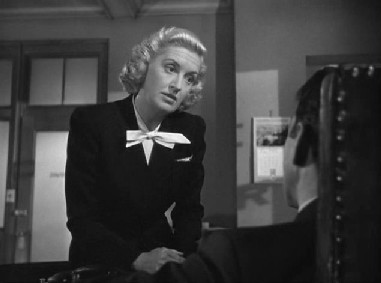
Lee Patrick as Effie Perine in The Maltese Falcon (1941)

What is the most important thing your novel must accomplish with the opening pages?

A gripping first line? An action-driven plot? World building? A compelling lead character? Style? Voice?

All of the above?

Well, sure! If you can do all that, do it. But let me suggest that there’s something else, without which these elements won’t be as effective.

What the author must do, as soon as possible, is bond the character to the reader. It’s an emotional alchemy that render fictive gold. When the reader is not just interested in, but emotionally connected to the main character, the urge to turn pages ramps up to its fullest potential.

This is why the concept of the opening disturbance is so crucial. When a character is confronted with threat or challenge, we have a naturally sympathetic reaction. We can identify. We’ve all been there. That’s why this a good first step to the bonding I’m talking about.

An even more powerful effect can be achieved by adding a second technique, one I call the Care Package. It’s one of my fourteen signpost scenes as laid out in Super Structure.

In the most basic sense, it refers to a caring relationship is in place before the story begins between the main character and someone else. This is to distinguish it from Pet the Dog, which is when the Lead, somewhere in the middle of the story, takes time to help another character who is weaker and in need.

A perfect example of both is in The Hunger Games. When we first meet Katniss, she is out hunting to feed her family—her mother and her little sister, Prim. Katniss’ actions are illegal, but she does this out of love. Those relationships are in place before the novel begins. Author Suzanne Collins also includes in this Care Package a scruffy cat that Katniss does not like. This is a skillful addition, for the Care Package works even if a character is resentful about the relationship and the caring is done out of obligation. That works because we admire those who do their duty, regardless of feelings.

In the middle of the book, Katniss becomes the protector of the weakest of the tributes in the Games—Rue. That’s an example of Pet the Dog. It is a relationship formed after the story is well under way.

I got an email recently from a writer who asked if the Care Package could be something the character is passionate about, like basketball or playing the piano.

The short answer is No. It has to be a human or an animal (as in Dorothy and Toto in The Wizard of Oz, or Terry Malloy and his pigeons in On the Waterfront). Being in love with an activity falls under the umbrella of self-interest. Caring about another person is the essence of selflessness.

Note, too, that the Care Package applies to any genre. Even the hardest of hardboiled fiction, as demonstrated in this passage from Dashiell Hammett’s classic, The Maltese Falcon:

When Spade reached his office at ten o’clock the following morning Effie Perine was at her desk opening the morning’s mail. Her boyish face was pale under its sunburn. She put down the handful of envelopes and the brass paper-knife she held and said: “She’s in there.” Her voice was low and warning.

“I asked you to keep her away,” Spade complained. He too kept his voice low.

Effie Perine’s brown eyes opened wide and her voice was irritable as his: “Yes, but you didn’t tell me how.” Her eyelids went together a little and her shoulders drooped. “Don’t be cranky, Sam,” she said wearily. “I had her all night.”

Spade stood beside the girl, put a hand on her head, and smoothed her hair away from its parting. “Sorry, angel, I haven’t—” He broke off as the inner door opened. “Hello, Iva,” he said to the woman who had opened it.

One action: smoothing her hair. One line, and not even one Spade gets to finish! This moment is the only bit of tenderness Sam Spade shows to anybody in the book. But Hammett knew it would stand out for that very reason. We get one peek that Spade is not made of pure ice…because he has someone in his life he cares about.

Simple exercise: Before writing your novel, take ten minutes to brainstorm a list of possible Care Packages for your main character. Make some based in love and others out of duty. Eventually you will find the one that feels just right.

It will feel just right to the readers, too.

The floor is open. What Care Packages can you think of from favorite novels or films? NOTE: I’m in travel mode today so my comments will be scarce. Talk amongst yourselves!

A Little Something Extra

People love something that is free. The problem which those of us who offer commodities for sale face is that our audience after a bit not only loves “free” but also expects “free.” There is a way around this. It is the concept not of “free” but of “extra.”

Most of us infuse a bit of our personal knowledge and/or interests in our stories. If you do this you can take things a step further, giving your reader (who is also hopefully a buyer) a bit more about the subject matter or point(s) of interest in the book either within the narrative or outside of the story by providing further information within the book itself or through a link to a dedicated web address that does the same thing. It gives the reader a bit of lagniappe, a French term meaning “a little something extra.”

I initially encountered the term “lagniappe in New Orleans.  It doesn’t have to be big, just 1) kind and 2) deliberate. I chatted up a cashier at a Walgreens and when she was done with the sale she tossed one of those counter mints in my bag, I assume because I was nice to her. It’s a good marketing ploy. I still visit that particular Walgreens at least once whenever I’m in the city. It’s not a new concept either. When I was a bambino my parents would take their angelic and perfectly behaved children out for Sunday dinner to a restaurant called The Florentine which was a Columbus institution right up to its closing in 2016.  It was old school before there was old school, with oil paintings on the walls, linen table cloths, and food on the table almost as good as your grandmother’s. What we loved, however, was that the cashier, who seemed ancient in the 1950s, presided over a collection of penny candy. He would pass out an assortment of mini-rolls of lifesavers, Necco wafers, and the like. Naturally, my brother, sister, and I always wanted to go there for the weekly dinner out. We subsequently moved to another city in 1963, but when I moved back to Columbus in 1978 and visited The Florentine the guy was still there, seemingly no older and still passing out candy to the children whose families patronized the restaurant. More recently I found that another Scotty’s Cafe, another Columbus area restaurant, does the adult version of that. At the close of the meal, one of the owners presents the customer with a small but extremely delicious piece of cake or breakfast roll, gratis. Believe me, you’d come back to Scotty’s anyway for the main course, but the little extra surprise — the lagniappe — seals the deal. It tells the customer that they’re glad you came in.

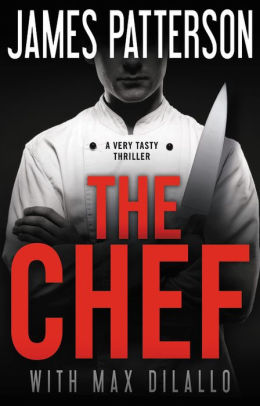
I started thinking about this because of a new James Patterson (with Max DiLallo) novel I just read titled THE CHEF. It’s a thriller, set in New Orleans during Mardi Gras (great market timing, there), and is about a police officer who also runs a food truck. The concept, in case you’re wondering, actually works. My point in mentioning it, however, is that at the end of the book Patterson and DiLallo include the recipes for a number of the dishes mentioned during the course of the story. We’re talking Crab Gumbo, New Orleans-style grits, and the like. They’re food truck-ready recipes, which means that you or I could (probably) make them without setting our kitchens on fire. It was a nice surprise to find those. Lagniappe. Folks aren’t going to buy the book because of it, at least initially, but if the authors decide to turn it into a series readers might remember the inclusion of the recipes (or recall having read about them in a blog post or review) in the first volume and come back for more.

Other authors have a reputation for including similar information and/or lists in their novels. Ken Bruen, in the books which comprise his long-running Jack Taylor series (and yes, the Jack Taylor series on Netflix is based on those novels) includes exhausting but terrific references, usually through the voice of Taylor, to novels and popular music projects, whether in the text or as an epigraph. I actually keep a notebook dedicated to Bruen’s recommendations. I consider myself to be fairly well-read and my musical tastes to be broad and eclectic, but Bruen never fails to either surprise me with something new or remind me of something long forgotten. It’s not just me, either. I know of a number of his readers who buy his books with a mind to heavily underline the music and novel titles which Bruen drops like breadcrumbs throughout Taylor’s narratives.

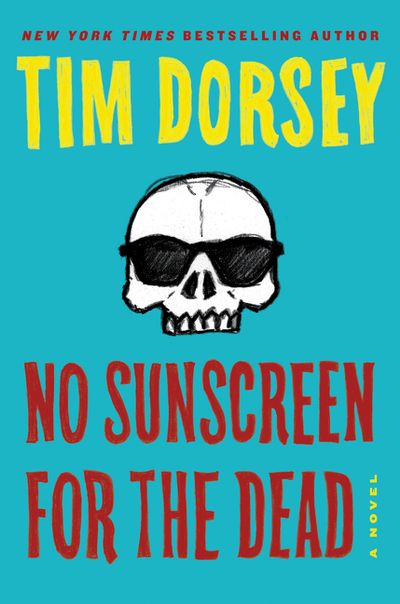
Author Tim Dorsey does something similar in his series featuring a madcap, cheerfully insane serial killer named Serge A. Storms. While Dorsey invents fresh new Rube Goldberg-type methods of murdering the deserving in each book, the primary reason to read them is Storms’ non-stop, trivia-engorged patter about the state of Florida. One could literally plan a vacation — one week a year for twenty or so years — touring the sites mentioned in the series and visiting the bars, restaurants, and tourist traps noted therein, almost all of which are a bit off of the beaten path. Grab a volume and go. It’s better than a triptych. I know folks who have done this and read each book just for a new vacation idea.

Word gets out among fans, and you can help it along with regard to your novel. Note on your social media pages that your novel is about (fill in the blank) and that at the end of the book you provide a list of places/things/music/whatever pertaining to that topic for those who wish to explore it further. Or include a short story of a few pages. It doesn’t have to be huge, just large enough to say “thank you” to the reader who, when confronted with a mammoth number of entertainment choices, chose you.

My question for you: do you have an unusual interest that you have spun into your writing project? Does something like I have described appeal to you? And readers…do you make lists of referenced works, the way that I and others do? Please let us know.  

Ways to Beef Up Conflict & Mystery – First Page Critique – Whatever Tomorrow Brings

Jordan Dane

@JordanDane

 

For your reading enjoyment, we have the first 400 words of an anonymous author’s work in progress. I’ll have my feedback on the flip side. Please provide your constructive criticism in your comments.

***

Dad and I arrived at Houston’s Medical Hospital as an orangy-pink sun dipped below the horizon. We hurried across a parking lot the size of a football field, the October breeze lifting wisps of my ash brown hair as we headed for the warmth of the building.

In the elevator, Dad punched the button for the third floor while I rubbed my hands together. We began our ascent with a jerk that made me latch onto Dad’s arm, and then I felt my stomach drop. Just what I needed.

We greeted Mr. and Mrs. Garrett in the visitor’s waiting room. After catching up on the latest news regarding Slate’s condition, I walked alone to Room 316. Rounding the nurses’ station, a concoction of hospital smells assaulted my nostrils: alcohol, chlorine, undefinable cafeteria food, and floor wax. Lovely. I leaned against the wall for a few moments, my hand on my empty and now queasy stomach, before continuing down the hall.

Finding the door to Slate’s room closed, I took a moment to smooth my hair, powder a shiny nose, remove an errant eyelash threatening to slide under my blue contact lens. Then I knocked.

“Yeah.”

I peeked in. “Hi.”

Slate Garrett sat propped up in bed, two pillows behind his back. His velvet brown eyes were dark. “Did you hear?”

I nodded and walked towards him. Lindell High’s all-state linebacker would’ve looked ridiculous in his pale hospital gown under other circumstances; but his blackened left eye, busted lip, and the white bandage behind his left ear took all humor out of the situation.

“Three games into my senior year, and this has to happen. Benched for the rest of the season. No college scholarship, no playing for the Longhorns, no more football. Ever!”

I could almost hear his heart breaking. I blinked back tears.

His own eyes watering, Slate reached for the glass on his nightstand and drank from it.

I feigned interest in his room while we both tried to regain self-control. His gold wristwatch and an opened package of malted milk balls lay on the nightstand beside his bed. A chair stood in the corner, a football resting on its cushion.

I walked over and touched the stiff, stained laces. “What’s this doing here?”

“Game ball from Friday night. Like I want it now.”

FEEDBACK

OVERVIEW – Depending on what genre this novel will be, the opening could start earlier with the injury on the field and more action. Or it could start with the young woman narrator rushing to the hospital, leaving the reader to wonder what is happening and who will be there. I prefer more action than the way this story starts so the reader is drawn into the novel by elements of mystery and the emotions of something about to happen. Even in the case of a romance, mystery elements still have their place. Readers want to be sucked into a story with anticipation of what will happen. This particular story reads like a romance or maybe a Young Adult (YA)/New Adult with younger characters that could grow into their early twenties. Who doesn’t love a good sports story with the struggles of a romance mingled between the lines? Sign me up, but let’s take a look at where to begin.

Genre & Elements of Romance – If this is a romance or YA, don’t rush a scene between a girl and a boy. Add layers to their relationship. The sexual tension, even if it’s only one way, can pull a reader in.

Be sensitive to eye contact or touches or the hyper awareness of the girl who has feelings for a guy who may not notice her. Does she see his skin flushing with color? Does she have heat rising to her cheeks? Pay attention to the details and only put in enough to not slow the pace, but make everything count. She’s dying to get into the hospital room, but she takes the time to primp and fix her hair. Nice touch, author.

But I would recommend adding more awkward tension from her point of view. I can feel a good foundation of it here, but there can be more. She’s walking into his hospital room alone. How well do they know each other? Are they only friends? Does she want there to be more? Since she didn’t run into his arms, I’m assuming they aren’t boyfriend/girlfriend.

Milk the unrequited love aspect and have her tentatively walk into a dim room. Set the stage better by making the room dark with him brooding and her looking for his glances through shadows where he may not want to face her. Have patience when building layers into a scene. If this scene takes place at dusk (as mentioned in the first paragraph), why not change the time to add mood to this intro? It would add to the tension if she’s pressuring her father to drive faster. Make it start to rain. Readers will wonder why she’s pushing her dad. The lights and the darkness and the treacherous weather can add to the mystery of where they’re going.

If you have her eventually rushing into a hospital, stretch out the intro with the build up of tension without telling the reader what’s happening. You will have them hooked as she steps into a shadowy room with an injured guy unable to look her in the eye. Maybe he’s in a private room and staring out the window. Is it raining? Make it moody. Have the stage set for what’s happening from her side. A good setting can really add to a scene.

Where to Begin – The way this story begins, the author is “telling” the reader what is happening, rather than creating an opener with more action and tension and conflict. Conflict is KEY. Start with action and add mystery elements without explaining what is happening and why.

Conflict – Does the injured boy expect to see her? Does he want her to be there? Only the author can answer these questions, but the story is completely under the control of the writer. I would recommend more conflict as she steps into the hospital or into his room. Are his parents surprised she’s there, but don’t say anything? When she finally steps down the long corridor and pushes open his door, what would he say to add conflict and tension right away?

“I told you not to come. You never listen.”

OR

“Come to gloat? Get out.”

Opening – Below is the first 2 paragraphs. It “tells” where she and her dad are going. Although there is a sense of urgency, that tension could be better. Any tension is deflated when she brings up the color of the sunset and talks about the time of day and brings up the hue of her own hair. This is a short cut for new authors to tell the reader this is a girl and the color of her hair but there are better and more natural ways to do this. Have patience. Make this opening about the action and stick with it.

The tension in this opening feels contrived because the urgency is forced and watered down.

Dad and I arrived at Houston’s Medical Hospital as an orangy-pink sun dipped below the horizon. We hurried across a parking lot the size of a football field, the October breeze lifting wisps of my ash brown hair as we headed for the warmth of the building.

In the elevator, Dad punched the button for the third floor while I rubbed my hands together. We began our ascent with a jerk that made me latch onto Dad’s arm, and then I felt my stomach drop. Just what I needed.

In this next paragraph, the author does more ‘telling” rather than “showing.” Again, the tension is soft and deflated when the author uses phrases like “after catching up on the latest news regarding Slate’s condition.” The author launches into the sights and sounds of a hospital, which detracts from any emotion this girl is feeling. It’s too clinical and matter-of-fact. She would be more focused on counting the room numbers and looking for his room. She’d be thinking of what she would say. Will she be welcomed? Don’t tell the reader. Show her apprehension without answering any of the questions she raises in her worrying.

We greeted Mr. and Mrs. Garrett in the visitor’s waiting room. After catching up on the latest news regarding Slate’s condition, I walked alone to Room 316. Rounding the nurses’ station, a concoction of hospital smells assaulted my nostrils: alcohol, chlorine, undefinable cafeteria food, and floor wax. Lovely. I leaned against the wall for a few moments, my hand on my empty and now queasy stomach, before continuing down the hall.

Suggested Start – I can’t know what the author’s intentions are for this story. I can only suggest ways to make this more of a page turner and pique the interest of an agent or editor. As I’ve stated under the Genre & Elements of Romance heading, I would start with more action. Regardless if this is romance or not, action will pique the reader’s interest more than this opening does. The elements of a good story are here, author. We just need to massage and tweak to add more action and conflict.

1.) Make the drive to the hospital more about the girl pressuring her father to drive faster. Don’t explain why she wants him to do it. Add tension with the darkness and rain coming down.

2.) Have her rushing into the building, not waiting for her father to park. She stops at a nurse’s station in the ER. Her stomach is doing flip flops. She looks for other familiar faces while the nurse asks questions she doesn’t want to answer. She’s not family.

3.) She sees Slate’s parents down the corridor and rushes to them, but stops when they stare at her without a greeting. If you want to add conflict, give them a reason to wonder why she’s there. Or if she’s a friend to their son, have them warn her that he doesn’t want to see anyone from school. “Not even you.”

Question to answer – You have to give the parents a reason why they are waiting in the hallway when their son is in a hospital room, alone. Why aren’t they in the room with him?

4.) Make the reader feel every step she takes toward his room. Take time to describe what she’s feeling without answering any questions. Don’t even talk about football until she sees him.

5.) Be patient with the body language, conflict and tension between them. He could be ashamed of something or feel like a failure because his future is shot. She could be wanting to hold him, but can’t. Make the reader feel every aspect of emotion in this opening scene.

Dialogue – Make every line of dialogue count. Below is the stripped out dialogue lines–isolated to highlight what is said without any description or movement. This is a good way to see if the lines sound chit chatty or if they carry enough weight that can add to the tension/conflict.

HIM: “Yeah.”

HER: “Hi.”

HIM: “Did you hear?”

HIM: “Three games into my senior year, and this has to happen. Benched for the rest of the season. No college scholarship, no playing for the Longhorns, no more football. Ever!”

HER: “What’s this doing here?”

HIM: “Game ball from Friday night. Like I want it now.”

I would recommend more substance be added. Give them a past that may set them at odds. Is she an old girlfriend? Is she dating someone else, but rushes to the hospital, unsure why she can’t get him out of her system? Is there relationship one-sided? Reflect that into the dialogue and make each line count.

“Why did you come? You made yourself perfectly clear where we stand. I don’t need your sympathy.”

Dialogue authenticity – The longest line of this conversation has him “telling” the reader that Slate is a high school senior and how many games he’s played. Both these characters would know that. Slate wouldn’t need to explain. It’s obvious the author is “telling” the reader what they should know, but it reads like a contrivance. Make this encounter about the emotion of what he’s feeling and her inability to comfort him. Is he angry and lashes out at her? If they used to date, is she now with the guy who injured him or the star quarterback of another team…someone with a future? Have patience with revealing the conflict but make the dialogue between them show the emotion of a troubled past or more of a conflict.

Characterization – I know this is only a short opening of 400 words, but what do we know of these two people? By not telling the reader about the narrator, the author could still show unique traits to pack this opening with a reason for the reader to care. Does she chew her nails when she’s tense? What is she wearing? Did she bother to change in her rush to get to the hospital? What does that say about her? Even little details sprinkled into these 400 words can add value into building who she is and why we should care. Maybe the author could clip out online images of what this character looks like. I love image boards to set the stage for the story and make the small details shine.

Housekeeping

What’s in a Name? – With the dialogue, there’s a good place to have Slate say her name – or maybe her father can share it when they’re weaving through traffic.

Gender – With this story being in first person POV, try to get the gender of the narrator into the first lines if possible. The reader wants to know.

Setting – In the action leading up to the hospital arrival, add landmarks or setting that allows the reader to get oriented into Houston, Texas. The author doesn’t have to provide the destination and the name of the hospital to set the location in Houston. As a Texan, I do love a good feeling of Texas in a story. Rush hour in Houston is a parking lot, for example. Depending on the time of year, the steamy heat could layer onto her skin as she races from the car into the hospital.

Summary – The author is very much aware of description for the sake of the reader’s senses. That’s good, but have patience with how to use that skill. Less can be more. Keep the character’s motivation and emotion real so the great descriptors don’t read as forced or contrived or piled on.

I focused on this being a romance, but if it’s not, my feedback is still worth considering. If this story is about head injuries in football, the additional conflict from the start would still work. Add more tension between these two people to allow the reader to develop a strong foundation in their relationship. If this is more about the drama of Slate’s recovery, I would recommend the author load up on the conflict to give this pair a journey that they may or may not survive in the end. Put them through the wringer.

There are good elements to this story and lots of potential with this premise and these characters. I want to know what happens and I would want to read more. Thanks for your submission, dear author.

Discussion

What other changes would you recommend, TKZers?

Hour of Fatality, First Page Critique

Licensed from Canva


Gentle Readers,

Gather ye ’round the hearth for the telling of a grand gothic nightmare from our latest anonymous Brave Author. I shall comment most profusely on said nightmare, and I entreat you to offer your own wisdom to our petitioner.

Your Faithful Friend, Laura

Hour of Fatality

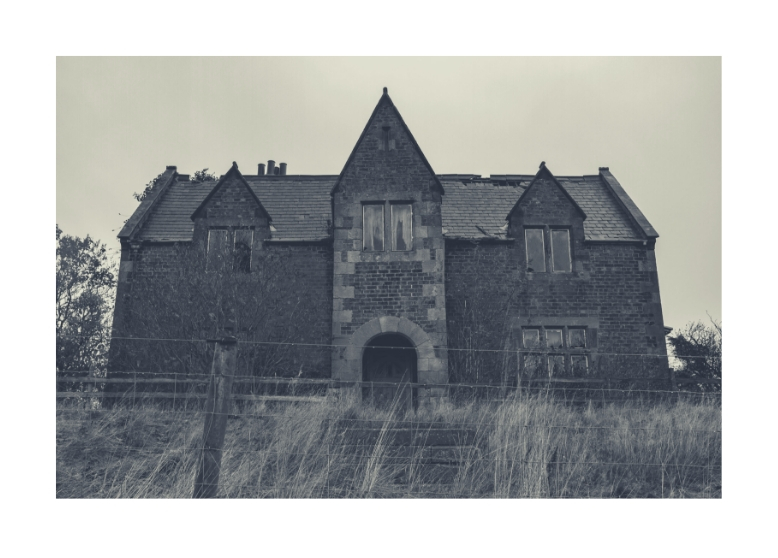
I came to Thornfield Hall at the hour of twilight. My path wended among hay field and hawthorn, and when a bend in the road blocked my view of the house, I even ran in my haste. The battlements on the roof loomed darkly against the glimmering west. If I could touch them, the blackness would rub off on my skin like soot, and cling to me; such is the strange presentiment of dreams.

I reached the pavement near the door. It, too, was black, and I stepped cautiously, fearing the sound of my own tread in spite of the silence that lay on the dead air. I mounted the steps, their stone faces worn smooth in well-remembered grooves. The vaulted hall within was deep in shadow, but a blaze of light shone from the dining room, majestic and warm. Was I welcome there? Mr. Rochester entertained fine company in that room, gentlemen and ladies endowed with wealth and grace. No, I had no place in the dining room. I would see where else he might be found. I went to the library, but the grate was cold, the chair tenantless. I searched the long gallery; every door yielded to my hand, but the rooms were vacant shells to me. Where was Mr. Rochester?

I sought him in the passageways and on the stairs. The nursery was no haunt of his, yet I searched there too. With a reluctant step, I approached the dining room once more. A laugh: low, lugubrious, familiar in its stirring antipathy, came from behind the door. What a strange foreboding inhabited me! It wrapped round me like a smoke that no breeze could dispel. But I would stifle fear for his sake; I would find him out, though my soul shudder and my heart sink beneath the discovery.

A wisp of smoke flowed from the dining room, like a mist creeping along the ceiling. Down timidity! Revelations must be made. I suppressed the shaking in my limbs and threw open the door – a wreath of fire embroiled the room and heated my face. Brocaded curtains, purple cloth, rich damask, all writhed together in flame. A motionless form reclined in the chair, senseless and still, his head sagging to his breast.

“Mr. Rochester!” I called. “Mr. Rochester! Wake up!”

Mr. Rochester did not stir. Before I could come to his aid, a different being approached, hauntingly familiar in its ghastly shape. The flame did not touch her, yet her dark hair moved and lifted in the heat. Bertha Mason, black and menacing against the crimson light, barred the way. Her eyes burned, too, with a blue flame in their depths. It was her, Mr. Rochester’s wife, whom he had hid from my knowledge. In her madness, she raved and flung herself upon me, keeping me from my master.

“Mr. Rochester!”

“I am here, Jane, I am here.”

His voice dispelled the flames; his hand cooled my burning forehead.

*****************

Here is Jane Eyre, and yet not.

The Hour of Fatality excerpt is a fever dream sequence. Devotees of Charlotte Brontë’s magnificent gothic work, JANE EYRE, will be familiar with Mr. Rochester, Jane, and Bertha Mason (Rochester) as characters, and the house, Thornfield Hall. I confess that I was a little thrown when I first began reading, because the excerpt is unnerving. Have I read this scene before? In the novel, perhaps? Jane’s voice is recognizably modern and dissimilar from Brontë’s original Jane, yet eerily familiar at the same time.  Recreating a famous character is a real challenge, and I give Brave Author high marks for achieving laudable similarities in both voice and atmosphere.

This is a good time to bring up the subject of modeling, TKZers. We’ve talked about it before here. Don’t bother to look up “modeling writing” because you will be awash in barely-related education-speak. What I suggest is to take a bit of work from a writer whose style you admire and type it out word by word. Do it a paragraph at a time. Type a line, then imagine what thought process the writer might have gone through in order to produce the next line, and so forth. You needn’t do this all day, but it can give you the feel of how a story was written. It’s an odd, but useful exercise.

The other thing I’ll mention here (again and again!) is reading. It’s obvious that Brave Author knows the novel JANE EYRE well, and has spent time internalizing Brontë’s/Jane’s voice. If you’re trying to write—either in someone else’s style or simply in your own—you’d better be reading. A LOT. If you’re not, it’s like trying to drive a car without fuel. Or casting your fishing line into a dry lake. Or trying to spell metaphor without meta.

Before I forget, let’s all be mindful of how the page looks when we start three paragraphs in a row with “I.”

“I came to Thornfield Hall at the hour of twilight. My path wended among hay field and hawthorn, and when a bend in the road blocked my view of the house, I even ran in my haste. The battlements on the roof loomed darkly against the glimmering west. If I could touch them, the blackness would rub off on my skin like soot, and cling to me; such is the strange presentiment of dreams.”

I’m fond of this first paragraph. The setting is instantly spooky, even if the reader doesn’t already know Thornfield Hall as one of the most famous houses in classic literature. There are several passages in JANE EYRE where the manner of the house’s appearance is alternately terrifying and dear to Jane. Brave Author even gets Jane’s sense of wanting the house to stay in view right. Jane is occasionally forgetful of her manners, particularly when her emotions are roused, so her running is rather a big deal. And the presumed sootiness of the battlements is vivid and nicely suggests a dream image.

But…dang it. We’re starting off this story/novel with a dream. Few things are riskier for an emerging writer to do, and are as irritating to many readers. Yes, it establishes the mood. Yes, it pays homage to a similar scene in the original novel, thus readers will recognize the connection between them. Unfortunately, I found myself distracted by the fact that the dream scene occurs in a dining room, and the referenced scene in the novel occurs in a bedroom. I started wondering if it really was supposed to be the same, or if the difference was significant. And why is the man reclining in a chair in the dining room? Is he actually reclining? Should he be perhaps slumped at the head of the table? This is only a problem for someone familiar with JANE EYRE, which is probably only half the over-thirty female population of the planet. Anyway, it was distracting.

“I reached the pavement near the door. It, too, was black, and I stepped cautiously, fearing the sound of my own tread in spite of the silence that lay on the dead air. I mounted the steps, their stone faces worn smooth in well-remembered grooves. The vaulted hall within was deep in shadow, but a blaze of light shone from the dining room, majestic and warm. Was I welcome there? Mr. Rochester entertained fine company in that room, gentlemen and ladies endowed with wealth and grace. No, I had no place in the dining room. I would see where else he might be found. I went to the library, but the grate was cold, the chair tenantless. I searched the long gallery; every door yielded to my hand, but the rooms were vacant shells to me. Where was Mr. Rochester?”

If we are truly concerned with pavement, I want to know what sort of pavement is near the door. And why we should care that it’s black–other than as a kind of floppy thought bridge from the previous paragraph? (Readers are smart. No floppy thought bridges required!) Does she open the door? Is the door already open? This feels like an important moment to me, and yet we are thrust immediately from the stone steps at the front door to the subject of the dining room. Jane is searching for her man, and yet doesn’t even peek into the room–the BLAZING dining room–showing the only sign of habitation in the entire house? And what’s wrong with her that she feels she can’t go into the dining room? (I know, but only because I already know Jane’s station in life.)

The word “tenantless” is such a Brontë word.

“…every door yielded to my hand, but the rooms were vacant shells to me.” Let’s lose “to me.” It strengthens the image.

I want a bit more information around the edges of this dream. As it is, it pre-supposes that the reader already has opinions about and knowledge of the characters.

“I sought him in the passageways and on the stairs. The nursery was no haunt of his, yet I searched there too. With a reluctant step, I approached the dining room once more. A laugh: low, lugubrious, familiar in its stirring antipathy, came from behind the door. What a strange foreboding inhabited me! It wrapped round me like a smoke that no breeze could dispel. But I would stifle fear for his sake; I would find him out, though my soul shudder and my heart sink beneath the discovery.”

Another strong paragraph.

“It wrapped round me like a smoke that no breeze could dispel.” Given that we find out quickly that an actual fire is happening, this is a bit much. Also, she is both inhabited and wrapped?

The final line of the paragraph is pure Jane, pure gothic.

“A wisp of smoke flowed from the dining room, like a mist creeping along the ceiling. Down timidity! Revelations must be made. I suppressed the shaking in my limbs and threw open the door – a wreath of fire embroiled the room and heated my face. Brocaded curtains, purple cloth, rich damask, all writhed together in flame. A motionless form reclined in the chair, senseless and still, his head sagging to his breast.

“Mr. Rochester!” I called. “Mr. Rochester! Wake up!”

Let us resume our examination of the dining room and its formerly elusive door. In an earlier paragraph, there’s a blaze of light emanating from the dining room, so we necessarily picture the door open. Yet there’s a wisp of smoke here which compels her to throw open the door! Also, a flowing and creeping wisp feels like a bit much. Perhaps: A wisp of smoke escaped the closed dining room door, creeping across the ceiling like a mist on the moor. And wouldn’t the door, or at least the handle, be hot when she opens it?

“Mr. Rochester!”

Bertha Mason Rochester has set the room on fire and is leering maliciously, like Carrie’s mother at home after the prom. Jane tries to wake her beloved, but he’s insensate. It’s fabulous that Bertha flings herself on Jane. BUT. If Jane must deal with Bertha, let’s have some grappling in the scene. This is Jane’s chance to scream good and loud, to be terribly afraid, or just really angry. She’s often outspoken and passionate, so she should be even more so in her dream. Let her go a little crazy, maybe even fight Bertha back. Simply calling Mr. Rochester’s name in her greatest physical crisis is unworthy of Jane. If this book is supposed to contain the same Jane, seasoned by pain and flame, that we saw at the end of JANE EYRE, she needs to react as though her whole life has already changed. This is the same young woman who must run the life of her blinded husband. Give Jane some spunk in her nightmares.

That said, opening the novel with this dream requires you to go back and quickly explain who and where she is, why she has a fever, that she’s married, who “Mr. Rochester” is, etc. It feels awkward when a writer has to cram in details and explanations right away.

An excellent example of a gothic novel opening with a dream is Daphne du Maurier’s REBECCA. She makes our heroine’s dream her entire first chapter, and afterwards goes back in time to tell the story from the beginning. You cannot go back and retell JANE EYRE. But I think it wouldn’t be a bad idea to try du Maurier’s approach. Try letting Jane tell the story of the dream with the distance of longer reflection. Draw it out and let her personality be more a part of it. Or not.

You have some remarkable prose here. Keep at it, Brave Author!

First Page Critique – Samuel’s Mine

by Debbie Burke

@burke_writer

Wikimedia Commons

Please welcome today’s Brave Anonymous Author with a submission entitled Samuel’s Mine.

CHAPTER ONE

Oddly enough her fingernails were left unbroken. Each nail remained intact, as sharp and fresh as they had been right before Julia went to sleep. The bright pink polish now served as a beacon of hope in this otherwise despondent room. She looked around, unbelieving, and still trying to figure out the situation. How did she get here? Where is here? She remembered talking to Jacob on the phone. She remembered painting her nails  sitting on the edge of her bed. All else was a fog, like unrecognizable shadows in the poorly lit recesses of her brain. Something was there but yet nothing.

She turned her head. Her neck seized instantly with stiff pain. Oh dear Christ!  A thick perspiration began its slow descent down her forehead. She lay across the floor with a dull but growing pounding building inside her head. She rarely got headaches. I fell, she thought. The fog in her head was drifting away as her surroundings grew clearer. I fell..how could I fall? Sharp jabs of pain filled her upper body. No, No, I couldn’t have. This isn’t right. She winced while moving her head to the left. The room was dark and she could smell mildew. The perspiration slid a smooth path down her face although a chill ran through her. The fog finally lifted from her head leaving the remnants of ache and confusion. How did I get on the floor?

Her body shuttered, skin prickled, as a chilling draft surfaced. She could hear the faint shuffle of footsteps above her. Julia’s legs; however, were cramped and stiff pressed on the cold floor. In fact, the floor she was on was not a floor, but rather stones. She can see them now – large cobblestones like the ones that used to line the streets in the City. They were now biting against her body and left prickles on her skin. Goosebumps. This is not right. She scanned the room fighting the ache, unknowing where she was. Stone block walls now came into her ever-strengthening sight. And that smell was more than mildew, but what?

The thick moisture moving down from her brow found her parched lips and with a fine swoop of her tongue, Julia tasted it. At first the sheer moisture was soothing to her mouth, but shortly the taste surfaced. It was not sweat. This tasted coppery. She had her fair share of fights and busted her lip a few times playing hockey. Julia was tough and knew this taste well. It was the taste of blood.

***

Okay, let’s get to work.

At first glance, the title Samuel’s Mine doesn’t give any hints to the genre, story, or characters. Until the reader knows who Samuel is, it’s hard to determine if this is an effective title. It strikes me as vague and not that interesting. And it certainly seems on the tame side for the creepy scenario painted on the first page, which signals dark suspense or horror.

Julia, of unknown age, evidently had a bad fall she doesn’t quite remember and wakes up in an unfamiliar chilly basement that smells of mildew. She’s lying on a cobblestone floor, apparently can’t move, and is bleeding from a head wound. She hears footsteps above.

What sets Julia apart from many other stories that start with a similar setup?

Pink polish on unbroken fingernails.

Brave Author, your instincts are good to include vivid, specific details in your first paragraph. The reader easily sees Julia sitting on the edge of her bed, painting her nails and talking on the phone with Jacob. Then Julia evidently loses consciousness. She wakes up disoriented and is amazed that her nails aren’t broken.

The second and third paragraphs offer descriptions of her pain, confusion, and cold. A fair amount of overwriting and repetition could be cut and condensed.

More important, creepy descriptions will only hold the reader’s attention for a limited time. Compelling action is necessary to move the story forward. More about this in a moment.

A number of odd, awkward, or incorrect word choices jarred me. I sense the author is trying too hard.

Otherwise despondent room – Despondent describes an emotion that Julia feels but the room doesn’t. Maybe “desolate” instead?

Her neck seized with stiff pain – Is the pain stiff or is it her neck?

Thick perspiration – “thick” distracted me, although you later explain it’s not sweat but blood.

Shuttered – should be “shuddered.”

Lay across the floor – sounds awkward.

Growing pounding building – watch out for three words in a row ending in “ing”

Prickled, prickles, and goosebumps –  repetitive.

Julia’s legs; however, were cramped and stiff pressed on the cold floor. In fact, the floor she was on was not a floor – repetitive. Replace the semicolon with a comma.

…but rather stones. She can see them now [tense change] – large cobblestones like the ones that used to line the streets in the City. – Repetitive. Also, suggest you use this opportunity to specify which “City” so you convey more about her background as well as her possible location.

The thick moisture moving down from her brow found her parched lips and with a fine swoop of her tongue, Julia tasted it. At first the sheer moisture was soothing to her mouth, but shortly the taste surfaced. – Odd phrasing. How does a tongue make a fine swoop? How does a taste surface?

She had her fair share of fights and busted her lip a few times playing hockey. – Another excellent specific detail that characterizes Julia.

The first 400 words basically set the scene and don’t give much insight into Julia’s character nor the conflict. So far, it’s a helpless-female-in-jeopardy trope. Her reactions are generic fear.

However, the details about her pink fingernails and familiarity with hockey and fighting make Julia real and relatable. I suggest you include more specific details like that.

The biggest problem: Where is the action?

The author actually submitted about 1400 words that revealed additional clues about the story’s direction that were not found on the first page. I suggest you cut repetitious descriptions of Julia’s cold, confusion, and pain, and instead move to the action sooner.

I took the liberty of rewriting (in red below) to incorporate developments that didn’t show up on this first page but did occur later in the submission.

Oddly, Julia’s fingernails weren’t broken—bright pink, as sharp and fresh as when she’d painted them, sitting on the bed before she went to sleep. Yet now she lay on a cold floor, cramped with pain, in a dim room, hemmed in by stone block walls. She smelled mildew and a faint odor of something else.

When she tried to look around, spasms seized her neck. A draft chilled her bare legs, her nightshirt pulled up to her panties. Her pink-tipped fingers traced the rough contour of the floor—cobblestones, like old streets in London.

I fell…how could I fall? Unrecognizable shadows clouded the poorly lit recesses of her memory. She remembered talking to Jacob on the phone but after that, nothing.

Wet warmth flowed down her face. When it reached her parched mouth, she licked it. Not perspiration. Blood. She recognized the taste from split lips she’d endured while playing hockey. And from fights. She touched a raw, pulpy spot on her skull. The wound was bleeding badly.

Footsteps creaked on the wood planks above. “Daddy?” she pleaded, her whisper harsh and scratchy.

Through foggy vision, she made out a dark corner where a propane cylinder sat on a table with other tools she didn’t recognize.

Above, a door opened and footsteps clomped down the stairs. She tried to see who was coming but pain froze her. She squeezed her eyes shut, fighting tears.

A new smell, earthy and ripe, familiar yet not. Coal River Farm. The petting goats. Julia and her parents feeding the animals.

When she opened her eyes, a tall, lean man in dirty jeans and boots was walking to the table. Not her father.

“Where am I?” she croaked. “What do you want?”

“Shut up, sow.” He picked up the propane cylinder and a long thin rod.

Terror prickled her senses. She had to fight, run, escape. But when she struggled to stand, her legs felt too weak, too heavy. “Let me go, please. I won’t tell anyone.”

He stood over her, staring down with piercing brown eyes. “How old are you? Nineteen, twenty?”

“Twenty-two.” Tears rolled down her cheeks. “Why do you care?”

“Ah, twenty-two. You’re ready.”

“For what?” She shivered in the chill of her own blood that now soaked her nightshirt.

He pulled a lighter from his shirt and lit the propane torch. A long blue flame shot out. “The culling.”

***

Print out these early pages and read them aloud.  When you’ve repeated the same description several times—for example, how cold Julia is—choose the strongest way to say it and cut the others.

When you stumble over a sentence as you read aloud, that signals a place that needs smoothing out.

Take several different color highlighters. Assign one color to each element of the scene. For instance, orange for setting, blue for characterization, green for descriptionred for action. Once you’ve identified and marked up the scene in a tangible visual way, it’s easy to see where there’s too much emphasis on one aspect and too little of another. You can then work to play up the most important parts–action and character–to engage the reader.

Brave Author, there is a lot of scary promise in this story. Thanks for sharing your work.


TKZers, any helpful ideas for today’s Brave Author?


Using Real People in Historical Fiction

Happy President’s Day!

Today I want to talk about an issue that was raised a few weeks ago by one of our first page contributors who is proposing to use a real historical figure (namely Samuel Pepys) in his historical mystery. The brave submitter asked whether, if he did use the actual person in his novel, he had to include all that person’s flaws (which could ultimately make the character less sympathetic.) My initial answer was that my preference would be to either use the real person, warts and all, or fictionalize the character entirely…but the question got me thinking about the issue a little deeper, as it highlights the often blurred distinction between fact and fiction in many novels, not just historical fiction (although today I’m going to limit my scope to historical figures, so we don’t have to deal with defamation/libel and all the attendant risks when using real people who are still alive and well!).

Some novels become more ‘faction’ than fiction, when they use historical figures as material for their novels, especially where they try to stick to the historical record as accurately as possible. Even when novelists attempt to do this, however, they almost inevitably come under criticism for aspects that have either been omitted from the book or where the fictionalization differs from reader/reviewer expectations. While I enjoy reading well-researched historical fiction novels, I do get irritated when historical figures are used more as a hook or gimmick rather than the springboard for a truly compelling characterization or plot. I see this more in genre fiction and while I admire any writer who wants to incorporate real people in their mysteries, for me it has to be more than just a cute premise – which is perhaps why I tend not to read novels that involve real historical figures supposedly solving crimes when they obviously didn’t.

In my own novels, I use real historical figures to give historical context/texture to the story but not usually as protagonists or other main characters. I do, however, enjoy channeling real people and their stories to create my own characters. For me, it would be a far trickier proposition to use a real historical figure as I would feel constrained by the truth (or at least what the historical record/sources indicate is the truth) and would feel compelled to be as accurate as possible in my portrayal of that person. Fictional characters have no such constraints:) The only exception to this, for me, is in the realm of speculative historical fiction – where, again, the speculative/alternative nature of the history presented gives an author far more leeway to deviate from the truth. Having completed a speculative YA novel myself that incorporated a real historical figure, I did, however, feel a duty to research the real person in order to know how to create the speculative or alternative historical version (it was a lot of fun too!).

As with everything in writing, if you decide to use a real historical figure or person in your novel you have to do it well. Do your historical research, reach out to descendants if there are any (especially if you’re planning to create a less than flattering representation of the person), be mindful of how you incorporate real and fictionalized elements, and, above all, be conscious of your choices and don’t just use a historical figure as a gimmick but as a real flesh and blood character. My key take home message from all of this would be: if in doubt, fictionalize.

So TKZers, I’d love to get your feedback and opinions on this. What advice would you give a writer who is planning on using a real historical figure in their novel?

The Last Fifty Pages Make or Break Your Novel

by James Scott Bell
@jamesscottbell

We’ve all been through it. We get caught up in a book or movie, we’re cruising along, liking everything about the story and then … the ending stinks.

It’s too farfetched, too out-of-the-blue, illogical, unjustified, or enabled by some crazy coincidence.

Sometimes a book just, well, ends, with plot threads left dangling (producing the Whu? effect). Or, if the plot threads are woven together, it’s in a totally predictable manner (producing the Ho-hum effect).

I’ve described certain writing errors as speed bumps. That means the reader is momentarily jolted out of the fictive dream. It might be a teeny, tiny bump, but the reader does feel it. And if there are too many of them along the way, the pleasure of the trip is ruined.

But if the ending lets you down, it feels more like a sinkhole. The whole car comes to an inglorious, crashing halt. The poor reader has to climb out, dazed, wondering why he took this trip at all.

And said reader will now think twice about picking up another book by the same author.

Remember those immortal words of Mickey Spillane: “The first page of a book sells that book. The last page sells your next book.”

And these days, with so much content out there, a competent ending is not enough.

Endings need to be unforgettable.

Yet, as important as ending are, I’ve not found enough practical, nuts-and-bolts advice for creating truly powerful endings.

So I decided to write a book about it.

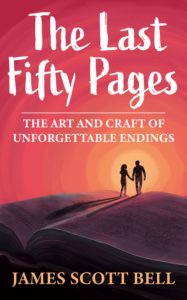
THE LAST FIFTY PAGES: THE ART AND CRAFT OF UNFORGETTABLE ENDINGS releases tomorrow.

Here’s some of what I cover:

  • The five types of endings.
  • What needs to happen in Act 3.
  • How to use the Ah and Uh-oh emotional wallops.
  • A simple technique for crafting twist endings.
  • The most important secret of all—resonance.
  • The Stew, Brew, Accrue, and Do brainstorming method.
  • The best way to tie up loose ends.
  • The most common ending mistakes, and how to avoid them.

And with my usual hope for peace in our time, it is written for both plotters and pantsers!

There are many examples from top writers, including Michael Connelly, Dashiell Hammett, Louis L’Amour, Mark Twain, Suzanne Collins, Jane Austen, F. Scott Fitzgerald, James M. Cain, and even Don Pendleton (author of The Executioner series). Each is called upon to illustrate the techniques involved so you can immediately put them to use.

A promising writer named Gilstrap is also quoted. This kid is going to break out soon!

I also use some film examples, including unpacking what is probably the most famous ending of all, with the most famous last line. Can you guess what that is? Hint: the last line includes the words “Louis” and “beautiful” and “friendship.”

You can order the ebook here:

KINDLE

NOOK

KOBO

AMAZON INTERNATIONAL STORES 

And here is the PRINT VERSION for those who like to use highlighters and sticky notes!

Here’s a little preview. One type of ending I call the Uh-oh! This is when the author leaves you with the feeling that something bad or really tense is going to happen, and soon! It’s a staple of horror fiction, but is sometimes found in great thrillers.

In Louis L’Amour’s bestseller Last of the Breed, Joe Mack is an American Air Force pilot, half Sioux, who is captured by Soviets during the Cold War and imprisoned in Siberia. It’s the task of Soviet Col. Arkady Zamatev to squeeze information out of Mack.

But he escapes the prison, which is deemed a stupid thing to do, for the winter is coming in Siberia. How can Mack expect to survive?

Because he is the last of the warrior breed, and his Indian skills come into play for survival.

Zamatev dispatches the Russian analogue of Mack—a Yakut named Alekhin—to do the tracking. The heart of the book is their back and forth, the narrow escapes, the body count.

Finally, at the end of the book, Alekhin and Mack are face to face. It’s time for the fight to the finish.

At this point L’Amour cuts to the last scene, in Col. Zamatev’s point of view. He has received a package—something wrapped up in cloth.

It is a scalp.

There is a note inside also, written on birchbark.

This was once a custom of my people. In my lifetime I shall take two. This is the first.

Uh-oh!

So what is one of your favorite endings? How did it affect you? Why do you think it worked so well? [NOTE: Be aware that *spoilers* may be included in the comments. So look first at the title and decide if you want to know the ending!]

Reader Friday: Reading Habits

“If you don’t have time to read, you don’t have the time (or the tools) to write. Simple as that.” ~ Stephen King



“Read a thousand books, and your words will flow like a river.” ~ Lisa See

One of my 2019 goals was to devour as many books as possible. Many folks read before bed, but I never could.

Instead, I love reading in the early morning hours and after I’m done writing for the day.

Do you have a set reading schedule? What’s your favorite time to read?

First Page Critique: The Devil’s Noose – A Pandemic Medical Thriller


Happy Valentine’s Day. You did remember the one you love, didn’t you? If not, finish this blog, then rush out and find something for your special someone.
Today another Brave Author, known as BA, sent in a First Page Critique. Take a look, and then we’ll talk about it. – Elaine Viets

The Devil’s Noose – A Pandemic Medical Thriller

Former Soviet Republic of Kazakhstan
Central Asia

Seven-year-old Aliya Nizova darted through the trees, her little horsehair-trimmed boots slipping on the carpet of wet pine needles, heart pounding in her chest.
Her breath rasped in her throat as she ran, desperately seeking someplace to hide. She came to a stop at the edge of a clearing and looked around. To the right, a gray granite boulder jutted from the ground, a rime of dirty snow clinging to its base. To the left, the mucky soil sloped down to a cluster of tangled berry bushes.
A not-so-distant shout filtered through the dark forest. She made her decision and moved to the left. Cold mud squelched under her boots as she knelt behind one of the bushes.
She waited, ears keen to pick up any sign of her pursuer.
Aliya heard a thump.
Unlike the shouts, the strange noise had come from nearby.
It had sounded a little like a heavy pinecone hitting the ground, she thought. She craned her neck to look around at the nearby trees. But none of them had cones dangling from their branches.
A second thump.
The sound was followed by a strange scuffling noise.
Then silence.
Jumping to her feet, she stepped out from the bushes and back into the clearing. At first, she saw nothing but tea-colored earth and gray-green sedge grass. The breeze picked up, cutting and cold.
Aliya skipped back a step as more thumps sounded next to her, one-two-three, like rifle bullets burying themselves in the earth. The clouds parted, allowing a thin shaft of sunlight to bathe the clearing in golden light. They were all around her.
Small, broken black shapes.
The ground was littered with the bodies of carrion crows. Their heavy beaks and ebony plumage glistened as they lay sprawled on the ground, necks broken and wings shattered They’d fallen from the sky as if expiring in mid-flight.


Even at seven years old, Aliya knew enough about the world to think: Something’s wrong here.
One of the dark shapes moved. The bird’s wings fluttered, beating against the ground with a scuffling sound before going still. She knelt next to it, absently grabbing a slender twig in one hand. She gave it a gentle poke in its side.
No reaction. She poked it again.
The crow’s head whipped around as it struck with a convulsive snap.

Elaine’s Comments: This pandemic medical thriller has a good, creepy opening. It’s well-paced and the writing is energetic. But I have some questions:
– Who is the little girl running from?
All we know is he or she is described as “her pursuer.”
– Why is she running?
Since this is a medical thriller, is she trying to escape from someone who wants to use her in a medical experiment? Or is there another reason: she’s the only survivor in her family or village? Or is her pursuer not related to the medical crisis: is the pursuer a soldier? Let us know. It’s distracting to have this unsolved question.
The second sentence would be a good place to give us an answer:
“Her breath rasped in her throat as she ran, desperately seeking someplace to hide” from the white-coated scientist who wanted to take her away. Or from the soldiers who killed her family. You get the idea, BA.
Where are her parents?
Are they dead, in hiding, or have they been taken away?
A misplaced sentence.
“They were all around her” does not work where it is. I’d make a new paragraph, start it like this:
They were all around her: small, broken black shapes.
Describe Aliya for us more.
Her “little horsehair-trimmed boots” is a nice touch. The dead crows hitting the ground sound like “rifle bullets burying themselves in the earth.” That phrase tells us a lot about Aliya. How many seven-year-olds know how rifle bullets sound? A clever hint. But is the girl big or small for a seven-year-old? Dark-haired or blonde? A phrase or two can answer these questions.
The ending scene with the crow is a good one.
There’s much to love here, BA.
What do you think, TKZers?

Looking for a forensic mystery? You’ll love Ice Blonde, my third Angela Richman novella. https://www.amazon.com/gp/product/1625673620/ref=ppx_yo_dt_b_asin_title_o00__o00_s00?ie=UTF8