The Ordinary Detective

For today’s blog post, I thought I’d give a brief update on my police citizen’s academy program as we just completed two sessions focusing on the detectives. As far as  research goes, it was a fascinating study in contrasts. We had the hardboiled vice detective who had previously worked undercover – he was full  of colorful anecdotes, expletives and jargon, and had an almost stereotypical demeanor and backstory (a divorced Italian American with a dry sense of humor and total disdain for petty criminals). The other was one of the two female detectives on the force. She was meticulous, low-key and calm, with a self-deprecating sense of humor. When I approached her, you could tell that the other detective was surprised I wanted to ask her the questions, as he was the one that had definitely attracted the majority of interest from the group. Part of the writer in me, however, was quick to dismiss him simply because he represented exactly the type of police detective we see all the time in books, TV, and movies. The female detective in contrast, was almost dull. Her PowerPoint presentation didn’t have exciting crime scenes or drug busts but instead had detailed timelines of burgularies and credit card theft, along with an analysis of a high speed car accident. Not exactly the stuff of movies, but for me, it was far more interesting precisely because it was so…ordinary.

When I approached her to ask her what she thought was the most common mistake made by writers/TV shows about female detectives she had to take a moment to think – because she honestly didn’t have time to read crime books or watch police TV shows.  After work she went home to be with her husband, kids, pets, chickens and horses and, in her mind, did what everyone else did. Being a detective was a job she enjoyed but it didn’t consume her life. So for her the most obvious mistake (apart from female detectives wearing tight clothing and high heels) was that female detectives are often portrayed as being driven, single minded or obsessed with their job. Although it was refreshing to hear such a down to earth approach (given how tortured many female detectives appear in books and movies), she also posed  a bit of a dilemma for the writerly part of my brain – how would I create a character based on her that would be both realistic and interesting? Yet the sheer ordinariness of her world and how she approached crime solving also presented an intriguing challenge. The other, more stereotypical detective would be far easier to portray simply because he represented the kind of detective we see on the screen and page all the time…which got me wondering about writers who have successfully portrayed the ‘ordinary’ lives of local law enforcement in their books…which is why I turn now to you, TKZers for recommendations as well as advice. Who do you think successful portrays the more mundane aspects of law enforcement? Who is the most realistic female detective you’ve read about or seen in movies or on TV? What advice would you give a writer who wanted to portray an ‘ordinary’ detective?


Get Grammatical or Get Lost

by James Scott Bell
@jamesscottbell

No, I’m not telling the ungrammatical to take a hike. But I am saying that without a basic understanding of certain rules of our language, your thoughts will be in danger of getting lost on the reader.

As a public service, here are a few of the errors I frequently come across so you, dear writer, may avoid them:

Uninterested v. Disinterested

Uninterested means not interested in something. Disinterested means objective.

“Many young people today are disinterested in marriage.” WRONG.

A good umpire is disinterested in the outcome of a game, but he should never be uninterested.

Yet virtually every time I see disinterested it’s misused. Maybe people think it sounds more sophisticated. That excuse doesn’t interest me at all.

Begs the Question

You’ll read or hear this almost every day. Like on the news, when a talking head spouts, “He said cows should be outlawed, which begs the question: Where will we get our steaks?”

No! Begs the question does not mean demands that the question be asked. That doesn’t even make sense on its face. If a question demands to be asked, it isn’t begging, is it?

Question begging is actually a fallacy of logic. It means someone has assumed, rather than proved, a premise. Thus, in a debate, you might hear, “My esteemed opponent has begged the question.”

This is a fight we’ve probably lost, but I can’t help digging in my heels. Whenever I hear someone on TV casually drop “That begs the question…” I always beg to differ.

The Wandering I

It was drummed into us as kids that using me instead of I is wrong.

“Me and Henry rode bikes today.”

“No, dear, that’s Henry and I.”

So the kid starts saying things like:

“That belongs to Henry and I.”

Wrong-o. But it’s a mistake made all the time. I heard this on TV the other day: “That means a lot to my wife and I.”

Ack!

You can easily determine the correct usage by removing the first noun from the sentence. Would you say, “That means a lot to I”? Of course not. “That means a lot to me” is correct, so stick the wife back in there and you’ve got it right.

“Henry and me went to the store.” Would you say, “Me went to the store”? Only if you’re Tarzan. Otherwise, “Henry and I …” is correct.

Its v. It’s

It is so easy to make this mistake, because it’s looks like a possessive since we use the apostrophe that way in other places. The cat’s mat is on the floor can easily become, in another context, It’s mat is on the floor.

It’s (did you see that?) tricky because it’s is really a contraction, a combo of it and is; and its is possessive, but without the apostrophe.

When I’m typing fast, I sometimes make this mistake, and its it’s irritating. Just train yourself to take a little pause and ask, “Do I mean it is?” Then type accordingly.

i.e. v. e.g.

E.g. is short for the Latin phrase exempli gratia, which means “for example.”

“There are lots of ways to lose money in Vegas, e.g., blackjack and craps.”

I.e. is short for id est, “that is.”

“The police who violated the Fourth Amendment—i.e., busted down the guy’s door—should have secured a warrant.”

In other words, e.g. sets up one or more examples, while i.e. supports just one clarification.

An easy way to remember this is to think of the e in e.g. as standing for example, and the i in i.e. as standing for in other words.

Also, when you use either of these babies in a sentence, they are lowercase and followed by a comma, e.g., The boys will get to pick among their favorite games, e.g., Bone Storm and Gilstrap’s Revenge. 

Literally

My head literally explodes when I hear people misuse literally.

No it doesn’t, for literally means exactly, in a factual sense. People misuse literally because they think it provides added force to their point: He was literally as big as a house! 

Don’t use literally unless you are trying to make clear an actual fact. And you don’t have to use figuratively at all. When you say He was as big as a house people will understand what you’re trying to convey. You don’t have to gild the lily, as they say (which reminds me that you should avoid clichés like the plague).

Complement v. Compliment

When something goes with something else and produces a nice effect, it complements the other thing. “Her orange scarf complemented her ensemble.”

A compliment is something nice you say about somebody. “The speaker paid Mrs. Hanson a compliment.”

You most often find this error when these words are used in their –ary form, as in this example I came across recently: “If you’re not sure where to begin, try taking a picture of a single book against a simple, complimentary (but not overpowering) background.”

No, the wallpaper is not paying the book a compliment. 

Now, I admit I am no grammar expert. I still think a gerund is a fuzzy pet you keep in a cage. But when I’m unsure about some usage rule, I’ll pause to do a quick search on the internet, or look up the issue in one of my reference books (my favorite is Write Right! by Jan Venolia.)

So what are your pet peeves of language blundering?

7 Hard Truths of Working as a Professional Writer

By SUE COLETTA

When we first begin our writing journey, our dreams often overshadow the realities of working as a professional writer.
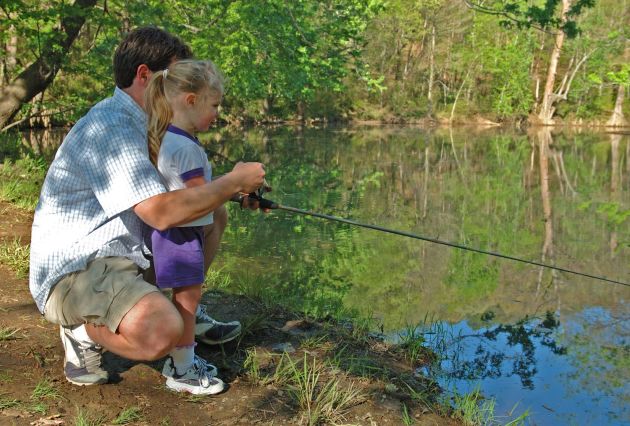

Which publishing path we chose (self-publishing or traditional) doesn’t make a difference. The products we produce do.

For those of you who are at the early stages of your career, let’s take a look at 7 Hard Truths of Working as a Professional Writer.

For the professional writers in our TKZ family, please add your truths.

Truth #1:

Writing consumes us. We decline more offers for lunch than we accept. We could analyze one sentence ad nauseum, and still not be happy with it. To an outsider, at times we may look like we’re staring into space, but our mind is whirling with ten different scenarios after a character did something unexpected or our storyline banged a hard right instead of a left, even though we’d planned the milestones in advance.

Truth #2:

When you work from home, friends and family assume you have time to chitchat. No matter how many times you mention your deadline, book launch, or any “author” subject, many will breeze right over it with, “Yeah, so, anyway …”

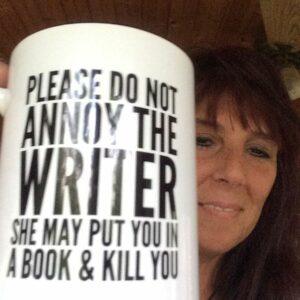
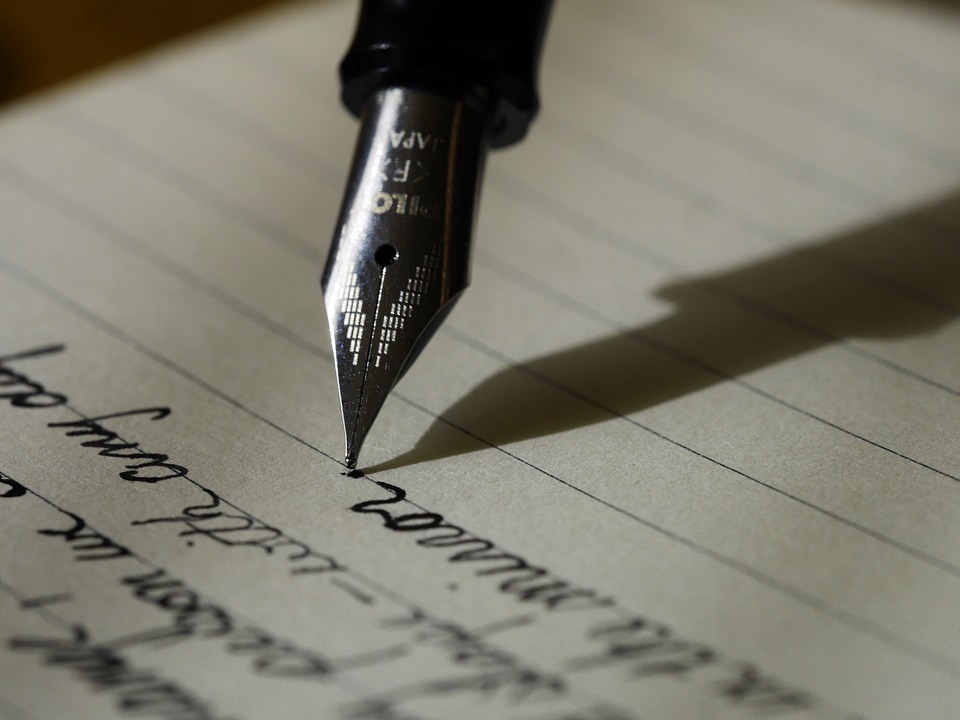
I’ve tried using signs or mugs as a clear signal not to interrupt me (see above pic), but there are those who still barge right in, whether by phone, text, or (gasp!) in person. Not in a callous way; it’s because they don’t understand the amount of brain-power required to plot and successfully execute a novel.

Writers always have multiple balls in the air at once. Yet, from the intruder’s perspective, they think there’s no harm in breaking our concentration for a minute or two (or five or ten), that we can simply return to where we left off as though the disruption never took place.

Easy-peasy, right? Wrong. Interrupting a writer should be punishable by death! At least fictionally. 😉

Truth #3:

Writers spend hours alone in our fictional worlds, and we like it that way. To write professionally, we must be comfortable behind the keyboard. Buy a nice comfy chair; you’re gonna need it. Many professional writers work six or seven days per week, and some hold down full-time day jobs as well. Not everyone has a supportive spouse or makes enough money to write full-time yet.

Truth #4:

Our writing process won’t make sense to anyone but other writers. Don’t even try to explain how a certain song transports you to fictional place or why you have two tiny squares (no more, no less) of chocolate every day as your reward while you read your new favorite thriller.

Writers, did you know daily chocolate* is good for your health? It certainly is, and here’s why:

  • Flavonoids, found in many plant-based foods, including cocoa, can lower blood pressure, improve blood flow to the brain, and make blood platelets less sticky and less likely to clot and cause a stroke.
  • Flavonoids can lower cholesterol.
  • Quality dark chocolate with a high-cocoa content is nutritious, contains a decent amount of soluble fiber, and is loaded with minerals.
  • The fatty acids profile of cocoa and dark chocolate is excellent. The fats are mostly saturated and monounsaturated, with small amounts of polyunsaturated fat.
  • Chocolate contains a stimulant like caffeine and theobromine but is unlikely to keep you awake at night.
  • Chocolate is a powerful antioxidant. One study showed that cocoa and dark chocolate had more antioxidant activity, polyphenols, and flavonoids than any other fruits tested, including blueberries!
  • Consuming dark chocolate can improve several important risk factors for heart disease by significantly decreasing oxidized LDL cholesterol in men. It also increased HDL and lowered total LDL for those with high cholesterol.
  • Dark chocolate can also reduce insulin resistance, which is another common risk factor for many diseases like heart disease and diabetes.
  • A study showed that eating dark chocolate more than 5 times per week lowered the risk of heart disease by 57%.

*I’m referring to a small amount of daily chocolate. Everything in moderation. Too much of anything is never a good idea.

Truth #5:

Our debut is just that, a starting point. It’s where our publishing journey begins. For the first time, the public will read our words, and it’s a terrifying experience akin to standing naked for all to judge. I’d love to say it gets easier, but it doesn’t. I’m as nervous for my thirteenth book to release as I was for my debut. Maybe more so, because the dream of becoming the next “overnight success” isn’t still obscuring reality.

Truth #6:

Many professional writers have health problems. Our bodies weren’t meant to hunch over a keyboard all day, every day. This position can lead to slipped discs, narrowing of nerves in the neck and back, joint issues, carpel tunnel … the list goes on and on.

Remember to take good of yourself! Buy the proper tools of the trade, like an ergonomic chair, a keyboard and/or mouse with wrist support, a sit/stand desk or have the option of switching from the desktop computer to a laptop. Exercise breaks help, too.

Truth #7:

Write for love, not money. The sad truth is, until we build a backlist, writers can’t survive on royalties alone. We can supplement our income in a variety of ways. Some writers coach, some appear on panels or do guest speaking, others offer online courses or webinars. My favorite is mingling with readers at book signings. I make most of my income from May to December. Memorial Day through Labor Day are my busiest time of year, with book signings every weekend.

By studying my area, which is a hotspot for vacationers, I’ve learned where I should appear and when. Year after year, I return to the same venues around the same date. Gone are days of sitting around an empty library, hoping for reader to approach my table, but it took time, consistency, and patience.

There are no shortcuts. Anyone who claims otherwise is lying to you.

***

I haven’t even broached the subject of marketing, piracy, or endless “buy my book!” emails from total strangers who expect you to promote “the book that’ll change the world!” to your audience. You might be surprised by how many new writers believe that, and I seem to attract all of them.

All that said, I love this profession. There’s nothing else I’d rather do.

What are some other hard truths of working as a professional writer? If you’re beginning your writing journey, is there something you’ve wondered about but never had the chance to ask? Now’s the time.

Scene Construction

By John Gilstrap

Last week, I received this [very] brief email from Bobby, a viewer of my YouTube channel: “can you make a future video on how you write scenes and the length they sometimes are?”

I responded to him that of course, I’d be delighted to do a video on the topic, but then I realized that I wasn’t entirely sure what constitutes a “scene” when it comes to a novel.  In a screenplay, scenes are self-described by slug lines:

INT. – LIVING ROOM – DAY

But novels aren’t formatted that way.  We use paragraphs and space breaks to denote POV switches, but that’s because we can deploy the thoughts and perspectives of characters occupying the same space, a powerful tool that does not exist in a screenwriter’s ditty bag.

According to The Writing Cooperative, “A scene is a section of your novel where a character or characters engage in action or dialogue. You can think of a scene as a story with a beginning, middle, and an end. Usually, you’ll start a new scene when you change the point of view character, the setting, or the time.”

I’m not sure I agree with this.  If George and Martha are having a fight, and we cut away to Midge’s POV as she listens to the argument and passes judgment on them, that seems to me to be the same scene, but from different POVs.

This is what happens when you’re a home-schooled writer.  I don’t have the vocabulary to explain much of what I do, and the more I search for it, but more irrelevant the vocabulary seems to the actual process of writing.  Thus my philosophy, “Think less, write more.”

But I still owe Bobby an answer, and for the sake of this post, I’ll rename what The Writing Cooperative defines as a scene to be a space break.  And I mean that literally–an extra space on the page to indicate a switch to a new POV, or even to a parallel story line.

Gilstrap’s Rules For Space Breaks/Scenes

  1. There are no rules.  Use whatever works for you. That which works for me in my writing may very well suck in your writing.
  2. Know why your characters are doing what they’re doing in this scene and how this interaction contributes to the larger story.
    1. If the scene does not develop a character or propel the plot (preferably both, and at the same time), it does not belong in the story.
  3. Know whose point of view is the most dramatic for the presentation of this action.
    1. If Character M’s POV is the key to action that occurs in the second or third act, Character M needs at least one POV scene earlier in the story.  The reader will feel cheated if an otherwise secondary character steps into the spotlight for that One Important Reveal.
  4. Each scene should have a beginning, a middle and an end.
    1. In the scene I’m writing in my current WIP, Hellfire (July, 2020), we’re introduced to Grant, who will become a significant character in the story.  He’s in jail as we meet him, and he anticipates good news very soon (the beginning).  When the news arrives, it is entirely different than what he expected (the middle).  And then it hits him just how really bad the news is (end).  I haven’t finished the scene yet, but I expect that it will all play out in 7 pages or so.
  5. Conflict, conflict, conflict.
    1. Two people who like each other and are in agreement do not advance a story.  Our own James Scott Bell refers to this as Happy People in Happy Land and it is first on his list of “The Five Biggest Fiction Writing Mistakes (& How to Fix Them)” [We can discuss the choice of an ampersand in the title later.]  Taking him completely out of context, he also believes that the best novels “have the threat of death hanging over every scene.”  The linked article is really worth reading.  You know, when you’re done reading this.
  6. Strive for consistent space break/chapter break lengths.
    1. This is an imprecise science at best.  I shoot for chapter lengths of 12-15 manuscript pages, with two space breaks per chapter (maybe three).  I do this because I write long to begin with, and I think 40 chapters is about right.  One chapter per space break interrupts the “fictive dream” too frequently for my tastes.  (And 180 chapters is silly.)

So, that’s my cut at Bobby’s question.  It’s your turn, TKZers.  I haven’t done the video yet, so what am I missing?


First Page Critique:
From the Mouths of Babes

By PJ Parrish

Good morning crime dogs. Today, for our First Pager we’re back in the land of the young again, this time with a five-year-old as our tour guide. I’ll let you take a read and then we’ll regather to talk.  In the meantime, I’m going to try to get Lynyrd Skynyrd’s “That Smell” out of my head.

Love Kills

“Eww! What stinks, Daddy?”

“I don’t know, Squirt.”

“Don’t call me that. I’m not a squirt.” Five-year-old Mandy thrust out her lower lip. One, because Daddy called her squirt, which meant he didn’t think she was a big girl at all, and two, because he was trying not to laugh and that made her mad.

“Am I allowed any kind of nickname?” her father asked

Mandy thought about it. It wasn’t like you could shorten Mandy into much, but having a nickname that didn’t make her feel bad would be nice. Everybody called her cousin Jason, Sport. That wasn’t a wimpy nickname. She decided it might take time to pick the right one. It was important. “I’ll let you know.”

“Okay, Squi….Mandy.” He squeezed her hand a little tighter as they walked the narrow path at the edge of the Sugar River. A silvery layer of frost covered the ground and it felt crunchy beneath her rubber boots. She pictured animals using the trail to get a drink of the river water and wondered if any of them ever slipped on the icy edges and tumbled in. The trees and bushes were still bare and the weather was what Aunt Jenny called iffy, which meant even though it was spring break her dad still dressed her in a winter coat on adventures like this first day of fishing.

Daddy held her hand and carried fishing poles and a tackle box in the other as he searched for the perfect spot to drop their lines in. Maybe she shouldn’t have made a big deal about her nickname. After all, she was the one Daddy took fishing. Not Jason.
“Let’s try the other side of that big rock.” He pointed a few feet ahead at a giant stone sticking up on the bank.

The breeze picked up and the smell got worse. Even worse than when her dad forgot the thawed chicken in the microwave and it took him two days to figure out what was stinking.

“Pee-ewe, what is that?” Mandy wrinkled her nose.

“Whew. No idea, but you’re right baby girl, that reeks.”

Another nickname she hated. Baby girl. No one in Kindergarten wanted to be called baby-anything. Mandy bit her tongue and forged ahead over the uneven land.

“Must be a dead animal around somewhere. Should we move or can you handle it?” he asked.

____________________________

Okay, a caveat. I sometimes wonder if we shouldn’t ask our contributors to tell us what genre or sub-genre they are working in.  It would make critiquing a submission clearer and maybe fairer. Given we have only 400 or so words here, I have to guess at the writer’s attempt, with few clues. The title Love Kills suggests crime fiction and I’d bet my last brass farthing that the eww-worthy smell isn’t a dead fish but a ripe body bobbing in the water. But beyond that, I can’t begin to guess who the target audience is for this book.  Children?  Doubt it.  Young adult? The narrator’s too young for that. Adults? That’s my guess here, and if that’s the case, we have to talk about the viability of child narrators.  But first…

I like this. It is cleanly choreographed, meaning I can tell exactly what’s going on. The interaction between father and daughter is sweetly rendered. My dad used to take me fishing when I was a tadpole and I treasured the time with him. There are some nice spare details like the crunch of boots on ice that tells us it’s cold, maybe in the netherworld months of early November or March.

But what I really like is that the writer has successfully captured the voice of the narrator Mandy. The simple syntax and apt word choices conjure up a five-year-old who is beginning to assert independence and wants to be seen as older. I like the line about weather that her aunt called “iffy.”  Kids are aural magpies — they pick up on the odd things adults say. I like that Mandy is worried about the animals. All nice telling details! I think the writer does a spot-on job of creating a believable and winsome 5-year-old girl.

However…

If we are reading crime fiction intended for an adult market (I am assuming here), then I question the wisdom of opening from a very young child’s point of view. The opening scene or chapter of your book is critical to getting your reader to bond with the character, and who you choose to put in the spotlight in the early going tends to signal to the reader that this is your protagonist, the person whose journey they are about to share. Is Mandy the protagonist? I don’t know.  But the spotlight is square on her in this scene.

Which leads to the next question. Can Mandy carry an entire book on her tiny shoulders? Few child narrators can.  And few writers can successfully pull off an entire novel written only from the point of view of a very young child like Mandy. Child narrators are common in kid’s literature. But not so much in fiction for adults. It can feel very liberating to write from a child’s POV.  They usually don’t have an ax to grind and they see the world in matter-of-fact ways. But because they are limited in experience and sophistication, they can’t be a truly reliable narrator. 

When I read this submission, I wracked my brain for examples of similar-aged narrators but came up short. The only example I could remember is Room by Emma Donoghue (2010) It is narrated by 5-year-old Jack who has been confined to a single room all his life, knowing only his mother (who was also captured and confined at an early age). His vocabulary and understanding of the world is very restricted.  Room has been roundly acclaimed. I couldn’t finish it.

I book I did love was Jean Auel’s The Clan of the Cave Bear (1980). It opens with an unnamed 5-year-old girl running scared through the woods, separated from her cave family during an earthquake. She survives a bear attack and is found, near death, by another clan. But Auel used a third-person omniscient point of view, so the reader can trust exactly what is happening.

Then there’s To Kill a Mockingbird. Scout Finch, the first person narrator, is only six years old when the novel begins, and eight years old when it ends. But the narrative has almost a memoir feel to it, as if we’re listening to a much older Scout telling us a story about what happened. It is a masterful sleigh-of-hand on Lee’s part that we believe we are hearing the blended voices of a 6-year-old (who, very childishly, calls her 50-year-old father “feeble”) and her older more knowing self.

Back to our writer’s story:  As I said, given the small sample here, we can’t know if Mandy will remain the sole narrator.  My instincts tell me she won’t. But if she is not meant to carry the story’s narrative weight, then I question the wisdom of opening with her voice, as sweet as it is. Where can you go from here?

Some things to remember if you’re contemplating using a child’s point of view:

  • You need a compelling reason why a child is the right person to narrate your novel.
  • You need to make sure the child is old enough to reliably convey information and events for the reader. Children younger than six aren’t developed enough for this. Even teens have their limits. (There’s an understatement!)
  • Do some research to get the child’s voice tone-perfect. Many of you have kids, so this is easy. The rest of us, well, we need to hang out at Chuck e Cheese maybe. And keep that voice consistent over the course of the story.

If the writer is available, I would appreciate hearing from him/her as to why they chose to open with Mandy as narrator and whether she will continue on into the book. The rest of us — what say you?


What Did You Say? Writing Realistic Dialogue

By Elaine Viets

My agent just sent me his suggestions for rewrites on my fourth Angela Richman mystery. Most of his criticisms were about dialogue: it was too long, too wooden, a speech turned into a rant. Based on his critique, I developed these dialogue tips:

Six Dialogue Tips By Elaine Viets

(1) Listen to How People Talk
Go to a bar, restaurant or a coffee shop or a McDonald’s and listen to conversations. I love to eavesdrop on conversations. They help me pick up the rhythm of real speech – and sometimes I hear things I can use. Like the man at the bar who talked to his friend about how to kill his wife. They discussed various fatal scenarios until he finally concluded that he should “accidently” push her radio off the shelf into water when she was in the tub. I was about to call the police when I realized the two men were plotting a novel.

(2) Don’t be too realistic
People say “uh,” and “er” and rarely speak perfectly. They interrupt one another. You need to make your dialogue believable without making it absolutely realistic.

(3) Beware of stereotypes and accents
If your character speaks with an accent, point it out for a sentence or two: He spoke with a heavy Russian accent – but don’t make your readers wade through it for pages.

(4) Cut the small talk
You don’t need all those hellos and good-byes. Normally, they add nothing to the story. If your scene starts with a wife coming home from work and it begins this way:
“Hi,” she said.
“How are you?” he asked. “How was your day?”
Skip the hellos and start with “How was your day?” And let us know if the couple kiss. That could be a key to their marriage.

(5) Break up the dialogue with action
If two characters are talking over breakfast, have them pour syrup on their pancakes, sugar their coffee and cut up their bacon between sentences.

(6) Avoid dialogue tags
She sputtered. He chortled. She raged. He observed. She exclaimed. He interjected. She purred. These are all dialogue tags. Now forget them.
Dialogue tags attribute a line of dialogue to one or other of the characters, so that the reader always knows who is speaking. Tags should be invisible.
All you need are “he said” and “she asked.”

(7) Avoid the “You know, Jim,” syndrome
That’s an information dump disguised as regular dialogue: “You know, Jim, if you want a tax break, equipment that qualifies for the Residential Renewable Energy Tax Credit includes solar, wind, geothermal and fuel-cell technology.” Nobody talks like that in casual conversation – not even a salesperson.

*****************************************************************************************

Read forensic mysteries? You need BRAIN STORM, the first novel in my Angela Richman, Death Investigator series. Now 99 cents. https://tinyurl.com/yyuy2429

One of the Joys of Indie Publishing

by James Scott Bell
@jamesscottbell

We are well into the second decade of the self-publishing (now more preferably termed indie-publishing) movement. The flame wars of the early years (“Death to traditional publishing!” “Oh yeah? Self publish and you’ll ruin your career!”) have been replaced by the calm ruminations of business-minded “authorpreneurs.”

And while reports of the death of traditional publishing have been greatly exaggerated, the industry’s dependence on A-list stars has left a void in what used to be called the “midlist.”

It is a vacuum productive writers abhor. So they have filled the void with indie product.

Of course, most of the product is, shall we say, not good (see Sturgeon’s Law). Nor is all of it legit. Perhaps you’ve been following yet another plagiarism scandal that recently broke out, this time in that part of the book kingdom where romance flowers. A USA Today bestselling writer apparently hired a ghostwriter from, of all places, Fiverr. That’s a site that has all sorts of freelancers who’ll work on the cheap—five bucks is the baseline. This author was hiring said labor to put together “books” in the romance genre so she could be slapping them up on Amazon at a heart-pounding (notice my genre-specific adjective!) pace. Problem: the freelancer was snatching passages from published works to fill out the pages.

Kris Rusch wrote about this, and has these wise words:

The smartest thing…is to write your books at your pace, and stop flooding the market with mediocre books, written by people who don’t care about your worlds or your characters as much as you do.

If you got into this business because you love writing, then write for heaven’s sake. And if you’re worried about maintaining your income, then the real key is to cut expenses, not add to them. If you can’t survive without gaming the system, then maybe consider a part-time job until you have enough money put away to augment your writing income in the lean months. Then live on a percentage of what your writing earns, not on the entire amount.

Indie writers (who are true writers) want to feed the system. Indie scammers (who are not true writers) want to game the system. You have to live with yourself. Unfortunately, with the death of shame in our culture, cheaters are often able to look in the mirror with a satisfied smile. But know this for certain: they will never experience the true joy that only comes from honest applied effort.

I’ve been a happy indie since 2011. Coming from the traditional world, however, I am appreciative of the “grinder” my books were put through, meaning the editorial process. I worked with some great editors who helped me get better. As an indie, I seek similar feedback on every book I write.

And when a book is ready, it’s published in ten minutes. Boy, do I love that!

Here’s another joy—getting to publish something written by my late father.

Art Bell, Lawyer

Back in 1972 my big brother, Bob, was having thoughts about becoming a lawyer like our dad. Bob was, at the time, a teacher at an elementary school in northern California. So he wrote Dad a letter—a real letter, on paper, with an envelope and a stamp!—asking for Dad’s counsel.

And Dad, never one to do things (like represent a client) half way, wrote a long letter in response.

Dad thought his modest epistle might be something other lawyers would find of value. So he paid to have it published in installments in the Los Angeles Daily Journal, the city’s legal newspaper.

It was a huge hit. The demand for copies proved so great that Dad had the whole thing printed up and paid for it to be included as an insert in a later edition of the Journal.

It hit me recently that Compendium Press, my indie publishing company, ought to publish the letter once again, this time permanently in digital form. But I couldn’t locate any copies in my dad’s files.

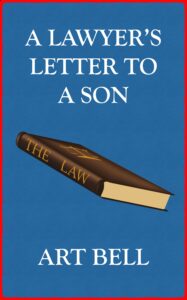
So I asked my brother if he had a copy. He did, and sent it to me as a PDF file. I then sent it to a scanning service, and now it’s up permanently as A Lawyer’s Letter to a Son.

Why publish it again? It’s not because I think it will make a lot of money; it won’t. It’s because I believe its message is relevant today for anyone considering going into law—or maybe who went into the profession for the dough and are starting to wonder if that was the right reason. The letter represents a view of the law that is rare today: as an honorable profession, not just a way to gain money or power. (And no lawyer jokes, please!)

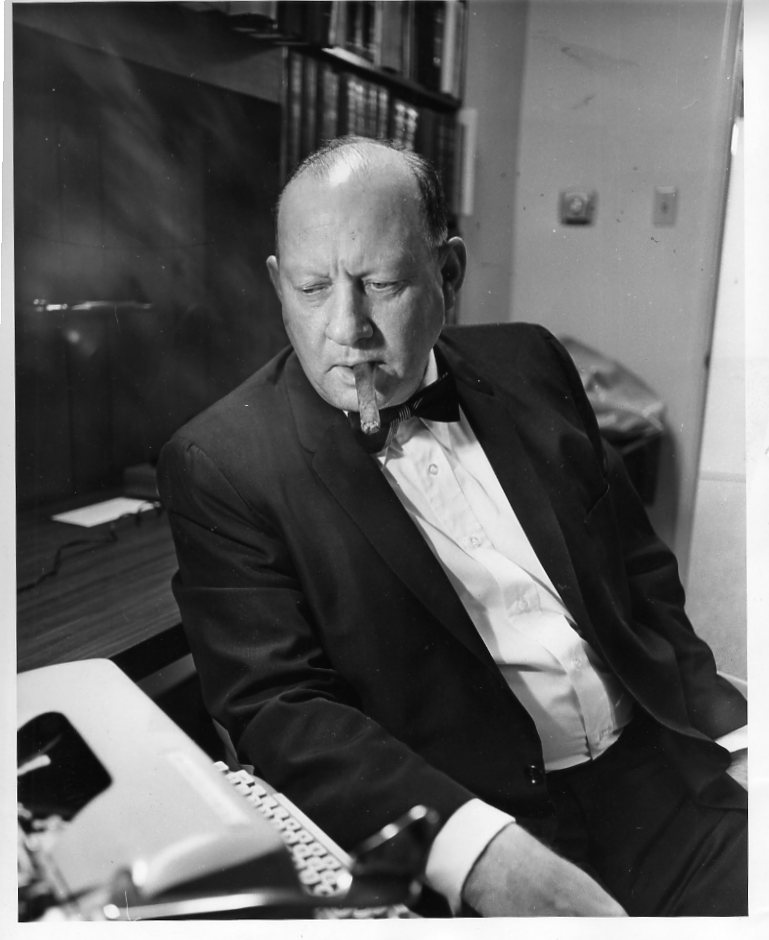
My dad was a great L.A. lawyer, highly respected by his peers, and a colorful character in his own right. He loved a good fight in court, a good cigar in his leisure, and a sporty bow tie with his suits. I love hearing his voice again in this letter.

If you know any law students, or wannabe law students, or even young lawyers, maybe you can recommend this little letter, which I’m making FREE for the next several days.

Now to you, TKZers. What brings you joy in your writing?

If You REALLY Want to Do This…

I want to speak to those of you who are at the early stage of what will hopefully be a long and successful career in the arts, whether it be with writing, performing, painting, sculpting, or whatever. Please note the word “hopefully” above. Many are called, but very few get there. I’m not attempting to discourage you. My attitude is that somebody is going to be successful and it very well might be me, or you, or both, so let’s go for it. Realize, however, that failure is a repetitive possibility, and that you have to be prepared to keep trying. 

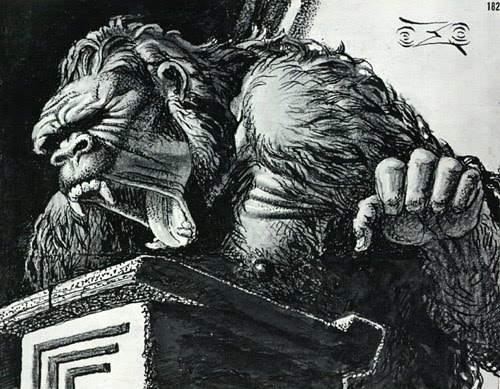
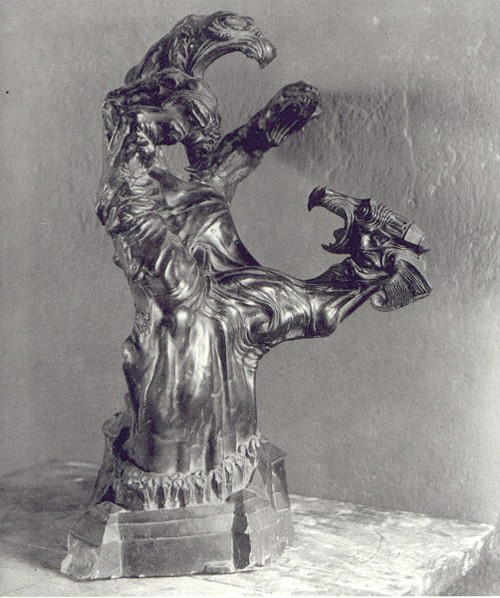
That said, I am going to strongly recommend that you watch a documentary about an artist — a sculptor — who briefly tasted success and quickly lost it before dying in obscurity. Success? We’re talking a government-sponsored museum devoted entirely to his work. That is success of a sort by any standard. Six years after the opening of the museum, however,  it was closed and virtually all of the artist’s work was destroyed, memorialized only by photographs and some miniature models which he recreated. The guy picked himself up, supported himself with jobs that were by any standard a poor use of his talent, and continued to work at what he loved practically up to the day he died.

I am referring to Stanislaw Szukalski. Odds are that you have never heard of him. I certainly hadn’t until a friend recommended Struggle: The Life and Lost Art of Szukalski, produced by George and Leonardo DiCaprio, whose family helped to support the man in the twilight of his life. The video, available on Netflix, is narrated primarily though not exclusively by Glenn Bray, a bibliophile and comic book collector. I want you to be as surprised delighted, depressed and as startled as I was so I am going to only give you the general highlights of what you will find. Bray discovered Szukalski’s work by utter happenstance in 1971 and became obsessed with it, the more so when he learned that Szukalski was living only a few miles away from him. Bray reached out to Szukalski and met with him, forging a friendship which lasted for some fifteen years until Szukalski’s death. Bray, who was active in the underground comic book industry, introduced artists in the medium to Szukalski as well. They had seen his work without knowing it, and in all probability you have as well. Szukalski designed one of the more intriguing and unsettling sets seen in the original film version of King Kong. It is his freestanding work, however, that is stunning. His sculptors and artwork are by turns breathtaking, disturbing, erotic, and startling. He never stopped creating, whether it be sculpting, drawing, or writing. Szukalski was also obsessed with the origins of humankind and the human condition. He devoted a significant amount of time researching and writing the theory of Zermatism, leaving the world several bound volumes containing over ten thousand pages of text and over forty thousand drawings illustrating and, to his mind, proving his point. He believed that humanity originated on Easter Island and that human beings have been controlled by…but you will want to watch Struggle to get the rest of that story.

Struggle is loaded with comments from Bray, DiCaprio the elder, and various artists. There are also still shots of Szukalski’s work from the 1930s through the 1980s. The most interesting elements, however, consist of video recordings of Szukalski himself which Bray made and preserved. These are worth watching for many reasons, one of them being to observe Szukalski’s arrogance and charm co-existing simultaneously in the same place. Anyone who encountered Szukalski no doubt experienced approach-avoidance conflict. Szukalski may possibly have been wrong about some things but, if Struggle is to be believed, he was never in doubt.

The takeaway from Struggle — and it really rubs your nose into it, however unintentionally — is that real artists, and really, really good artists, don’t always succeed. They never, however, stop creating. You may not reach the heights of a James Patterson, Ernest Hemingway or Nora Roberts, but if you have a story to tell you need to — you must — keep trying to tell it. So endeth the lesson.

To take Jordan Dane’s excellent question of yesterday — what book first inspired you to write — a step further, please tell us: who or what motivates you to continue to create even as success might remain elusive?

(All photographs and illustrations are (c) The Estate of Stanislaw Szukalski. All rights reserved.)


READER FRIDAY: What Book Inspired You to Start Writing?

Books have influenced my life since I was in elementary school. I remember summer afternoons where my mother would take us to the library and we’d spend hours roaming the aisles looking for a handful of books to read. My senses still respond with joy when I enter a library. But it wasn’t until I read Robert Ludlum’s Bourne series that I noticed Ludlum’s page turning skills and got the itch to write my own original work. What about you?

What author or book got you hooked on the idea of writing your first novel? Tell us about it and your journey.