When fiction and reality meet.
My first novel was out in 2011, and I felt pretty proud of myself. Yep, there it was, The Rock Hole, available on Amazon and online bookstores everywhere, in all formats. I was an author.
So in celebration, I wanted a little vacation from writing and picked up the top book on my TBR pile, leaned back in my recliner, and opened it to the first page.
“Call me Ishmael.”
My phone rang half a minute later. “Dang it!”
It was my editor. “Rev, did you see your review on Kirkus?”
“What’s Kirkus?”
Silence on the other end as she digested my question, likely wondering how she came to be working with someone so green. “It’s one of the premium book review magazines in the country.”
“Oh. Was it good?”
“They loved it! It’s a wonderful review and they’ve listed The Rock Hole as one of their Top Twelve Mysteries of 2011.”
“That’s nice.”
“Well, yeah.” She grew silent for a moment at my lack of enthusiasm. Truthfully, I didn’t know what any of that meant, and when I’m bumfuzzled, I tend to be quiet. “Now, let’s keep that momentum on the upswing. How’s your new novel going?”
“New one?”
“Sure! You have a pub date in a year.”
Uh, oh.
I’d never considered how fast they’d need the next book, so I told her it was coming along and hung up.
I needed another idea and fast. It came with the recollection of fifty pages I’d started years earlier. I spun it out to a police officer friend on the way to a ski destination in Colorado somewhere around 1984, and this is where we get into today’s topic, fiction vs. fact.
You see, I’d created the Red River series set in Paris, Texas and the existing rural community of Chicota. But I’d already heard about problems authors encountered when making minor mistakes or changes in real towns and geography. Readers delight in chastising authors when they read a one way street runs east, but in actuality, it goes west.
So I changed Paris to Chisolm, and Chicota to Center Springs. Now I can make up my own streets, buildings, and neighborhoods, overlapping my mental framework of those two places.
I did it for another reason, too. I wanted to set Burrows in a location that in reality was the old Speas Vinegar plant that used to sit beside the railroad tracks on the south side of Paris. But that building was too small for what I had in mind, so it became The Cotton Exchange, a massive multi-story building full of trash and with booby traps set by two psychotic hoarders.
That idea we’d discussed on the way to Colorado came from a story I’d read when I was a kid, about a pair of compulsive brothers who were hoarders in New York City and packed a four-story brownstone with tons of trash. One was killed when a booby trap crushed him in 1947, leaving his invalid brother to starve inside their vertical landfill. I loved the framework of the story, and it became the basis for Burrows that caught a Starred Review from Publishers Weekly.
Here’s the link to that fascinating story that gave me the idea.
https://en.wikipedia.org/wiki/Collyer_brothers
Authors are world builders, but we don’t have to create everything from whole cloth. By simply fictionalizing real places, I can use them as a foundation to mine inspiration from reality, but not held to exact details.
You’d be surprised how many people at signings will ask about these places I’ve adapted, pleased with themselves that they’ve recognized the town or building. The good thing is not one individual tries to correct my descriptions.
I also include local history in my locations, even down to the weather. In Hawke’s Prey, the first book in the Sonny Hawke thrillers set in the Big Bend desert region of Texas, I wanted a massive snowstorm to build tension. Online research was unsatisfactory, because I needed detailed meteorological information to make it happen. I didn’t want to describe a massive snowstorm that couldn’t possibly happen there.
So I reached out to a local weatherman in the Dallas area, explained what I was doing. His co-meterologist is a fan of my books, and David Finfrock invited me into his house later that week.
When he greeted me at the door, he didn’t look like the well-dressed man I was used to seeing on TV, because he was in shorts and an aloha shirt instead of a coat and tie. No matter, though, we spent the afternoon going over paper weather maps left to him by local legendary DFW weatherman, the late Howard Taft.
It was exciting to work out how a once-in-a-century snowstorm could happen in that high desert region, but David explained the ingredients necessary for such an event. Weather was rolling in that day in the metroplex, and I enjoyed an unanticipated treat. He was watching his own channel on a huge flat panel TV in his den, and when his co-worker brought up the weather map to explain the coming storm, David hit the pause button and stood in front of the screen, detailing what could happen if certain factors came about.
Using those details I absorbed that rainy day in Dallas, my fictional storm paralyzed a fictional town of Ballard, Texas, (based on the real Alpine/Marfa area), providing a necessary plot twist that heightened the climax of the novel.
When the book came out, though, a few doubters told me it could never snow like that in Alpine, based solely on their own history in the area. But last year, those events I described came about, locking them down for several days under more than two feet of snow. More than one reader sent emails, texts, and links to me, saying they thought I was full of it until the weather proved them wrong.
That’s the power of good research.
And don’t worry about going down the occasional rabbit hole when you’re doing that kind of work. One such bunny tunnel led me to legends of a mysterious room under the local courthouse in Alpine. That’s all they were, legends, but supposition of what could be down there sparked an idea that became an integral part of Hawke’s Prey.
I’m now working on a traditional western set in the eastern Oklahoma Indian Territories back in the 1880s. Some of the towns there really existed, but I’ve created fictional towns in the real mountainous landscape, because I needed certain buildings and geographical backdrops to push the story forward.
I’m not writing history, here, but fiction based on history and authenticity.
Certain things such as low-water crossings on the Red River and ferries are part of the past in those areas, but I wanted my Red River and my towns. Once the characters made the crossing back into Texas, I utilized a real town as part of the plot, but I changed a few things in 1883.
Why that year? Because I wanted my character to carry the first pump shotgun and it was released in 1882. I’ve built novels on just such foundations, but they needed to be changed for the sake of the story.
Dream yourself up a dining room with a gorgeous table set for eight, complete with crystal wine glasses and flickering candles. Imagine the rest of the room now, dressed in your tastes as an author. These are the components that are yours alone, but underneath the pure white tablecloth is the bare reality to build upon…a plain table full of nicks, scars, and watermarks.
Happy writing.

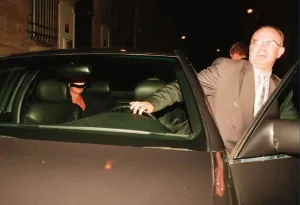
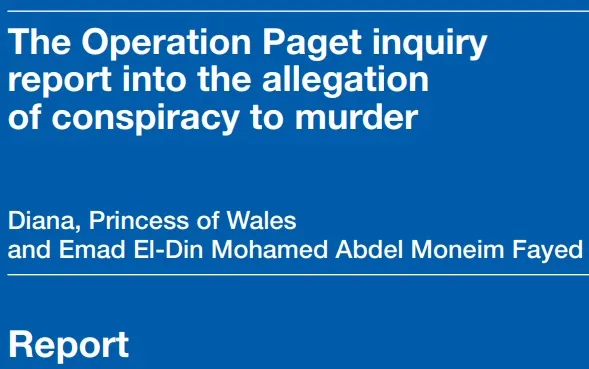
 Circumstances surrounding Diana’s death are exhaustively investigated. Everyone knows basic facts that Diana and her new boyfriend, Dodi al-Fayed, were leaving a Paris hotel for a private apartment and trying to avoid the ever-present Paparazzi. They got in the back seat of a Mercedes sedan driven by Henri Paul—a hotel security agent. Diana’s bodyguard, Trevor Rees-Jones, rode shotgun in the passenger front.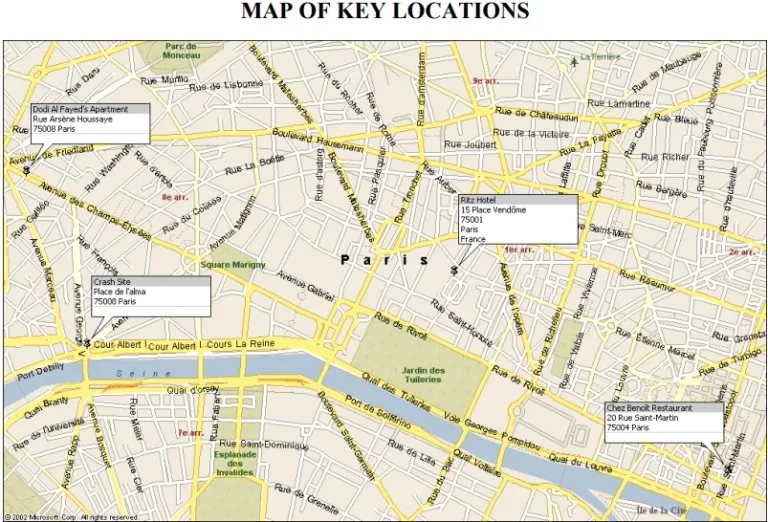
 Blood Alcohol Count (BAC) — 174 milligrams per 100 milliliters of blood or commonly termed a BAC of 0.174% (This was corroborated by his vitreous humor or eye fluid count being 0.173%, his urine being 0.218% and his stomach BAC being 0.191%.)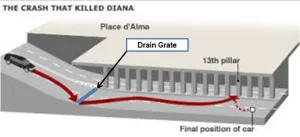



 Learn more about

 If I transported you into the current book you’re writing or reading…