Four Mistakes That Will Doom
Your Mystery. They Did Mine

By PJ Parrish

I’m going to tell tales out of school today. About some of the dumbest mistakes I’ve made in trying to write. Some mistakes died sad deaths in my C-drives. Others got fixed before I made a fool of myself in print. Maybe my confession here will help keep you on the righteous path.

Digression alert: I love idioms. I love their silliness, their creativity, their origins, and the slivers of insight within them. As you’ve read here, I’m trying to bone up on my French via online Babbel courses and yesterday’s lesson was idioms. La fin des haricots (the end of the beans) means “Well, that’s over!” And if you want to say someone is knee-high to a grasshopper, it’s haut comme trois pommes. As high as three apples. To have a hangover is avoir la gueule de bois — to have a wooden face.

So, telling tales out of school? It dates back to 1530, appearing in William Tindale’s The Practyse of Prelates: “What cometh once in may never out, for fear of telling tales out of school.”  It used to refer to kids gossiping about what they heard at school, but now we use it mean divulging secret information.

The tales I am going to tell out of school today all involve mistakes my sister Kelly and I made in our writing journey. Digression two: One of my favorite I Love Lucy episodes is “Lucy Writes A Novel.” She sends it off to a publisher, and he shows up with a check wanting to buy her book. But he wants to change the title to “Don’t Let This Happen To You!”

So pay attention, crime dogs. Don’t let any of these mistakes happen to you.

Introducing Too Many Characters Too Soon.
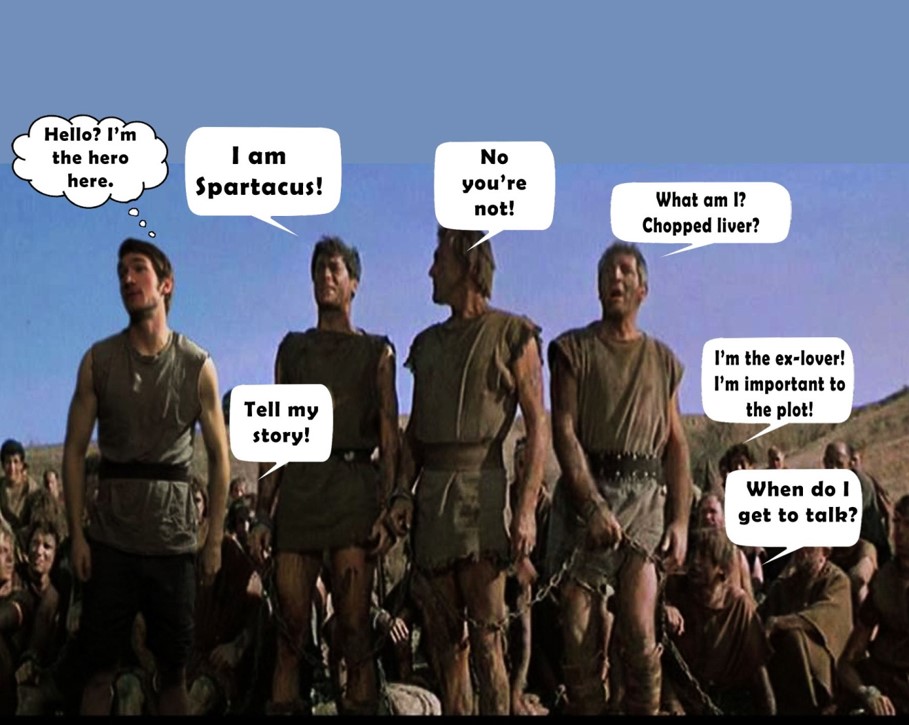
My sister’s first stab at a novel was a long historical family saga set in the Nevada casino world. She was working in the business back then and had tons of stories, great characters, and had boned up on her history of the birth of gambling. Her first chapter set-up was terrific — the offspring and four ex-wives of a rich patriarch (think Steve Wynn) are gathered at his gravesite at dawn as the lights of the Strip blink off in the distance.  Everyone there has a reason to hate the guy and an even better reason to kill him. Kelly’s mistake? She introduced every single one of the family members, giving each a name, thoughts, dialogue. I think I counted 32 characters in the first ten pages.

The lesson: Don’t flood your stage in the opening moments of act 1. It confuses the reader, makes them feel stupid, like they need a family tree. Give your reader a couple characters to digest at most. Please don’t make their names sound alike. And never wait too long to introduce your hero. From the get-go, readers search for characters to invest their emotions in, and you run the risk of them attaching to what I call a “false hero” if you’re not careful.
Nothing Happens

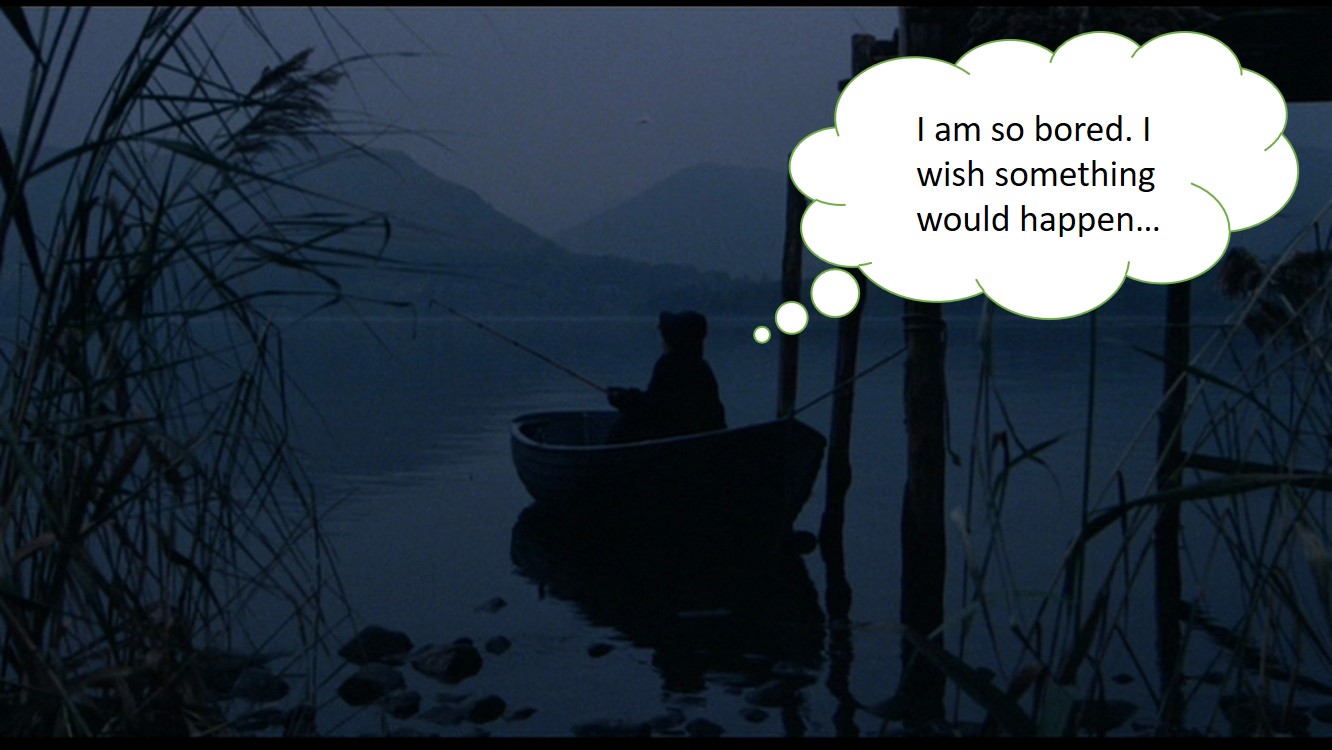
Flash back to 1989. Miami Vice is on TV and I’m trying to make the switch to mysteries after getting dropped as a romance writer. I had a terrific idea for a character — the lone woman detective working in the homicide division of the Miami PD. Lots of sexism, tokenism, testosterone poisoning. And to make her baggage even heavier, her husband and daughter died in a horrible boat crash in Biscayne Bay (that may have been a revenge murder for her busting a bad guy).  My first chapter opens with my heroine fishing at dusk in the Everglades. And she’s thinking. And remembering. And mourning. And thinking. And sighing. End of chapter. My agent, after reading it, told me to go home and read some Michael Connelly and PJ James.

The lesson? We belabor it here, especially James: Get your characters UP AND DOING in the opening moments. The thinking, remembering, musing, pondering, reflecting….save it for later. Please. I’m begging you. Something must happen. Action, then reaction. Oh, and don’t try to follow the zeitgeist — Miami Vice went off the air before I finished my first draft.
Larding In Backstory

Back to the casino…Kelly and I wanted to take a break from our Louis Kincaid series and we had an idea for this crusty-but-lovable character named Bailey. (The crusty-but-lovable bit should have been our first warning.) She’s a housewife who falls into an amateur detective gig at a run-down Nevada casino owned by her crusty-but-lovable father. We had a pretty good opening graph:

It’s not easy starting your life over when people think you murdered your husband and got away with it. Especially in a place like Morning Sun, Iowa.

But then we got mired in backstory. This is what followed:

The folks in Morning Sun — there’s only about four hundred of them — don’t have much tolerance for weird people, especially a rattlebrained housewife who tries to bail out of her marriage after a couple of little marital “tiffs.”

But I was born and bred in Morning Sun, and on that Fourth of July when my husband Brad came at me with the Ginsu knife we had just bought off a late-night infomercial, I didn’t figure I had a lot of options.

The police believed I killed him on purpose. My neighbors believed the police. My relatives believed the neighbors. But fortunately for me, the jury didn’t believe any of them.

So I walked. Actually, I ran. Three thousand miles to be exact, all the way to Las Vegas. I had to get out of Morning Sun and I figured Las Vegas was a good place to reinvent myself. It’s the kind of town where everyone takes big chances. It’s the kind of place where dwelling on the past is about the only thing that’s really a sin.

Okay, it’s not horrible, but it wasn’t good enough to get published. Our publisher passed. Our agent shopped it around and everyone passed. This, after we had made the New York Times list with our regular series. Why? Because it’s all backstory, it’s all telling. And it goes on this way for almost the entire first chapter. Nothing is happening in the present. Bailey is telling us her past rather than letting it emerge organically as the plot — plot? Now there’s a concept! — begins to unfurl. We tried to rewrite and have something happen earlier — a showgirl eventually falls off the casino tower. But it was bogged down with backstory and thus fatally flawed.
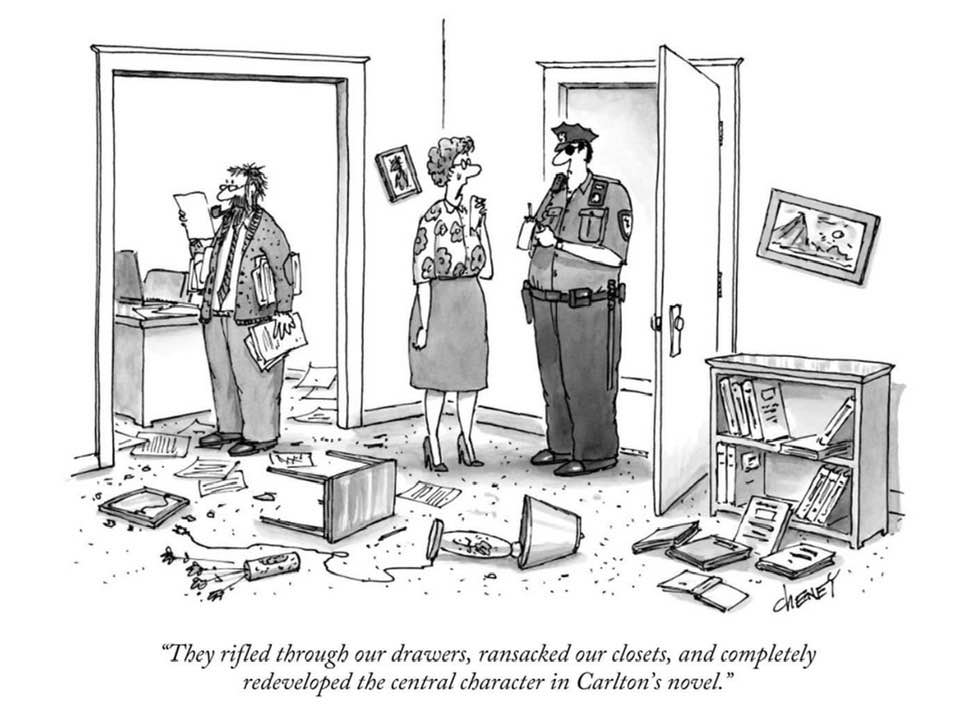
Don’t Take The Weapon Out Of Your Hero’s Hand

Thank God this mistake didn’t make it into print. And I owe it all to my sister’s blood lust. We’re racing to the finish line on our fourth Louis Kincaid mystery Thicker Than Water. We’re riding something of a wave because our second book got an Edgar nomination, and our third, Paint It Black was the one that got us on the Times list and got us nominated for the Shamus and Anthony. Thicker is what I call our “quiet” mystery, since it’s about a cold case and no one dies in the present. It’s heavy on character development, awash in nefarious lawyers and twisted family secrets. I treasure the review of it Ed Gorman gave us in Mystery Scene: “The quiet sadness that underpins it all really got to me, the way Ross Macdonald always does.”

So what was our mistake? In the climax, our hero Louis confronts the villain in a cemetery at the grave of the cold-case dead girl. Louis knows the guy killed her but can’t prove it. The guy, being a slimy but slick lawyer, knows Louis can’t prove it. In the first draft, Louis has to let him just…walk away.

Kelly wouldn’t sit for it. I still remember her words: “He’s has to DO something! Louis would never let him get away with this!” She was right, of course. I had taken the weapon out of Louis’s hands. There was no justice done, no circle closed. Yes, it was true to life, but it felt lifeless. We went back into the plot, rewrote the entire book, and finally figured out a twist that allowed Louis to nail the bad guy through some nifty legal machinations. But that still wasn’t enough for Kelly. Here’s how the conversation went when we got to that grave scene the second time:

“Louis can’t just walk away,” she said.

“But he’s got the evidence on the guy now. The guy’s going to prison,” I said.

“I don’t like it.”

“It’s reality.”

“I don’t care. I’m going to have Louis beat the sh– out of him first.”

And she did. We spent 300 pages building intense sympathy for a dead girl. The guy couldn’t walk away untouched. So Louis lost his temper and wailed on him. The scene gave an emotional catharsis that was missing.

The lesson: Never let your hero fall into passivity. You don’t have to do what we did, but always look for opportunities in your plot to make your protag sound clever, find a special clue, make a vital connection or, literally use the weapon. I’ve seen this flaw in many manuscripts I’ve critiqued wherein a writer allows a secondary character, usually a colorful sidekick, to outshine the hero. Yes, your hero needs to be human and make mistakes. But don’t ever let him or her be a bystander in your plot parade.

Postscript. I was originally going to call this Ten Mistakes That Will Doom Your Novel. I have enough material, believe me. I didn’t even get to my awful attempts at erotica. But I’ve flapped my gums enough for today. Good writing!
 

(Not) Using the Middle Finger

So here I am typing with seven fingers, and one thumb for spacing.

I’m sure we all type differently. Some with only index fingers, while others might utilize more digits as they watch the keys. There’s the “hunt and peck” crowd, and then those of us who were taught to touch type without looking at the keyboard.

That’s where I fall in. I never look at my fingers or the letters, only the words that appear on the screen, at least until three weeks ago when my orthopedic physician diagnosed a partially torn ligament in my left middle finger. That injured digit is now strapped securely to its index neighbor, requiring me to watch my left hand hunt and peck.

Being longer than the rest, the middle finger hamstrings my index digit, which should be striking the letters b, f, g, r, and t. Mr. Middle often misses c, d, e and because I can’t find the home keys, there are many, many typos.

Thanks to my lucky stars I can delete and backspace with my right, which I do on nearly every other word. If I was using real paper and White-Out, I’d be buying both by the train load.

for example, rhis is whar it looks lik4 qhen I’m nor warchinfg my gands.

This current malady throws off my writing balance on the other hand, causing it to make mistakes. And to make things worse, I just today sliced the end of my right middle finger and that bandage is also causing problems.

Irritating ain’t no word for it, and I have a self-imposed book deadline by the end of this month.

To make things worse, I had to visit my regular doctor to get a reference to the ortho.

“So, what brings you in today” The masked physician’s assistant settled down in front of her laptop resting on the exam room’s counter. In days gone by, those counters held a variety of torture instruments utilized by doctors who actually came into the examination room.

“Like I told the lady on the phone when I made the appointment, and by the way, she asked a lot of questions, anyway, I tripped while the Bride and I were hiking in Sedona and she says I fell like a redwood. I think I fractured my left middle finger.”

I resisted the urge to hold it up to her, fearing she’d take the familiar gesture the wrong way.

She hammered her keyboard with all fingers. “Which one?”

And that question brings me to my biggest pet peeve, besides this injured digit. No one listens anymore, because everyone is on some kind of device when they should be paying attention. Whether it’s the local fast food drive-through, which invariably gets my order wrong, to the kids bagging groceries, to the doctor’s office and an exam I didn’t need.

Through six decades of work and play, I’ve jammed, fractured, dislocated, cut, and broken almost all my fingers, except for the one in question. I waited for over six weeks after this particular injury for the swelling to go down, but it remained puffy. By the time I called the doctor’s office, it was stiff and painful in the mornings and I couldn’t curl it any longer.

The truth was, I wanted a specialist, but my GP said he had to see me (read here, his nurse practitioner) before he would recommend anyone and the others I called directly required a reference.

So Nurse Calpurnia sat at her computer and typed while I related the events leading up to that moment. “So anyway, that’s what happened.” I waited while Nurse Calpurnia squinted at her screen, apparently typing her own novel with two fingers. “And now I’m typing with nine fingers.”

She paused and considered my statement. “You only have eight fingers and two thumbs.”

“Oh, we’re going there, huh? Okay, I type with everything except for my left thumb, which just hangs there for balance I guess, kinda like an outrigger, and strangely, it doesn’t get tired after an entire day of working on my novel.”

She addressed the screen, distracted. “So it’s just your middle finger.”

I wanted to hold it up at her, but she wouldn’t have seen it anyway. “Yes. I wish I’d jammed my left thumb instead.”

“Why?”

I was succinct in my presentation, so what did she miss? I had to blink at that question for a moment, something she didn’t notice, either, because she was still hammering away on her keyboard.

Maybe she wants to be a novelist, and takes some kind of mysterious keyboard shorthand to get all the details, and then while patients are talking, she can write two or three paragraphs on her manuscript. At the end of any given day, Nurse Calpurnia could be five or six pages further along toward finishing. I think that’s kinda brilliant.

She pulled me from my reverie. “So you’re healthy otherwise.”

“Well, my knee’s still a little sore, but I’m not here for that. I’ll come back later if it keeps hurting so we can go through this again when I need a knee specialist.”

She missed my sarcasm. “Let me see your finger.”

And once again, I resisted the urge to demonstrate a proper gesture. She studied the extremity for a moment. “Let me see your other hand for comparison.”

“It looks a lot like my left, but without the swollen finger.”

“Does it hurt?”

“Not really.”

“On a scale of one to ten?”

“One.” Instead of striking three letters, she typed for about five minutes, likely finishing a conversation between her characters.

“I can type really fast.” I decided to interrupt her train of thought. “Some days I’ve knocked out over 5,000 words, and once, I wrote 14,000. Now I’m down to 2,000 on a good day, because I taped this one to my index finger for support.” I paused to let that sink in, since she was still working on her book.

She finally straightened, cracked her knuckles, and frowned at me. “Why’d you wait six weeks before coming in?”

“I expected the swelling to go down.”

“But it hasn’t.”

“No.”

We nodded at each other and smiled, glad to have come to some sort of understanding.

“I need to take your blood pressure, pulse ox, and listen to your lungs.”

“They’re fine. I was in a month ago for a physical and all the pokes and listening and prods and blood work said I’m healthy.”

“Things can change.” She performed those duties as assigned and sat back down and attacked her keyboard long enough to finish a chapter. “Looks good.”

I wasn’t sure if she was talking about her book, or my exam results. “All except for my crooked finger.”

“It doesn’t look all that straight, does it?”

“That’s why I’m here.”

“Have you taken anything for it?”

“Gin.”

“Excuse me?”

“Well, aspirin, but I’m an author and we drink…some…because I think it’s a law or we’re contractually obligated, so a few gin and tonics to chase a handful of aspirin and I’m good until the next day.”

“Fine, well, it looks like I need to send you for an X-ray.”

“That’s why I’m here, so I can get in to see an orthopedic.”

“We don’t do that here.”

“I know. I’m going through the process that would have been quicker if the doctor’d just given me a referral.”

“He can’t do that until he sees you.”

“Will he be in?”

“Not for something like this. I just made you an appointment for an X-ray at the imaging center.”

“When did you do that? You haven’t touched the keyboard since you finished that last chapter.”

“It was rather long, wasn’t it?”

“Everyone wants to be an author.”

“We all have our goals.” She closed her laptop and left.

So here I am, fingers still strapped together and typing 4,000 words a day, but backspacing over half of them because they’re typos. I really wanted to finish this novel by the end of the month, but that’s not happening. I’m shooting for October 1, with 30,000 words to go, which equates to 60,000 strokes plus revisions…

…I’m gonna quit now. It’s too depressing.

Reader Friday: A Fan Moment

Reader Friday: A Fan Moment  –  Dale Ivan Smith

Like many authors, I have been fortunate to have moments in my author career where I’ve received emails from fans, or a message on social media from readers who liked my work. There was the woman who plowed through my Empowered series in a few days and wrote to tell me she couldn’t stop reading, and how she’d missed sleep thanks to me because she had to see how the series turned out. Then there was the award-winning fantasy author who emailed to say they had enjoyed my urban fantasy novel Gremlin Night.

Writers are also readers, and I’ve been equally fortunate to have some fan moments with authors whose own writing made a difference to me. One author was David Morrell, who I met in person at a writer’s workshop he gave here in Portland years ago. I’d found his novel First Blood a riveting read, and his non-fiction book on writing, Lessons from a Lifetime of Writing AKA The Successful Novelist. David was as thoughtful and encouraging in person as he was in his writing book. He  took the time to talk to each of us during breaks. Being able to talk to him casually for a couple of minutes meant a lot and helped reinforce the kindness he showed throughout his workshop.

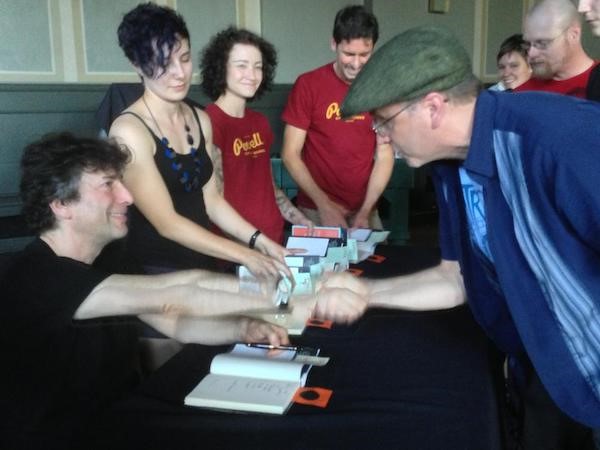
Another was getting to meet Neil Gaiman in person. I had loved his Sandman graphic novel series and his novel American Gods, and his television work for Doctor Who and Babylon 5. At a 2013 book signing hosted by Powell’s Books here in Portland, I mentioned to him I had applied to the six-week Clarion West Writers Workshop he would teach at shortly. When I had applied to Clarion West a few months earlier, his upcoming workshop inspired to go further and apply as well to a two-week novel writing workshop being given by Kij Johnson, another Hugo and Nebula award-winning author.

I ended up not being accepted into Clarion West. However, Kij did accept me for her novel writing workshop and itt had just ended shortly before his book signing. We agreed Kij was a brilliant writer and teacher. I told him that, while I was sorry not to have made it into his workshop, Kij’s had proven transformational for me, and it was thanks to him inspiring me to apply to both CW and the Novel writing workshop. He smiled and reached out and shook my hand.

Now it’s your turn. Please tell us about a fan moment you’ve had with a reader, or as a fan yourself with an author you admire.


Thirteen Strange Superstitions About Death

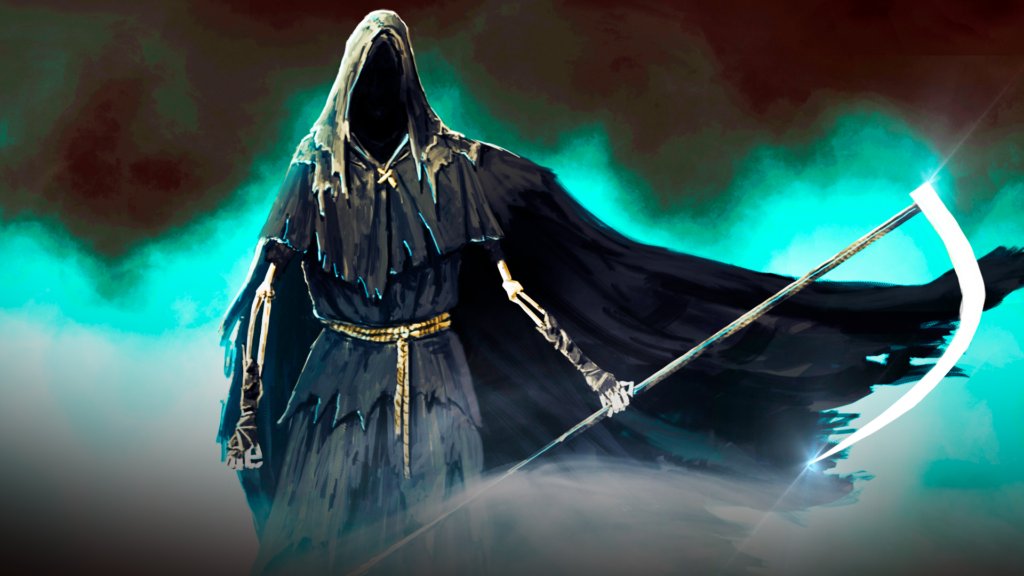
Death is an uncomfortable subject for many folks. Perhaps it’s the severe emotional reaction people have to death—especially if it’s someone close—that makes the living act in bizarre ways. Or maybe it’s because death’s process is not well understood that causes normally rational individuals to believe in irrational concepts.

Yesterday, I was looking over notes from my coroner understudy period. (For those who don’t know of me, I was a coroner in a former life.) One segment in the training was understanding various cultural practices and traditions about death. This was valuable information because a difficult part of a coroner’s job is interacting with the deceased’s family, and those relatives can come from a diverse ethnicity with some pretty peculiar beliefs.

I thought I’d share thirteen strange superstitions about death that I’ve heard of over the years.

13. Coins on the Eyes

This weird practice dates to the ancient Greeks who believed the dead would travel down to Hades and need to cross the river Styx in order to arrive in the afterlife. To cross over, they needed to pay the boat driver, Charon, so coins were placed over the eyes of the dead so they’d be able to buck-up upon arrival.

Secondly, and more practically, many people die with their eyes open. This can be a creepy feeling, having the dead stare at you, and it was thought the dead might be eyeing someone to go with them. Coins were a practical item to weigh down the eyelids until rigor mortis set in—coins being round and fit in the eye sockets as well as being relatively heavy.

The most famous set of eye coins is the two, silver half-dollars set on Abraham Lincoln, now on display in the Chicago Historical Museum.

12. Birds and Death

Birds, understandably, were long held to be messengers to the afterlife because of their ability to soar through the air to the homes of the gods. It’s not surprising that many myths materialized such as hearing an owl hoot your name, ravens and crows circling your house, striking your window, entering your house, or sitting on your sill looking in.

Birds, in general, became harbingers of death but, somehow, the only birds I personally associate with death are vultures.

11. Burying the Dead Facing East

You probably never noticed, but most cemeteries are laid out on an east-west grid with the headstones on the west and the feet pointing east. This comes from the belief that the dead should be able to see the new world rising in the east, as with the sun.

It’s also the primary reason that people are buried on their backs and not bundled in the fetal position like before they were born.

10. Remove a Corpse Feet First

This was a Body Removal 101 procedure we learned in coroner school. We always removed a body from a house with the feet first. The practice dates from Victorian times when it was thought if the corpse went out headfirst, it’d be able to “look back” and beckon those standing behind to follow.

It’s still considered a sign of respect, but coroners secretly know it’s way easier to handle a body in rigor stage by taking it outside feet first and bending it at the knees to get around corners, rather than forcing the large muscles at the waist or wrenching the neck.

9. Cover the Mirrors

It’s been held that all mirrors within the vicinity of a dead body must be covered to prevent the soul from being reflected back during its attempt to pass out of the body and on to the afterlife.

This practice is strong in Jewish mourning tradition and may have a practical purpose—to prevent vanity in the mourners so they can’t reflect their own appearance, rather forcing them to focus on remembering and respecting the departed.

8. Stop the Clock

Apparently, this was a sign that time was over for the dead and that the clock must not be restarted until the deceased was buried. If it were the head of the household who died, then that clock would never be started again

It makes me think of the song:

My grandfather’s clock was too large for the shelf
So it stood ninety years on the floor
It was taller by half than the old man himself
Though it weighed not a pennyweight more

It was bought on the morn of the day that he was born
And was always his treasure and pride
But it stopped, short, never to go again
When the old man died

7. Flowers on the Grave

Another odd belief is about flowers growing on a grave. If wildflowers appeared naturally, it was a sign the deceased had been good and had gone on to heaven. Conversely, a barren and dusty grave was a sign of evil and Hades. The custom evolved to putting artificial flowers on the grave although it’s now discouraged by most cemeteries due to maintenance issues.

Additionally, it’s always been a practice to put wreaths of flowers on a casket. This seems to have come from another practical reason—the smell from scented flowers helped mask the odor of decomposition.

6. Pregnant Women Must Avoid Funerals

Ever heard of this? I hadn’t until I researched this article.

It seems to have come from a perceived risk where pregnant women might be overcome by emotion during the funeral ceremony and miscarry.

IMO, that’s pushing it.

5. Celebrities Die in Threes

And have you heard Ed McMahon, Farrah Fawcett, and Michael Jackson died one-after-the-other, three days in a row? It’s an urban myth that this regularly occurs with celebrities, and it’s the celebrity curse.

To debunk this, the New York Times went back twenty-five years in their archives. Apparently, this is the only time three well-known celebrities died in a progressive three-day group.

4. Hold Your Breath

Another terribly impractical superstition is that you must hold your breath while passing a graveyard to prevent drawing in a restless spirit that’s trying to re-enter the physical world.

That might be a problem if you’re passing Wadi-us-Salaam in Najaf, Iraq. It’s the world’s largest cemetery at 1,485.5 acres and holds over five million bodies.

3. And the Thunder Rolls

Nope, not the Garth Brooks song. It’s thought that hearing thunder during a funeral service is a sign of the departed’s soul being accepted into heaven.

Where I grew up, thunder was thought to be associated with lightning and being struck by lightning was always a sign of bad luck, possibly even death.

2. Funeral Processions

There’re lots of superstitious beliefs around funeral processions.

First, some consider it very bad fortune to transport a body in your own vehicle. And approaching a funeral procession without pulling over to the side and stopping is not only bad taste, it’s illegal in some jurisdictions. It’s said if a procession stops along the way, another person will soon die and the corpse must never pass over the same section of road twice. Counting cars in a procession is dangerous because it’s like counting the days till your own death. You must never see your reflection in a hearse window as that marks you as a goner. Bringing a baby to a funeral ensures it will die before it turns one. And a black cat crossing before a procession dooms the entire parade.

One thing I know to be true about a funeral procession is what happens when you leave the back door of the hearse unlatched while quickly accelerating uphill.

1. Leaving a Grave Open Overnight

I don’t know if this is a superstition or not, but I see it as good, practical advice. According to the International Cemetery, Cremation, and Funeral Association, the standard grave size is 2 ½ feet wide by 8 feet long by 6 feet deep.

With a hole that big looming in the dark, cutting through the graveyard on the way home after getting a snoot-full at the bar, you could fall in and kill yourself.

What about you Kill Zoners? Have you heard any of these strange death superstitions? And do you have any additional ones to offer?

First Page Critique – Samaritan Sins

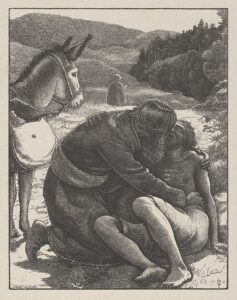
Photo credit: wikimedia CC-BY-SA-3.0

By Debbie Burke 

@burke_writer


Let’s welcome another Brave Author who submitted a first page for review. Enjoy reading it then we’ll discuss.

~~~

 “Waller, they found a body on the Midwest Bike Trail about two hundred feet east of the Northwestern tracks,” stated Police Sergeant David Dodson, our special-operations supervisor. His voice was full of tension. Even when he smiled, his dark brown eyes never quite lost their keenness or their watchfulness.

I sat up straighter at my desk. “Isn’t that the Forest Preserve Police?” I asked into my cell.

“They’ve asked us to handle it because it looks like a homicide. I want you and Garcia on it. I’ll notify the coroner next.”

“A body? Yeah, we’re on it.” I looked at my partner, Detective Carlos Garcia, seated at his desk.  He’s not bad looking. The Fu Manchu mustache looked good with his brown skin. A raised glazed donut perched in his right hand and a paper cup of Dunkin coffee before him on his desk. His white shirt and blue suit hung lean and long off his well-tapered build. I looked down at my solidly built arm, thinking, how can he eat donuts and still look like that? I became aware I had to hook my belt on the last notch when I dressed that Monday morning. I told him, “They’ve got a body for us.”

Garcia’s hand stopped halfway to his mouth. He made the necessary adjustments that would transform his appearance from simply splendid to magnificent. Only after each hair had been lovingly combed into position and his silk tie straightened, the second button of his jacket buttoned, he rose his six-foot frame and said, “Let’s go.”

My career as a detective with the violent Crimes division of  the West Chicago Police Department exposed me to a lifetime of crime and tragedy. We strode out of the station house in a hurry to begin our job. I pride myself on being a no-nonsense individual. I’m thirty-five-year-old Detective Alicia Waller. My black shoes making long, mean strides.

Once in our unmarked Ford Explorer, I turned towards him and asked, “What do you know about the bike path?”

Garcia grew up in this town, probably walked that path hundreds of times as a teenager.

~~~

Okay, let’s dig in.

Photo credit: Public domain

The title Samaritan Sins intrigued me. Samaritan conjures the image of kindness and compassion. Sins brings to mind misdeeds, perhaps even evil. The ironic juxtaposition hints at the story’s conflict. Does a good person commit a terrible act? I want to learn more. Well done!

Unfortunately, this first page doesn’t live up to its promising title.

Brave Author, recently Terry Odell and Jim Bell wrote excellent posts on beginnings. I highly recommend you read them at links here and here.

Jim coined a new term—Wood—and quoted an old saying:

Your story begins when you strike the match, not when you lay out the wood.

The first page of Samaritan Sins is wood laying. It needs work before a match lights it on fire.

Brave Author is getting acquainted with the characters, their backgrounds, and the setting, before starting the story. Yes, preparation is important homework. But the information belongs in an outline, story notebook, character sketch, etc., not on the first page.  

Police procedurals—which this appears to be—generally start with a dead body, in this case on a bike path in West Chicago. However, neither the point-of-view character, Detective Alicia Waller, nor the reader sees the body firsthand.

Instead the story begins with a report by a supervisor, Sergeant Dodson. That distances the reader from the crime. A report by phone, rather than in person, adds even more distance.

Further, it’s confusing. Alicia describes Dodson’s watchful dark brown eyes as if he is standing in front of her. Yet, in the next paragraph, she is talking to him on her cell.

The farther away from the crime, the less a reader cares about it. A crime needs to provoke an emotional response from the reader. A third-hand phone report dilutes the impact.

Details like “two hundred feet east of the Northwestern tracks” also dilute it. Specific details are important to paint a vivid picture. But choose details the reader cares about, not bland measurements.

There is a lot of repetition.

“…they found a body…”

“A body? Yeah, we’re on it.”

“They’ve got a body for us.”

Alicia mostly tells about Carlos Garcia, rather than showing. The description is also repetitive.

He’s not bad looking.

The Fu Manchu mustache looked good with his brown skin.

…transform his appearance from simply splendid to magnificent.

She appears to have a crush on him. Fine, but is that important enough to include on the first page? Not unless it’s significant to the story.

I strongly recommend getting rid of the donut cliché. Look for fresher ways to show Carlos’s looks. But again, consider if these details are significant enough to use up valuable first page real estate. If not, cut them.

Only after each hair had been lovingly combed into position and his silk tie straightened, the second button of his jacket buttoned…

Would this vain-sounding guy fuss with his appearance without first washing donut glaze off his hands?

I mention this because his sticky hands took my mind far away from the dead body. When the reader can be distracted that easily, there’s a major problem.

My career as a detective with the violent Crimes division of  the West Chicago Police Department exposed me to a lifetime of crime and tragedy.

This statement is pure telling without offering insight into Alicia’s personality or how the career has affected her. Is she jaded? Wounded? Fed up? Does she still hold out hope she can help people? “A lifetime of crime and tragedy” is vague and meaningless without specifics.

I pride myself on being a no-nonsense individual. I’m thirty-five-year-old Detective Alicia Waller. My black shoes making long, mean strides.

Again, more telling rather than showing. How important is it for the reader to know this on the first page?

Photo credit: Public domain

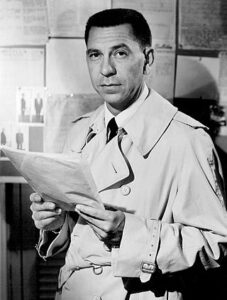
A Jack Webb/Dragnet-style introduction could condense the background info and establish a distinctive voice while also moving the story ahead. Here’s one way it might be written:

I’m Detective Alicia Waller, West Chicago Police Department, fifteen years on the job, the last four in Special Operations. I’m thirty-five, wear sensible shoes, battle my weight, and have a secret crush on my partner, Carlos Garcia, a stylishly-dressed six-foot hunk with a Fu Manchu mustache. He’s vain but I forgive that flaw because he’s easy on the eyes.

Together we’ve worked violent crimes ranging from gang murders to a sexual assault on a ten-month-old baby that sent us both to the department shrink.

Today, we stood over a deceased teen-aged male lying face-up on the Midwest Bike Trail. Forest Preserve Police had called us because they suspected homicide.

The above is about 100 words, conveys relevant facts, introduces characters, and plops the reader into the crime scene.

Wordsmithing:

Overall, the writing is competent but verb usage needs work.

Stated is an awkward verb that draws attention to itself. Why not use said?

Perched is another odd verb. A parakeet might perch on his hand but not a donut.

…a paper cup of Dunkin coffee [sat] before him on his desk. Missing verb.

His white shirt and blue suit hung lean and long off his well-tapered build. Hung doesn’t work. Is the suit hanging lean and long? Or do you mean his build is lean and long?

…he rose his six-foot frame. A person generally doesn’t raise his frame unless the frame is for his barn.

My black shoes making long, mean strides. This sentence lacks a verb. It’s also inaccurate and awkward. The shoes aren’t striding; Alicia is. What are “mean strides”? Emphatic, loud, decisive?

In trying to be creative with verbs, BA instead inserts speed bumps and confusion.

~~~

Brave Author, I hope you don’t feel beat up by these comments. As writers, we’ve all been here. It’s part of the learning process as you hone your craft.

I suggest you save this first page in a “story notes” file. Refer to it as you develop the plot and characters. The information is useful background—it just doesn’t belong on page 1. 

For now, move ahead with your story. After drafting a few chapters, you’ll likely find a more compelling place to start. Once you complete the ms., circle back and rewrite the opening.

Just because it says “Page 1” doesn’t mean it has to be written first. Write it last. 

One way to interest readers is to make them curious. Ask questions they want answers to. Here are a few ideas:

What makes one or both members of this detective team unique?

Why should the reader care about a faceless victim in a city where murders occur frequently? (Hint: give the victim a distinctive characteristic. Is she missing an arm? Is he a local celebrity?)

Are there special circumstances or unusual clues that set this crime apart from run-of-the-mill calls?

Thank you for submitting, Brave Author. It takes courage to expose your work to strangers. Please take suggestions in the spirit they’re offered—to help make your story the best it can be.

~~~

TKZers, your turn to offer ideas to the Brave Author.

~~~

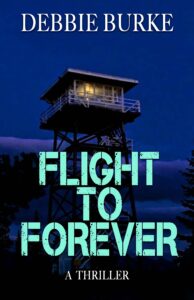
Flight to Forever was a finalist for the 2022 Eric Hoffer Book Award. Try a sample at these links:

Amazon

Major online booksellers

Or ask your favorite independent bookstore to order the paperback.

A Mystery of History

“Truth is the daughter of time.” – Francis Bacon

Several months ago, I posted The History of Mystery on the Kill Zone blog, and I listed twelve examples of novels and authors that represented important milestones in the history of the genre. In his comment on that post, Dale Ivan Smith mentioned a book I had not considered: The Daughter of Time by Josephine Tey. Dale pointed out that Ms. Tey’s novel had some very prestigious acclaim:  In 1990 it was voted number one in The Top 100 Crime Novels of All Time list compiled by the British Crime Writers’ Association.

Of course, with that endorsement, I had to read the book, and I was captivated by it. So much so that I asked Dale if he would co-write this post with me, and I’m deeply grateful that he agreed. Without further ado, join us in the Court of Literary Criticism as we examine two aspects of The Daughter of Time, a mystery of history.

SCENE I: THE COURTROOM

The judge banged her gavel, and the room fell silent. She allowed her gaze to slowly sweep across the crowded courtroom until every eye was firmly focused on her.

“It is said that truth is the daughter of time,” she announced in a commanding voice. She turned her head and peered over the rims of her glasses at the two people in the jury box. “Dale Ivan Smith and Kay DiBianca, you have been appointed to decide two issues related to this proverb.

“First, is Josephine Tey’s mystery, The Daughter of Time, truly the greatest crime novel of all time?

“Secondly, as discussed at length in the novel, is King Richard III of Great Britain guilty of the murder of his nephews Edward and Richard, also known as the Princes in the Tower?“

Then she read a summary of the book for the edification of the court.

“The Daughter of Time is an ambitious novel that begins quietly, with Scotland Yard Inspector Alan Grant laid up in a hospital while recovering from a fall and unable to leave his bed. Failing to find books to entertain him, Grant is bored and irritable. But when his actress friend Marta presents him with a stack of images of various people, his talent for analyzing faces is aroused.

“He settles on a picture of a medieval prince and discovers it to be Richard III. He then begins to read about the monarch and his alleged murder of his nephews.

“Aided by a young American scholar, Grant begins a deep dive into the events surrounding the episode and concludes that Richard III was innocent of his nephews’ murder. He theorizes that the boys lived into the early 1500s and were murdered in secret on the orders of Henry VII, the man who became king after Richard III was slain at the Battle of Bosworth Field in 1485.”

The judge took off her reading glasses and addressed the two jurors. ”You may deliberate as long as you like. Please report back when you’ve accomplished your reading assignment and reached your verdicts.”


SCENE II: THE JURY ROOM

Kay: Okay. I read the book twice. How should we go about analyzing its quality?

Dale: I also read the book twice. Why don’t we list the various criteria we will judge the book on and write our opinions under each one?

The Setting

Kay: The entire novel takes place inside a hospital room. In that way, it reminded me of Rear Window which also takes place in one room. Did the author succeed in keeping your interest?

Dale: Yes. The hospital setting for the novel was literally the classic white room, but Tey infused it with detail, mainly by keeping us close to Grant, POV-wise, so that we were right there with him at all times as he lay in bed and stared at the cracks in the ceiling, listening to the sounds outside his room, and later, surrounded by books.

The Structure

Dale: The novel’s structure is one of its greatest strengths. Once Alan Grant begins his investigation from his hospital bed, the story unfolded, to my mind, like the classic murder mystery plot, with unexpected developments, setbacks, and even a ticking clock as time ran out. What did you think of the novel’s structure? Did you find it effective?

Kay: I liked Tey’s use of a story within a story. Although that’s not unique, investigating a historical event within a fictional book was particularly appealing to me.

The Characters

Kay: There were two sets of characters in this book: the fictional characters of Alan Grant and those around him, and the historical characters that include Richard III, Sir Thomas More, William Shakespeare, and others. I had a little trouble keeping up with all the historical Elizabeths, Henrys, and Georges, but I thought the fictional characters were well-constructed and engaging.

Dale: The fictional characters of Grant, Marta, Brent Carradine, and others were vividly drawn, especially through dialogue, and each was distinctive. The way she zeroed in on the mystery, starting with Richard III and the princes, and then moved through the numerous Woodvilles and other personages, let the reader become familiar with each. She kept her focus on Grant and Carradine’s views of these personages, with Grant’s detective inspector’s view of human nature bringing a pragmatic angle to how those people were viewed.

The Investigation

Dale: Tey was convincing in how she portrayed Grant and his investigation, which looked at who had motive for the murder other than Richard, and who stood to most benefit. His dogged determination to follow the investigation to wherever it led fit his modern detective’s mindset and approach.

Kay: The portrayal of Grant’s use of modern detective methods to investigate the alleged crime was clever and well done.

The Criticism of History Books

Kay: Josephine Tey went beyond the determination of Richard III’s culpability. Her real message was about the fallibility of history writings. Some of the examples that she wove into the story were eye-popping. Had you ever heard about Tonypandy before?

Dale: I had not heard of Tonypandy before. It was a terrific illustration of how historical myths arise, and how they can form narratives that serve those in power. By the same token, as someone with a degree in history, I found Grant’s depiction of Sir Thomas More’s historical account of the murders as biased and flawed a bit problematic, though great fun. I did enjoy Grant’s embrace of primary sources, and uncovering them with Carradine’s help was more exciting then I would have imagined.

Josephine Tey’s Style

Dale: Tey is a superb writer, with an evocative narrative style that brought the story to life. The dialogue is precise and equally evocative. An example taken at random: Grant, “If your two sons had been murdered by your brother-in-law, would you take a handsome pension from him?”

Kay: I admire Tey’s prose. One particularly amusing description of Mrs. Tinker leaving the hospital room: “When she had gone creaking away, in a shoes-and-corset concerto …”

***

Dale: I guess we’ve covered all the bases, and it’s time to report back to the judge. Are you ready?

Kay: Yes. Let’s go.


SCENE III: THE COURTROOM

Judge: Members of the jury, Dale Ivan Smith and Kay DiBianca, what is your verdict? Is The Daughter of Time the best crime novel ever written?

Dale: I can not declare it to be the best crime novel ever written, but it is certainly one of the very finest ones, for the way in which it unravels an ancient mystery, and the way it shows the police mindset being applied to solving that mystery.

Kay: How can you compare The Daughter of Time with Agatha Christie’s And Then There Were None or Raymond Chandler’s The Big Sleep? All three books tell vastly different stories, but In each case, the style matches the narrative. Having said that, Tey’s novel deserves special consideration since it challenges the reader to discern truth out of the cacophony of information and misinformation we encounter in our lives. For me, that elevates The Daughter of Time to the #1 position. (Besides, I thought the title was brilliant.)

Judge: And how do you find the defendant, King Richard III? GUILTY or NOT GUILTY?

Dale: I find Richard III GUILTY as charged. My own research revealed that Sir Thomas More spoke with the sons of one of the alleged murderers, Miles Forest, using that as a the basis for his account. Both sons rose to very important positions in the Tudor court. Moreover, Richard III faced a serious rebellion in 1483 by supporters of young Edward IV, so he had additional reason to have the two princes put away, permanently. The politics of that age could be ruthless, and Richard III was very much a product of that time.

Kay: I find Richard III NOT GUILTY. There are other plausible explanations for the deaths of the two princes, and there is simply not enough evidence to prove Richard III’s guilt beyond a reasonable doubt.

Judge: Thank you, members of the jury, for your service. You are hereby dismissed.

“The one who states his case first seems right, until the other comes and examines him.” – Proverbs 18:17

So TKZers: Have you read The Daughter of Time? What novel would you recommend as the best mystery ever? Do you have an opinion on the validity of history books? Do you think Richard III is guilty or not guilty?

TKZ Words of Wisdom – Guest Post – Dale Ivan Smith

Please join Dale in discussing posts he has selected from the archives, as I recuperate from cataract surgery.


In my guest TZK words of wisdom this Saturday, we jump into the archives to find tips on surprising the reader, knowing when to kill a character, and the power of the shadow story. Feel free to comment and engage other readers on any, or all, of these topics.

Surprises

Surprises can be powerful things – they can draw a reader into a book in a way that is (I think) often more powerful than a mere plot twist or a shocking ending. They can take the form of an unsuspected insight into a character, a happy coincidence, or just the details of a world created that transports the reader’s imagination. The element of surprise is however much harder to achieve than suspense or the power to shock and I think (in terms of craft) it requires:

  • An appreciation of language – the beauty of a turn of phrase that can delight as well as surprise should never be underestimated.
  • An understanding of the nuances of the human condition – many of the best surprises occur only because an author has a grasp of the full idiosyncrasies of characters (both real and imagined).
  • An ability to create parallel worlds full of quirks and charms that allow a reader to suspend disbelief.
  • And, finally, the bravery required to take a book into rough uncharted waters…

–Claire Langley-Hawthorne– October 12, 2009


The Kill Bell

That malicious peeling noise that lets me know, as I’m drafting my latest book, that it’s time to drop a body.

That’s how it sounds to me, anyway. Maybe yours sounds different, but I’m guessing I’m not alone in having one. As a mystery/thriller writer, I know I have to kill, early and often. And since you’re on this blog – it is called The Kill Zone, for goodness sakes – you probably know it, too. Lord knows, no one here is writing cozies. I’m betting the Kill Zone authors alone traffic in more blood than your average Red Cross chapter.

But how much do we spill? And how do we know when the time is right?

That’s what the kill bell is for. I’ve come to value it, to know to listen for it, and even to anticipate it. It’s that little friend that tells me things have gotten a little too comfortable for the reader and I need to shake things up.

It’s not like it happens in predictable intervals – and thank goodness, since it would get a little too cookie-cutter if you whacked someone every 10,000 words. I can sometimes go 40,000 words without slashing so much as a single throat. Then I shoot someone and I think I’m okay for a while but, ding-a-ling, there’s the bell again. And, even if it’s a mere 2,000 words later, I’m puncturing someone’s temple with a nail gun.

I suspect every writer’s kill bell is set to a slightly different frequency, which is why we all write different books. The important thing is to respect it and, when you hear it ringing, to act. Even when it’s not clear how. –Brad Parks– March 10, 2012


The Shadow Story

Simply put, the shadow story is what is taking place away from the scene you are writing. It’s what the other characters are doing “off screen.” By giving thought to the shadows, even minimally, you greatly expand your store of plot material.

Shadows Inside the Lead

You can also delve into the shadows and secrets of your Lead. Maybe you’ve done this already, by giving your Lead a backstory and answering key questions about her life (education, hopes, fears, lost loves, etc.)

But every now and then, in the middle of the writing, pause to come up with something going on inside the Lead that she is not even aware of. Try what I call “the opposite exercise”: The Lead, in a scene, has a specific want or need (if she doesn’t, you need to get her one fast, or cut that scene!) Now, pause and ask: what if your Lead wanted something the exact opposite of this want or need? What would that be? List some possibilities. Choose one of those. Ask: Why would she want that? How could it mess with her head?

Then look for ways to manifest this inner shadow in some of your scenes.

Or imagine your Lead doing something that is the opposite of what the reader or, more importantly, you would expect in that scene. What sort of shadow (secret) made her do that?

Just by asking these sorts of questions, you deepen your Lead and add interesting crosscurrents to the plot.

That’s the power of the shadow story. –James Scott Bell– April 12, 2015

***

Any tips on how to surprise the reader?

How do you decide when to kill a character?

Do you spend time thinking of the shadow story in your own fiction?

First-Page Critique: A Mind Trap

By Elaine Viets

Another Brave Author has given us what looks like a spy thriller. First, let’s read the first page. Then I’ll offer my comments, and you can add yours.

A Mind Trap
Everything in the dimly lit warehouse of the aerospace company appeared
to be as it should. And for Edward Malver, crouching in the deeper shadows of
some packing crates, everything was as it should be. His digital wristwatch showed it
was midnight and every employee except one security guard had gone home many
hours earlier.
Widely spaced overhead lighting cast pools of weak light in a murky realm of lighter
and darker shades of black. Metal shipping containers and wooden packing crates of
all sizes were stacked in rows like giant tombstones in a netherworld. Malver stood up
and hurried toward the exit downstairs.
He didn’t want to remain any longer than was absolutely necessary. The risk of
discovery increased with every passing minute, and the dark made him uneasy. Malver
shuddered. If he stayed in it too long, he knew the terrible memories would resurface to
savage him.
Malver was relieved to see how well his black pullover sweater and slacks blended in
with the surrounding darkness, camouflaging his tall slender frame and rendering him
almost a part of the darkness. He checked his blue nitrile examination gloves to be sure
they were not torn, then pulled a dark beanie further down over his gray-peppered black
hair. Walking with the silence of a shadow, he glanced around while listening for any
out-of-place sounds. All was as quiet as the grave.
Malver’s lock picks, both manual and electronic, rested in his nylon shoulder pouch next to the photographs he’d just taken of the secret Raptor missile. The Raptor was a surface-to-air missile with a “smart” computer guidance system making it virtually
impossible to fool or escape from. Really bad news for any fighter or bomber pilot it
was fired at. The Raptor had taken dozens of scientists seventeen years to develop
and perfect. Malver could have targeted the minds of some of the key scientists but it
was so much easier to just steal what he needed; truly a rare opportunity too good to
pass up, he thought.
He’d be selling the photos of the technical specifications and schematic diagrams
three days from tonight. The photos would earn him good money. But in this instance,
the money was secondary. Malver was pleased at how smoothly this operation was
going, on schedule and with no glitches.
Then he saw the security guard approach the catwalk

Elaine’s Comments:
Our Brave Author gets this novel off to a creepy start, but we need someone to root for – or against. Is Malver a good guy or a bad one? Is he an operative for the United States, or an enemy spy? Why does he need these plans and who will he give them to?
It’s important that we know.
For the sake of this critique, let’s say he’s a villain. Then this  thriller can have a dramatic race to keep the Raptor plans from falling into enemy hands.
Also, the opening needs to ratchet up the tension. In the first paragraph, I’ve made some small cuts to move the pace along. I also had Malvern checking his wrist watch, getting rid of the passive voice “his wrist watch showed it was . . .” I left the second paragraph untouched.
In Paragraphs 3 and 4, I’ve done more tightening, getting rid of unnecessary words such as “in,” “just” and “so” I changed “darkness” to “gloom” to avoid repeating the word. Nitrile “examination” gloves is unnecessary. Your readers know what nitrile gloves are. I cut “as the grave.” It’s cliched.
The phrase that puts manual and electronic lock picks in apposition has been recast, so the sentence moves smoothly. Also, I cleaned up some other phrases. The last paragraph is fine, except it needs a period at the end.

PARAGRAPH 1 Everything in the dimly lit warehouse of the aerospace company appeared to be as it should. AndfFor Russian agent Edward Malver, crouching in the deeper shadows of some the packing crates, everything was as it should. be. His wristwatch showed it was He checked his digital wristwatch. Midnight. ed it was midnight and Every employee except one security guard had gone home. The lazy Americans didn’t stay late. The new Cold War had started when President Vladimir Putin offered to support the Russian-speaking separatists in eastern Ukraine. The clueless West called his actions an invasion, but what did they know? History was on Mother Russia’s side. manyhours earlier.
PARAGRAPH 2 Widely spaced overhead lighting cast pools of weak light in the murky blackness. Metal shipping containers and wooden packing crates were stacked in rows like giant tombstones. Malver stood up and hurried toward the downstairs exit.
PARAGRAPH 3 Malver’s black pullover sweater and slacks blended in with the darkness, camouflaging his tall slender frame, and rendering him almost a part of the gloom. darkness. He checked his blue nitrile examination gloves to be sure they were not torn, then pulled a dark beanie further down over his gray-peppered black hair. Walking silent ly as a shadow, he glanced around, while listening for anything out of place sounds. All was as quiet. as the grave.
PARAGRAPH 4 Malver’s lock picks, both manual and electronic lock picks rested in his nylon shoulder pouch next to the photographs he’d just taken of the secret Raptor missile. Developed by the US, the Raptor was a surface-to-air missile with a “smart” computer guidance system making it virtually impossible to fool or escape. from. Really Bad news for any fighter or bomber pilot in its path. it was fired at. The Raptor had taken dozens of scientists seventeen years to develop and perfect. Malver could have targeted the minds of some of the key scientists’s minds, but it was so much easier to just steal what he needed. This ; truly a rare opportunity was too good to pass up, he thought.
PARAGRAPH 5 He’d be selling the photos of the technical specifications and schematic diagrams three days from tonight. The photos would earn him good money. But in this instance,
the money was secondary. Malver was pleased at how smoothly this operation was
going, on schedule and with no glitches.
PARAGRAPH 6 Then he saw the security guard approach the catwalk.

Here’s a clean version:
Everything in the dimly lit warehouse of the aerospace company appeared as it should. For Edward Malver, crouching in the deeper shadows of the packing crates, everything was as it should. He checked his digital wristwatch. Midnight. Every employee except one security guard had gone home. The lazy Americans didn’t stay late. The new Cold War had started when President Vladimir Putin offered to support the Russian-speaking separatists in Eastern Ukraine. The clueless West called Putin’s actions an invasion, but what did they know? History was on Mother Russia’s side.

Widely spaced overhead lighting cast pools of weak light in the murky blackness. Metal shipping containers and wooden packing crates were stacked in rows like giant tombstones. Malver stood up and hurried toward the downstairs exit.

Malver’s black pullover sweater and slacks blended with the darkness, camouflaging his tall slender frame, rendering him almost part of the gloom. He checked his blue nitrile gloves to be sure they were not torn, then pulled a dark beanie further down over his gray-peppered black hair. Walking silent as a shadow, he glanced around, listening for anything out of place. All was quiet.
Malver’s manual and electronic lock picks rested in his nylon shoulder pouch next to the photographs he’d taken of the secret Raptor missile. Developed by the United States, the Raptor was a surface-to-air missile with a “smart” computer guidance system making it virtually impossible to fool or escape. Bad news for any fighter or bomber pilot in its path. The Raptor had taken scientists seventeen years to develop and perfect. Malver could have targeted some of the key scientists’s minds, but it was much easier to steal what he needed. This rare opportunity was too good to pass up, he thought.
He’d be selling the photos of the technical specifications and schematic diagrams three days from tonight. The photos would earn him good money. But in this instance, the money was secondary. Malver was pleased at how smoothly this operation was going, on schedule and with no glitches.
Then he saw the security guard approach the catwalk.

TWO MORE NOTES: Some of your manuscript was in purple ink, and some in black. Please be consistent when you show it to an editor.
And finally, I like the name of your villain.
Keep writing, Brave Author.

LATE FOR HIS OWN FUNERAL is “a fascinating exploration of sex workers, high society, and the ways in which they feed off of one another.” Enter to win a copy here:  https://kingsriverlife.com/08/06/late-for-his-own-funeral-by-elaine-viets/


The Care And Feeding Of Copy Editors

By JohnGilstrap

Having just finished a marathon session reviewing the copy edits for White Smoke (the third book in the Victoria Emerson thriller series), I started to write a post for TKZ that addresses my view of the copy editing process, and shares my copy editing rules. I was a hundred words or so into it when it occurred to me that it was all feeling very familiar.

It turns out that I posted on the topic here back in 2018. So now, if the content feels like you might have read it before, at least you’ll know why–although I have rewritten parts.

Copy editing is the penultimate opportunity for me to make significant changes to a manuscript. By that point, I’ve already addressed the developmental issues outlined in my editorial letter, and–to my mind, anyway–the copy is pretty clean. Typos abound, but not for lack of hunting them down. At that point, I have fulfilled my D&A (delivery and acceptance) contract element, and, not insignificantly, will get paid.

The next step is for the completed manuscript to be sent off to be copy edited. This is the typo/spelling/continuity review step. For the most part, copy editors are freelancers, and they may or may not have any familiarity with my work, or even with the genre in which I write. It seems to me (and I say this with a huge amount of respect) that their primary skills are an encyclopedic knowledge of the rules of grammar, and the ability to process the tiniest of details. Combine those traits with a research instinct that borders on obsessive-compulsive, and the ideal copy editor is born.

And I need them. I’ve posted here before that I deeply don’t understand commas, and no matter how many times it is explained to me, the rules for “which” vs. “that” elude me. I am wont to have characters sit after they have never stood, and close doors that have never been opened. It is the largely un-celebrated copy editors of the world who keep the reading public from knowing how unqualified I am to do the work that I do.

But there’s a dark side.

Sometimes, copy editors change stuff that shouldn’t be changed, and for that reason, as the author, I must approve or disapprove every alteration they propose. At times, their knowledge of grammar gets in the way. An example that comes to mind is from a few books ago when the copy editor changed “Jonathan looked at the door the kid had just come through” to “Jonathan looked at the door whence the kid had just come.” While grammatically correct, “whence” is a word that has no place in commercial thrillers. The same copy editor took it upon herself to replace Jonathan Grave’s beloved Colt 1911 .45 with a pistol her research had told her would be more appropriate to his purposes.

Most recently, the copy editor noted that referring in dialogue to deer hunting as “killing Bambi” might offend more sensitive readers. My inclination is to write back that I no doubt had lost my sensitive readers about 20 books ago, but instead I responded with the ever-useful “stet.”

I miss the days of handwritten copy edits. I like paper. I like printed manuscripts that I can read in a lounge chair with a lap desk and a pencil, making changes or stetting by hand. For the past five or six years, the edits come as a word file with Track Changes turned on, forcing me to read the book on my computer. Okay, now I’m whining.

The Gilstrap Style Sheet

My publisher uses the Chicago Manual of Style as the Holy Grail of copy edits. That’s fine. There has to be a standard by which to judge correctness. But here’s the thing: Mine is the only name on the spine of the book, and there are instances where I disagree with the style manual. After spending countless hours over my first ten or twelve books stetting changes made by copy editors, I decided to create my own style sheet, which I insert between the cover page and Chapter One of every manuscript I submit.  I thought I’d share it with you.  (I’ve inserted some explanation in italics where I think my reasoning might not be obvious.)

NOTE TO COPY EDITOR: Stylebook notwithstanding, please note the following:

The possessive form of Boxers is Boxers’ (not Boxers’s).  This change does not affect any other names that end with S.

In every case, branches of the US armed services are always capitalized (e.g., Jonathan’s days in the Army; when Henry was in the Navy, etc.)

Consider landmarks within Jonathan’s office to be proper nouns and capitalized as such (The Cave, the War Room, etc.)

Please consider all weapons nomenclature to be correct as written. (e.g., Jonathan carries a “Colt 1911 .45”, even though the official listing might show the pistol to be a Colt M1911A1, and even though there are newer versions of the platform available.  These are very deliberate choices.)

When referencing calibers of weapons, all measurements are singular.  (e.g., a Glock 19 is chambered in nine millimeter, not nine millimeters.)

References to federal agencies need no definite article.  (e.g., “He’s with DEA” is fine. He’s not with THE DEA.)

When Boxers or other team members refer to Jonathan as “Boss”, the word should be capitalized.

No semicolons, grammar notwithstanding.

Northern Virginia and the Washington Metropolitan Area are both proper nouns and require capitalization.

Please assume all dialogue to be correct as written.  Feel free to correct spelling and typos, but do not strive to make dialogue grammatically correct.

In dialogue, “Dammit” and “Goddammit” and “Goddamn” should be considered to be correct.

I intentionally avoid parentheses and single-quote marks in dialogue. Please do not insert them.

As a rule, I dislike exclamation points. Please avoid inserting them.

The first time I submitted a manuscript with the style sheet attached, I expected some pushback from the publisher. Instead, I got a big thank-you and an expressed wish that more authors would do likewise. It saves time for everyone.

Something that a lot of newbies to the writing game don’t realize is that the editor and publisher may not change a word of your manuscript without your permission. I don’t recommend recalcitrance, and I do recommend listening to the editor’s advice, but when the book is published, it’s your work, not theirs. Make sure that it’s what you want it to be.

First Page Critique: When Being Too Coy Creates Confusion

By PJ Parrish

Good day, crime dogs. We have an interesting First Pager today. I am going in cold with this one so as to not prejudice you with any preludes. Your first impressions are valuable here, so please weigh in for our writer. No title. But the submitter alerts us that we are in the genre of “Historical Romantic Suspense.”

Chapter One. November, 1954

Her picture was in the paper today.

I would have known her anywhere. Fair hair, tucked neatly under her hat. The same pearls around her delicate neck. A chic woolen suit topped by a short jacket. White gloves. A smile of pure joy on her face. She strode forward with the same confident, take-on-the-world step I once admired so much, a woman ready to cast the old order aside and charge into the future.

Once we had charged into that future together. Then it arrived, rotten with terror and torture and murder. Did she truly not see that? Was it possible she still didn’t? Was that why, even now, she could look so proud of the man beside her?

There was no doubt that the world was still fighting a war for the future. There was also no doubt, or at least not much doubt, that I had chosen the losing side.

I no longer fight for the future. Now I fight only for my family.

Aside from our shared lofty goal of changing the world, we couldn’t have been more different. She was American born; we were immigrants. Her family were genteelly Protestant; mine were Russian Jews. She was private schools, Bryn Mawr, and Yale; I grew up in my father’s candy store, helping out behind the counter .

None of that mattered. We were confidantes, soul mates.

Because who else could understand our lives? Who else knew the dreams and the fears, the resolute denial of the sickening rumors? How could any outsider understand what that cost us?

Then everything changed. A chasm opened between us that could never be breached.
For years there was a hole in my heart where Priscilla used to be. Was it still there?
The picture again. There was her handsome husband, towering over his petite wife. The only hint of the years he had been away was he was a shade thinner. Otherwise, he looked the same. The same boyish charm, the same disarming smile he had flashed at the jury at every opportunity during the trial.

He wore a broad-brimmed fedora, a natty tweed coat, a white scarf round his neck; trousers perfectly creased, shoes buffed to a high shine. A gloved hand under his wife’s arm. He could have been walking out of the pages of Esquire.

He was walking out of federal prison.

__________________________________

Whenever I approach a First Pager, I try to do my first read purely as a reader who might have picked up the book in a store and is reading the opening pages to see if I want to buy the book. Yes, I do this in real life. If there’s enough craft and a certain je ne sais quoi I take the book home, always with a hopeful heart.

I’m drawn to characters with damaged pasts, so I liked this at first blush. I thought, well, it’s a little slow and I don’t mind slow, but I’m not sure it has that intangible “I don’t know what” distinctive quality that will make me want to go on. Let me try to be more precise.

The writing here is clean and solid. The opening line is interesting in that it promises at least an emotional reaction from the narrator. But then what follows it essentially backstory. A lot of it. And it’s all in a style of “telling.”  The narrator is telling us what happened — that some major event caused a schism in their relationship, that the narrator no longer feels compelled to “fight,” that there is a hole in his/her heart where his friend used to be — or is there?

More backstory “telling” is slipped in with this paragraph: “She was American born; we were immigrants. Her family were genteelly Protestant; mine were Russian Jews. She was private schools, Bryn Mawr, and Yale; I grew up in my father’s candy store, helping out behind the counter.”

In short, the entire opening is one moment of present-time action: Someone is looking at a photograph in a newspaper of what I think is an ex-lover with her ex-con husband. The rest is all the narrator thinking, remembering, musing, lamenting. Nothing is happening. There is no sense of being grounded in any present-time reality. Everything is past-tense. By the time I got to the line about the man coming out of federal prison, I was losing interest.

There are other issues, I think.

I can’t tell the gender of the narrator. It feels like a man, given the somewhat generic description of the photograph of Priscilla — “chic suit, white gloves, pearls, fair hair tucked neatly under a hat.”  So I am thinking that Priscilla is a lost love. But then we get this line: “She strode forward with the same confident, take-on-the-world step I once admired so much.”  That sounds like a friend remembering a girlfriend. So I then wondered if the narrator was female. Especially since we get this line soon after: “We were confidantes.” Which signals two females.  (It’s confidants if a man is the narrator but this could just be a typo.)

Regardless, the uncertainty about the narrator’s emotions toward Priscilla — not fully romantic, not clearly friendship — confused me. I can tell he/she is unhappy and maybe rueful. But the tone is like a weak radio signal, wavering annoyingly just beyond my ear.

Another thing that confused me. The writer gives us a time tag of November 1954. Then devotes a good portion of the backstory and thoughts to some crisis:

Then it arrived, rotten with terror and torture and murder. Did she truly not see that? Was it possible she still didn’t? Was that why, even now, she could look so proud of the man beside her?

There was no doubt that the world was still fighting a war for the future. There was also no doubt, or at least not much doubt, that I had chosen the losing side.

Terror, torture and murder. That implies war. And what to make of this line: “There was no doubt that the world was still fighting a war for the future. The world is still at war in 1954? The Cold War between the U.S. and Russia? Confusing.

So, the set-up of someone seeing an old flame/friend’s photo in a newspaper isn’t bad. The writing is solid if a bit bland. I’d like the writer to try harder to insert what we here at TKZ call “the telling detail,”  unique description that paints a picture of your characters and your setting. (The latter, by the way, is non-existent. Where are we?) See line edit for examples of this.

Final point: The heavy backstory has your story stuck in neutral gear. Also, the confusion created by the coyness of the style is off-putting to me. Key: what exactly is the relationship between Priscilla and the unnamed narrator? Why withhold this? Your back copy will spill the beans anyway.  As an exercise, try to write your back copy:

Jack Steiner lost the love of his life in the gray chaos of post-war London. But when he sees Priscilla’s photograph in a New York newspaper twenty years later…

Janice Steiner never forgot her first love and the ugly rumors that tore them apart. But when she sees a photograph of Priscilla with her husband….

As we often say here, there is a big important difference between artfully withholding details from the reader to create suspense and being obtuse. And keep in mind, dear writer, even in romantic suspense, something needs to happen to someone soon. Apologies to Joseph Heller.

Let me do a quick line edit. My comments in red:

Her picture was in the paper today. If you had told me what newspaper, you’d do a big favor and tell us where we are geographically. Her picture was in the New York Herald Tribune today. 

I would have known her anywhere. Suggestion: Ten years had passed since I last saw her, but I would have known here anywhere. We need better grounding in time. Fair hair, tucked neatly under her hat. The same pearls around her delicate neck. A chic woolen suit topped by a short jacket. White gloves. A smile of pure joy on her face. She strode forward a photo can’t show a present-tense action. Perhaps: “The photograph had caught her in confident mid-stride….with the same confident, take-on-the-world step I once admired so much, a woman ready to cast the old order aside and charge into the future.

Once we had charged into that future together. Then it arrived, is “it” the future? rotten with terror and torture and murder. Did she truly not see that? What does this refer to? Because you write this in the present tense, it implies the narrator is seeing something in the photograph. Or do you mean to say: “Had she truly not seen what happened? Confusing. Was it possible she still didn’t? Was that why, even now, she could look so proud of the man beside her? I like this line, especially since we later learn hubbie’s been in federal prison. 

There was no doubt that the world was still fighting a war for the future. There was also no doubt, or at least not much doubt, that I had chosen the losing side. Again, I find this confusing. What war? 

I no longer fight for the future. Now I fight only for my family.

Aside from our shared lofty goal of changing the world, This is somewhat of a non sequitur transition. This line about the family is interesting but it feels tacked on considering his/her next thoughts. we couldn’t have been more different. She was American born; we were immigrants. Her family were genteelly Protestant; mine were Russian Jews. She was private schools, Bryn Mawr, and Yale; I grew up in my father’s candy store on Orchard Street (lower east side NYC or wherever it was)…always be alert for places to drop in TELLING DETAILS. Your opening could use some, helping out behind the counter.

None of that mattered. We were confidantes, soul mates. Again, this feels like friends, not lovers. 

Because who else could understand our lives? Who else knew the dreams and the fears, the resolute denial of the sickening rumors? How could any outsider understand what that cost us? Shades of Lillian Hellman’s “The Children’s Hour.” Are we in Martha and Karen territory here?  

Then everything changed. A chasm opened between us that could never be breached.
For years there was a hole in my heart where Priscilla used to be. Was it still there?

The picture again. There was her handsome husband, towering over his petite wife. The only hint of the years how many? We really need a few concrete detailshe had been away was he was a shade thinner. Otherwise, he looked the same. The same boyish charm, cliche. And “charm” isn’t the right word for a photograph. the same disarming smile he had flashed at the jury at every opportunity during the trial.

He wore a broad-brimmed fedora, a natty tweed coat, a white scarf round his neck; trousers perfectly creased, shoes buffed to a high shine. A gloved hand under his wife’s arm. He could have been walking out of the pages of Esquire.

He was walking out of federal prison. Nice kicker line. But you could slip in another grounding location detail by telling us which one. We’re floating in the geographic ether here.  

As I said, I like certain things about this opening. But it could do with some good details to make it feel less generic and more emotionally involving. And, dear writer, I think you’d be well served to not hold your readers at such arm’s length, especially working in your chosen sub-genre. The best definition I’ve heard of romantic suspense is “a story that is driven by the threat of danger and the promise of romance.” In the best ones, there is a tension between the two. The protagonist is in danger (or someone she or he loves). The romance builds at the same time as the jeopardy, until both reach a crescendo. Mystery solved, bad guy defeated and the main characters live happily ever after.

Sound simple? Ha. This is why my own efforts at romantic-suspense have never seen the light of day. I sense you can tell a good story, dear writer. Clear up the confusion, tell us where we are, jump into your story with more heart and gusto and get things moving. Thanks for sharing with us.