Situational Awareness

I can’t change the direction of the wind, but I can adjust my sails to always reach my destination. –Jimmy Dean

* * *

Did you know the deadliest aviation accident in history happened on the ground? Yes, you read that correctly. It occurred in 1977 when two 747’s collided in dense fog on a runway in the Canary Islands. Here’s how it happened:

An incident at the airport on Gran Canaria Island had diverted aircraft to the smaller Los Rodeos Airport on Tenerife Island. The Los Rodeos Airport had only one runway and an adjacent parallel taxiway with several smaller taxiways connecting the two. Because of the increase in aircraft that had landed at Los Rodeos, several aircraft were parked on  the taxiway.

Two 747’s were lined up at one end of the taxiway, ready to depart. A KLM aircraft was to be first, followed by a PanAm flight. Because of the wind direction, each aircraft would have to move from its current position to the opposite end of the runway, but they couldn’t use the main taxiway because it was blocked by other aircraft.

An air traffic controller in the Los Rodeos tower instructed the KLM plane to taxi down the runway to the end and turn 180° in preparation for takeoff. While the KLM plane was taxiing, the controller told the PanAm plane to taxi on the same runway (which would put it behind the KLM) and then exit at a connecting taxiway. That way, the PanAm plane would be off the runway before the KLM started its takeoff roll.

Because of the fog, the crews of the two planes could not see each other, and the air traffic controller could not see the planes. They were relying on accurate communication to guide their movements. If the crews of both planes had obeyed the controller’s instructions, the accident would not have happened.

The KLM completed its taxi and turning maneuver and was positioned at the end of the runway. Now, an aircraft must have specific clearance from ATC before starting its takeoff roll. The tower never gave the KLM flight clearance to take off, but the captain of the KLM plane thought he had been given the okay. Because of his misunderstanding and his inability to see clearly, the giant 747 began barreling down the runway, unaware that the other plane was in its path.

The takeoff plane was traveling at approximately 160 mph when the crew spotted the other plane dead ahead. They were only one hundred meters apart. There was no time to stop or swerve to avoid the other plane. The captain of the takeoff plane pulled the nose up sharply in an effort to “leapfrog” over the other one. He didn’t make it. The lower part of the KLM aircraft struck the PanAm plane and crashed onto the runway, exploding in a huge fireball.

Although the crews of both planes were experienced, five hundred and eighty-three people died in that accident. All the people on the KLM flight perished, and most of the passengers on the PanAm plane also died. And it happened because the captain of the KLM plane lacked “situational awareness”, or the ability to fully understand his environment. He acted on an assumption that the runway was clear. He was wrong.

* * *

Situational awareness applies to many aspects of life, not just flying. Fortunately for authors, lack of such an awareness will not endanger our lives, but it just might endanger our livelihoods!

So what is situational awareness for writers? Most writers (I hope) know what they want out of writing. It may be fame, financial success, independence, self-fulfillment, a way to touch other people’s lives, or just the experience of writing a very good book. But in order to achieve his/her goals, the writer has to know what the current landscape is. After all, if you don’t know where you are, how can you figure out how to get where you’re going?

If you’re a pilot, you depend on the air traffic controller to direct your flight. When you drive, you may use your car’s GPS system to get you to your destination. For those of us who are new to publishing, we rely on experts in the field to lead us. Add to that the notion that the publishing world keeps shifting beneath our feet, it’s more important than ever to be well-informed.

When I began writing my first novel, I understood early on that I needed an editor/mentor to help guide me. Imagine my surprise when she told me my omniscient narrator was out of style and I’d have to take a different approach. After I got over my “Well, it’s my book and that’s the way I want to do it” reaction, I realized I didn’t understand the big picture of where I was in this new world. I needed a map.

Fortunately for me, the first two resources that were recommended to me were Plot and Structure by James Scott Bell and Self-editing for Fiction Writers by Renni Browne and Dave King. Along with my editor, these books laid the groundwork for my moving forward.

Luckily, authors have an abundance of good information in craft books, podcasts, blogs, and a semi-infinite number of online resources. The information is there. We just have to take advantage of it.

Whatever methods you use to get you where you want to go, best wishes for a successful journey and a happy landing!

* * *

So TKZers: What are your writing goals? What tools do you use to get you to your destination? Books? Blogs? Podcasts? Courses?

* * *

Private pilot Cassie Deakin has her feet firmly planted in the air. But when she lands on the ground and has to help disentangle a murder mystery, the landscape isn’t nearly so friendly. 

Buy on Amazon, Barnes & Noble, Kobo, Google Play, or Apple Books.


Novella Words of Wisdom

I wanted to follow last time’s Words of Wisdom on short fiction with a Words of Wisdom look at the novella. I’ve written several novellas, and have published three of them, and have been hankering to write another. So, it seemed like the perfect follow up to short stories.

It turned out that Steve Hooley did that, after a fashion, not quite two years ago. His own post had an excellent definition and history of the novella, and then listed bullet points from James Scott Bell’s 2012 post on writing the novella, as well as Jordan Dane’s look at the novella in 2016, as well two points from a 2015 Joe Moore post.

After some thought, I decided it would still be worth giving Steve’s, Jim’s and Jordan’s posts the full Words of Wisdom treatment, with excerpts from each for discussion. I hope you will find this return to the novella not too soon. Certainly it’s a perennial favorite of mine.

Definition

The word “novella” is the feminine form of “novello,” Italian (masculine) for “new.”

The novella has been described as “a short novel or a long short story.” Its length is listed as 10,000 – 40,000 words (some sources say 20,000 – 50,000 or even 15,000 – 60,000). The novella usually has a single plotline, is focused on one character, and “can be read in a single day.” It may or may not be divided into chapters, and white space is traditionally used to divide sections.

Examples of novellas that used chapters:

  • Animal Farm – George Orwell
  • War of the Worlds – H.G. Wells

During its history, the novella has been used in different ways. Let’s see if it is the “load-it-up-with-everything compact utility vehicle” or a “fast-sexy-Italian sports car.”

History

The Britannica entry for Novella (summarized) states that the novella originated in Italy during the Middle Ages, where its form was originally based on local events (humorous, political, or amorous). Writers such as Boccaccio, Sacchetti, and Bandello later developed it into a psychologically subtle and structured short tale, using a frame story to unify.

Chaucer introduced it to England with The Canterbury Tales.

During the Elizabethan period, Shakespeare and other playwrights used plots from the Italian novella.

The content and form of these tales influenced development of the English novel in the 18th century, and the short story in the 19th century.

The novella flourished in Germany (known as Novelle) in the 18th, 19th, and 20thcenturies, often contained in a frame story and based on a catastrophic event. It was characterized by brevity, a self-contained plot, and ending with irony, while using restraint of emotion and an objective presentation.

Examples of novellas:

  • Tolstoy – The Death of Ivan Ilich
  • Dostoyevsky – Notes from the Underground
  • Joseph Conrad – Heart of Darkness
  • Henry James – The Aspern Papers

Steve Hooley—April 22, 2022


Yes, a novella is obviously shorter than a novel. A rule of thumb puts the novella between 20k and 40k words.

Here are the general guidelines for writing a novella. I say general because, like all writing principles, they are subject to change. But ONLY if you have a good reason for the exception!

  1. One plot

The length of the novella dictates that it have one plot. It’s a too short to support subplots. That doesn’t mean you don’t have plot complications.It’s just that you are doing your dance around one story problem.

  1. One POV

It’s almost always best to stick with one point of view. Both of my novellas, Watch Your Back and One More Lie, are written in first person POV. That’s because you want, in the short space you have, to create as intimate a relationship between the Lead character and the reader as possible.

As indicated earlier, more than one POV is acceptable if you have a reason for including it. And that reason is NOT so you can fill more pages.

A modern master of the novella is, of course, Stephen King. A look at his collection, Different Seasons, reveals three novellas written in first person POV. The exception is Apt Pupil, which is about an ex-Nazi’s influence over a thirteen-year-old boy. The story thus has a reason for shifting between these two points of view. However, I note that Apt Pupil is the longest of these, and I actually suspect it’s over 40k words, making it a short novel.

  1. One central question

There is one story question per novella, usually in the form: Will X get Y?

In Rita Hayworth and the Shawshank Redemption, by Stephen King, the question is, will the wrongly convicted Andy Dufresne survive in God-awful Shawshank prison?

In The Old Man and the Sea: Will the old fisherman, Santiago, land the big fish?

A Christmas Carol: Will Ebenezer Scrooge get redemption?

  1. One style and tone

There are novels that crack the style barrier in various ways, but a novella should stick to one tone, one style throughout.

In the old pulp days, novellas were common and usually written in the hard boiled style.

My two novellas are done in the confessional style of James M. Cain––the narrator looking back at his past sins, detailing the consequences of same, with a twist ending.

Romance would have a different tone. Ditto paranormal. Whatever the genre, keep it consistent.

The Benefits of the Novella

Digital publishing has brought novellas back into favor. There are some story ideas that don’t merit 90k words, but may be just right for 30k. The suspense story is particularly apt for this form. One of the great masters, Cornell Woolrich, practically made his career on novellas of suspense.

An indie-publishing writer can charge 99¢ – $2.99 for novellas. They can obviously be turned out more quickly than a full length novel.

Some Suggestions for Writing the Novella

  1. Make sure your premise is rock solid

You don’t want to travel down the road of a flabby idea, only to find out after 15k words that it isn’t working. Come up with a premise that creates the greatest possible stress for the Lead character. For example, One More Lie is about a man accused of murdering his mistress. He’s innocent of the crime, but guilty of the adultery. A bit of stress, I’d say.

  1. Write in the heat of passion

Novellas are great for the NaNoWriMos among us. Getting the story down quickly releases that inner creativity we long for. And there won’t be the need for as much revision as in a novel, which has subplot complications to deal with.

  1. Use white space to designate scene changes

Instead of chapters, the novella usually employs white space between scenes. Some writers do break up a novella into sections designated by numbers. That’s a matter of style. Just don’t say “Chapter 1” etc. It’s not necessary and interrupts what should be the flow.

  1. Keep asking, How can it get worse?

Whether your novella is about the inner life of a character (as in The Old Man and the Sea)or the outer life of the plot (as in Double Indemnity) turn up the heat on the character as much as you can.

Think of the novella as a coil that gets tighter and tighter, until you release it at the end.

James Scott Bell—August 12, 2012


Challenges of Writing a Shorter Story:

I have always been a novel writer. I never started out on shorter material, thinking it would be easier to write, as some people might believe. In my mind, a shorter story is more challenging. It’s only been this year that I’ve written shorter stories for Amazon Kindle Worlds. My novellas have been 25,000-30,000 words, at my option. That length forced me to change how I write, but I didn’t want my readers to feel that I’ve short-changed their reading experience because my voice or style has been stripped down.

Personal Challenges:

1.) Plots must be simpler – This has taken some new thinking and conceiving of plots in advance while I’m planning my story. More intense story lines with complex layers have to be shed in order to peel back to the essence of a story.

2.) Minimize subplots – Subplots can still be done, but they are more of a challenge, so I try to limit the way I think out a story. The subplot must be integral to the overall story and enhance the pace or suspense.

3.) Setting descriptions and prose must be simplified – Getting straight to the bare emotional elements of a scene or a story will stick with readers and provide them with a solid reading experience, without making them feel that the writing is too sparse. I must be truly selective on what images I choose and the wording I use to create the most impact.

4.) Novellas are like screenplays – My shorter stories are more like screenplays with a focus on dialogue and major plots movements, less on back story and lengthy internal monologue.

5.) Novellas are like the visuals of film – I like this aspect. Give the reader a visual experience as if they are watching a movie. The scenes must have memorable images to tap into their minds quicker, using fewer words to do it.

Jordan Dane—April 21, 2016

***

Thanks for revisiting the novella today. Now it’s your to weigh in.

  1. Do you enjoy reading at the novella length? Do you agree with the definition of novella that Steve shared above?
  2. Do you write novellas? What tips do you have ?
  3. If you do write at the novella length, what challenges have you encountered? How have you overcome them?
  4. Have you published a novella, traditionally or indie? If so, how has it gone? What differences, if any, do you see in how novellas are marketed versus novels?

Greetings From the SHOT Show

By John Gilstrap

Happy Wednesday, everyone. Spoiler alert: I won’t have a useful post for you today, but it’s not for lack of good intentions.

As I write this, I am in Las Vegas at the annual SHOT Show–Shooting Hunting and Outdoor Technology–doing research for my novels and touching base with my technical consultants. My travel plans have been in place for months. I would fly out of Washington Dulles on a direct flight on Sunday afternoon which would deliver me to LAS with plenty of time to pick up my badge and meet some friends for dinner. On Monday, I would go to Range Day in the morning, get back to my hotel in the early afternoon and get this blog post written before the main part of the show started on Tuesday morning. The show, after all, is what this trip is all about.

That long-lasting plan had me returning home on Friday night, and all would be well.

Then reality hit. All of my flights were scheduled on Boeing 737 Max 9 aircraft owned by United Airlines. You might have heard about the little problem of 737-9 exit doors exiting unexpectedly last week on an Alaska Air flight. So, wait for it . . . All 737-9s in the United States have been grounded pending FAA inspections.

Now, I’m the first to agree that flight complications are way better than flights falling out of the sky, and my heart goes out to whoever is responsible for rescheduling the thousands of passengers on hundreds of grounded flights. But this is about me. After FIVE iterations of flights being canceled and rebooked only to have the rebooked flights also canceled, my non-stop trip to LAS turned into a two-stop trip that got me to the hotel after the restaurants had closed.

Yesterday, as I was leaving Range Day, United Airlines texted me with the news that all of my rescheduled return flights had been canceled, and that no seats–NO SEATS–were available to get me home before 11pm on SUNDAY night. And that solution came only after 90 minutes of sitting on hold and another 30 minutes of haggling with the UAL customer service people.

Now, I’m not a bitter or vindictive guy. I understand that stuff happens. But can we all agree that the CEOs of Boeing and United should be sent to prison to pay for the thousands of hours of inconvenience thrust upon travelers because of their cutting corners on quality control that could have gotten people killed? At the very least, isn’t it reasonable for the law to require that they must travel exclusively in the last middle seat at the rear of standard aircraft?

How Much Description
Does Your Book Need?

I once had a rose named after me and I was very flattered. But I was not pleased to read the description in the catalogue: no good in a bed, but fine up against a wall. —  Eleanor Roosevelt

By PJ Parrish

Of all the things writers have to worry about, you wouldn’t think description would be at the top of the list. Yet I can’t tell you how many times this has come up in all the workshops I’ve done over the decades. The questions!

How much description do I need? How should I describe my main charcter? Did I spent too much time describing the haunted mansion? Should I describe the weather?  Speaking of weather, Elmore Leonard doesn’t have description. Why can’t I just leave it out like he does?

As someone who loves to describe stuff, I think of description is just one potent ingredient that goes into the alchemy of a great book. But “potent” is the operative word here. Too little and you’re missing a chance to emotionally connect with readers. Too much and you’re risking them skipping over your hard-wrought pages.

Where’s the sweet spot?

Some writers are renowned for revelling in description.

“Then the sun broke above the crest of the hills and the entire countryside looked soaked in blood, the arroyos deep in shadow, the cones of dead volcanoes stark and biscuit-colored against the sky. I could smell pinion trees, wet sage, woodsmoke, cattle in the pastures, and creek water that had melted from snow. I could smell the way the country probably was when it was only a dream in the mind of God.”  ― James Lee Burke, Jesus Out to Sea

Some writers opt for none. I had to leaf through five of my Elmore paperbacks until I found something that came close to description. From Mr. Paradise.

They’d made their entrance, the early after-work crowd still looking, speculating, something they did each time the two came in. Not showgirls. More like fashion models: designer casual wool coats, oddball pins, scarves, big leather belts, definitely not bimbos. They could be sisters, tall, the same type, the same nose jobs, both remembered as blonds, their hair cropped short. Today they wore hats, each a knit cloche down on her eyes, and sunglasses. It was April in Detroit, snow predicted.

In his dedication for Freaky Deaky Leonard thanked his wife for giving him “a certain look when I write too many words.” And we all have memorized nos. 8 and 9 from his (in)famous Ten Rules For Writing:

  • Avoid detailed descriptions of characters.
  • Don’t go into great detail describing places and things.

I can almost hear some of you out there mumbling, “Okay, but this doesn’t help me. What do I describe and how much do I need?”  I’ll try to help. But let’s have some fun first. Quiz time! Can you name the characters being described in these famous novels? Answers at end.

  1. He was dark of face, swarthy as a pirate, and his eyes were as bold and black as any pirate’s appraising a galleon to be scuttled or a maiden to be ravished. There was a cool recklessness in his face and a cynical humor in his mouth as he smiled.
  2. [His] jaw was long and bony, his chin a jutting v under the more flexible v of his mouth. His nostrils curved back to make another, smaller, v. His yellow-grey eyes were horizontal. The v motif was picked up again by thickish brows rising outward from twin creases above a hooked nose, and his pale brown hair grew down–from high flat temples–in a point on his forehead. He looked rather pleasantly like a blond satan.
  3. He was a funny-looking child who became a funny-looking youth — tall and weak, and shaped like a bottle of Coca-Cola.
  4. It was one of those rare smiles with a quality of eternal reassurance in it, that you may come across four or five times in life. It faced — or seemed to face — the whole external world for an instant, and then concentrated on you with an irresistible prejudice in your favor. It understood you just so far as you wanted to be understood, believed in you as you would like to believe in yourself, and assured you that it had precisely the impression of you that, at your best, you hoped to convey. Precisely at that point it vanished — and I was looking at an elegant young rough-neck, a year or two over thirty, whose elaborate formality of speech just missed being absurd. Some time before he introduced himself I’d got a strong impression that he was picking his words with care.
  5. Her skin glistening in the neon light coming from the paved court through the slits in the blind, her soot-black lashes matted, her grave gray eyes more vacant than ever.
  6. [He] was utterly white and smooth, as if he were sculpted from bleached bone, and his face was as seemingly inanimate as a statue, except for two brilliant green eyes that looked down at the boy intently like flames in a skull.
  7. [He] had a thin face, knobbly knees, black hair, and bright green eyes. He wore round glasses held together with a lot of Scotch tape because of all the times Dudley had punched him on the nose.

Back to work. First of all, I come down on the pro side of description. As I said, it is one of the potent tools in your craft box. When done well, it creates atmosphere and mood, sets a scene, and gives your reader a context to the world you are asking them to enter. It also helps your readers emotionally bond with your characters, having them see, feel, hear and smell the story.

But I get why so many writers, especially beginners, get frustrated with description. Dialogue — good and bad — sort of spools itself out. Action scenes have a certain momentum that keeps the writerly juices flowing. But when you have to pause and face that blank page and come up with describing the scene or person in your head — well, it’s like trying to speak a foreign language. It get that. I really do.

Here’s the thing I have learned: Only describe the stuff that is necessary for readers to understand and connect to your story. Example: Your character walks into a room. If UNDERSTANDING THE ROOM SENSORILY adds to your story, then yes, you have to describe it. If not, don’t. Consider this example:

John opened the door and walked into the room. The smell hit him — decaying flesh but with a weird undernote of…what was that? Pine trees? The pale December light seeped around the edges of yellowed window shades and at first he couldn’t make out anything. Then details swam into focus — an old coiled bed frame heaped with dirty blankets. And suspended above the bed, hundreds of slips of paper. No, not just paper. Little paper Christmas trees. No, not…then he recognized the pine smell. It was coming from the air fresheners, those things people hung on their rearview mirrors. The heap of blankets on the bed…he moved closer. It was a body. Or what was left of one.

I made that up, basing it on a scene from the movie Seven where cops Brad Pitt and Morgan Freeman discover a corpse. Love this movie…

Writing this scene in a thriller, of course you have to describe it. You filter it through the characters’ senses so the reader can experience the horror.

Now, if Brad and Morgan were just walking into any room, that had no SENSORY bearing on your plot, you’d write:

They entered the room. Bare bones furniture overlaid with dust. A quick scan told them it was empty, no sign anyone had lived in the place for a long time. Another dead end.

See the difference? Describe, but only when it makes a difference.

So where is your sweet spot? I can’t answer that. Like any skill, it’s something you have to practice, play with, and fine tune. It also is part of your style. Your way of describing things should be singular to you. You can watch that scene from Seven and your way of describing it should be completely different than mine.

One last point before we go. The biggest mistake writers make when describing is being overly reliant on sight. Be aware, when you the writer enter a scene, that you do it with sensory logic. Always consider the sequence of the senses. Smell is often the first thing you notice. Sound might be the primary thing triggered.  Sight is rarely the first sense to connect.

One more quick example from one of my favorite authors. I love how Joyce Carol Oates uses smell to open her description of the one-room schoolhouse she attended as a child in rural New York:

Inside, the school smelled smartly of varnish and wood smoke from the potbellied stove. On gloomy days, not unknown in upstate New York in this region south of Lake Ontario and east of Lake Erie, the windows emitted a vague, gauzy light, not much reinforced by ceiling lights. We squinted at the blackboard, that seemed far away since it was on a small platform, where Mrs. Dietz’s desk was also positioned, at the front, left of the room. We sat in rows of seats, smallest at the front, largest at the rear, attached at their bases by metal runners, like a toboggan; the wood of these desks seemed beautiful to me, smooth and of the red-burnished hue of horse chestnuts. The floor was bare wooden planks. An American flag hung limply at the far left of the blackboard and above the blackboard, running across the front of the room, designed to draw our eyes to it avidly, worshipfully, were paper squares showing that beautifully shaped script known as Parker Penmanship.

So, Oates is leading the reader into the room. Note the PROGRESSION of senses: First, you smell varnish and wood smoke. Next, you become aware of the quality of the light — gauzy from the windows and ceiling lights. Only then does Oates move to sight, and even then we have to squint to bring the scene into focus. Take note, too, of the small telling details she uses that make us build an image-painting of this room in our imaginations — desks in a row like a toboggan, old wood like horse chestnuts, and the one I love because I can remember it — paper squares of perfect Parker Penmanship.

Answers to quiz:

  1. Rhett Butler Gone With The Wind
  2. Sam Spade The Maltese Falcon
  3. Billy Pilgrim, Slaughterhouse Five
  4. Jay Gatsby The Great Gatsby
  5. Lestat Interview With The Vampire
  6. Harry Potter. The Sorcerer’s Stone.

Shelf Space

When I was a kid, there were four places to get books, the public library, the bookmobile that came on Saturdays and parked only a block and a half away from our house, the drugstore, and finally, a small independent bookstore. The last two were within biking distance.

My connection in the bookmobile was a long-haired older guy, somewhere in his early twenties, who helped me over that invisible hump between juvenile books and straight into the adult section (which meant something completely different back then). On his recommendation I moved from Fred Gipson, August Dereleth, Beverly Cleary, and Andre Norton to hard hitting novels such as Slaugherhouse Five, Stranger in a Strange Land, The Dirty Dozen, and In Cold Blood.

Libraries are an outstanding starting point for readers who can’t afford to spend money on books, or are frugal with their expenses. My first job was as a “page” in a local branch library, and besides being the best salaried job I ever had, gave me access to a world of authors. Many of those I read back then were only available in the library, and I haven’t seen their books on any shelf since. I also figuratively met Robert B. Parker in the Casa View Library, along with Clive Cussler, Colleen McCullough, Ayn Rand, and Jean Shepherd.

The drugstore carried a vast selection of current mass market paperbacks, and many reprints, on revolving metal racks. There were half a dozen spin racks near a two-tiered display of magazines that seemed to stretch half the length of a football field.

There I spent my 35-cents, (and finally 95 cents by the end of the decade) on westerns by Max Brand, and Louis L’Amour. Sometimes there were the added bonus of two novels in one.

Glory!

It was about that same time I discovered Donald Westlake, Micky Spillane, and Donald Hamilton on those wire racks. They all taught me how to write dialogue, and the art of pacing. Of course there was science fiction, too, and I learned how to trade those paperbacks with my friends to expand our reading world.

By the time I got my learner’s permit to drive, an independent bookstore opened half a mile away and they provided a wonderful blend of library shelves and spin racks. It was dizzying in more ways than one, and I spent hours, and most of my lawn-mowing money, on paperbacks and a few second-hand hardbacks, the beginning of the collection in the floor to ceiling shelves behind me now.

Back then books were everywhere! Grocery stores had shelves full of fictional worlds and time periods. Those authors who hadn’t started in the fifties and made names for themselves in pulp magazines suddenly exploded onto the scene in a wide variety of genres.

In my part of Texas, shopping malls sprouted up like daisies and brought B. Dalton that sold books next to Chess King, and Waldenbooks opened not far away, across from Spencer’s Gifts. Then add in Gibson’s, Sage, K-Mart, and finally, Wal-Mart department stores, and there were books and magazines everywhere.

That’s where this discussion takes us today, because most of those bookstores and discount box stores have faded from memory. The long shelves of books no longer stretches into infinity, and I recently learned one of the largest publishers of mass market westerns has been informed that the mere eight feet of shelf space they once had in Walmart (the largest chain store in the U.S.) is now cut by half, which means that only westerns from William W. Johnstone or Louis L’Amour will be available for purchase.

Let me put it another way. 8 feet, 96 inches, of mass market space allotted to the largest publisher in the country for that genre is the size of a grave plot. eark humor at its best. To make matters worse, Johnston and L’Amour have been dead since 2004 and 1988, respectively. L’Amour is all reprints, though the Johnstone franchise is still alive and well.

So there be dragons beyond this point, for this is only my opinion and it’s probably worth less than two cents in this discussion.

I’m a browser. I like books on shelves. I like looking at covers and reading the inside flaps. I like the smell of a bookstore, and the leisure pace of meandering from one section to another, finding treasures there in the form of excellent books and new, exciting authors.

I know it’s easy to fire up that infernal machine full of circuitry powered by lithium ion batteries and look for releases from those you follow. Yep, algorithms are always offering up the “If you liked John Smith’s books, you’ll probably want to order these from Jane Doe.” That’s fine, but I can’t hold those in my hand, flip a few pages in search of descriptions and dialogue that strike a chord with me.

The last time that happened was in an independent bookstore and I discovered a now-award-winning Texas boy named James Wade and found myself saying, “This kid can write!”

It seems to me that publishers and distributors are shooting themselves in the foot, saying “sales are down, and because of that, we need to ship less books to put in front of potential buyers.” I’m no businessman, but good lord, if there are no books to choose from, or very few, then sales will be down. If I have choices, then the reverse is true.

The Giant Box Store near my house carries a limited number of books, and most of the selection these days are only the heavy hitters. Go to any box store, search for that tiny section that still contains books, and look at the authors. There aren’t a lot of fresh new faces there.

This isn’t sour grapes, though I’d love to see my own titles there, but when I stop by the book/magazine sections of any store I’d like to see books by other, lesser-known authors. Books that take chances on new material, advancing genres, are calling to me, and I can’t hear them.

I’d like to see novels by my esteemed colleagues on this blog out there. Oh, I once saw a Sonny Hawke novel by some guy named Wortham, and another by Gilstrap who seems to be a pretty decent sort of guy and a good author, but nothing since.

I often need a bookstore fix, or at least a section of the Rexall where I can spin a rack, hold a book, and read the back cover as the scent of ink and paper wafts upward. If they were there, I’d buy ‘em.

So that’s what I have for you on this cold, snowy day in Northeast Texas. What do you think about these current trends?

Thirteen Strange Superstitions About Death

Death is an uncomfortable subject for many folks. Perhaps it’s the severe emotional reaction people have to death—especially if it’s someone close—that makes the living act in bizarre ways. Or maybe it’s because death’s process is not well understood that causes normally rational individuals to believe in irrational concepts.

Recently, I looked over notes from my coroner understudy days. One training segment was in understanding various cultural practices and traditions about death. This was valuable information, as a difficult part of a coroner’s job is interacting with the deceased’s family, and those relatives can come from a diverse ethnicity with some pretty peculiar beliefs.

For today’s Kill Zone piece, I thought I’d share thirteen strange superstitions about death.

  1. Coins on the Eyes

The practice dates to the ancient Greeks who believed the dead would travel down to Hades and need to cross the river Styx in order to arrive in the afterlife. To cross over, they needed to pay the boat driver, Charon, so coins were placed over the eyes of the dead so they’d be able to pay the fare.

Secondly, and more practically, many people die with their eyes open. This can be a creepy feeling, having the dead stare at you, and it was thought the dead might be eyeing someone to go with them. Coins were a practical item to weigh down the eyelids until rigor mortis set in—coins being round and fit in the eye sockets as well as being relatively heavy.

The most famous set of eye coins is the two, silver half-dollars set on Abraham Lincoln, now on display in the Chicago Historical Museum.

  1. Birds and Death

Birds were long held to be messengers to the afterlife because of their ability to soar through the air to the homes of the gods. It’s not surprising that several myths materialized such as hearing an owl hoot your name, ravens and crows circling your house, striking your window, entering your house, or sitting on your sill looking in.

Birds, in general, became harbingers of death but somehow the only birds I personally associate with death are vultures.

  1. Burying the Dead Facing East

You probably never noticed, but most North American cemeteries are laid out on an east-west grid with the headstones on the west and the feet pointing east. This comes from the belief that the dead should be able to see the new world rising in the east, as with the sun.

It’s also the primary reason that people are buried on their backs and not bundled in the fetal position like before they were born.

  1. Remove a Corpse Feet First

This was Body Removal 101 that we learned in coroner school. We always removed a body from a house with the feet first. The practice dates from Victorian times when it was thought if the corpse went out head first, it’d be able to “look back” and beckon those standing behind to follow.

It’s still considered a sign of respect, but coroners secretly know it’s way easier to handle a body in rigor mortis by bending it at the knees to get around corners, rather than forcing the large muscles at the waist or wrenching the neck.

  1. Cover the Mirrors

It’s been held that all mirrors within the vicinity of a dead body must be covered to prevent the soul from being reflected back during its attempt to pass out of the body and on to the afterlife.

This practice is strong in Jewish mourning tradition and may have a practical purpose—to prevent vanity in the mourners so they can’t reflect their own appearance, rather forcing them to focus on remembering and respecting the departed.

  1. Stop the Clock

Apparently, this was a sign that time was over for the dead and that the clock must not be restarted until the deceased was buried. If it were the head of the household who died, then that clock would never be started again.

It makes me think of the song:

My grandfather’s clock was too large for the shelf
So it stood ninety years on the floor
It was taller by half than the old man himself
Though it weighed not a pennyweight more

It was bought on the morn of the day that he was born
And was always his treasure and pride
But it stopped, short, never to go again
When the old man died

  1. Flowers on The Grave

Another odd belief is about flowers growing on a grave. If wildflowers appeared naturally, it was a sign the deceased had been good and had gone on to heaven. Conversely, a barren and dusty grave was a sign of evil and Hades. The custom evolved to putting artificial flowers on the grave although it’s now discouraged by most cemeteries due to maintenance issues.

Additionally, it’s always been practice to put flowers on a casket. This seems to have come from another practical reason—the smell from scented flowers helped mask the odor of decomposition.

  1. Pregnant Women Must Avoid Funerals

Ever hear of this? I didn’t until I researched this article. It seems to have come from a perceived risk where pregnant women might be overcome by emotion during the funeral ceremony and miscarry.

That’s pushing it.

  1. Celebrities Die in Threes

Most people heard that Ed McMahon, Farrah Fawcett, and Michael Jackson died three days in a row. It’s an urban myth that this always occurs with celebrities and it’s the celebrity curse.

To debunk this, the New York Times went back twenty-five years in their archives and apparently this is the only time three well-known celebrities died in a three-day group.

  1. Hold Your Breath

Another popular superstition is that you must hold your breath while passing a graveyard to prevent drawing in a restless spirit that’s trying to re-enter the physical world.

That might be a problem if you’re passing Wadi-us-Salaam in Najaf, Iraq. It’s the world’s largest cemetery at 1,485.5 acres and holds over five million bodies.

  1. And the Thunder Rolls

Nope, not the Garth Brooks song. It’s thought that hearing thunder during a funeral service is a sign of the departed’s soul being accepted into heaven.

Where I grew up, thunder was thought to be associated with lightning and being struck by lightning was always a sign of bad luck.

  1. Funeral Processions

There’re lots of superstitious beliefs around funeral processions.

First, it’s considered very bad fortune to transport a body in your own vehicle. And approaching a funeral procession without pulling over to the side and stopping is not only bad taste, but also illegal in some jurisdictions. It’s said if a procession stops along the way, another person will soon die, and the corpse must never pass over the same section of road twice. Counting cars in a procession is dangerous because it’s like counting the days till your own death. You must never see your reflection in a hearse window as that marks you as a goner. Bringing a baby to a funeral ensures it will die before it turns one. And a black cat crossing before a procession dooms the entire parade.

One thing I know to be true about a funeral procession is what happens when you leave the back door of the hearse unlatched and the driver accelerates going uphill.

  1. Leaving a Grave Open Overnight

I don’t know if this is a superstition or not, but I see it as good, practical advice to not leave a grave open overnight. According to the International Cemetery, Cremation, and Funeral Association, the standard grave size is 2 ½ feet wide by 8 feet long by 6 feet deep.

With a hole that big looming in the dark, one could fall in and seriously harm oneself.

Kill Zoners—What other strange superstitions have you heard about death? Have you used any of these in your writing? Feel free to add to this list.

What Would Your Characters Do?

What Would Your Characters Do?
Terry Odell

In my last post, I talked about some of the mishaps on our recent European trip, and how a writer might use them. “Only Trouble Is Interesting.”

What do your characters do when things don’t go the way they want them to? You don’t need to be writing about travel. Stuff happens anywhere and anytime.

Image by Peter H from Pixabay

Take our neighborhood. We live in a rural area, in a housing development established back in the 70s. It was designed for weekend getaways. Time marched on, and more and more people decided this was a great place to live. Now, almost everyone lives here all the time, which puts a strain on the water system. Pipes from the 70s are wearing out, developing leaks. Cutting to the chase, there was a major leak that drained the entire system. We have people in charge of this, and they haul water as needed, but between how much water was needed, and the freezing temperatures and snow, we had no water for about five days. The loss showed up late on Christmas afternoon, and I feel for the people who were left with the aftermath of a Christmas dinner and no way to wash the dishes.

Most of us take it for granted that when we turn a tap, water will come out. That toilets will do what they’re designed for. Take all that away, couple it with a community Facebook page, and people’s true colors are waved for all to see.

There were those who said, “This is what rural mountain life is like. The people in charge are working long hours in miserable weather searching for the leak. They will find it, and all this will pass.

In a show of community, nearby RV parks, even though closed for the winter, opened up their showers. Places like Walmart donated cases of water.

Was this enough for some? There were those who demanded minute-by-minute updates. Wanted immediate solutions. “Threatened” to put their homes up for sale. (Good riddance, IMHO). Ranted and raved about how nobody was doing their jobs (they’re all volunteers, btw) and they should be replaced. These were probably the people who made no efforts to conserve water year round, I’ll bet.

Image by César Mota from Pixabay

Other colors were waved when one company’s trash pickup didn’t happen on schedule because of extreme weather (the first time they’ve missed since we moved here 13 years ago), posted their fury and immediately changed trash companies.

Regensburg

An example from our recent cruise. Because of a lot of recent rain and snowmelt, the Danube waters rose to the point that the riverboats couldn’t get under the bridges, even though they had wheelhouses that could be lowered to some extent. The authorities closed the river.

(You can click on the images to enlarge them)

Our ship couldn’t get to its next stop. A sister ship was coming the other direction and faced the same problem. Our cruise director—who probably had very little sleep for several days—and the other ship’s crew coordinated a swap. All our passengers would be bussed to the sister ship, and vice versa.

Yes, it was an inconvenience. We had to pack, but the cruise line took care of transporting our luggage. We got to our scheduled cities, but it required longer bus rides. The ships were in canals now, not in the Danube proper.

I’m glad to say that most of the passengers accepted this as something nobody could have predicted, and praised the crews of both ships for their efficient handling of the unexpected swap.

Historische Wurstküche

The cruise line did offer compensation. They gave us vouchers for lunch at a landmark restaurant. The next day, as we disembarked for the buses to the Nuremburg Christmas Market, they gave everyone thirty euros in cash. And, they refunded everyone the equivalent of 25% of one day’s travel, which was realistically about the only time we lost.

Yet there were some passengers who thought the cruise line should have known about the river rising and should have refunded everyone’s money for the entire trip.

Melk Abbey Courtyard

And then there are the rule breakers. We toured the Melk Abbey, and taking pictures inside was prohibited. Yet there were two people in our group who felt that this rule didn’t apply to them, because … they were photographers with expensive cameras? The guide was very polite, and said, “Please, no photography” but did nothing to stop them. Part of me thought she should have demanded their memory cards (or taken their cameras until the end of the tour), but she let it go.

What about your characters—or people you know—TKZers? Can you use the way they respond to “times of trouble” or “rules” in your stories? What about how other characters react to them? Have you already done so? Have you read books where this was handled well? Or not?

And two more things, totally unrelated to this post. Character naming caveats. Don’t name a character Al. I’ve read two books recently with this name, and my brain insists on reading it as AI, as in Artificial Intelligence. Depending on the font, the reader might not be able to tell the difference. At least if that reader is me.

And don’t give your male character a last name that’s a female name if you’re going to refer to him by last name. If you call Bob Patricia ‘Patricia”, you’re likely to give your reader the hiccups until they adjust. At least if that reader is me.


How can he solve crimes if he’s not allowed to investigate?

Gordon Hepler, Mapleton’s Chief of Police, has his hands full. A murder, followed by several assaults. Are they related to the expansion of the community center? Or could it be the upcoming election? Gordon and mayor wannabe Nelson Manning have never seen eye to eye. Gordon’s frustrations build as the crimes cover numerous jurisdictions, effectively tying his hands.
Available for preorder now.


Terry Odell is an award-winning author of Mystery and Romantic Suspense, although she prefers to think of them all as “Mysteries with Relationships.”

Are Writing Contests Worth It?

Photo credit: Danny Howe-Unsplash

by Debbie Burke

@burke_writer

I’ll confess right up front. I like writing contests. A lot. 

They’re not for everyone but they’ve helped my career.

Why enter writing contests? Here are six reasons:

  1. Contests are incentives to finish your work and submit it to the outside world;
  2. Some offer valuable critique and feedback;
  3. Encouragement, recognition, and validation;
  4. Money and/or prizes;
  5. Awards help marketing;
  6. Intangible rewards.

Writers are often timid about sending their stories out into the world.

Contests however aren’t quite as scary as cold-submitting to agents and editors. You pay an entry fee and judges read your short story, novel excerpt, or screenplay. Some contests offer critiques to improve your craft and pinpoint what needs work.

If you don’t win, heck, neither did most other entrants so it’s not that humiliating.

Photo credit: Museums Victoria-Unsplash

If you do win, terrific! That recognition boosts confidence and increases credibility when you approach agents and publishers.

There are many reputable contests, but others are questionable or downright dodgy. 

Please note: contests mentioned in this post are not endorsements or recommendations.

Contests may be opportunities for the sponsor to expand their mailing list, offering their advertising and marketing services.

Some competitions require the author to give up all rights to their work. What happens if you create a character who later becomes a merchandising goldmine? Depending on contest terms, your earnings may be limited to a  one-time cash prize with no rights to future royalties. Victoria Strauss’s article cites a contest that solicits writers who want to become Manga scriptwriters. She writes:

Copyright surrender in a work-for-hire situation isn’t necessarily a “beware”, as long as the contract terms aren’t exploitative and you understand the implications of what you’re agreeing to.

In this case, however, the one-time money prize is the sole compensation you’ll receive for your copyright transfer, from which [the sponsor] can then profit indefinitely. Be aware also that if you win and your script does not get developed into a series, [sponsor] will still own your work. Winning, therefore, has potential benefits–but also potential costs.

Before entering, check out contests with reliable sources like Writer Beware, The Write Life, Poets & Writers, ProWritingAid (this list is a year old and may be out of date), Kindlepreneur, Alliance of Independent Authors (ALLi).

Run a Google search entering “[name of contest] scam” and look for red flags.

Before entering, always, always, always read the fine print.

What about entry fees? They typically range from free to $100+.

High entry fees raise questions:

  • Is the contest’s purpose to recognize excellence?
  • Or is this another scheme to take advantage of writers?

Valid reasons for higher fees are:

  • Pay honorariums to judges;
  • Fund prizes;
  • Support nonprofit organizations that help writers.

Research the contest, then use your own judgment whether or not the fee is worth it.

On the other end of the spectrum, “free” isn’t necessarily free.

You’ve seen the ads in magazines and online popups. Aspiring writers, especially poets, are seduced by dreams of publication and thousands of dollars in prizes.

Reality check: nobody, nowhere, nohow pays big bucks for poetry.

But it doesn’t cost anything so why not?

When you enter these contests, sponsors are thrilled to notify you that your outstanding poem was one of a select few that will be featured in their anthology. And…a beautiful gold-embossed hardcover with your published poem only costs $59.95. You can proudly pass this heirloom down to your grandchildren. In fact, buy a copy for each grandchild! And the rest of your family, and friends, and neighbors, and coworkers, and the mail carrier…

You get the idea. Such contests have endured for generations. Why? Because they make money from the dreams of writers who are hungry to be published.

Many legitimate contests are out there. Here’s the Urban Writer’s list of most prestigious awards.

Contests affiliated with writing organizations and conferences can be great career springboards because judges are often agents and editors. Examples:

Speaking of judges, here’s a little-known trick to give you insight into contests.

Volunteer to be a judge.

You don’t have to be Margaret Atwood or Dean Koontz to judge. Some writing organizations actively solicit their members to be volunteer judges. If you are a member of a group, you may qualify.

Reading and assessing entries takes a lot of time. Some contests pay small honorariums.

A few contests I’ve judged are Rocky Mountain Fiction Writers, Pikes Peak Writers, Authors of the Flathead Student contest, etc. Several TKZers have judged the Edgars, Agathas, and Nebulas. Please chime in with your experience.

As a judge, you’ll receive score sheets of criteria that show exactly what qualities and skills contests are looking for. Not coincidentally, those are the same qualities and skills editors and agents seek.

Scoring may be done numerically, by written critiques, or a combination of both.

As a judge, you gain a much broader perspective than the writer’s often-narrow point of view.

After reading a few entries, you notice a wide disparity among them, ranging from:

  • Downright awful, sloppy ones that weren’t even run through spellcheck;
  • Grammar? I don’t need no stinkin’ grammar;
  • Needs work but shows promise;
  • Professionally presented with competent writing skills but not compelling or imaginative;
  • A very few are OMG WOW!!!

Reading entries gives you a taste of what editors and agents go through every day when reviewing submissions. That added insight will help you pitch and submit more effectively.

Especially study the OMG WOWs. Figure out what the author did and how they did it. Learn from their strengths. Analyze how they handle pacing, point of view, and critical scenes. What makes their voice special and unique? How do they create a character you’re eager to spend time with and get to know better?

Then apply those lessons to your own writing.

My personal experience with contests began in the 1990s, when I entered the Colorado Gold contest, sponsored by Rocky Mountain Fiction Writers. I won the mystery category. As a result, an agent at the conference offered representation. Although we later parted ways and that book was never published, winning the contest was a major boost for my career that led to freelance work, editing jobs, and great friendships (more about intangible rewards in a minute).

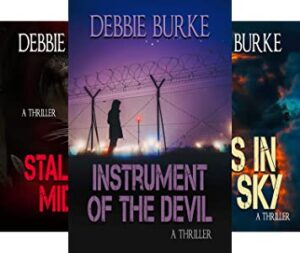
In 2016, I entered the contest sponsored by the Pikes Peak Writers Conference. My thriller, Instrument of the Devil, won the mystery/suspense category.

Momentum from that propelled me to enter the Kindle Scout contest, sponsored by Amazon. Book excerpts were posted online, and readers voted for ones they wanted to see published. IOTD was selected. I received an advance and Kindle Press published the book that became a bestseller in Women’s Adventure. I

I was on my way to fame and fortune, right?

Uh, no. A few months later, Amazon closed down the Scout contest and the Kindle Press imprint was shuttered, leaving me orphaned.

But I’ll always remember they gave me that opportunity and I’m grateful.

My other books have been finalists for the Eric Hoffer award (Flight to Forever) and Best.Thrillers.com (Until Proven Guilty).

Can you tell I like contests?

Most recently, I entered my latest thriller Deep Fake Double Down in the BookLife Prize contest sponsored by Publisher’s Weekly for indie books.

The contest receives hundreds of entries in five categories: general fiction, romance, YA, sci-fi/fantasy/horror, and mystery/thriller. Entry fee of $119 is high but includes a critique that authors are free to use for their own promotion.

The grand prize is $5000. Finalists in each category receive a $1000 marketing package.

Photo credit: Joyful-Unsplash


In November, Deep Fake Double Down advanced from quarterfinals to semifinals. Yaay!

Then in December I learned DFDD was the mystery/thriller finalist. BookLife magazine featured interviews with each of the genre finalists.

Although I don’t generally count my chickens until they’re fried, I started to fantasize about how I’d spend $5000. Hire a publicist for dreaded marketing. Go on book tours. Attend Thrillerfest in NYC.


Well…

Deep Fake Double Down didn’t win the grand prize. The winner was Downpour, a horror novel by Christopher Hawkins. I just read it and it’s beautifully written, compelling, and terrifying, Congratulations, Chris!

Bu I gotta confess a little envy. I really would’ve liked to attend Thrillerfest.

However, I’ll still receive the $1000 marketing package. In the long run, that might be more valuable since I need all the help I can get with marketing.

Now, about those intangible rewards I mentioned earlier. Through contests, I’ve met writers who became friends, made lasting contacts with editors and agents, received invitations to speak, etc. When you put your work out in the world, you never know where it may take you.

Back in the ’90s when my book was a finalist for Colorado Gold, I flew to Denver for my first Rocky Mountain Fiction Writers conference. At that time, it was biggest writing event I’d ever attended. I was intimidated, not knowing a soul among 400+ attendees. 

One of the anonymous judges had scored my book a perfect 10. At the conference, I learned her name was Julie Kaewert, author of the Alex Plumtree series and a novelization of The Avengers movie. She graciously introduced me to many fellow mystery authors and her critique buddies who made me feel welcome and right at home.

At the banquet dinner, winners were announced in various categories and all received applause.

Then my name was announced. Wild whoops, hollers, and whistles erupted from tables full of my new friends.

I turned redder than the tomatoes on the salad.

I still cherish the memory.

From that contest, close friendships were born that endure to this day. Several became trusted critique partners and beta readers.

Contests give me much-needed reassurance that writing is worthwhile in spite of disappointments and setbacks. 

Are contests good for you? Enter a couple and find out. Then come back to TKZ and share your news.

A big thank you to Elaine Viets who suggested this post!

~~~

TKZers: What contests have you entered? Did they change your writing? Which contests do you recommend?

~~~

Read the mystery/thriller finalist for the BookLife Prize at this link.

The Chronology of Story: Flashbacks

Time, like an ever-rolling stream,

Bears all its sons away;

They fly forgotten, as a dream

Dies at the opening day.

–Isaac Watts

 * * *

We live in a four-dimensional world. For most of us, the three dimensions of space can be manipulated at will because we can move around and change our position on the Earth. We can climb the stairs in our homes, sail across oceans, or fly through the air. However, we have no control over the fourth dimension: time.

Albert Einstein famously told us that time is relative, and I sort of understand that. But the clock on my office wall doesn’t know anything about relativity. It just ticks away, recording one second after another. And despite what our friends in quantum physics tell us, my time goes in only one direction. Yes, I’ve heard of Kurt Gödel, worm holes, and theories that say traveling backwards in time is possible, but to my knowledge, no one has accomplished that feat. I know I haven’t. So, for the purposes of this post, we’ll use this definition from dictionary.com:

Chronology – noun – the sequential order in which past events occur.

Unless you’re writing a time-travel fantasy book, the events in the story you’re creating occur in a chronological sequence. But the telling of it doesn’t have to. Authors are a lucky bunch because we can tell a story in any way we want to. Even in a non-fantasy novel, we can take time and twirl it around our little fingers, make it do somersaults, or leap forward and backward in great bounds.

But why would we do that? Well, to keep the reader interested, of course. And how do we do it? One way is by the use of flashbacks.

* * *

What is a flashback scene?

Smartblogger.com defines a flashback as

“a literary device where a story breaks away from the present narrative to delve into the past, by showing us a past event or a scene from the past.”


According to novelist James Hynes in his Great Courses lectures entitled Writing Great Fiction,

“One of the fundamental principles of plotting is the withholding of information.…  A plot is the mechanism by which the writer decides what information to withhold, what information to reveal, and in what order.”

If the reader knows there was some disturbance in the protagonist’s past, but doesn’t know the full story, he/she will be compelled to keep reading to find out. When the author decides to reveal that fact, it may be effective to use a flashback scene.

The Power of a Flashback Scene

According to writingmastery.com,

“The beauty of flashbacks is that they give writers the freedom to fully show instead of tell the details of a traumatic or significant event in a character’s history, at the moment when it will be most powerful.”


How to move from the present to the past

Transitioning to a flashback scene can be achieved by a character remembering something from his/her past. Or it can be a break in the story that presents some important background information that is crucial to the narrative. In either case, it’s important that the reader understand where he/she is in the story. To that end, transition can be accomplished in several ways:

A change in verb tense: If the story is written in the past tense, switching to past perfect will clue the reader in.

The use of italics: Although some readers don’t like long passages in italics, I’ve seen this device used and found it effective.

A specific date: A flashback can be a separate chapter or scene that is clearly dated to indicate a previous time.

However you decide to handle a flashback, it’s a device that can add strength to your story.

A Word of Caution

In his book Plot & Structure, James Scott Bell warns us about the overuse of this plotting device.

“There is an inherent plot problem when you use flashbacks—the forward momentum is stopped for a trip to the past…. If such information can be dropped in during a present-moment scene, that’s always a better choice.”

But if you feel the flashback scene is necessary, then JSB advises to make sure it works as a scene.

“Write it as a unit of dramatic action, not as an information dump.”

* * *

Examples of flashbacks in literature

The entire book is a flashback

Most of the articles I read about flashback scenes describe a character who remembers something, and the flashback scene ensues from that. One example is The Catcher in the Rye which starts with Holden Caulfield’s first-person account of his current situation. “If you really want to hear about it, the first thing you’ll probably want to know is where I was born, and what my lousy childhood was like,…”

Then the second paragraph begins with a transition to a flashback: “Where I want to start telling is the day I left Pencey Prep.” The rest of the book is a continuation of the flashback.

Other examples of stories written almost entirely in flashback are Wuthering Heights and To Kill a Mockingbird.

Flashback scenes sprinkled throughout the book

Another type of flashback is used by Jane Harper in her debut novel, The Dry. The story begins when Federal Agent Aaron Falk returns to his hometown to attend a funeral. As the story progresses, we learn that Falk left his hometown as a child after being suspected of the murder of one of his friends. As the reader gets more and more intrigued about Falk’s history, Harper fills in backstory through the use of flashbacks dropped in strategic chapters to show Falk and his friends as youngsters. These scenes are written in italics so it’s easy to know when you’re reading a flashback scene. The main narrative is written in Falk’s third-person POV, but the flashback POVs vary.

A single flashback scene to describe a life-changing moment in the plot

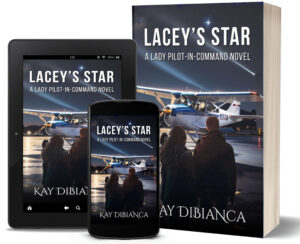
I included a flashback scene in my latest novel, Lacey’s Star. When Cassie Deakin’s uncle regains consciousness after being attacked and seriously injured by thieves, he explains that the assailants stole a package he had recently received from his unreliable and long-lost Vietnam war buddy, Sinclair. I wanted to include a flashback scene at that point in the narrative as a powerful display of Sinclair’s drunken despair changing to hope when he finds what he thinks is proof that his young sister was murdered 40 years earlier. In order to ensure the reader understood it was a flashback, I subtitled the chapter “Alaska – Three Weeks Earlier” and wrote it in italics. The novel is written in Cassie’s first-person POV, but the flashback is in Sinclair’s third-person.

* * *

And just in case those guys are right about time travel, here’s a clock that might be useful:

* * *

So, TKZers. What do you think about flashback scenes? Have you used them in your stories? What’s your opinion of the power of the flashback?

* * *

When Sinclair Alderson wakes up from a drunken binge to find himself in the home of a kind stranger, he pours out his despair over the death of his young sister 40 years earlier. Only then does he discover the note that could identify her killer.

Buy on Amazon, Barnes & Noble, Kobo, Google Play. or Apple Books.


Good Reading

By Elaine Viets

Reading is good for you.

That’s right. Reading is healthier than a bale of kale, according to the studies I’ve seen. Here’s a rundown on some:

Reading can help keep your brain sharp.

Can’t do Sudoku? Me, either.

But I do read. And a 14-year study of almost 2,000 people in Taiwan who were 64 and older, showed those who read one or more times a week had less cognitive decline at six-and 14-year intervals.

Wanna live longer? Read.

          Here’s a novel idea. Books are better for you than magazines and newspapers.

“Book readers also experienced a 20% reduction in risk of mortality over the 12 years of follow-up compared to non-book readers,” said a study published in 2017.  “These findings suggest that the benefits of reading books include a longer life in which to read them.”

Reading can improve your brain’s health.

          According to Bustle. The newsletter said, “Scientists looking into a six-month daily reading study at Carnegie-Mellon discovered that the volume of white matter (that stuff responsible for carrying nerve impulses between neurons) in the language area of the brain actually increased.”

Stay connected.

Business Insider says reading strengthens the connections in your brain.

According to Sabrina Romanoff, an NYC clinical psychologist, “reading creates neurons in the brain, a process known as neurogenesis. Neurons are cells that send messages and transmit information between different areas in the brain.

“Reading material that requires thought, consideration, and effort to metabolize what’s being described leads to the creation of new neurons in your brain,” Romanoff says. “These neurons also increase new neuronal connections, both with each other and older networks, which accelerates processing speed.”

Six minutes.

          Is all it takes to reduce stress. That’s according to researchers at the University of Sussex. They said, “People who read for just six minutes had reduced muscle tension and a slower heart rate.”

Tired of being told to eat your veggies?

A study of more than 15,000 Chinese age 65 years and older who didn’t have dementia were followed for about five years.

The study wanted to find out if intellectual activities could lower “the risk of dementia in older adults, independent of other healthy lifestyle practices such as regular physical exercise, adequate fruit and vegetable intake, and not smoking.”

The good news?  “Daily participation in intellectual activities was associated with a significantly lower risk of dementia several years later, independent of other health behaviors, physical health limitations, and sociodemographic factors.”

In other words, “Active participation in intellectual activities, even in late life, might help prevent dementia in older adults.” And yes, intellectual activities include reading.

Pass the zucchini, please. To someone else.

***

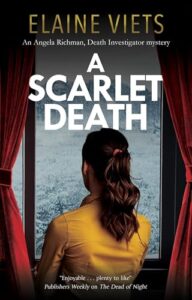
          Stay smart and healthy! Enjoy The Dead of Night, my seventh Angela Richman, Death Investigator mystery. http://tinyurl.com/mr33sc8e