Better Brainstorming…
Even If You Write Alone

creative-brainstorming

“It is easier to tone down a wild idea than to think up a new one.” — Alex Osborn

By PJ Parrish

I don’t know how you guys do it. Those of you who write alone, I mean.

I am blessed in that I work with a co-author, my sister Kelly. Our collaboration began more than 20 years ago and has lasted through 20-some books (counting the ones that didn’t get published). And while we have had our disagreements over the years, we have always understood the power behind the notion that two brains are better than one.

I want to talk today about brainstorming.

This came about because I was cleaning out my computer folders the other day. I have one folder I labeled BRAIN LINT. This is just a depository for all the stuff I can’t find a good place for but am too gutless to throw out. In this folder are still-born story ideas, pictures cadged from iStock that were meant to inspire, old newspaper articles about bizarre crimes and weirdos, and one completed manuscript that is so bad I keep it just to remind myself of how far I have come and how far I could fall.

When I was cleaning out the lint, I found one gem. It is a transcript of a story conference in 1978 between Steven Spielberg, George Lucas and Lawrence Kasdan. They were brainstorming about a possible movie. It didn’t have a title then, but it would eventually be made under the title Raiders of the Lost Ark. You might have heard of it.

Here’s just one exchange:
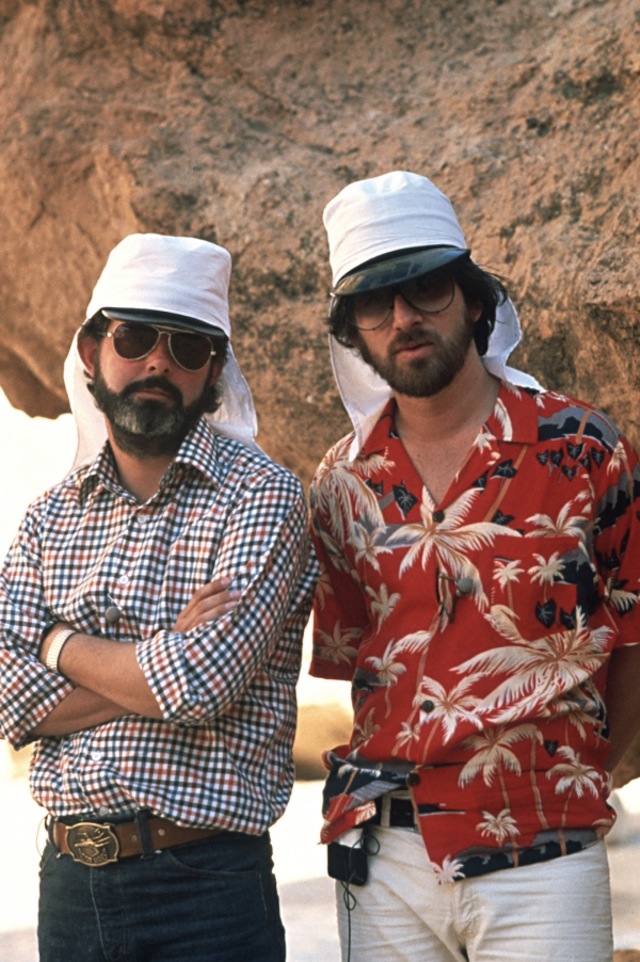
george-lucas-steven-spielberg-looking-radLucas: We want to make a very believable character. We want him to be extremely good at what he does, as is the Clint Eastwood character or the James Bond character. James Bond and the man with no name were very good at what they did. They were very fast with a gun, they were very slick, they were very professional. They were Supermen.
Kasdan: How do you see this guy?
Lucas: Someone like Harrison Ford, Paul LeMatt. A young Steve McQueen. It would be ideal if we could find some stunt man who could act.
Spielberg: Burt Reynolds. Baryshnikov.
Kasdan: Do you have a name for this person?
Lucas: I do for our leader.
Spielberg: I hate this, but go ahead.
Lucas: Indiana Smith. It has to be unique. It’s a character. Very Americana square. He was born in Indiana.
Kasdan: What does she call him, Indy?

I still can’t get the image of Baryshnikov in a fedora out of a mind. But that was how Indiana Jones was born, out of a brainstorming session between three creative guys. What a strange word – brainstorming. Ever wonder where it came from?
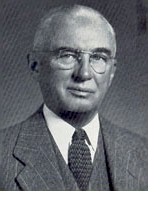
AFOsbornWell, in 1919, Alex Osborn, an ex-newspaper man from Buffalo, joined with Bruce Fairchild Barton and Roy Sarles Durstine to form the hugely successful BDO advertising agency. Osborn went on to write many books on creativity but he’s the one who coined the term “brainstorming.”

Nowadays, “brainstorming” is a catch-all for any type of creative group grope. But I thought it might be interesting to go back and see what Osborn had to say about it back in 1953 and find out if it could help writers today. Well, guess what? It’s still good advice, whether you are collaborating, working in a critique group — or even flying solo.

Here’s my main take-aways from Osborn’s ideas on brainstorming.

1. Think up as many ideas as possible regardless of how ridiculous they may seem.  It’s unlikely you’ll get the perfect solution right off the bat, so he recommends getting every idea out of your head and then go back to examine them afterwards. An idea that may sound crazy may actually turn out to work with a little modification.

Doesn’t this make sense when you’re plotting? I know when Kelly and I talk, we throw everything on the wall. You need to take the same approach with yourself. Write down every idea and let them bake for a while. Sometimes, the most outrageous thing leads to something useful.

2. Don’t be judgmental. All ideas are considered legitimate and often the most far-fetched are the most fertile. Ideas can be evaluated after the brainstorming session but judgments during the process should be withheld.

Are you sometimes too hard on yourself? Do you think, “Oh, that’s so stupid, no editor will ever buy it.” Or maybe you are a self-doubter, telling yourself, “I don’t have the chops to try this technique.” Or: “This is a great idea but it’s so complex so I won’t even try.”

3. Go for quantity not quality. Don’t get hung up (like I often do) on coming up with the most clever solution to your writing problem. Let your brain waves flow so the bad stuff bobs up to the surface along with the good. Osborn said: “Creativity is so delicate a flower that praise tends to make it bloom while discouragement often nips it in the bud. Forget quality; aim to get a quantity of answers. When you’re through, your sheet of paper may be so full of ridiculous nonsense that you’ll be disgusted. Never mind. You’re loosening up your unfettered imagination—making your mind deliver.”

Osborn’s books were geared more toward corporate types trying to get their teams to think more creatively on things like how to get traffic flowing better in big cities. But take a look at his suggestions for improving creativity and see if there’s not something here for us mere writers:

1. Break up the problem into smaller pieces. For writers, this can mean tackling each plot or character problem as manageable bites, not getting overwhelmed by the idea that you’ve got 400 pages to fill. Get that first draft written then go back and fix your plot holes or layer your characters better.

2. Search for alternatives. If you’ve painted yourself into a plot corner, look for a different way out than the old ways.

3. What can be borrowed or adapted? Read other writers and learn from them.

4. Modify with new twists. There aren’t many new plots in crime fiction but there is always a way to put your own fresh imprint on them.

5. Is there something that can be magnified or minified? Maybe the stakes in your thriller aren’t high enough. Maybe you need to play down a secondary character who is overshadowing your hero. Are you larding in too much research?

6. What can be substituted? Maybe if you changed your location the story would suddenly come alive. Would your mystery work better in a small town where you could exploit the English village dynamic? Is your setting banal and underwritten? Are you hitting all the wrong clichés if your book is set in Paris or some other iconic place?

7. What can be re-arranged? Maybe you’re writing in the wrong point of view? Try switching from first to third. Or maybe the guy you think is your hero is really the bad guy?

8. Consider the vice versa. I love this one. Do just the opposite of what you are now doing. Is your protag male? Switch gender! Are you relying on tired character tropes (lonely alchoholic PI, sweet antique store owner who solves crime). Make your brain do a 180 and examine what is on the flip side. I did this with my latest book. The woman I thought was my protag turned out to be one of two in a dual-protag parallel theme story.

Okay, enough lessons. Let’s end by going back and eavesdropping some more on the Indiana Jones brainstorm session. CLICK HERE to read the whole thing.
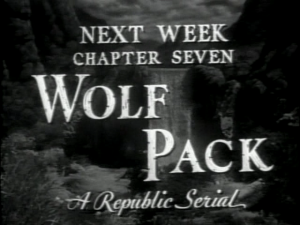
97147d290117720Lucas and Spielberg started with the idea that they wanted to make a movie that was like old Republic serials of the Thirties (Zorro, Dick Tracy, Red Ryder). Something had to always kept happening, every ten minutes or so another cliff-hanger situation. From there, the guys dreamed up Indiana Smith and other elements. In the beginning, even the ark was just a MacGuffin.

Lucas: The thing is, if there is an object of antiquity, that a museum knows about that may be missing, or they know it’s somewhere. He can go like an archeologist, but it’s like rather than doing research, he goes in to get the gold.
Spielberg: His main adversaries will be the Germans?
Lucas: Yeah, I think they should be. I’ve been trying to move him around the world a little bit to see if we can’t get a little Oriental influence into it just for the fun of it. I may have fit it in. The fun thing is, he’s a soldier of fortune, so we can move him into any sort of exotic thirties environment we want to.
Spielberg: Keep him out of the States. We don’t want to do one shot in this country.
Lucas: The film starts in the jungle. South America, someplace. We get one of these great scenes with the pack animals going up the mist-covered hills. Very exotic mist-filled jungles and mountains.
Spielberg: Where he goes into the cave?
Lucas: This is where he goes into the cave. We had it where there’s a couple native bearers, whatever, and sort of a couple of Mexican, well not Mexican…
Spielberg: They’re like Mayan.
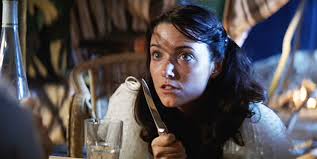
imagesLucas: They’re the third world local sleazes…[LATER] He goes into this very sleazy Casablanca type club and makes contact with this agent. The agent is a girl. She’s sort of a Marlene Dietrich tavern singer spy. A German lady singer. She’s really a double agent.
Spielberg: I like the idea that she’s a heavy drinker and our hero doesn’t drink at all. She gets drunk a lot. She’s beautiful and she gets really sexy when she’s drunk, and silly. And he doesn’t touch the stuff.
Lucas: I don’t want to soften her. I like the fact that it’s greed. I like all the hard stuff, but you’re going to love her.
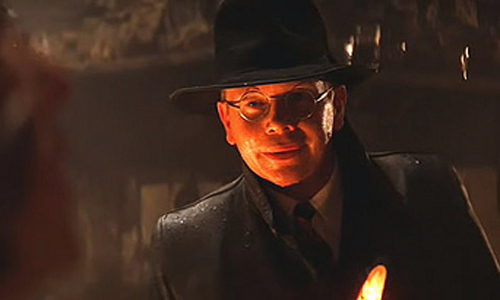
Raiders-of-the-Lost-Ark-indiana-jones-23708996-500-300Spielberg: There should be a real slimy German character. He’s the only gestapo involved there. Every time you see him, you know it’s going to be the worst pain, death by torture. This guy looks like a ferret. He’s got that slick black hair. His name is Himmler or something like that. He’s a stocky short guy, a master torturer.
Lucas: What can he chase them with? What if he jumps on a camel?
Spielberg: I love it. It’s a great idea. There’s never been a camel chase before.
Lucas: Is this camel going to chase a car?
Spielberg: You know how fast a camel can run? Not only that, he can jump over vegetable carts and things. We still have the big fight in the moving truck to do. And now we have a camel chase.
Lucas: We’ve added another million dollars.
Spielberg: Not really. How much trouble can a camel be?

And then they talk about the big scene toward the end where Indy and Marion are tossed into that deep tomb and the bad guys cover it up with a rock. They’re trying to figure out what is in the tomb that’s dangerous and how Indy gets out. They decide there is a huge artesian well that opens up and he and Marion are in danger of drowning. Then somebody suggests there are also wild animals in the tomb, like tigers.

Spielberg: It would have to be a neighborhood tiger.
Lucas: There aren’t any tigers out there.
Spielberg: I’m not in love with the idea.
Lucas: You could have bats and stuff, make it slightly spooky.
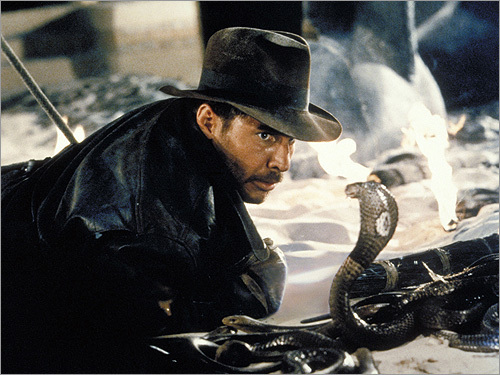
Spielberg: What about snakes? All these snakes come out.
Lucas: People hate snakes. Asps? They’re too small.
Spielberg: It’s like hundreds of thousands of snakes.
Lucas: When he first jumps down in the hole, it’s a giant snake pit. Then when he says they’re afraid of light, they throw down torches. You have a whole bunch of torches that keep the snakes back. So he only has one more torch, and the snakes start coming in. He sits there with one torch, knowing that when the torch goes out… It’s the idea of being in a room, in a black room with a lot of snakes. That will really be scary.
Spielberg: The snakes are waiting, looking at him. Thousands. And the torches are burning down. He’s trying to keep it going. The torch goes out. The whole screen goes black. The sound of the snakes gets more intense. You hear him backing up. The camera pans and suddenly you see, it’s black, but there’s light coming from several cracks. It’s not completely black. That leads him to an opening. To a rock that isn’t so flush against the other rocks. He knows there’s access. He keeps pushing on it, he gets a little more room.
Lucas: We shouldn’t have any snakes in the opening sequence, just tarantulas. Save the snakes for now.
Spielberg: It would be funny if, somewhere early in the movie he somehow implied that he was not afraid of snakes. Later you realize that that is one of his big fears.
Lucas: It should be slightly amusing that he hates snakes, and then he opens this up, “I can’t go down in there. Why did there have to be snakes? Anything but snakes.”
raiders-of-the-lost-ark

Now, aren’t you glad they didn’t go with the tigers?

Where Do You Get Your Ideas?

Light BulbAuthors who’ve been around awhile, and have more than a few books out there, are often asked two questions.

The first is, “Where do you get your ideas?”

I like how Harlan Ellison used to answer that: “There’s a swell idea service in Schenectady. Every week I send them twenty-five bucks, and every week they send me a fresh six-pack of ideas.”

Every now and then someone would ask him for the address of the service, and Harlan would do to that person what Harlan always used to do all such folks, i.e., not suffer them.

The other question we’re asked is, “Which book is your favorite?”

The answer is complicated. There are books we love because we worked so hard on them. Others because they were so much fun to write. And still others because they helped pay the mortgage.

But when I am asked about a series, I pause a moment, then name my legal thrillers featuring Ty Buchanan. They originally came out in beautiful hardcover editions, then trade paper.

As Seinfeld would say, yadda yadda yadda, I am pleased to report that I’m now releasing all three books in new digital editions. And to celebrate, I’m pricing each one at $2.99 for this kickoff period.

series

Allow me to tell you how I got the idea for the series, and indeed for each book. It started with my regularly scheduled “creativity time.”

Back when newspapers existed, I would read either the L.A. Times or the L.A. Daily News, and one legal newspaper, the L.A. Daily Journal. I’d scan for interesting stories or legal issues, and clip them and throw them into a box. Every now and then I’d go through that box, seeing if the ideas still interested me.

One item kept vying for my attention. It was a tragic story about an L.A. man who shot his young wife to death, then drove to a freeway overpass, got out, shot himself, and fell 100 feet to the freeway below. He crushed a Toyota, killing the driver. How bizarre is that?

So one day I wrote this up as an opening scene. When I got to the part about the woman being killed, I made up a character: Jacqueline Dwyer, a twenty-seven-year old elementary school teacher.

And then I paused, switched to a First Person POV voice, and wrote:

This would have been simply another dark and strange coincidence, the sort of thing that shows up for a two-minute report on the local news—with live remote from the scene—and maybe gets a follow-up the next day. Eventually the story would go away, fading from the city’s collective memory.

But the story did not go away. Not for me. Because Jacqueline Dwyer was the woman I was going to marry.

Who was narrating? That’s how Tyler Buchanan was born. I made him an up-and-coming, hotshot lawyer with everything going his way, until this. And especially after a shady guy finds him and tells him Jacqueline was still alive after the crash … and someone murdered her.

That book became Try Dying.

Book #2, Try Darkness, was based on a story I clipped from the legal paper. It was about illegal evictions from downtown transient hotels. There was a trick landlords were using to get around the law, so I made one of fhs evicted a mother with a six-year-old daughter, who comes to Ty for help. And then she turns up dead, and the plot, as they say, thickens.

The last book in the trilogy is Try Fear. Again, this came out of a real story I clipped. One Christmas season the LAPD stopped a very large man on suspicion of driving under the influence. He was about 6’5”, 280 pounds. He was also wearing nothing but a Santa hat and a G-string.

I found myself thinking, This has to be Ty’s next client. So that’s how Try Fear begins.

The reviews were kind. Please allow me to toot two small horns:

“Engaging whodunit series … Readers will enjoy Bell’s talent for description and character development.” –– Publishers Weekly

“The tale equally balances action and drama, motion and emotion. Readers who pride themselves on figuring out the answers before an author reveals them are in for a surprise, too. Bell is very good at keeping secrets. Fans of thrillers with lawyers as their central characters—John Lescroart and Phillip Margolin, especially—will welcome this new addition to their must-read lists.” — Booklist

I’ve been asked many times if I might add another book to this series. I’ve considered it, but I also think the series ends in exactly the right spot, with exactly the right scene, and indeed, even the right line. I am hesitant to mess with that. But if you do decide to read all three books, I would love to hear what you think I should do!

The books are on Kindle and Nook, and soon will be on Kobo and in print. If you want to know when, you can subscribe to my email alerts and I’ll be sure to let you know.

KINDLE:

Try Dying – Ty Buchanan Legal Thriller #1

Try Darkness – Ty Buchanan Legal Thriller #2

Try Fear – Ty Buchanan Legal Thriller #3

NOOK:

Try Dying – Ty Buchanan Legal Thriller #1

Try Darkness – Ty Buchanan Legal Thriller #2

Try Fear – Ty Buchanan Legal Thriller #3

Now we turn to you, TKZers. What is your favorite way to get ideas? And have you ever been to Schenectady?

What A Freelance Editor Brings to the Table

Jordan Dane
@JordanDane

Matrice

Editor: Mary-Theresa Hussey

My guest today is my favorite editor (for my Young Adult books at Harlequin Teen), Mary-Theresa Hussey. Her passion for books shows in everything she does. I love collaborating with her. She has a meticulous eye for detail, but her true strength lies in her realistic understanding of character motivation and the emotion of a story. I’m proud to have her as my guest today at TKZ. Welcome, Matrice!

***

So you’ve written your book shared it with a critique partner, revised it, set it aside for a bit, revised it once more and are ready for the next step. Your mother, friend and sister love it and think it’s perfect.

What’s next? Well, it does depend on your goals for that novel. Do you want to find an agent? A publisher? Self-publish it? Go Indy? Do you want to share it with a few people or the wider world?

If you’re aiming at an agent or publisher, you might feel it’s in solid shape and you’ll wait for those professionals to give feedback and direction. That can be the right route if your project fits in with their goals as well.

However, if you haven’t gotten many bites, or you want to go indy, then you might want to investigate working with a freelance editor. The editor might help pinpoint some areas that will capture that agent/publisher or else give you the confidence to self-publish yourself. Freelancing can be hard for anyone who decides they are interested in going down that path. But knowing that various aspects like the finances can be handled with a simple invoice template, this means one less aspect to think about. You’ll have more time to focus on what you love to do, which is writing.

Luckily there are some places where you might be able to get the resources you need to help you along with your freelance career, for example, using an invoice template could be a good way of keeping on top of your clients.

So what does the freelance editor bring to the table?
She represents the reader in the bookstore or booksite, the ones who will pay to read your book—and hopefully all the ones after that!
She is not your friend or critique partner who listened to you talk about all the characters and plot and goals. If it’s not on the page for her, she’s going to question it and ask why—or why not.
She has not been in your mind to understand the motivations or conflict or themes. Though you don’t need to hit the reader over the head, sometimes you’ve got to explain the elements that you know but the reader doesn’t have a clue about.
She doesn’t love your darlings in the same way, and will tell you to cut or trim or toss as needed.
She’s caring but dispassionate. She’s looking for what will make the best story and draw that reader to the end. She won’t aim to hurt your feelings, but will challenge you on what makes a better novel.
She should be reading the manuscript that you’ve polished, gotten feedback on and are confident is ready to go, not the first draft. Have it in as strong as possible a shape so it’s better for both of you.
She should also have a knowledge of and appreciation for the genre you’re writing in so that the notes are targeted to your goals, not her own ideal book.
She has a strong sense of grammar, of rules, and knowing what to encourage as your voice and when to rein in flights of fancy.
She may, depending on the agreement, be able to give you feedback on titling, copy and other material. But that can be an editor specific element.
Most important, depending on your needs, you might want a development editor, line editor or copy editor. Make sure you know what you want and hire the right person at the right stage! Some editors are especially talented in one area or another. Make sure you’re getting the right person for you at the right time.
The Developmental Editor is looking at the big picture of pacing and structure and characterization and plot. She’s not going to focus on grammar or eye color or such, but is looking at the overall goals of your story and how you are achieving them.
The Line Editor will probably note specific areas where pacing or structure or characterization needs to be tweaked, but hopefully all those elements will have been addressed. She’s going to be looking at the specifics of reading the manuscript, looking for errors in fact and name and restructuring sentences. She does read it line by line to see if the author has expressed herself as clearly as she could.
The Copy Editor focuses on the details. She will know what all the characters names are, and their relation to each other and probably hair and eye color, but isn’t going to ask if the pacing is too slow. She’ll fix all the grammar issues and typos, but won’t comment on inconsistent characterization—unless the character is misstating facts between chapters. She’ll find the typos but won’t question the plot (unless you have your character walking out of the room twice—that she’ll notice!).

An editor—freelancer or not—will wear many hats, but there are some things she probably won’t do.

She’s not a writing teacher. She won’t teach you the ins and outs about craft. She should be able to point out the errors and why something would be better in another form, but it probably won’t lead to hours of one-on-one discussions about the reasons behind your choices and her corrections.
Since she probably won’t take the time to teach you how to write a better story, she’s also not going to (depending on the agreement) rewrite the book. She’s working with your words and making suggestions, not rewriting everything herself. She’s certainly planning on helping improve the story, but it’s your writing that is the base of it all.
Along those lines, she may or may not be a writer herself. If it’s important to you one way or the other, check that out first! It can be incredibly helpful at times to have an editor who is a writer, but sometimes not.
The freelance editor is not a publisher. She probably knows a bit about self-publishing and has picked up information on metadata and ISBNS, but it will be the author’s responsibility to work through the process.
She’s also not likely to be a miracle worker. No editor can guarantee the book will be picked up by an agent or publisher or become number one on the bestseller list. What she can strive for to the best of her knowledge and ability is that all the elements that make a stronger story have been reviewed and addressed and there are minimal errors of grammar and typos in the story.
Naturally, I think a good editor brings a lot to the table, but the author has to do the work first and understand her own goals for the project. It’s best if you are both on the same page going in, so you end up in the strongest possible position at the end of the revision/edit. In the end, it’s the author’s name on the book, and the author who stands behind her words.
So what are you looking for in an editor? Any good or bad experiences? Do share what you can.
Matrice

After a long editorial career at Harlequin, Mary-Theresa Hussey is now offering her years of experience to authors and industry professionals as a freelance editor. She’s passionate about books and good stories–and she wants to be sure that they are well told. Check out her site at www.GoodStoriesWellTold.com

Do Your Homework

By Joe Moore
@JoeMoore_writer

You’re writing a novel. Maybe you’ve even finished it. Congratulations. The hard part is over, right?

Wrong.

First, you need to define your audience. It’s important that you know what type of person or group will go out of their way to find and pay to read your book. What are the characteristics of your target reader such as their age, gender, education, ethnicity, etc. Is there a common theme, topic or category that ties them together? And even more important, what is the size of your target audience?

For instance, if your book is a paranormal romance set in the future in which the main characters are all teenagers, is there a group that buys lots of your type of book? If not, you might need to adjust the content to appeal to a broader audience. Change the age of the characters or shift the story to present day or another time period. If your research proves that a large number of readers buy books that fall into that category, making the adjustment now could save you a great deal of frustration later.

Next, you need to define your competition. Who are you going up against? If your book falls into a specialized sub-genre dominated by a few other writers, you might have a hard time convincing a publisher that the world needs one more writer in that niche.

The opposite problem may occur if your genre is a really broad one such as cozy mysteries or romance. You’re going to have to put a unique, special spin on your book to break it out of the pack. Or accept the fact that the genre and your competition is a wide river of writers, and you only hope to jump in and go with the current. Either way, make the decision now, not later.

The next issue to consider is what makes your book different from all the others in your genre. Do your homework to determine what the characteristics are of books that your potential audience loves. This can be done online in the dozens of Internet writer and reader forums. And you can also do the research by discussing the question with librarians and books sellers. Once you know the answers, improve on what your target audience loves and avoid what they don’t.

Just keep in mind that you can’t time the market, meaning that what’s really hot right now might have cooled off by the time your book hits the shelves. The moment you sign a publishing contract, you’re still as much as 12-18 months behind what’s on the new release table right now. This timetable can be greatly improved with indie publishing, but you still have to take the time to analyze your audience in either case.

Another detail to consider in advance is deciding how you’ll market and promote your book. Sadly, this burden has fallen almost totally on the shoulders of the author and has virtually disappeared from the responsibilities of the publisher. Start forming an action plan including setting up a presence on the Internet in the form of a website and/or blog. Also, is there a way to tie in your theme to a particular industry? How can you promote directly to your audience? For instance, if your romance novel revolves around a sleuth who solves crimes while on tour as a golf pro, would it be advantageous to have a book promotion booth at golf industry tradeshows? If your protagonist is a computer nerd, should you be doing signings at electronics shows? How about setting up a signing at a Best Buy or CompUSA? Follow the obvious tie-ins to find your target audience.

Writing is hard work. So is determining your target audience and then promoting and marketing to them. Like any other manufacturing company, you are manufacturing a product. Doing your homework first will help avoid needless detours on the way to publication.

Flight From Hell Yields Insight About Customer Service

Deathspiral1I have to fly across the country frequently these days on family business. Because I’m a nervous flyer, I normally don’t think too much about the customer service during a flight–I’m too worried about the plane crashing. But last night’s experience gave me a new perspective on the topic of customer service. I’ve started to think there are some best practices in customer service which should apply to a writing career.

I should add that in addition to being afraid of flying, I’m prone to superstition, plus I resist changes to routine. On my recent cross-country trips, therefore, I have flown on the same airline, in the same seat on the same row, every time. Each of these flights turned out to be a pleasant experience (aside from my epic battles with white knuckle syndrome, which isn’t the airline’s fault).
Last night I took a different airline for the first time for my usual trip. It was the same airplane model, same seat and row. Only the customer service was different.

And how. Here’s the way it went down: the exact same trip, on two different airlines.

Airline A

Upon entering the cabin, I was greeted by a flight who asked me if she could hang up my coat for me. Another crew member distributed beverages before takeoff, and told us what types of food were available. The crew patrolled the aisle regularly, making eye contact with passengers and making sure needs were being met. They smiled at us a lot. They made us feel like they wanted us on their plane!

Airline B

Upon entering the cabin, I was ignored by the flight attendant, who was engaged in an animated personal discussion with a colleague. She looked startled when I asked where I could hang up my coat, and checked my ticket to make sure I was actually entitled to coat hanging privileges. The animated personal discussion continued during the preparation for takeoff, with brief, obligatory pauses to make announcements required by the FAA. The flight magazine was a month out of date, so we couldn’t discover what food choices would be available. When the flight attendant finally took our orders, I asked if the entree (it turned out to be pasta, hooray!) contained meat. She wasn’t sure, and didn’t find out. (The pasta did have meat, this vegetarian discovered later for herself).

The flight crew evidently enjoyed each other’s company a lot, because they spent the entire journey talking among themselves. At one point an attendant from another section came forward, looking distressed. This new conversation was punctuated by dramatic hand gestures. The distressed newcomer was even shielding her mouth from view of the passengers as she continued talking.

Having taped and watched every episode of AIR DISASTERS, I immediately suspected that the flight attendants were talking about some kind of problem with the plane.

“Is everything okay?” I asked one of them, when I finally caught her attention.

“Yes. Why?” She paused, and then it seemed to dawn on her why I’d asked the question. “Oh, we’re just talking about life. You know, girl stuff.”

“As long as you aren’t talking about broken-airplane stuff,” I said.

She retreated with a doubtful look on her face. The chat fest resumed.

When we eventually landed in Washington, three hours late, I discovered that I’d forgotten to pack my laptop, on which I’d written my post for today. So I’m writing this rant on my iPad, which hates interacting with WordPress. (Okay, that one’s not the flight crew’s fault.)

Customer Service and Writing

The flight episode gave me a new appreciation for the importance of customer service. I think writers would benefit by developing some best practices of our own in that regard. Here are some suggestions:

When using social media, don’t talk “at” people in a one-sided conversation. Engage in actual conversations.

Always maintain a friendly, polite tone in public forums.

Answer emails promptly.

In short, make your readers and public feel like you’re glad they made the decision to board your flight. They’ll reward you with return visits.

Can you add any customer service best practices that writers should follow? Or better still, anything we should avoid doing?

“Story. Dammit, story!”

John D. MacDonald typingIn his introduction to Stephen King’s first collection of short stories, Night Shift, John D. MacDonald explains what it takes to become a successful writer. Diligence, a love of words, and empathy for people are three big factors. But he sums up the primary element this way: “Story. Dammit, story!”

And what is story? It is, says MacDonald, “something happening to somebody you have been led to care about.”

I want to home in on that something happening bit. It is the soil in which plot is planted, watered, and harvested for glorious consumption by the reader. Without it, the reading experience can quickly become a dry biscuit, with no butter or honey in sight.

Mind you, there are readers who like dry biscuits. Just not very many.

MacDonald reminds us that without the “something happening” you do not have story at all. What you have is a collection of words that may at times fly, but end up frustrating more than it entertains.

I thought of MacDonald’s essay when I came across an amusing (at least to me) letter that had been written to James Joyce about his novel Ulysses. Amusing because the letter was penned by no less a luminary than Carl Jung, one of the giants of 20th century psychology.   

Here, in part, is what Jung wrote to Joyce (courtesy of Brain Pickings):

I had an uncle whose thinking was always to the point. One day he stopped me on the street and asked, “Do you know how the devil tortures the souls in hell?” When I said no, he declared, “He keeps them waiting.” And with that he walked away. This remark occurred to me when I was ploughing through Ulysses for the first time. Every sentence raises an expectation which is not fulfilled; finally, out of sheer resignation, you come to expect nothing any longer. Then, bit by bit, again to your horror, it dawns upon you that in all truth you have hit the nail on the head. It is actual fact that nothing happens and nothing comes of it, and yet a secret expectation at war with hopeless resignation drags the reader from page to page … You read and read and read and you pretend to understand what you read. Occasionally you drop through an air pocket into another sentence, but when once the proper degree of resignation has been reached you accustom yourself to anything. So I, too, read to page one hundred and thirty-five with despair in my heart, falling asleep twice on the way … Nothing comes to meet the reader, everything turns away from him, leaving him gaping after it. The book is always up and away, dissatisfied with itself, ironic, sardonic, virulent, contemptuous, sad, despairing, and bitter …

Now, I’m no Joyce scholar, and I’m sure there are champions of Ulysses who might want to argue with Jung and maybe kick him in the id, but I think he speaks for the majority of those who made an attempt at reading the novel and felt that “nothing came to meet them.”

I felt a bit of the same about the movie Cake, starring Jennifer Aniston. When the Oscar nominations came out earlier this year it was said that Aniston was “snubbed” by not getting a nod. I entirely agree. Aniston is brilliant in this dramatic turn.

The problem the voters had, I think, is that the film feels more like a series of disconnected scenes than a coherently designed, three-act story. The effect is that after about thirty minutes the film begins to drag, even though Aniston is acting up a storm. Good acting is not enough to make a story.

Just as beautiful prose is not enough to make a novel. Years ago a certain writing instructor taught popular workshops on freeing up the mind and letting the words flow. The workshops were good as far as they went, but this instructor taught nothing about plot or structure. Finally the day came when the instructor wrote a novel. It was highly anticipated, but ultimately tanked with critics and buyers. And me. As I suspected, there were passages of great beauty and lyricism, but there was no compelling plot. No “something happening to someone we have been led to care about.”

Of course, when beautiful prose meets a compelling character, and things do happen in a structured flow, you’ve got everything going for you. But prose should be the servant, not the master, of your tale.

Let me suggest an exercise. Watch Casablanca again. Pause the film every ten minutes or so, and ask:

1. What is happening?

2. Why do I care about Rick? (i.e., what does he do that makes him a character worth watching?)

3. Why do I want to keep watching?

You can analyze any book or film in this way and it will be highly instructive. You’ll develop a sense of when your own novel is bogging down. You can then give yourself a little Story. Dammit, story! kick in the rear.

A New Day, A New Genre

Jordan Dane @JordanDane

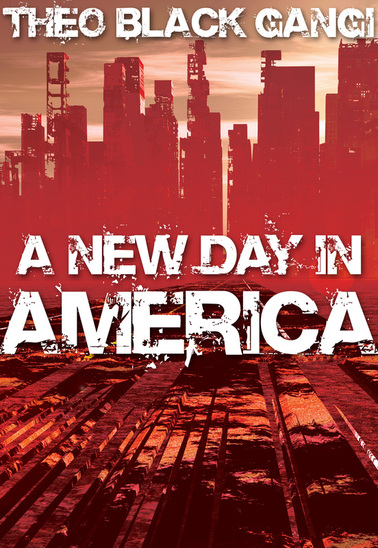
New Day Book Cover
My guest today is Theo Gangi, the Director of the writing program at St Francis College. His stories have been anthologized in First Thrills, edited by Lee Child, The Greensboro Review, The Columbia Spectator and the Kratz Sampler. His articles and reviews have appeared in Buzzfeed.com, The San Francisco Chronicle, Mystery Scene Magazine, Inked Magazine and Crimespree Magazine. Theo and I first met in NYC when our books debuted in 2008 at ITW’s Thrillerfest. I’ve enjoyed his gritty writing ever since. Please welcome Theo, TKZers.


A New Day, A New Genre


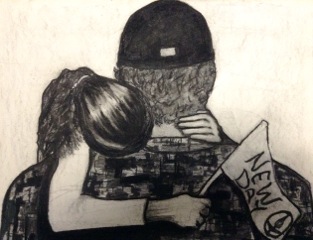
I admit it– the inspiration for my new novel A New Day in America was not mine initially. The somewhat notorious writer James Frey approached me with the idea for the tale of Nostradamus Greene and his daughter Naomi: a post-apocalyptic father-daughter survival story.

If I’d had a project I was in love with at the time, I’m not sure how I would have reacted. Screenwriters are accustomed to inheriting ideas and collaborating, but the mythology of the Novelist is the lone, solitary storyteller. However, once I found an inspiration to draw on, the work became mine as much as anything I’ve written.

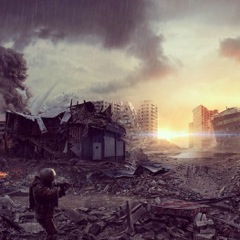
The post-apocalyptic world—the desolate lands, the loss of the structure of civilization, the father who braves survival, and the daughter who has seen too much—recalled a story from my formative years.


ogami.artwork


Apocalypse stories, while set in the future, are actually a return to the past. The time after modern civilization would resemble the time before it. The landscape of feudal Japan felt just right. Samurai assassin Itto Ogami and his son Daigoro serve as a great model for Nostradamus Greene and Naomi. Doing some sketches, I even found some visual symmetry. The paradox of the killer-father character has a brutal simplicity. A man with a gun is a killer. A man with a gun and a child at his back is a hero.

NOS.NAY.ART

The idea was freeing for a couple of reasons. For one, I had some much-needed simplicity, and in the past I’ve had a tendency to over-complicate my work. Second, I got to play with reality itself.

My first book, Bang Bang, is a hardboiled, botched-robbery sort of urban crime thriller. While the hero’s ability to rack up a body count of a dozen or so in a single night might stretch the realm of reality, the book is firmly set in the real world. For A New Day in America, writing in a post-apocalyptic world meant I could create the whole thing. I had to invent setting, history, events, and the all-important rules.


As a writer I always saw craft as a kind of minimalist-vs-maximalist approach. My biggest influence was Elmore Leonard, who famously didn’t write the parts the reader ‘skips anyway’, and once said he read Hemingway every morning before writing, to get the feel of reduction in his writing process. I love Dashiell Hammett, whose minimal approach to books like Red Harvest and The Maltese Falcon would’ve made Hemmingway proud (‘The stuff that dreams are made of’ is an invention of filmmaker John Houston, and far too sentimental for Hammett). The idea being, don’t waste the reader’s time and attention on an eloquent description of a back alley, because the reader know what a alley looks like, and wants to know what your characters will do and say, not that there’s a garbage can that’s tipped over, or a couple of chicken bones in the gutter. The empty spaces of great noir are poetic in and of themselves.
When writing in a world that has suffered a recent apocalypse, you can’t get away with that approach. If you allow the reader the space to fill in your apocalyptic world, they will likely visualize some stock imagery from this movie or that. Mel Gibson will poke his head out of a tricked out Mad Max vehicle in the background. A zombie might appear in the reader’s imagination even though there are no zombies in your book. To write in a speculative world is to build one. Visuals such as a New York City skyline that looks like a king’s crown—skyscrapers line the outer rim, but nothing stands within.


newday.sunset.gun


The process required quite a bit of overwriting and then cutting, so the sense of the world was greater than the word count. World building aside, the fundamentals are the same as any kick-ass thriller: Danger, conflict, bravery, human connectivity and impossible choices. The America that’s reduced to rubble offers a vehicle for the same challenges that the best thriller heroes endure—back to the wall, knife to the throat, what do you do? How do you find a way to assert yourself on a world that’s gone to hell? Is your next move moral or practical? Can you save them all? Can you save the ones that matter most?


The apocalyptic scenario creates a series of Sophie’s Choice sorts of situations. I’ll relate it this way– say there’s a train bearing down the tracks full of ten innocent people. The track forks: one way is a brick wall. The other way is your child tied to the rails. You stand at the switch. Which do you chose?


I imagine most people would chose to save their child, as I would. But what if there’s 100 people on that train? 1,000? A New Day in America is about a father who makes the decision to save his child over and over again.

newday.skyline.crown

Question 1: TKZ Question for Discussion: If you could take a few non-essential luxuries in your survivalist bunker, what would they be?

Question 2: Have you ever written a book that wasn’t your original idea?
Author Photo
https://www.facebook.com/NEWDAY.TBG
https://twitter.com/tprgangi
http://theogangi.com/

First Page Critique: BIRTHRIGHT

1JupiterAscendingToday we are pleased to present another first-page submission. This story is called BIRTHRIGHT. First, the page. Then my notes.

BIRTHRIGHT

She knew if she walked through the door, things would never be the same. It would be an admission of humanity. A bow to the ordinary.

She had been sent to inform and invigorate the people of Liberty so they could stand up to the coming onslaught. Even as she arrived the enemy grew as it traveled, dragging able-bodied men from villages as they passed and forcing them into servitude. To bring an entire village together and equip its people to do battle was a monumental task, one no mere mortal could hope to accomplish. That’s why the Council saw fit to send her to this place. It wasn’t a question of her ability, nor of her knowledge. It was a question of birthright. Her father was Leader of the Council. It was an incontrovertible fact that his heirs would step into his role when he relinquished it. It had always been that way. It would always be. Such was the way of her kind.

She stepped into the heart of Liberty, the center of the village, and slowly turned. The courthouse sat vacant—the laws of the land, as well as much of the building, long ago turned to dust. A tattered flag sagged on a pole in front of a tall brick garage. Then she saw it. The old gray-stoned library, heavily pasted with vines rooted to the mortar, bundling the building itself into a green-wrapped package. She stared up at the roof, at least thirty tridents high. The crane of her neck made her wobble. She had never looked up before; only down. She hurried to the doorway, slashed at the vines until the way was clear. What was inside stole her breath. She had never seen a book before. Now she was in an entire building of them. So many, she thought they might count as high as the stars. She breathed deeply. The scent of books was new to her and she paused to relish it. This was where it would all begin. After all, this was where it once ended.

KL’s Notes:

On the plus side, I should say that I like the opening line.

“She knew if she walked through the door, things would never be the same.”

It’s hard to write a first line that immediately grabs a reader. Well done!

I also enjoy the way the writer describes the moment the narrator first sees the library.

“Then she saw it. The old gray-stoned library, heavily pasted with vines rooted to the mortar, bundling the building itself into a green-wrapped package.”

That’s a good visual image.

But in other ways, this narrative runs into some craft-related headwinds. Here are some areas that could be improved.

A Case of Backstory Blues

The writer grabs my attention at Line One. But from there, things go awry. The story falls into a notorious swamp known as Backstory. The entire second paragraph gives nothing but character background. That information should be woven in later, after we are immersed in the main character’s situation. We preach this lesson all the time here at TKZ: Stay in the moment with your character and scene! Let us see her in action in the moment, and then tell us how she arrived at that juncture.

Character Challenge

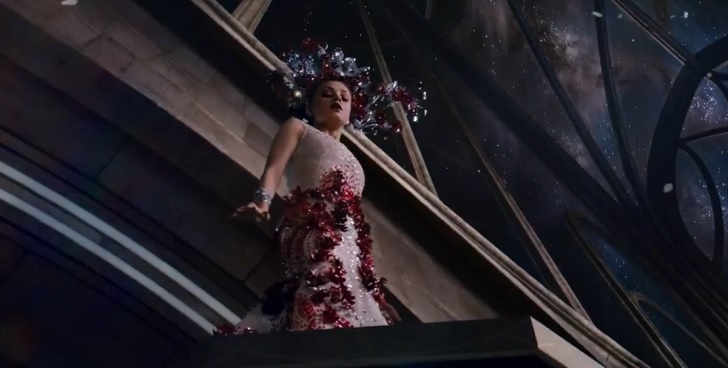
As I read this page I was reminded of a film I saw last weekend, “Jupiter Ascending.” (A completely dreadful film, btw, but that’s for another review).  In that story, there’s a claque of one-percenter aliens known as The Entitled. The Entitled get to hog all the good stuff in The Universe because, well, they were born to rule.

As the title of this first page, BIRTHRIGHT, makes clear, the main character has arrived in Liberty village simply because she was born into the right family. I’m assuming the story will present at least two challenges: 1) Can she save the Lost World? 2) Does she have anything going for her other than her birthright?

Action Needed

Theodore Roosevelt famously coined the phrase, “Get Action!” I think this page could use some action. Or should I say, interaction. On my first reading, I assumed that the village of Liberty was totally abandoned. Then I realized that the character’s challenge is to mobilize the demoralized inhabitants. Shouldn’t we get some sense of someone else in this scene, or at least a reminder of that they exist? A secondary character would be an excellent way to introduce some of the backstory information that is dumped at the reader in the second paragraph. (For example: an enslaved villager suddenly sees the Council’s Heir materialize in town. How does he react?)

Wording Notes

There were a few awkward or confusing phrases here and there. (Redundant use of “heart of” followed by “village center”; “The crane of her neck made her wobble.”)

Final Notes

Overall, I think eliminating the early introduction of backstory, plus using action to show the character’s situation, would improve things immensely. Thank you to this intrepid writer for the submission!

TKZers, your thoughts about this page?

Mob Rules?

Two recent articles in the New York Times  caught my attention – not just because they highlight the frenzy of vitriol that so often explodes on social media but also  because they point to a disturbing ‘faceless mob’ mentality permeating our digital lives. As a writer, an active presence online (to both market and publicize my work as well as create connections with my readers) is, however, a necessity but one which, especially after reading these articles, I increasingly view with trepidation.

The first article “Feed Frenzy‘ details the misery of online ‘shaming’ victims – people like Lindsey Stone and Justine Sacco who, because of inappropriate and ill-advised jokes/tweets, were subject to relentless (and I mean relentless) Twitter attacks that all but ruined their lives. I have always been cautious about what I tweet but after reading this article I’m not sure I want to tweet anything ever again!

The second article entitled ‘The Epidemic of Facelessness‘ points to the dissonance between the world of faces (the real world of interpersonal communication) and the world without faces (our increasingly ‘anonymous’ digital lives). Apart from the disturbing number of ‘troll’ incidents reported with varying degrees of threats of person violence against actual people, there is also the basic lack of humanity and compassion that we now see spreading across the digital world. The article highlights a few key rules we need to adopt when ‘conversing’ through Twitter, Facebook and other social media. One is ‘Never say anything online you wouldn’t say to someone’s face’ (something you’d think would be pretty obvious) and the other is ‘Don’t listen to what people wouldn’t say to your face’ (a much harder proposition I think for most of us).

Now I’m pretty sure I’ve never said anything on social media that I wouldn’t say to someone in person. Likewise, however, there are many things I won’t say on social media that I would say to someone’s face – and that self-censorship is starting to make me feel disheartened. It’s hard to be a writer in this digital age and not engage online with readers across a range of social platforms and media – but  often I feel that I cannot really present myself authentically on social media because of the risk of trolls, flame-wars and all the other horrible reactions seemingly innocuous posts or tweets can inflame (as anyone who’s ever been on any social media has witnessed). I find myself refusing to comment not just on political or social issues that I would otherwise freely discuss, but also hesitating to post or comment on a range of issues that in my ‘real world’ I wouldn’t even think twice about talking about. It’s become an issue not just about professionalism versus personal disclosure but about censoring my online ‘appearances’ to the extent that I fear I must be very boring indeed!

So what do you TKZers think about the current state of our ‘faceless’ digital world? How do you navigate the treacherous digital waters?

Have you ever been the subject to the kinds of ‘faceless’ attacks these articles discuss? Do you, like me, censor how you appear online (not just out of professionalism, but also out of fear?). Does the current ‘faceless mob’ mentality affect how you market and publicize your work online? What about what you actually write? Are you even hesitant to deal with controversial political or social issues in the work itself?